Blog Archives
V/H/S/2 (2013)
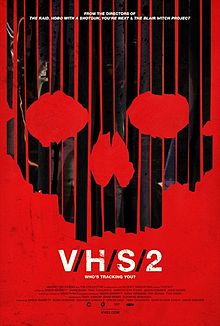 The second entry in the found footage horror anthology (and less than a year after the first to boot) is not as clever as V/H/S but more polished, better paced, and full of enough ingenuity to recommend, especially for horror fans. In my review of the first film I championed a shorter format, giving an audience the thrills they crave faster rather than slogging through an hour of slow buildup. The results are still fairly hit or miss, though none of the four segments is a misfire per se. The weakest is probably the last, “”Slumber Party Alien Abduction,” where the poor camera quality makes it hard to tell what is actually going on. The best, by far, is The Raid director Gareth Evans’ “Safe Haven” about a team of journalists picking perhaps the worst day to tour a creepy cult’s compound, notably during the apocalypse the cult predicted. This one takes a bit to wind up but when all hell breaks loose it goes nuts with glory. The wraparound segment tying everything together is more palatable and points to a promising mythology around the collection of these haunted VHS tapes that people keep watching and then dying over. All together, this is a concept that just works for horror and I’ll welcome presumed sequels as they come off the assembly line. This is found footage done right, with faster payoffs, more variety, and greater focus and ingenuity. If you enjoyed the first film, or are a fan of horror anthologies in general, then pop in V/H/S/2.
Nate’s Grade: B
Share this:

The Purge (2013)
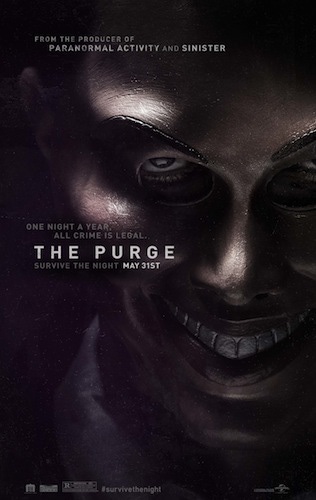 Sci-fi cautionary tales have been an outstanding way to provide commentary for contemporary anxiety. Rod Serling, Charles Beaumont, and the recently departed Richard Matheson were masters of this. A movie can make you think as speculative fiction while still following a thriller/horror blueprint to entertain the masses. And so writer/director James DeMonaco (Assault on Precinct 13, The Negotiator) wades into these waters with The Purge, a home invasion thriller that has a premise that, on the surface, might make you scoff. In 2022, the United States has practically solved unemployment and crime thanks to a nifty little holiday known as the Purge. Every year, for a twelve-hour window, law is rescinded and so are emergency services like police and firefighters. For those 12 hours, good American men and women are allowed to engage in just about every sort of crime up to and including murder. It’s designed for people to release all their aggression and darker impulses, thus allowing for a safer, happier 364 and a half days a year.
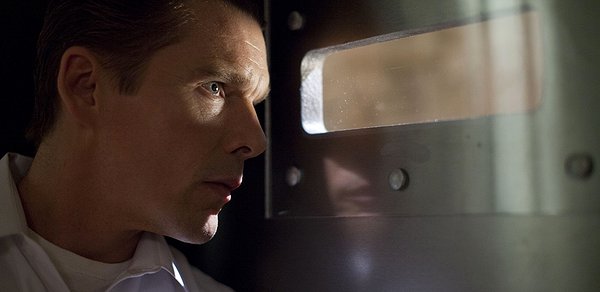
James Sandin (Ethan Hawke) is the top salesman when it comes to hardcore home security systems, the kind with the thick metal doors over your windows and doors. He lives in one of those finely protected homes with his wife, Mary (Lena Headey), and children, Max (Max Burkholder) and Zoey (Adelaide Kaine). They’re prepared for a long night behind barricades. Then a wounded black man (Edwin Hodge) runs through the cushy neighbor, crying desperately for help. Charlie offers him refuge inside the Sandin abode. Shortly after, a group of masked vigilantes, led by a lad who looks like Patrick Bateman, knock on the Sandin home. The bloody ma is their “bait,” and these angry folk demand he be returned to them, or else they will be coming in and sparing no one.
 This high-concept thriller is a well-crafted suspense piece, with several well-developed sequences that squeeze out tension. The premise involves some mighty suspension of disbelief but you’d be surprised how easy it is to accept and move on. The kids provide dissenting voices, mostly Charlie, and we get a lean history of the Purge and all the information we need to go forward, at least for this night. I liked how it’s become a common passing greeting to say “Stay safe” to people on the day before the Purge. Little details like that make the world feel more thought out. I like that engaging in the Purge is thought of as one’s patriotic duty. There are some tantalizing moments of dread as well, like a neighbor sharpening his killing tools outdoors. But really the movie comes down to its suspense, broken up into a series of different goals. James wants to protect his family and return the “bait,” but first he needs to find him and subdue him. Charlie wants to save him and get to him first. It’s your standard people-groping-in-the-dark kind of picture, but when given a strong sense of urgency and some good actors, it can be plenty suspenseful. DeMonaco does a fine job of making sure his story doesn’t get too confusing, tasking the audience with keeping track of too many participants. So when we have Zoey’s bad boyfriend (Tony Oller), he’s dealt with before the manhunt begins. When the home invasion kicks in, the manhunt is over. When it looks like Zoey is heading straight for the stranger, it’s a storyline that culminates very quickly. There’s a good sense of clarity throughout The Purge, which aids the effectiveness of the thrills.
For the first half of the movie, things snap together well enough that you just accept the premise and its implications, forgoing the nitpicks that wait. It isn’t until the third act where you start to disengage from the film and pick it apart. As a cautionary tale, it has some interesting ideas about class warfare; the main villain is right out of Ayn Rand’s Objectivist playbook. But the ideas and moral commentary fade as the movie becomes more a standard, albeit effective, suspense thriller. I really appreciated the argument that unemployment is so low because the Purge takes care of the sick, homeless, and poor and disadvantaged, those chiefly who cannot defend themselves and are easily targeted. It’s an eerie extreme that doesn’t feel too many steps removed from the last presidential election where Republican primary debate audiences cheered the hypothetical death of the poor. But then the nitpicks do come and once they do it’s like a rushing tide that cannot be stopped. Why do people have stockpiles of guns but no bulletproof vests and gear? Why wait for the bad guys to get in when you and your armed, well-defended family in your home fortress can preemptively strike? Why would you order the Sandin family to return your “bait” and then turn off their power? Doesn’t that make it much harder? Why would killing your girlfriend’s father win her over? Do you think she’s really still going to be your girlfriend after that? How big is this house that people get lost in it constantly? Who hides under the bed in this day and age? And, when hiding from intruders who wish to kill you, why in the world would you keep your flashlight on?
It’s late in this last act that the film tries to go one step too far. The home invasion commences, the struggles are pretty dandy to watch with some creepy imagery, and then DeMonaco has to go beyond that, introducing a secondary set of antagonists that at once feel obvious and poorly set up. The family asks, befuddled, why these new antagonists are doing what they’re doing, but they, and you, will not get a straight answer. It’s really designed to be shocking and little else, and so it feels tacked on and unnecessary. The last ten minutes of the film fumble the momentum of the movie. It’s a stumble at the finish line and leaves some lingering doubt as you assess the effectiveness of the whole movie.
 So the premise begs the question: what would you do with a lawless 12-hour window? I think most human beings would be too timid to embrace their animal side. Morals and ethics factor in, naturally, but really I think it’s just good old fear, the fear that anyone else can snuff you out with impunity, and engaging in the Purge also makes you a target. I think most people would probably try and engage in heists, but then the bank would be crawling with twenty different heist teams squabbling over who gets the loot. The banks would also surely increase their security astronomically.
The premise, while intriguing, also permeates with scads of ambiguity. Purge hours are from 7 PM to 7 AM, but what if you’re in the midst of committing a crime and go over the window? To use the bank robbery example, what if you get the money but fail to leave the bank by 7 AM, or even have? At that point, are you considered a criminal? Does the money go back to being counted as stolen goods or if it was pilfered during Purge hours it doesn’t count? Then there are the psychological ramifications of said Purge. If your neighbor raped your wife, Scott-free, you cannot tell me that vengeance isn’t going to play a key part in next year’s Purge. Seeing that face every day, acting “neighborly” while knowing what happened, plotting, waiting, and while the rapist neighbor prepares for the attack as well. Actually, that sounds like a pretty decent sequel (you can have that one for free, Blumhouse). How much Purge-related violence is just retaliatory vengeance? How do people stay in this country? If I as rich and could afford a super pricy security system, perhaps I’d rather take a weekend getaway to Canada instead. Or just stay for good.
The Purge is an effective little thriller until it isn’t, which thankfully only unravels in the concluding ten minutes or so. Until then, DeMonaco gooses his film with enough scares and thrills to justify a sitting, leaving an audience mostly satisfied until they exit and start to pick the film’s nature apart. I would have liked a bit more moral inquiry, political commentary, and some headier looks into these New Founding Fathers running the country, but I was satisfied with the suspense thriller I got. It’s modest, proficient, and well developed with its suspense, so I can’t be too picky. Then again, with this premise, The Purge could have been a lot more than what it is, a lot more disturbing and a lot more contemplative. But I’ll settle for effective and call it a day.
Nate’s Grade: B-
Share this:

World War Z (2013)
 No movie this summer has had such a dark cloud of bad buzz like Brad Pitt’s World War Z. Based upon Max Brooks’ 2006 novel, it’s a global zombie action adventure that Pitt, as producer, has developed for years. He hired director Marc Forster (Finding Neverland, Monster’s Ball) and after a very protracted shoot, according to reports, neither was on speaking terms. A Vanity Fair article highlights the fascinating challenges World War Z endured, the biggest being a third act that, while filmed, did not work. The movie’s release date was pushed back twice, from summer 2012 to December 2012 to finally summer 2013. That sort of talk usually raises critic hackles, anticipating a bomb that all parties are trying their best to salvage some investment. It’s something of a small miracle then that the finished film actually kind of sort of mostly works. It still feels lacking and under developed but World War Z is not the fiasco many had feared.
Gerry Lane (Brad Pitt) is an ex U.N. inspector pulled back into the field to do nothing less than possibly save humanity from the undead. The world is under siege by a new sort of pandemic, one that reanimates the dead. Gerry and his family barely escape Philadelphia alive and find refuge on a U.S. aircraft carrier offshore. Gerry bids his family goodbye and zips around the globe looking for Patient Zero. If he can crack the mystery of how it all began perhaps mankind can develop a cure.
 For fans of the book, it’s best to come to terms with the fact that the only thing World War Z has in common with its source material is the fact that there are zombies. There is one reference to Israel’s response to zombie rumors, but that’s it. Believe me, I know the book is excellent but allow me to play devil’s advocate here. Would a strict adaptation of Brooks’ book work as a movie? Perhaps, but it takes place years after the titular World War Z. I understand the producers’ wishes to set the movie in the middle of the crises, adding urgency and an immediate sense of suspense. Once you go that route, there are certain limitations to your storytelling. Unless you were going to go the Crash-style ensemble route, you’re going to need a central character/hero to tie it all together, and that too limits your storytelling options. Gerry can hop around the globe but we’re still only following one man’s personal experiences. While in the air, we see in the distance below a mushroom cloud rising. Who detonated an atomic bomb and why? We never know, and it’s that sort of in-the-moment fog of war madness that helps the movie operate. I enjoyed watching the small moments of society breaking down. Factoring in all that, I’d say that the big-screen edition of Brooks’ book is a passable starter, an appetizer that gets you hungry for more.
This movie is one of the first global-scale zombie outbreak films I can recall. Usually the zombie subgenre is told in confined spaces, remote locations, intimate settings. Danny Boyle had some larger London set pieces with 28 Days Later but that was still a film about dark corridors and small places. The scale of World War Z is what sets it apart. There is a degree of fascination watching the world come apart, and watching it fall apart in so many places adds to that. Gerry hops from one hotspot to the next in his quest and we watch as each new location goes to hell. It gives a greater sense to the dire threat out there. In the information age, and with Gerry’s U.N. connections, he can get global reports, and to learn that nowhere is safe helps maximize the pandemic threat and sense of urgency. I didn’t even mind Forster’s decision to present the teeming armies of the undead like there were a swarm of bees, rolling and tumbling over one another, forming formidable human pyramids. It’s a fairly spooky image and relates back to the nature-undone alchemy that makes zombies tick, plus it gives an extra sinister edge to the zombies. High-walled structures are not the sanctuaries we might have assumed. The true terror afforded by zombies, beyond the fact that the monster is us, is its inevitability; it doesn’t matter what you do, they will get you. There are more of them, and they don’t require food, water, sleep, and have only one goal. Adding to that sense of doom I think is a good move, and the raging sea of human bodies also helps Forster keep the PG-13 rating the studio dictated. I didn’t really miss the blood/gore, though one sequence where Gerry slices off a soldier’s infected arm seems a bit too clean and precise.
I criticized Forster’s skills directing action after 2008’s deeply disappointing Bond misfire, Quantum of Solace. The man showed no real feel for action sequences. Perhaps the man found a greater appeal to World War Z because there are some genuinely thrilling action and suspense sequences here and Forster deserves credit. The Israel sequence degenerates at a horrifying speed, and I loved the touch of caged passageways being erected through streets as a last-second defense from falling zombies. The initial stop in South Korea is at night and in the rain, thwarting Gerry and his team from seeing too far into the distance. It makes for a rather suspenseful sequence that makes good use of darkness and cover. The zombie actors in this movie deserve some recognition. They really get into all their clicks and clacks and add some creepy authenticity to the proceedings. Then there’s the airplane attack, zombies on a plane, that is all over the film’s advertising blitz. It’s a rather entertaining sequence, though one can’t help but provide some class subtext when the first class passengers barricade themselves while the coach passengers are torn apart. I still think Forster would be more at home with smaller dramas but he shows much more prowess for larger material.
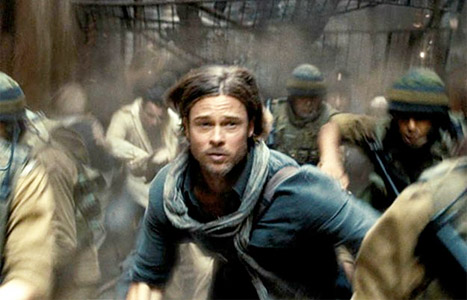 The reshot third act, thanks to added writers Damon Lindelof (TV’s Lost, Prometheus) and his pal Drew Goddard (The Cabin in the Woods), drastically scales down the scope of the pandemic. After two acts of all-out global chaos, we retreat back to the zombie film roots: a small, secluded place. The third act is almost like its own little separate movie. Partly because it’s something different, more horror/suspense than action, as well as being in the confined space, but also because Lindelof and Goddard do a fine job of structuring this concluding chapter. When Gerry gets to a World Health Organization outpost in Wales, he has a simple goal: get from one end of a lab to another. Oh, there are zombies all over the lab. Its narrative simplicity, as well as the clear focus, is a satisfying way to close out a movie that was sort of all over the place. Forster seems to really enjoy the suspense setups that he gets to have fun with in the third act, things like ducking around corners, avoiding zombie detection. The very end provides a ray of hope for humanity… until you fully think out what the consequences are for that hope (the first line of defense shall be hookers). Anyway, it sets up a sequel where mankind can begin fighting back. How do I know this? None other than Gerry’s closing lines are: “This is only the beginning. This war isn’t over.” A bit of hope on Pitt’s part as well there.
And yet with the world falling apart and Pitt our savior, I found myself from the outset very emotionally unengaged with the film. Pitt’s performance is perfectly suited for the material. It’s just the whole family man angle that doesn’t work. I understand it gives Gerry some personal stakes in doing his job but wouldn’t, I don’t know, saving the world be enough when it comes to motivation? It’s your standard reluctant hero’s tale, but the family stuff just kept dragging down Gerry’s character. To begin with, a man looking like Brad Pitt who voluntarily makes pancakes for his kids every morning… sounds like the stuff of fantasies for many. However, it almost keeps him away from his mission, the greater good, and there’s actually a sequence in South Korea where his family literally endangers Gerry’s life by making a phone call. Then the movie keeps cutting back to their existence on an aircraft carrier like I have equal interest in this storyline. One storyline involves Gerry flying the world over and escaping zombies. The other storyline involves whether Karin and the kids will be kicked off the ship. Which would you rather spend time with an as audience member? I didn’t really care about Gerry’s sad wife, played by Mireille Enos from the sad TV show The Killing. I had more invested in the Israeli soldier (Daniella Kerteesz) Gerry teams up with. My father even wanted them to run off together by the end and ditch Karin. I won’t even speak to the awkward storyline where Gerry’s family unofficially adopts a Hispanic kid after his parents die. If only those poor souls had listened to the knowledgeable white man who they took care of.
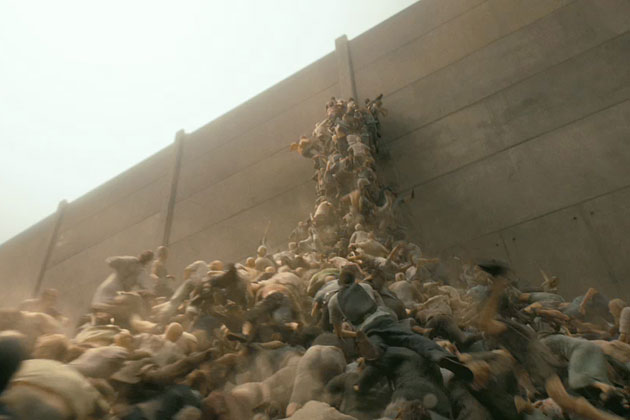 The big-screen version of World War Z bears little resemblance to the book of the same name, and that’s okay. Some adjustments are necessary in adapting, like bringing the actions of the story into the present, centering on a major character. As a book fan, I was somewhat disappointed in the unfulfilled potential presented, but as a movie fan I’m more disappointed by the film’s overall execution. There’s a lot of money in this production, the most expensive zombie film of all time, and a lot of talent on both sides of the camera. And yet after even pulling off a mostly effective ending, World War Z is more middling than it ever should be. Brad Pitt is saving the world from zombies; that should be enough, but it’s not. The movie shows flashes of intelligence, of socio-politico commentary, of something greater, but those moments are fleeting and ground down to make way for a mass-appeal action blockbuster. There’s nothing wrong with those sorts of movies (Roland Emmerich does them exceptionally well), but World War Z doesn’t have the brain-headed flair to pull it off. It’s thrilling, in spurts, interesting, in spurts, and entertaining, in spurts, but it fails to coalesce into something truly worthwhile. My allegiance to the book, as well as zombies in general, guarantees I’ll be there for more if World War Z spawns sequels. Hopefully there will be more because there are so many great stories from the book yet to be told (namely, everything).
Nate’s Grade: B-
Share this:

House at the End of the Street (2012)
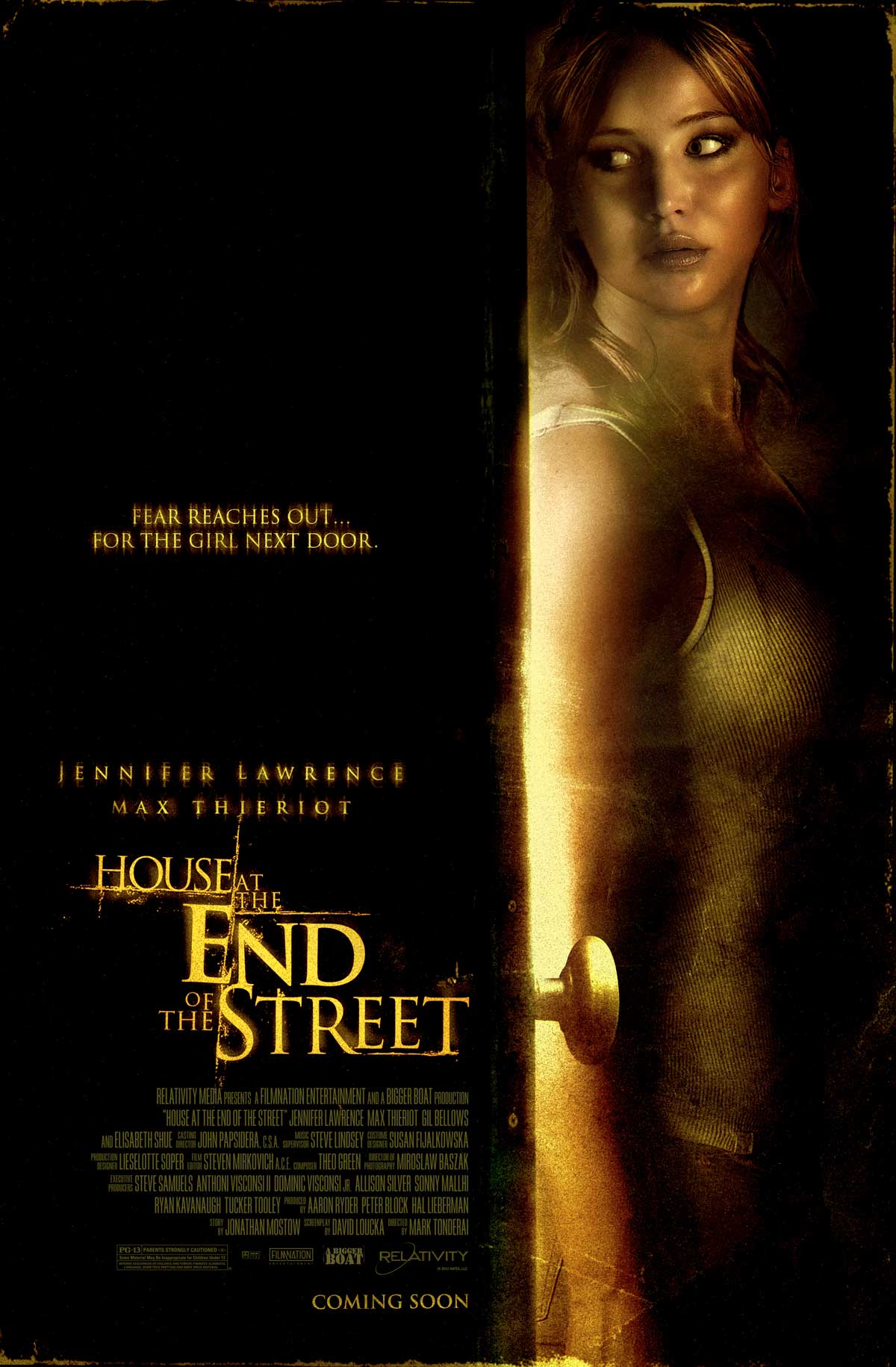 As readers will attest, I am a fan of actress Jennifer Lawrence. Some of my pals might say limiting the word to “fan” is being too modest on my part, but I don’t want to alarm anyone. I think she’s a terrifically talented actress and her Best Actress Oscar was well deserved for a film I unabashedly adore. With all of this being said, good actors can still make really bad movies, and that’s what we have with the stillborn horror flick, House at the End of the Street, referred to by marketing by the Twitter-friendly acronym HATES. That seemed like a tip-off, didn’t it? The problem is that for a good hour this movie is more of a drama than a horror movie, and everyone in town seems to be jerks to this guy in town whose sister murdered his family. Apparently him still residing in town lowers their property values… for some reason. I think it wants to be a psychological thriller, but even giving it that much credit assumes there’s some degree of competent execution. It’s not scary, the twists should be easily telegraphed to anyone with a modicum of sense, and Lawrence’s presence is just downright questionable. Why did she agree to do this? What about this clunky script, with its obvious padding to its “shocking” revelation, appealed to this woman? I suppose with her fast ascent to the top of Hollywood, Lawrence now has the clout to never again star in something as drecky as this would-be thriller. Then again, if she does, it’ll be by choice. Or a fat paycheck.
Nate’s Grade: C-
Share this:

Evil Dead (2013)
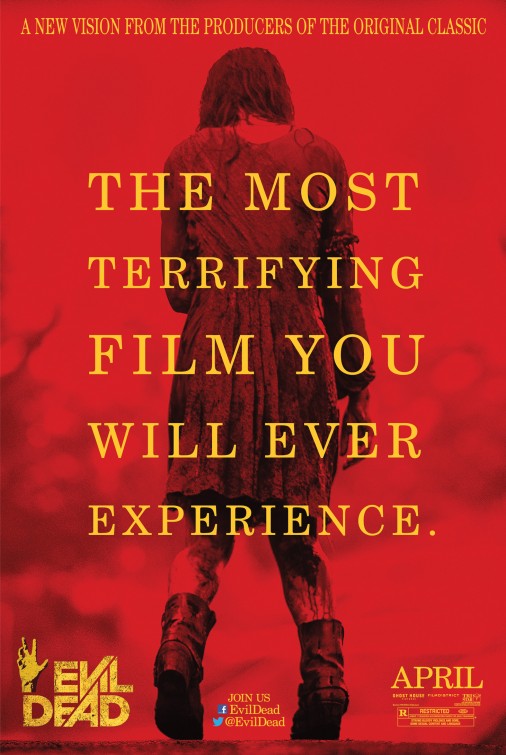 Upping the gore quotient considerably but having little else of merit, the remake of Evil Dead loses just about everything that made the original special. Gone is the sense of humor, unless you just count the quantity of gore to be the qualifier for “humor,” and gone is any real sense of a creative spark. It looks good thanks to director Fede Alvarez, and the practical gore effects can be memorable and truly disgusting in the best possible way, but it just doesn’t feel like an Evil Dead movie. It makes the same mistakes that your typical dumb horror movies do, from a lack of clarity to one-dimensional characters (I think Blonde Girlfriend had one line of dialogue for the first hour) to repeated rule breaking. There are a bunch of callbacks to the original Evil Dead but they serve little other purpose. The finale, after a series of fake-outs, involves a weak showdown with a Big Bad that’s anything but. I expect better from a remake sanctioned and produced by the original director, Sam Raimi, and star Bruce Campbell. Maybe they knew it was only a matter of time before their 1981 film, and its superior 1987 sequel, would be remade by a cannibalistic Hollywood, so they wanted to cash in while they could. Or maybe they just argued, if anyone was going to make a poor remake, it might as well be them. If you’re hungry for gore, then Evil Dead may suffice, otherwise it’s a horror movie that’s too familiar, too mediocre, and ultimately too disappointing to recommend.
Nate’s Grade: C+
Share this:

Warm Bodies (2013)
 Given the explosion in zombie culture and the avalanche of zombie movies, it was only a matter of time before a studio pitched the romantic possibilities. They may be dead but they still have needs. Based on Issac Marion’s young adult novel, Warm Bodies attempts to tell a love story from a zombie’s perspective. Writer/director Jonathan Levine, so skillful with tone in the comedy/drama 50/50, tackles an even trickier balancing act, making a zombie romantic. With some visual flair, an eclectic soundtrack, and a winning onscreen pair, Warm Bodies is a sweet love story that does enough right to leave you smiling.
In the aftermath of a zombie apocalypse, R (Nicholas Hoult) is a zombie who spends most of his days shuffling through an airport. Occasionally he has a series of conversations with his pal, M (Rob Corddry), which mostly amount to grunts. R can’t remember who he was before he became a zombie, or even what life was like before it all went to pot, but there is one thing that will make him feel alive again – human brains. You see, this tasty delicacy allows zombies to relive the memories of their victims. It’s a nice release from, you know, decomposing. The zombies that have completely given up all sense of self peel off all their skin, becoming the Bonies, a wraith-like band of creatures that will feed off anything, even the dead.
 This is R’s life until his chance encounter with Julie (Teresa Palmer). He’s smitten instantly and feels something weird in his chest. His heart has started beating again. He doesn’t want to eat her, just protect her. Of course he did also happen to eat her now-ex-boyfriend (David Franco). R whisks her to safety to his home in an airplane cabin. They listen to records and he instructs her on ways to pose as a zombie. She’s cautious but grows fond of her zombie protector (zombie Stockholm syndrome?). But R is proof that the zombies can change and that humanity can be saved. There’s just the matter of convincing Julie’s father, General Grigio (John Malkovich), who had to shoot his own wife after she turned. He wants them all dead and will do whatever it takes to protect the last bastion of the living.
Levine has found what may be one of the only optimistic zombie films out there. Usually these movies end one of two ways: 1) everybody dies (the preferred option), or, 2) the heroes manage a final escape but are most likely doomed beyond all hope (just pushes the inevitable off screen and into our imaginations). Tethered to a genial but winning romance, Warm Bodies is a zombie movie with a genuine sense of hope, revival, and even finds way to carve out a happy ending that, while predictable, feels right tonally.
The twee romance has a lot more in common with indie stylings than it does, say, Twilight, which will likely be invoked by many a critic and ticket-buyer alike. It’s not so much the brooding, sullen, exasperating kind of “romance” Twilight has primed people to expect when monsters date young girls. Thanks to the helpful voiceover, we see R as a thoughtful (being generous here considering his peers) guy who, like most teens, is trying to battle his inner urges and sense of awkwardness. He may be a zombie but Levine and Hoult have found a way to make R relatable and a likeable dead chap to root for. It also helps that he and Palmer (I Am Number Four) have above average chemistry together. Sure it’s a little weird that she takes the whole guy-crushing-on-me-kinda-ate-my-old-boyfriend, but like any relationship, there are just obstacles you’re going to have to overcome together. And as my pal Eric would attest, any Franco had it coming (his big bro did lead to the end of mankind in 2011, so maybe he’s responsible for the zombie apocalypse).
I appreciated that even with a PG-13 rating the movie still has a bite to it. Premise-alone, there is plenty room for some intriguing mismatched comedy. I enjoyed the aspect that consuming human brains unlocks that person’s memories. I like that R saves brains for later snacks. I liked that he used this absurd plot device to help him get closer with Julie and makes him feel guilty. Warm Bodies finds a way around the whole bodies decomposing issue, which is important since we don’t want our Romeo to be too disgusting for the teen girls. It refrains from overt gore, relying on implied carnage and preferring a chaste smearing of blood on lips, like he just got carried away eating a cherry pie. Honestly, I didn’t miss the gore. While the concept of a completely putrid corpse, with its flesh rotting and falling from its face, finding romance would be darkly comical, I think Levine chose the savvier path, forming a romance that doesn’t overdose on irony, which it would if the dead-boy-meets-girl romance were more grotesque. That’s the reason the Bonies exist, to provide a more grotesque and more evil foe that can provide perspective on the nobility of the not-all-the-way-dead people.
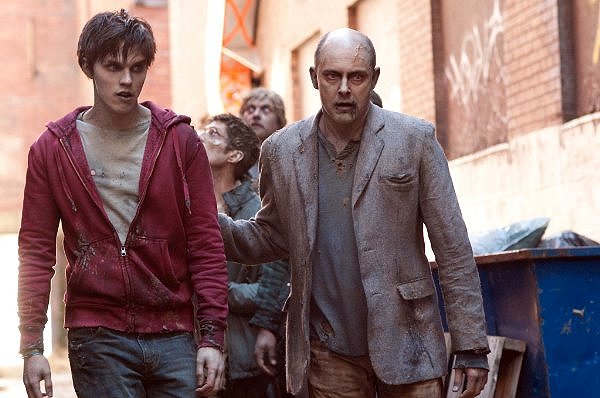 Levine works enough comic angles that the comic possibilities feel explored, although much like the horror and romance could have been pushed even further. As is, I found R’s musings wryly enjoyable, and his undead bromance with M provides some of the funniest moments in the film. Corddry (TV’s Children’s Hospital) is terrific in the movie and even finds what little room he can to add a touch of poignancy with his character. Often the humor, like the horror elements, is pretty relaxed but effective, refraining from oversized wackiness. You seriously would think that the movie would go bigger with its comedy considering everything at play.
Hoult (X-Men: First Class, TV’s Skins) does a credible job as a zombie, let alone an American zombie; it’s not all shuffling and caveman monosyllabic grunts. The actor is adept with communicating the awkwardness of his character in physicality. It’s funny how much you end of empathizing with a character that is dead. Hoult is also a pretty hunky guy, Vulcan eyebrows and all, but his amiable demeanor and young love clumsiness will win over as many guys in the audience as ladies. Palmer, also sporting an American accent, gets the blood pumping. Julie is underwritten but rises above just being a typical damsel-in-distress. It’s nice that later in the movie, when R breaks into the human camp, the roles are reversed, and Julie gets to protect him with her wits and will. Malkovich (R.E.D.) gets the worst of it just because his character is so rote.
I suppose I could lambaste the movie’s love-conquers-all logic with a dash of critical cynicism, but I feel like its low-key yet unfailingly romantic side is another of the movie’s charms. Sure, the idea that teenage love changing the world one beating heart at a time sounds like someone took the lyrics from an 80s power ballad and had it come to life (I’m reminded of the Patton Oswalt bit about the music video of an 80s hair band against the police: “He’d deflecting the bullets with the power of his rocking!”). There’s no real explanation why the zombies are getting better, though the concept of reclaiming their humanity appears to be contagious. I guess you could make some mild commentary on the healing power of human connection, but I don’t think Levine goes too far with any sort of subtext/social allegory, though there are enough slipshod Romeo and Juliet parallels. To the audience members who rankle at the unexplainable zombie cure, I would like to draw attention to the fact they are ignoring the fantastical logical puzzle of corpses coming back to life in the first place. If nobody minds why the zombie virus/crisis starts, then I don’t see why I should be sweating over what solves it.
Warm Bodies is a return to horror for Levine. Before his Sundance breakthrough The Wackness, the man got his start directing 2006’s All the Boys Love Mandy Lane. He’s made what may be the only zombie movie that I can say is “cute,” and that’s perhaps the best word for Warm Bodies. It’s a cute movie, perfectly pleasant, charming in its low-key sweetness while still managing to be clever. It’s dark but not too mordant, and sweet but not sappy. The last act doesn’t feel like it has the proper balance that the rest of the movie coasts with, but it wasn’t enough to ruin the film. At its core, it’s a cute love story, a zom-rom-com that’s much better than being relegated as “Twilight with zombies.” Yes it could have been darker, more macabre with its humor, and there are plenty of gloomy opportunities afforded by the premise of an undead boyfriend, but Levine and his actors have conceived a film that manages to be many things, chief among them enjoyable. It’s a zombie movie that might make you feel squishy but under completely different circumstances.
Nate’s Grade: B
Share this:

Mama (2013)
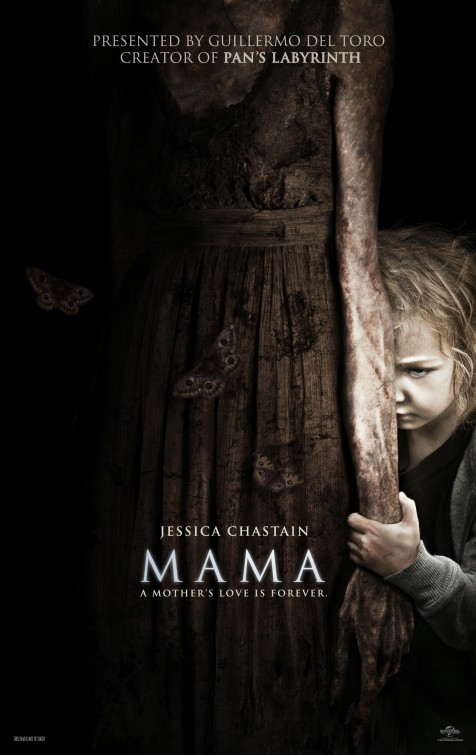 Guillermo del Toro is no stranger to the things that go bump in the night. He helped shepherd the horror film Mama to the big screen, and his love of heavy atmosphere and creepy, agile, lithe figures of terror is still evident. This is a rather effective and very creepy little horror movie that has enough little scares, big screams, and plain skin-crawling moments to recommend. The plot involves two little girls left to fend for themselves out in the wilderness. The two young actresses are fantastic, with terrific physical command of their bodies, able to slink and hop around like feral beasts. They help emotionally ground what could have been an otherwise ordinary ghost story. Oh yes, the girls prayed to a protector known as “Mama” who happens to be a malevolent and jealous spirit. Pity Jessica Chastain (Zero Dark Thirty), not just for her Gothic haircut and heavy eyeliner, but also as the girl’s reluctant foster mom. I’m shocked at how disturbing it is to watch a highly articulated physical specimen bend and snap and scurry at odd angles, broken arms bouncing like insect mandibles. And director/co-writer Andrés Muschietti knows how to properly tease an audience with just enough show and tell. The end is rather rote and familiar but, due to the emotional connection, has moments of genuine poignancy. Credit the considerable talents of the little ones as well as the devious vision of Muschetti and the guiding hand of del Toro. Give Mama a look.
Nate’s Grade: B
Share this:

Compliance (2012)
 The day at a fast food eatery began like any other. Sandra (Ann Dowd), the manager of the branch, has to shepherd her small group of employees through a hectic Friday evening. Then she gets a phone call from an “Officer Daniels” (Pat Healy). He tells her one of her workers, Becky (Dreama Walker), has stolen money from a customer. Sandra takes Becky into a storeroom and confronts her. Becky is aghast and professes her innocence. This is where things start to get out of control in writer/director Craig Zobel’s potent indie pressure-cooker. “Officer Daniels” insists that Becky be searched, then strip searched, and then worse, and Sandra and the employees begrudgingly go along. After all, it’s an officer of the law telling them what to do. Except that “Officer Daniels” is no police officer. This whole incident is an awful prank, and the people involved will never be the same.
This really is an indie horror movie, flipping the oft-repeated cry, “Don’t go in there,” with, “Why are you still doing this?” You may have to watch portions of this movie between your fingers. I was squirming and crying out at numerous points. The tension and dread just continue to mount, and you watch the characters slowly degrade, as they’re asked to do more insidious acts of humiliation in the name of compliance, and to watch them carry on the path of shame. It’s a step-by-step process of human degradation, so that the more disturbing moments of sexual obedience don’t feel entirely implausible given the journey through hell the characters have endured. It is impossible to watch this movie silent and detached. This is a provocative film that will garner many reactions but it’s also something of an endurance test. How long can you watch? How far can you watch these characters descend? The movie hooks you early and then you almost feel complicit, but you’re completely taken over by morbid curiosity.
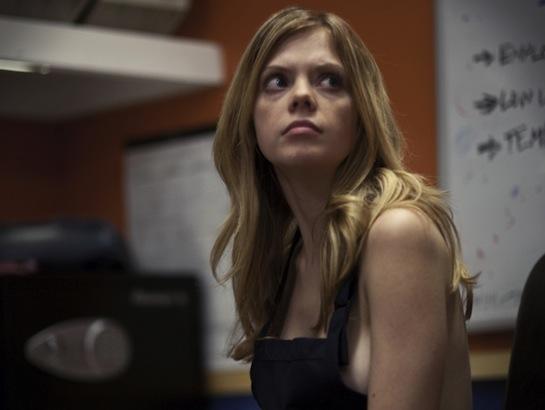 The movie is a powerful modern-day example of the Milgram experiment, the famous psychological exercise where a figure in authority, who assumes all responsibility, gradually gets average people to commit increasingly harmful acts to others. As long as people believe they are following orders, they can be convinced to do almost anything by someone in control. It’s easy to sit back and judge these characters, scoffing at how naïve they seem to be. It’s always easy for us to say what we would do in hypothetical situations, that is, until they happen. Compliance is an intriguing analysis of the shifting facets of power, authority, and manipulation. “Officer Daniels” enlists a host of tricks and verbal intimidation to persuade his victims to do things outside their better judgment (the caller’s true profession is a brilliant backstory). After a while, Sandra looks to be developing some slight Stockholm syndrome as she empathizes more with the plight of the phony officer on the phone than her employee. He provides just enough sympathy and validation she’s looking for to win her over. He also plays people against one another; he implores Becky to spare Sandra any extended grief, which often cows her into consenting. “Officer Daniels” isn’t the only one manipulating others; Sandra pressures employees to become involved in the situation, using her position of power to squeeze others into getting what she wants. There are numerous victims and culprits here.
Zobel could have easily given over to the exploitation elements of his story and made a very tawdry, voyeuristic exercise in sexual dominance. We watch as Becky bares all of herself and then goes even further, as “Officer Daniels” instructs male attendants to physically inspect her body cavities. It is a credit to Zobel’s sensitive direction that Compliance does not come across like a glorified S&M masturbation fantasy. He treats the incident very seriously, providing clear distaste without going overboard into preachy condemnation or superiority. It’s amazing that Zobel’s script finds so much empathy for his participants. You may be surprised at how relatable and “normal” these people seem. You may even recognize some of them. They’re all trying to do the right thing at heart, but that distinction gets extremely blurry as the night carries on. The point of Zobel’s script is that these people could be us. The added empathy makes the downward spiral all the more stomach-churning, as we want these characters to take a stand, to wise up and question the voice of authority.
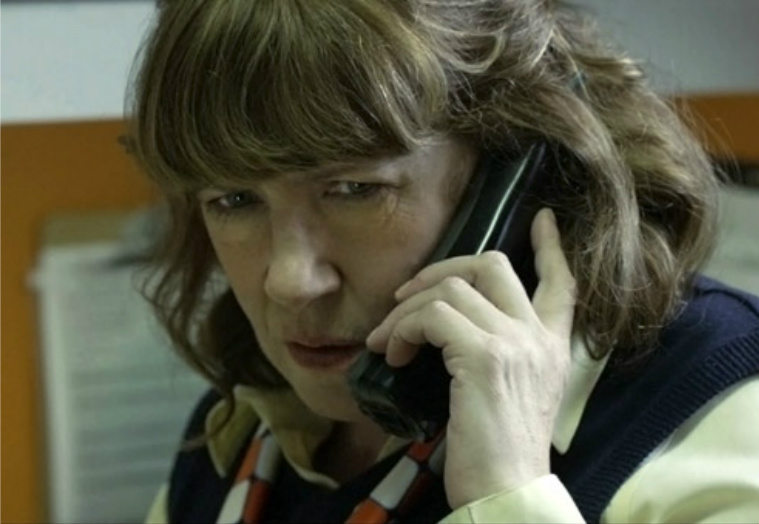 Dowd (Marley & Me) is downright heartbreaking and deeply frustrating in the movie. We get a clear sense of the pressure she’s under in her position, but she’s really the focal point of the movie. Walker (TV’s Don’t Trust the B in Apartment 23) is the martyr of the piece, and her slow resignation to the humiliation is deeply affecting, but this is Dowd’s movie. The longtime character actress takes the character of the dowdy Sandra, striving for respect, and transforms her into a figure worthy of Greek tragedy. She can be vindictive and, well, bossy, but she’s also a figure struggling for respect and validation and what she feels is morally just. We watch as her confidence starts getting chipped away, the flickers of doubt that she must tamp down because now she’s gone too far to reverse course. I don’t imagine that a movie as small as Compliance will be remembered around Oscar time, but I’ll certainly recall Dowd’s sad and transfixing performance.
I’d like to share a spooky bit of personal connection to the film. No I’ve never experienced anything this heinous before, but there was an offhand music cue that caught my interest. When we cut to the dining area early on, there’s an Admiral Twin song playing. Who is Admiral Twin? Why they’re a brilliant pop-rock band from Tulsa, Oklahoma that I’ve been singing the praises of since 2000. I’ve won over friends with my discipleship, but the band is still relatively unknown, playing few performances outside of their native Tulsa. Given the phonetic approximations of my name with the film’s writer/director, and the inclusion of an obscure indie band that few know (but should), it seems likely that Zobel may indeed be some far off relative of mine or, more likely, myself. I must have crafted an entire film without ever knowing about it. This seems like the most probable scenario.
I don’t want it sound like Compliance is some grueling exercise in group sadism. In lesser hands, it might have devolved to that. It’s a fascinating and provocative game that challenges and incenses an audience. The movie is a sickening but compulsively watchable dramatic experiment that will leave you talking for hours once it concludes. It’s an uncomfortable sit, yes, but that doesn’t mean it’s not worthwhile. The events in the film seem unbelievable and yet it’s based on a true story. This stuff happened, people. Not only that, it happened multiple occasions in multiple vicinities. What does that say about human nature? Will we only be as good as society lets us be? If we are absolved of responsibility, how far removed from our own sense of ethics will we go? Are we all susceptible to this moral failing under the right circumstances? I think that’s the truly terrifying and lasting lesson of Compliance. These people could be us, both victim and unwitting antagonist. Destined to stir debate and become a college ethics course favorite, Compliance is a gripping movie that will make you cringe but also give way to some scary introspection. How far would you go?
Nate’s Grade: A-
Share this:

Piranha 3DD (2012)
 Wow, I was not expecting the follow-up to the so-bad-it’s-excellent Piranha 3D to pretty much just inhabit the “so bad” spectrum, though I ignored warning signs at my own risk. I found the 2010 Piranha to be a sheer blast of campy entertainment, with some world-class gore effects and a game cast. I was actually terribly excited about a sequel; I’m ashamed to admit it now. Where did things go so horribly wrong? Much like Expendables 2, the movie’s tone shifts from tongue-in-cheek 80s throwback to meta self-awareness. The movie becomes more of a lousy comedy with some absurd violence rather than a horror movie with a nasty sense of humor. The entire premise is so labored, that a water park would become piranha-infested, and the characters are so unlikable; to dub them one-dimensional is to be too kind. The acting is abysmal even by bottom-of-the-barrel B-movie standards. The celebrity cameos feel wasted, with David Hasselhoff soaking up every second of desperation. The tension is next to nil and the gore effects are pretty cheesy, trading gallons of blood for ingenuity (many character deaths occur off screen, like Gary Busey’s). Then once the piranhas strike, the movie just completely abandons any sense of reality and becomes a gonzo comedy of the absurd, with characters behaving like idiots from another dimension. There’s even one character that gets decapitated by a simple string of flags. It’s at this point that Piranha 3DD drops any slapped-together sense of purpose. And yet this ghoulish mess can only barely make it to a scant 70 minutes (good luck getting through the abominably unfunny end credits outtakes). Reportedly, 3DD had almost the same budget of 3D. Where the hell did that money go? Piranha 3DD completely misfires on every level, failing as a horror movie, a horror-comedy, a comedy, a gore movie, hell, as a suitable movie. Whatever the metric, this movie blows. If you’re hard-pressed for gratuitous nudity soaked in blood, watch the superior 2010 Piranha film instead. I’m going to start drinking heavily and forget I ever looked forward to this monstrosity on taste.
Nate’s Grade: D
Share this:

V/H/S (2012)
 The found footage subgenre seems ripe for overexposure at this point. Just this year we’ve had a found footage party movie, a found footage superhero movie, a found footage cop movie, and this week will open Paranormal Activity 4, the latest in the popular found footage horror series. I understand the draw for Hollywood. The movies are cheap and the found footage motif plays into our culture’s endless compulsion for self-documentation. There are definite benefits to the genre, notably an immediate sense of empathy, a sense of being in the fray, and an added degree of realism. There are plenty of limitations too, notably the restrictive POV and the incredulous nature of how the footage was captured. With that being said, I think the people behind V/H/S finally found a smart use of this format. V/H/S is an indie horror anthology that offers more variety, cleverness, and payoffs, than your typical found footage flick.
Normally, found footage movies consist of 80 minutes of drawn out nothing for five minutes of something in the end. Usually, the payoff is not worth the ensuing drudgery of waiting for anything to happen. Watching the Paranormal Activity movies has become akin to viewing a “Where’s Waldo?” book, scrutinizing the screen in wait. V/H/S has improved upon the formula by the very nature of being an anthology movie. Rather than wait 80 minutes for minimal payoff, now we only have to wait 15 minutes at most. I call that progress. I haven’t seen too many found footage films that play around with the narrative structure inherit with a pre-recorded canvas. I recall Cloverfield smartly squeezing in backstory, earlier pre-recorded segments being taped over. With V/H/S, this technique is utilized once and it’s just to shoehorn in some gratuitous T & A. Plus, the anthology structure allows for a greater variety. If you don’t like some stories, and chances are you won’t, you know another one’s just around the corner.
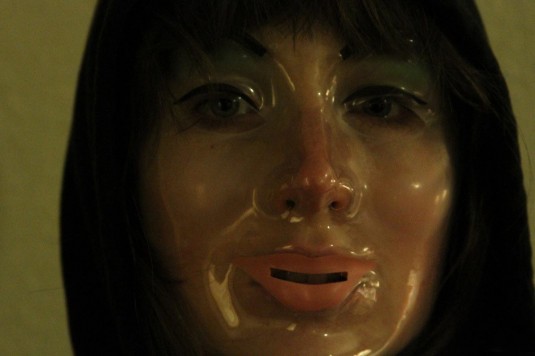 For my tastes, the stories got better as the film continued. I was not a fan of the first few stories. The wraparound segment (“Tape 51”) involves a band of delinquents who are hired to retrieve one VHS tape in a creepy home. The guys are annoying jackasses, and our opening image involves them sexually assaulting a woman and recording it to sell later, so we’re pretty agreeable to them being killed off one by one inside the creepy home. I just don’t know why anyone would record themselves watching a movie. It’s not like it’s Two Girls One Cup we’re talking about here. I found the wraparound segment to be too chaotic and annoying, much like the band of idiots. It ends up becoming your standard boogeyman type of story and relies on characters making stupid decision after stupid decision. Why do these idiots stay in the house and watch movies? Why do these people not turn on the lights?
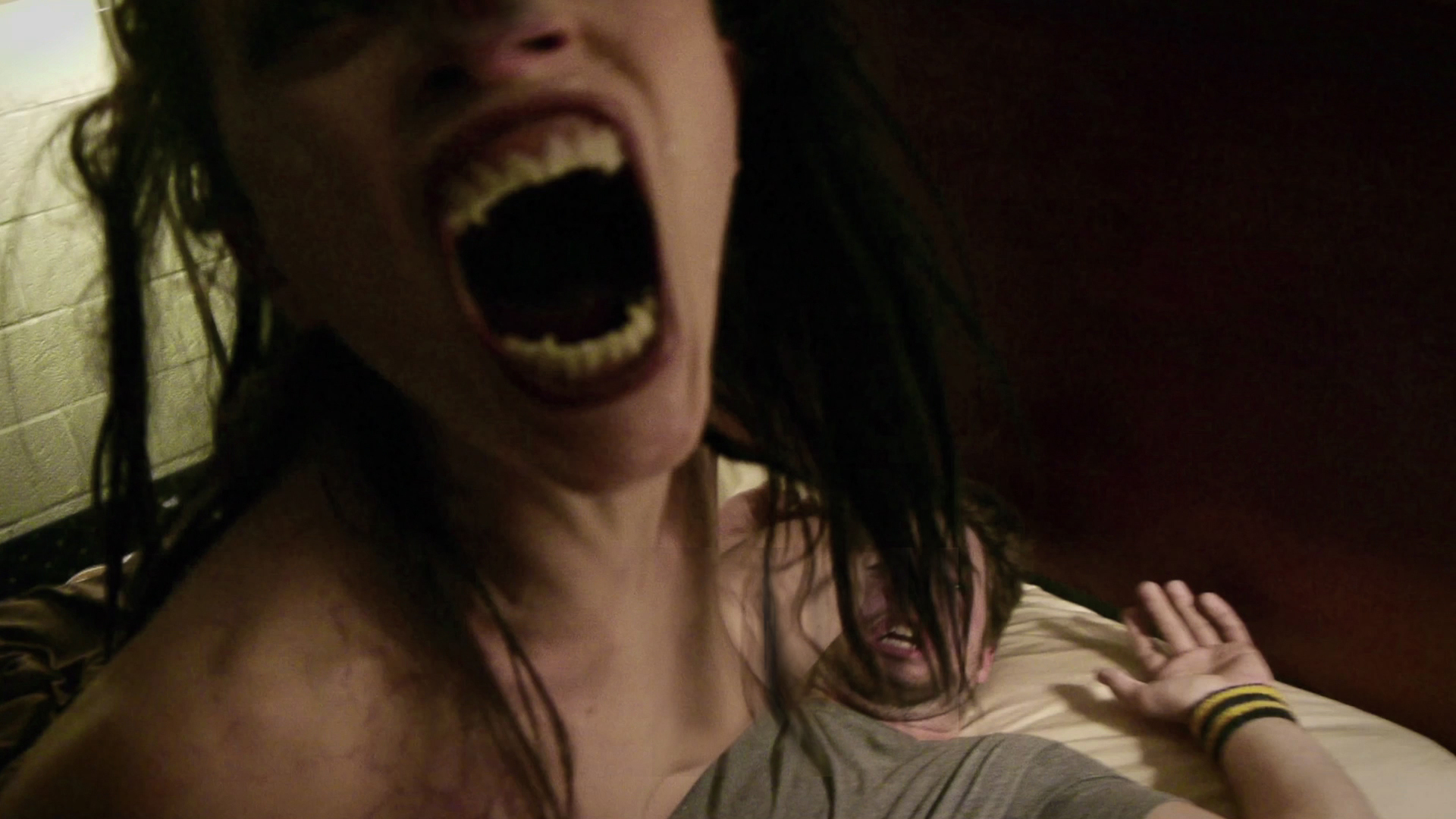
The first actual segment (“Amateur Night”) has a solid premise: a bunch of drunken frat boys plan to make their own porn with a pair of spy glasses. They bring the wrong girl back to their motel room and get more than they bargained for. Despite some interesting commentary on the male libido (interpreting a woman’s spooky actions as being sexually aroused), this segment suffers from a protracted setup. There’s a solid ten minutes of boys being boys, getting drunk, that sort of thing. And when the tables are turned, the spyglasses lead to shakier recording, which is odd considering they are pinned on the guy’s nose. The horror of the ending is also diminished because it’s hard to make sense of what is literally happening. The weakest segment is the second one (“Second Honeymoon”), which is surprising considering it’s written and directed by Ti West, a hot name in indie horror after The Innkeepers. West’s segment is your standard black widow tale, following a couple on their vacation to the Southwest and their home movies. However, a stalker is secretly videotaping them while they sleep. Borrowing from Cache, this is a genuinely creepy prospect, and the sense of helplessness and dread are palpable. It’s surprising then that West concludes his segment so abruptly, without further developing the stalker aspect, and tacks on a rather lame twist ending that doesn’t feel well thought out. “You deleted that, right?” says one guilty character on camera washing away blood. Whoops.
The second half of V/H/S is what really impressed me, finding clever ways to play upon the found footage motif and still be suspenseful. The third segment (“Tuesday the 17th”) begins like your regular kids-in-the-woods slasher film. The very specific types of characters (Jock, Nerd, Cheerleader) are set for some frolicking when they come across a deranged killer. However, the slasher monster is a Predator-style invisible creature that can only be seen via the video camera. When recorded, the monster creates a glitch on screen. I think this is a genius way to cover the biggest head-scratcher in found footage horror: why are you still recording? With this segment, the video camera is the savior, the protector, the only engine with which they can see the monster. The fourth segment (“The Sick Thing That Happened to Emily When She Was Younger”) is shot entirely through Skype conversations on laptops. Emily is convinced her apartment is haunted and seeks support from her boyfriend, away on business. This segment’s co-writer and director, Joe Swanberg, is more known for being the mumblecore king than a horror aficionado, but the man makes scary good use of the limitations of his setup. The story might be a bit hard to follow, especially its ending, but there are some great jolts and boo-moments. There’s even a fantastic gross-out surprise as Emily shares her own elective surgery/exploration.
 But it’s the last segment that takes the cake, ending V/H/S on a fever pitch of action. The wraparound segment isn’t even that, since it ends before the final segment, “10/31/1998.” It’s a haunted house story about a group of guys who stumble into the wrong house on the wrong night. Initially they think the human sacrifice in the attic is part of the show, but then weird things start happening like arms coming through walls and door knobs vanishing. This segment is a great example of how effective atmosphere can be aided by smart and selective special effects. When the madness hits the home, it feels just like that, and the rush to exit the house is fueled with adrenaline. You don’t exactly know what will be around the next corner. The CGI effects are very effective and the lo-fi visual sensibilities give them even more punch. The frenzied chaos that ends “10/31/1998” would be apt for a feature-length found footage movie, let alone a 15-minute short. It’s a satisfying climax to a film that got better as it went.
With all found footage movies, there’s the central leap of logic concerning who assembled this footage, for what purposes, and how they got it. With movies like the abysmal Apollo 18, I stop and think, “Why do these people assembling the footage leave so much filler?” V/H/S doesn’t commit a sin worthy of ripping you out of the movie, but when it’s concluded you’ll stop and ponder parts of its reality that don’t add up. The very idea of people still recording onto VHS tapes in the age of digital and DVD seems curious, but I’ll go with it. Several segments obviously had to be recorded onto a hard drive; the Skype conversations would have to be recorded onto two perhaps. So somebody transferred digital records… onto a VHS tape? And it just so happens that this tape then got lost.
While inherently hit-or-miss, V/H/S succeeds as an anthology film and generates new life into the found footage concept. Not all of the segments are scary or clever, but even during its duller moments the film has a sense of fun. There’s always something new just around the corner to keep you entertained, and the various anthology segments give a range of horror scenarios. The lo-fi visual verisimilitude can be overdone at times, but the indie filmmakers tackle horror with DIY ingenuity. I don’t know if anything on screen will give people nightmares, but it’s plenty entertaining, in spots. V/H/S is an enjoyable, efficient, and entertaining little horror movie just in time for Halloween. If you’re going to do a found footage movie, this is the way to do it.
Nate’s Grade: B


 nathanzoebl
You must be logged in to post a comment.