Blog Archives
Elizabethtown (2005) [Review Re-View]
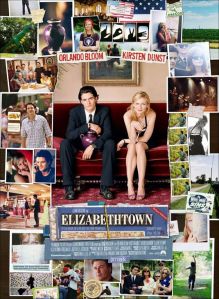 Originally released October 14, 2005:
Cameron Crowe is a filmmaker I generally admire. He makes highly enjoyable fables about love conquering all, grand romantic gestures, and finding your voice. His track record speaks for itself: Say Anything, Singles, Jerry Maguire, Almost Famous (I forgive him the slipshod remake of Vanilla Sky, though it did have great artistry and a bitchin’ soundtrack). Crowe is a writer that can zero in on character with the precision of a surgeon. He’s a man that can turn simple formula (boy meets girl) and spin mountains of gold. With these possibly unfair expectations, I saw Elizabethtown while visiting my fiancé in New Haven, Connecticut. We made a mad dash to the theater to be there on time, which involved me ordering tickets over my cell phone. I was eager to see what Crowe had in store but was vastly disappointed with what Elizabethtown had to teach me.
Drew Baylor (Orlando Bloom) opens the film by narrating the difference between a failure and a fiasco. Unfortunately for him, he’s in the corporate cross-hairs for the latter. Drew is responsible for designing a shoe whose recall will cost his company an astounding “billion with a B” dollars (some research of an earlier cut of the film says the shoe whistled while you ran). His boss (Alec Baldwin) takes Drew aside to allow him to comprehend the force of such a loss. Drew returns to his apartment fully prepared to engineer his own suicide machine, which naturally falls apart in a great comedic beat. Interrupting his plans to follow career suicide with personal suicide is a phone call from his sister (Judy Greer). Turns out Drew’s father has died on a trip visiting family in Elizabethtown, Kentucky. Drew is sent on a mission from his mother (Susan Sarandon) to retrieve his father and impart the family’s wishes. On the flight to Kentucky, Drew gets his brain picked by Claire (Kirsten Dunst), a cheery flight attendant. While Drew is surrounded by his extended family and their down homsey charm and eccentricities, he seeks out some form of release and calls Claire. They talk for hours upon hours and form a fast friendship and stand on the cusp of maybe something special.
 I think the most disappointing aspect of Elizabethtown for me is how it doesn’t have enough depth to it. Crowe definitely wears his heart on his sleeve but has never been clumsy about it. Elizabethtown wants to be folksy and cute and impart great lessons about love, life, and death. You can’t reach that plateau when you have characters walking around stating their inner feelings all the time, like Drew and Claire do. They might as well be wearing T-shirts that explain any intended subtext. Crowe squanders his film’s potential by stuffing too many storylines into one pot, thus leaving very little attachment to any character. Elizabethtown has some entertaining details, chiefly Chuck and Cindy’s drunk-on-love wedding, but the film as a whole feels too loose and disconnected to hit any emotional highs. If you want a better movie about self-reawakening, rent Garden State. If you want a better movie about dealing with loss, rent Moonlight Mile.
This is Bloom’s first test of acting that doesn’t involve a faux British accent and some kind of heavy weaponry. The results are not promising. Bloom is a pin-up come to life like a female version of Weird Science, a living mannequin, possibly an alien with great skin, but he isn’t a real compelling actor. He has about two emotions in his repertoire. His whiny American-ized accent seems to be playing a game of tag. He’s not a bad actor per se; he just gets the job done without leaving any sort of impression. To paraphrase Claire, he’s a “substitute leading man.”
Dunst is chirpy, kooky and cute-as-a-button but is better in small doses. Her accent is much more convincing than Bloom’s. Sarandon deserves pity for being involved in Elizabethtown‘s most improbable, cringe-worthy moment. At her husband’s wake, she turns her time of reflection into a talent show with a stand-up routine and then a horrifying tap dance. Apparently this gesture wins over the extended family who has hated her for decades. Greer (The Village) is utterly wasted in a role that approximates a cameo. Without a doubt, the funniest and most memorable performance is delivered by Baldwin, who perfectly mixes menace and amusement. He takes Drew on a tour of some of the consequences of the loss of a billion dollars, including the inevitable closing of his Wildlife Watchdog group. “We could have saved the planet,” Baldwin says in the most comically dry fashion. Baldwin nails the balance between discomfort and bewilderment.
 Elizabethtown wants to be another of Crowe’s smart, feel-good sentimental field trips, but it falls well short. I was dumbfounded to see how little the story progressed. It lays the groundwork for a menagerie of subplots and then, in a rush to finish, caps everyone off with some emotionally unearned payoff. To put it simply, Elizabethtown wants credit and refuses to show its work. The film is packed with characters and ideas before succumbing into an interminable travelogue of America in its closing act, but what cripples Crowe’s film about opening up to emotional growth is that the movie itself doesn’t showcase growth. We see the rough and tumble beginnings of everyone, we see the hugs-all-around end, but we don’t witness that most critical movement that takes the audience from Point A to Point B. The results are beguiling and quite frustrating. Take the subplot about Drew’s cousin, who can?t connect to his father either and wants to be friends to his own son, a shrill little terror, instead of a father. Like most of Elizabethtown‘s storylines, these subplots die of neglect until a half-hearted nod to wrap everything up. Father sees son perform and all is well. Son does little to discipline child but all is well. Elizabethtown is sadly awash in undeveloped storylines and characters and unjustified emotions, and when they’re unjustified we go from sentiment (warm and fuzzy) to schmaltz (eye-rolling and false). I truly thought Crowe would know better than this.
Crowe has always been the defacto master of marrying music to film. Does anyone ever remember people singing Elton John’s “Tiny Dancer” before its virtuoso appearance in 2000’s Almost Famous? Crowe has a nimble ear but his penchant for emotional catharsis set to song gets the better of him with Elizabethtown. There’s just way too many musical montages (10? 15?) covering the emotional ground caused by the script’s massive shortcomings. By the time a montage is followed by another montage, you may start growing an unhealthy ire for acoustic guitar. Because there are so many unproductive musical numbers and montages, especially when we hit the last formless act, Elizabethtown feels like Crowe is shooting the soundtrack instead of a story.
Elizabethtown is an under-cooked, unfocused travelogue set to music. Crowe intends his personal venture to belt one from the heart, but like most personal ventures the significance can rarely translate to a third party. It’s too personal a film to leave any lasting power, like a friend narrating his vacation slide show. Elizabethtown is gestating with plot lines that it can’t devote time to, even time to merely show the progression of relationships. The overload of musical montages makes the movie feels like the longest most somber music video ever. Bloom’s limited acting isn’t doing anyone any favors either. In the end, it all rings too phony and becomes too meandering to be entertaining. Elizabethtown is a journey the film won’t even let you ride along for. This movie isn’t an outright fiasco but given Crowe’s remarkable track record it can’t help but be anything but a failure.
Nate’s Grade: C
——————————————————
WRITER REFLECTIONS 20 YEARS LATER
I truly hope some day Cameron Crowe reads this. I owe him an apology.
I’ve always considered Elizabethtown the turning point in Crowe’s career, where things took an errant path that he’s been stuck on ever since, though there were certain warning signs with 2001’s Vanilla Sky. I was disappointed by this movie and the ensuing twenty years have only made me think back less favorably, since this was the juncture where Crowe’s hit-making streak of such tender, personal, and tremendously entertaining studio dramedies came to an end, where the Crowe projects afterwards felt more like Crowe was chasing after the idea of what makes a Cameron Crowe movie and losing his sense of self. I selected Elizabethtown for my 2025 re-watch mostly because I’ve never gone back to it in the proceeding two decades but also because it’s an important switch point in a popular artist’s career. What I wasn’t expecting when I re-watched the movie was to be so taken in by it considering my own personal circumstances.
 This is a movie about grief, about putting one foot in front of the other, about coming to terms with mistakes and regrets, and ultimately looking ahead. It’s still a little corny, and it’s still got some flaws, but in 2025, having lost my own father not even a year ago as of this writing, Elizabethtown hit me square in the chest. It made me a mess of emotions and I could plug myself into this bittersweet yet gentle nudge of a film. Even the amiable tone and gentle, searching nature worked for me, as it felt like it was expertly channeling the fog of grief upon experiencing significant loss. Your body is sort of operating on autopilot and you feel outside yourself, like you’re watching a documentary about your life. You feel numb and recognize you’re in pain but you never really want to talk about it yet you crave human connectivity, and even when people awkwardly ask the question, “Are you doing okay?”, while the answer is obvious to all parties, you’re still unexpressively grateful for someone else granting the kindness of reaching out. This movie encapsulates this drifting feeling of loss and shock better than any I can recall. And in Crowe’s universe, which is like a more filled-in and colorful version of our own, strangers will take a moment to recognize your emotional pain and give you a hug. It’s a universe that cares about you, where even a guy getting married in your same hotel wants to invite you to his reception. There are no cynics in a Cameron Crowe universe, or at least if there are, they will be converted by the end like a Charles Dickens tale. It is a universe supremely about feeling and connectivity, and that’s what Drew (Orlando Bloom) has to learn.
Drew is under personal and professional crises. He’s been cast off at his job as an athletic shoe designer because his big design was recalled to the cost of a billion dollars. He says he’s begun cataloging “last looks” by co-workers, when people think this will be the last time they see him again. It’s a nice detail that comes back but also gets us thinking about the later drama with life and death, how every one of us will give our last looks to the people in our lives, we just won’t have the same sense of clarity. Drew is traveling to Kentucky to retrieve his father’s body and return home to his immediate family. This is intended to be a pit stop, a brief sojourn with extended family he doesn’t really see often, a respite before he gets his life back together. These significant loops in life become a natural reflective point, and that’s where Drew is coming from. His life has seemingly bottomed out, and the movie functions as his therapy session to process his grief and his shattered self-image. His sister, an undervalued Judy Greer, keeps asking if he’s had his “big cry” yet, and reminds him that it’s coming. By the end of the movie, it’s not Drew having come full-circle and found his way out of his grief fog. The whole movie is about just setting him up to actually address the loss and feel the completeness of his sadness. Under this perspective, the movie’s many menial supporting characters that dot the plot feel like gentle well-wishers. I complained about them in 2005 but in 2025 it makes the entire world feel like therapy accessories.
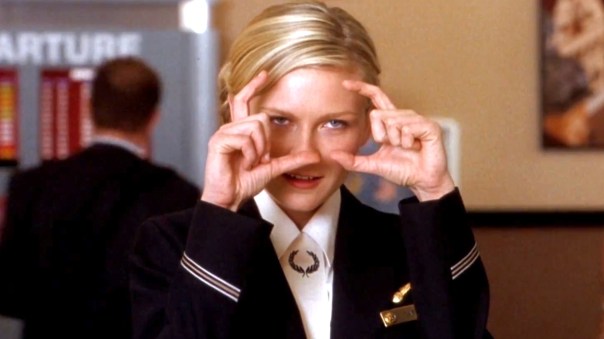
 Much of the movie is also pinned on the romance between Drew and quirky flight attendant Claire (Kirsten Dunst), and it was her performance that coined the term Manic Pixie Dream Girl (MPDG). She can definitely fit that mold but there’s a more subtle sadness to her that you see along the edges, like she’s putting so much effort into maintaining this front in public lest the mask drop and she has to deal properly with her own loneliness and disappointments. I think a more accurate depiction of the MPDG trope as a transparent sop to male fantasy is 2004’s Garden State with Natalie Portman’s spunky character. There is a sense that Claire’s off-screen long-distance bad boyfriend, Ben, is actually made up, an excuse to stop her from getting too close. She uses the term “tourist” to describe herself and Drew, and it’s fitting. The reality of her job makes her feel like she’s constantly in motion without setting down roots, prone to a thousand superficial human interactions that get washed from her memory as the day resets. It’s a transitory life and it can make a person feel outside of themself, questioning which version is their true self. The romantic dance between Claire and Drew really is all about both of them working up the nerve. It’s less a relationship that is fully formed and banging the drum of love; it’s far more an infatuation, where each side is circling over whether to risk the fun for something more. Under that guise, I’m more forgiving of the movie not exactly “showing its work” as I criticized in my original review. It’s not there because they aren’t there. This isn’t a relationship but a flirtation and friendship coalescing. It’s sweet and pleasant, like much of the movie, falling right in line with Crowe’s compassionate, humanist vibes.
It’s hard to exactly quantify but Elizabethtown is more of its moments and the gradual pull that is tugging Drew toward his ultimate destiny, which amounts to self-acceptance and fully processing his grief. I originally castigated Drew’s mother (Susan Sarandon) trying out new hobbies as a means of busying herself in the wake of her husband’s demise, including turning the wake into a standup comedy audition. The jokes themselves can be a little cringey or in poor taste for a funeral, but the overall effort is about this woman trying to define her life now that her partner, the old sturdy definition, has departed. I see something similar with my own mother in the wake of my father’s death. I’m not expecting my mother to start making boner jokes like Sarandon, but I see how this identity crisis can become all-too familiar. I love the absolute chaos of the actual wake that erupts into a literal flaming bird while the family band jams out to Lyndard Skynard’s “Free Bird,” and as that famous guitar solo hits the stratosphere, the movie’s built-up pressure all seems to come to a head, and the continued playing of the song despite all the chaos is its own defiant act of catharsis. It unbounded something inside me as it does for the characters. Then there’s the extended conclusion where Drew drives all over with his father’s ashes and with Claire’s travel guide, notes, and curated soundtrack as companion. It’s a lot, but it’s also the final stretch that gets Drew to finally accept his feelings, to finally feel the totality of loss but also that totality of love, and while his father may be gone, that does not eliminate the lessons and love and memories that live within him. Having this personal deeper dive happen on a father-son road trip actually feels rather fitting and poignant even.
 This is the third Cameron Crowe movie I’ve re-examined for my twenty-year re-reviews and it’s also my last. I never formally reviewed any of Crowe’s follow-up movies after 2005. I’ve already talked about how his career has taken a different track in other re-reviews, but I’ve come around on Elizabethtown, and that makes me wonder if maybe I’ll be more charitable to We Bought a Zoo or Aloha in time as well. In 2005, I found Elizabethtown to be a disappointing grab bag of Crowe’s touchy-feely familiarity, and now twenty years later, the movie really gelled for me. Perhaps I needed to go through a similar experience as the protagonist to be more open to its charms and artistic waves, or perhaps I’m getting nostalgic for Crowe’s kind of big-hearted romantic storytelling that hasn’t exactly been proliferating cinemas for some time. Perhaps I’ll watch Elizabethtown again years later and feel completely different, but I kind of doubt it, because now this movie is linked with my own reconciliation of grief after my father’s passing. It’s now been elevated from a disappointment from a revered filmmaker to something personal and passingly profound. It exemplified the foggy feelings and desire for connection for me post-funeral. As Claire says, “We are intrepid. We carry on.” Responding to failures and regrets should continue to resonate, and so Elizabethtown might actually become a personal movie I cherish over the years. It’s not the masterpiece that Almost Famous is, an all-timer, but hardly any other movies will rise to that level. I’ll accept Elizabethtown on its own terms in 2025, and those were the exact terms I needed to feel more whole.
So thank you Cameron Crowe. It took twenty years but I’ve come around. This isn’t a folly, a failure, and certainly no fiasco. It’s actually a sweet and moving tale about trying to find your direction in the face of grief and shame and just finding your way out the other side of the fog. For me, this whole movie was about the universe working through a million cheerful helpers to nudge Drew back onto his feet, including our love interest, which seems less damnable if the entire movie is achieving the same results. For a person looking through tragedy and asking why, it’s just enough encouragement, wisdom, and empathy to feel nourishing without feeling overwhelming, and it doesn’t feel phony at all to me in 2025.
Elizabethtown was what I needed. I love you dad and miss you every day.
Re-View Review: B+

Share this:

Wolf Man (2025)
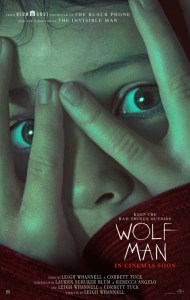 I had high hopes for writer/director Leigh Whannell’s second take on the classic monsters after how thrilling and satisfying his take on the Invisible Man was in the early months of 2020. Werewolves have served as a fertile metaphorical ground for genre storytelling to cover such varied topics like coming of age, self-actualization, and addiction. Considering Whannell was able to use an invisible man to explore toxic masculinity and gaslighting, without losing sight of a monstrously entertaining movie, I was hoping for repeated success. Wolf Man is ostensibly about inherited curses and the relationships between fathers and children, but it’s really about dealing with flaring tempers and whether or not our shortcomings are a result of our genetic inheritance. It’s also about a family trapped in a cabin helplessly watching their father/husband transform into a dangerous beast. I suppose there’s something here about the cycles of trauma and abuse, anger as a sickness, but the problem with Whannell’s Wolf Man is that it all feels like an incomplete beginning. There are definite identifiable themes here, and a scenario that would lend to slow-building dread amid losing control over one’s sanity to become a monster against their loved ones. I just kept waiting for something more. The movie runs out of steam shockingly once it strands its family in the cabin. We’re treated to many scenes of Christopher Abbott, as the beleaguered father, blankly staring and then seeing his vision where people are highlighted with neon outlines. It’s a neat visual but what does it mean? I was waiting for more development, more character work, more culminating of themes, more… anything. It’s a lot of sitting around, like this promising genre movie had been hijacked by, like, some self-sabotaging arty Godard-obsessed filmmaker trying to Say Something with all the protracted scenes, pained silences, and repetition without revelation. It’s a surprisingly boring movie and, I repeat, it’s a werewolf movie. The makeup effects also make our titular monster look more like a shaved wolf, or a goblin rather than a lupine-centric creature of the night. I don’t even think there was a single shot of a full moon in the whole movie. Regardless, Wolf Man is a disappointing a d dull monster movie that’s too shaggy for its own good.
Nate’s Grade: C
Share this:

Gladiator II (2024)
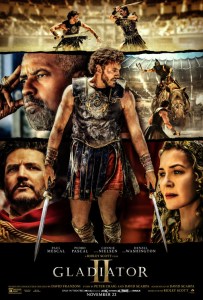 It’s been twenty-four years since Russel Crowe, in his Oscar-winning role, bellowed, “Are you not entertained?” We were, we really were, and Gladiator was a huge hit in 2000 but has also held up as a twenty-first century classic that revived the sword-and-sandals epic. The late sequel hews quite closely to the path of the original Gladiator, a rare example of a movie that was quite literally writing the script as they went and succeeded wildly. The second go-round has a strong same-y feel, which is natural with sequels, but it also has trouble simply standing in the shadow of its superior predecessor.
This time we follow Paul Mescal (Aftersun) as a Roman expat who’s been living abroad as a simple man of the people, except when violence is called upon. His land is conquered by Rome, his beloved is killed, and he’s sold into slavery only to be selected to be trained as a gladiator and only to become a fan favorite who could possibly unseat the Emperor(s). Sounds familiar, right, plus with the revenge motivation? Mescal is playing Lucius, the adult nephew to the late emperor played by Joaquin Phoenix. He’s all grown up and with abs. This Maximum stand-in is actually the blandest character in the film, a scolding figure who says little and doesn’t want to be in any position of leadership. It makes for a lackluster hero especially compared to the presence and magnetism of Crowe in his leading man prime. Fortunately there’s entertaining side characters, notably Denzel Washington (The Equalizer) as a bisexual wheeler-dealer who manipulates his way to the top of the Roman Senate, even garnering the attention of the hedonist twin emperors. The script utilizes a lot of conveniences, from revelations of bloodlines to an adjacent crypt that just so happens to have old Maximus’ armor and sword. Washington’s schemes, more loose-goosey and the benefit of convenient luck than machiavellian plotting, provide the missing entertainment value from Mescal’s underdog-seeking-vengeance arc. Director Ridley Scott returns and stages some fun Colosseum action set pieces, including an aquatic based naval battle with literal sharks. The opening siege against a coastal city by the powerful Roman army is wonderfully visualized. I was never bored but I can’t say that the movie is operating at close to the same level. The second half kind of creaks to a close, with a final one-on-one that feels too lopsided and unfulfilling. The emotional resonance of the prior movie is sufficiently lacking. While Gladiator II can still get your blood moving, it’s also an exercise in rote blood-letting as diminished franchise returns.
Nate’s Grade: B-
Share this:

My Son Hunter (2022)
 I’ll never understand the pathological obsession people have with Hunter Biden and what may or may not be on his laptop. This fixation on President Biden’s son seems so unshakably quixotic, hoping that with each new murky examination somehow, magically, there will be impropriety and criminality if you only look right. This dogged obsession with, at best, a tertiary figure to the true target of conservative ire reminds me of the crackpot theories concerning Vince Foster, a deputy White House counsel who took his own life in 1993. It was ruled a suicide by five investigations, and yet there are still enough people that are unsatisfied with this provable reality and want to see something more nefarious, more suspect, and simply more. Surely Vince Foster must have been assassinated by the Clintons, and especially Hilary, because he knew too much. It’s nonsense but to some it’s the only thing that makes sense. Such is the same with the Hunter Biden laptop, which some have deluded themselves into thinking could have been the difference maker between a President Biden winning by eight million more votes and a second-term for Trump. It’s difficult for the rational mind to fathom how many ordinary voters would truly care about a presidential candidate’s son’s liaisons, especially when that person is a private citizen and not employed in government.
I figured it was only a matter of time before a rapacious conservative media bankrolled a Hunter Biden Laptop Movie, and it seems only natural as Breitbart’s first foray into narrative filmmaking. The movie takes a lot of style and attitude notes from the latter films of Adam McKay, borrowing liberally from the mixture of documentary and cheeky fourth-wall breaking motifs from The Big Short and Vice. I’ll admit it makes for a slightly more entertaining movie, and My Son Hunter wasn’t the complete disaster that I had dreaded. It’s still not a good movie, by far, and its points are leaden and misleading at best and downright false and speculative at worst, but I’d rather watch a conservative movie that attempts to ape better filmmakers. Trying and failing is at least better to watch for 80 minutes than simply preaching to the converted and not even trying.
 Hunter Biden (Laurence Fox) is drifting through life, parties, and may be the biggest hindrance to a would-be President Joe Biden (John James). Hunter left his laptop at a repair shop but thankfully the media refuses to cover the story, instead downplaying it as a possible Russian disinformation campaign in the last weeks before the 2020 presidential election. Joe can’t have anything go wrong so close to his possible big victory, but Hunter, at least in this not-at-all biased interpretation, seems like a walking catastrophe waiting for his next landmine.
Before even discussing the filmmaking merits, let’s tackle the chief purpose of this movie, which is to defame Hunter Biden and by association Joe Biden. It’s not exactly breaking news that Hunter Biden has lived a troubled life. The man has been upfront about his own struggles with addiction; he wrote about it openly in his own 2021 memoir. Watching Hunter snort anything within reach, party with hookers, and hang out with lowlifes just feels gratuitous because it’s the same characterization over and over. That’s all the movie covers for its first 30 minutes, Hunter partying with strangers and strippers (but still in a demure way where nobody, even before passing out on the floor, removes their clothes). It feels like we’re wallowing in a man’s degradation and it’s unseemly because the intention is not meant to be empathetic. The target audience watching this won’t likely care about Hunter genuinely getting better as a person. That’s not what this expose is for, trying to better understand his humanity and vulnerability. This is merely a roundabout way to taint Joe Biden, a figure too boring by himself, so the critics have to settle for Hunter and his salacious escapades and work on grimy guilt by association.
I can hear some griping that the movie presents Hunter in a more sympathetic light, at least early, with him recognizing his own screw-up nature but feeling powerless to rise above. He also talks about the grief of losing his mother and sister at such a young age, as well as his older brother in 2015. However, any pretense of humanizing goes out the window once big daddy Joe arrives, and Hunter becomes a sniveling sycophant who shrugs his way through life, not just aware of his nepotistic privilege but fully comfortable with his participation in corruption and graft. Any introspection is abandoned and it makes any prior introspection appear phony. It’s hard to square the Hunter in the beginning who talks about the wounds of losing his mother with the Hunter who complains that his dad never supports his art, complete with cutaway to his finger painting. There’s an entire six-minute stretch where Hunter is lectured to, by his stripper named Kitty (Emma Gojkovic) who just happens to be the estranged child of Christian missionaries, about China’s concentration camps for its Uyghur population, and he stares slack-jawed, as if he hasn’t kept up with the news in years (the reprehensible concentration camps for Muslims have been well-documented by the mainstream media). This Hunter is merely a stand-in for vague political corruption, an irredeemable naif that is only meant to make his father appear worse, and that’s also why now that Republicans have won the House, you’ll see a lot more of Hunter Biden’s name in 2023 because, obviously, investigating his previous business handling as a private citizen is the cure for inflation and higher gas prices.
 So what does the movie profess to expose, especially so that had this evil laptop of incriminating evidence been properly adjudicated, then Donald Trump, the most unpopular president in the modern era, would have easily won re-election? It’s a rehashing of what led to Trump’s first impeachment in 2019. Hunter Biden was on the board of a Ukrainian energy company, Burisma, and he most definitely got that position because of his name, and of course this is the only instance in the history of the world where that has happened before to the scions of the rich and famous. When Jared Kushner, who actually worked in Trump’s White House, was offered over two billion dollars by the Saudi royal family upon leaving his taxpayer-paid position, I’m sure it was completely for his unparalleled expertise on Mid-East diplomacy. Anyway, this Burisma position was already investigated internally by the State Department for conflicts of interest, and the Ukrainian prosecutor that Joe Biden pressured to be removed as VP was not threatening to investigate Hunter. This prosecutor was corrupt and refused to investigate Russian-backed assets; he even refused to investigate Burisma. There was no inappropriate arm-twisting to protect Hunter or Joe Biden, as thoroughly debunked during the 2019 impeachment trial. It’s all pretty established, but that doesn’t matter to its target audience, the same group who keeps desperately re-shaking a disparate collection of incorrect election anecdotes to produce a bigger picture like one of those pesky Magic Eye pictures that only “true American patriots” can properly see.
That’s really the majority of the specific accusations against Hunter. It impugns his associates, like Devon Archer who was sentenced for defrauding a Native American tribe in 2022, but too many of the accusations are broad and reaching, much like the Burisma condemnation. Biden did invest in shares of a Chinese technology company, Face++, as part of a larger portfolio, and China has reportedly used this technology to surveil citizens it’s looking to persecute. This is not great, but I wonder how many other venture capitalists have holdings with connections to other similarly sundry applications, especially with technology. I’m not excusing this, I’m just saying this “a ha!” accusation isn’t quite the deathblow the movies seems to assume. If it was, it wouldn’t need a character to literally explain the context of why this is so damning. The larger accusations of bribery and funneling ill-gotten monies back to daddy Joe are weak too, no matter how many times the movie adds titles to tell us, “This really happened” (but it didn’t). So many of these accusations are like Burisma, where it’s a purposely misconstruing of events and a deliberate ignoring of context or corroborating information that would deter their argument.
Hunter Biden isn’t the world’s greatest businessman by any measure. He’s also not the world’s most infamous criminal who fails to be held accountable because of his cushy connections. Hunter Biden hasn’t even been banned from operating a non-profit in New York state because he used a kids-with-cancer charity like a personal piggy bank (sorry, that was Trump’s children). Let it be known by this self-professed progressive, if Hunter Biden is guilty of a crime then prosecute him. Put him in jail. I don’t care. He doesn’t deserve special treatment. But at the same time, if he’s just a guy with problems, he doesn’t deserve this crazy level of unbridled antipathy.
 Following the McKay model, characters will stare directly into the camera for comedic effect, to add additional commentary, like when the movie flatly states, “This is not a true story… except for all the facts.” Of course, the screenwriters have a harder grasp of those stubborn facts. These are the same writers of The Obamagate Movie, which proposes to expose the “Deep State conspiracy to undermine the Trump administration and the fake Russian collusion narrative.” Again, facts are stubborn things, especially when the end of the movie laments when, oh when, will truth matter over lies and the powerful be held responsible for their corrupt actions (were these people just willfully hibernating during the scandal-a-week Donald Trump presidency?). The attempts at humor are often juvenile and stupid, like an opening scene where Hunter has a psychic conversation with a tiny dog while he’s high on drugs, and this is after a cartoon graphic of Hunter’s heart pops onscreen. The jabs against Joe Biden are mostly of the creepy hair-smelling and loony grandpa variety with groan-inducing malapropisms (“Nothing can threaten my erection;” see instead of “election” the dumb man said “erection”). The movie also squeezes in other conservative grievances, like opening with a Black Lives Matter protest and admonishing the media for its portrayal. I think having one of the protesters working as a stripper (to pay off her college loans, she tells us) is meant to be some insult to liberal protestors or even higher education. The same with having a stripper announce her pronouns. Is this the nightmare world the liberals all demand when even the people sleazy men pay to get naked would inform us of their preferred pronouns? I’m surprised they went the entire movie without a trans joke.
I don’t know why Fox (Inspector Lewis, White Lines) would agree to portray Hunter Biden. He doesn’t exactly resemble the man. He looks like a more gaunt version of Ebon Moss-Bachrach (Girls, The Bear). Fox provides the best reason to watch the movie because he’s not acting like he’s in lazy agitprop. Give credit where it’s due, the man gives a dark journey-of-the-soul kind of desperate sheen to this man, that is, until the script just turns him into a shrugging and sulking man-baby. Gina Carano (The Mandalorian) makes a brief appearance as a Secret Service detail to the Bidens, who never missed an opportunity to snidely confide to the camera about how much she loathes these men. John James (Dynasty) doesn’t work as Joe Biden at all, but he seems like he could have been a Sopranos-style goombah goon character reference for Paulie Walnuts. Many of the Eastern European actors who the production utilized from its Serbia filming site seems to have been dubbed over, so I don’t know how much criticism to offer Golkovic as Kitty, the stripper who also happens to be a former lawyer too. She’s a Swiss army knife of uses, including the intended moral uprising the filmmakers would like to believe they can engender.
 I’d like to conclude as a reminder why journalists believed that the Hunter Biden laptop story, which broke in the final weeks of the 2020 election, and was teased by none other than Rudy “Hand down my pants” Giuliani, would be met with skepticism. For an election about competency, a national COVID response, and basic human empathy, it seemed awfully strange that Hunter Biden’s name was coming up again so late, and once more from Giuliani, the man who was caught meddling in American diplomacy so that he could strong-arm Ukraine into pushing a sham investigation to slander Joe Biden. It was all just a bit too convenient, and especially when there wasn’t any corroborating evidence at the time, just one business shop’s word that, no for real, this must be Hunter Biden’s legit laptop. In the end, I doubt any voters could have been persuaded by the laptop, and those that were would have voted for Trump already. Nobody cares about Hunter Biden. And nobody should care about this silly and slimy movie trying to make him into the new conservative obsession. Go after Joe Biden for policy reasons, go after him for his age, but his son? In Joe terms, that’s baloney, man.
Nate’s Grade: D
Share this:

Onward (2020)
 In a modern fantasy suburbia, Ian Lightfoot (voiced by Tom Holland) and older brother Barley (Chris Pratt) have been gifted with a magic staff from their long-departed father. Barley was only a young child when their father died, and Ian never knew him, and now both are granted an opportunity via magic to bring their dear old man back for one more day. The magic spell is interrupted and, as a result, only one half of their father is brought back to life, the lower half, chiefly his legs. The boys must travel on an epic quest in order to bring the rest of their father back to life before all of him disappears again.
Onward is the first time Pixar has ventured into a fantasy realm and the mixture of the modern with the high-fantasy setting allows for some fun juxtaposition. The teenage worries about fitting in, testing your boundaries, and finding out your sense of self can be very relatable, even in a world of trolls and elves. I enjoyed the combative and compassionate brotherly dynamic between Ian and Barley, and Holland (Spider-Man: Far From Home) and Pratt (Avengers: Endgame) are terrific together and really do feel like feuding family members. Their high energy performances translate well to animation. The Pixar creative team does enough to provide little distinguishing character touches for both, enough to provide some extra shading so they don’t quite feel like cartoon versions of their more famous Marvel counterparts. Ian is all awkward and lacking in confidence whereas Barley is overloaded with self-confidence and an unshakable sense of arrested development. I enjoyed the small number of memories relating to their father that Barley holds onto, and I enjoyed how Ian listens to a brief, ordinary test recording of his father on a cassette tape and creates a dialogue between father and son. It’s such a sweet moment that also demonstrates Ian’s ache. I enjoyed how the screenplay connects the external to the internal, namely the obstacles on this quest to the personal trials for Ian and Barley. It allows more meaningful payoffs and more rewarding character growth for our duo. I enjoyed spending time with both boys and was glad their quest was more about them than magical ephemera.
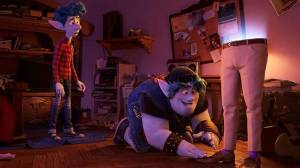 Amazingly, what works best in this movie is its emotional core, which sounds slightly bizarre considering it’s a road trip with a pair of legs. As Onward progresses and settles down with its better honed second half, it puts more emphasis on the relationship between the brothers, their hopes and worries for one another, their sacrifices and shames, and ultimately it becomes a movie about two boys trying to find closure with the memory of their dearly departed dad. The genuine emotion of the brothers is enough to pave over most of the undeveloped elements of the world and storytelling (more on that below). I would have thought, going in, that Onward would present a so-so story with an intriguing world of possibility. I’m surprised that my experience was the exact opposite. The story and central relationships are what kept me going, and it’s what ultimately earned some teary eyed responses from me late in the movie. The topic of seeking closure is a personal one for me and something I value highly, so it was very easy for me to plug my own yearning and vulnerability into these characters. They’re going through all this dangerous trouble not just to see their departed father one last time but also to say goodbye, and that got me big time. It gave the entire movie a new weight that I wasn’t expecting. Who wouldn’t want another chance to tell a loved one how much they miss and appreciate them?
The whole concept of being stuck with a loved one’s lower torso allowed me many moments of contemplation. First, I wondered what their father must be going through to only experience the world through his legs. It felt limited. How do you communicate to others? The film finds its ways. How do you express emotions simply from a pair of disembodied legs? The film finds its ways. As Ian and Barley drag him along on a zipline leash, I kept thinking about the dad. What is he thinking in this moment? Is he waiting for some kind of comforting confirmation from his sons to tell him where he is and what is happening? I kept thinking how confused he must be. To the filmmakers’ credit, they don’t ever emphasize the potential hell of this half-existence. He’s presented often as a figure of comic relief, especially as his upper torso pile of clothes sloshes around and tumbles off. In a way, the pair of legs reminded me of the visual metaphor of the floating house in 2009’s Up, the manifestation of the protagonist’s heavy grief. They’re tethered to this half-formed memory of their father, unable to fully interact with him and let him go. I was worried that Onward was going to be the Pixar equivalent of Weekend at Bernie’s and it is not.
 There are some issues with the movie, nothing major, but enough to make it feel under developed, especially in comparison to the Pixar movies of past. The imagination is there, however, the world-building of this fantasy world is decidedly lacking. There are some cute asides like unicorns as the equivalent of trash-eating raccoons, but as a whole the fantasy world feels underdeveloped to its full potential. There’s a significant story point where the current world has forgotten its magic roots thanks to the ease of technology and its inoculating effects, which seems like a pretty straightforward message for our own lazy world. Again, though, Onward doesn’t dig deeper into this theme or what it could mean for the larger mythology of its own world and its history and the rules governing its magical creatures. I started to wonder whether Pixar could just have set this story anywhere.
Likewise, the supporting characters don’t amount to much and feel like leftovers from earlier drafts where they had richer involvement. The ongoing subplot with their mother (Julia Louis-Dreyfus) teaming up with the fabled beast-turned small business owner Manticore (Octavia Spencer) offered little other than occasional exposition. The Manticore is supposed to best represent how the new world has traded its culture and history for comforts and safety, but it’s not clearly realized and integrated. My pal Ben Bailey reflected that the Manticore seemed like a one-scene character that the filmmakers didn’t want to drop, and so she was stretched through the rest of the film to diminished returns. The last act has a sudden and arbitrary monster to defeat that feels like the kind of thing expected in these sorts of movies, which is a rarity for Pixar and thus a slight disappointment.
Lastly, much of the humor just doesn’t work. The jokes can be stale, safe, or one-note, like a team of very tiny pixie bikers. It’s often silly without exactly being clever. There’s more fleeting visual humor with the incongruous nature of fantasy in a modern setting. There’s less slapstick than you would think considering one of the main characters lacks a torso. I chuckled a few times but, much like the fantasy setting, felt the humor was kept at an superficial level of thought.
Onward isn’t top-tier Pixar but it’s a solid mid-tier entry, an enjoyable adventure with a resonant emotional core that makes me forgive many of the film’s other aspects that don’t quite work. The brothers are the best part, their interactions are the most interesting, and their heartfelt journey and hopeful desire for closure is what ultimately left me emotionally satisfied. The jokes and world and supporting characters don’t feel as developed, but it hits with its core relationship and its emotional center, so Onward works where it counts the most with its storytelling. Mid-tier Pixar is much like mid-tier pizza — still satisfying and better than a lot of other options.
Nate’s Grade: B+
Share this:

Honey Boy (2019)
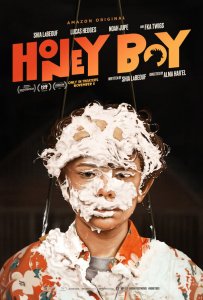 Honey Boy may be one of the most fascinating movies before you even watch a single second. It’s begging for an intensely ambitious psychological analysis as Shia LaBeouf lays bare his soul in an act of art as therapeutic device. He wrote the screenplay of a very autobiographical tale of a young child actor (nick-named “Honey Boy” by his father) hitting new levels of fame and his abrasive, abusive, and very controlling father, an alcoholic entertainer that relishes his son’s growing success and also resents his accomplishments. That alone would have made Honey Boy an interesting film experience, but LaBeouf goes the extra mile, as he does, and he literally plays the father character, putting him in the position of bringing to life the hurtful authority figure and thinking from his skewed perspective. It makes every moment LaBeouf is onscreen deeply fascinating and deserving of a deep dive to unpack the layers of personal meaning for the man. LaBeouf is also startling and terrific as the self-destructive and self-determined father, a man who finds slights in the slightest but can also be very encouraging of his son’s dreams. Seriously, every moment he is onscreen is suffused with layers of artistic meaning for what it represents in the story, its relationship to LaBeouf the person, and what LaBeouf the son is discovering while playing his father. It becomes a cathartic exercise that also could prove to be literal empathy. The problem with Honey Boy is that it feels more like that dramatic exercise than an actual story; the secondary storyline with the adult protagonist, played by Lucas Hedges (Manchester by the Sea), hardly provides much significance. He’s going through rehab and dealing with his unresolved feelings and addictions, but it’s more a framing device than a story itself or a worthwhile contrast to provide helpful details. The movie would just have been fine without it. However, there isn’t really a development of a plot as there is a general repetition of the relationship, namely the complicated and fractious father/son relationship. We spend a lot of time at this motel. We spend a lot of time with father speaking to son. I think a clear majority of the lines are spoken by LaBeouf. It’s always fascinating, with the exception of a misfire of a young romance that seems to float by more on yearning, but after a while I started to notice it felt like we were getting more of the same. We weren’t generating new insights into the characters and how they might change. Is this movie an act of forgiving his father or understanding him? I don’t know, but I’d happily debate Honey Boy with a pal over a beer for the next hour. It’s an inherently intriguing movie loaded with subtext that has its own subtext, a touch of the surreal from documentary filmmaker Alma Har’el, and powerful acting from LaBeouf. It can also feel like more of the same after the first hour. It’s a movie you need to see but it’s ultimately more LaBeouf opening up his intensive therapy role-play than it is a fully-formed movie. James Franco must watch this movie and weep.
Nate’s Grade: B
Share this:

A Beautiful Day in the Neighborhood (2019)
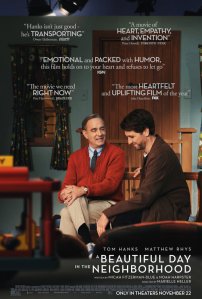 As I was watching the sweetly good-natured but somewhat superficial 2018 documentary Won’t You Be My Neighbor?, I was left wondering if there could be a big screen story on minister-turned-children’s TV host Fred Rogers, a.k.a. “Mr. Rogers.” Was there enough material to open up this kind, affirming, gentle man into a three-dimensional character worthy of a deep dive? I’m still unsure after watching A Beautiful Day in the Neighborhood with Tom Hanks as Rogers. The filmmakers made the conscious decision to construct a fictional narrative of family strife between a father (Chris Cooper) and his son, Lloyd (Matthew Rhys), a magazine writer. Fred Rogers begins as an assignment for Lloyd and becomes the change agent, pushing Lloyd, in the gentlest and most empathetic manner, to reflect on his anger over his father’s abandonment and to work through his feelings and potentially forgive the old man. Like the PBS star, the movie is sweet and optimistic and gentle and just a little bit boring. The film follows a pretty strict formula of catharsis, and while it works it doesn’t make A Beautiful Day in the Neighborhood feel more than a TV-movie plot attached to a malnourished Fred Rogers biopic. I understand the storytelling difficulties of trying to make a soft-spoken man who isn’t given to long-winded speeches a starring role, so it makes sense that his presence would be a catalyst for a family in crisis, basically serving as therapist. Hanks is fitting and affecting, and once again I feel like there are glimmers of a more complex man underneath the persona we’ll never be treated to in any big screen examination, like about his struggles raising his own children, his crisis of relevancy late in life. The majority of the movie is a father/son story that is well acted and pretty much fine, and “pretty much fine” is a perfect description of the film as a whole. It’s nothing you’ll regret seeing and it will generally be uplifting and sincere, but it’s basically a 108-minute greeting card.
Nate’s Grade: B
Share this:

Ad Astra (2019)
 I knew early on when I was watching the advertisement for writer/director James Grey’s Ad Astra (Latin for “to the stars”) that this was going to be more a quiet, slower, contemplative movie than the ads were making it seem. Hey, I like quiet, slower, contemplative movies, but I like the ones where they give me an entry point, a reason to care, and a story with characters that make me feel compelled to watch what happens next. Ad Astra does not quite rise to that level.
Roy McBride (Brad Pitt) is an astronaut in a near future with a special mission: to find his father (Tommy Lee Jones). The father left Earth decades ago to search for intelligent life and develop an alternative energy source. His discovery has unleashed a series of destabilizing power surges across Earth. Roy is ordered to travel to the outer reaches of Neptune and discover what has happened to his father and his crew who have stopped communicating. If necessary, he is to use all options to correct the problem, including taking his dear deadbeat dad’s life.
 Ad Astra is probably the most realistic portrayal of what space travel cold be like in the near future. It’s a grounded approach that feels very detail-oriented without necessarily losing the audience in the schematic output of all those details. It reminded me a bit of a companion piece with last year’s First Man, where the audience saw all the ingenuity, as well as makeshift dangers, of early space flight. The interiors of these space ships and bases are far closer to resembling the plain days of early NASA than anything fancy and gleaming when it comes to futuristic science fiction. When Roy is walking around a giant tower reaching high into the atmosphere, it feels like you are there with him experiencing the dizzying heights, locked into his human-sized perspective of something so massive and intimidating, and it’s merely man-made. Wait until we get to the heavenly bodies. It’s an aesthetic choice that lends the film an authenticity as well as the amazing solar visuals from cinematographer Hoyte Van Hoytema (Interstellar). The scale of space is really felt as Roy keeps venturing further and further away from home, into the cold darkness of the unknown, towards that missing father and sense of resolution. The visuals and stately special effects are beautiful and given an additional level of ethereal glory from a score by Max Richter (The Leftovers). It’s a lovely movie to sit back and watch, and thanks to its episodic structure, it delivers something new every twenty minutes or less. The movie can feel more than a little tedious as it stretches out into the cosmos. There’s something to be said about a film that has the patience to take in the splendor of the universe, and there’s also something to be said about having a more significant story to pair with those awe-inspiring cosmic panoramas.
My issue with Ad Astra is that everything feels to be locked in at a very general level of substance. The story of a son voyaging to meet his absentee father and come to terms with that relationship is a fine starting point, except the movie doesn’t do much more. The idea of a main character living in his famous yet distant father’s shadows is a fine starting point, except the movie doesn’t do much more. The idea of exploring life in the universe is fine, except the movies doesn’t do so much with that either. It feels like you’re watching what must have amounted to twenty pages of script spread out over the course of two hours. If it’s going to be a character study, then I need more attention spent deepening Pitt’s character beyond the pretty rote daddy issues on display. If it’s going to be a contemplative exploration of man’s place in the universe, then I need more sides and angles of perspective throughout the movie. There are no real supporting characters in this movie outside of guest appearances (Hey, it’s Ruth Negga and Donald Sutherland). The father figure is kept more as looming idea or force of nature than human being. Roy’s wife (a barely there Liv Tyler) is more a recorded visual of regret to remind the audience of Roy’s loss and sacrifice, relating to his pursuit of his father. The entire film feels far too sketched in, archetypal, and generalized to noodle around with weighty ideas and concepts that it doesn’t seem fully committed to exploring in meaningful ways.
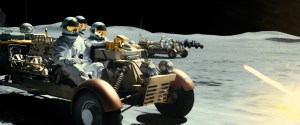 The problem with a narrative that’s episodic is that not every episode is as interesting. Each Pitt stop (oh, you bet I’m intending that pun) allows a slightly different tale to emerge, but then it’s over and done and we’re moving onward. With Apocalypse Now, those episodes came together to tell a larger mosaic about the madness of the Vietnam War and the physical and psychological toll it was taking. I was not getting that same kind of cohesion with Ad Astra. The most exciting episode involves a lunar chase and shootout. It’s cleverly executed and makes strong use of the limitations of space, in particular the lack of sound. One second your co-pilot is at the wheel and the next he has a soundless bullet hole through the head. It was an intriguing segment because of the unique realities of staging its genre car chase that open up something familiar into something new. Unfortunately, many of these episodic segments just incrementally push the story along, pairing Roy with a new group of people that we’ll shed in fifteen minutes or so. Don’t get attached to anybody because the only characters that really matter in the universe of Ad Astra are Roy and his father. Every other character is merely a representation of some aspect of their relationship. It makes the smaller episodes feel a bit mundane unless they have something fresh, like that lunar chase. Otherwise, it’s more people we’ll be soon getting rid of doing inconsequential tasks.
Removing the dominant father/son relationship, Ad Astra is a movie about the search for meaning in life. Roy’s father has exclusively put that meaning upon the discovery of intelligent life in the universe. If human beings are all there is, he questions what’s the point of going on? First off, Mr. McBride is only exploring one portion of space and to paraphrase Billy Bob Thornton in Armageddon, there’s a “big-ass” amount of space. If the man fails to detect any signs of intelligent life, that doesn’t mean it isn’t out there, it only means it hasn’t been found where one person was looking (the Missing Keys Dilemma). On a philosophical note, even if humanity was all there was in the great wide expanse of space, that doesn’t make our existence any less remarkable. If we happen to be the lone representatives of intelligent life, born from heat and rock and millions of years of trial and error getting it just right, then that’s incredible. There are so many variables going against the existence of life on our tiny bubble of air out in the vast vacuum of space, and just because we lucked in and others have yet does not take away from the appreciation and majesty of humanity’s prized situation. Do we put our meaning outside of ourselves or develop our sense of meaning from within? I cannot say whether Ad Astra is keeping this storyline so vague and generalized so that is can stand-in for spirituality, the idea of looking for proof of a higher intelligence, a God, and finding meaning in a grander design rather than the chaos and luck of chemistry and evolution. Or does Roy’s father represent God and Roy is man confronting an absentee creator? Under that interpretation, the ending might make a little more sense, but again I’m doing the movie’s work for it by projecting meaning.
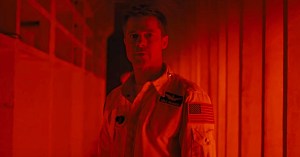 It’s pretty much a one man show and Pitt (Once Upon a Time… in Hollywood) is asked to do a lot without showing much. His character is a reserved man by nature, though that doesn’t stop him from explaining his inner thoughts through intrusive voice over narration, an addition that feels tacked-on after some test screening to better acquaint an audience that was having difficulty staying on board. Pitt is an actor capable of tremendous subtleties through his movie star good looks, and he has moments here where his eyes are telling the story that the movie doesn’t seem interested or committed to tell. If you were going to spend two hours in space with one actor, you could do far worse than someone like Pitt.
Ad Astra is more art film than thriller, more father-son reclamation than sci-fi, and more a drifting homage to Apocalypse Now in Space than something that can stand on its own merits. The expansive cosmic visuals are luxurious on the big screen, the level of detail toward the realities of space travel are appreciated, and Pitt is a sturdy anchor for the project, but what does it all come to? Everything is kept at such a generalized level that the movie feels like it’s skirting the surface and ignoring larger depth. It has a surfeit of directions and choices it can make for greater depth, but we have to keep on trucking, like a ticking clock, entirely constructed to serve one purpose, barreling toward the father/son confrontation and resolution. Except I didn’t care about Roy’s dad because I didn’t feel the impact he had on his son, I didn’t feel the need for some form of closure, the driving force of the movie’s big little universe. And yet we drift onward, like the boat in Apocalypse Now, heading for our destination because we’re told to do so. Ad Astra is an acceptable matinee with some well applied technical craft and a bleak sense of realism but it’s ultimately too empty of an experience to warrant any return trips of value.
Nate’s Grade: C+
Share this:

Goodbye Christopher Robin (2017)
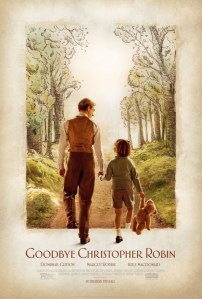 The young author sub-genre has become an awards season cottage industry. We’ve seen recent stories about J.M. Barrie, Jane Austin, P.L. Travers, Beatrix Potter, Ernest Hemingway, and a whole assortment of the Beats. Even in 2017 there have been stories about a young J.D. Salinger (Rebel in the Rye), the creator of Wonder Woman (Professor Marston and the Wonder Women), and soon Charles Dickens (The Man Who Invented Christmas). We seem to relish watching the formation of brilliance, or at least watching a recognizable creative voice find their flights of inspiration. Goodbye Christopher Robin is meant to be another in the tradition of young author movies served up on a platter for season-ending awards and recognition. Goodbye Christopher Robin is so serious, clumsy, and tacky in final execution that it enters awards bait self-parody.
Alan Milne (Domhnall Gleeson) is coming to terms with his PTSD after his experience sin WWI and trying to re-enter the literary and theatrical world of London. He finds inspiration through the imaginative play dates with his young son, Christopher Robin a.k.a. “Billy Moon,” and in time the formation of Winnie the Pooh’s world. The book is met with immediate success and Alan and his wife, Daphne (Margot Robbie), are all too ready to ride the wave of fame. Christopher is raised by his kindly nanny, Olive (Kelly Macdonald). Eventually, Christopher grows to resent his parents, the public’s assumption about himself, and the very name of Pooh itself, so much so that he volunteers to go to war as a means of just escaping the overbearing attention of the spotlight.
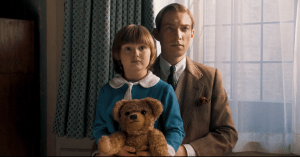 The opening act of this movie is the best part, and it’s all pre-Pooh. It also helps that it focuses more on Alan Milne rather than his son, who will take a far larger role later. Milne is already a slightly prickly character who doesn’t exactly fit in with the British upper class. He’s also trying to process his PTSD and return to some semblance of a normal life. He’s also struggling artistically, and this is where the film is at its most interesting because it has the most focus. We get to really delve into the triggers and emotional state of a character in a way that feels engaging. We spend time establishing a person, a trauma, and how it impacts his relationships. It’s not the most singularly compelling drama but it’s still more effective than what regrettably follows.
Where things start to go irreversibly downhill is the exact emergence of Pooh. While Milne is spending more time with the son he doesn’t fully know how to relate to, he’s also pumping his boy for ideas during their play for a children’s story. We get the expected but still lazy moments of all the little signifiers in their lives that connect with future characters. Then one Pooh gets published it becomes an international best seller and the movie just zooms through plot. It goes from releasing the book to everyone in the world loving it literally in a minute of screen time. The Milne family, and especially Christopher Robin, can’t go anywhere without being recognized and hounded by fans. This is also where the film makes a sharp turn and reveals Alan and Daphne Milne to be really terrible parents. As soon as success appears, they’re actively exploiting their child at every opportunity, including such stunts as a radio station also listening in to father wishing his son a happy birthday over the telephone. If there’s a chance they can sell more books, get extra publicity, or simply parlay their fame into something, they take it, and often Christopher Robin is left home alone with his nanny while mom and dad lap it up. Rarely have you seen childhood neglect made to appear so strangely whimsical.
 Even this abrupt plot turn could have worked as an interesting and unexpected portrayal of a literary family that lost the “family” sensibility once fame and fortune arrived. Unfortunately, this is not really a movie about consequences being felt because we’ve got to speedily move onto the next plot point in order to fulfill the formula. After Olive has her big speech about how the Milnes have been mistreating Christopher Robin, it’s literally two scenes later where Alan comes to agree. Lot of internal turmoil there, huh. Christopher Robin’s life gets so bad he’s practically begging to go to war. Even his fate during the war is something the film doesn’t leave unanswered for long. Why dwell on the consequences of decades of bad parenting when we can still careen into a feel-good ending that will attempt to poorly wipe clean the slate? Everything is resolved so rapidly and without larger incident that rarely does the story have time to register. We’re never going to feel great insights into these characters if the film doesn’t give us time. Who cares about hardships and betrayals if they’re just going to be erased in the next scene or if some life lesson will be ham-fistedly learned, but not earned, in short succession?
This is not a subtle movie by any means. The second half of Goodbye Christopher Robin is all about how the boy’s life is awful and how much he dislikes the spotlight. The father comes up with the solution of sending Christopher Robin to a boys’ home way out in the country. As soon as dad leaves, the boys instantly start bullying and harassing Christopher Robin, literally throwing him down flights of stairs while chanting insults. Dear reader, the next part astounded me. It is during the shot of him being pushed down the stairs that the movie uses this sequence as a transition device. By the time Christopher Robin stumbles to the bottom of the stairs he is now a teenager. It’s as if he has been falling down the stairs for a hellish decade. Then there’s the moment where dad sees his son off to war at the train station. As he looks back, for a brief moment it’s not teenage Christopher Robin boarding that train but young child Christopher Robin. I laughed out loud at this moment. It’s too earnest and too clumsy not to.
 The acting cannot save this movie. Gleeson (The Revenant) gets to be that kind of aloof where the actor pronounces words with great care. His acting style is a bit too removed and opaque to really feel much for his character, especially when he cedes the spotlight to his neglected and exploited son. Robbie (Suicide Squad) is just completely wasted. She might be the film’s biggest villain and her disapproving stares look like they should be accompanied by cartoon steam coming out of her ears. Macdonald (HBO’s Boardwalk Empire) fares the best mostly due to her genuinely appealing nature. It also doesn’t help matters when it appears that our young Christopher Robin, newcomer Will Tilston, was hired for his toothy grin and dimples. This is not an especially good child performance. It’s powerfully winsome but in an overly cloying manner. It was hard for me to work up much empathy for Christopher Robin because the performance kept left me cold.
Goodbye Christopher Robin is a feel-good movie that made me feel like checking my watch. It’s tonally off with its mixture of sentiment and indifference, zooms through important plot points rather than dwell on the impact of decisions, and looks for any opportunity to bludgeon an audience rather than deliver something genuine and subtle. If you’re a major fan of Winnie the Pooh perhaps you’ll get something out of it knowing its author was a terrible parent. This wasn’t a movie that made me feel authentic emotions. It felt too clumsy, too mechanical, and ultimately too miscalculated. The only awards this might be contending for at the end of the year are not the kind it’s going to want.
Nate’s Grade: C-
Share this:

Brigsby Bear (2017)/ Dave Made a Maze (2017)
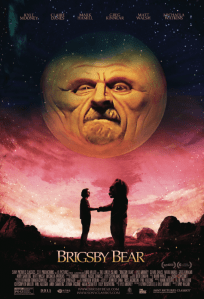 One way to stand out in a crowded marketplace is to differentiate your movie by making it weird and whimsical. Just being different can grab your attention, and Brigsby Bear and Dave Made a Maze are definitely different. Both of these indie films attracted attention for their unusual concepts and lo-fi designs, banking on a sense of nostalgia for a homemade style of art that’s a little rough around the edges. These might be two of the strangest films that will be released in 2017.
James (Saturday Night Live’s Kyle Mooney) is living underground with his parents, April (Jane Adams) and Ted (Mark Hamil). He does his homework, listens to his parents about never going outside, and anxiously waits every new episode of Brigsby Bear, a children’s fantasy TV show starring a Teddy Ruxbin-looking bear that teaches life lessons. Eventually we discover that April and Ted are not, in fact, James’ parents. They abducted him when he was a baby. The FBI raids their compound and returns James to his biological family, the Popes (Matt Walsh and Michaela Watkins as mom and dad, Ryan Simpkins as younger sis). James just wants to know when the next episode of Brigsby will come out. Unfortunately for James, Brigsby isn’t real. Ted produced the show on a nearby sound stage. He’d even occasionally hire other actors. James is the world’s most knowledgeable fan of a TV show no other person knows one iota about. He’s determined to give it a proper ending and recruits family, friends, and neighbors to make the ultimate Brigsby movie.
 I was pleasantly surprised at how effectively Brigsby Bear was at being cheery and sincere. I was expecting, given the premise, an ironic riff on nerd culture or obsessive fandom, and Mooney and company instead decided to play things very seriously. They take a fantastic premise that seems begging for derisive commentary and choose to find a human story within the absurd. That’s much more commendable and harder to achieve. As I’m aging, I’m becoming more and more appreciative of sincerity over irony (part of this is also that our modern age is inundated with irony). I was reminded of last year’s Swiss Army Man, an alarmingly strange movie with Harry Potter’s farting corpse and went for sincerity without any whiff of detached irony. Brigsby Bear isn’t at the same level of artistic accomplishment and lasting power as Swiss Army Man, but it’s an unconventional and touching movie that earns its quirky-yet-feel-good emotions.
It’s easy to see where this story could have exclusively dwelt in psychological darkness. James was abducted as a child and raised in a strange environment that makes him emotionally stunted and grossly ill prepared for the real world outside his reclusive safe space. The movie could have understandably dealt with James’ crippling sense of loneliness, betrayal, and inability to assimilate since his sense of self were cultivated by a fake children’s TV show. He could have easily been the creepy oddball who makes people uncomfortable. Instead, they made him the goofy oddball who makes people smile. His childlike sense of wonder is in tact and frees him from self-doubt. James is remarkably cheery for having his world turned upside down, and the movie follows his lead. This movie could have been another perplexing Dogtooth and instead it’s more accurately reminiscent of those old Mickey Rooney “we’re putting on a show” pictures. I was waiting for a moment of artificial conflict, a darker plot turn late into the film where perhaps it’s revealed that Ted was a molester. There’s 700 episodes of Brigsby Bear so I figured a few of them would reveal disturbing clues about something even worse. The film never does take that darker turn and instead stays upbeat to the very end.
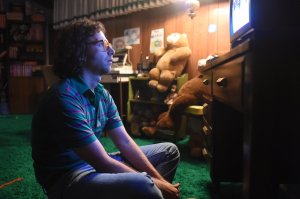 As he adjusts to his new home, the movie serves as both a delayed coming-of-age movie and a love letter to the power of creativity and how it can build community. With James transported into the outside world, much is made over his awkwardness with human interactions and his complete lack of guile. He gets his first kiss with a girl, and shortly after his first handjob, and wonders if that means they have to get married. It’s a sweetly naïve reflection. We watch the growing pains of James as he starts to make friends and become more confident in himself, which is a surefire way to win over an audience. James isn’t held up for ridicule. People want to be part of his project. He’s overcoming adversity and triumphing through the transformative power of art. There’s a joy in watching characters find themselves anew, and James serves as the catalyst. This person knows how to do special effects. This person used to act when they were in college. In his heartfelt attempt to provide closure to the Brigsby series, and possibly a chapter in his life, James’ project takes on a life of its own that brings people together. It shows how the community of art can be an empowering venture that can freely inspire the best in others.
The movie doesn’t become overly reliant upon nostalgia either. I figured it would be an ode to 80s television and culture but it really just uses that as backdrop. The world building of the show of Brigsby is bizarre and entertaining every time it’s included, especially when you comprehend the propaganda messages that Ted is sneaking in like, “Curiosity is an unnatural emotion.” The sense of wonder and whimsy doesn’t overwhelm the movie and its poignancy. Director Dave McCary (Saturday Night Live) makes the most of the retro pastiches while still serving the story. James could just have easily been obsessed with any show or ongoing work of art. The content of the show is unimportant. It’s about facilitating his growth into a person comfortable and confident with whom they are. By the end of the film, I was fighting back tears as the full assembly of characters watches the finished product of their labor. You watch them smile, laugh, take a sense of pride in their communal efforts, and they can see the world as James does. It’s a whole-heartedly pleasurable movie with surprising currents of emotional uplift.
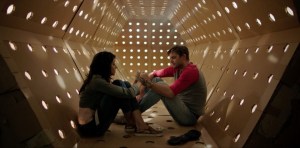
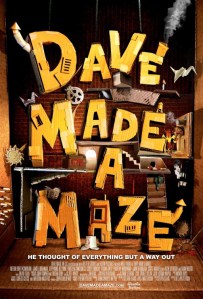 With Dave Made a Maze, the titular Dave (a beardless Nick Thune) is lost in a maze that he built in the apartment he shares with his beleaguered girlfriend, Annie (Meera Rohit Kumbhani). This maze consists of a cluster of cardboard boxes taped together. In time, a group of their friends and even strangers have assembled to admire the maze. Dave warns them not to enter but they do so anyway, and once inside they realize that the maze is considerably bigger and byzantine, and everyone expectedly gets lost. Annie and a documentary crew travel (lead by James Urbaniak) deep into the maze to rescue Dave. They all must confront booby traps, a Minotaur, thirty-something existential ennui, and the unsettling realization that the maze is expanding all on its own.
The real star of Dave Made a Maze is the fantastical environment inside the maze. The resourcefulness, imagination, and implementation of such a bizarre vision on such a limited budget is incredible. Each new room offers a new opportunity for the surreal. The characters stumble from room to room in mixtures of awe and bemusement, and the audience will feel the exact same way. Production designers Trisha Gum and John Sunner, and Art Director Jeff White, come from a world of animation, and they’re meticulous attention to detail pays off to an astonishing degree. In a just world, they would be nominated for an Oscar. There’s a DIY inventiveness that carries an irresistible charm with it, re-purposing everyday items to create a unique and whimsical world. Even when people are being gored to death and dismembered it adheres to the whimsical tone. The blood is replaced by red yarn, confetti, and silly string. The movie smartly underplays the lack of consistent logic within the world of the maze, and so weird things can just happen at a moment’s notice, like the main characters turning into puppet versions of themselves made out of paper lunch bags. There’s even a half-finished maze within the maze, which draws derision from the tired and frustrated people just seeking a way out. Some of the weirdness feels too half-formed and self-conscious, but the movie has an Eternal Sunshine quality where each new location provides another enjoyable opportunity for potential discovery.
 Where Dave Made a Maze runs into problems is when you realize there isn’t anything beyond that sense of invention. There isn’t a larger thematic core to this movie and the characters remain, at best, background players elevated to starting status. Most of these characters are jokes but they don’t even supply much in the way of jokes. The closet to a substantive theme is simply an arrested development fable where the man-child is struggling to finish a laboring artistic accomplishment, he feels humbled and humiliated, and his strained relationship with his accommodating girlfriend will always come together in the clincher. Dave lashes out that he didn’t feel like an adult at 30, so maybe he retreated to the halcyon days of childhood, or maybe it was a nostalgic retreat. Whatever the case may be, the movie suffers from an inevitable lull once the giddy novelty of its DIY fantasy starts to wear off. There’s one sequence where Dave and Annie have a circular conversation that just keeps going, and I’m sure if the filmmakers weren’t so desperate for material that it would have been trimmed down significantly.
Even at 76 minutes before credits, this is a movie that feels stretched beyond the limit because it’s lacking greater consideration to story. There are jokes that feel like they should be funnier too, like a latecomer to the maze who sets off the traps that Dave warns about earlier. This should be a fun structural payoff, allowing us to see both sides of the rooms. It doesn’t really work out that way, and the bumbling latecomer becomes another relatively unmemorable and undeveloped body on screen taking up space. The documentary crew conveys some mild satire as the crew leader keeps prodding others into saying what he needs for his movie, but even this inclusion feels more like a transparent device to get the characters to talk through plot points. Another misfire is the curious lack of stakes. The movie has a light-hearted charm but then doesn’t ever quite make up its mind on the danger being confronted. Real friends die for real. By the end of the movie, they do not come back even after the maze is kaput. They are really dead. Yet the film plays the stakes at a low simmer and the survivors just sort of shrug and move on. The film gives me little reason to be attached to any of these people, alive or dead.
 Whimsy is a fleeting feeling that’s hard to conceive and harder to hold onto. Both movies take whimsical premises that cater to the peculiar but only one delivers something of lasting substance. Brigsby Bear is a charming, heartfelt, and exceedingly sincere movie about an oddball finding his place in the world through the power of the creative process. He is transformed through his love of art and how that serves as the foundation for community. Whereas Dave Made a Maze is a lo-fi curio that I can admire more than enjoy. It’s missing crucial elements that make its journey worth the effort, beside its imaginative and scrappy production design. Both movies are charged by the power of the imagination to transport the ordinary into the extraordinary. Brigsby remembers to use its flights of imagination and whimsy to tell an engaging and ultimately touching story. Dave Made a Maze has cool sets and some infectious silliness. If you see one story of a man-child escaping into a world of nostalgic imagination and inviting friends to tag along, make it Brigsby, a film that uses whimsy to still tell compelling human stories.
Nate’s Grades:
Brigsby Bear: A-
Dave Made a Maze: C+


 nathanzoebl
You must be logged in to post a comment.