Blog Archives
Mr. Peabody & Sherman (2014)
 Surprisingly adroit, Mr. Peabody & Sherman might just be more fun for adults, especially fans of the original 1960s cartoon, than for little kids. It’s under the “family film” banner, a dubious one historically, but I was laughing consistently and good, snorting laughs, long chuckles; the whole gamut. With The LEGO Movie, the wide release of The Wind Rises, and now this, 2014 is shaping up to be a stellar year for animation aficionados. The movie between a genius dog and his adopted son is given the right amount of reverence before all the cheeky irreverence through history. The hops through time, notably the French Revolution, ancient Egypt, and the Trojan War, are fast-paced and clever without stooping to provide much context for the jokes; you either get them or you don’t. Even the necessary character building components between father and son are treated smartly, coming together for an ending that approaches poignancy. The plot can get a little complicated toward the end, what with opening a space-time paradox, but I respect the movie for being complex and tricky and scientific and trusting its audience to play along. The animation looks a little scruffy compared to other big screen efforts, but the script just flat-out works. The comedy, the drama, the relationships, but especially the comedy. If you’re on the fence, please, do yourself a favor, and go see Mr. Peabody & Sherman, especially if you appreciate history and those who love it. I saw it with my father and we both laughed ourselves silly. Needless to say, this blows 2000’s Adventures of Rocky and Bullwinkle out of the water.
Nate’s Grade: A-
Share this:

Winter’s Tale (2014)
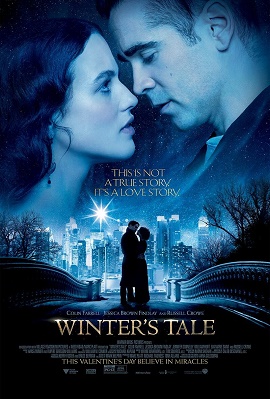 Every now and then you get to witness a special movie that doesn’t so much offend as it inspires, and what it inspires is a question you grapple with during the entirety of its run time, mainly – How did this get made? At any point, did the producers or actors or anyone stop, take a moment to reflect on the movie they were participating in, and think, “Wait, what is going on here?” Bad movies made by hacks are easy to shrug off because, well, hacks don’t know any better but bad movies (see: InAPPropriate Comedy, or better yet, bleach your eyeballs first). With Winter’s Tale, there are people who should know better, people that have been awarded Oscars. These people should resolutely know a terrible movie while they’re making it. Maybe they did. Look deep into their eyes.
In 1918, Frank Lake (Colin Farrell) is an orphan long abandoned by his family so he could have a better life in America. He hasn’t taken this message to heart. Frank worked as an expert safecracker under the employ of local crime boss Pearly (Russell Crowe), and Pearly hasn’t taken kindly to Frank leaving. Frank is able to escape Pearly’s goons and finds love with Beverly Penn (Jessica Brown Findlay), a wealthy heiress afflicted with consumption. Pearly doesn’t want Frank to get away because Pearly is really a demon in the employ of the Devil (Will Smith, yes you read that right). In the battle of good versus evil, Frank and Beverly appear to be at the focal point.
 I have to give writer/director Akiva Goldsman some credit for making an unabashedly earnest movie in an era of irony and ready-made snark. His goopy romantic fantasy longs to exist in a simpler era, but even then Winter’s Tale would fall apart on many levels. Its sheer unbending corniness is both a blessing and a curse. Magic realism is one thing (check out 2001’s Amelie as a how-to guide), but what Goldsman seems to be going for is a modern fairy tale (our maiden locked away in her tower, true love’s kiss, etc.). The film wants the audience to fall under its spell but instead will likely elicit numerous unintentionally hilarious moments; I was laughing to myself throughout, trying to comprehend all of the hokum and poor decision-making (Will Smith as the devil?).
Let’s begin with the fact that the movie is an obtuse fantasy that feels like it makes up its plot and its rules as it goes along. Bleeding fantasy and fantastical creatures into the everyday world is a marvelous conceit but it needs finesse and careful rule building. Otherwise it doesn’t so much feel like a story with a sense of internal logic as it does a bedtime story that can always just create a new shortcut or extension. The very first few minutes of the film will already push your credulity to the test. We see an adult Peter on the run from Pearly and his goons and all of a sudden he runs into… a white horse. Ah, but this is no ordinary horse, this is a magic flying horse, and Peter flies away to live another day. Yep, within minutes, we’re given a magic flying horse. No groundwork. Worse, the horse just randomly appears when the plot demands, and I think the horse is supposed to represent the side of God in this cosmic battle between good and evil. Whatever, there is a magic flying horse. From there the film gets even cornier. It’s the type of movie that posits the stars are really human beings, and so, in the end, rather than having our hero ride off into the sunset he (spoilers be damned) flies off into space on his magic flying horse and he BECOMES a new star, resting beside the star meaning to represent his beloved (never mind that these stars would be millions of light years apart). If you can read that sentence without rolling your eyes then congratulations are due.
Another problem is this massive time leap that creates far more plot holes. After Beverly succumbs to her illness, which I might add happens literally SECONDS after she’s done having sex for the first time (Colin Farrell killed her with his penis), the film leaps forward to present-day. However, Peter was given immortality through Beverly’s miracle. I suppose you could view miracles as a byproduct of sex. At first glance, this almost seems like a cruel gift; your love is dead and now you have to live forever without her. For no discernible reason, Peter also suffers amnesia, because, really, why not? All he does day after day, presumably for… 90 years, is sketch the same image of a redheaded girl in public places. In the intertwining years, why hasn’t evil Pearly picked up on the fact that Peter is still alive? He’s only been sketching the exact same image. Also, how does Peter even support himself? How does he feed himself? Who are his friends? These are the questions that arise when you take this foolish route with the plot. It could have been avoided with a simply Rip Van Winkle-style hibernation or time jump. Another problem is that Peter grew up with the 90 years of history, meaning he should know what things like the Internet and library cards are. He’s not a man out of time. The solution to Peter being confirmed is to seek out the still-living Willa (Eva Marie Saint, nice to see you again). The problem with this is that Willa should at least be over a hundred years old if you do the math. If the purpose of the leap forward was to just save another character we hadn’t seen previously, why does it have to be 2014? Why couldn’t it just have been 1940 or any other earlier period?
And the central romance between Frank and Beverly is just so boring you wish Frank would move on to someone new. Presumably they fell in love at first sight, which just so happened to be when he was in the process of robbing her home. Ah, but you see, her love redeems him because that’s really the whole role of the sick love interest in movies, to make the other figure a better person through this shared experience of grief. So in this regard it’s no surprise that Beverly lacks defining characteristics outside of her ailment. She plays the piano and falls fast for Farrell’s bushy eyebrows, but that’s all we got here. The entire second act of the film follows their abbreviated courtship, but there’s no real moment where you buy into their romance. Like most of the film’s storytelling, we’re told something is and expected to buy into it 100 percent without flinching. They’re in love, what more do you need? Well, some interesting characters would be a start.
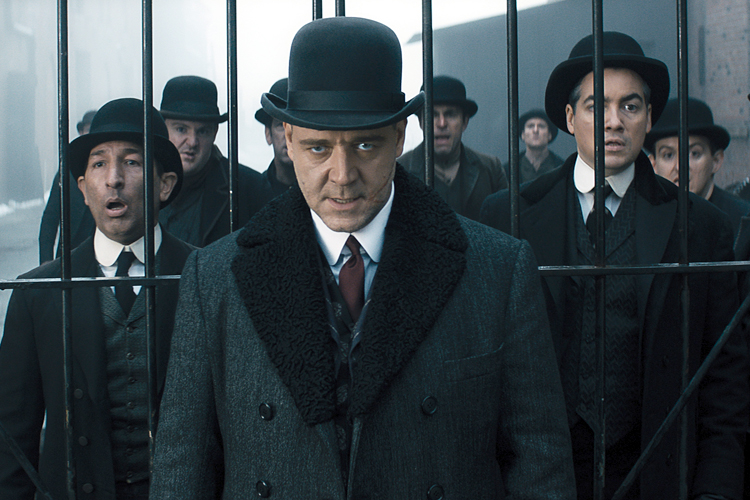 I’m fairly certain that all of these actors were doing Goldman a favor by appearing in this nonsense, but only Farrell (Saving Mr. Banks) walks away favorably. He is the best person onscreen who burrows into their character, ignoring the absurdity of every moment, yearning so hard that you almost want to give in. You won’t. Many will best remember Findlay as the Lady Sybill on TV’s Downton Abbey (she was also the reoccurring ghost on the BBC’s Misfits). Here she gets little else to do but smile and give those knowing looks that all afflicted characters give, as if their illness has opened up the secrets to the universe for them. Crowe’s performance will likely draw up comparisons to his maligned work in Les Miserables, a performance that wasn’t as bad as advertised theater snobs. This performance, however, is as bad, as his Irish brogue seems to overtake him and he comes across like a hotheaded big bad wolf. Jennifer Connelly’s appearance isn’t even worth mentioning as it is that slight beyond the fact that she’s the mother of a terminally ill child (you really thought the movie had any sense of restraint?). The film has numerous well known actors for flashes, like Kevin Corrigan, Kevin Durand, Graham Green, Matt Bomer as Frank’s immigrant father. One suspects their brief time was either a sign that the screenplay evolved as production went or that they were repaying a debt.
I will say the only saving grace in this entire blunder is the cinematography by Caleb Deschanel (The Passion of the Christ). Even when the cheesy special effects take flight, Deschanel makes sure the images are worth watching, having a special skill with the cool hues of the wintry color palette. I wanted to at least credit one redeeming aspect.
The inconsistent plotting and rules, the corny and overly wistful characterization, the overwhelming silliness of every single moment, Winter’s Tale will spark far more guffaws and derision than plaudits. It’s a movie that bludgeons you with its unrelenting maudlin nature disguised as romantic fantasy. The source material is beloved by some but it all comes across as nonsensical twaddle onscreen. Goldsman’s screenwriting credits run the gamut from award winning (A Beautiful Mind, Cinderella Man), to big budget to notorious stinkers (Batman & Robin, Lost in Space). It’s hard to judge the man’s talents with such a wide range of quality. However, I can question the finished results of Winter’s Tale and openly wonder what in the world convinced Goldsman to cash in all his Hollywood cache to direct this dreck. I’m almost tempted to encourage people to watch Winter’s Tale just to try and make sense of it themselves, to try and take in 118 minutes of earnest bad decisions. Whether it’s the magic flying horse, the 100-year-old news writer, or the fact that we’re dealing with a bad guy named Pearly, or Will Smith as Lucifer, but sometimes Hollywood unleashes a disaster that begs to be seen.
Nate’s Grade: D
Share this:

The LEGO Movie (2014)
 Highly creative, cheeky, frenetic, and bursting with visual splendor, The LEGO Movie will likely surpass all expectations you had for what was assumed a 90-minute LEGO commercial. I cannot even tell if it’s actually a commercial or a subversive consumerist satire, or perhaps a blending of both. Writer/directors Phil Lord and Christopher Miller take their same anarchic, comic rambunctious absurdity exhibited in Cloudy with a Chance of Meatballs and 21 Jump Street and produce another movie so fast-paced, so freewheeling in energy, and so comically alive that you feel rejuvenated by the end. These are gentlemen who fully know the storytelling power with animation and they create worlds that are astounding to watch. While completely computer generated, the world looks like it was stop-motion. In fact, the detail that everything in the physical world is made of LEGOs was a nice touch, including fire, water, and smoke. The story of an unremarkable guy (slyly stupidly voiced by Chris Pratt) mistaken for The One, and the complications that arise, is a fitting satire of superhero fantasy mythos filmmaking. The social commentary on conformity and the media is cutting without distracting from the plot’s ongoing mission. The characters are fun, the jokes land assuredly, and the action sequences are mesmerizing. But then it takes a meta turn in the third act that gives the movie a whole other prism that helps define its previous outrageousness while leading to a poignant message about the inclusiveness of play. It’s a movie that celebrates imagination and individuality, and while it will more than likely also sell a crapload of toys, it’s an animated film with more on its mind. To paraphrase the top radio hit in the world of LEGOS, everything is just enough awesome.
Nate’s Grade: A-
Share this:

The Hobbit: The Desolation of Smaug (2013)
 Back to another three-hour trip to Middle Earth. While the second Hobbit film is an improvement in just about every way, it’s still a clear example of a franchise stretching to the breaking point. Peter Jackson gets the second installment moving a lot quicker, and there are several standout action sequences that are glorious on the big screen. Unfortunately it still takes almost two full hours to get to the dragon of the title, but when it does, oh does the movie become that much grander. Benedict Cumberbatch gives frightful life to Smaug (pronounced, for whatever reason, as “Smaa-oog”), and the special effects are top-notch. The last forty minutes of the movie are solid gold, as Bilbo and the dwarves work together to battle Smaug in a virtuoso development of imaginative action; it’s wonderful how many moving parts are involved in this action set piece. However, Hobbit 2 still feels needlessly padded to meet out a trilogy. Does Gandalf (Ian McKellen) need to just disappear on his own mission that accomplishes what? Do I care at all about the people of Lake Town let alone their populist revolts? Do I need a parallel storyline about an injured dwarf? And for that matter, do I need a budding lady elf-dwarf romance? J.R.R. Tolkien fans will be in heaven (though maybe just purgatory with all the changes) to gawk at the realm of Middle Earth, but I always feel antsy (“Get on with it already”). Still, The Desolation of Smaug is an entertaining and at times majestic fantasy epic, I just wish Jackson and company didn’t take so many pit stops. Well at least we won’t have to wait so long for the dragon in Hobbit 3.
Nate’s Grade: B
Share this:

The Secret Life of Walter Mitty (2013)
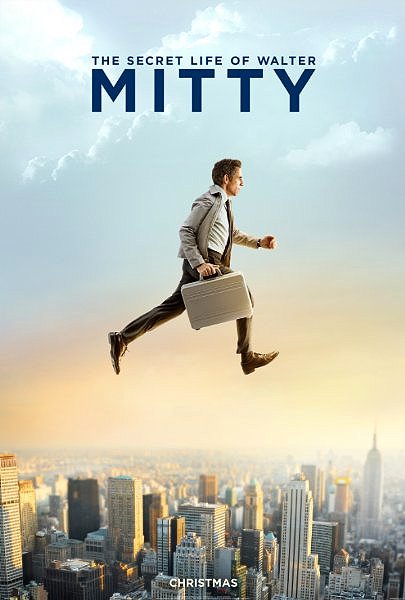 The Secret Life of Walter Mitty, based on James Thurber’s short story, is a property that has long beguiled Hollywood. The idea of escaping one’s ordinary life with fantasy, where we’re the hero. It was turned into a 1947 film starring Danny Kaye, which is rather entertaining, but has yet to be remade in all that time. It’s the kind of attractive project that has attached big name talent at different stages of development, including Steven Spielberg and Jim Carrey. It was never able to get off the ground, that is, until Ben Stiller stepped in, not just as director but also as the lead actor. Given Stiller’s directorial track record, there was suitable reason to anticipate what he could accomplish with Mitty, but the film too often feels like Stiller hamstrung, ably trying to marry a sincere indie sensibility to a mainstream sentimental holiday-released excursion for families. Stiller’s Walter Mitty never quite takes off.
Walter Mitty (Ben Stiller) is a man who has trouble filling out an online profile. He doesn’t have too many experiences or places traveled. It may be why he frequently “zones out,” as his family terms it, escaping into fantastical daydreams. In real life he works as a photography assistant for LIFE magazine, a publication that is transitioning to a digital-only existence. The enigmatic photographer Sean (Sean Penn) has sent a collection of film negatives to Walter, making special note of how Negative #25 is his life’s masterpiece. However, Walter cannot find it and is having trouble getting in contact with Sean, who is overseas on assignment. Without that much-hyped negative/picture, Walter will surely be fired, and then he’ll never have a chance to ask out his co-worker, Cheryl (Kristen Wiig). Walter sets out to Iceland and beyond to find the negative, stop daydreaming and finally live his life.
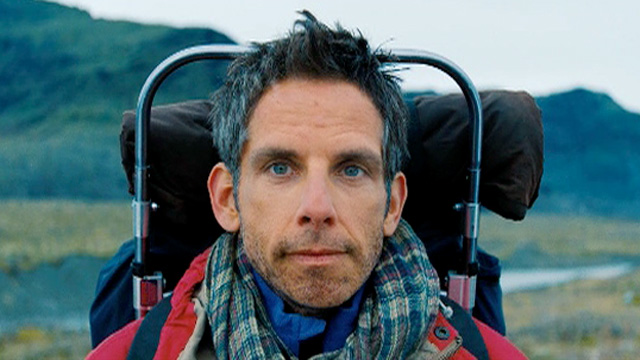 The very tone of the movie feels like a miscalculation. It’s the story of a daydreamer, a man who retreats into his head and lives out preferable fantasies that are whimsical and far-fetched. We all knew this going into the film. It’s the same as Thurber’s story. The problem is that when Walter gets the courage to embrace life, his life is full of whimsical and far-fetched moments. He jumps out of a helicopter in shark-infested waters, where the sharks are ravenously active. He also hops into a car and has to outrun an oncoming ash cloud from an exploding volcano. And then in the third act, he travels across a mountain range all by himself and manages to miraculously find one guy. I don’t think this approach works if his real-life adventures are on par with his whimsical fantasies. I suppose one could argue that this serves a point to make real life seem just as appealing as his mental retreats, but I think it harms the very execution of the movie. First, if there’s a parallel, it means that his fantasy sequences aren’t going to be too fantastic, squashing the potential of Walter’s imagination. The only fantasy I enjoyed was a Man of Steel-esque brawl with a bearded Adam Scott (TV’s Parks and Recreation). Secondly, it means that the serious “go get ‘em” message of the movie is occurring within a medium that ordinary citizens have little connection with. Make no mistake, Walter Mitty is clearly meant as a mainstream feature meant to inspire the masses with its sentimental stripes, but is the story of a superhero doing super deeds any more relatable to the common man?
Another problem plaguing Mitty is the illusion of depth. Beyond the simplistic platitude of “get out and live your life,” there really isn’t much more of an idea explored here. It’s not like this idea hasn’t been explored in, oh, hundreds of other stories. Regardless, the film often just becomes a two-step process of Old Walter feeling timid, and then, what’s this, the hip soundtrack with the likes of Arcade Fire and Of Monsters and Men starts pulsating, and Mitty boldly shifts into New Walter, the go-getter, the guy who’s going to take charge of his own life. It’s a strong soundtrack in all senses. This process is repeated throughout the second act of the script where most of Mitty’s overseas journeys take place. Also, it may sound petty, but let’s focus for a moment on the applicability of the movie’s message compared to the practicality of what is onscreen. Live your life, but how many of us can afford to go globetrotting on a whim? I understand the larger canvas meant to evoke Mitty’s growing sense of discovery, so I’ll let it slide. The theme of Walter Mitty isn’t so much developed as it is repeated. There’s not enough substance here. In the end, the movie feels like 100 minutes of a soundtrack and a message in search of a better movie.
Allow me illustrate one of those “go out and live, Walt” moments in the film. Walter is in Greenland (though filmed in Iceland) and needs to get to a fishing vessel. The man next to him is a helicopter pilot. Great. But he’s also drunk, so Walter understandably refuses to fly with the man. This seems like a very rationale decision, but then he fantasizes Cheryl coming through, urging him on through song (through song!), and the soundtrack starts pumping, and Walter runs out and literally jumps inside the ascending helicopter. It’s meant to be portrayed as a triumphant moment of embracing the uncertainty of life’s adventure, but in reality the movie just pressured its title character into getting into a flying vehicle with a drunken pilot. What? That’s irresponsible.
And then there’s just the lackluster characters and plotting. Walter Mitty is a nice enough guy but too milquetoast to be that appealing, relying upon the comic graces of Stiller to provide the filling. The character of Walter is basically a hodgepodge of other Stiller characters in previous movies, but the character feels too restrained for an actor of Stiller’s talent. I understand that the arc has to travel from passive to active, but it feels like the funny Stiller we’re all accustomed to is being held in check thanks to the film’s broad appeal feel-good sentimentality. There’s one brief moment of the anarchic, silly Stiller that we loved so much in Tropic Thunder, and it involves a weird fantasy where Walter suffers the reverse-aging Benjamin Button disorder. It doesn’t fit at all with the tone of the film, and that’s why it stands out. Walter is a nice guy but rather boring. He pins his journey of self-discovery on getting the girl, and then when presented with one minor obstacle at the start of Act Three, rather than speak with her, he assumes the worst and just gives up. The narrative requires one of those eleventh-hour misunderstandings to keep the guy and girl apart, but it’s a frustrating decision that makes me like Walter less.
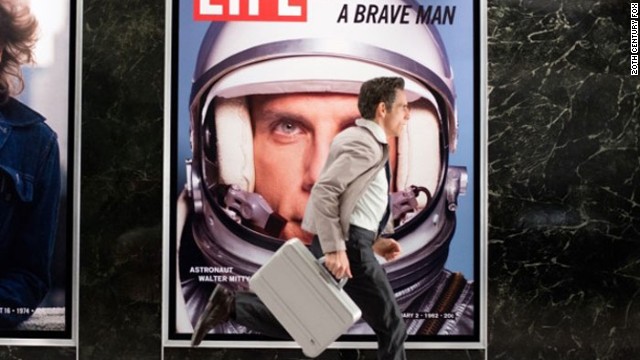 The Secret Life of Walter Mitty is also filled with blunt product placement and some strange plot elements that don’t blend together. I’m not generally offended by product placement in movies when they make it oblivious; hey, a character has to drink something so why not a (insert product here)? But the fact that the Walter Mitty team actually makes Water’s teenage stint at Papa John’s a reveal about his character, and that the very store is meant to stand in as a reminder of his own deceased father, is just wrong. Then there’s the fact that Walter works as a negative corrector (analog job) at a magazine (troubled industry), and that magazine happens to be LIFE (which shuttered in 2000). Why all the analog contexts? Is it meant to convey Walter’s reluctance to change or adapt? The whole notion of the magazine downsizing gives the film a real-life aspect that just doesn’t feel appropriate for the movie. The fact that Walter’s journey is propelled by a quest for a single missing negative feels a tad too facile for the man’s transformation, but it’s made worse when the answer to the location of the negative is so transparently obvious from the get-go. It was so obvious I almost talked myself out of it. Most of the supporting characters in the film serve little effect on any of the events. They’re there just to provide minor details about Walter and that’s it.
The movie is so earnest and you can tell Stiller is trying hard, but The Secret Life of Walter Mitty ends up being a disappointing feel-good message lacking substance and much entertainment. The filmmakers have conviction, I’ll give them that, but it’s misplaced, and the film’s tone has too many distracting elements. The fact that real life mirrors Walter’s fantasy visions seems like a miscalculation from the start. Thurber’s short story didn’t have that much to it to begin with but we need more than this, an office schlub learning to live his life through improbable adventures meant to inspire the rest of us common folk. As a slice of escapist entertainment, it’s not fanciful enough, not creative enough, and not funny enough. As a motivational, heart-tugging ode to living one’s life, it falls into too many traps to feel applicable, insightful, or engaging. It looks beautiful and the people behind the film obviously mean well, but good intentions and nice camerawork are not the same as an effective movie built from the ground up, namely the lackluster story and characters. The Secret Life of Walter Mitty feels like it has as much depth as a glossy, idealistic commercial, and perhaps for some this will suffice, but I found this Walter Mitty’s secret life not worth investigating.
Nate’s Grade: C+
Share this:

Frozen (2013)
 Enough time has passed that a revival of the 1990s Broadway formula that Disney stuck so aggressively to for so long is actually a welcome treat, especially when Frozen is this good of a movie. An extremely loose retelling of Hans Christian Anderson’s The Snow Queen, we follow two sisters and princesses, one of whom, Elsa, is gifted with magic powers controlling ice. She’s lived a life of solitude out of fear and penance for endangering her sister when they were kids. Ana has no idea, having her memory wiped through magic, and so she desperately wonders why big sis gives her the cold shoulder. After another accident, Elsa lets her powers loose, refusing to try and fit into the confines of society no longer. Ana is the only one who can save her and the town. Did you read any mention of a man in that plot breakdown? While there are significant male characters, including romantic suitors, Frozen is the story of a different kind of love, a familial love between sisters. It also generously pokes fun at Disney’s admittedly spotty record of heroines giving up their dreams for the first man they meet. Even the comedic side characters work wonderfully. Josh Gad (Jobs) as a magic snowman had me cracking up throughout with his dopey line reading and enthusiastic inflections. Idina Menzel (Rent) as the voice of Elsa is enthralling, and she gets the film’s “Defying Gravity”-esque showstopper, “Let it Go.” Kristen Bell (TV’s Veronica Mars) is terrific as the voice of Ana, vulnerable, heartfelt, and a little bit goofy, and she sings great. All the actors sing great (look what happens when you hire musical theater alums). Even better, the songs are catchy, well composed, and critical to the plot, short of a silly troll tune that should have been cut. The movie also looks gorgeous, which is surprising considering I thought the color palate would be limited with the film mostly taking place in the snow. But what makes the movie truly enjoyable is how emotionally engaging it is, the somber opening twenty minutes setting up just how much tragedy and misunderstanding there is between Ana and Elsa (the melancholy end to their song killed me). Their eventual reconciliation and the selfless acts of bravery might just make you misty. Frozen is a holiday treat for families, animation aficionados, and those hoping Disney could make a film with positive messages for young girls. In a weak year for animation, this rockets to the top of 2013. Just make sure you get the Disney version for your family and not, you know, the horror movie of the same name about people stranded on a ski lift. Though that’s a pretty good survival thriller itself, so, your call.
Nate’s Grade: A-
Share this:

Thor: The Dark World (2013)
 Loosely based off the Norse mythology, Marvel’s hammer-wielding hero isn’t exactly the easiest character to relate to even as a superhero. Thor is a god after all. Not to be outdone, the man is also royalty, next in line to be king, so he’s in a special class of privilege. And yet 2011’s Thor was a pleasant surprise, a superhero movie that didn’t take itself too seriously, had modest aims, and embraced its sci-fi fantasy mélange. It was a movie where the sillier it got the better it worked. Now Thor: The Dark World, a.k.a. Thor 2, is ready to dominate the fall box-office and prove that Joe and Jane Popcorn can cheer for a pagan god.
Following the events of The Avengers, Loki (Tom Hiddleston) is taken back to his home world of Asgard and put in prison. Loki’s brother, Thor (Chris Hemsworth), is trying to get back to Earth to reunite with his love, scientist Jane Foster (Natalie Portman). Thor is being groomed for the throne of Asgard by his father, Odin (Anthony Hopkins). Meanwhile, the nine worlds are nearing a convergence and dimensional gateways are opening, including one that infects Jane with an ancient biological weapon, the aether. The aether was used as a weapon by the dark elves, a race of creatures that was long ago defeated but its general, Malekith (Christopher Eccleston), has been dormant and in hiding. Alterted, he assembles his surviving army to attack Asgard, kidnap Jane Foster, retrieve the aether, and destroy all life in the universe.
 Thor is still a second tier character when it comes to Marvel superheroes (the guy just isn’t that interesting) but his franchise has, in only two starring films, become the most interesting. The scope of the Thor movies seems infinite. Whereas the other Marvel heroes are Earthbound and straightforward, Thor transports an audience to all sorts of alien worlds/cultures/conflicts, all of which open up more tantalizing storytelling avenues. Nothing seems out of place in a setting such as this, and so the surprises are more satisfying. I thought the best parts of 2011’s Thor were the Asgard moments, less the strained fish-out-of-water comedy of Thor assimilating on Earth. Thankfully, almost all of Thor 2 takes place off Earth save for a rousing, creative, inter-dimensional hopscotch of a climax. The realm of Asgard is given suitable scope thanks to the screenwriters and first-time feature film director Alan Taylor, who worked in TV for years. Taylor’s notable work on HBO’s Game of Thrones is probably what got him this gig, and his vision with fantasy is given significant breadth here. The Thor universe is an interesting mix of fantasy and sci-fi, reminiscent of Star Wars, and Taylor provides the necessary sweeping visuals, exciting action, and glorious shirtless close-ups we come to expect from our fantasy vistas. I was consistently impressed with Taylor’s command of visuals and shot selection, particularly how the man was able to juggle the various tones and needs of the script while still keeping an exposition-heavy film fun and light.
With rainbow bridges, dark elves, and enchanted hammers, thank goodness that Thor 2 keeps a steady and welcome sense of humor, never getting too serious even with the end of existence on the line. This jovial tone is refreshing when properly executed and contributes to the overall fun of the picture. We’ve had such sturm und drang when it comes to our superhero movies, particularly last summer’s Man of Steel misfire. I appreciate a dark and gloomy superhero tale like Nolan’s Batman films, or a satirical swipe like the original Kick-Ass, but we need stories that fit with their tone. When it comes to Thor, he’s still saving the world, rescuing his damsel, but the attitude, while on its face regal and serious, is anything but. The Thor movies accept the absurdities of its setting and just shrugs, plowing along. And now with Jane on Asgard, the fish-out-of-water comedy gets a different perspective. She gets to meet Thor’s parents (awkward) and an Asgardian who has a thing for the hunky Norseman (double awkward… I’ll stop the 90s catch phrases now). Thor 2 also gives Jane Foster much more to do, placing her front and center as a person integral to the stability of the universe. During the snazzy climax, she gets to run around and contribute in a meaningful manner. The there’s the plucky Kat Dennings (TV’s 2 Broke Girls) who gets to rattle off one-liners like a pro, many of them grounding the elevated levels of silliness. Much of the humor comes from the cocksure characters and their quips, particularly Loki.
And that’s as good as any place to interject my notion that Thor isn’t truly the main character in this film, despite what the title preceding the colon may lead you to believe. That honor goes to Loki, the greatest villain in any modern Marvel movie by far. He’s got the clearest arc in the movie, going through arguably the most personal pain, coming to a crossroads, and his conclusion certainly sets up sizable ramifications down the road for the presumptive Thor 3. Played by Hiddleston (War Horse), the character draws you in, even when he’s throwing his self-aggrandized temper tantrums you want to spend more time with him. He’s far and away the most developed and interesting character onscreen, and Hiddleston has such a gleeful malevolence to him that makes the character all the more electric and unpredictable. Thor 2 is really the story of Loki coming to terms with his life’s choices, the choices his adopted parents made, his sense of self and birthright, and moving forward, becoming his own man again. This is why Thor 2 ascends another entertainment rung by tying Loki into the main story, forcing him and Thor to work together against a common enemy.
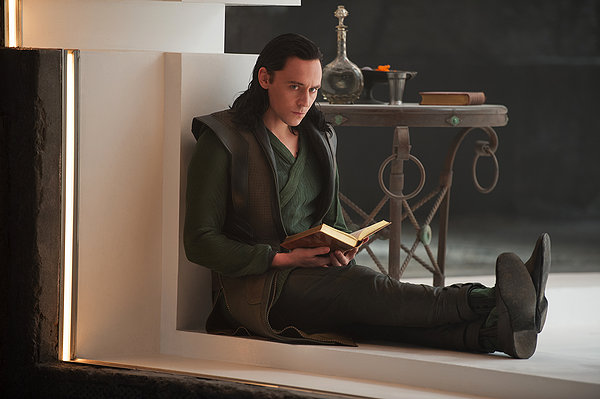 In a film dominated by a charismatic Loki, it’s no wonder that Thor 2’s real bad guy falls woefully short. Malekith is a confusing and altogether lackluster antagonist in every conceivable way. He has no personality to him; he’s simple-minded with the goal of eradicating the universe. I don’t know about you, but my bad guys better have a pretty good reason for destroying the universe since they kinda live there too. This is one of the lazier villain plot devices because it has no nuance, no shading. Apparently before there was a universe there were dark elves. I don’t want to get caught in a chicken-egg paradox here, but was there a universe before the universe, cause I look at the universe like existence’s garage. The cars inside may change but the garage was standing before it all. Anyway, Malekith wants to destroy all life because he wants to, because certainly you’d think there would be enough space in space. He’s not even that threatening or given any particular advantage beyond some firepower. It’s no wonder that Loki runs circles around this chump in the villain department. Eccleston (Unfinished Song) is not at fault. The heavy makeup he’s under smothers the actor’s ability to polish this terrible character.
The rest of the acting fares better. At this point, we know what we’re getting with Hemsworth (Snow White and the Huntsman) as the title character. He’s a sturdy leading man with just enough appeal to satisfy, though part of it is that Thor is just dull as a hero. He was more entertaining when he was cocky and irresponsible. Portman (Black Swan) holds her own though the romance between her and Thor feels more forced. Hopkins (Red 2) strikes the right mix between regal and camp. While their roles aren’t exactly integral, it’s nice having a superhero movie stuffed with great actors like Idris Elba, Ray Stevenson, Adewale Akinnuoye-Agbaje, Clive Russell, and there’s even an amusing appearance by Chris O’Dowd, who effortlessly oozes charm (take note, Thor).
This a superhero movie that separates itself by its sheer sense of fun. Thor: The Dark World takes what worked in the previous movie and provides more of it. The campy, silly Asgard stuff is given even more time, the mischievous sense of humor is renewed, the fantasy worlds given more depth and better action/effects, and fan favorite Loki gets a big starring role this time with extra brotherly bickering. It’s not the best superhero movie, nor is it the best Marvel film of recent years, but Thor 2 knows what kind of movie it wishes to be and how to best achieve this. It’s a loopy, droll, and rather imaginative big-budget superhero film, while still finding ways to be somewhat generic with its overall plotting and character turns. While the action is suitably epic, it’s the character interactions that are the most enjoyable aspect. It seems excessively lazy to say that if you enjoyed the first Thor, you’ll probably enjoy the second one as well, but there it is. Perhaps next time the storyline won’t be as convoluted and we can get even more Loki. Barring that, I’ll accept additional Chris O’Dowd screen time.
Nate’s Grade: B
Share this:

Hansel & Gretel: Witch Hunters (2013)
 You’d think a movie where Grimm characters Hansel and Gretel turn into gun-wielding, wisecracking witch hunting mercenaries would at the very least keep your attention. How could a premise like that manage to be boring? Well writer/director Tommy Wirkola (Dead Snow) miraculously found a way. Jeremy Renner and Gemma Arteton are the brother and sister of the title and they act like a 1980s buddy cop duo transplanted into a historical fantasy realm, complete with their comically large and complicated weaponry. Too often the film settle on such a lazy tone lacking irony or cleverness, settling for lame genre quips and a rote story filled with poorly developed villains. An action movie set in a fairy tale world is a great premise, and Hansel and Gretel seem like a perfectly capable pair of leads with their back-story. It’s a shame that this movie feels like it never went beyond a surface-level once-over when it came to developing its imagination. The action sequences are ineptly staged and ineptly edited, which kept me from feeling any longed after thrills or entertainment. It ends on a much better note with an all-out witch assault but by that point the movie has already worn out its welcome. Hansel & Gretel: Witch Hunters, produced by Will Ferrell and Adam McKay, is another case of a great idea not given enough development to separate itself from the din of lame action.
Nate’s Grade: C-
Share this:

Oz the Great and Powerful (2013)
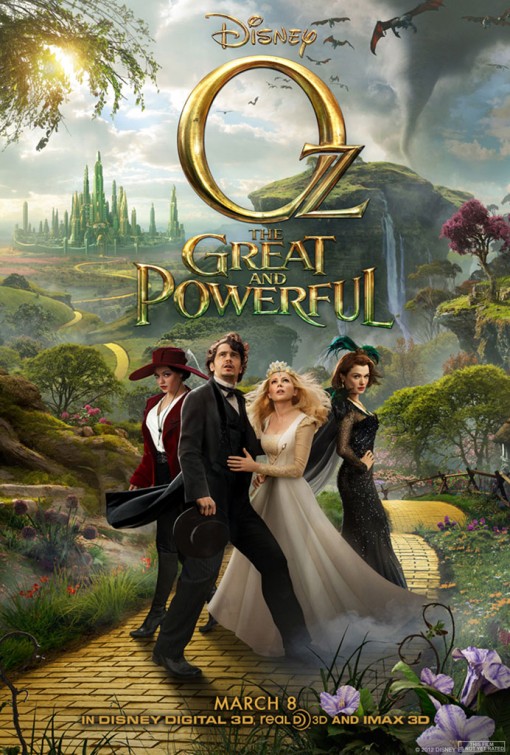 Usually when I’m watching a bad movie I have to stop and think where did things go so wrong, where did the wheels fall off, what choice lead to the disaster I am watching play out onscreen. In the case of Disney’s Oz the Great and Powerful, a Wizard of Oz prequel that pretty much hovers over the cusp of bad for its entire 130 minutes, I have to stop and think, “How could this movie ever have gone right?” I don’t think it could have, at least not with this script, this cast, and the edict from the Mouse House to keep things safe and homogenized, smothered in CGI gumbo and scrubbed clean of any real sense of venerable movie magic.
In 1905 Kansas, the magician Oz (James Franco) is used to bilking country folk out of their meager earnings. He’s a con man and runs afoul with a strong man in his own traveling circus. He makes a hasty escape in a hot air balloon and, thanks to a coincidental tornado, is whisked away to the Land of Oz. The people have long been told that a wizard would come and rescue them from the tyranny of the wicked witch. Theodora (Mila Kunis) and Evanora (Rachel Weisz), sisters controlling the Emerald City, task Oz with killing the other witch, Glinda (Michelle Williams). If he succeeds, Oz will become king and riches will be his. Along his journey he collects a band of cuddly sidekicks (flying monkey, China doll, munchkin) and learns that he may indeed be the hero that Oz needs to save the day.
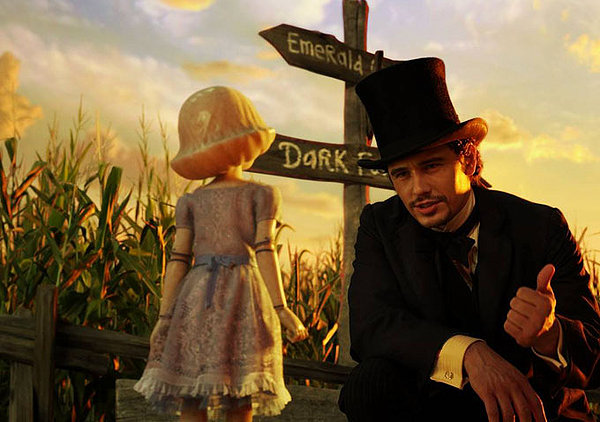 Oz the Great and Powerful is really just 2010’s Alice in Wonderland slapped together with a fresh coat of paint and some extra dwarves. I say this because, like Alice, this movie suffers from a plot that feebly sticks to the most generic of all fantasy storylines – the Great prophecy speaks about a Great savior who will save us from the Great evil. Naturally, the so-called chosen one has internal doubts about the burden they face, initially ducking out before finding that inner strength they had all long to prove they were indeed the one prophesized. It even got to the point where I was noticing some of the same plot beats between the two movies, like how last in the second act we spend time with a woman dressed all in white who we’ve been told is the villain but who is really the good guy. Then there’s the now-routine rounding up of magical creatures to combat the evil hordes in a big battle. Considering Alice was billion-dollar hit for Disney, it’s no surprise they would try and apply its formula to another magical universe hoping for the same results. Well I thought Alice was weak but Oz is even weaker. However, at least nobody absurdly starts breakdancing by the end. Small victories, people.
Beyond the formula that dictates the plot, the characters are poorly developed and broach some off-putting gender stereotypes. The character of Oz is portrayed as a scoundrel who eventually learns to be selfless, but I never really bought the major turning points for his character arc. Do all major characters need to be flawed men in need of redemption in magical worlds? I understand what they were doing with his character but I don’t think it ever worked, and certainly Franco’s performance is at fault as well (more on that later). The ladies of Oz, however, just about constitute every female stereotype we can expect in traditional movies. One of them is conniving but given no reason for why this is. One of them is pure and motherly. And then one of them gets lovesick so easily, falling head over heels for a boy in a matter of hours that she’s willing to throw her life away in spite. And all of these witches, who can actually perform magic unlike the charlatan Oz, sure seem like they don’t need a man to run the kingdom for them and tell them what to do. It’s sad that a conflict that involves feudal power grabs should devolve into a misconstrued love triangle. Then there’s the role of the little China Girl (voiced by Joey King) who adds absolutely nothing to the story except as another female in need of assistance and doting, except when she inexplicably behaves like a surly teenager in a tone-breaking head-turning moment. Oz keeps resting the very breakable doll on his shoulder, like a parrot. I suppose it’s better than tucking her in his pants.
The movie is also tonally all over the place. It wants to be scary but not too scary. Personally, I always found the talking trees to be spookier than the flying monkeys but that’s my own cross to bear. It wants to be funny but often stoops to lame slapstick and Zach Braff (Garden State) as a goofy flying monkey sidekick. It wants to be exciting but it never takes a step beyond initial menace. Its big climactic battle is more like a children’s version of something you’d see in the Lord of the Rings. The movie fails to satisfyingly congeal and so every set piece feels like it could be from a different movie.
 Some notable casting misfires also serve to doom the project. I like Franco (Rise of the Planet of the Apes) as an actor, I do, but he is grossly miscast here. He does not have the innate charm to pull off a huckster like Oz. Franco usually has an off kilter vibe to him, one that’s even present in this film, that gives him a certain mysterious draw, but he does not work as an overblown man of theatricality. Combined with lackluster character, it makes for one very bland performance that everyone keeps marveling over. It’s like all the supporting characters, in their fawning praise, are meant to subconsciously convince you that Franco is actually succeeding. Kunis (Friends with Benefits) is also a victim of bad casting. She can do the innocent ingénue stuff but when she (spoiler alert) turns mean and green it just does not work. When she goes bad she looks like Shrek’s daughter and she sounds like a pissy version of her character from Family Guy, which is ineffectual to begin with. Kunis cannot believably portray maniacal evil; sultry evil, a corrupting influence like in Black Swan, most definitely, but not this. There are lines where she screeches at the top of her lungs and it just made me snicker (“CUUUUUURSE YOOOOOOU!”).
I had faith that a director as imaginative as Sam Raimi (Spider-Man, Drag Me to Hell) would be a stolid shepherd for a fantasy-rich project such as Oz. I never got any sense of Raimi in this movie. It felt like he too was smothered completely by the overabundance of special effects. It’s a common complaint that modern movies are buried under an avalanche of soulless computer effects, but usually I find this bromide to be overstated. Having seen Oz, I can think of no more accurate description than “soulless computer effects overload.” At no point in the movie does any special effect come close to feeling real. At no point do you feel immersed in this world, awed by its unique landscapes and inhabitants (it feels often more like the land of Dr. Seuss than Oz). I chose to see the film in good ole standard 2D, though the 3D eye-popping elements are always quite noticeable. At no point do you feel any sense of magic, the most damming charge of all considering the legacy of Oz. The original Wizard of Oz holds a special place in many a heart. We recall feeling that sense of wonder and magic when we watched it as a child, the idea that movies could be limitless and transporting. While watching Raimi’s trip to Oz, I only felt an overwhelming sense of apathy that grew disquieting.
Then there’s the matter of the questionable messages that the movie posits. It celebrates the power of belief, which is admirable, but it’s belief in a lie. Oz is a fake, yet the movie wants to say that faith in false idols is something worth celebrating. Oz and his cohorts put together a deception to fool the denizens of the world into a false sense of security. Everyone believes in the Wizard of Oz so he has power but it’s all a sham. We’re supposed to feel good that these people have been fooled. Didn’t The Dark Knight Rises basically showcase what ultimately happens when a society’s safety is based around a lie and false idols? I understand that as a prequel one of its duties is to set up things for when Dorothy comes knocking, but do I have to be force-fed disingenuous moral messages?
Oz the Great and Powerful is a wannabe franchise-starter that feels like it never really gets started. There’s a generic hero’s journey, some underwritten characters, mixed messages, and poor casting choices, namely Franco and Kunis. The sense of movie magic is absent and replaced with special attention to marketing opportunities and merchandizing (get your own China Girl, kids). It feels more like the movie is following a pre-planned checklist of stops, cribbing from Alice in Wonderland playbook, and trying to exploit any nostalgia we have for this world and its characters. Except we love Dorothy, the Scarecrow, the Tin Man, the cowardly Lion, and Toto. I don’t think anyone really had any strong affection for Glinda or the Wizard. Just because we’re in the same land with familiar elements doesn’t mean our interest has been satiated. The Wizard of Oz backstory has already been done and quite well by the Broadway show Wicked, based upon the novels by Gregory Maguire. That show succeeded because it focused on the characters and their relationships (extra points for a complicated and positive female friendship dynamic). We cared. That’s the biggest fault in Raimi’s Oz, that amidst all the swirling special effects and fanciful imagination, you watch it without ever truly engaging with it. You may start to wonder if your childlike sense of wonder is dead. It’s not; it’s just that you’re old enough to see a bad movie for what it is.
Nate’s Grade: C
Share this:

Pirates: Band of Misfits (2012)
 Delightful from beginning to end, Aardman’s stop-motion animated caper Pirates: Band of Misfits is hands down the best animated film of the year. Its wry British humor is mixed with inspired slapstick and a child-like sense of folly as the Pirate Captain (voiced by Hugh Grant) and his motley crew try to prove themselves to their pirate peers. Then they run into Charles Darwin, discover their parrot is really the last remaining dodo, and have to face off against a double sword-wielding Queen Victoria. The imagination on display is remarkable. Even the puns are funny. The pacing is swift, with gags flying so fast you’ll likely want a second viewing to catch them. The voice acting is spot-on and Grant anchors the film with his gleeful impulsivity. The story is simple but well executed and fun. I absolutely loved this movie. Its action sequences are well orchestrated, its comedic sensibilities are silly but often satisfying (a monkey butler who speaks in pre-written cards, a member of the crew that is merely a fish with a pirate hate on), it’s self-aware without being too self-conscious, and the animation is wonderful. There’s something about stop-motion that other animations cannot replicate, a physicality to its world that can make it so rich and immersive in the right hands. Kids will miss the references to, among others, Darwin, Jane Austen, and John Merrick, but adults will appreciate the nods. Pirates: Band of Misfits is a wildly entertaining family-friendly animated adventure that has it all.
Nate’s Grade: A


 nathanzoebl
You must be logged in to post a comment.