Blog Archives
10 Cloverfield Lane (2016)
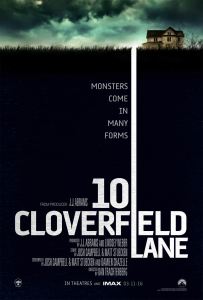 The mysterious sequel to the 2008 found footage monster movie sprung from nowhere, surreptitiously filmed without the general public having any idea of its connection to Cloverfield until mere weeks before its release. It’s the equivalent of a modern-day publicity magic act, something that J.J. Abrams is known for with his crusade against spoilers. The biggest surprise about 10 Cloverfield Lane is that the best parts of a slick and suspenseful movie are the parts that have nothing to do with Cloverfield. The majority of the film’s first two acts take place entirely in a bunker with one possibly disturbed individual played by a terrifically unsettled John Goodman. The unease and dread build nicely and the reveals are paced out in a clever manner to make us second-guess and second-guess our second-guesses. There’s a great moment during an awkward game of charades where Goodman’s character can’t conceive of calling a woman by the term “woman,” instead relying upon patronizing terms like “girl” or “princess.” There’s a darkness and a fury under the surface that should remind of Goodman’s expert turn in Barton Fink. This is a finely suspenseful and mysterious chamber piece until we leave the bunker and the movie officially connects into the Cloverfield universe. It’s a little sloppy and makes for a tonally inconsistent finale. It’s not enough to ruin the movie by any means but it certainly lessens the smartly constructed suspense and paranoia. Mary Elizabeth Winstead (Scott Pilgrim vs. the World) makes for an effective survival thriller heroine, and her line reading of “Oh come on” is a divine highlight. As a Cloverfield movie, this opens up the space for a wider variety of humans vs. monsters stories, but as a movie, it plays at peak performance when it follows its own lead.
Nate’s Grade: B
Share this:

Miracles from Heaven (2016)
 When it comes to Christian-aimed movies finding release in the mainstream multiplex, I’ll admit that my expectations are pitifully low, and sometimes even those are unmet. It’s not that I object to the message on spiritual grounds, though sometimes it can be objectionable in how it’s applied like with the hateful yet popular God’s Not Dead; my problem is that the message is the sole purpose of the movie, not the storytelling, and so everything seems to be slapdash and inconsequential. They’re not interested in telling good stories with Christian main characters; it’s about selling good Christian messages and the movies are simply a delivery system to reconfirm the faith or at times the special elevated stature (see: God’s Not Dead) of the ticket-buyers. Every now and then one of these movies seems to slip through the cracks, so to speak, and surprise me with a genuine story and a deeper exploration of its characters and their dilemmas. I was hoping that Miracles from Heaven could be something like 2014’s Heaven is For Real, a well-meaning and consciously inclusive movie. Miracles from Heaven was my own 105-minutes of hell as I endured the barest of attempt to service a feature-length story.
Based on a true story, Christy Beam (Jennifer Garner) is a loving and doting mom who checks in on each of her three daughters (Abbie, Anna, Adelynn) during their nightly prayers. Her world is turned upside down when young Anna (the heavy-lidded Kylie Rogers) has intense stomach pains and intense vomiting. She can’t keep anything down for weeks and the doctors are unhelpful until she’s finally properly diagnosed. Anna has a twisted intestine, which makes her unable to digest food, and this illness has no cure and often dooms its afflicted cases to short lives. Christy and her husband Kevin (Martin Henderson) have their hopes pinned on getting admitted to Dr. Nurko’s (Eugenio Derbez) treatment, a specialist in Boston. Even after enrolling, the long weeks apart from family, and the mounting bills, leave little hope for Anna and the Beam family. It’s the perfect conditions for a miracle of some sort to take form, wouldn’t you say?
 If you’re looking for a feel-good affirmation you might be barking up the wrong tree because Miracles from Heaven was, for me, an interminable experience of unyielding and tactless sadness pornography. Allow me to unpack my choice terminology. Any movie that features a young child stricken with a very deadly and incurable illness is going to fall upon the sadder side of human drama, but what sets this movie apart is that this emotional landing spot is the only territory it mines. Its scenes exist just to remind you how sad these characters are about their sad experiences with their sad daughter while she sadly suffers and will likely never sadly recover. The specialist in Boston only gets new patients when the old are cured or die, and they don’t get cured. I’m by no means saying that storytelling dealing with overpowering sadness is not worth exploring. I enjoy a sad movie as much as somebody who enjoys sad movies can because I want art to move me, to make me feel genuine emotions in response to the human condition. However, Miracles from Heaven failed to move me because every one of its scenes feels so carefully calculated to make its audience reach for tissues. Manipulation is also not an unforgivable sin when it comes to storytelling, but what makes this movie’s crime egregious is that it doesn’t provide any depth to justify those shed tears. You’re crying not because you feel for the characters of Anna, Christy, or the entire Beam brood, it’s because Christy is Suffering Mom dealing with Suffering Child. There is no characterization involved in this movie and instead it relies upon its simplistic setup to provide all the empathy. Why do they need to build characters when a few shots of a sick child or Garner with tears dribbling down her face will suffice? It’s lousy screenwriting and it honestly made me upset as scene after scene reconfirmed this emotional stupor.
Having some understanding that this movie wouldn’t exist if Anna didn’t miraculously heal by the end, we’re left with an enormous amount of time to fill. They don’t make miracles until the third act, folks, and this one is a tad peculiar but effective. The time between the diagnosis and the miracle would be a fine opportunity to flesh out the Beam family and learn more about them and how this illness is affecting each of them. The only thing we learn is that the oldest daughter misses her soccer tryouts. This is the only onscreen ramification of Anna’s constant medical attention affecting somebody. Everyone is suffering with dignity and poise, and even the oldest daughter isn’t that upset after the briefest of angry outbursts. These people are just not interesting screen characters. They are one hundred percent defined as Family to Sick Kid. That’s it. After forty minutes with this clan, I was overcome with a powerful malaise. I just wanted the movie to end and was mentally counting down this miracle, which always felt so infinitely far away in my theater chair. There’s no momentum in this movie. It’s about getting Anna to that specialist, then it’s about treating her, and then it’s about making her comfortable when she goes home, presumably to die. The movie lacks basic reflection and introspection, highlighted by a laugh-out-loud moment when a group of inhospitable church members ask Christy what kind of sin she, or even Anna herself, must have committed to bring upon this illness. I wanted to yell at the screen at this moment.
I genuinely felt sorry for Jennifer Garner in this movie; not her character but the actress herself. I’ve been a fan of Garner since her star-making turn in J.J. Abrams’ TV series Alias (those first two seasons are some of TV’s greatest). I enjoy her kicking bad guys in the face, I enjoy her making me feel a plethora of emotions, and I thought she could have reasonably been nominated for Best Supporting Actress in 2007 for one very affecting glance she delivers with perfection in Juno. I am a J. Gar fan, but my God did I want to save her from this horrible movie and what it was forcing her to do. It felt like Garner was held hostage and crying out for sanctuary. I can practically count on one lone hand the number of scenes that did not involve Garner crying. Every scene calls for her to be at a constant state of weeping, from angry crying to confused crying and finally hopeful weeping. She has a few angry mother monologues putting skeptical doctors in their places, but this is a performance almost entirely predicated upon crying. The emotional stakes are kept as such a fever pitch for so long that Miracles from Heaven crosses over into unintentional parody, feeling like a melodramatic Christian telenovela. I was envisioning a team with cattle prods to constantly keep Garner in a state of distress.
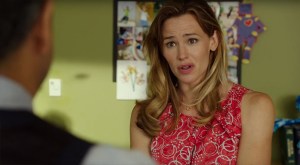 The rest of the actors barely register, and there are some good people here. What is Queen Latifah doing in this to play a Boston waitress who becomes an unofficial tour guide for Christy and Anna? She has maybe three scenes and all of them are introduced and handled so awkwardly that it feels like the movie declaring, “And now, Christy’s Special Black Friend.” Derbez (Instructions Not Included) looks like he was given the directing note of performing like a slightly less inebriated Patch Adams. There’s John Carrol Lynch (TV’s American Horror Story, Zodiac) as the kindly preacher, but his words of wisdom are often rote and lack great insight. That’s because none of these people feel like they’re characters. They’re all placeholders in service of waiting for the film’s miracle and thus its faith-affirming message to “hang in there, kitty.”
I fully accept that I’m not going to be the target audience for Miracles from Heaven, and that’s perfectly fine. Filmmakers are allowed to make stories targeted at a niche audience, though I would hope they would include enough satisfactory and developed elements for a film to transcend its niche. What bothers me is that Miracles from Heaven takes its audience for granted repeatedly. They don’t bother with characterization and the examination of insurmountable grief and parental terror because instead they’ll just boil everything to its core element of Grieving Parent cries over Sick Child. It’s the same scene, over and over, bludgeoning the audience with sadness and suffering until it taps out, cries mercy, and is overjoyed for the titular miracle to chase away this dirge. Miracles from Heaven feels more like an anecdote than a film. It’s stretched far too thin. It doesn’t respect its audience enough to even bother forming characters or present a story that explores the realities of an incurable illness and the stress this unleashes on all parties. Movies have provided great empathetic exercises where we watch human beings suffer and then triumph, moved by their plight and uplifted by their spirit, perseverance, or perhaps even the frail realatability they exhibit as they tackle their oppression. The Oscar-winning film Room is an excellent example of this and a movie I highly encourage all readers to seek out and give a chance, subject matter notwithstanding. Room is a movie that celebrates the human experience but acknowledges the pain of it too. Miracles from Heaven, in sharp contrast, is a movie that barely acknowledges the need for basic storytelling and is nothing more than insulting high-gloss sadness pornography. You deserve better, America, and so does Jennifer Garner.
Nate’s Grade: C-
Share this:

Triple 9 (2016)
 Sometimes the most upsetting movies are the ones that have a glimmer of promise and then never take advantage of that promise, instead falling upon staid genre clichés and predictable plotting that makes you wonder how a good idea was smashed into a boring and formulaic product. Triple 9 falls into this category of film disappointment. It has a great premise: a group of corrupt cops (Chiwetel Ejiofer, Anthony Mackie) are in debt to an Israeli mob matriarch (Kate Winslet) and owe her one last score, and their solution to ensure they can get away with their crime is to arrange for a new cop on the beat (Casey Affleck) to be killed, thus providing a major distraction. The problem here is that none of these characters are at all interesting. They all have conflicts and the movie does a fine job of providing each one with some kind of pressure and general motivation, but outside of the forces against them, you can summarize them in a scant few words apiece (drug addict, war vet, single dad, etc.). The plot events also just seem to coast around until a pile-up of climaxes, all of which lack satisfying closure as the body count mounts. It’s hard to care, and the only character that seems worth following is Affleck’s newcomer sniffing out the dangers that are closing in on him. Woody Harrelson feels like he’s making a special guest appearance from a separate movie from Oren Moverman as a drug-addled and angry detective. Too often the characters feel out of orbit from one another, the storylines rarely coalescing. It feels like everyone was given the same acting note of being dour and harried. Winslet’s hammy turn as an Israeli mob boss allows her to reuse her accent from Steve Jobs. Director John Hillcoat (Lawless) provides a certain charge with how he stages the robbery sequences but it’s not enough. Triple 9 is a movie that wastes a great cast, a fine premise, and a talented director. It’s not terrible by most accounts but it’s resoundingly mediocre, and sometimes that can be even worse than bad.
Nate’s Grade: C
Share this:

Race (2016)
 In 1936, Jesse Owens (Stephen James) is an American track star that seems destined for magnificent glory. Under the guidance of his coach, Larry Snyder (Jason Sudeikis), from THE Ohio State University, Owens is smashing track and field records. The culmination of his athleticism occurs at the Berlin Olympics, where Owens earns multiple gold medals and shows Adolph Hitler just how masterful his master race is.
It’s difficult to declare Race a bad movie but it’s so formulaic and by-the-numbers that I walked away thinking that Jesse Owens deserved a much better movie. I kept waiting for the movie to properly communicate the totality of what Owens accomplished, let alone in a time period where the culture at home told him he was an inferior American citizen, and it just never coalesced into a stronger message. We’re talking about a man who bested the best of the world in front of Hitler. This is ready made for cinematic drama, and perhaps that’s the problem with the screenplay by Joe Shrapnel and Anna Waterhouse (Frankie & Alice) because it always seems to fall back on the lazy and expected choice. Part of this is the reality that Owens was just that good as a runner; we only see him lose once in the entire movie. This anticlimax makes it difficult to stir up plenty of suspense around the larger and larger stages for the sports triumphs. The knowledge of Owens’ wins may be commonplace but we should still feel the stirrings of good storytelling and payoffs to well-established work, and that’s just not there. I loved watching the deluge of unhappy Nazi reaction shots to Owens’ victories (never enough footage of unhappy Nazis) but that doesn’t count as a satisfying conclusion to Owens’ story.
 The character of Owens is somewhat lost in Race. It’s reminiscent of the Jackie Robinson biopic 42 where the character of Robinson was kind of, well, boring. He’s a character who endures the suffering and indignities of others and perseveres, and this is likely why both films turn their stories of African-American tales into buddy pictures with Strong and Supportive White Men. Much of Race is presented as a buddy picture with Owens and Snyder, and both actors have such an amiable chemistry that they sort of treat the entire movie like a laid back adventure. They’re easing on through a segregated America. Too much of the movie is Owens and Snyder just cracking wise and going from scene to scene. James left a stronger impression as John Lewis in last year’s Selma. He’s too often merely stoic without more to work with. Sudeikis (We’re the Millers) is right in his comfort zone with his performance and doesn’t stray far from his range. I credit the film for not ignoring some of the messier parts of Owens’ story, namely his out-of-wedlock young daughter and him cheating on his hometown girl with a fame-seeking starlet. He’s allowed to be seen making mistakes, but the movie doesn’t allow him to live with them (note: not referring to his daughter as a “mistake”). Whenever Owens might be in a horrible predicament from his own internal decision-making, the movie almost callously breezes by without much contemplation. It’s as if every conflict is in service to the Main Conflict – sticking it to Hitler. The pressure to bow out of the Olympics to make a statement about the treatment of black people in America could have been a soul-bearing moment, but we just move along and barely feel the weight of the pressure. Yes, we know that Owens will travel abroad and win golden glory, but make the decision count.
Another aspect that dooms Race to its limited appeal is the mediocrity of its direction and, in particular, how shockingly terrible the movie is edited. Director Stephen Hopkins seems to have been in movie jail ever since 1998’s Lost in Space. He’s only shot one movie between that bomb and Race, which happened to be The Reaping, a 2007 movie I almost liked by its twist ending. He doesn’t exactly bring much to the material to elevate the races or seem that interested in taking advantageous of the suspense opportunities. There’s one great sequence where Owens first enters the Olympic stadium and the camera tracks his movements where you feel the awe. There aren’t enough moments like this that take full advantage of telling Owens’ story in a visual medium. The other technical misstep is that this is one of the worst edited movies I’ve ever watched in a theater. If you generally pay attention to the editing, it’s generally a bad sign since it’s a facet of filmmaking that is best made invisible. There is one sequence where Owens sits in Snyder’s office and the 180-degree rule is broken over ten times… in one scene! The editing will frequently flip is scene orientation, jumping back and around and creating subtle visual compositions that create incongruity in the brain. Part of this blame deserves to be laid with Hopkins, who chose to shoot his film at these uncooperative angles. It was something that bothered me throughout and would rip me out of the movie.
 The most perplexing storyline in Race involves the very positive treatment reserved for a controversial filmmaker, Leni Riefenstahl (Carice van Houten), best known for her propaganda films declaring the power and righteousness of Hitler’s Third Reich. Huh, why does a movie celebrating American heroes spend do much time positively portraying a Nazi propagandist? She becomes a translator for Goebbels and the American Olympic committee, but she’s also determined to have her vision respected when it comes to her Olympic documentary that is being produced by the Nazis. She doesn’t seem to mind about Owens trouncing the Aryan myth of racial superiority because she just wants to make the best movie and Owens is her storyline. She is portrayed as a sympathetic go-between for the Americans, someone fighting within a corrupt system to maintain her dignity and ownership in an industry that is dominated by men (she’s criticized for wearing “masculine” clothing). I’ll admit a general ignorance to Riefenstahl’s life and career outside of her most famous documentaries, which I should continue to stress are Nazi propaganda films, but this woman was a member of the Nazi party and responsible for some of the most indelible and damaging imagery justifying Hitler’s genocide, and to prop her up as a character worth rooting for and a champion to Owens just felt wrong.
Has there ever been a more self-satisfied yet facile title than Race? The double meaning is a bit too obvious and yet simple enough to be annoying. In a way, the title encapsulates the movie as a whole. It’s well-meaning but far too by-the-numbers and satisfied that it’s doing Important Work honoring an American sports legend when it’s barely giving us much of a reason to care about him as a person and less reason to root for him other than added Nazi discomfort. Owens becomes a boring centerpiece in his own movie, and his relationship with Snyder feels too ill defined, repeatedly approaching buddy comedy. The historical asides are momentarily interesting but don’t add up to much. The movie has some strikingly awful editing and lackluster direction that hobbles the storytelling. It’s a movie that hits all the checklists for sports biopic but won’t veer too far from its predicated formula. There’s a short scene at the very end that hints at what kind of better movie Race might have been. After his worldwide validation at the Berlin Olympics, Owens comes home to America and is forced to use the service entrance for his own honorary dinner. This American hero has to shamefully take the back entrance to be celebrated. It’s a stark wake-up call just how far the country had to go as far as race relations. This national cognitive dissonance, celebration and segregation, would be ripe for a searing human drama with plenty of emotion. That would be a good movie. Race is only an okay movie, and given Owens’ place in history, that’s not good enough.
Nate’s Grade: C+
Share this:

Jem and the Holograms (2015)
 Jem and the Holograms was one of the biggest bombs of 2015. It was pulled from theaters after only two weeks in wide release. That practically never happens. What made it so terrible? Well to start with, it seems to have jettisoned everything that fans of the original 80s Saturday morning cartoon might recognize in an attempt to appeal to a new generation. It missed the campy tone of the series, instead inserting lots of unearned serious drama that veers wildly, while trying to set up Jem as an inspirational leader. But really, it just sucks. It sucks a lot. If you’d like to learn more in vivid detail then please continue reading, but for those who desire the truly outrageous, you’ll only find the outrageously bad.
Jerrica (Aubrey Peebles) is a shy performer until her younger sister Kimber (Stefanie Scott) uploads a song of hers to YouTube. Within hours, everyone wants to know who “Jem” is, which is just Jerrica donning a pink wig. A shady music exec (Juliette Lewis) snatches the girls up and forms a band with Jerrica’s foster sisters, Aja (Hayley Kiyoko) and Shana (Aurora Perrineau). The girls immediately make a splash but they find themselves fighting against the influences of the industry that wants to tear them apart.
 Jem is a very confused movie and it’s a very stupid movie, and its most stupid mistake is completely abandoning any appeal this otherwise out-of-time 80s pop-culture relic might have had with its nostalgic core audience. If you grew up with the cartoon on Saturday mornings, like millions of American kids (including my sister), then you’ll be surprised to discover that the movie version bears little resemblance to its source material. I’m not saying that every property has to be slavish to its origins, and there are certain elements that just will not work as a movie that are unquestioned in the realm of cartoons; however, why even make a Jem movie if it hardly resembles Jem the TV show? That would be like producing a Brady Bunch movie and have them be a ragtag crew aboard a salvage ship in space that comes across a mysterious alien entity (honestly, I’d watch the hell out of that, but I’m not what you’d describe as a “normal” audience). Unless your name is Charlie Kaufman, that’s probably not a route you want to experiment with and purposely turn away your core fanbase. I think the time is right for a silly throwback to the 80s that celebrates and lovingly tweaks the culture of that era. The Jem dynamic was a fantasy alter ego where girls could cut loose. What did the producers of the Jem feature film give us? It’s a pretty bland rags-to-riches story in the era of instant YouTube celebrity and every single moment feels phony, sappy, and calculated. Hell, the “Holograms” of the title aren’t even mentioned until the very end and it’s literally just an incidental stage decoration for the band.
The story is pap to leap from one musical montage to another, and when Jem does try and remind you that these singing sisters are supposed to be, you know, characters with, like, feelings, it uses the full misplaced force of a sledgehammer. The characters are components of a thinly veiled checklist to lure in a wide audience of pre-teen girls. There’s Jerrica who is musically talented but shy. Her sister Kimber is obsessed with sharing everything on the Internet. Then there are the foster sisters of Aja and Shana, giving the unit a diverse ethnicity and little other dimension. These girls are annoyingly one-note, each defined by a key interest. Oh, Kimber records everything and can be pushy. Does she herself have any other hopes, dreams, fears, and conflicts? I can’t even remember between Aja and Shana which was the gearhead and which was the budding fashion designer. Does it even matter? These aren’t characters on screen deserving your attention and empathy; they are the deposits of focus-grouped research and they are ciphers for pre-teen wish-fulfillment fantasy. I’m not going to pretend that the characters on the Jem cartoon could rival the likes of Tolstoy, but at least they felt integrated in an appropriately goofy universe. These ladies feel like placeholders that are waiting to be filled in later. They’re glorified backup performers who occasionally get to quip or cry. They are human beings in a generous sense but they are not characters.
 The message of the movie seems to be about finding your voice, and believe it or not Jem becomes a symbol to inspire millions of others, though inspire them to what ends is never specified (modern John Hinckley?). “Jem is anybody who has something they want to express and they need the courage to be heard,” Jerrica proclaims to a sold-out crowd, and it was at this climactic moment that I wanted to vomit. The movie wants to project the success of one poorly written teenager as a movement, giving agency to others, but what exactly did Jem do? She got a recording contract, made some flashy music videos, and then bested the evil record exec and still gets to play with her sister bandmates. Excusing the this-could-be-you aspect of her tale being plucked from obscurity, what exactly is there to inspire anyone? During Jem’s first show, which is crammed with people that are far too old to be rollicking fans of a band of 16-year-old girls, the power goes out while they perform “Youngblood.” What will the girls do? Jerrica gets the crowd to whip out their cell phones to illuminate the small music club, then they direct the crowd into a series of foot stomps for percussion (did the power kill the drums?), and as Jerrica opens her mouth to sing, she sounds EXACTLY like she did from the microphone. Her voice curiously sounds identical to the same voice being run through a sound system and a mixing board. Does nobody in this club take this as strange? There is nothing truly, truly outrageous about these bland performers.
The structure of this movie also drove me mad, compounded by being 118 goddamn minutes long. Why is this movie two measly minutes short of a full two hours? Why is this movie only 39 less minutes than The Revenant? If ever there was a 90-minute movie, it’s Jem and the Holograms. It’s not like the screenplay is filled with so many important plot moments. Before the thirty-minute mark there are two dress-up montages, and the second act break involves the girls upset with Jem because she was forced into a solo career to save their childhood home from being foreclosed. It’s hilariously overwrought and then, I kid you not, less then five minutes later the girls all reconcile and forgive one another. There was still 40 minutes to go at this point! How? There’s even a post-credit scene setting up a sequel with a rival band. Another pointless throughline is Jem’s search for hidden clues left behind by her deceased father. He apparently was building a robot that communicates through music (mostly beat boxing… sigh) and programmed messages for his daughter to grow up and find. Why does the father have to be this obtuse about telling his daughter he loves her? His final fatherly words of wisdom include the eyeroll-inducing cliché, “You were my greatest creation.” Can the guy not write a letter instead of organizing a scavenger hunt guided by a robot that resembles the alien from Earth to Echo? Is this what good parenting looks like?
There’s another aspect of the editing that I want to single out for ridicule. Throughout the film, we’re constantly cutting homemade YouTube footage into scenes to amplify them. This makes sense when it’s a montage of fans talking about their love for Jem, this makes far less sense when the movie uses a guy drumming on his knees to score a silly heist sequence. Yes, the movie outsources moments of its musical score to a musical mélange of online artists, repeatedly inserting them into the action in distracting manners. It’s further proof of the failure of the movie to tie in Internet culture and the democracy of music in any meaningful way. It’s literally background music.
 Let’s also talk about the music of Jem and the Holograms, which, dear listener, for the purpose of this review I’m re-listening to. It’s not like the music is awful. In fact it sounds fairly indistinguishable from much of the pop music currently airing on modern radio stations. They even name-check “Quentin Tarantino” in one song, so there’s that. The songs are competent and won’t make your ears bleed but they don’t exactly stand out, which further complicates the illusion of the movie. The fawning praise from online commentators is overdone and unearned. Here’s the deal: if people go crazy over some artist, the reality better meet the hype. If you have a poet who everyone adores, then they better have some breath-taking poetry. If this reality is not met, meaning if the art is qualitatively mediocre or unmemorable, then it takes me immediately out of the movie. I’ll even deconstruct Jem’s rise to fame. Jerrica records a simply acoustic song and sings her tune of sadness, “Alone Out Here.” Immediately after Kimber uploads it, the YouTube likes go through the roof and the next morning she’s a star. The song is pretty and Peebles has a nice voice that conveys emotion well. It’s a nice song, but in no way is it star-making more than any other the thousands of other girls-with-guitars on YouTube. My proof: the total number of views for “Alone Out Here” is… 33,000 (the tune with the most views is what I would call the best, “The Way I Was,” at 132,000). That’s not exactly scintillating numbers speaking to making connections with a larger fanbase. The best song in the movie isn’t even theirs; it’s Marian Hill’s “Got It.”
Jem and he Holograms is the kind of inspirational movie that will inspire nobody, a musical coming-of-age film with terribly and terribly underwritten characters that are a note-note collection of adjectives and different fashions (this one has colored hair, oooo). The music is passable but nothing that justifies the rocket success and intense devotion we witness on screen. The story is so emotionally sappy yet phony, the structure maddeningly padded out and given the idiotic daddy scavenger hunt, and the editing insertion of cutaway clips of YouTube artists drove me mad. After an hour I realized what I was watching: the Josie and the Pussycats movie absent any of the social satire. This movie makes Josie and the Pussycats look like Doctor Strangelove.
Nate’s Grade: D
Share this:

13 Hours: The Secret Soldiers of Benghazi (2016)
 Michael Bay is the kind of filmmaker that naturally attracts negative attention and derision, so when he fast-tracked a movie about the Benghazi embassy attacks, and in a presidential election year too, there were plenty that cried foul. Bay’s not exactly known as the subtlest filmmaker, and many feared a Benghazi movie under his guidance would only reaffirm the worst. 13 Hours: the Secret Soldiers of Benghazi (a subtitle that never appears in the movie, by the way) is a surprisingly serious and generally apolitical action movie that reaffirms the strengths and weaknesses of Bay as a filmmaker.
On September 11, 2012, an armed mob stormed an American outpost in Benghazi, an attack that left four Americans dead. After Libya had toppled its decades-long autocrat, a power vacuum emerged and militants filled its place. An unclassified CIA annex in Benghazi was established to track the possible sale of munitions from the old regime. The CIA chief, Bob (David Constabile), has been forced to hire a security team of former Army Rangers and Navy Seals to protect his agents. Jack Silva (John Krasinski) is a family man reuniting with his old pal Tyrone “Rone” Woods (James Badge Dale), the head of the hired security team. The other guys (Pablo Schreiber, David Denman, Dominic Fumusa, Max Martini) welcome Jack, explaining the rising tensions in Benghazi and how they’re generally frustrated by the CIA know-it-all attitudes. They’re wary of the State department outpost for Ambassador Chris Stevens (Matt Letscher), wary of the security detail watching him, and wary of the Libyan local forces providing assistance. Flash forward to the night of the attack and Rone and his team are stymied in their early attempts to rescue the ambassador. Afterwards, the focal point of the fight shifts to that very CIA annex and one hellish night of intense combat.
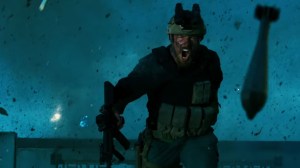
 This is Bay’s return to the realm of more “serious filmmaking,” a world he hasn’t considered since 2001’s lackluster Pearl Harbor, and while the standard Bay elements of boom are present and accounted for, the drama doesn’t stack up to the action. First, the good news is that the action in 13 Hours is often thrilling, beautifully staged and photographed by Dion Beebe (Collateral), and unlike Bay’s Transformers films, easy enough to follow along. It’s a chaotic incident where plans and communication are broken down, but Bay is able to keep the geography and the immediate and secondary goals of each action sequence clear. While the storming of the embassy isn’t quite as nerve-racking as Argo, it’s still plenty thrilling and communicates the fog of war and dawning horror of those trapped on the inside. The centerpiece is the attack on the CIA annex, which both sides anticipate and prepare for. It establishes the geography of the field of combat, the different access points, and the most likely ambushes. From there, it’s our outnumbered professionals versus a horde of armed Libyans, a standoff reminiscent in classic Hollywood action cinema. Over the course of those titular 13 hours, our security force faces wave after wave of attacks, each once becoming more sophisticated and bringing heavier firepower. Bay’s camera captures the explosions and gunfire in his usual balletic decadence. Say what you will about the man and his jingoistic tendencies, but he’s an ace visual stylist who bathes a sheen of popcorn entertainment to visceral struggle. When the action is heated, that’s when 13 Hours packs its most powerful punch.
Unfortunately, there are lulls in between the fighting, and it’s during these moments that we realize how poorly written our characters are. With the battle looming ahead, the mitigated character development emphasizes easy clichés we’ve come to expect, like the family man who needs to realize his family should come first, etc. These six guys are little more than stock characters on the screen, differentiated more by appearance and the occasional reading material than any significant personality differences. The dialogue is also rather clunky, falling too often upon tough guy speak to make up the difference. The way I was able to separate them in my head was through the actors’ previous roles (“There’s Pornstash, there’s Roy from The Office, there’s the guy from The Pacific who was the bad guy in Iron Man 3, and boy did Jim from The Office get buff”). Krasinski (Aloha) is the audience’s entry point into this world and given the most attention, so he’s ostensibly our main protagonist. He’s a strong presence to anchor the film despite the character’s shortcomings. I enjoyed watching Krasinski in such a different sort or role and started thinking about he and his wife, Emily Blunt, must have traded workout regiment advice. “Jim from The Office” with a six-pack is a surprising sight.
There’s a strange defining conflict for the first hour of the movie, namely Bay and Hogan narrowing personal clashes down to a slobs vs. snobs mentality of war. Bay has a history of fetishizing machismo and military hardware, so it should be no surprise that his movie lionizes the beefy, strapping military men serving as security. They’re placed against the eggheads of the CIA, who take every moment to remind our burly, bearded security guys that they were educated at Ivy League schools and know so much more about the Middle East. They often sound haughty when they’re scolding the security force for interfering even when it’s clear they’re saving their lives. The perspective aligns with the idea that the military-experienced, no-nonsense men of action are being ignored and looked down upon by the CIA ninnies who look at them as unnecessary babysitters. Naturally, with the hindsight of history, we know the concerns of Rone and his guys will be vindicated and the CIA snobs will be grateful they had these blue-collar American heroes. The entire role of Bob is to condescend and ignore our guys and their warnings. Bob even says early in his introduction that he’s on the brink of retirement and they won’t ruin it for him. Until the attack on September 11, we’re stuck with this reductive class warfare clash.
Another interesting aspect is that the movie makes use of its audience’s relative ignorance when it comes to the specific people involved in the Benghazi firefight. I doubt that many people know the names of the four victims excluding Ambassador Stevens. Because of that uncertainty we don’t know which of our six security characters will live, and the screenplay seems to know this, which is why it takes time to present each of the six with some sort of looming tragic back-story. We have multiple characters sending loving messages to their young children, learning they’re wife is pregnant, and making all sorts of “final” decisions, the kind that set up these characters in most movies for an early demise (if you write your girl during war or talk about your post-retirement plans, you’re guaranteed to die). I was slightly amused that the movie established each character to have a moment where it potentially sets up this tragic outcome.
 One of my big questions walking into Bay’s Benghazi movie was exactly whose version of events was the story going to follow. After eight congressional investigations, and a prominent Republican slipping by admitting one of the guiding purposes is to tarnish Hilary Clinton as a presidential candidate, I was worried that the movie was going to be a hacky, manipulative promotion of propaganda. There’s a reason that eight congressional investigations, including one that has lasted longer than Watergate, don’t seem to satisfy those calling for blood: they keep coming to the same inconvenient conclusions, namely that there was no stand down order, no conspiracy, no cover-up. There’s been a flurry of rightwing fury brewed over stoking unfounded rumors of conspiracy with Benghazi; it’s a fundraising industry unto itself for politicians. Therefore, I was initially worried that the movie was going to reinforce a version of events that eight (and counting?) congressional committees have refuted. I was relieved then that Bay’s movie keeps its focus pretty much squared on the heroism of the security team. In a way it reminded me of Black Hawk Down as it strived to recreate a series of harrowing life-and-death events with its focus more on the brotherhood and bravery of the ones in harm’s way rather than the broader political context. There is the infamous “stand down” order; however, it’s played almost incidentally, as Bob is trying to process all the chaos unfolding and the best recourse. As presented, it doesn’t sound like “stand down and let them die,” and more, “wait and let me think for a minute.” The fight to get air support from Italy doesn’t mention the fact that those Italian fighter jets sitting on the runway were not combat ready and were for flight training. There’s only one other passing dialogue exchange that touches the political, when the guys recount that the news is telling them it was a protest, which they scoff at and then let it go. That’s it. I imagine the audience that would be most excited for a Benghazi movie will be deflated. For everyone else, the sidestepping of politics lets the movie stand on its own better.
An article from Vox.com raises the issue of whether any movie about Benghazi can possibly be apolitical. It appears like the topic of Benghazi has been so cravenly politicized that any rendition of the events of that fateful day will reinforce or contradict some narrative, be it the security contractors, the CIA, the politicians on both sides of the aisle. And the absence of what others declare with certainty will only make those same people cry “cover-up.” It’s a shame that this topic is so radioactive that an objective approach celebrating the courage of those involved, mourning the loss of life, and asking for better from those in power seems impossible given the current divisive political environment. Did it have to come to this? Bay’s Benghazi is easily his most restrained movie in his bombastic career, paying reverence to the people who paid the ultimate sacrifice. The action is well staged and often visually striking, but Bay wants this movie to be more than a series of escalating action sequences. You feel he wants this to be his version of a Zero Dark Thirty-style thriller. Except it’s not. You watch the movie and sense there’s a more intelligent, nuanced, and ambiguous movie here that can make cogent points about foreign policy and the state of the Middle East. This is an action movie where the good guys shoot the relatively faceless bad guys. 13 Hours is an acceptable action movie but that’s all it ever asserts to be. Is that enough after all?
Nate’s Grade: B-
Share this:

Carol (2015)
 Have you ever watched a movie that was so understated you wanted to jump into the onscreen world and push the characters around? That’s exactly how I felt with Carol, an unrequited lesbian romance set against the closeted and intolerant era of 1950s America. Carol (Cate Blanchett) is a rich wife who meets Therese (Rooney Mara), a department store employee who assists with her Christmas shopping. They are both drawn to one another in the strange way that love works, and their possible relationship could jeopardize Carol’s custody of her young child. Because of the time period, so much of this romantic liaison is internalized and thus we get longing looks, small gestures that are meant to speak volumes, and plenty of starting and stopping, leaving the audience to fill in the blanks. I don’t have an issue with unrequited romances but Carol is one that feels like its entire world, painstakingly recreated, has been placed under glass for study. There’s no passion evident throughout the movie and I was left wondering what exactly Therese saw in Carol and vice versa. Neither woman has a particularly strong personality, though that could be a side effect of having to live publicly as a different person. I couldn’t get into them as characters and so felt little interest in seeing them together, which made the constant circling and nervous indecision even more belabored. Blanchett and Mara are quite good and director Todd Haynes (I’m Not There) handles the material with respectful subtlety, I just wish that Carol could have shaken off some of that subtlety and given me a better reason to care about these women. It’s understated to death.
Nate’s Grade: C+
Share this:

The Big Short (2015)
 Adam McKay is not exactly the kind of name you associate with a prestige picture that’s building serious Oscar heat. McKay is best known as the director and co-writer of Will Ferrell’s best movies, from Anchorman and its sequel to Talladega Nights and the underrated 2010 buddy cop movie, The Other Guys. If you stuck through the closing credits for Guys, you were treated to an animated education lesson on the size of Wall Street’s greed and accountability in regards to the 2008 financial crisis. It was impassioned, angry, and an interesting note to end an otherwise goofy comedy. The Big Short is based upon Michael Lewis’ (Moneyball) best-selling book and it’s a disaster movie where the biggest disaster is the world economy. The movie McKay co-adapted and directed is bristling with intelligence, indignation, and a clear purpose. He wants to make you very angry, and by the end if you’re not, you haven’t been paying enough attention.
In the wake of the financial collapse in 2008, the fallout was so tremendous that many people felt nobody could have seen this coming. There were a few and they made out like bandits while trying to warn others about the impending doom. In the early 2000s, Michael Burry (Christian Bale) is a hedgefund manager who sees warning signs that the housing market is a bubble ready to burst. He sees the toxicity of the majority sub-prime mortgages wrapped together and sold as a seemingly safe security, a CDO (collateralized debt obligation). His bosses think he’s mad and they’re furious when they discover Burry has gone from bank to bank making big bets against the housing market. The banks are eager to take what they believe to be easy money from a sucker. How could the housing market burst? Other Wall Street investors take notice of Burry, notably Jared Vennett (Ryan Gosling) who pitches the plan to “short” the housing market. Nobody takes him seriously except Mark Baum (Steve Carell) and his small team who works for Goldman Sachs. Baum is curious how something so large could go unnoticed, so he and his team fly to Florida and Vegas to investigate the realities of the market and what they find does not match the rosy cheerleading from Wall Street. A pair of wannabe traders (Finn Witrock, John Magaro) stumbles across Burry’s analysis and try to make their own bets, except they need a bigger name to make the trades. They reach out to an ex-Wall Street trader (Brad Pitt) who agrees to shepherd them on this quixotic quest. Are these men righteous defenders of fraud or just people trying to get their own cut of the pie?
 The brilliance of The Big Short lies in its accessibility and the virulent passion that McKay has for the subject matter. The movie is structured like a heist and an underdog story, suckering in the audience to root for the upstarts trying to fleece the big banks and profit off their greed and stupidity. For the first 90 minutes or so, the film comes across like a caper and we follow our group of misfits as they fight against the conventional wisdom that the housing market could never topple. These guys see the signs and the risks that others could not or would not see, especially since the flow of money was rich and the good times could be shared, which lead to collusion from the very same agencies designed to regulate and enforce the financial laws. For those 90 minutes the movie flies by on its sense of whimsy and are-we-getting-away-with-this good fortune, putting our band of misfits in position to win big on the losses of the ignorant and fraudulent. And then, in one swift move, it all comes down and you’re reminded, rather indignantly by Pitt’s character, that what they are benefiting from is the meltdown of the U.S. housing market and by extension the American economy. What once felt like a celebratory caper now starts to feel queasy, and it’s in the last act that The Big Short reminds you just how awful the events of the 2008 financial crisis were and how these guys did nothing more than benefit from mass misery. These are not heroes, though Mark Baum is given plenty of moral grandstanding moments that present him as the closest thing we have in the picture. These were a bunch of guys who got rich betting on a lot of other people’s bad bets, bets that almost destroyed the world’s economic systems. The concluding half hour feels like a sudden stop after a sugar rush, where you’re left to question your decision-making but also come to terms with the reality of what seemed like a fun time. McKay lures his audience in with the guise of a heist/underdog story, appealing and accessible avenues of cinema, and then serves the cold hard medicine in the concluding moments.
McKay is admirably trying to educate and advocate while he entertains, but he truly wants the audience to understand why they should be sharpening their pitchforks. At several points, characters will break the fourth wall and talk directly into the camera, admitting that certain events didn’t happen exactly as we saw, or occasionally they’ll remind us that what we watched was exactly how it happened. It’s a measure that isn’t overplayed and helps juice the spirits of the movie, becoming something of a confidant in the schemes with the onscreen participants. When things gets a little hard to understand with the mountain of Wall Street lingo, McKay will cut to celebrity cameos to help explain the more arcane instruments of the financial system. Margot Robbie luxuriates in a bubble bath and explains sub-prime mortgages, Anthony Bourdain explains CDOs, and Selena Gomez, in a rather cogent analogy, explains synthetic CDOs as an endless chain of side bets being made off one hand of blackjack. The movie goes pretty fast and a viewer might experience information overload but McKay knows when to slow things down and provide a well-timed assist so that his learned audience will see the true extent of the corruption and greed rampant in how Wall Street handled its business.
 Of the three storylines, I found Mark Baum and his team easily the most interesting and I think McKay and co-screenwriter Charles Randolph (The Interpreter) agreed, which is why he’s the biggest part of the movie. Burry gets things started but he recedes into the background after the first act, and that’s where Baum and his financial team step into the spotlight to further explore how unstable the housing market just might be. I think this is Carell’s best dramatic performance to date (I wasn’t wowed by Foxcatcher). He’s playing perhaps one of the angriest people seen on screen but that’s because he has a moral center and the bad business practices, let alone the sociopathic greed of his “peers,” constantly enrage him. He’s something like a flabbergasted crusading journalist who keeps shaking his head in stupefying revulsion at just how deep this whole thing goes. Having Baum as our entry into the moral morass of Wall Street allows the audience to feel a sense of ethical superiority, and then like Pitt’s character, it can all go away with one perfectly articulated retort. There’s a moment where Baum is lambasting a mortgage ratings officer (Melissa Leo, her only scene too) after she admits that if they don’t rate bad mortgages as good, the banks will just go to their competitor, and then she accuses Baum of being a hypocrite. His reason for the office visit is not his outrage at the fraud but the fact that this fraud is holding up his winnings. He’s not the crusader he may wish to be. Bale (American Hustle) and Gosling (Only God Forgives) are perfectly cast and provide strong supporting work in small doses spread throughout. Pitt is in 12 Years a Slave producer mode where he knows he needs to appear in the movie to better sell it to audiences, and so he’s here and rather unremarkable. There is a bevy of familiar faces (Marisa Tomei, Rafe Spall, Max Greenfield, Karen Gillan) appearing in small moments as if everybody in Hollywood wanted to get in on McKay’s party.
There is one annoying misstep in the movie and it occurs about halfway and it’s made to stretch out the stakes in a haphazard manner. The Big Short is a disaster movie where the audience knows exactly when the disaster is coming, and yet there’s a section in the middle where the characters are all left in doubt whether their big bets will pay off because of the ratings fraud. Burry is threatened with losing his job. It’s silly because we know the economy is going to crash in 2008, but the movie throws out a weak obstacle that, hey, maybe it won’t crash. It reminds me of the Hinderberg movie from the 1970s. There were several moments where it looked like that zeppelin full of hydrogen was going to go up in flames… except students of history know that moment is fated in New Jersey, so all the close calls were foolish fake-outs for a major event that was well anticipated. We all know the economy is going down so there’s no need for the manufactured doubts.
McKay and company want to wake up a fairly apathetic general public about the crimes and negligence of the Wall Street robber barons that risked the world’s economy and then managed to skip out on the tab. The tones can juggle wildly, and I’d credit McKay’s background in comedy for his ability to maintain a reliable and firm comic footing for the film without losing the significance of his message. It’s hard to nail down a genre for the movie; it’s a dark comedy, a drama, a true crime picture, and a wake-up call. You have moments that feel like a heist flick and moments that feel like a sickening journalistic expose. It’s got highs, lows, laughs, groans, and plenty of human emotions, though the most prominent would be disgust and disbelief. The Big Short is advocacy populism as pop-entertainment, and it succeeds ably. It’s an economics lesson for the public. At the end of the movie, the closing text informs us about “bespoke tranches,” which are investment opportunities that banks are flocking to ($5 billion in 2013 to $20 billion in 2014). It’s just another name for CDOs. Unless an informed public demands action from the system, it seems that Wall Street is doomed to repeat its same high-risk mistakes and that same vulnerable public is doomed to clean up the mess.
Nate’s Grade: A-
Share this:

The Revenant (2015)
 Which do you value more, verisimilitude or narrative? If you’re looking for an intense, immersive filmgoing experience that’s just as harrowing as it is beautiful, then perhaps The Revenant is your movie. If you are looking for characters and a story to engage with, then maybe it won’t be. Leonardo DiCaprio plays the real-life frontiersman Hugh Glass who was mauled by a bear and left for dead by his companions. He miraculously survives and tracks down those who betrayed him for some frontier justice Under the unyielding vision of director Alejandro Gonzalez Innarito (Birdman), the movie opens up its scary world with an exhilarating sense of detail. Inarritu favors lots of natural light and long, gorgeous tracking shots, which creates a spellbinding sense of realism. The attacks and escapes and moment-to-moment survival communicate the remarkable dangers of this natural world. The cinematography by Emmanuel Lubezki is flawless, using light and camera placement to stunning effect. However, The Revenant (meaning a person who has come back from the dead) is a series of beautifully rendered moments delicately stretched over a ponderous running time of 157 minutes. There’s just not enough plot events to fill that running time, so to compensate Inarritu gives way to some Terrence Malick (Tree of Life) impulses that try for philosophical poetry but miss. DiCaprio is getting plenty of plaudits for his demanding role, and he’s quite good and visceral (and no, he does not get raped by a bear). I was more impressed with Tom Hardy, who plays the target of Glass’ fury. Hardy imbues depth into his antagonist, and while you won’t exactly be rooting for him to get away you can see the guy as more pragmatist than mustache-twirling rogue. He even has an interesting back-story surviving being scalped that informs his decision-making. Much of the film is watching Glass endure physical hardship after physical hardship, which may grow wearying for many audience members, especially those most squeamish. When it’s firing, The Revenant is a magnificent and stunningly realized survival thriller with sprinkles of engaging human drama. The problem is that there isn’t enough to go around for its running time.
Nate’s Grade: B
Share this:

Concussion (2015)
 Concussion wants to be a hard-hitting drama exposing the dangers of repetitive head trauma in football and the lengths of the cover-ups and collusion within the NFL, except that movie already exists and is the Frontline documentary League of Denial that was too controversial to air on ESPN. Concussion, in comparison, is an adequate but hopelessly underwhelming film on the Nigerian-born Dr. Omalu (Will Smith) who discovered chronic traumatic encephalopathy (CTE) in the brains of deceased NFL players. The resistance and denials are soft-pedaled, though the movie treats them with heightened dramatic stakes that are unearned. There’s one threatening anonymous phone call but for the most part it feels like Dr. Omalu is just being ignored, and “being ignored” is a hard thing to turn into outstanding dramatic stakes at the movies. The movie doesn’t let the NFL completely off the hook but its critiques have been softened by studio interference (as revealed through the Sony email hack). As a straightforward drama, Concussion is easy to watch and Smith gives an authentic performance that doesn’t have to go to histrionic lengths to communicate his internal struggle. There’s a nice subplot with Omalu courting his eventual wife played by Gugu Mbatha-Raw. Albert Brooks and Alec Baldwin are strong supporting players. David Morse gets a show-stopping part to show off his acting skills. By the end, it all feels just a little too nice, a little too polished, and a little too easy, both in how it presents a complicated medical discovery and its implications but also the NFL’s response. For an awards-season drama that’s meant to shock and inform, being “easy” is the wrong call.
Nate’s Grade: B-
Note: “League of Denial” is currently available on Netflix streaming and I encourage people to check it out.


You must be logged in to post a comment.