Blog Archives
Pure O (2018)
 Ideally, every scene in a feature film should have a purpose, whether it’s pushing the overall story forward, informing us about characters and their interior lives, setting up plot points or jokes, or establishing the atmosphere and way of life examined on screen. This is even more necessary with shorts simply from the truncated run time. I was asked to review the short film Pure O, produced by several hard-working, creative types in the Ohio film community. Confession: I know several of the people in front of and behind the camera with this project. I will hold as much of my personal bias back and judge the film on its artistic merits but I thought that should be mentioned upfront.
Pure O follows Purity Oglander (Stella Singer), the lead singer and guitarist for a grunge band on the verge. She also suffers from a mental condition called Pure OCD (sounds almost like a misguided Calvin Klein cologne), which is an intrusion of harmful thoughts and visions. These thoughts don’t necessarily translate into action but the worry for the recipient is that they might. Purity must navigate her mental illness, the stigma attached to mental illness circa the 90s, and work up the courage to get the help she needs.
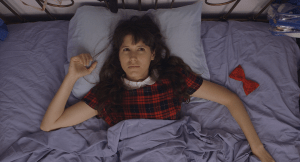 It feels like the narrative terrain Pure O mines is our protagonist’s question over who she really is and if she’s ready to embrace change. She’s a local musician who we’re told, via long successions of handy answering machine voice over exposition, has a band “O” on the cusp of its big break. Even titles appear onscreen to tell us this is her “last day of obscurity.” This is a prime conflict as it can push a character outside of their comfort zone and transition from an old life into an uncertain new one. The problem is that this is kept much more as a backdrop of potential conflict; it’s background seasoning. I’m also curious how different her band’s big break is going to be if they’re playing on low-rent, Wayne’s World-style public access television talk shows (“The Mr. Dick Show”). The fact that she blows off this rinky-dink performance and her label is ready to drop the band makes me think that they might not have been so close to that last day of obscurity after all. It’s also not like Purity is returning to her old stomping grounds and reflecting on its influence before she’s whisked to a new level of fame and fortune. She’s still home and presumably with the same people as before.
The larger intended focus of acceptance is with her mental illness. That’s an interesting starting point for conflict and an opportunity to visualize some pretty alarming imagery. I was confused whether Purity was just now getting these intruding thoughts. It felt like she had to have had these thoughts before, but her reactions to them seemed so sudden and new, the question over what is going on rather than the recognition that these dark impulses have returned. I think the stronger narrative would have been the acknowledgement that she’s already been struggling to live with these thoughts. That doesn’t mean they are normalized but that it’s not some sudden mental break. I don’t know if there’s any rhyme or reason for what triggers these outbreaks, but we’re treated to two instances or her envisioning brutal assaults and murdering innocents. It’s intended to be a shock to the system, and it delivers mostly, but the overall film tone hampers that.
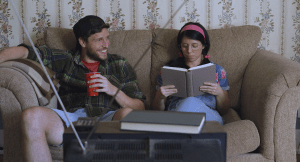 If I had to single out one element that holds Pure O back from its stated intentions of writer/director W.M. Weikart (Insidious Whispers), that would be its mishmash of tones. There are some pretty significant tonal divergences here with the incursion of psychological horror, but really it’s more the depiction of its everyday world as something akin to a wacky network sitcom. The supporting characters add little to the larger story. They seem to be serving as auditions for a crazy roommate sitcom. There’s the Dickish Dude (Dan Nye), the Soft-Spoken Brainiac (Ann Trinh), Oblivious Girl (Lauren Paulis), Annoying Self-Involved Sister (Sara Morse), Concerned But Out-of-Touch Dad (Carl G. Herrick), and then there’s the even smaller supporting characters of Sardonic Goth Waitress (Kira L. Wilson), Pathetic Local Host (Joe Kidd), and Lisa (Iabou Windimere), a roommate who paints varying degrees of the same circle. Does that sound like the kind of cast of characters for an examination on the crippling effects of mental illness? It feels like an overdose of quirk that doesn’t materialize into something greater or related to Purity. The visit with Purity’s friends amounts to reminding her of the stigma of mental illness, but this same point is served in the next scene with the family lunch when her sister makes the same points. If these characters are meant to reflect our heroine’s journey to some road of acceptance, it’s hard to take that evolution seriously because it’s hard to take them seriously. The sentimental conclusion with Purity getting the help she needs, with the support of her immediate family, feels like another example of a clashing tone keeping the film from gelling properly.
The problem for me is that Pure O didn’t quite earn that hopeful, well-traveled ending. The characters were amusing in their brief encounters but didn’t feel like they contributed to the overall larger story. They felt like holdovers from a larger universe of stories making a “special guest appearance.” They felt less like people. That would be fine except I believe we’re meant to feel that sting of hope by the end, that Purity’s family is supporting her accessing therapy. It works, but the ensuing 18 minutes feels cluttered as far as the path taken to get to this conclusion. I think the friends could have been cut entirely especially if the aim is to make Purity feel more like an outcast floating by. It doesn’t feel like all the stops along the way accomplished the goal of moving toward self-acceptance. I’m hard-pressed to really think why she gets the help she needs except for an outpouring of support via answering machine exposition dump. But even those are in response to her near catatonic walk-off from the TV gig, a response that doesn’t seem to earn the outpouring of concern. She does get a phone call from Betty Bosey (Danielle Vettraino), the girl everyone else mocks for being crazy, so perhaps that’s intended as a reminder of self-care.
 There are many merits to Pure O. The acting is fairly good throughout and Stella Singer (Choices) is an excellent choice as a lead. She has great moments. Her character is very passive for the majority of the short film, either being talked to or keeping the intruding voices/thoughts at bay, which causes her to feel like a passenger too often. Singer has such a striking, expressive face (seriously, she looks so different with her hair up versus down) that I wanted her to have more opportunities to stretch her acting muscles. It may be fresh in my mind, but she reminded me of Lola Kirke (Gemini). This is a professional looking and edited short film. Even the opening concert scene impressed me with how it was able to tie together an effective looking stage experience. The 90s aesthetic feels very gamely committed, none more so than in wardrobe where each character almost feels entirely defined by a color or extreme look. The strict adherence to stylized costuming does a smart job of telling you about the characters in visual ways, already cuing you without wasting precious time. The sound design is excellent, with the collage of negative voices crashing against her brain like the oncoming surf. The line, “It all went to hell after Karen Carpenter pierced her clit,” is a wonderful non-sequitur that took my breath away. The strange humor of a low-budget public access TV talk show was amusingly absurdist, complete with talking pine tree sidekick and break dancing robot. It’s the kind of show that seems destined for a dedicated YouTube life. My favorite genuine moment is the small conversation Purity has with Betty Bossy before she checks into her therapist’s office. It’s slow and develops Betty’s character effectively in small strokes, discussing her life decisions and corrections. It was the moment in Pure O where the characters onscreen felt like living, breathing people and done with a degree of subtlety. The fact that everyone else mocks Betty is just another indication of their general flippancy.
 Pure O is a well-intentioned short film with fine attributes, both in technical matters and with its troupe of actors, notably the compelling lead heroine, Stella Singer. The variety of supporting characters will keep you watching since it’s something new every few minutes; however, the glut of characters also detracts from the drive of the story and its aim toward Purity learning to accept her mental illness. The inconsistent tone also poses as a distraction from the narrative goals, making the serious stuff feel less serious and the comic asides feel like they’ve been retrofitted from another project. This marriage of tone could have worked, but this calibration doesn’t quite get there. I do think people can get entertainment from Pure O (after all, the time investment is pretty accessible). It feels like a glimpse of a larger story, one worth developing into a tighter, character-driven plot with less wacky side diversions. Still, congratulations to the many talented people who pooled their efforts and brought a short film into life. Pure O is an intriguing yet flawed start to a character and a world worth further exploration. But if this is all we get, at least there was a break dancing robot to go with my Karen Carpenter pierced clitoris aside.
Nate’s Grade: C+
Share this:

Gemini (2018)
 Dear reader, I want you to know upfront that I’m writing this review for one major purpose, and that is to complain about its ending. Had this movie ended differently, I probably would have simply postponed writing about it. Then writer/director Aaron Katz (Land Ho!) went with his ending, and now we need to talk about Gemini, a neo-noir set in the world of movie stars, paparazzi, and sycophantic hangers-on in the city of angels.
The beginning thirty minutes do a fine job of establishing a world and perspective. We follow the day-to-day of Jill (Lola Kirke), a personal assistant to a popular actress, Heather Anderson (Zoe Kravitz). She deals with pushy directors, invasive press, and boundary-blurring fan interactions. She’s Heather’s support and one of her best friends. Katz does a very effective job of establishing Jill’s world of responsibilities as well as her confusing sense of where she fits in this equation. Is she more hired-help or BFF? Heather backs out of a movie and talks about starting her own production company, with Jill and her developing projects that appeal to them. That night, Heather is fearful that someone has been following her and asks for a gun. Jill gives her one, loading the bullets. The next day, Jill comes back to Heather’s palatial home and finds her dead on the floor and the growing realization that she is the number one suspect (her fingerprints are on the gun).
 That’s the first third of the movie and it works well. Katz’s screenplay slowly builds, organically establishing the complicated world of Jill and her general sense of being an outsider wherever she goes. Once the murder takes place, Gemini becomes more recognizable with its film noir elements, as Jill adopts a disguise and investigates a series of suspects that could have killed the starlet, including the director she spurned and an old boyfriend who has trouble letting go. This is also where Katz introduces a new threat in the presence of Detective Edward Ahn (John Cho). He’s a calm, empathetic man but he always seems to know more than he lets on, asking probing questions that Jill doesn’t feel comfortable answering. Each new trip to a suspect presents a different mood and aim. Jill’s visit with the director becomes a humorous sit-down where the guy theorizes who is guilty if it were a movie, finally concluding it would probably be Jill as a twist. Jill infiltrates the ex-boyfriend’s hotel room and has to avoid detection and it is an efficient small-scale suspense sequence. All the while the detective appears to be circling something.
The are several merits of Katz’s film that are worth mentioning. The acting is generally good all around, especially from Kirke (Gone Girl, Amazon’s Mozart in the Jungle). She’s a natural screen presence while still radiating a sense of relatability. There’s a lot going on behind those saucer-eyes of hers and I wish the movie served her better by the end. Kravtiz (Rough Night) and Cho (Star Trek Beyond) are both unpredictable in different ways, making the audience glean extra subtleties from their guarded performances. The sleek cinematography by Andrew Reed (Cold Weather) deals in cool teals and purples, creating a hazy, 1980s-esque atmosphere without becoming annoying omnipresent like in a Nicolas Refn film. It’s style without being eaten alive by it (Neon Demon broadside?). The musical score by Keegan DeWitt (Hearts Beat Loud) is suitably moody, working in typical noir elements like brass instruments with a modern ambient sensibility. Under Katz’s direction, the movie has fun with introducing classic noir tropes and giving them a twist, as well as diverting from them, like our heroine being an ordinary outsider.
And now comes the part where I must discuss the ending to Gemini and, in doing so, will spoil the movie significantly. If you’d like to continue reading and understand the bulk of my grievance, please proceed ahead with spoilers. This has served as your warning, dear reader.
 As the film is nearing its end, it looks like Heather’s secret bisexual fling is being presented as the most likely candidate. The two of them were caught smooching by a late-night paparazzi and this could present some career problems. Jill sneaks away from the supposed lion’s den and heads out to a cabin in the California woods, the spot the fling was talking to. She enters the cabin and finds… Heather there alive and well. You see the dead body in Heather’s home was not her but the super eager fan they had encountered earlier, a look-alike made more obscured with parts of her brain missing. Apparently Heather killed her because she was stalking her and she feared for her life, or so she says. She hid out and waited for everything to die down. Jill is understandably very angry especially since she became the prime suspect. Heather is sorry but not that sorry. Do the crime scene investigators not take fingerprints? Blood samples? I’m uncertain of the timeline of Gemini but this fake-out could only last a couple days, charitably. It creates suspicion that there’s more than Heather is willingly admitting.
This sets up an exclusive interview with a big journalist, the first point in re-branding Heather after the news came out, and trying to push the narrative in the direction they want. Then all of a sudden Detective Ahn shows up at the taping and asks if he can watch as a favor. Jill considers this, confirming the case is closed, and allows it. All right, it’s at this point where all the major players are together in a crucible of secrets. Something good is going to happen, because why else bring these characters together in this moment? And then as the interview begins and Katz’s camera slowly pans over to the L.A. skyline and slowly zooms in, and this is where I started yelling at my screen. This is not an ending. This is five minutes away from an ending. The comeuppance of a starlet thinking she can get away with anything and put upon her vulnerable and faithful assistant is all set. The instincts of our wily detective will be proven right. Jill will have become a stronger character, able to suss out the truth and cut off a destructive force. Justice will be had, the truth will come out, and it will feel like a natural climax of the entire 90-minute movie. And then none of that happens. Nothing happens. It’s all setup and then the L.A. skyline (end spoilers).
Gemini is a frustrating movie with good acting, a dash of style, and some potently moody moments to tickle a neo-noir enthusiast. Until the ending. I was flabbergasted. Katz delivered a cop-out of an ending, and subsequently makes his overall film one that I don’t even think I can recommend, even to neo-noir acolytes. Gemini, I wrote this review because of your ending and I’m still waiting on one. I’ll be here if you need me.
Nate’s Grade: C
Share this:

Jurassic World: Fallen Kingdom (2018)
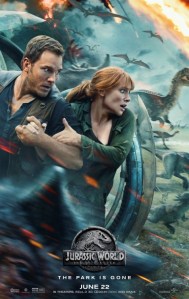 There has always been an element of suspension of disbelief with the Jurassic Park films even with the hubris-pushing premise, but the sequels specifically have had to manage a rising tide of incredulity and sense of dumb. You can only keep going back to a dinosaur-infested island or thinking this time mucking with the DNA of large, extinct, highly advanced killing machines will be different. Jurassic World: Fallen Kingdom may be the dumbest yet, and while it does have moments of fun and excitement, the dumb outweighs all else.
Years after the deadly attacks at Jurassic World, the volcano on the island has reactivated and the remaining dinosaurs are in imminent danger of another extinction (except for the flying ones, but whatever). Claire (Bryce Dallas Howard), with sensible footwear this go-round, is looking to raise money and awareness to save the thunder lizards. A wealthy magnate (James Cromwell) wants to save the dinosaurs and whisk them to a wildlife preserve far from mankind, but first they must secure the raptor Blue, and in order for that to happen Claire needs to convince her former flame and co-worker Owen (Chris Pratt) to go back. They venture back to the endangered island only to run into more trouble from stampeding dinosaurs, new super predators, and a plot to house and sell the creatures off the island.
 Maybe it’s just a side effect of being the fifth movie in a generation-spanning franchise, or maybe it’s a holdover effect of the 2015 film’s meta-commentary about audiences becoming complacent with what used to inspire awe, but it feels like returning screenwriters Colin Trevorrow (The Book of Henry) and Derek Connolly (Safety Not Guaranteed) couldn’t be bothered picking a tone or developing their plot. It reminds me of the seventh season of HBO’s Game of Thrones, specifically the back half of episodes. It felt like the creators had certain conclusions in mind and rather than smartly develop storylines that would naturally reach those conclusions, the “how” of the narrative became jumbled, confounding, and frustrating. I felt the same way while watching Fallen Kingdom; the stylish set pieces were likely established first and foremost and the stuff in between, you know the story and characters and their interaction, was given far less attention. It didn’t matter how we got from one set piece to another. This lack of consideration leads to many moments that keep you from fully engaging with the movie, namely dumb and/or awful characters doing dumb things for dumb reasons. The conclusion of Fallen Kingdom seems meant to leverage interest in a third movie, which is already scheduled for release in 2021. Was this 128 minutes the best way to get there?
When people repeatedly do stupid things, it tests your limits of empathy. This happens to me with horror movies and it happened for me with Fallen Kingdom. It’s the kind of movie where a little girl runs into her bedroom and hides under her covers from an approaching hungry dinosaur. The ensuing image of the stalking beast entering the bed with the claws is a killer image, but what did we lose getting here? This little girl was not established as some dumb kid either. The preceding hour showed her as resourceful and plucky, so this just erases all that. There’s another moment where characters have to choose between escaping through an ordinary door or an open window and crawling along the edge of the roof… and guess what they choose. This is the kind of movie where characters will be in danger and then, hooray, another character arrived in time to save the day, and then another character arrived to save the shortly-after next day. Then there’s a bad guy who enters a dinosaur cage simply to retrieve a dino tooth for his personal necklace of dinosaur teeth. I’ll repeat that. He’s not extracting them to sell to another bio-engineering company for its DNA (the opening scene presents this very example). He’s removing dinosaur teeth for his own personal decorative hobby. My preview screening groaned in unison loudly at how stupid all of this was. How am I supposed to even enjoy this dumb character’s inevitable death when they’re this dumb and undefined?
 The dumbest action of all is tied to its central premise of saving the dinosaurs. When Jeff Goldblum’s Ian Malcolm (relegated to a two-minute cameo, don’t expect much) was championing letting the dinosaurs go extinct again and the folly of mankind playing God in the realm of genetics, I was right with him, and I’m no GMO spook. Bringing gigantic, killing machines back to life was clearly a mistake as five movies have now shown in great, bloody detail. At some point a lesson must be learned. I know that Fallen Kingdom is meant to imbue the dinosaurs in an animal rights lens, with Claire trying to atone for her time shaping and selling these creatures for public consumption. The animal rights angle never clicked for me. There are moments the film really tries, wanting you to shed a few tears for the fate of these gigantic creatures. Maybe you will, and there are a few shameless sequences to make you (the child sitting next to me was losing it at points). That’s why it’s not enough to have the bad guys have bad guy plans but they also have to be cruel and abusive in their treatment of the dinosaurs. The multi-million dollar ploy to weaponize the dinos also baffled me. Are they going to be that much better than firepower? There’s a reason we don’t just drop hungry lions into our war zones.
The new characters fail to add anything of merit to the story and larger Jurassic world. Cromwell’s Benjamin Lockwood is basically just a John Hammond stand-in (“Oh, there were TWO super rich dudes who funded the research and park now”). He’s confined to a bed for most of the movie and adds little besides his bank account. Then there are the two main team members, computer whiz Franklin Webb (Justice Smith) and med vet Zia Rodriguez (Daniella Pineda). He’s only here for comic relief and to do computer magic whenever called upon, and she’s only here for spiky attitude (she gets called a “nasty woman” for commentary?) and to do medical magic when called upon. Each of these characters is less a person than a handy plot resolution. When the movie transitions into its second half, both of them are kept on the sidelines. Then there’s little Maisie (Isabella Sermon) who has her own secret that really doesn’t come to much of anything and begs further examination. I suppose her perspective relates to a difficult moral choice at the end over the value of life, but she still felt underdeveloped. Even the villains are disappointing with the exception of Toby Jones (Atomic Blonde) as a slimy, one percent businessman looking for new thrills. I wish the screenplay had devoted more time to establishing the rich’s entitled sense of privilege even as it comes to a new world with living dinosaurs as the next big, commoditized play thing to buy and sell.
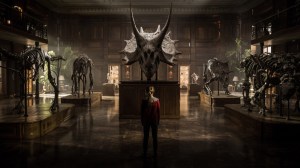 With all that said, there are moments of enjoyment and excitement to be had with Fallen Kingdom. Director J.A. Bayona (A Monster Calls) has a great gift for finding the right image and holding onto it for maximum impact. He showcased this in his crafty, brooding, and highly effective ghost story The Orphanage and in his emotionally uplifting and harrowing tsunami survival drama The Impossible. With his first crack at a major studio movie, Bayona comes most alive in its second half when the movie transitions into a haunted house thriller in a mansion of secrets. His command of visuals and mood comes into sharper focus and there are some tense, delightful sequences. As much as I wrote about Fallen Kingdom being a movie of set pieces and little else, those set pieces are actually pretty entertaining. The island material only lasts about a half hour, wasting little time in getting the important pieces in play. There’s one long take inside a submerged capsule taking on water that keeps spinning and ratcheting up the tension that reminded me a bit of Alfonso Cuaron’s Children of Men. There’s another sequence involving a blood transfusion that I thought married comedy and tension better than anything else in the film, and it served a purpose that was credible.
If you can shut off your brain and stuff your mouth with a steady supply of popcorn to thwart your incredulous grumbling, there might be enough to enjoy with Jurassic World: Fallen Kingdom. It’s technically well made and the special effects are pretty good, the photography is evocative, and there are potent set pieces and imagery to stimulate the pulse. It’s loud, dumb fun, but for me, this time, the dumb outweighed the fun.
Nate’s Grade: C
Share this:

Incredibles 2 (2018)
 The prevailing problem with Pixar sequels (and prequels) lacking “Toy” in their title is that they never feel like stories needing to be told, tales that will enrich our understanding of the characters and their larger world. I would much more gladly like a Monster’s Inc. sequel where Adult Boo is visited by her old closet-dwelling friends rather than an inoffensively cute prequel explaining how characters became friends long ago. The Incredibles universe always seemed like the one most demanding of a real sequel. Writer/director Brad Bird created a rich retro-futuristic world with numerous possibilities. I’m happy to report that Incredibles 2, while not soaring to the exact heights of its predecessor, is still a very worthy sequel that even manages to outshine the original in select areas.
Taking place literally seconds after the conclusion of the 2004 film, the Parr family fights together against the Underminer. The city, however, is none too happy about the collateral damage. Superheroes are still illegal. There’s no more relocation either. The Parrs are stuck, until a pair of billionaire siblings (voiced by Bob Odenkirk, Catherine Keener) reaches out to try and repeal the superhero ban. They want to position Helen Parr a.k.a. Elastigirl (Holy Hunter) for the public relations campaign (she causes a lot less collateral damage than her husband). Bob Parr a.k.a. Mr. Incredible (Craig T. Nelson) encourages his wife to go out and save the day, though he’s barely holding back his jealousy. He takes on the domestic duties, helping Dash (Huck Milner), moody daughter Violet (Sarah Vowell), and the young baby, Jack-Jack (Eli Fucile, reprising the role of voicing a baby, for real). A villain known as the Screenslaver is terrorizing the city and hypnotizing citizens through hijacked broadcasts. Elastigirl tries to uncover the mystery of the Screenslaver while Mr. Incredible tries to juggle the realities of stay-at-home parenthood.
 Bird’s sense of visual inventiveness is still heartily alive and whimsically well in the medium of animation. Bird’s original film was an imaginative marvel with its intricate action sequences, some of which are the best in any medium, animated or live-action. He’s a choreographer of action that upholds the basic tenants of action, namely that if you have characters with special abilities, they should be utilized, along with attention toward geography and the purpose of the scene. It’s a genuine pleasure to watch well developed action sequences that go beyond flashy style, that account for mini-goals and organic complications. Take for instance Elastigirl’s motorcycle chase scene. It’s exciting as is but when the bike breaks apart, taking advantage of Elastigirl’s stretchy powers, that’s when it becomes even more gratifying and clever. There is a group of lesser super heroes that come out of the shadows thanks to Elastigirl’s heroics. At first they’re played for primarily comedic value, but Bird smartly turns them into a force to be reckoned with when they band together. I especially appreciate having a character with portal-manifesting powers and finding many opportunities to explore this unique power. When the film is humming with its visual energy and inventiveness, Incredibles 2 is a gloriously entertaining and satisfying action movie told by one of the best on the business.
The action is on par (no pun intended) with the first film even as the overall experience lacks the emotional stakes and depths of the first Incredibles. That should not be seen as some destabilizing deficiency as The Incredibles was a nearly flawless film (it’s my second favorite Pixar film after WALL-E). There were moments in the original film that transcended the superhero setting, where they Parr family felt like real people with real emotions and relatable stakes, like Mr. Incredible’s confession that he’s not strong enough to suffer the loss of his family. While Bird’s film made several homages to the James Bond cannon, there were real stakes. People could die. Many superheroes did, albeit mostly off-screen. This was Pixar’s first PG-rated film and that’s because it dealt with some heavy thematic issues in a mature manner. The bad guys weren’t like the movies, Helen Parr warned; they would kill children if given the chance. Incredibles 2 doesn’t have any real moments like that to cut through the whiz-bang.
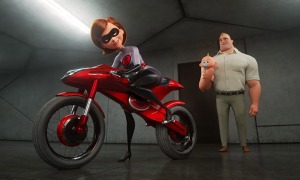 This time it’s Elastigirl enjoying the limelight, and there’s a notable feminist message of a woman finally getting her due. She relishes the adventure though is willing to sacrifice it for her family if needed, which her husband will refuse to allow her to do. Her success is his success, he reminds himself. The sooner she succeeds the sooner he can also get back out there to fight crime. I think one of the reasons the characterization isn’t as developed this time is because of the abbreviated time frame. We’re literally picking up seconds from the first movie and dealing with the immediate consequences. We’re only following the events of a few weeks, maybe months at most, and while the Parr family undergoes trials and disappointments, It feels like maybe there just wasn’t enough space for the characters to have succinct arcs and grow substantially. This is a quibble for an otherwise great movie. Incredibles 2 still stay true to the characters you love.
The exploration of Mr. Incredible’s descent into domestic life was my favorite part of the film, and I had been worried it would be outdated Mr. Mom-style jokes. The movie steers away from most of the tired gender tropes, moving past simply having an incompetent man performing household duties in hilariously incompetent ways. The jokes aren’t dependent upon a man doing them so much as someone who feels out of step and beleaguered, so parenthood in general. The first movie was about midlife identity crises and that has carried over into this sequel as well. Bob has a meaningful challenge with each one of his children, having to re-learn old concepts with his son and adapt to new ones, having to tackle the minefield of dating with his daughter and finding the right tone, and the increasingly the demands of a child with, let’s call them, special needs. The Jack-Jack segments are inspired pieces of old school Looney Tunes slapstick. Each new power provides another point of discovery for our characters that, remember, are initially clueless about Jack-Jack’s amazing abilities. Mr. Incredible is so eager to get back to being a super hero that forcing him to confront his own inadequacies as a parent is a smart way to better open him up as a three-dimensional character. I enjoyed the action of Elastigirl’s spotlight missions but I kept looking forward to returning to the other Parrs.
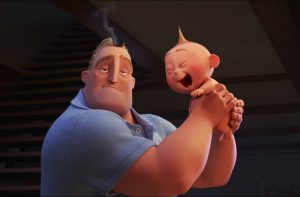 In a few areas I would even say Incredibles 2 has its original beat, especially in the realm of comedy and visual inventiveness. Part of that is simply the advancement of the technology allowing Bird more freedom to up the ante as well as showcase more intricate facial emotions. There are some areas that just cannot compare, which is not to say that they are bad on their own. The late twist of the villain’s identity should be more than obvious for anyone paying attention. The themes of this movie are much hazier this time around. There are a few that pop up, like police surveillance and body cams, then a general screed against the general social malaise brought on from technology, then breaking unjust laws to serve a more realized sense of justice, and then finally the movie settles on what seems like its true theme, the danger of being too dependent on, essentially, government assistance. If the superheroes represent the government, the villain’s plot is to shake people away from waiting for the superheroes to fix everything and growing over reliant on outside assistance (finally a summer blockbuster with a message even Paul Ryan could love). Bird has featured some Randian ideals in past films, The Incredibles a prime example. My pal Ben Bailey strongly believes that the first film’s villain had the right idea though wrong method. Superheroes are by design egotistical. The belief that there are people who are better and deserving of a elite, preferential status seems antithetical with the sequel’s major theme. Or maybe it’s the mutated evolution of Ayn Rand’s sense of political objectivism. Feel free to debate at the kitchen table with your own family.
If the major fault of Incredibles 2 (there is no “The;” look it up if you doubt me) is that it can’t quite live up to the dizzying heights of the original, then that’s hardly a damning fault. In the 14 ensuing years, the superhero movie has become the dominant Hollywood blockbuster, and Bird needed to think long and hard about how his return visit would distinguish itself from a cluttered landscape of super heroics. Bird finds meaningful and interesting stories for both the “normal” version of his family unit as well as their super selves. Fans of the original should find more than enough to entertain themselves with even if the depth and characterization aren’t as wonderfully realized. There’s great comedy, great action, and great fun to be had with Pixar’s best sequel not with “Toy” in its title.
Nate’s Grade: A-
Share this:

Hereditary (2018)

Hereditary has built up a great roaring buzz from film festivals and its oblique marketing. Numerous critics are hailing writer/director Ari Aster’s debut film as one of the scariest movies of a generation. The studio, A24, which has built up a fine reputation for art movies and genre fare, is releasing it. Except A24 has some trouble when it comes to its horror thrillers. Last year’s It Comes at Night was similarly beloved by critics yet audiences generally disliked it, angered by the misleading marketing that framed it as a supernatural horror (there was none, no titular “it” to come at night). I wonder if A24 learned their lesson and that’s why the trailers and ads for Hereditary have been intentionally hard to follow. After watching Hereditary and feeling let down, I wonder if A24 is in for another disparity between critics and audiences. This is a sloppy, unfocused film with little sense of structure, pacing, or payoffs. It’s a movie of moments and from there your mileage will vary.
Annie (Toni Collette) and Steve (Gabriel Byrne) are ordinary middle-class parents living with two teenage children, the older Peter (Alex Wolff) and the younger Charlie (Millie Shapiro), a girl given to peculiar habits. Following a tragic accident, the family is struggling to come to terms with their loss and their new lives. Annie seeks out comfort from a group meeting, and that’s where she meets Joan (the great Ann Dowd) who shows her how to contact the spirits of the dead via a handy incantation. From there, Annie tries to establish a connection to the realm beyond and possibly unleashes a spirit targeting her family.

With the rapturous critical acclaim that Hereditary has garnered, I was expecting something far more engrossing and far less sloppy. Structurally, this movie is a mess. It feels very directionless from a story standpoint, like the movie is wading around and blindly looking for an escape route into the next scene. Rarely will scenes have lasting impact or connect to the following scene; you could literally rearrange the majority of the scenes in this movie and not affect the understanding whatsoever. That’s, simply put, poor screenwriting when your scenes lack a more pertinent purpose other than contributing to an ongoing atmosphere of paranoia (more on that later). I’m struggling to make broader connections or add lasting thematic relevance to much of the plotting, and that’s because it feels so convoluted and repetitious for so long, until Aster decides it’s time to throw the audience the most minimal of lifelines. There is a moment late in the second act where a character finds a convenient exposition dump by looking through a photo album and a book that is literally highlighted. That at least explains the intent of the final act, but even as that plays out, by the end it’s still mostly confounding. The film ends with another exposition dump, this time as voice over, and I got to thinking that if it wasn’t for these two offhand moments you would have no idea why anything is happening. I had a friend whose girlfriend had been bugging him for Hereditary spoilers for months, so I carefully explained the movie to them as precisely as I could. By the end, he told me, “I still don’t get it.” Yeah, I didn’t get it either and I was actively trying.
There is a type of horror fan that will lap up Hereditary, namely the kind that places the creation of dread and atmosphere and memorable moments above all else. If you’re a gushing fan of David Lynch movies or Dario Argento and their sense of strange dream logic, you’ll be more ready to prize the sum rather than the whole of Hereditary. The aesthetics are pleasurable thanks to crafty production designer Grace Yun (First Reformed) and the moody photography from Pawel Pogorzelski (Tragedy Girls) that maximizes the space and draws out the anticipatory dread. There are effective moments where I gasped or squirmed, but there were also moments where I wanted to laugh. The key term is “moments.” Without a structure, sense of development, and attachment to the characters and their lives, Hereditary left me chasing fleeting entertainment.

Now when it comes to horror moments, I’ll again admit that everyone’s mileage will vary. Some people will watch Hereditary and be scared stupid. Others will shrug. That’s a deeply personal response. I can look at a movie like A Quiet Place and point to its intricate structure and execution to explain why its suspense was so affecting and satisfying. With Hereditary, because all it supplies is moments, I can’t explain why something will work or won’t for a person. Maybe you have a thing against headless corpses. Maybe you have a thing for jump scares (there are more than a few). Maybe you have a thing for invisible girls making clicking noises with their tongues. Then again maybe you’d enjoy a narrative that gave you a better reason to care and that organically built meaningful scares through tangible circumstances.
If you can hang onto the final nightmarish act, that’s when Hereditary is at its best, finally picking up a sense of momentum and finality. The first forty-five minutes of this movie more closely resemble something like Manchester by the Sea, a family unit becoming undone through grief and guilt, simmering grievances just under the surface. It’s well acted, especially by Toni Collette (Krampus) as a mother barely escaping the pull of her boiling anger at her son and the universe as a whole. She gets a few quality moments to blow up and it feels like years of painful buildup coming out. The awkward family interaction is chilly but missing greater nuance. It has marked elements that should bring nuance and engagement (Personal Tragedy, Mental Instability, Blame, Guilt, Obsession), but with Aster’s undercooked screenplay those elements never coalesce. This is a movie experience that is never more than the sum of its spooky parts. Byrne (The 33) is essentially just there, and the fact that the 68-year-old actor has two teenage children is a little hard to swallow. Wolff (Jumanji: Welcome to the Jungle) does a fine job of showing his deteriorating mind late in the movie. The problem is that these characters just aren’t that interesting, so when the supernatural acceleration creeps in, there’s already a ceiling as far as how much we, the audience, will care about what befalls them. What are the stakes if you don’t understand what’s happening and don’t genuinely care about the central characters?
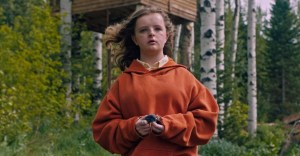
My pal Ben Bailey chided me after seeing Hereditary that I was trying to do the movie’s work for it by looking for deeper connections and foreshadowing clues. Is there some greater meaning for the headless women motif? Is there a larger reason why the dollhouse God imagery is prevalent? Is there a reason, after finding out about the haunting, that the family still leaves their beleaguered son alone? Is there a mental illness connection or is it all a manifestation of hysterical grief? The English teacher discusses the Greek tragedy of Iphigenia (see: a better movie following this model, 2017’s Killing of a Sacred Deer) and whether being predestined for sacrifice is more tragic than choosing your own self-destruction, and is that a glimpse at thematic relevance in a way that seems almost half-hearted? The problem with a long, incoherent story built upon a heaping helping of creepy imagery and atmosphere is that it can often fall into the lazy trap where the filmmaker will just throw up their hands as if to say, “Well, it’s up for interpretation.” I don’t mind a challenging movie experience (I was on the side that enjoyed, if that’s the correct term, Darren Aronofsky’s mother!). I can appreciate a movie that’s trying to be ambiguous and ambitious. However, the pieces have to be there to form a larger, more meaningful picture to analyze and discuss, and Hereditary just doesn’t offer those pieces. It’s an eerie horror movie with its moments of intrigue and dread but it’s also poorly developed, too convoluted, and prone to lazy writing and characterization. I’ll highlight it for you, Hereditary-style: if you’re looking for more than atmosphere and tricks, seek another horror movie.
Nate’s Grade: C
Share this:

Adrift (2018)
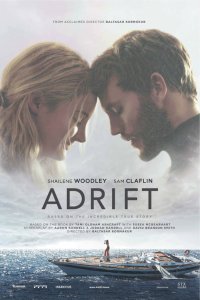 It’s one part survival-at-sea drama, one part relationship drama, and you get an equal slice of both until an unforeseen ending explains why the narrative was so divided. Based on a true story, Adrift tells the journey and survival of a couple (Shailene Woodley, Sam Claflin) lost at sea for 41 days after getting too close to a hurricane. Woodley takes the lead to fix the sailboat, gather supplies, tend to the grievous injuries of her boyfriend, and plot their treacherous path to Hawaii. If they’re off just a few degrees, it will be life and death. The survival half is viscerally entertaining and steady with its details, allowing the audience to get comfortable in following the steps and reasons. The camerawork by director Baltasar Kormakur (Everest) is sweeping and methodical, pulling us into the danger and isolation while creating a sterling sense of verisimilitude. The screenplay vacillates between the present and past, supplying flashbacks to fill out the romantic relationship. It’s a smart move because it allows us to immediately get into the stakes of survival while also finding room to develop the characters in a more normal setting. Plus it also makes more sense by the Tully-esque end. This is pretty much Woodley’s (HBO’s Big Little Lies) show; her secondary co-star might as well be her nipples poking through her character’s swimwear and tops. As readers may know, I’m a big fan of Woodley and the naturalism she brings to her performances, and Adrift is no exception. She can say so much through her smiles. She’s a great anchor for a storyteller. Ultimately, Adrift is a survival drama that takes a while to get going but leaves a favorable impression thanks to the acting and technical merits.
Nate’s Grade: B
Share this:

The 15:17 to Paris (2018)
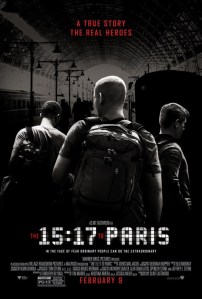
Spencer Stone, Alek Skarlatos, and Anthony Sadler were three ordinary servicemen taking a train ride into Paris when they found themselves in the middle of an armed terrorist attack. The three men rushes into danger, disarmed and subdued the attacker, and treated the injured on the scene. The 15:17 to Paris is a big screen movie directed by Clint Eastwood (American Sniper) that tells their life stories played by the men themselves. It got some of the worst reviews of Eastwood’s storied career (mine won’t be better). There are two gigantic miscalculations when it comes to 15:17 to Paris: 1) having the real-life subjects play the adult versions of themselves, and 2) that there was enough material here to fill out an engaging, enlightening, fulfilling film experience.
I assumed telling this real-life story as a movie was going to be a challenge to produce enough meaningful material to eek out a feature-length running time, and within the first five minutes I knew that I was doomed. We’re sitting down to two single moms discussing their boys with their classroom teacher, and that teacher literally says, “If you don’t medicate them now they’ll just self-medicate later. Statistically, boys of single moms are more likely to have problems.” My response: “What the hell, lady?!” This character was obviously engineered, from her very foundation, to be a walking, talking point of exposition and disagreement. No real teacher would ever utter these words so callously. It was this rude awakening that made me realize what a terribly written slog I was in for. At no point were these supporting characters going to come across as authentic human beings. Instead, it’s a world populated by robots with bad social skills or unshakable faith played by familiar actors (Judy Greer, Jenna Fischer, Thomas Lennon, Tony Hale, Jaleel White of all people). Also, what little kid has a Full Metal Jacket poster in his bedroom? Did he not understand what that movie was about?

These men can rightly serve as an inspiration, rising to the occasion in a true test of courage. No one will challenge the heroism. But what else is there to this story? The attack is presented as the framing device and as it plays out we segue into lengthy flashbacks about their lives leading up to this pivotal point in time. It’s just that these three men lived fairly uneventful, normal lives until finding themselves in a unique situation. We don’t seem to trace any significant, formative moments. Spending time with them as kids, then teens, and finally as adults doesn’t so much provide greater understanding of them as people as it does pad out the running time. We watch them get in trouble twice at school for not having a hall pass. We watch them watch football. We watch them endure training montages. We watch the trio tour the sights of Italy and eat gelato. We watch an Army team retrieve a backpack. We watch Spencer get demoted for not stitching properly. Seriously, this is given time. It’s not even until a full hour-plus into the movie before they confront the attack on the train.
Chronicling the lives of normal, real-life people under extraordinary circumstances is not by itself a fatal flaw, as evidenced by the masterful and mournful United 93. The power of empathy allows us to leap into a multitude of perspectives. However, with United 93 there was an ongoing story that could unfold because of the scope of events. There were developments, deadly complications, and the slow realization of what was happening, what was going to happen, and what needed to be done. With 15:17 to Paris, the attack is uncomplicated and over relatively quickly. There’s a reason Eastwood saves the train attack for the end because it cannot function as a sufficient movie plot on its own. Eastwood had a similar predicament with his previous film chronicling the heroism of the pilot who landed a plane on the Hudson River. The plane crash was thrilling and Tom Hanks added some layers to the portrayal of a man uncomfortable with the spotlight. 15:17 to Paris doesn’t even have that much. It’s a tedious trek to an all-too swift climax.
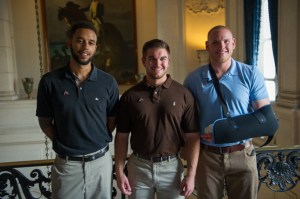
The other large miscalculation was having the real-life actors portray themselves. These guys just are not actors. I suppose Eastwood felt the real-life figures would best understand the emotions of each scene, in particular the attack, but another approach would be simply teaching actors. The forced verisimilitude feels like a marketing gimmick meant to appeal to a select audience. Making things more difficult is that these guys just aren’t that interesting as subjects. Sure there are broad strokes of characterization applied here and there but it’s with very minimal effort (see above for some of the just-had-to-include plot moments). This is another reason actors would have been preferable, because these guys’ lives don’t have to be interesting for my benefit. Their lives were not destined to one day entertain me on the big screen. They can simply be normal people. On the other hand, watching normal people do normal, boring things without a more enriching sense of introspection, personalities, or depth is like being trapped watching someone else’s home movies on a loop. Spencer Stone performs the best of his buds but none of them should expect a second career as an in-demand thespian.
I feel bad saying this but I really just didn’t care, and that’s because the movie gave me no reason to do so here. Yes, these three men are heroes and their sense of normality might lend itself toward a larger theme about the everyday capabilities of heroism, but there isn’t enough here to make me care beyond the train attack. The screenwriting does not present them as multi-dimensional characters and perhaps that’s because of the guys’ limitations as actors, exacerbating a spiral that only makes 15:17 to Paris less involving as it chases after the idol of authenticity. Eastwood is known for being an economical filmmaker but it feels like he should have been even more judicious here. The adherence to strictly the facts strips the film of some of its larger emotional power. There’s far too much filler and not enough substance to balance out 90-plus minutes. You’ll grow restless. If there’s a lesson to be learned from The 15:17 to Paris, let it be that every story needs a reason to exist and, when in doubt, trust actors to deliver that story.
Nate’s Grade: C-
Share this:

Solo: A Star Wars Story (2018)
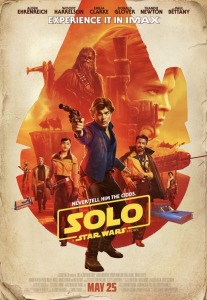 The notorious back-story behind Solo: A Star Wars Story has more than eclipsed whatever else this “young Han Solo” prequel appeared to offer. Directors Phil Lord and Chris Miller were responsible for a string of fast-paced, silly hits like The Lego Movie and the 21 Jump Street films, and when producer Kathleen Kennedy hired them, it felt like an inspired infusion of new blood to make a Star Wars movie different in tone and approach. Five months into shooting and mere weeks away from completing photography, Miller and Lord were fired. The on-set rumors and sources have relayed a badly conceived marriage between the directors, given to improv and irreverence, and Kennedy’s sense of what a Star Wars movie should include. Enter Ron Howard, no stranger to the world of George Lucas, and an extensive battalion of reshoots, and you’re left with Solo, which only lists Howard as director. With that as its genesis, it feels like this movie should be a train wreck. It’s not that. Instead, Solo is fitfully entertaining but underwhelming diversion weighed down by its untapped potential.
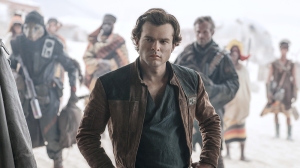
Years before that noisy Mos Eisley cantina, Han Solo (Alden Ehrenreich) is a low-level criminal trying to find a better life. He loses his girl, Qi’ra (Emilia Clarke), joins the Imperial Army, and defects, finding a partner in a big hairy wookie named Chewbacca (Joonas Suatamo). The two of them join a crew of thieves run by Beckett (Woody Harrelson), and after a job gone wrong, everyone is in grave danger and deep debt to the crime lord Dryden Vos (Paul Bettany). The crew must even the score and make things right, and they must navigate unreliable allies like Lando Calrissian (Donald Glover), his trusted robotic assistant L3-37 (Phoebe Waller-Bridge), and, most surprisingly, Qui’ra herself, working as one of Vos’ top criminal consultants.
 Solo is hard to justify except as an increasingly tedious appeasement to the greater altar of fan service. The movie reminded me of those young author biopics like Finding Neverland where everything is given the unspoken-though-heavily implied significance of dramatic irony, where the audience knows, “Oh, this will be where that comes from, or that’s the first time that happened, etc.” Solo provides further light on the Star Wars minutia that only a scant few will work up real excitement over. For every interesting revelation, like Han and Chewbacca first meeting and bonding, there are numerous others that could best be characterized as cataloging the story of Who Gives a Crap?: The Movie. Who cares how Han got his dice? On that note, did I just not remember this trinket being as heavily showcased in the original trilogy as these new films emphasize? Also, who cares about how Han gets the Millennium Falcon? Who cares how Han got into the smuggling business? Who cares why Han was on Tatooine to begin with? The film expects audiences to supply the significance for scenes that lack that on their own. Too much of the script by Lawerence and Jonathan Kasdan (In the Land of Women) coasts along on audience good will carried over from the original trilogy.
As far as being a heist movie, Solo doesn’t put much concentrated thought with its heist set pieces. Much of the plot hinges on a “job” to recover a large amount of fuel owed to the scary crime boss, so the job itself should be treated as important. Once topside, the characters stick to their ruse for about five minutes and things immediately go bad and then it’s just one messy, ongoing action sequence. I could understand carefully planning a scheme only for it to unexpectedly go wrong, but the appeal of heists are their intricacy, development, and complications, and Solo sadly snuffs this appeal out. The high-point of the film is an early Act Two heist that’s the sci-fi equivalent of a train robbery. Things start off promising with the space craft being able to rotate around its rail, which tickles the imagination for plenty of dire hangings on. We even get a few preparatory words for the plan, though even those are fairly general. And then things start and they immediately go bad and stay that way without satisfying complication. Part of the appeal of heists is seeing the curve balls, the unexpected complications, and how our team reacts and recovers. It’s a fun sequence with some thrilling visuals but it never rises beyond the sum of its action particulars, and so an important set piece is held back from going for greatness. The action throughout Solo is serviceable but rarely does it feel like what’s onscreen is the best version of what it could have been. Serviceable, sure.
 Which brings about the inevitable analysis over what can be gleaned from the final product that traces back to its original team of directors. There are a handful of comic asides that feel like the lasting touch of Miller and Lord. Beyond that, Solo feels very much like Howard’s movie, though much like Rogue One, the mind conjures the possibilities of the original version. One of the biggest changes is that Howard added Bettany’s gangster character. He’s on screen for really two sequences though his importance stretches over the entire film. Solo feels cohesively like one movie to the degree that if you had never heard about the headline-grabbing production tumult, you wouldn’t suspect anything had happened behind-the-scenes. However, the lasting impact seems deeper, namely that many of these sequences feel, to some degree, interchangeable by design. The execution and development feel lacking. It’s a lingering feeling that what you’ve been watching isn’t fully coming together. It’s not fully engaging the attention and making the most of its beloved characters. It feels less like a seminal moment in the story of Han, Chewie, and Lando and more like an extended episode of a television series. I was too detached and grew restless too often. I started waiting for it to be over rather than waiting to see what happened next.
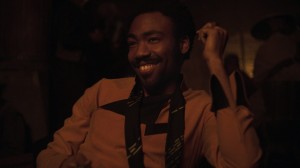
Ehrenreich showed enormous promise with 2016’s Hail, Caesar! both with comedy chops and leading man appeal, so he seemed like a capable choice for a young Han Solo. After rumors of having to hire an emergency acting coach on set, I was expecting a poor performance. He’s decent, grinning through the indignities, stumbling along with a sardonic sensibility that still plays into a confident sense of optimism against the odds. Ehrenreich, much like most of the movie, is perfectly fine, entertaining at times, but far too often a passing blip. The real star of the movie is Glover (TV’s Atlanta) who is brimming with charisma. Plus Lando’s suave, pansexual nature and tendency toward shady scheming lends itself to a more fascinating glimpse at a character we know decidedly less about.
 Clarke (HBO’s Game of Thrones) is saddled with a non-starter of a storyline as the old girlfriend who got away. Harrelson (Three Billboards) plays another cranky father figure role. Bettany (Avengers: Infinity War) is generally wasted as a villain lacking a stronger sense of identity or menace. His weapons of choice, two laser-edged knives, seem like where the depth of character creation ended with him. Oh, he also has scars over his face, so that’s about the same as a personality. The lone supporting player that leaves an impression is Waller-Bridge (Fleabag) as the android, L3-37. I could have used an entire movie with her and Lando. She becomes a political revolutionary by accident over the mistreatment of droids, and L3-37 does what the other supporting characters, and even what Ehrenreich to some extent, do not — leave you wanting more.
After its problematic history, it would be easy to look for ways to carve up Solo as a hodgepodge creation of studio interference but that’s too tidy an explanation. I’m not against the idea of a “young Han Solo” film franchise, though it needs to find the right stories to shed new and meaningful light on this classic rogue. Han Solo was, like, mid thirties at the oldest in 1977’s Star Wars and Ehrenreich’s early-to-mid 20s version doesn’t afford a great many differences (he was already a “young” character to start with). If you’ve bought into the Star Wars universe, there should be enough to at least be entertained by, and if you’re a nascent fan, then Solo might be an easily digestible fun adventure. The mitigated or underdeveloped potential nagged at me as I was watching. It’s got aliens and space heists and most of the time I was approaching boredom. I’ll label the movie with its own Scarlet F: it’s… “fine.” It’s the kind of movie you shrug your shoulders at afterwards, not necessarily regretting the experience but moving along. Perhaps we’re just at a natural point in the post-Disney-purchase of Star Wars, and now we’re facing less-than-ideal time-discharged product. I was hoping for more, either good or bad, but had to settle for a relatively lackluster prequel. I don’t know if there will be further escapades with the “young” Han Solo but I wish they choose them more wisely. Even the title feels bland.
Nate’s Grade: C+
Share this:

Deadpool 2 (2018)

It took the leaked release of the Deadpool test footage, and the ensuing enthusiastic fan response, before Fox finally decided to invest in a big screen, R-rated superhero movie. The result was 2016’s Deadpool, a huge smash and proof that a lucrative audience will turn out for more adult-oriented, outrageous, grisly versions of comic book movies. Because of Deadpool, we finally got an R-rated Logan that proved to be an outstanding swan song for Hugh Jackman’s iconic hero. Now Deadpool is getting the spotlight he has earned with a big, splashy summer release, but with success come expectations. Can it live up to the ever-increasing hype? In short: if you were a fan of the original, you’ll be happy enough, because Deadpool 2 isn’t much more than the sum of its zany parts.
Wade Wilson a.k.a. Deadpool (Ryan Reynolds) is killing bad guys for hire and considering starting a family with the love of his life, Vanessa (Morena Baccarin). Trouble emerges when Cable (Josh Brolin) travels from the future to kill a rebellious, troubled young mutant teenager, Russell (Julian Dennison), who will one day grow up to be a monstrous villain. Deadpool reaches out for help and forms an elite squad of determined heroes, notably the luck-assisted Domino (Zazie Beetz). Can Deadpool save the kid, save the day, save the future, and save himself from incessant fourth wall breaks?
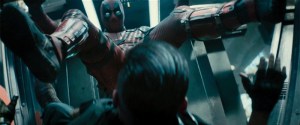
I was worried that a Deadpool sequel would fall into some of the same detractions that a Guardians of the Galaxy sequel did, and this is still applicable. Deadpool, much like the original 2014 Guardians film, was a breath of fresh air and a far looser, weirder, funkier super hero movie with a nose-thumbing, prankish attitude. We didn’t know what to expect from a Deadpool movie and now we do, and with that knowledge comes an anticipated formula of checklists to adhere to, and so any resulting sequel will invariably feel less fresh. It happened with Guardians of the Galaxy vol. 2 so to compensate James Gunn concentrated on fleshing out secondary characters into people you might shed a tear over. Deadpool 2 doesn’t bother because Deadpool 2 doesn’t take anything really seriously. That’s one of the hallmarks of the series and also one of the aspects that holds it back. There can never be a sense of stakes with a gleeful, fourth wall-breaking cartoon of a character who bounces back like Wile E. Coyote. The sequel introduces a sense of stakes with a startling turn in the first ten minutes of the movie, but by the end, even that will be corrected so that the Deadpool universe returns to stasis. The limitation of the Deadpool universe is that nothing feels meaningful or even ambitious. The movie wants to be a cheeky, transgressive good time and it achieves this single goal.
The appeal of Deadpool 2 is still its comedic voice and unpredictability. The laughs will be frequent and there are some subversive and unexpected directions that fully take advantage of the R-rating and the anarchic, nasty comic spirit of the franchise. The formation of the X-Force team and how their first big mission plays out had me howling with laughter. The meta humor commenting on the nature of super hero movies, as well as the film industry in general, begins with the very opening image (a nod to another successful R-rated super hero movie of last year) until the very last moment where Deadpool goes back in time to prevent some stinging cinematic grievances (there is no post-end credit scene, so you can skedaddle early). This is clearly the role Reynolds feels a spiritual kinship with, and his caddish, charming, persistent persona makes the perfect conduit for the film’s vulgar insanity. Whether it’s spitting insults, splashing in over-the-top violence, or making odd observations about the similarities between the songs from Frozen and Yentl, Deadpool 2 is first and foremost a bloody, depraved meta comedy.

Director David Leitch (Atomic Blonde) steps in for the departing original film’s director, Tim Miller, and continues his hot streak of stylish, action thrillers. Leitch has shown a propensity for staging intense action sequences to best showcase intricate choreography. With Deadpool 2, the most exciting moments are when the camera and editing allows the audience to fully appreciate the creativity of the choreography and stunt team. A shot of Cable leaping over the speeding caravan about to smash into him brings on a well-earned wow. Coming from that bruising world, I’m continually impressed with how Leitch approaches his action and finds organic points to develop and complicate matters. The prison caravan attack is the action peak with well-constructed, parallel lines of activity to follow and collaborate upon. It’s our first taste of Deadpool and X-Force versus the might of Cable. The characters enter the fray at different points and get separated from the runaway caravan, which keeps the momentum going. While the comedy is prioritized, Deadpool 2 can still unleash enough exciting, silly, and satisfying action.
The biggest additions to the sequel are an adversary and an ally, and both leave a favorable impression while still making you wish that Deadpool 2 had done more with them. Brolin (Avengers: Infinity War) bulked up considerably to play the gruff cyborg from the future, and his super serious, macho straight man provides a terrific comic foil for Deadpool, much like the stuffy Colossus in the first film. Brolin’s character is a capable fighter with a pretty streamlined back-story (shades of Looper abound) but it’s hard not to feel a little disappointment with how he’s ultimately utilized. He’s a great asset that feels put away for too long. Zazie Beetz (TV’s Atlanta) has a fun introduction especially as it relates to her mutant power, great luck. Deadpool scoffs at this as a power, and “being deeply un-cinematic,” but Domino proves otherwise as she’s able to dodge split-second danger in grand, complicated, Final Destination-like circumstances. Every time she’s onscreen, Domino brings a curiosity quality to the movie, and it’s usually something imaginative and fun. Beetz has an innate spunky energy, which makes it sad when the movie often asks her to be dour and dismissive. It’s taking such a lively character and constricting what makes her amusing and unique.

The biggest thing holding back the film, besides a general sense of “more of the same” or its inherent lack of stakes, is that the entire storyline is built around saving a mutant teen…. and I kind of hated the kid. My first impression was not good and it didn’t get much better from there. Part of it may be that Russell is meant to be an angry, obnoxious teenager, and maybe part of it is the generally grating performance from Dennison (Hunt for the Wilder People), but I could not care about this kid. Unfortunately, a lot of thematic emphasis is placed on saving the soul of this one annoying, wayward teenager. He’s supposed to be a point of redemption for Deadpool and a promise to be fulfilled, but my pal Ben Bailey came up with an instantly better revision. Instead of introducing this new teen character who will one day grow up into a super villain that slaughters Cable’s future family, why not have it be Negasonic Teenage Warhead (Brianna Hildebrand)? We already have an investment in her character and it would provide a better, more personal sense of stakes for the story. Plus, Hildebrand (Tragedy Girls) is actually a good actress.
If you were one of the many fans who enjoyed the irreverent antics of the first Deadpool, then you’ll enjoy Deadpool 2 as it’s more or less the same movie with a slightly limited freshness date. These movies are fun, funny, and ridiculous, but they’re also good for little else than a wicked good time, and that’s okay. There isn’t much ambition to be anything more than an irreverent satire on super heroes with edgy humor and explosive violence. The running theme of the sequel questions what Deadpool has to keep on going, and he’s told it’s one very specific F-word: “family.” I think it’s a different F-word, namely “franchise.” Fox (Disney?) will need the services of the merc with the mouth for an extended engagement as long as audiences do not tire of the same studio brand of naughtiness reheated with a few different ingredients added per revisit.
Nate’s Grade: B
Share this:

Tully (2018)
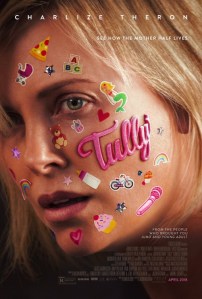 Tully is a Young Adult reunion, bringing back writer Diablo Cody (Juno), director Jason Reitman (Up in the Air), and star Charlize Theron (Atomic Blonde), and for people without kids, it can feel more like a horror movie. Numerous movies have conveyed the challenges of parenthood, the put upon moms and dads struggling to juggle schedules and lunches and homework, all without much time to themselves for self-care. Usually these movies will begin by displaying the hardships of parenthood but ultimately put a cheery bow on things by the end and conclude, “Yeah, but it’s all worth it.” Tully doesn’t provide that easy bow and I appreciated that. Motherhood can be a real bitch.
Marlo (Theron) is a 40-year-old mother who feels overwhelmed with life. She’s about to have baby number three and her “atypical” youngest son requires a lot of intensive supports and is upsetting his school. Her husband, Drew (Ron Livingston), is away for work often and late at night he plays online games and keeps to his side of the bed. Marlo’s rich brother (Mark Duplass) takes it upon himself to hire a “night nanny,” a person who watches the newborn baby during nighttime hours and allows the mother to get some restful sleep. Marlo is adamant about not letting a stranger watch over her child but soon relents and calls for the nanny. Enter Tully (Mackenzie Davis), a mid-twenties godsend who is wise beyond her years, competent, and nonjudgmental. With Tully’s assistance, Marlo is able to make steps toward becoming the person she remembers.
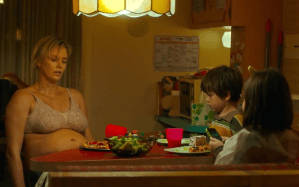
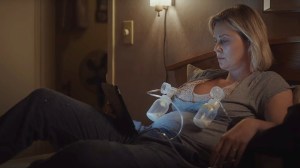 Through its depiction, it feels like parenthood has a lot in common with incarceration. It feels like a new parent goes away for a multi-year sentence, loses all sense of sleep, is indentured into work often without any compensation, and required at a moment’s notice at all hours. Marlo’s life is certainly unglamorous but it’s also taking its toll. The needs of her children, including one with undiagnosed special needs, are snuffing out her sense of self and taking an unremitting physical and mental toll. The opening of the film has Marlo days away from her third pregnancy and she looks like she’s smuggling a beach ball. Her brother’s wife cheerfully adds, “You look glowing,” that age-old pregnancy praise, and Marlo’s unfazed reaction is more of a, “Really?” She then proceeds to compare herself to the trash barge that floated along the East Coast in the 1980s, a perfectly plucked pop-culture allusion from Cody. At no point do you doubt the love Marlo has for her family, but the servitude is driving her crazy and with no relief in sight with baby number three. There’s a pristine montage of her daily routine of feeding, pumping, changing diapers, and absent sleep, the days just melting into one another, and it’s so horrifying in its mind-numbing execution that it reminded me genuinely of Darren Aronofsky’s Requiem for a Dream montages of drug-abuse and despair.
It’s a third of the way into the film when Tully enters the picture and serves as the long-needed change agent for Marlo. She’s the miracle worker nanny that works at night like a whimsical little elf, and the next morning the house is clean, the baby is taken care of, and Marlo has been allowed a rejuvenating night of sleep. You can chart the change in the quality time with the family, where quickie microwave pizza dinners become more advanced home-cooked meals with multiple ingredients and food groups. You can also chart the change through the magnificent performance of Theron, who appears to be regaining her sense of self and placement in the family. Tully serves as a refreshing, therapeutic conversationalist, able to get Marlo to introspectively reflect upon her life’s goals and setbacks and her sense of what she should be as a woman and not just as a mother. Tully is wise but also winsomely hopeful and optimistic; she recharges the battery for this family and Marlo in particular. These gentle, observational conversations are the best part of the film and Theron and Davis are wonderful together. Each woman seems to be learning from the other and providing a support system.
 Cody’s early screenwriting was dinged for its obsession to be quippy and hip, but it has matured and depended over the years. Young Adult was an incisive character study in kamikaze narcissism, and it was as cold as Tully is warm, even-handed, and honest. Having a talent as surefire as Theron is a great asset, but it’s Cody’s storytelling that gives the movie its sting and its sweetness. This is something of a comfy thematic middle ground between the ironic, quippy yet sentimental Juno and the dark spiral of stunted growth in Young Adult (seriously, rent that movie again if you can, it’s vastly underrated). Tully is a movie that is lifted on wry observations and honest dialogue. It feels very real, so much so that I was convinced the reality show-within-a-show Gigolos (Marlo is a bashful fan) was the real deal for most of the movie [Edit: it has come to my attention this is a real show. Ahh, still a nice detail about Marlo character]. I also loved the drive into Brooklyn being relegated to jump cuts, each new jump playing a different Cyndi Lauper track on an album, which feels very biographical and authentic. The details of Cody’s story feel sharply developed and authentic, and that’s the biggest draw of this movie. It’s an unvarnished look into the realities of motherhood and each little detail helps further contribute to the larger portrait of Marlo’s exhausted life. The supporting characters do get a bit of short shrift here, kept as one-dimensional peripheral portrayals. I was expecting more from her husband Drew since their relationship and the platonic valley they’ve found themselves stuck in is another significant aspect. However, the movie is really about the relationship of Marlo and Tully and how they build up one another. Marlo even sees herself in the younger nanny, and she’s also wistful of a time that her body more closely resembled that of Tully’s flat tummy and compact derriere.
Theron continues to establish with role after role what a phenomenal acting chameleon she can be. I know we gush about Cate Blanchett, Amy Adams, and Kate Winslet as the finest actresses of their generation, but I feel like Theron deserves to be in that same hallowed Pantheon. She gave one of the best performances I’ve ever seen in 2003’s Monster and I think she was deserving of nominations for work as varied as a one-armed post-apocalyptic feminist warrior. Theron gained fifty pounds for this beleaguered role, which is an impressive commitment, but she doesn’t just let the weight gain serve as the focal point of her performance. She uses every exhausted muscle to communicate Marlo’s plight. When she’s slumped over in a chair and just rips her off stained shirt, you feel her utter defeat and desperation (“Mom, what’s wrong with your body?” one child asks). This is a woman who is tired to the bone. She’s taking everything life gives her and soldiering onward, afraid to speak up. This is best voiced when she describes her relentless day and staring into a closet and thinking, “Didn’t I just do this?” Theron’s renewed vitality as mother, wife, and most importantly, person, is a rewarding development to tag along with. Theron’s breadth of tenderness, sadness, and hard-won insight is easily relatable and emotionally engaging.
 The one thing that holds me back from fully embracing Tully is a late story decision that I’m still wrestling over. It feels a bit like tonal whiplash and I immediately felt like it was completely unnecessary and that I was happy with the movie already being told. It left me jarred although I admit this decision helped provide better context for some unexpected turns in the middle between characters. Having deliberated for a couple of days, I can see how this decision plays into a larger sense of theme and character, while also tapping into something primal about motherhood and the emergency lifelines needed and provided. I’m warming to Cody’s decision and can see the rationale behind it. Still, there will be plenty of audience members that will be left questioning the thought process here.
Tully is the third collaboration between Cody and Reitman and they bring out the best in one another. After two duds in a row, I was worried that Reitman had become all too mortal after his 2006-2011 run of amazing films. It’s reassuring to find Reitman back in finer form and to also experience the maturing growth of Cody’s exceptional writing. I wish there was more with the supporting characters but this is a character study of our main momma. The late plot turn will divide audiences (I’ve already identified with both sides) but it serves the film’s larger focus on the well-being and recuperation of Marlo. Tully is a funny, compassionate, and unflinching movie about the perils of motherhood and the steps we all need to take to activate a little necessary self-care.
Nate’s Grade: B+


You must be logged in to post a comment.