Blog Archives
The Green Knight (2021)

The Green Knight is an indie drama heavy on atmosphere and mood and a little lax on pacing, falling into yet another A24 discrepancy between critics and audiences. Much like the contentious differences of opinion over It Comes at Night and Hereditary, it seems like general audiences are a little more indifferent to hostile for this arty release than the critics. Maybe they were expecting something more conventional, which is a mistake considering it’s written and directed by David Lowery, who has dabbled in a studio sphere (Pete’s Dragon, the upcoming Disney Peter Pan remake) but seems more at home with introspective, quiet, occasionally overly obtuse art-house pictures, the kind like 2016’s A Ghost Story where Rooney Mara eats a pie for ten minutes (I will never forget this puzzling movie moment). It’s not surprising then that The Green Knight would be a polarizing film of differing expectations. It’s got good graces, an artistic vision, and a preponderance on atmosphere that can feel a little strained at points.
Gawain (Dev Patel) is the nephew to the King of England (Sean Harris). He longs to be accepted as a respected knight but he has no adventures to his name. Then one Christmas, a Green Knight (Ralph Ineson) enters the kingdom and challenges any daring knight to a game. That knight can inflict whatever blow or mark upon him, but then the Green Knight will return the exact favor in one year’s time. Full of bravado, Gawain takes mighty Excalibur and decapitates the Green Knight. Turns out the knight is not dead. He only picks up his fallen head and promises that in one year, he’ll deliver the same to Gawain. The months pass and Gawain is drinking and sleeping away his last remaining time before finally accepting to meet his fate. He rides out of Camelot in search of the Green Knight and perhaps a solution out of his predicament.
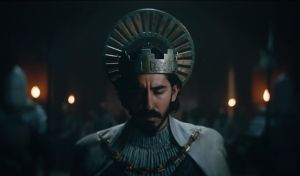
Where The Green Knight excels is with the distillation of mood and myth-making while not losing sight on its own sense of humanity. This is an Arthurian legend that is potentially a thousand years old, and when it comes to big screen adventures steeped in the mythology of cultures, it’s easy to get swept up in the fantasy spectacle of monsters and heroism. The vulnerability of the heroes is often cast aside to provide further attention to the grandiosity of the experience and entertainment. Lowery positions his movie from the perspective of an eager naïf yearning for a proper adventure to bring him respect and legacy, but he’s also a scared young man who is dreading the worst possible outcome that could be his only outcome. As Gawain sets off on his quest, he sets off proud, striding along his horse, not looking back at his home as he rides off to face his destiny, and then he’s immediately beset by treachery that removes the pristine shine off the tales of old. He’s taken advantage of by highway robbers and placed at an even greater risk of failure. As the movie progresses, Gawain becomes more and more anxious about the potential of getting himself out of his predicament. It truly seems like he’s marching off to meet his executioner, and that realization forces him to quickly adapt into the heroic mold he’s been aspiring for, the legendary knight, bold and brave and meeting death square in the eye. That sounds good in theory but it’s a lot harder to realize in real life. If any one of us, dear reader, knew that our lives were coming to an end with certainty, summoning the courage to meet that would be a herculean effort, and many of us would crumble under the pressure. It all doesn’t seem like enough time. This is what I appreciated throughout The Green Knight. It has its weird, atmospheric mythology and fantasy elements, but it also grounds the drama in relatable and nervous human emotions.
Where the movie goes astray, at least for me, is the time it devotes to achieving its poetic atmosphere. This is a two hour-plus movie that feels every bit of it, even if you’re enraptured by all the pretty style and ponderous pontificating. That’s because the movie is very episodic by nature, which at least breaks it up into manageable chunks each with something new to draw our attention, but it also makes it feel like less is being earned or amassed. In one segment, Gawain rescues the head of a ghostly woman (Erin Kellyman). In another segment, this one quite awkward to experience, he is tempted by both the lord (Joel Edgerton) and lady (Alicia Vikander) of a household, keeping his vow while something most distracting is taking place simultaneously. Another segment has Gawain interacting with giants, including one breastfeeding a little giant. There’s also a fox who occasionally talks and tries to plead with Gawain to turn away from meeting the Green Knight. I suppose if you’re being charitable you could surmise each of these stops is like a test of his skills of knighthood, from compassion to chastity to dedication, but it feels less like an accumulation and more like Lowery is simply finding time to explore other weird offshoots of this crazy fantasy medieval world.
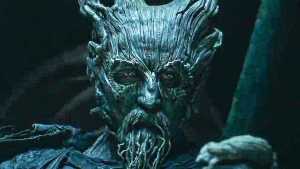
A term I first used describing the films of Nicolas Winding Refn (Neon Demon), a filmmaker I’m not particularly fond of, is the use of empty space, where the narrative feels stretched out and the audience is intended to provide that extra level of meaning for the dead air. To me, it’s narrative forfeiture. The Green Knight could have been trimmed down, it could have been reordered, it could have been given more specific meaning, but that would potentially detract from its tone poem qualities. If that cinematic sensation works for you, and you fall under the film’s sway, then congrats. If you’re looking for more or at least more meaning in the plot and chain of events, then you’re going to be left grasping for more significance. Sometimes things just feel put into the movie because, beyond all else, it’s simply cool. That’s fine, though I found too many of the asides to be lacking once the initial obstacle was established. Lowery has a larger thesis under the surface about environmental awareness considering the Green Knight is literally made of wood and plants, he goes out to the forest to live on his throne amongst the wilderness, and there’s even an extended fiery monologue by Vikander about the enduring power of “green” and how it will outlive us all and grow over our corpses (if you were being pedantic, you could argue that all color will outlive us as I doubt there will be a nightmare future without, say, the color orange). The larger thesis, however, doesn’t feel supported by the asides and episodes of Gawain. I guess it’s about thinking of the consequences of our actions and, in a way, proportionality or response. Maybe more people would reconsider their carbon footprint if nature was going to cut off their heads as a consequence of using too many plastic straws. Maybe.
Where Lowery’s plot and ambition do come together, thankfully, is with his conclusion, which I will spoil in the following two paragraphs. In the original Medieval legend, Gawain meets the Green Knight who proves to be the lord of the manor in disguise. The man playfully chides Gawain for flinching and wearing a sash he felt would spare him of harm. He then says Gawain is “the most blameless knight in all the land,” which makes little sense, and then Gawain joins the other knights, and they all have a big laugh about the jape played on Gawain. That’s not exactly a satisfying ending and takes away any personal growth Gawain might have earned. In the movie, the Green Knight is for real. Gawain initially lowers his head, trying to summon the courage to meet his death, but he flees and apologizes, escaping the Knight’s retribution.

In a nearly wordless epilogue, we watch Gawain’s life over the course of decades, inheriting the throne, siring an heir, abandoning the mother, leading his people to war, losing his son, and eventually being such a disliked leader that his own people revolt including his own family members. All the while he wears that magical sash to thwart his own demise. This epilogue is revealed to be a flash forward for Gawain, who returns to the moment of consequence with the Green Knight. Rather than flee his fate, he now chooses to accept it, to avoid this future where Gawain goes down a path of corruption and neglect. Better to die now than become a cruel despot that will harm others. He even removes the sash. It is here where the Green Knight finally acknowledges Gawain with respect. It’s this ending that really hits home the themes and the character arc for Gawain. He’s become a knight worthy of legend but has no audience, and is choosing to have no audience, to die alone rather than live in infamy. He’s found his sense of bravery at long last because of his fear of what avoiding his fate will cost. It’s an ending that feels earned and when the Green Knight is giving him an “atta boy” you want to join in.
The Green Knight is going to be a different experience for each viewer depending upon your patience for ambiguity and pacing. I found myself at points marveling over the mood and visual style of Lowery’s vision, and at other points I found myself getting restless with the episodic side quests and the stalled character development. It all comes together by the end with a finale that really cements Lowery’s big ideas and drives homes the personal journey of Gawain. It’s all a mixture of bold and beautiful and a little bit boring.
Nate’s Grade: B
Share this:

Reminiscence (2021)

Reminiscent of other moody sci-fi/noir mashups like Dark City and The Thirteenth Floor (oh the 1990s), I mostly wish that Reminiscence had been less devoted to film noir trappings and explored more of its intriguing sci-fi setting and implications. Set in a future where seas have covered much of Miami, Hugh Jackman plays a memory specialist who helps clients/nostalgia addicts find peace by reliving their past experiences through tech tanks. It’s an interesting start and of course, as per noir rules, he’ll stumble across a mysterious woman (Rebecca Ferguson) with a troubled past that he can’t help but fall in love with even as it becomes clear she had ulterior motives for meeting our hero. There’s an obvious and potent commentary at play about worshiping the past at the expense of the future and the consequences of our actions, played on a personal level and a larger ecological warning. The problem is that it takes far too long for me to care about the movie. As expected, the mysterious woman vanishes, and Jackman is determined to find her, but I didn’t care about their relationship nor find this woman charming or anything other than a plot catalyst. We needed a more urgent sense of stakes to increase audience engagement. It wasn’t like she framed Jackman who then had a certain amount of time to clear his name with bad people or the police. There’s no real reason to root for Jackman to find this missing woman besides that he’s sad. This Chinatown-meets-The Cell movie is written and directed by Lisa Joy (co-creator of HBO’s Westworld), and there are interesting ideas to go along with its near-future world, and yet it all feels like a few drafts away from honing its real potential. I feel that the noir trappings strangle the storyline as far as what its ultimate imagination can be as it tries to fit into a familiar formula. Jumping into people’s memories as an investigation seems far more exciting than pounding the flooded pavement for answers. Reminiscence is a bit more conceptional than what it can deliver. It’s not terrible but it’s not terribly interesting either. Why isn’t there more with the police utilizing this technology to solve crimes or invade people’s privacy? That seems like a better starting point for conflict than “mysterious woman comes into shop.” There are some stunning visuals and points of excitement, like a fistfight that tumbles into a sunken concert hall. The ending is fitting and slightly poetic though heavily predictable given the preoccupation with repeating select conversations about the tragic nature of love stories. The problem with Reminiscence is it’s too reminiscent of too many other genre influences without providing enough of a story or characters or mystery or world to stand apart. If you’re a fan of Dark City, you might want to check out another stylish sci-fi/noir mashup, or you could just re-watch Dark City.
Nate’s Grade: C+
Share this:

The Forever Purge (2021)
 While the franchise is starting to diminish, there’s still enough blunt power and appeal to the Purge series that I welcome a new addition every few years. Coming at a time of renewed political peril, and where the world of its satire seemed to be indistinguishable from regular headlines, the Purge series for me has gained a renewed relevancy, and while many scoff at how blunt the filmmakers are with their commentary, I say we live in blunt times and sometimes a social sledgehammer is more applicable than a scalpel. Once again, the franchise seems prescient with its premise for The Forever Purge, a band of violent extremists refusing to accept the end of their murder party and thinking that the laws no matter apply to them because they are the real American patriots. There’s a definite perverse pleasure to be had watching these racist goons getting taken out one-by-one by the predominantly Mexican cast of heroes. In a post-Capitol insurrection universe, this movie can be a necessary release for many patriots who view that awful day with risible contempt. The U.S. government, once again under the control by the evil party that introduced the Purge, is now fighting against the white supremacist forces they have riled up and can no longer control for their own benefit. The Canadian and Mexican governments are offering a limited time open border to any American seeking refuge from the chaos and violence of its own government. There’s more heavy use of jump scares with The Forever Purge and the supporting characters and scenarios aren’t given enough attention to stand out or really savor (sadly, there is no Skeletor reappearance). It lacks a strong sense of climax; more so they just ran out of goons to kill. And yet, I appreciate that this movie reminds us how quickly outsized evil can come back when we think we have it vanquished, something to think about in a post-Trump presidency that doesn’t feel very post-anything close enough eight months later. This is probably the weakest movie of the franchise so far but it’s still a serviceable B-movie with enough action and comeuppance to please fans of the anarchic series.
Nate’s Grade: B-
Share this:

Nine Days (2021)
 Oddly enough, over the course of less than a year, we now have two movies about young souls competing to find their sense of self before being born. Will (Winston Duke) lives in a small cottage in the middle of the desert. Or so it would appear. He’s a former human who now serves as a spirit who watches over the lives of a select group of others on Earth through P.O.V. monitors. After a car accident, one of his people is killed, leaving a new opening. It’s Will’s job to interview a group of candidates and determine who is best equipped to handle being born. Will takes the process very seriously but he is also more emotionally affected by the loss of life under his guidance than he admits. Where did he go wrong, or is right and wrong even the right markers for assessment? Will must choose wisely over nine days of deliberation and insight into what it means to be human and what it means to live.
 Nine Days is a tender and thoughtful movie that has much under the surface given its metaphysical context and probing questions about spirituality, identity, and existence, but it doesn’t simply rely upon the artistic weight of ambiguity. There’s a genuinely involving emotional drama here that’s accessible while offering greater depth to be unpacked by the viewer who enjoys metaphor and implication and debate. At its essence, the movie is about a series of job interviews but for a position that we don’t fully understand what the requirements are and if even meeting the requirements is enough for the hire. It’s a primarily dialogue-driven procedure but it’s also character-focused as the entire process examines what animates Will, what haunts him, and why he does what he does. Early on, the surreal nature of what should be an ordinary event, job candidates interviewing with a boss, gives the movie an air of mystery and offbeat humor. The candidates are showing up, going through a series of questions and role play scenarios, and with each session, the candidates evolve into the personas that will define them. There’s something mildly profound about watching the development of an identity before it’s even been born. As the movie progresses, Will turns down candidates and the news is truly devastating. Not only will these spirits/souls miss out on being born on Earth, they will cease to ever exist and fade away. That is some heavy stuff. Watching each one come to terms with that sort of death can be heartrending. Just imagining having to accept the end before life ever even began.
Rather than simply fade away into the blank of nothingness, Will chooses to help these souls get one last moment of peace before their ultimate end. He becomes a celestial one-man Make-A-Wish spiritual service. It’s unknown whether these “positive memories” are from the souls’ own development or their observation of the souls that have been placed on Earth. Regardless, each rejected candidate gets a moment that Will studiously recreates as an act of kindness. This section can be rather moving as each soul gets a personal sendoff and, in those final moments to savor, we watch them become affected with the generosity and the fleeting moment of life that will be tragically denied to them. One candidate climbs aboard a stationary bicycle, and Will positions one screen after another, each with projection from that angle of the street. When taken together, it creates the illusion of a nice bicycle ride through a town square. The homemade production, even sprinkling cherry blossoms and a swinging light to illustrate a traveling through a tunnel, provide small moments of affectionate conviction. I found each of these moments to be emotionally rich and beautifully rendered on screen. The care and craft Will puts into these acts is wonderful and a tremendous insight into who he is as a character and what he values in others.
 Will is haunted by the idea that he may have been oblivious to the pain of one of his pupils, and this indecision is coloring his interview process for a replacement soul. It’s unclear what exactly Will is, or his boss, or his duties, but he vaguely amounts to a guardian angel. He has a bank of old TVs that he monitors and obsessively documents the lives of a few. He takes particular pride in one soul on Earth and listens to her virtuoso violin playing as a means of personal relaxation. Her sudden death rocks him, and when it’s revealed that she was depressed, he tries to make sense of being able to see and hear everything these souls do but not fully knowing them. Did he get something wrong in his clerical assessment? Did his understanding of her have its limits? Could she have been hiding something so all-consuming without his suspicion? It all upends Will and fosters self-doubt. He’s trying to make sense of something that may not ever make sense. That is how inscrutable human beings can be and how tragically fleeting life can become in an instant.
The other change agent for Will is the presence of Emma (Zazie Beetz), a candidate who shows up late, questions the nature of the questions she is given, and is empathetic to a fault. The other candidates are playing within the rules of Will’s questions but she’s pushing back, and it only makes Will think more and more about her and her aims. I don’t consider it too much of a spoiler that Emma will be one of two final candidates for the open spot for life. Her character causes Will to reassess his own biases, his own way of doing things as they have, and his own conception of himself and what life can be about including his own time spent on Earth, which he likes to remind the others like it’s bragging rights. I suppose one could argue that, yet again, we have a quirky female character in service of teaching the male hero about the importance of embracing life to the fullest, but I think the general makeup of the characters is superfluous to the impact of the story. We’re dealing with spirits taking a physical form here. Their appearance is immaterial to their identity at this point, at least in an otherworldly realm that (hopefully) knows no sexism and racism.
 Nine Days is the film debut from commercial director Edson Oda and the movie is utterly gorgeous from a technical standpoint. The photography favors gleaming sunsets and pristine vistas to communicate the exquisiteness and otherworldly plane of existence. The desert landscape is beautifully filmed, and the interiors are also pleasing with their visual arrangements and the mingling of natural and artificial light. Oda won a screenwriting award at the 2020 Sundance Film Festival and for good measure. This isn’t just a good-looking indie, which it assuredly is, but there is deep melancholy and beauty and transcendence to be had with the very humane and compassionate storytelling trying to get at larger truths about our limited time. The storytelling has plenty of ambiguity and nuance and metaphor, but there’s an accessible core that I believe most viewers can align with and then, if they choose, can discover further meaning. There is a slightly basic “stop and smell the roses” moral, but I found there to be more lyrical beauty at different points that affected me deeper than any condensed message. The conclusion hinges on a recitation of Walt Whitman’s “Song of Myself” and it conveys not just Whitman’s celebratory humanism but also taps into Will’s own character arc. The poetic performance itself is an expression with multiple levels, celebrating life in multiple ways, and serving as a heartfelt and personal goodbye. It’s a lovely ending for a lovely little movie.
Nine Days is packed with recognizable acting faces (Tony Hale, Bill Skarsgaard), several of whom have graced Marvel superhero movies (Duke, Beetz, Benedict Wong), and there must have been something compelling for them to all accept this low-budget, contemplative indie about the human condition. It’s a little movie with a lot on its mind but it doesn’t feel the need to explain everything. There’s a sturdy foundation to begin with but enough ambiguous room for discussion and debate. It reminds me of 2003’s beguiling, divisive, and highly metaphorical indie Northfork. Both movies are poetic, understated, and deeply involved in human connection and spiritual meaning while providing room for interpretation. There’s plenty here to unpack but even on a literal level the movie works as an emotional experience. I found myself under the gentle sway of Nine Days and its mighty beating heart of humanism that extends even beyond the realm of flesh and blood.
Nate’s Grade: A-
Share this:

Pig (2021)
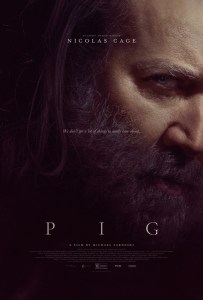
Whatever you may think Pig will be, chances are that you will be wrong. On the surface, it appears like it’s going to be another John Wick clone, with criminals stealing the beloved animal of a loner who happens to be a dangerous man who unleashes a path of vengeance. There is no real action in the movie at all. The missing pig is the catalyst to bring Rob (Nicolas Cage) back from the outskirts of Oregon and to retrace the old haunts of his old life, but the pig is more a symbol of companionship and traces back to his time with his deceased wife (another John Wick nod?). Pig is really more a meditative and reflective character study to unpack slowly. There are deeper themes and messages here, and the fact that they’re attached to a movie starring Nicolas Cage where he must find his stolen pig is all the more bizarre and exciting. This is unlike any Cage movie and, in its own way, feeds on the culmination of his own career of movies great and far from great.

This movie feels deeply personal for Cage. There is an elegiac tenderness that permeates the whole experience. It’s about loss but ultimately it’s a movie about chasing your dreams. There’s a reason the tagline for the film is, “We don’t get a lot of things to really care about.” If you’re expecting a gonzo Cage irony fest, this sincere summation will seem completely mismatched. But this movie isn’t a gonzo Cage irony fest. It’s very much about different people dealing with pain and sorting through heartbreak, disappointment, disconnection, and taking stock of one’s delayed pursuit of happiness. There is no irony to be found here, folks. This movie, called Pig, is bracingly sincere. There’s a standout scene where Rob and Amir are dining at a fancy restaurant and Rob asks to meet the chef. It takes a moment but the chef recognizes Rob and is starstruck and asks if Rob remembers him working in Rob’s own restaurant. He does, and Rob asks this man about his old dream, which was to open a pub-style restaurant, and why he capitulated. The man is initially defensive, citing the local market, but then he has to sit and think it over. It was his dream. It still is, and the fact that this man not only remembers him but also remembers his exact dream and calls him out, it’s like having an intervention from someone who you never knew cared as much as they did. Maybe this man will proceed with his dream of opening a pub. Maybe he won’t, but Rob reminds him and us how little time we have and to really spend it on the passions that positively consume us.
To that end, you can see the parallels with the main character and Cage’s own career. Nicolas Cage has long been an actor defined by excess to the point that he has a catalogue of outsized performances with ironic air quotes attached to them. The man owned his own island and named his son after Superman’s birth name. He has been starring in more and more direct-to-DVD low-budget thrillers, as have John Travolta and Bruce Willis, who both rarely seem to attach themselves to theatrical releases at this stage of their careers. Some might term this the decline of his career, that he is slumming it, but to Cage it’s just another gig. Unlike Willis, famous for shooting his part in a weekend while his stand-in works the rest, Cage is still putting forth quality effort. This might be a little psychological projection on my part, but Cage strikes me as a professional who enjoys his craft even if he makes some unorthodox choices. He has a passion for movies and he’s going to seek that out because it’s what defines him. We might not appreciate the projects he selects, we might not understand them, and they might even be bad, but Cage is taking the roles offered because making movies and acting is the thing he really cares about. His performance here is somber, touching, and suffused with ache. It’s one of, if not the, most restrained performances of Cage’s career and a reminder that the man can be a world-class actor.

Structurally, Pig seems to reinvent itself with every scene, providing new answers and insights as we unravel Rob’s past. It allows you to consistently re-evaluate the movie and characters and makes for a genuinely engrossing viewing because you know there will be something worth paying attention to with every scene change. There are people in the city who revere Rob, who despise him, who seem to be jealous of him, and we’re discovering more and more what that life was like and what drove Rob to being a recluse. The movie rides a line of nuance and ambiguity where not every character detail and connection is spelled out; it’s up to the individual to process meaning. Is this character grateful to Rob because his wife, who battled depression for years, had one significant happy moment she would reminisce over, Rob’s delicious dinner? Is he jealous that a meal could make her happy when he seemingly couldn’t? What emotional response does this man have? It’s up to the viewer to determine the human response to passion and the evaluation of what passions are prioritized. The character writing finds that artistic middle ground of being nuanced but also being accessible. For a movie about a man searching for his missing pig, it’s much more concerned with the man and his demons and dreams.
It’s a beguiling realization that a movie where Nicolas Cage searches for his prized pig might be one of the better films of 2021 and one of the actor’s finest performances. The movie appears like it will be dark, scuzzy, and depressing but it’s actually quite compassionate, humane, and encouraging. It’s not a story about a man cracking skulls and crossing names off a list to retrieve his stolen pet. It’s a movie about a man who left his suffering and who comes back and re-examines his life’s choices and the choices of others. He may look like a bleeding hobo for the majority of the movie, but Rob is a force for good, reminding others of their passions, the urgency of time to chase them, and the importance of spending time with the people, and pets, that matter to them, our own selective families. Pig is an absorbing, poetic, and eminently kind movie and one that doesn’t feel like it could have worked the same without Cage’s professional legacy to build from. It’s a small movie that will surprise many and reaffirms that Cage is always an actor worth watching.
Nate’s Grade: B+
Share this:

Black Widow (2021)
 If you ask anyone who their least favorite Avenger is, every one of those participants will have the same exact answer: Hawkeye. If you ask that same group who is their second least favorite Avenger, chances are that a clear majority are going to next say Black Widow. The character has been part of the Marvel Cinematic Universe (MCU) since 2010 in Iron Man 2, a full decade of idling to gain her solo movie to the point it became a long-running question in the fanbase. Then they killed the character in 2019’s Avengers: Endgame and then also announced she would be getting her solo movie, and the fanbase said, “Wait, now?” Delayed a full year thanks to COVID-19, Black Widow is Marvel’s first theatrical release in almost two years and will likely benefit from some low expectations and eagerness to get back to the big screen spectacle of summer movies.
It’s not Black Widow’s fault that she’s paired with a super soldier, essentially Batman in a flying suit, a nigh indestructible god, and a giant raging id monster. There’s a significant gap between that upper tier of the super powered Avengers and the two non-powered members, Lady with Guns and Guy with Bow and Arrow. It’s hard to compete with all of that, and the glimpses we’ve been given with previous MCU movies haven’t exactly been the most nuanced or dimensional for Black Widow (remember her dubbing herself a “monster” because the state took away her ability to bear children?). We’ve had hints about past troubles and regrets, but it’s never been explored with any significance… until now.
 Taking place shortly after the events of 2016’s Civil War, Natasha Romanoff (Scarlett Johansson) is on the run from American authorities. She reunites abroad with her estranged sister, Yelena (Florence Pugh), who has recently broken free of the chemical mind control of the sinister Widows program. Yelena and Natasha were living as sisters for three years as a cover family of Russian agents, with Alexei (David Harbour) and Melina (Rachel Weisz) as their parents. They were whisked back to Russia, separated, and thrown back into the Widow program where they were trained to be elite assassins by Dreykov (Ray Winstone, barely flirting with a Russian accent). The combative sisters are being chased by S.H.I.E.L.D. agents, other killer Widows still under the chemical-induced mind control, and Dreykov’s best hunter, the ruthless Taskmaster, a masked warrior who can learn and mimic the moves from other fighters. Natasha and Yelena decide the only way to stop Dreykov is to reunite their old family once again.
I’m a little confused by the general indifference Black Widow seems to have generated from critics and fans because I thought, while with some flaws, that this is still a good movie that I would say is on the cusp of being above average for the MCU’s already high bar. Perhaps, again, this movie is benefiting from lowered expectations. I wasn’t going in with too many demands considering my personal investment with the Black Widow character was minimal prior to her sacrificial death. I wanted a fun movie that provided further insight into her character, considering this would likely be the last time we see Natasha in the MCU. I was surprised how emotionally engaged I became with her movie. While the action is fine, it was the dramatic parts that really grabbed me. This is the first MCU movie where I was looking forward to the breaks in action more than the actual action. The pre-credits flashback (to mid-90s Ohio no less) sets up this fractured family dynamic that serves as the core of the movie, the question over whether these relationships ever really mattered on a deeper level or whether each person was simply playing their assignment. It makes for intriguing drama about vulnerable characters sifting through the small measures of happiness they’ve had and the difficulty of reaching out to people that are important to you. Natasha is in a delicate yet reflective place considering her isolation. The movie is structured like a Jason Bourne-style spy caper, jumping from one locale to the next, but it’s more of a family drama about hurt people reconciling and reconnecting. On its own terms, it’s a real family movie.
 There are some major themes and some serious subjects with Black Widow and they are well handled and tied to the character journeys. The opening titles, set to a melancholy cover of Nirvana’s “Smells Like Teen Spirit,” covers human trafficking. This is a story about the systems of abuse, primarily abusive men demanding control from throngs of women, and it’s about overcoming abuse and establishing support systems. For Natasha, she made some hard choices to defect to S.H.I.E.L.D., and many others have suffered because of her decision to escape. Many women could not escape their tormentors, and the level of control only became more methodical. Yelena talks about being conscious of everything but unsure what parts of you are really your own doing, and this seems eminently relatable about victimhood. The movie is about breaking free of unhealthy relationships, coming into your own control, and finding healthy families even if they are troubled and a work in progress. That’s why the family moments resonated as much for me. Real attention was given to the supporting characters in Natasha’s orbit.
To that end, the villains exemplify the themes by design, especially Taskmaster serving as a literalization of Natasha facing off against the sins of her past, much like in 2017’s Logan where Old Logan fought young Logan. Fans of Taskmaster from the comics may well be disappointed by the adaptation because the character was very sardonic and, in here, never utters a word (there is a certain Deadpool-in-X-Men Origins: Wolverine reminiscence). More could have been done but the villain represents the consequences of abandonment. I appreciated that even until the final moment, the villain could be redeemed and meant something more than simply another masked heavy to be blown apart. Dreykov, on the other hand, is just a typically awful abuser and his lack of definition fits. He’s a general stand-in for the toxic control of men accustomed to power and the dismissal of female agency. He’s dull but more a designated symbol.
The traveling Black Widow family van is the real draw of this movie. I have been a Florence Pugh fan since her star making turn in 2017’s emotionally disquieting Lady Macbeth, and I welcome her and Yelena into the MCU with open arms. Pugh (Midsommar) is terrific and full of sarcastic wit, at one point criticizing Natasha’s familiar three-point “superhero landing.” She’s also convincing in all the action and gunplay. Even better, there are several dramatic scenes that allow the talented actress to tap into her prowess. She could make me cackle, then the next minute impress me with the finesse of her leg-swinging attack movements, and then the next make me feel something as she tearfully reflects that her cover family was the best years of her life (as the youngest, Yelena had no idea until they ran off that they were all Russian agents). Her combustible yet affectionate relationship with Johansson imbued so much more emotional investment into the Black Widow character for me. Harbour (Hellboy, Stranger Things) is inhaling any available scenery as a past-his-prime Russian super soldier still holding onto his glory days as a communist answer to Captain America (he eagerly asks Natasha if Cap ever mentions him, so hopeful it’s adorable). He’s a regular source of comedy but also has a credible paternal warmth to him as he tries to don the mantle of fatherhood like a costume that no longer fits quite as well. Unfortunately, Weisz (The Favourite) isn’t on screen as much as the other members of the family unit but I still greatly enjoyed watching her finely attuned deadpan delivery.
 From an action standpoint, Black Widow will mostly suffice but there is little to really get the blood pumping. The chases and fights are entertaining without delivering anything new. The third act involves an extended set piece with characters plummeting from the sky amid fiery debris. It’s at least visually interesting and the action high-point of the movie. Under director Cate Shortland (Lore, Berlin Syndrome), the action is easy to follow even as it escalates into big video game carnage and explosions. The lack of development in the action would be more of an issue for me if the non-action elements, the story and acting, weren’t as involving. I feel like Shortland was hired for the dramatics and performances and character moments, less so the explosions.
It took eleven years, one more thanks to COVID, but Black Widow finally has her starring vehicle and the MCU is finally back on the big screen (or your home screen via Disney Plus and thirty additional dollars). I watched the movie with my girlfriend and cheerfully noted it would be the first theatrical Marvel movie we watched during our year-plus courtship, thus a real milestone in modern geek dating (we’ll have many opportunities ahead as there are six more Marvel movies scheduled between now and summer 2022). I was surprised how much I enjoyed Black Widow once it had reassembled its family dynamic and I hope to see the extended Romanoff family members in future MCU editions. It’s a late but welcomed swan song for Natasha Romanoff and her checkered past. For the first time, I felt for her character, and part of that was the result of enjoying her family nucleus and the pathos they brought. Black Widow is a serviceable action movie with fun characters and potent dramatic interactions with heavy, well-realized themes. I’m baffled by the general critical indifference (I have a lot fewer qualms than I did with 2019’s Captain Marvel). It’s the rare big movie where the quiet moments are the high-points, and twenty-plus movies in, that’s at least something new from the juggernaut that is the MCU.
Nate’s Grade: B+
Share this:

No Sudden Move (2021)
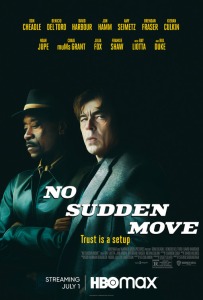 A star-studded collaboration between director Steven Soderbergh (Logan Lucky) and screenwriter Ed Solomon (Bill and Ted Face the Music), No Sudden Move is a class in how to effectively use tension and confusion to a movie’s benefit. Don Cheadle and Benicio del Toro play a pair of low-level criminals struggling to make ends meet. They accept a quick job “babysitting” a family while the husband (David Harbour) retrieves a very valuable document that certain higher-ups are after. Very early on, you feel like something is wrong and something will quickly go wrong, and this feeling persists throughout the film’s two hours. Our two protagonists sense they’re being set up, take action, and from there the movie becomes them trying to cash out with this valuable document while constantly looking over their shoulders. There are many different parties that are willing to do whatever it takes to obtain this document. In all honesty, the screenplay by Solomon is a little too over-plotted. There are several betrayals and schemers and acrimonious relationships built upon past betrayals and mistakes that it can all be a little hard to follow at times. The dread I felt was palpable. You don’t expect these guys to get away with this, not against the forces they’re going against, and so it becomes a nerve-wracking game of assessing every moment and whether this is when disaster will strike. Soderbergh’s dashes of style don’t always jibe with the 1954 Detroit setting, like his penchant for fish-eyed lenses communicating the distortion of this murky world of shadow brokers. It feels like Soderbergh has to resort to some new gimmick to get himself excited about movie projects (at least is wasn’t filmed on an iPhone). The acting is strong throughout, though Cheadle can be hard to hear at times from his guttural, frog-in-throat speaking voice. The movie kept me guessing, with some surprise cameos, and it left me dreading what would happen next. A modest success for glamorous discomfort.
Nate’s Grade: B
Share this:

Final Fantasy: The Spirits Within (2001) [Review Re-View]
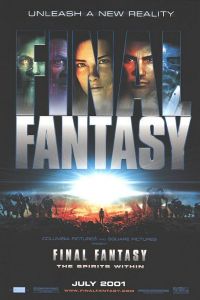 Originally released July 11, 2001:
Final Fantasy is an exciting venture in the history of animation. It’s the second video game to be turned into a feature film this summer, though exponentially better than Tomb Raider. It took the makers of Final Fantasy four years and the creation of new technology to capture what will be a benchmark in animation for years to come.
The story concerns a future Earth where aliens have crashed and invaded long ago. These “phantoms” are slightly invisible energy creatures of different size and roam around various areas with the ability to suck the life force or soul from a human being. General Hein (James Woods) is trying to convince the Earth council to allow him to fire a satellite called the Zeus Cannon to obliterate the alien menace. In opposition to Hein is Dr. Sid (Donald Sutherland) who believes with his adventurous pupil Aki Ross (Ming-Na) that the Zeus Cannon will obliterate the “spirit” of Earth. Their solution it to collect eight spirits in whatever forms they might be including plants and small animals to gather together and… do something that will send the alien life force repelling.
 Now I know Hein is supposed to be the bad guy as he’s a military man complete with the evil looking black leather cloak, but I couldn’t help but find myself agreeing with his logic. He wants to use something that has already been proven to kill the aliens whereas these two new age scientists want to collect a bunch of plants and animals and have their collective spirits ward off the interplanetary menace. I’d stand in my chair and say thank you to Hein when he dismisses the doctor’s plot. I know that Aki and Sid are the heroes and of course whatever theories they have will be proven true, but hell, I found myself agreeing more with General Hein than these two.
Complicating matters Aki is infected with a piece of the alien phantom that is slowly taking control over her body. Along in her quest to discover the final spirits is aided by a military commander Grey (Alec Baldwin) and his company of men. Turns out Grey and Aki are former sweethearts, so of course expect them to reconcile before the end credits.
The plot consists of something that could be an average episode on Star Trek: Voyager but does meander along at times. The dialogue is typical sci-fi buzzwords like “Fire in the hole” “The perimeter’s been breached” and the sort. Final Fantasy does have great excitement to it and some terrific action sequences better than most anything this summer. The ending is a disappointment as all the action hinges on two globs of energy propelled against one another. Globs or energy are not exciting. I thought we would have learned this by now.
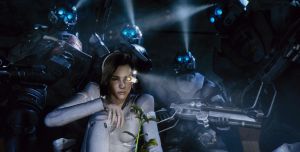 Final Fantasy is a landmark in animation. Never has so much detail been put into a movie and pulled off so amazingly well. To the nit-pickers out there the animation isn’t exactly the Holy Grail of photo-realism, but it’s closer than anything ever before. At times the characters come off as too plasticy (like Jude Law in A.I.) and tend to move too much, notwithstanding that their mouths don’t always follow the words coming out of them. Put aside these small grievances and what you have is stunning animation that makes one constantly forget it is animation. There are numerous moments of eerie precision like when a character’s nostril flares and their nose scrunches up in response, and the movement of every one of Aki’s 60,000 strands of gorgeous hair, to even a kiss between two characters. Even inanimate objects like a crumbled wall, a glass of alcohol, or a gun and its rounds are given startling accuracy. Backgrounds and scenic vistas are beautifully rendered with great care. There has been nothing ever like Final Fantasy before and it is the first movements toward an exciting area in animation.
The discussion must be raised can actors be phased out by computers now and will they ever? No, never. Actors can portray nuances that computers will never be able to master. Despite some actors best attempts to prove otherwise, we will always need actors. Now that you have the near photo realism one might be led to question what is the greatness of creating a fully realistic looking CGI tree when one can just be shot on film for millions of dollars cheaper. The all CGI world will not replace the real world of film making.
The mediocre story can be excused by the awe-inspiring animation. Despite the clunker of a plot Final Fantasy is entirely enjoyable because it always gives the viewer something to sit in wonder and take in. There’s always something to mesmerize the eyes on screen.
Nate’s Grade: B
——————————————————
WRITER REFLECTIONS 20 YEARS LATER
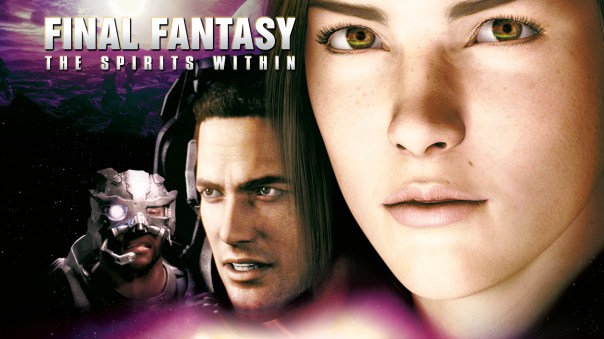
There was a time where the world wondered whether 2001’s Final Fantasy: The Spirits Within was going to put actors out of business. The Columbia/Sony animated feature, the first the studio released theatrically since the second Care Bears Movie, was a big technological leap. Square Studios, the makers behind the extremely popular video game RPG series, opened a new studio stationed in Hawaii to enter the realm of Hollywood, and they devoted four years and countless hours of processing to create photo-realistic visuals. This was still at the dawn of CGI animated features taking over the landscape and the leap was impressive. None other than Roger Ebert wrote in his review that he considered the movie a milestone along the lines of the first talkies. Before its release, there was scuttlebutt whether or not this was the wave of the future and actors would be replaced with computer versions, never mind that vocal actors were still being employed. The lead “actor,” Aki, was depicted in a swimsuit on a Maxim cover as an icky promotion. The 2002 movie S1mone satirizes this concept further, with Al Pacino fed up with temperamental industry actors so he secretly uses a photo-realistic computer program instead.
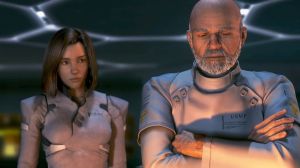 I don’t really know why people got so worried. There are nuances that humans can convey that machines cannot, but even beyond that distinction, it’s simply a lot cheaper to hire an actor, put a costume on them, and record them than to build a model from scratch in a computer and toil for hours just to get the right look of the character raising an eyebrow. The listed budget for Spirits Within is $137 million, though has been rumored to be as high as $170 million (even more than Waterworld). For reference, the budgets of other 2001 movies include $125 million for the first Harry Potter, $93 million for Jurassic Park 3, $100 million for the Tim Burton Planet of the Apes, and $93 million for The Fellowship of the Ring. Even if you view Spirits Within as paving the way for motion-capture animated movies, the kind Robert Zemeckis spent a decade of his career slaving over, even those were eventually deemed too expensive for their returns. I think we can, at least for the time being, put this question to rest. Beyond the complexity that real actors can bring to performances, there’s the ease and cost that cannot be beat by a computer. Maybe in time this will change but for now rest easy Tom Hanks. You’re not going anywhere.
Twenty years later, the animation that once inspired awe now feels dated and surpassed. That’s the nature of the speed of technological advancement; even the company had to redesign scenes from the movie as they finished because the tech improved dramatically over the four-year development process. The visuals of the movie have become the norm for modern-day video games. There are aspects of the animation that are missing or just unable to be fully formed at the time. The faces look too slick and plastic, absent grooves and pores and imperfections that provide texture to people’s faces. The human appendages move like rubber. The hair seems to flow like it’s captured from a bouncy shampoo ad (apparently a fifth of the processing power went to animate the lead heroine’s 60,000 follicles). The character’s mouths look to be wired shut and unable to articulate their words. From a 2021 standpoint, the animation looks more like an extended video game cut scene from late 2000s. Its innovation has become commonplace.
 It should be no surprise that the script went through numerous rewrites. All the attention for Sony and Square was on the technical achievements and much less so on the story, which I guess they assumed would come together at some point. The project began with the Final Fantasy writers coming up with the initial plot, which would make sense until you realize the RPG fantasy series isn’t known for its sense of realism or cohesion. The plot of Spirits Within is not very in keeping with the more fantastical Final Fantasy series world. Screenwriter Jeff Vintar (I, Robot) was asked to read the script because the studio reportedly did not understand the project at all. His analysis was that they should completely start from scratch. The studio asked if he wanted to rewrite the script and gave him three weeks. His words were translated from English to Japanese and then back into English, which left something lost in translation a couple times over.
It’s surprising that the movie is even slightly coherent with everything it’s been through. It’s still a mess of a plot, with aliens having crashed onto Earth and made parts of the planet uninhabitable by their presence. They’re also revealed to be ghosts. So… alien ghosts. And there are eight horcruxes, I mean, um, spirits that need to be found to… something. The screenplay, under all of its laborious mutations, is really about a military team and a pair of scientists collecting MacGuffins and trying to use dreams to thwart a fascist from using a doomsday laser. It is simultaneously overly simplistic and overly complicated and quite silly. The villain, voiced by James Woods, even gets the full Nazi wardrobe but his viewpoint seems logical considering he’s pitted against scientists saying they need to break through to the “spirit of the Earth.” It’s hard to take their claims and wild speculation seriously in this more realistic world. Apparently, there was a plot development where Aki was revealed to be pregnant and her unborn child was the eighth and final spirit needed. You can still see its place in the plot. Reportedly, this storyline was cut because it was deemed “too Japanese” and I have no idea what that means.
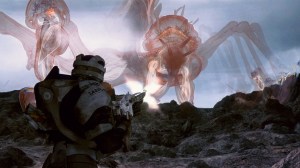 The real reason to ever watch The Spirits Within has come and gone. It’s now a footnote in animation history and a mild curiosity at best. I suppose you can still try and think how cool everything must have been to experience in 2001, and then your mind will wander because the nonsensical story will do little to hold your attention. It was such a financial disaster that Square Studios closed down and the company went back to focusing on video games full time with the occasional CGI direct-to-DVD movie (2004’s Advent Children and 2016’s Kingsglaive). Square Studio did make one of the CGI animated segments for 2003’s Animatrix, a concept paving the way for other ambitious animated anthologies like Netflix’s Love, Death, and Robots. The entire emphasis of this expensive production was slated onto its visual decadence, but the story was muddled, confusing, trite, and alien to the source material and the fanbase it was appealing to. I want to give my 2001 self a high-five because I’m happy that even at 19 years old in my original review I could see the evident faults of the mediocre storytelling as well as the arguments for replacing real actors with virtual facsimiles. Back in 2001, I said Final Fantasy: The Spirits Within had the benefit of always giving the viewer “something to sit in wonder and take in.” Twenty years later, that lone benefit has all but disappeared. Conversely, video games have become so much more ambitious, artistic, and emotionally engaging since 2001. So skip the movie and just play a game instead.
Re-View Grade: C
Share this:

Awake (2021)
 Every so often I’ll watch a movie and be really intrigued or hopeful with the premise, something that really grabs my imagination, and then that hope crashes and burns in disappointment of a story that never fully takes advantage of all the tantalizing possibilities of its start. In short, I say, “That movie didn’t deserve its premise.” That’s the first thing I thought about after watching Netflix’s new apocalyptic thriller, Awake, where humanity is suddenly incapable of going to sleep. There’s an engrossing drama about the psychological descent and a potent political thriller about the destabilizing of civilization once people are unable to get their forty winks. The premise peculates with such promise, and for it to become yet another end times road trip, hewing so closely to a solidifying formula, is like trapping everyone in a (bird) box.
Jill (Gina Rodriguez) is a former soldier, recovering addict, and current security guard who is also selling opioids on the side to make ends meet. One day, people are no longer able to sleep, everyone except her young daughter. Jill rescues her two children, gets into a car, and drives off for a far off scientific research base where a scientist (Jennifer Jason-Leigh) studying sleep might have the knowledge of how to solve this worldwide mystery.
 I think most people have dealt with the effects of sleep deprivation at some point in their life, especially if they have ever had a newborn child. The subject matter is very relatable. I had a bout of insomnia years ago where I was averaging less than two hours of sleep for weeks, and it was the worst physical endurance I’ve gone through in my, admittedly privileged, existence. I felt like a zombie, barely able to function, my head forever fuzzy, and I lost all desire to eat and had to compel my body to consume food I knew it needed for fuel. I even purchased the Ensure nutritional drinks. It was a miserable time and I was even getting a minimal amount of sleep rather than none whatsoever. I’ve had rough sleep certain nights and feel like I’m running on fumes for the rest of my workday. It takes far more time to bounce back from bad sleep, and I’m wondering if I’ll ever actually get consistently restful sleep again for the rest of my life. With all of that stated, Awake should be an easy movie to plug right into and relate to the deterioration. However, it’s so unclear and clumsy in its depictions of the world. It’s unclear until the very very end how long the world has gone without sleep, and so we run into examples that seem to paint two different pictures of our apocalyptic environment: overplaying and underplaying.
At times, Awake is overplaying the effects of the mental breakdown of society. At points, it feels like society has broken down so completely and over a confusing timeline. There are run-ins with a group of elderly naked people just standing around and acting serene, a prison where the inmates walk out for unspecified reasons involving the guards, and a church that has already gone full-borne cult crazy by thinking that sacrificing the little girl who can sleep means they’ll be able to share in her slumber. The movie didn’t establish these people as crazy religious fundamentalists, so this sudden bloodthirsty turn feels like a leap. Even in 2007’s The Mist, the trapped townspeople gave into the corrupting influence of the religious bigot over time and distress. It reminded me of another Netflix apocalyptic, parental road movie, 2019’s The Silence, where it seemed like it was mere hours before a select group of people started cutting their tongues out and declaring they needed to kidnap women for the purpose of re-population. I suppose some people are just looking for the first good excuse to indulge their baser impulses, but then explore more of this feature with meaningful characters that will matter when they break bad. I think the movie would have greatly benefited from a clear timeline, some helpful titles keeping up with the clock, things like “50 Hours In,” and the premise could have been revised to be a slow evaporation of sleep rather than a strict cut-off. Maybe people are only able to get two hours a night, then one hour, then 30 minutes, and people are freaking out because they know it’s getting less. Let society have some measure of reconciling with the totality of what is to come.
 At times, Awake is also paradoxically underplaying the effects of the mental breakdown of society. For the majority of the movie, our characters aren’t really acting differently even though they have been awake for multiple days. This is what also made me so confused. How much time has passed if nobody seems to be making a big deal about it? The slips in reaction time and awareness don’t really feel integrated until the chaotic conclusion. The family comes across the wreckage of an airplane and make no big deal of it. For that matter, if we’re establishing that sleep deprivation is causing planes to fall from the sky, I think there should be thousands of these crash sites dotting the landscape, unless the airlines have wised up and decided to ground their pilots because they’re afraid of potential post-post-apocalyptic class action lawsuits. Travels with Jill become too leisurely for everything that is going on (note to self: pitch an Anthony Bourdain-style travelogue during an apocalyptic social breakdown and tasting the new culinary delicacies). She senses that she will die and needs to train her children to survive in this new world without her. However, if only her daughter can sleep, then presumably only she will be left alive in due time and it’s less about fending for herself against other people and more how to live off the land. There’s an existential and more poetic, prosaic version of Awake where Jill is trying to cram years and years of parenting into a precious couple of days, where she also tries to secure a fortified hiding place for her daughter to wait out the rest of humanity dying off before she can come out like a hibernating animal. For Jill, its about securing her child’s survival rather than reversing this plague that is dooming humanity. There’s a stronger movie that could have been made had Awake been more personal and more serious rather than schlocky and muddled.
The movie does have a few moments of bizarre effect or risible tension, but these moments are few and far between and director/co-writer Mark Raso (Kodachrome) is very transparent about his genre influences. There’s a roadside checkpoint where a group of armed people try and break inside Jill’s vehicle and pull her and anyone else out the windows. The car is still driving as the assault goes on and the camera remains inside the vehicle while rotating around the interior as the attack plays out in a real-time long take. If you’ve seen the sci-fi masterpiece Children of Men, then this description should already be ringing a few bells of recognition. It’s not that Raso cannot pay homage to the sci-fi inspirations of his tale, but when you draw direct comparisons by emulating very specific artistic choices done by superior filmmakers, you’re inviting a negative impression. A standoff between Jill and an increasing exodus of prisoners had a queasy anxiousness to it because the movie lets the scene build with direct, immediate stakes. There’s a similar scene where Jill is hiding in a garage from voices, but the stakes don’t translate as well because our knowledge of who the other men are is limited. She could just sit in a corner and wait. The plane wreckage scene is impressively designed, and there are a few genuinely surprising moments, like the crowd of naked old people, to keep things curious, but Awake too often settles again and again for the most formulaic and least interesting creative path.
 If this all sounds a lot like Netflix’s Bird Box, then congrats, because you’ve likely caught onto the reason this movie exists. Both movies feature an unexplained worldwide phenomenon that results in the breakdown of society where mobs and cults have formed, and both movies feature a single mother trying to lead her two children, one boy and one girl, through the hazards of the road so they can reach a supposed secure place where authority figures will have answers, and both movies feature a normal facet of human existence that, once removed, is making people go crazy and mess with their perception. Both of the movies also provide plum roles for high-profile actresses. Rodriguez (Miss Bala) is a compelling actress who has shined in lighter, rom-com material (Jane the Virgin), in quirky character-driven indies (Kajillionaire), and in somber existential horror (Annihilation). She has the tools to be great. Awake did not give her enough. There are a couple of scenes, late, of her starting to lose her bearings, and it’s here that I wished the filmmakers had realized that showing the effects of this cataclysm would be best than underplaying or overplaying the deprivation. Awake is an apocalyptic road trip that will bore more than excite and frustrate more than engage. Who knew sleeplessness was such a snooze?
Nate’s Grade: C-
Share this:

A.I.: Artificial Intelligence (2001) [Review Re-View]
 Originally released June 29, 2001:
A.I. is the merger of two powerhouses of cinema – Stanley Kubrick and Steven Spielberg. The very mysterious film was given to Spielberg by Kubrick himself who thought ole’ Steven would be a better fit to direct it. The two did keep communication open for like a decade on their ideas for the project until Kubrick’s death in March of 1999. What follows is an imaginative futuristic fairy tale that almost grabs the brass ring but falls short due to an inferior ending. More on that later.
In the future technological advances allow for intelligent robotic creatures (called “mechas”) to be constructed and implemented in society. William Hurt has the vision to create a robot more real than any his company has ever embarked on before. He wants to make a robot that can know real love. Flash ahead several months to Henry and Monica Swinton (Sam Robards and Frances O’Conner) who are dealing with their own son in an indefinite coma. Henry is given the opportunity to try out a prototype from his company of a new mecha boy. His wife naturally believes that her son could not be replaced and her emotions smoothed over. Soon enough they both decide to give the boy a try and on delivery comes David (Haley Joel Osment) ready to begin new life in a family. David struggles to fit in with his human counterparts and even goes to lengths to belong like mimicking the motions of eating despite his lack of need to consume. Gradually David becomes a true part of the family and Monica has warmed up to him and ready to bestow real love onto their mecha son.
 It’s at this point when things are going well for David that the Swinton’s son Martin comes out of his coma and returns back to his parents. Sibling rivalry between the two develops for the attention and adoration of their parents. Through mounting unfortunate circumstances the Swintons believe that David is a threat and decide to take him away. The corporation that manufactured David had implicit instructions that the loving David if desired to be returned had to be destroyed. Monica takes too much pity on David that she ditches him in the woods and speeds off instead of allowing him to be destroyed.
David wanders around searching for the Blue Fairy he remembers from the child’s book Pinocchio read to him at the Swinton home. He is looking for this magical creature with the desire she will turn him into a real boy and his human mother will love him again. Along David’s path he buddies up with Gigolo Joe (Jude Law), a pleasure ‘bot that tells the ladies they’re never the same once he’s through. The two traverse such sights as a mecha-destroying circus called ‘Flesh Fairs’ complete with what must be the WWF fans of the future, as well as the bright lights of flashy sin cities and the submerged remains of a flooded New York. David’s journey is almost like Alice’s, minus of course the gigolo robot of pleasure.
There are many startling scenes of visual wonder in A.I. and some truly magical moments onscreen. Spielberg goes darker than he’s even been and the territory does him good. Osment is magnificent as the robotic boy yearning to become real, but Jude Law steals the show. His physical movement, gestures, and vocal mannerisms are highly entertaining to watch as he fully inhibits the body and programmed mind of Gigolo Joe. Every time Law is allowed to be onscreen the movie sparkles.
 It’s not too difficult to figure out which plot elements belong to Spielberg and which belong to Kubrick, since both are almost polar opposites when it comes to the feelings of their films. Spielberg is an idealistic imaginative child while Kubrick was a colder yet more methodical storyteller with his tales of woe and thought. The collaboration of two master artists of cinema is the biggest draw going here. A.I.‘s feel ends up being Spielberg interpreting Kubrick, since the late great Stanley was dead and gone before he could get his pet project for over a decade ready. The war of giants has more Spielberg but you can definitely tell the Kubrick elements running around, and they are a gift from beyond the grave.
I thought at one point with the first half of A.I. I was seeing possibly the best film of the year, and the second half didn’t have the pull of the first half but still moves along nicely and entertained. But then came the ending, which ruined everything. There is a moment in the film where it feels like the movie is set to end and it would’ve ended with an appropriate ending that could have produced lingering talk afterwards. I’m positive this is the ending Kubrick had in mind. But this perfect ending point is NOT the ending, no sir! Instead another twenty minutes follows that destroys the realm of belief for this film. The tacked on cloying happy ending feels so contrived and so inane. It doesn’t just stop but keeps going and only gets dumber and more preposterous form there. I won’t go to the liberty of spoiling the ending but I’ll give this warning to ensure better enjoyment of the film: when you think the movie has ended RUN OUT OF THE THEATER! Don’t look back or pay attention to what you hear. You’ll be glad you did later on when you discover what really happens.
The whole Blue Fairy search is far too whimsical for its own good. It could have just been given to the audience in a form of a symbolic idea instead of building the last half of the film for the search for this fictional creature’s whereabouts. The idea is being pounded into the heads of the audience by Spielberg with a damn sledge hammer. He just can’t leave well enough alone and lets it take off even more in those last atrocious twenty minutes.
A.I. is a generally involving film with some wonderfully fantastic sequences and some excellent performances. But sadly the ending really ruins the movie like none other I can remember recently. What could have been a stupendous film with Kubrick’s imprint all over turns out to be a good film with Spielberg’s hands all over the end.
Nate’s Grade: B
——————————————————
WRITER REFLECTIONS 20 YEARS LATER

There are two aspects that people remember vividly about A.I.: Artificial Intelligence and that’s the fascinating collaboration of two of the most influential filmmakers of all time and its much-debated and much-derided extended ending. Before we get into either, though, a fun fact about its very helpful title for Luddites. Originally the title was only going to be A.I. but the studio found that test audiences were confused by the two-word abbreviation and several clueless souls thought it was the number one and not the capital letter “I.” The studio didn’t want their high-concept meeting of cinematic masters to be confused with a popular steak sauce.
In the realm of cinematic titans, Steven Spielberg and Stanley Kubrick rise to the top for their artistic ambitions, innovations, versatility, and great influence on future generations, but you’d be hard-pressed to see a uniquely shared sensibility. Kubrick’s films are known for his detached, mercurial perspective, flawless technical execution, leisurely pacing, and a pessimistic or cynical view of humanity. Spielberg’s films are known for their blockbuster populism, grand imagination and whimsy, as well as the director’s softer, squishier, and more sentimental view of humanity. It almost feels like a mixture of oil and water with their contradictory sensibilities. And yet Kubrick and Spielberg developed A.I. for decades, starting in the late 1970s when Kubrick optioned the short story “Super-Toys Last All Summer Long” by Brian Aldiss. Kubrick felt that Spielberg was a better fit for director in the mid-1980s, but Spielberg kept trying to convince Kubrick to direct. Both took on other projects and kept kicking A.I. down the road, also because Kubrick was dissatisfied with the state of special effects to conceive his “lifelike” robot boy. Kubrick died in early 1999 and Spielberg elected to finally helm A.I. and finish their creative partnership. He went back to the original 90-page treatment Kubrick developed with sci-fi novelist Ian Watson and wrote the final screenplay, Spielberg’s first screenwriting credit since Close Encounters of the Third Kind (and his only one since 2001). I view the final movie as a labor of love as Spielberg’s ode to Kubrick and his parting gift to his fallen friend.
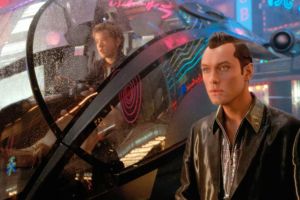 Watching A.I. again, it is a recognizable Kubrick movie but through the lens of Spielberg’s camera and budget. In some ways, it feels like Spielberg’s two-hour-plus homage to his departed mentor. The movie moves gradually and gracefully and, with a few delicate turns, could just as easily be viewed as a horror movie than anything overtly cloying or maudlin. The opening 45 minutes introduces a family whose child is comatose with some mystery illness and the likelihood he may never return to them. The husband (Sam Robards) is gifted with a shiny new robot boy, David (Haley Joel Osment), as a trial from his big tech boss (William Hurt) who wants to see if he can make a robot child who will love unconditionally. The early scenes with David integrating into the family play like a horror movie, with the intruder inside the family unit, and David’s offhand mimicry of trying to fit in can make you shudder. All it would take is an ominous score under the scenes and they play completely differently. One scene, which is played as an ice breaker, is when David, studying his parents at the dinner table, breaks out into loud cackling laughter. It triggers his parents to laugh alongside him, but it’s so weird and sudden and creepy. David’s non-blinking, ever-eager presence is off-putting and creepy and Monica (Frances O’Connor), the mother, is rightfully horrified and insulted by having a “replacement child.” However, her emotional neediness steadily whittles away her resistance and she elects to have David imprint. This is a no-turning-back serious decision, having David imprint eternal love and adoration onto her, and if she or her husband were to change their minds, David cannot be reprogrammed. He would need to be disassembled. With this family, David is more or less a house pet kept around for adoration and then discarded when he no longer serves the same comforting alternative. Once the couple’s biological child reawakens, it’s not long before jealousy and misunderstanding lead David to being ditched on the side of the road as an act of “mercy.”
From there, the movie becomes much more episodic with David and less interesting. The Gigolo Joe (Jude Law) addition furthers the story in a thematic sense and less so in plot. Gigolo Joe is a robotic lover on command, and framed for murder, and just as disposable and mistreated as David. From a plot standpoint, David’s odyssey is to seek out the Blue Fairy from Pinocchio, a book his mother read to him, and to wish to become a real boy and be finally accepted as his mother’s legitimate son. Thematically, David’s real odyssey is to understand that human beings are cruel masters. In short, people suck in this universe and they don’t get any better.
 People, or “orga” as they refer to organic life, are mean and indifferent to artificial life, viewing the realistic mechanical beings, or “mecha” as they are referred to, as little more than disposable toys. Despite its cheery happy ending (and I will definitely be getting to that), the movie is awash in Kubrick’s trademark pessimism. Early on, David is stabbed by another boy just to test his pain defense system. David is only spared destruction from the Flesh Fair, a traveling circus where ticket-buyers enjoy the spectacle of robot torture, because the blood-thirsty audience thinks he’s too uncomfortably realistic. I don’t know if they’re supposed to be confused whether he is actually a robot considering that the adult models look just as realistic. He’s not like a super advanced model, he’s just the first robot kid, but applying the same torture spectacle to a crying robot child is too much for the fairgoers. However, this emergent reprieve might be short-lived once these same people become morally inured to the presence of robot kids after they flood the consumer market. Once the “newness” wears off, he’ll be viewed just as cruelly as the other older models also pleading for their pitiful mecha lives.
The tragedy of David is that he can never truly be real but he’ll never realize it. His personal journey takes him all over the nation and into the depth of the rising oceans, and it’s all to fulfill a wish from a benevolent make-believe surrogate mother. His programming traps David into seeing the world as a child, so no matter how old his circuits might be, he’ll always maintain a childish view of the world and its inhabitants. He’ll never age physically but he’ll also never mature or grow emotionally. Because of those limitations, he’s stuck seeing his mother in a halo of goodness that the actual woman doesn’t deserve. Monica felt like she was being helpful by ditching David before returning him to his makers, but this boy is not equipped to survive in the adult world let alone the human world. He cannot understand people and relationships outside the limited confines of a child. So to David, he doesn’t see the cowardice and emotional withdrawal of his mother. She knew the consequences of imprinting but she wanted to feel the unconditional love of a child again and when that got too inconvenient she abandoned him. Their relationship is completely one-sided with David always giving and his mother only taking. David’s goal is to be accepted by a woman who will never accept him and care for him like her organic child. She will never view David as hers no matter how hard David loves her. He cannot recognize this toxic usury relationship because he’ll never have any conception of that. David is trying to be loved by people undeserving of his earnest efforts and unflinching affections.
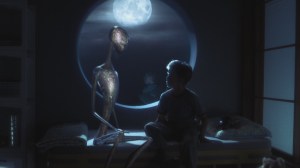
Do these look like robots to you?
Let’s finally tackle that controversial ending, shall we? The natural ending comes at about two hours in, with David in a submersible at the bottom of the ocean and pleading with a statue of the Blue Fairy in Coney Island to make him a real boy. He keeps whispering again and again to her, and the camera pulls out, his pleading getting fainter and fainter. The vessel is trapped under the water, so he’ll likely live out the rest of his battery life hopefully, and hopelessly, asking for his wish. It feels deeply Kubrickian and a fitting end for a tragic and unsparing movie about human cruelty and our lack of empathy. It’s also, in its own way, slightly optimistic. Because David is so fixated, he’ll spend the rest of his existence in anticipation of his dream possibly being granted with the next request. He has no real concept of time so hundreds of years can feel like seconds. Everything about this moment screams the natural ending, and then, oh and then, it keeps going, and the ensuring twenty additional minutes try and force a sentimental ending that does not work or fit with the two hours of movie prior. Two thousand years into the future, David is rescued by advanced robots (I thought they were aliens, and likely you will too) who finally grant his wish thanks to some convenient DNA of his two-thousand-year dead mother. These advanced robots can bring the dead back to life except they will only last one day, so David will have one last day to share with his mother before she passes back into the dark. However, David’s conception of his mother isn’t the actual woman, so his rose-colored glasses distortion means he gets a final goodbye from not just a clone but one attuned to his vision. It’s false, and the fact that the movie tries to convince you it’s a happy ending feels wrong. Also, the world of 4124 still has the World Trade Center because A.I. was released three months before the attacks on September 11th. It’s just another reminder of how wrong the epilogue feels.
This extended epilogue desperately tries to attach the treacly sentimentality that was absent from the rest of A.I., which is why many critics felt it was Spielberg asserting himself. Apparently, we were all wrong. According to an interview with Variety in 2002, the opening 45 minutes is taken word-for-word from Kubrick’s outline and the extended ending, including the misplaced happy every after, is also strictly from Kubrick’s original treatment. It was Kubrick who went all-in on the Pinocchio references and parallels. Even the walking teddy bear was his idea. Watson said, “Those scenes were exactly what I wrote for Stanley and exactly what he wanted, filmed faithfully by Spielberg.” The middle portion was Spielberg’s greatest writing contribution, otherwise known as the darkest moments in the movie like the Flesh Fair and robot hunts. The movie is much more sexual than I associate with Spielberg. There has been sex in Spielberg’s past films, but it’s usually played as frothy fun desire with cheeky womanizers (Catch Me If You Can) or as a transaction with unspoken demands (Schindler’s List, The Color Purple). Then again, when Spielberg really leaned into a sex scene, we got the awkward and thematically clunky “climax” of Munich. With A.I., the perverse nature of humanity is another layer that reflects how awful these people are to the wide array or robots being mistreated, abused, and assaulted on an hourly basis in perpetuity.
 Twenty years later, the movie still relatively holds up well and is good, not great. It’s more a fascinating collaboration between two cinematic giants, and the fun is recognizing the different elements and themes and attributing them (wrongly) to their respective creator. The special effects are still impressive and lifelike even by 2021 standards. Even though the movie is set in 2124, so over 100 years into the far-flung future, everyone still dresses and looks like they’re from the familiar twentieth century (maybe it’s retro fashion?). It’s a slightly distracting technical element for a movie otherwise supremely polished. There is a heavy emphasis on visual reflections and refractions of David in his family home, exploring the wavering identity and conceptions of this robo kid. Spielberg’s direction feels in keeping with Kubrick’s personal style and sensibility. A.I. is a labor of love for Spielberg to honor Kubrick, and he went another step further with the 2018 adaptation of Ready Player One where one of the missions was exploring a virtual reality recreation of the famous Overlook Hotel from The Shining. In my original 2001 review, I took the same level of umbrage with the miscalculated ending as I do in 2021. In the many years since its release, A.I. has been my go-to example of a movie that didn’t know where to properly end. As a result, it’s still a fascinating if frustrating experience on the verge of greatness.
Re-View Grade: B


 nathanzoebl
You must be logged in to post a comment.