Blog Archives
Belfast (2021)
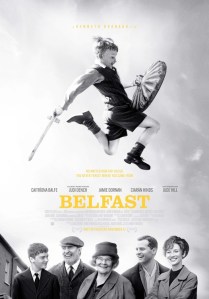
Kenneth Branagh returns to his boyhood home with Belfast, a coming of age story set during the Troubles in 1969 where Protestant mobs were targeting Irish Catholics. The movie is partly autobiographical as we follow young Buddy (newcomer Jude Hill) and his parents (Jamie Dornan, Caitriona Balfe) and grandparents (Cirian Hinds, Judi Dench) dealing with life as their neighborhood block more resembles a war zone. There are dangerous influences and dark intentions on the peripheral, but we’re mostly at kid level, where his days are preoccupied with sitting closer to his crush in school and wanting to impress his older cousin and be accepted. The parental perspective is kept to offhand whsipers and weighty conversations about moving away or staying behind. The black and white photography is gorgeous and exquisitely composed, looking like old family photos come to rich life. The actors are charming and heartfelt, and when called upon deliver emotional fury. The problem with Belfast, and it feels mean to even cite it as such, is that everything is just a little too nice, a little too clean, a little too safe. The childhood perspective doesn’t quite jibe with the political instability at hand. It’s not a Jojo Rabbit where that disconnect is the point for reflection. It’s clearly Branagh’s love letter to his family and native land. It feels like entire scenes have been plucked directly from Branagh’s nostalgic memories. It also feels like the characters are more sweet-smiling composites than real people. It’s all been romanticized with Branagh’s personal nostalgia, reshaping the odd angles and dangling conflicts into something more sentimentally safe, easy, and inoffensively digestible. Belfast is a perfectly enjoyable movie but it feels like a simple TV movie-of-the-week, crowd-pleasing version of a complex story worthy of greater nuance and scrutiny.
Nate’s Grade: B
Share this:

Alternate Opinion: Zack Snyder’s Justice League Guest Essay
My friend and writing partner Ben Bailey asked me to host an extensive essay he was compelled to write after watching the four-hour Snyder cut of Justice League. I’ve never featured anyone else’s words or opinions on this review blog before, but it’s been so long since he really devoted himself to an artistic analysis, and with such detail, that I felt compelled to publish it on my personal review platform. Behold, a guest essay on the nature of Art, Ayn Rand’s Objectivist theory, super heroes and their appeal, Zack Snyder as a filmmaker and philosopher, and capitalism.
____________________________________________________________
“Zack Snyder’s Justice League and The Virtue of Shallowness: An Essay In Search of a Point” By Ben Bailey
All Art is self-indulgent, but not all self-indulgence is Art.
Back in 2010, legendary film critic Roger Ebert famously groused that video games could never be Art. His reasoning was largely an attempt to grasp at the essential definition of what Art is, and how it can and cannot be applied to various artistic mediums in order to claim supremacy for his preferred medium, cinema, over one he pompously scorned. At the time, as a 25-year-old man-baby gamer, I objected strenuously to his argument but not in a way that I could articulate with the same thoughtful presentation with which he made his case. I just instinctively rebelled against the notion that a thing I loved in the same way Ebert loved movies could not be Art like movies clearly are because smart people like Ebert said so. I was still struggling with what Ebert struggled with in his piece, as I hadn’t yet developed a working definition of what Art actually was. Unlike Ebert, who never settles on a definition and just decides to declare himself right, I have since found one that at least works for me, and now in the cold hard light of 2021, I’m forced to conclude that Ebert was sort of correct but not for the reason he thought he was. The vast majority of video games are not Art, just like the vast majority of movies, TV shows, and books are not Art, because Art is something special and pretty hard to achieve in a capitalist society designed to stifle creativity at the altar of marketability.
For me at least, Art has a practical and a poetic definition. The practical one can best be distilled as, “Deliberate creative expression done for its own sake.” Artistic Intent is everything. It has to be something done on purpose, not something retroactively defined as Art by someone experiencing it separate from the Artist. It has to be a creative expression, which is to say something done to reflect the internal life or point of view of the Artist as opposed to something a craftsmen might build to be functional but not intellectually or emotionally inspired (All Art is craft, but not all craft is Art). And most importantly, it has to be done for its own sake, free of any creative compromise. For something to be Art, the Artist has to do it because it is something they simply must do, because it is born inside of them and must be birthed through the process of creative expression so that it isn’t left stillborn inside their soul to rot and kill its host. If it is done for any other motive, for profit or to cater to the whims of a prospective audience, it ceases to be Art and becomes Commerce, a commodity that belongs to the world and no longer to the Artist.
 The poetic definition is a bit looser as you might expect: “Art is the process of making your dreams come true.” It is how we physically manifest our imagination into literal reality, recreating what is inside of us to bare our souls to the world, not because it matters what the world might think of them or who might want to buy or sell the product of their representation, but simply because the soul of an Artist burns bright and the fire has to go somewhere. Many things are mistaken for Art because they are created with the same tools through the same mediums. A really entertaining movie you love might seem like Art to you, but chances are, just given the realities of how movies are made in the studio system, it wasn’t created by an Artist or group of Artists collaborating to bring something beautiful into the world from their own minds. It may have started out that way, or that may have been the hope at the outset, but inevitably to get the thing made, money people began to influence what it should be, and test audiences and marketing algorithms ultimately dictated its form. A spatula might be used to make pancakes or spank your lover, but that doesn’t make your breakfast foreplay.
You might have noticed by now that my conception of Art is marked by an almost Platonic ideal of the Artist as Rugged Individualist, perhaps an expansive application of Auteur Theory that would mean almost nothing could be Art if it involves any kind of collaboration. That’s not entirely untrue, as I am trying to say that Art is a very rare and exclusive thing, at least when it comes to the kind of creative works we are typically exposed to in a society built on commercial industry. But to clarify, multiple Artists working together on a shared vision like a film or video game, while always more difficult to coalesce than one person articulating a singular vision like a painting or novel, can still be Art as long as the intent remains pure, or if the idea of purity sounds a bit fishy to you, at least free of external influences from non-Artists. Still, it’s just easier to conceptualize the Auteur as Artist for the purposes of discussing artistic intent, eschewing the messiness of multiple Artists trying to figure out the workable common denominator of their unique perspectives. If Art is a person making their dreams come true, the fact that it is their dream and no one else’s would seem to be the pertinent factor in assessing whether it is true to what it is. You might call it the Virtue of Selfishness. And that is where Zack Snyder comes in.
 At this point, I don’t think I need to provide too much on the history surrounding the supposed epic tragedy of behind-the-scenes studio machinations that was the 2017 Justice League film. Suffice it to say if you don’t know, the theatrically released version of the movie was a sort of Frankenstein’s monster of two competing visions, one the culmination of original director Zack Snyder’s bleak, realistic take on DC superheroes introduced in two previous films, and the other a studio-mandated effort to re-shape the project to dilute Snyder’s influence and better ape the success of the Marvel Cinematic Universe (MCU) through the inclusion of re-shoots, re-edits, and post production work provided by the MCU’s most notable director at the time, famed garbage person Joss Whedon. The result was widely regarded as mediocre at best, a mishmash of clashing ideas and tones representing diametrically opposing perspectives on what a superhero movie should be. It was assumed at the time that the relative critical and commercial failure of the film meant that it and the cinematic universe it spearheaded was, much like Snyder’s conception of the DC Universe, completely hopeless. And then some weird stuff happened.
A strange confluence of circumstances involving the changing nature of our engagement with modern media, the increasing ubiquity of streaming platforms challenging and possibly supplanting the theatrical model of film distribution, and also a freaking pandemic, led to Snyder getting an incredibly rare second bite at the apple in the form of the Snyder cut. A long fabled, often dismissed as mythical truer version of Snyder’s masterpiece, the Snyder cut had been cruelly torn from him and mutilated beyond recognition by shortsighted naysayers who just didn’t understand the deep and profound things the director of Sucker Punch was trying to say in the movie where Lex Luthor apparently pees in a jar to make a point to a senator before killing her. Or I don’t know, maybe he got his assistant to do it before sending her to die in the explosion he didn’t tell her about? Okay, that’s not the point, but Batman V. Superman is still really stupid. The point is, fans demanded it, and Warner Bros.’ long history of poor decision-making led them to provide a whopping 70 million dollars, roughly the budget of an entire year’s worth of quality Blumhouse movies, to complete a thing that was supposedly already basically done. And now it’s here.
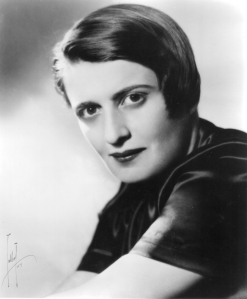
Author Ayn Rand
If you didn’t pick up on my reference earlier to the Virtue of Selfishness, consider yourself lucky to have never been exposed to any kind of deep dive into the nonsense of Objectivist “philosopher” Ayn (rhymes with “whine”) Rand. I use “philosopher” in quotes because Rand famously rejected all philosophers post-Aristotle other than herself, most likely because all of modern philosophy might as well be collected with the subtitle: “Why Ayn Rand Is An Idiot,” so her rejection of them was likely a preemptive strike done with the same degree of defensive self-awareness that led her to rail against government hand-outs her whole life only to accept Social Security and Medicare in her autumn years. The Virtue of Selfishness refers specifically to a collection of essays encapsulating Rand’s ethical vacuousness better than I could with any description, so I would say you should just read it, though you really shouldn’t. You could also check out her much more popular and well known novels, the CEO’s on strike fantasy Atlas Shrugged, or The Fountainhead, about a self-described brilliant artist who would rather see his greatest work destroyed than allow it to be altered by the people with the moral temerity to think they had the right to dictate what it should be just because they paid for it. Coincidentally, Zack Snyder has been trying to make that book into a film for years.
Snyder is, by his own admission, a devotee of Ayn Rand and a committed Objectivist, and despite my already established aversion to this worldview, I want to state clearly here that I don’t bring this up to say that Zack Snyder believes in something I find ridiculous and is therefore a ridiculous person. I might think that if I got to know him, but that isn’t the point I’m making here. I have no reason to think that Snyder isn’t a perfectly nice, intelligent person as an individual, at least by the standards that we might judge those things in the abstract. I don’t know the man personally, so I don’t know for a fact that his love of a philosopher who said we owe nothing to each other means he believes the same thing wholeheartedly, and I have no way of knowing how he might translate his conception of Objectivism into his daily interactions with other people. He may be a sweetheart or a total bastard for all I know. As a filmmaker, however, I feel like I can say with some degree of certainty that his Randian worldview is at the forefront of his creative vision. If his movies are any indication of his artistic intent (as one assumes they should be), the Artist’s fire that burns in his soul is one that seeks to burn down the liberal social order predicated on the notion that our success as a civilization requires that we care about each other.
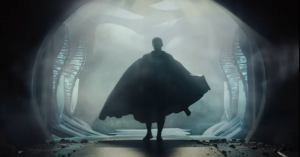 I would submit that the reason Zack Snyder’s approach to superhero movies feels so strange and off putting to so many people, whether or not they can articulate why, is because it lacks empathy. That isn’t to say that a movie or even a work of Art requires empathy, but its absence always feels wrong because art is the language of the soul, and having no interest in appealing to our shared humanity is the spiritual equivalent of gibberish. It feels especially wrong in superhero fiction because empathy is the basis for all superheroes on a fundamental conceptual level. The thing that makes them heroes is that they care about other people and, because of that, dedicate their lives to helping others. The people with similar powers who only use them for personal gain or to hurt other people, because they don’t believe we owe anything to one another, are the bad guys. So when Snyder, a filmmaker who views the world and the worlds he creates through the literal and figurative lens of Randian self-interest, tries to realize the characters of Superman, Batman, or Wonder Woman, it does not occur to him that anyone like them would ever sublimate their own selfish interests for the good of humanity. He has no frame of reference for altruism, so he can’t relate to characters designed to be the personification of it.
Snyder’s Superman spends almost the entirely of Man Of Steel rejecting the idea that he should use his amazing powers to help anyone, and only begrudgingly takes on the threat of General Zod when he is personally threatened and it is in his interest to fight, famously failing to even try to save Metropolis from the destruction wrought by his battle because civilian casualties were immaterial to him. In the sequel Batman vs Superman: Dawn Of Justice, the idea that all of this superheroic carnage has any real toll on real people that we should care about is addressed almost as a petty response to the backlash Man Of Steel faced for its callous depiction of the character, with Batman representing the side that at least cares enough to seek revenge, only to be revealed as short sighted in his zeal to defend humanity from this all-powerful alien god after a few common enemies and a coincidence involving their mothers’ names causes him to see the monster as a misunderstood hero. In between this convoluted arc, we have a montage of Superman saving lives that is one of the most morose series of images ever put to film, suggesting its the last thing he wants to spend his time doing. We see Wonder Woman coming out of hiding after decades of refusing to use her powers for the good of anyone, and we also find out that Batman, the billionaire who spent his life and vast wealth defending the innocent from evil, has since broken his oath never to kill and seemingly delights in sending criminals to prison branded with a symbol that almost assuredly marks them as targets for rape and murder.
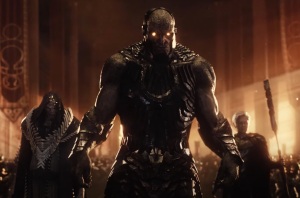 Back in 2019, Snyder directly addressed the criticism of his dark, “realistic” approach to superheroes, and specifically the idea that Batman would kill, by saying “It’s a cool point of view to be like, ‘My heroes are still innocent. My heroes didn’t fucking lie to America. My heroes didn’t embezzle money from their corporations. My heroes didn’t commit any atrocities.’ That’s cool. But you’re living in a fucking dream world.” And you know what, he’s absolutely right. It’s a dream world called comic books. You could say the same thing about something like Star Trek, the idea that we could all give up on greed and completely restructure society around the idea of helping each other is pretty naive and will probably never happen, but that’s not the point. The point is to imagine a world where it could happen, compare that imaginary world to our own, and think about what we might need to do to bridge the gap between them. Fantasies aren’t supposed to be realistic, they are supposed to be inspirational and aspirational. Most billionaires do probably embezzle money, and most people given the powers of a god would probably be corrupted by that power and commit atrocities. But what if they didn’t? What if those people were innocent do-gooders who helped other people instead? That would be super, and pretty heroic at that.
Of course, Snyder is in no way obligated to like or care about what superheroes are traditionally meant to represent in order to make movies about them, but it begs the question of why he would want to spend so much of his time and effort crafting an entire series of superhero movies if he doesn’t. A cynical approach to answering that question might start with the dumptruck of money Warner Bros presumably wheeled to his home, and might even posit a sort of trollish pleasure in taking down something he clearly detested through creative deconstruction a la Rian Johnson’s The Last Jedi. Or perhaps his motives were even more insidious. Perhaps he hates the very idea of altruistic superheroes and altruism in general so much that he dedicated an entire film franchise to subverting our love of superheroism so that we would lose hope in the empathetic message they are meant to inspire, and with nothing else left to cling to, fully embrace our Randian dark sides. For the record, I don’t think it’s any of those things, but any one of them would be more interesting that what I think the actually answer is, which gets me to my biggest problem with Snyder’s work overall, and especially his latest magnum opus, the Justice League Snyder cut.
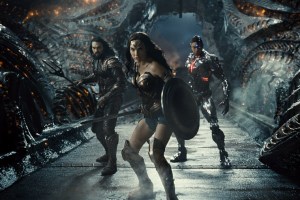 Every single movie Snyder has ever made has been at its core a parable extolling the virtue of selfishness, but none of them were intended to be that because they were never intended to be anything. If Snyder were a political or philosophical polemicist for Objectivism or any ideology, I would at least respect the intellectual exercise even if I couldn’t appreciate the end result, but that’s not what Snyder does. While his visual style is marked by hyper-realism, all slow-motion grandiosity, his storytelling is focused on reflecting the real world as he sees it, and his point of view just happens to be skewed the way it is. Remember, he doesn’t want to live in a dream world of his own making, he wants everything to be like the real world, which he just happens to see as one where nobody cares about or likes each other. Beyond that, there’s no inherent meaning in anything he does, which is insane considering how skilled he is at creating visuals meant to evoke the feeling of deeper meaning. When Aquaman stands on that pier with waves crashing over him and “There Is A King” playing in the background, it certainly feels like its saying something, but what? He’s sad? Angry? Symbolic of… anything? When Superman poses like Jesus, he’s clearly not meant to represent any form of Christ narrative I’ve ever read, but the image is iconic and memorable and just feels important somehow, and that’s all that matters.
Snyder’s shallowness is not in and of itself a problem, even if given his talents it represents a crushing waste of potential. The problem is that when your movie is four hours long and serves as a once-in-a-lifetime opportunity to rectify the injustice of studio meddling as a battle cry for every artist who ever had their work stolen from them, not having anything of importance to say and adding literally nothing of substance to the two-hour studio cut everyone hated is maybe the most disappointing thing you could have done. Obviously, the tragic circumstances surrounding his leaving the project in 2017 and the seemingly shady way Whedon was brought onto the project do not make Warner Bros look good, but if I’m supposed to believe this narrative that Snyder was betrayed and his dream project was bastardized by philistines, I shouldn’t be coming away from his original vision with so much more respect for the mediocre hatchet job. I know the prevailing critical consensus coming out of this is that whatever you may think of Snyder’s version, it’s at least better than the Joss Whedon version, but these people are just wrong.
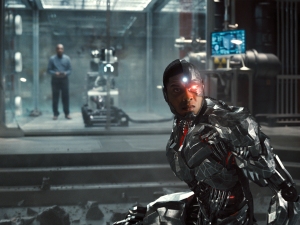 Comparing the two cuts is apples and oranges. One of them is a movie, created under the auspices of a studio director’s responsibilities to their contract, and the other is a vanity project with no such restrictions. Whedon completed a film that was palatable to a wide audience and within a reasonable running time to be shown in theaters, which is presumably what the studio thought Snyder was going to do too. If we are to believe that what we have now is Snyder’s true, uncompromised vision for it, then what was he going to do when they told him you can’t put a four-hour movie in theaters? What would he have cut to get it to two hours? If I had to guess, I’d say probably almost everything Whedon did, since the stories are so similar that its clear the content Snyder put back in was largely superfluous to the narrative. Most of what Whedon cut was unnecessary slow-mo, call backs to movies we wanted to forget, and setups for movies nobody wanted, and redundant moments already covered elsewhere. All the action scenes are present between the two cuts, except for the completely pointless Flash sequence, but in the Snyder cut they’re all twice as long. Same beats, same information conveyed to get the point across, just longer and less well paced than in the theatrical version.
Is Steppenwolf a more interesting villain now that we know he serves Darkseid because of some past mistake we don’t know about, rather than just assuming he does it because he’s from Darkseid’s totalitarian world where everyone serves him? Does Darksied’s comical incompetence as a despot make him a more enticing prospect for a sequel, somehow forgetting that the thing he devoted his life to searching for was on the one planet he failed to conquer, which just so happens to be the one planet where they left behind all those doomsday devices waiting centuries to be easily activated? We’re told it’s such a shame that we missed out on the great character of Cyborg, and now we finally get to see what could have been, but to quote the black clad Superman at the end of the Snyder cut, I’m not impressed. What more did we learn to deepen his story? Daddy never came to his football games but he still misses him when he’s dead? Riveting! Did we need a six-minute excursion into his mind palace with a voice over explaining all of his powers like we’re children when the original just demonstrated all of them by showing them to us? And what does it all amount to? In the end, he gets to ascend to his rightful place as the least interesting mopey superhero who hates being a superhero with all the other mopey self-hating superheroes. Hooray?
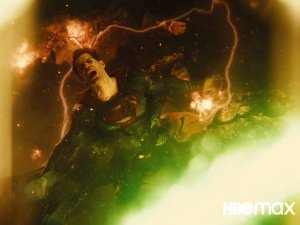 Naturally, you’re probably thinking, it wasn’t all just cuts, what about all that stuff Whedon added in? “What about brunch?” you say. Sure, I’m not going to defend everything Whedon did to make his version work. You’re mileage may vary; I would say about half of his new additions worked for me and half were cringe worthy, but the good half seems even more vital now than it did when we didn’t know the alternative. The brighter color palette alone is a welcome change from the dreary, washed out look of the Snyder cut, and for every bit where Flash wedges his face in Wonder Woman’s cleavage, we get one like Cyborg laughing about his injuries after stopping the mother box, the only moment in either version where he resembles the fun, lighthearted character from the comics and TV shows. The Flash never gets his hot dog-strewn first meeting with Iris West, but he gets a heart-to-heart with Batman about how being a real hero means saving people one at a time that speaks to the greatness of both characters in a way nothing in the Snyder cut does. When Superman smiles in Joss’ version, it’s because he’s saving lives and he’s happy when he gets to do that. When he smiles in the Snyder cut, it’s a menacing sneer because he’s about to lay the smack down on a weaker opponent to show him who’s boss. And then we get that delightful Russian family.
Yeah, I know, you hate the Russian family, and I get it. I hated the Russian family when I first saw the 2017 cut. Why would they waste time showing these characters who don’t seem to have any bearing on the story? The thing is, we only thought that because we were treating this superhero movie like a superhero movie, where we don’t necessarily need to be reminded that superheroes save lives as long as that’s a base-level assumption. But in Snyder’s world, it isn’t. In his cut, there’s no family to save because who cares about saving families? The stakes in the Whedon cut are clear and personal, real people will be hurt if they fail. We are them and they are us. It’s not subtle but neither is anything Snyder has ever done in his life. In the Snyder cut, we know that the Earth is doomed, but it’s all theoretical, our entire planet reduced to the same collateral damage that Metropolis became in Man Of Steel, where the people are there, we assume, but they don’t matter enough to be our focus. And in the end (of the Whedon cut anyway) the villain is defeated by his own fear, because the fear he represents cannot stand up against what the heroes represent in opposition to him: love, for each other and for the world they fight for. In the Snyder cut, they just savagely whale on him, stab him, and cut his head off with terrifying glee in their eyes, and then we cut to a flash-forward into a future world seemingly based on the Injustice video game series where we find out they failed to save the planet anyway.
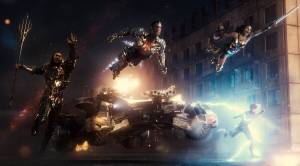 Again, I would like to stress that I am not making a one-to-one connection between filmmaking style and personal character. I’m not saying that Zack Snyder the person doesn’t care about people, and I know Joss Whedon doesn’t. I assume that before he shot those Russian family scenes, he made sure to make some of his female employees feel like dirt because making women cry is the only thing that gives Whedon an erection. But the real-life context matters. You might be asking why I keep bringing up the Ayn Rand stuff even though I don’t even think he’s intentionally injecting it into his movies. It’s because when I saw the original 2017 cut, I was disappointed but I didn’t hate it. When I saw this new cut, I was incensed, and I couldn’t quite figure out why until that side of it clicked for me. I went through something similar with Quentin Tarantino’s Once Upon a Time… In Hollywood. Everybody was loving it but I couldn’t explain quite why I didn’t until it dawned on me that it wasn’t anything about the filmmaking but the larger context, a director who made millions working with Harvey Weinstien, making a love letter to old Hollywood in the wake of the Me Too movement centered around the exploitation of an actress and making the story about two clueless men. It just felt wrong, and I’m finally to the same point with Snyder’s movies.
The 2017 cut of Justice League came out shortly after the election of our fascist, white supremacist, and eventually traitorous former president Donald Trump, a man so comically evil that he literally served as one of the inspirations for Lex Luthor when he was transformed from a mad scientist into an 80’s-style corporate tyrant. His rise to power, or rather the lie he tells people about being a self-made man and not a trustfund baby, is basically a Randian Horatio Alger story, and not just because both men were fabulists rumored to be pedophiles. You might even call him a Randian Superman, and the line from Randian Self-Interest to CEO worshiping Social Darwinism to Trumpian fascist strongman politics is undeniable. This new Justice League, where Zack Snyder tries to turn all my favorites superheroes into fascist action figures, comes out only a few months after a bunch of traitorous right-wing scumbags tried to raid our nation’s Capitol to usurp our democracy at the whims of a would-be king. One technically doesn’t have anything to do with the other, but the images are iconic and the connection just feels like there’s something meaningful there, even if it’s unintentional. I just can’t treat Snyder’s bad politics as just some interesting facet of his directing style anymore. I don’t want it in my polity, I don’t want it in my entertainment, and I sure as hell don’t want it in my superheroes.
So what was the point of any of this? Why start with that long boring excursion into the definition of Art? And what’s more, if Art is the one place where the Virtue of Selfishness makes sense, where does any audience or any would-be critic like myself have any place to question an Artist like Zack Snyder? Why write 20-plus long paragraphs, the Snyder cut of Snyder cut hot take think pieces, if an Artist should never care about what anyone thinks of what they create? That’s where I’ve been the last few days. As you might guess, I find the whole notion of Art criticism to be utterly worthless and without merit. The entitlement that audiences have surrounding the Art they consume is equally abhorrent to me, as if what they think of something should have any bearing on the form it should take. So where does that leave me? Feeling like a hypocritical piece of garbage.
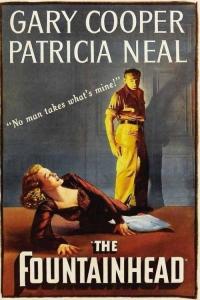 I keep coming back to The Fountainhead (as a metaphor, not the actual book, because I read it once in college and that was enough). The protagonist Roark was hired to design a building and insisted he could blow the thing up if they didn’t let him build it the way he wanted, and when he does, he goes to trial, and makes a passionate plea in defense of his own rights over his creation that wins over all the doubters who couldn’t force him to conform to tradition. I keep wanting to force this narrative where Snyder is Roark and the saga of the Snyder cut is his quest to finally build that eyesore upon the skyline the way he always wanted, but it just doesn’t work for me. Art is deliberate creative expression for its own sake. The Snyder cut is certainly deliberate, and while it was made at the behest of the studio for a profit and an audience, I’m even willing to give Snyder the benefit of the doubt that he didn’t care about either of those things and really did set out to make it for its own sake. But then there’s that middle part, creative expression, something that reflects the internal life or point of the view of the artist. What if there’s nothing interesting about the internal life to reflect, and any apparent point of view is accidental and despicable at that? Is Zack Snyder the architect Frank Gehry, building beautiful sculptures people just happen to live and work in, or is that just who he thinks he is and who we want him to be, and really he’s just a very skilled craftsmen with nothing to say? How boring and uninspired can a work of Art get before it ceases to be Art at all from the sheer weight of its pointlessness?
Roger Ebert tried to say that video games could not be Art, but really he just didn’t understand them or like them, and for years, similar charges have been leveled at comic books and comic book movies. Whatever I might feel about Snyder or his work, he has been instrumental in lending a degree of legitimacy to comic book storytelling in the minds of a lot of people who otherwise dismissed it. Maybe not as much as the MCU has, but he’s still a part of it, and as a lifelong comic book fan, I can’t ignore that. I feel like I should be right there with everyone else, if not loving the Snyder cut, then at least loving what it represents, that for once the little guy won over the big guy, even if the little guy is usually on the side of the big guy unless he’s the one getting screwed, and he didn’t really win so much as reveal his limitations and give me a reason to say “I have more respect for Joss Whedon as an artist” which is something I never wanted to say again. But I’m not there, and I don’t think that’s what this represents, and really, I just wish that someone else, or really anyone else could have gotten the opportunity that Snyder did. Maybe this release makes that more likely in the future, but I don’t have much hope for that. I don’t have much hope for anything left in me anymore because I just watched a four-hour Zack Snyder movie and I’m pretty sure our future is going to be a Randian dystopian Knightmare. Release the David Ayer cut! Release the Gareth Edwards cut! Release the Lord and Miller cut! Release the Michael Cimino cut! Release all the cuts!
Just try to keep them under two hours, please.
Share this:

Zack Snyder’s Justice League (2021)
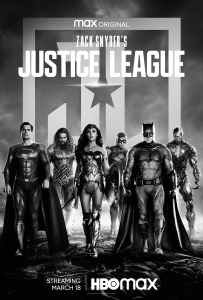
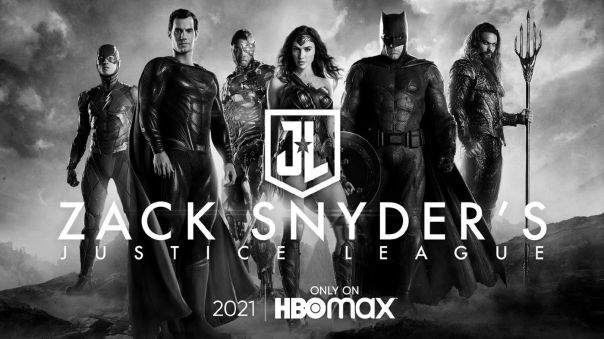
Zack Snyder had a unique situation that many filmmakers would never get close to fulfilling. He departed the 2017 Justice League movie in the wake of a family tragedy, Joss Whedon was hired to direct and rewrite extensive reshoots that totaled an estimated additional $30 million dollars, and the world was given the strange amalgamation of two different filmmakers, along with the nightmare-inducing CGI baby lip to replace actor Henry Cavill’s mustache. The 2017 theatrical release of Justice League was meant to be a significant milestone for the DCU, launching an all-star assembly of superheroes and setting up future solo adventures and franchises. It was meant to be a major kickoff and it was simply a major shrug. The general public was indifferent to the 2017 League, and it seems like the DC brass is positioning for a cinematic universe do-over, retaining the elements they liked (Jason Momoa, Gal Gadot) and jettisoning the other pieces to start anew. In the ensuing years, fans have been petitioning for the fabled “Snyder Cut,” a theoretical version of Justice League that was closer to Snyder’s original artistic vision before the studio intervention and interloping of Whedon. It became a joke on social media and then one day it became real. Warner executives, seeing opportunity with the rabid fanbase, decided to give Snyder an additional $70 million to finish his version of Justice League. It would be an exclusive to their new streaming platform, HBO MAX, and Snyder could complete his version without artistic compromise. The resulting four-hour version, titled Zack Snyder’s Justice League, is less a movie than a mini-series, and a rare chance for a director to complete the story they wanted to tell without artistic compromise. After having watched the full four hours, along with re-watching the 2017 version again for comparison, The Snyder Cut just feels like the original version only longer. I would actually advise people that if they haven’t watched either Justice League to simply catch the 2017 version. At least its mediocrity is half your time investment.
Once again, months (?) after the death of Superman (Cavill), Bruce Wayne (Ben Affleck) is traveling the world and recruiting a very specific group of job candidates. He needs serious help to combat an oncoming alien adversary, Steppenwolf (voiced by Cirian Hinds). The cosmic Big Bad is looking for three special boxes, a.k.a. mother boxes, to destroy the world and make way for his master, Darkseid. Wonder Woman (Gal Gadot) helps Batman convince the half-man/half-machine hybrid Cyborg (Ray Fisher), underwater dweller Aquaman (Jason Momoa), and hyperactive speedster Flash (Ezra Miller) to form a league of sorts to thwart Steppenwolf.
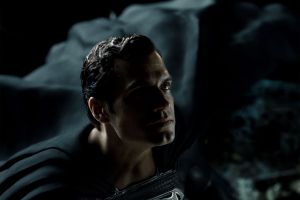
I think it’s unfair to judge the 2017 film to the Snyder Cut as a movie simply because this version never would have been released in theaters. No studio would have released a four-hour version. The two edicts that Whedon was given by the studio when coming aboard the project was that it could not be over two hours and to lighten it up. Imagine what the 2021 Snyder Cut would look like if Snyder was then tasked to cut it down to a more manageable two-hour running length. I predict many of the same scenes being eliminated or dramatically trimmed down. That’s the main takeaway from the Snyder Cut, that there is more room for everything, and quite often too much room. I swear a full hour of this movie might be ponderous slow-motion sequences. Plot-wise, Zack Snyder’s Justice League is pretty close to what was released in theaters in 2017. The action sequences are extended longer (Steppenwolf’s attack on the Amazons has increased from six minutes to a whopping twelve minutes) but I don’t know if they’re dramatically improved. Instead of two punches there’s four; instead of one chase, there’s two. It’s that kind of stuff, filling out the sequences but not really elaborating on them in an exciting fashion that reorients the moment. I liked some additions, like the inclusion of blood during the underwater Atlantis fight because it added a neat visual flair, but the added action is often obscured by visual decisions that dis-empower the experience (more on that later). I found myself growing restless with the movie. All that added time allows some sequences and plot beats to breathe better, but it also allows Snyder to meander to his greater indulgence (more on that later as well, notably on the multiple epilogues). The four hours feel like Snyder’s kitchen sink approach, and with the benefit of years of hindsight from the critical and fan reception of the 2017 version, he’s able to spend tens of millions to correct mistakes and improve a flawed film.
I hate how this movie looks for multiple reasons. The most obvious difference is that the aspect ratio has been altered to a 4:3 ratio more reminiscent of pre-widescreen television. Why is this the case? Snyder has said he cropped his movie to this boxy format so that it could be played on IMAX screens. That’s fine, but why crop your movie now months if not possible years before it will ever play on IMAX screens? When it comes time to adjust for the IMAX screen, adjust then. Why must every viewer see this limited version now on their widescreen televisions at home? It’s just so bizarre to me. It would be like if Quentin Tarantino reasoned that his movies will eventually play on airplanes, so he better get ready and cut back his widescreen into a flat, pan-and-scan mode, and he might as well include alternate takes and scenes to cover for those that would be deemed too profane or intense for the all-ages captive audience of an airplane, and then that version was the one he released to all audiences and we were stuck with it. Snyder had millions of dollars to reshoot his epic and he lopped off the edges, meaning you’re getting more movie but also less (at least the footage predating the new reshoots) in every second because of the framing. The grandeur of the superhero saga is also extremely hampered by the drab color palette. Snyder has always preferred muted colors to his movies but his Justice League drains all life and vibrancy. Everything is literal shades of grey. Color is not allowed to exist in this universe. A sunset is almost comical. Apparently, there’s going to be an official black-and-white version but we’re already practically there. Some could argue the oppressive grey is meant to evoke the grief and heaviness of the picture, and I’ll give you some leeway with that, but the drab colors also nullify the visuals. It’s simply harder to see everything that’s happening even during the daytime, and then you tack on the ugly CGI that makes everything look like a fuzzy video game. For a movie that has cost potentially over $350 million dollars combined, Justice League looks so phony. Maybe that’s part of Snyder’s overall stylized look, he’s never really been one to visually ground his operatic action spectacles, but I feel like the aspect ratio and color palate just make it worse. For those four hours, this is often a very visually unappealing movie to watch.
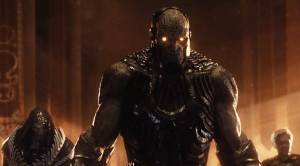
With the added time, there are definite benefits and characters that are lifted by the extra attention. Chief among them is Cyborg, a character that felt like a Swiss army knife in the original who was just there to perform whatever techno jazz the movie required at a moment’s notice. With the Snyder Cut, the character becomes more engaging and given a fuller arc relating to the relationship between father and son. The father’s placement in the story actually matters and Cyborg has more of a personal journey coming to terms with his new abilities. There is a back-story with his frayed relationship with his father, his accident that caused him to become the creature he is, and a reoccurring theme of a son blaming his father and the father trying to reconnect with the son he refused to part with. I still think Cyborg ranks low on the list of superheroes, but the additional scenes give the character more weight, more tragedy, and more intrigue. Another added benefit is that Steppenwolf’s motivation is improved as well as his look. He’s now outfitted with a herring-bone armor that twitches over his body. It’s a more intimidating look than what he had going on in 2017. I also appreciated that he now has more motivation other than “conquer the universe” because now it’s “conquer the universe to get back in the good graces of the boss.” Steppenwolf is trying to repay a debt and make amends, and that makes him slightly more interesting than his generic motivation in the original theatrical cut.
However, not all the new editions are as smooth or as helpful. The added time with the rest of the Justice League doesn’t seem to have added anything to their characters. Each one’s arc is more or less the same from the 2017 version, except now we have even more scenes of Wonder Woman wondering whether she needs to get off the sidelines and be more involved (the events of WW84 conflict with this timeline) and Aquaman rejecting his call to adventure from the Atlanians. Neither is a richer portrayal and the scenes are redundant. Take Wonder Woman finding out about Steppenwolf’s attack. In the 2017 version, her mother lights an arrow and it sails into Greek ruins, signaling her daughter, who knows what this means. In the Snyder cut, the arrow still lights the Greek ruins, but now Wonder Woman visits the ruins, she gathers a stick, she wraps a cloth around it, she dips it in kerosene, she lights it on fire, she enters a secret room because of the arrow, she jumps down a cliff, she finds a hidden temple with hieroglyphics warning about Steppenwolf and the mother boxes and Darkseid. Even if you really wanted the end where she sees those hieroglyphic warnings, why did we need these many steps to get there? The opening hostage/bank heist scene is given far more attention, with multiple scenes of hostages being terrorized, and then Wonder Woman literally vaporizes the chief terrorist. A little girl looks at her, likely traumatized for life by the whole experience, and says wistfully, “I want to be like you when I grow up.” She wants to be a murderer? In Snyder’s universe, Superman kills people, Batman kills people, so why not Wonder Woman too?
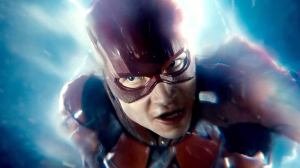
The revised introduction of Barry Allen is also regrettable. He’s applying for a dog walking job and a car accident occurs and he saves the day, but not before slowing down time in a frustrating manner. This is because he seems to be dawdling while the rest of the world is frozen, which makes the event seem less special. His movements seem less urgent than Quicksilver in the X-Men films when he would perform the same memorable slow-mo set pieces. I disliked that the Flash’s big involvement in the final showdown was literally running around in a circle, a repeat of what he had done prior. Also making the slow-mo save introduction less special is the fact that the Flash picks up a hotdog floating in midair for silly reasons. It’s drawn out with interminable slow-motion and the song choice is baffling, a common theme throughout Snyder’s movies. I think he’s been smarting ever since he painfully paired Leonard Cohen’s “Hallelujah” with a sex scene in 2009’s Watchmen, and now we must al endure similar awkward auditory pairings. Every song inclusion just feels wrong here. As Aquaman is drinking and walking along a pier, in slow motion, we hear “There is a Kingdom” by Nick Cave, and it just doesn’t pair right, especially in contrast with the hard-rocking guitar riffs from The White Stripes in the 2017 version. For good measure, Snyder even includes another “Hallelujah” cover by the end for good measure, as if he’s still fighting this same battle over musical taste.
And then there’s the barrage of epilogues, each the start of a story never to be continued, and it approaches the realm of self-parody (spoilers to follow). We get three endings, the first an extension of the post-credit scene from the 2017 version where Lex Luthor (Jessie Eisenberg) suggests the formation of a Legion of Doom for villains. He even shares with Deathstroke (Joe Manganiello) that Bruce Wayne is Batman. Well, that could be an interesting next step, but we know it’s not to be so it becomes just a teasing preview. The next ending cuts forward in time to the dusty, apocalyptic vision that Batman had in Batman vs. Superman, and he’s got a crew including an older Flash, Meera (Amber Heard, why does she have a British accent now?), and even Jared Leto’s Joker. They’re facing off against a villainous Superman who has been driven mad by the death of Lois Lane (Amy Adams), which is pretty much the plot of the Injustice games. The Joker is antagonizing Batman with some references to killing someone close to the Dark Knight, and this whole sequence amounts to Snyder basically saying, “Hey, here’s where I wanted to go with things but you’ll never see it.” Then there’s a third ending, because the second is revealed to be another dream/vision for Batman, where he meets Martian Manhunter, a character that, other than diehard comic aficionados, no one cares about and has been given any reason to care about. The guy just introduces himself and Batman is like, “Oh, cool,” and that’s the ending Snyder decides to close his four hours with. There is a literal half-hour of epilogues and false endings to finish with and I was exhausted. I owe Peter Jackson an apology.
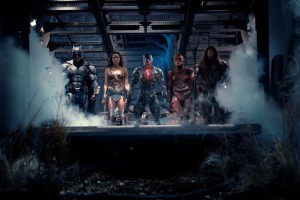
In my original review of the 2017 Justice League, I wrote, “I think I might have actually preferred Joss Whedon not being involved and simply releasing the full Zack Snyder cut. It would have been stylistically more coherent. Much of the Whedon reshoots do not feel like they are for the better. To be fair, he came in late and this franchise behemoth had already gone too far to fully alter its fate. There are small moments that work but the big moments are what fail. This movie is missing setups, payoffs, and character arcs. It’s missing pathos and emotion. It’s missing memorable action sequences that are exciting and varied. It’s missing basic internal logic. It’s missing a greater relevance.” Some of those issues are resolved with the four-hour Snyder cut and too many others still remain. At the end of the day, this is still just a longer, bloodier version of a mediocre superhero movie, except now we get stuff like Batman saying the F-word, so I guess that’s cool. I have more of an artistic appreciation for what Whedon had to pull off to even wrangle this beast into two hours. I’m happy Snyder was able to fulfill his complete vision and that HBO MAX offered a platform that would provide such a rare opportunity of expensive art unencumbered by studio meddling. I can’t say it’s worth your four hours, nor can I say it’s dramatically better than the 2017 version because whatever benefits it offers are weighed down by the extraneous, the redundancies, and the length. As it stands, I feel I have no choice but to grade Zack Snyder’s Justice League the same as the 2017 Justice League.
Nate’s Grade: C
Share this:

First Man (2018)
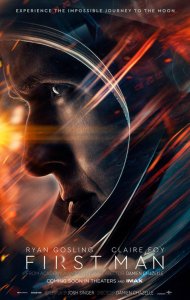 Oscar-winning filmmaker Damien Chazelle got to be the director of a Best Picture winner for approximately three minutes, which, to be fair, is more than most us will ever experience. La La Land won the top prize at the 2017 Oscars only to have it taken away and given to the smaller indie, Moonlight. Where an Academy of old white people that love to celebrate Old Hollywood decide to award a small million-dollar movie about growing up gay and black in the 80s, where does one go next? For Chazelle, it seems the answer is something even more irresistible to the Academy. First Man is partly a biopic on Neil Armstrong and partly a recreation of the 1960s Space Race. The finished movie is so mercurial, so insulated, so dry that I found a far majority of it be kind of boring.
Neil Armstrong (Ryan Gosling) is one of the select pilots training for space. NASA is racing to beat the Russians to the moon, and every new breakthrough is thanks to long hours of hard work. Janet Armstrong (Claire Foy) worries at home, listening to every radio broadcast and wondering if her husband will come back safely.
What First Man does best is make you realize how dangerous every step of the way was to get to the moon. Every leap forward required months of trial-and-error, and sometimes those mistakes cost lives, like the crew of the Apollo 1. The film opens on Armstrong flying above the atmosphere. The emerging curvature of the Earth is beautiful, but the beauty turns to horror quickly as it appears Armstrong’s plane is bouncing off the atmosphere and drifting into orbit. There’s another sequence where he and Buzz Aldrin (Corey Stoll) are above the Earth and planning to dock in space and their capsule spins wildly and if they can’t fix it they’ll black and out and assuredly die. These moments remind the audience about the inherent dangers of the Space Race that we don’t necessarily get in the history books. Looking back, we know the American astronauts succeed in the ultimate mission of landing a man, or an eventual dozen, on the moon, but that foreknowledge produces a false sense of security. Chazelle’s movie reminds us of the enormity of this challenge and the enormity of the dangers. The sound design in this movie is terrific, and Chazelle makes sure you hear every ping, every metal-on-metal scrape, to the point that you fear the whole thing could fall apart at any moment. When Janet furiously dresses down the Mission Control head (Kyle Chandler) that tries to calm her concerns, she accuses them of being boys who think they know what they’re doing. Even after the triumph of the final act, we know what happens two missions later (Apollo 13) to reconfirm just how much we still haven’t perfected when it comes to space travel.
 Besides reminding you of the precarious nature of early space travel, let alone the tests leading up to said travel, First Man doesn’t find much to justify its own existence other than as the latest in Oscar bait. It’s not exactly an in-depth look at the heroism and chutzpah of the Space Race like The Right Stuff, and it’s not exactly an examination on the frailty of man and the meticulous problem solving needed to achieve big goals, like Apollo 13. In fact, while watching this movie I would repeatedly think to myself, “Man, I should go home and watch Apollo 13 again.” When you keep thinking about watching a better movie, you have lost your audience, and that happens throughout First Man. There are thrilling, awestruck sequences to be sure, but that only accounts for perhaps a quarter of the lengthy 140-minute running time. The rest is spent at a distance trying to understand a man who comes across as largely impassive. He’s intensely focused but it’s like the movie adopts his very no-frills attitude, and it goes about its business with little thought for letting an audience into its inner world. We’re still only visitors at best here.
I admittedly don’t know much about Armstrong the man, so I can’t tell if the role was shaped for Gosling’s talents or he just matched perfectly with the man. Armstrong feels like one of the Nicolas Winding Refn roles (Drive) that we’re used to watching Gosling portray. Armstrong feels like somebody ported over a guarded, reserved, mostly silent Refn character into a staid biopic and asked Gosling to communicate a majority of emotion through unblinking stare downs. If there’s one actor you don’t want to challenge to a staring contest, it’s Gosling. Armstrong comes across a very internal man who seems uncomfortable in the spotlight, far less natural than Buzz Aldrin, who the movie unexpectedly positions as kind of a saying-what-we’re-all-thinking jerk. Because Chazelle has decided to keep Armstrong so guarded, it makes the film feel distant, like we’re being told the story second-hand, and that requires Chazelle to fill in the gaps as to the internal motivations and insights for an intensely private man. The answers we’re given seem almost cliché (the death of his young daughter is what drove him into his work, to escape the bounds of his Earthly grief, and to finally say goodbye to her). It’s too convenient as a simple character arc to be fully believed, but that’s all we have to work with because the movie won’t give us much more. It feels more like you are getting the idea of Neil Armstrong the Man rather than a realization. It’s a frustrating experience, watching a biopic and having the filmmakers keep their prized figure behind glass.
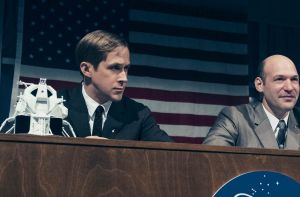 As a director, Chazelle is proving to be a remarkably skilled chameleon. First Man is completely different in style and approach to La La Land as it is to Whiplash (still his finest). His chosen approach for First Man is locking to Armstrong’s perspective, so we’re working with a lot of handheld camerawork that orbits our movie star. Chazelle’s cameras emulate a docu-drama aesthetic and there are several moments where the action happens onscreen and the cameras race to frame it, leaving the image blurry for seconds. I’m not sure that was the best decision. It does create a sense of verisimilitude, which heightens the thrilling aspects of the film like the excursions into space travel. However, it does little to heighten the underwhelming domestic drama on the NASA block. The added realism only benefits a small portion of the movie. At times, a camera racing to catch up with the onscreen action would be considered a hindrance. The claustrophobic feelings are heightened from Chazelle’s cramped camerawork, reminding us again of the tightly precarious spaces these men were willingly sliding into, the fragility of the cockpit walls separating them from an unrelenting empty void. When we switch over to the Apollo 11 mission, Chazelle keeps the attention squarely with the three men making the famous lunar landing. There’s a stirring thrill of destiny and the film transitions into an IMAX footage to make the moment that much more immersive and transformative.
First Man is much like the man of its title, reserved, guarded, and with a laser-like focus on its mission at the expense of outside drama. Chazelle is an excellent filmmaker and the craft on this out of this world, from the production design to the thrilling recreations of the dangers of space, bringing together the alarm through a sumptuous combination of editing, sound design, and cinema verite photography. Of course that verite style is also a double-edged sword, providing another layer to distance the audience. This is a pretty guarded movie with few insights into Armstrong the person. We get more Armstrong the pilot and numbers-cruncher, and I wish Chazelle had steered more into whatever version of Armstrong that opened him up to the audience. The family drama stuff is pretty pat and Foy (The Girl in the Spider’s Web) is generally wasted as the supportive and anxious wife. Most of the actors are generally wasted in this movie, with the potential exception of Gosling, who slips into the shoes of an impassive and emotionally restrained protagonist like it’s second nature. First Man might not be a giant leap artistically, and in fact a majority of the film is dull, but the artistic highs are enough to warrant one viewing. From there, you’ll likely conclude that you don’t need to watch Neil Armstrong stare forlornly into the middle distance again. Frankly, I’d rather watch La La Land again, and that’s saying something.
Nate;s Grade: B-
Share this:

Red Sparrow (2018)
 The Cold War-worthy spy thriller Red Sparrow is a misfire that doesn’t seem to be able to commit to what it wants to be. It wants to be provocative but serious; however, it lacks the substance to be serious and lacks the conviction to be provocative. It lands in a middle ground between the sleek genre fun of Atomic Blonde and the understated paranoid realism of a Tinker, Tailor, Soldier, Spy. By landing in the middle zone, Red Sparrow is that rare boring movie plagued by untapped potential.
Dominika (Jennifer Lawrence) is a classically trained Russian ballerina that suffers a gruesome injury. Her leering uncle (Matthias Schoenaerts) enlists her into a state-run school for spies and assassins who specialize in seducing their targets. “Whore school,” as Dominka terms it, is run by the Matron (Charlotte Rampling), who methodically trains her recruits by stripping away every ounce of fear, shame, and defiance. Their bodies belong to the state now, she says, and they will be put to good use for Mother Russia. Nate Nash (Joel Edgerton) is an American spy working in Europe who tries to convince Dominika to switch sides, to take refuge in the United States. Dominika’s superiors order her to get what she can on Nash, find their secret contact, and eliminate them both.
 Firstly, Red Sparrow is far too long and far too leisurely paced at a bladder-unfriendly 140-minutes. When things do get interesting, the overall slow pacing has a tendency to sap whatever momentum was starting to emerge. The entire first act should have been condensed down into an opening ten minutes rather than stretching out into 30-some minutes. We don’t need a full half-hour explaining what Dominika’s life was like before her new life as a deadly state-sponsored seductress. We don’t need all that time to see her life as a ballerina, her life caring for her sick mother, and her hesitancy with her first mission before she’s roped into fully accepting her fate. I don’t need this much convincing that her life was better before or that she was trapped into this decision. I don’t care that Lawrence studied ballet for four months. It’s not integral and it’s a deadly start to a story. Once Dominika is at her spy school, that’s when the movie really starts. I was getting awfully sleepy as the movie just seemed to drift along. I know a high school student who saw the movie and said, “I fell asleep at the beginning, and then I woke up later and it was STILL the beginning!”
Another problem is that the parallel storyline about Nash and the Americans is far less interesting. Every time the movie jumps to his perspective, you can feel the movie stalling. A U.S. spy who is pushing against his own brass and the politics of the agency can’t compete with a woman who is thrust into unfamiliar and dangerous missions that test every physical and psychological boundary she knows. When Nash and Dominika cross paths, he finally starts to justify his placement. Much like the delayed first act, though, the extra time setting up his life before he was important was not time well spent. Their relationship together is mean to appeal to Dominika to convince her to flip allegiances. They don’t feel like they really connect, and part of that is the lackluster chemistry between the actors. The emphasis on their romantic relationship is even more moot because Dominika’s real motivation is revenge. She didn’t need a handsome, doe-eyed American man for that to happen.
 Where Red Sparrow does work is with its unique, high-pressure, destabilizing training environment. There’s a prurient appeal when it comes to watching the training program for assassins who must strip everything away and use their bodies as a weapon. This is where the film is at its most interesting and its most sensational as far as use of genre elements. There is an uncomfortable amount of stark sexual violence depicted in the movie. I lost track of the number of times Dominika is raped, tortured, sexually assaulted, or assault is attempted upon her. I don’t feel like these moments of sexual violence are glamorized or designed for base titillation; it’s a window into the harsh reality these women face. They have been robbed of their agency, their very sex weaponized. There’s a fascinating story to be told from that perspective and the trials and tribulations within “whore school” are harrowing, shocking, and always intriguing, which makes it even sadder when the filmmakers try and posit an arty sheen of self-seriousness. This is a movie about training spies to seduce the enemy and then prove their skills. This is a movie where the head of the spy school runs a play-by-ply analysis on a student’s use of a handjob. This is not going to be John le Carre, and that’s fine. Rather than embrace its inherently trashy side, Red Sparrow tries to stay above the icky stuff, while still indulging in a heaping helping of blunt sexual violence. It’s truly strange. It’s like the filmmakers felt they were making something sober and thoughtful and didn’t want to taint their award-caliber production with too much emphasis on the thing that makes it most interesting. And then instead they threw in a lot more sexual violence, because that’s also serious, and that’s the kind of thing serious movies do to be serious.
Lawrence (mother!) is once again a strong anchor for the audience, even if her Russian accent falters from scene-to-scene. This is a very different role for Lawrence and requires her to simultaneously put much of herself on display physically while finding ways to hide the inner life and thinking of her character from the audience. There’s an interesting character here buried under layers. After her accident, Dominika viciously injures her dance partner and his new leading lady, and it previews the cruelty that Dominika is capable of. Much of the press in the lead up has focused on Jennifer Lawrence’s nudity, and it’s there, okay, but it’s never really emphasized. There is one sequence in particular where she disrobes and taunts her would-be rapist to try and ravish her available body, humiliating him, and it’s one of the few scenes where Dominika turns her body around as a tool of empowerment. Granted, it’s within the prism of a school that’s practically state-run sex slavery, so let’s not get carried away with larger feminist implications. Lawrence keeps the audience guessing scene to scene as she transforms from setting, slipping into different identities that suit her, thinking on her feet, and being, frankly, adult.
 There are a slew of good supporting actors tasked with saying ridiculous and foreboding things, like Charlotte Rampling as the headmistress of “whore school” and Jeremy Irons as a high-level Russian spymaster. What really catch the attention are the accents. We have a group of actors from the U.S., Britain, Belgium, Netherlands, and Germany portraying Russians, and with Edgerton, an Aussie portraying an American. As you might expect, the Ruskie accents can be a bit thick and obviously phony at times.
It’s not too difficult to see the kind of movie that Red Sparrow could have been. It even previews it from time to time, providing a glimpse into an alternative version of the movie that decides to take ownership of its more sensational, sexualized elements with genre pride. Red Sparrow feels like an out-of-time throwback to the erotic thrillers of the go-go 90s. I mean does Russia even need to train sexy assassins any more in the information age where a troll farm and some Facebook ads can get the job done? Director Francis Lawrence (The Hunger Games movies) has a controlled, precise Fincher-like visual acumen that gives the film a sleek and sterile allure to the spy shenanigans. It’s a nice-looking movie to watch, but without a better story, let alone a verdict on tone, it’s a nice-looking movie that runs self-indulgently too long. Consider it a screensaver you forgot was still going on but with Jennifer Lawrence nudity.
Nate’s Grade: C
Share this:

Justice League (2017)
 The story behind the Justice League movie is one of turmoil and turnover. Zack Snyder has been the cinematic voice for the DC film universe (DCU) and, if you listen to enough critics and fans, the weight holding down the franchise. Justice League began filming in the spring of 2016, which means they had a considerable lead time before release. Either they went into production with a script they were unhappy with or they learned it. A year later, in the spring of 2017, Snyder bowed out of his directorial duties to spend more time with his family in the aftermath of his daughter’s suicide. Enter Joss Whedon, the wunderkind behind Marvel’s record-breaking Avengers. The studio was unhappy with Snyder’s rough-cut, deeming the footage “useable,” and tapped Whedon to make drastic reshoots. He rewrote the film enough to earn a writing credit from the WGA. Complicating the already pricey reshoots was star Henry Cavill’s mustache, a holdover from the filming of Mission: Impossible 6. He wasn’t permitted to shave his ‘stach, and so Warner Bros. was forced to pay likely millions… to digitally erase Cavill’s facial hair (DCU is 0-2 when it comes to mustaches this year). The final product is being met with great fanfare, hope, and curiosity. If anybody could save this project it’s Whedon, right? Well Justice League could have been renamed Super Hero Fatigue: The Movie.
Months (?) after the death of Superman (Cavill), Bruce Wayne (Ben Affleck) is traveling the world and recruiting a very specific group of job candidates. He needs serious help to combat an oncoming alien adversary, Steppenwolf (voiced by Cirian Hinds). The cosmic Big Bad is looking for three special boxes, a.k.a. mother boxes, to destroy the world. Wonder Woman (Gal Gadot) helps Batman convince the half-man/half-machine hybrid Cyborg (Ray Fisher), underwater dweller Aquaman (Jason Momoa), and hyperactive speedster Flash (Ezra Miller) to form a league of sorts to thwart Steppenwolf.
 Aggressively bland, lazy, and unmemorable, I was genuinely left questioning whether Justice League was somehow worse because it wasn’t worse. It’s not the aggravating stew that was Batman vs. Superman or Suicide Squad, but those weren’t exactly difficult hurdles to clear. To put it in another colorful analogy: while it may not be a flaming dumpster fire, it’s just a dumpster, something you wouldn’t give any mind to because, hey, it’s just a normal dumpster, and why would you even want to spend time looking at that anyway? That’s Justice League for you, a DCU super hero film that’s better by default and still disappointing to the point that you wish it would be mercy killed to spare us a prolonged death rattle. This movie is ground down to the raw pulp of a super hero movie. It lacks personality. Stop me if you’ve heard this one before from a modern super hero film. An ensemble of poorly developed characters must band together to stop a dumb villain from world annihilation with a giant energy portal in the sky. There have been now five DCU films in this sputtering cinematic universe and three movies fit that formulaic description. Even the 2015 Fantastic Four remake followed this. The draw of this film is its mythical heroes, yet they are so lazily developed that we rarely feel any sense of awe or reverence with them. The cast chemistry is relatively strong and the actors have been well chosen, but let’s go person-by-person in this league to determine just how poorly the story serves them.
Batman has become the Nick Fury of this new post-Superman world, taking charge assembling a team to combat a more dire, powerful alien threat. He’s the least super in many regards and has fleeting moments contemplating his mortality, but just when you think they might give the older Batman some depth, they pull back. His biggest relationship is with Wonder Woman and their central conflict feels contrived. He’s angry at her for not getting more involved (hey, Wonder Woman, you got out there for WWI but sat out the Holocaust?). It feels like a strange managerial tiff. Affleck (Live by Night) seems to have gotten more growly and smug. Gadot (Keeping Up with the Joneses) scowls and scoffs. Considering they’ve each lead a DCU movie, we should be more attached to them in this story. He’s not fun to be around and neither is she. The new members have some degree of promise.
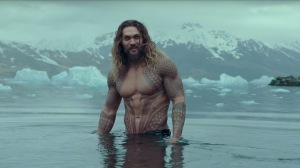 Aquaman is a gruff, shaggy, tattooed loner embodied by Jason Momoa, and his performance works better than the character does. Momoa (Game of Thrones) is charismatic as a wild man but he comes across as a fraternity jock. His cocky, carefree persona and aesthetic are trying too hard to re-imagine Aquaman as a sexy superhero for today. The underwater action scene in Atlantis is so cumbersomely filmed and staged that I think I realized, in that moment, how visually dreary underwater fight scenes are. There goes any last shred of interest in the solo Aquaman film coming in 2018. Cyborg is basically a modern Frankenstein story and should have had affecting characterization about the battle over reclaiming his humanity. Instead he becomes the plot equivalent of a Swiss army knife, able to open any locked device or technological obstacle.
The Flash/Barry Allen is the best part of the film by default (a familiar term in this review). Miller’s (Perks of Being a Wallflower) extra jubilant performance feels like a course correction from the criticism of how unflinchingly gloomy BvS was. He’s the stars-in-his-eyes rookie who is also a fanboy first, geeking out about getting to work with legends. It’s not just that the fanboy-as-hero angle was already tackled better by Marvel in Tom Holland’s newest edition of Spider-Man, it’s also that the film doesn’t know when to stop. Barry Allen has to quip for every occasion. While some belie his insecurity and nervousness about being promoted to the front lines of hero work, several are forced. The coolest thing he can do is run so fast time slows down, yet we’ve already seen this displayed better and with more witty panache in the recent X-Men films with Quicksilver. Flash is the only character with anything resembling an arc, and this amounts to little more than not being as terrible at fighting and getting a job. He makes his dad proud… by getting a job, and this is sadly the best example of a character arc in Justice League.
Another course correction was ditching overly complicated plotting for simplification, which can be a virtue. With Justice League, simplicity gives way to a dispirited lack of ambition and effort. The plot is thusly: Batman has to recruit a team to stop a Big Bad from getting three boxes buried around the world. Perhaps some will characterize this as a facetious oversimplification, but that’s really all that’s going on for two hours. The only other significant plot turn is the resurrection of Superman. The concluding image of BvS was the dirt hovering over Clark Kent’s casket, heavily implying he was coming back, so this really shouldn’t be a spoiler. The heroes suddenly decide the mother boxes can bring Superman back, and they know how to do it, and then just do it, without any setup. If it had been Cyborg who came up with this plan since he shares the alien technology that could have made some degree of sense. No, it’s Bruce Wayne who comes up with this idea, a man with no experience with alien technology. The heroes use one of the magic mother boxes to bring Superman back from the dead and then, inexplicably, leave it behind for our villain to capture. Literally the characters look over their shoulders and, whoops, a giant energy vortex has sucked up the final item needed to destroy the world. Maybe one of you should have had somebody watching that important thing.
 There are other moments that speak to the troubles of simplicity leading to laziness. The opening sequence with Wonder Woman involves a group of criminals taking hostages in a bank. Oh, these are sophisticated bank robbers you might guess. No, these are, in their own outlandish words, “reactionary terrorists,” and they’re here to set off a bomb. Why did you have to enter the bank, let alone take hostages, and call attention to yourselves then? Would a bevy of car bombs not get the job done? These guys are on screen just to be dispatched by Wonder Woman, but at least put some effort into them. Here’s another example of the effects of oversimplification. Steppenwolf’s base of operations is an Eastern European/Russian bloc city in the wake of an abandoned nuclear facility. We see one desperate family fret over the flying Steppenwolf hench-demons and barricade themselves in their home. We then keep cutting back to them again and again. Will they have a greater importance? Is the final mother box to be found underneath their home? No, they are merely an on-the-ground a perspective and offer no insights, complications, or interest. We just keep checking in with them as if they are the most irrelevant war correspondent. When the climactic battle ensues, they’re the sole lives we see in danger from the epic fighting.
The villain is also a severe liability, as Steppenwolf feels plucked from a mid 2000s video game. He feels like a mini-boss from a God of War game. Not a boss battle, a mini-boss. His entire character design is ugly and resembls a goat. He may be twelve feet tall or whatever he is but he is completely unremarkable and nonthreatening. He wants to bring about the end of the world by collecting his three world-destroying MacGuffins and making them cross the streams. His back-story happens midway through the film and is shockingly a rip-off of the Cate Blanchett-narrated prologue from The Lord of the Rings. All the races of the world and beyond teamed up against this dumb dude and then they took possession of his source of power, the three boxes to rule them all, and divided them up among the different races for safety. They’re even dressed like Middle Earth fantasy characters. They foolishly split up the boxes in a way that the bad guy would know exactly where they are if he ever came back. This lame villain is also hampered with a lame back-story. I don’t understand what about this character makes him invincible in the first half and what changes to make him beatable in the second half. His powers and potential weaknesses are ill defined and you too will struggle to work up any interest for what may be one of the most boring and useless villains in super hero film history. According to my pal Ben Bailey, Steppenwolf makes Malakeith (Christopher Eccleston) of Thor 2 look like Loki (Tom Hiddelston) in Thor 2.
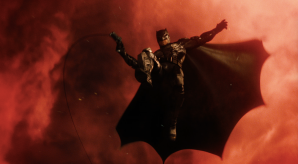 Justice League feels like two movies indelicately grafted together, and if you have a trained eye for cinematography you’ll easily be able to spot the difference between the Snyder parts and the Whedon parts (final product looks 70 percent Snyder, 30 percent Whedon). Snyder is much more the visual stylist so his camera arrangements are far more dynamic, and his cinematography also makes more use of space within the frame, especially from the foreground and background. His scenes also have a more crisp, filmic look. By contrast, the Whedon scenes feel overly clumsy and with too much strained humor. The Whedon humor holds on a beat longer, as if it’s waiting for a canned laughter response to clear. Lois Lane (Amy Adams) remarks about how Superman smells, Martha Kent (Diane Lane) drops a malapropism about her son calling Lois the “thirstiest reporter,” Barry Allen’s inability to grasp what is brunch, which is the only thing shoehorned into the middle of Snyder footage. Then the brunch joke is brought up again in the first post-credit scene, which had me convinced that Whedon was going to produce some sort of meta moment with the Justice League final post-credit scene mirroring The Avengers, with the team out enjoying a casual meal together. Not only do I think I enjoyed the Snyder parts better but I think I also enjoyed the humor of the Snyder parts better.
The color correction is also completely different. Check out the Justice League trailers and you’ll see two different climaxes, one before Whedon that takes place in Snyder’s typical landscape of diluted grays and blues, and another after Whedon that looks to be set on Mars. An unintended consequence of altering the color correction so decisively is that the costumes suffer. These outfits were clearly designed for the landscape of colors for Snyder’s darker vision. Whedon’s brightening up makes the costumes look like discount cosplay. It’s not that the Snyder parts are that much better, it’s that the Whedon parts aren’t that great.
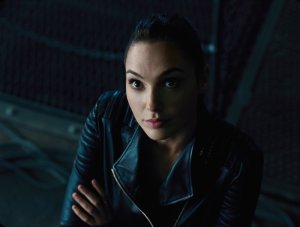 The action sequences are just as unmemorable as the rest of the movie. Action sequences need variation, they need mini-goals, and they need multiple points of action. There’s a reason many film climaxes involve different pairs or groups fighting different villains. It keeps the action fresh, involves all of the characters in meaningful ways, and provides more payoffs. The action becomes more dynamic and complex and simply entertaining. The action in Justice League is thoroughly underwhelming. With the exception of Cyborg being a hacker plot device, none of the characters use their powers in integral ways. All they do is punch and jump. When that happens the heroes are too interchangeable. They also don’t seem to do anything different in the third act nor does the climax require them to do anything different, so their victory as a team feels perfunctory and arbitrary. The special effects feel unfinished and unpolished for a $300 million movie. A sequence set on Wonder Woman’s home island looks like it was taken from a cheesy Dynasty Warriors video game. A montage during the conclusion has shockingly bad CGI of the Flash running in a goofy, gangly, leg-failing way that made me doubt Whedon’s eyesight. The most hilarious special effect, possibly of all time, is the fake Superman upper lip. It kept me analyzing every Cavill mouth I saw. His upper lip looked too waxy with shine and indented too widely. We are not there yet my friends for realistic mustache removal technology. We’ll just have to go back to old-fashioned razors and rue this primitive existence of ours.
Batman vs. Superman and Suicide Squad have already conditioned audiences to expect the worst, and the fact that Justice League is better may make some mistakenly believe this is a good super hero adventure. It’s not. While not the spectacular failure of its predecessors, this is extraordinarily forgettable and thoroughly underwhelming from top to bottom. I think I might have actually preferred Joss Whedon not being involved and simply releasing the full Zack Snyder cut. It would have been stylistically more coherent. Much of the Whedon reshoots do not feel like they are for the better. To be fair, he came in late and this franchise behemoth had already gone too far to fully alter its fate. There are small moments that work but the big moments are what fail. This movie is missing setups, payoffs, and character arcs. It’s missing pathos and emotion. It’s missing memorable action sequences that are exciting and varied. It’s missing basic internal logic. It’s missing a greater relevance. The villain is just an obstacle to be overcome without any larger thematic relevance. I struggled to care about what was happening. Ultimately, the finished product feels like Zack Snyder’s garage sale (“Here’s all the stuff you’re used to and maybe you’re tired of but I’m not gonna put that much effort into this so maybe we can haggle”). And then Joss Whedon bought it all, repackaged it, and sold it back to you, America. As dreadful as the previous movies were they at least had moments that stood out, many of them for the wrong reasons, admittedly. Justice League isn’t as bad and yet is paradoxically less watchable.
Nate’s Grade: C
Share this:

Silence (2016)
 A nearly three-hour movie about Portuguese Jesuit priests facing persecution in 17th century Japan and struggling with the personal demands and costs of their faith sounds like a hard sell for your casual moviegoer. It may seem even stranger coming from the likes of director Martin Scorsese. This is a deeply personal film and perhaps the greatest movie about the nature of spiritual faith, both good and bad, I’ve seen. Two priests (Andrew Garfield, Adam Driver) sail to Japan in 1635 to find their mentor after hearing he has renounced his ties to Christianity and taken up a Japanese wife. Christianity has been outlawed and those caught practicing the religion can be turned in for 100 pieces of silver, and a priest for 300 pieces. The repression forces Christian converts to make difficult choices, especially when their refusal to recant their faith causes suffering for others. The Inquisitor (Issei Ogata) is a fascinating figure who argues that these misplaced missionaries never understood Japanese culture and that this foreign religion simply cannot flourish. The meaning of individual faith is explored beautifully with existential highs and lows. When the priests come across a village of secretly practicing Christians, it’s a powerful example of the goodness of faith, as these people are nourished body and soul, empowered. They can also finally confess their sins and garner a clean slate. However, much of the film is about the internal struggle to retain one’s faith in the seeming absence of confirmation. The priests are eventually caught and ordered to apostate, and their ongoing refusals are met with harder and harder challenges to bear. It’s an ongoing process for many people to square the concepts of a loving God and the horrors and general torment that do not merit said God’s intervention. At one point one of our priests, shaken by his experiences, asks if he is merely praying to silence. In some regard, I think the movie is about coming to terms with the fact that faith is often a relationship with a silent partner. Silence may be the greatest spiritual epic about doubt. It feels like a thriller at times and also the most Christian movie at other times. It puts the simplistic tripe starring the likes of Kirk Cameron to shame. Scorsese’s camera is unmistakably his and the movie is often dazzling to just experience. The pacing is very much a slow burn but the historical context felt increasingly intriguing for my tastes. Ogata is the real star of the movie, embellishing his antagonist with a magnetic power. Every time he was off screen I wished for his return. Silence is not going to be a movie for everyone or for many. It’s too long and airless, but it’s a deeply serious, deeply meditative, and deeply searching film about the power of belief and the price we pay to hold on.
Nate’s Grade: B+
Share this:

John Carter (2012)
 John Carter has been in the longest development hell of any movie project in the history of cinema. If nothing else, that’s at least an accomplishment. Author Edgar Rice Burroughs first published his tale of interplanetary adventure in “A Princess of Mars” way back in 1912. It was his first published work, even before the phenomenon that would make him a star, Tarzan. Ever since 1931, filmmakers have been trying to realize Burroughs’ grandiose sci-fi vision but have never been able to finish. In the last decade, the movie has gone through different stages of development, with Robert Rodriguez, Kerry Conran (Sky Captain and the World of Tomorrow), and Jon Favreau attached as director at different points. Then Disney snatched up the rights and hired one of its own, Pixar director Andrew Stanton, to do what nobody has been able to do for 80 years –bring Burroughs’ vision to the big screen. It doesn’t hurt when Disney gives you a reported $250 million to spend.
John Carter (Taylor Kitsch) is a Civil War veteran haunted by his past. He’s chased by a group of bandits and stumbles into a cave that transports him to Mars, known as Barsoom to the natives. Carter discovers that he’s found himself in the middle of another civil war, this time between the cities of Zodanga and Helium. The Tharks are a race of 10-foot tall four-armed warrior creatures, and their leader, Tars Tarkus (Willem Dafoe), sees Carter as the turning point in getting his people’s lands back. Carter will also help solidify Tars Tarkus’ place as leader to his people. John Carter is a coveted free agent on the red planet. Princess Dejah Thoris (Lynn Collins) wants John to help her people survive against the Zodangans, lead by Sab Than (Dominic West). Dejah’s father (Cirian Hinds) has brokered a shaky peace on the promise that she and Sab Than will marry. The mysterious Therns, lead by Matai Shang (Mark Strong), are the real power players on Mars. They have offered a powerful new weapon known as the “ninth ray” to give Sab Than the upper hand. All John really wants to do is return home, but first he has to find a way back.
 John Carter is an amusing, entertaining throwback to old-fashioned B-movies. Even the depiction of life on Mars is charmingly retro, what a future would look like to a man from the early twentieth century perspective. As a result, the aliens fight with Bronze era weapons and guns that behave like trinkets from a Western. Even the minimalist alien design, the Roman-esque costumes, the fact that everyone can breathe air, and low-grade technology of these advanced species (flying machines that look like Da Vinci designed them) come across as nostalgic, vestiges of the past more so than insights into the future. It’s like watching those old sci-fi TV shows from the 1950s and how they predicted man would have colonized the solar system by now and already have a working lunar colony (Newt Gingrich is trying his best). The movie channels the spirit of old adventure serials and captures a certain gee-whiz, childlike sense of fun. There are moments where Stanton has a playful sense of storytelling, like a near montage of Carter’s determined escapes from officer Powell (Bryan Cranston? Why not?). While being PG-13, there is still a feeling of the Disney-fication of the tale, complete with tamer outfits for Dejah Thoris (do a Google image search) and an adorable alien “dog” sidekick that befriends John.
The best moments are easily the scenes where John integrates into the indigenous Thark tribes, finding a sense of community and a bonding with Tars Tarkas. If the movie had only featured this alien race instead of all those warring people-who-have-red-henna-tattoos-on-so-they-must-be-aliens-right, I think the movie would have succeeded better. One alien race focuses the narrative but instead we get four (three?). When our climax does come into view, the pieces have all fallen into place and the action is suitably thrilling. Stanton’s live-action debut isn’t the homerun that Brad Bird’s Mission: Impossible 4 was, but the large-scale action is satisfying and imaginative enough. The payoffs work and Stanton has nicely intertwined his storylines so that everything comes to a head. The Earthbound framing device, with Edgar Rice Burroughs (Daryl Sabara) reading the diary of his rich departed Uncle John, enriches the narrative once the full context is revealed, gearing up the audience for a long-awaited reunion to end the movie on a perfect high note.
What John Carter also has going against it is the pull of time. It’s hard not to see how derivative the story and characters are; Burroughs’ original novels were hugely influential to science fiction writers, and you can see similarities in Star Wars, Avatar, and other works. Scenes in this movie will feel like rip-offs from other movies, like an arena battle with giant alien hordes from Attack of the Clones, riling up a native alien species against its imperial antagonists in Avatar, Deja Thoris clearly has her DNA all over Princess Leia, and the dynamics of jumping through space travel via gateways made me think of how excellent a movie Stargate was (watch it again; it’s terrifically executed). Carter can easily be credited as the predecessor to superheroes. Now it’s unfair to say that John Carter rips off these other sci-fi movies when every one of them was released long after Burroughs’s novels had been widely published. It’s unfair, but you can’t help but feel the way you feel, and I was feeling a fairly resounding sense that I had seen much of this tale before and better. The actual terrain of Mars is a little less than inspiring. Its rocky vistas don’t make it feel too noticeably alien. We don’t ever really get a good view of alien culture outside of the Tharks. John Carter’s one big addition is that the character, given his physiological makeup and Mars’ gravity, can leap to impressive heights that were only previously known by Italian plumbers in video games. This means we get a lot of John Carter jumping up, jumping around, jumping like a Martian jumping bean. But just because you can jump really high, doesn’t that mean you’d be plummeting at a high rate of force? Wouldn’t John seriously break his legs leaping 500 feet in the air and then landing?
 The script, credited to Stanton, Mark Andrews (co-director of Pixar’s upcoming Brave), and Pulitzer Prize-winner Michael Chabon, is weighed down with expositional slog that it cannot break until the third act. I was expecting a better and more graceful story given Stanton’s previous film, WALL-E, which could be taught in film classes as a textbook example of elegant visual storytelling. With John Carter, it feels like we’ve been hit with the Martian phone book. We’re inundated with unfamiliar names and given scant time to adjust. While a gamble that the audience intelligence will catch up, it also makes for a confusing half of a movie. It’s hard to keep track of all the different names; Tharks this, Hellium that, Zodanga this, Jeddak that, Therns here, Barsoom there, etc. The movie doesn’t gradually expand its Martian history, it just plops us, along with Carter, right into the middle. The opening structure is also a bit confusing, as we’re jumping around time without any proper setup. Still, the movie cannot be accused of being stupid; hokey and convoluted, yes, but not stupid.
And boy do we get a lot of talking for an action movie set on Mars. The middle section is quite heavy with yapping. Kids who came thank to their trust of the Disney name will probably be bored as the movie explains to us things we already know and things we don’t care about knowing. For a two-hour plus film that has a lot of political infighting, I’m surprised that the movie is pretty pedestrian when it comes to its politics. It all really comes down to an arranged marriage to broker peace. That’s not very complicated. The main villains, the ghostly Therns, are completely incomprehensible when it comes to motivation. I have no idea what they stood to gain. If they have a gateway that can take them to Earth, or they have their own copies on Earth, why aren’t they using this to their advantage? Why aren’t they grabbing more Earthmen to form an army of jumping Jacks? Why the significance of the “ninth element” when we all know the fifth element is love? But more importantly, as last year’s Green Lantern proved, it hurts your movie when your hero can’t be bothered to be heroic. It takes far too long for John Carter to seem like he gives a damn about anything. I understand he’s a war-weary vet, but the movie feels like 90 minutes of him shrugging while everyone on Mars desperately pleads with him to save them.
Kitsch (X-Men Origins: Wolverine) is going to be having a fairly big breakout year given his mug appearing in several high-profile, high-budgeted movies. The guy has already proven with steady work on TV’s Friday Night Lights that he can act, though the results are not so convincing with John Carter. I think he was going for some sort of gruff, Clint Eastwood-esque loner but he just comes across as wooden. Add his character’s reluctant nature, and it makes for a pretty uninvolving hero. Fortunately for Kitsch (what an unfortunate last name), the supporting cast is there to pick up the slack. Collins (TV’s True Blood) is the real breakout star of the movie. She’s feisty and strong and passionate and altogether easy on the eyes she could give Leia a run for her money in a metal bikini competition. Collins’ performance is filled with urgency, like she’s compensating for our taciturn lead actor. When she’s on screen you feel engaged in the story. Dafoe (Spider-Man) finds the right mixture of humor and pathos as the leader of the Tharks. West (300) has such a slimy sneer to him, it’s magnificent to watch. I’m starting to think that Strong needs to take a break from playing villains (I count eight bad guy roles sine his breakout in 2008’s RocknRolla) except that he’s so good at playing them. I think if Mark Strong ever plays himself in a movie about his own life, he’ll inevitably be the bad guy.
John Carter is an entertaining throwback to the adventure serials of old, a retro sci-fi action film that falters somewhat from a talky, uneven, exposition-laden script. When this movie works, it works quite well. There’s just too much stuff in this movie, too many alien races, too much exposition, and too many other movies that make John Carter feel derivative. What was once amazing and imaginative in 1912 will not have the same effect on audiences in 2012, especially those who have grown up on pop culture inspired by John Carter. I don’t think anyone can say the final product was worth the wait, but John Carter is a modestly fun adventure. I wouldn’t mind taking another trip to Mars, just as long as it doesn’t take 80 years.
Nate’s Grade: B-
Share this:

The Debt (2011)
 A tense and mature spy thriller that’s as well written as it is acted, The Debt is a thriller that even stops to ponder some serious moral ambiguities along the way. Back in 1965, a group of Israel agents (Jessica Chastain, Sam Worthington, Marton Csokas) were sent to Berlin to capture a notorious ex-Nazi doctor (Jasper Christensen) and bring him back for justice. When things don’t go according to plan, the group must decide what is justifiable in the name of moral cost. In 1997, the aged former agents (Helen Mirren, Cirian Hinds, Tom Wilkinson) have to deal with the full consequences of their actions. A far majority of the film takes place in the 60s, and it’s for the best considering that’s where most of the tension and interest reside. As a thriller, drama, and non-linear mystery, there’s always something going on. The film is not without its genre clichés, but the sequences of holding Christensen (Quantum of Solace) hostage rise beyond genre mucking. He is a true monster and his dialogues with the various agents are chilling, reminiscent of Hannibal Lector’s tête-à-têtes. The cast is uniformly good, even Worthington, but the real star is Chastain (The Help, Tree of Life). She is magnetic. It’s a shame that The Debt felt it needed to tie up its loose ends in a conventional ending that discards the film’s more ambitious moral quandary. I suppose the toll of false identities and moral relativism just doesn’t make audiences happy like good old-fashioned vengeance. I guess that’s a debt everyone would rather have paid.
Nate’s Grade: B+
Share this:

Miss Pettigrew Lives for a Day (2008)
 The movie seems to float on the effervescent air of 1930s screwball comedies, and in truth it does possess some of that snappy allure. Francis McDormand travels into the inner circle of the upper social classes in London and befriends a bubbly lounge singer, played by bubbly actress Amy Adams. The film moves at a ridiculously fast pace, sometimes too fast as it tries to pile on complications and setbacks. This day-in-the-life confection is sweet and well natured but rather too digestible. Once the movie is over I do not see myself ever dwelling upon it once again. It’s a pleasant and entertaining experience even if it dances right out of your memory.
Nate’s Grade: B


 nathanzoebl
You must be logged in to post a comment.