Blog Archives
He’s Just Not That Into You (2009)
 Based upon the best-selling nonfiction book, the movie follows the interconnected lives of a cadre of characters trying to get lucky in love. As with any ensemble piece, some storylines are better than others, notably Ginnifer Goodwin (HBO’s Big Love) as a naïve and hapless gal confused by the ever-changing rules and rituals of contemporary courtship. Her scenes with Justin Long, as her dating coach, are the movie’s high-point. The two actors have a light, charming chemistry and their scenes get at the heart of the male/female dating dysfunctionality without feeling trite. But in between, you get a lot of hackneyed yakking about the stereotypical differences between men and women, how dumb men are, how crazy women can be, etc. It’s all been covered to death by other romantic comedies to the point that it feels like common knowledge, which makes it tiring to sit through. Some of the drama feels overly manufactured, like Jennifer Aniston pushing to get married because she her little sister got engaged, there are characters that are just annoying people, like Kevin Connolly continuing to nip at the heels of Scarlett Johansson for some scraps, and Some of the material is weirdly dated, like Drew Barrymore talking about being “Myspace-ed” by a prospective date (Hello, it’s all Facebook all the time now). Naturally, it’s all rather predictable as well, however, this is not the fun date movie it may seem. It hits some rough dramatic patches, like the pains of infidelity, losing trust in a spouse, manipulating people, and occasionally there will be a moment that comes across as genuine and heartfelt, like when Ben Affleck wins over Aniston simply by being thoughtful and doing the dishes. It’s in these sporadic moments that He’s Just Not That Into You feels like it’s tapped something a little deeper and more meaningful than scraping the barrel of romantic comedy clichés.
Nate?s Grade: C+
Share this:

Harry Potter and the Half-Blood Prince (2009)
 Not every film franchise gets to a sixth installment, although Police Academy and Friday the Thirteenth managed to. After over twelve hours of storytelling, is it even possible for non-fans to enter the Harry Potter world (only an idiot would begin a film series at number six)? I am a willful Muggle to this universe. I am content to wait for the movies, and it drives the readers nuts. “The books are so much better,” they all say. Then they tell me what was left out of the movies, and honestly it’s usually a good thing. Harry Potter and the Half-Blood Prince echoes the increasing darkness of the later books by author J.K. Rowling, but now I can finally walk out of a Potter film and know, without a shadow of a doubt, that the book must have been superior. Half-Blood Prince is a film adaptation that spends too much time in all the wrong places.
Lord Voldermort (Ralph Fiennes, seen only for literally a split-second) is back with a vengeance, and his followers, Death Eaters, are branching out and attacking the Muggle world as well. Headmaster Dumbledore (Michael Gambon) has asked Harry (Daniel Radcliffe) for help in recruiting a former Hogwarts professor. Horace Slughorn (Jim Boradbent) used to be an esteemed potions professor, and one of his bright students was none other than a young Voldermort (Hero Fiennes-Tiffin, Fienne’s real-life nephew). Dumbledore and Harry explore liquid memories that belong to the Dark Lord in hopes of learning how to defeat him. In the meantime, the kids are under attack not by Voldermort but by hormones. Harry’s friend, Ron (Rupert Grint) and Hermione (Emma Watson), are secretly in love but neither has the heart to say something. Ron uses his star Quidditch status to “snog” with the eager Lavender Brown (Jessie Cave), who’s infatuated with Ron. This infuriates Hermione and she seeks comfort in a studly student herself. Harry is starting to feel his heart go pitter-patter for Ron’s sister, Ginny (Bonnie Wright), which requires Harry to be very delicate in negotiating the “Can I snog your little sister?” portion of male friendship. Oh yeah, and apparently Harry is also using a potions textbook that used to belong to some whiz kid known as the Half-Blood Prince.
 The further I get away from Half-Blood Prince the more certain I am that it is the least involving film of the series. The plot is somewhat nebulous and unclear, and so much of the story is dominated by boring teenage romance. I understand that Hogwarts is swimming in hormones, but these kids spend the whole time making shifty doe-eyes at each other than doing anything substantial. That makes for a boring romance, and when the movie is dominated by this stuff for two hours it doesn’t make the movie too engaging. I understand that the Ron/Hermione courtship has been setup for some time, but it takes forever to move even incrementally closer to that coupledom. The Harry/Ginny material is lacking at best. She’s such an empty presence and they do so little with her character that I have no idea what would warrant Harry’s affections. There is no spark, no heat, no sexual tension, and no interest. I was actually relieved when Half-Blood Prince drops practically every storyline with twenty minutes left. Seriously, these plotlines aren’t resolved or capped or even addressed, they just don’t exist once Harry learns the word “horacrux.” And let’s talk about that subject just for a moment. Dumbledore lures Professor Slughorn back to Hogwarts so Harry can learn Voldermort’s secret of eternal life, a secret that Dumbledore already knows because he’s been taking leaves to locate and destroy Voldy’s horacruxes. I felt detached and disenchanted throughout Half-Blood Prince.
There are other plot holes and irregularities, and I wonder if writer Steve Kloves (who took the fifth movie off) is merely serving up 153 minutes of plodding prologue for the big finish. The drama is becoming more static and the supporting characters of previous installments reappear and do little but stand with hands in their pockets; they have nothing to do. The flashbacks to Voldermort as a child reveal relatively nothing new; only indicating her was a creepy kid. The two action sequences squeezed in are not from the book, meaning Kloves was trying to add some excitement to what is a rather sleepwalking storyline. The action sequences mean little; the opening attack on London’s Millennium bridge offers some nice sights but little consequence, and the destruction of the Weasely house comes across like Kloves was grasping for greater conflict. Too much of his film is the young love foibles with the occasional sideways glance at Draco (Tom Felton) brooding in the shadows. The ending, with its notable death, still strikes an emotional cord but it also comes across as rushed and without depth and resolve.
 What is the significance of the Half-Blood Prince in this adaptation? The mysterious figure was good in potions class and his old textbook helps Harry in class. That is it! The late reveal of the identity of the Half-Blood Prince is so incidental and off-the-cuff, that the actor practically has to say, “Hey, remember that whole Prince thing like an hour ago? That’s me. Yep. So see ya.” It’s such an indifferent plotline handled with such indifference. I had to ask my Potter-versed wife why Rowling would even bother naming the book after such a minor, irrelevant plot footnote. Kloves’ adaptation feels lost and mostly like filler.
So why does a slower, less coherent, less interesting Harry Potter rank better than the first two films? Because director David Yates takes an artistic step forward and this addition has style to spare. Returning to the Potter director’s chair, Yates has a stronger feel for the world and creates striking film compositions with the added help of noir cinematography by Bruno Delbonnel (Amelie, Across the Universe) and the foreboding production design by Stuart Craig. The sets have a grand Gothic appeal and help compensate in tone for what is lacking in the screenplay. The opening bridge attack allows for soaring flights through London and then into the magic world, and it’s a great opening visual rush. The memory flashbacks have splendid visual artistry to them as we watch inky brush strokes coalesce into solidified images. It’s a fantastic special effect and it is welcomed every time. This isn’t one of the more special effects heavy installments but the effects are as good as ever especially when seen through Delbonnel’s lens.
It’s interesting to have watched the three main actors grow up in their roles, which also gives them the ability to revert to autopilot when the movie lags. In the Half-Blood Prince, the trio burrows back into previous acting episodes. Radcliffe gets talked to a lot so much of his acting in this jaunt seems to involve intense bouts of nodding. He does have one sequence of exaggerated comedy when he swallows a luck potion, and the actor feels delightfully unrestrained. Grint gets the most screen time he’s had in ages and continues to dial up the daffy humor. As I stated with my review of Order of the Phoenix, I think Watson began as the best actor of the trio and is now on a fast-paced downward slide. Her character gets to experience jealousy and heartache, and Watson shows some ability to convey mixed emotion. The most interesting actor of all the kids is Felton, who I found to be surprisingly empathetic. He’s tortured over his fate, a mission given to him by the Dark Lord. He’s torn apart by moral indecision and a sense of duty. That’s way more interesting than watching Ron and Hermione try to make each other jealous. Why didn’t Kloves devote more time to the anguish of Draco? That’s where the drama is. There just isn’t much room for character growth and acting in the rest of Half-Blood Prince. The best acting award goes to Broadbent (Moulin Rouge, Hot Fuzz). He conveys the regret of Slughorn with every manner and gesture. His sad, poignant confession is oddly the emotional highlight in a movie that includes a momentous death later.
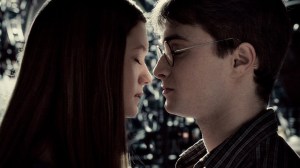 Harry Potter and the Half-Blood Prince feels like a half-hearted adaptation, with way too much time spent on tepid teen romance. This is the most visually arresting Potter film next to 2004’s Prisoner of Azkaban, but it just fumbles the storytelling. The sixth film is too often boring and inconsequential. Too much of the film feels like it was purely made for the die-hard Potterheads, and if any Muggles have questions of clarity they are required to seek out a friend to ask. This is just sloppy writing. It feels like everyone is just busying themselves before the sprint to the big finale. We’re just about at the end of the long winding road that is Harry Potter, though I’m sure the fact that the producers are splitting the final book into two movies likely will not mean that the individual movies can finally have a two-hour running time. Half-Blood Prince would have greatly benefited by being shorter, more precise, and more significant; the 16-year-old romantic squabbles seem so slight in the backdrop of Voldermort and his army on the rise. I’ll give everyone the benefit of the doubt, but this is not a Potter venture I’ll likely return to again. It just doesn’t measure up when it comes to movie magic.
Nate’s Grade: B-
Share this:

My Sister’s Keeper (2009)
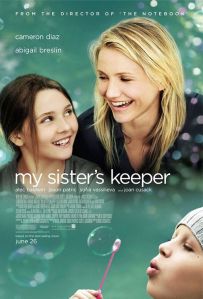 How could a movie about dying children be so schlocky? The best-selling Jodi Picoult novel, My Sister’s Keeper, is awash in drama but it never tipped the scales into absurd and tone-deaf melodrama. How does one botch a tear-jerker? You need only watch the big screen version of My Sister’s Keeper for a primer on how to turn a complicated, challenging book into maudlin mush (hint: make sure to have a sizeable budget for obtaining music rights for endless montages).
Kate (Sofia Vassilieva) is dying from cancer. Her little sister, Anna (Abigail Breslin), was conceived by her parents, Sara and Brian (Cameron Diaz, Jason Patric), to be a genetic match. Anna was born so that she might be “spare parts” for her ailing big sister. Jesse (Brennan Bailey), is the oldest child, and his needs have been overlooked because of Kate’s illness. Anna’s life has been one of prodding and pricking and testing and operations. Then one day, Anna consults with high-powered lawyer Campbell Alexander (Alec Baldwin). She wants to sue her parents for the rights to her own body. She’s tired of undergoing numerous medical treatments. She wants a life of her own, something more than being “spare parts.” Needless to say, Sara and Brian are horrified. Anna clearly loves her sister but by refusing to donate a kidney she is signing her sister’s death notice.
 The movie strikes one false, heavy-handed note after another. There is rarely a moment that feels authentic or genuine; everything comes across as powerfully manipulative and cloying and contrived and like a tuneless melodrama. Things are cranked to such a high degree of overkill. I swear to you that, no joke, at least seventy percent of the scenes in this movie involve somebody crying. People don’t argue, they flail and shout until they go hoarse. There is nothing subtle to be found here. I didn’t feel emotionally invested in these characters and one of them is a freaking teenage girl suffering with cancer! The first half of the movie feels far too rushed, and the majority of scenes last under two minutes, meaning that the plot lurches forward but the film fails to round out and establish its central characters. The movie’s idea of covering up its screenwriting shortcomings and lackluster character development is to produce an extended music montage. There are over five music montages (I lost count) and it possibly takes up a fifth of the movie’s total running time. I don’t know about you, but watching characters smile and laugh set to music that is so painfully on-the-nose literal does not make due. After so many matching lyrics, I was waiting for a song to literally describe everything I was watching on screen, like, “Heaven/We’re all gonna go/You’re gonna go sooner/Because you’re a little girl with cancer/Don’t you think your mother’s crazy?/So what’s on TV?” Is it better drama to hear a somber cover of Cyndi Lauper’s “Girls Just Want to Have Fun”? It’s just one of several flimsy filming decisions that rip you out of the story and make it perfectly obvious that you are watching a movie, and a poor one at that.
There is just way too much material here for it to succeed as a streamlined, two-hour weepie. There are complicated moral issues here about exploiting one child in efforts to save another. Grief can transform the nucleus of a family in small ways. This requires a delicate adaptation and this movie is certainly not it. This is an adaptation that alternates between syrupy music montages and falling anvils. My Sister’s Keeper is beset with convoluted flashbacks, and I often was confused as to where in the timeline several of the scenes were taking place. Is this before or after Sara shaved her head in solidarity? Is this before or after she Katie starts chemo? There are multiple characters that share voice over duties, often just offering up a line or two. What’s the point of having Jesse announce in voice over, “I wondered how much trouble I was gonna be in,” when he sneaks into his house late at night? Could we not communicate this effectively without the added voice over? And only for a single line? This is just shockingly lazy writing and proof that the filmmakers have no trust in their audience. In fact, Jesse as a character is entirely pointless. He adds nothing to the story except to make things more confusing. Why does he sneak out at night to drink milkshakes in downtown L.A.? Why are judges unclear why a lawyer of such fame and stature as Campbell Alexander has a helper dog? There are intriguing dramatic setups that just get overlooked. What kind of life goes on in a family home when one child is suing their parents? Show me this stuff.
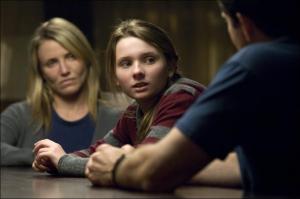 By far, the only believable part of this mawkish mess is a lengthy flashback to Kate’s boyfriend, Taylor (Thomas Dekker, sporting a good-looking dome if you ask me). This is the only segment that’s allowed to breathe and feel naturally developed. It is during this tender sequence where Kate feels like a character instead of a broadly drawn sketch of Cancer Girl. The interaction between Kate and Taylor is sweet and relaxed, until an obvious conclusion that has to spoil Kate’s small hold on happiness. The supposed twist ending is predictable and nullifies the court battle, which makes the ethical struggle of bio-engineered babies just a plot gimmick. In the end, I got the overwhelming impression that the screenwriters, Jeremy Leven (The Notebook) and director Nick Cassavetes, are projecting. We conclude on one character’s voice over, remarking, “I don’t know why she died. I don’t know why what happened happened. I don’t know why we did the things we did.” It’s like a thinly layered confession by the screenwriters that they were clueless. Any tears that manage to squeeze out are unearned and are only the byproduct of such gloomy material.
The acting is typical of such hyperactive melodrama. Diaz fares the worst as the overprotective mom who fights tooth and nail to save her daughter at the expense of everybody else. She’s abrasive and grating even when the movie tries to make her sympathetic. Diaz can do drama and can even manage understatement, as she showcased in the criminally underappreciated 2005 film, In Her Shoes. Cassavetes only knows how to direct actors when they’re being histrionic and unrestrained, as Alpha Dog and John Q. prove. The rest of the cast slogs through the overwrought material with plenty of tears to bailout the Kleenex industry. The lone bright spot amongst the cast is Vassilieva (TV’s Medium) who makes you feel her pain and manages to, at times, cloud your mind that you’re being shamelessly manipulated.
 My Sister’s Keeper is supposed to be one of those moving, heart-tugging episodes that allows us all to re-evaluate life. The movie, in actuality, is a maudlin and overstuffed melodrama (cancer kids, dysfunctional families, court disputes, secret schemes, last wishes, etc.) that is so poorly executed that it manages to make Lifetime movies look like grand art. Cassavetes grounds down all the tricky ethical questions and tortured feelings down into simplistic soap opera gunk. Nothing feels genuine or honest, everything comes across as incredibly forced and contrived, and enough with the music montages. Hitting the soundtrack button does not erase screenwriting deficiencies. My Sister’s Keeper is a malformed, overwrought, clunkily insensitive excuse to empty audience tear ducts. I suppose indiscriminate fans of the weepie genre will find the material forgivable, though fans of Picoult’s novel will find the changes to be unforgivable. I like my emotions to be earned and not strangled to death.
Nate’s Grade: C-
Share this:

I Love You, Beth Cooper (2009)
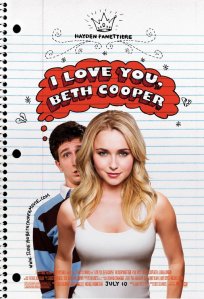 Not the trainwreck it’s been advertised as but still not near the term of “passable,” I Love You, Beth Cooper feels like a forgotten relic from a time capsule of 1980s teen movies. It just feels so powerfully dated and yet unable when to maintain a consistent comedic tone or building interesting characters. During the valedictorian’s (Paul Rust) graduation speech, he loses his filter, lets people know his real thoughts, and Beth Cooper (Hayden Panettiere) gets the titular declaration. Thanks to director Christopher Columbus, the movie wallows in shallow stereotypes; geek goes after head cheerleader. The comedy is ramped-up slapstick that approaches cartoon ridiculousness, including Beth’s ex-boyfriend who assaults and destroys everything in sight without anyone ever calling the police. There are some ham-handed life lessons doled out between the PG-13 randiness. The casting also dooms the flick. Panettiere isn’t a strong actress, and as for Rust, I was irritated by the character’s every movement and word. There are some fun stretches but nothing that ever sticks or resonates. I Love You, Beth Cooper is not worth adulation or scorn, just indifference.
Nate’s Grade: C
Share this:

Reservation Road (2008)
 This movie beguiles me. I watched it over a month ago and I am still turning it over in my brain, and not just for the fact that I get it confused with the similar sounding yet also disappointing Reservation Road. It’s another movie that presents the suburbs as a prison of bourgeoisie social moirés about how men and women are expected to live to be happy. The movie looks magnificent thanks to skilled cinematography by Roger Deakens, even if it falls back on redundant visual metaphors (look, the windows are shaped like prison bars!). The acting by Leonardo DiCaprio and Kate Winslet, the unhappily 1950s married couple Frank and April Wheeler, is mostly impressive. Michael Shannon deservedly was nominated for an Oscar as an unhinged realtor’s son who cuts through all the troublesome and fake niceties. It is a terrific performance and jolts the movie with much-needed energy, somewhat like Renee Zellweger’s role in Cold Mountain. I think that’s where my biggest area of concern is: the movie is just kind of placidly dull. Watching people be miserable for most of a two-hour running time isn’t a deal-breaker, but the movie needs to have some life to it. Revolutionary Road feels just as morose and restrained as its assortment of doomed married couples eeking out an existence. Perhaps that is an achievement to be heralded for director Sam Mendes. Then again, perhaps it just means I felt purposely remote and directionless and just waited for the movie to expire.
Nate’s Grade: B-
Share this:

Angels & Demons (2009)
 Angels & Demons works better as a movie. It is a better movie than The Da Vinci Code, but since I found that film to be one of the worst of 2006 you should know this is not high praise.
Professor Robert Langdon (Tom Hanks, with a better haircut) is the world?s foremost expert on ancient symbols and texts, which is why the Vatican recruits him for a very important mission. The Pope has recently died and Vatican City is in the middle of the cardinals deliberating who will be the newest leader of the Roman Catholic Church. Four of the cardinals, top candidates for the Pope position, have been kidnapped. The Illuminati, a centuries-old secret society, says that a cardinal will die every hour, from 8 PM to 11 PM, and then at midnight Vatican City will be destroyed. The Illuminati was made up of followers who felt the church was rejecting science, and so we?re told that in the 16th century the Catholic Church responded reasonably by branding the Illuminati followers and executing them. 400 years is a long time to wait for revenge. To make matters worse, antimatter was stolen from the CERN facility in Switzerland and placed somewhere within Vatican City. The battery holding the antimatter is scheduled to die about, conveniently, midnight, and the antimatter will result in a huge explosion (science note: antimatter is real but it is entirely harmless and not combustible). With the help of Carmenlengo Patrick McKenna (Ewan McGreggor), acting church leader until there’s a new Pope, and particle physicist Vittoria Vetra (Ayelet Zurer), Langdon must race against time to save the Catholic Church.
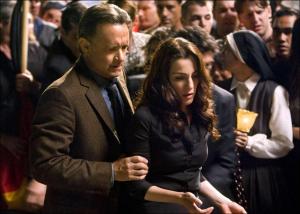 The time element gives the movie a sense of urgency that was missing before, and a kidnapping plot provides a firm structure and supplies more chances for action than unraveling a 2000-year old church conspiracy on the divinity of Jesus. The plot of Angels & Demons works out like a high-stakes scavenger hunt, shuttling Langdon across the many sights of Rome to find the next clue. However, the narrow timeline of killing a cardinal on the hour every hour makes for some tight squeezes, both for Langdon and the cardinal-killing man. I never understand why the villains give themselves such a small window to work with. I know the whole “dead cardinal every hour” thing has a nice ring to it, but is it wholly practical? There’s all that driving around Rome and the Vatican, which has got to be crowded since millions are awaiting news about a new Pope. Beyond this, why must Langdon and crew always show up to a site with like five minutes before the cardinals will be murdered? Are they stopping to get subway sandwiches in between? The timeline and plot setup provide more action sequences that make the movie fleetingly entertaining in spurts.
What doomed the Da Vinci Code movie was not the endless blather, though that certainly bored me to tears, but the fact that the film wanted to have its cake and eat it too — it wants to be a brainy thriller but get away with hokey thriller shortcomings. Angels & Demons suffers more or less the same killing blow. The flick wants you to shut your brain off and swallow these trite lapses in judgment and reality, forgiving the movie for zero character development and polluting the narrative with stupid genre stock roles, but then it also wants you to pay close attention and activate your brain to untangle the origins of symbols, conspiracies, and church doctrine. Angels & Demons introduces the idea of a ticking clock so it’s a far better paced affair than the previous film, but the movie still finds ways to get bogged down. Once again, Dan Brown’s novel has been adapted to a series of chases and sit-down chats, although this time Langdon does a lot of speed walking while he dishes out the minute history of church doctrine and architecture. To borrow from my own review of The Da Vinci Code: “You can?t be a brainy thriller and fill the story with hokey moments and lapses in thought, and likewise you can?t be an enjoyably straight forward thriller if you bookend all your action sequences with talky sit-downs to explain the minutia of your story.”
These stories are just meant to work better on the page than on screen. Puzzles and word games work when the audience can take a moment to pause but film is a medium of images and cannot simply go dead waiting for the audience to posit a guess. Movies don’t have time for you to chew things over. So then the puzzles just devolve into waiting for Langdon to explain everything, which he will do at great length. This can get tedious at a rapid rate. Langdon is less a character in this movie and more a walking, talking encyclopedia of exposition. He is robbed of anything that could be charitably described as characterization. Symbol decoding just does not work on the big screen, and Langdon is an expert whose profession is limited in application. I can’t foresee too many instances where a top-notch symbologist will be needed at a moment’s notice. Sure, it’s nice to get a history lesson and see plenty of those swell ancient churches, even if the filmmakers had to recreate them as sets because the Vatican refused them entry to film, but what point do these Dan Brown thrillers serve as movies? There is an intriguing discussion between science and the role of the church somewhere in this movie, but good luck finding much to stir your intellect. I confess never having read one of Brown’s tomes, including the super colossal mega-selling do-it-all Da Vinci Code, but surely the man deserves a better fate than to have his works die on the big screen as lamentably lame thrillers.
 There are no characters in Angels & Demons, only stock roles and suspects. Langdon’s female sidekick (Zurer,Vantage Point) serves no other purpose but to translate Latin and Italian. Really, if Langdon is a scholar on the conspiracies revolving around the Catholic Church then perhaps he should put in the time and money to learn the language. The Vatican police are there as escorts and little else. Stellen Skarsgård (Mamma Mia!) serves as the chief of the Swiss Guard, the Pope’s security team, and Armin-Mueller Stahl (Shine, Eastern Promises) is a German cardinal running the ongoing recounts for a new pontiff. Both men are presented as sly, untrustworthy suspects. Stahl’s character routinely dresses down McKenna as well, saying the young pup in the collar is not fit for church hierarchy. It?s not much to go on but the “characters” are just figures that occasionally get in the way of the film’s long-winded art history tour.
I think a lifetime of watching movies has just made my mind too analytical to be surprised by the twists in these kinds of dead weight thrillers. I?m already thinking ahead from the first minute and I don’t think I’m alone. When we are introduced to two characters, one gruff and unhelpful and one kindly and overly helpful, it is rather obvious which character will be revealed as being treacherous to provide the biggest jolt. Does anyone still suspect that Hollywood would produce a pointedly obvious evil suspect and then have it actually be that person? Not in today’s class of Hollywood thriller. You see kids, today’s Hollywood thriller is more concerned with piling on the twists than constructing a story that sticks together upon reflection, which is why many a Hollywood thriller simply falls apart as a jumbled mess by the time the end credits roll. Sometimes the endings sabotage everything logically that happened before. For an example of a textbook modern thriller, go rent the French film Tell No One and marvel at how the movie manages to be mysterious without being ludicrous. Angels & Demons doesn’t quite suffer from this screenwriting malady, but the essential evil plot by the eventually revealed evildoer is the most convoluted, ridiculously complicated scheme I have seen since that terminal 2005 thriller, Flightplan.
Director Ron Howard is able keep the film moving, almost distracting the audience away from the plot holes, but Angels & Demons is an adaptation that was doomed to fail from the start. The film plays like a lecture on tape with the fast forward button stuck. I might find more of the blitzkrieg of acts and anecdotes more intriguing if I could verify that they were all accurate. This is a thriller that wants to be seen as smart, so it empties exposition without haste, but it also wants to get away with narrative cheats common in your direct-to-DVD idiotic thrillers. You cannot simultaneously tell me to engage my brain and then a second later tell me to shut it off, sorry. Angels & Demons would have been better served without the Illuminati conspiracy and just plunged fully into the debate about bringing religion into the modern age, the friction between science and religion. Any substance the movie does present ends up being window dressing to an average potboiler mystery. This isn’t an awful movie but it never rises above “acceptable waste of time.” Hanks and Howard will probably be back in due time with the movie version of Brown’s upcoming new novel, The Lost Symbol, which will be released in September 2009. I just hope the duo, and screenwriter Akiva Goldsmith, have learned enough from their mistakes. I myself have little faith.
Nate’s Grade: C
Share this:

Coraline (2009)
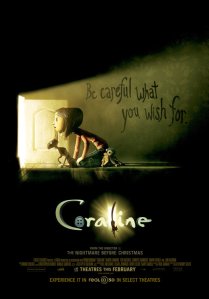 The beauty of stop-motion animation is that everything is painstakingly handcrafted so that it’s like watching a whole other world. Coraline is a wonder for the eyes and I loved just watching the movement of characters, their facial expressions, which were all done in great fluid motions. I loved that I could see Coraline thinking just through how her eyes were animated. The story, based upon the Neil Gaiman book, is about an alternative world where people have buttons for eyes provides enough eerie intrigue and some creepy imagery to spook younger kids. This is a fantasy film that doesn’t shy away from childhood scares. Coraline has an altogether pleasant feel with its spunky heroine and fine vocal cast (Dakota Fanning did not get on my nerves at all), but what’s most special is just watching the movie come alive; it’s enchanting to watch this world simply exist. There are some terrific displays of imagination in the alternative world, and it all looks even snazzier in 3-D where the world takes on further depth. Director Henry Selick (Nightmare Before Christmas) is the master of this peculiar art and thankfully Coraline follows its own visual style, never stooping to imitating Nightmare (like Corpse Bride). This is a visually stunning movie that may not leave much of an impression once it’s over (predictable story, thin plot, kind of slow ending). Coraline is a feast of artistic talent with something to discover in every awesome second.
Nate’s Grade: A-
Share this:

The Reader (2008)
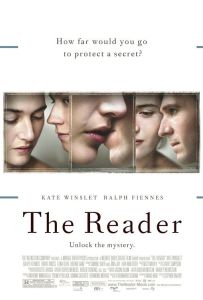 Every now and then, the assorted members that make up the Motion Picture Academy make, shall we say, quizzical selections. There are snubs and undeserving winners, but then there’s the crazy nomination where you see the movie and say to yourself, “What the hell were they thinking?” In recent years I’ve usually found at least one Best Picture nominee that left me scratching my head. In 2007 it was Atonement, in 2004 it was Finding Neverland. But I could at least fathom a guess as to why each of those movies appealed to the Academy and garnered a Best Picture nominee. I’m stumped when it comes to 2008 Best Picture nominee, The Reader. Based upon an award-winning novel, I can only surmise that Academy voters saw the words “Kate Winslet” and “Holocaust” and thought the movie had to be far worthier than the likes of WALL-E or The Dark Knight.
In post-World War II Germany, teenager Michael Berg (David Kross) begins a torrid affair with an older woman, Hanna Schmitz (Winslet). He’s 15 years old; she’s easily twice his age. She instructs her young lover to read to her before they engage in sexual activity, which turns reading into an act of foreplay. The summer affair ends abruptly when Hanna runs off after her employer has given her a promotion. Michael is heartbroken that his lover has flown the coop. Flash forward several years and Michael is attending law school in Berlin. He and his fellow students visit an ongoing trial that features a group of former female concentration camp guards. To Michael’s shock, Hanna is on trial as one of the murderous Nazi guards. The young boy is beset by his feelings of love for a person who has committed despicable deeds. Hanna is keeping a deeper secret and will go to her grave to keep it. Eventually an adult Michael (Ralph Fiennes, wasted) finds his life returning to an imprisoned, older Hanna, possibly his life’s greatest love.
 The Reader contains interesting story elements: sex, guilt, romantic affairs with former Nazi prison guards. But rarely do any of these interesting elements actually transform into an interesting story. The movie just kind of lies there, basking in some phony reflective pause when the movie manages to be so distant and uninvolved. At times the movies seems to have little interest in its own self. This movie feels like it was made to be Oscar-bait because it deals with Big Themes and Important Topics, or at least the film wants to appear like it deals with said items. The Reader is mostly shallow. It pretends to present a moral quandary but director Stephen Daldry (The Hours) doesn’t bother to analyze the contradictions of his characters. The film alternates between characters shouting obvious declarations and just stumbling around in contemplation, bumping into the furniture. It’s simultaneously annoying and boring. The movie wants to put a human face on monstrous deeds, which can be a noble pursuit. The Reader fails to be a “challenging” movie when it can’t be bothered to challenge its characters to do something.
The message of quasi redemption at the center of this specific film is either laughably naïve or downright insulting. Hanna keeps a personal secret shame at all costs, and she would rather go to prison for life as a Nazi murderer than let people know she cannot read. I’m sorry, but that’s dumb. The fact that it seems like The Reader presents the theory that Hanna’s illiteracy mitigates her guilt is offensive. I’m sure the 300 people that were locked in a burning church to die would be sympathetic that their killer couldn’t read See Spot Run. In what world is illiteracy more shameful than genocide? If you’re going to float ridiculous notions at least commit to exploring their very ridiculousness, and therefore acknowledge that there is something amiss. The Reader instead seems to flutter from idea to idea without ever truly delving deeper. If you’re going to craft a character that’s more afraid of a library than a book burning, at least try and explore this enigma. There’s drama in the disconnect. But the movie never feels like this should be an issue. Can’t you see, silly movie goers, that Hanna is but a symbol for the German people who couldn’t read the signs to come and were ignorant to the extent of Hitler’s horrors. She would rather stick to her duty than claim moral responsibility. That’s fine, but there are a great number of movies, and countless more books, that have examined the psychological culpability that can turn a populace into silently willing participants in mass murder. The Reader would rather spend its closing moments exploring the magical healing power of literature. The fact that the film eliminates the novels’ section where Hanna reads news articles and novels about the Holocaust (thus gaining moral clarity) is dumb. Instead of gaining insight into her actions she reads Chekhov. The movie ends up transforming into a weird and wrongheaded episode of Reading Rainbow.
 Winslet’s acting is fine. She’s such a gifted actress that I doubt you’ll see her give a bad performance even if the movie doesn’t live up to her talent. She isn’t doing anything showy to make Hanna a sympathetic character, which works out well, but the film’s distant perspective means that Hanna seems more like an aloof cipher. She’s this formless blob of a character that expresses a mixture of human emotions but doesn’t resemble a recognizable human. This is the fault of the director and screenwriter who chose to replace subtext with ponderous silent stares (note to all “deep” filmmakers: THEY ARE NOT THE SAME). Winslet slips into the character with the same ease she has slipping out of her clothes. The Reader is another nudity-filled performance for Winslet, her eighth movie featuring her nude (also her fourth Oscar nomination for a nude performance, there must be some connection). As readers can attest, I am no prude when it comes to the female form, but even I thought things were getting a little gratuitous. In the first 45 minutes, Winslet is naked in almost every scene she shares with Kross. It’s almost as if the nudity is supposed to disarm the audience and make Hanna a more intimate. Winslet is one of her generation’s finest actresses, which is reason enough that she shouldn’t be handed a Best Actress Oscar for substandard material.
The Reader may not be a traditional Holocaust film and in fact it’s really not so much about the Holocaust. Sure, that colossal event casts a shadow over Germany, but the movie is mostly about a cold and daft woman and the callow boy who loves her. It’s about two characters, but it the movie is too reserved and then some. Everybody just seems numb, which makes for a boring movie after a while. I repeat: a boring movie about underage sexual affairs with freaking’ Nazis! Winslet’s fine performance is not enough to redeem the whole movie. I think much was lost in translation from page to screen. The Reader actually was more effective when it was just a cradle-robbing unorthodox love story. But then, those flicks don’t typically get nominated for Best Picture Oscars.
Nate’s Grade: C
Share this:

The Curious Case of Benjamin Button (2008)
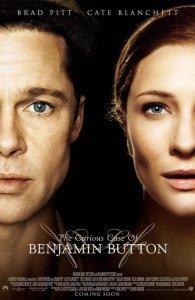 This lavish and long-winded spectacle is curious, all right. Director David Fincher (Se7en, Zodiac) has all the technical wizards at his disposal to produce a near three-hour fantasy about life, love, and death. The Curious Case of Benjamin Button works around the bizarre gimmick of a man going through the process of aging backwards. It’s loosely based on F. Scott Fitzgerald’s short story, adapted by Eric Roth (Forrest Gump), and the results are befuddling. Benjamin is a handsomely mounted and incredibly expensive work engineered for one purpose: to win Oscars. Benjamin Button is a film that strives for making grand statements and wringing a maximum amount of tears, but it’s also a film that lives more in a series of moments than as a cohesive whole. It’s a fine piece of work but feels overburdened by its urgent desire to be profound.
Benjamin Button (Brad Pitt) is born on the day the first World War ended in 1918. He is born as a small infant that better resembles an 80-year-old man (in Fitzgerald’s short story he is born as a full grown old man, which means it must have been fun for his mother). Benjamin is aging backwards but his mind is still as it should be, so while he is all wrinkly, arthritic, and covered in liver spots, Benjamin is like other small kids who want to make friends. Benjamin’s father (Jason Flemyng) is horrified by his son’s condition and abandons him at the steps of a nursing center. Queenie (Taraji P. Henson) raises Benjamin as her own child and he grows up (down?) surrounded by a colorful cast of elderly residents (one woman remarks that a young-old Benjamin looks just like her ex husband). It is here that Benjamin meets the love of his life, Daisy (played by Cate Blanchett in her older years). She’s enchanted by Benjamin’s condition but she has her youth to live and Benjamin is left behind. Daisy becomes a trained ballerina and tours the world. Benjamin goes on a series of escapades, like working on a tugboat, traveling to Russia and having an affair with a diplomat’s wife (Tilda Swinton), and discovering his biological father and the family business of buttons. But he’s always been waiting for Daisy, and eventually they “meet in the middle.”
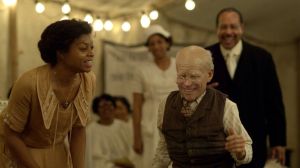 The very nature of the premise means that the movie isn’t going to have many pure, joyful moments. The idea of a romance that needs to take 40 years to connect, and even then has a limited shelf life before they go in their separate aging directions, is beautiful and heartbreaking. Waiting decades for a glimmer of your happiness with your mate, that’s a hard pill to swallow. Benjamin Button explores a similar situation covered by vampire-immortal romances, where you must endure watching your precious loved ones grow old and die. The entire movie radiates with an overwhelming sense of melancholy. The movie manages to find humor and grace amidst its melancholic dirge. The reflections on mortality are ever-present though rarely profound. It may not say anything new or original but it has many things to say about life, death, and the fleeting moments in between. By that notion, the film is structured so that the beginning, where Benjamin is a young old man, it’s more comic and beguiling, then as he and Daisy match up we finally get the pairing we’ve been pining for from the start. The pent-up passion provides great conflict, and then we barely get to enjoy the coupling before reality strikes. The final twenty minutes of the film, where old Daisy cares for old young Benjamin, are incredibly moving and have an indelible symmetry to them, watching an old lady lead a child by the hand.
 So then why do I feel so hesitant about fully accepting this movie? The story follows a similar Gump like pattern of incidents but the movie refrains from being mawkish. The main character is mostly passive with little personality; he’s nice but take away his unusual condition and not many folks would remember their time with Mr. Button. Before he gets with Daisy the film feels a bit episodic with the chapters of Benjamin’s life, and they are entertaining asides but they fail to amount to much more. Benjamin Button feels like something important is absent; it’s not cold as others have claimed but it feels, perhaps, remote, stopping just shy from being a full emotional investment by keeping the audience at a somewhat objective distance. This may be Fincher’s own design because Fincher ensures that a film about living life to the fullest doesn’t degenerate into sentimental claptrap. The end hits hard but not as hard as it could if I was more invested in Benjamin as a character. The Hurricane Katrina framing device seems tacked on, but then again the story mostly takes place in New Orleans and Katrina is rather noteworthy, you could say. The “elderly lady recalls her life story” is reminiscent of Titanic, and might not even be necessary though it offers Daisy the ability to look back over her years with added insight. The layers of realistic makeup piled onto Blanchett are impressive, though I worry what would happen if the actress had to go to the bathroom.
Technically, the movie is nearly flawless. The visual effects are astounding, seamlessly allowing Pitt to play the role even as a young child. The Curious Case of Benjamin Button is a glorious experience to watch but a mildly curious experience to register. The film is so meticulously crafted and it has all the right components of a tragic romance for the ages, but it somehow misses the mark. It’s an entertaining and moving film but it leaves something to be desired. The most resonant moments are also the ones that are the simplest, the ones that lack the window dressing of expensive special effects. I appreciated the film’s expressions of symmetry, but I have the nagging feeling that Benjamin Button both tries too hard and perplexingly doesn’t try hard enough. It keeps audience involvement at a distance, wishing to comment on humanity without embracing humanity. It is difficult for me to articulate what is lacking, because it is an enjoyable if overly long movie, but it falls into the “almost” category of poignant filmmaking. It’s almost a challenging movie, it’s almost an affecting movie, it’s almost a movie worth falling in love with. The film’s story and sensitivity and scope cannot match the technical audaciousness.
Nate’s Grade: B
Share this:

Marley & Me (2008)
 The dog dies. There. You’ve been warned. I feel that everyone walking into this movie needs to know exactly what they will endure. It’s not just that the cute, rambunctious yellow Labrador of the title dies, it’s how. The cause of death is fairly ordinary for an aged pooch, but it’s how the film Marley & Me goes about wringing every possible tear that should be known (so spoilers already, folks). The whole process is drawn out to maximum drama. We get the parents, John and Jennifer (Owen Wilson and Jennifer Anniston), discussing the sad realities of what must be done. We see each of their three children say goodbye to their beloved dog before he goes off one last time to the vet. We see the oldest child, who knows fully well what will happen, tear up and hug the dog’s face. But putting the dog to sleep in between scenes is not an option for this movie, and so we witness the slow process with John caressing his beloved dog as the life slowly ebbs away. And, to hammer home the sentiment ever harder, the movie cuts back and forth between the dog dying at the vet’s office and to John’s children watching a home movie montage of Marley through the years. John, who has been dubbing his canine “the worst dog in the world,” then whispers into Marley’s ears that he was, in fact, a “great dog.” Oh, but it doesn’t stop there. Then we have the kids return one more time for a doggie funeral. Each kid buries a message they wrote for their dearly departed dog including one that hopes that there is lots of things to chew on in heaven (the kid also drew a picture of the dog with angel wings and a halo). My friends, I am a grown man but even I was no match for this emotional onslaught. I felt like a battered prizefighter, thinking I had enough willpower to collect myself and then the movie hit me again with another blow. If you can sit stone-faced then I envy you and, at the same time, I pity you.
So there it is. I feel that every interested party in Marley & Me needs to know what will devastate them in the end. The film follows the marriage of John and Jennifer, who both work as reporters in Florida. She’s got the better gig, and he’s running around town tying to report on methane leaks and writing obits. John envies his friend Sebastian (Eric Dane) and the fame and credibility he has as a serious journalist who travels the globe. Sebastian suggests that John get his wife a puppy to delay her biological clock. And so one fateful day, John blindfolds his wife and takes her to a puppy farm. She picks the cheapest puppy out of a pack of Labradors (Note to self: there is always a reason a puppy is cheaper than its peers). They name the new addition Marley. John’s cantankerous editor (played by the cantankerous Alan Arkin) orders him to start writing a column. He’s absent column ideas until he starts writing about the comic misadventures of owning a dog. The column becomes a hit and Marley becomes a boon of inspiration, when he isn’t eating everything in sight, edible and non-edible alike.
 Marley & Me is a curious creature. Much of the plot follows a repetitious formula of Marley being destructive. He eats pillows. He chews on clothes. He eats drywall. He bursts through a screen door. He chases after people. He eats plants. He eats jewelry. He eats anything and everything. Probably half of this movie is watching Marley destroy something while John and Jennifer run around. For a decent portion, Marley & Me will play out as a cautionary tale to parents about dog ownership. Now, for pet owners, the movie will be seen as amusing and truthful, and I can attest to this. My two-year-old mutt Atticus will routinely chew on things he is not supposed to (we still love him). However, I’m not about to turn this quirk of pet ownership into the majority of a screenplay. If you eliminated Marley from the story all you wouldn’t be left with much to warrant watching.
The rest of the film really focuses on the nuts and bolts of holding together a marriage. John and Jennifer have three children and their marriage experiences some strained times, but they bounce back. They’re both fairly nice people. The non-dog moments of the film play out in equal amounts of mundane and fantasy. The mundane moments are mostly the marital glimpses between john and Jennifer, where we see them engage in realistic arguments and conflicts and reach believable resolutions. The fantasy angle occurs whenever we flash back to John’s writing career. John is ordered to take a column, and then when he’s offered it full-time he wavers. His editor then quickly says he’ll double his salary. The movie is also filled with little moments where everyone tells the main character how great they are, how special what they’re doing is, and this always feels too hackneyed for me when the main character is also the author. It’s ego stroking (look out for the main character of Nate Zoebl to be dubbed way too awesome by every other character in the upcoming film, “The Life and Times of Nate Zoebl — Man of Humble Awesomeness”). Most of the time spent at John’s work is boring, probably because most storylines would be boring when compared to the wacky antics of a dog.
 Director David Frankel (The Devil Wears Prada) shepherds the comedy along nicely. The pacing is swift for a two-hour dog movie. Frankel includes a peculiar sequence shortly after John is assigned his column. John rapidly narrates the next few months of his life with Marley, and the movie cranks up the speed on the visuals. It strongly reminded me of a similar experience in 2002’s Rules of Attraction, where Victor (Kip Pardue) quickly narrates his months of debauchery spent in Europe. It’s a strange connection to be made with a family film.
Marley & Me is definitely going to hit people in different ways. As a loyal dog owner, it made me want to rush home and hug my 45-pound fuzzy baby. The movie presents the chaos of life as something to be cherished, much like Marley. It channels Wilson’s lackadaisical charm and the movie comes across as amusing, chipper, and then downright wrenching once the old dog’s time has come. I’ve been reading about angry parents and grandparents that took their young ones to this movie and then left with crying, shell-shocked little tykes. These people feel that it is wholly inappropriate for young ones to be subjected to the trauma of losing a loved one. Apparently they didn’t read a review where the author’s first sentence was, “The dog dies.” I don’t think Marley & Me will be responsible for therapy bills but this flick examines the enjoyment and heartache of pet ownership like few others. And yeah, the ending is laid on really, really thick, but it shows how a creature could destroy many of your personal possessions and still be considered man’s best friend.
Nate’s Grade: B


You must be logged in to post a comment.