Blog Archives
Inside Out (2015)
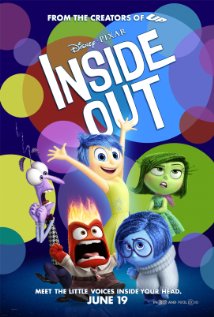 It feels immeasurably satisfying to finally have the Pixar we all fell in love with back and running. There’s been a sharp decline in the company’s quality since 2010’s Toy Story 3. Did we really need a sequel to Cars and a prequel to Monster’s Inc.? It started to look like Pixar was steering away from the kind of bold and brilliant storytelling that had earned its audience trust. With Inside Out, Pixar tackles the intricacies not of the secret world of toys, bugs, monsters, or sea life, but of the human brain itself and our embattled emotions, finding new ways to wow us once again and remind us just how magical the right combination of story and storyteller can be. Inside Out is a luminescent piece of filmmaking, brimming with intelligence, imagination, and it is powerfully moving while also being deeply relatable and entertaining. In looking inward, Pixar has found the path out of their recent rut, and Inside Out is a shining example of their ingenuity.
Inside 11-year-old Riley is a complex world. Five primary emotions help oversee her day-to-day functions; they’re the caretakers of Riley. Joy (voiced by Amy Poehler) is the effervescent leader of the bunch, along with Sadness (Phyllis Smith), Fear (Bill Hader), Disgust (Mindy Kaling), and Anger (Lewis Black). These five are entrusted with Riley’s well being and her memories. Riley’s core memories, the moments that make up who she is, help to form personality islands: honesty, hockey, goofball, and family. Riley and her family have recently moved from Minnesota to San Francisco, and Riley’s having a hard time adjusting. Her parents don’t know what’s happened to the daughter they knew. Sadness seems to be “tainting” Riley’s memories, and Joy tries her best to keep Riley happy at all times. Joy and Sadness get accidentally sucked away wrestling over Riley’s core memories. They’re sent to the outer reaches where the aisles of long-term memories are vast. The two emotions have to work together to get back to headquarters before the remaining emotions convince Riley to run away from home.
 Even just reading that again, it’s easy to see how complicated this movie can be with its world building and internal logic, and yet under the guidance of director Pete Doctor (Up) and his writers, the movie is at no point confusing. Pixar once again does an amazing job of guiding you through a new world and its various parts, all while expanding and complicating this environment while staying true to its internal logic and keeping an audience properly oriented. I can’t imagine many screenwriters would be able to tell this story while still being as clearly understood. The simplicity of the story, the ease to follow along, the natural development and connection of the storylines and characters coming together, is the greatest credit one can offer. It’s ostensibly a buddy adventure film like many Pixar tales, with the unlikely team of Joy and Sadness having to find their way back to headquarters and learning important life lessons along the way. It’s also a smart way to explore the various other elements at work in Riley’s brain. It’s not just an interesting descent but each new station further opens up Riley as a character. Her subconscious (and fear of clowns), her dream theater projections, her working abstract concepts, all tie back together in satisfying ways. Though the greatest side character is unquestionably Riley’s former imaginary friend, Bing Bong (voiced by Richard Kind). He’s wandering around her memories, and at first you have your suspicions, but then you realize, like the other characters, that he just wants what’s best for Riley. Coming to terms with the fact that Riley has moved on, and his time, while cherished, is now left behind, is a complete character arc, and that’s for a comic side character. Oh, and if you’re like me, Bing Bong’s conclusion just wrecked your tear ducts.
You know you’ve watched an impactful film when even thinking back on moments starts the process of tears welling in your eyes. It’s somewhat strange to think about characters as ephemeral as emotions and imaginary friends and the like, but they really work on two levels: the emotions themselves are exaggerated figures with distinct points of view but they also better inform the whole of Riley. There’s a depth there that gets even more impressive the more you analyze the creative process. What’s also impressive is the vital message of the movie, which is that growing up is hard and that being sad is okay. Seriously, the journey of Joy is to accept that being sad isn’t necessarily an emotion to minimize but a vital part of being human and an essential process. Much of the conflict that drives Riley is her avoidance of being sad, her postponement of accepting her real feelings and accepting that San Francisco is not going to be like her old home. It’s also a realization that to be a fully functioning person, you have to own the sadness in life. When Riley eventually unburdens herself of all her troubles and fears, and the tears flow, that’s when the healing can begin, and that’s when her parents swarm in for the group hug, and even now my eyes are starting to water. Damn you, Pixar.
 Don’t be mistaken by my words thus far, Inside Out is also a wonderfully funny and inventive comedy. The sense of discovery with the movie is alive and well, and each new revelation of Riley’s inner mind adds to the fun. The jokes are consistently paced. The vocal cast is expertly chosen and each emotion gets some good jokes. There’s a terrific running gag about a catchy jingle that the memory workers just enjoy kicking back and forth for their own impish amusement. The film dives into other minds other than Riley’s, including both parents trying to communicate during a family dinner meant to soothe their daughter. It doesn’t lean too heavily on tired gender stereotypes when it comes to the differing thought processes of men and women, which is a relief. During the end credits, we zoom into the mind of a schoolteacher, a bus driver, and a dog and a cat, and it’s an enjoyable way to leave the theater and gather yourself emotionally. The greatest comic asset is Joy, particularly as voiced by Poehler. As fans of TV’s Parks and Recreation can attest, Poehler can make insufferable optimism endearing, tip toeing around what should be annoying and instead finding stronger comic rhythms. If you’re looking for the closest thing to an antagonist, it’s Joy who got the whole mess started and yet we don’t ever really side against her. Part of that is because she’s not doing what she does as some weird power play but because she wants what, she thinks, is best for Riley. The other part is because Poehler is such a skilled vocal performer.
If I had to find some point to quibble, the world isn’t as beautifully realized in a visual sense as other Pixar classics. I think this was a deliberate decision to ground what is such an unusual environment into something a little more familiar and less flashy. I also don’t think that Disgust seems as well articulated as a necessary emotion. She’s well played by Kaling but her application seems lacking in comparison to the other four main emotions.
It’s remarkable that the summer is still young and already we have two instant classics in theaters; first Mad Max: Fury Road and now Pixar’s Inside Out. I’m still riding high from my screening, but I’d feel safe to call this a top-three Pixar film. I wouldn’t even begrudge those who cite it as their best. Far more than a big screen version of the 90s comedy Herman’s Head (anybody remember this one?), this is an exceptional animated film that will appeal to all ages but, I suspect, hit adults even harder than their little ones. It’s a wonderfully poignant film about the struggles of growing up, of holding onto your past definitions of yourself, of accepting the full barrage of emotions, including the necessity of sadness. It’s relatable in many aspects and this further compounds its power. It’s dazzling with its creativity, it left me cackling with laughter (a superb Chinatown reference almost had me fall out of my chair), and it left me weeping at various points. Inside Out is a return to form. This is the Pixar we remember.
Nate’s Grade: A
Share this:

The Boxtrolls (2014)
 Another delightful film from the creators of ParaNorman, the whimsical Boxtrolls is another stop-motion treasure that plays just as well for children as it does adults. The fanciful world follows the industrious title creatures that have wrongly been demonized as villains. Snatcher (a tremendous Ben Kingsley) has much to gain by stirring up boxtroll fears, and if he captures them all he’ll finally be allowed to join the town’s inner circle of muckity mucks. We follow “Eggs” a boy who has been raised by the boxtrolls since he was a baby and his re-emergence with the world above ground, notably with the help of a morbid little girl, Winnie (Elle Fanning). The world building is confident and well developed, the storyline finds nuanced ways to be touching and deliver serious messages about peer pressure, assimilation, and the ways which we judge ourselves and whether those are even of merit. But the main draw is the glorious animation, so fluid, so lively, and a landscape that makes full use of color and light and shadow. It’s an immersive experience that your eyes don’t want to blink for fear of missing something. The plot is droll and expertly sequenced with its variety of character and comic asides. The vocal cast does a terrific job, notably Kingsley and a hilarious Tracy Morgan. The film can get a little spooky for young children but should still be comfortable viewing. The Boxtrolls is further proof that the animation house Laika is operating at near-Pixar peak levels of brilliance and deserve the benefit of the doubt with any future films.
Nate’s Grade: A
Share this:

Big Hero 6 (2014)
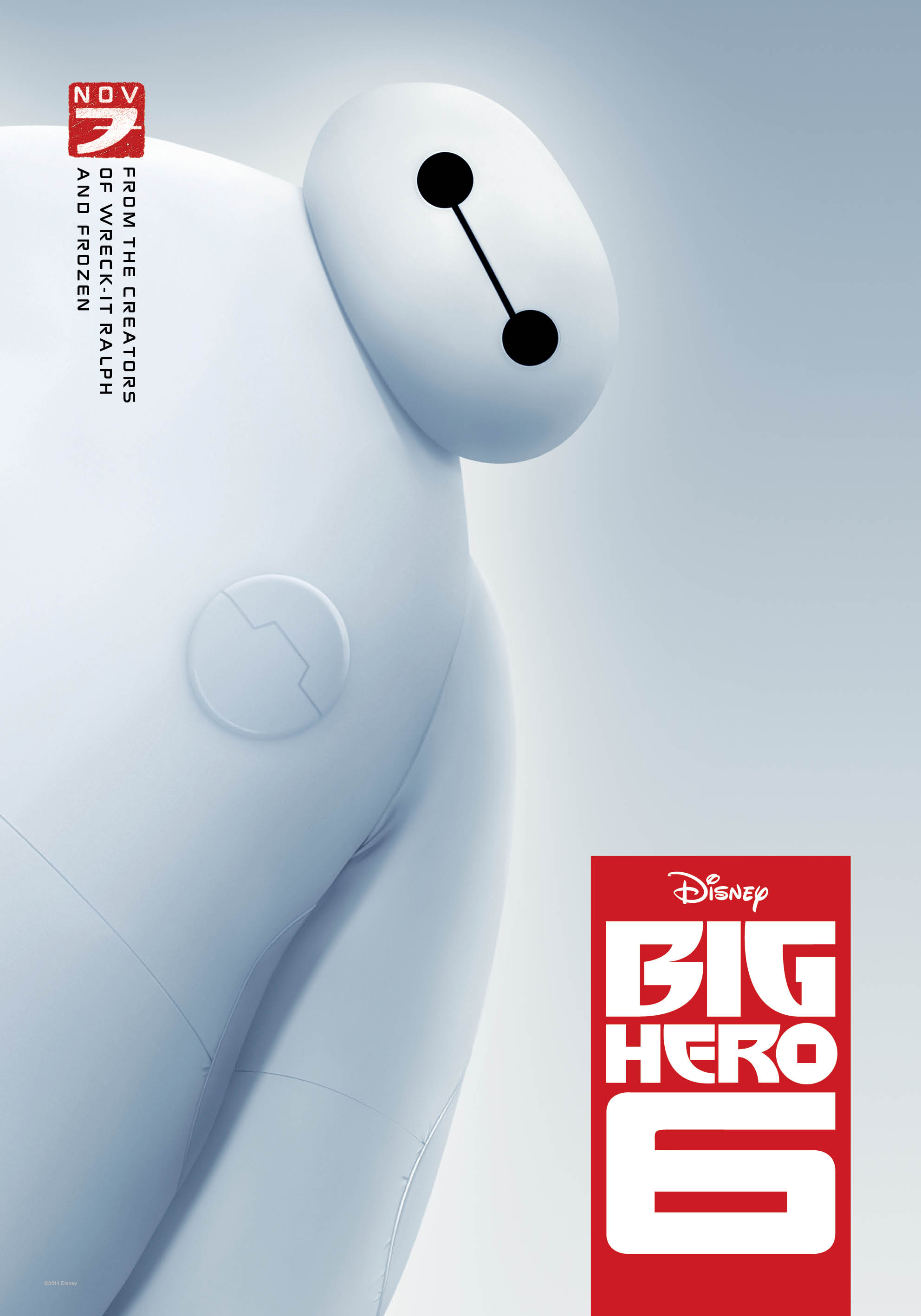 Disney’s first adaptation of a Marvel property, it’s essentially a superhero origin tale mixed in with the “boy and his robot” formula borrowed from The Iron Giant. The story is fairly predictable but charming and unafraid to deal with loss and grief. The real star, though, is the inflatable robot Betamax (voiced by Scott Adsit), whose unfailingly optimistic and helpful nature is a loveable addition to a genre plagued with doom and brooding. The action sequences are colorful and well developed and paced. It’s an agreeable pilot film for a new animated franchise, and the characters are likeable and fun while still having enough emotional resonance to make the hard choices of sacrifice hit you in the gut. It’s a welcome change of pace to have a character interested, first and foremost, in the mental health of others. You just want to hug Betamax (parents, your children will be begging for the toys). The plot does follow many similar plot beats of the superior Iron Giant but this film is still enjoyable enough on its own terms.
Nate’s Grade: B
Share this:

Mr. Peabody & Sherman (2014)
 Surprisingly adroit, Mr. Peabody & Sherman might just be more fun for adults, especially fans of the original 1960s cartoon, than for little kids. It’s under the “family film” banner, a dubious one historically, but I was laughing consistently and good, snorting laughs, long chuckles; the whole gamut. With The LEGO Movie, the wide release of The Wind Rises, and now this, 2014 is shaping up to be a stellar year for animation aficionados. The movie between a genius dog and his adopted son is given the right amount of reverence before all the cheeky irreverence through history. The hops through time, notably the French Revolution, ancient Egypt, and the Trojan War, are fast-paced and clever without stooping to provide much context for the jokes; you either get them or you don’t. Even the necessary character building components between father and son are treated smartly, coming together for an ending that approaches poignancy. The plot can get a little complicated toward the end, what with opening a space-time paradox, but I respect the movie for being complex and tricky and scientific and trusting its audience to play along. The animation looks a little scruffy compared to other big screen efforts, but the script just flat-out works. The comedy, the drama, the relationships, but especially the comedy. If you’re on the fence, please, do yourself a favor, and go see Mr. Peabody & Sherman, especially if you appreciate history and those who love it. I saw it with my father and we both laughed ourselves silly. Needless to say, this blows 2000’s Adventures of Rocky and Bullwinkle out of the water.
Nate’s Grade: A-
Share this:

The LEGO Movie (2014)
 Highly creative, cheeky, frenetic, and bursting with visual splendor, The LEGO Movie will likely surpass all expectations you had for what was assumed a 90-minute LEGO commercial. I cannot even tell if it’s actually a commercial or a subversive consumerist satire, or perhaps a blending of both. Writer/directors Phil Lord and Christopher Miller take their same anarchic, comic rambunctious absurdity exhibited in Cloudy with a Chance of Meatballs and 21 Jump Street and produce another movie so fast-paced, so freewheeling in energy, and so comically alive that you feel rejuvenated by the end. These are gentlemen who fully know the storytelling power with animation and they create worlds that are astounding to watch. While completely computer generated, the world looks like it was stop-motion. In fact, the detail that everything in the physical world is made of LEGOs was a nice touch, including fire, water, and smoke. The story of an unremarkable guy (slyly stupidly voiced by Chris Pratt) mistaken for The One, and the complications that arise, is a fitting satire of superhero fantasy mythos filmmaking. The social commentary on conformity and the media is cutting without distracting from the plot’s ongoing mission. The characters are fun, the jokes land assuredly, and the action sequences are mesmerizing. But then it takes a meta turn in the third act that gives the movie a whole other prism that helps define its previous outrageousness while leading to a poignant message about the inclusiveness of play. It’s a movie that celebrates imagination and individuality, and while it will more than likely also sell a crapload of toys, it’s an animated film with more on its mind. To paraphrase the top radio hit in the world of LEGOS, everything is just enough awesome.
Nate’s Grade: A-
Share this:

Frozen (2013)
 Enough time has passed that a revival of the 1990s Broadway formula that Disney stuck so aggressively to for so long is actually a welcome treat, especially when Frozen is this good of a movie. An extremely loose retelling of Hans Christian Anderson’s The Snow Queen, we follow two sisters and princesses, one of whom, Elsa, is gifted with magic powers controlling ice. She’s lived a life of solitude out of fear and penance for endangering her sister when they were kids. Ana has no idea, having her memory wiped through magic, and so she desperately wonders why big sis gives her the cold shoulder. After another accident, Elsa lets her powers loose, refusing to try and fit into the confines of society no longer. Ana is the only one who can save her and the town. Did you read any mention of a man in that plot breakdown? While there are significant male characters, including romantic suitors, Frozen is the story of a different kind of love, a familial love between sisters. It also generously pokes fun at Disney’s admittedly spotty record of heroines giving up their dreams for the first man they meet. Even the comedic side characters work wonderfully. Josh Gad (Jobs) as a magic snowman had me cracking up throughout with his dopey line reading and enthusiastic inflections. Idina Menzel (Rent) as the voice of Elsa is enthralling, and she gets the film’s “Defying Gravity”-esque showstopper, “Let it Go.” Kristen Bell (TV’s Veronica Mars) is terrific as the voice of Ana, vulnerable, heartfelt, and a little bit goofy, and she sings great. All the actors sing great (look what happens when you hire musical theater alums). Even better, the songs are catchy, well composed, and critical to the plot, short of a silly troll tune that should have been cut. The movie also looks gorgeous, which is surprising considering I thought the color palate would be limited with the film mostly taking place in the snow. But what makes the movie truly enjoyable is how emotionally engaging it is, the somber opening twenty minutes setting up just how much tragedy and misunderstanding there is between Ana and Elsa (the melancholy end to their song killed me). Their eventual reconciliation and the selfless acts of bravery might just make you misty. Frozen is a holiday treat for families, animation aficionados, and those hoping Disney could make a film with positive messages for young girls. In a weak year for animation, this rockets to the top of 2013. Just make sure you get the Disney version for your family and not, you know, the horror movie of the same name about people stranded on a ski lift. Though that’s a pretty good survival thriller itself, so, your call.
Nate’s Grade: A-
Share this:

Pirates: Band of Misfits (2012)
 Delightful from beginning to end, Aardman’s stop-motion animated caper Pirates: Band of Misfits is hands down the best animated film of the year. Its wry British humor is mixed with inspired slapstick and a child-like sense of folly as the Pirate Captain (voiced by Hugh Grant) and his motley crew try to prove themselves to their pirate peers. Then they run into Charles Darwin, discover their parrot is really the last remaining dodo, and have to face off against a double sword-wielding Queen Victoria. The imagination on display is remarkable. Even the puns are funny. The pacing is swift, with gags flying so fast you’ll likely want a second viewing to catch them. The voice acting is spot-on and Grant anchors the film with his gleeful impulsivity. The story is simple but well executed and fun. I absolutely loved this movie. Its action sequences are well orchestrated, its comedic sensibilities are silly but often satisfying (a monkey butler who speaks in pre-written cards, a member of the crew that is merely a fish with a pirate hate on), it’s self-aware without being too self-conscious, and the animation is wonderful. There’s something about stop-motion that other animations cannot replicate, a physicality to its world that can make it so rich and immersive in the right hands. Kids will miss the references to, among others, Darwin, Jane Austen, and John Merrick, but adults will appreciate the nods. Pirates: Band of Misfits is a wildly entertaining family-friendly animated adventure that has it all.
Nate’s Grade: A
Share this:

Rise of the Guardians (2012)
 Dreamworks animation has long existed in the mighty shadow of Pixar, but as of late the studios might be at a creative crossroads. After the excellent Kung Fu Panda films and How to Train Your Dragon, suddenly Dreamworks animated movies matured beyond feverish, pop-culture explosions and into character-driven, colorful, and genuinely heartfelt family films. I don’t think we’ll be getting something as dismal as Shark Tale again with the current path the studio is blazing. Rise of the Guardians looks like the pilot for a new lucrative Dreamworks family franchise. It’s easy to see the appeal for a superhero assembly of fantasy figures, though is every region going to have working knowledge of the Tooth Fairy? The movie just looked too silly to function for me, but I was optimistic after raves from a few trusted friends. Perhaps my own childlike sense of wonder is permanently replaced with a heart of stone, but I found Rise of the Guardians to be a somewhat entertaining but mostly stilted, intellectually and emotionally, journey.
The guardians are an ancient group of holiday-themed characters entrusted with keeping the sense of wonder alive in children. There’s Santa Claus, a.k.a. North (voiced by Alec Baldwin), and his army of yetti workers, the tooth Fairy (Isla Fisher), and her own collection agency of tooth-gathering fairies, the Sandman, in charge of the sweet dreams of children, and the Easter Bunny (Hugh Jackman), an Australian jack rabbit with a bit of a chip on his bunny shoulder. The world is threatened by Pitch (Jude Law), a bogeyman who desperately desires children to fear him again, because belief is what powers the Guardians. To stop Pitch and his array of nightmare creatures, the Guardians must add another member to their outlet, Jack Frost (Chris Pine). Except Jack has no interest in joining this fuddy-duddy group and would rather do his own thing, which usually involves wrecking havoc. Jack’s desperate to find out his past and figure out why he was chosen for his immortal role and what it will take to make kids believe in him.
 Ultimately, I just couldn’t really get into this movie. It’s set up like an Avengers team of children’s fantasy figures, but I felt like the movie failed to make me emotionally connect with their plights. The Jack Frost protagonist was another tired variation on the selfish, plays-by-his-own-rules cowboy character that needs to learn a dash of personal responsibility and putting others first. But his goal is essentially to be… seen. He’s worried kids will never see him because they won’t ever believe in him. That’s a fairly abstract existential crisis for your main character to have, and one that I found too odd to care about. The entire core of the movie revolves around children’s sense of belief, and unless you’re twisting this into some general statement about the purpose of faith (the Man in the Moon = God?), then I find it all to be silly considering we’re talking about the Tooth Fairy and Easter Bunny. I mean, the main kid (Dakota Goyo) has to be eight or nine years old and still fervently believes in these mythical creatures, to the point that he is literally the only person on the planet who believes at one dour point (sheesh, talk about how easily disillusioned kids can get these days). We’re celebrating a kid going into adolescence believing in these things. That just smacks me as a little weird if you stop and think about the film’s implications. This kid is going to grow up socially warped. Then again his beliefs are proven right, so maybe it’s just the rest of us cynical bastards out there who need to adapt. I guess I’m going to go accept my fate and be a crotchety old man now.
The plot feels too airy for my liking, too frenetic to get to the next set piece or chase sequence. It doesn’t feel like it ever takes the time to settle down and develop its characters or story. As a result, we’re left with a fairly middling backstory for Jack Frost that should be easy to figure out, but we’re also stuck in a world that doesn’t feel like the rules have been sufficiently explained. Case in point: the Tooth Fairy keeps all those baby teeth in one huge archive because, you see, the teeth hold memories. I guess. But then Jack’s after his own teeth to retrieve his forgotten past (yes folks, we have an amnesiac protagonist). I’m okay with this so far though it’s a tad forced, but when Jack does get those teeth, he’s presented with memories at the age of 18. I know people suffered through poor dental hygiene hundreds of years ago, but you cannot expect me to believe that Jack is still losing baby teeth. This is just one example where the movie didn’t come across as fully formed. The Guardians all seem to possess different super powers involving space-time travel, but then they don’t seem to do anything with these abilities that matters by the final battle. Pitch has the ability to craft nightmare creatures and all he does is end up making wispy evil-looking horses. That seems like a waste. There are not enough payoffs here with all the imaginative possibilities.
Rise of the Guardians has some enjoyable moments but it practically relies upon you to supply all the work as far as character empathy. We’re familiar with these magical figures, and so the movie gets by because we put in the emotional connection to Santa and the Easter Bunny, but the characters just don’t register on the page, at least with this story. I don’t know if David Lindsay-Abaire (Rabbithole, Inkheart) was the best candidate for the job, but he doesn’t give me enough reasons to engage with the movie. The characters are lackluster, their conflicts feel too abstract, the conclusion feels superfluous, and the world feels poorly defined, developed, and unsatisfying.
 I like Chris Pine (Unstoppable) as an actor, but the man brings absolutely nothing to the table when it comes to voice acting. Baldwin (Rock of Ages) and Jackman’s (Real Steel) performances are defined by their respective accents. I feel like Hollywood needs some sort of seminal moment to go back to genuine voice artists rather than hiring whatever celebrity. Yes we all enjoyed Robin Williams as the Genie in Aladdin, but are you going to tell me that Pine’s vocal work was so exceptional he had to be cast? It’s like having celebrities provide the voices for the helium-sounding Chipmunks. The best voice actor in the film is clearly Law (Sherlock Holmes) who does such a good job I felt more sympathy for him than I did Jack Frost. I know it’s commonplace in movies for the hero and the villain to have some duality, but I wasn’t probably supposed to jump ship as far as loyalty. Maybe I just found the actual kids in the movie to be annoying so I didn’t mind a magical creature preying upon their collective childhood fear. It reminded me of the space cloud villain from 2011’s Green Lantern flop, where I wondered if this fear-sucking cloud sought out the delicacy of children’s fears first.
To top it all off, I found myself left rather cold by the visual aesthetics of the movie. It has this overly androgynous, big-eyed anime feel, and I kept getting the sense that the whole movie looked like an extended video game cut scene. This movie even had Guillermo del Toro (Hellboy) and the brilliant cinematographer Roger Deakens (Skyfall) as producers or visual consultants, so I’m even more baffled at how visually poor I found the movie. The colors are so muddy and the visuals felt so limited for me, especially considering the imaginative parameters of the characters and their respective worlds. I thought Pitch seemed oddly similar in visual approach to Hades in Disney’s underrated Hercules. The action sequences had some nice visual panache to them as far as choreography, but I couldn’t stop thinking how cruddy and dreary everything looked.
Rise of the Guardians is based upon a series of yet-to-be published books by famed author William Joyce, who won an Oscar himself the previous year for the animated short, The Fantastic Flying Books of Mr. Morris Lessmore. I feel like that short was a better representation of magic and imagination than this film. The humor, the life lessons, the character development, it all felt so stilted to me. I thought the conflicts were too abstract and hard to care about (oh no, people have stopped believing in the Tooth Fairy!) and the world and rules felt too amorphous, poorly explained and creatively handicapped. If you’re going for a fantasy setting with larger-than-life figures, each with certain gifts and powers, hen I want the promise of that setup to be fulfilled. Rise of the Guardians isn’t a bad movie by any means but it left me cold and indifferent. It’s meant to strike at my childish sense of wonder, but I felt too often like a cynical adult, picking apart the frailties of its storytelling and muddy visual designs. It felt like it was missing the best magic of all: gifted storytelling. You’ll probably have more fun than I did, but that’s just because I probably have no soul.
Nate’s Grade: B-
Share this:

Wreck-It Ralph (2012)
 Disney has taken plenty of drubbings with its non-Pixar animation output. They’ve all but abandoned traditional 2D animation, and the failure of The Princess and the Frog is unlikely to alter that decision-making. The Disney stand-alones have gotten better in quality; last year’s Tangled was well received and banked some nice dough. I expect Wreck-It Ralph to do even better. A film about the lives of video game characters seems ripe for a merchandizing bonanza, plus all the parents will need something to shut up their sweet little bundles of joy for two hours of relief.
Wreck-It Ralph (voiced by John C. Reilly) is the villain of a classic arcade game. He climbs a condo building, Donkey Kong-style, and smashes windows. Felix (Jack McBrayer) is the handyman the player controls, hopping from ledge to ledge fixing what is broken with his magic hammer. But Ralph is tired of always being the bad guy, getting hurled off the roof at the end of every game by the residents. He’s labeled as a “bad guy” but he doesn’t believe he’s so bad. To convince the townspeople of his game of his worth, Ralph abandons his game to seek a medal like what Felix earns at the end of every game. He trounces around an assortment of games, including a space Marine shoot-em-up led by the no-nonsense Calhoun (Jane Lynch), before landing in Sugar Rush, a girlie version of Mario Kart. Here he meets the rascally girl Vanellope (Sarah Silverman). She agrees to help Ralph get his medal if he’ll help her build a racing car and get her in the game. Vanellope lives on the run as a glitch in programming. The other game characters tell her she’s a mistake, but she knows she’s a racer at heart. Except without Ralph, Felix and the other game characters seem like they’re glitching. If they can’t get him back, they may lose their game and their home.
 It’s essentially a Toy Story for gamers, discovering the hidden world of video games when nobody’s looking. There’s a great sense of fun and discovery learning about these characters and their worlds as well as what they do off the clock. I love the idea of a support group for video game villains coping with their lot in life. I feel like this could have been a movie unto itself and I would have been pleased. There are plenty of references to games from the 80s and 90s, before everything became an endless variation on first-person shoot and kill games of sport. Really the references are only going to work for former or current gamers in their 20s or 30s, maybe even 40s. Are teenagers even going to understand the famous Konami code or get the subway scrawl, “All your base are belong to us”? Heck, are teenagers even going to know what arcades are at this point? The cameos are kept to a minimum as we switch over to our main characters. Wreck-It Ralph isn’t as clever or groundbreaking as the Toy Story films, but it gets points for trying something different than most family films, which are content with the somehow irresistible combination of fart jokes and inappropriate pop-culture references. Even non-gamers will likely find something to enjoy with the movie. I’ve gone on record saying that there will likely never be a good video game movie. Allow me to amend that statement: there will never be a good movie BASED upon a video game.
Set in the world of video games is another matter. The animation style is very colorful and impressive, with some fun quirks to give the movie an extra dash of personality. I really enjoyed how the Weeble-like people in Ralph’s game move in staccato 8-bit style; a herky-jerky movement that left me smiling every time. The running jokes helped to turn a half-hearted gag into a thing of beauty, like Calhoun’s tragic bridal backstory. The antagonist of King Candy (voiced by an unrecognizable Alan Tudyk) proves to be more interesting than at first glance. The different game settings all have very different tones, allowing the movie to present a nice variety of visual imagery. Some of the more frenzied action of the “Hero’s Duty” game might scare young children. The animation looks wonderful and even the recreation of the graphically limited games is cause for some amusement. That’s probably the best word for Wreck-It Ralph; it’s routinely amusing and provides enough chuckles for me to mildly recommend to others. I would not, however, recommend seeing this movie in 3D. You would think a world of video games would be quite a boon in the extra dimension, but the 3D is hardly noticeable at all. This may be the worst 3D rendering of a major movie I’ve ever seen, and usually animated films are the best ones to see with 3D. Regardless, the substandard 3D won’t detract from what is an enjoyable theatrical experience.
What helps smooth over the film’s flaws is the presence of heart. Yes it too can get saccharine at turns, and that’s not a joke about Sugar Rush, but you’ll be surprised that by the end of the movie, you may actually be feeling things in your heart-space for these characters and their plights. Again, here is another 2012 movie that rips off the ending to the brilliant 1999 animated classic, The Iron Giant. Perhaps some of my emotional engagement is residual association from that masterpiece. If this is true, and Hollywood filmmakers have found the secret formula to make audiences feel emotions, then I await the onslaught of movies copying the ending to The Iron Giant (I won’t spoil it but for God’s sake, go out and see that movie). After about 30 minutes, the film really becomes a buddy picture between Ralph and Vanellope, outcasts from their games. Neither character is that deep, though perhaps that goes with the programming. They both are denied better lives because of others prejudices against them. When they join forces as a team to buck the establishment is when the movie finds a wealth of sweetness. While their character arcs will be completely predictable, from the misunderstanding and reconciliation, but that doesn’t mean it misses the mark. Their relationship, and the film’s simple goals, can get bogged down in the messy plot mechanics of the movie (there are a lot of rules to digest). The climax, though, is filled with all number of payoffs, some big some small, some you’d forgotten about; I’m genuinely impressed how smoothly the movie ties together storylines, finding a perfect return of the bad guy support group pledge to form an emotional peak.
 There is a fun to be had and Wreck-It Ralph has enough colorful imagery to make your eyes glaze over. However, the story is a blend of familiar “be yourself” aphorisms given a retro polish. The motivation for Ralph, and Vanellope as well, is very flimsy, and the more time they repeat these miniscule goals (get a medal/compete in a race) the flimsier they become. Ralph is risking it all to get a medal because a shiny award is all it takes to convince the people in his game that he deserves better. The dubious logic seems pulled right out of a video game. There’s also a fair amount of messages about not being trapped by labels, breaking from the herd, believing in yourself, all those sorts of Disney beatitudes they’ve been dishing since the 90s. The plot also seems to fly well below its potential. We’re talking about a world of video games, and there’s a definite interest in seeing these realms mix and match. Unfortunately, the movie spends 2/3 of its running time in the candy-coated land of Sugar Rush. It’s here where Vanellope takes over the movie. Her relationship with Ralph works in fits and starts, and her annoyance level will vary sharply depending upon your tolerance index for Silverman’s baby-doll voice. Aside from a few retro cameos and puns, the humor is assuredly juvenile and filled with endless slapstick. Hope you like three minutes of “duty/doodie” jokes. You’re better than this, Wreck-It Ralph.
There’s one glaring plot hole that I feel deserves some deliberation. Throughout the film we glimpse Felix’s hammer magically fixing things that are broken. Just one whap and good as new. A late conflict arrives with the danger of the Sugar Rush game getting its plug pulled. The residents of the game could flee, but Vanellope would be stuck because she is a glitch, she cannot escape the game if it goes dead. Well couldn’t Felix use his hammer, tap Vanellope, and then “fix” her? To that end, what happens if the whole arcade goes out of business? We see the displaced game characters hang out at the surge protector, modeled like a train station. But what if that gets unhooked as well? How far can these guys run away to? They all seem inevitably doomed due to the dwindling business of arcades. Maybe somebody should start up a non-profit charity. Cue the Sarah McLachlan song (for just quarters a day, you can help a video game character in need…).
Colorful, vibrant, and occasionally witty, Wreck-It Ralph is Disney’s latest animated film to succeed with a solid formula of heart, attitude, and with an extra dash of nostalgia. I did enjoy the film but I always kept thinking there were so many better movies ready to be made given this setup. It does seem a little confused about who its audience is. It’s a bit too childish for grown-ups and a bit too plot-heavy and full of nostalgia for little kids. It packs a lot of jokes and plot into 108 minutes, which feels draggy at turns but flies by with enough spirit and energy that it’s hard to complain. Wreck-It Ralph is a perfectly entertaining movie that fits the definition of cute. It manages to make you care about the characters, which is a small miracle when you’re dealing with characters named Vanellope. Now that they’ve established this universe, hopefully Disney and the writers can expand their storytelling and really have fun with the possibilities at play.
Oh, and the short before the movie about a couple looking to find one another in the big city is rather cute though I liked it better before it went overboard with the supernatural.
Nate’s Grade: B
Share this:

Frankenweenie (2012)
 Tim Burton’s stop-motion remake of his own 30-minute short is a cute movie, even with the creepy subject matter. It’s the story of a boy and his dog and coming to terms with loss, although that seems to get stalled since the kid brings his dog back to life. Frankenweenie is, as my pal Eric said, Burton’s love letter to the Universal monsters of old, as other kids resurrect their pets into mummies, vampires, werewolves, etc. As a story, it’s pretty plain and seems thin and padded out. The animation is fun to watch but I couldn’t shake my questions about the character design. It feels like the only parts that move on these bulky faces are their tiny mouths. It’s a strange design that undercuts the animators’ efforts, and I couldn’t help comparing it to the superior and expressive animation from ParaNorman. I’d say this is the weakest stop-motion film with Burton’s name attached to it, but by no means is Frankenweenie a bad film. It’s got some fun jokes and any story about the loss of a beloved pet is going to have plenty of heart. There are some pretty solid jokes but they all seem to pool in the first act. I enjoyed Sparky the dog’s romance with the neighboring poodle, more so than any of the human relationships. Beyond the kid/dog aspect, I found it hard to engage with the movie. If you have to see one stop-motion animated film about the supernatural, check out ParaNorman instead.
Nate’s Grade: B-


 nathanzoebl
You must be logged in to post a comment.