Blog Archives
Team America: World Police (2004)
 The MPAA is mad, plain and simple. It’s an organization intended to rate movies so our wee ones don’t stumble into something not intended for their virgin eyes. They also have a long history of haggling with filmmakers over ratings and the necessary cuts to ensure a commercial rating. And, in their eyes, puppet sex was deemed too indecent. You see, the MPAA initially gave the all-puppet action movie Team America: World Police, the new film from South Park creators Trey Parker and Matt Stone, an NC-17 for an extended scene of two marionettes engaging in enough sexual positions to make a G.I Joe blush. However, we’re talking about puppets, people! Puppets! They’re not even anatomically correct. Does anyone find it crazy that a governing board says watching two dolls bang together in “simulated sex” (is there any other kind with puppets?) is inappropriate for all ages under 17? Surely, if the MPAA is to be eventually reformed, this will be Exhibit A.
 Team America is an elite team that fights terrorists and police the globe in red, white, and blue helicopters, jets, and flying limos (the team logo is a bald eagle with the earth in its beak). The team leader Spottswoode recruits Broadway actor Gary, star of the musical Lease (key song: “Everyone has AIDS”), because they need someone to pretend to be a terrorist and flush out their secret plan. Gary is reluctant at first but agrees to join the team.
Team America flies to Paris and Cairo to battle terrorists. They snuff the terrorists, but world monuments like the Eiffel Tower and Sphinx get lost among the collateral damage. Things look promising for Team America, and Gary expresses feelings for Lisa, a blonde psychologist haunted by the loss of a teammate and a lover.
Terrorists strike the Panama Canal in retaliation, and a group of celebrities led by Alec Baldwin condemn Team America. Michael Moore, with hotdog in each hand, protests outside Team America’s headquarters. In these moments of disarray, we learn the true source of the Weapons of Mass Destruction and brains behind the attacks is North Korean dictator Kim Jon Il, who has a plan for “9/11 times 2,358.”
While not reaching the satiric highs of the South Park movie, Team America is a political movie that lambastes both sides of the coin. This has been a very heavy year for political films, from leftist documentaries like Fahrenheit 9/11, The Hunting of a President and Going Upriver: The Long War of John Kerry, to more subtle jabs at the current administration (the very Cheney-like VP of The Day After Tomorrow), to more obvious indictments (the stuttering, axiom-loving dumbbell candidate in John Sayles’ Silver City). So in a year bursting to the seams with political screeds, it’s quite refreshing to have a movie that lampoons both the Right and the Left.
Team America satirizes the arrogant, shoot first ask later, cavalier foreign policy America has been accused of (“We’re going to bring democracy to you if it kills you.”). The film also criticizes Hollywood celebrities who feel that their uninformed, unsolicited opinions are germane to the political process. In the end, it’s the celebrities who get the worst of the beating (Matt Damon appears to be, um, challenged). Parker and Stone shrewdly satirize pretentiousness and ego, no matter which side it falls upon. They lose their focus as the film enters its final gory act, instead resorting to garish ways of killing puppets.
 Team America has a good one-two combination with its political punch, but where it really shines is the knockout it delivers to bombastic Jerry Bruckheimer action films. This is a delirious send-up of a wide array of action movie clichés, including team members and their secret crushes as well as their hidden traumas. Characters will fight or die in slow-motion for dramatic effect. Characters will all have some special talent that will come into play at an important moment. Kim Jon Il has a typical villain lair, including large shark tanks and trap doors. When a character dies in the opening sequence he mutters the line, “I feel so… cold[.” Hilarious! There’s even an entire training montage set to a song called, “Montage” (sample lyric: “Show a lot of things happening at once, remind everyone of what’s going on!/ And with every shot show just a little improvement – to show it all would take too long!/ That’s called a montage!/ MONTAGE!/ Even Rocky had a montage!/ MONTAGE! “). There’s also a love song all about Pearl Harbor sucking as a movie.
Like all the other films by Parker and Stone, Team America is a robust musical. The songs aren’t as sharp as the ditties from the South Park movie, but they’re still quite amusing. The Team America theme is a rousing anthem called “America, Fuck Yeah!” which is a perfect example of the film’s simultaneous mixture of the profane and the brilliant. Later in the film, when Team America is taking a public backlash, there’s a somber remix of the theme that’s even funnier.
Some things are just funnier because of the limitations of puppets. Watching two marionettes try to fight is hilarious, because they really do nothing but kick their legs and limply slap each other. Before Team America, I never realized how funny it was just to watch marionettes walk. They’re so awkward and jumpy, that just seeing them step from side to side can put a smile on your face. When the music of Kill Bill comes onscreen, and the puppets walk in slow dramatic fashion, it’s even more absurd and funny.
 Parker and Stone also have fun with self-awareness, like when they take Gary on a tour of the sights of Washington D.C. and he stands next to an actual tombstone at Arlington National Cemetery. There’s also a Matrix parody that actually comes off as fresh. There’s a giddiness to watching puppets swear, fight, vomit, stagger drunk, and even do the nasty. It’s a gimmick that doesn’t get old.
This is also one terrific looking movie. The sets are massively intricate and the photography by Bill Pope (who did shoot the Matrix films) bathes the proceedings in beautiful mixtures of light and dark. There may be moments you forget that what you’re watching are miniatures. It is filmed to look like a typical action movie. The music is a spot-on parody of action films, with its heaviness on flutes when the villain is around, to the foreign lady mournfully singing during scenes of tragedy. There’s fantastic craft and detail worked into Team America that I can unequivocally say Team America: World Police is the best looking, R-rated all-marionette musical action movie… ever.
Team America may be the funniest film of the year. There are some moments of drag, and sometimes less profanity would make certain punch lines better (unfunny homophobic jokes like the acronym F.A.G.), but the movie is a comedy that’s pee-your-pants funny. Team America is definitely not for kids (what kind of irresponsible parent assumes “puppets = for kids” and ignores an R-rating?). Because of the equal opportunity satire, this may end up being a movie that conservatives and liberals both claim to be their own. For fans of erudite satire, crude humor, and puppet sex, Team America will be a blast. Make sure to stay throughout the end credits to hear a special closing song not in the film.
Nate’s Grade: B
Share this:

Sky Captain and the World of Tomorrow (2004)
 Sky Captain and the World of Tomorrow started as a six-minute home movie by Kerry Conran. He used computer software and blue screens to recreate New York City and depict a zeppelin docking at the top of the Empire State building. The six-minute short, which Conran spent several years completing, caught the attention of producer John Avnet (Fried Green Tomatoes). He commissioned Conran to flesh out a feature film, where computers would fill in everything except the actors (he even used the original short in the feature film). The dazzling, imaginative results are Sky Captain and the World of Tomorrow.
Polly (Gwyneth Paltrow) is a reporter in 1930s New York. She?s investigating the mysterious disappearance of World War scientists when the city is invaded by a fleet of robots. The city calls out for the aid of Sky Captain, a.k.a. Joe (Jude Law), a dashing flying ace that happens to also be Polly?s ex. Joe and Polly form an uneasy alliance. He wants to stop Totenkopf (archived footage of Laurence Olivier) from sending robots around the globe and rescue his kidnapped mechanic, Dex (Giovanni Ribisi). She wants to get the story of a lifetime, a madman spanning the world to abduct scientists, parts, and the required elements to start a doomsday device. Along the way, Captain Franky Cook (Angelina Jolie) lends her help with her flying amphibious brigade. Together they might stop Totenkopf on his island of mystery.
 Sky Captain is a visual marvel. It isn’t necessary a landmark, as actors have performed long hours behind green screen before (just look at the Star Wars prequels). Sky Captain is the first film where everything, excluding props the actors handle, is digitally brought to life inside those wonderful computers. The results are breath-taking, like when Polly enters Radio City Music Hall or during an underwater dogfight with Franky’s amphibious squadron. Sky Captain is brimming with visual excitement. The film is such an idiosyncratic vision that there’s no way it could have been made within the studio system.
Sky Captain has definite problems. For one, the characters are little more than stock characters going through the motions. The story also takes a backseat to the visuals. The dialogue is wooden and full of clunkers like, “You won’t need high heels where we’re going.” Generally the dialogue consists of one actor yelling the name of another character (examples include: “Dex!” “Joe!” “Polly!” and “Totenkopf!”). My father remarked that watching Sky Captain was akin to watching What Dreams May Come, because you’re captivated by the painterly visuals enough to stop paying attention to the less-than-there story and characters. The characters running onscreen also appears awkward, like they’re running on treadmills we can’t see, reminiscent of early 1990s video games.
Let’s talk then about those characters then. Paltrow’s character is generally unlikable. She’ll scheme her way toward whatever gains she wishes, but not in a chirpy Lois Lane style, more like a tabloid reporter. She whines, she yells, she complains, she berates, and she doesn’t so much banter as she does argue. Sky Captain is more enigmatic as a character. He seems forever vexed. Jolie’s Captain Franky Cook gives her another opportunity for her to use her faux-British accent. Jolie’s character is the strong-willed, sexy, helpful heroine that should be the center of the film, not Paltrow’s pesky reporter.
It’s also a bit undignified to assemble Laurence Olivier as the villain. It’s very unnecessary, but at least he wasn’t dancing with a vacuum cleaner.
 Now, having acknowledged the flaws of Sky Captain, I must now say this: I do not care at all. This is the first time I’ve totally sidestepped a film’s flaws because of overall enjoyment. I have never felt as giddy as I did while watching Sky Captain and the World of Tomorrow. When the giant robots first showed up I was hopping in my seat. When I saw the mixture of 1930s sci-fi, adventure serials, and Max Fleischer cartoons, I was transported to being a little kid again. No movie has done this so effectively for me since perhaps the first Back to the Future. I loved that we saw map lines when we traveled from country to country. I love the fact that the radio signal hailing Sky Captain is reminiscent of the RKO Pictures opening.This is a whirling, lovelorn homage that will make generations of classic movie geeks will smile from ear to ear. I don’t pretend to brush over the flaws, with which story and characters might be number one, but Sky Captain left me on such a cotton-candy high that my eyes were glazing over.
One could actually make a legitimate argument that the stock characters, stiff dialogue, and anemic story are in themselves a clever homage to the sci-fi serials of old, where the good guys were brave, the women plucky, and the bad guys always bent on world domination. I won?t make this argument, but it could lend credence more toward the general flaws of Sky Captain and the World of Tomorrow.
Sky Captain is an exciting ode to influences of old. It’s periodically breath-taking in its visuals and periodically head scratching with its story, but the film might awaken childhood glee within the viewer. I won’t pretend the film isn’t flawed, and I know the primary audience that will love Sky Captain are Boomers with a love and appreciation for classic cinema. Sky Captain and the World of Tomorrow will be a blast for a select audience, but outside of that group the film’s flaws may be too overwhelming.
Nate’s Grade: B+
Share this:

Cellular (2004)
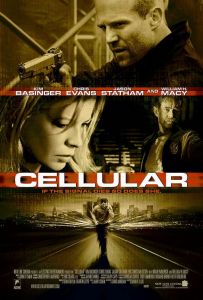 Cellular, a new thriller, relies on the simple device of a cell phone for the crux of its plot. With cell phones becoming ever more present, and ever more an eyesore in our daily lives, it was only a matter of time before they had their own movie. They’ve slimmed down from their heavier 1980s days, and become more useful, allowing one to surf the Web, take candid pictures of people in gyms, and are able to ring in the tone of the new hot rap song of the week. The premise for Cellular may be pitch-perfect for our modern society, but will an audience answer its call?
Jessica Martin (Kim Basinger) is a high school biology teacher caught up in some scary events. She’s been kidnapped by a gruff man (Jason Statham), and locked in an attic. She’s informed that her son and husband will be found and kidnapped, unless she tells him what he wants to know. Unfortunately, she’s clueless as to what her kidnappers want. There is a wall phone in the attic, and one kidnapper smashes it with a sledgehammer and walks away satisfied. Jessica goes to work re-configuring the shattered phone pieces, tapping wires until she can reach out and touch somebody.
Ryan (Chris Evans) is a hunky beach bum who’s chastised by his ex (Jessica Biel, I know, I didn’t believe it too) for being too irresponsible. He’s driving around in his cool ride when he gets a panicky phone call from, you guessed it, Jessica. At first he thinks it’s a practical joke until he overhears her kidnappers threaten her. Reluctant to help, Jessica asks him to stop the kidnappers from reaching her family. Ryan runs around town all day scrambling to help Jessica’s family and solve the case. He also enlists the help of a retiring police officer (William H. Macy), who’d rather open a day spa than do desk work.
 The premise for Cellular is near-genius and provides an abundance of smart, problematic possibilities. Ryan runs around and is always in danger of losing the signal. At one moment his cell phone is about to die from low battery charge. Another time the lines get crossed. Every step seems believable and the characters’ reactions seem credible. With Cellular, the audience thinks along with the characters step-by-step. When Ryan encounters stumbling blocks, the audience is with him in solving them, and this makes for a very engaging and thrilling movie.
The acting in thrillers is usually a minimal speed bump but the actors in Cellular do fine work. Basinger attempts to make up for her role in The Door in the Floor and plays harried and teary like a pro, but her best moments are when she uses her biology teacher know-how in precarious situations. She’s like a female MacGyver. Cellular is really a coming-out for Evans as a leading man. He’s had small roles before in The Perfect Score and Not Another Teen Movie, but this is his first leading-man role, and he handles the running, shouting, and panting with aplomb. Statham does his usually fine work of sneering and acting menacing. It’s also fun to watch William H. Macy, usually playing an every-man or a sadsack loser, play a bloodhound cop that morphs into an action hero.
The pacing in Cellular is breakneck. In the first 10 minutes, we witness Jessica’s kidnapping, and the momentum built up from that point is exhilarating. There is rarely a moment to catch your breath in Cellular. The action sequences are exciting but not redundant, and the tension readily mounts, especially when the audience is given more information than our heroes. There’s also some fun jabs at our country’s cell phone lifestyle.
 Director David R. Ellis worked as a stunt coordinator for 20 years, before advancing into the director?s chair and helming 2003’s schlocky gore-fest Final Destination 2. Ellis knows how to keep his plot moving, and something is always happening in Cellular to draw our attention or to push us on edge. Cellular was written by Larry Cohen, who also penned Phone Booth and probably won’t rest until he’s the Robert Rodat of telecommunications (Rodat wrote Saving Private Ryan and The Patriot, and seems destined to write a movie about every American war). Might I envision an erotic thriller with the “Can you hear me now?” Verizon guy just around the corner? Only time will tell.
As with any thriller, there are going to be lapses in logic that have the possibility of stopping the story dead in its tracks. Cellular‘s biggest logic loophole occurs right at the start, and if you can get behind it then you can enjoy the rest of the ride. Instead of smashing a telephone, why not yank it out of the wall and fully decommission it? Or, even better, why leave your kidnapped victim in a room, out of your sight, with a phone? Would it not have been easier to just tie her to a chair in plain sight? The mind boggles. The real answer we all know, of course, is because then we wouldn’t have a movie. There’s also a sequence late in the film where the bad guys discuss their evil plan on cell phones, which seems a tad careless considering anyone with a police scanner could listen in. As I said, gaps of logic are expected in this movie terrain and it’s your ability to rise above them that will determine if you enjoy the film.
Cellular is a thriller that dials the right numbers. It may have some gaps in logic, but it delivers when it comes to sharp suspense, smart action and a great premise. Fans of action thrillers should lick their lips with what Cellular has to offer. Just remember to keep your cell phones turned off during the movie, unless, of course, you’re surfing the Web, sneaking pictures of some girl, or jammin’ to the rap song of the week.
Nate’s Grade: B
Share this:

Catwoman (2004)
 Halle Berry has not exactly followed up her 2001 Best Actress Oscar with the wisest choices. There was a starring role in a James Bond movie, Die Another Day, there was Gothika, a spooker that didn’t scare anyone, except studio executives who saw the final gross. Now there’s Catwoman, a big-budget superhero film that’s got such a ripe odor to it to smell from miles away. It’s not good when a studio pulls a trailer because fans laugh at it, and it’s certainly not a good sign when the studio hires reshoots a month before the film is released. Catwoman’s looking for a big chunk of the superhero money out there, but will it land on all fours?
Patience Phillips (Berry) is a frazzled, down-on-her luck graphic designer at Hedare, a giant cosmetics corporation led by husband and wife team George and Laurel Hedare (Lambert Wilson and Sharon Stone). Patience is described as being “fun-deficient,” and lets people walk all over her. She tries saving a cat from a ledge one morning, and Officer Tom Lone (Benjamin Bratt) jumps out of his car to intervene, thinking she’s a jumper. He rescues her, though she doesn’t need it, and then asks to go out some time for coffee, the universal first date without it having to be a date.
 Patience is returning her designs late one night and overhears that Hedare’s newest product has the unfortunate side effect of making people’s faces melt if they discontinue use. The Hedare goons chase her down a water drain and flush her into a river. She’s revived somehow by the same cat she tried saving from the ledge. Patience reawakens with superhuman powers, heightened sense, and expert agility. There are some kinks, though. She sleeps in odd places, gobbles tuna by the handful, and loves to swing a whip. Who knows what she does to go to the bathroom. The new Patience is a bit confusing to Tom, but he goes along for the ride. He’s also on the hunt for the Catwoman, a mysterious leather-clad woman responsible for some jewelry theft. Patience unravels Hedare’s cosmetics conspiracy and aims to stop George and Laurel from mass production, all the while staying one step ahead of her boyfriend’s investigation. But Laurel is also experiencing some growing pains of her own. Unsatisfied with being pushed out her company’s advertising spotlight for being “too old,” she begins using heavy amounts of their newest beauty product and makes her skin as tough as living marble. With this new power, she schemes to retake power from her husband, as well as eliminate a pesky Catwoman.
Let’s not mince words and get directly to the elephant in the room: Berry’s hideous, trashy costume. This is, by far, the worst costume ever in a superhero movie, and possibly the worst costume in cinematic history. It’s so overwhelmingly ridiculous that perhaps the filmmakers felt Catwoman’s ultimate weapon against evil was having it die from laughter. It’s a bizarre combination of a mask with large mouse ears, leather bra, criss-crossing belts, gloves with diamond-tipped nails, and leather pants that look like they were mauled by a bear. Oh, and then there’s also the open-toed shoes. What? A superhero who wears open-toed shoes? All evil doers would have to do is step on her feet. The only purpose the outfit serves is to make Berry look sexy, but you didn’t need a stupid, tacky outfit for that.
The story of Catwoman takes a giant leap into weird mythology. Apparently, possibly immortal cats decide someone will become a Catwoman, a woman we’re told is not bound by our foolish rules. There’s no explanation why the cats choose who they do, what the purpose of this is, or what is even expected in return. We do get a montage of Catwomen through the ages dating back to ancient Egypt. Apparently, Catwomen follow the same lines of mythology like Buffy the Vampire Slayer: “Unto each generation, a Catwoman is born.” It’s also kind of funny that a film called Catwoman, about mythic Catwomen, has a crazy old cat lady (poor Ruth Fisher).
 The villainous scheme in Catwoman is awful. I can’t imagine the FDA not having some grumblings when their test bunnies start having their faces melt off. More importantly, what company would EVER release a product that melts your face in our litigious society? Just think of the mounting class action lawsuits that could very likely bankrupt that company. So, right there the villain’s plot is moronic for two big reasons. Don’t even get me started on Stone’s superhuman strength aided by the beauty cream we learn melts faces.
The acting is what you would expect. Berry is a beautiful woman, no doubt, but her performance is split between flighty wallflower and naughty dominatrix, neither of which is convincing. Bratt is the worst police officer ever (he can’t identify Catwoman even though only a tiny part of her face is obscured) and tries valiantly to hold his own amongst the ridiculousness. Wilson was such a stock corporate villain that they could have erected a cardboard cut-out of him and gotten the same performance. I never thought I’d say this, especially after The Muse, but Sharon Stone is the best thing about this movie. She’s an ice queen, but an entertaining one until she goes overboard on her beauty cream.
Catwoman is the first superhero film for Warner Brothers since their disastrous franchise-killing Batman and Robin in 1997. It’s hardly a coincidence that Catwoman is the also the worst superhero film since Batman and Robin. The film is trying really hard to be Spider-Man. Before her feline transformation, Berry is a frumpy dweeb, and afterwards she gets heightened senses, a new jolt of self-confidence, and the love of her man. Catwoman even has the guts to rip-off Daredevil, an amusing but fairly flawed movie itself trying to be Spider-Man. There’s a scene where Patience and Tom play a competitive game of basketball surrounded by chanting children. This is a direct rip-off of the scene in Daredevil where Ben Affleck and Jennifer Garner play fight on a playground. I don’t know about you, but when you’re ripping off Daredevil of all movies, you have problems.
This film has five credited writers, which works with my Rule of Five for films: if there are five or more people responsible for the script, then there was no script. Who amongst the five wants to take credit for all the dreadful cat puns in the dialogue, like Catwoman saying, “What a purrr-fect idea.” There’s also this wonderful repartee where Laurel says, “For you, Patience, it’s game over.” Then Catwoman responds, “It’s overtime!”
 Catwoman is director Pitof’s (perhaps short for Pitof-ful?) first real break as a director. He began his career as a visual effects artist on films like Alien: Resurrection, City of Lost Children, and The Messenger, but can anyone recount a visual effects artist that went on to become a decent director? (If you bothered to answer with Joe Johnston, then I don’t think you understood the question)
Movie Director Pitof has a love for cheesy CGI shots, but what’s more harmful is his penchant for confusing quick-cut edits. After watching Catwoman, I had to pop some Advil when I got home because the film’s editing had actually caused me a headache. It became so annoying that I started counting “one Mississippi, two Mississippi, etc.” to gauge the average length of a shot. Let’s just say that we didn’t make it past “one Mississippi” about 95% of the time. Now, there’s nothing inherently wrong with quick-edits; The Bourne Supremacy used them effectively to keep a lively, unpredictable experience. Catwoman’s editing is just jarring, especially during action sequences where you’d be hard-pressed to figure out what’s exactly going on.
The effects work is also rather pathetic. Pitof adores zooming exterior shots that become tiresome after the eighth or ninth time. Worse are all the scenes where Catwoman jumps and leaps through the city like she’s Spider-Man’s long-lost sister. The film is bending over backwards to try and ape Spider-Man, and these joyless, silly sequences of CGI Halle Berry crawling and jumping around the city don’t help the comparison. I do suppose that making a CGI Halle Berry flex and bend in her leather outfit was probably the most rewarding work for an animator since digitally making a breast grope itself in Hollow Man.
Who exactly is this movie intended for? If the filmmakers were going for fans of the Catwoman character, then why did they break away from the comic’s history and create something distant and different? If the filmmakers were strictly making an action movie, then why all the visual fluff, idiotic romance, and headache-inducing editing? I suspect that the producers felt that the names Catwoman and Halle Berry would be enough to put butts in the seats. So, then, I deduce that the selling point of Catwoman is, “Wanna see Halle Berry in a sexy leather outfit?” Now, most males will say, “Sure thing,” but why would they pay seven to ten dollars to see sexy non-nudity when they could go online. The short answer to who this film is intended for is, of course, no one.
 Catwoman is derivative, incomprehensible, dumb, and just plain boring. The only people who will get a kick out of Catwoman are either hormonal teenagers aroused by Berry’s outfit, or those who enjoy jeering a terrible movie. I can’t even recommend seeing Catwoman because of its ineptness. It’s bad, oh boy is it bad, but it’s not insanely idiotic like Bulletproof Monk or Dungeons and Dragons to the point where the lunacy is a must-see. It’s just boring bad, enough that it almost put me to sleep.
Perhaps the funniest thing of all, Berry has publicly stated in interviews weeks after Catwoman’s release that she’d love to don her leather outfit and do a sequel. Maybe she needs to talk to the producers who lost a bazillion dollars and inadvertently created a midnight movie howler. Catwoman will certainly get delegated to the litter box, but how many lives does Berry have left in Hollywood?
Nate’s Grade: D
Share this:

Shaun of the Dead (2004)
 This British import was described as a “rom-zom-com” (something tells me that genre is rather spare). Director Edgar Wright and star/co-writer Simon Pegg plunk down an assortment of typical British sitcom characters and then throw zombies into the mix. Shaun of the Dead is hilarious from start to finish. Pegg and his batch of survivors go through the strange scenario with wit, grit, and a genial sense of irrelevance. It’s as if even flesh-eating zombies can’t ruin their day (Shaun devises a plan that involves killing his zombie step-dad and drinking a cup of tea). Shaun of the Dead gives a knowing wink to the Romero films but also tweaks the zombie genre’s rules and clichés. Wright has a clever sense of visuals and the film does provide some sticky, gory goods for horror fans. If more films were this much fun I’d probably never see natural light again.
Nate’s Grade: A-
Share this:

I, Robot (2004)
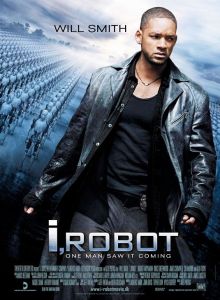 No doubt about it, Will Smith is the best hope our planet has in the face of adversity. He’s taken down aliens three times, foiled one conspiracy, stopped the South from rising again, and the man still finds the time to help Matt Damon with his golf swing. I fear we almost may be taking Smith’s world-saving exploits for granted. Smith’s newest chance to save the world arrives in I, Robot. Can Big Willie save the world yet again, or has he punched his time card one too many times?
In 2035, man has a new class of immigrants to do all the menial tasks no one wants to do – robots that look like crash test dummies. U.S. Robotics (USR) wants to push their new fall line of robots and make sure every happy home has a happy robot. Del Spooner (Will Smith) is a detective wary of our robotic friends. His colleagues laugh at his paranoia, remarking that no robot has ever committed a crime. This is thanks to the three laws hard-wired into every robot: 1) A robot cannot harm a human being, 2) A robot must obey a human beings order as long as it does not conflict with Law #1, and 3) A robot can do whatever to survive as long as this does not conflict with the other laws.
 This sounds great, except the robot creator (James Cromwell, always there if you need an old guy role) has apparently plummeted to his death from his USR office and the circumstances involving his demise are dubious at best. Spooner works alongside a robot technician/shrink (Bridget Moynahan) to find out more about what exactly is going on within USR and its suspicious CEO (the always shady Bruce Greenwood). Spooner discovers that a robot, who wishes to go by the name of Sonny, may have sent his creator to his death and may also be the first step toward uncovering the truth behind a grim conspiracy.
Smith has never really been a great actor but he is likable and charming enough, so that gets him through the day. The problem is that when hes saving the world in summer blockbusters he has a tendency to go into Will Smith Mode, which plays out like hes on auto-pilot. His stares, awkward mannerisms and aw shucks humor seem to be the same in every film. This isn’t to say that Smith cannot be a capable actor, but it seems that when a movies budget goes over a certain amount he resorts to playing Will Smith: World Saver and not so much a character of real value.
The other actors are more so playing vague archetypes than they are anything else. Greenwood is the sneaky, oily executive; Moynahan is the cold scientist learning how to be human once more; the invaluable Chi McBride is the no-nonsense police chief who rolls his eyes at Spooner’s crazy theories; and Shia LeBeof actually shows up for all of three minutes playing some kind of juvenile delinquent that is wholly unnecessary to the film.
The movie’s greatest accomplishment is the character of Sonny, modeled after a physical performance by actor Alan Tudyk. Sonny’s calm line readings, bursts of emotion, and questions on humanity make him a character the audience connects with, especially with the detached nature of Smith and Moynahan’s acting. Bet you never would have guessed this is from the same guy who played Steve the Pirate in Dodgeball.
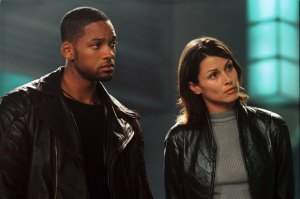 I, Robot isn’t exactly going to establish new ground in the world of science fiction. Its mostly a detective story with some twinges of sci-fi philosophy. As a detective story it adheres to the laws of detective movies, like how NO ONE ever believes the hero on his hypothetical assumptions and paranoia, which will of course always be right, and how the hero can only solve the case after he is thrown off it and gives up his badge. For two thirds of I, Robot we get an amiable, if average, detective story set in the future. Then we get a slightly incoherent final act where robots go all-out crazy.
Director Alex Proyas takes a step back from the grim, noir-ish worlds he worked with so effectively in The Crow and Dark City, and presents a cleaner and more sterilized world. His technical elements, like cinematography and musical score, are still well above par for the summer blockbuster. Proyas is a gifted visual tactician that knows how to wow an audience.
The sleek production design, fancy special effects, and strong visionary directing help lift an average story. Some of the story elements may not all work -like Spooner’s flimsy reason he hates all robots, and Moynahan’s character being very cold because she works around robots (get it? get it?)- but the professionalism of the people behind the scenes help make a rather exciting and occasionally thoughtful movie. Sonny’s questions about life and death as hes near termination are a nice addition to add something more to a summer blockbuster than explosions and car chases. Of course I, Robot also has some exciting car chases and action sequences. Certainly other, better sci-fi movies have dealt with these issues much deeper, and I, Robot seems to only skim the surface of intellectual debate, but at least it’s something (though this sounds really defeatist).
Bearing little resemblance to Asimovs collection of short stories, I, Robot is more a stream-lined sci-fi action flick, but its still a satisfying and stylishly entertaining diversion. Sci-fi fans may grumble at the notion of transforming a complex novel into a watered down action film, but I, Robot is a crowd pleaser that delivers the thrills when it needs to. If Will Smith keeps up this world saving pace he may get a little haggard and start turning into Danny Glover’s Lethal Weapon character: I’m getting too old for this aliens/robots/other aliens/more aliens/giant mechanical spiders shit. Well, at least Smith’s good at it.
Nate’s Grade: B
Share this:

Torque (2004)
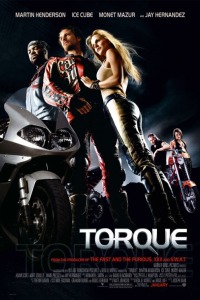 You want to know how bad Torque was? Until I began typing this article, I had completely forgotten I had even seen it. I suppose the film was an attempt to grab the attention and dollars of young, car-obsessed males who made The Fast and the Furious a hit. Somebody should have told that to director Joseph Kahn. A veteran of music videos, Kahn was more interested in making a collage of visually alluring shots than telling a story; not that Torque’s story would have excelled in other hands. This was a fast-forwarded video game populated with bland actors, bright colors and shiny bikes, which mean it’s only suited for moviegoers post-lobotomy.
Nate’s Grade: D+
Share this:

The Day After Tomorrow (2004)
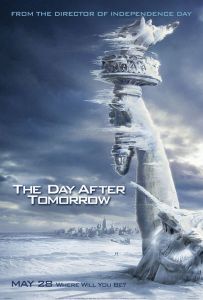 I must confess a giant moment of geekery: for a month or so I waited patiently until the Wednesday before the new disaster opus The Day After Tomorrow opened so I could finally say, The Day After Tomorrow opens … the day after tomorrow. Im surprised the marketing department didn’t beat me to that punch.
Jack Hall (Dennis Quaid) is an environmental scientist concerned about global warming trends and the chaos they could cause. He tries to alert government officials to these dangers but is met with a cold shoulder. Jacks son, Sam (Jake Gyllenhaal), is traveling to New York for a school quiz tournament on the slightly less grave mission of earning the affections of one of his classmates. Somewhere between the establishment of these two stories, all hell breaks loose. Jack and another researcher (Ian Holm) share data and discover that the world is headed toward a gigantic climate shift, a new Ice Age. While the world is crumbling, Jack is determined to reunite with his son, trapped in New York.
The special effects of The Day After Tomorrow are indeed awe-inspiring, but once they finish the viewer is left with a story that is, shall we say, overcast. Unlike director Roland Emmerichs other disaster films with aliens or giant lizards, a cataclysmic climate shift is not a beatable foe, so the story is left without resolution. It’s kind of hard to vilify the weather.
 What do you do once the world starts another Ice Age? Not much besides keeping your butt from freezing off. So this means that the crux of the after scenes revolve around Jack trying to reunite with his son. Jack tells his son to hole up where he is and, cue heroic music, he will come find him. Sure. Does anyone stop and question, Why? I know why Jack treks, on foot no less, from Philadelphia to New York, but it isn’t even necessary. His son and their friends are fine where they are and the only severe threat they face is when the giant frosty eye of the storm looms overhead. Quaid’s character has no opportunity to assist them during even that scene. Im sure someone thought it would be a touching display of a fathers love for his son, but its really just winds up looking foolish. He tells his son not to move, then disobeys his own advice to venture out. Nothing of significance happens because of Jack’s journey. He might as well have stayed home and read a book.
The acting of any disaster flick is really confined to yelling and … panting, I suppose (which could also accurately describe the acting prowess of the late night programming of Showtime). Quaid is a sturdy hero but seems to look ten years older than normal. Gyllenhaal is one of my favorite young actors (I adore Donnie Darko) and, to his credit, he does a suitable job of running around and yelling.
Perhaps the funniest thing in The Day After Tomorrow is a Vice President who refuses to listen to environmental concerns that looks a heck of a lot like our current VP, Dick Cheney. The timeliness also extends to a somewhat witless president who, when faced with a crucial decision, turns to his VP and asks, What do you think?
The necessary scenes of planetary and civilization destruction are first-rate in the film. Emmerich is our premiere master of laying waste to the world, particularly New York City. Emmerich keeps our view of the carnage mostly restrained to long shots where we can witness the full magnitude of devastation he is trying to put forth.
 The weather effects are top notch, especially a series of tornadoes that devastates downtown Los Angeles. There are some beautiful visual moments, like seeing thousands of birds migrating from impending doom, or a final image from above of the iced Statue of Liberty. Tomorrow also has a clever moment late in the film when the frost storm hovers over New York and forces characters to outrun advancing … frost. Its not as stupid as it sounds. And, as per usual in disaster flicks, Mother Nature always knows where to strike – landmarks. How else does one explain the precision of taking out the Hollywood sign?
For a good hour, The Day After Tomorrow is great escapist entertainment. The scenes of destruction are riveting, and the moments leading up to them have great suspenseful pacing. The film’s climax is its half-way point, which is never a good sign. After all the floods, rain, snow, twisters, and everything Mother Nature has in her arsenal, we are left with characters scrambling around running from … wolves. Going from tidal waves to wolves is not exactly an increase in suspense.
There is a hilariously awful moment in the film involving Sam’s wife, played by Sela Ward. Sela is a nurse at a hospital watching over a child with cancer. She refuses to leave him alone and waits for an ambulance to arrive, because, for some reason, the cancer kid can only be transported by ambulance. It’s just distasteful and dumb that this storyline even exists: brave woman determined to stay by the side of cancer child.
The Day After Tomorrow is an exciting diversion that doesn’t know what to do with itself after all the big money shots are spent. Its like a balloon once the air is all out. Perhaps the creators should have consulted any prior warning about stranding an audience in a story that no one cares much about. It’s worth seeing, but it’s also worth leaving after Mother Nature unloads her goods.
Nate’s Grade: C+
Share this:

Van Helsing (2004)
 Crossover movies have a distasteful history in the world of cinema. Some movie exec gets the notion, “Hey, why can’t two great tastes taste great together?” But what we’re left with is usually uninspired (The Flintstones Meet the Jetsons notwithstanding). Crossovers for horror movies are the worst of the lot. For every Freddy vs. Jason there’s a dud, like 1966’s Jesse James meets Frankenstein’s Daughter. That year went down in the annals of cinematic history, however, as it also gave us Billy the Kid versus Dracula, marking two entries in the expanding genre of cowboys battling famous monsters (as far as I know, this genre still stands at two movies). So what can one expect from Van Helsing, a big-budget creature feature that includes Dracula, Frankenstein and the Wolfman?
Van Helsing (Hugh Jackman and a really big hat) is a secret soldier for a covert order of the Vatican. This covert order dispatches monsters and creepy-crawlies the world over. He’s been ordered to assist Anna Valerious (Kate Beckinsale), the last in a Romanian family line that has sought to kill the infamous Dracula (Richard Roxburgh). It seems that their family line is dwindling. And Anna’s brother being turned into a werewolf doesn’t help the situation. If her family line dies before Dracula then they cannot enter heaven. Van Helsing comes to town to help out the locals who are terrorized by Dracula’s flying brides. Van Helsing effectively kills one of the vamp ladies and is celebrated as a hero by the village. As he gets closer to Anna he also learns more about his own mysterious past and his connection to a certain figure with big teeth.
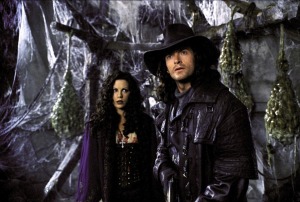 The Big D has a dastardly plan. He wants to find Frankenstein’s monster (Shuler Hensley) to channel enough power through him to awaken zillions of goo-sacks harboring the vamp’s undead brood. Of course, Frankenstein’s monster isn’t too keen on this. Together, he and Van Helsing, with the help of Anna as well as a comic relief monk, battle to stop Dracula from unleashing his children of the night.
Van Helsing is stupid, stupid, stupid. Director Stephen Sommers exists in his own indulgent world where bigger is better and some CGI spackle will fix any plot holes. He makes check-your-brain-at-the-door popcorn movies, but a “popcorn movie” is no excuse to forgive a rambling, incoherent, loud, stupid mess. I liked the first Mummy flick and even found some good with the second, but Van Helsing is Sommers at his rock-bottom worst, gorging on a trough of special effects and vomiting the results onto the big screen. Sommers’ idea of character development is knocking people through walls like they were in a Looney Tunes cartoon.
Van Helsing raises some interesting questions, like why do Dracula’s brides morph into flying demons that are conveniently genitalia-free? Why does a werewolf rolling over the top of a carriage somehow cause it to catch on fire? Why does Dracula keep his magic lycanthropy cure in the open? It doesn’t matter. Van Helsing is so straight-laced about its absurdities that questioning them will just get tiresome.
Not that you would expect much, but the acting in Van Helsing is bad. Beckinsale’s accent couldn’t be less convincing if her role were played by Charo. The trio of Dracula’s brides are played by swimsuit models and let me just say their performance is on par with what you would expect from swimsuit models. Roxburgh is quite possibly the worst vampire in the modern history of vampires, and that includes Blacula, Count Chocula and Tom Cruise. He couldn’t look any less sinister if he was in a diaper and bonnet. What’s up with those strands of hair that dangle in his face? Why do the Van Helsing creators want their Prince of Evil and son of Satan to look like he was the keyboardist for some 80s pop synth band?
 This overly long film feels like a seven-year-old’s book report that he hasn’t read: it’s like a child is making this up as they go. “And then … a werewolf pops up … and then Dracula’s flying brides … and then they all need Frankenstein’s monster ….” Seriously, were the penning this script on the fly? It’s a $150 million improv film. The reels of the film could be switched around and no one would be able to tell the difference. Van Helsing is one long, exasperated action sequence that drags its heels instead of wowing. It beats the audience into submission with its stupidity and redundancy.
The entertainment level of Van Helsing is exceedingly weak. It runs an eternity, which wouldn’t be a problem if one were intrigued by the story, the characters, or the action sequences. The action could have been suitable but Sommers has gotten less reliant on the physical and more superfluous with his CGI. Watching a CGI monstrosity smash into a CGI monstrosity before a CGI background where no semblance of reality is present grows tiresome after 130 minutes. The effects are passable, but they overload the viewer and numb whatever slight interest may have existed for the classic monsters.
What should have been a clever homage turns instead into a hollow marketing ploy that’s so frenetic and tireless with its manic pacing and bad special effects. Even the many attempts at humor are flat. It has to be some kind of apocalyptic sign that Hellboy and now Van Helsing have been unleashed unto the innocents of this world. Some will find Van Helsing decent popcorn entertainment, but most will grow weary of its sloppy design and wafer-thin substance. For me, this is one to avoid, period. There isn’t an ounce of fun to be had while sitting through the painful pair of hours that is Van Helsing. This is one monster mash that’s a real monster mess.
Nate’s Grade: D
Share this:

The Punisher (2004)
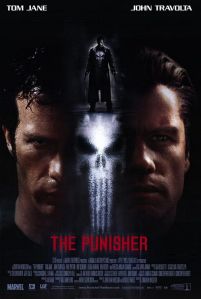 It’s probably a bad omen when the co-writer of Armageddon makes his directorial debut (J.J. Abrams is a fluke). The Punisher is one of the ugliest movies I have ever seen. The action isn’t exciting; it’s pat, poorly shot and grotesque. The story isn’t interesting. It’s not enough that The Punisher has his family killed; he has to have his ENTIRE family killed during a reunion. When he does exact his vengeance, the film stops an audience from engaging with the characters and pushes them away by callous misstep after callous misstep. This is just sadistic, ugly, and over-the-top while simultaneously being entirely, sadly predictable. By the time John Travolta gets dragged by a slow-moving car through a field of explosions, you may have thrown up in your mouth, swallowed it, and thrown up again.
Nate’s Grade: D


 nathanzoebl
You must be logged in to post a comment.