Rachel Getting Married (2008)
 Jonathan Demme’s dark comedy is a movie at battle with its context. At heart, there is a fantastic and engrossing family dysfunction that rears its ugly head and re-opens old wounds. Watching Rachel (Rosemarrie DeWitt, who didn’t get nominated for an Oscar why?) unleash years of repressed pain upon the likes of her toxic, needy, narcissistic little sister Kym (Anne Hathaway), just fresh from drug rehab, is enthralling because of how raw and hurtful the emotions are. You can feel the sting of the words. Through the arguments, a picture emerges of this family’s tragic history and he emotional tug-of-war between the siblings. This is the great stuff, but then the setting of the movie overpowers the drama and sidelines it. Rachel Getting Married will make you feel like you are apart of this martial extravaganza, so we see about fifteen minutes of toasting from EVERY PERSON, because, really, much of this is all exposition from characters who won’t be heard from again. We also see about 15-20 minutes of eclectic musical performances, dancing, and all the rest that comes at the close of a reception. While the wedding/reception is an interesting multicultural blend, it feels like an unyielding intermission from the terrific family drama. Hathaway is as good as advertised and soaks up the troubled life of a notorious problem child defined by little else than her problems. DeWitt is outstanding as the big sister tired of being pushed aside. Demme’s handheld camerawork, and the extensive ensemble of slightly eccentric characters, made me feel like this was an Oscar-serious version of one of the Christopher Guest mockumentaries like Waiting for Guffman. There is succulent family misfortune here, with great acting, but I wanted less wedding and more Rachel and friends.
Nate’s Grade: B
Share this:

Ghosts of Girlfriends Past (2009)
 I maintain that no story has been redone, recycled, re-purposed, and parodied more so than Charles Dickens’ classic holiday tale, A Christmas Carol. Dickens’ tale of redemption aided by supernatural ghosts and time travel has appeared in everything from Muppets to the Odd Couple. Statistically, the odds are good that right now as you read this very sentence television is airing some adaptation of this story right now. I suppose it was only a matter of time before Dickens got reduced to a romantic comedy setup. Ghosts of Girlfriends Past is a charmless and mostly empty movie that makes you pine for the comparative masterpiece of A Muppet Christmas Carol.
Connor Mead (Matthew McConaughey, playing himself for the thousandth time) is a hunky fashion photographer for Vanity Fair magazine and, boy, is he in-demand. Everyone wants his photo services and every woman wants to rip his clothes off. Connor is a notorious womanizer and he travels to the country to attend his younger brother Paul’s (Breckin Meyer) wedding. Connor is intent on dissuading his brother on the prospect of marriage, which Conner dubs archaic and he feels love is “comfort food for the uneducated and lonely.” It just so happens that Connor’s ex-girlfriend from way back, Jenny (Jennifer Garner), is the maid of honor at the wedding. She hasn’t seen her dubious ex for some time, but that doesn’t stop him from trying to make his move. Jenny and Connor were childhood pals, but an early bout of heartbreak led Connor to become the disciple of his Uncle Wayne (Michael Douglas), a boozy playboy who taught the kid everything he knew about bedding the babes. During Connor’s stay, the ghost of Uncle Wayne informs him that three spirits will visit to showcase Connor’s checkered past, present, and dodgy future, Dicken’s-style.
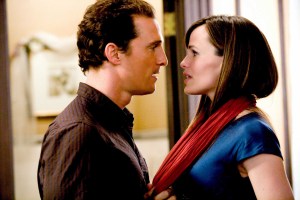 The movie is wholly unbelievable even for a contrived romantic comedy. The central romance between Connor and Jenny rests on the silly notion that after ten years apart, a lifelong selfish jerk can sweep his former girlfriend off her feet during a single crazy weekend. Connor’s redemptive arc is lackluster at best, and the movie just mimes the steps it feels that it needs to take to turn its lead insensitive jerk character into a sensitive jerk character. It doesn’t work. I refuse to believe for one second that a pretty, smart, confidant doctor such as Jenny would allow herself to get so completely suckered in by Connor’s “Baby I’ve changed” speech. It’s insulting and degrading. The compressed timeline reflects poorly on Jenny’s decision-making. The expedited timeline makes every human action seem far-fetched. There’s a scene where Connor opens a champagne bottle in the kitchen. The cork flies out and knocks one of the legs loose on the multi-tiered wedding cake. The cake is about to slip over when Connor slides in to stabilize it. Instead of redistributing the weight via the available legs, he tries reaching for the out of reach champagne bottle with his foot (the size of the bottle and the cake leg are not even close). A more believable situation would involve Connor trying to reach the fallen cake leg, not a champagne bottle, but alas. To make this example even worse, the filmmakers set up the disaster of a fallen wedding cake and then amazingly fail to show the goods. We only see the smashed aftermath. This is a comedy fundamental: set-up food disaster, let audience witness ensuing food-related disaster.
Ghosts of Girlfriends Past also doesn’t have one redeeming or marginally realistic female character. I would expect, given Garner’s star power and the natural importance of being the romantic lead, that Jenny would come across as a reasonable woman or someone worth fighting over. Sorry, Jenny is a powerfully underwritten character and Garner is left without much work other than serving as a reservoir of reaction shots. Seriously, that’s her main purpose in this movie; she is a cutaway image. Sandra (Lacey Chabert) is a shrieking high-maintenance shrew of a bride. The other female roles are largely one-note misogynistic fantasies (thanks male screenwriters Jon Lucas and Scott Moore). The trio of bridesmaids is gossipy chatterboxes and eager to get laid. Connor’s introduction to his future mother-in-law (Anne Archer) involves him casually groping her breasts, much to her prosaic approval. Connor has an irresistible way with the ladies, which makes everything without a Y chromosome want to sleep with the man. A young famous pop singer watches Connor dump three women simultaneously on an Internet conference call, insult them, and then she still strips off her clothes to bed the cad. She even states, “I don’t even know why I’m doing this,” and continues along. I’m just as confused what power Connor holds over the fairer sex because to me he’s just a twit.
 Here’s a telling example about how obvious this movie is written from an unenlightened male perspective: the central relationship dilemma is that Connor is afraid of cuddling. In the past, Jenny asked him to stay and cuddle but that was the breaking point, so he bolted. All of these women somehow manage to fall head over heels in love for a guy who willingly goes through women likes changes of underwear. It makes all the women comes across as emotionally needy, insecure, vapid bubbleheads who will sacrifice everything, including self-respect and dignity, to get a taste of McConaughey’s back sweat. Ghosts of Girlfriends Past is not a flattering movie for either sex.
The tone of this movie never finds an authentic and satisfying balance. Being a half-hearted tale of redemption during the period of a weekend, the movie crams in plenty of gooey sentimental claptrap. You’ll listen to characters talk about the true meaning of friendship, tear up over family memories, and then someone will make an inappropriate sex joke. There is a high level of semi-racy sex jokes that populate the world, appearing at odd moments, destroying any assembling emotions. Ghosts of Girlfriends Past will pretend like it’s building to something that actually matters and then it will throw it all away for a cheap sex gag — har har. There’s a moment where Douglas is illustrating how much ire Connor has wrought with visual metaphors. It begins to rain and he says that the downpour is made up of all the tears shed from ex-girlfriends and flings. Then it starts raining ripped pieces of confetti, and this we are told is all the tissues used. And then comes all the used condoms, and we watch Connor try and take cover before the aerial assault of used (and presumably “filled”) contraceptives annihilates him. It’s kind of gross and tonally disjointed from the rest of the sappy, happy PG-13 storyline.
 The movie is at its most amusing when it’s riffing on the expectations of following the Christmas Carol model. Connor is quite aware of the tried-and-true formula, so his comments along the way provide the movie’s only genuine laughs outside of Douglas. Really, Douglas’ character is the most entertaining character, and I kept wishing that the film would follow him even after death. Wouldn’t it be interesting to watch the life of a ghost involved in a Christmas Carol scenario? I imagine it would be a bit like a play rehearsal. I would enjoy seeing the behind-the-scenes work that goes into the scenario. I want to see ghostly foremen plot out unique scenarios for a list of real-life Scrooge cases, I want to see the ghost tryouts, I want to see the mechanics involved in the spiritual setup for this whole process. I enjoyed watching Uncle Wayne hit on his fellow spirits. But I suppose that approach would be too literary and break away from the cozy confines of the stillborn romantic comedy genre. And to prove that it is indeed a romantic comedy by the numbers, Ghosts of Girlfriends Past even includes the last minute dash to stop the romantic party from leaving via some method of transportation.
Ghosts of Girlfriends Past manages to squander every opportunity it has to be a better movie. The central idea could have worked but the execution is exceedingly lazy, charmless, and degrading to women in particular. The comic scenarios miss out on better laughs, and some of the better laughs are obvious and just around the corner, but the film routinely falls back on being a sexual farce. The characters don’t feel remotely like people and Connor is a terrible lead character with unfunny dialogue that reduces women to disposable pleasures. His transformation is contrived even for a romantic comedy. I’m not saying a cad character could not make for an entertaining lead here. Clearly Douglas is the best character, and his sleazy 1970s swinging sexpot has a fun Bob Evans vibe. Every moment he’s onscreen the movie comes alive in a new way, and Douglas is an actor that knows how to make lecherous appealing and appalling at the same time, like what Michael Caine pulled off in Alfie. This movie pales in comparison. Ghosts of Girlfriends Past should have been visited by the most important spirit of them all – the Spirit of Screenplay Rewrites.
Nate’s Grade: C-
Share this:

Disney Nature’s Earth (2009)
 The kind folks at the newly established Disney Nature division want to make sure those who missed out on the stunning 2006 Discovery Channel/BBC miniseries Planet Earth get another chance. Earth is a re-edited, recycled version of the globe-trotting miniseries, cutting down 8 hours to a bladder-friendly 95 minutes. Disney has given the film a family-friendly narrative, following the exploits of three families; a mamma polar bear and her cubs, a whale and offspring, and an elephant and its little thundering toddlers (note to parents: the film doesn’t shy away from death but you won’t watch any onscreen kills). The footage is jaw-dropping and to witness it on the big screen is a must-see. The mini-series, and by extension the new movie, is a powerful advertisement for conservation without having to get on-message or preachy. The gorgeous images speak volumes. The filmmakers spent over 5 years compiling mass amounts of footage, and some cameramen sat in isolated and harsh conditions for a year in order to snap rare moments on film. While the film cannot rival the mini-series, it’s still a highly watchable experience with eye-popping visuals and, really, little else. It serves as a tasty appetizer for the larger main course, the immersive and riveting Planet Earth mini-series. But hey, there is something God-like about listening to James Earl Jones detail the particulars of life on this spinning blue orb. Earth is mostly spectacle but ho boy, is it first-rate spectacle.
Nate’s Grade: A-
Share this:

17 Again (2009)
 My introduction to tween sensation Zac Efron came last fall. After hearing about the dominance of the High School Musical franchise I decided to finally watch the first made-for-Disney Channel film and see why exactly tween girls were screaming themselves hoarse. And after watching the musical I felt, well, how can I put this diplomatically? It sucked. Hard. First off, the plot only covered auditioning for a musical, not the actual show. What the heck is up with that? How does a movie musical climax around callbacks? Amidst the bland vanilla pop tunes, goofy hoofing, and painfully simplistic life lessons about class-consciousness, there was the overall dreadful acting by the cast. Efron wasn’t the worst actor of the lot but he seemed to go on autopilot, beaming dreamily and leaving his mouth agape long enough to stockpile flies for a long winter. I could not understand why young girls and the media were making such a fuss over Efron. I am clearly not in Efron’s core flock of fawning fans, but after catching his fairly nimble work in 17 Again I think perhaps this guy might be able to break out from the clutches of Disney and grow into his own, unlike Miss Miley Cyrus, who I believe has an ankle bracelet that will detonate if she travels further than 100 feet from the Disney execs. They don’t want another Hilary Duff getting away and sticking a scorpion down her shorts (see: War, Inc.).
Mike O’Donnell (Matthew Perry) hates his life. He’s 37, just been passed over for a promotion at his job, is getting divorced from his wife Scarlett (Leslie Mann), and his two teenage children (Sterling Knight, Michelle Trachtenberg) think dear old dad is a doofus. Apparently, everything was better 20 years ago, in 1989 when Mike was a 17-year-old basketball phenom who had his whole life ahead of him, until he walked out on a climactic game to tend to Scarlett, who just revealed that she was pregnant. Mike wishes he had one last shot to be 17 and have his whole life ahead of him again. Thanks to a magic janitor (I believe it’s really the magic hobo from The Polar Express, except now he’s gone through a work program and become a respectable community custodian), Mike transforms into the visage of his 17-year-old self (Efron). Mike seeks help from his childhood pal Ned Gold (Thomas Lennon), who poses as Mike’s father and enrolls him in the same high school his children attend. This leads to many awkward family encounters.
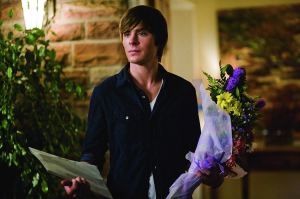 The body swap genre can be counted on for some decent fish-out-of-water laughs and some earned wisdom. Usually transporting young people into older bodies allows for more comedy because it leads to more socially awkward moments and the exaggerations of trying to be old before your time. 17 Again is consistently amusing enough and I was pleased that it found fun plot developments to explore from its body swap angle. So Mike is young once more but that doesn’t stop him from having, on the surface, inappropriate feelings for Scarlett. On top of that, teen Mike must beware the romantic advances of his own teenage daughter. Yes, the movie simultaneously explores robbing-the-cradle romance while dodging incestuous pratfalls al la Back to the Future. There is uncomfortable father-daughter sexual tension without getting too perverse. These two wrinkles nicely take advantage of the older person body swap premise and add some spice to an otherwise safe and sunny movie. Besides that, if you’ve seen any body swap movie from the past (and the 1980s were littered with body swap movies) then you’ll know exactly how everything will turn out with 17 Again. The movie is mostly silly, mostly the fun kind, but it doesn’t dip into being outrightly dumb. It’s derivative but it’s not fluff. I mean the essential premise revolves around a man regretting supporting his pregnant teen girlfriend/eventual wife. You won’t find that in the Hannah Montana Movie no matter how hard you try, perverts.
17 Again isn’t great art but it works as a showcase for its appealing star, the dewy-eyed, shaggy-coifed Efron. The filmmakers clearly know their target audience because Efron is shirtless and sweaty by minute one, displaying killer abs. By minute four, he’s dancing before his big basketball game (does this kid have a clause in his contract that he must play basketball in all his movies?). 17 Again asks little of Efron and he easily delivers on that mandate with a convincing performance that easily charms. He’s also adept at comic timing, particularly when he’s sparring with Lennon. Efron has a fabulous toothy grin and he’s a good-looking pup, but the jury’s still out on whether or not this kid can go the distance. He’s improved considerably since the first High School Musical launched his mug onto thousands of household products. He probably doesn’t have an Oscar in his future but he certainly will be headlining movies for years to come. He’s more movie star than actor, but let’s not mince words, the kid is a star (fun fact: Efron’s first acting credit is for an episode of Joss Whedon’s Firefly).
The supporting cast surrounding Efron greatly add to the film’s surprise enjoyment. The subplot involving adult dweeb Ned romancing the principal (Melora Hardin) is an amusing diversion that manages to make me like all of the characters more. Lennon (Reno 911!) steals every moment he’s onscreen and develops a kooky chemistry with Hardin (TV’s The Office). The more these two actors interacted the more I wanted the movie to ditch everyone else. Mann gets the thankless job as “upset wife” but brings a spark to the character without coming across as grating. Trachtenberg (Euro Trip, TV’s Gossip Girl) is actually 23 years old but her youthful looks seem to lock her into teenage girl roles. Look out for cameos by comedians like Jim Gaffigan and Margaret Cho. Perry must have enjoyed working for about a week and cashing his check. Also, Perry looks absolutely nothing like Efron and appears to be over a foot taller than his younger, more genetically blessed doppelganger.
 I feel sympathy for the editor of 17 Again, because clearly script supervisor Steve Gehrke must have been asleep for the entire film shoot. There are continuity gaps galore in this movie. Now, normally I don’t care so much about mild continuity errors in a movie because that’s just part of moviemaking. So if a character sits up in bed and the sheets are a few inches lower, or in a different ruffled state, well who cares? But when errors compile wildly and become flagrant distractions, then the movie has a problem and the script supervisor, the person in charge of catching those errors in progress, failed miserably. When teen Mike eats a hamburger in the school cafeteria it goes from being in his hands, out of his hands, having a bite out of it, and then magically reformed. Even worse is a moment when teen Mike is nursing a battle wound and his wedding ring keeps changing hands. Why would anyone even bother switching hands for a ring to begin with? That sounds like an easily avoidable hassle. To be fair, there are several factual errors that are not Gehrke’s total fault, though I’m dumfounded why no one else caught these. In 1989, the coach yells at Mike to quite dancing and refers to him as “Vanilla Ice,” but Vanilla Ice didn’t release his debut album until 1990 (apparently the coach knows his underground white hip-hop). What’s even more puzzling is that this pop culture reference is destined to sail over the heads of Efron’s target tween audience. All of this is easily verifiable. I won’t even get into Mike referring to “hippogriffs” 10 years before Harry Potter was published.
17 Again is a pleasant enough confection that is undemanding and yields some laughs and enough heart. The movie manages to be more mature than expected thanks to some kinky-for-PG-13 sexual tension and yet the movie is a harmless good time at the movies. Efron carries the movie ably but he’s got a great supporting cast to help carry the comedy load. Body swap movies are all invariably the same, and truly 17 Again must have been born with the sentence, “It’s reverse-Big.” It’s playful and light and cheery and pretty much an adept project for its star. It’s a small step in the right direction for Efron, and perhaps his fan base will start including more than squealing teenager girls primed to swoon at a moment’s notice. Swooning: it’s not just for the youngsters any more.
Nate’s Grade: B
Share this:

Tunnel Rats (2009)
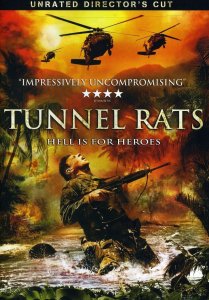 Uwe Boll does a Vietnam War film? It certainly sounds like a recipe for profound disaster. In 1968, as the intrusive prefix to the title tells us, the U.S. military had a unit of soldiers with the special mission to discover and infiltrate the miles-long underground tunnels by the Viet Cong. These “tunnel rats” were tasked with clearing out these deadly and cavernous mazes, where the Viet Cong ate, slept, and even walled up their dead within. Sergeant Vic Hollowborn (Michael Pare, who else?) heads the unit and has to shape up the new recruits into formidable fighters. Hollowborn lectures his young men on the dangers of “Charlie” and even orders them to execute an enemy prisoner. “Charlie’s gonna kill you just for being here,” he warns. “He doesn’t care if you’re a nice guy.” This nugget of wisdom is proven true over the 90-minutes of the film. The Tunnel Rats unit finds a new tunnel and this discovery eventually leads to the camp being decimated over the course of one hellish night in Vietnam.
When the action goes underground is when the movie gets, remarkably, pretty good. The labyrinthine tunnels dug out by the Viet Cong is an incredibly interesting subject that no Vietnam film has yet to cover with any substantial attention. Did you know that the Viet Cong could smell the smoke or aftershave of a man in those tunnels? They can even tell the brand of cigarette supposedly. Boll’s movie fails to take full advantage of its intriguing wartime setting. I wanted to know more about the particulars of the duties entrusted to the Tunnel Rats, a real unit of the armed forces with a high mortality rate. I wanted to know about the incredible construction of these tunnels and the dangers they posed to the U.S. armed forces. I wanted to know about the day-to-day lives of men who specialize in the tunnels, and I really wanted to learn about the unique minutia of hand-to-hand combat within such confined space. Fighting for your life in such limited space, now that’s interesting stuff.
 While Boll’s war movie fails to explore the tunnel setting in detail, Tunnel Rats has its fair share of quality suspense, mostly thanks to the claustrophobic quarters. It’s hard to make such limited space exciting for so long, but Boll manages to crank up the tension by pressing in on his actors. Watching the soldiers crawl on their hands and knees, possibly for miles, never knowing what trap might be in wait, well it makes for some intense feeling of dread. There are two standout scenes involved in the tunnels. The first involves a soldier that discovers a tautly wound tripwire leading to a grenade. Boll carefully follows the soldier steadily try to diffuse the booby trap and it almost reaches a nerve-wracking sense of unease. The second standout scene involves a solider that killed a Viet Cong member in the tunnel. The U.S. soldier has to use a simple knife to pulverize the corpse of the Viet Cong member just so he has enough room to pass by inside the tunnel. The scene is shot in tight close-ups as we watch the sickening repetitive motions of the soldier doing his best and bloodiest work just to move on by. It’s harrowing and empathetic. The above ground stuff has all the requisite chaotic explosions and soldiers being gunned down, but it’s the action underground that is surprisingly steady and consistently well designed.
The cinematography by Boll regular Mathias Neumann is a great strength. It takes a page out of Janusz Kaminski’s playbook, Spielberg’s long-time cinematographer, by layering in streams of milky light. The colors are muted and the camerawork is mostly handheld. Sure the visual aesthetic is a tad derivative (it made me wonder if Boll rented Tigerland before filming) but it’s a fairly good copy. The South African location shoot makes for a pleasing facsimile of Vietnam. Neumann also finds new and interesting ways to film the tunnels so that the setting doesn’t lose any of its unsettling power. Watching soldiers crawl along the inky blackness with but a flimsy flashlight provides for some spooky imagery that doesn’t even have to resort to cheap scare tactics. However, there are far too many spinning low-angle shots that do little more than stare at the tree canopies above. It’s like the cameraman is in the constant process of nearly passing out.
 The war as hell metaphor is familiar and potent, but Tunnel Rats lacks a deeper message. The film wallows in war clichés, particularly in its opening 20 minutes. The bland stock soldiers are interchangeable. They wax philosophically about the nature of God and war, talk about their hopes and dreams back home, and recount stories about laying under the stars and enjoying mom’s home cookin’. They bond, they share pictures of their respective sweethearts, and then they naturally meet a grisly end. One newbie even asks, in all seriousness, “You ever get scared out there?” The dialogue is pretty lousy and rife with clichés. The movie isn’t too subtle with some of its metaphors either, like when a Viet Cong woman literally tries washing the blood off her hands after executing a U.S. soldier. While the film is clearly told from the perspective of American soldiers, and the Viet Cong are antagonists, Boll takes time to show fairness to the enemy. One female warrior (Jane Le) fights to protect her young children. Another Viet Cong soldier fights to avenge the honor of a woman who was raped by American troops. The only message that appears to emerge from the movie occurs in the final minutes, when Boll seems to cram in a heavy-handed attempt at moralizing, a “we’re in this together, folks” kind of message that involves nearly four minutes of uninterrupted digging. But then Boll subverts that message and kills it, ending the film with the same sense of hopelessness. Tunnel Rats doesn’t bother to explore human insights and the nature of war and feels decidedly minor, following one all-out skirmish on one day of the Vietnam War. I wish Boll realized the potential his narrative had, which is not something you’ll likely often see me write. Tunnel Rats seems to be too content to be an effective horror movie dressed up as a war flick.
What is it about war movies that seem to excuse exploitation? It seems that a filmmaker can showcase tremendous gore and horrific bloody violence when they can cloak the material under the illusion of being true to life. Somehow filmmakers believe that wallowing in blood and guts is honoring the valor of those who served. This can be true, like the opening onslaught of Saving Private Ryan. But this can also be rubbish. War films can be just as exploitative as any other genre of film. Tunnel Rats has just as gruesome violence as Boll’s other horror movies, but because it has a war setting does not automatically give the violence and gore more integrity or meaning.
 Tunnel Rats is a resounding achievement for the talents of Uwe Boll. It cannot even be passive-aggressively complimented as being “competent.” No, this is actually a halfway good movie that has some unsettling moments amid the suspense and chaos. The underground tunnel sequences manage to find an eerie intensity and are the best part about the movie. Thankfully Boll seems to realize this, which is why a majority of the movie alternates between various soldiers finding their way amongst the underground maze. The acting is actually some of the strongest yet in a Boll movie. Tunnel Rats would have greatly benefited from more attention being spent on the details of the life of a tunnel rat (it seems like a suicide mission). The movie never really feels fully realistic but at the same time it eschews being campy. It’s not as nearly as serious and artistically daring as the pinnacle Vietnam War flicks, but then again the movie is also better than plenty of other recent war films that have the tendency to either be jingoistic or fetishize the brutality of war.
In a twist of fate, Boll is actually developing a first-person shooter video game based upon his Tunnel Rats movie. The man who takes video game properties and makes crummy movies out of them has now made a decent-to-somewhat-good movie and developed a video game from it. Now it’s only a matter of time before Boll adapts the game into another crummy movie.
Nate’s Grade: B-
Share this:

Gomorrah (2008)
 In the Bible, God promised not to obliterate the town of Gomorrah if Abraham could find a righteous man. That didn’t work out so well. This stirring Italian crime drama explores the long-reach of the Camorra crime syndicate stationed in Naples. The oldest Italian criminal organization is larger than the mafia, and the film’s four overlapping narrative threads showcase how the Camorra has a grip on every industry. The usual criminal enterprises are there, from drug trafficking to hired murders, but the organization is also deeply involved in the fashion industry as well as toxic dumping; in a perfect metaphor for the entire film, the Camorra is profiting by burying toxic death just below the surface. The objective docu-drama style lends disturbing reality to the ordeal, though the screenwriting too often feels like a pumped-up “true crime” novel – there’s far more emphasis on the minute details than the people. The movie makes empathy nearly impossible, not that this is necessarily a stinging detriment. The movie steers away from the excitement of violence and instead the death is merciless and swift and unexpected. Gomorrah strips away all the romantic notions involved with the gangster lifestyle; the two teenage gangster wannabes who quote Tony Montana are in for a rude awakening by the established toughs. The movie can be punishing and bleak but it’s always fascinating and told with factual backing that makes it spooky. It may not be as powerful or intense as 2002’s City of God but this is certainly one movie that can be punishing and bleak but it’s always fascinating.
Nate’s Grade: A-
Share this:

Duplicity (2009)
 This is the kind of slick, breezy fun that Hollywood seems to have forgotten how to make, or at least forgotten to make well. Writer/director Tony Gilroy has concocted an entertaining movie headlined by movie stars clearly having a blast. Gilroy’s narrative routinely folds back on itself with plot reversals, supplying new perspectives to the ongoing con/heist involving Clive Owen and Julia Roberts as ex-spies and current lovers. The movie itself is one long, pleasing con that manages to stay a step ahead of the audience without coming across as too confusing or dull. The tricky, twisty plot means that the audience must constantly reevaluate the movie, meaning that watching Duplicity can be described as less involving and more like an assignment. Gilroy is a sophisticated wordsmith and he has been knocking out crafty, intelligent adult movies, from the Bourne franchise to 2007’s Michael Clayton. The man probably spent too much effort trying to keep an audience on its toes. The audience becomes keenly aware of the plot structure, and we know it’s only a matter of time (usually 10-15 minutes) before another flashback reveals something else that will change the rules of the game. Still, the movie benefits from fantastic character interplay between Owen and Roberts and a superb supporting cast lead by Tom Wilkinson and Paul Giamatti as scheming corporate scoundrels (the opening credits slow-mo fight between the two men is delightful). Duplicity is an enjoyable romp with snappy dialogue, sizzling stars, and little re-watchability once all the plot machinations play out.
Nate’s Grade: B+
Share this:

I Love You, Man (2009)
 A thoroughly genial comedy, I Love You, Man is an easily enjoyable flick that has fun upending romantic comedy tropes. The movie follows Peter (Paul Rudd) and his search for a “bromance,” a heterosexual male friendship that follows similar dating patterns seen in typical romantic comedies. Peter finds his match with Sydney (Jason Segel), a semi-sophisticated slob. Rudd has been a superb smartass in so many movies, which makes it all the more surprising at how incredible awkward he plays Peter. This man seems embarrassed with every breath he takes. It becomes moderately endearing to see him break out due to his male bonding with Sydney; the nice guy comes of age by becoming impolite and vulgar. The plot takes some predictable turns, like when Peter’s fiancé (Rashida Jones) is upset that her man wants to spend more time with his new pal than with her. Rudd is the most charming actor on the planet, which makes it somewhat wasteful to stick him as a straight man in a comedy. Segel takes great advantage of his character’s boorish behavior and is consistently funny. The supporting actors lift their underwritten roles, especially Jon Favreau as an altogether asshole. I Love You, Man banks on plenty of pleasant vibes and amusing performances. It may never be a gut-buster when it comes to laughs and it may not be fully lovable but it’s certainly easy to like.
Nate’s Grade: B
Share this:

Fary Cry (2008)
 Say what you will about Uwe Boll as a writer and director; Lord knows I’ve written nearly a Master’s thesis on the notorious schlock filmmaker. However, this man would be an asset to have as a producer, at least initially. The German tax loophole was closed and yet the man still finds a way to make like three to four movies a year. He can pull together resources and organization as well as anybody in the business. So what if the final product happens to be substandard? This man knows how to produce. He’s just not as skilled at other positions. Far Cry, Boll’s latest video game adaptation, is a clunky action movie that treats genre clichés as virtues. It is not a bad movie but it’s not a good bad movie either. It’s just Boll’s version of disposable action.
Valerie (Emmanuelle Vaugier) is a Vancouver newspaper reporter who has got a great lead on a story. Turns out Dr. Krieger (Udo Kier), your classic mad scientist, is running experiments on a nearby island and he has an armored guard. Our spunky heroine is determined to investigate. Her uncle Max (Ralf Moeller) is actually working for the mad doctor and having misgivings, which is why he tries to send Valerie classified info on the experiments. Dr. Krieger is bankrolled by the (Canadian?) government to develop genetically modified super soldiers. They have a layer of armor under their skin and the only foolproof way to kill these super soldiers is to shoot them in the eye or mouth. My best guess why is because they both lead to the brain, but then why stop there? Why not shooting into ear and nose cavities? Anyway, the super soldiers won’t take orders so the mad doctor and his mercenaries capture Max and turn him into the newest test subject. Valerie has chartered a boat to meet up with her uncle. The boat captain, Jack (Til Schweiger, who sounds like his voice was dubbed by an actor that could not widen his mouth to enunciate), just happens to be an old Special Forces buddy of Max’s. This comes in handy when both Jack and Valerie are attacked once they reach the island. The duo must run for their lives and inflict much ass-kicking justice.
 Far Cry is a mediocre cliché-ridden action vehicle. You’ve got so many formula elements widely circulated in numerous other action flicks, and I’m not even talking about the standards like that the good guys are marksmen, the bad guys are terrible shots, and anyone can move unfazed if they get shot in the shoulder. We also have the fact that all evil hideouts, when not hewn into volcanic rock, must be located in giant warehouses with too many catwalks and chains and extraneous machinery that do little else but spit sparks when called upon. Jack also pulls the timeless tactic of stripping an enemy solider, putting on his uniform, and then infiltrating the enemy camp under a flawless disguise – a change in clothes. Let’s not also forget the tried-and-true method of throwing a rock in a different direction to cause a distraction. I think at this point only dogs fall for that. By the thirty-minute point, we’ve already seen two separate shots of Jack swimming underwater while an explosion rages above the surface. Though the word has likely lost all meaning to Boll, I would describe that as excessive.
Another major cliché of action movies is the forced coupling between Jack and Valerie. It doesn’t take long before their bickering leads to smooching. Shortly after just escaping mercenaries and a helicopter explosion in a lake, Jack and Valerie find a shack nearby and tend to their wounds. She changes out of wet clothes and makes sure that he doesn’t catch a peek (he does) and he dresses a flesh wound on his rippled abdomen. Eventually she crawls under the blankets on a bed to warm herself for the night. He does too, to stay warm of course. “I have to take off my wet pants, you know,” he reasons (oldest trick in the book). But after they’re in bed together they have to still talk about how cold they each are still, and then Jack suggests, “shared body heat,” you know, just to stay dry. After what seems like forever, these two just give up this charade and start kissing and have them some sex. Naturally, the introduction of an attractive female character in an action movie is designed so that she can snuggle and then be put in danger. Valerie does little else to the story. I want to know why either of these two is acting so casual moments after they escaped fiery death. They know that they’re still being hunted, and the shack is within walking distance from the crash site, which is being investigated by the mercenaries. For that matter, why do the bad guys call off each attack to search and confirm for kills? Are they that concerned with paperwork?
 Far Cry feels like every generic moment rises from the shadow of other generic action movies. The final conflict between Jack and Max the Super Solider boils down to an appeal to the man inside the monster, trying to tap the humanity buried beneath the killing machine. You’ve seen this in countless other movies. Dr. Krieger has a dominatrix-esque second-in-command that has some personality to her; it must be hard to be a female henchwoman, having to be even more evil than the henchmen to prove her self. The initial plot setup even reminds me of Ed Wood’s Bride of the Monster — girl reporter investigates mad scientist. The whole island-based setting, with the aquatic inclined stunts, led by a Central European action star, buddied up with a yammering idiot as a comic sidekick … it oddly reminds me of the entirely forgettable 1998 Jean Claude Van-Damme movie, Knock-Off, with also had the misfortune of co-starring Rob Schneider. A knock-off of Knock-Off? Well it is time for the tenth anniversary after all.
Boll stubbornly tries to make his mundane action movie into a comedy. The comic elements never fully gel with the rest of the film, and yet Boll keeps transforming the movie into this screwy action comedy. There’s the bickering between Jack and Valerie, which is expected territory for the genre, but then the movie fills its time with excessive wisecracks, strange digressions, and so much comic relief that it fails to be relief (or comic). Chris Coppola chews as much scenery as possible as Emilio, the irritating, hapless sidekick to Jack. He’s introduced at almost the hour mark and seems to be trying to make up for lost time in annoyance. He’ll offer to help Jack fight but then recoil and scamper off. This is the kind of movie that has the overweight Coppola lovingly caress a sandwich and coo, “I’ve been thinking about you all day.” Get it? He’s fat. Fat people love food.
But by far the funniest and weirdest aspect abut Far Cry is how unbelievably prepared Jack is for any situation. He hands Valerie a handcuff key from his pocket, which he always carried with him because, presumably, Jack lands in handcuffs often or cannot be trusted to remember his “safe word.” But then late in the movie, Jack is handcuffed and he literally regurgitates ANOTHER handcuff key. This means that Jack keeps a key in his pocket and swallows a spare. Does he eat these daily? What else is hidden among his body? The man could be a human Swiss army knife.
 No one ever seems to question what the chances are that a German former Special Forces agent will work at a Canadian lab, within reach of his Canadian niece ace reporter, who will charter a boat from another German former Special Forces agent who also happens to be within reach of this lab. I guess when you’ve got invincible super soldiers you don’t sweat the details.
Despite all its flaws and general laziness, Far Cry is a semi-decent action movie, especially one with a low budget. Boll manages to construct some passing action sequences with respectable camerawork, and the end battles between our heroes and the Super Soldiers is actually well-edited, with sharp cuts that help ratchet up the energy level, and has plenty of good stunt work. A chase through the nondescript warehouse between Jack and a super soldier actually makes use of some spiffy Parkour choreography, a welcomed addition. The forced comedy can actually succeed at times during the action, like when Valerie is hurling grenades with the pins still attached or when she accidentally lassos a helicopter with a harpoon gun (Dr Krieger scolds her, “You know, you owe me a helicopter.”).
In the pantheon of Boll movies, Far Cry lands more toward the top. It’s a middling action movie that tries too hard to constantly inject misguided humor into every freaking minute. The movie suffers from the same boneheaded flaws that plague the action movie genre, but by the end of its admittedly brief running time, Boll has pulled off a minor success. Far Cry is not a good movie and has too many derivative and unimaginative elements, but Boll seems to have cranked this one out. While Far Cry is not a particularly good action movie, it is relatively indecipherable from the thousands of other cheap mediocre action movies that pollute the direct-to-DVD market. He’s made an easily digestible product that isn’t even bad enough or weird enough to be memorable. To him that’s victory, but to me, an avid Boll expert, that’s just plain boring.
Nate’s Grade: C
Share this:

Knowing (2009)
 Knowing is a movie about the consequences of seeing the Eternal Plan. If you could know the exact day of your death, would you want to know? How would that impact your life? Would you feel motivated to live every other day to its fullest, or would it cast a pall over the rest of your time? One character in Knowing is told the day of her death and it destroys the rest of her life. I think this topic is interesting but perhaps I’m in the minority. Knowing has been savaged by film critics, and I can certainly see the validity of some of their complaints. It’s not a flawless movie by any means, but I found Knowing to be an effective and suspenseful B-movie.
In 1959, a Massachusetts school buried a time capsule with drawn predictions of what students though the world would be like in 2009 (lots of robots and rockets, how we’ve let them down). One girl, Lucinda Embry, wrote a series of numbers. Flash forward 50 years. MIT professor John Koestler (Nicolas Cage) is a widower raising his eight-year-old son, Caleb (Chandler Canterbury). When the school reopens the time capsule, the schoolteachers pass out the individual letters to students. Naturally Caleb is given the envelope with the number code. He brings it home to show his father, who becomes intrigued and looks for patterns. John reasons that the string of numbers is an eerie predictor for major disasters around the world. They predict the date, the number that die, and the location via longitude and latitude. All of the numbered disasters have already taken place (including the hotel fire that killed John’s wife), but there are three more numbered disasters that have yet to happen. It?s about this time that Caleb is visited by mysterious thin men in long black trench coats. John seeks out assistance from Lucinda’s daughter (Rose Byrne), whose daughter also hears the same voices that Caleb does about an impending doom.
 Count me genuinely surprised at how taut I found Knowing. This movie builds a good head of steam and I dreaded what was to follow (in the good sense). When John figures out the exact design of the numbers, pinpointing date and location of disasters, he feels compelled to try and prevent the loss of life. Would you do the same? I think if I had been given a secret celestial code that predicted cataclysmic disasters that I would make sure to steer clear from those locales, rather than running to them. Director Alex Proyas (Dark City, I, Robot) expertly stages the carnage, to the point that I was grimacing and wincing. The plane crash, all shown in one unending shot, is a realistic nightmare that gets more and more disturbing. John hops through the wreckage to attempt to save people and encounters one burning victims after another, all screaming in terror. There are subsequent explosions amongst the wreckage that engulf more people in flames. The scene is spellbinding and unflinchingly horrific. The same can be said about the second disaster sequence in New York City, indelicately evoking some 9/11 memories. After these sequences I was dreading every moment leading up to the next, yet I was also perversely interested to see what would happen next.
I?m glad that the screenwriters tackled the fallacy of numerology early. One of John’s MIT colleagues says that people see what they want to see in the numbers, and surprise then they find them. This was completely the case with the ridiculous 2007 thriller, The Number 23. Jim Carrey went crazy deducing everything to one number, but it was the human mind projecting what it desired to see. The same thing goes for psychics who express vague statements so that the poor saps paying can fill in the details and make it personally relevant (“I’m thinking of a grandfather who died… He was a man?”). I had less of a logic gap with the numbers in Knowing. Granted, I have no idea which set of numbers the code is going with. For example, it lists a set number of deaths for the 2004 tsunami that killed over 250,000 people. But with such a massive event, how do we calculate the dead? There could be loads of people missing and presumed killed by the tsunami. Do people that die as a result of injuries count as direct victims, or are they victims of infection? My point is either the number code is going by the reported estimate on the news or has the exact number, which would be different than what the estimate was in the press. Either way, it presents a mild discrepancy for John.
The movie paints itself into a corner and the astute viewer will realize that it?s only a matter of time before one of the two supernatural A-words gets dropped as the force behind the strange occurrences (or a hybrid of both options). While the movie gets somewhat silly toward the end with its apocalyptic resolution, Knowing refrains from getting stupid. Yes it’s weird that John somehow lives in a giant house decorated to look like some peeling haunted mansion. Yes it’s weird that some supernatural force could predict every man-made disaster yet decide not to intervene in the biggest one. Yes it’s weird when Cage screams, “We have to go where the numbers want us to go.” But here’s the thing, Knowing is packed with ideas, some of them derivative (the ending borrows liberally from Arthur C. Clarke’s novel, Childhood’s End), but there is an ongoing discussion over the nature of science, religion, destiny and free will, and this discussion does not pander. I would have expected a conventional movie to transform John back into a man of faith over the amazing course of events, but it never fully happens. The movie never deduces that religious faith is the right prescription for our ailing times, and it even questions the ideas of divine intervention, namely that we live in a universe of determination rather than randomness, though it won’t specify what that determination is. The movie adheres to its pessimistic viewpoint right down to the end, which result in some ballsy choices for a mainstream Hollywood thriller. The heavy-handed ending didn’t break the enjoyment of the movie for me, though I expect it will for many.
 Not that it was needed but Knowing offers some nice little moments of characterization. I really enjoyed John’s monologue about his wife’s passing. He laments what he was doing at the time of her death, mainly blowing leaves off the lawn. He thought you were supposed to know, to feel something when your loved ones are in peril. He was just tending to the leaves, unaware of his wife’s fiery death. I really appreciated this insight into John and also how realistic the scenario felt: the depressing realization that the universe let you down. This seems like a much more believable reason for John’s scientific atheism than anything Mel Gibson went through in Signs.
The acting is cranked up to an exaggerated level of screaming. Cage spends a good portion of the movie with his mouth agape. The rest of the time he’s frantically screaming, which could account for most of the acting. It alternates between catatonic and hysterical. Cage is rather decent as his life is consumed by mysteries. I must say though that the acting only made me raise my eyebrow a few times and never pulled me out of the movie. This is no Wicker Man embarrassment of monumental proportions.
[Knowing is a solid B-movie with some super special effects to go along with its haunting scenes of disaster. It?s a step above your average sci-fi flick thanks to a lack of pandering to easy answers. I’m somewhat amazed that a movie this fatalistic and bleak would be greenlighted and given the budget it has. Proyas make sure the movie doesn’t succumb to numerology hokum, though the movie does tilt a bit toward the silly by its conclusion. I went into Knowing knowing little beyond the fact that the movie was ripped apart by other critics. Perhaps my positive reaction is born completely out of low expectations, but I found Knowing to be a juicy bit of sci-fi escapism that diverted the time nicely
Nate’s Grade: B


 nathanzoebl
You must be logged in to post a comment.