Category Archives: 2009 Movies
12 Rounds (2009)
 This action flick bankrolled by World Wrestling Entertainment is an empty and aggravating movie. Let me list the ways this lamebrain action movie fails and flounders. And to be charitable, I’ll do it in only six rounds of concise action.
Round 1: John Cena is not an actor, like at all. The famous pro wrestler has a face that looks to be chiseled from granite.
Round 2: The movie strains credibility even for an action movie. The villain reappears with no explanation and begins a series of clever traps that must have involved massive man-hours to conceive and put into order, especially with every last variable taken into account like bus schedules.
Round 3: The villain is totally non-threatening in every capacity. He acts like an impish teenager instead of a devilish rogue. At one point, I kid you not, he’s rolling around on a bed while he taunts Cena over the phone, like he’s gabbing to a girlfriend. The fact that this dude is a criminal mastermind makes everybody dumber.
Round 4: The villainous M.O. is a shameless rip-off of Die Hard with a Vengeance. I repeat: a rip-off of the third freaking Die Hard movie, which isn’t terrific anyway. Every little game, every little round, is a puzzle that leads to the next puzzle, and Cena must figure it all out before his time runs out. And it’s all an elaborate ruse to distract the police so that our bad guy can pose as a Federal Reserve moneyman and steal from a bank, more or less just like Die Hard with a Vengeance.
Round 5: The director is Renny Harlin, whose last watch-able movie involved super intelligent psycho killer sharks. His action choreography relies all too heavily on ridiculously tired action tropes, like having Cena leap hundreds of feet from a helicopter to land safely in a rooftop pool. The erratic camerawork does no favors, aping the visual style of better movies. Even Harlin himself has done everything here before and better.
Round 6: The bad guy blames Cena for his girlfriend’s death and thus puts him through this day from hell. He blames Cena instead of blaming the driver of the car that plowed into her, his girlfriend for choosing to run right into the path of an oncoming vehicle and for being complicit in a murderous jewelry heist, or even himself for putting everybody in danger in the first place. His motivation is fairly faulty. He might as well blame the manufacturer of the automobile for lackluster brakes.
I’ll cut it off from there to be merciful. 12 Rounds is a classic example of a cookie-cutter, brainless, preposterous, and un-inventive action movie that typifies the Hollywood assembly line. It’s ludicrous from start to finish and your eyes will glaze over from watching such stolid action scenes without a hint of creative impulse.
Nate’s Grade: D
Share this:

A Single Man (2009)
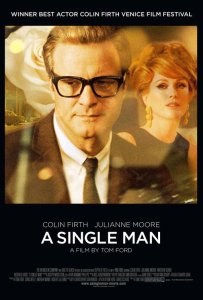 Tom Ford is a rare human being. He seems to be good at everything. The prominent fashion designer has never been averse to risk. He left work in America to toil for Gucci, a faltering European luxury brand. He became the creative director from 1994-2004, eventually leaving to form his own company. And after decades of success in the world of fashion, Ford decided to make the jump into movies. From fashion mogul to film director, nobody else has done it, let alone done it with such acclaim right out of the gate. A Single Man has been met with rich praise and Ford has been touted as a natural filmmaker. Perhaps Ford’s odyssey into moving pictures will inspire others to drop their needle and thread and pick up a camera instead. Who wants to see a Project Runway/Project Greenlight crossover?
In the early 1960s, George Falconer (Colin Firth) is a 50-year-old English professor still recovering from the loss of his love. Jim (Matthew Goode) and George had been together for over 16 years, that is, until Jim died in a car accident one rainy night. George has never fully recovered since that awful night. He doesn’t intend to waste any more time waiting for a reunion; at the end of the day, he will kill himself. He lays out his suit, empties his safety deposit box, and writes letters to his remaining friends and family. This will be George Falconer’s last day in Los Angeles, but perhaps in the meantime he’ll discover more reasons to give life another chance.
 Ford comes from the world of high fashion and here he proves that he should be taken seriously as a filmmaker. He has a sumptuous eye for visuals. A Single Man looks great in every scene. The costumes and period details are impeccable and may even give the historical consultants from Mad Men some due pause. The cinematography by Eduard Grau can become irritating because the colors go from drab to vibrant, reflecting the main character’s changing moods (lifted spirits = brighter colors!). At first it’s a neat visual gimmick but as it persists it becomes a crude blinking light, inelegantly summing up what the movie feels it cannot communicate. At times it just feels like piling on. I don’t need the color to drain from the screen to understand that George is sad.
Ford’s adaptation skills, on the other hand, could use some more polish. He and David Scearce spent years adapting the 1964 novel by Christopher Isherwood. They even added the whole suicide angle, which becomes their narrative crutch. There is a refreshingly funny sequence where George tries to act out his suicide position and goes from the shower to his bed, finally deciding upon shooting himself inside a zipped sleeping bag to cover the ensuing mess. This little five-minute stretch is like an oasis of humor in the super serious desert that is the rest of the film. The second half of the film is dominated by a will-he-or-won’t-he flirtation with a good-looking lithe college student (Nicholas Hoult, the boy all grown up from About a Boy). The kid shows definite interest. The romantic angle syncs up with George’s lost love and proves to be a welcomed distraction to George’s dejection. However, their connection is extremely thin, with Hoult making flirty eyes and inquisitively tilting his head for an hour. The romantic story exists as a means of making sure the narrative can mend George’s broken heart.
The story meanders for too long with a few revealing flashbacks, but honestly how hard is it to wring pathos from a suicidal man? How hard is it to write a middle-aged man taking stock of his life, getting his affairs in order, and saying his fuzzy goodbyes to people who don?t realize the significance. Everything gains magnitude under that prism; every pause, every inhalation, every wistful glance becomes riddled with deeper subtextual meaning, or so we are lead to believe. Every moment can unlock a new memory or secret, like when he sniffs a stranger’s dog and recalls his former beloved pet he shared with Jim. Under this guide, it is hard to tell whether the movie is doing any actual dramatic lifting. So much is supposed to be interpreted in the blankness, which the audience is entrusted to craft meaning to the character’s nostalgic pit stops. “Oh, he must be taking in the scent of the ocean one last time,” or, “Oh, he must be thinking about… something. But he’s gotta definitely be thinking about something. Something deep.” Can you see how this might get tedious after a while?
 A Single Man could have afforded more peaks into George’s background and less of Julianne Moore. She plays an old boozy Brit friend of his from back in the day. Her moments onscreen, while limited, are a chore to get through because Moore just consumes her characters sadness. She gets drunk on the one emotion she’s been hired to play. She’s certainly not embarrassing herself like in 2006’s Freedomland, but this isn’t a performance for her illustrious highlight reel. I don’t care if she does get nominated for a supporting actress Oscar, as seems all but certain; I expect more from Moore.
Firth is the whole movie so it’s a relief that he turns in the performance of his career. He gives a complex portrayal that doesn’t nicely fit into the typical Firth cinematic creature: priggish, clever, dry, ultimately a good guy. Here you can practically see the gears in his head processing the last moments of life. The extent he can convey with his eyes or simply the corners of his mouth are exquisite. He provides so much of what the narrative does not. He’s a sad creature mired in one long day of existential grief, but I need more from this character than what Ford affords.
George Falconer gives a dandy speech about the fear of the minority, almost outing himself to his college class, but for a flick about an older gay male passing through life to be an invisible member of society, Ford adopts a “don’t ask, don’t tell” approach to narrative. He buttons up his characters emotions. Understatement is lovely when there’s enough to work with. That’s the issue with A Single Man. Ford hasn’t given himself enough to work with, instead forcing the audience to make up the work by inserting meaning into every furtive brow and pained expression. This is a meditation on a life in passing, told through a series of small vignettes. I need more than a melancholy man listening to the clock strike seconds off his soon-to-be-ended life. If I wanted to watch that movie I’d check out the latest Gus van Sant art house masturbations.
Nate’s Grade: B-
Share this:

Sherlock Holmes (2009)
 Sherlock Holmes as a gritty pub-brawler? Before you dismiss the big-budget Hollywood retooling of the literary detective, look back at author Arthur Conan Doyle’s source material. Appearing in over 50 stories, Holmes was a bit of a rude rapscallion who would get into brawls and recreationally use cocaine. It was only until Dr. Watson stepped into his life that Holmes cleaned up and became a proper, respectable gentleman and the figure we know. With stylish director Guy Ritchie (RocknRolla) attached, it appears that this Holmes for a new generation is actually a throwback to his roots.
Famous detective Sherlock Holmes (Robert Downey Jr.) and his assistant, Dr. Watson (Jude Law), are at an impasse. Watson wishes to leave Holmes establishment and start a new life with a woman he loves. Holmes is also threatened by Lord Blackwood (Mark Strong), an aristocrat in prison for killing women in ritualistic manners of the dark arts. He’s about to be executed when Lord Blackwood promises he will return from the dead, and his murders will continue. Sure enough, after Blackwood is hung by the neck and pronounced dead by Watson, the murders resume and the dead man himself is seen walking among the living. Holmes is on the trail of his resurrected foe when he meets Adler (Rachel McAdams), the woman who broke his heart. She’s employed by a mysterious stranger and becomes mixed up in the deadly hunt to stop Lord Blackwood.
 As is quickly becoming commonplace, Downey is the best part of the movie. His combative relationship with Law makes the movie worthwhile. They have a feisty, squabbling chemistry that generates a lot of humor, and they interact like a 1980s buddy cop movie. Their verbal jousting practically saves the movie from collapsing due to the overwrought plot. At its best moments, Sherlock Holmes feels like a buddy cop movie transplanted to Victorian England. Downey is having a hoot as the character and brings a vibrant energy to his role, turning Holmes into an eccentric who gets buggy if he cannot obsess over a case, taking several cues from the Monk playbook of eccentric detective genius. Downey is cocksure and a charming cad, enjoying every moment he can outsmart the competition. Law is more equal than sidekick and plays the straight man to Downey’s neurotic detective. I’m not usually one to bemoan foreign accents, but this is one movie that would benefit from subtitles. The actors don’t necessarily talk in thick accents but they speak so fast that it begins to sound like an unintelligible mumble.
The romantic subplot is a non-starter as Holmes reunites with both The One That Got Away and his Crafty Equal. McAdams is a fine actress with a luminescent smile, but her involvement is really an afterthought. She’s the old flame that always re-enters in those 1980s buddy cop movies. She stays long enough to rekindle some old feelings and provide a figure in need of rescuing. Her storyline is one of several that could have been completely eliminated. The same could be said for Watson’s girlfriend, the steamboat accomplice, the put-upon maid, and many of the conspirators.
The plot for Sherlock Holmes feels like three screenplays were crudely sewn together. There are so many junky side stories and characters that need to be eliminated. It’s just far too busy without anything making real traction. The story is weighed down with expository dialogue and mounting subplots. There are a few sequences that jump forward in time but don’t inform the audience, so we’re left a tad discombobulated. The film jumps immediately into the fray without any pertinent flashbacks or setup, daring the audience to pay attention. At some point in the middle I gave up, having disengaged from the plot and determined to simply wait it out for Holmes to explain what I was missing. I think at one point I was even starting to nod off to sleep, which is a deadly sign for an action movie. The central occult conspiracy has a lot of men in cloaks but no discernible outcome. The movie is littered with conspirators and locations and details that all seem meaningless until Holmes can tie all the jangled pieces together. The script is overloaded and half-cocked and bides its time waiting for Holmes to provide relative clarity. It gets old after a while when only Holmes knows the clues and he won’t share.
 You don’t usually think of the intellectual detective in the deerstalker cap as a man of action, but this brash reinterpretation would be acceptable if Holmes found himself in some action sequences that would befit his legendary stature. Ritchie?s hyperbolic shooting style makes for a lot of fast whooshing and quick spinning but it doesn’t add up to many satisfying sequences; the best is probably a battle with Holmes and a giant that destroys a shipyard plank by plank. Ritchie introduces an intriguing action device for this beefed-up Holmes; he mentally envisions the steps of his attack, going from punch to counter punch. This technique is a fun peek into the mind of Holmes and it makes the action easier to follow for the audience. The fact that this narrative action device is used twice in the 30 minutes made me alert. Surely this cool little stylish flourish would come into play during a climactic moment. Nope. This visual quirk is done twice and then curiously never resurfaces. Instead, the movie ends in a climax dotted with the tired routine of atop high places. The showdown is rather weak. Watching Holmes and Watson beat their way through thugs has its meta-literary appeal but Ritchie and his screenwriters fail to summon entertainment amidst the cluttered chaos.
I am a self-described Ritchie fan, though he hasn’t made a good movie since 2001’s Snatch. He lathers on the style right from the opening studio titles being integrated into the cobblestone streets of London. The production design is impressive and the actors seem to be having a game go with the literary legend, but it all comes back to the murky story. Sherlock Holmes could have succeeded on a crackerjack story or on being an entertaining thrill-ride, but it fails in both areas. The nonsensical conspiracy plot feels like a leftover from a bad Dan Brown novel (redundant?) with secret societies and mystic orders and blah blah blah. The characters feel less than real because they aren’t given time to be fleshed out, so they resort to being stock archetypes locked into well-defined place by the fact that the plot gallops from the start. The action is uninspired and occasionally incoherent. Sherlock Holmes as a man of action is an acceptable premise but he needs to be placed in strongly constructed, inventive action sequences. I like Downey and Law, and I especially like their time together, but the movie lets them down. Maybe I was just holding out hope that Holmes would come back and explain the whole movie, providing compelling evidence for mass entertainment that I had been missing. It was never to be.
Nate’s Grade: C+
Share this:

Avatar (2009)
 Avatar cannot possibly meet expectations. Can it? The long-in-development pet project of director James Cameron has been dubbed as nothing short of a tectonic shift in moviemaking; it will “change movies forever.” Cameron had the idea for the movie 15 years ago but held on, waiting for the technology to catch up. After you’ve directed Titanic, the highest grossing movie in history, I suppose you have the luxury of waiting. The budget has been rumored to be wildly anywhere from $250 million to $500 million. Avatar was always planned as a 3-D experience and nothing short of the savior of modern movie and the theatrical experience. It would make going to the movies an event once again, something that could not be duplicated at home on puny TV screens. Given the reams of hype and anticipation, Avatar couldn’t possibly succeed, could it?
In the year 2154, mankind has posted a colonial base on the distant moon of Pandora. The planet orbits a gas giant and the atmosphere is deadly to humans after a few minutes exposure. The planet is inhabited by all walks of deadly, incredibly large life, including the indigenous Na’vi tribes, skinny, nine-feet tall blue aliens. The Na’vi also have connective tissues coming from their ponytails that allow them to connect with all nature by “jacking in,” so to speak. They are a relatively peaceful clan that makes sure to respectfully use every part of the space buffalo. It just so happens that they are also sitting on top of a huge enrichment of the mineral Unobtanium, which sells for a crapload of money back on Earth. A corporate exec (Giovani Ribisi) has hired a private army of mercenaries to forcefully move the natives. In the meantime, they are trying to reach a diplomatic solution. Dr. Grace Augustine (Sigourney Weaver) is the head of the Avatar program, where they biologically grow Na?vi bodies with some human DNA mixed in. People can then link their brains to the giant Na?vi bodies and walk and talk among the natives.
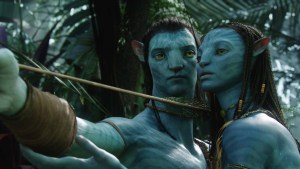 Jake Sully (Sam Worthington) is an ex-Marine who is living the rest of his life in a wheelchair. His twin brother was apart of the Avatar program but was murdered, and he?s signed on to take his brother’s place (the avatars, naturally, are hugely expensive). Jake will plug into his avatar body and be able to feel like he can walk again. Colonel Miles Quaritch (Stephen Lang, superb) likes the idea of having a former Marine on the inside. He makes a deal with Sully: provide useful Intel on the Na’vi, and he’ll get his “real” legs back. Jake and his fellow avatars ingratiate themselves with the Na’vi, and Jake is taught the ways of the tribe by Neytiri (Zoë Saldana). Their teacher-student relationship transforms into a love affair, and Jake begins having second thoughts about his mission.
To the heart of the matter, the special effects are transcendent. This is one of those pinnacle moments in the advancement of special effects technology. Avatar is now the new standard. The environments are so incredibly realistic that if I were told that Cameron and his crew filmed on location in some South American jungle, I would believe it without a moment’s hesitation. But everything in this movie was filmed on a giant sound stage. The visual detail is lushly intricate and altogether astounding. The planet of Pandora feels like a living, breathing world, with a complex environmental system. Every blades of grass, every speck of dust, every living creature feels real. Cameron and his technical team have crafted an intensely immersive, photo-realistic alien world. The level of depth is unparalleled. I found myself trying to soak up the artistry in every shot, admiring a tree canopy four dimensions back. The planet has an extensive night period, which has allowed the planet to evolve with an emphasis on bio-luminescence. Everything from moss that glows from being stepped on, to dragonflies that look like spinning flames, to glow-in-the-dark freckles on the Na’vi allows the movie, and Pandora, to feel like it has a rich evolutionary history. The ecosystem makes sense given the particulars of this world. Cameron isn’t just giving an extra leg or another eye to make the wildlife alien. The special effects are so good that you can easily take them for granted, like Jake’s atrophied legs. Those were special effects as well and yet they looked so real that I never stopped to consider them.
The Na’vi don’t necessarily have the same level of photo realism, however, this is by far the greatest motion capture accomplishment of all time. The creatures don?t appear rubbery or waxy, and there is honest to God life in those eyes, the same life that is absent in Robert Zemeckis’ motion capture movies. The CGI characters have believable facial expressions, capturing subtle movements and realistically capturing emotion. I’m still not a fan of motion capture, but at least Cameron makes effective use of the technique by recording actors movements and mannerisms and transforming them into nine-foot tall blue cat people. That seems like a better use of the technology than having Tom Hanks play a mystical hobo.
 The 3-D is impressive as well but not the “game-changer” it was heralded to be. This is because Cameron doesn’t want to distract the audience and make them conscious of the 3-D gimmicks. There aren’t any moments where someone just hurls something at the screen randomly. There aren’t any clumsy swordsmen jutting forward. Because the 3-D glasses naturally dim the screen and make things darker, Cameron has smartly compensated by cranking up the natural light and vivid colors on screen. Nothing ever comes across as murky or hard to distinguish. Cameron has designed a 3-D environment that spaces out the different elements of the foreground and the background. There will be floating bits like ash or water that will seem right in front of your face. Short of that, you may find yourself forgetting about the 3-D because it’s not always utilized for a 160-minute action movie. It’s more just pushing the visual planes back with your depth of field. After all the praise about Avatar being the triumphant 3-D experience, I’m surprised that the best 3-D I’ve ever seen is still Zemeckis’ Beowulf. At least you still have that laurel, Zemeckis. For now.
From a narrative standpoint, Avatar has a lot of borrowed elements. It follows the exact same plot paces as Dances with Wolves. In fact, this story is exactly Dances with Wolves in space. Like Kevin Costner’s film, we follow an injured military man find acceptance and community with a native (Pandorian?) population. He falls in love, changes his world perspective, and realizes that these dignified people of the land deserve more than to be pushed aside for the greed of the Encroaching White Man. So he bands together and leads the natives against the superior military power of the White Man (It’s also the same plot formula for 2003’s The Last Samurai too). There?s even a young native that distrusts our hero at the start but eventually comes to call him “brother.” Add a few touches from Ferngully and The Matrix and there you have it. It’s the modern tale of colonialism where we, the people in power, are the enemy, though the villains of Avatar are corporations and private military contractors. That might not sit well with certain parts of the country; the same people that blithely think America can do no wrong simply because of its name. Cameron’s politics are pretty easy to identify on screen, and it’s probably too easy to dismiss the flick as “tree-hugging” eco-worshipping prattle. However, this is the same man that wrote and directed True Lies, which is nothing but the cool allure of the military industrial complex AND the villains were Arab terrorists.
Now, the characters aren’t too deep and the love story between Jake and his blue lady seems to be missing a couple reels worth of romantic development, but the movie follows its familiar beats with ease and the last act is terrific. It’s once again one of those all-out endings that gives way to a relentless series of explosions, but Cameron brings together all the creatures and characters he has established prior, which makes for a hugely satisfying and kick-ass payoff. Cameron is one of the greatest masters when it comes to constructing an invigorating action sequence, and he pulls out some great ones in Avatar. Geography is so key to staging a compelling action sequence, utilizing the particulars of the location and having an audience familiarized with the location. By he end, Cameron has fleshed out his world so well that we recall specific locations and remember their strategic value. The assault between the giant mechanical robot suits and the noble natives is great, with different points of action on the ground and in the air. Some have complained that the action sequences of Avatar are like a video game cut scene, and so what? My one complaint about the action is that we lose perspective by being with the Na’vi for so long. The audience becomes accustomed to seeing the world from the Na’vi proportional perspective, forgetting that these creatures are nine feet tall and even they look tiny on their flying dragon creature things, so how big must those things be?
 The movie is not without some level of flaws, primarily in the storytelling department. The first 90 minutes of the movie feels really solid but then the next hour kind of simplifies everything in a rush to the climactic booms. The human villains become dastardly, the Na’vi become extra noble, and the romance with Jake and his blue lady gets consummated in a sequence begging for biological questioning (Do they “jack in” to each other? Is this somehow considered bestiality?). Jake could have benefited with some more back-story as well. The earnest “I see you” Na’vi greeting can get silly after a while. The whole avatar aspect doesn’t feel fully committed and could use more explanation. The Ribisi character is a shallow glimmer of the corporate weasel that Paul Reiser played so perfectly in Aliens. Cameron never says why the Unobtanium element is so valuable in the movie; apparently, Earth is out of energy resources. There are elements that border on the ridiculous, like the giant mech robot suit having a giant Bowie knife. The end leaves the distinct impression that the defeated human beings will just come back with bigger hardware and stronger nukes. If this Unobtanium element is so valuable to the energy resources of Earth, I doubt that one butt whipping is going to stop the exploitation of Na’vi resources. The sappy end credit love song by James Horner and Leona Lewis also might elicit more than a few guffaws.
The only real groundbreaking part of Avatar is the visuals but a familiar story doesn’t stop Cameron’s technical achievement. The plot is entirely predictable, and wholly borrowed, with a crazy different environment and a fresh coat of CGI. But can a highly derivative story kill a project built upon visual wonders? Not for me. Star Wars itself was derivative of many other stories, from samurai tales like Akira Kirosawa’s The Hidden Fortress, to Buck Rogers and Flash Gordon, to Westerns like The Searchers, and war movies like The Guns of Navarone and The Dam Busters. Has that hindered the lasting impact of George Lucas’s quintessential space opera? I’d doubt you?d find too many folk with nagging complaints about Star Wars being too derivative. That’s because the characters were interesting and we cared about them, the story was satisfying, and the visual techniques pushed the medium forward. I could repeat that exact same sentence, word-for-word, about Avatar. It might not change movies forever as we know it, but Avatar is a singular artistic achievement that demands to be seen at least a few times, if, for nothing else, to stare at lifelike trees some more.
Nate’s Grade: B+
Share this:

The Lovely Bones (2009)
 The Lovely Bones, based upon Alice Sebold’s 2002 best-selling blockbuster, is about some heavy stuff. It’s told entirely from the point of view of a dead teenage girl. She was raped and murdered by a skeevy neighbor, and now she gets to watch her family get torn apart through grief. For most filmmakers, this material would not be considered a “breather,” but then most filmmakers are not Peter Jackson (to my knowledge, only one is). The man known for epic fantasy adventures and lavish special effects applies his skills to bringing Sebold?s beyond-the-grave drama to life. The Lovely Bones has enough skill and craft to its merit, but Jackson’s rep as a filmmaker cannot save this poor adaptation. Who would have thought that the lord behind those Rings pictures could be felled by a teenage girl?
“I was fourteen years old when I was murdered,” Susie Salmon (Saoirse Ronan) informs the audience. In 1973, young Susie Salmon (like the fish, we will be told many times) is walking home from school one night. Mr. Harvey (Stanley Tucci) approaches her and asks her to be the first kid in the neighborhood to see his underground clubhouse he built. She follows inside and will never make it back out alive. The police discover Susie’s knit hat and massive amounts of blood in the earth but no body. Susie’s family is a wreck. Jack Salmon (Mark Wahlberg) consumes himself with the mission of finding his daughter’s killer, alienating his wife, Abigail (Rachel Weisz). Mr. Harvey watches the stalled police investigation with growing pleasure, knowing he has gotten away with yet another child murder. As the years pass, he sets his sights on Susie’s younger sister, Lindsey (Rose McIver). But Susie is not completely absent during this period of time. She awakens in a magical, CGI-attuned spiritual realm known as the “in-between.” It is here that she spies on her family and her murderer and tries to pass time.
 Since most of this story is told after her death, and because Susie died when she was a blossoming teenager, apparently she’s doomed to live the rest of her quasi-afterlife in that awkward visage. Imagine being a 14-year-old for eternity, and the only clothes you have to wear are ugly mustard-colored corduroy pants? That sounds more like hell than heaven. So Susie gets to interact in an afterlife built upon the mind of a teenager, which means that the afterlife involves pretending to be on magazine covers and dancing to disco music (again, heaven or hell?). I know that Jackson was asking for trouble by even attempting to interpret the ethereal, but his candy-colored version of Susie’s afterlife comes across like a bright, shiny doctor’s waiting room (“God will be with you in just a few minutes. Please enjoy our magazine selection in the meantime.”). It’s like you have to find peace before going through them pearly gates. Heaven doesn’t want your negativity so you are forced to chill in a screensaver.
There’s going to be some natural disconnect in trying to showcase a realm beyond human comprehension. I accept that, but why does Susie even bother staying in this “in-between” world? She spies on her family in grief through the years but she has no power to change things; that is, until she does for some inexplicable reason. And what does she do with that inter-dimensional power? She inhabits some girl’s body so she can snag her first kiss that her murder denied her. She passed up heaven and chose not to tell people about her body being disposed of. That doesn’t sound like she really reached any sense of enlightenment. But I digress. Why would Susie stay in this “in-between” when it only makes her sad? She’s fairly powerless and, honestly, does anybody really want to delay entering into heaven? Why does Susie get to pal around with all the other Mr. Harvey murder victims like some celestial support group? None of this can be explained because we’re dealing with a topic that defies rationale explanations. However, this “in-between” spiritual land feels like a visual leftover from the 1998 film, What Dreams May Come. That was another movie where I could never explain why anything happened.
 Actually, the entire movie lacks any cause-effect continuity. The Lovely Bones feels bereft of any connective tissue. Characters will make huge decisions or be granted epiphanies because the plot demands it. I have no idea why Jack suddenly figures out that Mr. Harvey responsible for his daughter’s death. He thinks back to a memory and then all of a sudden everything makes sense, but only for his character. For me, none of it made sense. The entire investigation of Mr. Harvey doesn’t really hold up upon reflection. Jack personally looks into every shifty person in town but somehow overlooks the creepy loner across the street that builds meticulous dollhouses for fun? Mr. Harvey also likes to sketch out his murder pits, but just stop and think about Susie’s deathly hobbit hole. The man digs an entire underground lair in a cornfield. Wouldn’t it take hours if not days to refill the whole thing to cover his tracks? For a prolific serial killer, Mr. Harvey seems to be somewhat careless about leaving behind evidence (a safe filled with your victim’s remains?). I guess this is why Susie has to tell us at the onset that people were ignorant to all this unpleasantness in 1973 (I guess that means common sense was acquired in 1974). Why does Abigail all of a sudden desert her family? She can’t take the grief, so she ditches her two other younger children to live the life of a migrant worker. And why does she come back? How can two brown-eyed, brown-haired parents have three blue-eyed, blonde-haired kids? The entire movie lacks vital coherency and context.
From a tonal standpoint, The Lovely Bones never quite settles down and figures out what film it?s going to be. It veers from sentimental melodrama, to thriller, to headache-inducing camp (Sarandon’s boozy grandmother is terrible at housework — hilarious!). Jackson and crew jettison large amounts of Sebold’s text, leaving behind a New Age-y heaven and a fairly lame murder mystery where we already know the guilty party. The drama then pretty much boils down to whether or not Mr. Harvey will get caught.
You can tell that the serial killer segments grabbed Jackson’s interest the most because every sequence with Mr. Harvey feels more predicated and textured, like Jackson is applying more skill to showcase the twisted mind of a sick man. Jackson exerts far more energy into exploring the dark reaches of Mr. Harvey than he does the mourning of the Salmon family. We are denied the complexity of grief and remembrance. As presented, the Salmon family gets to weep and shout but nobody really tackles the issues or moving forward and acceptance of loss. Instead, we watch Mr. Harvey twitch and squirm and plot his next move. Tucci is appropriately scary, aided by an ominous comb-over. The segment when a ghostly Susie stumbles into Mr. Harvey’s bathroom is the best moment of dread. The bright white room is splattered in trails of dirt and streaks of hardened, dark blood, while Mr. Harvey rests in his bath with a washcloth covering his face. It seems like Jackson decided that what fans really wanted from a Lovely Bones movie was more serial killer screen time. If the family drama was going to be this boring, then I say devote the whole movie to the creep.
 The acting is another curious detraction. Ronan (Atonement) fits the part but Jackson forces her to speak in this annoying, pseudo-spiritual whisper, like once you?ve attained the knowledge of the afterlife you become very soft-spoken. She shows a decent range of emotions but even she can?t quite figure out her character. Wahlberg seems miscast in his role and pretty limited in his depiction of obsessive grief. Weisz gets to cry her eyes out the most but then her character sits out the second half of the flick. Sarandon is only playing the role she was given, so I’ll be fair in my criticism, but her brassy, alcohol-swilling grandmother is like an unwelcome party crasher. She’s broad and loud and mostly cartoonish. I understand Sarandon was serving as comic relief amidst all the heavy drama, but it doesn’t count as relief when you wince at her presence. Tucci gives the mot layered, nuanced performance. He tries to relive each kill but soon enough the memory fades, and he feels the unstoppable impulse to feed his demons. Tucci is deeply scary, though he kind of talks like the roof of his mouth is stuffed with peanut butter.
Heavenly Creatures showed the world that Jackson could do so much more than campy, splattery gore and crude humor. It beautifully dealt with the scary, bewildering world of fantasy and budding feminine sexuality. Now after four grandiose movies, The Lovely Bones was supposed to be a trip back to that smaller, character-driven territory that Jackson first charted in Heavenly Creatures. Now I wonder if Jackson has the ability to return to smaller scope pictures. He and his screenwriting brain trust, Philipa Boyens and Fran Walsh, have softened the harder elements from the novel, completely eliminating any sexual emphasis. This PG-13 take is heavy on ponderous acid trip visuals and light on coherence, and when you can?t understand why things are happening after a while you stop caring why. After a while, I just stopped caring about Susie Salmon (like the fish).
Nate’s Grade: C
Share this:

Food Inc. (2009)
 Food Inc. is informative and occasionally jarring, but unless you have no common sense and/or political acumen, nothing here should seem like much of a surprise. The food industry, like most, is about finding faster, cheaper ways to turn higher profits, so it seems natural that the fast-food style system would be integrated into industrial factories. Our current eating lifestyle as a nation is unhealthy and heading toward disaster. But this is old news. Food Inc. makes a mostly compelling case except when it comes to organics. An organic farmer addresses the argument that worldwide organic farming cold never feed enough people, and tosses it aside as “specious.” I’m sorry, global hunger is not a specious argument, and Food Inc. glosses over the facts that organic farming requires a massive amount more land to produce crops, it only uses natural fertilizer which means its more prone to breaks of E. Coli, and, most damning, is more prone to infection because they only use natural pesticides, ignoring decades of scientific improvement, which naturally makes their crops more prone to being wiped out by insects. Which billion people get to be told their hunger doesn’t matter? The film’s most interesting section is when giant food companies control a market and squeeze the legal system to keep it that way, like Monsanto’s near 90 percent hold on soy beans. They hire former military men to spy on farmers and scare them. They engage in frivolous lawsuits because they can afford the legal fees, but a poor farmer can’t, so they admit guilt and settle. The Monsanto dismantling of family farms is scary, way scarier than the hidden camera footage of animals at a slaughterhouse (it’s sad, I’m not a monster, but as long as it’s humane, does a cow really care how it dies?). Food Inc. is an interesting, galvanizing little documentary that makes several good, albeit familiar, points.
Nate’s Grade: B
Share this:

Wolrd’s Greatest Dad (2009)
 The name Bobcat Goldthwait doesn’t exactly make you think accomplished filmmaker. Goldthwait is best known for his screechy, nervous voice utilized in animated features and the hallowed Police Academy series. But he’s also a writer and a director. His first effort was 1991’s Shakes the Clown, starring Bill Murray as an inept bank-robbing clown. Then he wrote and directed a 2006 movie called Sleeping Dogs Lie that centered on the romantic foibles of a woman who, on a whim, once gave her dog oral pleasure. I can’t see Hollywood touching that one with a ten-foot pole. These sort of unconventional, risky artistic concepts might prepare you for Goldthwait’s newest black comedy, the ironically titled World’s Greatest Dad.
Lance Clayton (Robin Williams) is an underappreciated man. His teenage son, Kyle (Daryl Sabara), hates him. He cannot find anyone interested in published his many manuscripts. His colleagues think little of him, students don’t attend his poetry class, and his quasi-girlfriend, Claire (Alexie Gilmore) is showing more interest in Mike (Henry Simmons), the new hunky, successful English teacher that got a story published in the New Yorker on his first try. Then everything changes. Lance comes home to find his son dead of auto-erotic asphyxiation. He rearranges the body and writes a suicide note, attempting to spare his son from being mocked in death. But then the school hacks into the police system and prints Kyle’s suicide note. The entire school is awash in grief and discovers what an insightful, troubled young man Kyle was. They all want to know everything they can about Kyle, and suddenly Lance has found an outlet for his writing.
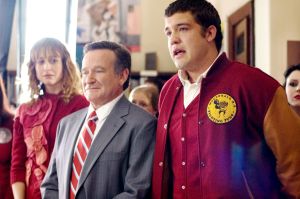 The movie satirizes grief culture with sharp acuity. Kyle’s classmates all react with horror and look back with extreme rose-colored glasses. Suddenly their fallen peer has transformed from the kid nobody liked into the wounded soul that touched all their lives. Bullies reexamine their behavior, girls that never would have given him the time of day now immortalize Kyle, and the faculty that wanted to expel him now wishes to rename the library in his lasting memory. This warm, fuzzy gauze of grief is Goldthwait’s target. He is satirizing how people turn tragedy into hypocritical attitude shifts. He ridicules the easy revision of history under the guise of collective sympathy. Not every youth is necessarily taken before their time. Not everyone was going to grow up to contribute selflessly to society, making the world a better place to live. Not every youth is deserving of canonization. Some people are just jerks from beginning to end, and Goldthwait proposes we do a disservice when we whitewash reality in the name of kindness and good taste. The only person who can see through this wave of hypocrisy is Kyle’s only friend, Andrew (Evan Martin), who doesn’t remember his crabby buddy being deep, articulate, or remotely smart.
Goldthwait’s screenplay is seriously dark and twisted but it’s also routinely hilarious, notably utilizing a deranged sense of irony. Lance uses his own son’s death as the vessel to become a respected writer. He uses his own dead son as his literary pen name. For once in his life, Lance now has an insatiable and adoring audience for his writings, and to top it all off they won’t dare be critical. Lance is manufacturing his son’s legacy and gaining unbeknownst critical praise. That’s fairly dark and fairly amusing stuff. It’s also funny that Kyle’s death has a greater positive effect on the community than Kyle being alive. The school rallies together and students use the death to justify personal growth. The fake journal of Kyle’s touches and enlightens, which further pumps up Lance’s ballooning ego and sense of purpose. At one point, a talk show host raises the question of whether it’s better to be a good person or thought of as a good person, and this gets to the heart of Lance’s dilemma. His actions are morally questionable. What started as an effort to protect his son’s dignity has morphed into personal gain. Is the world a better place because of this false rendering of Kyle? Is the lie better than the ugly truth? Is the lie justifiable? I honestly never expected to be confronted with tricky ethical questions while watching a movie made by Bobcat Goldthwait.
This is the best work Robin Williams has done in years, which I understand might not be saying much considering his recent slate of brain-dead family comedies. He hasn’t shown this much restraint, and talent, since his 2002 World Tour of Evil that included One Hour Photo and the masterful Insomnia. Williams drops every pretense of his well-known manic funnyman shtick and plays an actually subdued character. Lance is beaten down by the disappointments of his job and fatherhood. Williams effectively coveys the exhaustion of a man who repeatedly fails to connect with his brat of a boy. He doesn’t know what to do; the kid is practically a sullen stranger in his own house. Williams endures such slights and misfortunes with deadpan humor and sarcasm and the audience actually vaguely sympathizes with him through much, if not all, of the second half. Williams is mostly reactive and can come across like a calculated straight man to Goldthwait’s cracked-out script. You feel for the guy when he can capitalize on his son’s death and you practically want him to get away with it all.
Sabara has grown up considerably since being the chubby little tyke in the Spy Kids movies. It’s amazing how much you will detest his character. This kid is perverted, repugnant, obstinate, and just plain idiotic. He hates music (“All music? You hate all music?”), he hates movies, and he dislikes pretty much everything other than extreme pornographic fetishes. Kyle is a nightmarish child with no redeeming value. He had to be in order for the satire to work.
 World’s Greatest Dad is a misanthropic hoot of a movie but that doesn’t mean it is without flaws. Goldthwait has yet to prove any particular style or vision behind the camera. His direction isn’t a distraction by any means but it mostly just presents the story in an unobtrusive fashion. He also has the annoying habit of using music selections as a storytelling crutch. He?s prone to using several songs that describe the onscreen drama to a literal level. For a script as biting and clever, it’s disappointing that Goldthwait feels the need to use songs to spell out his implicit drama. This being satire, by nature the characters are mostly going to be thin. The classmates are little more than a cross sectional representation of high school stereotypes, ready to slide in for a joke. Other side characters are weak due to being underwritten or dropped. Claire is a shallow love interest flitting from suitor to suitor, offering little more than a conquest. Mike works as a foil to Lance but then is completely forgotten about in the second half. There’s one interesting scene where Mike, Lance, and the principal are all golfing and the roles are reversed, Lance is the confidant and respected colleague and Mike is jockeying for approval. But that’s pretty much the last you’ll ever see his character in a meaningful way other than taking up space in the background.
In the end, World’s Greatest Dad is not a comedy that will leave your sides aching or seams in need of stitching. It’s dark and disturbing but unlike the earlier Observe and Report, this movie actually provides an entry point for empathy. It’s provocative and twisted but it never pushes the audience out of the story. The intriguing setup is explored with careful consideration. The characters manufacture a false love for a kid that was all but ignored, and everyone is worthy of scorn to some degree. Even Lance is worthy of derision considering he’s exploiting sympathy to find the success that has eluded him his entire life. But Williams’ performance and Goldthwait’s sharp screenplay keep the film grounded amidst its satirical targets. Most surprising of all, there’s a a sweetness that emerges from this film’s black core. Lance regains a sense of humanity and purpose, and so do we due to his journey. Golthwait has come up with an unusual, morbid, and cynical comedy that manages to be somewhat life affirming by its final reel. I can’t believe I?m saying this, but I believe Bobcat Goldthwait is establishing himself as a strong comedic voice in the world of film. I eagerly await the next movie by the guy who did all the funny voices in Police Academy.
Nate’s Grade: A-
Share this:

Fired Up! (2009)
 Written by four different writers under the combined porn-like pseudonym “Freedom Jones,” this movie about football guys going to cheer camp to score with the limber ladies is… watchable. It’s a silly male fantasy with 30-year-olds posing as high schoolers, the characters are all genre archetypes, and it ends up becoming an unbelievable romantic comedy, but it also feels like a throwback to the juvenile sex comedy buddy movies from the 1980s. The dialogue has a lot more zip and humor than I ever expected. Everything turns into a quip, in a substandard but less hyper literate Diablo Cody style. The main actors have fun spitting out the dialogue, and Fired Up! Is funnier than it has any right to be. At the same time, there are plenty of easy gags around homo-eroticism and a PG-13 atmosphere feels too tame for this kind of material. I don?t hate myself for liking this movie because it’s a step up from its cheer competition, but at the same time I’m not dumb enough to classify Fired Up! as anything more than a quizzically entertaining passer of time.
Nate’s Grade: B-
Share this:

Big Fan (2009)
 The directorial debut from the screenwriter of The Wrestler follows another down-on-his-luck loser. Patton Oswalt gives a surprisingly dark and affecting performance as Paul, a 35-year-old tollbooth worker that still lives with his mother. Paul’s life is devoted to his favorite sports team, the New York Giants. He spends his evenings meticulously planning his call-in statements to the nightly sports radio show. He’s so devoted to his team that when Paul gets brutally beaten by his favorite Giants player he blames himself. The player gets suspended and the Giants start piling up losses, and Paul can’t deal with the crushing guilt he feels. Big Fan is an intriguing exploration of how absorbed people can get with fandom; I always thought it a bit odd when people refer to a team’s accomplishments with “we” like they had something to do with it. Paul’s fragile world is coming apart and he breaks down with it. Obviously, Paul has a few screws loose in order to make him unpredictable, which gives the last twenty minutes some serious unease. Paul goes undercover as a Philadelphia Eagles fan (his disgust at putting on the enemy jersey is palpable) to hunt out his gloating sports radio nemesis Philadelphia Phil. Big Fan is occasionally funny in an under-your-breath kind of way, but really it’s more of a small-scale psychological study on a hapless individual whose religion is sports and who feels he has sinned before his almighty God. At a mere 86 minutes, the movie doesn’t press too hard into the twisted psychology, nor does Paul leave much of a dent as a character as the film doesn’t make judgment on his obsessive behavior. This isn’t as poignant as The Wrestler, pure and simple. Yet, Big Fan is buoyed by a strong performance by Oswalt and some interesting insights into a flawed fan willing to go all the way for his team.
Nate’s Grade: B
Share this:

Baby on Board (2009)
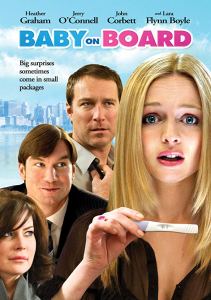 This is such a loathsome comedy that you feel the actors compelling you to put them out of their collective misery. It?s Heather Graham’s second pregnancy comedy in two years, except in 2008’s Miss Conception she wanted to get pregnant. Has Graham become the new face of the ticking biological clock? Graham is a perfume exec who gets in the family way. And how do we reveal this big news? By extended farts and projectile vomit. Stay classy. Instead of approaching an impending baby seriously, the film uses the pregnancy as an inane romantic comedy wedge. Graham’s hubby (Jerry O’Connell) doesn’t think it?s his because he “double bags it.” She thinks he’s a cheater. Their misunderstandings are predicated on the idea that nobody ever stops to say anything that might clear the air. This stuff is beyond sitcom level contrivance. Then the film becomes a battle of the sexes debacle as neither side wants to give in and leave the home, so we?re treated to a montage that zooms through EIGHT MONTHS of pregnancy. This is a comedy with no real feel for pacing, tone, setup, or context. The actors crank it up like they’re bouncing around in a farce, when this is really just a witlessly vulgar Knocked Up knock-off. The director (by the guy who made a movie trying to go on a date with Drew Barrymore) doesn’t so much deliver the jokes as pronounce them dead. This is a vacuum of funny with awful jokes, awful acting, awful attempts at being bawdy, and an even worse sentimental transformation at the end. This is without a doubt one of the most disastrous, abominable comedies of late and should have been terminated at the early script stage. Watch the trailer and spare yourself the agony. Even the trailer can’t help but indulge in a fart joke. The trailer, for god’s sake.
Nate?s Grade: D-


 nathanzoebl
You must be logged in to post a comment.