Blog Archives
A Christmas Carol (2009)
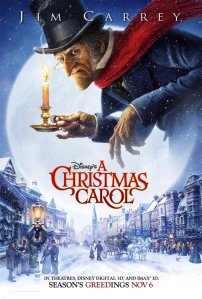 I still am at a loss over the appeal of the motion-capture system that director Robert Zemeckis fancies as of late. The creative mind that gave us classics Back to the Future and Who Framed Roger Rabbit? has embraced a technology that straddles the middle between live-action and outright animation. Motion-capture attaches electronic nodes to actors and digitizes their movements and facial features to later be conceptualized by computer wizards. And to this I say… so what? It seems like a whole slew of unnecessary work that adds little else than a vague starting point. Why not let the animators start from scratch? Why hamstrung creative professionals because Cary Elwes was feeling like making a certain gesture as “Portly Gentlemen #1?” I just don’t get it. To me, the motion-capture system is stranded in some artistic netherworld where it isn’t live-action and it isn’t animation. Zemeckis has cranked out his third mo-cap baby this decade, a retelling of Charles Dickens’ famous Christmas Carol. Why Zemeckis thought an old holiday chestnut would work best in this format, I’ll never know.
Cold-hearted Scrooge (Jim Carrey) is set to be visited by three spirits on a very magical Christmas Eve. The old man goes through Christmas past, present, and future to reevaluate his life and the true meaning of “peace on earth and good will toward men.” You know the drill, folks.
I like A Christmas Carol. I do. So do plenty of nice people. There’s a reason this oft-told tale still manages to resonate with generation after generation and that?s because it’s a good story. Of course it’s also an extremely familiar story to just about anyone outside of a womb at the moment. I expected Zemeckis and his crew to use their technology to jazz up the old story and give it a fresh new life on the big screen. Despite a handful of excursions flying through ye olde London, the extra slathering of special effects doesn’t enliven this holiday tale. I remember having great fun with Zemeckis’ previous motion-capture movie, 2007’s Beowulf (which does not play nearly as well in 2-D). That movie played around with the 3-D environment to great effect and made you feel apart of the experience. In contrast, A Christmas Carol does shockingly little with its depth of field, rarely placing distance between the foreground and the background. It’s a fairly lackluster 3-D experience. Maybe I wasn’t relaxing my eyes the right way, though I did notice how conscious I was of trying to elevate the 3-D experience myself. My disappointment is magnified by the fact that Zemeckis has been a pioneer for the 3-D playbook that Hollywood has now dubbed as the savior of the theater going experience.
 I wonder if Disney execs imposed limitations on the use of the 3-D immersion, not wanting to scare children by making them feel like they’re in the middle of a ghost story (there are some spooky moments already). The whole draw of motion-capture, and animation, is to transport an audience untethered by the limits of traditional practical filmmaking. This newest incarnation of A Christmas Carol fails to justify its existence. Why should I pay to see the most familiar story of modern day if there isn’t any new offering? At least The Muppet Christmas Carol gave me something different. And it had Muppets.
When I was younger in the mid 90s I was a huge fan of Carrey’s rubber-faced antics. I quoted Ace Ventura verbatim with my fellow seventh graders in 1995. So I understand the attraction of having him play multiple parts, but why exactly in a Dickens story? It’s not a comedy unless it’s adapted into one, and Zemeckis hews very close to Dickens and mostly recites the tale word-for-word. Scrooge isn’t funny, the ghosts aren’t funny, so why hire a renowned comedian to portray them all? This is a straight-laced adaptation and as such not the best use for Carrey’s talents. Is the move any better because Carey played all three ghosts? Is the movie any better because Gary Oldman gets to play Bob Cratchett and voice Tiny Tim? Is the movie any better because Elwes is credited for five inconsequential roles? Celebrity vocal casting is rarely effective in animation and so it seems the same in motion-capture.
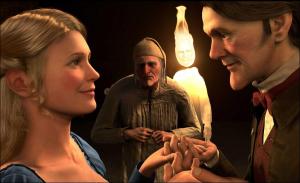 The technology has improved from the dead-eyed zombie children days of Polar Express, but it still seems like little more than less refined animation to my eyes. The movements are more fluid but the color palate is subdued into amber hues and candlelit locales. It doesn’t exactly use all the technological tools in the toolbox. It’s like a five-star chef toasting a Pop Tart: a waste of potential. I didn’t care for the skewed proportions on people either. Scrooge has a wiry frame with long spidery limbs and a triangular torso, and his character design kept reminding me of Jack Skellington. It’s too otherworldly considering nobody else comes across as a garish caricature in design form. The character designs for the three spirits are also fairly underwhelming. The Ghost of Christmas Past is a wispy flame. The Ghost of Christmas Future is nothing but a shadow. Is there a connection here? Otherwise, a shadow is pretty lame for the one ghost that can get really inventive and scary. Really, a shadow? I can do that myself without the aid of computers. And was it Carrey’s shadow to make it officially motion-capture? Because God forbid no other shadow could do or give the same performance of being draped over shapes.
I actually had to vehemently fight the urge to nap during A Christmas Carol. Maybe it was my poor sleep from the night before, maybe it was the fact that the 3-D glasses make everything darker (they still manage to hurt my eyes after prolonged use), but it was likely due to the fact that Zemeckis added a coat of polish to a holiday classic but declined to find purpose for doing so. Does this story get better with zooms through London, or Scrooge being shrunk and chased by demonic horses? It all seems like folly to me, like somebody’s idea to goose literary classics. Can you imagine Jane Eyre being shrunk and climbing through the walls of her Victorian era home? It all seems like an annoying distraction. Zemeckis? A Christmas Carol is exactly what you’d expect, which means you’d be just as well to flip through the TV channels and find any number of Christmas Carol versions. The Muppet Christmas Carol might even be on. Give that one a try instead. It even has some nice songs. And it’s got Muppets.
Nate’s Grade: C
Share this:

Paranormal Activity (2009)
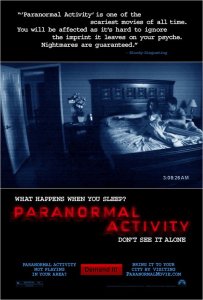 My eyes are bleary. I feel like a walking ghost. My body aches just a tad. I’m over responsive to sudden movement. Not only have I just seen Paranormal Activity, the small indie horror film that has been sweeping the nation, but also I’ve just endured my first post-Paranormal night of sleep. To say it was refreshing would be an outright lie. My then-partner was tossing and turning, routinely grabbing my arm to hold her, also sitting straight up to peer through the darkness of our bedroom, and occasionally she would request that our dog jump on the bed to sit with us for extra support. She and I have seen scary movies before but none have interrupted my sleep patterns like this low-budget sensation. That alone is the best blurb that I could possibly offer to the Paranormal Activity marketing gurus: this movie will make it difficult for you to sleep in your home.
The back-story to this Cinderella tale is that writer/director Oren Peli was hearing unexplained strange noises in his San Diego home. After some research he said, “Why don’t I set up a camera and make a movie about this?” He then hatched a plot involving a young couple, Katie (Katie Featherston) and Micah (Micah Sloat), who hear some bumps in he night while they sleep. Micah sets up a stationary video camera to record the strange happenings as a cool project. It begins with small, subtle noises, then the presence of something unwelcome becomes much more pronounced. Micah taunts the antagonistic spirit, coaxing some kind of response. Katie is terrified because, as they learn from a psychic, this is the same entity that has been following and haunting Katie her whole life; her family home burned down unexplainably when she was a child. It wants Katie. That was the story, though Peli says most of the dialogue was improvised (it shows). The actors doubled as camera operators, the movie was shot over seven days in Peli’s own San Diego home, and the total cost was $11,558, a pittance for a Hollywood movie. So how did this cheap home video haunting take the nation by storm, becoming the indie phenomenon of 2009 and one of the most profitable films in modern history?
 Let’s start with the fact that it’s actually scary. That’s likely what audiences have been responding to — competency. The film is presented as “found footage” much like the similar low-budget horror sensation, The Blair Witch Project (can you believe it?s ten years old already?). The story is presented as factual footage, and Peli makes a point of not breaking the terms of reality. Some of the spook stuff is easy to explain, like lights going on and off in the distance, but there are some moments that are more dramatic and give no hint of special effects. I am impressed by the ingenuity of Peli on his super low budget. I went from being startled to admiring the technical craftsmanship. Paranormal Activity isn’t a big scream movie, it’s more unsettling and the majority of its scary moments occur while the camera is on its bedroom tripod (the tripod should receive third billing in the credits, frankly). Sure, a creaking door or lights magically turning on doesn’t sound like surefire moments of blood-curdling terror, but the fact is that stuff is happening while this couple sleeps, a time when we are most vulnerable, is the point and why it’s scary. Peli structures the movie so that it fosters a slow burn of suspense. By making the camera the only viewpoint, we as an audience feel trapped, much like the characters. The idea that something will get us while we sleep isn’t new but it’s certainly creepy.
The actors work well enough not to betray the “found footage” motif as well. Neither gives a spellbinding performance, mind you, but Featherston and Slout are believable for almost every second onscreen. They’re a couple experiencing a home invasion of a different sort. Micah is more interested in his technical toys than the traumatic state of his girlfriend of three years, and Katie even admonishes him after a scare, “Did you actually run and get the camera first?” Featherston exhibits the most fear and trepidation, and her squeals and cries can be alarming. Their interaction and intimacy doesn’t really communicate a couple of three years time. However, this does not detract from the flick because the title isn’t Relationship Drama, now is it?
 So at this point I need to ask myself, why was I scared during Paranormal Activity and merely amused by the similar exploits in The Blair Witch Project? Maybe it’s the location. The bedroom is supposed to be your sanctuary, your respite. It’s a bit more universal than getting lost in the woods to make a movie. I also think the concept is responsible for my different reactions. In Blair Witch, they were being haunted by a forest ghost who had a thing for arts and crafts. Waking up to stone piles and stick figures just doesn’t resonate like footage of something happening to you while you sleep unaware. Peli does a fine job of making an audience dread what is to come next. Just as I wrote ten years ago for Blair Witch: “The anticipation of the unknown is far more frightening than being slowly chased by a man in a rain slicker. It’s no typical horror flick, it lets you create the fear in your head and let you drive yourself mad with it.” This is why Paranormal Activity works as well as it does. You can immerse yourself and then grip the armrest in fear and then laugh about it later. I also appreciate that Peli solved my number one problem with haunted house movies. You see, if your house is haunted then — MOVE! Simple, huh? Why try sticking it out to regain the resell value when the walls are dripping blood? At least in Paranormal Activity says that the evil spirit is attached to Katie.
Thanks to weeks spent at the top of the box office, even besting the lingering Saw franchise, it is inevitable that Paranormal Activity will balloon in hype that it cannot compete with. Rather than its budget limitations hindering the final product, Peli and his actors have embraced their low-budget aesthetics and produced something effectively eerie and occasionally ingenious. What these people have done with $11,000 (probably the budget for bagels on the pseudo true story, The Fourth Kind) is worth applauding. Like most horror movies, this one will play better with a full crowd ready to ride the roller coaster wave of screams and giggles. Paranormal Activity is proof that you don’t need stars and major budgets to get audiences scared. Your feelings of terror are the great equalizer, which is why cheap but smart and inventive horror movies can easily outpace their bigger budget brethren. Just be prepared for a few rough nights of sleep afterward.
Nate’s Grade: B+
Share this:

Drag Me to Hell (2009)
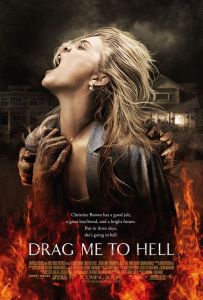 Sam Raimi returns to his spook roots in this delightfully disgusting horror flick. Drag Me to Hell has such a gleefully playful and perverse personality, alternating between being scary, being gross, being funny, and circling back for more. This is camp of the highest hokey order, and Raimi infuses every moment with inspired schlock. Poor Alison Lohman, the bank loan officer cursed to be dragged to hell in three days time. She gets a lot of fluids sprayed into her face (there’s an oral obsession to this movie; lots of mouth stuff) and she takes it like a trooper. She’s put through a physical wringer here and maintains her dignity and believability among staples to the head, grave digging, and talking goats. The ending seems to be coasting to a predictable finish and then it hits you in the head, upsetting your sensibilities. I loved it. Drag Me to Hell, ultimately, is little more than a glossy, entertaining blow-off, a reminder what an inventive director can do with the horror genre. It doesn’t all have to be nubile teenagers escaping a knife-wielding maniac. If there is one lesson I’ve learned from movies and television, you do not anger the gypsies. They have a monopoly on curses and they are not afraid to use them.
Nate’s Grade: A-
Share this:

The Unborn (2009)
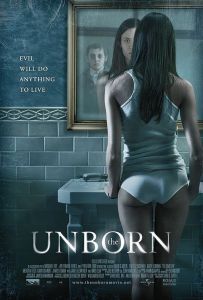 Writer/director David S. Goyer’s horror movie wants to be all things to all people and thus comes across as both conventional and sloppy. The story is about some evil presence that predates religion (all religion?), but somehow this is tied together with Nazi experiments on twins and a spooky kid that pops out. Most of the scares are cheap and silly, often giving way to vivid hallucinations that break when another character enters the room. Really, what is Holocaust material doing in such a by-the-book spook flick? It’s like a Jewish version of The Omen. The story manages to be hokey and too convoluted at the same time. Gee, for a movie that has the word “born” in the title and features a character getting sick weeks after sex, I wonder what the awesome twist ending will be? The movie is tedious from start to finish, though technically competent aside from the acting. It is unfathomable to me that Gary Oldman is a supporting actor in this tripe. It seems like the real purpose of this movie was to engineer gratuitous shots of Odette Yustman (Cloverfield) in her teeny, tiny cotton panties. In fact, I think there’s one review that only talks about her rear and its appeal, which is naturally why it is prominently displayed in the movie poster. When the malevolent spirit is going by its in-utero nickname, “Jumby,” it loses some serious scare factor. See this as a companion piece to the Oscar-winning drama, The Reader. Then tell me which has the stranger message.
Nate’s Grade: C-
Share this:

Street Fighter: The Legend of Chun-Li (2009)
 It’s not every day that Jean Claude Van Damme gets some marginal level of redemption. The original 1994 Street Fighter film took the classic arcade fighting game and took it as seriously as possible, which meant it was incredibly silly. Van Damme was Colonel Guile and entrusted to rescue hostages from the evil dictator, Bison (Raul Julia). The big screen adaptation rewrote entire characters but managed to keep the stuff fans really care about, like catchphrases, costumes, and super moves. God forbid that audiences see Cammy (Kylie Minogue, yes that Kylie Minogue) make the wrong victory pose. It’s always the unimportant things that somehow matter the most to execs. Street Fighter is a campy blast. How could you despise a movie that has its villain say, “For you, the day Bison graced your village was the most important day of your life. But for me… it was Tuesday.” Though the movie does have the depressing distinction of being Julia’s last film before he died. Let this be a lesson to all actors looking to take a paycheck role. Years later, in the wake of a writer’s strike, the execs at Fox thought they could pump new blood into a Street Fighter franchise. Street Fighter: The Legend of Chun-Li purports to tell the back-story of one of its most popular fighters, the diminutive fireball-tossing lass with Princess Leia’s haircut. This movie proves that you don’t need a Van Damme to make a boring and mediocre action movie.
Chun-Li (Kristin Kreuk) is trained to be a master pianist and also a master martial arts warrior. You don’t realize the kinds of dangers classical pianists constantly run into. Her father is kidnapped by the crime lord Bison (Neal McDonough) for some reason or other. Three years later, a mysterious scroll falls into her possession. She travels to Bangkok to find her father. Bison has the ingenious plan of buying waterfront property, introduce high levels of crime, and then making money on lowered property values, which is simultaneously confusing and stupid. Bison has a few evil henchmen, notably the giant boxer Balrog (Michael Clarke Duncan) and the masked warrior Vega (Taboo from the Black Eye Peas), who help wipe out his criminal competition. In Bangkok, Chun-Li is mentored by Gen (Robin Shou, who played Liu Kang in two Mortal Kombat movies) and together they attempt to thwart Bison and his dastardly real estate scheme.
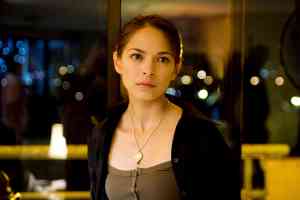 For a movie about streets and fighting, well there’s a clear shortage of the latter. Much of the movie is structured around Chun-Li conducting her own private investigation and achieving some level of inner peace. She decides to try and make it on the streets of Bangkok. There are forgettable training exercises with forgettable platitudes disguised as wisdom (“You’re hurting me,” “No, you’re hurting yourself”). There are a handful of lackluster fights and chases, some of them through streets even, but the movie has a scarce amount of action until it revs up for a climactic showdown. The action is also poorly shot and poorly edited, distracting the senses and making it downright impossible to understand. The choreography is nothing special. When the movie suddenly introduces a supernatural element the other characters don’t even bat an eye. Screenwriting neophyte Justin Marks has too much revenge-seeking father drama and real estate scheming and not enough brawling. The Legend of Chun-Li has zero respect for the intelligence of its audience. It has flashbacks to flashbacks that just aired minutes earlier. How hard would it have been to just actually base a Street Fighter movie on a fighting tournament?
Director Andrzej Bartkowiak (Doom, Romeo Must Die) shoots the movie in such a dull manner that the fight sequences fail to even elicit any interest. There’s one scene in the middle of the film that serves as a testament to the lack of care put into this movie. Chun-Li has battled a Bison henchwoman in a women’s bathroom. The bathroom set design includes partition walls with portholes. Chun-Li is on one side and the henchwoman tries to punch her through the porthole. Chun-Li grabs the woman’s arm and squeezes. The camera angle is from the side of the actresses, so it would make the most sense to have the henchwoman’s right arm caught, that way her expression could be seen. Nope. Chun-Li is gripping the woman’s left arm, meaning that her raised arm and shoulder block any view of the woman’s face, and yet she talks through this scene. How difficult would it have been to just switch arms? Why purposely obscure an actor’s face, especially in a scene that doesn’t require a stunt double?
 Here’s a curious item. Chun-Li has always been a full-blooded Chinese woman in the history of the video game. When we see her as a child, baby Chun-Li and child Chun-Li are very obviously Chinese in features. Flash forward a few years and she’s transformed into looking like Kreuk, who is half-Chinese. Apparently, one of the less common side effects of trauma is becoming less Chinese looking as you age. Along these same strange ethnic lines, we’re told that Bison was the child of Irish missionaries and was left behind in Bangkok. And yet, the child grown up completely in Southeast Asia manages to sport an Irish accent. Anybody want to explain that particular linguistic loophole?
Kreuk (TV’s Smallville) is one of the film’s biggest handicaps. The script saddles her with great amounts of pointless voice over, to the point that half of her performance is listlessly explaining what is literally happening on screen. Kreuk is a dead-eyed robot in this movie; she displays some glimpses of human emotion, like sadness and rage, but they never feel remotely credible, like someone who only knows the definitions of emotions and not proper application. Her lesbian seduction dance is a small moment of absurdity. She thrashes on the dance floor and her “dancing” reminded me more of a bird’s mating dance without the excessive plumage displaying. Kreuk can run and flex well enough, which is also a nice benefit for a martial arts action flick.
The acting is terrible but there is one bright spot in a most unexpected location. Ladies and gentlemen, I present to you the best worst performance of the year, brought to you by Chris Klein (American Pie). Klein plays Interpol agent Charlie Nash who is conducting a parallel investigation into Bison’s Bangkok activities. He’s partnered up with a local gangland homicide detective (Moon Bloodgood) who takes extra care to showcase her cleavage thanks to work outfits with plunging necklines. Klein is awful to a powerful degree but here’s the thing — I’m fairly certain it’s one hundred percent intentional. Being a conosoire of trashy cinema, I feel that I’ve adopted the skill of being able to deduce when an actor is hopelessly serious or just goofing off. Klein comes across like a self-aware man; he knows this is a crummy movie with crummy dialogue, so he’s going to have as much fun as possible. His performance is all forced swagger, from the way he constantly swivels his head to the way he cannot purposely walk in a straight line. He overemphasizes lines, chewing over the faux hard boiled detective talk and spitting it out in a singsong delivery. He grimaces and furrows his brow, widens his eyes to comical levels, and when he crouches in a gunfight the man spreads his legs as far apart so that he looks like he could have effectively doubled as a backup dancer in an MC Hammer music video. It’s obvious that Klein has given a staggering performance, but the observant will note that this is not an inept performance. This man knows exactly the kind of movie he’s in. I always tabbed Klein as a wooden actor that came across like Diet Keanu Reeves, but I must credit him for making a bold acting choice to knowingly dig deeper when it comes to being bad.
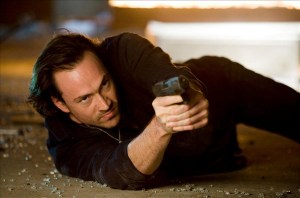
Hero of this movie, Chris Klein.
Readers know that I am skeptical and dismissive about the prospect of a good movie ever being born from a video game adaptation. Games call for interactivity and movies passivity. But if you’re going to make a movie called Street Fighter than stick to the script. This borefest wants to be a gangland drama with a tacked-on buddy cop side plot. Street Fighter: The Legend of Chun-Li is an awful work partially redeemed from the sheer amount of unintentional hilarity. Kreuk is extremely miscast as a warrior woman. The acting is bad, the direction is bad, the writing is bad, and Chris Klein tries to outdo them all in badness, and I admire the chap for trying something different in an admittedly abysmal movie. To be fair, I was never a big fan of the original video game. The special moves always seemed much more tricky to pull off. How many different incarnations of Street Fighter II were there before they eventually mastered basic math and released Street Fighter III? These are the things I was thinking about wistfully whenever Klein or Bloodgood wasn’t on screen.
Nate’s Grade: D
Share this:

Coraline (2009)
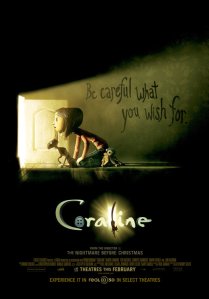 The beauty of stop-motion animation is that everything is painstakingly handcrafted so that it’s like watching a whole other world. Coraline is a wonder for the eyes and I loved just watching the movement of characters, their facial expressions, which were all done in great fluid motions. I loved that I could see Coraline thinking just through how her eyes were animated. The story, based upon the Neil Gaiman book, is about an alternative world where people have buttons for eyes provides enough eerie intrigue and some creepy imagery to spook younger kids. This is a fantasy film that doesn’t shy away from childhood scares. Coraline has an altogether pleasant feel with its spunky heroine and fine vocal cast (Dakota Fanning did not get on my nerves at all), but what’s most special is just watching the movie come alive; it’s enchanting to watch this world simply exist. There are some terrific displays of imagination in the alternative world, and it all looks even snazzier in 3-D where the world takes on further depth. Director Henry Selick (Nightmare Before Christmas) is the master of this peculiar art and thankfully Coraline follows its own visual style, never stooping to imitating Nightmare (like Corpse Bride). This is a visually stunning movie that may not leave much of an impression once it’s over (predictable story, thin plot, kind of slow ending). Coraline is a feast of artistic talent with something to discover in every awesome second.
Nate’s Grade: A-
Share this:

The Mummy: Tomb of the Dragon Warrior (2008)
 The Mummy: Tomb of the Dragon Emperor, the third film in the once popular Mummy franchise, is facing an uphill battle. It’s been a long seven years in between films and some, like myself, would argue that the franchise is already creatively exhausted. This stuff is the brainchild of writer/director Stephen Sommers (Van Helsing), who decided he would rather make a movie based upon an action hero than rehash mummies (see you this summer, G.I. Joe: The Movie). In comes director Rob Cohen who has given the world such cinematic abominations like XXX, Stealth, and The Fast and the Furious. Surely this was the proper artist to re-energize a semi-dormant franchise. The results are about as unexceptional as you’d expect.
In 1947, Rich O’Connell (Brendan Fraser) and his wife Evie (Maria Bello, replacing Rachel Weisz) are in retirement from adventure seeking. They live at a palatial estate. Their son Alex (Luke Ford) is in college except they do not know that Alex is really surveying ancient tombs in China. The lad has stumbled across the massive tomb of Han (Jet Li), China’s first united emperor. Han was a ruthless warlord that conquered all. He punished Zi Juan (Michelle Yeoh) for falling in love with one of his generals and not the mighty emperor. Zi Juan managed to cast a spell on the evil emperor that trapped him in metal. And he sat undisturbed in his tomb for 2,000 years until Alex came along. Eventually the spirit of Han is released and some Chinese military officials wish to serve their departed emperor. Han is seeking the location to Shangri-La to bathe in the pool of immortality, and then he will awaken his army and continue his quest for world domination. The Far Eastern exploits bring the O’Connell family unit together to save the world yet again.
 The first film was a cheesy, campy tongue-in-cheek adventure that managed to be consistently entertaining. The second film retained the same fun and humorous atmosphere, though it subscribed to the “bigger is better” theory of sequels and ramped up all the action to a cartoonish degree. Seven years later, the third Mummy movie is a complete bore. Tomb of the Dragon Emperor feels like two movies sewn together; ancient Chinese warlords and treasure-hunting archeologists do not come across as a good fit. The terracotta warriors are a great source for an imaginative tale, but this is not it. So Emperor Han has mastered the elements of fire, water, earth, metal and wood (when did wood become an element? I don’t see that one on the periodic table) and the guy can also turn into giant monsters like a three-headed dragon. The writers of this Mummy entry have goofed by making the villain too powerful. Yeah he can be slain by a magic sword (there’s always something magic-y) but this is a foe that can control oceans, water vapor, clouds, rain and snowstorms, ice shards, and that’s just with one element. I must confess that I cannot fathom Han getting too much use from the wood element. On top of that, he can transform at will into ferocious creatures, so what is the point of turning back into a tiny human? Why would anyone fight hand-to-hand when you could fight as a 30-foot monster of your own design? The problem with making the villain too powerful is that when they do not take advantage of their clear advantage, then the villains just look stupid. “The Dragon Emperor” looks stupid for fighting as a 5′ 6″-sized man instead of a killer dragon. Which would you fight as? At least the Mummy from the other films had limitations.
Even worse than being incomprehensible and dumb, none of the action sequences are thrilling or exciting. The action sequences are fairly sub par, resorting to shootouts and the occasional car chase. At least a car chase through the streets of Shanghai during Chinese New Year takes advantage of the location, allowing Rick and Evie to use firecrackers like missiles. The martial arts work is poorly choreographed and poorly presented thanks to some butchered editing. This is one of the worst edited big-budget films of recent memory. Tomb of the Dragon Emperor seems to be making it up as it goes. There are moments where characters will state where they need to travel to and then in the next second they’re preposterously there. Someone talks about the path to the hidden land of Shangri-La and then the next moment, hey, there they are. How did these places remain hidden for centuries? Very little makes sense in this movie. I’m not asking for complete believability in a film involving immortal bad guys and ancient spells, but at least let me able to follow along. I felt like I could tag along with the first two Mummy films and I had fun to a certain degree, but this time I felt like I was being dragged. I won’t even go into great depth about the appearance of yetis except to reveal that there is a moment where one yeti dropkicks a Chinese soldier over a gated wall and another yeti raises his arms straight in the air, signaling in football terms that it is indeed “good.”

Rachel Weisv not pictured.
Once again it all comes down to an all-out CGI battle between Han’s CGI army and the CGI zombie opponents buried under the Great Wall of China. The second Mummy movie ended in a similar fashion, and frankly I’ve become bored with the CGI armies clashing en masse unless I’m emotionally invested in the story. The effects work isn’t too fancy either. Most of the CGI creatures look flimsy and there’s nary a sense of wonder for a movie dealing with awesome supernatural forces.
The cleverest moment in the entire film involves the departure of Rachel Weisz. The Oscar-winning actress decided that she had had enough rumbles with the undead and bowed out of reprising her character of Evie. Smart move, lady. The film opens with Evie reading to an audience from her adventure novel based upon her encounters with a certain mummy. A woman asks her if the book’s female heroine is based upon the real-life Evie. She closes the book, smiles, and says in Bello’s first close-up that, “No. I can honestly say that she is a completely different person.” It’s all downhill from there for Bello, whose terrible British accent veers wildly to the point that she sounds like eight different kinds of Brits inhabiting one mouth.
The Mummy franchise is not where I go looking for parental drama. I understand that the 2001 Mummy sequel introduced Rick’s son, but why did this movie need to be set so far ahead in the future? The only reason this movie is set in 1947 is so that Alex can be like a twenty-something adventurer. The Mummy Returns was set in 1933 and Alex was eight years old, so by use of basic math he is now 22. There is no other prominent plot point, character revelation, or action set piece that relies on the date being 1947. Okay, so we’ve arbitrarily aged the kid, so surely the film will present some parental dilemma. Nope. The closest the movie gets to capitalize on Alex’s advanced age is pushing Rick to acknowledge his son’s accomplishments. The film’s idea of exploring family dynamics is a passing statement about making sure to express your love. Nothing is really gained by inserting the familial connection between Rick and Alex, who just as easily could have been a non-blood related character.
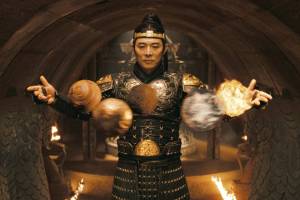 The inherent issue with an older Alex is that Fraser and his son look about the same age. Fraser has remarkably aged very little over the course of nine years since the first Mummy movie; sure there’s a few facial lines and a hardness that wasn’t there, but this man clearly looks like he is in his late 30s. Alex looks like he’s in his mid-twenties and the actor, Ford, is actually only 13 years younger than Fraser. It just doesn’t work at all. It looks like Rick and his younger kid brother, not his son. But lo, I think I have figured out the true reason behind position Alex as a younger, dashing version of Rick O’Connell, dispatcher of mummies. Fraser’s three-picture deal was fulfilled by this mediocre movie. If the producers want to have further mummy and non-mummy escapades, they have targeted Alex as their leading man of derring-do.
I like Fraser, I like him in these kinds of movies, but even he feels like he’s running out of gas with Tomb of the Dragon Emperor. The location switch from Egypt to China fails to give the franchise a new kick. The Chinese martial arts material bookends the movie and seems out of place, let alone poorly designed. Jet Li must have had a great time cashing his check because the kung-fu master appears for like 15 total minutes as himself. The lackluster action, questionable plotting, cardboard characters, and dearth of enjoyment make this a sequel a potential franchise killer. The tongue-in-cheek energy and cheesy fun of the other movies is completely absent. You can forgive stupid when it’s fun, but stupid and boring is a deadly combination for a huge effects-laden action movie. Hopefully The Mummy: Tomb of the Dragon Emperor will serve as proof that bad jokes, bad visuals, bad editing, bad plotting, and bad accents do not somehow go vanish because of lingering goodwill from previous films. This is one movie that should have stayed buried.
Nate’s Grade: C-
Share this:

The X-Files: I Want to Believe (2008)
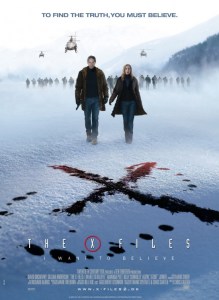 To all fellow X-Files fans out there, the movie is not nearly as bad as you may have been lead to believe. That said, it’s pretty much a so-so standalone episode of the TV show needlessly expanded. And yes, for all concerned fans, Mulder (David Duchovny) and Scully (Gillian Anderson) kiss on more than one occasion. The plot that reunites the characters is fairly mediocre, something about a ring of mad scientists that want to be a modern-day Dr. Frankenstein. You don’t need a two-headed attack dog to know that plot is way too hokey. The most intriguing aspect of the film is a priest (Billy Connolly) who also receives psychic visions, cries tears of blood, and, oh yeah, is a convicted pedophile. Could God be responsible for his special abilities as well as the abhorrent sexual urges? There is so much great conflict and human drama in this character worth examining, so it’s a pitiful shame that he just gets shoved off so the third act can concentrate on the lame mad scientists. A majority of the flick occurs in snowy West Virginia, which doesn’t translate into anything too special to look at. I’ll admit, my rating is inflated because I was an ardent fan of the TV show until the last years when it felt like they weren’t even trying any more. If you stripped away my allegiance, I’d say that the second X-Files movie serves little purpose other than to add a tiny coda to a TV show that went off the air in 2002. The characters are worth revisiting, just not in this tepid tale.
Nate’s Grade: C+
Share this:

The Eye (2008)
 This is a punishing and blandly mediocre movie, one that cannot inspire any strong feelings whatsoever. It’s a limp remake of a Korean horror movie where a blind woman gets an eye transplant and starts seeing ghostly creatures. The glossy American version stars Jessica Alba as said blind woman and watching her bump into furniture would have been more entertaining. The production values are competent, though the characters exist in a strange world where ordinary apartment buildings are designed like labyrinths. The horror elements are mostly of the “Boo”-variety and The Eye does little to establish whatever rules govern its spiritual universe. Why would closing a door stop a ghost in its tracks? It’s a ghost! The flick follows the tired plot device that ghosts have unfinished business and need flesh-and-blood humans to fix it. Come on ghosts, you’re dead, you got plenty of time on your hands. Eventually the movie transforms into a non-scary road trip to Mexico (there’s no way Alba would have gotten an international eye transplant) to learn about the poor eye donor’s unfortunate demise. This then leads into a contrived scenario where Alba must use her combined ghostly glimpses to save lives. The ending is just kind of pathetic as well. The Eye has a few nice stylistic touches, like what goes down in a Chinese restaurant, but the movie seems to exist as young male wish fulfillment. And by that I mean the concept of a beautiful woman who is blind and therefore doesn’t realize how beautiful she is. It’s the only way the majority of men can ever legitimately fantasize about having a shot with Jessica Alba.
Nate’s Grade: C
Share this:

Twilight (2008)
 It’s only been three years since the first book in the Twilight series was published, but man has it already become a phenomenon among young girls. Author Stephenie Meyer was a Mormon housewife who professed to never having seen an R-rated movie, so of course she seems like a natural fit for vampire literature. Meyer has taken the torch from Anne Rice and created an insanely popular series of books that chronicle the lives of humans and vampires in the rainy Northwest United States. I had never heard about the books until the spring of 2008, months before the hotly anticipated release of the fourth and final book in the series. Then again, I’m not a preteen girl, so excuse my ignorance. I decided to bear the hormonal, high-pitched squeals and sit with a packed house to experience the movie with the Twilight faithful. Judging from my screening, I think it might be mandatory for all girls between the ages of 7-14 to go see the Twilight film.
Bella Swan (Kristen Stewart, Into the Wild) is the new kid in school. She’s moved back to live with her father (Billy Burke), the sheriff of a tiny Washington town with a population of 3,000 people. Bella has her sights set on the Cullen family, a group of weird kids that are pale and keep to themselves. Edward Cullen (Robert Pattinson) goes out of his way to avoid Bella, and of course this just makes him more mysterious. He tells her that they shouldn’t be friends. Then one day at school he saves her life by stopping a van from crushing her. Bella suspects that this Cullen kid might not be a usual teenager. He’s not. He’s a vampire who hasn’t aged since 1918. Bella is smitten with her otherworldly protector. It’s your typical high school relationship. Bella doodles Edward’s name on her notebook and falls in love with an unattainable boy. Edward must resist the constant temptation to drink Bella’s blood (he and his vamp family are “vegetarians,” meaning they only drink animal blood).
 Let’s examine the distinctions of the Twilight vampire incarnation. Now, the vampire myth is not written in stone, so it allows for creative interpretation. Some vampires cast a reflection, others don’t. Some vampires are thwarted by garlic and crosses and others are not. Some vampires sleep in coffins and others just prefer a comfy mattress. It seems that the two characteristics that follow every vampire tale involve the insatiable thirst for blood to drink and the fact that sunlight is a vampire’s enemy. Meyer’s vampires don’t even adhere to this. They walk around in the daylight with no concern; in fact, we learn they never sleep at all, which means they must have all the late night infomercials memorized by this point. Removing the danger of daylight from the vampire myth proves to be somewhat troublesome decision. This is because, when you think about it, there are little to no drawbacks or limitations to being a vampire in Meyer’s world. Yeah you’ll live forever and crave an unorthodox beverage, but as a vamp you get super abilities, super strength, super speed, and a laughable diamond-like glow when the sun hits your exposed skin (think of those people that encase cell phones in tacky “bling” jewelry). If this is what it means to be a vampire in Meyer’s world then I wouldn’t be surprised if every freaking teenager in the world was signing up to join the army of the undead. The vampire myth brings with it plenty of baggage but it also helps to patch up holes in a narrative; just introducing the concept of a vampire allows an author some free pass with the details. However, vampire tales bring with them a certain set of expectations due to audience familiarity with the popular concept. I could care less if Meyer’s vampires have fangs or chow down on garlic bread, heavy on the garlic, but she loses me when she has vampires roam around during the day with little to no drawbacks. They just don’t feel like vampires. What they feel like are superheroes with skin conditions and a unique appetite. Which is fine, but don’t call it a traditional “vampire” flick.
I completely understand the enormous appeal of the Twilight series because it’s totally pre-teen wish fulfillment. I’m positive that the majority of the pre-teen readership projects themselves as Bella, the typical Every Girl. She encounters a sexy boy who ignores all the flashy and trashy girls and recognizes that special something in the Every Girl. In fact, he respects her and doesn’t want to be physical with her because he’s afraid of giving in to his urges (a rather obvious abstinence metaphor). He wants to love her forever and protect her. He has a dangerous bad boy angle but yet he’s still safe. In short, Edward Cullen is the idealized male for a nation of pre-teen girls who are just stepping into the world of boys (Bella also becomes an object of affection for no less than three boys at school). The Twilight tale even pulls a gender flip: the girl is pressuring the boy to give in to his carnal urges. And yet I can also understand why the books appeal to an older, mostly female, readership as well. If you remove the vampire angle from the story, it’s that old classic literary tale about a gal falling in love with the rebel, the boy who’s misunderstood. Hollywood has been making those sorts of love stories for decades, and so Meyer is able to tap into this classical romantic appeal.
 Twilight never delves too deeply into the dramatic dynamics of a 17-year-old girl dating a 90-year-old vampire. There are a lot of dramatic consequences drawn from dating somebody who cannot age. The Buffy the Vampire Slayer TV show explored the ins and outs of human-vampire relationships with wit and sincerity. Edward is forever seventeen but does that mean he still digs the high school girls? If you’re trapped in the body of a teenager does that mean you are still attracted to teenagers? If I were almost a century old I think I might seek out the comfort and conversation of a more mature woman, which is precisely the notion I’m sure the older female readership also fantasizes about (for all those guilty soccer moms, it doesn’t qualify as fantasizing an underage when he’s undead). Talking to teenagers for the rest of your life seems like a strange form of penance, as does repeatedly completing high school. Are the vampires just bored and attend school to pass the time? Don’t they know that TV was invented?
Twilight doesn’t have much of a plot to fill out a two-hour running time; the bulk of the movie consists of two characters feeling each other out. When the film does introduce an exterior threat (Cam Gigadet as a vamp obsessed with the hunt) it never feels that dangerous or fitting. The outside threat is saved for the very end and is easily dispatched, so the movie would have been better off without forcing a last-minute life-or-death dilemma into its love story. The love story itself doesn’t feel as properly nourished as it needed to be. The whole film experience feels like one long introduction and set-up, not so much an open-and-shut story.
Now, with all of that established, the Twilight film itself isn’t too bad. The movie is well made and certainly has a pulpy romantic vibe. The movie never feels overly burdened by excessive emotion or fake drama. It also follows a leisurely pace but never becomes dull. The actors are a big help. The leads don’t seem like they stepped out of a magazine photo spread; Stewart and Pattinson (Harry Potter and the Goblet of Fire) have a palpable chemistry that simmers throughout. Stewart is a terrific actress that embodies a typical teen, and Pattinson has the heartthrob glower down cold. I think there is rarely a scene where Edward isn’t glowering. Director Catherine Hardwicke (Thriteen) might as well provide onscreen instruction telling the audience when to swoon. Hardwicke is a filmmaker that doesn’t wallow in pretension, so she knows what kind of flick she has at her disposal. On the other hand, she is able to tamp down the inherent cheesiness that can go with a gooey supernatural love story. Twilight is able to work because it strikes the right balance between romance and silliness.
 Fans of Twilight should be delighted by the big screen adaptation of their favorite characters and heartthrobs. Sure the plot is a tad lightweight, the vampires might not be vampires as we traditionally understand them, the characters make giant leaps in their proclamations of love, and the outside conflict is a bit too poorly manufactured, but the movie has some bite. The movie isn’t moody, it isn’t too heavy, and it can come across as entertaining, though I’m at a loss to explain its extraordinary popularity. Now that Hardwicke and company have established the Twilight inhabitants, I hope the inevitable future installments will be better at providing resonating story and characters. If you doubt the certainty of sequels, need I remind you yet again that it is mandatory for girls age 7-14 to see this movie. The Twilight phenom has yet to reach its peak. Get used to it. It’s only a matter of time before Hollywood starts cranking out the Twilight knock-offs. Then, perhaps, I will join the armada of pre-teen girls and shriek wildly.
Nate’s Grade: B-


You must be logged in to post a comment.