Blog Archives
Me, You, and Everyone We Know (2005)
 This movie is going to affect people very differently. Writer/director Miranda July, a note performance artist, has created a world of people fumbling for human connection. It’s deeply arty, meaning that meaning will be considerably different per viewer. For whatever reason, I was able to ride July’s artistic wavelength and enjoyed the series of oddball characters and weird vignettes, like a chain of cars keeping a goldfish alive atop one of their roofs. The film deals frankly with sexuality and involves teens experimenting, but the film exists in a world where sexuality still had its curiosities and detached humor, truly like a kid’s point of view. This movie has two of the most profoundly romantic moments of any film I’ve seen all year, but they are just moments. Me, and You, and Everyone We Know is a movie built around moments. There are enough of them for me and I appreciated July’s unique voice.
Nate’s Grade: B+
Share this:

The New World (2005)
 I’m not a Terrence Malick fan. There, I’ve said it. I think he’s got a great eye for visuals, however, I’ve never been impressed by any of his films. I hated 1998’s The Thin Red Line and its exhausting supply of narrators so much that I wanted to walk out of the theater. The only other movie I felt the same impulse, at the time, was Lost in Space. As you can see, not good company. It’s been a long time since that nightmare so I figured it would only be kind to give Malick another chance. His new film, The New World, looks to deconstruct the mythic relationship between settler John Smith and Native American princess, Pocahontas (perhaps best known for painting with the colors of the wind, or so Disney would have me believe). To my non-surprise, The New World is everything I thought it would be, namely ponderous, pretentious, and quite bad.
It’s 1606, and the world is about to change forever. A cadre of ships bound from England ground ashore on the Virginia coast in search of a settlement and, hopefully, a vibrant colony. The Captain (Christopher Plummer) warns that his men must treat the “naturals” with care; after all, this is their homeland. The Native American inhabitants treat the new settlers with curiosity, poking them, smelling them, and then tolerating their existence … for now. John Smith (Colin Farrell) comes to America in chains, the result of an ill-fated mutiny, but the Captain gives him new life. He commissions Smith to send an envoy deep into the Native American village to seek trading partners. Along the way he is captured and about to be executed when he’s saved by a young girl (Q’Orianka Kilcher), a.k.a. Pocahontas though the name is never spoken once. Smith is allowed to stay with the tribe and he deeply grows fond of Pocahontas. The two are blocked by culture and language, but their feelings persist. Smith is ordered to go back to his people. If they do not leave the land there will be war. The two civilizations are set to butt heads, and the love between Smith and Pocahontas is precariously trapped between.
 Oh yeah, and after Smith leaves to go on an exploratory mission for the king, John Rolfe (Christian Bale) comes to the Jamestown settlement to woo Pocahontas himself.
Let’s get this bit of semantics out of the way. Terrence Malick doesn’t make movies, he makes nature documentaries. He doesn’t so much involve a plot as he does a large open space for his characters to pontificate about the world around them, mostly through whispery voice over. Malick fans will take in his artistic capture of sight and sound, but the rest of us out there will be scratching our heads, that is, when we’re not falling asleep. Seriously, how do you edit something like this? How does Malick know that THIS shot of a tree blowing in the wind needs to be slotted here, while this OTHER shot of a tree blowing in the wind needs to definitely come later? Malick is a stubborn mystery. He’s less interested in crafting a good movie than he is breaking the rules of what film can be. That’s all well and dandy when you put out an entertaining product. The only way I think The New World could be entertaining is if: 1) you adore long, poetic scenes of nature, or 2) you hate yourself.
It seems needless to talk about the acting. Farrell (Daredevil, Minority Report) seems like a good choice for a hardluck man overwhelmed by his new environment. Kilcher could be a fine actress, she certainly is rather beautiful, but the jury’s still out on her emoting. Plummer is so good that you’ll miss him dearly when he’s gone. Most of the acting revolves around silence and reactions, which is not the most captivating material.
The cinematography by Emmanuel Lubezki (Sleepy Hollow, Lemony Snicket) is obviously beautiful, taking great pains to showcase Virginia in a near mythic quality. But a film built around pretty pictures and idling characters can only go so far. Your attention span is so strained you may start doing your checkbook in your head. Oh ye God is The New World’s score terrible. It’s like James Horner collapsed on his keyboard, they recorded it, looped it, and just made it get louder and louder.
 It seems like Malick wrote his story on the back of his hand. So very little happens. I’m not as distraught about the immense lack of dialogue, because venturing into a foreign land with foreign people likely doesn’t produce a lot of conversation when no one can understand you. However, the only things we have to push the story forward are some repetitive, junior high-esque poetry disguised as introspective voice over. Pocahontas keeps waving her arms about like she’s directing airplanes, and then she ponders, “Mother, are you there? Are you in the wind?” She even hugs a tree at one point, perhaps thinking it’s her mother. What do you want; she’s the baby of like 100 kids. Malick is so frustrating and pretentious that he will bludgeon to death an audience rather than invite them into his artistic world. He definitely doesn’t make it easy or rewarding.
As far as romance is concerned, the relationship between John Smith and Pocahontas is curiously platonic. Both fall hard for the other but nothing ever dares to rock the PG-13 rating. The furthest these crazy kids get in expressing their love is hugging. I realize that Kilcher was only 14 years old when this was shot, but that doesn’t stop Malick from turning her into pseudo-artistic jailbait. When he’s not filming nature he spends an awful long time on Kilcher prancing around; the camera is practically fawning over her. I get it; we’re supposed to feel the spirit of this girl and her connection with the world around her. That’s why John Smith falls for her. But then nothing seems to happen in their puppy love courtship. It’s all too chaste to be epic or even slightly memorable. Then at the start of the third act Farrell leaves and in pops Bale, and the audience is going, “Oh, c’mon, we have to go through all that again?!” Sure enough, The New World starts all over and another man goes through the same courtship steps with Pocahontas. They touch the grass. They share looks. They talk to the wind. They murder my patience. The New World is a love story suffocated by hesitation and Malick’s own disinterest.
The New World is emblematic of why I’ll never be a Terrence Malick fan: it’s long, drifting, unfocused, ponderous over entertaining, and just plain friggin’ boring! If you’re a scenery buff you’ll garner some enjoyment from Malick’s images, but people looking for story, character, and any sort of movement will be lost with this 135-minute rumination on man, nature, and man touching nature …. very…. slowly. If this is all you are going to do then stop making movies and just make nature specials, Malick. The New World is pretentious, dull, and stubborn down to its very last second. It once took Malick 20 years in between movies. I wouldn’t mind if he took another 20-year hiatus.
Nate’s Grade: C
Share this:

Corpse Bride (2005)
 Not as good as Nightmare Before Christmas, but really, what can be? Tim Burton second stop-motion animated film is beautifully crafted and emotionally involving. It’s interesting because all three characters in the movie’s love triangle have really done nothing wrong, and our sympathies are stretched to all three. The contrast of the world of the living (drab, formal) and the dead (colorful, lively) is stark, and death in Corpse Bride is presented as simply another stage of living. Therefore, you don’t have to worry about scaring the kids with this one. The ending is a bit too conventional and the songs are all lackluster, nothing ever as remotely hum-able as Danny Elfman’s masterpieces in Nightmare Before Christmas. Despite the unfair comparisons, Corpse Bride is easy on the eyes, amusing, and nicely romantic.
Nate’s Grade: B
Share this:

Walk the Line (2005)
 I found this movie enjoyable but full of your standard, by-the-book biopic moments (rise/fall, addiction, famous faces, losing a brother at young age); still the performances were what the film hinged on and they were fantastic, especially with the added pressure of singing in their own voices. Walk the Line was good but didn’t really connect for me, and I think part of that is because the plot revolves around June Carter refusing to “be” with the Man in Black for 10 years. Yes they were each married to other people and their time on stage was like a forbidden courtship all its own, but it’s just not that compelling of a conflict, to me at least.
Nate’s Grade: B
Share this:

Harry Potter and the Goblet of Fire (2005)
 I’m really liking how much more mature this series gets as it goes. I’m also enjoying the fact that they’ve had two talented directors in a row with, surprise, artistic vision. Harry Potter 4 isn’t the best film as far as plot is concerned (if they needed Potter’s blood could they not have done this at any time?). It is, however, the best as far as character, turning near every scene into an awkward coming of age moment. The movie is far more comical than the rest; seriously, nearly every scene has some comedic underpinning. The emergence of the Dark Lord (a nasally-challenged Ralph Fiennes) is creepy, and the series gets better as its outlook gets darker.
Nate’s Grade: B
Share this:

Elizabethtown (2005)
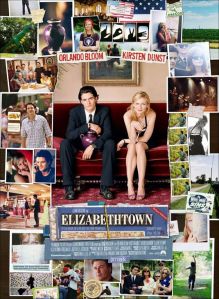 Cameron Crowe is a filmmaker I generally admire. He makes highly enjoyable fables about love conquering all, grand romantic gestures, and finding your voice. His track record speaks for itself: Say Anything, Singles, Jerry Maguire, Almost Famous (I forgive him the slipshod remake of Vanilla Sky, though it did have great artistry and a bitchin’ soundtrack). Crowe is a writer that can zero in on character with the precision of a surgeon. He’s a man that can turn simple formula (boy meets girl) and spin mountains of gold. With these possibly unfair expectations, I saw Elizabethtown while visiting my fiancé in New Haven, Connecticut. We made a mad dash to the theater to be there on time, which involved me ordering tickets over my cell phone. I was eager to see what Crowe had in store but was vastly disappointed with what Elizabethtown had to teach me.
Drew Baylor (Orlando Bloom) opens the film by narrating the difference between a failure and a fiasco. Unfortunately for him, he’s in the corporate cross-hairs for the latter. Drew is responsible for designing a shoe whose recall will cost his company an astounding “billion with a B” dollars (some research of an earlier cut of the film says the shoe whistled while you ran). His boss (Alec Baldwin) takes Drew aside to allow him to comprehend the force of such a loss. Drew returns to his apartment fully prepared to engineer his own suicide machine, which naturally falls apart in a great comedic beat. Interrupting his plans to follow career suicide with personal suicide is a phone call from his sister (Judy Greer). Turns out Drew’s father has died on a trip visiting family in Elizabethtown, Kentucky. Drew is sent on a mission from his mother (Susan Sarandon) to retrieve his father and impart the family’s wishes. On the flight to Kentucky, Drew gets his brain picked by Claire (Kirsten Dunst), a cheery flight attendant. While Drew is surrounded by his extended family and their down homsey charm and eccentricities, he seeks out some form of release and calls Claire. They talk for hours upon hours and form a fast friendship and stand on the cusp of maybe something special.
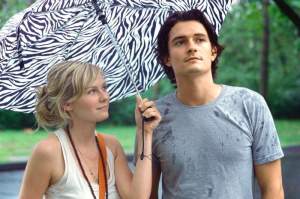 I think the most disappointing aspect of Elizabethtown for me is how it doesn’t have enough depth to it. Crowe definitely wears his heart on his sleeve but has never been clumsy about it. Elizabethtown wants to be folksy and cute and impart great lessons about love, life, and death. You can’t reach that plateau when you have characters walking around stating their inner feelings all the time, like Drew and Claire do. They might as well be wearing T-shirts that explain any intended subtext. Crowe squanders his film’s potential by stuffing too many storylines into one pot, thus leaving very little attachment to any character. Elizabethtown has some entertaining details, chiefly Chuck and Cindy’s drunk-on-love wedding, but the film as a whole feels too loose and disconnected to hit any emotional highs. If you want a better movie about self-reawakening, rent Garden State. If you want a better movie about dealing with loss, rent Moonlight Mile.
This is Bloom’s first test of acting that doesn’t involve a faux British accent and some kind of heavy weaponry. The results are not promising. Bloom is a pin-up come to life like a female version of Weird Science, a living mannequin, possibly an alien with great skin, but he isn’t a real compelling actor. He has about two emotions in his repertoire. His whiny American-ized accent seems to be playing a game of tag. He’s not a bad actor per se; he just gets the job done without leaving any sort of impression. To paraphrase Claire, he’s a “substitute leading man.”
Dunst is chirpy, kooky and cute-as-a-button but is better in small doses. Her accent is much more convincing than Bloom’s. Sarandon deserves pity for being involved in Elizabethtown‘s most improbable, cringe-worthy moment. At her husband’s wake, she turns her time of reflection into a talent show with a stand-up routine and then a horrifying tap dance. Apparently this gesture wins over the extended family who has hated her for decades. Greer (The Village) is utterly wasted in a role that approximates a cameo. Without a doubt, the funniest and most memorable performance is delivered by Baldwin, who perfectly mixes menace and amusement. He takes Drew on a tour of some of the consequences of the loss of a billion dollars, including the inevitable closing of his Wildlife Watchdog group. “We could have saved the planet,” Baldwin says in the most comically dry fashion. Baldwin nails the balance between discomfort and bewilderment.
 Elizabethtown wants to be another of Crowe’s smart, feel-good sentimental field trips, but it falls well short. I was dumbfounded to see how little the story progressed. It lays the groundwork for a menagerie of subplots and then, in a rush to finish, caps everyone off with some emotionally unearned payoff. To put it simply, Elizabethtown wants credit and refuses to show its work. The film is packed with characters and ideas before succumbing into an interminable travelogue of America in its closing act, but what cripples Crowe’s film about opening up to emotional growth is that the movie itself doesn’t showcase growth. We see the rough and tumble beginnings of everyone, we see the hugs-all-around end, but we don’t witness that most critical movement that takes the audience from Point A to Point B. The results are beguiling and quite frustrating. Take the subplot about Drew’s cousin, who can?t connect to his father either and wants to be friends to his own son, a shrill little terror, instead of a father. Like most of Elizabethtown‘s storylines, these subplots die of neglect until a half-hearted nod to wrap everything up. Father sees son perform and all is well. Son does little to discipline child but all is well. Elizabethtown is sadly awash in undeveloped storylines and characters and unjustified emotions, and when they’re unjustified we go from sentiment (warm and fuzzy) to schmaltz (eye-rolling and false). I truly thought Crowe would know better than this.
Crowe has always been the defacto master of marrying music to film. Does anyone ever remember people singing Elton John’s “Tiny Dancer” before its virtuoso appearance in 2000’s Almost Famous? Crowe has a nimble ear but his penchant for emotional catharsis set to song gets the better of him with Elizabethtown. There’s just way too many musical montages (10? 15?) covering the emotional ground caused by the script’s massive shortcomings. By the time a montage is followed by another montage, you may start growing an unhealthy ire for acoustic guitar. Because there are so many unproductive musical numbers and montages, especially when we hit the last formless act, Elizabethtown feels like Crowe is shooting the soundtrack instead of a story.
Elizabethtown is an under-cooked, unfocused travelogue set to music. Crowe intends his personal venture to belt one from the heart, but like most personal ventures the significance can rarely translate to a third party. It’s too personal a film to leave any lasting power, like a friend narrating his vacation slide show. Elizabethtown is gestating with plot lines that it can’t devote time to, even time to merely show the progression of relationships. The overload of musical montages makes the movie feels like the longest most somber music video ever. Bloom’s limited acting isn’t doing anyone any favors either. In the end, it all rings too phony and becomes too meandering to be entertaining. Elizabethtown is a journey the film won’t even let you ride along for. This movie isn’t an outright fiasco but given Crowe’s remarkable track record it can’t help but be anything but a failure.
Nate’s Grade: C
Share this:

The 40-Year-Old Virgin (2005)
 Yes it’s an uproarious sex farce, that’s a given from the ads, but this movie is also surprisingly sweet and genuinely moving. A lot of credit goes to star/co-writer Steve Carell and co-writer/director Judd Apatow, creator of some of the best, most honestly funny TV series unjustly cancelled. Apatow is a master at mining human comedy for pathos, where you get a great sense of character and really feel for those onscreen, and yet nothing feels cheap or unwarranted, all the while deriving comedy from the situations. We need more men like Apatow in the film industry. Carell can do it all whether it’s deflecting his insecurity, which we feel so bad when he comes up with outrageous things he’s overheard to make himself seem like one of the guys. The supporting cast is top-notch. They’re basically the stock roles in a sex comedy and yet they bring so much more to the table, with a true-to-life boys-will-be-boys camaraderie that you can identify with. The character relationships in The 40-Year-Old Virgin really elevate the story and the jokes and make the film something really special. It’s not merely a barrage of gross-out humor; it’s a nice story with some very tender moments. This is a movie that goes well beyond its gimmick premise, never feeling like a skit blown up into a feature film. It mixes in psychology, heartbreak, awkwardness, but also insights into loneliness and human connection. The best character-based comedy in years.
Nate’s Grade: A
Share this:

Must Love Dogs (2005)
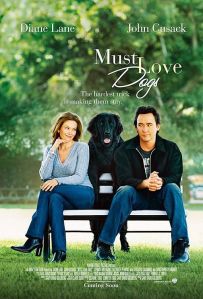 Seriously, is there anything more that can be written about modern romantic comedies? If ever there was a genre comparable to horror, it’s these easily digestible, 90-minute love fests. I feel like I’m becoming a romantic comedy connoisseur. And it’s all because of my then-girlfriend. You see, without her I never would have seen Miss Congeniality 2, let alone in a first-run theater. I wouldn’t have seen Sisterhood of the Traveling Pants, and that was a very pleasant film. Added to the list is Must Love Dogs, a romantic comedy released right before the dog days of summer.
Sarah (Diane Lane) is a newly divorced 40-something preschool teacher (who looks freaking adorable dressed as a cat). Her very tight-knit family consoles her but also can?t stop from putting all their efforts toward helping Sarah get back on her feet. Sarah’s younger sister scours through her wardrobe and asks, “Where are all your boob shirts?” Carol (Elizabeth Perkins) creates an online profile for Sarah without her knowledge and submits it to an Internet dating website. She ends the profile by saying, “Must love dogs.” This allows for many disastrous dates, including one awkward date with her father (Christopher Plummer), himself on the dating scene. Jack (John Cusack) has just gotten out of a long-term relationship and his heart is fragile. He carves old fashioned wooden boats but struggles to make any sales. His buddy sets up a date with Sarah at a dog park. Jack borrows a dog and things don’t go so smoothly, but he sees something there. They go on additional dates and really feel a connection, even if the dates don’t go according to plan. But Sarah also has Bob (Dermot Mulroney), a hunky single dad to one of her preschool tykes, to choose from. What’s a hot single woman to do?
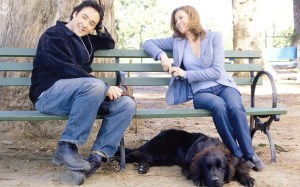 Must Love Dogs is a grab bag of romantic comedy clichés. You’ll find most everything here, from the sassy sister, the gay best friend (for 21st century advancements, the movie presents a gay couple), people trying to learn to love again after having their hearts broken, precocious children that say unusually adult things, a sing-along to a classic song, and the inevitable moment where one person finally has a late revelation and runs to catch their soon-to-be leaving love.
What hurts Must Love Dogs from its other cookie cutter ilk is how contrived so much of it feels. For the longest time the movie presents both of Sarah’s male options in a positive light, but because we see Cusack’s name above the credits and his face on the poster we know he’s destined to win out. Despite this, the film manufactures an entirely contrived scenario to put a wedge between Sarah and Jack. Bob walks in and, in an attempt to convince Sarah he didn’t bang her younger co-worker, kisses her on the spot. Then they pull apart and we see Jack standing there with Sarah’s drunken brother over his shoulder (how did he get back in the house anyway?). Must Love Dogs is another romantic comedy where the conflicts would be resolved with one levelheaded conversation between all parties.
 What does keep Must Love Dogs afloat is how enormously likable and appealing Lane and Cusack are as actors. They’ve both been acting since they were teens (Lane was even on the cover of TIME magazine before she had a training bra), so it’s pleasant to see them mature gracefully but still remain vibrant, charismatic, and very good looking. After her blistering turn as the errant wife in 2002’s Unfaithful (which she should have won the Best actress Oscar for), Lane has found stable footing in romantic comedies dealing with the overlooked stories of a 40-something woman in love. In Must Love Dogs she’s generally strong despite the weak material. She has her funnier moments dealing with reaction. Cusack’s character is like Lloyd Dobbler (from the masterpiece Say Anything) in 15 years, and he manages to put his offbeat/sexy Cusack magic all over the film. With different actors as the leads, Must Love Dogs would be mostly forgettable.
Must Love Dogs also gives ample material to Sarah’s father and his pursuit of a mate of his own. Plummer is excellent as the wry old codger and has some very tender moments with Lane. It’s rare for a mainstream movie, let alone a romantic comedy, to sensibly deal with an elderly man’s own search for love, after losing the love of his life. It’s refreshing to see a movie that deals realistically with a 40-something woman and a 60-something man in the dating world, well as realistic as romantic comedies can get (cue the spontaneous sing-along).
In the formulaic world of romantic comedies, Must Love Dogs lands right smack in the middle, feeling equal parts contrived and enlightened. Lane and Cusack still shine as wonderfully charming leads and elevate this standard cookie cutter material. Plummer adds a nice addition in a smart, tender storyline of an old man looking for Mrs. Right. Fans of the romantic comedy genre will have their every expectation granted and feel the standard warm and fuzzies leaving the theater. Must Love Dogs is a typical romantic comedy that?s slightly funny, slightly charming, and slightly frustrating. And maybe that?s the film’s biggest flaw: it’s slight.
Nate’s Grade: C+
Share this:

Wedding Crashers (2005)
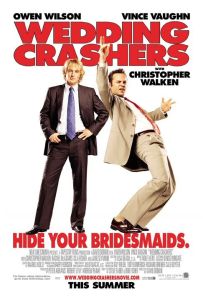 My friend Amanda Evans is quite possibly the biggest Vince Vaughn fan in the United States, nay, the planet Earth. She used to watch Dodgeball every day. Her brother-in-law even went so far as to stage an intervention for her Vaughn addiction. She has been talking about Wedding Crashers for months and months and counting down the days like a kid waiting for Christmas. It’s safe to say that Amanda loved the movie but how would your otherwise non-obsessed moviegoer feel?
Jeremy (Vaughn) and John (Owen Wilson) are divorce attorneys by day and ladies men come nightfall. Both men crash weddings they were not invited to with the strict purpose of getting laid by horny bridesmaids. They have got their honey hunting down to a science, from what relative they’re related to, to when to cry, to whom to slow dance with to convince those bridesmaids that they’re sweet gentlemen. Jeremy says that one day when they?re old men they’ll both look back on these days and smile. John retorts, “We’re not that young.”
The Super Bowl of all weddings is the daughter of the Secretary of the Treasury (Christopher Walken). John has his eye on his other daughter Claire (Rachel McAdams) while Jeremy sets his sights on the Secretary’s other daughter, the wild and vivacious Gloria (Isla Fisher). The only problem for John is that he’s actually falling in love with Claire, oh and she’s engaged to a real jackass (Alias‘ Bradley Cooper). Jeremy and John are such big hits at the wedding that the Secretary invites them both to vacation with his family at their summer home. Jeremy is hesitant and wants to stick to the love-em-and-leave-em lifestyle he and his buddy are so accustomed to, but John drags him along convinced he can win Claire over.
 Vaughn kills in every single scene. He hits punchline after punchline like some king of comedic prizefighter. His mile-a-minute delivery gels ever so nicely with Wilson’s homesy charm and drawl. These two have never been matched before as leading men but now their marriage seems like a match made in heaven. Their chemistry is off the chart. Wilson is essentially the straight man to Vaughn. In most comedies, “straight man” is just another term for boring. However, Wilson gets his shots in as well especially with his give and take with Vaughn, who is in a comedic zone all his own.
Not to be out done by the men, both McAdams and Fisher give great performances. McAdams (Mean Girls) is a rising star and it’s easy to see why. She’s a beautiful woman but also has some good teeth for comedy. In comedy terms, she’s the romantic interest, which means she’s an even straighter (read: boring) man than Wilson’s straight man. And handed with all this, McAdams still shines as a leading lady you can fall in love with. The true scene-stealer of Wedding Crashers is Fisher (Scooby-Doo), who goes hilariously tit-for-tat with Vaughn. You might walk away believing she’s truly out of her mind. Fisher has a physical gift for comedy that hasn’t been showcased before, but with Wedding Crashers she gets unleashed and we?re the better for it.
After the brilliant work of McAdams and Fisher, most of the supporting cast’s performances comes off as being too forced. Cooper is a wide-eyed grinning jackass that?s obvious from the get-go. He plays the role so big that his eyebrows seem permanently pressed to the top of his head. There’s also the weird introverted son who Typical Crazy Grandma berates as being “a homo.” But not only is he gay hes also a freak. The role seems quizzically garish and even a bit homophobic. Jane Seymore jumps at her role as mom in heat, but the film forgets about her fast after an awkward encounter with Wilson. Walken can make me laugh just by watching him stare (and he did), but even he isn’t given much more to work with besides the supportive dad role. It seems odd for a comedy with such huge belly laughs to have several supporting players grind the film’s funny down. All of this is excusable though because the far majority of the film’s attention and laughs are derived from our central quartet.
Wedding Crashers is a raunchy delight. You know you’re in good hands when, in one scene, Wilson and Vaughn are dipping bridesmaids on the dance floor and it cuts to these same bridesmaids now falling topless onto hotel beds. This is one R-rated comedy that proudly wears its rating on its sleeve. And for a sex comedy, there’s a surprising amount of laughs mined just out of an adult discussion on sex, which cannot be curtailed or couched with euphemisms and soft language. I don’t know whether to credit the screenwriters or the off-the-cuff improving of Wilson and Vaughn, but Wedding Crashers proves there’s still more under the sun to talk about and giggle.
Usually with movies revolving around hedonistic characters, they meet one of two ends: 1) they find that One True Girl that makes them want to go straight, or 2) they meet their hedonistic match and rethink their ways now that the shoe is on the other foot. Wedding Crashers doesn’t give you one of these options, oh no, it gives you both. Sure things gets awfully predictable after a great rush out of the gate, but the interplay between Wilson and Vaughn and some genuinely funny gags should keep most laughing until the surprise cameo at the end by the founder/guru of the wedding crashing rule book (it should be no surprise if you’ve seen any movie with Wilson and Vaughn the last three years). The climax is a bit drawn out and Wedding Crashers is still another comedy built around deception whose climax involves apologizing for said deception. It’d be tiresome if the movie weren’t so damn funny.

Despite the sleazy premise, Wedding Crashers has a sweet and gooey center. These are two men who know exactly what women want and they’re eager to give it to them. They just don’t know what they really want, but when they find it both Jeremy and John set their minds to romantic conquests outside of the bedroom. It’s this gooey center that makes the characters likeable despite any misgivings an audience may hold over their wedding crashing plot.
Two hours is a near eternity for most comedies and Wedding Crashers seems to lose its sprint in the last 20-30 minutes. The film starts getting repetitious and overly predictable with few laughs to cover up. Wilson and Vaughn still make it work but the setup seems to have been taken as far as it will go and then some.
Wedding Crashers is a loud, jovial, ribs-in-the-elbows funny return to the crass classics of the 1970s R-rated comedy. Vaughn and Wilson are perfectly matched and McAdams and Fisher shine like stars. Wedding Crashers is a bawdy good time that will leave you aching from laughing so hard. This movie is profane, simple, crude, and joyously so. It does run out of gas toward its protracted climax and some of the supporting performances feel forced, but Wedding Crashers is easily the funniest film of the year. Amanda was foiled in seeing the film three times the weekend it opened. She had to settle for only seeing it twice. I don’t think she has slept since (UPDATE: Amanda has since seen the movie five more times).
Nate’s Grade: B+
Share this:

Hitch (2005)
 Isn’t it peculiar that most romantic comedies are written or directed by men? Sure you’ll have your occasional Nora Ephron or Nancy Myers, but it seems that the vast majority of people behind these popular, simplistic, romantic fantasies are men. Is it all a conspiracy? Is Hollywood keeping a nation of women docile with a slew of movies aimed at their soft, gooey middles (no, not the love handles)? We may never know. Hitch is written and directed by men too. Will it be any different from other rom-coms?
Alex “Hitch” Hitchens (Will Smith) is New York City’s most popular love guru. He’s got the methods and the advice to turn any zero to a hero in the dating world. His latest client is Albert (Kevin James), a mild-mannered attorney lacking the confidence to ask the beautiful Allegra (super model Amber Valletta) on a date. Hitch agrees to assist Albert in learning the fine art of impressing women, behavioral signs, and the proper steps to insure a fantastic first kiss (Hitch believes 80% of women can tell all they want from that first kiss). Meanwhile, Hitch is also trying to woo Sara (Eva Mendes), a prickly gossip columnist distrustful of most men, especially the ones that show interest in her. Hitch persists and sets up elaborate dates that seem to misfire one after the other. His sure-fire rules and methods aren’t working on Sara, so Hitch will have to dig deep to discover the true meaning of love.
 Will Smith the actor was put on Earth to do two things, save the world and woo the ladies. Hitch focuses more on the later. Smith oozes charisma and is a natural charmer. He’s all but tailor-maid for the romantic comedy genre as an affable, sly, and lovable lead. He’s an actor that can truly connect with an audience, for better or worse.
James (TV’s The King of Queens) gives the film its biggest laughs and its best moments of heart. His geek chic dance sequence (involving Q-tip wiping, spinning a pizza, and hiney shaking) is a gut-buster, and James plays it with bravado. He’s the doughy everyman and his courtship of Allegra provides some tender moments, like that first awkward kiss. James doesn’t overplay the nervous tics or the low self-esteem but lets Albert feel like a real schmo coming alive.
The lone sour note in this well-cast fable comes from Eva Mendes. I’ve never been impressed with Mendes as an actress so far. What almost kills Hitch is that Mendes is stuck playing a wholly unlikable character. Sara is whiny, mean-spirited, and short-sighted in her actions. When she tries to get revenge against Hitch she ends up rashly destroying innocent lives. She’s supposed to be guarded, the one nut Hitch can’t crack with his dating axioms, but instead she comes off as a rather terrible human being. After a while I started rooting for Hitch to lose because he’d be far happier without being saddled to this insufferable, egotistical, close-minded, bitter human being.
What saves Hitch is that the film wisely decides to put more time and energy on Albert dating Allegra. Albert serves as the underdog, the rooting point for the audience, and he’s true to what he believes. This is quite a contrast to a gossip columnist unafraid to rip people on unsubstantiated assumptions.
 Another element that can make a romantic comedy sink or swim is the chemistry of its stars. Here Hitch presents an intriguing dilemma. You see, Mendes and Smith have no connection whatsoever, which is fine because Hitch is just as much a buddy film as it is a rom-com. Smith and James have terrific chemistry and play off of each other with an excellent comedic give and take. This is where Hitch separates itself from the usual rom-com fluff. It’s a tale of three couples, Albert and Allegra, Hitch and Sara, and Albert and Hitch. The film’s about male relationships as much as male-female relations (and the pursuit of male-female relations), and there are hints of truth behind the comic desperation. There is something romantic to Hitch but it cannot be found whenever Mendes steps onscreen.
Hitch has appeal but it can’t help but get caught in the clichés of romantic comedies. As always, misunderstandings loom and push people away when one good level-headed conversation could clear everything up. The climax even involves people chasing after their loved one to stop them from getting on that bus/train/boat/plane/you name it. The climax to Hitch feels way too drawn out, like the film is stubborn to tie up its characters despite a horrendously long running time of two hours. And am I alone on this, or are the majority of romantic comedies now built around some premise of deceit? That doesn’t sound like a good way to start a relationship to me.
Romantic comedies play on our love of the familiar. What makes Hitch work are the characters and the performances. Smith and James make an excellent mismatched team and both men are charismatic, funny, and relatable. Hitch is sweet but not too sappy. This isn’t anything groundbreaking but it is pleasant and good-natured. Hitch is your typical rom-com, a fine buddy flick, and a showcase for the near irresistible charms of Smith. It’s hard not to fall under Hitch‘s spell despite Mendes’ character’s best efforts to sabotage your viewing pleasure. This is one date movie not to dread.
Nate’s Grade: B


 nathanzoebl
You must be logged in to post a comment.