Blog Archives
The New World (2005)
 I’m not a Terrence Malick fan. There, I’ve said it. I think he’s got a great eye for visuals, however, I’ve never been impressed by any of his films. I hated 1998’s The Thin Red Line and its exhausting supply of narrators so much that I wanted to walk out of the theater. The only other movie I felt the same impulse, at the time, was Lost in Space. As you can see, not good company. It’s been a long time since that nightmare so I figured it would only be kind to give Malick another chance. His new film, The New World, looks to deconstruct the mythic relationship between settler John Smith and Native American princess, Pocahontas (perhaps best known for painting with the colors of the wind, or so Disney would have me believe). To my non-surprise, The New World is everything I thought it would be, namely ponderous, pretentious, and quite bad.
It’s 1606, and the world is about to change forever. A cadre of ships bound from England ground ashore on the Virginia coast in search of a settlement and, hopefully, a vibrant colony. The Captain (Christopher Plummer) warns that his men must treat the “naturals” with care; after all, this is their homeland. The Native American inhabitants treat the new settlers with curiosity, poking them, smelling them, and then tolerating their existence … for now. John Smith (Colin Farrell) comes to America in chains, the result of an ill-fated mutiny, but the Captain gives him new life. He commissions Smith to send an envoy deep into the Native American village to seek trading partners. Along the way he is captured and about to be executed when he’s saved by a young girl (Q’Orianka Kilcher), a.k.a. Pocahontas though the name is never spoken once. Smith is allowed to stay with the tribe and he deeply grows fond of Pocahontas. The two are blocked by culture and language, but their feelings persist. Smith is ordered to go back to his people. If they do not leave the land there will be war. The two civilizations are set to butt heads, and the love between Smith and Pocahontas is precariously trapped between.
 Oh yeah, and after Smith leaves to go on an exploratory mission for the king, John Rolfe (Christian Bale) comes to the Jamestown settlement to woo Pocahontas himself.
Let’s get this bit of semantics out of the way. Terrence Malick doesn’t make movies, he makes nature documentaries. He doesn’t so much involve a plot as he does a large open space for his characters to pontificate about the world around them, mostly through whispery voice over. Malick fans will take in his artistic capture of sight and sound, but the rest of us out there will be scratching our heads, that is, when we’re not falling asleep. Seriously, how do you edit something like this? How does Malick know that THIS shot of a tree blowing in the wind needs to be slotted here, while this OTHER shot of a tree blowing in the wind needs to definitely come later? Malick is a stubborn mystery. He’s less interested in crafting a good movie than he is breaking the rules of what film can be. That’s all well and dandy when you put out an entertaining product. The only way I think The New World could be entertaining is if: 1) you adore long, poetic scenes of nature, or 2) you hate yourself.
It seems needless to talk about the acting. Farrell (Daredevil, Minority Report) seems like a good choice for a hardluck man overwhelmed by his new environment. Kilcher could be a fine actress, she certainly is rather beautiful, but the jury’s still out on her emoting. Plummer is so good that you’ll miss him dearly when he’s gone. Most of the acting revolves around silence and reactions, which is not the most captivating material.
The cinematography by Emmanuel Lubezki (Sleepy Hollow, Lemony Snicket) is obviously beautiful, taking great pains to showcase Virginia in a near mythic quality. But a film built around pretty pictures and idling characters can only go so far. Your attention span is so strained you may start doing your checkbook in your head. Oh ye God is The New World’s score terrible. It’s like James Horner collapsed on his keyboard, they recorded it, looped it, and just made it get louder and louder.
 It seems like Malick wrote his story on the back of his hand. So very little happens. I’m not as distraught about the immense lack of dialogue, because venturing into a foreign land with foreign people likely doesn’t produce a lot of conversation when no one can understand you. However, the only things we have to push the story forward are some repetitive, junior high-esque poetry disguised as introspective voice over. Pocahontas keeps waving her arms about like she’s directing airplanes, and then she ponders, “Mother, are you there? Are you in the wind?” She even hugs a tree at one point, perhaps thinking it’s her mother. What do you want; she’s the baby of like 100 kids. Malick is so frustrating and pretentious that he will bludgeon to death an audience rather than invite them into his artistic world. He definitely doesn’t make it easy or rewarding.
As far as romance is concerned, the relationship between John Smith and Pocahontas is curiously platonic. Both fall hard for the other but nothing ever dares to rock the PG-13 rating. The furthest these crazy kids get in expressing their love is hugging. I realize that Kilcher was only 14 years old when this was shot, but that doesn’t stop Malick from turning her into pseudo-artistic jailbait. When he’s not filming nature he spends an awful long time on Kilcher prancing around; the camera is practically fawning over her. I get it; we’re supposed to feel the spirit of this girl and her connection with the world around her. That’s why John Smith falls for her. But then nothing seems to happen in their puppy love courtship. It’s all too chaste to be epic or even slightly memorable. Then at the start of the third act Farrell leaves and in pops Bale, and the audience is going, “Oh, c’mon, we have to go through all that again?!” Sure enough, The New World starts all over and another man goes through the same courtship steps with Pocahontas. They touch the grass. They share looks. They talk to the wind. They murder my patience. The New World is a love story suffocated by hesitation and Malick’s own disinterest.
The New World is emblematic of why I’ll never be a Terrence Malick fan: it’s long, drifting, unfocused, ponderous over entertaining, and just plain friggin’ boring! If you’re a scenery buff you’ll garner some enjoyment from Malick’s images, but people looking for story, character, and any sort of movement will be lost with this 135-minute rumination on man, nature, and man touching nature …. very…. slowly. If this is all you are going to do then stop making movies and just make nature specials, Malick. The New World is pretentious, dull, and stubborn down to its very last second. It once took Malick 20 years in between movies. I wouldn’t mind if he took another 20-year hiatus.
Nate’s Grade: C
Share this:

Lord of War (2005)
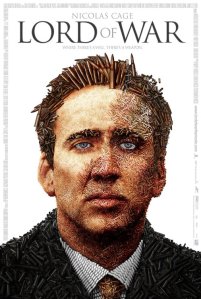 Andrew Niccol is back in my cadre of cool. He’s responsible for two awesome movies (Gattaca, The Truman Show) and one very lackluster Hollywood satire (Simone). But now the man is back and Lord of War is a startling look into the amoral world of international arms dealing. The film is enthralling as Uri (Nicolas Cage) narrates us about the ins-and-outs of his world a la Ray Liotta in Goodfellas. Not to be outdone by a juicy narrative by Niccol the writer, Niccol the director adds lots of stylish flash to his tale. The opening watches the manufacturing and journey of one bullet, it’s ending destination in the head of a little African boy caught in the crossfire. It’s jarring, it’s powerful, and it’s direct. That’s Lord of War in a nutshell.
Nate’s Grade: A-
Share this:

Brokeback Mountain (2005)
 Go ahead and work the snickers out of your system. Brokeback Mountain has been dubbed “that gay cowboy movie,” and been condemned by certain fundamentalist Christian organizations as “a very dangerous and insidious message to America.” But what message is Ang Lee’s film even putting out there? It seems to me that Brokeback Mountain is putting a human face on a slur, making homosexuals look like you or me. For some that prospect may be terrifying. The movie is playing well on the blue-state coasts, expectedly, but it’s also surprisingly playing well in America’s heartland. It seems that people are lining up all over to see a movie about two gay cowboys in love. And perhaps the more people that witness Brokeback Mountain, the harder it will be to listen to those so-called family advocacy groups with their sterling Christian morals. Maybe people will really see what’s behind many of the words of outcry – hate and ignorance (I am in no way insinuating that disliking the flick means you are homophobic). Despite all this political talk, Brokeback Mountain is by no means a political movie. It’s a love story, above all, and it’s a doozy.
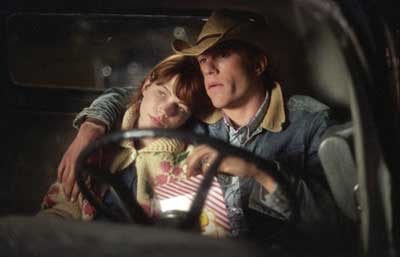
In the summer of 1963, Ennis Del Mar (Heath Ledger) is a quiet man looking for work in rustic Wyoming. He finds a job as a sheep herder working atop the canyons and mountains of Brokeback. Working alongside Ennis is Jack Twist (Jake Gyllenhaal), a charismatic rodeo rider. The weeks are long and Ennis and Jack are all the company they have, excluding the hundreds of sheep they tend. Eventually, the more taciturn Ennis finally opens up and bonds with his herding partner. “That’s more words than you’ve spoken in two weeks,” Jack says. “Hell,” Ennis adds, “That’s the most I’ve spoken in a year.” The rules have been laid out: every night one man sleeps in a tent campsite, the other sleeps next to the sheep to guard them. Well one night Ennis has had too much whisky and cannot make it back to the sheep. Jack invites him to sleep in the tent instead of freezing outside. Then something surprising takes place – both men have an alcohol-fueled bout of rough sex. The next morning both men stress they “ain’t queer,” but they have a hard time fighting their feelings inside. Ennis warns that, “If this thing, it grabs hold of us again… at the wrong place… at the wrong time… and we’re dead.” He recounts a childhood memory where his father showed him the corpse of an older homosexual man, brutally beaten and mutilated. For them, their love must stay on Brokeback Mountain.
 The men part ways. Ennis marries Alma (Michelle Williams), a quiet woman after his own heart, and fathers two daughters. In Texas, Jack meets fellow rodeo rider Lureen (Anne Hathaway) and gets involved in a relationship with her, fathering a son of his own. But Jack still thinks of his Brokeback pal and sends him a postcard. Ennis nearly lights up at the returned sight of Jack and the two passionately embrace. He tells Alma that Jack is an old “fishing buddy” and they sneak away every few months for a fishing getaway. Really the men are returning to the countryside to rekindle the love that they haven’t left behind. But can they keep their love a secret, and should they even have to?
I wonder if Lee would ever have directed this if 2003’s Hulk didn’t bomb so badly. Lucky for us, he’s taken the Brokeback helm and infuses lots of emotion into the story. The Wyoming countryside (actually Canada, but it’s all close enough) is gorgeous, and the film has a great earthy feel. Best of all, Lee allows his love story to breathe and go at its own pace, never cutting corners or rushing an emotion. There’s a lovely, lilting feel to the film, and Lee’s guided hand allows the story to play out to its grand promise. Based on Pulitzer Prize winner Anne Proulx’s 11-page short story, screenwriters Diana Ossana and Larry McMurtry (Lonesome Dove, The Last Picture Show) have given incredible depth and subtext to the tale. McMurtry, in particular, has great knowledge of the West and the cowboy lifestyle, and the screenplay gives you an idea of small-town Western life. There are a few moments at bars, social scenes, stores, but they brilliantly give you every detail you’d need to know about this way of life. I even loved how the people of Wyoming wore fashions that were five years removed from their height of popularity, which is exactly how fashion moves around to the smaller parts of America. Ossana and McMurtry are also commended for presenting their characters as people first and never as agenda bulletins. All three lend a level of authenticity that makes the story feel organic and never trite.
In films about forbidden desire and heartbreak, the acting is the cornerstone for how powerful the tale resonates. The acting in Brokeback Mountain is phenomenal. Ledger is the breakout star and the majority of the film’s focus. He gives the performance of his life. Ledger is outstanding as the reserved, taciturn Ennis, brought to believe that queers were something sub-human and now he wrestles with his own identity. He may be a restrained man of few words but you see every emotion bubble under the surface, every conflict played out in his eyes. Ledger’s few violent or emotional outbursts are startling because they show an uncontrollable feeling, one even he can’t withhold 24/7.
Gyllenhaal has the showier role but masterfully displays the frustration of forbidden love. He’s willing to sacrifice everything for Ennis, and the fact that Ennis won’t do likewise tears him apart. Isn’t love enough, he wonders. There’s a moment in the film that so sharply displays Jack and Gyllenhaal as an actor. It involves two different shots in a moving truck. The first is Jack headed to Ennis’ ranch, singing, bouncing, and with a wall-to-wall smile. The second is Jack driving away from the ranch unfulfilled, sullen, broken, and seemingly unable to cry another tear. It’s two small moments and they sum up Jack and Gyllenhaal perfectly. The only thing unsettling about Gyllenhaal’s performance is his late 70s porn star ‘stach. With his tremendous work in Jarhead and now Brokeback Mountian, Gyllenhaal is in class all his own (he’s got the dreamiest doe-eyes in Hollywood).
The ladies of Brokeback Mountain have less screen time to play with but they each deliver fine performances. Williams is a silent, put-upon mother and is shattered when she discovers her husband’s secret love. She just crumbles. She’s never the same and Williams showcases her character’s distress and mounting bitterness. One of the film’s highpoints is her confrontation with Ennis, many years later, finally sharing all that she knows. Me thinks an Oscar nod is headed in her post-Dawson’s Creek future. Hathaway plays quite an opposite character. She begins as a wild, headstrong cowgirl with a healthy sexual appetite, something perhaps Jack sees as a reflection of his self. Then their love dies at some point and she pours herself into work, but Hathaway illuminates every step along the way. Her small smile during a scene where Jack finally browbeats her obnoxious father is terrific.
This is an elegiac, engrossing love story. Brokeback Mountain is not necessarily a “gay thing,” more so it’s a story about forbidden love and about the consequences of moving forward without ever letting go. That sounds universal, right? Nothing “gay” about that. Brokeback Mountain explores the force of love and shows how uncontrollable and unpredictable it is. Jack and Ennis are just as surprised by their feelings and their rough night of passion as the audience, but the happiness they share is hard to argue.
 Because of the film’s gentle pace, and Lee’s loose control, we really immerse ourselves in their relationship as they frit away the hours looking after sheep. There was a woman in my theater (I won’t name names, partly because I don’t know hers) who felt that Brokeback Mountain was far too slow and could have been put to better use by cutting 2 hours out. The film’s placid pace is integral to the story’s success; you need to see how expansive that countryside is to feel alone, you need to have the many small conversations to draw out a closer camaraderie, you need the added time to open up to these men, and then once you have –BAM! — they turn their worlds upside down. This buildup is necessary for our connection to the characters but it’s also essential so we can understand what happens. Yes, the film portrays love as it truly is: an all-encompassing emotion that can be as maddening as it is passionate. But Brokeback Mountain doesn’t dare introduce a gay romance, something so dangerous in this land, all lickity-split. It’s supposed to be a surprise to these men, grown up with John Wayne movies and strong, silent role models. The movie enjoyably takes its time to seduce an audience with its tale before choking out every last tear in the end.
The tragedy of Lee’s film is that these men have each found the love of their life but, because of society’s prejudices, are not allowed to act. As a result, each man puts on a different face and pretends they’re a happy heterosexual Western buck for the public, but each is being eaten away inside. Ennis drinks a lot and is full of self-loathing. Jack is less publicly reserved about his feelings and finds momentary comfort with other warm bodies, mostly through silent nods with other closeted gay men. I’m reminded of a line in Paul Thomas Anderson’s Magnolia: “I have a lot of love to give; I just don’t know where to put it.” Ennis and Jack cannot quit each other but they also tragically can never fully commit to one another, at least without any threat of ostracism or death. That’s the power of Brokeback, that it shows you these simple men, shows you their love, and then won’t let that happy ending ever manifest that we yearn for. When we reach our somber, haunting conclusion there weren’t many dry eyes in the theater, mine included. Brokeback Mountain is a love story that won’t let itself be happy, and that’s what provides all the kicks to the gut and lumps in your throat.
I think some of the more hostile criticism of Brokeback Mountain is because of how normal Jack and Ennis are presented. Neither is a swishy stereotype, neither is any less of a man, and that notion probably terrifies the homophobes: “Well, they look normal, and if they get gay then maybe I will too!” That’s a shame really, because those ignorant few will miss out on a powerful, sweeping, complex, aching love story with fantastic acting. Ledger and Gyllenhaal will make you feel every moment of joy, every moment of pain, and every lingering conflict on what makes them whom they are. Lee stressed that he wanted to show the world a love story where you really felt that love was an uncontrollable force. His heartfelt, touching film is a revolution for being a normal love story, albeit with two classic Marlboro men. There is no propaganda, no gay agenda, but perhaps the film will open people’s eyes and strip away any narrow definitions we have toward the ownership of love. Brokeback Mountain set out to merely tell a good story, not change the world. It’s accomplished the first part and maybe, just maybe, it’ll spark discussion, debate, and lasting memories to lay groundwork for the second.
Share this:

Good Night, and Good Luck (2005)
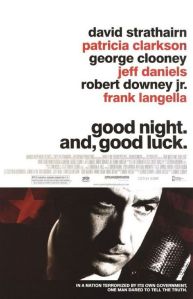 George Clooney’s pet project is articulate and a tad dull. The black and white cinematography is elegant; you can practically taste all the smoke onscreen. The idea of press vs. fear-mongering politician is very relevant today, and the film’s insight into the running of TV news is really interesting, but this is a movie that works best as a study and not as strict entertainment. It?s not stuffy or ideologically overwhelming; in fact it’s easy to follow and easy to get into, even if it leans too heavily on speeches. Clooney, as I predicted, is transforming himself into a terrific director with a great feel for his material. With Good Night, and Good Luck it seems like he got exactly what he wanted, regardless if an audience is going to walk away feeling they got their money’s worth.
Nate’s Grade: B
Share this:

Munich (2005)
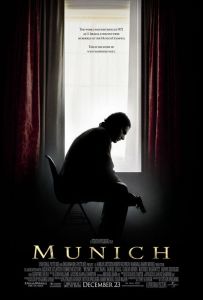 If 2005’s War of the Worlds was Steven Spielberg’s look at 9/11, then Munich should be considered his examination of the aftermath. What could be more relevant today than a film about combating terrorism, violent reprisals, and where a government leader says, “Every civilization finds it necessary to negotiate compromises with its own values?” Anyone seen the news lately? Spy eavesdropping, prison abuses, hemming and hawing on what the definition of torture is, it’s all compromised values in the name of security. This is our world and Spielberg analyzes the costs of war. Munich is visceral, haunting, thoughtful, and compelling as both an idea piece and as a mainstream thriller. It’s Spielberg’s most mature work in a decade.
In 1972, a group of Palestinian terrorists known as Black September took 11 Israeli athletes hostage during the Munich Olympics. The world watched as the standoff stretched for hours, finally ending in a firefight at the airport and the terrorists throwing grenades into helicopters housing their hostages. Every Israeli athlete and Black September member had been killed. “They’re all gone.”
But it doesn’t stop there. Israel Prime Minister Golda Meir (Lynne Cohen) recruits Mossad agent Avner (Eric Bana) to run a secretive counter strike. Avner is to assemble a team, track down the architects of the Munich massacre, and assassinate each one. Their mission is only known by a select few, and their only contact is via a handler (Geoffrey Rush) and a safety deposit box that fills up with money. Joining Avner are Steve (Daniel Craig), the South African with a hot-head, Robert (Mathieu Kassovitch), the toymaker turned bomb maker, Hans (Hanns Zischler), the document forger, and Carl (Ciarán Hinds), the clean-up man. The men crisscross the globe hunting down their targets, and with each successful kill there is escalating retaliation by Black September. Soon Avner’s group becomes a target themselves and he questions if the men they are snuffing out have any connection to Munich.
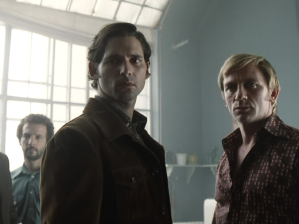 When I first heard about Munich I thought it would be a dramatization of the hostage situation, and Spielberg does revisit the sequence in horrifying and bloody flashbacks. The film’s focus is on the aftermath of Munich, though it does not pretend to be fact. This is a made up story based on rumors. As new evidence clears, it looks like the Munich retaliatory slayings were unrelated Palestinian men.
For events that began in 1972, Spielberg punctuates his drama with a gnawing sense of timeliness, closing his film with the very image of the World Trade Center in the New York skyline, connecting an invisible line from Munich to our world today. This is a mature, meditative examination on the retaliatory response to terror. Munich is even-handed in its views and dives into challenging territory where an easy answer is an insult. This isn’t a pro-Israeli movie or an anti-Palestine movie (though it’s already earned condemnation from fundamentalists on both sides), and every side gets a moment in the spotlight to effectively argue their case. The result is a movie that thoughtfully and reflectively looks at the cost of vengeance and compromising our values. Munich, even with its glut of important messages and mouth pieces, never forgets to be entertaining. The cameras are often handheld and Speilberg’s winding shot compositions give a visceral feeling to the events.
Bana (Troy) is the moral anchor of the film and gives a staggering performance. He begins proud and humbled, living in the shadow of his father’s name, an Israeli war hero. As the assassinations play out, each changes Avner and Bana expertly expresses his character’s turmoil, finally succumbing to paranoia and fear. The final act has relatives telling Avner he has done right, that his dead family is smiling with approval, and Bana’s sad, haunting eyes tell the full story of what he truly believes. He looks like he’s aged ten years in such a short time span. Each member of the hit squad fills out their role nicely, with Craig (Layer Cake) imparting tough, hip savvy, Kassovitch (the director of Gothika, oddly enough) is nebbish and the first to morally crack, Zischler is stoic button-lipped,and then there’s the fantastic Hinds (Julius Caesar on HBO’s Rome), an experienced man that?s so calm and knowing and wryly warm-hearted. He’s such a delightful onscreen presence. Rush is only onscreen in spurts but is brash, humorous, and unsentimental to the very end. He’s an actor that rarely misfires, if ever.
Too often we bandy about the term “evil;” our enemies are “evil,” atrocities are brought about by “evildoers,” but by painting in such broad, simplistic strokes, demonizing the enemy as “evil” (and conversely implying you are the side of good) you strip away the reality of the situation. The worst thing you could do in this war on terror is simplify the situation. These are not evildoers; these are people deciding to commit atrocious acts. If they are dubbed monsters or simply evil then we’ve reduced the argument to a kindergarten lesson. Munich doesn’t show the Palestinian targets as mustache-twirling evil doers (no one is spotted tying a damsel to railroad tracks). These are men with convictions, family, and humanity. “Evil” is too tidy a term, and Spielberg understands this. Are evil acts necessary to combat evil? Do we become our enemies when we resort to their ruthless tactics? Robert, shaken from a recent kill, pleads that Jews are supposed to be righteous, that’s what separates them from their persecutors. Assassination is not a righteous act, despite what Pat Robertson may spout off on TV. In the end, the only trustworthy people in the film may be a strange French family that sells information to the highest bidder, regardless of politics.
 There’s one moment in the middle of Munich that will stick with me forever. There’s only one pure vengeance murder in the movie and it involves a female killer (Marie-Josée Croze). It’s a kill the audience is thirsting for and demanding; the other assassinations were murky, men unknown to have any involvement in terror other than being a name on a sheet. This is an instance where the audience wants revenge and then Spielberg gives exactly what we want and disgusts us. The kill is so sharp, so uncompromising that the violence is startling and, more importantly, it hurts. The reality of it is painful to watch. Spielberg has masterfully turned our quench for violence and shown the ugly reality.
Munich also succeeds as a thriller, pulsing with immediate danger and drawing the viewer in. There were key moments that I was chewing on my knuckles because of how taut the suspense was. As a thriller, Munich briefs us on these men’s mission like all good spy movies, brings us into their fraternal order, and then we watch each assassination play out, many never going according to plan. What elevates Munich is how real everything feels and how dangerous every moment comes across. This is a thriller that it makes the heart pound but also courses with subtext, and exquisite dialogue by Tony Kushner (Angles in America), who magnificently frames his characters with the tiniest details, who crafts deft symbolism in moments of doubt and paranoia, and who, channeled with the film’s masterful acting all around, creates a stirring study of the cost of violence and the broken bodies it leaves behind, even those that live to ponder another day. Kushner’s writing is a perfect match for Spielberg’s effortless artistry.
This is Spielberg maturing as a filmmaker, despite some missteps here and there, mostly with the length and a late sequence where he juxtaposes the final Munich hostage flashback with Avner climaxing in coitus with his wife. The characters are sharp, the acting is resonant, and the thrills are palpably engrossing, giving the film a refined sense of danger where anything could happen. Munich is more than a thriller and more than a think-piece. It’s a close examination of the cyclical nature of retaliation and reprisal, dooming both parties into an endless bloodbath. Don’t be frightened by all this heady talk because it’s also a very entertaining movie. Munich isn’t the best film of the year; it’s pretty good but it’s definitely one of the more important movies of the year and worth seeing.
Nate’s Grade: B
Share this:

King Kong (2005)
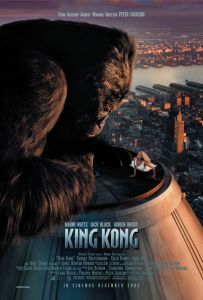 Has there been any movie this year that’s had a bigger hype machine than Peter Jackson’s King Kong? Coming after his Lord of the Rings trilogy, about two billion in revenue and a slew of Oscars in tow, Jackson decided to recreate the movie that captured his imagination as a child. It was King Kong that made Jackson want to become a filmmaker, so now he is returning the favor. Universal ponied up a staggering 200 million dollars for a budget and paid Jackson a record 20 million to sit in the director’s chair. Like his Rings series, this Kong clocks in at a gargantuan 3-hour running time. Will audiences share Jackson’s adoration with the story of a woman, a big ape, and a bigger building?
Carl Denham (Jack Black) is a filmmaker feeling studio pressure. The suits want to reel him in before he even starts shooting his next picture. Carl scrambles to get his crew and equipment onto a boat before the studio can shut him down. He?s on the prowl for a new lead actress and spots Ann Darrow (Naomi Watts), a hungry out of work vaudeville actress. He quickly convinces her to be apart of his movie and hurries her aboard, the selling point being that Jack Driscoll (Adrien Brody) has written the story. Carl practically kidnaps Jack and they all set a course for the mysterious Skull Island, a place only rumored to exist. The ship’s captain and crew are wary but sure enough their vessel washes ashore on an exotic island. But this is no sunny getaway, as the crew is immediately besieged by hostile natives and Ann is taken prisoner and offered as a sacrifice to Kong, a 25-foot gorilla. Jack leads an expedition to retrieve Ann, who begins to bond with her hairy captor (Stockholm syndrome, anybody?). Kong rescues Ann from dangers, be it bug or dinosaur, but flies into a vicious rage when she’s plucked away from him. Carl realizes an even bigger attraction: a giant ape to headline Broadway and line his own pockets. His schemes come true as Kong is knocked out and transported back to New York City. However, no stage is too great for Kong, as he busts free and looks all over for the love of his life, Ann.
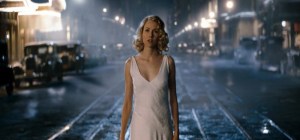
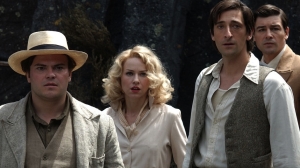 The sweet love story gives Jackson’s update a surprising emotional richness. In the 1933 original, Fay Wray never stopped shrieking until the big guy toppled off the Empire State building. She had no emotional connection to her furry captor and his unrequited love. In the 2005 King Kong, the strength of the movie is the relationship between Ann and Kong. Jackson of course stacks the deck of his story to all but guarantee an audience will fall in love with the big brute (he appreciates sunsets, how romantic!). There?s not much choice whether or not to sympathize with Kong, especially those moments where we stare into his soulful eyes welling up with emotion. King Kong has always been a tale of exploitation with man as the true monster. By administering time to fully develop a convincing relationship between beauty and beast, it makes the later scenes of exploitation have a larger sense of tragedy. Immense credit goes to Watts for selling this relationship and spurring our sympathy for Kong, instead of making their bond something for snickers and eye-rolling. Poor Adrien Brody though. It’s pretty bad in a romantic triangle when you’d rather pick a giant primate than Brody.
The performances go a long way to adding to the enjoyment of King Kong. Watts is a luminous actress and a natural beauty. It’s because of her that the second half of the movie has a beating heart and some kicks to the gut. Brody is ho-hum but given little to work with as a, wait for it, second banana. Black works wonders to make his villainous role so charismatic. Denham is a huckster that would step over his dying mother to make a buck, and yet Black’s charming and funny even at his most dastardly and cowardly. I don’t think King Kong would have worked the same with different actors; few could bring the heart and emotion Watts emotes, and few could bring Black’s comic virtuosity that makes it plausible why others would follow his showman character. Colin Hanks (also along side Black in Orange County), as Denham’s assistant, imparts a favorable impression. I’d like to see him paired up with Topher Grace sometime. Give it some consideration, Hollywood.
 King Kong is a spectacular vision by one of cinema’s greatest visionaries. Jackson has lavishly recreated the excitement of his youth, bringing the story of Kong into the modern age with studly panache. The film is marvelously beautiful to take in and has plenty of moments that will reawaken the child within you, transporting you to an age when movies truly seemed larger than life. During the epic battle between Kong and the T. Rexes, I knew the exact curiosity and excitement Jackson felt when he saw the 1933 original. The action is intense and rarely lets up once our adventurers reach Skull Island. The special effects are some of the best movies have ever seen. Kong moves with expressive accuracy that goes a long way toward expressing his humanity, whether it is in a sigh or a tantrum. Andy Serkis has yet again brought life to another entirely CGI character. King Kong is well worth the price of admission just to sneak a peek at the Jackson’s limitless imagination.
With Jackson’s beefed-up recreation, he has also brought with him a terrible amount of bloat. This King Kong runs a frightful 3-hours plus, and most viewers will just feel exhausted by the time the lights go back up in their theater. Jackson’s love affair with his material is indisputable but it also seems to cloud his judgment as far as pacing is concerned. Numerous scenes seem to stretch longer than necessary and lose their point of interest, the first hour seems too drawn out and prosaic, and the movie haphazardly mixes in the serious with the soapy (Kong on ice?). Some scenes lose their sense of believability the longer they stretch on, even in a movie filled with giant monsters. Certain subplots have set-up but no follow-through, like all the added attention to Jimmy (Jamie Bell), the ship’s teen that wants to experience danger too. Jackson even makes sure we catch that he’s reading Heart of Darkness. So where does this character go? Nowhere and very slowly at that. The character has no bearing on anything that happens with the plot and is dropped entirely once they leave the island. There’s no point. Did something get cut from the inevitable 8-hour extended edition DVD that will prove how pivotal Jimmy really was? I doubt it.
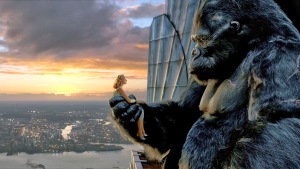 Some nipping and tucking and a comprehensive editing overhaul would certainly make King Kong a better movie, but it would lose its sense of spectacle. I can’t complain about length too much since Jackson packs such a wallop of entertainment like few others, so while King Kong certainly is a bloated and exhaustive film, it’s also an artistically bloated, exhaustive film. Jackson sure does have reverence for his source material (some lines and scenes are directly lifted), though he may have overlooked the 1933 King Kong‘s 100-minute running time.
Peter Jackson’s King Kong is an epic, epically grandiose, epically imaginative, epically action-packed, and epically bloated. The update is a bit exhausting but Jackson packs more entertainment per minute than few others in the film business, even if he has too many minutes to work with. Watts really sells her tender relationship with Kong and gives the film a surprising emotional heft absent from the 1933 original. Because of our emotional investment the film has a greater sense of sadness and tragedy as it plays out. King Kong was the 800-pound gorilla of the movie year and Jackson knows how to deliver a visual epic, even if he tiptoes into self-indulgence. While I can protest the length, pacing, and some subplots that go nowhere or strain credibility, it’s hard to argue that King Kong is the popcorn spectacle of the year. Your bladder may hate you by the end of it but you won’t want to miss a second.
Nate’s Grade: B
Share this:

The Chronicles of Narnia: The Lion, the Witch, and the Wardrobe (2005)
 I have never read one single word from C.S. Lewis’ classic children?s tales, The Chronicles of Narnia. I have never read one word from J.R.R. Tolkien’s Lord of the Rings tomes either. I read five pages in Dune and returned it to the library (50-page glossary of vernacular my ass!). I have also never read one word of any Harry Potter book, and I’m quite all right with that. I have several friends that were consumed by Lewis’ series in their childhoods and now are consumed by J.K. Rowling’s series. I don’t confess to be geek-free; I read the Shanara series by Terry Brooks when I was in junior high. I collected comic books, I watched cartoons, I still do both to an extent, but I suppose I left the fantasy genre with my appreciation for flannel all the way back in junior high (I also discovered women). Whenever I enter a fantasy film I bring with me no baggage. And so I strolled into The Chronicles of Narnia: The Lion, the Witch, and the Wardrobe ready to be entertained by a good story, whether Lewis, a big Christian theologian and author, was advancing some kind of Christian allegory or not. After seeing all 125 minutes, it’s safe to say I’ll be in line for any potential sequels.
In the heat of WWII, the Pevensie children are being transported out of London to live with a kindly professor (Jim Broadbent) on a safe rural farm. Peter (William Moseley) is the oldest and assumes the leader position vacated by their departed father. Susan (Anna Popplewell) is the brainiest, Edmund (Skandar Keynes) is the moodiest, and little Lucy (Georgie Henley) is the precocious true believer.
 One day during a game of hide and seek Lucy hides in an upstairs wardrobe. To her delight and amazement, she is transported to a magical, snow-covered realm known as Narnia. She encounters a faun, half man-half hoofed animal, named Mr. Tumnus (James McAvoy). He’s shocked to see a live human girl before his eyes and invites her for tea. There’s an old prophecy that says when two Sons of Adam and two Daughters of Eve arrive then the 100-year winter will end. The evil White Witch (Tilda Swinton), the one ruling Narnia with an icy fist, wants the humans captured and dead so she can rule forever. Lucy tells her siblings about her amazing adventures but they don?t believer her, that is, until they all tumble forth into the land of Narnia. The older kids mostly want to return home, but Edmund has sold them out by aligning with the White Witch. Now they’re on the run from her pack of wolves and the Pevensie children must seek out the powerful Aslan (voiced by Liam Neeson), a heroic lion who is all that stands in the way of the White Witch.
I declare my undying love for Tilda Swinton, truly the best character actress we have working today. Swinton already gave one bizarre yet outstanding performance this year as the androgynous angel Gabriel in Constantine (Swinton does androgyny better than anyone else; hell, she was convincing as a man and a woman in Orlando). In Narnia, Swinton exhumes a chilly command that could make you stand at attention. She’s such a hostile, icy, stone-faced villain, and Swinton has such calm confidence the whole time. She preens like a rock star and has the oversized ego to boot. She’s the kind of bad girl you could really fall in love with, especially if you have monstrous maternal issues.
The rest of the actors are mostly good. Henley steals every scene she’s in, and I’m not talking about the added attention of her suitable British choppers (my apologies to U.K. readership). Neeson seems a little bored with yet another wise teacher role just this year. I would be more interested in hearing the original voice of Aslan, the stupendous Brian Cox (Troy). McAvoy has a gentle sweetness to him.
Director Andrew Adamson integrates the flashy computer effects with surgical-like precision. Adamson?s experience as co-director for the Shrek films has given him the know-how to coordinate massive effects sight unseen and still coherently direct his live-action actors (ahem, George Lucas, ahem). The special effects in Narnia are outstanding. The characters move and behave with staggering authenticity (I know most of these creatures are mythical and have no comparison). The vistas and landscapes are beautiful, particularly the winter wonderland of Narnia. Adamson has a keen eye for visuals and lavishly recreates his visions; the climactic battle is bloodless but no less exciting.
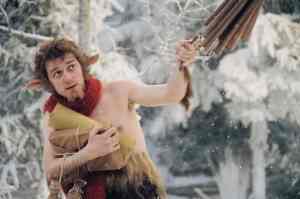 Most of the story flaws come from the source material. Narnia lacks the epic scope of the Lord of the Rings movies as well as the seriousness. As a result, no one feels very much in danger even during the more harrowing moments of battle. Lucy’s gift of “resurrection juice” kind of let’s the air out of the tension balloon. What suspense is there if a character has a magical healing elixir they can just whip out? The two girls are removed from the final battle and have little impact on its outcome. The White Witch’s tactic of freezing her enemies instead of killing them seems to be foolish, especially when they can be thawed at inopportune times. A major character’s sacrifice seems a tad superfluous if he can just reappear, lickity split like he had an extra life. Lots of secondary characters get the shrift when it comes to characterization, so you feel less than you should when something happens to them; this is even further hampered by Lucy’s Jesus Juice.
There’s a real genial sense of magic to Narnia. When little Lucy first transports to this magic realm, her face lights up in that adorable cherubic way, she wafts through the falling snow, catching it with her hands. Her moments with Mr. Tumnus are note-perfect from the dialogue, to the vocal inflections, to where the scene leads. Their relationship is very tender and provides some of the film’s best moments. Looking back, I can pick apart the movie, but while I was sitting in my theater I was deeply surprised how affected I was. I felt their fear, I felt their sorrow, and most of all I felt some sense of magic. The logic part of my brain was telling me how silly it was to see Santa Claus, let alone witness jolly ole Saint Nick handing out weapons for all the little good girls and boys (“Ho ho ho, kill ’em good for Santa.”). Yet while I watched I never questioned these things. The power of Narnia had taken full hold of me and I was swallowed whole by its tale.
Narnia is a good entry point for children in the world of fantasy. It’s suspenseful without being scary, and familiar without being too simplistic. Unlike Tolkien’s complicated worlds and heavy tales, Narnia is more a children’s story, what with the inclusion of unicorns, centaurs, fauns, and a menagerie of talking animals. There’s the suitable kid fantasy, like becoming king and fighting monsters, but there’s also a focus on family reconciliation and being accountable for your own actions. This isn’t a story that will overwhelm its audience but will leave them hungry for more adventures. The characters are mostly sketches (the leader who doesn’t want to be a leader, the overly logical one, the disaffected youth constrained by too much discipline, the little believer in the unknown), so it’s a testament to the filmmakers that the story and the characters have as much resonance as they do. The Lion, the Witch, and the Wardrobe sets up the parameters of the Narnia universe and its inhabitants and now future sequels can add meat to this bare skeleton. Narnia is a fantasy film the whole family can enjoy.
 The Christian allegories and metaphors mostly fly under the radar, with the exception of one extremely obvious scene that might make Mel Gibson wince. I even think Narnia is better enjoyed as a straight-up story than as an elaborate series of codes and messages harkening toward Christianity. If you view Narnia with the intent to break down its meaning and supplant connection to the Bible, then you’re really missing out on some great storytelling. And Narnia isn’t outwardly religious; it’s mostly a film preaching good values rather than simply good Christian values. Most of the lessons and values taught within Narnia are universally applicable to all people.
The Chronicles of Narnia: The Lion, the Witch, and the Wardrobe is a superbly entertaining retelling of C.S. Lewis’ classic children’s series. Adamson connects all the expected fantasy dots while seamlessly incorporating awe-inspiring special effects. The bountiful imagination up onscreen is the film’s biggest charm, rendering a divine touch of magic to the finished proceedings. Despite any better judgment pointing out the simplicity of the tale and characters, the production is first class and compelling. I was completely surprised how affecting I found the film and how immersed I became. This is great storytelling aided by gifted storytellers. Narnia is bigger than a family film, more accessible than a “Christian movie,” and more entertaining and endearing than most films released this year by Hollywood.
Nate’s Grade: B
Share this:

Capote (2005)
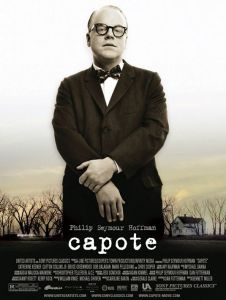 This is a really solid, probing movie about human relationships and the oversized personality of famous author Truman Capote. It’s a very illuminating character piece on its titular star. We see many different facets of his character; part of the connection is because Phillip Seymour Hoffman is so flat-out brilliant in his portrayal of Capote. He’s got that unmistakable nasal voice down, but Hoffman excels at the little things of character, his command of a crowd, his inflections, his physical movements, his ability to look exhausted and pained but embarrassed and prideful at the same time. Capote shows you why everyone wanted to rub elbows with him with how he tells a story and whips up an audience. This is another in the trend of warts-and-all biopics, and you see how calculating he is (he says he never lies). Every confession he offers is manipulative and meant for self-gain, like when he tries to get a witness to talk or get the Kansas P.I. to show him the murder photos. You see how the wheels work within this character. And then Capote shifts as he delves further into the case into his unlikely relationship with Perry Smith. Capote keeps them alive by providing money for their attorneys so he can get more for his book. But there can be only one ending to provide closure to his book — their death. There are several wonderful exchanges of dialogue between Smith and Capote and their quiet, smiling lies they give each other. All we see of Smith is the polite man who draws and read poetry in his jail cell, and the bond growing between him and Capote. The film’s climax eradicates any sympathy built and we see the unpredictable, unmerciful nature of violence. Capote really hammers home the dichotomy of persona, with each side playing the other. The cast is splendid and everyone makes their small roles click, particularly Catherine Keener as novelist Harper Lee and Chris Cooper as the Kansas P.I. What’s even more surprising is that Capote was even better the second time I saw it. There’s so much to find in this excellent character piece.
Nate’s Grade: A
Share this:

Cinderella Man (2005)
 Let’s talk a little about screenwriter Akiva Goldsman. This is the man responsible for travesties like Lost in Space and the franchise killing, pun-crazy Batman and Robin. There’s plenty of junk writers in Hollywood and plenty of good writers just saddled by junk to make a living, and either might apply to Goldsman. How in the world did he become a Hollywood go-to guy?It probably has something to do with Ron Howard. Goldsman adapted the screenplay for Howard’s film A Beautiful Mind and both walked away with Oscars. Suddenly the man who wrote Mr. Freeze saying, “You’re not sending MEEE to the COOLER,” had an Oscar on his mantle. Goldsman and Howard, in retrospect, seem like a match made in heaven. They both enjoy big Hollywood event movies that spoon-feed an audience and shave off the gray areas. Cinderella Man serves as the duo’s second collaboration and it’s exactly what you would expect a big Hollywood event movie to be from them.
Jim Braddock (Russell Crowe) is an up-and-coming New Jersey boxer who’s on a warpath to the heavyweight title. His wife Mae (Renee Zellweger) loves him dearly and he dotes on his three kids. Life seems so perfect in 1929 America. And then the Depression hits. Braddock breaks his hand in a fight and his skills slip tremendously. The boxing commission revokes his license and Braddock is forced to take a dock job to provide for his family. Times are tough and there doesn’t appear to be a way out, until Braddock’s old boxing manager (Paul Giamatti) offers him a one time only bout in the ring. Braddock is seen as a has-been but he knocks his opponent flat out. More fights come and so do more victories, and Jim Braddock seems destined for a remarkable storybook comeback. But then there’s the reigning champ Max Baer (Craig Bierko), an arrogant playboy. Baer also is a ferocious fighter and has actually killed two men in the ring. The championship leads through him and Braddock is unafraid. Mae is terrified she’ll become a widow and pleads with her husband not to fight. But now that he’s been through the gutter, Braddock knows what he?s fighting for: the survival of his family. To do that, he?s headed for a title match with Baer.
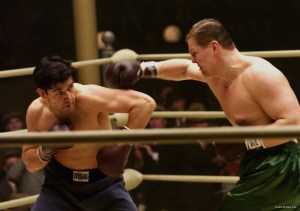 What elevates Cinderella Man from an “okay” film into a “mostly good” film is the singular brilliance of Russell Crowe. This man is simply one of the most amazing actors we’ve ever seen, and he’s been on an incredible hot streak since 1999’s The Insider (forget 2000’s Proof of Life, please). Yet again mastering another accent, Crowe excels at playing a noble man with guarded emotions and honest intentions. He’s an actor that can display such an intense wealth of emotions in the same moment. When he visits his old boxing bosses, hat in hand, begging for enough money to turn the electricity back on, Crowe has laid a sucker punch to your emotions. It’s getting to the point where I will go out and see any movie Russell Crowe stars in just to soak up his brilliant performance. He can throw a phone at my head anytime. Crowe’s stellar and resonant acting will hopefully be noticed come Oscar time; however, I doubt much else of Cinderella Man will be remembered.
Crowe’s sparring partner doesn’t fare as well. I’ve liked Zellweger in a lot of her roles (even the sappy One True Thing), but she’s entirely miscast as Braddock’s underwritten stand-by-your-man wife. She scrunches her face too much and squints for most of the movie.
Two great actors make the most of their meager roles. Giamatti serves as Braddock’s growling pit dog of a corner man and works up a good froth. Bierko almost transcends the film’s one-note villain caste and becomes a figure of showboating sensuality. He struts in the ring with a gallant pride that’s fun to watch, even though you know Howard?s whispering in your ear, “Booooo. Don’t like him. He’s the mean man. Booooo.”
The production design on Cinderella Man is great and really recreates the look and feel of the 1930s in all walks of life. The cinematography, on the other hand, seems washed out and overly dark in spots, though it may have just been my theater?s projection. I miss Roger Deakins, DP on A Beautiful Mind. Deakins knew how to beautifully light a scene and capture the audience with a precise, eye-pleasing angle. In contrast, Cinderella Man seems to think that sepia tones defined the time period of the 1930s.
Howard still has little to no trust in his audience. He can’t rely on the performances of his actors to express their motivation. We know why Braddock is fighting during the Depression, Howard. We don’t need split-second cuts of his family for reminders. It’s almost like Howard wants to point to the screen and tell the audience what to feel. It should be obvious by now but ambiguity doesn’t work here. That’s why Braddock is seen as almost saintly (never mind the connections to organized crime). That’s why Baer is seen as dastardly (never mind that in 1933 Baer heroically wore a Jewish star and knocked out Hitler’s favorite prize fighter, Max Schmeling). It seems that the details just get in the way when Howard wants to turn true-life stories into calculating crowd-pleasers.
At the docks, just in case we don’t get how tragic the Great Depression is (you know, in case you forgot what either the words “great” or “depression” meant), Howard has to bend over backwards to show someone stepping over a newspaper declaring how high unemployment is. When Braddock finds a friend in Hoovertown (Central Park turned into a neighborhood of shanties) we see him run over by a horse and buggy as another man crushed by the system or a runaway metaphor. When Baer fights in the ring Howard makes sure to get that sneering close-up of our villain. And surely anyone who’s a womanizing playboy must go down for the good of the nation. Howard is aggressive in his pandering.
Thanks to Goldsman and Hollingsworth’s mawkish script, Cinderella Man has the myth of complexity to it when it’s really content to go the easy route. It plays this story too close to the rules: embittered hero with humanity intact, stalwart wife, cocky villain, the grumbling manager. Cinderella Man is stripped of complexity and Goldsman and Hollingsworth want to lead the audience by the nose. When Braddock promises his son in a heart-to-heart that he’ll never split up the family, we know it’s only a matter of time before it happens. Their script is also full of workmanlike dialogue that does enough to just push the story forward but give little shading to its people (Zellweger’s, “You are the champion of my heart, Jim Braddock” is particularly not great.
 Cinderella Man really is a film more about the Depression than boxing, except for its pummeling and gritty final act of non-stop boxing. The script paints an almost insulting idea that the Depression was good for people to learn important life lessons, like family comes first, hard work will be rewarded, and one man can heal a nation. Seabiscuit fell into this same trap with its depiction of the Depression but at least Gary Ross’ film dealt with characters that weren’t tired genre archetypes. Cinderella Man could be described as “Seabiscuit in a boxing ring,” as yet again the triumph of an underdog pulls the country back together and gives the common man something to believe in. What I’d like to see is Braddock vs. Seabiscuit in a ring or even on the horse’s turf. Then we can finally decide once and for all who is responsible for getting America out of the Depression (somewhere FDR is spinning in his wheelchair-accessible grave).
The film does come alive when Braddock steps into the ring. The boxing matches are finely choreographed and pack a real wallop. You can practically feel the bruises and taste the sweat during the 15-round bout between Braddock and Baer. These scenes give you a good understanding of the progression of a boxing match and the real strategy that can turn a loser into a winner. Howard also has a smart visual cue during these lively moments. Whenever a bone gets broken, like Braddock’s hand, we cut to an X-ray shot of that scene and see the bone snap. It might seem old in a CSI-drenched landscape of entertainment but it’s effective and neat.
Cinderella Man is a rousing, heartstring-tugging crowd-pleaser that will inspire hope and redemption. Until you look at it more objectively. It?s easy to get sucked into Howard’s underdog tale and that’s because it’s been tailored to satisfy your emotions. Crowe rises above this heavy-handed yesteryear yarn with a riveting performance. I’m positive most people will walk away from Cinderella Man feeling uplifted and touched and would view me as being overly cynical. But with a maudlin story by Goldsman that simplifies the details, Cinderella Man feels like a feel-good-movie that’s been rigged. These people have no trust in their audience, so why should you put your trust in them?
Nate’s Grade: C+
Share this:

Beyond the Sea (2004)
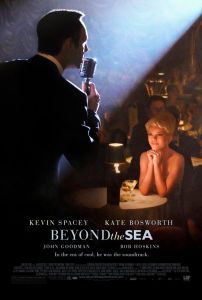 I really don’t think a lot of people know Bobby Darren. It seems that today most people would recognize him from singing “Beyond the Sea” over the closing credits of Finding Nemo. He wasn’t supposed to live past 17 but went on and wrote 400 plus songs including “Mack the Knife,” “Splish Splash,” and “Dream Lover.” Seems like there could be some interesting ground for a biopic. Kevin Spacey is one of our most celebrated actors and earned two very well deserved Oscars. Spacey has a strong passion for Darren and has been dreaming of portraying his life story for years. Passion is good for a role, right? Sam Raimi had passion for Spider-Man and look how those movies turned out. Well, with Beyond the Sea it seems that Spacey is less passionate about Bobby Darren and more passionate about his love of Kevin Spacey.
The film opens with the 37-year-old Darren (Spacey) reliving his life via a biographical movie he’s filming (yes, it’s a movie-within-a-movie). With the help of a younger movie self as a guide, Darren traces his rise from the streets of Brooklyn to headlining the Cococabana club. As a young child, doctors feared that Darren wouldn’t outlive his teens with his weak heart. Bedridden often, he found inspiration in music with his flamboyant yet supportive mother (Brenda Blethyn). Darren is driven to succeed and soon lands on top of the charts with a string of hits. Next he?s starring in movies with Rock Hudson and Sandra Dee (Kate Bosworth), a chickadee that Darren is just as determined to succeed with. They marry, have a child, but Darren doesn’t feel fulfilled. He needs to push his music further whether or not it alienates everyone around him.
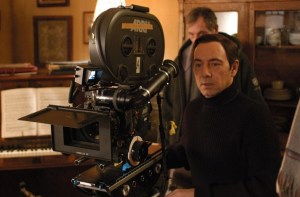 If you thought Beyond the Sea was the story of Bobby Darren, you’d be pitifully wrong. It’s really the story of Kevin Spacey, actor/writer/director/singer/dancer. That’s why we get to see flashy, superfluous dance numbers, that’s why we get to watch Spacey sing 12-15 times, and that’s why Spacey went to the trouble of re-recording all of Darren’s songs so that?s it?s Spacey belting out the tunes. Because, remember, this is a film about Spacey, not Bobby Darren.
Spacey is also much too old to be playing Darren, who died suddenly at age 37. He comes off lechery, especially during his courtship with the young Sandra Dee. Spacey isn’t unaware of this problem because in the opening minutes of Beyond the Sea someone accuses Bobby Darren of being to old to play himself in his movie. The response: “He was born to play this part!” There you go folks, case closed.
The acting in Beyond the Sea isn’t really an issue. Spacey has a genuine bounce to his song renditions and proves to be a capable dancer. John Goodman plays yet another gruff but lovable sidekick. It’s always good to see Bob Hoskins onscreen, no matter what the role may be. Bosworth comes away the best as she shifts from stars-in-the-eyes naiveté to a harder edge (you may rethink that whole song from Grease).
The dialogue is played so straight that it’s often hilarious: “Memories are like moonbeams, we do with them what we like.” With all due respect, what the hell does that mean?! I think I get the idea but what can anyone really do with moonbeams? If this line isn’t bad enough it becomes a central idea for Beyond the Sea which Spacey/Darren uses to excuse his flagrant gaps in time and fact.
Beyond the Sea gets so caught up in the Kevin Spacey Variety Hour that it fails to tell its audience why they should even care about Darren. Was he an inspiration because he outlived doctor expectations? Did he liven up old songs? Was he a remarkably versatile talent? Who knows? You’re on your own. Spacey’s too busy singing and dancing to explain the relevancy of Bobby Darren or why this movie should even exist.
There must be some interesting facts about Darren. I did not know that he wrote “Splish Splash” let alone that he wrote the whole song in 20 minutes. I didn’t know Darren required a toupee at such a young age. That stuff is interesting. It’s too bad it all takes a back seat because Spacey wants to emphasize his singing. Seriously, I get it; you can sing, Kevin Spacey. Can I see more of Bobby Darren and less of Spacey now?
 Beyond the Sea portrays Darren so single-mindedly. He’s always focused on his music and nothing else, whether that be a budding acting career (he was nominated for an Oscar), the advice of his friends, or the love of his family. Darren kind of comes across as a self-centered jerk a lot of the time in Beyond the Sea.
I don’t know which is worse, Spacey the director or Spacey the writer. It’s not that he’s inept at either end but he just makes decisions that kill the material. There has to be a better framing device than having Darren star in a movie about his life. There have to be better transitional ideas than having New York City explode into choreographed dances. To top it off, when the movie reaches its very protracted climax, we see the adult Bobby Darren in a tap duet with his younger self. Beyond the Sea loses whatever earnest intentions it had and melts away into one strange metaphysical song and dance revue.
Beyond the Sea has been a pet project for Kevin Spacey for so long that the focus has shifted from Bobby Darren to Spacey himself. This movie exists so that Spacey can celebrate himself. To say Beyond the Sea is a showcase of megalomania would be an understatement. Many scenes exist for no reason other than to give Spacey another opportunity to dance or sing. Re-dubbing all of Darrens songs seems a tad unnecessary and a whole lot about ego. Die-hard fans of Darren or Spacey may enjoy Beyond the Sea, but most people will grow tired of seeing Spacey congratulate himself for being an autuer. This is a self-indulgent nightclub act posing as a film. Memories are like moonbeams, and I’m forgetting this movie as fast as possible.
Nate’s Grade: D


You must be logged in to post a comment.