Blog Archives
The Electric State (2025)

The fire hose that has been the Netflix cash flow may be reigning in, but that didn’t stop the streaming giant from making another attempt at a huge blockbuster to rival those Hollywood designs for the big screen. The Electric State is a $320-million sci-fi adventure spectacle from the Russo brothers, Anthony and Joe, the team that gave us the highs of the Marvel Cinematic Universe (MCU) later Avengers movies, and the lows of, well, everything after their MCU movies. Netflix is actively trying to compete with the theatrical experience brought to you at home, so they take these big expensive swings on large-scale, quippy, action vehicles like Red Notice and 6 Underground every so often to mixed results. Netflix has become the go-to place for a kind of movie that has altogether vanished in the studio sphere, the mid-tier movie for adults. We need those stories. What Netflix hasn’t done as effectively is compete with the big studios for comparable expensive action spectacle. The Electric State is further proof.
In an alternate America, robots were created and given menial tasks by mankind. Naturally, they grew tired of this and attempted a revolution for their equal rights. Mankind was on the brink when an unlikely savior emerged. Tech CEO Ethan Skate (Stanley Tucci) created an army of humanoid drones controlled via VR helmets. This disposable army of avatars was able to beat back the robots and forced their leader, literally an animatronic Mr. Peanut (voiced by Woody Harrelson), to sign a “peace treaty.” The results exiled the robots into a walled off wasteland in the American southwest, and humanity went on its merry way, now with VR-controlled avatars that allowed every American the luxury of staying on their duff. Michelle (Millie Bobby Brown, contractually obligated to be in every Netflix original not starring Joey King) is an orphan WITH AN ATTITUDE. One day she’s greeted by a pint-sized robot looking like the Cosmo cartoon character her younger brother was obsessed with. The little robot says he is her brother and Michelle realizes that maybe she has some family left after all. She and the Cosmo bot are on the run from scavengers and bounty hunters trying to stop their fateful face-to-face reunion.

The Electric State is lacking such vital creative sparks to feel anything more than the ramshackle sum of its derivative sci-fi parts. It began as a melancholy mixed media book from the same Swedish author behind Tales From the Loop and it’s become a giant lumbering mess of mediocre and familiar elements. It kind of feels like the newer Ready Player One-era Steven Spielberg trying to emulate early E.T.-era Spielberg, but then that would give us an artist on the level of Spielberg, and that’s not what we have here. It’s standard adventure fare with a brother and sister crossing the country to save the day and thwart a big evil corporation along with scrappy, rakish rogues joining them along the way for fun and life lessons. Chris Pratt’s character is so transparently a Han Solo clone but he’s an empty vest with eye-rolling quips. This is an alternate history story with a literal robot uprising but it devotes so little interest in its own world building and history. The movie essentially castigates all the robots to a forbidden zone that naturally will be visited by our plucky heroes. The majority of the movie is watching these robotic avatars (reminded me of the Geth from Mass Effect) for people who can’t be bothered to leave their VR helmets. If this new world has devolved human interaction into a series of screens (commentary!) then maybe let’s explore that with meaning. If robots are going to be an exploited labor class (commentary!) then maybe let’s explore that too. If this is a future world where robots have been exiled and feared as an Other (commentary!) then let’s explore that too. There’s one moment where Evil Steve Jobs enjoys a VR recreation of his deceased mother, except he admits that this version is the version he wishes he had, and the real figure was far less doting and far more abusive. That’s an interesting concept, that VR offers users the ability to live in a reality of their own desires. But this isn’t a movie that wants to take time to explore interesting and relevant themes, because that would get in the way of action set pieces and goofy robot action. Seriously, there’s one fight where a U.S. postal service robot is literally hurling undelivered mail at a killer robot avatar and succeeds. Because this isn’t a deep movie, we have essentially good robots and bad robots, and if you’re shocked that the robots may have been misunderstood, well congratulations on seeing your first movie. I assure you, they mostly get better from here if you give them a chance.
The inclusion of robots is so underutilized, tapped for ready sidekicks and villains, that you could have replaced them with aliens or clones or any other disposable science fiction element. In this parallel world, Walt Disney created the robots for Disney World, so wouldn’t it be worthy of exploring that history and the sense of Victor Frankenstein-style paternal obligation? Wouldn’t the robots retreat to their ancestral home of Disney World? Or perhaps they view this as the birth of their enslavement? What about different generations of robots, especially older models being replaced with newer ones, thus creating class warfare within an exploited secondary class? What about looking at robots having to subsist off junk to continue with their meager existences? What about robots still living in forbidden zones that are hunted by the government and its armada of robot drones? There are so many possible ideas and stories and characters that are open through the inclusion of robots, but the movie doesn’t have the interest or drive to make them matter. As a result, it’s mostly a swift-moving travelogue with some ugly-looking or cranky guests riding shotgun. Occasionally The Electric State will remember, oh yeah, robots can do stuff people cannot, like having one of them hack into a server or having a smaller robot inside like a high-tech Russian nesting doll.
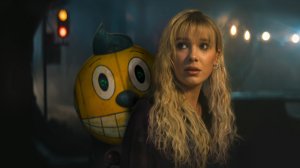
I think it was a combination of the uninvolved storytelling as well as the character design that left my emotional attachment to be null and void. I hated the Cosmo character design. He’s this big spherical head with little skinny limbs, but the head might as well be an un-moving mask. A giant toothy smile is drawn on the front and it’s so inexpressive. Also, the fact that the kid has to exclusively rely upon only using sound bytes from this canceled cartoon series makes for a quickly annoying little brother. I didn’t care about this kid, human or robot, and I didn’t care if Michelle ever reunited with her brother. Then the fact that the movie’s climax involves such a serious and emotional choice seems absurd considering what has been underdeveloped up until this abrupt shift in intended emotional stakes. It’s such an out-of-left field escalation that I almost laughed out loud at what the movie was asking me to feel, as well as what it was asking its protagonist to decide. Likewise, the betterment of robot-kind is given such little recognition, culminating in a showdown between the avatar of good robots and evil robots essentially going to revise a treaty that we don’t know much about. For a movie about how easy it can be to distance ourselves via technology, it sure fails to reasonably make the viewer care about robot equality.
Then there’s the fact that this whole enterprise cost an astounding $320 million for Netflix to platform it as its next hit movie to doze off to while in the middle of doing laundry. The Russo brothers have retreated back to Marvel to handle the next two Avengers movies, and it seems like at a time where both parties have missed and could use one another. Outside of Marvel, the Russos have delivered one super expensive action movie (The Grey Man), a super expensive spy action series (The Citadel), and one lackluster biopic that used every Scorsese stylistic trick they’ve been saving up (Cherry). With The Electric State, we have the brothers’ more familiar mixture of large-scale action and special effects in a mass appeal studio blockbuster space. However, every movie outside of Marvel has made me question their capabilities of handling these big movies. I know the Russos can be fantastic with comedy, as some of their TV episodes are the best of recent memory, and their stewardship of the big MCU movies in the wake of Joss Whedon’s departure was undeniably successful. So why isn’t The Electric State successful? It comes down to the screenplay which is so disinterested in its own ideas, world, and characters, held together by the familiarity of other adventure blockbuster staples like loose chewing gum. It’s a movie replete with famous faces and big effects but feels so devoid of life and creativity, a blockbuster automaton intended to hold the attention but rarely engage one’s imagination and emotions.
Nate’s Grade: C
Share this:

Rebel Moon: Director’s Cut (2024)
 What a rarity for a movie to potentially appear twice on my worst of the year list, and such is the destiny of Zack Snyder’s Rebel Moon, originally released in 2023 and the first half of 2024, and now with added lengthier director’s cuts. So what do you get in the newest “Snyder cuts” besides fewer hours in your day? Let’s tackle the opening sequence demonstrating the power and villainy of our evil empire as they invade a crumbling city in resistance. Within short order we’ve witnessed: 1) female priestesses being forcefully disrobed and having their breasts branded, 2) an adorable little CGI pet become a literal suicide bomber, 3) a son brutally beating his father’s brains out of his skull to spare their family only for them all to be massacred anyway. Yikes. While there is a little more world-building absent from Snyder’s prior cuts, like a religious sect that turns the teeth of their conquered victims into a decorative washboard, even the extra time, and it is literally hours over the course of the two parts, feels strained and still poorly developed to better understand the world, the characters, the conflict, the history, anything that could make Snyder’s hopeful franchise its own universe. Theres now a giant metal goddess whose tears fuel space travel. All right then. One of the more interesting characters, the samurai-esque loner robot, is given more material but he’s still just as inscrutable. There’s plenty more cruelty here, slow-motion head shots painting the screen in sticky viscera. There’s also plenty more breathless and awkwardly extended sex scenes, but hey, at least those are consensual, so there’s that. I’m just stunned why Netflix would want different versions of these movies when they’re ultimately all housed under the same banner. It sure feels like the “Snyder cut” brand is now an expected marketing ploy to be exploited for added publicity. After all, why watch one long slightly bloody poorly written sci-fi space opera, when you could watch TWO versions, one of which being even bloodier and more miserable? Will there be an even Snyderier Snyder cut, adding more scenes of side characters suffering and even more festishized gore in even slower motion? Will the whole movie just be played in slow motion, now requiring nine hours? Where does it even end, Netflix?
Nate’s Grade: D
Share this:

Woman of the Hour (2024)
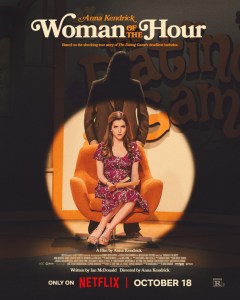 I never knew there was an actual serial killer that appeared on a 1978 episode of The Dating Game, and that he actually won. That’s a killer hook. The problem with Woman of the Hour, Anna Kendrick’s debut as a director, is that there isn’t really a movie here as presented. Because the game show segment can only last so long, we get the creepy first date, that never happened in real life, and watch Kendrick playing our lucky lady with mounting dread. A moment where the killer requests that she re-read the phone number she hastily gave him by memory, because she should know her number, is terrifically tense, as is the scene of him following her to her car. The problem is that this first date can only last so long, just as the cheesy TV game show segment can only last so long, so the movie has to provide extra back-story to fill the time. We get several past encounters with the killer’s unfortunate victims, all played quite unnervingly and seriously. The woman of the hour is less Kendrick getting her fleeting spotlight on TV, and an anecdote to impress people at parties for the rest of her life, than the survivor who eventually leads to the killer’s arrest. Amazingly, at the time of his TV appearance, he was on the FBI’s Most Wanted List but there wasn’t a searchable database, so he clumsily got to keep committing murders, including while out on bail. It’s a harrowing story, but is it one best told through the gimmick structure of the game show appearance? If you were going this route, perhaps best to treat the material like a slow-burn stage play, starting with the first date, and watch in real time as it gets awkward and our heroine begins to have her suspicions that this man does not mean her well. Instead, the game show segments are goofy and broad and the least important moments in the stretched-thin film. There might be a movie with this subject, but I’m not sure that Woman of the Hour is it.
Nate’s Grade: C+
Share this:

It’s What’s Inside (2024)
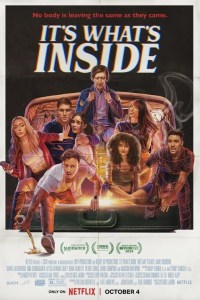 This sneaky little movie is exactly what I’ve been asking for from low-budget genre cinema, where creative ingenuity and imagination are the dominant forces to offset budget limitations. It’s What’s Inside is ostensibly a body swap movie between a group of friends stuck in a mansion overnight. A device allows eight people to swap into other hosts, and it plays as a silly party game early, before writer/director Greg Jardin increases the stakes. People pretend to be someone else and then explore that freedom, which usually means having affairs and getting a little too comfortable in other people’s bodies. Then there are… complications, and watching the characters frantically debate their new challenges and limitations with growing mistrust, exasperation, and betrayal makes for a delicious 90 minutes of surprises. Because there are multiple rounds of body-swapping, and eight starting characters, Jardin takes particular points to better clarify identities, from characters wearing Polaroids to a red-tinted sort of x-ray showing the real characters underneath the confusing physical surface. All of it helps, though I still had to ask who was really who quite often. I think watching it a second time would make it more coherent but also give me even more appreciation for Jardin’s slippery, shifting screenwriting. Here is a movie with rampant intrigue and imagination to spare, that maximizes its creativity to tap the body swap as an illuminating and destructive device to explore secret insecurities, desires, jealousies, and dissatisfaction in a friends group. It’s a wild trip, elevated by energetic and helpful editing, where the ideas are the main feature. It might not be much more than a bad overnight stay with bad people but It’s What’s Inside is top-notch genre filmmaking. It’s what’s inside the movie that matters most, its big imagination and fulfilling execution. Greg Jardin, you have my full attention with whatever movies you want to make from here on out.
Nate’s Grade: A-
Share this:

Uglies (2024)
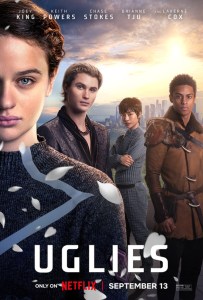
Even though Uglies is based upon a book series that hails back to 2005, it feels so much like it was developed in a vat subsisting on the runny discharge from other YA dystopian projects, finally settling into an unappealing mixture of familiar tropes. In this post-apocalyptic future world, society has rebuilt itself with a caste system that celebrates beauty. Teenagers undergo surgical operations and brainwashing to make themselves a member of the Pretties, the cool kids. If you’re even remotely familiar with YA storytelling, you can likely guess exactly where the movie goes from here. Our heroine is called Squint because society seems to think her eyes need work. There’s another character named Nose for the same reason, meaning that upon birth, I guess the doctor just holds up you baby and starts verbally roasting them. Squint is played by Netflix staple Joey King (The Kissing Booth, A Family Affair) and therein lies one of our central adaptation problems. The rules of Hollywood will not allow unattractive lead actors in movies like this, so the filmmakers give her brunette hair and less makeup, as if we’re supposed to find movie star Joey King to be naturally hideous. It’s the same with every actor in the movie. Now, if you were going to adapt this to a visual medium, maybe you lean into the visual contrasts in a more specific manner: all the “Uglies” are minorities and all the “Pretties” are lighter-skinned or white. That would bring an added colorism commentary but it would also be steering the movie into a more dangerous relevancy. The plot is all simplistic high school battle lines about individualism versus conformity, self-acceptance versus assimilation, though the optics of having a trans woman (Laverne Cox) being the evil head of education forcing surgery on teens and brainwashing them feels quite problematic considering grotesque conservative theories endangering the lives of actual trans people. There is one surprise in Uglies, one that I’ll spoil for you, dear reader. It doesn’t end. It sets up the next adventure with Squint supposedly bringing down the corrupt society from the inside, but I challenge anyone not familiar with the book series to be that compelled to put right the unresolved storylines and character arcs from this stalled launch.
Nate’s Grade: C-
Share this:

Rebel Ridge (2024)
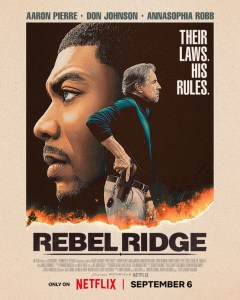 It only took minutes for me to be both engrossed and enraged by Rebel Ridge, the latest film from Jeremy Saulnier, a master of genre elevation. The scene begins with Terry Richmond (Aaron Pierce) riding his bike down a country road. A police cruiser appears behind him impatient to get around, and eventually the officer decides to use his vehicle to ram the bicyclist off the road. Afterwards, the officer tells Terry to stay on the ground and, upon a search of his belongings, discovers a stack of cash. Terry explains he cashed out his ownership in a restaurant and he’s on his way to do two things: buy a truck, and post bail for his cousin who was recently arrested for a minor drug possession. The police confiscate the money, accuse Terry of being involved with a drug conspiracy, and tell him that if he wants to fight for his money back, he’ll need to hire a lawyer and petition the court. Oh, and also the casual racism of the police officers is galling. With just his opening scene, Saulnier and his actors have made me feel vivid emotions and given me an underdog who I’m pulling for, a man who will come to serve as an honorable wrecking ball to this small-town police force who think they are above the law as it suits them. Saulnier’s movie tackles pertinent social topics with great care and detail, but it also delivers a masterful and satisfying action-thriller that knows how to entertain first and foremost rather than just incite.
 There are some serious criminal justice topics here dealt with unusually convincing clarity and accessibility, and that proves to be the ethos of Rebel Ridge, a message movie that knows it needs to be a movie first and a good one. Saulnier’s prior film work just oozes with dread and menace, though Blue Ruin and Green Room and even 2018’s Hold the Dark, by far the lesser work, dwell in bleak human outlooks. Very bad things will happen to people who stumbled into situations beyond their control, and usually by the end of the movie, there’s no recompense and we’re left to wonder about the empty cost of suffering. With Rebel Ridge, it feels like Saulnier has taken an assignment, like Netflix said to make one of your movies with your level of craft and thought, but also make it so the underdog is a badass and wins. I suppose one could argue that it’s turning a formula meant to defy convention back to convention, but by providing a crusader, we’re given a champion to root along that we can share confidence with. Terry isn’t invincible, some fearless behemoth who goes unopposed at every turn. He’s a formidable force but he’s also one man fighting against the forces of injustice and one black man fighting against racist white men in authority (superbly epitomized by Don Johnson’s good ole’ boy chief). Even with the power at his disposal, there are still limitations, which still makes the movie thrilling even if we ultimately suspect good might win out at the end. There’s nothing wrong with a triumphant ending as long as the work before establishes it as a fitting conclusion; tragedy and misery are not somehow more meaningful endings just because they are more serious or subversive. More people will learn valuable lessons about civil asset forfeiture and bail reform from this movie because it has a stirring and accessible story for a mass audience. The genuine thrills allow the messages to prosper.
And what thrills there are. There’s a staggeringly taut sequence where Terry is racing against time to get his cousin’s bail money deposited to prevent him from being transferred to prison. He’s checking the clock, looking down the small courthouse hallways, waiting for the officers he indisposed to come rushing back to arrest him. If only he can get this money deposited first. Saulnier does his own editing and creates a masterful sequence that left me nervously tapping my foot and awaiting the worst. The later confrontations with the police have a deeply satisfying turnabout, as these bullies come to realize far too late that they picked on the wrong man. Terry is an ex-Marine who taught martial arts and hand-to-hand combat to the Corps, but the most dangerous weapon he has is his mind. He’s constantly thinking about plans and implementation and adaptation. He’s intimidating already, but then when he starts to adapt, the sheer force of what this man is capable of makes him that much more incomparable. Even as a man on a mission, he’s still one black man fighting against a system of entrenched power that doesn’t like to bend when it comes to compromise or imposed oversight. He’s still got institutional power against him, and in one of Sauliner’s other movies, he probably would end with Terry winning a Pyrrhic victory but with the system ultimately standing, readjusting to maintain its dominance against further reforms. Here, that may still be true in a larger sense, but at least this one man can make a difference and bust a few racist bullies.
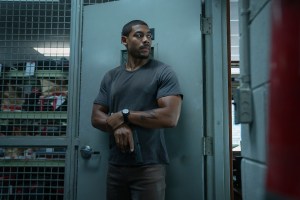 This experience wouldn’t be nearly as awesome without the commanding presence of its leading man. Pierce has had some noteworthy roles in Krypton and The Underground Railroad (he was also the amazingly named rapper “Mid-Sized Sedan” in M. Night Shyalaman’s Old). Originally, John Boyega (Star Wars: The Rise of Skywalker) was the lead role of Terry but Boyega bowed out weeks into filming in 2021 reportedly for “creative differences.” I cannot fathom any other actor in this role now that I have seen how thoroughly magnetic Pierce comes across. He’s a future star in the making and this should serve as a showcase for Hollywood. I like Boyega as an actor and have since 2011’s Attack the Block, but Pierce is a far more intimidating presence and likely candidate for action retribution. I cannot overstate how much better this movie is because it found the perfect leading man for its hero. Saulnier’s excellent command of the genre and tension is made even more compelling because of Pierce being our vehicle for comeuppance. His smooth intensity beautifully amplifies Saulnier’s percolating dialogue, finding the exact right tone and presence to make the challenges to power feel oh so combustible.
I wish the second half of Rebel Ridge was as perfectly structured and executed as that first scene. The second half gets a little lost in the details of its overarching small-town conspiracy. The momentum of the movie starts to slag a bit, and the clear connection of cause-effect plotting gets bogged down. There’s still important revelations and you get nice moments from the likes of James Cromwell as a judge and Steve Zissis as a courthouse clerk trying not to make waves within a system he acknowledges is unjust. The real significant supporting character is Summer (AnnaSophia Robb) as a lawyer with a past of drug addiction that she’s still trying to put behind her to earn back parental rights to her kids. She’s a good foil for our crusading hero, and her storyline also smartly allows for more social-political tangents to be hit about the difficulty of addicts and ex-cons to try and start over in the workforce. I wish she was more involved in the climax, as she’s relegated to being mostly a damsel needing to be saved after she proved so capable and cunning throughout the rest of the movie assisting Terry. The second half just isn’t as strong as the first half because the movie overextends with its conspiracy and history without the same tremendous clarity and urgency that drove the first hour of Rebel Ridge. The ultimate conclusion, while still satisfying, lacks the fireworks that we crave. It’s more a race against time and hoping that certain elements finally stand up against the corrupt police forces. It’s a solid ending, enough for a catharsis that Saulnier so rarely allows, but it’s not quite the release we might want, and maybe that’s the ultimate point.
 Rebel Ridge is a great genre movie that flirts with true excellence. It’s Jeremy Saulnier’s most accessible and crowd-pleasing movie, an action-thriller that executes its sequences of tension and retribution with as much care as it incorporates its Big Ideas for viewers to think over. Genre movies have long tackled relevant social and political topics, sometimes in ways that are far more meaningful and impactful than message movies that get bogged down in didactic dogma. But if you can link a relevant social issue to a story that grabs us and makes us want to inch closer to the screen, something that links a larger problem to a personal story, then you’ve found an accessible illustration that people will actually want to see. Rebel Ridge stands out among the Netflix house of action movies and proves that even a mainstream Saulnier can deliver the goods. Just because he’s working with a more conventional formula doesn’t mean that he hasn’t put thought and care into his characters and action. Rebel Ridge may leave you wanting a little more with its ending, but what it supplies is so engaging and entertaining that I’m happy to report Saulnier hasn’t lost his edge. Keep ‘em coming like this, Jeremy.
Nate’s Grade: B+
Share this:

IF (2024)/ The Imaginary (2024)/ Imaginary (2024)
Every so often, I find myself drawn to reviewing movies in pairs, whether it’s because of the same source material (the 2022 Pinoochios), similar perspectives (2018’s BlackkKlansman and Sorry to Bother You), or even diametrically opposed artistic responses to a similar theme (2016’s Manchester by the Sea and Collateral Beauty). However, in my twenty-five years as a fledgling film critic, I don’t think I’ve ever reviewed three movies at the same time for whatever relevancy, yet that is what I find most appropriate for this trio of exceedingly similar films about imaginary friends. Earlier in the year, Blumhouse released Imaginary, their horror-thriller take on an imaginary friend refusing to go away. At the start of the summer, writer/director John Krasinski gave us IF, a live-action fantasy/comedy about imaginary friends finding their former children as adults. And recently, Netflix released an anime movie The Imaginary, a Studio Ghibli-esque fantasy about forgotten imaginary friends trying to find new kids and new homes. I’ve elected to review all three at once and, much like the Pinnochios, declare a winner through different categories.
Begin the critical gauntlet! Bring on the (imaginary) bloodshed!
- PREMISE

Two of these movies went in a sweetly sentimental direction and the other went in the horror direction, so let’s tackle that one first. Imaginary gets at a rarely spoken truth: children can be super creepy. Watch a child hold an involved conversation with some entity that isn’t there, or just stare into the dark and say, so plainly, “That’s where the eyes are watching me,” or any number of personal anecdotes to make you shudder, and you’ll understand the significant horror potential with a malevolent creature that the child can communicate with that adults cannot see. This also lends itself to a low-budget film production as so much of the wicked entity is implicit and unseen. It’s a cost-saving genius when you can just use your, wait for it, imagination. Now Imaginary isn’t the first horror version of this premise, but it deserves points for taking a childhood concept and thinking of an effective way to transform it into a diseased and malignant antagonist, haunting its adult child Jessica (DeWanda Wise) and seeking a new child, likely her youngest step-daughter Alice (Pyper Braun). It then presents its conflict like a curse that the past generation is trying to spare the next generation from suffering through. Of course this also includes getting adults to recognize the threat as they are often dismissing it. Nobody wants to believe that Chauncey the teddy bear is the one urging you to self-harm.
The other two movies take a far more family-friendly approach to their imaginary premises. There’s a lot of shared real estate between The Imaginary and IF. Both are about outdated imaginary friends finding refuge together in a sort of halfway house, a… foster home for imaginary friends (someone should make a cartoon series about that). Both of the movies follow imaginary friends trying to find new children who will accept them and give them a new life. IF briefly follows the possibility of reuniting the forgotten imaginary friends (a.k.a. IFs) with their former owners now grown up into adulthood. This is actually the movie at its best, as the creatures find a renewed sense of purpose and reconnect with a person they cherished but had to let go. For a strange reason, Krasinski only dabbles with this poignant story direction, switching gears to find them new homes with new kids, which serves as another story direction that is also quickly ditched. IF seems to be trying on so many different versions of its premise and then discarding them like the IFs themselves. The Imaginary has more focus on its central predicament, finding new homes before these characters fade away, or worse, get eaten by a cannibalistic imaginary fiend looking to gain more years of his own existence by consuming the life force of his imaginary peers. It also has the urgency of its main character, an imaginary boy named Rudger, hoping that his child wakes up from a car accident, and if so, that she’ll still need him. The other characters are trying to set Rudger up for a life after his child, since they’ve all experienced the same fate and are trying to help him adjust to not just letting go but also being open to a new child. It’s simplified but has plenty to still explore, plus a creepy super villain.
Winner: The Imaginary
2. WORLD-BUILDING

This is what really separates IF from The Imaginary. The world of imaginary figures populated in Kransinski’s movie are cute but their larger world context is unfortunately underdeveloped. This is likely because much of the movie is connected to the personal journey of one twelve-year-old girl, Bea (Cailley Fleming), trying to keep herself busy while her father (Krasinski) undergoes vague “heart surgery.” The IF Coney Island respite feels like a secret nursing home where the discarded friends just kind of hang out. There’s even swimming and painting lessons. There’s no further examination on whether these are only the IFs from this zip code, though Bradley Cooper voices a talking glass of ice water whose child originated in Arizona, so that’s undetermined. I was also hoping for an imaginary friend from decades back, like Franklin Roosevelt or Alexander Hamilton’s imaginary friend, or from other countries. Each character design can say something inherently about their past child creator, what they regarded as fulfilling or lacking from their present. Alas, the world-building is mostly one little girl’s discovery of her new friends and then how they ultimately support her with her family predicament looming over every scene. Seriously, for a father going through major surgery, the family in IF is pretty blase about Bea’s whereabouts. Her grandmother (Fiona Shaw) doesn’t seem too pressed about letting an unattended adolescent run around New York City for hours. Bea’s experience with helping the IFs are reflections of her optimism and hope. It all comes back to her, so the movie chooses to ignore the larger possibilities of its magical unseen world.
The Imaginary feels modeled after the Studio Ghibli movies that have delighted children and adults for generations. Its main character is Rudger, an imaginary friend, and not the child who birthed the imaginary friend, Amanda. That creates a different sense of discovery, as Rudger also learns about the hidden library housing other imaginary friends and the rules. He’s to stare at a bulletin board and await a prospective child he feels a connection to, then holds onto a picture of them to transport into the child’s imaginative play where they can contribute to the creative adventure. However, there are dangers like if you die in the imaginary world, you can die for real, which is never fully explored as a real threat. The imaginary characters are told to stay indoors at night, as they don’t want to run into Mr. Bunting, the cannibalistic antagonist. I got a little lost with the different rules, some of which seemed to be emphasized more or canceling out previous rules, but I appreciated the level of thought given to making its world alive.

This is also where Imaginary begins to get lost in its own hazy imagination. Imagine the bedroom door-hopping mechanic from Monsters Inc. but with the narrative formula of Insidious, and there you have Imaginary. The world of imagination is treated very similarly to a hellish dimensional getaway, much like what happens in Insidious where dad had to retrieve his son in the demon’s phantasmagorical realm. Because the spooky imaginary world relates back to the main character’s childhood, we have a few other characters that have history with this trauma. Jessica’s father Ben has been committed to a hospital and seemed mentally ill, until you realize he rescued his little girl from evil Chauncey and lost his mind in the process. He’s not some lost cause, he’s a hero. Also, there’s a former neighbor and babysitter (Betty Buckely, always welcomed) who is obsessed with childhood psychology and willing to do some extreme things to continue her obsession with Chauncey. It’s at least widening the scope to look at how these traumatic events have impacted other people, not just the little girl bottling up those nightmares. However, beyond the simple explanation of Chauncey existing as a parasite feasting on the imaginative power of children, little else is established about the creature or its own world. At one point, a character relishes the possibility of imagination as a wish-fulfillment service, but why would this evil creature delegate its power? It reminds me of all sorts of other movies where characters side with some apocalyptic power thinking they’ll somehow be the lucky exception.
Winner: The Imaginary
3. CHARACTERS

This is where IF shined the brightest. The little girl is cute and optimistic, a fitting tonal foil to Ryan Reynolds being such a loquaciously sardonic naysayer. She wants to be so helpful, though keeping herself so busy might just be her coping mechanism to try and stop her dreadful encroaching thoughts about the possibility of losing her second parent. Her taking the lead to help the IFs then allows for little episodic asides for the different characters to share their stories and their former creators. Having a protagonist be so driven at being empathetic is a natural conduit for championing the feelings and triumphs of others. It works. Reynolds is still doing his fast-talking cynical schtick, so your mileage will vary how well it continues to appeal. Curiously, I don’t think the character of Blue (voiced by Steve Carell) is fully utilized. He’s a more childlike exaggeration of the character features already provided by Bea’s involvement. Blue resembles the McDonalds’ Grimace, and is outwardly friendly, unafraid of big emotions, and a bit silly, but his elevation in the script as being the primary IF sidekick is arbitrary. The same story could have afforded tapping, say, the excitable unicorn (voiced by Emily Blunt) as the primary sidekick and produce similar results. Again, I think there’s so much that could have been further explored as to the existential requirement of the different imaginary characters, how they represented what their former kids felt they needed. Their exact existence was what a child yearned for (the strong IF to protect the child who is afraid, the squishy lovable IF to comfort a lonely child, etc.).
The characters from The Imaginary fall into general archetypes that any Miyazaki fan will be familiar with. There’s the bossy know-it-all, the excitable goof, the silent contemplative, the wise and warm-hearted authority figure, the dangerous rogue. They all work but it’s the larger themes that resonate more than any specific individual character. Mostly, the conflict is whether Rudger decides to move on from his creator and find a new child/home. He has loyalty and emotional attachment to little Amanda but the reality is that, at some point, she will grow up and he’ll be left behind. Whether that happens now, because she passes away, or years later through becoming an adult, there will be a parting and he will need to consider a new life. The loneliness and melancholy of this existence is ignored through the kooky characters, strange worlds, and pressing points of danger, so the reality of Rudger’s eventual loss is thematically sidelined.

With the Blumhouse Imaginary, the characters are relatively stock types for a supernatural horror mystery. There’s some effort to make it about Jessica trying to ingratiate herself with her new step-children, the oldest who looks at the new mom with great suspicion and resentment. At one point, the old mom serves as a jump scare, hiding in the house; the old mom is mentally ill but the stepdaughter thought, erroneously, that mom was “getting better.” Jessica is trying her best to rise to the challenges of being a parent, but it’s hard when there’s a sneaky ghost trying to emotionally manipulate your youngest to hurt herself. I don’t know why Jessica decided to move her new family back into her childhood home, the source of her trauma, except if you looked at the real estate market, it might have been by far the best deal she could swing. What’s some reawakened childhood trauma when it comes to skipping ballooning mortgage payments? Have you seen interest rates and the price of houses post-pandemic? That’s the real terror for adults.
Winner: IF
4. EMOTIONAL INVOLVEMENT/CONCLUSIONS
Despite what Pixar may have set in stone, it’s not a requirement for a children’s movie to make you cry. I did end up tearing up from two of these movies, and it should likely be obvious which of the three was the outlier. Krasinski’s movie is designed as a big warm hug, complete with soothing, milky light pouring in from every setting. I thought it looked very similar to how Steven Spielberg’s preferred cinematographer, Janusz Kaminski, shoots natural light, and lo and behold Kaminski was the cinematographer for IF (excuse my pat on the back here). Bea’s big emotional moment where she tells her story of adventure to her unconscious father in his hospital bed pulled some heartstrings, but what I felt even more emotionally cathartic were the asides where Bea helps the IFs reunite with their former kids. When an IF is being thought about, they start to glow from within, like happiness radiating out. It was these little moments, like Blossom (voiced by Phoebe Waller-Bridge) getting to dance with Bea’s grandmother like they used to, or the simple act of Blue wishing good feelings to his nervous former-child with a silent shoulder touch and world-clarifying exhale. It was the acknowledgement that these friends, while gone, are still fondly remembered, and that they will always have that connection even if their exact relationship has changed through the years. The Imaginary operates on a similar emotional wave of adults reuniting with their former childhood friends, and it’s that sweet acknowledgement of appreciation and love that hits hardest. It reminded me a little bit of 2001’s Amelie where she’s on a mission to help strangers remember beloved items from the past. The overarching worry about losing her father seems unnecessary as a complication, especially how “heart surgery” is kept so purposely vague and seemingly uneventful until that bedside chat. There is a difference between wanting to protect your kid from the possible trauma and downplaying it to the point where it becomes a strangely superfluous plot device.

I won’t pretend there’s much to get emotional over with the Blumhouse Imaginary, though there is one Act Two twist I thought was simply astounding, but in order to explain I will need to go into spoilers, so you have been warned, dear reader. For a solid hour, we watch Alice play with a teddy bear that she calls Chauncey, the embodiment of her imaginary friend. So far so good. Then after a disturbing session with a child psychologist, the professional shows Jessica her recorded session. This is where we discover that Chauncey the bear… has never been there. Alice has been talking to the unseen entity of Chauncey and Jessica has been the only person who was seeing a teddy bear. That’s right, the twist is that the bear was never there. Bam.
Winner: IF
Three imaginary friend movies and the exploration of the meaning these figures have to children and adults after years removed. I had my quibbles with each movie, but with adjusted expectations, each movie can supply a degree of entertainment. The animation in The Imaginary is gorgeously fluid, so that alone will prove a draw to hand-drawn animation fans such as myself. Krasinski’s family film is gooey at its well-meaning core though it has underdeveloped avenues I wish had been given more articulation and exploration. The Blumhouse Imaginary movie is fairly formulaic but has a couple enjoyable twists and turns, even if they’re ridiculous. There is a potent storytelling reservoir with imaginary friends, both benevolent and malevolent, so I imagine (no pun intended) this won’t be the end of these stories making their way to the big screen.
Nate’s Grades:
Imaginary: C
IF: B
The Imaginary: B
Share this:

Hit Man (2024)
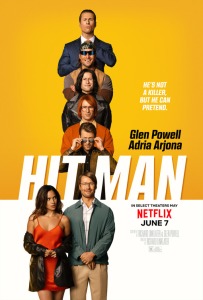
Hit Man is a movie that is wonderfully hard to describe. The premise has an easy-to-grasp hook that promises fun and hijinks, but where it goes from there takes on as many transformations as its protagonist, Gary Johnson (Glen Powell). It transforms from a fun game of undercover conning with wigs and silly accents into an unexpected rom-com hinging upon mistaken identity, maintaining assumed appearances, and secrets that then transforms into full film noir without losing its unique identity and the stakes of the character relationships. If you’d expect any filmmaker to pull off that trick, writer/director Richard Linklater has to be one of the best to keep things running smoothly, and that he does, as Hit Man is a crowd-pleasing comedy with some unexpected directions to keep everyone guessing until it lands on its own morally gray terms.
The movie is also, chiefly, a showcase of star and co-writer Powell, a handsome young actor hitting a new ascent of his career with last year’s Anyone But You and the upcoming Twisters. Powell is probably best known as the smirking guy you loved to hate in Top Gun: Maverick, but he’s also played memorable supporting roles in Scream Queens and three other Linklater film projects, notably 2016’s Everybody Wants Some!!, a pseudo-spiritual sequel to the seminal Dazed and Confused. This is Powell’s acting showcase and he’s utterly terrific. He has great infectious fun getting into the various hitman characters, which mostly exist in montages, and trying on different personas and voices. I cackled when he was doing his impression of Christian Bale’s Patrick Bateman, and I smiled throughout most of the other personas. It’s easy to see the network TV version of this premise, where every week Gary adopts a new persona and disguise to bust the next possible criminal from hiring a hitman, like an edgier Quantum Leap). The culprits are played like nitwits but then again the police are also played as nitwits (are there THIS many attempted hitman hirings in one city for the police to have a full-time unit?).

But before this acting experiment can get too broad or too redundant, Linklater and Powell switch things up. Around the Act One break is where Gary meets Madison (Adria Arjona), and that’s when everything changes for him and the audience. Now we have emotional stakes, because Gary intervenes to save Madison. While the circumstances of their first meeting involve her wanting to kill her husband and believing Gary as the professional to do such a job, the scene plays as a disarming first date you’d find in another charming romantic comedy, where it’s clear to anyone with a pulse that these two have something together. Instead of busting her for the solicitation, he pushes her to change her mind, take the money and leave her no-good husband rather than finding a questionable man to eliminate him. From there, they form a romantic relationship that fluctuates wildly. She thinks Gary is “Ron,” the suave and confidant persona Gary adopted for their sit-down. So the nerdy tech nerd who teaches philosophy must pretend to be the daring and dangerous man of mystery he wishes he could be. The script doesn’t get carried away with its farcical elements in play, juggling multiple identities for multiple specific audiences, but it asks the question, “Why can’t the milquetoast Gary simply be Ron? Is this an unexpected means of self-actualization for the nerd to win the girl?” Through this extreme exercise, Gary can mold himself into the man he would like to be. The rom-com is flirty, funny, and just as enjoyable as the earlier wacky comedy of being a versatile master of disguise.
It also really helps things when your two lead actors have such strong chemistry. Powell and Arjona (Father of the Bride, Andor) are smoldering together, like full on “get a room already” territory. This lends even more credence when Hit Man makes its next transformation into film noir thriller. I won’t divulge the specific plot elements but it all works with what Linklater has already established. There’s trouble for the both of them, and the question becomes how far is each participant willing to go to stay above the fray. The transition from silly costume comedy to sundry noir thriller is handled so naturally, as if the characters, already existing under such unique circumstances, found themselves in the elevated movie-movie version of their crazy relationship. Rather than feel contrived, Linklater and Powell have put in the work to make these twists and turns credible and exciting. The shifting nature of the movie is a wonderful reflection of its fake hitman hero. There’s a scene late in the film, where all of our principal players have come together, and you have characters saying one thing, intimating another, for different versions of different audiences, and it’s such a masterful tonal dance that feels satisfying as a climactic turning point as well as genuinely impressive for all the myriad subtext in play.

This is a clear-cut case of a movie being “inspired by” a true story rather than being “based on” a true story. Generally, we expect the “based on” stories to have some voracity to reality. We accept that there will be alterations for dramatic purposes, externalizing the internal, condensing timelines and characters into a more accessible structure, etc. If you go to a movie about Jackie Robinson, you don’t expect to see the famous baseball slugger fighting space monsters (“Racism was the real giant monster all along”). Hit Man is based upon a 2001 long-form news article by Texas Monthly journalist Skip Hollandsworth, the same author of the source material for Linklater’s fascinating true crime dark comedy gem, 2011’s Bernie, which I highly recommend (a career-best Jack Black). The real Gary Johnson really did pose as a fake hitman for the purposes of catching real criminals, but the rest of the movie exists in its own fictional universe of dramatic complications. Usually we want our film stories to have more fidelity with the truth and reality, but I’m glad Linklater and Powell recognized the sheer storytelling potential of this quirky premise. Sticking to the facts could have told an amusing story, but feeling confident to take bold leaps with well-worn genre motifs, when called for, is the right call for making the most of this tale.
The shame of Hit Man is how quickly it will likely be subsumed by Netflix’s suffocating tidal waves of content. Here is a fun, likable, and surprising indie comedy with definite mass appeal buoyed by great performances, clever writing, and a tonally shifting narrative to keep things fresh. Powell gets the breakout showcase he deserves and we get one of the most unexpected and amusing rom-coms of recent years. Hit Man is a movie that deserves to be seen, to be enjoyed with a crowd, but I worry it will get lost in the shuffle of streaming titles. I suppose this might just be the current reality for fans of mid-level adult dramas and comedies. At least they have a home on the streaming networks even if these movies would have been theatrical breakouts years ago. Regardless, Hit Man is a good time with good people pretending to be bad, or is it bad people pretending to be good, but whatever pretense, it’s a charming winner worth your two hours.
Nate’s Grade: B+
Share this:

Unfrosted (2024)
 What to make of a movie like Netflix’s Unfrosted. It’s Jerry Seinfeld’s directorial debut, working off a screenplay he co-wrote, his first foray into film writing and acting since 2007’s Bee Movie. His eponymous sitcom “about nothing” was a 1990s mainstay and popularized an ironic meta form of comedy that still continues to dominate comedic tastes. Making a movie about the pseudo history of the invention of Pop Tarts, and the corporate rivalry between the major cereal brands, seems like a further exercise in that realm of humor, potentially satirizing a burgeoning sub-genre of late, the Biopic of Products (Air, Tetris, Flamin’ Hot, Blackberry). Except this supposed “biopic about nothing” is really a head-scratcher. Its humor feels pained and stale, the satire feels missing or glancing at best, and it seems like an expensive lark, wasting the nigh-infinite money of Netflix to purposely make a stupid comedy with all his friends.
Set in the mid 1960s, we follow two households, both alike in dignity, in fair Battle Creek, Michigan where we lay our scene. Kellogg’s has been the dominant cereal-brand for years but its chief rival, Post, is set to launch a new product that will revolutionize breakfast mornings. Bob (Seinfeld) is the head of development for Kellogg’s and reaches out to his old colleague, Donna (Melissa McCarthy), when it becomes evident that Post stole their unused research to develop a pastry treat designed to be cooked in one’s toaster. The warring CEOs, with Jim Gaffigan as Edsel Kellogg III and Amy Schumer as Marjorie Post, are desperate to one-up one another and be seen as more than an inheritor of their family’s wealth. It’s a race to see which company can get their treat to market first and capture the hearts, minds, and sweet teeth of America’s youth.
 I’d be lying if I said I didn’t laugh at points through Unfrosted, which operates like a spoof movie on a slower jokes-per-second pacing guide. There are zany sight gags amidst broadly drawn characters treating the silly straight, though occasionally you’ll have wisecrackers commenting on the inherent absurdity of moments, mostly confined to the stars making asides to the audience. Sometimes it’s lazy jokes that rely upon our foreknowledge, like when Bob coins a NASA beverage by saying it has a “real tang” (get it?). The movie frequently intensifies into goofy escalation when Kellogg’s impanels a team of mascots and inventors as a breakfast brain trust. Every one of these wacky characters is here to provide the exact same joke they will provide throughout the movie, and their inclusion is already suspect. Having the Schwinn bicycle guy (Jack McBrayer) comment on why he should be there is not enough. The hit-to-miss ratio will vary per everyone’s personal sense of humor, but overall I just felt mystified why this project would tempt Seinfeld from his comedy repose. What about this idea excited him? Was it just his lifelong love of cereal and Pop Tarts, a topic from his standup act decades ago? I ate a lot of cereal as a teenager too but I don’t want to make a movie about the Lucky Charms advertising campaign teaching children to beat and pillage the Irish (maybe Ken Loach could direct – to the three people on the Internet who appreciate this joke, I want you to know I appreciate you also).
It can be fun to simply watch dozens of famous people take their turns being silly in what is unquestionably a “dumb comedy.” When you have comedians of this quality in your movie, they’ll find ways to make even so-so jokes hit a little better, and that’s the case here. There’s an entertainment value in just wondering who will show up next, as many characters are only onscreen for a single scene or an abbreviated moment. Unfrosted becomes an example of Seinfeld’s industry power as he empties his Rolodex to fill even the tiniest of roles. Look, it’s James Marsden as Jack LaLanne. Look, it’s Bill Burr as JFK and Dean Norris as Kruschev (double Breaking Bad). Peter Dinklage as the head of the nefarious milkmen cartel? Why not? If you set your expectations low, maybe lower than what you were accounting for, there can be a mild amusement scene-to-scene just seeing who might show up next, almost like a modern-day version of those anarchic big ensemble comedies like It’s a Mad, Mad, Mad, Mad World.
 There is one segment that fell so flat for me that I was in utter amazement, and that was the unexpected January 6th insurrection parody. In a movie that has sustained a surreal and offbeat version of our universe, it evokes one of the most startling days of recent history. I think the humor is meant to derive from simply seeing a bunch of mascots in big colorful costumes as a mob running havoc, but there’s no jokes about like the challenges of a mascot costume in a fight, or say someone tipping over and being unable to get back up like a helpless turtle. There are jokes that can be had with this scenario, but instead Seinfeld is relying on the ironic juxtaposition of the ridiculous with the serious, and I don’t think it ever works as a joke. My sinking feeling began when Hugh Grant’s embittered mascot character wore a headdress resembling the QAnon shaman. It feels tacky and strange and the longer it persists the more I kept wondering what Seinfeld was doing with this. Why include this especially as the only form of relatively topical political humor, beyond, I guess, the depiction of business elites being complete morons? Why this? Again, it would be different if it was funny in execution, like the Saving Private Ryan D-Day parody from Sausage Party. This just isn’t funny, and its inclusion feels so odd compared to the stale nature of its other comedy.
As an admittedly silly enterprise, one that doesn’t even pretend to be accurate even as it flirts with the truth, Unfrosted is a successfully stupid comedy that feels a little too aimless, a little too edge-less and safe, and a little too dated and stale in its approach to comedy (lots of 1960s Boomer nostalgia ahoy). It’s hard to work up that much risible anger over a 90-minute movie that features a living ravioli creature. Clearly this movie wasn’t trying to be anything other than a gleefully stupid comedy, but I wanted more pep from its jokes and whimsy and general idiocy. I think the way to go may have been all the way in the other direction, treating the formation of a toaster pastry like international nuclear secrets and playing the corporate espionage completely straight while also making it patently ridiculous. Unfrosted did, however, make me want a Pop Tart that I ate afterwards, although it was my local grocery store’s generic brand, so I guess that doesn’t directly benefit Kellogg’s. This movie exists as a Seinfeld curiosity that ultimately left me hungry for more.
Nate’s Grade: C
Share this:

Rebel Moon – Part Two: The Scargiver (2024)
 Back in December, Zack Snyder offered his very Snyder-y holiday take on big-budget space operas with Rebel Moon, a project that began as his Star Wars pitch that was turned down. It was what you would expect from a Snyder movie: big, loud, silly yet played completely serious, and drained of all vibrant color. Rebel Moon Part One was on my worst of 2023 list and I felt was a waste of two hours. I was not looking forward to the concluding Part Two. I was worried it would be two more hours of the same, and now having seen Part Two, a.k.a. The Scargiver, the edgy nickname of our lead rebel Kora (Sofia Boutella) fighting the good fight against the Evil Empire, I can now say that the Rebel Moon duology is now a dreary waste of four of your waking hours.
Saying Scargiver might be minimally better than Child of Fire (did you remember that was the subtitle for Part One? Don’t lie to me, dear reader, you know you didn’t) is a nominal victory. There’s more action and a clearer sense of climax, with our underdogs planning their guerrilla war against the overpowering forces approaching (we’re basically watching the training of a Vietcong-like insurgency) and then pulling off their unexpected victory. The problem is that we’re still stuck with all the same characters from Part One, few of which will prove to be emotionally engaging or intriguing. We’ve assembled our fighting force thanks to the events of Part One, but far too many of them are interchangeable and punishingly free of personality besides the default character creation setting of “stoic badass.” There’s one lady who has laser swords so at least that sets her apart. When it comes to attitude, personality, perspective, and even skill level, these characters are awash, which makes the action falter when it comes to any sort of meaningful emotional involvement. The bare bones story is so plain with broadly drawn good versus evil characters from its obvious cultural influences. The fact that it’s derivative is not itself a major fault, it’s the fact that it does so little with these familiar pieces that the movie feels like it’s trying to skate by on your familiarity. After four hours, it’s clear to me that Snyder and his co-writers composed this not as a living, breathing universe with its own lore and history and intrigue, but as a story where he could have used the Star Wars universe to fill in the gaps.
 Snyder can be a first-class visual stylist but his sense of fluid and engaging action stops at “cool images,” like living splash pages from comic books. Like Part One, there is no sense of weight to these action sequences. Things are just happening, and then in the next shot things are just happening. Occasionally there will be a sliver of relation, but whether it’s 60 minutes or 6 minutes, the effect is still the same. The action feels like it’s all happening in a vacuum, and the momentum we feel the upstarts are gaining is hampered. We went through the trouble of explaining their counter-offensives, so why does so much of it feel like it’s just watching a jumbled, ashen group of characters fire guns? This is best epitomized by Jimmy the robot (voiced by Anthony Hopkins) who has gone rogue from his programming and sits out much of the action for reasons entirely unknown. Then he arrives, takes down a few evil tanks, and I guess decides to sit back out. If this is our fighting force, what exactly has it amounted to? This makes the entire movie, and its predecessor, a frustrating viewing even for forgiving action fans. Things blow up good, and there are a few impressive visual orchestrations, but it’s so fleeting and slim.
Over the course of two two-hour movies, totaling four hours, with the promise (threat?) of more, it’s clear that what we really had here was perhaps one underdeveloped movie at best that has been unfortunately spread out over two (and counting) movies of time. Part One was entirely about assembling the team of rugged defenders, and this could have served as the first 45 minutes of the overall movie, with the events of Part Two filling in the rest. With Scargiver, the defenders don’t even start training the villagers until 40 minutes into the movie and the big battle doesn’t kick in until a full hour. Structurally, this doesn’t feel like we’re using our time wisely, and this is best evidenced by the fact that after AN ENTIRE MOVIE of character back-story, Snyder still stops the action to have his characters sit around and share their sad back-stories. Did these characters just not talk at all to each other after initially gathering person-by-person? Tarak (Staz Nair) still hasn’t put a shirt on. I felt like yelling at my TV as the character took turns, and another 15 minutes, for each member to share their tortured back-story again but with different visuals. I was almost worried that right before the battle another character would say, “Wait, before it all really goes down, I need to share, yet again, more of my back-story.” It’s not like these extra glimpses give us new understanding or even meaningfully differentiate their characters; they’re all just victims of an abusive space government that imposes its terrible will most forcefully.
 There is one tragic back-story that does separate itself from the pack, notably because it literally separates itself from the pack and is told well before our group share. Kora explains her part in the assassination of the royal family, securing the military coup that left the Evil Empire extra evil, and I guess the guy named Balisarius as supreme leader (oh how this man must have been teased for his name as a schoolchild, which might be his own tragic back-story that we’ll get three helpings of with an eventual Part Three). This betrayal is personal and stands out, with Kora being the one to shoot the little princess, a girl who, in her dying breath, says she forgives Kora. That’s rough. This is actually a good sequence from a character standpoint as it establishes Kora’s accountability and guilt convincingly. However, Snyder makes some baffling creative choices that blunt the impact of this sequence. During the assassination, the musical score favors a string quartet, which is an emotionally plaintive choice. However, the music is actually diegetic to the scene, meaning it’s coming live from the room. There is literally a string quartet of musicians playing in the room while the royal family is betrayed and slaughtered. These guys are really dedicated to their art to keep playing throughout, and I assume they must also be part of the conspiracy or else big bad Balisarus (snicker) would kill them too. You might as well have them also start stabbing the royal family with their bows. It’s details like this that trip up Snyder, a man beholden to images and ideas but lacking the finesse to make them work.
An issue I had with this conflict was the disparity in scale between the forces, mainly my nagging question of why put together a ragtag group of space adventurers to defend this town if the Evil Empire could just nuke the planet from space? Well Snyder attempts to answer this early with Part Two, and the answer appears to be… grain. This community theorizes that the empire needs their grain yield so badly that they wouldn’t do anything to damage it, so their plan is to harvest all their wheat, turn it into grain, and then use the grain like human shields, hiding behind the valuable resource as cover and distributing it across the village. This is beyond silly. First, this isn’t like an entire planet harvesting grain, it’s one little village on the outskirts. It’s not like we’ve seen a giant warehouse that goes for miles and miles stockpiled with thousands if not millions of deposits of this food. Also, we’re talking grain here (stay tuned for my exclusive Rebel Moon-related podcast called “Talkin’ Grain”). It’s not like we’re talking about some super rare mineral or substance that is only found on this one planet, something linked toward like the power source for an ultimate weapon or space travel. We’re talking about grain here. Grain. You think this Evil Empire won’t nuke the planet because they’re worried they won’t get enough grain, the same crop that can be harvested on multitudes of other planets? How about they just kill everyone and then repopulate the planet with robots to harvest the precious grain? Or how about this simple village make some upgrades as we’re in a future world with space travel and artificial intelligence but people are still harvesting wheat by hand like they’re the Amish. Regardless, I hope you love slow-mo montages of grain harvesting because that’s what you’re getting for the first 40 minutes, as if Snyder is rubbing your face in his silly non-answer.
 In the conclusion to Rebel Moon Part Two, once the dust has settled, and long since that grain has been harvested, the last five minutes sets up a would-be Part Three, informing us that an unresolved storyline is next up on the docket. The characters gang up for their next adventure, and you’re expected to be chomping at the bit for this continuation. I openly sighed. Every movie feels like a tease for the next adventure, and it seems to promise that this one will be the real one you’ve been waiting for, but it feels like franchise bait-and-switch. It’s more than incomplete or lazy storytelling, it’s a scheme to leverage interest in a world and series that deserves little. The universe of Rebel Moon is not interesting. The characters of Rebel Moon are not interesting. The visuals of Rebel Moon are fine, though some of the costume choices again can rip you right out of the reality of this universe (a guy fighting in blue jean overalls?!). In short, not enough has been established, developed, or even paid off to make Rebel Moon an interesting and satisfying movie, let alone two, let alone three, let alone however many Snyder wants to leech out of Netflix. I would say Part Two is better because at least it provides an ending but it doesn’t even do that, merely an intentional passing of the baton to the next movie, and round and round we go. Rebel Moon is a living poster stretched to its breaking point. Leave this shallow universe behind.
Nate’s Grade: C-


 nathanzoebl
You must be logged in to post a comment.