Blog Archives
Thirteen Lives (2022)
 The true tale of rescuing the trapped 13 Thai boys in the summer of 2018 is turned into an engrossing and often thrilling if overly long 2022 movie experience thanks to director Ron Howard and a dedicated crew bringing to vivid life the harrowing drama. I was vaguely aware of this story as it played out originally, though missed the critically acclaimed documentary The Rescue from last year that covered the same material, but watching the movie I realize I knew very little of the actual horror. The movie centers around a pair of English divers (Colin Farrell, Viggo Mortensen), both with over 30 years of specific cave diving experience, helping the Thai Navy Seals and government officials to find and save the missing children and their coach. The submerged path is one that lasts about seven hours, and it’s narrow, dark, and treacherous, easy to lose your way. when you only have a tank of air, navigation is the difference between life and death. It’s also a race against time as the monsoon waters are flooding the cave further. The cave traversal sequences are nerve-wracking and deeply immersive, enough so that even I, while watching, started sitting on the edge of my couch in the safety of my own home. The story isn’t entirely centered on our two heroic white guys, as the screenplay by William Nicholson (Gladiator) widens the focus onto many who contributed to the boys eventual rescue, from an engineer who realized they needed to dam water drainage at the top of a mountain, to the locals who agreed to have their crops flooded for the possibility of saving the kids, to the bravery of the Thai Seals, to the hope and burdens of the parents. I never knew the boys had to literally be anesthetized to be removed, and the ensuring climax as the rescue team keeps tabs on how their precious cargo is responding during the multi-hour journey underwater. Howard keeps things pretty straightforward and helpfully provides onscreen graphics to better provide a sense of distance within the cave, which just makes the heroics even more dizzying. Thirteen Lives is an inspiring story about the world coming together for common cause (except Elon Musk, who baselessly accused one of the divers as being a “pedo”) and it’s also genuinely exciting even when you know they all make it out alive, which is its own credit. It might have used some tightening up for pacing, but it’s a well-made dramatization that pays real homage to the many heroes without overplaying its drama.
Nate’s Grade: B+
Share this:

Fire of Love (2022)
 Find someone who looks at you the way that Katia and Maurice Krafft look at volcanoes. The French husband-and-wife team were two of the world’s finest volcanologists and would leap into dangerous locales to better study and document erupting volcanoes. The documentary Fire of Love is built upon their extensive archive of stunning nature footage, often mesmerizing and then horrifying to realize how close Katia and particularly Mauriece appear to the explosive action. The movie is narrated by twee filmmaker Miranda July (Kajillionaire) and she sounds so somber that you’re waiting for the story’s inevitable ending, that the two of these passionate volcano nerds got too close to one of their subjects. Katia says, “I follow him, because if he’s going to die I’d rather be with him.” Until then, we explore their relationship as well as their scientific expertise in trying to better warn about erupting volcanoes to prevent future loss of life. It’s a noble effort, one that the Kraffts have to pay for with television specials and global appearances to better fund their research and air travel. I found Fire of Love to be a better nature documentary than an insightful examination of the relationship between these two scientists. The movie’s narration feels given to poetic pontifications that often sound reaching and a tad pretentious. It feels like the movie is a little too desperate to make larger conclusions. Some times, just having access to exclusive and awesome volcano footage can be enough for a 90-minute documentary.
Nate’s Grade: B
Share this:

Human Nature (2002) [Review Re-View]
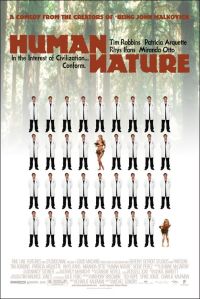 Originally released April 12, 2002:
Screenwriter Charlie Kaufman jumped on to Hollywood’s A-list when his feature debut Being John Malkovich was unleashed in 1999. Malkovich was a brilliant original satire on identity, be it celebrity or sexual, and was filled with riotous humor but also blended beautifully with a rich story that bordered on genius that longer it went. Now Kaufman tries his hand expounding at the meaning of civilization versus animal instinct in Human Nature. As one character tells another, “Just remember, don’t do whatever your body is telling you to do and you’ll be fine.”
Lila (Patricia Arquette) is a woman burdened with excessive body hair ever since she was old enough for a training bra (with the younger version played by Disney’s Lizzie McGuire). Lila feels ashamed by her body and morbidly humiliated. She runs away to the forest to enjoy a life free from the critical eyes of other men. Here she can commune with nature and feel that she belongs.
 Nathan (Tim Robbins) is an anal retentive scientist obsessed with etiquette. As a young boy Nathan was sent to his room for picking the wrong fork to eat his meal with. He is now trying his best to teach mice table manners so he can prove that if etiquette can be taught to animals it can be ingrained toward humanity. Lila and Nathan become lovers when she ventures back into the city, eliminating her body hair for now, because of something infinitely in human nature – hormones. The two of them find a form of content, as neither had known the intimate touch of another human being.
“Puff” (Rhys Ifans) is a grown man living his life in the woods convinced by his father that he is an ape. One day while walking through the woods, Nathan and Lila discover the ape-man and have differing opinions on what should be done with him. Nathan is convinced that he should be brought into civilization and be taught the rules, etiquette, and things that make us “human.” It would also be his greatest experiment. Lila feels that he should maintain his freedom and live as he does in nature, how he feels he should.
What follows is a bizarre love triangle over the reeducation of “Puff,” as Nathan’s slinky French assistant Gabrielle (Miranda Otto) names him. Lila is torn over the treatment of Puff and also her own society induced shame of her abundant amount of body hair. Nathan feels like he is saving Puff from his wayward primal urges, as he himself becomes a victim of them when he starts having an affair with Gabrielle. Puff, as he tells a congressional committee, was playing their game so he could find some action and “get a piece of that.”
 Kaufman has written a movie in the same vein as Being John Malkovich but missing the pathos and, sadly, the humor. Human Nature tries too hard to be funny and isn’t nearly as funny as it thinks it is. Many quirky elements are thrown out but don’t have the same sticking power as Kaufman’s previous film. It’s a fine line between being quirky just for quirky’s sake (like the atrocious Gummo) and turning quirky into something fantastic (like Rushmore or Raising Arizona). Human Nature is too quirky for its own good without having the balance of substance to enhance the weirdness further. There are many interesting parts to this story but as a whole they don’t ever seriously gel.
Debut director Michel Gondry cut his teeth in the realm of MTV making surreal videos for Bjork and others (including the Lego animated one for The White Stripes). He also has done numerous commercials, most infamously the creepy-as-all-hell singing navels Levi ad. Gondry does have a vision, and that vision is “Copy What Spike Jonze Did as Best as Possible.” Gondry’s direction never really registers, except for some attractive time shifts, but feels more like a rehash of Jonze’s work on, yep you guessed it, Being John Malkovich.
Arquette and Robbins do fine jobs in their roles with Arquette given a bit more, dare I say it, humanity. Her Lila is trapped between knowing what is true to herself and fitting into a society that tells her that it’s unhealthy and wrong. Ifans has fun with his character and lets it show. The acting in Human Nature is never really the problem.
While Human Nature is certainly an interesting film (hey it has Arquette singing a song in the buff and Rosie Perez as an electrologist) but the sum of its whole is lacking. It’s unfair to keep comparing it to the earlier Malkovich but the film is trying too hard to emulate what made that movie so successful. Human Nature just doesn’t have the gravity that could turn a quirky film into a brilliant one.
Nate’s Grade: C+
——————————————————
WRITER REFLECTIONS 20 YEARS LATER

I’m at a loss with 2002’s Human Nature. I thought in the ensuing twenty years I would have more to say with coming back to the early burst of brilliant writer Charlie Kaufman in the immediate wake of his successful debut, 1999’s Being John Malkovich. 2002 was a big year for Kaufman; he had three movies released that he wrote, all of them wildly different. His best work was Adaptation, a reteaming with Malkovich’s Oscar-nominated director Spike Jonze, that earned Chris Cooper a Best Supporting Actor Oscar and Kaufman was close to winning for Best Original Screenplay and sharing the honor with his pretend twin brother, the both of whom were portrayed by Nicolas Cage. It was the most challenging and creative and fulfilling of the three. There was also Confessions of a Dangerous Mind, the debut for George Clooney as a director, was a lark of a movie, taking Gong Show host Chuck Barris’ “unauthorized autobiography” where he claimed he was doubling as a CIA black ops hitman. I recently re-watched this one months ago and my opinion even lowered because there’s nothing to the movie beyond the central irony of the unexpected reality of this unexpected man being a spy and assassin. There’s no real insight into Barris as a character and he comes across as scummy and unworthy of a big screen examination. It’s a story that only exists to be ironic and missing the messy humanity and pathos of Kaufman’s best.
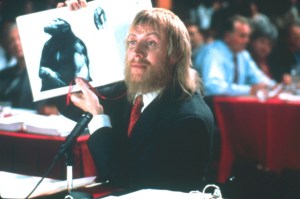
But Kaufman’s most forgotten movie in his screenwriting career is definitely Human Nature, the debut film for Michel Gondry, one of Kaufman’s other collaborators along with Jonze, both men having gained great acclaim for eclectic and visionary and just plain weird music videos. It follows three main characters, each debriefing their tale to an audience. Lila (Patricia Arquette) is accused of murder and discussing her lifelong malady of growing intense amounts of body hair, enough so that she worked as a gorilla woman in a circus sideshow. Puff (Rhys Ifans) is a man raised in the wild who intended to be an ape and returned to society, been trained in etiquette, and become an example of the transformative power of civilization. Dr. Nathan Bronfman (Tim Robbins) is telling his story after death with a bullet hole in the middle of his pasty forehead, as the scientist who found Puff, trained him, and romanced Lila before cheating on her with his French assistant (Miranda Otto). Immediately, the movie presents questions for us to unpack: how did Nathan die? Who was really responsible? What will be the connections between these three very different characters? Then there are assorted kooky side characters that come in and out, but the focus is mostly on this trio, perhaps a foursome with Otto, and the shame is that there is only one really interesting character among them.
Lila is the only protagonist worth following. She feels like a freak, even served in a “freak show,” and must hide her secret from lovers who would object to her untamed mane. She’s vulnerable and hopeful but pressured to conform to be accepted, and her journey to radical self-acceptance would have been an entertaining movie all on its own. However, by fragmenting the narrative with Puff and Nathan, she gets far less attention and her story becomes, for far too long, just her willfully sublimating herself to Nathan’s standards of beauty. Lila frustratingly feels like a character furiously trying to do whatever she can to keep the affections of a bad man. It’s reductive to the movie’s most interesting character. Puff and Nathan, in contrast, just feel like ideas, opposite poles in a discussion over the differences between animal instinct and the ideals of human civilization in all its hypocritical splendor. Even though both men are given comic-tragic back-stories, neither is really a richly defined character. Puff is all impulses and his urges become a tiresome comic device when we watch him hump somebody or something for the eightieth time. Nathan’s preoccupation with social niceties is meant to be absurd (teaching table manners to mice?) and petty, a meaningless articulation of “high culture and values.” I did laugh out loud when Nathan was teaching Puff how to respond at the opera, complete with a constructed box seat. Nathan is a satirical punching bag for a bourgeois sensibility. Neither him nor Puff feel like characters, instead more like conflicting points of view of humanity.
 The other disappointing aspect to Human Nature is as I declared in 2002, it feels like quirky for quirky’s sake screenwriting. Kaufman has become a screenwriting legend and he’s able to marry absurd, bizarre, and dangerous elements into meaningful and subversive and satirical masterstrokes, but the man cannot be expected to perform at the highest heights every time. Human Nature is stuffed full of wacky moments and wacky characters and it doesn’t feel like it ever amounts to more than the sum of its transitory parts. In contrast, 2022’s Everything Everywhere All At Once is an example of how one can take the most bizarre ideas and still find ways to tie them back in meaningful ways that braid into the larger theme. However, much of Human Nature feels like a quirk dartboard being hit over and over, a catalog of strange visuals and goofy ideas (Lila breaks out into song!) that fails to coalesce into a larger thesis like an Adaptation or an Eternal Sunshine of the Spotless Mind or the vastly underrated Synecdoche, New York, Kaufman’s directorial debut. He’s a master of the idiosyncratic, but Human Nature suffers because ultimately what does it have to say? Puff is set up for ridicule. Nathan is set up for ridicule. Even Lila is set up, though for murder. In the end, when Puff returns to the wild in a public galivanting that feels like a ceremonial bon voyage from the society that came to love him, he then scampers out of the woods and escapes back to the comforts of society with Nathan’s French mistress. In the end, is the point that we’re all rubes and hypocrites?
This was Gondry’s first film and it feels like a training vehicle for what would be his real masterpiece, 2004’s Eternal Sunshine of the Spotless Mind, one of my favorite films ever. Gondry’s style is still recognizable, especially reminiscent of his tactile, kitschy, avant garde music videos he directed for Bjork, the queen of weird 1990s music videos. Gondry’s hardscrabble, idiosyncratic style was a natural match with Kaufman’s vivid imagination. It’s surprising that they never reunited after Eternal Sunshine. Gondry had a few movies (2006’s The Science of Sleep, 2008’s Be Kind Rewind) but they felt lacking, trifling without a stronger writer to guide and ground them in human drama. Gondry even tried his hand at studio action to middling results with 2010’s The Green Hornet. He mostly retreated back to music videos and commercials and had a short lived series on Showtime with Jim Carrey as a former children’s TV entertainer whose fantasy is blending with reality. It seemed like a good fit for Gondry, and a nice starring role for Carrey, but it was canceled after two seasons. Even the realm of music videos seems so far removed now, where Hollywood was snatching up every visual virtuoso.

Human Nature has plenty of familiar faces, no doubt eager to attach their names to a daring Kaufman movie. Arquette is winning and the best part of the movie. She would later win an Academy Award for her decade-in-the-making performance in Richard Linklater’s Boyhood. Now I enjoy her in a chilly, villainous role as the shady corporate boss on Apple TV’s stunning sci-fi satire, Severance. Robbins is officious to a fault here. He too would later win an Oscar for 2003’s Mystic River. Poor Ifans, so big after his scene-stealing role in 1999’s Notting Hill, who never seemed to capitalize on his success (even his Spider-Man villain got the weakest treatment in No Way Home). He’s had a long career and prominent TV roles with Berlin Station and the Game of Thrones prequel series, House of the Dragon. I did laugh out loud at his “yahoo” after being zapped by his electric shock collar. You’ll also see Rosie Perez, Peter Dinklage, Robert Forster, Toby Huss, Hillary Duff, and Mary Kay Place. As I said in 2002, acting is not the problem with Human Nature. It’s the writing and characterization that lets these people down.
I usually like to devote a paragraph to going back and re-evaluating my initial words from twenty years ago, but I agree with everything I wrote. Everything. That’s initially why I thought this would be a shorter review. What more am I going to say other than my initial opinion of this movie is the same opinion I have upon re-watching? With the distance, it’s even more clear to me that Human Nature is the weakest film of Kaufman’s career. Even a movie I didn’t really gel with, like 2020’s I’m Thinking of Ending Things, at least has a lot more ambition I can recognize. It’s a character study obfuscated with too much eccentric clutter but there’s still an artistic vision there, even if it didn’t work for me. Kaufman is too unique a voice to only have made three movies in the last 14 years, and it makes it even more frustrating when I don’t connect with his long-in-the-making projects. Human Nature is too limited in scope and characterization. It’s slightly interesting as a footnote to a great screenwriter but little more.
Re-Review Grade: C
Share this:

My Octopus Teacher (2020)
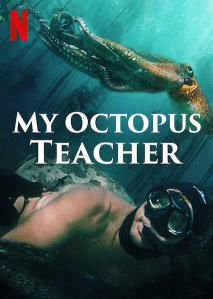 I’m close to finishing the documentary My Octopus Teacher and felt the urge to already begin typing out my thoughts, something I rarely do as I prefer to marinate over movies, let alone waiting for them to conclude. This Oscar-winning documentary wasn’t even part of Netflix’s critics screeners they sent me in the mail to consider for the top documentary prize, which tells me even its home didn’t have the highest of hopes for the true story of one man’s relationship to a mollusk. As it steamrolled through the awards season, my curiosity grew, and I finally took the plunge and watched the movie within hours of it being declared the finest documentary of the year by the Academy. As you can likely guess from the fact that the movie is still ongoing while I write, I may disagree with the Academy’s choice. My Octopus Teacher is a beautiful looking movie with some larger messages about our connections to nature and conservation, but the entire time I kept looking around and thinking, “There has to be more to this, right?” Alas, this is the story about one man and the octopus that won his heart, as told by that man, and that is it.
Craig Foster was a depressed nature photographer who was feeling lost. He would dive into the icy waters off the South African coast to reconnect with his childhood. He discovers a peculiar octopus and follows her movements, studying her for months, and earning the trust of the creature. Craig learns about himself and his view of nature through this fortuitous undersea bond.
 This is literally the story about one man explaining, without interruption, his life lessons he has learned through his yearlong relationship with an octopus, and I just couldn’t fully engage with this on an emotional or intellectual level. The underwater photography is stunning and gorgeous to watch, as would many high-gloss nature documentaries covering the same environment. Watching the octopus hunt, hide from predators, camouflage, contort itself, and even seemingly walk on its tentacles is fun to watch, and nature has plenty of weird specimens to discover and analyze. I’m on board with re-examining the depths of our understanding with some of the weirdest creatures doing their thing thanks to millions of years of evolution. However, where the movie left me wanting is that it is, one hundred percent, one guy talking to the camera and explaining his observations about one nifty octopus and what he has learned from these experiences. The scope of the movie is so minor that it feels less a film and more like a filmed nature article, a little colorful expose that your local news might play to close out its programming. I found the movie to be too slight and unvarying in its information and delivery.
Perhaps I’m a curmudgeon at heart but I kept thinking that Craig Foster was projecting a lot of emotions onto this octopus. I believe this creature meant something special to him, and he became familiar enough that the octopus saw him less as a threat and more as a… what? Does this octopus really see this man in a snorkel as a friend or an ally? She reaches out a tentacle to touch the appendage of this underwater man, but what does that mean? Is this signaling a friendship or is it merely signaling an animal taking stock of its surroundings? I don’t know and depending upon your personal relationship with the animal world, you will either accept everything Craig says at face value without skepticism or you will see him as a slightly foolish romantic.
 The movie’s gentle and empathetic nature is unbroken, though I’d be lying if I didn’t say I thought about the extremes of where this man/octopus relationship could lead. I wondered if Craig was going to declare that he and this octopus were getting married, he was leaving his wife, and that no one could compare to the touch of her tentacles. I don’t mean to sound cruel or dismissive about this man’s emotional experiences. This shared bond clearly touched this man and allowed him to realign his relationship with nature. He even says he feels like a better man and father thanks to these experiences. I’m happy that Craig found that kind of epiphany and direction in his life, and his story has fun details that made me agree that octopuses can be strangely fascinating creatures. However, that doesn’t mean I needed an 85-minute documentary about the guy more or less debriefing to the camera about his year of journaling. It’s just not that grabbing of a subject to satisfy a feature-length documentary. I don’t feel like I gained anything monumentally more from this movie being 85 minutes than I did if it was 25 minutes.
I may watch My Octopus Teacher again and give it another chance (for those wanting to know, it’s since concluded as I compose this review). It beat out serious competition in a year that had some seriously excellent documentaries (Collective and Dick Johnson is Dead both made my Top Ten of 2020). I’m happy so many people seem to be moved by this man’s personal tale of his magical bond with an eight-armed buddy. I was left mostly indifferent. The photography and plenty of the exclusive video captured is interesting to watch, but there’s little separating My Octopus Teacher from a viral clip you’d see forwarded to you from an animal blog. You can find plenty worse movies out there but I guess what makes this movie so special is just lost on me.
Nate’s Grade: B-
Share this:

Cast Away (2000) [Review Re-View]
 Released December 22, 2000:
Strand Tom Hanks on a desert island for years? Sounds too good to be true to many a disgruntled movie goer. Such is the state in Cast Away, Robert Zemeckis’ existential meditation on man, nature, FedEx and their product placement checks, and of course… volleyballs.
Hanks is yet another everyman, except he’s a real stickler for time and order as a FedEx supervisor. His girlfriend (Helen Hunt) is pushing for marriage but hey – they’ve got all the time in the world, right? So Tom boards a FedEx flight headed for the South Pacific that hits a nasty collision with a powerful storm. The plane goes down abruptly in what is likely the most terrifying plane crash ever performed on film. Hanks washes ashore onto a mysterious deserted island after drifting alone in the vast ocean. Without civilization and without human contact he must start all over just to survive the day. So becomes the odyssey of Island Tom.
Cast Away hits one out of the park with its near dialogue free middle act with Tom’s first days upon his new island home. Hanks struggles to do everyday things from finding food to creating a makeshift shelter. As Hanks goes through these daily troubles the audience is with him every moment and learns as he does. Cast Away‘s middle is fascinating to watch. After a few days some packages from the crash wash ashore including a volleyball that Tom turns into his best friend. “Wilson” is Hanks’ companion and is totally understandable how one would branch out for contact under the circumstances. Plus, Wilson’s a dynamite celebrity of his own right now.
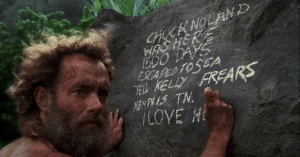 Hanks’ acting is his usually above average output, but his whole role seems more like a showcase for his method acting than the acting itself. The first half of Cast Away was shot then they took a year off so Hanks could become scruffy, thin Caveman/Unibomber Hanks. The transition is fun to watch and remarkable for an actor to devote himself completely to their role. But the part itself, and Hanks’ show, seem more spectacle than substance. Helen Hunt pops up in the beginning and end proving that she can somehow manage to be in every film in December. Pretty much the next actor in the film would be… well, a volleyball. Cast Away is basically a one-man show.
Despite a wonderful middle Cast Away is suffering from the opposite syndrome of Saving Private Ryan: strong middle, weaker beginning and end sandwiching it. Our opening plays like an extended commercial for FedEx, complete with the dazzling FedEx package POV cam (coming soon!). The end plays like a thank you card to FedEx. The ending also suffers from extreme let-down from multiple climaxes that don’t end the film but just give way to another climax. By the time the movie does end you’re exhausted.
Zemeckis lends a skilled hand toward the direction, the script plays to the strengths of the tale good enough, and Cast Away has its moments but becomes too heavy-handed at certain periods. Still, the volleyball is good. Go for the volleyball.
Nate’s Grade: B
(For fun, count the amount of times FedEx is mentioned or seen in the film. Hell, do it with this review too. I’ll even help you out – FedEx, FedEX, FedEx, FedEx, FedEx, FedEx, FedEx, FedEx, FedEx, FedEx, FedEx, FedEx, FedEx, FedEx, FedEx. Oh fun.)
——————————————————
WRITER REFLECTIONS 20 YEARS LATER

Twenty years later, Cast Away feels almost like finding a message in a bottle of another time, a time when director Robert Zemeckis was routinely making great movies, and when Tom Hanks ruled the box office and awards circuit (he has only been nominated for one Oscar since Cast Away, in 2019 for playing Fred Rogers). It’s also a movie that reminds you that despite all else that concept is king. It’s an especially easy movie to watch, and its middle portion is so beautifully clear and accessible that any group of people could keep up and find the island plot thrilling and fascinating. There are long, long portions where the only dialogue spoken in the movie is between one very harried man and a volleyball he has adopted as his only friend. Cast Away is in many ways a textbook example of elegant visual storytelling and also an example of the limitations of emotional engagement when there’s not much else going on but survival.
Please don’t get me wrong, I was mesmerized during the island portion of this movie, which makes about 80 minutes of an otherwise overly long 140-minute movie. When it’s Chuck Noland (Hanks) stranded on a deserted island and having to think step-by-step for shelter, food, and basic care, I was hooked. I was thinking each step of the way, learning and applying that new knowledge base with the main character, and it’s just an imminently enjoyable formula to witness a character work through problems and triumph under extreme circumstances. I felt the same thing with 2015’s The Martian, which was dubbed “Cast Away on Mars.” It even goes back to arguably the first novel, Robinson Crusoe, following one man and his wits and will alone on a perilous island. Very often the protagonist in these man-versus-nature stories is a stand-in for all of us, representing humanity’s quest to conquer the elements and prove our collective mettle to the universe. There is an immensely satisfying pleasure watching storytelling that is precise, efficient, and clean, imparting the necessary information to build onto the next scene and for each setup to expand your understanding and trace to the next payoff. Screenwriter William Broyles Jr. (Apollo 13, Planet of the Apes) deserves more plaudits than he has been given. The island portion of Cast Away is beautiful and near brilliant. Each moment builds so naturally. You learn the geography of the island, the mini goals of cracking open a coconut, building a fire, turning the FedEx trinkets into valuable tools of adaptation, it all builds and at your own pace.
 When we make that four-year time jump, Zemeckis definitely wants it to be a showstopper moment and it is earned. The camera slowly pans to linger on the image of Chuck, much more tan, gaunt, and with a beard that I wrote in 2000 could rival the Unibomber. It’s such a striking image coming right after an unexpected time jump. That’s Tom Hanks, one of the members of Hollywood royalty, and he looks so different from his earlier, schlubby everyman self. The sight is also a stark reminder of Hanks’ physical dedication to the role. He spent a year losing 50 pounds and growing out his scraggly beard. The entire film production went on hiatus and Zemeckis shot an entire other movie released in 2000 (the unremarkable What Lies Beneath). His performance is genuinely great and perhaps more deserving of the Oscar that year than eventual winner Russell Crowe for Gladiator. It’s a performance that is more than a Method physical transformation. His terror, elation, and worry are readily apparent onscreen. It’s a one-man show so you better not get complacent because the audience has nothing else to hold its attention than watching your face, your expressions, your tumult. Not everyone can share the screen with a volleyball and make you feel something when that ball drifts away.
It’s all the rest of Cast Away that can’t quite add up. The first act is mostly establishing Chuck as a figure fated for grand ironic punishment, a workaholic taskmaster who has all the time in the world and nothing more to do but sit with his thoughts. The first act establishes his Before life for our contrast, so we know what he will be leaving behind, and this only really works when the final act rolls around to offer the After period. Now we check in on these minor characters and what four years have done for their lives, how they mourned and moved on from Chuck, and how they’re handling his miraculous re-appearance. You could make an entire movie about a woman whose former love comes back years later after being presumed dead and how this shakes up her current relationship and her own mental sense of self and yearning. That’s a tremendous amount of internal struggle to sift through. Except, with Cast Away, Chuck has lost something but it doesn’t really feel like he’s lost much. Our only time spent with Kelly (Helen Hunt) is during the first act, and while he holds onto her memory and she ostensibly serves as a motivational force for him to get off the island, it’s not felt by the viewer. So when we learn she’s married and a mother, it doesn’t feel so tragic as it does mundane. Life carries on.
 By then it’s too late to make Chuck a more substantially interesting character. The point of interest was watching his survival on the island. Back at home, he’s just another guy, and there isn’t enough from an emotional standpoint to make him compelling. It’s not about him trying to readjust to a society he was ripped away from, catching up on lost time, feeling like a man who was in a coma and now has to pick up everything he’s been asleep for. These characterization shortcomings don’t become more notable until after Chuck gets rescued. Beforehand, I was caught in the immediate physical danger and conflicts of survival, but once we’re off the island, we’re just left with some guy. He hasn’t gone through a radical internal synthesis through his time on the island. He’ll probably be fine and live a normal life. The movie literally leaves him at a crossroads and sets up a handy romantic consolation for him. Does the audience really care which road Chuck takes from here? I doubt it. Chuck stops being interesting when he is saved.
Cast Away really was the last even semi-great movie by Zemeckis. He spent the bulk of the 2000s making animated movies using state-of-the-art motion capture technology. He’s since retreated back to live-action after his mo-cap experiments became too costly for studios. Strangely, Zemeckis has taken to remaking documentaries into entirely unnecessary dramatic features (2015’s The Walk, 2018’s Welcome to Marwen). The passion and pure filmmaking chops that placed Zemeckis as one of the most exciting filmmakers in Hollywood seems to have dimmed. Watch 2016’s Allied and tell me you feel passion. It’s like his interests in the technical side of filmmaking have swallowed his drive and creative expression as a storyteller. With Cast Away, it’s a return to basics of pure visual storytelling and Zemeckis excels so strongly. It makes me mourn what could have been considering Zemeckis abandoned live-action filmmaking, his own lost decade chasing after animated movies that felt like 3-D theme park rides. This is a man responsible for two of my favorite movies of all time (Back to the Future, Who Framed Roger Rabbit?) so I’ll always have hope that I can see glimmers of the same artist that delighted me.
Looking back at my original review from 2000, I’m becoming more and more proud of my younger self and his ability to analyze and articulate his film criticism. It’s a little fun to read words I wrote twenty years ago about a movie and nod along and go, “Right on,” with the same agreement to this day. I don’t want to get ahead of myself and say this was a shift in the complexity of my film reviews, but my major points still stand in 2020 as they did in 2000. Apparently, FedEx did not pay a dime for product placement, though the company reaped financial rewards for years after the exposure. They even made a Super Bowl ad in 2003 that provides a further epilogue where Chuck (Hanks again) finds out the one package he refused to open just had all these handy tools that could have saved him. Cast Away is still an invigorating movie today, even if that only amounts to 80 of its 140 minutes.
Re-View Grade: B+
Share this:

Arctic (2019)
 Mads Mikkelsen is stranded in the Arctic and that’s about all you need to know plot-wise about the film, a thrilling and immersive survival thriller. Right away the film lets us in on the routine of this survivor of a plane crash and how resilient and resourceful he had become. Then it introduces a new sense of urgency, a critically injured pilot in another aircraft, that pushes him into leaving the safety of his homemade confines. The movie relies so heavily on elemental, visual storytelling that I think any person on the planet could easily understand and appreciate the pared-down storytelling. The visuals are so immersive and accessible that every item bears import or sets up critical information to be relied upon later. The harsh Arctic landscape and unique dangers push our hero to the extreme in order to save another life. It’s enough to inure us to this relatively silent man. Mikkelsen (Polar) uses every physical muscle of acting to communicate the struggle his character is undergoing. You believe every moment. There’s not much in the way of story beyond stubborn survival against brutal conditions. We don’t get any flashbacks. We don’t get any monologues. It’s one man against the full force of nature and it’s enough for a brisk, simple, straightforward focused 97-minute survival story with Mads persevering amongst the beautiful and terrifying wasteland.
Nate’s Grade: B
Share this:

Mowgli (2018)
 Sometimes second place might as well be last place in the film industry. Pity Andy Serkis and the years he spent making a live-action, mo-cap enhanced version of The Jungle Book only for Disney to scoop him years in advance and deliver a billion-dollar hit. It’s impossible not to compare the two and unfortunately Serkis’ passion project is found wanting in many areas. For starters, there’s far less Shere Khan (voiced by Benedict Cumberbatch), which is a shame. He’s really only in the film for very little. I think Cate Blanchett is miscast as the voice of the snake, Kaa, who acts like a grand keeper of the jungle’s history and future. I’m not sold on Serkis as Baloo, a grumpy paternal figure present from the beginning that trains the wolf pups so they can join the pack. The middle half-hour Mowgli spends in the company of man with a kindly poacher also feels like the movie is spinning its wheels. It keeps the rest of the jungle on hold. There are some rather dark asides that can be quite surprising, from wolf pups plummeting to their doom, bloody scars, cute severed heads to haunt your dreams, and three separate occasions where characters will watch the light vanish from a dying animal’s eye. It’s definitely a more brutish, cruel, and dangerous world, but at what greater expense? The characterization doesn’t add up to much. The character relationships are minimal. The CGI creatures and settings look unfinished. The whole enterprise feels rushed even though it’s been on the shelf for some time, which may be why the studio was eager to sell it to Netflix for a cool $90 million. You’ll watch Mowgli and nod, generally entertained, but questioning whether it’s 90-million worth.
Nate’s Grade: C+
Share this:

The Mountain Between Us (2017)
 At what point can you tell an onscreen pairing just isn’t working? Chemistry is one of those elusive and ineffable qualities that can make or break a film, especially one that relies upon sexual tension and romantic yearning. If the actors don’t feel like they want to be with one another, it’s all going to fall apart. This is what I kept thinking as I watched The Mountain Between Us and was dumbstruck by the powerful lack of chemistry between its leads, each an accomplished actor in their own right. I don’t thin the movie could have been saved given its script but it certainly could have been at least better. If you’re going into The Mountain Between Us expecting a thrilling survival tale or a stirring romantic pairing, then you’ll be sorely disappointed.
Ben (Idris Elba) and Alex (Kate Winslet) are strangers who have the same problem. Their flights have been canceled and they have important places to be. He’s a surgeon. She’s a journalism photographer who is getting married. They share a single engine propeller plane to fly over the mountains and into the Denver airport. Unfortunately, the pilot suffers a stroke and the plane goes down, stranding Ben, Kate, and the pilot’s helpful labrador in the mountains. They’ll have to rely upon one another to survive in a hostile wilderness and seek rescue when nobody knows where they may be.
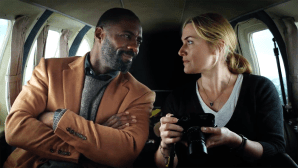 Watching pretty people endure hardships and persevere is as old a story as Hollywood, and The Mountain Between Us fails on so many levels, but none more so than chemistry. Elba and Winslet are meant to fall in love with one another over the course of their struggles and it is that love, we are told, that was the real key to their survival. If that sounds like Nicholas Sparks dribble, you’re on the right track, as the source material was very much a romance story. I’m sure the characters had to be better established and the romance felt more organic than what we get in the movie. I think the setup is an interesting place to start: two strangers who rely upon each other for survival and that co-dependence transforms into something they deem to be love. However, we don’t really get much in the way of the consequences of this except for an extended coda that doesn’t feel like nearly enough. Other than a spur-of-the-moment sex scene the movie doesn’t dwell on this looming romantic relationship in any way other than glances of gratitude. We hardly know anything about these characters before they are in a plane crash, and from there the survival against the elements takes precedence. Winslet spends most of the movie laying down and needing to be taken care of. If this movie needs to survive on their romance then it was doomed at casting. Granted, there is nil in the way of characterization and plot development for them to work with as well. At no point do you feel any emotional connection or even any sort of sensual heat between them. They seem far more irritated and put-upon by one another, but that’s supposed to melt away into something deeper and meaningful, though it never does. These are two talented actors but whoa do they not work together (other pairings were going to be Michael Fassbender and Margot Robbie, Charlie Hunnam and Rosamund Pike). Let this film be a lesson to everyone about the importance of hiring the right actors.
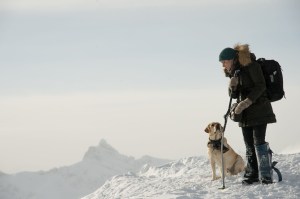 Given the life-and-death survival, it seems shocking that the film has such low or non-existent stakes. You never once feel like these characters are in real jeopardy. They always seem to luck out, whether it’s a perfectly placed flare gun to ward off a bobcat, a cabin that’s none too far from their crash site, or that same dead bobcat that can provide some nourishment. There doesn’t seem to be much of a struggle on screen other than walking through the snow. It’s missing the visceral realism that survival stories offer audiences as entertainment. Ever since watching Wind River, stories about characters running long distances in sub-zero climates is ruined for me. I keep thinking, “Why aren’t their lungs exploding now?” I was surprisingly bored through much of their survival outdoors because none of it felt that serious or memorable (this isn’t Kate Winslet’s personal Revenant). This is less a survival story than a sudsy romance. Apparently, how they survive is less important than their eventual acknowledgement of love. It removes all sense of danger. The inclusion of the dog is the single greatest antidote to realism. Ben and Alex have a cute pet this whole time. This makes The Mountain Between Us feel like a “movie” rather than a “story,” and so we just wait and wait for precious moments that will successfully entertain, few and far between they are.
Director Hany Abu-Assad (Paradise Now, Omar) makes fine use of the Canadian Rockies to provide breathtakingly picturesque landscapes. Even if you’re relatively bored with the characters there’s always the scenery to take in and enjoy. Abu-Assad does have one memorably effective sequence and that’s the plane crash itself. His camera bobs and weaves inside the tiny cabin as long unbroken shot, reminiscent of the famous sequence inside the car in Children of Men. It’s an effort level that isn’t really matched, or at least evident, for the rest of the movie. It peaks at the crash. The human drama seems more interested in the human drama than the survival thrills, which is fine, but if that was the case then we should have gotten better characters and the room for them to develop so that whatever romantic connections form feel and believable and desirable.
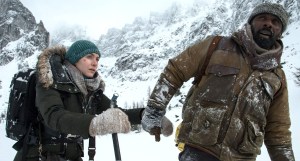 I have a solution to all of these issues except the chemistry one. This movie needed a radical rehaul at the structural level to be a better-developed and more interesting story. The movie needed to be told primarily AFTER Ben and Kate are rescued (spoilers, I guess, but I doubt many thought this was going to end in Greek tragedy). It’s during this fifteen-minute coda where the movie becomes its most interesting, and that’s because our characters have to readjust to the outside world but are forever changed. Starting from that point allows the characters to open up so much more and we see a different array of challenges, ones that are more relatable but also with an undetermined outcome. We know these actors are going to live by the film’s end without question. We don’t know if they’ll still be psychologically stable or whole though re-acclimating to their lives. This needed to be more like the second half of Room. This approach would give substantially more for these great actors to dig into. You could also use flashbacks to fill in notable experiences during their time stranded in the mountains. This would provide contrasts but it would also smartly allow us to skip all the dull stuff we know is just filler. This would also allow more genuine surprises and chances for narrative irony. At one point Alex develops the film roll she took during her time in the mountains, and at this point we already know she snapped a picture while Ben was asleep post-coitus. What if seeing these pictures was our first clue that some romantic intimacy happened? These two people bonded over the course of a couple weeks and no two other people may fully understand what they’ve gone through. Explore that with their difficulty to reconnect to the “outside world” and how much they have come to rely on one another after their rescue. That way it’s a character-piece about relationships with worthy material.
The Mountain Between Us is a mediocre romantic drama hindered by terrible chemistry, half-formed characterization, and a poorly developed story. When the life-and-death survival after a plane crash in the mountain feels lacking in stakes and peril, then you have a problem. When the romantic union between its mega-watt stars feels perfunctory, you have an additional problem, especially when it seems to be the point of the exercise. The Mountain Between Us plays, as one other astute critic wrote, as “Idris Elba fan fiction,” with the injured lead being tended to by the handsome and capable protector who can’t help but fall in love with this woman. It’s not an offensively bad movie but a fatally flawed disappointment that had potential given its premise. There needed to be a dramatic restructuring of the screenplay to emphasize their recovery, which would have better served the talents of these actors. Still, there are worse people to be stranded with.
Nate’s Grade: C
Share this:

War for the Planet of the Apes (2017)
 Matt Reeves is a director who seems to have found his true calling refashioning the work of others. He remade the Swedish film Let the Right One In and improved it in several areas, though having Richard Jenkins and Chloe Grace Mortiz and a complete lack of CGI cats certainly helps. Then he inherited the new Apes franchise with 2014’s Dawn of the Planet of the Apes and the fledgling franchise didn’t miss a beat. I’ve been pleasantly surprised about these damn dirty apes ever since the 2011 prequel kicked things off. Reeves took control of the franchise and deepened it, following a very non-Hollywood playbook that embraced subtleties, patience, and quiet moments. It had its crazy apes action but it was a movie in service to its characters first and foremost. Reeves, serving as co-writer once more with Mark Bomback, brings the franchise to its natural and thrilling conclusion. War for the Planet of the Apes is a blockbuster with soul.
It’s been fifteen years after the outbreak of the devastating Simian Flu. Mankind is dwindling and falling victim to a secondary virus as well. There are only pockets of humans left and small militias taking the fight to the super-intelligent apes. Caesar (Andy Serkis once more in mo-cap) and his followers have taken refuge near a waterfall. The ape community is ambushed by soldiers led by The Colonel (Woody Harrelson). With their home exposed, Caesar splits up the remaining numbers and sends them out to find a new shelter. He is determined to seek out the Colonel for vengeance. Eventually the other apes are captured and put into a slave labor camp and Caesar and company must rescue them and flee mankind’s last gasp at staying atop the food chain.
 This may be one of the bleakest blockbusters in recent memory, especially when you consider that you’ll be actively cheering for the relative extinction of mankind by the end credits. Human beings are on the brink of extinction and this has drawn out the worst fight-or-flight instincts in the remaining numbers. This is about a final fight for survival on a visceral, us versus them level, and after two movies it should be abundantly clear what direction this is all heading. Even as humankind is doing a terrific job of wiping itself off the planet, humans still present a clear threat to the remaining apes. The second film explored how a working trust was improbable and unfathomable to many on both sides of the conflict because of the injustices. That’s pretty heady for a talking ape summer blockbuster. War closes the series with an even bigger and bleaker scenario, as humanity is entering the hospice phase of its social dominance. Roger Ebert referred to the movie theater as an empathy machine, and it’s amazing how far you will empathize with non-human characters. You will feel their triumphs, setbacks, loss, and anger, and you will root for the demise of mankind. We had a good run but maybe it’s time for a different species to become the caretakers of dear Mother Earth.
This is a final film that makes allusions to some of the darkest aspects of human history including, but not limited to, slavery and the Holocaust. It doesn’t traffic in black-and-white moral absolutes. There is good in some humans, several of whom were thrown into military service unprepared, under-trained, and simply existentially lost. There are apes that have made the calculation that it’s better to work with the humans than be killed. That’s right, there are collaborationist apes, and Reeves doesn’t look down on them. They too are allowed complexity and nuance and even the possibility of redemption. No one, man or ape, is beyond the capacity for compassion. You strongly feel their shame brought from moral compromises. It’s hard not to think about real-life analogues like the Jewish police that chose to work at the behest of their Nazi oppressors. They’re all still victims.
 There is great suffering and vengeance on display with War, and it’s all too easy for characters to justify it on a literal specist argument (“Apes aren’t people, and they would have done the same to you”). Caesar is trying his best to manage a fragile co-existence, though this becomes untenable with every new attack. It’s a cycle of violence that only knows recriminations and fear. This struggle is personalized for Caesar as he wrestles with his own selfish, self-destructive impulses to seek out vengeance at the potential cost of the greater good for apekind. Caesar is still haunted by the ghost of Koba (Toby Kebbel, in a welcomed albeit brief appearance), the ape he slew in the previous film. Koba could not let go of the hatred he carried for mankind for their myriad abuses. It consumed him at great cost. Caesar is battling these same impulses but is self-aware about his responsibilities as the leader of his people, but even that might not be enough to dissuade him. To have that kind of emotional conflict within a CGI animal who happens to be the protagonist in a major Hollywood production is simply remarkable.
I don’t want to scare people away. War for the Planet of the Apes is still a very entertaining and gripping movie that can easily warrant stuffing your face full of popcorn. It’s also a blockbuster with tremendous weight. At a steep 140 minutes long, I still could have used even more of this movie. Reeves displays an uncommon sense of patience for a blockbuster filmmaker given a big studio’s checkbook. A majority of this movie is silent and this doesn’t panic Reeves. The director tells his story in a visually appealing and accessible way that doesn’t scrimp on characterization and depth. For long stretches the only communication on screen is ape sign language (small quibble: the apes too often fail to look at one another when they do this). There’s a lingering hush over much of the film, allowing the audience to immerse themselves fully. When the action does heat up, the sounds and music matter more. The solemn silences, hunting parties, and tense standoffs should remind people of Westerns and prisoner-of-war movies. This is the second big-budget 2017 movie making direct Vietnam parallels concerning a man-vs-apes conflict. The prison escape structure of the second half is immediately compelling and just as well developed as what came before. The multiple points needed for an elaborate escape are presented one-by-one and organically. The mini-goals and geography are clear at all times. It leads to an all-out assault climax that is thrilling on multiple levels but also deeply satisfying because of the extensive legwork.
Serkis (Star Wars: The Force Awakens) has been the beating heart of this franchise and his work as Casaer has been a monumental achievement in the advancement of special effects (the series has never won an Oscar for its VFX). Caesar is a fully formed character with relatable flaws and doubts, and thanks to the wizards at Weta, you can see the nuances flash across his face. Serkis brings an impressive range of emotions to a non-human character that’s piercingly silent often. It’s a performance that deserves shared credit to the animators and to Serkis, who is deserving once again of awards consideration that I know will unfairly never come. Harrelson (Now You See Me 2) is definitely evoking a Colonel Kurtz homage, a man given over to the darkness. I appreciated that his character has a credible back-story that informs his actions. He’s not simply a maniacal madman. He respects Caesar and the apes, but views life as a zero-sum game, which makes genocide an appealing last-ditch option. The pleasant surprise among the cast is Steve Zahn (Captain Fantastic) who plays Bad Ape. It’s a character that seems prone to comic relief non-sequitors, but he’s scarred from his own survival experiences. This is an ape still going through PTSD and that presents even the comedic with a twinge of tragedy. The unseen actors behind their mo-cap performances breathe startling life into the numerous non-human characters, bringing unparalleled realism to this sci-fi realm.
 As the conclusion to the Apes prequel trilogy, you will also experience plenty of powerful emotions. I full-on cried twice and teared up about four other separate occasions. I cannot even remember another major summer tentpole that triggered that kind of emotional response (maybe a Pixar title or two). We’ve traveled with Caesar and several of these apes for three movies and six years. We’re emotionally invested. I knew I was going to lose it if anything happened to the orangutan, Maurice (I won’t confirm his fate). The community and empathy we’ve shared with these characters for three movies comes to a gratifying conclusion that feels appropriate, sizeable, and aching with potential for further adventures in this new and exciting world.
War for the Planet of the Apes is a movie so rewarding, so engaging, that you walk away angry that other Hollywood blockbusters can’t be this good or aren’t even trying to be. It’s emotionally rich and resonant, hitting you in the heart just as often as it quickens your pulse. Because of the investment in the characters, and their ongoing progression, we genuinely care about what happens like few blockbusters. The characters don’t take a backseat to the plot mechanics. Serkis and his amazing cast of mo-cap performers have delivered performances that rival live-action actors. There are clever nods to the original series that fans will enjoy but this Apes franchise has been its own beast from the beginning. This is a thoughtful, reflective, and contemplative film that fits well for such a thoughtful and contemplative series, and yet it still knows how to deliver stupendous sci-fi action (our lives are just that much more complete having watched an ape fire dual machine guns while riding a horse). I would declare Dawn as the best action of the trilogy, but I think War is the best movie because of how much everything matters and finishes. I think once the initial dust settles, it’s time to start thinking about this new Apes trilogy place among the all-time great movie trilogies. It’s been consistently enthralling from the beginning and has treated its animal cast as equally worthy of the greatest stories movies can deliver. War for the Planet of the Apes is powerful proof of what blockbuster filmmaking is capable of offering at its absolute finest.
Nate’s Grade: A
Share this:

The Revenant (2015)
 Which do you value more, verisimilitude or narrative? If you’re looking for an intense, immersive filmgoing experience that’s just as harrowing as it is beautiful, then perhaps The Revenant is your movie. If you are looking for characters and a story to engage with, then maybe it won’t be. Leonardo DiCaprio plays the real-life frontiersman Hugh Glass who was mauled by a bear and left for dead by his companions. He miraculously survives and tracks down those who betrayed him for some frontier justice Under the unyielding vision of director Alejandro Gonzalez Innarito (Birdman), the movie opens up its scary world with an exhilarating sense of detail. Inarritu favors lots of natural light and long, gorgeous tracking shots, which creates a spellbinding sense of realism. The attacks and escapes and moment-to-moment survival communicate the remarkable dangers of this natural world. The cinematography by Emmanuel Lubezki is flawless, using light and camera placement to stunning effect. However, The Revenant (meaning a person who has come back from the dead) is a series of beautifully rendered moments delicately stretched over a ponderous running time of 157 minutes. There’s just not enough plot events to fill that running time, so to compensate Inarritu gives way to some Terrence Malick (Tree of Life) impulses that try for philosophical poetry but miss. DiCaprio is getting plenty of plaudits for his demanding role, and he’s quite good and visceral (and no, he does not get raped by a bear). I was more impressed with Tom Hardy, who plays the target of Glass’ fury. Hardy imbues depth into his antagonist, and while you won’t exactly be rooting for him to get away you can see the guy as more pragmatist than mustache-twirling rogue. He even has an interesting back-story surviving being scalped that informs his decision-making. Much of the film is watching Glass endure physical hardship after physical hardship, which may grow wearying for many audience members, especially those most squeamish. When it’s firing, The Revenant is a magnificent and stunningly realized survival thriller with sprinkles of engaging human drama. The problem is that there isn’t enough to go around for its running time.
Nate’s Grade: B


 nathanzoebl
You must be logged in to post a comment.