Blog Archives
Disclosure Day (2026)
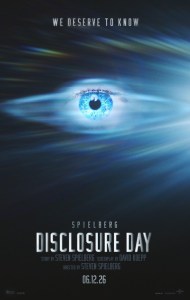
The prospect of Steven Spielberg returning to the world of aliens and summer blockbusters seems like a match made in heaven, the answer to the prayers of millions of eager moviegoers. Disclosure Day, based on a story Spielberg has been developing for decades, is all about forces trying to alert the world that aliens indeed do exist. The primary figures are Dr. Daniel Kellner (Josh O’Connor), a government whistle-blower on the run, and Margaret Fairchild (Emily Blunt), a local TV meteorologist who is suddenly speaking in foreign tongues, reading people’s minds, and even appearing as different people in the perception of others. Both are on a collision course to find one another and discover a repressed shared past as children. It just so happens there are a lot of armed paramilitary goons who want to stop them.
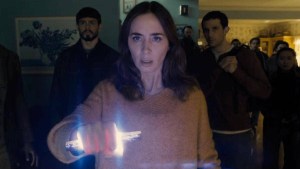
Disclosure Day is an old-fashioned Spielberg popcorn thriller, for better and for worse. Let’s focus on the good first. It’s an easy movie to get on board with, as the plot moves almost immediately from the start and it becomes one extended series of chases and escapes up until the very end, which makes for an exciting movie that has a definite sense of forward momentum. Does it always make sense? Do you care about the characters? Well, we’ll get more into that later, because right now we’re celebrating what works with Disclosure Day. It’s been eight years since Spielberg made a big-screen blockbuster action-thriller (Ready Player One), albeit it’s been twenty years since he made a great one (2005’s War of the Worlds). He’s been more prone to introspective or technically adventurous filmmaking choices of late, so to have Spielberg readopt the blockbuster mantle, and with aliens no less, feels like a thematic homecoming for the man who defined modern cinema over the last fifty years. He’s always been a little squishy and corny in his approach, and that can certainly be welcomed during trying times such as we find ourselves in (hopefully things have settled and improved when you’re reading this in the future). It’s a familiar yet old-fashioned model for a modern blockbuster that Spielberg helped perfect, so to have him return to this mode and have fun can be rewarding, especially for longtime fans giddy that the master is coming back to the world of extra terrestrials. Spielberg can still position his camera and visual arrangements like nobody else, and just immersing yourself in a masterful cinematic storyteller’s whims can be transporting and uplifting even if you’re not exactly on the same wavelength. In short, it’s gratifying to just experience Spielberg operate in his blockbuster space considering the man is almost 80. Who knows if we’ll ever get another one of these kinds of movies again, so there’s something thematically fitting for the master to return to his roots for added social commentary and sentiment.
I had more problems with the old-fashioned qualities of the movie that didn’t feel like they connected for me and connected to a realistic depiction of our modern-day. The problem with a movie set in the present-day that concerns the revelation of alien encounters is that it’s hard to get a plurality of Americans to believe anything no matter if it’s scientific and correct. Just recall the COVID outbreak at the turn of this decade where people couldn’t even agree on things like masking preventing the public spread of viral infection and vaccines being a life-saver. We had people literally eating horse paste and drinking silver nitrate because charlatans told them to do so. The crux of Disclosure Day rests firmly on the world believing the public disclosure of aliens, presented none other than through network evening news. It’s a bit outdated to think that enough Americans, let alone the world, would hold faith in mainstream network news in our increasingly splintered and information silo-ed era. There are people this week who claimed one political party was controlling the weather to the embarrassment of the other political party, and you’re going to tell me these people are going to believe in the existence of aliens because it happens to be presented by TV news? That’s a bit naive, but I think Spielberg could have sidestepped this by having the movie set in the 1980s or 1990s. It would have been more believable, and holding onto collective faith in humanity coming together in times of crises would be more aspirational rather than, you know, remembering that some people rejected minor inconveniences that could save lives like they were tyrannical affronts to liberties. I don’t know about you, but my ultimate faith in humanity has only lowered when it comes to collective action and shared sacrifice in the name of the greater good.
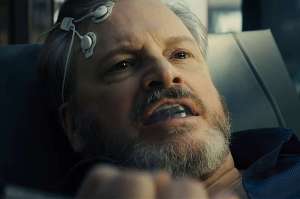
Brushing aside my own cynical modern perspective, the conspiracy itself, and the machinations of the participants, is kept so frustratingly vague with arbitrary solutions. The movie is populated by two clandestine forces, one looking to divulge the existence of aliens and expose the coverup, and other looking to maintain that coverup. You can easily label them Good Guys and Bad Guys for all the complexity provided. That’s fine. The teams can be generic stock roles as long as our main characters are interesting and well-developed. Unfortunately, our main characters feel easily forgotten, often dropping in and out of the movie for unknown reasons and miraculously reappearing in the exact right moments. There’s a climactic showdown where Team Bad Guys is literally going to shut off the power to the TV news station because that will completely stop the flow of information (it’s not like people would just record with their phones and upload to social media). Then all of a sudden, a character that hasn’t been seen for twenty minutes, is just there, and they have a magic alien device that they know will… restore the power. As a climax, it just feels so goofy, outdated, and sloppy in its clumsy plotting. The bad guys have the power to inhabit other people’s minds and control their bodies, so why aren’t they doing this all the time? Once you start introducing alien technology without any clear definition or limits, it basically becomes a magic wand that can provide whatever the user, or the screenwriter, desires in that moment. It’s an obvious narrative cheat. There are occasions where this power can be diverting and fun, like an invisible escape that doesn’t make much sense but was at least entertaining to experience. However, because so much of the story elements are under-developed, it makes the ultimate showdown unfulfilling.
Another hindrance is that many of the characters feel more as tools of the story to get it from Point A to Point B rather than fleshed-out people. Not every character in a genre thriller needs to feel three-dimensionally accurate, but they need to feel interesting, at least enough to make us care or be curious. Daniel Kellner is the biggest dud for me. I genuinely like O’Connor as an actor and found him mightily compelling in last year’s Wake Up Dead Man, but he’s given so little to work with here. Being the point man on exposing a conspiracy should be plenty, and given the harrowing circumstances of constantly having to look over your shoulder it should provide plenty of mental conflict and second-guessing, showcasing different aspects of who this person can be. Instead, he’s less a character than a figure in motion, the person everyone else is chasing after. He’s more plot device than person.
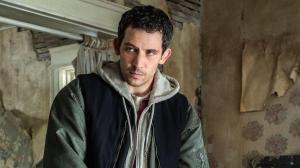
Margaret is the more interesting character as she’s undergoing a mysterious change that she is struggling to recognize, but halfway through that confusion gives way to godhood, as she becomes essentially a superhero with powers of convenience. No matter what trouble she gets into, the script goes into a cheat code to get her out with a new alien power of contrivance. At some point, she stops even questioning or reflecting on these changes and just goes with it, which feels like the characterization simply giving up. It’s a shame because there’s great drama in the existential and personal crisis she was experiencing. I liked her revulsion at being worshiped as a religious icon once she could appear as people’s dead loved ones. Honestly, a whole different movie could have explored the psychological ramifications of that power and the needs of others to see and talk to departed loved ones one last time, to seek affirmations and closure, all against her own sense of agency with a power she feels has hijacked her identity. In the end, these two characters are mainly here to help convey the message, a human game of intergalactic telephone.
The biggest problem for me, besides the lackluster characterization, is that the most interesting part of this movie is its unsaid implications. I am less enthralled by two competing factions fighting over the alien conspiracy and more interested in how the world responds to the momentous revelation that we are not alone. I kind of wish that Disclosure Day’s Act Three had been its Act One, and rather ending on whether or not the world would discover the truth about little green men, the movie confirmed it and then said, “For the next 90 minutes, we’re really going to dig into how this affects people and changes society.” That’s the movie I want to see, the what comes next. The film briefly explores the spiritual ramifications as one character, a former nun, tries to square her faith with the reality of other intelligent life in the wider universe. Is that revelation comforting and confirmation or conflicting and confusing? I really wish the screenplay had gone further in that exploration, something akin to Arthur C. Clarke’s Childhood’s End, which richly examined the upheaval to societies and personal identity. I suppose I was looking for more of what happens after Disclosure Day rather than leading up to the big disclosure, and I doubt I’m alone.
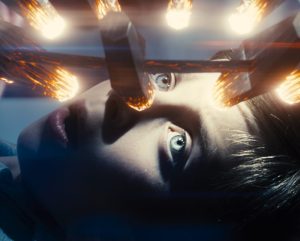
I will also be spoiling the exact ending because I believe it deserves unpacking, so if you would like to remain spoiler-free, please skip to the next paragraph, dear reader. Alright, with that out of the way, the climax hinges upon the news about aliens being disseminated to the public. It’s a little strange that so much of the climax is merely watching the footage with our characters on the sidelines. In fact, the emotional point of emphasis is placed on a new character, a news anchor played by Courtney Grace, who narrates the footage and its implications in real time. Her performance might be the best in the movie (Blunt is good, folks, but let’s pump the brakes on those “career-best” declarations) as she shows restrained and nuanced emotion trying to process the amazing and perspective-shifting revelation. It’s just strange that so much is placed on a brand-new character so late into the movie. Regardless, what stupefied me was that after all this the good guys literally roll out an elderly alien being in a wheelchair. What? You had a literal living, breathing, well more like rasping-alien (don’t want to cast aspersions, but maybe this alien adopted smoking in his time planet-side) and you just keep him at bay? Your whole goal is to raise awareness about the existence of aliens and you literally have an alien to prove the existence of aliens. Why did everything have to hinge on these two adults realizing they were given special powers as kids? Why did they have to wait 30-plus years for these powers to manifest? Why didn’t aliens just give adults these powers rather than children to wait on their maturation? Could the old alien not learn one of Earth’s languages or at least how to type? We have magic devices that can generally do anything but the creators of these magic devices cannot conceive of something to resolve a predictable language barrier? If the script were stronger or the characters engaging, my brain wouldn’t be consumed with these questions.
Reluctantly, Disclosure Day fits squarely in the fulcrum between good and not so good, teetering between one direction and the other. It’s got high production values, good actors, and Spielberg cooking in the sci-fi/action/thriller realm. It’s enjoyably more tactile with its action set pieces, of which some are exciting and visually inventive. Others are just characters getting overlooked in plain sight, and this is before they introduce magic invisibility. However, the promise of the movie is never truly fulfilled from a story awash in underdeveloped characters and themes, arbitrary and overly convenient plotting, and a resolution that feels less than satisfying and more confusing in execution and implication. I genuinely wish that Disclosure Day was more about the aftermath of the news rather than the reaching of the disclosure itself. Even a middling Spielberg thriller can still have more entertainment than the best of many filmmakers, so I’m sure many filmgoers can find something to enjoy, but they’re just as likely to find something that sticks in their proverbial craw, that they chew over for days, and question why it couldn’t be better.
Nate’s Grade: C+
Share this:

Wake Up Dead Man (2025)
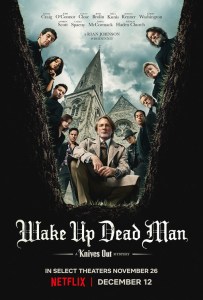 Being the third in its franchise, we now have a familiar idea of what to expect from a Knives Out murder mystery. Writer/director Rian Johnson has a clear love for the whodunit mystery genre but he loves even more turning the genre on its head, finding something new in a staid and traditional style of storytelling. The original 2019 hit movie let us in on the “murderer” early, and it became more of a game of out-thinking the world-class detective, Benoit Blanc (Daniel Craig). With the 2022 sequel Glass Onion, the first of Netflix’s two commissioned sequels for a whopping $400 million, Johnson reinvented the unexpected twin trope and let us investigate a den of tech bro vipers with added juicy dramatic irony. With his latest, Wake Up Dead Man, Johnson is trying something thematically different. Rather than adding a meta twist to ages-old detective tropes, Johnson is putting his film’s emphasis on building out the themes of faith. This is a movie more interested in the questions and value of faith in our modern world. It still has its canny charms and surprises, including some wonderfully daffy physical humor, but Wake Up Dead Man is the most serious and soul-searching of the trilogy thus far, and a movie that hit me where it counts.
In upstate New York, Pastor Jud (Josh O’Connor) has been assigned to a church to help the domineering Jefferson Wicks (Josh Brolin). The congregation is dwindling with the exception of a few diehards holding onto Wicks’ message of exclusion and division. The two pastors are ideologically in opposition, with Pastor Jud favoring a more nurturing and welcoming approach for the Christian church. Then after one fiery sermon, Wicks retires to an antechamber and winds up dead, with the primary suspect with the most motivation being Pastor Jud. Enter famous detective extraordinaire Benoit Blanc to solve the riddle.
 I appreciated how the movie is also an examination on the different voices fighting for control of the direction of the larger Christian church. Wicks is your traditional fire-and-brimstone preacher, a man who sees the world as a nightmarish carnival of temptations waiting to drag down souls. He sees faith as a cudgel against the horrors of the world, and for him the church is about banding together and fighting against those outside forces no matter how few of you remain to uphold the crusade. Pastor Jud rejects this worldview, arguing that if you think of the church as a pugilist in a battle then you’ll start seeing enemies and fights to come to all places. He’s a man desperate to escape his violent past and to see the church as a resource of peace and resolution but Wicks lusts for the fight and the sense of superiority granted by his position. He relishes imposing his wrath onto others, and his small posse of his most true believers consider themselves hallowed because they’re on the inside of a special club. For Pastor Jud, he’s rejecting hatred in his heart and looks at the teachings of Jesus as an act of love and empathy. It’s not meant to draw lines and exclude but to make connections. These two philosophical differences are in direct conflict for the first half of the movie, one viewing the church as an open hand and the other as a fist. It’s not hard to see where Johnson casts his lot since Pastor Jud is our main character, after all. I also appreciated the satirical tweaks of the church’s connections to dubious conservative political dogma, like Wicks’ disciples trying to convince themselves the church needs a bully of its own to settle scores (“What is truth anyway?” one incredulously asks after some upsetting news about their patriarch). It’s not hard to make a small leap to the self-serving rationalizations of supporting a brazenly ungodly figure like Trump. At its core, this movie is about people wrestling with big ideas, and Johnson has the interest to provide space for these ideas and themes while also keeping his whodunit running along pace-for-pace.
There is a moment of clarification that is so sudden, so unexpectedly beautiful that it literally had me welling up in tears and dumbstruck at Johnson’s capabilities as a precise storyteller. It’s late into Act Two, and Blanc and Pastor Jud are in the thick of trying to gather all the evidence they can and chase down those leads to come to a conclusive answer as to how Pastor Jud is innocent. The scene begins with Pastor Jud talking on the phone trying to ascertain when a forklift order was placed. The woman on the other side of the line, Louise (Bridget Everett, Somebody Somewhere), is a chatty woman who is talking in circles rather than getting to the point, delaying the retrieval of desired information and causing nervous agitation for Pastor Jud. It’s a familiar comedy scenario of a person being denied what they want and getting frustrated from the oblivious individual causing that annoying delay. Then, all of a sudden, as the frustration is reaching a breaking point, she quietly asks if she can ask Pastor Jud a personal question. This takes him off guard but he accepts, and from there she becomes so much more of a real person, not just an annoyance over the phone. She mentions her parent has cancer and is in a bad way and she’s unsure how to repair their relationship while they still have such precious time left. The movie goes still and lingers, giving this woman and her heartfelt vulnerability the floor, and Pastor Jud reverts back to those instincts to serve. He goes into another room to provide her privacy and counsels her, leading her in a prayer.
 The entire scene is magnificent and serves two purposes. This refocuses Pastor Jud on what is most important, not chasing this shaggy investigation with his new buddy Blanc but being a shepherd to others. It re-calibrates the character’s priorities and perspective. It also, subtlety, does the same for the audience. The wacky whodunit nature of the locked-door mystery is intended as the draw, the game of determining who and when are responsible for this latest murder. It’s the appeal of these kinds of movies, and yet, Johnson is also re-calibrating our priorities to better align with Pastor Jud. Because ultimately the circumstances of the case will be uncovered, as well as the who or whom’s responsible, and you’ll get your answers, but will they be just as important once you have them? Or will the themes under-girding this whole movie be the real takeaway, the real emotionally potent memory of the film? As a mystery, Wake Up Dead Man is probably dead-last, no pun intended, in the Knives Out franchise, but each movie is trying to do something radical. With this third film, it’s less focused on the twists and turns of its mystery and its secrets. It’s more focused on the challenging nature of faith as well as the empathetic power that it can afford others when they choose to be vulnerable and open.
Blanc doesn’t even show up for the first forty or so minutes, giving the narration duties to Pastor Jud setting the scene of his own. Craig (Queer) is a bit more subdued in this movie, both given the thematic nature of it as well as ceding the spotlight to his co-star. Blanc is meant to be the more stubborn realist of the picture, an atheist who views organized religion as exploitative claptrap (he seems the kind of guy who says “malarkey” regularly). His character’s journey isn’t about becoming a true believer by the end. It’s about recognizing and accepting how faith can affect others for good, specifically the need for redemption. Minor spoilers ahead. His final grand moment, the sermonizing we expect from our Great Detectives when they finally line up all the suspects and clues and knock them down in a rousing monologue, is cast aside, as Blanc recognizes his own ego could be willfully harmful and in direct opposition to Pastor Jud’s mission. It’s a performance that asks more of Craig than to mug for the camera and escape the molasses pit of his cartoonish Southern drawl. He’s still effortlessly enjoyable in the role, and may he continue this series forever, but Wake Up Dead Man proves he’s also just as enjoyable as the second banana in a story.
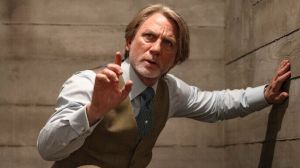 O’Connor (Challengers, The Crown) is our lead and what a terrific performance he delivers. The character is exactly who you would want a pastor to be: humble, empathetic, honest, and striving to do better. It’s perhaps a little too cute to call O’Connor’s performance “soulful” but I kept coming back to that word because this character is such a vital beating heart for others, so hopeful to make an impact. It’s wrapped up in his own hopes of turning his life around, turning his personal tragedy into meaning, devoting himself to others as a means of repentance. He’s a man in over his head but he’s also an easy underdog to root for, just like Ana de Armas’ character was in the original Knives Out. You want this man to persevere because he has a good moral center and because our world could use more characters like this. O’Connor has such a brimming sense of earnestness throughout that doesn’t grow maudlin thanks to Johnson’s deft touch and mature exploration of his themes. O’Connor is such a winning presence, and when he’s teamed with Blanc, the two form an enjoyable buddy comedy, each getting caught up in the other’s enthusiasm.
Johnson has assembled yet another all-star collection of actors eager to have fun in his genre retooling. Some of these roles are a little more thankless than others (Sorry Mila Kunis and Thomas Haden Church, but it was nice of you to come down and play dress-up with the rest of the cast). The clear standout is Glenn Close (Hillbilly Elegy) as Martha, the real glue behind Wicks’ church as well as an ardent supporter of his worldview of the damned and the righteous. She has a poignant character arc coming to terms with how poisonous that divisive, holier-than-thou perspective can be. Close is fantastic and really funny at certain parts, giving Martha an otherworldly presence as a woman always within earshot. Brolin (Weapons) is equally fun as the pugnacious Wicks, a man given to hypocrisy but also resentful of others who would reduce his position of influence. The issue with Wake Up Dead Man is that elevating Pastor Jud to co-star level only leaves so much room for others, and so the suspect list is under-served, arguably wasted, especially Andrew Scott (All of Us Strangers) as a red-pilled sci-fi writer looking for a comeback. The best of the bunch is Daryl McCormack (Good Luck to You, Leo Grande) as a conniving wannabe in Republican politics trying to position himself for a pricey media platform and Cailee Spaeny (Alien: Romulus) as a cellist who suffers from deliberating pain and was desperate for a miracle delivered by Wicks. He’s the least genuine person, she’s hoping for miraculous acts, and both will be disappointed from what they seek.
Wake Up Dead Man (no comma in that title, so no direct command intended) is an equally fun movie with silly jokes and a reverent exploration of the power of faith and its positive impact, not even from a formal religious standpoint but in the simple act of connecting to another human being in need. This is the richest thematically of the three Knives Out movies but it also might be the weakest of the mysteries. The particulars of the case just aren’t as clever or as engaging as the others, but then again not every Agatha Christie mystery novel could be an absolute all-time ripper. That’s why the movie’s subtle shifts toward its themes and character arcs as being more important is the right track, and it makes for a more emotionally resonant and reflective experience, one that has replay value even after you know the exact particulars of the case. If you’re a fan of the Knives Out series, there should be enough here to keep you enraptured for more. Because of that added thematic richness, Wake Up Dead Man has an argument as the best sequel (yet).
Nate’s Grade: A-


You must be logged in to post a comment.