Blog Archives
Jackie (2016)
 Jackie (Natalie Portman) is still reeling from the loss of her husband, President Kennedy (Caspar Phillipson). In the weeks that followed the assassination in 1963, her life was a whirlwind of change. She was leaving the White House while another administration took control of her husband’s office and agenda. She was leaving a life of glamour and privilege and it all came to a halt. Bobby Kennedy (Peter Sarsgaard) is worried about the Kennedy policies getting lost as well as his own potential presidential prospects. Lyndon Johnson (John Carrol Lynch) is worried about asserting his own control. While trying to work through her grief, Jackie must protect her husband’s legacy among all the well-wishers, political vultures, and craven opportunists.
We’re left with an immersive, impressionistic look at America’s most famous first lady since it’s hard to distinguish the layers of performance from the woman herself. She was used to adopting the façade of what the public expected of her, how her husband’s friends looks at her with desire and dismissiveness, and the differences between her private life and her public persona. It’s a fascinating glimpse into the interior space of a famous woman that so many people think they know well because of her glamour and television appearances, but do they really? Her identity is in free fall. She gave up everything for this man and now he is gone and her cherished position is gone. It’s said each first lady leaves her stamp on the office, and now Ladybird Johnson is already itching to undo that stamp, erasing Jackie’s presence and supplanting it. Will these last few days define her and will they define her husband? While dealing with raw grief, Jackie also takes the position of being the first to protect her husband’s legacy. While planning the particulars of the funeral march and exact burial site, she’s really framing his place in the greater annuls of history, tragically cut short and questionably memorable. His life has been taken from her and now the only thing she can do is protect his place in history. The funeral details and conflicts they consign the new Johnson administration to are interesting, as is Jackie’s simmering disdain for the Johnsons, but it’s more than just placation; Jackie has an underrated knack for theatrical optics. The country is in mourning, just like its (former) first lady, and she offers a spectacle as an outlet. Some term it vanity and even Jackie admits that many aspects were for her, for her grief, for her rage at the world and her doubters, for her wounded soul searching for meaning. She wanted the American public to see her in mourning but she wanted just as much to see them in mourning too.
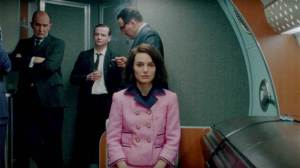 Eschewing the standard cradle-to-grave biopic, as well the noveau approach of using one clarifying moment to better examine and sum up the person (see: Selma, Steve Jobs), Noah Oppenheim’s script is a triptych, a hypnotic exploration that zips along non-linear but thematically-tethered memories. It’s a more interesting approach because we’re not locked into a linear progression of plot events, though the immediate aftermath and her interview with the Newsweek reporter (Billy Crudup) serve as the directional compass. It also provides a clever conceit for meta-textual levels. We have scenes that lay as direct conflict with the public Jackie and the private Jackie, and we have scenes that lay into the different levels of performance, from her show model tour of the White House furnishings and fixings to putting on the brave face to speak to her children. Director Pablo Larraine (No, Neruda) shoots the movie in a style reminiscent of its 1960s time period, with a film stock that blends the difference between documentary and recreation, further adding another stylistic level to the proceedings. The various threads of connectivity are so much more interesting to dissect with this storytelling approach and it makes the movie a much deeper and more contemplative experience to unpack.
There’s a scene in the middle of Jackie that stood out to me. During a night of drinking, Jackie puts on the record for the Broadway production of Camelot and wanders the large empty spaces of the people’s house. For my younger readers, the Kennedy administration was dubbed by many as “Camelot,” first coined by Jackie, out of a sense of its idealism, youth, and inspirational promise to change the world into a nobler place. It’s practically a mythical time and the real people get lost amidst the romantic spectacle. Nowadays, our presidents can often be the same mythical figures as the kings of old, figureheads whose humanity and details we iron out and soften as we eulogize and entomb them. The music echoes through the different chambers but there’s no one to hear it, no one to enjoy it, the vast emptiness communicating much of Jackie’s anguish. “There will be great presidents again but there will never be another Camelot,” she says. That moment is left as a passing memory, a picture of nostalgia that will only have its realism dampen in time as it becomes enshrined in American myth making. Amidst all her privilege and esteem, there is an existential sense of loss for Jackie and the nation as a whole into the turbulent 60s.
The other rich aspect is that we are watching a woman process her grief in real-time and it can often put a lump in your throat. I challenge anyone not to feel an outpouring of empathy when Jackie has to explain to her two very young children why daddy isn’t coming back from Dallas, having to explain something horrendous to those so innocent. In some scenes it feels like Jackie is numb to the world around her, focused on the little things as an escape from her horrible reality and its trauma. We do get a recreation of that fateful day in Dallas twice. The first is the immediate aftermath with Jackie bloodied and protected by the Secret Service, keeping her at a distance from us too in the audience. The next is a closer view inside the car as we’re with Jackie when the awful event happens, and the sudden shock of gore is still a disturbing gut-punch no matter how much you anticipate the moment. We watch her crazed instincts trying to collect the pieces of her beautiful and broken husband, stressing she was trying to keep everything together, figuratively and literally. The scene plays out longer and it serves as an emotional climax to the film, a frank reminder that for everything people believe they know about this woman, at heart, for all her riches and fame and privilege, she is simply a human being trying to make sense of death. It’s this final moment in the car that reminds us.
 This is an acting showcase and Portman (Black Swan) excels, delivering the best female performance I’ve seen this year at the movies. It’s an Oscar bait dream role and she nails it. She goes beyond mere imitation though Portman does an excellent job of that. Thanks to critic/blogger Jeffrey Wells for this great quote about the imitable real-life Jackie from author Tom Wolfe’s novel, The Right Stuff: “She had a certain Southern smile, which she had perhaps picked up at Foxcroft School, in Virginia, and her quiet voice, which came through her teeth, as revealed by the smile. She barely moved her lower jaw when she talked. The words seemed to slip between her teeth like exceedingly small slippery pearls.” Portman stunned me early with her exquisite recreation of Jackie and then she stunned me moments later with the depth of emotion she was able to convey in the scene where she stares into the Air Force One mirror, dabbing her husband’s blood from her face as her eyes are swollen with tears. Lorraine favors plenty of exacting close-ups to watch the array of emotions play across her face. She has moments of strength, moments of pettiness, moments of heart-tugging lows and weakness, and Portman is always fascinating, holding your attention rapt as you study her study. It’s a mesmerizing performance and one that deserves to earn Portman her second gold statue.
Jackie is a movie that has stayed with me for days after I’ve seen it. The exceptional and empathetic work by Portman is the first thing I recall, and then the thematic and symbolic relevance of the storylines as they fold on top of one another, providing a hypnotic and immersive portrait of a very famous woman who sought and spurned the spotlight. As far as I’m concerned this is the definitive film presentation of Jackie and Portman’s searing performance is the dazzling standard that won’t be beat. You walk away having additional appreciation for this woman but also further curiosity. The movie doesn’t expressly state who she is as a human being, providing a range of personas, some that conflict with one another, and allows you to put it all together for your interpretation. It’s a bold gambit and a fitting gesture for a woman defined by others’ perceptions.
Nate’s Grade: A-
Share this:

Hercules (2014)
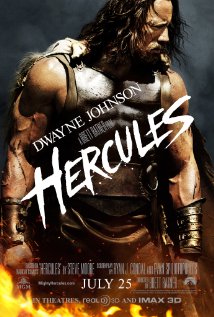 What happens if you make a Hercules movie but take out all the unique things that make the classic hero who he is? Would he still be Hercules? This question is at the heart of director Brett Ratner’s newest film, and it’s better than expected, which is a nicer way of also saying it’s not as bad as it looked like in its terrible cheesy advertising. It might be the most entertaining Brett Ratner film yet for what that statement is worth.
So, who is this Hercules? Besides looking like The Rock, he’s a mercenary who leads a band of warriors that are carefully left out of those widespread tales of his heroics and derring-do. Hercules’ nephew (Reece Ritchie) is the mouthpiece for the group, spinning the tales into epic poetry. There’s also a female archer, a sarcastic second-in-command good with throwing knives, an animalistic swordsman, and an older spearman (Ian McShane) who is given fleeting prophetic images, mostly about his own death. There’s a reason these people aren’t described much beyond their character-defining weaponry. This gang is hired by Lord Cotys (John Hurt) to protect his people from a Thracian warlord who rumor has it is a centaur. Could he be? Have you been paying attention?
 Depending upon your tastes, you may either find this new approach refreshing or feel completely ripped off. It does seem that all of those cool glimpses of Hercules going through his grueling trials, fighting giant beasts, doing generally Herculean acts, well it was all comprised to the opening two minutes, which is why I feel no spoiler guilt over revealing the true nature of the movie. It’s not really a Hercules film. Yeah, The Rock is just about the closest living example of a modern Hercules (he shouldn’t have the hobo beard, though), but it’s in name only. Whether this is a stopping point is up to the viewer. It does seem like a disappointing bait-and-switch to tease out what promises to be an epic with giant mythological beasts, and I feel like the audience has every right to be irritable they have been denied this. But if you move beyond this legitimate gripe, the resulting movie is actually serviceably entertaining, which again sounds like a backhanded compliment unless you remember how truly lousy it looked from its initial goofy trailer.
The plot is predictable at every step of the way, except one character I swore was going to be a backstabber due to pigeonhole casting surprised me when they turned out to just be another underdeveloped yet loyal sidekick. Other than that, and I apologize for the vagueness of that sentence, this is a movie you can accurately predict without having to even watch it. The mercenaries are hired for a cause, perhaps they’ll start feeling differently about what they’ve been called in to do, get more involved, and then oh no, perhaps the heroes and villains were all mixed up after all. The plot structure is at its most simplistic (mild spoilers, but really, come on): Act 1 break – they take the mission. Act 2 break – oh no, the guy was bad all along and they’ve been working for the wrong side. Act 3 is then essentially battle and vengeance against the true villains. There’s almost an admirable efficiency to its formula plot mechanics, including the tortured hero back-story over his slain family and the forced reveal of who was behind said slain family being slain. If you don’t want to overwhelm your brain, then Hercules will do.
Free of the rigors of being original or complex, the movie is open to accomplish its minimal goals of entertainment, and to this end I would call the movie a mild success. The action is involved just enough to keep things interesting, especially when Hercules and his battalion are beset on all sides by green-skinned guys who, for whatever reason, hid in holes in the ground. There’s a primal joy watching The Rock carry around a giant Captain Caveman-style club and gleefully beat people with it, especially when the recipients fly like 30 feet in the air. There’s a pleasure to be had with a stripped down and somewhat dumb action flick where everyone is running around in leather or loincloths. The action is more Hercules by way of Conan the Barbarian but without the monsters and sorcery. There’s a fun running gag where McShane’s character keeps thinking he’s come to his final moment, the death that has been prophesied, only to be denied it time and again, causing some slight frustration on his part. The pacing is also swift enough that you won’t be bored for long periods of time.
 But at its heart, this is still a rather block-headed action film with questionable choices. While scrubbing the supernatural elements from the story, this still exists in the unbelievable world of Movie Land where the good guys can do anything. The archer never runs out of arrows. The good guys never miss. At one point, Hercules topples a 100-foot tall marble statue like he’s Samson. So even though it wants to be a more grounded take on the legend, it’s still filled with all that silly impossible action movie stuff we see all the time. Then there are just small impractical things that exist only for the fact that someone thought it looked cool. There’s a secondary villain (Peter Mullan!) who prefers to use a whip made of a spinal cord. This can work in one-on-one confrontations but in the open field of battle, with men churning all around, it seems like a rather poorly ineffective weapon. Lastly, there’s a trite message about the power of believing yourself. See, Hercules needs to believe he’s a worthy hero and he’ll rise to the occasion. All you have to do is believe in yourself and anything can happen… if you happen to be The Rock or look approximately like him.
This new spin on one of the oldest heroes is generally entertaining, that is, if you can accept the bait and switch of its premise, robbing Hercules of his godlike abilities. It’s like doing an action movie about Greek mythology but taking out all the mythology and just having a bunch of dudes poking each other with spears and swords. Actually, it’s exactly like that. With Ratner at the helm, you know there’s going to be a ceiling, but the film is so unabashedly clear with its simple intentions that I found it hard to grumble, and so just soaked up an average action adventure with one of the genre’s best leading men. As far as summer action vehicles go, it’s got just enough going for it, but see all the other good films first. Make a list. Check it twice.
Nate’s Grade: B-
Share this:

Snowpiercer (2014)
 I have seen Snowpiercer twice and it’s still a hard movie to describe. It’s the English-language debut of Korean filmmaker Joon-hoo Bong, notable for The Host (the good one) and Mother. It’s based upon a French graphic novel only printed in France and South Korea. It’s an international production, filmed in the Czech Republic, and populated with recognizable actors like Octavia Spencer, Tilda Swinton, John Hurt, Ed Harris, and Captain America himself, Chris Evans. It’s a dark dystopian allegory about class warfare, it’s a stunning sci-fi action movie, it’s a parable about humanity, it’s a stylish thriller that puts most of Hollywood to shame; it’s many things, chief among them, an incredible movie that demands to be seen on the big screen when able.
To combat global warming, world leaders disperse a chemical to lower temperatures, and oh boy does it work, inadvertently causing a new Ice Age that kills almost all life on the planet. Almost, because a few hundred got aboard the train owned and operated by Wilford (Harris), a rich and secretive industrialist. He built a train that can circle the globe, running on a perpetual motion motor. The last of humanity is housed on Wilfrod’s train. After seventeen years aboard, the class system has become rather rigid. The important and wealthy are at the front of the train, and the poor are crammed in the back, given gelatinous protein blocks to eat, and kept in line by armed guards. Curtis (Evans) is plotting a revolt, biding his time, consulting with the wise Gilliam (Hurt), an aging leader missing several limbs. Together, they storm ahead, capturing effete Wilford spokesman Mason (Swinton) as a hostage, rescuing an engineer (Kang-ho Song) with a drug addiction who will help them open the train cars, fighting car by car to take control of the train. Naturally, those in power fight back in force to maintain the uneven status quo.
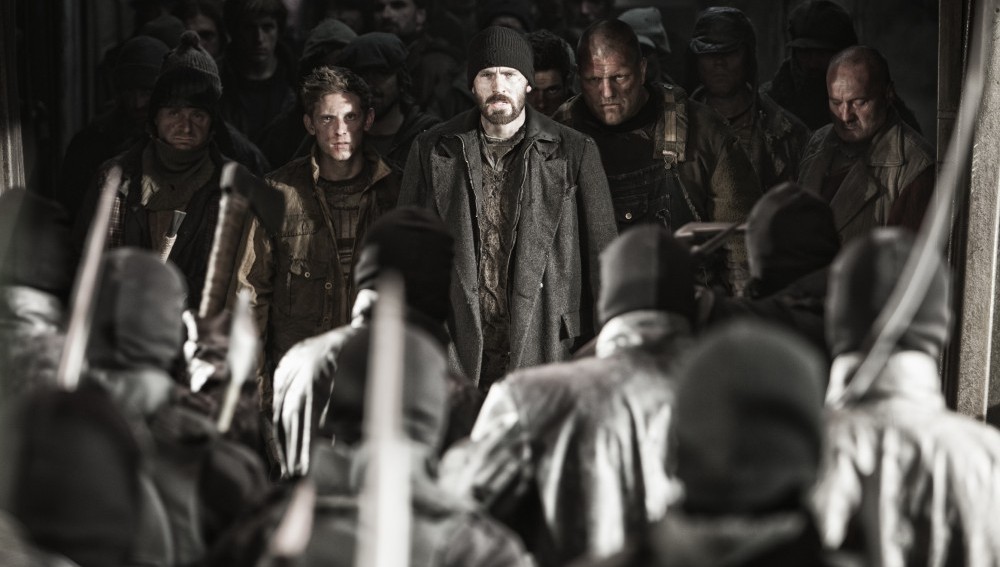 Short of the adrenaline-soaked Raid 2, there hasn’t been a better action movie this year than Snowpiercer. It starts slow, drawing the audience in, setting up its initial burst as a prison break of sorts where the tail section passengers have to figure out a way past the guards and several security doors open for only a few seconds. When the break does happen, in a clever fashion, you feel the full rush of the new opportunity thanks to the movie properly setting up the stakes and obstacles. Each new car presents a new world and a new obstacle. There’s one car where Curtis and his revolutionaries are met with fifty ski-mask wearing grunts with axes. This is the standout action sequence because of how it keeps changing. At first its brawn versus brawn, complete with swinging axes. Then the fighting stops briefly and all the grunts put on night vision goggles. The train enters a long tunnel, condemning Curtis and company to the dark. The grunts then go to town, spearing and slashing the hapless passengers blindly swinging in the dark. I won’t spoil the solution to this scenario but it too is properly set up and leads to some extremely satisfying action imagery, the kind of stuff that pops in a trailer. There’s an entirely different sequence later that also stands out. As the train goes into a long curve in the track, certain train cars are visible from others. Our chief heavy, listed as Franco the Elder (Vlad Ivanov), sees Curtis in the car ahead and starts firing. Eventually Curtis and Franco blast small holes in the protective glass and wait, wait for their moment, for their shot. It’s a tense neo-Western standoff moment, and another delightful addition. The accumulative action has a surprising degree of variety and development.
Snowpiercer is a stirring action movie that keeps your eyes glued to the screen, but it does an equally impressive job of building its world and adding dimension to its storytelling. Reportedly, Harvey Weinstein wanted to cut twenty minutes out of the 126-minute film, but I’m puzzled as to where those edits would come. Every scene in this movie drives the film forward or imparts crucial pieces of information or metaphor that will play out later. Even something as comical as stopping for sushi in the aquarium car (balancing the ecosystem) has greater meaning and subtext when you look back at the film as a whole. Joon-hoo Bong and his co-screenwriter Kelly Masterson (Before the Devil Knows You’re Dead) have given serious consideration to how this world operates and what life would be like when all of humanity is confined to one long train. The past is revealed incrementally, gingerly allowing the audience to become consumed with this odd dystopian landscape, our fascination brewing with each new puzzle piece being added. I was enthralled with the rich details, the cruel methods of keeping those in the tail section in line, the regular head counts, the protein block bars and what they truly are made of, the annual celebration of passing a certain bridge marking their own New Year, and especially the deification of Wilford. The characters worship the engine, and why not since it is the source of life for them, or as the chirpy schoolteacher (Alison Pill) sings: “What happens if the engine fails? We all freeze and die!” The later reveals are the best, giving full explanation why tail section children are important and, particularly, why Curtis is so ashamed at having two good arms. That monologue by Evans, looking back on the earliest and most cruelly chaotic days on the train, is a whopper. I truly hope that aspiring actors will use it during future auditions. It will make an impression.
 Its dark sense of humor and political and philosophical subtext provide an even richer texture to this strange, bleak world. The political commentary isn’t exactly subtle, I’ll admit, but it’s exceedingly better executed and integrated into its plot than, say, last year’s Elysium. The class-consciousness provides a greater depth to the proceedings, providing a new spin on the have/have nots that’s just as relevant today. It’s not just tacked on, either. The political commentary is intertwined with the mechanics of the plot, as we’re witnessing class warfare against inequality, how barbarous acts can be co-opted for personal gain. When Curtis and his small company finally reach Wilford and the engine, it’s a moment akin to visiting the Wizard in Oz, the man behind the curtain they’ve heard so much about. There’s a great degree of incredulous humor from Wilford’s vaulted perspective, but the longer you listen, the more you start to follow his twisted logic and why exactly the status quo must be upheld despite the bloody consequences. Then there’s the macabre humor, which can be bracing at points, none more so than the school car sequence with Alison Pill (TV’s The Newsroom). Also doing plenty of comedic heavy lifting is Swinton (Only Lovers Left Alive, We Need to Talk About Kevin) with such an odd authority figure character. With a mouthful of fake teeth, some owlish glasses, and a peculiar speech pattern, it feels like she stepped out of a Terry Gilliam movie, and we’re all the better for it. Often she’s the only source of humor in what is otherwise a dreary story about the strong preying upon the weak.
Stylish, intelligent, rewarding in surprising ways while still being thoroughly entertaining, with tremendous technical attributes such as production design, Snowpiercer is a sci-fi flick that borrows from many but creates its own unique and enthralling landscape. Rare is the movie going experience where you sit at the edge of your seat, completely taken in by the creativity of the artists at work, transported to somewhere new and exciting, and you dread the approaching end credits. Snowpiercer is an experience that’s hard to describe beyond an unrelenting checklist of positive, glowing adjectives. Simply put, it’s movies like this that make going to the movies special.
Nate’s Grade: A
Share this:

Tinker, Tailor, Soldier, Spy (2011)
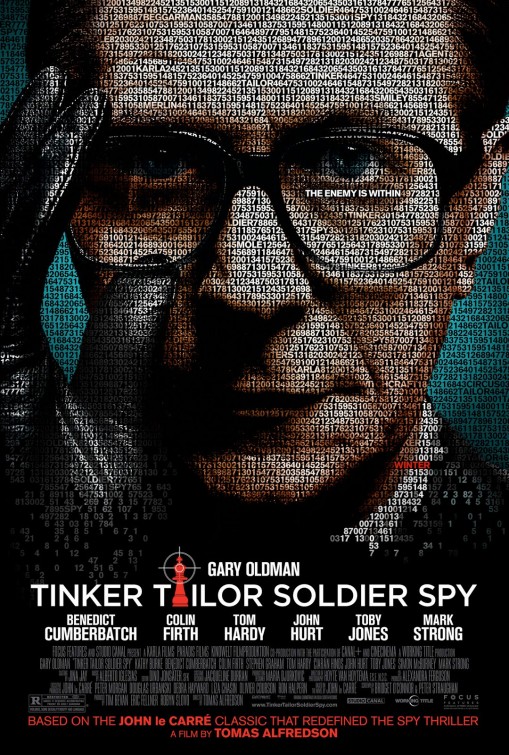 Billed as one of the most dense films of the holiday season, I was startled to discover that Tinker, Tailor, Soldier, Spy is not nearly as puzzling as people have protested. The adaptation of John le Carre’s famous novel follows retired British spy George Smiley (Gary Oldman) performing a clandestine investigation to flesh out a mole in the highest level of the agency. Directed by Tomas Alfredson (Let the Right One In), condensed form a 7-hour BBC miniseries, and stuffed with a wealth of terrific Brits, the movie is tricky, clever, and rather brainy, ultimately coming to the conclusion that these little communities of intelligence knew little. The movie has a rich array of characters and teases out back-story in flashbacks, meaning the film hops around time wise and will also take turns with different perspectives. It demands your attention but, honestly, I found it easy enough to follow. But in the end, what does all that narrative trickery and obfuscation get you? It’s a fairly dispassionate film about dispassionate people played out in a dispassionate manner. For some this will be hailed as a virtue, communicating the duty-first sacrifices and compartmentalization of these secret spies. For me, that just sounds like a cop out. Beyond the mystery, it’s hard to get involved in the movie. The reveal of the mole is anti-climactic, though the resolution, set to the tones of Julio Iglesias, is aces. The meticulous production design is stellar, including an agency meeting room that looks like it was wallpapered with checkerboards. The details of the ins and outs of the agency are absorbing. I’m debating whether I should watch the movie again, looking for nuance I must have missed. Tinker, Tailor, Soldier, Spy is an espionage thriller with a bit too many stiff upper lips.
Nate’s Grade: B
Share this:

Immortals (2011)
 Director Tarsem Singh has only made two movies but is widely regarded as one of the finest visual artists working in the film medium. He’s made tons of commercials, which is apt because his first feature, 2000’s The Cell, felt like the world’s longest perfume ad. While amazing in its design, the movie was incredibly stupid. I haven’t seen his other feature, the more personal work The Fall, a movie that nobody wanted to make. It’s probably because they regrettably saw The Cell. Now the guy seems downright prolific, with a Greek mythology action movie in release and next year an update on the Snow White fairytale, the first shot in the Great Snow White Duel of 2012 (Kristen Stewart stars in the other, next summer’s Snow White and the Huntsman).
In 1200 B.C., King Hyperion (Mickey Rourke) is marching an army across Greece, laying waste to city after city. He’s looking for the mythical Epirus Bow, believed to be the only weapon capable of unleashing the titans, who were imprisoned after a war with the Olympian gods. Mankind’s only hope is Theseus (Henry Cavil), a strapping young lad born into low class. His real father is Zeus (Luke Evans) who keeps tabs on his spry son by posing as a wise old man (John Hurt). Phaedra (Freida Pinto) is a virgin oracle, a priestess who has been granted prophetic visions. Theseus rescues her and other prisoners of Hyperion. Together, they must find the bow and convince their countrymen to fight against the overwhelming forces of Hyperion. In the meantime, Zeus has sworn death to any god who interferes in the affairs of man and helps Theseus on his important quest.
 One word I feel accurately that sums up the experience of watching Immortals is… “viscera.” This movie is obsessed with filming the destruction of human bodies in the most gloriously beautiful ways possible. The violence and gore are given an intensely operatic boost. One moment involves a god zips around the slow-moving mortals, smashing one head after another with his humongous war hammer. The scene plays out at a slower speed, allowing the explosions of glistening blood and skull to fill the screen, each a mesmerizing fireworks display of human goo. The visuals are often a balletic, phantasmagorical, Grand Guignol display of human carnage. When you watch this at home, you may need a squeegee to clean your TV. It’s mesmerizing to watch, getting lost in the painstaking yet sumptuous visuals, even when it’s buckets of spaltterific gore. There’s one scene involving a sledgehammer that’s guaranteed to make every male in the theater uncomfortably cross his legs. The final image is also memorably striking – the sky filled with thousands of battling titans and Olympians, suspended high in the air and hacking and slashing away (Grecian weather report: 50 percent chance of blood showers. Bring an umbrella).
Tarsem never skimps out when it comes to the look of his movies. Immortals looks like a living Renaissance painting; the director of photography should be credited to Caravaggio. Unlike Tarsem’s earlier films, this movie does not take place within the realm of imagination, but that doesn’t hamper the movie’s aesthetics. Taking a cue from the golden-hued Greek/Roman epics of recent year, notably Zack Snyder’s 300, the film exists in a heightened reality. We’re dealing with mythology after all (more on the specifics of that later). The iconic imagery of Greek mythology is all there, stunningly realized in lavish CGI and a production design that is frequently jaw dropping. The action sequences are resolutely exciting, with special mention for the climactic gods vs. titans battle. The gods, decked out in spiffy gold armor and capes, bounce off the walls aided by Matrix-style moves and slice and dice their wicked immortal brethren in creatively gruesome ways. It’s a thrilling sequence that almost makes you forget the movie’s catalogue of sins.
The movie plays fairly fast and loose with the Greek lore. The Theseus of legend was mainly known for slaying the ferocious Minotaur, the guardian of a great labyrinth. His father was Poseidon, not Zeus. Some versions even have Phaedra falling in love with Theseus’ son from his first wife (Theseus was a busy boy, taking after his father). These details, and more, may seem inconsequential but if they’re going to be so loose in the adaptation, why even bother keeping the name Theseus? Immortals does have an interesting albeit brief bit where the Minotaur is seen as a human warrior wearing a bull mask made of barbed wire. Short of the gods and titans, there isn’t any depiction of the supernatural occurring on Earth. The monsters and mythic creatures are absent, leaving some Greeks to question the validity of the gods. The movie takes an unexpected twist early by declaring, in a self-serious tone, that immortals can… die. It seems that the gods just discovered one day that they could kill each other. I would have liked to be there for that discovery (“Yeah, go ahead and lick that electrical socket.”). The film lays out that the titans and the gods were one in the same, it’s just that the winners of the battle of the heaven called the losers “titans.” If they’re the same then why do the titans act like feral monkey creatures and look like ashen, Hindi gods (no disrespect, one billion Hindus)? Have they simply gone wild after being locked away in such a unique prison? When they fight, the titans move at the speed of mortals, not gods. I also believe the titans were supposed to be considerably larger.
 But as enchanting as the visuals are, there are still the other senses that are criminally malnourished. The screenplay by brothers Charlie and Vlas Parlapanides is about as bare-bones as you can get. It’s your basic hero’s quest, trusting young stud Theseus with finding a magic item and stopping a bad man. If that sounds plainly generic then congratulations, you’ve seen more than one movie with men in togas (Animal House does not count). Mysterious parentage? Check. Close relative that dies early to spur vengeance motivation? Check. Noble sacrifices by members of his team? Check. Eventual intervention of the gods? Check. What I just described could also have been the plot for 2010’s joyless Clash of the Titans remake. What’s up with Zeus and these noncommittal gods? He refuses to get directly involved in the affairs of man, but if King Hyperion releases the titans (should have gone the long route and unleashed the Kraken) then the Olympians are jeopardized. It seems like they have an interest in giving Theseus a mighty assist. The magic item, a bow that creates unlimited arrows when plucked back, is pretty much a forgotten relic. It gets used, I kid you not, exactly three times in the entire movie. All of this fuss over a super weapon that the characters can’t be bothered to utilize. They’d rather fight it out with a traditional bronze sword. What exactly does it mean to be immortal when even the gods can die? King Hyperion says he’ll be immortal by essentially raping a nation of women, keeping his bloodline alive for centuries (the Genghis Kahn defense, your honor). But if having kids is being immortal, I think we’re setting the bar pretty low.
The Phaedra character is so underwritten that she almost comes across as a parody of the role of women in these guy-heavy action spectacles. As portrayed, Phaedra is the definition of convenience. She doles out a prophetic vision to save the day, provides some grade-A eye candy thanks to the splendor of Pinto (Slumdog Millionaire), and even casually slips into Theseus’ bed for a deflowering (sorry guys, it’s clearly a body double). She will be haunted by visions of the future until the moment she loses her virginity. Let’s stop and think about this. Having one member of your team be able to SEE INTO THE FUTURE seems like a decisive tactical advantage. I understand the lure of a naked and willing Pinto, but Theseus needed to think beyond the needs of his little Greek. In an abrupt and off-putting turn, Phaedra is never really dealt with in any capacity after this seismic bout of lovemaking, nor do she or Theseus talk about what has transpired. She just provided some casual sex while the hero was recuperating and then checked out. Her major prophetic vision of Theseus and Hyperion joining sides is also just forgotten, turning out to be a letdown.
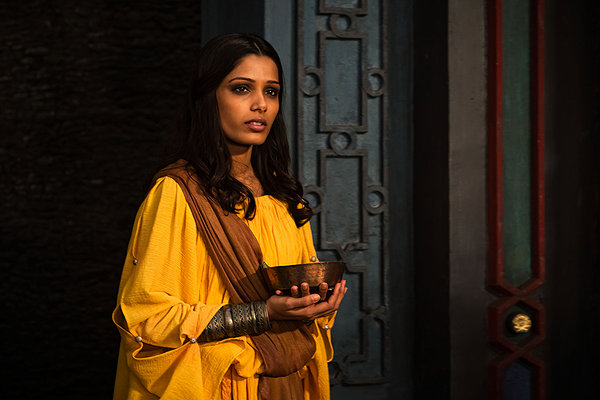 The actors were basically hired for their visual appeal, and to that end they succeed. Cavill (TV’s The Tudors), tapped to wear Superman’s cape in 2013 by Zack Snyder, is suitably buff and hunky. His performance is rather flat, no matter how many times he makes his eyes go big with anger. In contrast, Rourke (Iron Man 2) will chew whatever scenery he can find. His flamboyantly costumed villain at one point seems to wear a lobster claw on his head. He wants to punish the gods because they refused to intervene when Hyperion’s wife and child were slaughtered. When the gods do intervene to save Theseus, that’s when the character should go off the rails. Rourke just plays it in the same sleepy menace. Pinto gets to stare off into the distance regularly and pray. It’d be a stretch to say that the material challenges any of these actors.
Immortals is a testosterone-soaked action movie that feels like it minored in Art History. The production design, CGI, and practical special effects, all attuned to the extraordinary vision of Tarsem, makes for a brilliant looking movie with several sequences of memorable carnage. But we entered the age of “talkies” since 1927, and Immortals suffers when it concerns dialogue, story, characterization, and acting. The movie is a pretty loose adaptation of Greek mythology, falling back on a rote hero’s quest and leaving plenty of narrative dead spaces for the visuals to fill in the interest. Even a movie as visually resplendent as Immortals can only go as far as its story will allow. In this case, Immortals might just be the best-looking piece of borderline mediocrity you’ll ever see in your life.
Nate’s Grade: C+
Share this:

Hellboy II: The Golden Army (2008)
 I disliked the first Hellboy, dubbing it the second worst film of 2004. The fact that I enjoyed the sequel is nothing short of shocking. Honestly, I think this mumbo jumbo is easier to swallow when it’s more fantasy based than science fiction based. I can accept an alternative magical world filled with elf princes, troll markets, and tiny “tooth fairy” creatures that act like piranhas with wings. Nazis and Zombie Rasputin trying to open a portal to giant squids? Hellboy II is even more imaginative and far more enjoyable. Writer/director Guilermo del Toro has refined the world and makes sure his story follows the rules it sets, which means that while the plot gets crazy it doesn’t feel cheap. I actually had some fun with Hellboy II and del Toro knocks out some pretty crafty action sequences. As expected, the makeup and creature designs are impeccable, which may explain why I had more fun watching the various magical creatures than following Nazis and slime wolves in the first flick. The lithe Angel of Death is particularly startling, with a head like a fried calzone and eyeballs dotted along expansive bird wings. This is a film that feels much more confident about its identity, thanks in part to getting rid of the rookie main character from the first film and focusing on the big red guy. If del Toro ever makes a third Hellboy film, I can honestly say I’ll be highly intrigued to see what weird wonders he cooks up. This statement is astounding considering I felt that there was only one 2004 film worse than the original Hellboy.
Nate’s Grade: B
Share this:

Indiana Jones and the Kingdom of the Crystal Skull (2008)
 I lived in New Haven, Connecticut for a year while then-partner was earning her Master’s degree at Yale. We hated it. New Haven is a college town that doesn’t know it’s a college town, so everything closes at 10 PM, there are no student prices for anything, and the people there more or less sucked. We were happy to depart from the Nutmeg State. Then the week after we were going to leave was when Steven Spielberg, Harrison Ford, and the production team for Indiana Jones and the Kingdom of the Crystal Skull were coming to town. They were going to film a motorcycle chase along Chapel Street (where I walked to work every day) and all along the Yale campus. Finally, a reason to stay in New Haven presents itself and it has to happen after we escape. It’s not often one of the most anticipated movies comes to your doorstep.
I could have been an extra in the motorcycle chase, which set in 1957, could have used a long-haired Beatnik type (played by yours truly) for an exaggerated reaction shot. I could have been sipping on an espresso and then Indiana Jones could have zoomed by on the bike snatching by hot beverage, leaving a long-haired Beatnik type (me again) to mug shamelessly for the camera. It would have worked. Alas, it was not to be, though it certainly would have made this ages-in-development sequel more enjoyable on my part.
It’s been a long time since part-time archeology professor and full-time treasure hunter Henry “Indiana” Jones (Ford) beat the Nazis. The world has gotten a lot more complicated thanks to the Cold War, the atomic bomb, and the fact that Jones is now well into his 60s. It’s been 19 years since his last adventure but the man with the bullwhip and the dusty fedora still has a knack for intrigue. Soviet KGB agents have captured Indy and his friend Mac (Ray Winstone) and taken them to the Area 51 warehouse. They’re seeking a recovered artifact of alien origins that can wield tremendous power, as they always do. Irina Spalko (Cate Blanchett) is the head KGB agent and likes to threaten her enemies with a riding crop (perhaps she earns some extra money on the side punishing bad, bad comrades). Indiana Jones manages to escape and is pursued by the Soviets and blacklisted by his government due to his perceived involvement with Russia.
 Mutt Williams (Shia LaBeouf) seeks out the help of Dr. Jones. Mutt is a greaser on a motorcycle that might be a chip off the old block. His parents are in trouble. The stepfather that raised him (John Hurt), an old archeology buddy of Indy’s, has traveled to South America and found a legendary crystal skull. The bizarre artifact would lead the way to the mythical golden city and crazy amounts of Mayan supernatural power. Unfortunately, the skull has also made him as batty as a bat and Spalko is going to kill him. Indy and Mutt fly down to South America to save the crazy old man. Oh, and Mutt’s mother is also in danger, and she would be none other than Marion Ravenwood (Karen Allen), who has plenty of romantic history with a certain swash-buckler afraid of snakes.
Seeing Ford back in action just feels right. His character has grown into a bit of a curmudgeon but he’s working the same territory Bruce Willis did last year in the long gestated Die Hard sequel. He’s an old man serving some justice to all these young punks that won’t get off his lawn. The film acknowledges his age and mostly uses it as a means for comedy (he cracks that a life of adventure isn’t “as easy as it used to be”). Ford looks more alert than he has in years.
Blanchett is one of our finest actresses on the planet but she has serious trouble maintaining her Ruskie accent; she alternates between Russian and British the whole movie. Her dominatrix-styled villainess is certainly interesting, and man does she have great posture, but the film doesn’t really know what to do with the Soviet bad guys. They become more or less Nazi stand-ins and seem to repeat the same ambitions that the Nazis carried out in two or the three previous films. Allen has aged magnificently and is a welcome return. She and Ford have terrific screwball comedy chemistry and pick up right where they left off in 1981’s Raiders of the Lost Ark. LaBeouf does a solid job even though he doesn’t have any meat to his character after his Marlon Brando-like introduction in leather jacket and motorcycle. Instead, Spielberg continuously winks at the audience about Mutt’s obvious familial line. It wouldn’t be a Spielberg movie without some family dynamic.
 I’m pleased to reunite with Indiana Jones, I like the new characters, and I even like Mutt, but the story the characters are saddled with is lousy. This is the script that Ford, Spielberg, and co-creator/producer George Lucas all agreed upon? I’m not one of those people that have an issue with aliens being the primary movers and shakers in the plot (in informal talks with friends, many are upset that little green men are the stars). The first three Indy films dealt with a religious supernatural power and now this new installment covers a space alien supernatural power, so that doesn’t concern me. What bothered me is that Crystal Skull is a murky mash-up of [i]Temple of Doom[/i] and Stargate. Once the primary characters reach their hidden temple the movie takes a nosedive. Spielberg almost crafts an anti-intellectual message, where finding out the reality behind the magic ruins the soul. The exact story behind the Crystal Skull is frustrating in how oblique it is, and Spielberg doesn’t want to offer any clarity. I’m at a loss to explain exactly why anything happened in the concluding 20 minutes, least of all how an alien race must have a very different definition of the word “gift.”
Never before has the action in an Indiana Jones film come across as so campy. This is likely the most disappointing part of Crystal Skull: the action is too tongue-in-cheek. There were moments where I thought the film was one step away from Army of Darkness. Spielberg is enough of a brilliant tactician to know how to setup and build satisfying and stylish action, which normally involves organic complications and letting the audience fully grasp what’s happening. This means no rapid-fire edits and plenty of long, high angle shots to get the big picture. And when he’s in his groove, there are few that can top Spielberg when it comes to an action sequence. There are points in Crystal Skull where the action is rollicking and joyously packed with excitement and wonder. The opening sequence inside Area 51 starts the film off with a bang, the motorcycle chase through Yale is well choreographed, and a car chase in the jungle is fantastic in the amount of back-and-forth scuffles and emerging obstacles. It’s by far the film’s high point and then there was one point where Mutt was swinging from vine to vine like freaking Tarzan and he enlisted the help of monkeys. It took me completely out of what had been a rip-roaring action sequence. Then there’s the moment where Marion drives everyone off a cliff and onto a tree that bends to drop them safely before smacking back like a rubber band. I’m not asking for complete believability in an action caper but I’d prefer it not become an embarrassing Looney Tunes cartoon. Crystal Skull is filled with little moments that will completely yank you out of the movie.
The action sequences feel too pat for the material the film wants to cover. Even that great jungle car chase could have been boosted with some extra ingenuity. The scene opens with the Soviets driving a vehicle that is slicing the forest to splinters and clearing a path for the caravan of cars to follow. Now I know the Spielberg of 1981 would never have introduced such an interesting machine in a unique setting without using it later. The Spielberg of 2008 is different because this nifty blade mobile isn’t even seen again after its initial introduction to establish how a car chase in a jungle could be possible. The action relies too heavily on distracting CGI that takes the action sequences on annoying, over-the-top detours. Just because computers can make it happen doesn’t mean it’s always a good avenue to go down. In short, the CGI is undercooked and over used.
 I also need to speak frankly about the CGI — it is terrible. However, when I watched Crystal Skull my party got a tad lost on the way to the theater so the only seats left were the third row from the screen. I spent the entire movie with my neck craned up. Perhaps if I saw the film in a position it was more intended to be seen the special effects would come across as more professionally polished, but from my neck-cramping position they looked pitifully amateurish for a major summer blockbuster with Spielberg and Lucas’s names attached. The effects work is shockingly shoddy, but the practical production design is amazing. Unfortunately, this does not balance out in the film’s favor.
I’m coming across as harsh but I only get this way when my expectations are raised because of a pattern of quality. The three prior Indiana Jones films were lively, imaginative, and deeply charming and satisfying adventures that leaned toward the exaggerated but still managed to thrill without feeling dumb. Raiders of the Lost Ark is one of the few perfect movies in existence, in my opinion, and set the standard for all action/adventure movies to follow. It’s unfair to expect the same sensation watching a sequel 19 years after its predecessor, but Kingdom of the Crystal Skull does manage to hone in on the same spirit that made the other Indy films such high-flying thrill rides. If you set your brain to a low frequency, enter the theater with lowered expectations, and already know that at one point Mutt will swing from vine to vine like freaking Tarzan, then Crystal Skull will provide the necessary popcorn entertainment you’d seek in a summer blockbuster. It is possible to think Crystal Skull ranks up with its predecessors but that requires so much contortion that I wouldn’t know how to arrive at that opinion. I suppose we should all resort to the consolation that even with E.T. taking over the plot, this thing could have been a lot worse. Just remember that if an alien offers you a “gift” to run in the other direction.
Nate’s Grade: C+
Share this:

V for Vendetta (2006)
 Legendary comics author Alan Moore has a particular disdain for Hollywood adaptations. They just haven’t gone so well for this scribble scribe. There was 2001’s From Hell (I may be the only one in the world that actually likes it, Heather Graham’s atrocious cockney accent aside) and 2003’s The League of Extraordinary Gentleman. Moore is even responsible for the creation of the John Constantine character, who had his own 2005 big screen venture. I suppose you could see why he has certain contempt for the movie versions of his much-heralded stories. Now comes V for Vendetta, based on Moore’s 1988 comic and adapted into a screenplay by the Wachoswki brothers. While I may have no idea how close V for Vendetta is to Moore’s graphic novel, I can say that the movie is a smart, superb thriller that dares you to think while you?re stuffing popcorn into your mouth.
“Remember, remember, the fifth of November, gunpowder treason and plot. I see no reason why the gunpowder treason should ever be forgot”
In the future, America has lost its super power status after overextending itself in war. Britain has turned into a hostile totalitarian government, led by chancellor Sutler (John Hurt). Evey (Natalie Portman) works for the state-controlled TV station. One night, while walking out past curfew, Evey is attacked by some undercover cops looking for a good time. A mysterious masked man named V (Hugo Weaving) comes to her rescue. His grinning, bearded mask resembles Guy Fawkes, a revolutionary that tried to blow up the British Parliament 400 years ago on November 5th. V starts taking out high profile government figures and then infiltrates the government airwaves, asking others to rise up against the corruption they see around them. He promises to blow up parliament one year to the day of this message. Finch (Stephen Rea, so expressive with his hangdog demeanor) is assigned to find out who this V is and how to deal with him. In reality, Finch discovers a lot more troubling information about his own government. Evey is linked with V and tracked down for interrogation and potential execution. As the date approaches, Evey must battle her own loyalties and strike out against what she feels is right and just.
 What makes V for Vendetta so exciting is its playground of ideas. This is a dynamically intelligent, complex movie but it never lets the smarts get in the way of a rousing good time. This is a very political movie that’s very relevant today, like the exchange of freedom for security and the use of fear mongering to serve an agenda. I love that the government’s leaders were a rogue?s gallery of corruptible figures; the Bill O’Riley-like TV pundit blowhard, the church leader who just happens to be a pedophile, the scientist whose good intentions justify the worst in human experimentation. V for Vendetta is a thinking man?s comic book movie, one that actually has actual respect for its audience and refuses to dumb down its message. The movie starts at a gallop and never lets up intellectually, and that’s so wonderfully refreshing from a film of any stripes. While I would not classify myself in the camp that views V for Vendetta as an anti-Bush administration screed, I’d have to say the movie does stir people out of a sense of apathy. I was even moved by the film’s hopeful conclusion, which is more than I can say about any other comic book movie (yes, even Elektra).
Director James McTeigue has previously served as the Wachoswki brothers’ assistant director. V for Vendetta is his debut as a director and what an auspicious debut it is. The movie is visually lush thanks to Aliens cinematographer Adrian Biddle (sadly, he died December 2005), but the smartest notion McTeigue accomplishes is putting story above special effects (ahem, George Lucas?). The command McTeigue has as a first-time director is impressive; how many people would be this restrained with all the fancy tools Hollywood has to offer? It’s his restraint and priorities that allow V for Vendetta to excel. And when the film does call for action, McTeigue judiciously uses visual trickery to enhance the scene. A late scene involving slow-mo V taking out a cadre of soldiers while they reload is amazing both in its “hey, look at this!” visual acuity and that it fits perfectly within the narrative. Nothing is self-consciously showy for the sake of wowing an audience, and every beat of action feels organic to the storyline. V for Vendetta is a terrific debut with some great set pieces.
Weaving is awesome as our hero. Since at no point does V ever take off his mask, it wouldn’t have been unheard of to simply hire a stunt guy to play the part and dub Weaving’s voice in later. But no, Weaving decided to be the part and adds so much to the character. He knows when to turn his head, nod, lean to a side, just like a silent film star interpreting the moment through action; it sounds ridiculous but it definitely helps paint a clearer picture of V. Then there’s Weaving’s incredible voice, making V sound like the world’s craziest, coolest Shakespearean lit professor.
Portman has finally made me appreciate her as an actress. She had a long winter between 1994’s The Professional and her 2004 one-two punch of Garden State and Closer, but I now finally see that Portman is a fine actress and not just a promising talent. She’s the heart of the film, the focal point for the audience to journey along, and she’s excellent at every point. I also give her props for having her head shaved on camera (I can only imagine what the eventual porn version will do with this scene).
 I’m left in the cold by this over inflated discussion on how “daring” V for Vendetta is by having the hero of a major Hollywood movie be a terrorist, one that says things like, “Violence can be used for good,” and, “Sometimes blowing up buildings can change the world.” Yeah, sure, but it’s a well-mannered, well-read, cultured terrorist versus a giant evil totalitarian government that kidnaps people, strips them of their rights, and enforces cruelty and prejudice. So exactly how daring is that? Of course audience sympathy is going to fall to the little guy, in this case a terrorist, which is the only hope of shaking things up and righting wrongs in the system. That doesn’t exactly strike me as subversive. This movie isn’t promoting terrorism any more than Munich was when Spielberg allowed the Palestinians to have a voice. The movie is anti-oppression if anything.
My only complaints are minor. The movie gets a bit repetitious in its windup to the climax (oh look, we’ve cut again to the Big Brother round table), and that somewhere along the middle V for Vendetta gets log-jammed with subplots. Everyone has a story to tell in V for Vendetta and we see every personal tale, and after a while it kind of grinds the flow of the story down. However, this problem is sidestepped after awhile and V for Vendetta gets back on track, driving full-force toward its conclusion like a runaway train.
What sounds on paper as something incredibly silly, including a kissing scene involving a motionless clay mask, V for Vendetta plays out with such excitement, visual prowess, and vibrant intelligence; this is a very political movie that?s very relevant today and I loved it all the more for it, but V never forgets to be entertaining at the same time. McTeigue has fashioned together a stirring and fascinating directorial debut, and even though the Wachowski brothers have their fingerprints all over this film, the pretension is kept to a minimum. V for Vendetta is exactly what the Matrix sequels should have been: a pulpy mix of brains and action, not a snore-fest that beats you down before putting on a show. It’s a shame Moore didn’t want his name attached to the finished product, because V for Vendetta is 2006’s first great movie of the year.
Nate’s Grade: A-
Share this:

The Skeleton Key (2005)
 The marketing said it was horror (voodoo, creepy kids), but it’s less a horror movie and more a Twilight Zone tale. It has its share of jump scares and tries to draw out an atmosphere of dread. You see a lot of how doors work from inside locks. The Skeleton Key tries to be overly clever despite its plot holes, but at least the film runs its course. It wasn’t trying to throw out a contrived ending. Kate Hudson needs better roles than these do-nothing parts; she’s far too cute to languish. And how many times did she inspect late-night noises in her underwear? The most entertaining aspect of The Skeleton Key may be gazing at a pre-Katrina New Orleans.
Nate’s Grade: B-
Share this:

Hellboy (2004)
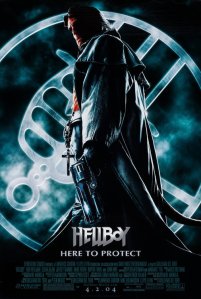 Guillermo del Toro loves things that go bump in the night. The Mexican born writer/director has shown prowess at slimy, spooky creatures with Cronos and 1997’s Mimic. He helmed the 2002 sequel to Blade, which had super vampires whose mouths would open up into four sections with rows of chattering teeth. The man sure loves his movie monsters. del Toro also loved Mike Mignola’s cult comic book Hellboy enough to turn down directing Harry Potter 3 and Blade 3 to ensure he could bring Hellboy to the big screen. Was it worth the sacrifice?
Let me just explain to you the villains of this movie as an example of how ridiculously stupid Hellboy is. The villains are Nazis. Yes, the tried and true villains everyone can hate Nazis. But these ain’t yo daddy’s Nazis; they’re immortal and led by zombie Rasputin (yes, the Rasputin). They all wish to puncture a hole into another dimension. What’s in this alternate dimension? Why nothing except for a giant floating spaceship that houses, I kid you not, the Seven Gods of Chaos, which all happen to be gigantic space squids. Why would anyone create a universe that has nothing but the imprisoned gods of evil? That seems awfully precarious. How exactly are giant squids going to take over the industrialized, nuclear-age world? Shoot ink at everyone? Sorry, space ink?
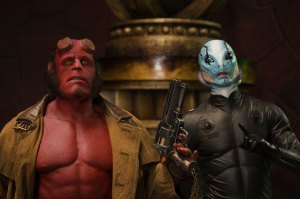 Let me not forget a Nazi assassin and his handy dandy arm-length blades. This assassin is also 100 years old and his body is filled entirely with sand. He winds himself up like a big clock. But if his body is filled completely with sand how can the clock gears work inside? You see what the normal audience member has to deal with? Plus these are just the villains, there’s a whole plot left to toil over as well.
The story revolves around a hulking, red demon named Hellboy (veteran character actor Ron Perlman). Hellboy escaped the space squid dimension in the 1940s when the Nazis unsuccessfully tried to open a dimensional hole large enough for your everyday on-the-go space squid. Now, Hellboy is an elite soldier for the governments Bureau of Paranormal Research. He fights the creepy crawlies. He has to deal with a wide-eyed rookie, the watch of his father (John Hurt) and an attempt to rekindle a romance with a mentally troubled fire starter (Selma Blair). Oh yeah, and all the Nazi/Rasputin/space squid stuff mentioned before.
Perlman is really the only redeeming thing about this movie. The makeup is impressive, and he gives an enjoyably droll performance as a man who fights monsters with the same ho-hum-ness as a plumber reacts to clogged sinks. The rest of the acting runs the gambit of either being too serious (Im looking at you Blair) or just too over-the-top silly (Im looking at you, league of villains).
Hellboy is strung together with bizarre inanities, flat one-liners, heavy Catholic imagery, conflicting logic and contradictions, ridiculous villains, painful comic relief, half-baked romance and frustratingly ever-changing plot devices.
Watching Hellboy is like playing tag with a kid that keeps making up new rules as he goes (“You cant tag me; I have an invisibility shield!”), and after awhile you lose any interest. Late in the film, the Nazis will all of a sudden decide not to be immortal, and at a very inopportune time. Why? How? I don’t know. Hellboy also gets sudden new powers for some reason. Like he can bring people back to life by whispering otherworldly threats in their ears. For some reason nobody’s clothes burn when theyre set on fire.
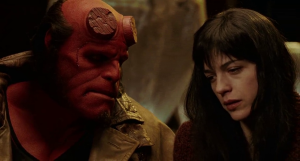 Not only does Hellboy frustrate by changing the rules of its world arbitrarily, it will also frustrate out of sheer uninhibited stupidity. How come characters cant hear or see a pendulum the size of the Chrysler building? How come during a vision of the apocalypse we see a newspaper that actually had the time and staff, during the Apocalypse, to print an issue that reads, “APPOCALYPSE”? Why doesn’t Blair use her pyro superpowers immediately to vanquish all the H.P. Lovecraft creatures instead of letting Hellboy foolishly wrestle with them all? The gaping holes in Hellboy are large enough to squeeze a gigantic space squid through.
All this frustration and insanity might have been moot if the action sequences were somewhat thrilling. Sadly, they are not. Del Toro’s action sequences seldom matter. There’s such little consequence of what’s going on that the action becomes stiff and lifeless. The first time we see Hellboy chase a creature through city streets it’s a fun experience, but soon the novelty wears off. The overuse of CGI wears down the audience, and after the third or forth time we watch Hellboy battle the same monster, the audience is ready to go to sleep. There’s little entertainment in the film’s action sequences, but just as much frustration and stupidity.
I have never watched a film that induced more eye rolls, shoulder shrugs, raised eyebrows, pained and confused glances and mutters of, What the hell (boy)? By the time the resurrected torso of a Russian skeleton appears to make cheesy puns and wisecracks, you should have left the theater, demanded full compensation, and maybe, if you’re into it, destroyed whatever Hellboy display was within burning distance. Comic book aficionados may enjoy the fruits of Hellboy but general audiences will simply shrug. I’m amazed that the majority of film critics seem to think positively about this movie. Maybe I’m the last sane person in an insane world but Hellboy is one of the worst films of the year and one of the craziest films you could ever hope to see in a lifetime.
Nate’s Grade: D+


 nathanzoebl
You must be logged in to post a comment.