Blog Archives
Before Midnight (2013)
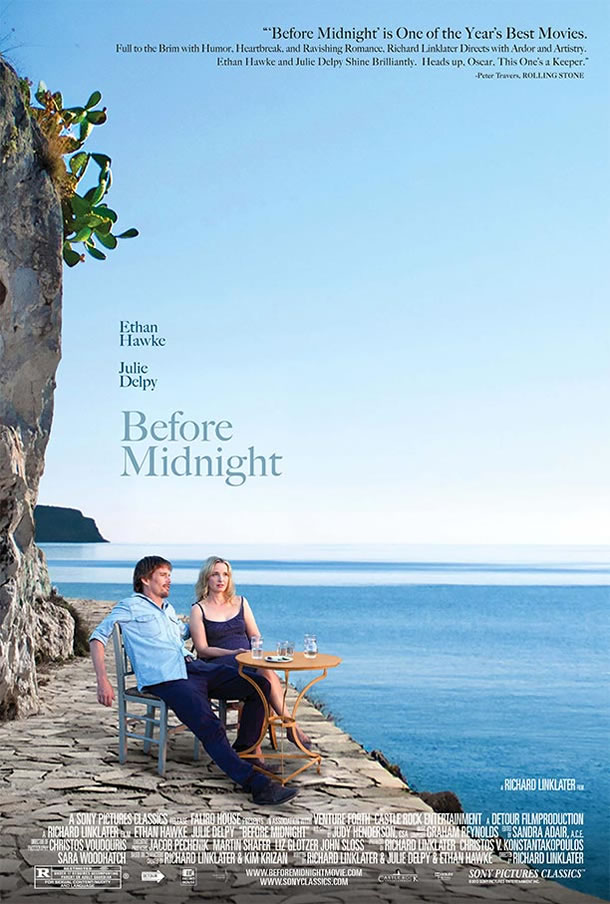 If you’re a fan of writer/director Richard Linklater’s previous movies (Before Sunrise and Before Sunset), as I am, then a new Before movie is a cause of celebration. It feels like we’re checking in with old friends. It’s fascinating to take stock of these characters and their new points in their lives, now approaching middle age. This series is becoming the dramatic equivalent to the 7 Up documentary series that periodically checks up on its subjects every seven years in their lives (56 Up came out this year). Individually, the films are wonderful, but when taken as a whole, the series becomes something truly special, something indelible and sweeping and transporting. Before Midnight is a wonderful movie, brimming with heart as well as ache. It’s also one of the best movies you’ll see this year and another touchstone to the impressive legacy of the series.
In 1995, 23-year-olds Jessie (Ethan Hawke) and Celine (Julie Delpy) met on a train and spent a magical day strolling through Vienna and essentially falling in love. In 2004, Jessie was touring Paris on his book tour, having turned the events of that Vienna night into a successful novel. Celine meets him and the two pal around, reconnecting, with Celine revealing how much that night meant to her as well. Now, in 2013, Jessie and Celine are together, though unmarried, and have twin seven-year-old daughters, Ella and Nina. They’ve been vacationing in Greece for a month while Jessie works on a new novel. Over the course of one long day, the couple will try and stir old passions and question whether they still share the same commitments.
 We’re watching the evolution of two human beings, and your response will vary depending upon your own life’s stopping point at the time of viewing. I must say, as a man now in his early thirties, that I enjoyed Sunrise and Sunset even more, finding greater thematic resonance to the characters, their anxieties, and the concern about faking your way through the “adult world.” I imagine I will find these movies even more emotionally engaging as I continue to age and cross similar hurdles as the characters do. For fans of the series, we’ve already invested 20 years and four hours of screen time with these characters. There’s more at stake when they fight. Watching the other movies beforehand, which I heartily recommend for multiple reasons, also provides stirring points of contrast, the romanticism of youth, the exuberance of promise. What Before Midnight does, and does so exceptionally, is take the romance of the earlier films and put it to the test. There’s a lovely dinner scene with several couples, and you realize that each one is an analogue for Jessie and Celine: the teenagers, the middle-aged couple starting out, the older couple discussing the demise of their previous spouses. It’s hard not to contrast the different stops and the different realities of love by the age.
Fair warning, Before Midnight is the least romantic of all three movies (I want a new movie every 9 years or so until the last one is essentially Amour). The first movie was them connecting. The second movie was about them reconnecting. The third movie establishes that they’ve been together for nine years and have a pair of twin daughters. The focus of Midnight is the struggle of maintaining a long-term relationship, something rarely given such thoughtful, perceptive, and compassionate depth on screen. We’d all rather watch lovebirds make goo-goo eyes at one another while we swoon appropriately, but Midnight’s many battles, small and large, new and ongoing, explore a relationship reality that many should find alarmingly relatable. While the particulars may be different, you may be surprised at how similar these conflicts can be. Exclude stuff like vacationing in Greece, the cushy jobs, and look to the mounting difficulty to retain that spark, a reminder of why you fell in love long ago, with the responsibilities of parenting and work stretching you in different directions. Routine can quickly transform into malaise. Jessie has a teenage son from a previous relationship, and this pushes him into great remorse when the kid departs, making him feel inadequate as a parent, which leads him to suggest unlikely relocation scenarios. Celine, being something of a worst-case scenario creature, notes the moment, saying this is when couples start falling apart. She’s worried he’ll resent her for choosing against a cross-country move. However, as the movie progresses, you realize there are already enough long-simmering resentments between the couple. This is a hard movie to watch at times because Jessie and Celine both go for broke when they argue, and it can get ugly (he dismisses her feelings as “crazy”; she vents about his lack of virility). Ending on a moment of ambiguity, like the other films, it’s perfectly reasonable to assume you just watched a two-hour breakup movie. Their problems don’t really seem resolved but I guess we’ll see in nine years, won’t we? Hopefully the next one isn’t called Before Divorce.
 The hallmark of the series, its sparkling conversation, is alive and well, with added maturity and reflection. When you get dialogue this good, this fluidly natural, this engaging, I could listen to them talk for days. In my mini-review for Before Sunset I compared it to listening to birds sing. The shots can last upwards of ten minutes as the camera just slowly walks ahead of Hawke and Delpy as they converse. In the first film we got a foot-tour of Vienna, the second Paris, and now Greece. The sights, while nice, are incidental because I was consumed with the dialogue, which spills so effortlessly from Hawke and Delpy, relishing playing these characters once more. Their give-and-take is often breathless, with nary a pause between them, and it can become overpowering for the uninitiated (lots of old ladies, I have found, dislike this movie, though when asked, none have seen the previous two). But there’s such added dramatic subtext now that we’ve jumped ahead in time. Rather than yearn for the characters to get together, now we’re assembling what we can of their history together and the durable conflicts. The exposition never feels forced, and each new bit provides another prism to view the character actions. You’re studying the characters, parsing their words, sizing up their honesty, and analyzing the various tests and dodges they dole out to one another. It’s a more active experience than you might expect for watching people talk a lot.
Hawke (The Purge) and Delpy (2 Days in New York) are so exquisitely natural with these characters and together and never better. They know these people inside out, and they should because both are credited yet again as co-screenwriters with Linklater. I’d expect another Oscar nomination in their future, much like Before Sunset. Delpy has a wonderful faux youthful voice she uses for hilarious disdain to narrate Jessie’s female fans. Both actors go a long way to flesh out their characters, provide degrees of new wisdom and worry while making us care about their problems. One character does not have the moral high ground, which makes their arguments all the more challenging to process. I don’t want to make it sound like Before Midnight is some twenty-first century Whose Afraid of Virginia Woolfe? There are innumerous moments of humor and grace and compassion, but the louder ringing of the raging conflicts can swallow them up. I also found it intriguing that this is the first movie in the series with nudity from our couple. Granted, it would seem somewhat forward if it happened in Sunrise and Sunset considering the narrow timeframes. As presented in Midnight, it loses erotic context and becomes another indicator of the struggles of maintaining passion.
I want to reiterate that I really hope that Linklater and his stars continue to bless us with a new film every decade, checking back on the lives of Jessie and Celine. The next one, if we continue the nine-year tradition, will deal with them turning fifty, which seems like a grand opportunity for some existential ennui. Also, Jessie son from a previous marriage will be roughly the same age Jessie was in 1995’s Before Sunrise. That could provide another interesting perspective for dad. I’m just not ready to say goodbye to these characters yet. Much like the 7 Up documentary series, the movies provide a point to reflect on our own lives, how we’ve changed and grown, the setbacks and triumphs, surprises and sadness. Catching up with the series, I viewed the movies very differently than I did when I first watched them. The art remains the same but the frame changes; we change. The glorious aspect of Linklater’s series is that we get to chart that change, checking back with old friends we’ve grown with. The movie’s attention to character and the relatable problems of middle age and long-term relationships is rich, nuanced, and just about everything This is 40 should have been and wasn’t. Before Midnight may lack the idealistic romanticism of previous entries but it substitutes a soulfulness to a series that has always been mature beyond its years. Approaching half a life lived, the characters still have plenty of life in them, plenty of dreams worth pursuing, and plenty more hurdles to go. It has been an ongoing privilege to get to spend time with these two. I pray this is not the end but just another stop on what ends up being one of cinema’s definitive statements on love through the ages.
Nate’s Grade: A
Share this:

What Maisie Knew (2013)
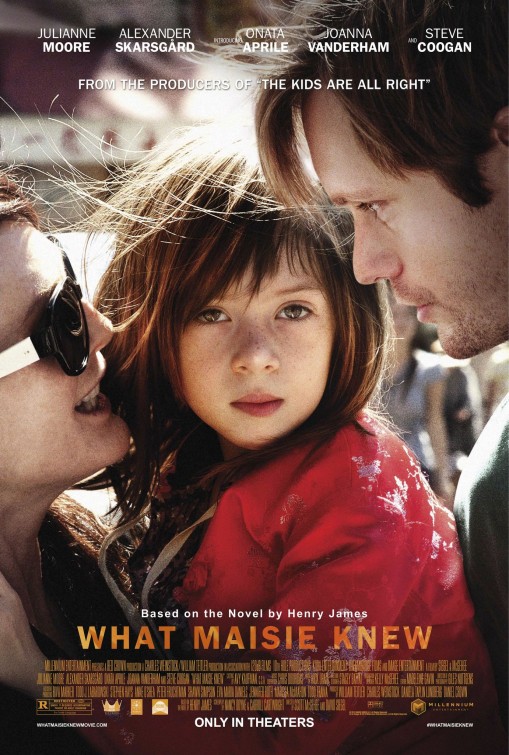 Did you know that What Maisie Knew is based on a novel by Henry James that was published in 1897? I sure didn’t, but then again my knowledge of Mr. James is somewhat limited. James’ tale of negligent parents passing off their daughter back and forth was controversial when the novel was first published. Updated to modern-day New York City, seven-year-old Maisie (Onata Aprile) is the pawn in her parents’ contentious divorce. Her father, Beale (Steve Coogan) is an art dealer who is constantly on his phone and making out-of-country trips. Her mother, Susanna (Julianne Moore), is an aging lead singer for a 90s alt rock band who also likes to party. Beale remarries Margo (Joanna Vanderham), a young woman who previously served as Maisie’s nanny. Not to be outdone, Susanna remarries Lincoln (Alexander Skarsgard), an affable bartender who’s somewhat clueless around kids. Everyone is trying to navigate the tricky new relationships and what they think is best for Maisie, though Lincoln and Margo seem to be the only ones who actually care.
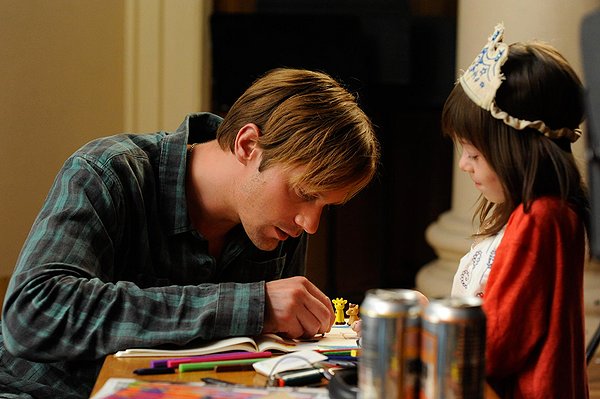 When it comes to divorce dramas, the easy way is to go big, to ramp up the emotions of such an emotionally distraught experience, and to tip into the overwrought territory of melodrama. I can already imagine the animated shouting fests and crying fests. Then there’s the impulse to go the bitterness route, like 2005’s The Squid and the Whale, where the movie takes a cue from its feuding parents and infuses the film with a dark, overpowering sense of acrimony. I credit directors Scott McGehee and David Siegel (The Deep End, Bee Season) for making arguably one of the most subdued movies about divorce I’ve ever seen. It’s certainly not flippant in the slightest, treating the subject, and mainly the toxic effect on Maisie, with sincerity and good taste. But as far as overblown shouting matches, they’re kept to a minimum and mostly comprise the first fifteen minutes of the movie, establishing the inevitable divorce of Susanna and Beale. The movie ignores the sensational and focuses on the ordinary, little moments of complete believability that serve to build, like brick by brick, the overall reality of the story. You’ll watch the film and think to yourself that, even with parents with completely outlandishly rich professions, that everything in this movie could realistically happen. Weird to think that James wrote his tale over 100 years ago and yet how relatable his conflicts still are to this day. However, because of this subdued, naturalistic approach, What Maisie Knew can’t quite find a proper ending. The one presented seems a tad too pat and tidy for this movie. It almost approaches a“happy ending,” though not quite. Still, knowing how thick-skulled both Susanna and Beale are, it’s hard to think that they will ever come to their senses and do what’s in the best interest of Maisie.
This can be an uncomfortable movie to watch because Maisie’s mom and dad are so destructively neglectful and self-involved. There’s a perverse rubbernecking draw to seeing the antics of truly awful parenting. You’ll find yourself getting very mad at how terrible these people are at being human beings. Susanna and Beale interrogate their daughter for ammo they can use against the other, twisting and manipulating the kid that we wonder if either truly cares about. Dad’s always full of excuses and mom’s looking to flee from responsibility at a moment’s notice, dumping her daughter on her latest boyfriend. You’ll find yourself easily sympathizing with Lincoln and Margo, the two people who love Maisie most and would make the best parents for her. I began rooting that they just abduct Maisie and start a new life as a family in a different country. The unchecked narcissism of both Susanna and Beale could serve as a clinical study. It’s a wonder that Maisie seems like a bright, playful, and relatively normal kid. For now.
Another aspect of McGehee and Siegel’s joint direction that I really enjoyed was how the movie takes on the perspective of little Maisie; she is our eyes and ears, and often the camera framing will instinctively mirror her own point of view, cutting off adults. It’s an interesting visual approach but it also further tethers us to this girl, forcing us to think even deeper about Maisie’s perspective, and how she’s interpreting the angry words. I suppose there is a valid argument to be had that a seven-year-old child is going to be a rather limited perspective on such a contentious conflict. There’s also the nature of Maisie. She’s a relatively quiet child, given to poking her head around corners and staring with those big glassy eyes of hers. Given the fact that she’s a child, and processing a painful life experience, don’t expect her to divulge too much about her thoughts and feelings. She’s an opaque presence and I realize that that can get frustrating for some. She’s not the kind of kid that’s going to burst into tantrums. This girl is internalizing all the pain and confusion. Having a passive prism for your movie might be akin to telling a love story from the point of view of a potted fern. Literally anchoring the camerawork to Maisie (I don’t want to oversell this as if it’s a stylistic gimmick) forces us to constantly think of every action through its impact upon Maisie. It’s not exactly a coming of age or loss of innocence tale but more a combination of the two.
 If you’re going to have a child be the star of your movie, you better choose wisely. I’ve found that as I grow older I have less tolerance for poor child actors. Perhaps it’s my inner Scrooge. Good thing that little Aprile (Yellow) is so effortlessly heartbreaking as she tries to find her way amidst her changing home life. One day she has a mom and dad, then she’s splitting time, then her daddy has a new mommy, who happens to be her old nanny, and then mommy has a new husband as well (Susanna admits she got remarried simply to improve her court standing). Aprile nicely underplays her character’s innate vulnerability while still reminding you of her youth. She’ll get scared and ask to go home, crying alone in her bed, and your heart will ache. I cannot say whether the strength of Aprile’s performance lies more with her legitimate skills as an actress, good direction, or the general reticence of the character, and thus the lesser demands for a child.
Moore (The Kids Are All Right) and Coogan (The Trip) give surprisingly textured performances, at least more so than the opening fifteen minutes would have you believe. They can both be monstrous and callously indifferent to their daughter’s well being, but as the movie concludes, each one of them has a small moment where they realize the damage they are inflicting upon their child, how poor a parent they have been (Susanna even lashes out at Lincoln’s encouragement to Maisie as “undermining her as a parent”). It’s much more than I was anticipating and both actors do good work at being unlikable without going overboard. Fans of TV’s True Blood might just swoon a little harder thanks to Skarsgard’s good-natured, humble, and mildly affecting performance as a man who becomes profoundly attached to Maisie. He may not know what he’s doing but isn’t that parenting as a whole? Skarsgard and the charming Vanderham make a great onscreen pair and their genuine affection for Maisie provide the most uplifting moments.
When it comes to parenting, there are no magic instructions to insure a responsible, loving, thoughtful, and independent human being. It’s a leap of blind faith. However, it’s much easier to predict the events that can screw up an impressionable child (do not misconstrue this as my declaration that children of divorce are, at heart, broken somehow). The thought of collateral damage is fresh in our minds as we track little Maisie trying to survive the reach of her terrible parents. The terse arguments can be painful but even more painful is the overall negligence of her rich and mostly absent, self-involved parents. What Maisie Knew isn’t a downer of a movie and its subject matter is given proper seriousness and reflection. You’ll likely cringe at points, may even grumble under your breath, but in the end it ends on a hopeful note, the possibility that Maisie, under the right guidance, could turn out to be the bright kid we see glimpses of at her school. There’s something quite moving about the resiliency of a child. This is, of course, just one interpretation of the movie, but What Maisie Knew is an emotionally engaging, subdued, sincere, and poignant film that trades on naturalistic waves of human interaction rather than cartoonish bluster, all the while forgoing cheap sentimentality or unpleasant bitterness. For the performances, the deft handling of sensitive material, and the quality direction, give What Maisie Knew a chance when able.
Nate’s Grade: B+
Share this:

Pitch Perfect (2012)
 Take the plot of Bring it On, add remixes and mash-ups of popular music thrown through the Glee grinder, Rebel Wilson’s adlibbed one-liners, and shake, and you have Pitch Perfect, an a cappella singing comedy that was a sleeper hit last fall. My female friends raved about it. It’s from a 30 Rock writer. It’s from the director of the irreverent musical Avenue Q. I like Wilson and the movie’s star, Anna Kendrick (Up in the Air). I wanted to like it, and while I found most of it passably cute, I could not get too attached and the chief reason was Kendrick’s character. She’s so surly and standoffish and just plain bratty, and for no good reason. It gets really annoying. Her rote romance with a bland hunky guy is made even more incredulous because Kendrick, get this, hates movies. Not certain kinds of movies or movies with certain actors, just the entire medium. Who is like this? That’s like disliking all of music entirely. The overall comedic spirit of the movie is amiable with a few oddball touches that keep things interesting, notably one girl who talks very quietly and says outrageous confessions. Listen well. The performance segments are impressive in their own right enough so that I wish there were more of them. There’s also a level of reality to projectile vomit that I was not prepared for. Overall, Pitch Perfect is a fitfully amusing comedy that never really settles down a functional tone, and Kendrick’s bratty character drags the movie down. It’s far from perfect but depending upon your love of a cappella, it could be good enough.
Nate’s Grade: B-
Share this:

The Iceman (2013)
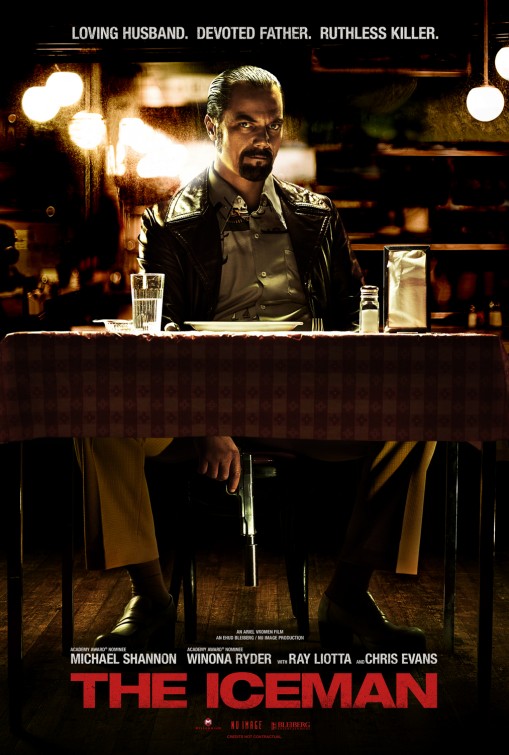 We’re fascinated by hired killers. Chalk it up to morbid curiosity or perhaps perverse, secret wish fulfillment, but we’re all titillated a tad by the murderous for hire. The Iceman is all about Richard Kuklinski (Michael Shannon), who worked as a contract killer for the mob from 1966 to 1988. He’s estimated to have killed over 100 people. A mob middleman (Ray Liotta) is impressed that Kuklinski shows no fear with a gun in his face, and so the guy gets hired to rack up the bodies. At the same time, Kuklinski has a wife (Winona Ryder) and two daughters, all of whom have no clue what daddy does for a living until he’s finally brought to justice.
The main issue at play with The Iceman is that it’s trying to draw out a character study for a rather impenetrable person. It’s hard to get a solid read on the character of Richard Kuklinski. The compartmentalizing of these two very distinct lives is a fascinating psychology to explore, one I wish the filmmakers had spent a majority of the screen time upon. The internal justifications, struggles and compromises would make for an excellent and insightful look into the psychology of killer rationalization. However, I don’t know if this movie would even be possible from this subject. Kuklinski is by all accounts a pretty detached guy. There just doesn’t seem like there’s a lot to him. His circumstances are interesting, beaten into an emotionless cipher by his father, brother to a fellow sociopath, and trying to make a reasonable life for himself while keeping his inner urges at bay. The sociopath-tries-to-make-good storyline is reminiscent to fans of TV’s Dexter, and there’s plenty of room to work there. It’s an intriguing contradiction, the man who cares for so little protecting his family. In the end, we don’t really get a sense of why beyond the illusion of the American Family that Kuklinski wants to hold onto, to make himself seem normal, to prove to his family he could break free from their influence. Even typing this I feel like I’m giving the film more depth than it actually illustrates. Even though he tries to play the part of devoted family man, we rarely see any evidence of devotion. He provides, yes, puts his kids in private school, but he puts his family at risk and doesn’t seem to have affection for them as much as propriety. They are his things and nobody will mess with them. Your guess is as good as mine if he genuinely loves any of them.
 Too much of the film gets mired in standard mob clichés. This guy upsets that guy; this guy wants the other guy dead. It all becomes the focal point of the movie, Kuklinski getting caught up in, essentially, office politics. Even the true-life details of the grisly methods of death feel like wasted potential for a better story. He goes on a job, he botches a job, he gets let go, so to speak, he strikes up a new partnership with another contract killer, Mr. Freezy (Chris Evans in a bad wig). That last part could have been a movie unto itself, watching an odd couple of hitmen plan, execute, and then dispose of their targets. The Iceman nickname comes from their process, freezing the dismembered corpses for months so that coroners cannot get a read on when the bodies were slain. While Evans is entertaining, this entire portion of the movie could have been eliminated, its bearing on the plot minimal. Likewise, the movie has several small roles populated by recognizable actors, which become a series of one-scene distractions. Kuklinski goes out on a hit and it’s… James Franco. Then there’s Friends actor David Schwimmer as a sleazy, ponytailed, nebbish mob screw-up. Stephen Dorff has one moment as Kuklinski’s angry, desperate, murderous brother in prison. The actors are all fine, with the exception of Franco, but many of them are just another reminder of the film’s disjointed attention.
I mentioned in Pain and Gain the notion of portraying true-life criminals as sympathetic figures, and the queasy nature of this complicit interpretation. The Iceman never really tries to make Kuklinski sympathetic or some form of an antihero, and I think the movie is better for it. One of the earliest moments in the film is Kuklinski slitting the throat of a guy who harassed him and defamed his lady. This is BEFORE the guy is even hired as a contract killer too. It seems like when the guy can’t murder he becomes a worse family man. Even in the end, he’s testing a new batch of cyanide on the neighborhood cat. The movie presents Kuklinski as he is, though you’ll be forgiven for feeling some initial pings of sympathy when you seem him try and protect his family. Granted his family could also very well use protection from him.
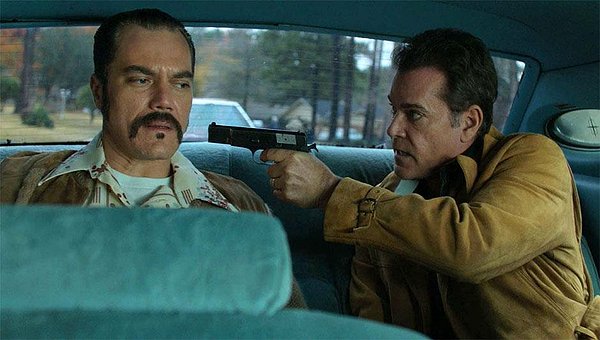 Shannon’s (Premium Rush) performance is what keeps you watching. There are few actors who are as intense as this guy, though I’m used to seeing him play unhinged psychos bouncing off the walls. Kuklinski is just as troubled as his other roles but he’s all reserve, steely nerves, and anger that eventually bubbles over into violent rage. Shannon is still such a good actor that even with a thin character, or at least thin characterization, he can be completely compelling to watch onscreen. One of the more peculiar, inconsistent elements of the film is Shannon’s constantly-changing facial hair. I think I lost count at about nine or ten different facial topiary variations. There were times where it will be different in consecutive scenes. I guess that’s a tipoff of a time jump, but his morphing, period-appropriate facial hair also became a point of amusement.
What makes The Iceman so disappointing in retrospect is how much potential it seems to squander. There’s a great story to be had with a contract killer by night and a family man by day. That contradiction, the struggle, the psychology is all rich material to work with. It’s just that Kuklinski is not necessarily that guy; he’s not too deep, at least not in this version, and his killer work problems are just not that compelling. If this is what the filmmakers were going to do with their real-life subject, then they might as well have just used Kuklinski as inspiration. Take the best parts and then compose a different lead character, someone more emotionally transparent or relatable or just plain old interesting. Just because it’s a real story doesn’t mean you’re indebted to telling every true facet of it, especially when a better story is within sight. Shannon is a terrific actor and does his best to make the film worth watching, but from distracted plotting to unmet analysis and emotional exploration, it’s hard to walk away from The Iceman and not feel a bit chilly.
Nate’s Grade: C+
Share this:

Mud (2013)
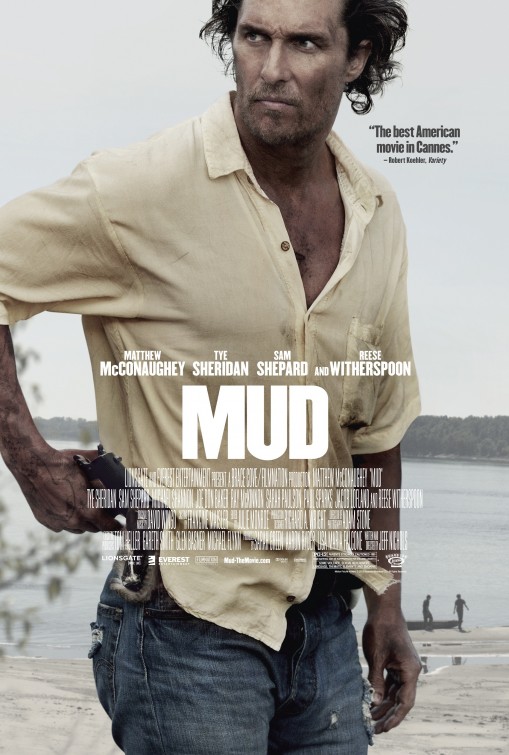 If you aren’t familiar with writer/director Jeff Nichols, do yourself a favor and get acquainted and fast because this guy is headed for indie stardom. Nichols’ last movie, the somber and unbearably tense thriller Take Shelter, was my top film of 2011. Mud, in contrast, is a harder sell, something akin to a modern-day Mark Twain fable about romantic outsiders, fugitives, friendship, and boys coming of age. Matthew McConaughey plays the titular character, a wanted man hiding out on a small island along the Mississippi River. He befriends two teens that help him rebuild a boat so that Mud can escape with his lady (Reese Witherspoon) and evade a team of dangerous bounty hunters seeking vengeance. Nichols is truly gifted at his ability to craft wholly believable characters regardless of circumstance. There is a great sense of setting here, without nary a judgment to the lower class moorings and difficulties, just as Nichols expertly showcased rural Midwestern life and day-to-day anxieties in Take Shelter. His new film is admittedly slow and takes a while to rev up, but the performances are just so good and richly delivered, from top to bottom, that you’re happy to go along with the somewhat loping ride. It’s such a pleasure to witness McConaughey fully engaged with a role, pushing him to utilize new and exciting acting muscles. Nichols also doesn’t soft-pedal the hardships of his characters. While it’s poignant and satisfying how the various plot threads come together for a thrilling conclusion, Mud also has the grace to leave several storylines absent tidy bows. There’s real heartbreak, real disappointment, and recognizable people of all walks trying to do good and find their place in this complicated world. If Mud is playing near you, it should shoot to the top of your must-see list.
Nate’s Grade: A-
Share this:

Spring Breakers (2013)
 Harmony Korine is the kind of filmmaker who I typically avoid. I haven’t liked a single one of the movies the man has written or directed. This list includes Kids, Julien Donkey-Boy, Trash Humpers, and the detestable 1997 film, Gummo, possibly one of my most hated films. The man has become an expert on depicting juvenile delinquents and the excesses of youthful folly, so I wasn’t surprised that his latest writing/directing effort, Spring Breakers, followed suit. I was surprised at the names he was able to attract to the film. Former Disney Channel starlets Selena Gomez and Vanessa Hudgens, as well as ABC Family’s Ashley Benson, join Rachel Korine as a foursome of gals who long for the pleasures of a spring break getaway. They scrimp and save for months, plus also rob a restaurant, and take their sojourn to the sunny beaches of Florida. The girls run afoul of the law and are bailed out by rapper and wannabe gangster Alien (James Franco). Living large, and with handy access to a plethora of weapons, the girls get involved in the crosshairs of a turf war, but they won’t let anything bring down their good times.
When you break it down to its trashy molecular core, Spring Breakers is like an exploitation film as directed by Terrence Malick. Allow me to explain, dear reader. Much like that hallowed art house filmmaker, the plot in Spring Breakers is really a wispy, abstract concept, and the film is prone to repetition and redundancy, a triptych for the senses. There’s plenty of overlapping dialogue that circles back and repeats itself, images that bleed into one another, and a plot that generally takes its cues from MC Skat Kat, namely moving two steps forward and then two steps back (is this reference too dated?). The rote dialogue, when not indifferently profane and nonsensical, is usually variations on, “Spring Break. Spring Break forever.” I’ve just given you about a fifth of the entire movie’s dialogue. It may have just been my theater’s sound system, but I found much of the dialogue hard to hear and decipher. Perhaps it was Korine admitting that the things his characters say weren’t worth straining to hear. As expected, this can get rather frustrating to sit through. It’s not so much a movie as an experience meant to wash over the audience. Hence the nonstop dubstep score, provided by Skrillex, and the crashing imagery of tawny exposed flesh, gyrating bodies, neon lighting, fellating gun barrels, and excessive inebriation, all meant to bring the spring break experience to the consumer, that is, if most people’s spring breaks involved lots of illegal activity. If Malick’s movies are meant to serve as religious experiences, then consider Spring Breakers to be the equivalent of ingesting GHB.
 Let’s talk about that paucity of characterization. Besides Faith (Gomez), a name a bit too on-the-nose for this sort of enterprise, there is zero I can say about ANY of the other three girls. They are completely interchangeable. They have no defining characteristics beyond their simple geographic placement within the camera frame. That’s it. When Faith ditches the movie at the halfway mark, having the good sense to realize her supposed friends might not be the best influence, I wanted to go with her. I didn’t want to be left with these vacuous and annoying characters. It’s pretty clear the contempt that Korine has for his own female characters, constantly serving them up for ridicule. It makes the whole movie even less appealing. We’re not supposed to like our heroines but it gets uncomfortable when the director seems to be constantly shaming them, rubbing our faces in how awful they are as people. With an absence of characters you care about, and a plot that feels like it keeps circling back, there’s precious little to hold onto before you become anesthetized to Korine’s exploitative navel-gazing.
After Oz the Great and Powerful I didn’t think I would utter these words, but thank God for the presence of James Franco. The man is so fully committed to his gonzo portrayal of a white trash wannabe gangster that you are downright thankful when he takes over the movie halfway in. At least we don’t have to spend as much time with our empty-headed trio of ladies. Franco, perfecting an ominous drawl, is a cartoon of misplaced machismo, living the “gangsta” life he’s seen parroted in pop culture (he has Scarface running on a constant loop on his TVs). He provides a jolt of energy to the movie, a second wind, and thankfully pushes the girls into greater conflict than part-to-party binges. He brings a real sense of danger to the film, and the descent into a criminal path couldn’t have come soon enough for me. It’s such an enjoyably whacked-out performance that I wouldn’t be surprised if Franco may even be considered for some Best Supporting Actor nominations.
There’s something just so tiring and depressing about watching people trying to chase a hedonistic high rather than, you know, live their lives. In this warped sense of thinking, the all-encompassing term of “partying” is meant to be the divine state of being and anything else falls by the wayside of significance. I understand the movie is exposing a shallow and empty way of life but it can still be tiring to watch nonstop. You become numb to the onscreen antics. You become numb to the free-flowing spirits, profanity, and gratuitous nudity (there were literally six topless ladies onscreen before a word was spoken). Watching Spring Breakers, you have two options: give yourself over to the trance-like, self-destructive youthful fever-dream or sit solemnly, objectively observing how the outrageous become routine, and become dead inside.
As much as it pains me to admit, being a non-fan of Korine’s movies, there are a few moments in the movie that are actually surprisingly effective. The first is a hasty robbery of a small restaurant. We stay in the passenger seat of the slow-moving car as it spins around the building, and in the background we see the escalation of events, the girls smashing breakables and terrorizing the few patrons. It’s one of the few visual decisions that felt, and here’s a word you won’t find anywhere else in relation to this movie, artistically restrained. There’s also plenty of forced irony in the movie where a character’s positive words will be counterbalanced by a visual contrast. Faith phones her grandmother and talks about her great time, even promising next year that she wants to take dear old granny along with her. Meanwhile, as the words play out, which will happen again at several redundant points, we see the girls engaging in behavior that would most likely not be granny-approved. Even if forced, and often redundant, it’s still effective, as is Korine’s hypnotic visual sensibilities. If nothing else, Spring Breakers is a good-looking movie with many pleasing visuals.
 I think I understand why my critical peers have lavished as much praise upon Korine’s bacchanalia. They see a satire of this empty, nihilistic, party-all-the-time, damn-the-consequences lifestyle, the idiocy of youthful hedonism. The problem is that there’s only a handful of moments in Spring Breakers where I felt that Korine actually achieved satire, one of them being a montage of robberies set to a Britney Spears song (beforehand we saw girls holding guns by the barrel and dancing in a circle). Those moments that struck me as satire were few and far between, because what I mostly left with was just another exploitation film. If this were meant to be satirical, the girls would not get away with it all in the end. Korine may intend to stand back in some ironic judgment of his own movie, providing himself an excuse for the lackluster plotting and characters. Here’s the point: even if it was done intentionally, it still makes for a lackluster plot and characters. Saying, “I meant that all along,” is not an excuse when the rest of the film fails to live up to your stated satirical intents.
Allow me a moment to talk about the somewhat disconcerting treatment of, for lack of a better description, the sluttiest of our gals, Cotty, played by Rachel Korine. When I saw the last name of Korine I thought, “Is that the director’s daughter?” Harmony Korine has been in the film industry for almost 20 years, so it was a possibility, and oh what a disturbing thought that was. Some cursory research proved that Rachel Korine was in fact Harmony’s wife; there’s a thirteen-year age difference. It’s still uncomfortable that Korine would slot his own wife to portray one of the titular spring breakers, the only one from our posse who goes nude onscreen too (sorry skeevy Disney Channel and ABC Family fans). So when he’s slut shaming these girls, mocking them with contempt, directing their gratuitous exploitation, he’s also including his own wife in this distasteful characterization, making sure the camera has multiple opportunities to take in her exposed flesh. It’s like he’s serving up his own wife to the gods of spring break (a.k.a. young male ticket-buyers), and it just seems icky.
When Spring Breakers came to a merciful close, the college-aged guy behind me remarked, “That’s the weirdest movie I’ve ever seen.” I replied, “Then you haven’t seen a lot of movies, have you?” Korine’s abstract, aimless salute to self-indulgence is a depressing experience that celebrates the worst in human beings, but weird it is not. I’m just tired of Korine’s schtick. He presents trashy characters, prods us to ridicule them, and then gives them a lot of empty space to do dumb things for an hour and half, ultimately going nowhere and accomplishing little. It just so happens that Spring Breakers, his most commercial and accessible film, has attractive, nominally famous actresses partaking in the nastiness this time. I suppose there will be some appeal to a small swath of filmgoers to see former squeaky-clean Disney Channel gals cutting loose, behaving badly, and playing against (manufactured) type. For me, the very casting of these ladies was another sign of Korine’s artistically bare ambitions. If he wanted to hold up the entire escapist spring break pleasure-seeking lifestyle for satire, then he needed to push harder. What’s on the screen is rarely satire. Instead, it’s just another careless exploitation film, replete with moronic characters we don’t care about and a plot that would be charitably described as, well, a plot. Even Franco’s calculated weirdness cannot save this film. Spring Breakers is a trip best avoided.
Nate’s Grade: C-
Share this:

Cosmopolis (2012)
 David Cronenberg is a director that’s full of surprises. The biggest surprise about Cosmopolis, his new film based on the Don DeLillo novella, is how shockingly terrible it is. This may be Cronenberg’s worst film. It’s certainly one of the worst films of 2012.
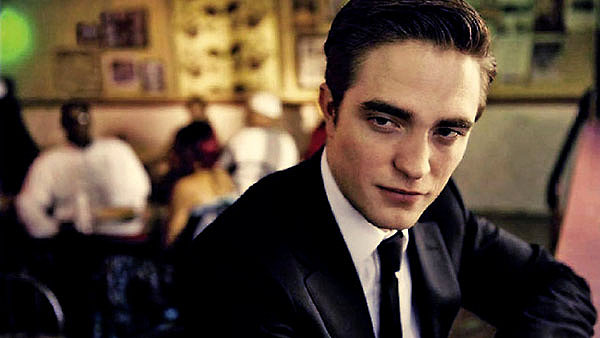
Eric Packer (Robert Pattinson) is a mega-millionaire currency trader. He’s got so much money he wants to outrightly buy a church just because. We travel with Eric over the course of one day as he travels through New York City in his stretch limo. Along the way, he hosts a colorful array of characters and fears that his high-stakes wagers will be adding up. He becomes more and more self-destructive and looks for new and exciting ways to waste money, talent, and time.
I hesitate to even use the term “film” with Cosmopolis because it’s truly more of an endurance test in didactic, pretentious art house masturbation. The script is really a collection of self-indulgent scenes with very little to connect anything together. Each new scene feels like the movie is starting over. Worse, the dialogue is painfully elliptical, stilted, and monotone, reeking of pseudo intellectual intent, lingering in ambiguity like it’s poetic. It’s not, it’s irritating and obtuse and characters talk in circles without ever really saying anything. It’s the kind of dialogue that reminds me of a pompous student play, something where the particulars involved think they’re making Artistically Daring Statements about Things That Matter. It’s such a mannered way of speaking, so labored in its affectations and superficially drawn to the mistaken belief that obtuse and redundant equals philosophical and thought provoking. The only thoughts I was thinking were of the murderous variety. I felt so pained that I had to check the time and only eleven minutes had passed. It felt like I had spent three times that. I stuck it out for you, dear reader, but otherwise I would have bailed. Here are a handful of dialogue samples to give you an idea:
 “Why do they call them airports?”
“I have an asymmetrical prostate. What does that mean?”
“Try putting a stick of gum in your mouth and not chew it.”
“Where do limos go to spend the night?”
I feel like I’m even doing a disservice to calling the people onscreen characters. They’re really more just talking heads, mouthpieces for cluttered ideology. The plot introduces new characters but they only last for a scene and then it’s time for someone new. This would be acceptable if it ever appeared that these interactions had any effect, positive or negative, on our protagonist. As it stands, it’s just a gloomy guy running into one meaningless encounter after another. Oh, and if that was the point of the whole exercise, then shoot me now. I literally cheered when the movie was over. Well, right after incredulously barking, “That’s it?”
Plot is another term, much like characters, that has next to no meaning for Cosmopolis. The plot is a wealthy guy who wants to get a haircut. Yes, that is the inciting incident. He stays in his limo as it slowly drifts down the bumper-to-bumper New York City traffic. He has encounters with people, sure, but mostly it’s the story of one man in his pursuit of a haircut. And you know what dear reader, spoilers be damned, but he gets that haircut too. The final half hour of the movie, almost a third of the whole running time, is spent with Paul Giamatti, an intense and angry man who wants to kill Eric. At least Giamatti’s performance kept me awake. The plot, much like the characters, is really a vehicle for the script’s ideas, so it becomes exasperating when the movie tries to pretend, at points, like now all of a sudden we should care about Eric and his journey. The ideas, as presented, are either on-the-nose or impenetrable. For every confusing conversation about death, you’ll get a leaden capitalism = rats metaphor.
 Pattinson (Breaking Dawn Part 2) seems like an apt choice as well as a craven marketing ploy for Cronenberg to get his weird arty movie greater exposure and financing. Pattinson gives a rather cold and detached performance, which I’m sure is also the point but it’s not exactly an outlet to showcase any potential range. I’m sure Pattinson leaped at the chance to work with Cronenberg, but he should have checked out his emotionally vacant character first. Oh I get it that Eric is a guy who seemingly has it all but now feels empty, and I get how it’s meant to be an analogue for the Wall Street set that’s hijacked our capitalism markets (rats!). I get it. It’s just lousy, and Pattinson could have been replaced with just about any young Hollywood hunk. The only enjoyable aspect of this whole movie, and this is simply a theoretical extension, is that plenty of diehard Twilight fans are going to watch this movie and be very very confused.
Cronenberg keeps us locked in that limo, at least for the first half of the film. We get to watch Eric host an array of guests. He gets serviced by a middle-aged woman (Juliette Binoche). He gets a prostate exam while conducting a meeting. He gets up-to-the-minute reports on the millions of dollars he’s hemorrhaging, and he doesn’t care. Money has lost all known value when everything is given to you. Look, I can make vague, self-important statements too. I’ll credit Cronenberg with finding creative ways to play around within the confined space of the limo, making the film less hermetic than it by all means should be. However, bad green screen effect work really proves distracting, so that you’re given another reason to check out when characters drone on as they do.
Strictly put, this was not a story that needed to be turned into a movie. I’m sure DeLillo’s novella has its own weight and power, but the big-screen adaptation of Cosmopolis is all flaccid pontification, empty verbal masturbation, and crushing dead weight. It was a Herculean effort for me to watch this meandering movie to the end and I know I can’t be alone in this regard. If only the characters were really characters, or the plot had any minute sense of momentum, or that the dialogue was less purposely obtuse, or if the movie felt like it was at least going somewhere or had some small recognizable shred of purpose. I won’t go as far to say that you should be worried if any of your friends gushes to you about how great this movie is, but you should probably keep an eye on them or see if they bumped their head. This movie is more like an insufferable lecture by the most boring people who confuse cerebral with impenetrable. If you’re not going to supply me any significant means of entry to engage with your art, then I’ll just go play with somebody else. Cosmopolis feels like the worst and most pretentious student film you’ll ever see. The rub is that a great director like Cronenberg made it.
Nate’s Grade: D
Share this:

Seeking a Friend for the End of the World (2012)
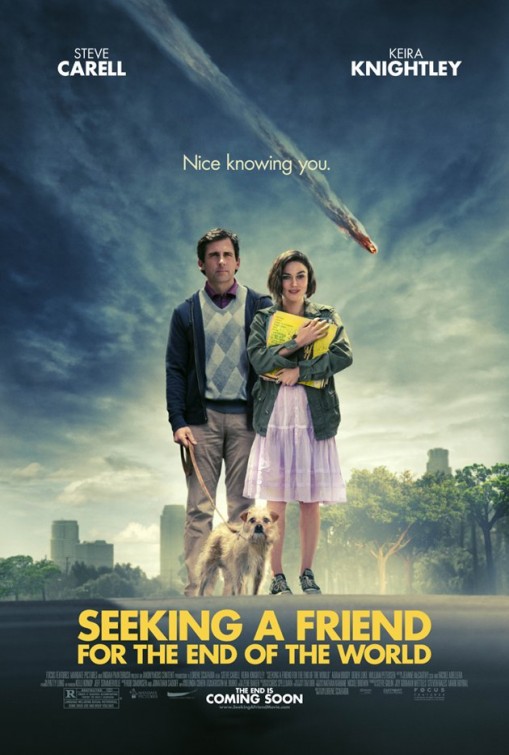 It’s the end of the world as we know it and I oddly felt fine… which is not a good sign for your apocalyptic movie. Seeking a Friend for the End of the World is a peculiar thing, all right. It takes place in the last three weeks of the human race. And lest you think the film wimps out on the promise of its title, think again. I was bemused for the first forty minutes, where writer/director Lorene Scafaria indulges in a series of one-scene vignettes of how humanity comes to terms with the certainty of annihilation. There’s an adult party where people joyfully try heroin, a hit man-for-hire service to bring back some of the mystery of death, and a restaurant where all the workers are spaced out on Ecstasy. I found each of these moments to be funny and a well though-out extension of the premise. But then the film’s diversions give way to the rom-com of our main characters, played by Steve Carell and Keira Knightley as your standard manic pixie girl. And the more time I spent with them the more I found myself not getting engaged. My emotional empathy was kept to a minimum; they’re nice people and all but I didn’t find them that interesting. The resulting movie feels like one of the weakest avenues given the premise. I credit Scafaria for not wimping out in the end, but as these characters faced oblivion together, I felt little emotional stirrings in my chest.
Nate’s Grade: C+
Share this:

Your Sister’s Sister (2012)
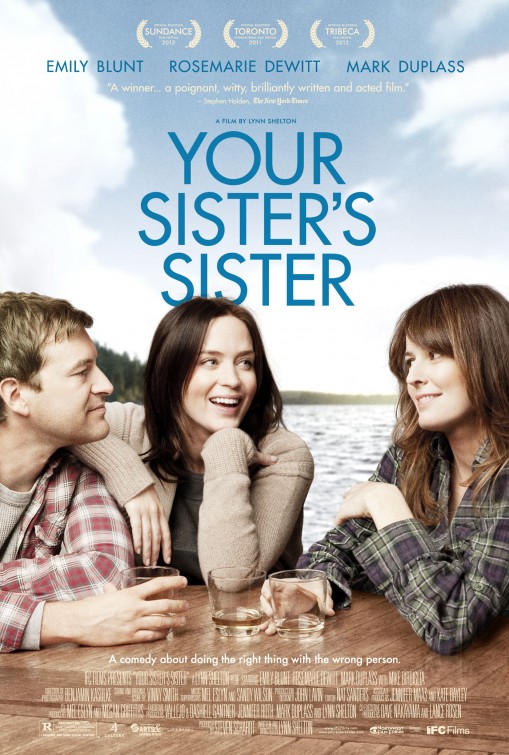 Lynn Shelton is quickly becoming one of my favorite indie film artists. Her writing and directorial offerings are somewhat relegated to the fly-on-the-wall hipster “mumblecore” category, but what separates Shelton is her narrative momentum, her laser-like focus with character, and her sense that a movie needs to build to something significant. With 2009’s Humpday, it was two dudes who might have sex as a test of their masculinity (you really need to see the movie for the full context). With Your Sister’s Sister, it’s the full ramifications of a bunch of delicious relationship secrets getting out there. Everyone in the film has something to hide and something to lose, and watching it all play out with humor and sweetness and honesty that is rare in movies.
Jack (Mark Duplass) is still coming to terms with the death of his older brother. His best friend, Iris (Emily Blunt), who was his brother’s girlfriend at the time of his passing, offers a suggestion. She arranges some alone time for the guy to clear his head. He bikes out to her family cabin but is surprised to find a guest already there, Hannah (Rosemarie DeWitt), Iris’ older sister. Hannah and Jack break the ice by bonding over their personal loss: his brother and her ending a seven-year relationship with her girlfriend. Over a long night of drinking, the two decide to impulsively have sex. The next morning is even more awkward when Iris shows up at the cabin, planning to finally reveal her own feelings for Jack. What follows may be one of the few character-based sitcom plots I’ve witnessed.
 Much like Shelton’s previous movie, the greatest strength of the film is how beautifully naturalistic it all feels while still telling an engaging story. The film has a relaxed vibe that washes over you, allowing you to immerse yourself in what feels like a real group of friends. There’s a tremendous naturalistic ease the film exudes, with the actors so familiar with one another that they truly feel like family. When I have well developed characters, and actors who seem so knowledgeable of their character’s tics and flaws and secrets and smallest details, I could honestly listen to them talk for hours. I don’t want to mistakenly give the impression that this movie is a dull yakfest where the participants are in love with the sound of their own exceptional voices. Each scene in this movie advances the plot further, twisting the screws, complicating matters, and brimming with delightful awkwardness and tension. With 2009’s Humpday, I wrote: “What I really appreciated about Humpday is that every moment feels genuine and every scene has a point. I was amazed that Shelton and her small unit of actors had made it so that every conversation had purpose; there is so little fat to this screenplay. Each scene reveals something new about a character or pushes the narrative forward toward its uncomfortable climax, and each moment never breaks the reality of the story.” And the same can be said for Your Sister’s Sister as well.
While the premise is a bit of a sitcom novelty with some farcical developments thrown in, the depth of the characters and the fantastic acting help to make sure that Your Sister’s Sister is nothing but graceful and beguiling. And the escalating conflicts, personal revelations and complicated feelings, always find a way to come across as organic to the story. That’s another amazing part of the film, that even with all the sexual hijinks that it still manages to feel grounded and surprisingly relatable. These are interesting, complicated, flawed, and spectacular characters, and watching them interact, profess their love through small actions and big declarations, seeing their heartfelt camaraderie, and watch them navigate their troubled lives to find some semblance of a happy ending is a joy to watch. This is a potent little movie, fully realized, poignant, funny, and genuine.
The film was shot over the course of 12 days and Shelton has said that much of the dialogue was improvised, working off her outline. Improvisation is a dangerous tact when dealing with a dialogue-driven film, such as this one. Just because it’s coming off the top of your head doesn’t mean it’s going to sound good. Not everyone is gifted with the ability to improv dialogue that is true to character, revealing, advances the story, as well as just being entertaining. Luckily, Your Sister’s Sister is the exception.
If Your Sister’s Sister does have a weakness, it’s the third act that seems to stall out without giving us much in development before tidying the broken relationships up again. The film’s comedic structure could feel, in lesser hands, like a generic sitcom. It is to Shelton and her actors’ credit that the twists and turns still manage to feel as believable as possible. The third act hits when all the secrets come out, pushing the characters away. Rather than (minor spoilers) ramping things up, we merely endure an extended wordless sequence of images of Jack biking around and the sisters burying the hatchet. Then it’s time for our big happy romantic declaration that tidies everything up, and we’re done. While satisfying on an emotional level given our empathy for the trio, the third act does seem very thin for an otherwise lean and well-structured story. It feels like perhaps Shelton only had enough plot for two acts.
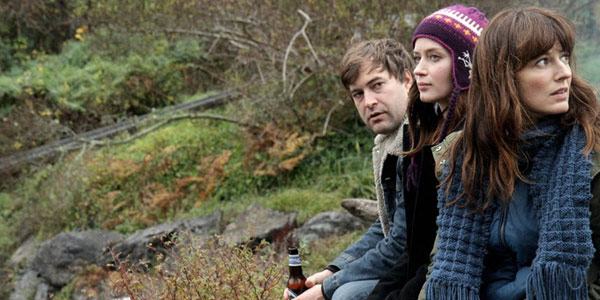 The main trio is a rather engaging ensemble that convincingly plays a besotted group of friends and family. Duplass (Safety Not Guaranteed) has gotten considerably more attention since starring in Shelton’s last movie; the man and his schlubby, smirky charm are ubiquitous. He has a way of being edgy without pushy and nonplussed and flummoxed without going overboard. Duplass has a natural fit for comedy but the man can really excel with the meatier drama bits as well, displaying the painful yearning of a man caught between his desire and the need to move on. He’s a winning and likeable presence that can still be endearing even when he’s flailing around or making others uncomfortable.
DeWitt (The Watch) was a late addition to the cast, replacing Rachel Weisv (The Bourne Legacy) when scheduling conflicts got the best of her. She deserves extra kudos for how good she is considering the miniscule prep time she had compared with her costars. DeWitt is amusing in how cagey and sardonic she can be, and her chemistry with Blunt (Looper) is outstanding. I greatly enjoyed the subtle nuances between them, the way their body language and gestures added extra layers to their relationship, the familiar communication and sisterly code, and just the smallest details that felt well thought out. The relationships in Your Sister’s Sister feel sweetly genuine, and with the benefit of great actors, it lays the groundwork for characters we care about.
Three people sharing time in a cabin might not seem like an exciting setup for a movie, unless, of course, there’s some supernatural presence murdering them in grisly fashion. However, when you lock away three great actors who know their characters inside out, a smart script that allows them the space to develop but pushes the movie forward scene-by-scene, and direction that feels seamless with the storytelling, then you have something special, and that something special is Your Sister’s Sister. While I think Shelton’s previous film had more at play concerning male relationships and sexual politics, this one, with a more straightforward, farcical plotline, is still plenty entertaining and with strong character work (the ending does leave one very large question unanswered). This is charming, sweet, unassuming little indie film that will provide a solid dose of smiles and laughs.
Nate’s Grade: B+
Share this:

Promised Land (2012)
 Actors Matt Damon and John Krasinski co-wrote Promised Land, which has been labeled as the anti-fracking movie. I wish. While it does take a suspicious view of the practice of extracting natural gas via high-powered underground water jets laced with chemicals, the movie feels too timid to really land home its points, settling on a familiar narrative of the redemption of one man working for The Man. The character development feels like it happens overnight rather than through a gradual process. Damon begins as a corporate raider, a guy selling false hope to the economic downtrodden, and ends up an altruistic environmental fighter. I mostly found him to be a pompous jerk. The scenes with Damon squaring off against Krasinski, an environmental activist, are easily the best, giving the movie a bristling energy it otherwise lacks. Krasinski provides a fine foil and some snappy competition until a late preposterous plot turn muddies everything up. I feel like the writers, as well as director Gus Van Sant, wanted to lure in wary moviegoers with something more broadly appealing (the evolution of one man) versus a more alarmist, message-heavy movie. That’s fine, but at least give me a better story. Promised Land even falls into the trap of having he Damon/Krasinski competition come down to a woman (Rosemarie DeWitt) they both fancy. Because otherwise it wouldn’t feel serious, right? It’s a solidly acted movie, with some nice turns by veterans like Frances McDormand and Titus Welliver (TV’s Lost), but the movie just doesn’t live up to the promise of its potential.
Nate’s Grade: B-


 nathanzoebl
You must be logged in to post a comment.