Blog Archives
Neighbors (2014)
 The first side-splitter of the summer, Neighbors is a bawdy comedy that has enough big laughs that you may miss how well it draws its characters, punctuating preconceptions. The premise is boiled down to family versus frat, as a pair of new parents (Seth Rogen, Rose Byrne) has a college fraternity, lead by Zac Efron, move next door. You expect the raucous humor, and there are plenty of well-conceived visual gags and payoffs. I did not expect to like the characters as much or see different shades of them. Rogen and Byrne are not yet ready to be official grown-ups, and their attempts to hang with the frat parties are hilarious as well as cringe-inducing. I especially appreciated that Byrne is given the chance to be just as careless and selfish as the men; there’s even a fight between husband and wife who is the Kevin James in their relationship. Byrne is terrific and deserves even more work that lets her cut loose and be in on the joke. Then there are the frat brothers who could easily come across as brainless hedonists, and many do, but Efron and his co-bro Dave Franco have an engaging relationship where they fear what happens next after school. The movie’s theme isn’t subtle (fear of growing up) but provides enough extra substance to make the film more than the sum of its jokes. And it’s quite funny. Rogen and Byrne have great chemistry, their angry riffs are often amusing, and the escalating tit-for-tat prank war is memorable and entertaining. Neighbors works on a cross-generational level; as a man in my 30s, I related to Rogen and Byrne’s plight but also their shifting concepts of what they consider fun that they once may have mocked in their younger years (“I love brunch”). Neighbors builds to a nice climax, the cast is uniformly funny, and with enough surprising shades with the characters, it satisfies the R-rated funny bone.
Nate’s Grade: B
Share this:

Bad Words (2014)
 Given the premise, you’d be right to assume that there are many easy laughs when it comes to Bad Words. A grown man (Jason Bateman, making his directing debut) is competing alongside children in a spelling bee, intimidating them, psyching them out, and otherwise being a rude and vulgar human being. Now, besides the fact that being older doesn’t automatically give anyone an edge over in spelling, I worried that too much of the movie would fall upon the patterned setup of Bateman just saying something inappropriate to children. Some of these jokes are funny, most somewhat expected, but the real enjoyment of Bad Words is the buddy relationship formed between Bateman and a young Indian speller (Rohan Chand). The story follows some similar beats from the more scabrously funny Bad Santa. The heart it develops in the second half isn’t quite enough to tie up everything. I applaud the film for finding a happy ending that feels at least in keeping with its tone. As a director, Bateman has a smooth handling with his actors and a sharp overall sense of comic timing, as one would hope. My issue with Bad Words is that it isn’t outrageous enough, relying on the setup or Bateman’s mean insults for oodles of easy laughs. I was entertained with Bad Words but I wish it followed the convictions of its insolent lead character and cared less about making an audience care. It’s a dirty movie that goes soft.
Nate’s Grade: B-
Share this:

The Grand Budapest Hotel (2014)
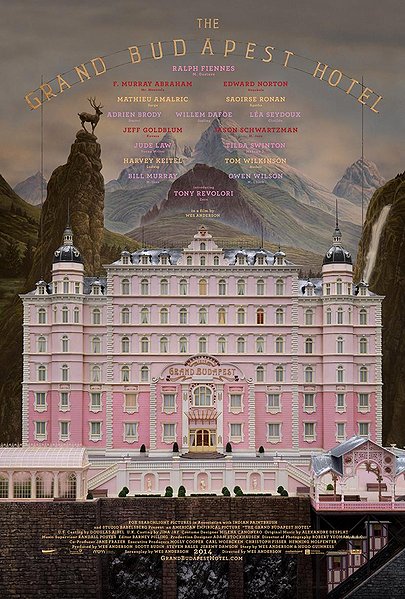 Wes Anderson is a filmmaker whose very name is a brand itself. There are a small number of filmmakers who have an audience that will pay to see their next film regardless of whatever the hell it may be about. Steven Spielberg is the world’s most successful director but just having his name attached to a movie, is that enough to make you seek it out and assume quality? If so, I imagine there were more than a few disappointed with War Horse and Kingdom of the Crystal Skull. But Wes Anderson has gotten to that height of audience loyalty after only seven movies, mostly because there are expectations of what an Anderson film will deliver. And deliver is what the quirky, fast-paced, darkly comic, and overall delightful Grand Budapest Hotel does.
In the far-off country of Zubrowka, there lays the famous hotel known the world over, the Grand Budapest. The head of the hotel, the concierge, is Gustave (Ralph Fiennes), a highly mannered Renaissance man who caters to the every whim of his cliental. Zero (Tony Revolori), an orphaned refugee, is Mr. Gustave’s apprentice, a lobby boy in training learning from the master in the ways of hospitality. Gustave likes to leave people satisfied, including the wealthy dowagers that come from far just for him (Gustave: “She was dynamite in the sack,” Zero: “She was… 84,” Gustave: “I’ve had older.”). One of these very old, very rich ladies is found murdered and in her rewritten will, the old bitty had left a priceless portrait to Gustave. Her scheming family, lead by a combustible Adrien Brody, plots to regain the painting, which Gustave and Zero have absconded with.
 For Wes Anderson fans, they’ll be in heaven. I recently climbed back aboard the bandwagon after the charming and accessible Moonrise Kingdom, and Grand Budapest is an excellent use of the man’s many idiosyncratic skills. The dollhouse meticulous art design is present, as well as the supercharged sense of cock-eyed whimsy, but it’s a rush for Anderson to pair a story that fits snuggly with his sensibilities. The movie is a series of elaborate chases, all coordinated with the flair of a great caper, and the result is a movie over pouring with entertainment. Just when you think you have the film nailed down, Anderson introduces another conflict, another element, another spinning plate to his narrative trickery, and the whimsy and the stakes get taken up another notch. The point of contention I have with the Anderson films I dislike (Life Aquatic, Darjeeling Limited) is the superficial nature of the films. As I said in my review for Darjeeling, Anderson was coming across like a man “more interested in showing off his highly elaborate production design than crafting interesting things for his characters to do inside those complex sets.” With this film, he hones his central character relationships down to Gustave and Zero, and he can’t stop giving them things to do. Thankfully, those things have merit, they impact the story rather than serving as curlicue diversions. We get an art heist, a prison break, a ski chase, a murderous Willem Dafoe leaving behind a trail of bodies, not to mention several other perilous escapes. This is a film packed with fast-paced plot, with interesting actions for his actors, maybe even too packed, opening with three relatively unnecessary frame stories, jumping from modern-day, to the 1980s, back to the 1960s, and finally settling into the 1930s in our fictional Eastern European country.
The other issue with Anderson’s past films, when they have underachieved, is that the flights of whimsy come into conflict with the reality of the characters. That is not to say you cannot have a mix of pathos and the fantastical, but it needs to be a healthy combination, one where the reality of the creation goes undisturbed. With Grand Budapest, Anderson has concocted his best character since Rushmore’s Max Fisher. Gustave is another overachieving, highly literate, forward-driving charmer that casually collects admirers into his orbit, but he’s also a man putting on a performance for others. As the head of the Grand Budapest, he must keep the illusion of refinement, the erudite and all-knowing face of the luxurious respite for the many moneyed guests. He has to conceal all the sweat and labor to fulfill this image, and so he is a character with two faces. His officiously courtly manner of speaking can be quite comical, but it’s also an insightful indication that he is a man of the Old World, a nostalgic European realm of class and civilization on the way out with looming war and brutality. And as played by the effortlessly charming Fiennes (Skyfall), Gustave is a scoundrel that the audience roots for, sympathizes with, scolds, but secretly desire his approval, much like Zero. It is a magnificent performance that stands as one of the best in any Anderson film.
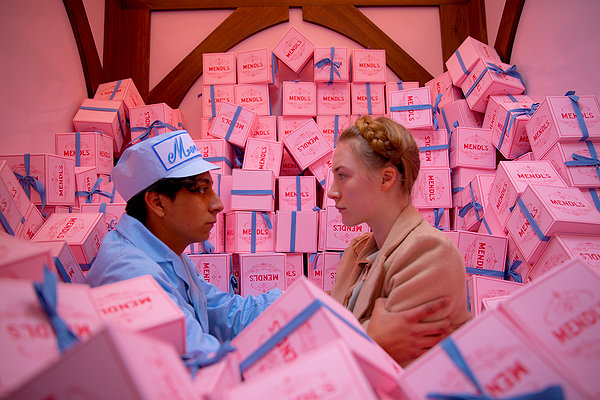 The fun of a Wes Anderson movie is the zany surprises played with deadpan sincerity, and there is plenty in Grand Budapest to produce smiles and laughter. It’s hard to describe exactly which jokes land the best in a Wes Anderson film because they form a patchwork that elevates the entire movie, building an odd world where oddballs can fit right in. It was under a minute before I laughed, and I smiled through just about every remaining minute of the film. I enjoyed a joke involving a dead cat that just kept being carried from scene to scene. I enjoyed a sexually graphic painting that just happened to be lying around. I enjoyed the fact that Zero draws on a mustache every morning to better fit in with the men of his day. But mostly I just enjoyed the characters interacting with one another, especially Gustave and Zero, which forms into the emotional core of the film. It begins as a zany chase film and matures as it continues, tugging at your feelings with the father/son relationship (there’s also a subtly sweet romance for Zero and a pastry girl played by Saoirse Ronan). One of the big surprises is the splash of dark violence that grounds the whimsy, reminding you of the reality of death as war and fascism creep on the periphery. In fact, the movie is rather matter-of-fact about human capacity for cruelty, so much so that significant characters will be bumped off (mostly off screen) in a style that might seem disarming and unsatisfying. It’s the mixture of the melancholy and the whimsy that transforms Grand Budapest into a macabre fairy tale of grand proportions.
The only warning I have is that many of the star-studded cast members have very brief time on screen. It’s certainly Fiennes and Revolori’s show, but familiar names like Bill Murray, Tilda Swinton, Tom Wilkinson, Jeff Goldblum, Lea Seydoux, Jude Law, Harvey Keitel, Jason Schwartzman, Owen Wilson, F. Murray Abraham, and Bob Balaban are in the film for perhaps two scenes apiece, no more than three minutes of screen time apiece. Norton, Brody, and Dafoe have the most screen time of the supporting cast. Though how does Revolori age into the very non-ethnic Abraham? It reminded me of Street Fighter: The Legend of Chun-Li (here me out) where, as she ages, Chun-Li becomes less and less Chinese in her facial appearance. Anyway, the brevity of cast screen time is not detrimental to the enjoyment of the film, considering all the plot elements being juggled, but I would have liked even more with the dispirit array of fun characters.
The Grand Budapest Hotel is Wes Anderson at his best, pared down into a quirky crime caper anchored by a hilariously verbose scoundrel and his protégé. Naturally, the technical merits of the film are outstanding, from the intricate art direction and set dressing, to the period appropriate costumes, to the camerawork by longtime cinematographer Robert Yeoman. The movie is a visually lavish and handcrafted biosphere, a living dollhouse whose central setting ends up becoming a character itself. The trademark fanciful artifice is alive and well but this time populated with interesting characters, a sense of agency, and an accessible emotional core. The faults in Anderson’s lesser films have been fine-tuned and fixed here, and the high-speed plotting and crazy characters that continually collide left me amused and excited. If you’re looking for a pair of films to introduce neophytes into the magical world of Wes Anderson, you may want to consider Grand Budapest with Moonrise Kingdom (Royal Tenenbaums if they need bigger names). In the end, I think Anderson more than identifies with his main character, Gustave, a man enchanted in a world of his own creation, a world better than the real one. Who needs the real world when you’ve got The Grand Budapest Hotel?
Nate’s Grade: A
Share this:

Muppets Most Wanted (2014)
 The Muppets are back, though their new film seems to vaguely be recreating the amusing if somewhat slight Great Muppet Caper. The same blend of Muppet-staple sweet goofiness and anarchy is still a pleasure to watch, causing me to laugh throughout; it’s just that there are more leaden stretches between the laughs. The side stories have more interest and humor than the main storyline where Kermit has been replaced by a nefarious Russian doppelganger. Ricky Gervais is wasted as a criminal sidekick and he doesn’t bring much energy to the film. Fortunately Tina Fey, as a gulag prison guard, and Ty Burrell, as a Pink Panther-like Interpol agent, rise to the occasion. Burrel, teamed up with Sam the Eagle, made the movie for me. Their comic interplay and rivalry is the best and gives way to the best use of sight gags. It’s an amusing and agreeable film but there’s a noticeable spirit missing, possibly from the departure of living Muppet Jason Segel as an actor and a co-writer. I was shocked that Bret McKenzie, who won an Oscar for the 2011 movie, was the same man behind these new tunes. With the exception of maybe two songs, the remaining majority of the songs are downright dreadful. Within minutes of leaving my theater I could not for the life of me remember one of the tunes. The celebrity cameos are also less fun, many poorly integrated into the film, just the actors appearing and then vanishing. James McAvoy just walks onscreen to deliver a package. Is that the best use of everyone’s time? Still, while a noticeable step down from 2011’s The Muppets, the movie still has enough of the Muppet charm and silliness to entertain. It’s just missing some of the magic that made their return so special.
Nate’s Grade: B
Share this:

Adult World (2014)
 People often celebrate independent films as an oasis of creativity in comparison to the cookie-cutter blockbusters that populate Hollywood. However, indie film can have just as many formulaic, half-baked, cookie-cutter films that waste your time. Case in point, the indie comedy Adult World, a movie that feels out of time and place.
Amy (Emma Roberts) is a recent college graduate who has big dreams of being a poet. Her idol, Rat Billings (John Cusack), even lives in town, giving her ample stalking opportunities. But Amy only seems to get rejection slip after rejection slip in the mail. Her parents cannot afford to bankroll her lifestyle, and so Amy sets off on her own, shacking in with a transvestite, and gaining a job at Adult World, a small mom-and-pop porn store. Amy holds onto hope that she can become a great poet with Rat’s mentoring.
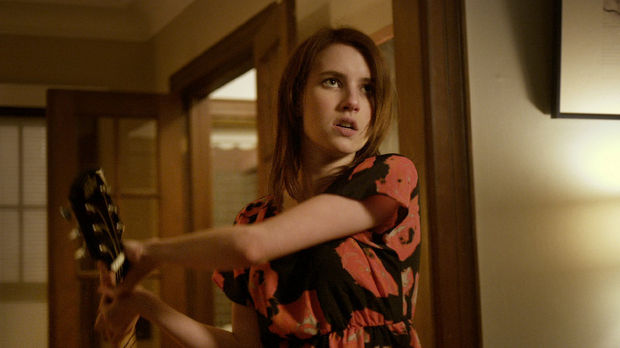 The movie feels overly quaint, like its premise, and much of the character interplay, came from a script from 1996 that was lost until now. The entire enterprise feels painfully dated in scope, humor, and its sense of peculiarity. I don’t even know why the filmmakers decided to set the movie in modern times. The excuses they devise for why a mom-and-pop porn store exists in the world of 4G wi-fi Internet never come close to working. Yes, we still have the traditional brick-and-mortar porn stores to this day, but those have a wealth of selection. This is like a tiny store with a few walls of movie titles, movies that people rent and return. Remember those, video rental stores? Again, dated. The very existence of the porn store disrupts the credibility of the film; not to suggest it would be perfect without this one plot element. There’s such a dated sense of titillation having a desperate woman land a job at a porn store. Oh no, she’s out of her element! The problem with the porn store is that they never do anything with it. There are perhaps four jokes directly related to the fact that it is an adult novelty store, but beyond that it would have been the same if they just sold toasters (note to self: look into potential market for adult novelty toasters). At no point does it prod our heroine along her journey or really have any larger impact besides the place where she meets her eventual love interest. The mom and pop that own the store are never seen again after their introduction, meaning the film even abandons one of the easier comedic scenarios of the elderly, folksy pornographer.
The entire storyline of a would-be poet slumming it at a porn store, learning some hard lessons, and finally finding her footing, well the whole thing just feels so much like a byproduct of 1990s filmmaking, when the broader commercial impact of indie film was being explored. The middle-class suburban girl being pushed out of her comfort zone by a band of quirky misfits in a fringe setting, well it just feels so dated. Even so, that doesn’t mean that this kind of story setup will flounder. Under the right care, even dated material can succeed, but Adult World coasts on the supposed outrageousness of its premise and characters. The trouble is that these people are more of less indie film cartoon characters with no real depth to them. Amy is mostly a brat but we never seem to go beyond the surface of her oversized ego and sense of certainty in her talent. Her relationship with the self-loathing Rat is meant to open herself up the harsh realities of the world, the rude awakening of every post-grad. Except he’s really just a jerk that treats her like garbage and eventually humiliates her. At no point do you get the impression that either character is really having much of an impact upon the other, beside general annoyance or frustration. Then there’s the character of Rubia, a transvestite Amy meets on the bus and within ONE DAY Amy asks if she can move in with this total stranger. Again, the idea of the kindly transvestite who becomes the heroine’s roommate, doesn’t that feel so dated too, so desperate to be edgy? Rubia is also ill defined and one-note. I’m surprised the filmmakers had the restraint to not give Rubia a tragic back-story.
 With all that said, the movie is never as funny or as interesting or as edgy as it seems to believe it is. I may have laughed once or twice for the entire movie. I certainly wasn’t attached to the characters by any means. There’s a segment where Amy and Rubia discover Rat driving through town, so they hop on a bike and pedal after him. It’s played out like it’s supposed to be this stroke of comedy, complete with backbiting comments from Rubia, but it’s never funny and it just continues to play out, never altering to possibly become funny. Here’s something that is funny: after Amy’s parents tell her they cannot afford to pay for her poetry submissions, she runs away from home. The funny part isn’t her decision-making or the act of running away itself. The real funny part is that we don’t see or hear from Amy’s parents again for over an hour. Did her mother and father not care that their only child has disappeared? Are they secretly relieved? Amy doesn’t even refer to her parents, so we’re left wondering if there may be a missing person’s report floating around somewhere. It’s details like this, and the lack of taking advantage of the comic possibilities of the porn store setting, that showcase just how terribly Adult World goes about developing its shoddy story.
Then there’s the overall sludgy look of the film itself. Filmed on location in Syracuse, New York during a wintry period, it’s as if director Scott Coffey (Ellie Parker) wanted to communicate the misery of his characters with a visual style that made you feel their pain. This is one of the crummier looking wide releases I’ve ever seen. The cinematography is just dreary but without any strong sense of visual composition. I know this was a low-budget effort but Coffey and his team do such little work to hide the limitations; the set dressing is pathetically bare when it comes to locations, like the porn store. Every shot, every scene just reminds you further that Adult World just didn’t have the money, or the right people for the money. Coffey’s other sin is his mishandling of his actors. Roberts (We’re the Millers) and Cusack (Lee Daniels’ The Butler) are two very capable actors but they seem abandoned here. Cusack is just a misanthrope who treats every moment with annoyance, and it gets tiresome. Roberts is all over the place, needing a gentle tug to help bring her histrionic character back to a suitable reality.
I cannot think of any reason a person should take useful time out of their day to watch Adult World. The film isn’t funny. The characters are bothersome and lacking depth. The essential premise, the hook of the movie, is incidental and inconsequential. There is just a general malaise about the film, a lack of development that saps the characters and the story. Oh sure, things occasionally happen, or characters will magically reveal insights, but it’s always in the most hasty, inorganic fashion. Even the title is so on-the-nose to be annoying absent further examination. By the end of the movie, I think we’re left with Amy realizing that she might not be as talented as she thought, but hey, at least she has an arty boyfriend now. If this is a late blooming coming-of-age tale (a la Frances Ha) it misses all the necessary elements that push our heroine to grow. Instead, we’re saddled with a crummy looking movie with poorly developed characters, a nascent sense of comedy, and a plot that feels quaintly dated at every turn. If this is what growing up looks like, take it from me and skip Adult World.
Nate’s Grade: C-
Share this:

Mr. Peabody & Sherman (2014)
 Surprisingly adroit, Mr. Peabody & Sherman might just be more fun for adults, especially fans of the original 1960s cartoon, than for little kids. It’s under the “family film” banner, a dubious one historically, but I was laughing consistently and good, snorting laughs, long chuckles; the whole gamut. With The LEGO Movie, the wide release of The Wind Rises, and now this, 2014 is shaping up to be a stellar year for animation aficionados. The movie between a genius dog and his adopted son is given the right amount of reverence before all the cheeky irreverence through history. The hops through time, notably the French Revolution, ancient Egypt, and the Trojan War, are fast-paced and clever without stooping to provide much context for the jokes; you either get them or you don’t. Even the necessary character building components between father and son are treated smartly, coming together for an ending that approaches poignancy. The plot can get a little complicated toward the end, what with opening a space-time paradox, but I respect the movie for being complex and tricky and scientific and trusting its audience to play along. The animation looks a little scruffy compared to other big screen efforts, but the script just flat-out works. The comedy, the drama, the relationships, but especially the comedy. If you’re on the fence, please, do yourself a favor, and go see Mr. Peabody & Sherman, especially if you appreciate history and those who love it. I saw it with my father and we both laughed ourselves silly. Needless to say, this blows 2000’s Adventures of Rocky and Bullwinkle out of the water.
Nate’s Grade: A-
Share this:

Nebraska (2013)
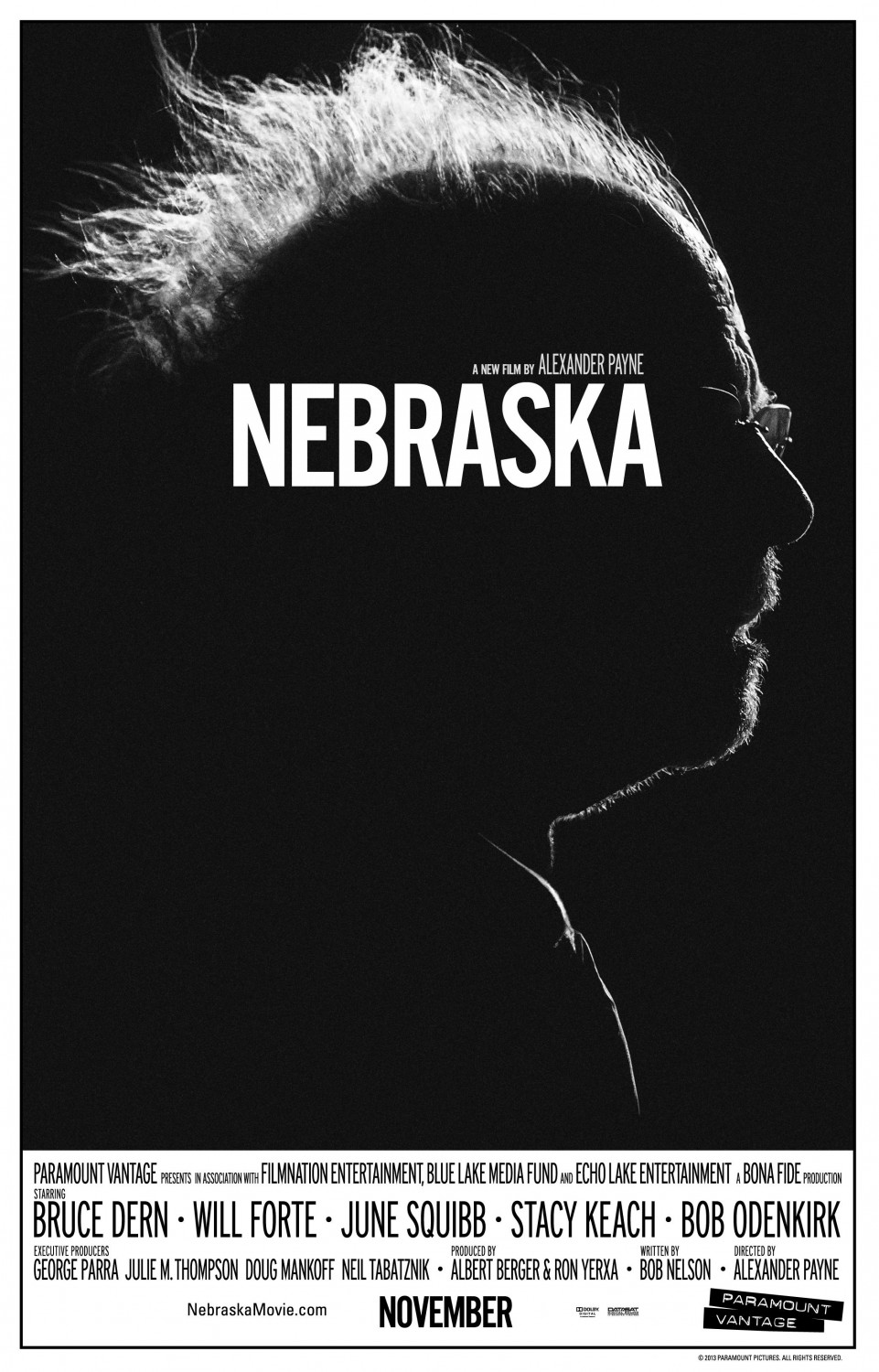 Nebraska is a slow burn, wryly-funny character study of understated proportions, highlighting Midwestern culture rarely given its big screen due. So, in essence, it’s an Alexander Payne movie.
Woody Grant (Bruce Dern) is an elderly man convinced he has won a million dollars and all he needs to do is travel to Lincoln, Nebraska to claim his loot. It’s one of those mass mailings really meant to get people to buy magazine subscriptions, but Woody will not be stopped, sneaking out to walk all the way to Nebraska from his home in Billings, Montana. David (Will Forte) is in a rut himself. He’s recently been dumped, his job is going nowhere, and his father refuses to accept his million dollars isn’t real. There’s a question of how lucid Woody is, and so to placate his old man, David decides to drive his father to pick up his winnings, to humor him before his mind may be gone for good.
 Despite the overtly sitcom machinations of the inciting incident, which even the characters dismiss, the film is really a drama about the relationship between a father and son and the culmination of our life choices. Woody and David are not close by any conventional means but over the course of their road trip, David begins to see his father in a different light; the old wounds are not forgotten, but David is learning about who his father is through others. He’s been so mad at his father for so long that it was the only identity he had for the man. Now in his deteriorating mental state and physical fragility, his father has a sense of vulnerability that brings about decidedly mixed emotions. In his fragile state, is he the same man or at least the same man David remembers? Then there are all the family revelations springing out from the situation. With a genuine millionaire in their midst, the family is coming out of the woodwork clamoring for their own pieces for all the unpaid assistance they’ve given Woody over the years. Initially, it makes Woody look like he’s been stuck trying to find his footing his whole life, as we learn about the lingering post-traumatic stress effects from his war service. Was he lazy, undiagnosed PTSD, or, as another character surmises, too ashamed to say no when others asked for help, and so he was taken advantage of in the guise of assistance from unscrupulous friends and family. The question remains who is Woody?
This is one of those observational slice-of-life films, and your enjoyment of it will depend on your threshold for the taciturn types. These are the strong silent types who keep most of their feelings to themselves. There’s a very funny sequence where Woody and his aged brothers have gathered around a TV, and to listen to the dry mostly car-related conversation bounce back and forth like a dead, floating wiffle ball, is a great comic moment but also a nice insight into an older generation and their communication. Given the perspective of the film, it’s hard to deduce whether the plainspoken people are being satirized or whether it’s a loving send-up of a specific culture. With Payne’s involvement, I lean more on the affectionate tweaking rather than a mean-spirited ridiculing of small town folk and their small town ways. There are funny situations, like David and Ross teaming up for some misplaced justice, and there are characters more broadly drawn for laughs, particularly Woody’s wife (June Squibb), but the overall interaction of the characters, their speaking vernacular, and how they viewed themselves, that is what made me laugh the most and appreciate the script. You feel like you’re dropping in on these people’s lives; every character feels like they could be a real person, not a stereotype. And boy does money really bring out the worst in people.
With Woody and his son visiting his old haunts, the movie inevitably becomes a reflection of a man taking stock of his life, regarding the choices he made and did not make. The pit stop in town opens up the character and David learns far more about his father, with old girlfriends, old business partners, and old rivals. What I appreciated further is that Nebraska doesn’t try and soften Woody; he’s not going to be some old curmudgeon who over the course of 90 minutes has his icy heart thaw and comes to realize the errors of his ways. Nope. Our views on the old man may soften when we get a fuller picture of who he is ad the life he’s lead, but the man himself is the same. He’s readily belittled, insulted, looked down upon, even by his own family members, especially his sassy wife. It’s easy for him to retreat into alcohol and wonder what if. As the family picture broadens and becomes more clear, the film approaches simply yet touching revelations about the family and the nature of legacy. There’s a father/son examination, but there’s also the discussion of what to do when your parents become too ill to take care of themselves. It’s not exactly The Savages, but there’s a circling sense of burdensome decision-making that provides an extra level of pathos to the sitcom setup. By the end, Nebraska squeezes out some earned sentiment without losing its edge or sense of identity. There’s a lot more going on then just some send-up of rubes.
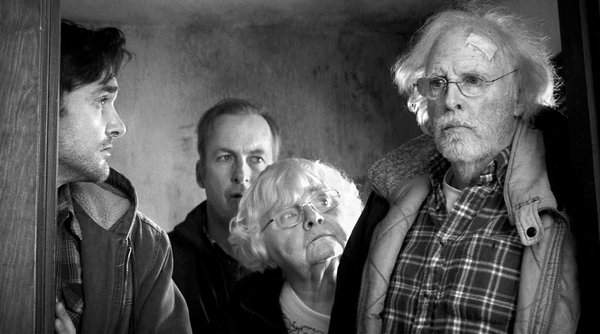 People have been raving about Dern (TV’s Big Love, Django Unchained) ever since the film’s Cannes premier, where the man earned top acting honors. The man deserves every positive words penned. He’s simply fantastic. The character vacillates between outward hostility, spacing out, and general Midwestern emotional reserve, and Dern is able to sell you on every emotional beat without breaking character. He’s unrepentant and demands to be taken for who he is, and his matter-of-fact bluntness has a certain charm to it, like when he admits to David that he never had any plans for kids. He just liked to “screw” and their mother was a Catholic (“You do the math”). I even appreciate that Woody would use the term “screw,” which seems more appropriate. As a two-man show, it’s a shame that Forte (TV’s 30 Rock, The LEGO Movie) doesn’t exhibit the dramatic chops to keep up with his onscreen pop. It’s nice to see him attempt something so different but his limitations are too evident; it’s just another gear that’s not present. At no point would I call Forte’s performance bad but he’s just unable to keep up. Squibb (About Schmidt, Meet Joe Black) is a hoot though the character seems to be permanently stuck in “wacky” mode. She’ll crack you up with her unrestrained commentary, but you may wonder if there’s any more to this character than saying outrageous, curt comments.
This was the last Best Picture nominee I’d failed to catch up with, and while it’s entertaining, funny, and unexpectedly touching thanks to terrific acting and a sharp script, but it also might be the weakest Alexander Payne film yet. This is the first film that the Oscar-winning director hasn’t written himself. Bob Nelson’s screenplay may never have even been glanced over by Payne had it not been for the state of its title (Payne’s films general take place in Omaha). It’s got Payne’s stamp, as would any film he directs, but it also feels like it’s missing something ephemeral, not to get too pretentious. This is a quality study of a cracked group of characters that, upon further review, aren’t as cracked as we may think. They’re just flawed people trying to get along as best they can. Even amidst the snide and antagonistic conversations, there’s gentleness here about the value of family that resonates above the din of the shouting. By film’s end, what started as a cockeyed sitcom transforms into a film that has more meaning and emotion, never betraying its guarded sense of self. When I say the weakest Payne film, this is not an insult but merely an observation. Even the weakest Alexander Payne film is going to be so much better than just about everything out there.
Nate’s Grade: A-
Share this:

The LEGO Movie (2014)
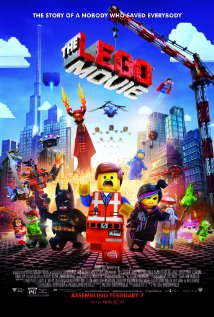 Highly creative, cheeky, frenetic, and bursting with visual splendor, The LEGO Movie will likely surpass all expectations you had for what was assumed a 90-minute LEGO commercial. I cannot even tell if it’s actually a commercial or a subversive consumerist satire, or perhaps a blending of both. Writer/directors Phil Lord and Christopher Miller take their same anarchic, comic rambunctious absurdity exhibited in Cloudy with a Chance of Meatballs and 21 Jump Street and produce another movie so fast-paced, so freewheeling in energy, and so comically alive that you feel rejuvenated by the end. These are gentlemen who fully know the storytelling power with animation and they create worlds that are astounding to watch. While completely computer generated, the world looks like it was stop-motion. In fact, the detail that everything in the physical world is made of LEGOs was a nice touch, including fire, water, and smoke. The story of an unremarkable guy (slyly stupidly voiced by Chris Pratt) mistaken for The One, and the complications that arise, is a fitting satire of superhero fantasy mythos filmmaking. The social commentary on conformity and the media is cutting without distracting from the plot’s ongoing mission. The characters are fun, the jokes land assuredly, and the action sequences are mesmerizing. But then it takes a meta turn in the third act that gives the movie a whole other prism that helps define its previous outrageousness while leading to a poignant message about the inclusiveness of play. It’s a movie that celebrates imagination and individuality, and while it will more than likely also sell a crapload of toys, it’s an animated film with more on its mind. To paraphrase the top radio hit in the world of LEGOS, everything is just enough awesome.
Nate’s Grade: A-
Share this:

Paradise (2013)
 You’re courting irony when you name your movie Paradise, as well as pained movie critic puns, but I had faith that Diablo Cody, stepping into the director’s chair for the first time, would entertain, especially after her best screenplay yet, 2011’s Young Adult. The problem with Paradise is that it goes just about nowhere and it’s shockingly bland, a criticism I never thought I’d have for a Cody-penned work. The premise starts off strong, with Lamb (Julianne Hough) as a devout Christian living a sheltered existence until the day she becomes the sole survivor of a plane crash. Her body covered in burns, her faith shaken to its core, she embarks on journey to Las Vegas to sin it up big time. It’s snarky and satirical, and then she gets to Vegas, she meets some nice new pals (Russel Brand, Octavia Spencer), and they hang out and… that’s about it. The Lamb character is meant to be a naïve but ultimately nice person, but she’s portrayed as vaguely racist thanks to Cody’s simple skewering of fundamentalism. Where are the sharp characters and incisive wit of Cody’s past efforts? The comedy almost dissolves as it goes and you realize that intriguing premise is never going to be realized. And then the third act happens and it feels like the film just gives up, unearned sentimentality takes control, and the characters all find unsatisfying conclusions. The characters aren’t given enough material, often left adrift in a plot-free environment of self-discovery. A misguided scene where Lamb pours her heart out to a former prostitute could work as a summary of what tonally doesn’t work with this movie. There are some funny moments, even some affecting ones, but Paradise doesn’t feel like it has a sophisticated voice and clear direction. Coming from Cody, I wouldn’t have expected those two chief complaints.
Nate’s Grade: C
Share this:

The Secret Life of Walter Mitty (2013)
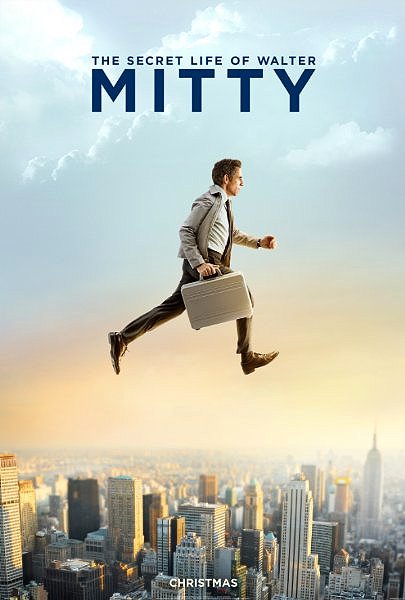 The Secret Life of Walter Mitty, based on James Thurber’s short story, is a property that has long beguiled Hollywood. The idea of escaping one’s ordinary life with fantasy, where we’re the hero. It was turned into a 1947 film starring Danny Kaye, which is rather entertaining, but has yet to be remade in all that time. It’s the kind of attractive project that has attached big name talent at different stages of development, including Steven Spielberg and Jim Carrey. It was never able to get off the ground, that is, until Ben Stiller stepped in, not just as director but also as the lead actor. Given Stiller’s directorial track record, there was suitable reason to anticipate what he could accomplish with Mitty, but the film too often feels like Stiller hamstrung, ably trying to marry a sincere indie sensibility to a mainstream sentimental holiday-released excursion for families. Stiller’s Walter Mitty never quite takes off.
Walter Mitty (Ben Stiller) is a man who has trouble filling out an online profile. He doesn’t have too many experiences or places traveled. It may be why he frequently “zones out,” as his family terms it, escaping into fantastical daydreams. In real life he works as a photography assistant for LIFE magazine, a publication that is transitioning to a digital-only existence. The enigmatic photographer Sean (Sean Penn) has sent a collection of film negatives to Walter, making special note of how Negative #25 is his life’s masterpiece. However, Walter cannot find it and is having trouble getting in contact with Sean, who is overseas on assignment. Without that much-hyped negative/picture, Walter will surely be fired, and then he’ll never have a chance to ask out his co-worker, Cheryl (Kristen Wiig). Walter sets out to Iceland and beyond to find the negative, stop daydreaming and finally live his life.
 The very tone of the movie feels like a miscalculation. It’s the story of a daydreamer, a man who retreats into his head and lives out preferable fantasies that are whimsical and far-fetched. We all knew this going into the film. It’s the same as Thurber’s story. The problem is that when Walter gets the courage to embrace life, his life is full of whimsical and far-fetched moments. He jumps out of a helicopter in shark-infested waters, where the sharks are ravenously active. He also hops into a car and has to outrun an oncoming ash cloud from an exploding volcano. And then in the third act, he travels across a mountain range all by himself and manages to miraculously find one guy. I don’t think this approach works if his real-life adventures are on par with his whimsical fantasies. I suppose one could argue that this serves a point to make real life seem just as appealing as his mental retreats, but I think it harms the very execution of the movie. First, if there’s a parallel, it means that his fantasy sequences aren’t going to be too fantastic, squashing the potential of Walter’s imagination. The only fantasy I enjoyed was a Man of Steel-esque brawl with a bearded Adam Scott (TV’s Parks and Recreation). Secondly, it means that the serious “go get ‘em” message of the movie is occurring within a medium that ordinary citizens have little connection with. Make no mistake, Walter Mitty is clearly meant as a mainstream feature meant to inspire the masses with its sentimental stripes, but is the story of a superhero doing super deeds any more relatable to the common man?
Another problem plaguing Mitty is the illusion of depth. Beyond the simplistic platitude of “get out and live your life,” there really isn’t much more of an idea explored here. It’s not like this idea hasn’t been explored in, oh, hundreds of other stories. Regardless, the film often just becomes a two-step process of Old Walter feeling timid, and then, what’s this, the hip soundtrack with the likes of Arcade Fire and Of Monsters and Men starts pulsating, and Mitty boldly shifts into New Walter, the go-getter, the guy who’s going to take charge of his own life. It’s a strong soundtrack in all senses. This process is repeated throughout the second act of the script where most of Mitty’s overseas journeys take place. Also, it may sound petty, but let’s focus for a moment on the applicability of the movie’s message compared to the practicality of what is onscreen. Live your life, but how many of us can afford to go globetrotting on a whim? I understand the larger canvas meant to evoke Mitty’s growing sense of discovery, so I’ll let it slide. The theme of Walter Mitty isn’t so much developed as it is repeated. There’s not enough substance here. In the end, the movie feels like 100 minutes of a soundtrack and a message in search of a better movie.
Allow me illustrate one of those “go out and live, Walt” moments in the film. Walter is in Greenland (though filmed in Iceland) and needs to get to a fishing vessel. The man next to him is a helicopter pilot. Great. But he’s also drunk, so Walter understandably refuses to fly with the man. This seems like a very rationale decision, but then he fantasizes Cheryl coming through, urging him on through song (through song!), and the soundtrack starts pumping, and Walter runs out and literally jumps inside the ascending helicopter. It’s meant to be portrayed as a triumphant moment of embracing the uncertainty of life’s adventure, but in reality the movie just pressured its title character into getting into a flying vehicle with a drunken pilot. What? That’s irresponsible.
And then there’s just the lackluster characters and plotting. Walter Mitty is a nice enough guy but too milquetoast to be that appealing, relying upon the comic graces of Stiller to provide the filling. The character of Walter is basically a hodgepodge of other Stiller characters in previous movies, but the character feels too restrained for an actor of Stiller’s talent. I understand that the arc has to travel from passive to active, but it feels like the funny Stiller we’re all accustomed to is being held in check thanks to the film’s broad appeal feel-good sentimentality. There’s one brief moment of the anarchic, silly Stiller that we loved so much in Tropic Thunder, and it involves a weird fantasy where Walter suffers the reverse-aging Benjamin Button disorder. It doesn’t fit at all with the tone of the film, and that’s why it stands out. Walter is a nice guy but rather boring. He pins his journey of self-discovery on getting the girl, and then when presented with one minor obstacle at the start of Act Three, rather than speak with her, he assumes the worst and just gives up. The narrative requires one of those eleventh-hour misunderstandings to keep the guy and girl apart, but it’s a frustrating decision that makes me like Walter less.
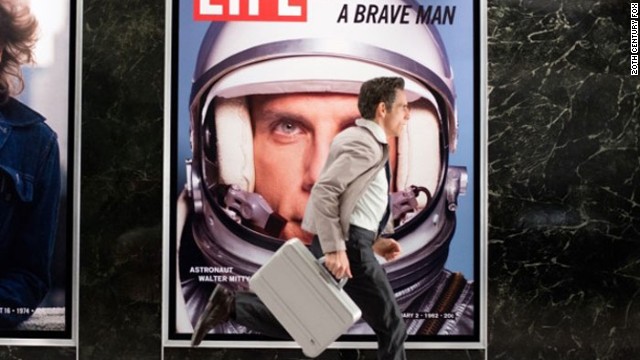 The Secret Life of Walter Mitty is also filled with blunt product placement and some strange plot elements that don’t blend together. I’m not generally offended by product placement in movies when they make it oblivious; hey, a character has to drink something so why not a (insert product here)? But the fact that the Walter Mitty team actually makes Water’s teenage stint at Papa John’s a reveal about his character, and that the very store is meant to stand in as a reminder of his own deceased father, is just wrong. Then there’s the fact that Walter works as a negative corrector (analog job) at a magazine (troubled industry), and that magazine happens to be LIFE (which shuttered in 2000). Why all the analog contexts? Is it meant to convey Walter’s reluctance to change or adapt? The whole notion of the magazine downsizing gives the film a real-life aspect that just doesn’t feel appropriate for the movie. The fact that Walter’s journey is propelled by a quest for a single missing negative feels a tad too facile for the man’s transformation, but it’s made worse when the answer to the location of the negative is so transparently obvious from the get-go. It was so obvious I almost talked myself out of it. Most of the supporting characters in the film serve little effect on any of the events. They’re there just to provide minor details about Walter and that’s it.
The movie is so earnest and you can tell Stiller is trying hard, but The Secret Life of Walter Mitty ends up being a disappointing feel-good message lacking substance and much entertainment. The filmmakers have conviction, I’ll give them that, but it’s misplaced, and the film’s tone has too many distracting elements. The fact that real life mirrors Walter’s fantasy visions seems like a miscalculation from the start. Thurber’s short story didn’t have that much to it to begin with but we need more than this, an office schlub learning to live his life through improbable adventures meant to inspire the rest of us common folk. As a slice of escapist entertainment, it’s not fanciful enough, not creative enough, and not funny enough. As a motivational, heart-tugging ode to living one’s life, it falls into too many traps to feel applicable, insightful, or engaging. It looks beautiful and the people behind the film obviously mean well, but good intentions and nice camerawork are not the same as an effective movie built from the ground up, namely the lackluster story and characters. The Secret Life of Walter Mitty feels like it has as much depth as a glossy, idealistic commercial, and perhaps for some this will suffice, but I found this Walter Mitty’s secret life not worth investigating.
Nate’s Grade: C+


 nathanzoebl
You must be logged in to post a comment.