Blog Archives
Captain America: Brave New World (2025)

After seventeen years of constructing interconnected fables, not every Marvel movie is going to be exceptional, as each one serves as a mighty oar to propel the larger entity that is the Marvel cinematic Universe (MCU) forward. With over thirty movies, there are going to be duds and there are going to be movies that get lost in the machinery of the cinematic universe grinding onward. Consider Captain America: Brave New World one of those sacrificial offerings that nobody will remember in short order.
Sam Wilson (Anthony Mackie) has taken over the mantle of Captain America in the wake of the original, Steve Rogers (Chris Evans), retiring. General Ross (Harrison Ford) has recently been elected president and he wants Sam to reconstitute the Avengers. However, someone is triggering sleeper agents to try and kill Ross, and Sam is entrusted to get to the bottom of this conspiracy.
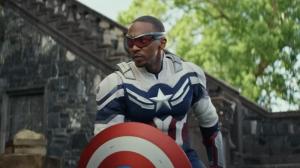
Brave New World is certainly trying to relive the formula that made 2014’s Winter Soldier such a genre standout, upending the status order of good versus evil through the prism of a political thriller. There’s an assassination attempt on the newly elected president, and it also happens to be brainwashed sleeper agents that can be activated at a moment’s notice. What helped make that 2014 movie work was that the sleeper agent happened to be Steve Rogers’ former best friend he thought had died back in WWII. There was a personal connection to the mystery and especially the figure of destruction. With this movie, the personal connection that Sam has to the mystery is almost immediately locked away, made to be an objective needing to be saved by eventually capturing the real bad guy in the shadows. Rather than having to face down a ghost from the past, a personal friend gone rogue, now we have Sam just chasing one shady bad guy to link to the next shady bad guy to a conspiracy that doesn’t even involve him. That was another aspect that made Winter Soldier excel, Steve’s allegiance and sense of patriotism running in direct conflict with the wishes of his government. It was personal and meaningful and challenged his perception. With Brave New World, it could have literally been any character uncovering this very limited conspiracy. That’s not a great start, making your lead character practically superfluous to the larger plot.
Much of this lingering conspiracy also hinges upon the identity of the Red Hulk, which might have been mildly surprising had Red Hulk not been such a vital element of the movie’s marketing. He’s in the TV ads, he’s in the trailers, he is the poster. This movie had more Red Hulk advertising than its titular hero. Unless you’ve walked into the theater blind, and congrats to you, for all intents and purposes this has been sold as the Red Hulk movie, and even if you’re walking in hoping for some wall-to-wall Hulk smash, then you’ll be sorely disappointed. There’s perhaps ten minutes at most of Red Hulk action, and it’s saved for the very end. It’s a climax that feels more perfunctory than satisfying, with the obvious reveal being held as something revelatory and meaningful when it’s just going through its basic blockbuster dance moves.
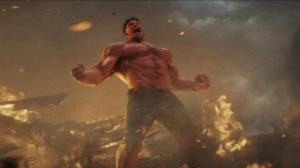
As is typically the case with movies that undergo many delays and re-shoots, Brave New World feels like it has far too many things going on and also simultaneously not enough going on. This is an unexpected sequel to 2008’s Incredible Hulk, generally regarded as one of the weakest MCU movies. The only thing that survived that movie was William Hurt (R.I.P.) as General Ross. I don’t think too many Marvel fans have been dying to have those characters and storylines picked back up after 17 years, but at long last you can see Tim Blake Nelson’s character again. Do you know what his character’s name is? Unless you’re the keeper of the 2008 Incredible Hulk fan wiki, I strongly doubt it. Quick, what’s his name without looking it up? It’s Samuel Sterns. Did you even remember Tim Blake Nelson being in the 2008 movie? The movie also has a global resource land grab to finally explain the frozen celestial body rising from the ocean ever since the events of 2021’s Eternals, a movie I fear we’ll wait an additional 17 years to get its own conclusion. This colossal being is the source of a new all-purpose element – adamantium, and that name should be instantly familiar for fans of the X-Men, as this movie pushes their inclusion that much closer. If The Marvels gave us Kelsey Grammar and Patrick Stewart’s return as Beast and Professor Xavier, this one boldly gives us… an elemental alloy (at this rate, two movies from now will introduce the X-Men’s jet as another sign to those in the know about what’s to come). It’s taking the leftovers from another movie to set up the larger scope of a branch of new movies down the road, while also tying back elements and characters from the earliest days of the MCU. It’s all a lot of table-setting unless there’s a compelling storyline with engaging characters and relatable conflicts and drama, and Brave New World does not. As a result, it’s all like watching a fast-moving assemblage of familiar parts trying to package itself together as a cohesive movie, and it just cannot. It’s one of those sacrificial movies at the altar of larger stories.
Which is a shame because there was a really fascinating and thought-provoking story at the core of Brave New World that barely gets any recognition amidst the explosions and gunfire, namely what does it mean for there to be a black Captain America? How does society respond when their patriotic symbol of American might now has more melanin? Considering how the Internet has throngs that lose their mind whenever a traditionally white male character gets changed into something different, I have to imagine there would be waves of people grumbling that this new “thuggish” Cap isn’t “their Captain America.” This is epitomized in the character of Isaiah Bradley (Carl Lumbly), a veteran who was also selected for the Army’s experimental super soldier project that gave birth to Captain America. Except because he was black during a time of segregation as the norm, he never got the adoration of Steve Rogers, and his accomplishments were ignored. In our current political climate, where diversity has become a convenient boogeyman, it would have been interesting to explore how the culture responds to a black man picking up the shield and being the next Captain America. It also would have invited a worthy conversation about where this country has let down its black populace, symbolized with Bradley’s past. Some of these themes were explored in the 2021 Disney Plus TV series Falcon and the Winter Soldier, but that doesn’t mean they couldn’t be meaningfully revisited given the elevated platform of the Captain America moniker. This was also the TV show that argued refugees could be terrorists, so there was room to grow. Unfortunately, this is only ever given passing mention, as institutional racism gets in the walk of Hulk smashing.

There was possibility with Brave New World but it too often seems to run aground with too many conflicting directions, underdeveloped ideas, and unfocused themes. The political complications, as well as evaluating the sins of the country’s past, could have made for a poignant and relevant movie with bigger things on its mind rather than getting to the next CGI slug-fest. It’s a Captain America with a new Captain America, so let’s explore what that means. It’s the franchise’s opportunity to begin anew with a different hero at its helm, and yet it feels more like an over-extended, disappointing finale to the Falcon/Winter Soldier TV series. It feels like an unneeded epilogue to an epilogue, and tying in so many disparate elements from films that people have forgotten or care less for seems like a strange creative choice when Marvel is looking to find its way in the wake of its post-Endgame walkabout. The worst crime with Brave New World is merely how boring all of it turns out to be. Far from brave, far from new.
Nate’s Grade: C
Share this:

The Electric State (2025)

The fire hose that has been the Netflix cash flow may be reigning in, but that didn’t stop the streaming giant from making another attempt at a huge blockbuster to rival those Hollywood designs for the big screen. The Electric State is a $320-million sci-fi adventure spectacle from the Russo brothers, Anthony and Joe, the team that gave us the highs of the Marvel Cinematic Universe (MCU) later Avengers movies, and the lows of, well, everything after their MCU movies. Netflix is actively trying to compete with the theatrical experience brought to you at home, so they take these big expensive swings on large-scale, quippy, action vehicles like Red Notice and 6 Underground every so often to mixed results. Netflix has become the go-to place for a kind of movie that has altogether vanished in the studio sphere, the mid-tier movie for adults. We need those stories. What Netflix hasn’t done as effectively is compete with the big studios for comparable expensive action spectacle. The Electric State is further proof.
In an alternate America, robots were created and given menial tasks by mankind. Naturally, they grew tired of this and attempted a revolution for their equal rights. Mankind was on the brink when an unlikely savior emerged. Tech CEO Ethan Skate (Stanley Tucci) created an army of humanoid drones controlled via VR helmets. This disposable army of avatars was able to beat back the robots and forced their leader, literally an animatronic Mr. Peanut (voiced by Woody Harrelson), to sign a “peace treaty.” The results exiled the robots into a walled off wasteland in the American southwest, and humanity went on its merry way, now with VR-controlled avatars that allowed every American the luxury of staying on their duff. Michelle (Millie Bobby Brown, contractually obligated to be in every Netflix original not starring Joey King) is an orphan WITH AN ATTITUDE. One day she’s greeted by a pint-sized robot looking like the Cosmo cartoon character her younger brother was obsessed with. The little robot says he is her brother and Michelle realizes that maybe she has some family left after all. She and the Cosmo bot are on the run from scavengers and bounty hunters trying to stop their fateful face-to-face reunion.

The Electric State is lacking such vital creative sparks to feel anything more than the ramshackle sum of its derivative sci-fi parts. It began as a melancholy mixed media book from the same Swedish author behind Tales From the Loop and it’s become a giant lumbering mess of mediocre and familiar elements. It kind of feels like the newer Ready Player One-era Steven Spielberg trying to emulate early E.T.-era Spielberg, but then that would give us an artist on the level of Spielberg, and that’s not what we have here. It’s standard adventure fare with a brother and sister crossing the country to save the day and thwart a big evil corporation along with scrappy, rakish rogues joining them along the way for fun and life lessons. Chris Pratt’s character is so transparently a Han Solo clone but he’s an empty vest with eye-rolling quips. This is an alternate history story with a literal robot uprising but it devotes so little interest in its own world building and history. The movie essentially castigates all the robots to a forbidden zone that naturally will be visited by our plucky heroes. The majority of the movie is watching these robotic avatars (reminded me of the Geth from Mass Effect) for people who can’t be bothered to leave their VR helmets. If this new world has devolved human interaction into a series of screens (commentary!) then maybe let’s explore that with meaning. If robots are going to be an exploited labor class (commentary!) then maybe let’s explore that too. If this is a future world where robots have been exiled and feared as an Other (commentary!) then let’s explore that too. There’s one moment where Evil Steve Jobs enjoys a VR recreation of his deceased mother, except he admits that this version is the version he wishes he had, and the real figure was far less doting and far more abusive. That’s an interesting concept, that VR offers users the ability to live in a reality of their own desires. But this isn’t a movie that wants to take time to explore interesting and relevant themes, because that would get in the way of action set pieces and goofy robot action. Seriously, there’s one fight where a U.S. postal service robot is literally hurling undelivered mail at a killer robot avatar and succeeds. Because this isn’t a deep movie, we have essentially good robots and bad robots, and if you’re shocked that the robots may have been misunderstood, well congratulations on seeing your first movie. I assure you, they mostly get better from here if you give them a chance.
The inclusion of robots is so underutilized, tapped for ready sidekicks and villains, that you could have replaced them with aliens or clones or any other disposable science fiction element. In this parallel world, Walt Disney created the robots for Disney World, so wouldn’t it be worthy of exploring that history and the sense of Victor Frankenstein-style paternal obligation? Wouldn’t the robots retreat to their ancestral home of Disney World? Or perhaps they view this as the birth of their enslavement? What about different generations of robots, especially older models being replaced with newer ones, thus creating class warfare within an exploited secondary class? What about looking at robots having to subsist off junk to continue with their meager existences? What about robots still living in forbidden zones that are hunted by the government and its armada of robot drones? There are so many possible ideas and stories and characters that are open through the inclusion of robots, but the movie doesn’t have the interest or drive to make them matter. As a result, it’s mostly a swift-moving travelogue with some ugly-looking or cranky guests riding shotgun. Occasionally The Electric State will remember, oh yeah, robots can do stuff people cannot, like having one of them hack into a server or having a smaller robot inside like a high-tech Russian nesting doll.

I think it was a combination of the uninvolved storytelling as well as the character design that left my emotional attachment to be null and void. I hated the Cosmo character design. He’s this big spherical head with little skinny limbs, but the head might as well be an un-moving mask. A giant toothy smile is drawn on the front and it’s so inexpressive. Also, the fact that the kid has to exclusively rely upon only using sound bytes from this canceled cartoon series makes for a quickly annoying little brother. I didn’t care about this kid, human or robot, and I didn’t care if Michelle ever reunited with her brother. Then the fact that the movie’s climax involves such a serious and emotional choice seems absurd considering what has been underdeveloped up until this abrupt shift in intended emotional stakes. It’s such an out-of-left field escalation that I almost laughed out loud at what the movie was asking me to feel, as well as what it was asking its protagonist to decide. Likewise, the betterment of robot-kind is given such little recognition, culminating in a showdown between the avatar of good robots and evil robots essentially going to revise a treaty that we don’t know much about. For a movie about how easy it can be to distance ourselves via technology, it sure fails to reasonably make the viewer care about robot equality.
Then there’s the fact that this whole enterprise cost an astounding $320 million for Netflix to platform it as its next hit movie to doze off to while in the middle of doing laundry. The Russo brothers have retreated back to Marvel to handle the next two Avengers movies, and it seems like at a time where both parties have missed and could use one another. Outside of Marvel, the Russos have delivered one super expensive action movie (The Grey Man), a super expensive spy action series (The Citadel), and one lackluster biopic that used every Scorsese stylistic trick they’ve been saving up (Cherry). With The Electric State, we have the brothers’ more familiar mixture of large-scale action and special effects in a mass appeal studio blockbuster space. However, every movie outside of Marvel has made me question their capabilities of handling these big movies. I know the Russos can be fantastic with comedy, as some of their TV episodes are the best of recent memory, and their stewardship of the big MCU movies in the wake of Joss Whedon’s departure was undeniably successful. So why isn’t The Electric State successful? It comes down to the screenplay which is so disinterested in its own ideas, world, and characters, held together by the familiarity of other adventure blockbuster staples like loose chewing gum. It’s a movie replete with famous faces and big effects but feels so devoid of life and creativity, a blockbuster automaton intended to hold the attention but rarely engage one’s imagination and emotions.
Nate’s Grade: C
Share this:

The Woman in the Window (2021)
 The story behind The Woman in the Window is far more fascinating than the finished movie, based upon the 2018 best-selling debut novel by Dan Mallory under the pseudonym A.J. Finn, a hasty rehash of popular thrillers, notably Rear Window, mixed with recent unreliable narrator mystery/thrillers like The Girl on the Train. It’s actually somewhat shameless how derivative it comes across, so much so that you might be able to guess one of the movie’s Big Twists in the literal opening minutes. Amy Adams plays an agoraphobic psychiatrist who believes the new neighbor (Julianne Moore) across the street has been killed by her husband (Gary Oldman), and no one believes her because of her drinking and medication and general misogyny and obvious twists. I cannot tell if screenwriter Tracy Letts (Killer Joe) and director Joe Wright (Darkest Hour) were going for camp or sincerity, as the movie veers chaotically until its final groan-worthy revelation, which is apparently taken right from the source material. There aren’t any significant moments of tension. I was more confused why and how everyone was constantly coming into this lady’s opulent New York brownstone. I was also wondering why the filmmakers made Oldman look like Jon Voight. The troubled movie was delayed twice, went through several re-shoots by Tony Gilroy (hey, it worked for Rogue One, right, Disney?) and ultimately cast off to Netflix. The most interesting aspect of this movie, by far, is the author being discovered as a fraud and fabulist of the first order, lying about everything and anything to elicit pity and use it for personal and professional manipulation, and I’m talking lies about his mother dying of cancer, his brother committing suicide, himself suffering from a recurring brain tumor, and even pretending to be his brother to write emails to colleagues while still maintaining the same distinct writing voice. Mallory’s years of pathological lies (he blames it all on being bipolar now) have actually inspired a TV series where Jake Gyllenhaal is set to play him. You should spend the time you would have used watching The Woman in the Window on Netflix and instead read the extensive New Yorker article that painstakingly paints the damning portrait of Mallory as a narcissistic con artist who would weaponize people’s sympathy.
Nate’s Grade: C-
Share this:

Avengers: Endgame (2019)
 This may prove to be the most difficult review I’ve ever written in my twenty years (!) of reviewing movies. How do I ever begin to describe the events of Marvel’s culminating blockbuster Avengers: Endgame without stepping too far into the dark and dangerous territory of the accursed spoilers? I thought it would be difficult talking about last year’s Infinity War considering the shocking plot events and general secrecy, but this concluding chapter to a 22-movie journey is even more secretive (the trailer accounts for only footage roughly from the first twenty minutes). I’ll do my best, dear reader, to give you the clearest impression I can of this unique experience while respecting your need to be un-spoiled. In short, Avengers: Endgame is unparalleled in our history of modern popular blockbusters because it needs to work as a clincher to a decade-plus of hugely popular blockbusters for the Marvel Cinematic Universe (MCU), and boy do they ever stick the landing.
The film picks up with our surviving Avengers picking up the pieces following the events of Infinity War, namely Thanos (Josh Brolin) eliminating half of life throughout the universe. The original six Avengers are all suffering through guilt, depression, and degrees of PTSD following their failure to defeat Thanos. Scott Lang a.k.a. Ant-Man (Paul Rudd) arrives after having spent time in the quantum realm and has a potential solution that will involve traveling through time to correct the mistakes of the past and bring everyone who vanished back to life. The remaining teammates assemble at the behest of Steve Rogers a.k.a. Captain America (Chris Evans), including Bruce Banner a.k.a. Hulk (Mark Ruffalo), Black Widow (Scarlet Johannson), Thor (Chris Hemsworth), Hawkeye (Jeremy Renner), Rocket Racoon (voiced by Bradley Cooper), Nebula (Karen Gillan), and War Machine (Don Cheadle). However Tony Stark a.k.a. Iron Man (Robert Downey Jr.) needs the most convincing, as he is most afraid of making things even worse and losing more people he feels are too precious to be casualties to their failures once again.
 The thing to know ahead of time is that Endgame is not for the casual fan. This is a long love letter to the fans that have pored over all 22 preceding films, not just a scant one or two. Infinity War was accessible to relative newcomers because of the structure and focus on Thanos as the main character, providing a self-contained arc that lead up to his finger-snapping triumph. It also benefited from the fun factor of simply watching a bunch of popular characters interact and team up for the first time in MCU history. Now that a majority of those characters have turned to dust, the emphasis falls back on the original core of the Avengers, bringing things full circle. In several ways, Endgame is about bringing to a close this mammoth project that began with Iron Man, this decade of storytelling ambition that has stretched out into multiple inter-connected franchises. If you love these characters, then Endgame is a movie made specifically for you. There is a long stretch in Act Two that relies upon a decent amount of fan service and sentimentality, but I don’t think either is an automatically negative attribute. Before we reach the finish line it’s important to take stock of how far we’ve come and this goes for the essential characters and their long arcs. There are several fun cameos strewn throughout and the filmmakers even take an interesting tack of trying to reclaim and re-contextualize the MCU movies that fewer people enjoyed. It makes for a filmgoing experience that is heavy in references, in-jokes, Easter eggs, and cozy nostalgia, which will confuse and frustrate those not well versed in this big world.
The other thing to know, especially if you’re a long-standing fan, is that there will be tears. Oh will there be tears. I lost count of the amount of times I was crying, which was pretty much on and off nonstop for the final twenty minutes. I was even tearing up for supporting characters that I didn’t know I had that kind of emotional attachment for. The film is done so well that the first third actually could play as the MCU equivalent of HBO’s The Leftovers, an undervalued and elegant series about the long-term recovery of those that remain in a post-rapture world. The opening scene involves a character having to go through the loss of loved ones via Thanos’ snap, and it’s brutal as we wait for what we know is coming, dread welling up in the pit of your stomach. The Russo brothers, the returning directing team from Infinity War, know what scenes to play for laughs (the line “That’s America’s ass” had me in stitches), what scenes to play for thrills, what scenes to play for fist-pumping cheers, and what scenes to play for gut-wrenching drama. They allow the movie to be an existential mood piece when it needs to be, actually dwelling on the repercussions of a life post-universe culling. There’s a character who frantically searches to see if a loved one was among the missing, and that eventual reunion had me in tears. With the three-hour running time, the Russos have the luxury of allowing scenes to naturally breathe. This might be the most human many of these characters have ever seemed, and it’s after recovery and grief. Needless to say, the conclusion feels very much fitting but also unabashedly emotional, unafraid of diving deep into its feelings. I sobbed.
 I was worried once the film introduced the time travel plot device that everything was simply going to be erased and invalidate the struggles that came before. The worst use of time travel is when it eliminates any urgency or danger, allowing an endless series of do-overs to correct the past. Fortunately, returning screenwriters Christopher Markus and Stephen McFeely (Civil War, Winter Soldier) realize that in order for there to be a reversal, a glint of a happy ending, there must be a cost or else it all meant little to nothing. There are finite events in the movie that cannot change (as of now) and losses that will be permanent (as of now, if they don’t want to cheapen the journey). People died with Infinity War but we all knew, at least when it came to its dreary conclusion, that it wasn’t going to be too long lasting, which allowed the communal grief to be short-lived. After all, there’s a new Spider-Man film coming down the pike two months from now, so it’s highly unlikely the teenage web-head will remain dead. However, with Endgame, the deaths serve as the cost for resurrecting the MCU, and they will be felt for years. The screenplay provides limitations to the time travel mechanics, though I don’t think the collective hand-wave to the nagging paradoxes was as successful as the movie thinks it was. The film barrels ahead, essentially telling you to forget about the paradoxes and enjoy the ride, focusing on the characters and remembering what is really important.
Suffice to say Downey Jr. is once again his charming, self-effacing, and enormously entertaining self. The MCU began with this man and his contributions cannot be overstated. He is the soul of this universe. Evans is compelling as the straight-laced inspirational figure who takes stock of what he’s sacrificed over the years, Hemsworth showcases a potent mixture of comedic and dramatic chops, Johannson is definitely the Avenger going through the “bargaining” phase to try and make things right and she has some subtle emotional moments that belie her desperation and guilt, and Renner makes a welcomed return in a way that made me appreciate Hawkeye like I never had before. Brie Larson does reappear as Captain Marvel but the movie smartly puts her back on the sidelines protecting the many other worlds in the universe needing assistance because of how overwhelmingly powerful she can become. Larson filmed her scenes for Endgame before her own solo movie, released a month prior, so forgive the different hair and makeup, Twitter nit-pickers. I will say there is one scene that is a bit convoluted how it gets there but is destined to make women in the audience cheer with excitement as the MCU says, “Hey, that whole ‘strong female character’ thing? Yeah, we’ve had all that for years, and here you go.”
 How does one properly assess a movie like Avengers: Endgame, a conclusion not just to an Infinity War cliffhanger but to a twenty-two movie prelude over the course of eleven years? The emotional investment in these characters, their journeys, has to come to something to be ultimately meaningful when it’s time to close the chapter on one massively ambitious story before starting the next. And there will be a next chapter; the MCU’s unparalleled financial success assures the fanbase they’ll have plenty more high-flying and wild adventures to come in the years, and more than likely, decades to come. Marvel had the unenviable task of wrapping up a major narrative in a way that would prove satisfying without devaluing the individual films and overall time investment. Hollywood is filled with trilogies that messed up their conclusions. Nailing the ending is just as important as getting things going right, because without a satisfying conclusion it can feel like that level of emotional investment was all for naught. Endgame reminds you how much you’ve grown to love these characters, what fun you’ve had, and genuinely how much you’ll miss these characters when they depart for good. It’s hard not to reflect upon your own passage of time with the ensuing eleven years, how you’ve changed and grown from the MCU’s humble beginnings in the summer of 2008. These heroes and anti-heroes can begin to feel like an extended family for many, and so fans desperately need the ending to do them justice. Avengers: Endgame is the ultimate fan experience.
Nate’s Grade: A
Share this:

Avengers: Infinity War (2018)
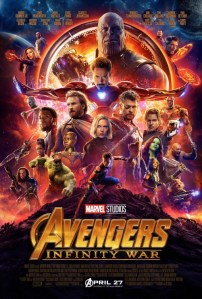 It’s hard to draw comparisons to the major commitment to long-form storytelling that the Marvel Cinematic Universe (MCU) has dabbled with over the course of ten record-shattering years of success. I can think of movie franchises that have been popular over long periods of time, like James Bond, but rarely do they keep to continuity. It’s been 18 movies and ten years since the caddish Robert Downey Jr. first stole our hearts in the original Iron Man, and its stable of heroes and villains has grown exponentially. Looking at the poster for Avengers: Infinity War, it’s hard to believe there’s even enough space just for all of the actors’ names. Infinity War feels like a massive, culminating years-in-the-making film event and it reminded me most of Peter Jackson’s concluding Lord of the Rings chapter, Return of the King. After so long, we’re privy to several separate story threads finally being braided as one and several dispirit characters finally coming together. This is a blockbuster a full decade in the making and it tends to feel overloaded and burdened with the responsibility of being everything to everyone. It’s an epic, entertaining, and enjoyable movie, but Infinity War can also leave you hanging.
Thanos (Josh Brolin) has finally come to collect the six infinity stones stashed around the universe. With their power, he will be able to achieve his ultimate goal of wiping out half of all life in the universe. Standing in his murderous way is a divided Avengers squad, with Tony Stark (Downey Jr.) still on the outs with a wanted-at-large Captain America (Chris Evans) and Black Widow (Scarlett Johansson). One of the in-demand infinity stones resides in the head of the Vision (Paul Bettany), who is in hiding with his romantic partner, Scarlet Witch (Elizabeth Olsen). They know Thanos will be coming for Vision eventually. On the other side are the Guardians of the Galaxy who have a few personal scores to settle with Thanos, the adopted father of Gomora (Zoe Saldana) and Nebula (Karen Gillan). Elsewhere, Thor (Chris Hemsworth) strikes out looking for the key to defeating the big purple menace. Thanos’ loyal lieutenants attack Earth to gather the remaining infinity stones, drawing the attention and push-back of Doctor Strange (Benedict Cumberbatch) and Peter Parker (Tom Holland). The various heroes of Earth and space unite to eliminate the greatest threat the universe has ever known.
 Avengers: Infinity War serves not as much a series of payoffs as it is climaxes, with climactic event right after another, and this time it’s for keeps (more on that below). There are moments that feel like major payoffs and moments that feel like shrug-worthy Last Jedi-style payoffs. Infinity War is the longest MCU movie yet at 149 minutes but it has no downtime. That’s because it has to find room for dozens of heroes across the cosmos. With the exception of three super heroes, everyone is in this movie, and I mean everyone. This is an overstuffed buffet of comic book spectacle, and whether it feels like overindulgence will be determined by the viewer’s prior investment with this cinematic universe. If this is your first trip to the MCU, I’d advise holding off until later. Any newcomer will be very lost. I’ve deduced the seven MCU movies that are the most essential to see to successfully comprehend the totality of the Infinity War dramatics, and they are Iron Man, The Avengers, Captain America: Winter Soldier, Guardians of the Galaxy, Captain America: Civil War, Doctor Strange, and Thor: Ragnarok. Naturally, being intimately familiar with the previous 18 movies will be best, but if you don’t have thirty hours to spare then please follow my seven-film lineup and you’ll be solid.
As far as the stakes, the MCU has been notoriously reluctant about killing off its characters, but Infinity War is completely different. I won’t spoil circumstances or names, of course, but the march of death happens shockingly early and carries on throughout. There are significant losses that will make fans equally gasp and cry. This is a summer blockbuster that leaves behind an impressive body count across the known universe and ends in a downbeat manner that will naturally trigger reflexive Empire Strikes Back comparisons. It’s hard to feel the full impact of the drastic decisions, and the grief over their losses because I know there is a Part Two coming summer 2019, and with that comes the almost certainty that several important events will be diminished or straight-out reversed. After all, in comics, nobody is ever really dead, though with movies the heroes have the nagging habit of aging. With that said, you better believe I was holding my breath during some standoffs, tearing up at some sudden goodbyes, and reflecting upon journeys shared.
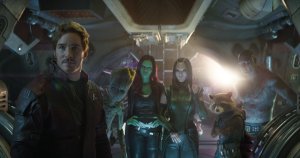 This is very much Thanos’ movie, which was one of the bigger surprises for me. Beforehand, our exposure to the big purple guy has been relatively minor, a brief moment here or a cameo there during a post-credit scene. Considering Thanos is supposed to be the universe’s biggest bad, it makes sense to finally give him his due, and that is what Infinity War does. Thanos gets the most screen time of any character and is given an honest-to-God character arc. He’s a villain who goes on an actual emotional journey as he follows a path that he feels compelled to even as it tests him personally. He finally opens up as a character rather than some malevolent force that is oft referred to in apocalyptic terms. We get his back-story and motivation, which is less a romantic appeal to Death like in the comics and more a prevention of the apocalypse reminiscent of the Reapers in the Mass Effect series. Thanos sees himself as a necessary corrective force and not as a villain. He’s never portrayed in a maniacal, gleeful sense of wickedness. Instead he seems to carry the heaviness of his mission and looks at the Avengers and other heroes sympathetically. He understands their struggle and defiance. Having an actor the caliber of Brolin (Deadpool 2) is a necessity to make this character work and effectively sell the emotions. Thanos is the most significant addition to the MCU appearing the latest, so there’s a lot of heavy lifting to do, and Infinity War fleshes him out as a worthy foe.
 As an action spectacle, however, Infinity War is good but not great. The action sequences are interesting enough but there’s nothing special and little development. There’s nothing that rivals the delirious nerdgasm of the airport battle in Civil War pitting hero-against-hero to dizzying degree. The characters are separated into units with their own goals leading to a final confrontation that feels more climactic conceptually than in execution. That’s because this is an Avengers film that falls into some of the trappings of the glut of super hero cinema, namely the army of faceless foot soldiers for easy slaughtering, the over exaggerated sense of scale of battle, the apocalyptic stakes that can feel a bit like a bell rung too many times, and even minor things like the lackluster supporting villains. Thanos’ team of lieutenants are all the same kind of sneering heavy with the exception of one, a sort of alien cleric heralding the honor of death from Thanos. Carrie Coon (HBO’s The Leftovers) is generally wasted providing the mo-cap for the Lady Lieutenant That Sounds Like a Band Fronted by Jared Leto, a.k.a. Proxima Midnight. There are far too many scenes where characters reluctantly strike a deal to give up an infinity stone if Thanos will spare the life of a beloved comrade. The film’s greatest point of entertainment isn’t with its action but the character dynamics. The fun is watching years-in-the-making character interactions and seeing the sparks fly. There’s more joy in watching Downey Jr. and Cumberbatch try and out smarm one another than with any CGI collision of a faceless army of monsters. There are so many characters that few are given fully defined arcs. Most are given beginnings and stopping places. Though the eventual sequel will have fewer characters needing to share precious screen time.
The standouts on screen are Hemsworth (12 Strong) carrying a large portion of the movie and not missing a beat of his well-honed comic rhythms from Ragnarok, Bettany (Solo) brings a sad soulfulness to Vision as a man who knows fate is likely unavoidable, and Dave Bautista (Blade Runner 2049) is perfectly deadpan as Drax and has the funniest lines in the movie followed closely by the exuberant Holland (Lost City of Z). To even say which characters deal with more complex emotions might be a spoiler in itself but there are several actors showing an emotive level unseen so far in the bustling MCU.
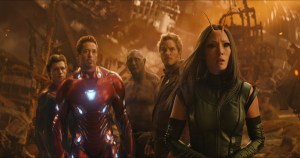 Avengers: Infinity War marks a significant concluding chapter for one of cinema’s most popular series, until at least the next movie possibly makes it feel less conclusive. I pity Marvel because expectations are going to be astronomical for this climactic showdown. There are so many characters, so many crossovers, and so much to still establish, like Thanos as a character more than a spooky force of annihilation, that it feels rather breathless even at nearly two-and-a-half hours. You may be feeling a rush of exhilaration on your way out or an equally compelling sense of exhaustion. Infinity War doesn’t have the imaginative highs of a Dcotor Strange, the funky personality and style of a Guardians of the Galaxy, the wonderfully thought-out structure of a Spider-Man: Homecoming, the adroit weirdness of a Thor: Ragnarok, or even the hero-against-hero catharsis of a Civil War (still my favorite). What it does have is a sense of long-gestating finality, of real stakes and dire consequences. It’s not all pervading doom and gloom; this is still a fun movie, buoyed by crackling character team-ups and interactions. While, Infinity War won’t be all things to all people, myself included, it will please many fans, casual and diehard alike.
Nate’s Grade: B
Share this:

Detroit (2017)
 Something akin to an art house exploitation film, Kathryn Bigelow’s Detroit is a pressure cooker about the horror of institutional racism, but it’s also a limited drama that lacks any sense of catharsis for an audience. Set among a hellish series of days in 1967, the film follows the events at the Algiers Motel, where Detroit police officers killed three innocent black men in their pursuit of what they believed to be a sniper. An all-white jury then acquitted the officers. Will Poulter (We’re the Millers) plays the lead racist cop and instigator, the man who tries using every effort to get a confession. His bad decisions lead to further bad decisions and miscommunication and then cold-blooded murder. It takes a solid 45 minutes to establish the various supporting characters, the fragile tinderbox that is Detroit during a series of riots, and getting everyone to the fateful motel. Afterwards, it’s like a real-time thriller that’s extremely harrowing to watch. It’s very intense and very well made by Bigelow and her go-to screenwriter Mark Boal (Zero Dark Thirty). Like Get Out, it turns the day-to-day black American experience into a grueling horror film. I was squirming in my seat and felt nauseated throughout much of the movie. I wanted to scream at the screen and tell people to stop or run away. However, it’s a movie with a lower ceiling, whose chief goal is to provoke primal outrage, which it easily achieves, but it feels like there’s little else on the artistic agenda. The characterization can be fairly one-note, especially with the racist cops who stew over white women hanging around virile black males. It’s victims and victimizers and we get precious little else. Your blood will boil, as it should, but will you remember the characters and their lives, their personalities, or mostly the cruel injustices they endured? It’s an intense, arty, exploitation film, and I can perfectly understand if certain audience members have no desire to ever watch this movie. It’s not so much escapism as a scorching reminder about how far race relations have come and have yet to go in this country. Detroit is a movie with plenty of merits but I think it’s the least of the three major Bigelow-Boal collaborations.
Nate’s Grade: B
Share this:

Captain America: Civil War (2016)
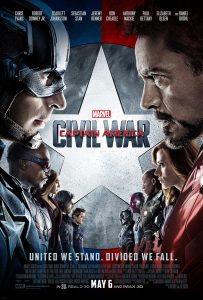 Think you were disappointed by last summer’s Avengers: Age of Ultron? The pressure-packed experience broke writer/director Joss Whedon who swore off being the creative shepherd of the Marvel cinematic Universe (MCU). Enter the Russo brothers, a pair who were widely known for their work in eclectic TV comedies like Community and Arrested Development before blowing away all modest expectations with 2014’s Captain America: Winter Soldier. I can say that the Russos are more than capable for the challenge. My simplistic blurb for Captain America: Civil War is thus: everything Batman vs. Superman did wrong this movie does right.
After the cataclysmic events of multiple movie climaxes, the world governments are wary of the power wielded by the Avengers. Secretary Ross (William Hurt, the lone returning element from 2008’s Incredible Hulk) is pushing the superheroes to sign the Sokovia Accords, which would put them under the control of a U.N. joint panel. This panel would decide when and where to deploy the Avengers. Captain America, a.k.a. Steve Rogers (Chris Evans), is worried about a group of people taking away their choice. Iron Man, a.k.a. Tony Stark (Robert Downey Jr.), believes that they need to accept limitations and that agreeing to these terms staves off something worse later. This division becomes even more pronounced when Rogers’ old friend the Winter Soldier, a.k.a. Bucky Barnes (Sebastian Stan), reappears as the chief suspect in a U.N. bombing. Black Panther, a.k.a. T’Challa (Chadwick Boseman), swears vengeance against Barnes for the bombing. As the assembly of heroes squares off over the fate of the Winter Soldier, Baron Zemo (Daniel Bruhl) is tracking down classified Hydra documents to uncover pertinent information that will topple an empire.
 While I don’t want to turn every new film review as an opportunity to beat a dead horse, I cannot help but draw immediate and stark comparisons between Civil War and the earlier titanic superhero slugfest, Batman vs. Superman: Dawn of Justice. Let’s take this case point by point so there is no reasonable doubt left for the jury of ticket-buyers.
“Batman vs. Superman doesn’t set up its conflicts with enough time to develop them and it lacks real emotional stakes.”
With BvS (I’m saving my fingertips some drudgery), we hadn’t known these characters for more than one movie at best, and in the case of Bruce Wayne less than one. When they fought there wasn’t any real stakes despite the apoplectic marketing because we hadn’t built relationships with these characters. In the case of Henry Cavill’s Superman, many were turned off entirely by the guy (not necessarily by Cavill’s physique, though). Did anyone really care who won? The filmmakers relied on the audience to supply their pop-culture good will for the characters instead of proper characterization and development. In the case of Civil War, we’re dealing with the cumulative effect of having twelve movies to build up storylines and character relationships. We’re invested in these characters and their friendships, so when they fight it actually does matter. You feel for both sides and multiple characters and the movie does a good job of providing each side a credible motivation. It’s a political thorny issue but it’s kept very streamlined, focusing more on the characters. If the MCU has had one nagging problem throughout its history it has been a dearth of good villains. There’s Loki and… Loki. One solution is to just pit the heroes against each other and this produces as many fist-bumps as winces. My audience was gasping at reveals and twists and turns. They weren’t doing that with BvS. And wouldn’t you know Civil War actually has a climax that’s more than just an increasing series of punches and kicks (though plenty of those are featured); the climax is an emotionally grounded confrontation that cuts to the core of the group. The events of this movie matter and while obviously it can’t follow its divisions to an irrevocable end, I appreciated that not everything is resolved. These storylines and the conflicts between characters will carry onward when we pick up the pieces in 2018.
“Batman vs. Superman is too burdened with setting up an array of other film franchises that it loses badly needed focus and momentum.”
 To be fair, this charge can also be laid at the feet of Age of Ultron, which buckled under the heavy weight of setting up multiple other future movies rather than telling a completely satisfying movie in its own right. Once the franchises gave birth to mega-franchises, the wheels-within-wheels of moneymaking, now the studios require a lot of heavy lifting from our entertainment. They’re investments in futures and if done improperly can easily crumble under the failed execution like the Amazing Spider-Man series (R.I.P. 2012-2014). Miraculously, Civil War finds ways to involve every member of a large ensemble cast into the story in ways that matter. The movie finds small character moments that make them feel better rounded, like Vision (Paul Bettany) and Scarlet Witch (Elizabeth Olsen), and it introduces featured supporting players with great care. Black Panther is a terrific addition and brings a quieter intensity that contrasts nicely with the more colorful characters. Hawkeye (Jeremy Renner) introduces himself and Black Panther curtly says, “I don’t care” and goes back to fighting. Boseman (ageless I tell you!) is smooth and magnetic. Then there’s everyone’s favorite neighborhood Spider-Man (Tom Holland), or whom I’m already referring to my pals as “best Spider-Man.” It’s another incarnation of Peter Parker but the first that feels like an actual teenager, a bundle of adolescent energy and excitement. He’s the voice of the fans and during the big battle he can’t help but gush that he gets to be involved alongside the big names. Spidey’s a fanboy too. He also has a few choice meta one-liners that had me cackling. Holland (The Impossible) makes an immediate impact and, unlike BvS, finds new ways to make us care. I’m genuinely excited for solo Black Panther and Spider-Man adventures with these characters. Even the more traditional villain of Civil War, Baron Zemo, is handled in a way that provides an emotional motivation for his character that is sincere rather than mustache-twirling villainy. In a lot of ways this feels like a third Avengers film just with the size and scope alone. The dozen characters are juggled skillfully but the emphasis is always on Rogers and Stark and their significant personal conflicts.
“Batman vs. Superman’s action sequences are repetitive, joyless, and dank.”
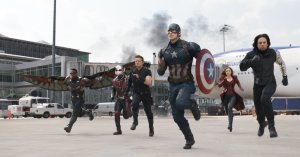
I challenge some enterprising soul to even try and decipher what is happening during the climactic three-on-one monster battle in BvS. I was sitting in the theater and just gave up. I wasn’t having any fun and I couldn’t even literally tell what was happening onscreen with all the confusing CGI obfuscation. The action droned on and on with little variation and was at pains to include certain members and storylines (Lois, maybe don’t get so hasty with that kryptonite spear). It was all just one big overwrought mess that made you question whether anybody on that film production actually liked these superheroes. With Civil War, the action sequences are smartly conceived and choreographed, making excellent use of geography and adding organic complications. The standout is the 20-minute superhero-on-superhero brawl at the Leipzig airport. It is nothing short of nerd nirvana. The characters use their powers together in exciting ways and it further helps them feel like an actual team taking proper advantage of their resources. It’s the culmination of a child’s imagination at play, the living embodiment of smashing action figures against one another and flying around the room. I was thrilled that the Russo brothers found ways to incorporate all the heroes into the action. The specific powers are taken advantage of in fun and surprising ways. The action changes as the stakes keep getting more complicated as more heroes enter the fray. It’s a set piece that will become legendary within film geek circles and it provides payoff after glorious payoff.
“Batman vs. Superman is devoid of all fun and takes itself far too seriously. You feel beaten down, exhausted, and punished by film’s end.”
 The Marvel movies have earned a reputation for their brisk and breezy nature, which has unfairly been labeled as “weightless” and “silly.” I challenge someone to watch Civil War and tell me just how weightless and silly it is. The Russo brothers and the screenwriters take these characters seriously and their care shows. While there can be plenty of rapid-fire quips and one-liners, the movie’s sense of humor does not detract from the emotional weight of its dramatic shifts. There are political and thematic overtones, mostly the costs of vengeance and culpability, that provide extra depth to the onscreen derring-do. However, Civil War understands that an audience wants to be entertained as well with their heavy-handed messianic imagery. There are payoffs galore in this movie. Some are several movies deep from set up. It all comes together to make a thrilling and highly enjoyable movie experience that plays to its audience in the best way possible. It’s an expert summer blockbuster that packs its own punch. There’s a reason I have already seen Civil War three times already. There is so much to enjoy and it’s so tightly packed and structured that you can jump right in and go for the ride. This is the movie fans were hoping for. This is the movie that washes out the bad taste of the dreadful BvS. If one of my lasting disappointments with BvS was how it made me lose hope for future DC movies, Civil War has cemented my anticipation. The future creative direction of the MCU is in good hands with the Russo brothers. This is the movie that reminds you just how damn good superhero movies can be when they’re at the top of their game. I’d place Civil War right up there at the top of the MCU, though at this time I’m still holding Guardians of the Galaxy as the apex. They’re still achieving this high level of quality after a dozen movies, people. I would not have thought that Captain America would become the gold standard of the MCU but there it is. I felt beaten down by the merciless end of BvS. I felt the elation of an adrenaline-rush from Civil War.
I’ll conclude this unorthodox film review with my in-summary blurb: everything Batman vs. Superman did wrong Captain America: Civil War does right. Do yourself a favor and start the healing process from BvS and enjoy Marvel’s latest cinematic gift to its fans.
Nate’s Grade: A
Share this:

Triple 9 (2016)
 Sometimes the most upsetting movies are the ones that have a glimmer of promise and then never take advantage of that promise, instead falling upon staid genre clichés and predictable plotting that makes you wonder how a good idea was smashed into a boring and formulaic product. Triple 9 falls into this category of film disappointment. It has a great premise: a group of corrupt cops (Chiwetel Ejiofer, Anthony Mackie) are in debt to an Israeli mob matriarch (Kate Winslet) and owe her one last score, and their solution to ensure they can get away with their crime is to arrange for a new cop on the beat (Casey Affleck) to be killed, thus providing a major distraction. The problem here is that none of these characters are at all interesting. They all have conflicts and the movie does a fine job of providing each one with some kind of pressure and general motivation, but outside of the forces against them, you can summarize them in a scant few words apiece (drug addict, war vet, single dad, etc.). The plot events also just seem to coast around until a pile-up of climaxes, all of which lack satisfying closure as the body count mounts. It’s hard to care, and the only character that seems worth following is Affleck’s newcomer sniffing out the dangers that are closing in on him. Woody Harrelson feels like he’s making a special guest appearance from a separate movie from Oren Moverman as a drug-addled and angry detective. Too often the characters feel out of orbit from one another, the storylines rarely coalescing. It feels like everyone was given the same acting note of being dour and harried. Winslet’s hammy turn as an Israeli mob boss allows her to reuse her accent from Steve Jobs. Director John Hillcoat (Lawless) provides a certain charge with how he stages the robbery sequences but it’s not enough. Triple 9 is a movie that wastes a great cast, a fine premise, and a talented director. It’s not terrible by most accounts but it’s resoundingly mediocre, and sometimes that can be even worse than bad.
Nate’s Grade: C
Share this:

Selma (2014)/ Black or White (2014)
 There’s a reason that race is regarded as the “third rail” when it comes to American politics. A half-century after the marches and protests, chief among them the influence of Martin Luther King Jr., the world feels just as fractious as ever when it comes to race relations. The inauguration of America’s first black president was seen as a significant touchstone, but optimism has faded and recent headline-grabbing criminal cases, and the absence of indictments, have prompted thousands to voice their protest from assembly to street corner. Race relations are one of the thorniest issues today and will be for some time. Two recent films take two very different approaches to discussing race relations, and they’re clearly made for two very different audiences. Selma is an invigorating, moving, and exceptional film showcasing bravery and dignity. Where Selma is complex, Black or White is a simplified and misguided sitcom writ large.
In 1965, Alabama was the epicenter for the Civil Rights movement. Martin Luther King Jr. (David Oyelowo) has his sights set on organizing a march from Selma to the sate capital in Montgomery. His wife, Coretta (Carmen Ejogo), is worried about the safety of their children, as death threats are sadly common for MLK. He needs to turn the tide of public perception to light a fire under President Lyndon Johnson (Tom Wilkinson) to get him to prioritize legislation that would protect every citizen’s right to vote.
 Without question, Selma is one of the finest films of 2014. It is powerful, resonant, nuanced, political, immediate, and generally excellent on all fronts. It’s a rarity in Hollywood, namely a movie about the Civil Rights movement without a prominent white savior. This is a film about the ordinary and famous black faces on the ground fighting in the trenches for their freedoms. There are compassionate white people who heed the call, don’t get me wrong, but this is a movie told from the black perspective. I suspect the portrayal of President Johnson had something to do with Selma’s poor showing with the Oscars, though I can’t fully comprehend why. Yes, Johnson is portrayed as a man who has to be won over, but he’s on MLK’s side from the beginning. He is not opposed to legislation to protect voting rights; he’s just hesitant about the timing. Johnson says, “You got one issue, I got 100,” and the pragmatic reality of pushing forward legislation through a divided Congress was real. Johnson was not opposed to MLK’s wishes; he just wanted him to wait until the political process would be easier. In fact, in my eyes, Johnson comes across as compassionate, politically savvy, and he clearly makes his stakes on which side of history he’s going to be associated when he has a sit-down with the obstinate Alabama governor, George Wallace (Tim Roth). Like the rest of the varied characters in Selma, it’s a nuanced portrayal of a man in the moment.
The march in Selma is a moment that seems like an afterthought in the narrative of the Civil Rights movement, dwarfed by the Montgomery bus boycott and the March on Washington. The movie does a great job of re-examining why this moment in history is as significant, an eye-opening moment for the nation to the brutal reality of oppression. The opposition is entrenched, thanks to a stagnant system that wants to hold onto its “way of life.” It just so happens that way of life meant very different things for black people. The movie is politically sharp, with dissenting perspectives arguing over the next course of action in Selma and the national stage. Selma is another in the current crop of biopics eschewing the standard cradle-to-grave approach to highlight a significant moment that highlights exactly who their central figure is (Lincoln, Invictus). With Selma, we get a battleground that allows us to explore in both micro and macro MLK, the man. The courage of ordinary citizens in the face of violent beatdowns and police bullying is effortlessly moving and often heartbreaking. There is a moment when an elderly man, reflecting upon a recent family tragedy, cannot find words to express his grief, and my heart just ached right then and there. I teared up at several points, I don’t mind saying.
 There isn’t a moment where I didn’t feel that director Anna DuVernay (Middle of Nowhere) was taking the easy road or pulling her punches. The screenplay respects the intelligence of the audience to sift through the politics and the arguments, to recognize when MLK is igniting a spark, and just how complicated and fragile the Selma situation was back then. Here’s a movie ostensibly about MLK but spends much of its time on the lesser known individuals like James Bevel and Congressman John Lewis, who walked alongside the man, taking time to flesh them out as people rather than plot points. MLK’s wife is also given an important part to play and she’s much more than just being the Wife of Great Man. DuVernay’s direction is impeccable; you feel like she has command over every frame. The sun-dappled cinematography by Bradford Young (A Most Violent Year) makes great use of shadows, often bathing its subjects in low-light settings. The score is rousing without being overpowering, just like every other technical aspect. This is a prime example of Hollywood filmmaking with vision and drive.
With respect to the Academy, it’s hard for me to imagine there being five better performances than the one Oyelowo (Lee Daniels’ The Butler) delivers as the indomitable Martin Luther King Jr. It is rare to see an actor inhabit his or her character so completely, and Oyelowo just sinks into the skin of this man. You never feel like you’re watching an actor but the living embodiment of history made flesh. This is a complex performance that shows refreshing degrees of humanity for a figure sanctified. He was a man first and foremost, and one prone to doubts and weaknesses as well. An excellent scene with top-notch tension and peak emotion involves MLK and Coretta listening to a supposed tape of Martin’s infidelity. In the ensuing tense conversation, both parties acknowledge the reality of his affairs. It’s a scene that’s underplayed, letting the audience know she knows, and he knows she knows, but not having to rely upon large histrionics and confrontations. It’s the behind-the-scenes moments with King that brought him to life for me, watching him coordinate and plan where to go with the movement. Oyelowo perfectly captures his fiery inspirational side, knocking out every single speech with ease. It’s a performance of great nuance and grace, where you see the fear in the man’s eyes as he steps forward, hoping he’s making the best decision possible for those in desperation.
There isn’t one bad performance in the entire film, and this is a deep supporting cast including Wendell Pierce (HBO’s The Wire), Tessa Thompson (Dear White People), Common, Giovanni Ribisi, Dylan Baker, Lorraine Toussaint (Netflix’s Orange is the New Black), Stephen Root, Cuba Gooding Jr, Jeremy Strong, and Oprah Winfrey.
It’s been weeks now since I watched Selma but there are still many moments that I can recall that still have a tremendous power on me even in mere recollection. The opening sequence of the Birmingham bombing, a moment of horror frozen in chaos and debris, is a gut punch of a way to begin a movie about human beings fighting for equality. The sheer brutality of the response from the Selma police force and associates is horrifying, and a true pivot point for the movement in the eyes of the public. More so than anything else, Selma brilliantly and beautifully recreates the suffocating reality of injustice that was so prevalent for many African-American citizens, especially in the South. This is an era where people are being lynched with impunity just for being “uppity.” There was a supreme danger in simply standing up for equal rights, and many suffered as a result. The movie recreates this mood, this permeating feeling of dread and outrage and sorrow, so expertly and so artfully. From an early scene with a middle-aged black woman jumping through hoop after arbitrary hoop just to register to vote, you quickly realize that this vehemently hostile environment was never going to settle things on their “own time,” as apologists are prone to citing in lieu of federal intervention. Selma makes it abundantly clear why MLK felt the movement just could not wait, as Johnson requested. People are senselessly dying and being beaten all for the right to fairly vote. You feel the same sense of urgency with every scene, whether it’s cold-blooded murder, noxious intimidation, or reciprocation that goes above and beyond any sense of responsibility, you understand exactly the terror it was to be black in the South during this time period.
 Another potent point of acclaim for Selma is how relevant it is to our own world today. While 12 Years a Slave was an often stirring and very professionally made biopic that exposed the ugly reality of slavery, it was not a film that screamed “immediacy.” Slavery ended in this country over 150 years ago, and while we’re still dealing with the repercussions of treating other human beings as property, it’s an easy film to dismiss in a backhanded, “Well, that was so long ago, and we’ve come so far” manner. The actions of Selma and MLK are still being felt to this day. We live in a world where many feel the justice system has its own separate-but-equal division, and the recent controversial grand jury decisions in the cases of Michael Brown and Eric Garner cannot be ignored. The reality for many black men in this country is statistically far more dangerous than others, fueled by a culture of entrenched racial bias that assumes the worst at first. The transit officer who executed Oscar Grant (detailed in the harrowing 2013 film Fruitvale Station) served eleven months in prison for a crime that had scads of witnesses. Garner’s death is captured on video, and yet even the Staten Island coroner’s report of “homicide” wasn’t enough to convince a grand jury that there was sufficient cause to at least go to trial. It’s been noted that prosecutors could get a grand jury to “indict a ham sandwich.” According to the U.S. Bureau of Justice Statistics, of the 30,000 cases that were not prosecuted in this country, only 11 were because a grand jury did not return an indictment (.0004%). However, grand juries rarely indict when a police officer is accused (In Dallas between 2008 and 2012, there were 81 grand jury investigations of officer shootings and only one actual indictment). It’s hard not to feel like these things don’t add up.
Then there’s the all-important struggle of voting, central to Selma and the plight of African-Americans in the South. You would think with Johnson’s passage of the Voting Rights Act that we wouldn’t be litigating the same issues of the past, but the Supreme Court determined that this country is far different then it was in the 1960s and there was no need for the Voting Rights Act today. Within hours of striking it down, scads of new legislation appeared in the (primarily Southern) states that had been limited beforehand because of their past history of discrimination. The right to vote is just as relevant as it was during MLK’s time and there are forces trying to stifle that right, to throw up new obstacles, new hoops, new challenges, all in the name of “polling security,” never mind that the cases of in-person voter fraud are so rare as to be one in every 15 million voters. It’s a solution without a cause, and it’s why many see it as a disingenuous political ploy. It’s the twentieth-century, and yet the struggle for equality frustratingly repeats too many of the same battles. It’s this historical and contemporary context that gives Selma its extra surge of relevancy, reminding how far we still have to go, reminding the world that MLK’s work is by no means complete and that it is up to the rest of the populace to fight for the kind of country that he spoke of in his “I Have a Dream” speech.
 It is this complex, complicated, and dire reality that hobbles another movie that tackles modern-day race relations, Mike Binder’s imprudent Black or White. The plot of the film, inspired by a true story reportedly, centers on Kevin Costner as Elliot Anderson, a rich lawyer who has custody over his biracial granddaughter Eloise (the angelically adorable Jillian Estell). Now that Elliot has lost his wife, Eloise’s other grandmother, Rowena Jeffers (Octavia Spencer), wants joint custody so Eloise can spend time around “her own people.” The two of them push and pull and lock horns over what’s best for their grandchild, which gets more complicated when her biological father (Andre Holland, who is actually in Selma as well) comes back into the picture.
Right away you can tell very early on that there will not be anything approaching subtlety in the world of Black or White, its own title serving as the first clue. The characters are sketched broad and the premise feels like a weird mishmash of Archie Bunker appearing in a court drama. It’s a preachy movie that doesn’t have a deft hand when it comes to crafting a message that rises above easy observations disguised as something deeper. Eloise’s father, Reggie, is so poorly underwritten that he feels like he stepped off the set of some after school special. He’s addicted to crack, a lifelong screw-up, and a general disappointment that has never been present for his daughter’s life. He even smokes crack out in the open on the front porch across the street from where his mother lives. At one point, Anthony Mackie’s character berates Reggie for being a walking stereotype. Just because Binder calls attention to it doesn’t excuse it. But he’s not alone, because Spencer’s sassy black matriarch character and Costner’s gruff and frequently soused character are right there with him. The frequent arguments feel like they should be punctuated by studio audience hoots and applause, that is, if you could hear them over Terrence Blanchard’s relentlessly overpowering musical score instructing the audience exactly how to feel with every clunky moment.
 In a way, the overbearing musical score gets at the major problem of Black or White, which is that a complicated case is being told from the safest point of view. Elliot is more akin to Clint Eastwood’s character from Gran Torino then, say, Archie Bunker. He’s irritable and prejudiced and old-fashioned and wary but balks if you call him a bigot. I mean he’s polite to his Hispanic housekeeper. The more you examine the character the more you realize this is a movie designed to coddle an older generation (my tiny theater was packed with patrons over 60). The movie doesn’t challenge anybody and actually rewards Costner’s character and his outdated viewpoints. The opening conflict over his refusal to share custody with Rowena makes no sense. She’s an excellent grandmother, caring, nurturing, a fine role model as well for her perseverance and starting several small businesses out of her home. Not only that but Rowena is surrounded by a large family of relatives that adore Eloise. It’s contrived that these two could not agree on shared custody when they both have much to offer the girl. The only way any of this works is if Reggie is somehow responsible for the death of Eloise’s mom. Perhaps he introduced her to crack and she overdosed. Unfortunately, it’s never explained in the slightest, and so Elliot’s hostility for the entire Jeffers clan seems petulant, especially with the happiness of his granddaughter in the balance. Without better context, his rampant anger seems to be guilt-by-association overkill. To his credit, Rowena has a major and annoying blind spot when it comes to Reggie’s stability as a parent. In fact he’s so obviously still on drugs that her ongoing refusal to accept reality harms her character irreparably.
 In the end, Black or White isn’t so much a film that about race relations as it is about privilege. Costner’s would-be bigot doesn’t have a problem with black people, just as long as those black people abide by his rules of conduct and expectation. It’s the same kind of qualification he’s never had to consider for himself, and one the intended audience will likewise miss. He comes from a wealthy position and Rowena and her family are likely lower middle class at best. He has a world of class privilege at his disposal that the loving Jeffers family does not, and because of that he feels they are less suited to raising little Eloise. Perhaps he’s worried about Reggie re-entering her life, but what animates Elliot Anderson is spite. He’s consumed with the overriding assumption that he must be right in all things. While the film draws many heavy-handed parallels between Reggie’s drug abuse and Elliot’s alcoholism, it clearly presents the both of them on completely different planes of judgment. One of them is ultimately redeemable and the other less so. Elliot’s perspective is essentially he can provide more and therefore more has to be better, but his definition of more is a private school, a housekeeper, a tutor who is treated as a caricature of initiative. Rowena provides a large and loving support system, but apparently they are less valued in the eyes of Elliot. And if you needed any more of a clue that Elliot and his sense of privilege are the unbeknownst star of the movie, he gets to deliver the big speech at the end that Says Something Meaningful. It feels a bit odd that the one character that uses the N-word in the film (albeit there is context) is the one telling lower-class black families how to live.
I don’t doubt the sincerity of writer/director Mike Binder (The Upside of Anger); I don’t think he purposely made a film to make older, primarily white Americans feel better about thinking what they do about these troublesome times. It’s not a nefarious movie but it is misguided and will provide cover for a certain selection of audience members who wonder why nobody is asking the old white guys their opinions on modern race relations. Even overlooking this charge, Black or White is just overblown melodrama that has to constantly explain everything to you at all times and guide you through every strained point. Selma and Black or White are both aiming at hearts and minds, looking to add to the conversation on contemporary race relations, but only one of them works as both an eye-opening message of empathy and as an exceptionally made film itself.
Nate’s Grades:
Selma: A
Black or White: C
Share this:

Captain America: The Winter Soldier (2014)
 A welcome addition to the Marvel Cinematic Universe, the second Captain America film brings the square superhero to our modern-day and presents a complicated national setting where the enemy is the U.S government. The challenge with a Captain America (played by Chris Evans) movie is just how outdated his whole sensibility seems, an irony-free nationalistic hero. Smartly, the filmmakers have pushed his loyalties to the test, and the movie transforms into something along the lines of a Jason Bourne thriller, where the government is hunting down a rogue fugitive. It’s certainly the most timely superhero film since 2008’s The Dark Knight, and the political commentary on the NSA spying and drones is a welcome big screen subversion. But the action is still what people come for and in that the Winter Soldier is quite an entertaining movie. Directed by the Russo brothers, known mostly for their comedy work in TV like Community, the movie packs quite a punch with a variety of action/thriller sequences, each well staged and well developed. My favorite might be Nick Fury under assault and desperate to escape in his car from overwhelming enemy forces. An opening sequence rescuing hostages on a boat serves as a great reminder why Captain America is indeed so super. The movie does have some issues but nothing so large as to derail the enjoyment. First off the villain is way too obvious, but also the movie lets the U.S. government off the hook, falling back on a select evil group that has been undercover perverting the government. Secondly, the Winter Soldier of the title is one plotline that doesn’t feel needed or well integrated. It’s another super soldier for Cap to combat and this guy has a mysterious link to our hero. It feels like one plotline too many, a story that deserves better attention on its own. Still, Captain America: The Winter Soldier is an engaging, thrilling, intelligent, and altogether entertaining addition into Marvel’s sprawling cinematic canvas.
Nate’s Grade: B+


 nathanzoebl
You must be logged in to post a comment.