Blog Archives
Chicken Run (2000) [Review Re-View]
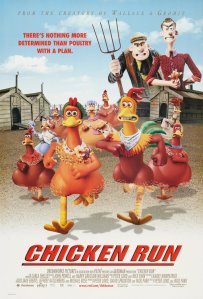 Released June 23, 2000:
I strongly urge everyone out there if ever given the opportunity to see this movie. Do not confuse Chicken Run as a “kids only” affair while you yourself sneak into something “better.” This movie is easily the best movie of this lackluster summer of commercial perpetual bile, and possibly one of the better if not best films of the year. It’s no secret I have an affinity for animation and the claymation choices of directors Nick Park and Peter Lord, of Wallace and Gromit fame, give the characters real emotion. I can just look at one of the chickens in the eye and feel emotion that I couldn’t get seeing many Hollywood films. The cinematography and animation is lush, vibrant, and breathtakingly beautiful. The story is fresh, wonderfully hilarious, and even touching. The voice artists are terrific, with Miranda Richardson pulling out as my favorite for her delightfully vile Mrs. Tweedy. Treat yourself to one of the very few decent movies this summer and see the incredible fun of Chicken Run, and if you still feel conflicted it has Mel Gibson in it. And if you still feel bad you can say you got lost on your way to the restroom.
Nate’s Grade: A
——————————————————
WRITER REFLECTIONS 20 YEARS LATER

I’ve been a fan of animation since I was young, and stop-motion animation has its own unique and impressive charms. While it has been smoothed out with recent high-profile Laika entries (ParaNorman, Kubo and the Two Strings), there’s a distinct un-reality to stop-motion animation, a stutter-stop to the movements and its physical details that can place it in a beguiling middle-ground between fantasy and reality. I know thousands of hands toil many thousands of hours with every hand-drawn and CGI animated film, but seeing a literal canvas of three-dimensional physical proportions and knowing, with every second, that a person individually moved this figure bit by infinitesimal bit to provide movement, it gives me awe. It’s one of the reasons why 1993’s The Nightmare Before Christmas is one of my all-time favorite movies, plus its top-shelf soundtrack by Danny Elfman at the peak of his talents (I wore out my cassette tape listening to the soundtrack so often). The Aardman production team became famous from the success of their Creature Comforts and Wallace and Gromit shorts, but it wasn’t until 2000 that they tackled their first feature film. I saw Chicken Run in theaters three times that summer. I was so taken with the imagination, humor, storytelling, and efficiency of it, that I kept returning for more. Checking back in twenty years after that initial release, it’s still an effortlessly enjoyable comic caper.
 This is an all-ages comedy that asks what if you remade The Great Escape but from the perspective of poultry. It’s a prison break movie that takes its stakes seriously but can still find room for goofy humor and a little romance. The screenplay by Karey Kirkpatrick, working off the story by directors Peter Lord and Nick Park, is minus any fat. Everything in the script sets up the characters, their distinct personalities, goals, stakes, and complications, especially once our main characters of Ginger (voiced by Julia Sawalha) and Rocky (Mel Gibson) are at cross-purposes; he only wants to think of himself and she can only think about saving everyone. He’s hiding the secret of his limitations; she sees him as the answer to their plight, and they’re both growing closer to one another as their time to escape dwindles. Every character is responsive to the action of the others, so the repercussions of the escape attempts lead to the villains escalating their plans. Instead of seeing the chickens as egg providers and meat when they can no longer produce eggs, now they are all expendable and meat is the top Tweedy Farm meal ticket. There’s a clear connection between all the plot beats that is deeply satisfying. Chicken Run is only 85 minutes long and it doesn’t waste a moment to make you smile and tell a good story.
I laughed several times, especially with the daffy Babs (“Are we going on holiday?”), and also the ingenuity of the slapstick. There’s a sequence going inside the machinations of a pie-making machine that is wonderfully developed with great obstacles leading to great slapstick. There’s one stretch where Ginger and Rocky find themselves inside a giant lit oven and they have to race out by leaping from pie to pie. Ginger is fleet and gets ahead, but Rocky tumbles into one pie after another, which is already good slapstick paired with an exciting scenario. Then it cuts to an overhead shot and you see that Rocky has somehow managed to trip and fall in every pie in the oven. It’s small comic touches like that where the Aardman team excel with their funny.
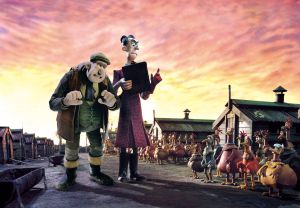 This is also a deceptively visually impressive movie. The Aardman design, the big eyes and buck teeth, seems underdeveloped to a layman but Chicken Run is a beautifully made movie. The stop-motion animation is professional and fluid, but it’s the degree of camera movement and visual enhancement that wowed me. There are long camera pans between human-sized characters and chicken-sized characters. There are visual gags that pop, especially during its thrilling finale when the chickens build their own flying contraption to escape. Mrs. Tweedy (an amazingly wicked Miranda Richardson) is hanging by a cord of lights, smashes through a billboard advertising her pies, and her face is replaced with the smiling billboard version a second before she rips it apart to reveal her frenzied homicidal expression. The use of montage in the opening to establish the many failed escape attempts by Ginger and her solitary confinement punishment is fantastic. Even just keeping the scale between the humans and dogs and chickens is an impressive feat as a physical production. The color palette can be, understandably, a bit muddy, but the imagination on display on a micro and macro level is thoroughly entertaining.
The vocal cast perform excellently. In my original review, I cited the inclusion of Gibson as a reason to encourage animation-wary moviegoers to see Chicken Run. In the ensuing twenty years, Gibson is definitely not seen in the same light thanks to his anti-Semitic and misogynist rantings. I can understand not wanting to watch this gem of a movie simply because you don’t want to listen to the man’s voice. I get it, but if you can overlook the man’s failings, his performance is lively, brash, and all the character requires. Sawalha (TV’s Absolutely Fabulous) is a plucky and expressive lead and gives a real heart to the movie. Ginger could easily escape but she’s determined to save all her peers even if they don’t appreciate her help. In 2020, Netflix announced they were producing a sequel to Chicken Run, and they also announced they are replacing Sawalha as the voice of Ginger. This deeply hurt her and the stated reason was that she sounded too old now. Sawalha recorded herself reading the same lines from twenty years ago, and she sounds identical to her 2000-circa self (listen for yourself), at least to my ears. Ginger just won’t be the same without her.
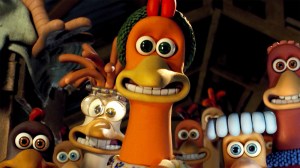 This was also one year before the Academy created the Best Animated Film Award, which would go onto 2001’s Shrek. I’m convinced if this award had been established one year earlier that Chicken Run would have been its very worthy inaugural recipient. Other animated films released in 2000 that might have contended: The Emperor’s New Groove, The Road to El Dorado, Titan A.E., Sinbad, and France’s Princes and Princesses. It seems bizarre today but there wasn’t a single wide-release CGI animated movie from Pixar, Disney, DreamWorks, or Nickelodeon. This was the last-year it was predominantly hand-drawn animation, which I do miss dearly.
Looking back on my brief review in 2000, I cannot recall why I had such antipathy for the major studio releases that summer. Gladiator was a success, though Mission: Impossible 2, Gone in 60 Seconds, Shaft, Titan A.E., Me, Myself & Irene, and The Perfect Storm disappointed me. Plus, there was the cataclysmic misfire Battlefield Earth. Whatever the case, Chicken Run was a breath of fresh air for my 18-year-old self that summer season. My younger self felt more compelled to argue that animation was not merely a medium for children, a stigma I believe has been significantly chipped away over the decades, especially with the publicity of Pixar. The Academy Award also gave the field a long-overdue honor and boost to the public. Aardman has released several movies after Chicken Run, including the absolutely delightful 2012 Pirates: Band of Misfits, which I highly recommend for all ages. I love animation and filmmakers that take advantage of the overwhelming possibilities the medium affords. My A grade stands. Chicken Run is just as enjoyable today. It might not be an all-timer of animation but it’s 85 minutes wonderfully spent.
Re-View Grade: A
Share this:

Killer Raccoons 2: Dark Christmas in the Dark (2020)
 Dear reader, I already know what your first question is regarding the title of this low-budget, schlocky comedy, and yes, there actually was a first Killer Raccoons movie. Back in 2005, writer/director Travis Irvine and his pals made Coons! Night of the Bandits of the Night for only $5,000 and their slasher killer was a team of trash-eating, nocturnal mammals with a bad rap. It got a small DVD release from Troma Studios and would be considered a success by any modest standards of genre filmmaking. For whatever reason, Irvine decided he had more raccoon-related mayhem to indulge and got his friends back together to make a sequel 15 years later. Filmed throughout Ohio in 2018, the end result is Killer Raccoons 2: Dark Christmas in the Dark (it seems in the ensuring decade, somebody wised up about not having “coons” as a title). As with other Ohio-based indies, I do happen to know several people involved in this local production but I will be doing my best to write an objective, bias-free review of… a killer raccoons movie. That might be one of the most absurd sentences I’ve ever written in my years as a film critic.
Ty Smallwood (Yang Miller) has just gotten out of prison after the events of the first film. He’s looking to start a new life, prefers to go by Casey, and has plenty of people unable to recognize him (it’s a different actor from the first film). Casey is meeting Darlene (Evelyn Troutman), the little sister of one of the women killed at that fateful campsite 15 years ago. They’ll better get to know one another over one long train ride home for the holidays. Ranger Rick Danger (Mitch Rose, also a different actor) has other plans. He and the other surviving members of the summer camp have hijacked the train with help from raccoons wielding automatic weapons. Ranger Danger plans on holding the nation’s government hostage (the mayor of their small town is now the Secretary of Defense) with a super phallic death laser satellite operated in space by trained raccoons (why? Who cares?). Casey teams up with a steward, Double A (Ervin Ross), and they go car-to-car trying to rescue passengers, evade armed raccoons, and thwart Danger’s evil catastrophic plans.
 Somebody actually went and made a schlocky beat-for-beat parody of 1995’s Under Siege 2: Dark Territory, and I have yet to process whether this is a commendable act of unusual comedy obsession or simply a folly with no real appeal but to the smallest of fringe audiences. The Under Siege sequel was another Die–Hard-in-a-place setup happening miraculously again (this time on a train!) with Steven Seagal as its leaden lead, so devoting the plot structure to reminding people about the existence of this movie and its many low-points seems, in some sense, like the kind of hyper-specific meta ironic comedy you’d find in an Adult Swim special. In my own comedy writing, I rekindled an old TV series from the 90s that was unceremoniously cancelled after eight episodes (The 100 Lives of Captain Black Jack Savage), leaving its 100-countdown mission unfinished and dangling in my mind until I wrote my own conclusion. Re-examining some forgotten relic of personal pop-culture, especially something built around silly and stupid, is a fine starting point for a comedy riff. However, the expectation is that more will be done than serving as a reminder of that inspiration. If you’re simply re-creating the beats of the source to completion then what exactly is the point? Nobody needs a crummier version of an already crummy movie. That’s where Killer Raccoons 2 goes awry. It’s so committed to recreating Under Siege 2, including exact character roles, names, and many dialogue repetitions, that you could have removed the killer raccoons completely. I even started watching Under Siege 2 again for this review simply to determine if the pixelated spy camera nudity used in the opening to demonstrate the satellite’s telephoto prowess was exactly the same stock footage used in the actual movie (they are separate people; you’re welcome, world). Killer Raccoons 2 is more an inexplicably fixated parody than a goofy killer animal comedy, and that is a major letdown of imagination.
Let me give you an example of the disappointing complacency of too much of the comedy. The hijackers (all sporting an eye-patch, a stylish motif I did enjoy) are trying to find Darlene among the passengers since they now know she has value with her relationship to Casey. Darlene says she’ll adopt a disguise and she literally arranges a strand of hair to lay across her face like a fake mustache. Now this is a silly, obviously transparent disguise but it shouldn’t be the end of the joke. A better extension would be since we expect it to be so flimsy that it somehow works and the hijackers cannot tell the difference. Then the hair strand could drop and the hijacker would express immediate confusion and alarm, only for Darlene to place it back in place, and the hijacker’s worry replaced yet again (“There was another woman just here.”). It’s one idea but it’s an idea, building off subverting expectations and then developing the setup to build into something more. The problem with Killer Raccoons 2 is that there aren’t any real comic set pieces, no really well-structured scenarios that can make you smile from their very inception about what will transpire. The closest is an improvised fight with whatever household kitchen items are available, at one point pitting waffle maker against waffle maker. Much of the humor is so obvious that the obvious nature is itself the joke, like the chintzy special effects, bad wigs, and copious amount of penis jokes (the deadly satellite is named the “PEN-15”). However, there’s a fine line between an obvious joke being funny and the filmmakers pointing it out. There are too many times where characters literally explain jokes or point out the absurdities.
 This is a 96-minute comedy when, in all honesty, it could have even been pared down to 80 minutes. The pacing can feel slack and many confrontations can stretch on, circling the same obvious joke. Even moments that work, like the improvised fight, go on too long and without sustained energy. There are way too many plot beats from Under Siege 2 distilled here (the Seagal movie is only a couple minutes longer). There are too many characters involved in the action too. I’m shocked how much effort Irvine has gone to in order to bring characters and story points from the original into this unexpected sequel. It’s been 15 years so I can’t imagine there was much demand for fidelity to not just Killer Raccoons 1 but also Under Siege 2. The most useless character is a painfully protracted cameo by the likes of aging porn star Ron Jeremy. I understand the appeal from a marketing standpoint of having a celebrity “name,” but the movie would have been better served with Jeremy making his contractual appearance and then hastily departing. The movie’s humor dies a tragic death every strained second he is regrettably onscreen.
As a hit-or-miss comedy, there are moments that had me genuinely laughing, mostly because of the exuberance of its go-for-broke cast. There were repetitions that would occasionally make me giggle, like referring to Darlene’s “dead sister he lost his virginity to,” or the emphasis on “for real dead for real” with characters always surviving insane mishaps through two movies. There are the occasional moments were a sudden escalation in violence against the raccoons got me to laugh. When the film is being silly, it has a charm where the goofiness and cheap budget enhance the entertainment value (“While this spoon appears to be harmless, it’s actually really super-hot”). Take for instance Ranger Danger furiously typing in the air but with no keyboard present. The sight itself is good enough to earn a quick goofy smile, but if the movie were to comment upon it, then the joke would just seem ruined. It’s that character that, by far, brought me the most laughter. The character of Ranger Danger is a twangy hoot chiefly because of the comic timing and impressive gusto of debut actor Mitch Rose. He takes okay jokes and adds such professional polish that got me to laugh out loud (“A gazillion dollars?” “I just… look, I made up a number”). Several of his line deliveries are pure wonders (everything about the golden VHS tape he so reveres), and he’s the kind of capable comic actor that could be the anchor of a bigger vehicle. Somebody get this man more work in the funny industry, pronto. Yang Miller (Huckleberry) is also deserving of praise by playing his self-serious loner hero so serious that he’s oblivious to his own ineptitude.
 I don’t have to over-complicate this. By its overly verbose title alone, you’ll know if you have any interest in Killer Raccoons 2: Dark Christmas in the Dark. It’s a goofy comedy that’s proudly low-budget, lowbrow, and low on ambition. It’s a sequel to a movie nobody likely saw, religiously parodying an action movie that hardly anyone remembers, and it’s filled with little raccoon puppets that could have easily been ditched for what they add to the overall comedy. I’m a little shocked there aren’t more tasteless exploitation elements present, like gratuitous nudity, over-the-top gore, and more envelope-pushing crude humor. Killers Raccoons 2 feels decidedly juvenile but not quite transgressive. It’s not going to be a great experience but the hits might outnumber the misses, especially if your sense of humor is attuned to the likes of schlocky Troma movies, Conan O’Brien, and late-night Adult Swim. It’s that combination of trash and irony that can prove blithely appealing, though I wish Irvine had put more effort into his comedy compositions. It feels weird to lament what could have been with a title like Killer Raccoons 2, but this just could have been funnier. A strange side note is that Irvine ran as the libertarian candidate for governor in Ohio in 2018. There’s a lazy joke to be had about him running the government the way he makes his movies, but I’m not going to stoop to that level. That’s for Killer Raccoons 3.
Nate’s Grade: C
Share this:

Gladiator (2000) [Review Re-View]
 Originally released May 5, 2000:
Director Ridley Scott has given the world of cinema some of its most unforgettable visual experiences. But can Scott breath new life into a genre whose heyday was when a badly dubbed Steve Reeves oiled his chest and wrestled loincloth-clad extras in the 1950s?
The year is roughly 180 AD and Rome is just finishing up its long-standing assault on anything that moves in the European continent. General Maximus (Russell Crowe) merely wants to retire back to his loving family and get away from the doom and war that has plagued his life. This is made all the more difficult when the ailing Emperor bypasses his treacherous son Commodus (Joaquin Phoenix) and decides to crown Maximus as the Defender of Rome. Because of this Commodus rises to power through bloody circumstances and has Maximus assigned to execution and his family crucified. You’d think crucifixion would be so passé by now. Maximus escapes only to be sold into slavery and bought by a dirt-run gladiator training school. As he advances up the chain and learns the tricks of the primal sport he seeks but vengeance for his fallen family.
Gladiator is an absorbing and sweeping spectacle of carnage and first-rate entertainment. The action is swift and ruthlessly visceral. The first movie in a long time to literally have me poised on the edge of my seat. The blood spills in the gallons and life and limb go flying enough your theater owner may consider setting down a tarp.
 What Gladiator doesn’t sacrifice to the muscle of effects and action is storytelling. Are you listening George Lucas? Gladiator may unleash the beast when the rousing action is loose, but this is coupled with compelling drama and complex characters. Phoenix may at first seem like a snotty brat with an unhealthy eye for his sister (Connie Nielsen), but the further Gladiator continues the more you see in his eyes the troubled youth who just wants the love of his father that was never bestowed to him. Maximus is a devoted family man who regularly kisses clay statues of his family while away, and must ceremoniously dust himself with the earth before any battle.
The acting matches every sword blow and chariot race toe-for-toe. Russell Crowe marks a first-rate staple of heroism. Every calculating glare he exhibits shows the compassion and ferocity of this warrior. He becomes a rare breed – an action hero who can think and actually act. Oliver Reed, in what sadly was his last role, turns in a splendid and charismatic turn as the head of the gladiator school of Fine Arts and Carnage. Mysteriously everyone carries a British accent closer to them then a toga two sizes too small. Even Crowe who is nicknamed “The Spaniard” speaks like he walked out of Masterpiece Theater.
The effects and visuals are a sumptuous feast. The aerial shots of Rome and the Coliseum are simply breath taking. Gladiator rivals American Beauty for the most rose petals used in a movie, except in this one they don’t shoot out of Mena Suvari’s breasts.
Ridley Scott’s track record may be hit or miss but Gladiator is definitely one sorely not to be missed.
Nate’s Grade: A-
——————————————————
WRITER REFLECTIONS 20 YEARS LATER

As Russell Crowe famously barked, “Are you not entertained?’ It was hard to argue in 2000 and it still holds true to this day. Gladiator was a big-budget throwback to the swords-and-sandals epics of old Hollywood. It was a box-office hit, made Crowe a star, and won five Academy Awards including Best Picture. My own elderly grandmother loved it so much that she saw it three times in a theater that summer, which was practically unheard of in her later years (she also, inexplicably, loved the 1999 Mummy movie). It was a millennial DVD staple. I can recall everyone on my freshman dorm hall owning it and hearing it on regular rotation. As studio projects were getting bigger with more reliance on CGI, Gladiator felt like a refreshing reminder on how powerful old stories can be with some modern-day polish. Re-watching Gladiator twenty years later, it still resonates thanks to its tried-and-true formula of underdog vengeance.
We all love a good story where we follow a wronged party seek to right those wrongs, plus we all love a good underdog tale, and given the pomp and circumstance of the gladiatorial arena, it’s easy to see how this movie was engineered to be a success from the page. This isn’t a particularly new story. Stanley Kubrick’s Spartacus mined the same territory with an even bigger scope, both in politics and in war, and there have been many movies covering the same history around the rise of Commodus, like 1964’s The Fall of the Roman Empire and The Two Gladiators. We’ve seen this kind of story before even in this setting but that doesn’t matter. The familiarity with a story isn’t a hindrance if the filmmakers take their story seriously and make an audience care about its characters. It all comes down to execution. As long as the filmmakers don’t get complacent and take that formula familiarity for granted, old stories can have the same power they had for decades because, deep down, cooked in their structure, they just work.
 Gladiator gives us everything we need to know by the conclusion of its first act, introducing us to Maximus, showing his leadership and loyalty, giving us the strained father-son relationship with Marcus Aurelius and Commodus, the expectations of the son of his ascendancy, the regrets of the father and hope for a return to a Republic, the reluctance of Maximus to be more than a general of Rome, and finally after the murder of the old emperor, a decisive choice for Maximus that challenges his morals and responsibility. From there, screenwriters David Franzoni (Amistad), John Logan (The Aviator), and William Nicholson (Les Miserables) put our hero and villain on parallel tracks heading for a collision. Maximus rises through the ranks of gladiators and builds a name for himself, getting called to the major leagues of bloodsport, and Commodus schemes to have his old enemy killed with increasingly dangerous trials in the Coliseum. It’s a natural progression and escalation, which makes the storytelling satisfying as it carries on. Gladiator never had a finished script when they began filming, which has become more common with big budget tentpoles with daunting release dates and rarely does this work out well. However, this is the exception (the screenplay was even nominated for an Oscar). It should be stated that the events of Gladiator pay very little to the actual history but fidelity is not necessary to telling a compelling story (the real-life Commodus rose to power after dear old dad died from plague). Use what you need, I say.
Ridley Scott was on an artistic hot streak during the start of the twenty-first century, directing three movies within one and a half years of release and earning two Oscar nominations. He wanted to veer Gladiator away from anything too cheesy of older swords-and-sandals epics, as reported. This isn’t about homoerotic wrestling with men in unitards (in Jerry Seinfeld voice: not that there’s anything wrong with that) and instead about the grit and superficial glory of Rome. The opening battle in Germania is meant to show Maximus in action but it also shows just how overpowering the Roman Empire was during this time period. They just massacre the remaining German tribe, and there’s a reason we don’t focus on battle strategy and instead on the chaos. The conclusion of the battle is a shaky camera mess of bodies and flames and dark shapes. It’s a bloody mess and not something to be glorified. Maximus is tired. His men are tired. Even Marcus Aurelius is tired of his decade-long conquering of a map, adding little inches to an already gargantuan territory. When is it all enough? When is war a self-perpetuating quagmire?
 This same dismissive view over conquest and glory carries throughout. When Maximus becomes a slave, he must play the blood-thirsty appetites of the crowd to reach his goals. He disdains the theater of combat, the delaying of strikes simply to draw out the drama of two men fighting to the death. Later, these same venal interests of the mob form a protection for Maximus. He’s too popular to just be assassinated because the Roman people just love watching how he slays opponents. There’s an implicit condemnation of popular entertainment built around the suffering of others. Scott has a purpose for his depictions of violence, and you could even make the argument he is drawing parallels between the bloodthirsty crowds of the Coliseum and modern-day moviegoers screaming for violence. What are the human costs for this entertainment? It’s not explicitly stated, and some might even say this level of commentary for a movie awash in bloodshed makes any such condemnation hollow or hypocritical. Maybe. The violence feels like it has weight even when it can border on feeling like a video game stage with enemies to clear.
Crowe (The Nice Guys) was already making a name for himself as a rugged character actor in movies like L.A. Confidential and The Insider, but it was Gladiator that made him a Hollywood leading man, a title that he always seems to have felt uncomfortable with. Crowe wasn’t the first choice of Scott and the filmmakers (Mel Gibson turned Maximus down saying he was too old), but it’s hard to imagine another person in the role now. Crowe has a commanding presence in the film, an immediate magnetism, that you understand why men would follow him into hell. That flinty intensity plays into the action movie strengths, but there’s also a reflective side to the man, a sense of humor that can be surprising and rewarding. There’s more to Maximus than avenging his wife and child, and Crowe brings shades of complexity to an instantly iconic role. He finds the tired soul of Maximus when he could have simply been a kickass killing machine. Between Crowe’s three Best Actor nominations in a row from 1999-2001, I think he won for the wrong performance. It’s a shame Crowe hasn’t been nominated since, which seems downright absurd. People have forgotten what an amazing actor Crowe can be, singing voice notwithstanding (I need a sequel to Master and Commander please and thank you).
 This was also a breakout role for Joaquin Phoenix (Her), who has risen to become one of the most celebrated and chameleon-like actors of his generation. The character of Commodus is your classic example of an entitled child who doesn’t understand why people don’t like him. He’s a sniveling villain prone to temper tantrums (“I am vexed. I am very vexed”). Much like his co-star, Phoenix finds layers to the character rather than resting on a stock villain characterization. He’s really the jealous son who envies the preference and love given to Maximus, first from his father, then from his widowed sister (Connie Nielsen), and then from the Roman people. He whines that they love Maximus in a way he will never deserve. It’s hard not to even see a Trumpian psychology to Commodus, a man not equipped for the position of power he occupies who longs for adulation he hasn’t earned. You can hate the man, but you might also feel sorry for him despite yourself. When he wants to be pompous, he can be hilarious (I adored his quick reaction shots to the theatrical combat). When he wants to be creepy, he can be terrifying. You can even see some of the broken pieces here that Phoenix would masterfully use to compose his Oscar-winning Joker performance.
The supporting cast was gifted with great old actors getting one last victory lap. Richard Harris was so stately and grandfatherly that it got him the role of Dumbledore in the Harry Potter franchise. It also served as a great sendoff for Oliver Reed (Oliver!) as Proximo, the selfish, trash-talking former gladiator turned gladiator trainer. Reed died months into the production and before he had wrapped his part, requiring extensive reworking from the screenwriters (Logan was on set for much of the production to cater to the immediate day-to-day story needs). Scott used a body double and parlayed visual effects to recreate Reed’s face, much like what 1994’s The Crow was forced to do after the unfortunate death of its star, Brandon Lee. I kept looking for what moments would be Reed and what moments would be the CGI-enabled Reed double, and it was harder to determine than I thought, so nice job visual effects team. Reed had a reputation of being a carousing reprobate, so having a final performance that allowed him to tap into those old impulses plus the regrets of older age was a wonderful final match.
 The other big takeaway upon my twenty-year re-watch was how recognizable and stirring Hans Zimmer’s famous score was, which lost the Oscar that year to Crouching Tiger, Hidden Dragon, and that seems insane to me. Zimmer has been in a class all his own since the 90s with classic, instantly hum-able scores for True Romance, The Lion King, The Dark Knight, Inception, and The Pirates of the Caribbean, which borrows heavily from his theme for Gladiator. The score greatly adds to the excitement and majesty of the movie and can prove transporting by itself.
A truly bizarre post-script is the story of how the studio tried to develop a sequel. Gladiator was hugely successful but any sequel presented problems. Given the death of its star, following another character makes the most sense, and yet that’s not the direction the screenplay took. Eventually, the sequel to Gladiator was going to follow the ghost of Maximus as it travels through time including to modern-day. Just take a moment and dream of what could have been. Alas, we’ll likely never get time-traveling ghost Maximus now and we simply don’t deserve it as a society.
Reviewing my original film critique from 2000, I feel that my 18-year-old self was more entranced with making snappy, pithy blurbs than going into further detail on my analysis. My early reviews were far more declarative, saying something was good or bad and giving some detail but not dwelling on going deeper into the examination. This line, “The blood spills in the gallons and life and limb go flying enough your theater owner may consider setting down a tarp,” makes me cringe a little because it’s just trying too hard to be casually clever. I do enjoy the Mena Suvari rose petal joke. Still, I celebrated that a studio movie could emphasize its story first and foremost and my observations are still valid. I’m all but certain the only reason I knew who Steve Reeves was back then was because of his many appearances via Mystery Science Theater 3000 covering his cheesy swords-and-sandals films of old that Ridley Scott was so eager to avoid recreating (“Do you like films about gladiators?”)
Because the movie does so much so well, with some exceptional, it’s hard for me to rate Gladiator any lower than my initial grade of an A-, so that’s where I’m keeping it twenty years later. I think the national conversation has cooled on Gladiator, forgotten it because it wasn’t quite as audacious as other examples of early 2000s films, but it sets out to tell a familiar story on a big canvas and deserves its plaudits for somehow pulling it all off with style and gravity. It would be flippant to say Gladiator still slays the competition but it’s still mighty entertaining.
Re-View Grade: A-
Share this:

The Old Guard (2020)
 What do you do with an action movie where the action is actually the least interesting part? The new Netflix film, The Old Guard, is based on a comic book series by Greg Rucka (Whiteout) about a mercenary squad staffed with immortals through the ages. Lead by Charlie Theron, whose character Andy traces back to at least the Medieval period, leads the team and sees promise in their newest recruit, Nile (Kiki Layne, If Beale Street Could Talk), a U.S. soldier who is shocked to discover she can come back to life. It’s through this new recruit that we get an introduction to the hidden world of immortals and their hidden history, and it’s these flashbacks that I found the most entertaining aspect of the entire two-hour movie. Watching Theron swing a Viking battle axe is a lot more fun than watching her stalk corridors with a gun. There’s also some great little moments that show an attention to developing the characters and their psychology. Andy has a centuries-old love that was trapped in a suit of armor and thrown into the sea. Besides the fact that drowning is horrifying, imagine dying, then reviving, and then drowning again and again, every few minutes, for an eternity. Wow that is a new level of horrifying. Each of the characters has an interesting history and some degree of dimension, and it’s these soul-searching conversations that I enjoyed the most as they discuss the costs of living forever. However, it’s not quite forever, because immortal heroes have an obvious problem about holding stakes, so at some point the immortals will lose their healing ability, though they don’t know when. It’s something, but it feels more arbitrary, and the super smarmy pharma CEO villain (Harry Melling) is a non-starter as a threat. The action sequences almost feel like a chore, like the filmmakers are checking boxes instead of using them to advance the plot in meaningful and exciting ways. The action isn’t bad but just mundane, lacking memorable set pieces or engaging complications. Even their use of taking punishment is under-utilized in the design. Simply put, a movie with this kind of premise and with Theron as your lead should be more exciting. I loved Mad Max: Fury Road. I loved watching Theron lay waste to goons and gangsters in 2017’s Atomic Blonde, a movie built around her physical capabilities and smartly constructed action set pieces. However, the action we get with The Old Guard lacks the same transformative ability and fight choreography. It’s just thoroughly fine, at best, and I kept wondering if they were saving themselves for a big finish. Sorry to disappoint, it’s just more office hallways with limited gunplay. The energy level is lacking and the music choice throughout the film affects this as well, with the same kind of downer tracks playing again and again. I would rather have spent these two hours listening to the immortal stories around a campfire.
Nate’s Grade: C
Share this:

Artemis Fowl (2020)
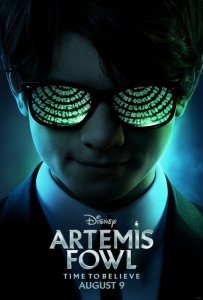 Artemis Fowl is a popular children’s’ book series that has scores of fans who have been anticipating a film adaptation, but I have to hope they expected more than this. The Artemis Fowl movie, directed by Kenneth Branagh (Murder on the Orient Express), became a casualty of the Disney purchase of Fox studios, and in the wake of COVID-19 Disney decided to drop Branagh’s film straight to its streaming service and delay this pain no longer. The critical reception has been scathing and honestly it was the one thing that piqued my curiosity to even watch Artemis Fowl.
We follow young Artemis Fowl Jr. (Ferdia Shaw), a rich genius whose father (Colin Farrell) is rumored to be a notorious art thief. Dear old missing dad would fill his young son’s head with stories of magical creatures from other worlds that he would assist. One day, Artemis gets a cryptic message that his father has been kidnapped by a mysterious figure (by an un-credited Hong Chau, of my). If Artemis cannot find the “Acculas” then his father will be killed. Artemis Junior teams up with his martial arts expert butler, named Butler (Nonso Anozie), to capture a fairy, the chip-on-her-shoulder recruit Holly Short (Lara McDonnell), and hold her hostage. This leads to attempted incursions from the fairy police, led by Commander Root (Judi Dench) and a kleptomaniac dwarf, Mulch Diggums (Josh Gad). The battle rages through the Fowl mansion all while threatening to expose the magical realm to the human world.
The only way I can better comprehend where Artemis Fowl goes wrong is simply to begin listing those erroneous elements and try and better make sense of the head-scratching decision-making.
 1) Speaking voices. This one is immediately regrettable and so obviously a mistake that it boggles my mind that Branagh and his crew signed off. Why oh why would you task Gad (Frozen 2) with imitating the gravelly Batman-esque voice of Christian Bale? Why hire Gad if you’re asking him to adopt this distracting and unfamiliar voice? Even beyond that, why oh why would you ever have this gravelly growl serve as narration for the entire movie? Listening to this voice is painful and it made me pity Gad, though he alone is not the only victim of bad vocal choices. There’s also Dench, already reeling from the stink of Cats, doing her best as the leader of the fairies or leprechauns, I cannot tell the difference, and she too has a voice that sounds like she’s been smoking two packs of cigarettes a day for life. It’s such an unpleasant voice and it doesn’t make either character seem more imposing. It just made me feel even sorrier for two actors that I was already feeling sorry for over their participation in this.
2) Lazy plotting. I had to ask my pal Alex Knerem some questions regarding whether or not what I saw on my screen was close to what was originally on the page. Apparently, the lazy plotting is ripped right from the book and not a result, as I theorized, of being more budget conscious. The entire story involves Artemis holding a fairy hostage and then just waiting for different waves of different magical creatures to come to him. Imagine discovering a new world of supernatural fantasy creatures with unique powers and unique worlds, and all you do is wait in your mansion for those creatures to come to you. It becomes a siege thriller. It’s such a dull starting point, and it’s not even like Artemis Fowl’s cause is righteous. According to Alex again, the main character of the first book isn’t Artemis but his fairy captive. Alex said, “The first book was billed as Die Hard for kids and Artemis is Hans Gruber.” And that sentence blew my mind. Why should I care about the bratty version of Hans Gruber? The plotting of Artemis Fowl is strangely unimaginative because it’s just one group trying to get inside after another, and ultimately once the location of the magic McGuffin is revealed, it makes even more of the plot feel lazy.
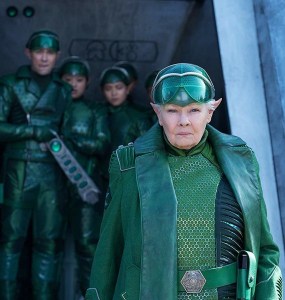 3) The dialogue. The pacing of how people speak to one another is simply jarring and unnatural. There is nary a breath in between lines, and so a conversation feels like every person in a rush to say their next line before their partner finishes. It becomes exhausting to watch and confounding given the movie’s running time of only 90 minutes. Could they not have afforded a few seconds here and there in between lines of dialogue? Beyond the breathless delivery, the dialogue itself is so powerfully expositional that it becomes downright painful to endure. In any fantasy movie, there’s going to be a learning curve to make your movie accessible to a new audience. Some explanation is a given, though it’s best to learn as needed and through as many visual actions as you can (show, don’t tell). With Artemis Fowl, the characters are constantly talking at one another, not with them, and they’re just vomiting exposition. Here is a sample: “Beechwood Short used his magic to steal the Acculas from us, which need I remind you, is the most precious artifact in our civilization. The Acculas was stolen on your watch, he has put our entire people in danger, disappeared, and in my book that’s a traitor.” Woof. Then there’s the redundant talk of the Acculas, but for what it does, it doesn’t exactly seem worthy of lore considering we already have creatures from various worlds traveling to and from other magic realms.
4) The special effects. For a fantasy adventure, the special effects aren’t really that bad though unexceptional. However, there is one nightmare-inducing exception. Mulch is an expert digger and part of his process is literally unhinging his jaw and stretching his mouth to far wider than would be otherwise advised. It is well and truly horrifying, and this is a movie intended for children. How many of them will be forever haunted by the image of Gad extending his jaw, then reaching his arm deep inside his own throat, and retrieving a stored keepsake?
5) The world itself. If you’re going to drop me in a new world, you better make it interesting and worthy of further exploration, and Artemis Fowl doesn’t do this whatsoever. If you want your audience to be hungry for future adventures then you better make this new world charming and well-realized. Artemis Fowl has the equivalent of “magic cops” with its fairies and that’s about all we get as far as an alternate world of wonders. They have laser guns and flying ships, which begs the question whether flying creatures need themselves flying machines, and a judicial system we get a brief glimpse of thanks to that scamp Mulch being sentenced to hundreds of years of hard time for his misdeeds. Mulch is also derided for being a “tall dwarf” and others call him out for not being a “real dwarf,” which makes me wonder if this is some colorism social commentary (I doubt it). The movie ends with the promise of exploring more worlds and meeting new species of creatures but I have zero interest in continuing any of this. The world relies too superficially on the basics of fantasy lore without offering its own personal spin. Imagine just reading a story that said, “And then fairies showed up, and then dwarves, plus a troll. And then it all worked out in the end.” There is nothing special here to separate itself.
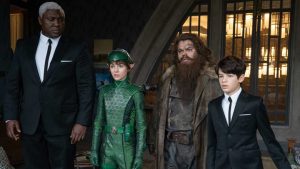 6) The character. Lastly, I was not charmed by any of these characters nor did I find them remotely interesting. The relationship between Artemis and his butler was boring, his relationship with his know-everything father was boring, even Artemis himself is a boring figure, a smug child who thinks he’s better and smarter than everyone else in the room. Mulch is more annoying than comically disarming. Holly Short has her gumption to prove herself and clear her maligned father’s name, but she too lacks the development beyond her initial description. None of these characters have anything approaching an arc. I don’t want to spend any more time with these characters on any further adventures because they’re not charming, they’re not funny, they’re not complicated, and they’re not compelling.
Artemis Fowl is a bad movie and oddly, perhaps even to its credit, seems confident about being a bad movie. Why else impose such a terrible speaking voice for Dame Judi Dench? It’s reminiscent of that mid-2000s period where every studio was chasing their own Harry Potter and snatching whatever Y.A. Chosen One fantasy adventure I.P. they could find. It’s the kind of story that seems to just been importing elements from other derivative sources, becoming a derivation from a derivation, a copy of a copy, and losing any sense of identity. Disney was right to banish this.
Nate’s Grade: D+
Share this:

The Last Days of American Crime (2020)
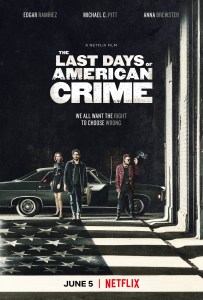 Even by relaxed standards which we judge widely-available Netflix movies during a time of quarantine, The Last Days of American Crime is a staggering waste of 150 minutes. It’s based on a 2009 graphic novel series and even by the sliding scale of shut-your-brain-off action movies, it’s numbing, dreadfully dull, incoherent, and stitched together with hoary genre clichés and little creative forethought. It’s rare that I come across a movie that seems so willfully ignorant to explore the implications of its own premise.
In the near future, the U.S. government is in the final stages of implementing the American Peace Initiative (API), a special radio signal that stops crime in its tracks. It acts as a brain blocker on anything illegal, stopping the user from being able to follow through. Graham Bricke (Edgar Ramirez) finds out the hard way when his bank robbery crew become some of the first test subjects. American citizens are desperate to flee to Canada before the API goes live. Bricke gets seduced by computer hacker Shelby Dupree (Anna Brewster) to pull off one big score. The government is readying to destroy a billion dollars in currency before going digital, and Shelby’s fiancé, Kevin Cash (Michael Pitt), has the connection to pull off the heist of the century.
 Firstly, there is not nearly enough material here to justify the gargantuan Avengers-esque running time. You could realistically slice down a whole hour and not impact its middling entertainment value or clarity. While I was watching it didn’t even feel like a movie, more like a series designed to be binge watched, where the plotting becomes much more slack because the filmmakers anticipate their show will be digested in quick succession and that they have earned patience. It irritates me in television and it certainly irritated me here as well. Don’t blithely assume that your audience has infinite patience when you haven’t given them a proper story to properly engage with. Just about every scene could be trimmed down and some of them go on punishingly long, especially scenes where people are getting shot. There’s one late scene that goes on for what feels like five minutes of just watching two characters get shot. It’s so gratuitous, like much else in the movie, that it borders into unintentional anti-comedy.
As for the action, director Oliver Megaton (Taken 2 and 3) delivers very little of note. There’s a car chase here, a shootout there, but no set piece that actually develops or proves that memorable. It’s all just disposable noise that amounts to little, not even fleeting, escapist entertainment. This is a heist movie where the actual heist planning is ignored. The most enjoyable part of a heist movie is the intricate planning and then execution of that plan, combating the unforeseen complications and overcoming for triumph. If your entire movie is centered on a big heist, don’t treat that like it’s another meaningless plot element. I cannot believe the filmmakers failed to realize that if the viewer doesn’t know what the dangers, problems, and scheme of the upcoming heist will be, then everything feels arbitrary and unsatisfying, and it does so here. The actual heist, pulled off around the 90-minute mark, is not worth the buildup and lack of accessibility. It’s just another haphazard action set piece, not the culmination of planning and an important payoff for carefully manufactured setups. If you’re tuning in for fun action, you’ll be sorely disappointed to find there’s more time spent torturing people onscreen than there is for sustained and exciting action.
The awful characters we’re left to spend 150 minutes with are hardly worth that investment. Everyone is kept strictly as stock archetypes, and even when the screenplay tries to develop them, it follows a strictly predictable path to minimal results. Oh, someone has a family member in custody and is being pressured to snitch? Oh, our silent-and-seemingly-conflicted protagonist wants to avenge his dead brother because he cares and stuff? Oh, our oddball criminal scion wants to make a big name for himself outside of his father’s shadow? The fact the movie spends so much time with these characters while giving them so little dimension, little personality, and little to do is another indictment on the bloated pacing. If we’re spending this much time with our criminal rogues, the least you can do is make them interesting and dramatic and colorful. The protagonist’s name is Graham Bricke, which sounds so boring that it must have been generated by an A.I. The femme fatale super hacker lady is really here just to look sad or sexy, here to deliver three uncomfortable sex scenes including a near rape as well. The other notable female roles in this movie include News Anchor, Lesbian 1 and Lesbian 2, Female Tweeker, and Female Cop. Hooray for depth.
 There are two characters that had a chance of being interesting but are so mishandled. The first is Kevin Cash, our wannabe gangster. Pitt (HBO’s Boardwalk Empire) brings a much-needed dose of energy and theatrics, like he’s trying everything in his power to desperately hold your flagging attention. Even his pathetic overcompensating nature is tiresome. A scene where he, his father, and his younger stepmother (another fine example of female character representation in the movie) shriek and bicker at one another is just embarrassing and misplaced comic relief. He’s boring. The only other potential was with Sharlto Copley (District 9) as a disgraced police officer. We spend plenty of time with him early in the movie, establishing his outsider status, perhaps some regret, and hoping that his position of authority will be better explored as he wrestles with whether the police force is worthy of its state-decreed exemptions to the API. Nope. He just becomes another dude in the final act that could have been replaced by anyone else. It would be like devoting so much time to Henchman #12 and his personal crisis of self in a Bond movie only to watch the lug unceremoniously die in a final action rush. Was that worth the time spent?
Its Purge-like premise sounds intriguing and worthy of exploration until, that is, you really think about how silly it all is. So a magic radio signal is going to inhibit your brain from committing known wrongs, but does that mean that the radio signal will have to blare constantly in order to have a lasting effect, otherwise its enforcement will be limited? What happens to sociopaths who don’t even register right from wrong? They will be able to move and act without abandon. Then there’s the day-to-day corruption, graft, greed from all pillars of society, politicians and Wall Street and officials that exploit their positions for illegal gains. Seriously, if this radio signal inhibits the fruition of illegal acts, would Wall Street just shut down? Would the factory owners who knowingly skirt worker safety for profits be able to operate? Would criminal defense attorneys be able to operate or would they use the ethical justification that everyone, no matter how heinous, deserves legal representation? If you think about a capitalist society, it’s built upon people behaving not so nicely, so would all facets of the economy grind to a screeching halt?
There is one aspect of this world building, even with what the meager story has established, that could be interesting to explore, and that’s the exceptions to this new order. Police officers are getting implants that make them immune to the effects of API, though in a world where a radio wave eliminates criminal acts, do you still need a police force to protect and serve? Regardless, this special class of exception is deserving of further exploration, a socially relevant angle to tap into the inherent advantages offered to the top one percent who don’t think the rules apply to them. In fact, if Last Days of American Crime was going to run with its silly premise as is, and during the pre-activation countdown timeline, they should have presented a story about those who are given the state-sanctioned privilege to act with impunity. Let’s watch the elite get their special exemption chips and plan for the New World where they maintain their vaunted privileges. It would at least make the movie socially relevant as well as a better development of its sci-fi premise.
 Watch, dear reader, as I present you two better scenarios with this silly premise. The first is the most obvious and that’s life AFTER the implication of the AFI, presenting life under a new fascist order and a group of revolutionaries trying to thwart the radio waves. Imagine a group not plotting to pull off a bank heist but ridding their community of the AFI and giving them autonomy over their minds and bodies again? There’s an ever-present hostility that forces the characters to keep their thoughts on safe topics, having to communicate with subterfuge to not set off their brain jailers. It would be like a dystopian version of that classic Twilight Zone episode where little Bill Mumy where everyone had to think “good thoughts” or else he would magically banish them to the cornfield. That’s interesting, that’s genuine conflict, that’s characters under great duress trying to escape a fascist nightmare without tipping off the invisible sensors in their own minds that could trigger. There’s a larger goal of freeing their fellow citizens from this tyranny as well. That’s already one hundred times better than simply trying to steal money before the clock strikes zero. If it was only ever going to be “one big last score” then why even bother with the mind-control antics? It could have been anything at all.
However, if you wanted something more low-key, you could take a different path with the idea of the bucket list before the API goes live. Think of two teenagers who don’t have the means to escape and feel like they haven’t fully lived and a whole lifetime of rebellion and adventures they had been dreaming towards will now be snuffed out. The screenplay already floats the idea of a criminal bucket list but why not run with that idea as the core of your movie? Two teenagers making the most of their time together over the course of one long crazy night of cutting loose, testing their boundaries, and acting out the best ways they know how, learning about each other and the depth of their friendship before their minds will not fully be their own. It takes the teenager coming-of-age model, feeling like a stranger in your own body, and gives it a PG-13-Purge twist, with the distant tragedy of the looming tyranny ahead to up the stakes. Even that development would be better than “one last score,” and these are just two ideas I’ve come up with while writing this film review. Think what could be accomplished if a professional screenwriter spent weeks fleshing out a better version.
Alas, the version of The Last Days of American Crime we do receive is powerfully plodding, incoherent, empty and arbitrary, and definitely not worth your precious 150 minutes. With the current state of the world where thousands of U.S. citizens are protesting in the streets over a militarized police state and wanton brutality, it makes Last Days look even more phony and ill-conceived as entertainment. It doesn’t examine the implications of its own fascist police state, it only uses it as a pointless backdrop for an arbitrarily plotted “last score” heist before it all just falls apart, spent of imagination and intent.
Nate’s Grade: D+
Share this:

My Spy (2020)
 This was a movie that intrigued me because of the number of release delays and because, by the trailers, it just looked like it was going to be fairly bad. It’s not actually bad, simply mediocre family fare (with an extra dose of Cardi B. swearing in song repeatedly). It’s Dave Bautista trying on the Kindergarten Cop formula, and the plot is pretty much what you would expect, with Bautista (Guardians of the Galaxy) having to watch a family and befriending the little daughter in danger, schooling her in the ways of spycraft before having to be rescued during the big finale. As far as children’s films go, it’s pretty standard and inoffensive stuff. It coasts on Bautista and the little girl (Chloe Coleman) having a fun chemistry that rises above the obvious and under-developed comedy set pieces. However, there are flashes that point to what My Spy could have been, a more spy and satirical tweak of spy hijinks and action movie cliches. The little girl wants to learn how to be a spy action hero, so she asks about walking away with her back to an explosion and trying out other tropes. She even sizes up all the “tragic backstory” options for Bautista’s character we expect. The finale even involves throwing a grenade into a burning oil truck just to achieve an explosion worthy of walking away from. These little moments are enough to convince me there was a superior draft of this script before it was dulled and softened in the rewrite process for mass consumption. It’s not going to be a great film experience but as formulas go, Bautista plus precocious kid is winning enough to satisfy for 90 minutes.
Nate’s Grade: C
Share this:

Extraction (2020)
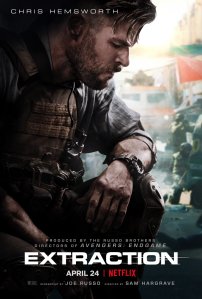 The new Netflix action movie Extraction is based on a graphic novel, co-authored by the Russo brothers, starring Thor himself Chris Hemsworth, and directed by longtime stunt choreographer Sam Hargrave. It has quite a pedigree, and after the wild success of the John Wick series, I’m genuinely excited to see what kind of action stuntmen-turned-directors can unleash. The best thing Extraction has going for it is its brutal, fluid, and immersive action sequences, including an extended sequence meant to convey a single take of relentless intensity. Unfortunately, that’s about the only thing this movie has going for it. The plot is very formulaic, with Hemsworth being brought in to retrieve a high-value target and then being betrayed, having to go on the run to protect the son of an imprisoned Indian mob boss. Hemsworth’s character is also haunted from personal tragedy and reluctant to get back into the fight, yet this final stand could allow him a late attempt at redemption for a lifetime of bloodshed. What I’ve just described could be a hundred other movies, minus the particulars of the Indian mob boss. The characters never really pop, even Hemsworth. The kid he’s tasked with saving never seems to get a moment to shine, to present a personality, or even a sense of growth or toughness. He might as well be a low-grade A.I. in a video game escort mission. The relationships don’t seem to matter. When it’s pumping, the action has an immediate appeal and Hemsworth acquits himself nicely with the more complicated fight choreography and stunts. As I kept watching, something didn’t quite feel right, and then it came to me. This movie doesn’t work from a tone standpoint. The John Wick-style action, glorifying in the fun and gory nature of slick violence done smoothly, conflicts with the setting and wider story of Extraction, namely the poverty-drenched streets of Bangladesh with child assassins thrown into duty by villainous gang leaders. It feels like you dropped John Wick into the searing reality of City of God, and the two styles of violence, and their larger social implications, do not really mix without uncomfortable consequences. It doesn’t help that so many of the characters just seem blank and replaceable. If you can ignore those misgivings, Extraction can offer some enticing thrills and above-average fight choreography.
Nate’s Grade: B-
Share this:

Bloodshot (2020)

Bloodshot is the kind of junky sci-fi action movie you might have seen in the 90s before The Matrix, the kind of thing that an X-Files episode would have covered, probably with a better sense of storytelling. Based on a Valiant comic book, and reportedly the first step in a hopeful Valiant Cinematic Universe (oh boy), Vin Diesel stars as dead soldier given new life thanks to tiny nanites living in his blood that magically repair his body, making him nigh invincible. He gets vengeance on the man who killed his wife or so he believes, as Diesel’s memory is wiped after every successful kill and re-implanted with new memories of a new identity of his wife’s murderer. The movie plays this as a big twist even though it was central in the trailer and advertising, and despite the fact that it seems too convoluted a path for a science project in the billions, it’s pretty predictable. That’s the problem with Bloodshot is that it’s a two-hour action movie that feels like it’s going through the motions, built upon the spare parts of other better movies, and heading in one direction that’s too telegraphed. The action is over-edited and under developed, with first-time director Dave Wilson (an esteemed director of video game cut scenes and promo trailers) getting lost in the “cool stuff” of his world, little gizmos and side characters rounding out Diesel’s super-powered teammates and later opponents. You can feel that certain visual compositions are here just to look cool for a trailer. I was looking for the super-powered action sequences to be a major source of fun with this one and they left me shrugging. There’s one CGI-heavy fight scene down 50 stories of elevator shaft that has some moments to it, but as a whole Bloodshoot feels bloodless with its excitement. The appearance of Diesel being rebuilt by the wispy nanites reminded me of Apocalypse’s weird sand powers in X-Men: Apocalypse. Having its main character essentially be invulnerable takes the stakes out of his fights, which means even more thinking needs to go into the action design to maximize this effect. The final confrontation between Diesel and his tormentor (Guy Pearce, making a home for himself as this kind of character) has a clean and clever resolution I appreciated, but it was a long slog to get to something clever in construction and execution here. If you’re looking for a pretty straightforward action movie that you won’t have to burden much thought with, you could do worse than Bloodshot. This also has Eiza Gonzalez in another movie where she plays a CGI-augmented version of herself (Alita: Battle Angel, Welcome to Marwen), so there’s that too. At this rate, I don’t think we’re going to be getting that Valiant Cinematic Universe if this is the inauspicious kickoff.
Nate’s Grade: C
Share this:

Guns Akimbo (2020)
 Imagine waking up one day and having real-working handguns bolted into your hands. That’s the wild premise to Guns Akimbo (akimbo means, in this context, “flung out haphazardly”), a frenetic action comedy that never takes itself too seriously. Miles (Daniel Radcliffe) is a computer programmer who takes it upon himself to harass online trolls. One of these trolls, the proprietor behind the death match game show Schism, takes it personally. He drugs Miles and has his cartoonish goons give him the gun-hands. He’s the latest contestant on Schism, and the top-ranked assassin Nix (Samara Weaving) has been selected as his competition. Miles has to fend for his life, while not arousing panic or the police, and he can’t even open a door.
It’s a bonkers, proudly juvenile action comedy that starts off at a breakneck speed and rarely lets up, and there’s a good reason for that – Guns Akimbo is a lot of flash and little else. It’s a movie that’s constantly in your face with its stylistic tricks, crass humor, wanton violence, and bizarre touches, and for a decent portion of the movie it kept me entertained. The rush of colors, movement, and profane insanity can be enjoyed on a certain level that doesn’t require much in the way of thinking. If you need a turn-off-your-brain action comedy, Guns Akimbo can work on that level, but if you think a little more the illusion begins to dissolve. I start to question the reality of this world, which seems more akin to something from The Purge but lacks the satirical through line of the Purge franchise. The satire of Guns Akimbo feels tacked on and often forced, much like the setup of its premise. There’s really nothing about firearms or gun culture covered, which seems bizarre considering the premise. The “troll culture” aspect of the movie is barely covered, setting it up as a straw-man argument to lambaste the general indifference to human suffering. We never really return to it except for brief moments to score easy points. Miles is a troll to trolls, and they get so incensed that they go to extreme lengths for vengeance from… being trolled? Is this to imply how fragile online trolls are as people? The world of the movie seems to acknowledge its Running Man-style online death game shows but the rest of the world goes on normally without commenting. It feels like someone just dropped in a fantastic element into the normal world and nobody acknowledges it as such. I thought maybe at the end it would turn on the Schism viewers but no. They’re basically like those five or six audience faces we jump around for reaction shots, like in The Truman Show. The satire of the movie feels more like a superficial finish.
 From the first sequence of stylized violence on, I made a note of how overly edited the action was. It wasn’t quite to the hyper-edits of Michal Bay’s kaleidoscopic realm but it was noticeable and made it harder for the action to be understood and appreciated. You get the premise of the scenarios, two cars chasing after one another and firing, but it’s presented in such a blizzard of images, sounds, and colors that it’s more the impression of the scene rather than a development. This impression was always present when we watch Nix storm through a drug den and lay waste to every armed goon inside. Here is a scenario where all I want is some stylized violence and fun fight choreography, but what I got was more of the same incomprehensible jumble. Nix shoots. Bullets hit skulls. Blood splatters. The camera is constantly zooming, or careening, or flipping upside down, and after a while I just gave up and accepted it’s all only impression-based. It’s about the immediate energy and not what’s actually happening onscreen. I wasn’t going to get any interesting fight choreography. I wasn’t going to get any memorable bits of crazy action. It was like a junkier version of Wanted, with a super-powered player running through a level and clearing over-matched opponents. Without more, the same action can get boring. The same happens in a junkyard clash between gangs. The only action sequence with a satisfying development was a car chase where Nix attacks with the spinning wheel of her motorcycle. Guns Akimbo has decided to overwhelm your senses to distract from its action restrictions.
As a crazy comedy, Guns Akimbo is more successful and fun. I found the physical comedy to be a consistent and enjoyable source of entertainment. While the action might get boring, watching Miles simply deal with the logistics of his gun-bolted hands made me laugh and cringe constantly. How does one go to the bathroom with gun-hands? Put on their pants? Open a door? Drive a car? It’s a dose of slapstick that doesn’t have to dip into edgy material in order to make its mark. Radcliffe is genuinely fun to watch during these sequences, as it plays to his strengths of melding awkward clumsiness and nervous high-strung energy. Thankfully Radcliffe is set for life thanks to the Harry Potter movies because he has consistently chosen really weird and interesting film roles, almost to the point where his presence in a (non-studio) movie is enough to guarantee a watch. He brought stunning humanity to a farting corpse in 2016’s Swiss Army Man and gave a tour-de-force physical performance. He’s an actor who commits no matter how silly the role, and it’s a delight to watch him try and make sense of the escalating madness around him with his unique physical disability. I was enjoying even the smaller moments like Miles’ difficulty hiding his alarming ailment with transparent lies or his interaction with a mentally ill homeless man (a scene-stealing Rhys Darby).
 As the movie kept going, I felt my interest growing and that was because of the increased presence of Weaving as Nix, who is clearly the star of this crazy movie. Weaving should have been a Hollywood star after Netflix’s The Babysitter, and she was just as wonderful as the heroine in last year’s Ready or Not. Her character isn’t exactly much more than a murder pinup, a comic character come to life. She’s nearly unrecognizable in her punk rock assassin attire, including literal bullet teeth. She’s all nihilist attitude and clunky one-liners (“Suck my clit” needs some work). She has a tragic back-story that sets her up for vengeance and that’s all that’s needed from what could be a completely interchangeable back-story. It only serves as a needed character motivation point, one that is more compelling even in its shallow nature than Miles, who is on the run for his life but really is about trying to save his ex-girlfriend (Natasha Liu Bordizzo) who serves mainly as a damsel in distress for the last act. While I enjoyed Radcliffe as a performer, this is Weaving’s movie from the moment she struts into the frame. Her charisma pops off the screen even as her character is criminally blasé. She’s the kind of character that will pick up a dismembered middle finger just to give someone the gesture. Nix is more so a collection of weird and hip and sexy tics than an interesting character, but it’s Weaving and her jubilant, dangerous degree of fun that makes the character a scrubby version of Harley Quinn.
Guns Akimbo is like tasty junk food that can satisfy a very specific cinematic craving but you know, even as you’re consuming it, that this won’t be anything special. I wish the film had gone further in any direction, whether it was with the comedy, whether it was with more finely choreographed action, or whether it was in more outlandish set pieces like in 2007’s Shoot ‘Em Up. If you want to be a crazy cartoon, be a crazy cartoon. Give me even more characters like Nix and over-the-top violence that does something different besides geysers of head shot wounds. Guns Akimbo might work as a lesser Crank movie. This movie seems either to be too satisfied with itself or knowingly hiding its shortcomings with energy, edits, and attitude. I can’t tell which. Guns Akimbo is easy on the brain and maybe a little too easy on itself. My 13-year-old self would have loved this movie.
Nate’s Grade: C+


 nathanzoebl
You must be logged in to post a comment.