Blog Archives
The Time Machine (2002) [Review Re-View]
 Originally released March 8, 2002:
The Time Machine is one of the most famous works of fiction in history. It was writen long long ago by the great H.G. Wells. It presents a fantasy glimpse into our future, but in it Wells also gave readers the opportunity to ponder what would happen if they could go back and change their own lives. People have used the story as a cautionary allegory to our own times, like the 1960 film version of The Time Machine. Now, a bigger budget Hollywood remake attempts to put another spin on the Wells classic.
Alexander Hartdegen (Guy Pearce) is an absent-minded professor interested in cracking down the physics of time. He’s chided by some of his peers for crackpot theories and his fascination with any new gadget. He’s supposed to meet Emma (Sienna Guillory) at Central Park and tonight’s the big night he plans to propose to her. He eventually catches up to Emma and the two go strolling off into the park. Shortly after popping the question the two become victims of a mugging and in the fray Emma is left dead. The death drives Alex to create his fanciful time machine, which only happens to take four years time.
Alex gives his big brass LA-Z-Boy looking machine a try and travels back to that fateful night to avoid Emma’s death. Alex avoids the mugger all right, but while purchasing flowers his fiancé gets plowed over by a runaway carriage instead. It seems that one cannot change the past. Alex decides to give the future a chance and travels to a very Back to the Future 2 looking 2037. Someone astutely asks Alex if his time traveling machine makes a good cappuccino.
 When Alex hops a little further into the future the moon is breaking up because of ill-fated lunar construction. Moon rocks are hurtling toward the surface and disrupting everyone’s day. (It was in this moment that a scene of rocks smashing into the World Trade Center was cut for taste) Alex jumps back into his machine but is konked out by some lunar cheese and falls asleep at the wheel. The next thing you know Alex is in a mysterious future world.
The place where The Time Machine really bogs down is once Alex arrives in 80,000 something or other. The child-like thrills and adventure of Alex zipping between the past and near future are buried underneath the standard post-apocalyptic movie world. The people dress in loin cloths and rags (though some of the female natives wear revealing tops that look like see-through chain mail) but still have perfect teeth. When Alex doesn’t understand the linguistics of 80,000 AD the next words that he hears are English from Mara (pop star Samantha Mumba). It’s amazing that English survived 81,000 years when Latin didn’t last a mere 2,000 and change.
It turns out these people who live in huts resembling hot air balloons along the faces of cliffs are called Eloi. The Eloi don’t have anyone looking old enough to carry an AARP membership and are apprehensive to speak of why. Perhaps it’s because creatures resembling something that would belong in The Mummy Returns pop up from the sand to capture whatever slow moving prey they can and return to for an underground feast.
The creatures, called Morlocks, are the offshoots of evolution. Seems after the whole moon destruction thing (whoops!) those who took refuge below the surface have evolved into dusty hunchbacked cannibals. Their rowdy ranks are controlled by Uber-Morlock (I’m not making up that name) who resembles an albino bassist for Poison or Skid Row. It’s actually acclaimed actor Jeremy Irons under all that pancake makeup and fleshy spine-showing prosthetic. The less said about Irons the better.
It’s during this part that The Time Machine reverts into a half-baked Stargate. Alex encourages the Eloi race to stand up to their oppressors and fight for their freedom. He becomes part of the Eloi community, rallies the troops into rebellion, and also has to save the damsel in distress.
The Time Machine remake isn’t the political statement the 1960 film was on man’s folly with technology, particularly nuclear weapons. What this suped-up version is all about is special effects and plenty of them. The effects are for the most part dazzling, especially the scene where Alex travels to 2037 and we see the development of New York City with skyscrapers assembling themselves.
 Simon Wells (The Prince of Egypt) directed this remake and is actually the great-grandson of the famous adventure’s author, H. G. Wells. Trivial Pursuit fans everywhere rejoice. Wells had to sit out the last 18 days of shooting due to “exhaustion” and Gore Verbinsky came off the bench to finish the directorial duties. The film clocks in at a scant 90 minutes but there are definite moments of drag.
Pearce (Memento) is a hunky hero and for the most part is admirably gung-ho with the role. Samantha Mumba’s motivation must have been to stand and look pretty the entire film. To think that Mumba might be the most talented of the recent singers-come-actors (Mandy Moore and Britney Spears) is a distressing thought all its own.
As The Time Machine kept dragging into its Mumba-filled period, I began day dreaming of an alternate, darkly comic version. In my head, Pearce’s character keeps traveling back again and again to save his beloved only to lose her a different way each time. I could picture a humorous montage of his girlfriend dying an assortment of colorful deaths and Pearce just getting more frustrated and jaded. I could picture them skating only to have her plunge below the ice. I could picture the couple dining at a fine restaurant only to have her choke and Pearce just throw his napkin onto the table and sigh loudly. I was enjoying my alternate take on The Time Machine so much that I didn’t want to return to the one that was playing.
The Time Machine has its moments of thrills and excitement but they are mostly condensed to the opening third. This remake doesn’t have the political edge or wow-factor the original did. It plays more to the rules of conventional Hollywood than the wide open possibilities Wells wrote about. Pearce tries valiantly and the special effects are really something, but more often than not The Time Machine is not worth your time.
Nate’s Grade: C
——————————————————
WRITER REFLECTIONS 20 YEARS LATER

The 2002 Time Machine is fanciful schlock on the verge of being populist spectacle. It’s not just another adaptation of the famous H.G. Wells sci-fi novel, it’s also emerging from the shadow of the 1960 movie that broke ground in the realm of special effects. Storytellers will often find new relevant meaning to be mined from the resources of old, and literature with classic stories can still be compelling decades and centuries hence as long as they are served with care and empathy. In theory, another Time Machine movie could be a worthy venture especially in a realm of modern special effects marvels and a more socially conscious viewpoint. If the 1960 film was a cautionary tale about mankind’s impending doom from nuclear arms and technological hubris, you would think a movie born from the ashes of the Cold War would follow a different approach, perhaps something more in line with the colonialism critiques from Wells. It’s surprising then that the 2002 movie also follows the “be careful with your machines, mankind” thematic warning of the earlier version. It made me think of Tim Burton’s maligned 2001 Planet of the Apes remake where they could have gone with ANY ending possible except one, the original’s famous twist ending, one of the most famous endings ever, and what did the new movie do? The same ending. Re-watching the 2002 Time Machine, it’s more fun than it has any right to be and there are aspects worth celebrating, but much like its hero, it’s a victim of unmet potential.
 Firstly, this is a pretty entertaining studio movie that blows by quickly at only 96 minutes. The screenplay is by John Logan, the same writer with credits like Gladiator, The Aviator, Rango, Hugo, Skyfall, and other quite successful, quite large studio hits. And yet this movie doesn’t just feel like another paycheck for the man. The opening half of this relatively brief movie definitely feels like the favorite half. It’s here where the movie introduces the protagonist’s personal loss being the motivating force that drives him to make a time machine, something absent from the 1960 original and an exciting and emotional way to separate itself. Watching Alexander (Guy Pearce) go back to save his love has an immediate appeal, and watching him fail again brings forth the idea of being unable to change the past. Even twenty years later, I still think about the darkly comic version of this story, just as I did in my initial review in 2002, where Alexander tries again and again to save his beloved only to lose her to some new calamity. It would have a lighter approach even while dealing with darker humor, and it would certainly contribute to the film’s central thesis that man is unable to change the miscues of the past.
You would think The Time Machine would follow a theme about correcting the mistakes of the past to prevent future danger; many time travel tales follow a hero trying to thwart a terrible future, although sometimes they inadvertently cause that same terrible future in grand ironic tradition. This movie doesn’t really dwell on fixing the past but more so upon learning from it. During its post-apocalyptic second half, the focus isn’t on preventing it or going back to warn mankind of the folly of its ways. It’s about adapting to change, which can be viewed as defeatist or pragmatic. The future world of 800,000 years ahead is messed up because of the actions of mankind’s past, namely the lunar collision thanks to bad condo construction (thanks, capitalism!). It’s none too difficult to place a general ecological/climate change message in place, the exploitation of the present spoiling the future for generations yet to come. However, the movie isn’t about Alexander going back to teach mankind how to avoid its own mistakes. Unlike the 1960 original, he stays put in this uncertain future world with his new Eloi family and Eloi girlfriend (Samantha Mumba). He’s content to remain in this new time and live his life, ignoring the foresight of a time machine. There’s a message there about looking ahead in one’s life, not dwelling on the past at the expense of the future, but it’s also unexpected for a time travel action adventure. It’s usually about preventing the horrible future, not learning to live with it and make a better tomorrow. This also could be read as the present giving up on avoiding the mistakes of contemporary excess.
 You can probably tell what kind of person that you are depending upon which half of The Time Machine you prefer. For me, the first half has all the surprises and time jumping and fun, and the second half settles into standard post-apocalyptic rally-the-masses formula. It’s not bad but it honestly feels like an entire second act is missing from the development of the plot. In quick succession, Alexander learns he’s in a far-flung future, the customs of the Eloi, the danger of the Morlocks, their hunting practices, their cannibalistic impulses, what caused them, and then who their leader is, and how there are multiple Eloi-Morlock colonies throughout the world. It’s a lot of absurdly fast exposition that just unfolds to the convenience of our hero, and so little of it occurs from the virtual A.I. figure (Orlando Jones) that seems entirely designed to be an exposition device. It’s during the second half that the playfulness and ideas give way to a grungy future with efficient if unspectacular chase scenes from monsters. I am convinced that the Morlock leader played by Jeremy Irons was originally intended to be the older, more evolved, and more callous ends-justify-the-means version of Alexander. That kind of twist would have brought things back to the personal realm of those first minutes traveling through time. Alas, he’s just another monster with bad hair. It seems like wasted potential for the last twenty minutes of this movie to just be another climax involving blowing up the monsters and rescuing the damsel.
Apparently there was significant contention behind the scenes over the look of the Morlocks. The creatures were designed by the famous Stan Winston studios and then director Simon Wells and the producers wanted to change their look, making them more humanoid and recognizable. This infuriated the effects team who strongly disapproved of this creative direction. I appreciate that the production went to the trouble of expensive prosthetics and costumes rather than just making all of the Morlocks ugly CGI monstrosities. I was worried that twenty-year-old humanoid CGI would not age well, but thankfully I didn’t have to bother with that fear.
 This was the first live-action movie for Wells as director. He spent over a decade in the world of animation and helmed An American Tale: Fievel Goes West, Balto, and The Prince of Egypt. After the mediocre reception to The Time Machine, Wells didn’t direct another movie until almost ten years later, 2011’s Mars Needs Moms, a film that reportedly cost the studio over $200 million in losses. It was one of the biggest box-office bombs ever. It’s not much of a surprise then that Wells hasn’t been able to direct another studio movie until just this year, and even that is a small-scale adaptation of a children’s TV show, to the best of my knowledge. The man has directed two movies in the last two decades. On a more fortunate note, Wells has had steady work in his old field of animation as a consultant and storyboard artist for just about every Dreamworks cartoon (Kung Fu Panda, How to Train Your Dragon, The Croods, etc).
Re-reading my old review, there’s not much more to extrapolate. I agree with just about every word I wrote back in 2002. It’s fun for me when I watch these films twenty years later and have the same remarks in my head only to discover my younger self had the exact same response.
While not breaking new ground or even attaining its own creative potential, the 2002 Time Machine is a perfectly reasonable genre movie that you could put on and kill 90 minutes. It’s relatively fun, has some bigger ideas, and some surprising moments where it appears on the verge of poignancy. One of those is when the A.I., who has survived 800,000 years of isolation, talks about the misery of remembering every face he ever interacted with, cataloging every detail, and how this is tearing him apart and how valued having a lone friend was for him. It’s such a thoughtful and empathetic moment that seems to come out of nowhere and leave just as fast before you can really dig into it for genuine pathos. The Time Machine feels this way, like whenever it presents something intriguing, intelligent, or emotive, it then it has to veer sharply back to the bigger, dumber lane of blockbuster filmmaking for the masses.
Re-View Grade: C+
Share this:

The Adam Project (2022)
 Watching the trailer for Netflix’s The Adam Project, I wasn’t too impressed. It felt like a combination of familiar and popular movies like Back to the Future, E.T., and Looper. It seemed like another assembly of popular sci-fi movie tropes and I wasn’t expecting much else. Then as I watched the movie, I realized how enjoyable and engaging this original story by writer T.S. Nowlin was and what must have attracted Tom Cruise to want to star and produce this project in 2012. It met a long developmental hell, as is common in the industry, before being given a second life at Netflix with Ryan Reynolds as star and director Shawn Levy (Free Guy). It kind of muffs the action and sci-fi spectacle, but The Adam Project is a movie that’s big where it counts.
Adam (Reynolds) is a pilot in 2050 who is fighting against a corporate evil that uses time travel to enshrine its power. Adam’s own wife (Zoe Saldana) crash landed in 2018. In desperation, he travels back in time to find her and team up against their future foes, except he lands not in 2018 but in 2022, and he meets his younger, twelve-year-old self (Walker Scobell). It so happens that Adam’s ship is marked to respond only to his DNA, so he needs his younger self to help while he recovers from his injuries. Unfortunately, the future is antsy to eliminate Adam and sends killer super soldiers and missile-launching spaceships. Both Adams come to the conclusion the only way to prevail is to stop the initial first steps of the invention of time travel, meaning going back further to see their departed father, Louis Reed (Mark Ruffalo), the inadvertent creator of time travel.
 Where The Adam Project really shines is with its core ideas and relationships, which is the emotional heart of a movie. It’s peculiar because we’re so used to seeing the other half, the sci-fi action spectacle, prioritized at the expense of story and characterization. Usually a studio puts much more emphasis on a movie looking good, or at least passably entertaining, and less on the substance that would make it meaningfully so. Credit to the filmmakers that they understood what the core appeal of this movie was and that is the idea of characters out of time getting a chance to interact, learn, and reconcile. Who among us wouldn’t want another opportunity to talk with a loved one before they are gone? Who among us would not be hesitant to eliminate the special confluence of events that lead a special someone into our life? The idea of two different aged versions of one character butting heads is inherently fun but also meaningful, because every one of their squabbles or disagreements is telling from a character standpoint. We’re learning about the differences between these two versions and two different timelines. The older Adam is resentful of his younger self, of his naivety, and looking to toughen him up or settle some scores he thinks will be cathartic. The younger version resents his older self for being so domineering, for being so cynical, and for pushing him into uncomfortable situations to relieve long-standing grudges that he hasn’t dwelled over yet. It also allows older Adam to remember things that he has forgotten from the perspective of his younger self. The buddy banter is capable and spry but it’s also revelatory about the characters, which makes every interaction more important.
Adam’s father doesn’t come back until the second half of the film, and then the movie transforms into a real family affair and takes on extra pathos. Dear old dad is the square pushing back against the ethical implications of knowingly participating with time travel. Here we have three different characters, all related, but each has a different perspective and competing goals: Younger Adam wants to beat the bad guys but also is freshest in his grief over his dad and wants to save him; Older Adam wants to rescue his wife but also has a score to settle with his departed father; and Dad gets a chance to see his grown son, something he will never otherwise witness, but is adamant about refusing to help and prosper from time travel foreknowledge shenanigans. That’s a good combination of conflicts and personality differences, and through the relatable lens of broken relationships repairing between two sons and their father, it elevates each routine action moment later.
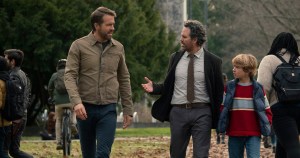 My other surprise was how mundane the action plays in The Adam Project. I started to notice how the action was usually pretty small-scale with only a handful of future soldiers fighting in relatively open and empty spaces. The big future addition is an electrified baton that older Adam utilizes, as younger Adam gushes, much like a lightsaber. It has the power to propel enemies in a force blast that launches out in a circumference, but I kept questioning why Adam wasn’t knocked over by this force as well? It’s a cool device but little else is utilized to separate the past and future. When the characters murder people, they vanish in fiery clouds, free of blood, and we’re told this is what happens when a person is killed outside their timeline. I think it was meant to make the audience forget the mechanics or downplay that all these vanishing soldiers are actually being murdered from existence. The younger versions of these characters are still present but it’s not like there’s another version that will take their place. Their lives ended in this moment as they traveled back in time to this final fate. No do-overs for them. The finale of The Adam Project is a mess of bad CGI and a world-destroying machine; both it and the plot are on apocalyptic autopilot at this point. The preceding movie was much better to simply fall victim to such a dumb climax. It’s not enough to dent the positives that came before it, but the movie succumbs to the pressures of big blockbuster silliness it had avoided.
Here is a vehicle that makes perfect use of the charms of its leading man. Reynolds (Free Guy) has always been a charismatic performer, a fast-talking rogue you can’t help but fall for, but not every movie role allows him to play to his strengths, Sometimes he’s just on quip overload and can come across like the overly ironic, insincere, vacuous version of his motormouth persona. His glib demeanor has a way of eating him whole. Here, the actor gets to essentially be playing off himself, and it works so much better. Reynolds is also a natural with kids (see 2008’s Definitely, Maybe) and there’s an inherent big brother/little brother vibe to the Adam interactions that makes them heartwarming while also amusing. Newcomer Scobell is able to hold his own with Reynolds, no small feat. He has a vibrant, excitable energy that feels youthful without getting into annoying Anakin “yippee” Skywalker territory. Reynolds may be the star but you’ll enjoy spending time with young Adam too, and this is also a credit to Scobell and his performance. Ruffalo and Jennifer Garner (a welcomed 13 Going on 30 reunion) are enjoyable if extremely under utilized; each could have had a whole movie from their vantage point.
 The Adam Project is an action movie that looks like typical pandering studio junk at first glance but gets the hard stuff right, namely the reasons why you should care about any of the flying bodies, explosions, and world-ending CGI. It’s about the characters, and here we have a dynamic that keeps things interesting and fun while also making the dilemma personable and emotional. The same stakes given to saving the world are also given to having one more conversation with a departed father or with trying to get things right in your past while time is still ahead of you. The Adam Project might be overlooked or discounted because of how its parts appear to be generic and stale, but it’s the care with which they are assembled that won me over. I’m just amazed that, for once, a Hollywood big-budget tentpole release emphasized the right stuff.
Nate’s Grade: B
Share this:

The Batman (2022)
 Matt Reeves is a director who has found a way to inject soul into blockbuster movie-making, notably shepherding the last two films of the revived Planet of the Apes series. Who would have guessed at the turn of the twenty-first century that the two co-creators of Felicity would go on to helm such monumental properties like Star Wars and Batman? Reeves has reliably proven himself on increasingly bigger stages, and that’s why I held out hope that yet another Batman reboot would be worth the effort under his care. Let’s face it, dear reader, we’re probably never going to be more than three or four years removed from some kind of Batman movie, whether a continuation or another reboot. If we are going back to the Bat basics, I trust giving the franchise over to exciting artists like Reeves. I was hoping for a Ben Affleck-directed Batman after he slipped into the cowl in 2014, but it was not to be even though he was the best part of the Zack Snyder run. After multiple production delays, we now have The Batman, and it’s the next big box-office hope for desperate movie theaters until the oasis of summer releases (some are even charging a heftier ticket price, so consider it a blockbuster tax). As a slick comic book spectacle, The Batman is a three-course meal that could have sensibly pushed away earlier. You’ll feel satisfied, full, a little addled, but if dank serial killer thrillers are your thing, you’ll definitely be hungry for more even after nearly three hours of Reeves’ deep danky dive.
Gotham City is on the verge of a new mayoral election, and it’s also on the verge of a killing spree. A masked man identifying himself as the Riddler (Paul Dano) is targeting the elites of the city with cryptic notes addressed specifically toward “The Batman” (Robert Pattinson), the newfound vigilante trying to instill fear in the hearts of would-be criminals. The key ends up being Selena Kyle (Zoe Kravtiz), a waitress at Gotham’s grungy club that also happens to be a popular market for the big crime bosses. Batman enlists the help of Selena to put together the clues to predict the Riddler’s next target and to uncover decades of corruption infesting the city.
 The Batman exists in a specific cinematic universe far more in common with the rain-soaked, gritty serial killer thrillers of David Fincher than anything from the previous DC movie universe. This is a pulpy, stylized movie that feels akin to Seven or Zodiac, and not just in its protracted length. It’s a methodical movie that takes its sweet time dwelling in the decrepit details. The plot is very similar to the serial killer formula of finding that first alarming murder and clue, leading to the next, learning more from each additional target to try and discern a pattern of connectivity, and finally learning that the grand scheme goes deeper than imagined, and is usually personal. It’s more based as a detective procedural than any previous Batman incarnation, including missions where the Dark Knight goes undercover or enlists others to gather intel for his investigation. If you’re the kind of person that’s been dreaming of the quote-unquote world’s greatest detective to do more sleuthing and less typing at magic computers, then your time has come. This is a very dark and very serious movie, though it doesn’t feel too suffocating. Fun can still be had but on its own terms, satisfaction from building momentum, seeing how this world incorporates familiar faces and Batman elements, and deepening the lore of this city’s complicated history. Nobody is going to be making any “I gotta get me one of these” quips. It’s hard to even remember a time Batman had nipples on his chest plate and a Bat credit card.
This is also the first Batman where I can vividly feel the anger resonating from its title character. In this new timeline, we’ve thankfully skipped the origin period (and even more thankfully skipped watching Bruce’s parents die on screen for the sixteenth time or so), and we’re now two years into Batman being Batman. He’s still figuring things out but his effect is evident. Reeves has a terrific introduction of various acts of crime across the city and cross-cutting the criminals staring at the Bat signal in the sky and then nervously looking at a corridor of shadow, fearful that the caped crusader could emerge at any moment. When he does finally arrive, this Batman walks with such heavy plodding steps for dramatic effect (and reminiscent of some Goth club kid). This version of Batman relishes delivering pain. He wallops his opponents with abandon, and the intensity of the physical performance from Pattinson really impresses. This is Batman as a rampaging bull, leaning into fights, and also carelessly blase about enduring damage. You will watch Batman get shot dozens of times and he just keeps fighting, so overcome in the moment with the drive of his own violent vigor. Bruce Wayne hasn’t exactly been portrayed as a stable and well-adjusted man in the other movies, but this is the first Batman that made me a little scared about what he might do to others and how cavalier he was taking all this damage.
 On that note, Pattinson proves himself more than capable of shouldering the weight of the franchise. Upon news of the former Twilight star’s casting, fan reaction across the Internet was apoplectic and rotten, ignoring the fact that Pattinson has gone the 90s Johnny Depp route and purposely leveraged his good looks to work with an eclectic group of filmmakers and odd roles (see Good Time, The Lighthouse, and The Rover). Pattinson has become a very interesting young actor, and it’s funny to me that ten years after the release of the final Twilight, we have one half of the undead couple playing Batman and the other half nominated for Best Actress for portraying Princess Diana. I would say they’ve proven themselves as legit thespians. Anyway, the Batman franchise has a long history of negative fan reaction to casting, from Affleck to Heath Ledger to even Michael Keaton, that is then rescinded upon seeing the movie, and I expect the same to occur for Pattinson. He actually plays Bruce Wayne something like an atrophied vampire, barely keeping the visage because the costume is the real him. Although, if this is a Batman who prioritizes the night, I think if I was a criminal, I would just start planning on committing all my many crimes during daylight hours (strictly keeping to banking hours).
The supporting cast is as deep and as talented as the Nolan films. Several villainous characters are in their early stages of our conceptions. Kravitz (Kimi) is the real breakout star. While she cannot supplant Michelle Pfeiffer as the top Catwoman, Kravitz makes the role her own. Selena is more a socially conscious antihero trying to fight back against bad men in power abusing that power. Her own goal aligns with Batman’s, and the two become intertwined allies with a clear romantic frisson emerging. This is a Catwoman I would like to see again. Dano (Swiss Army Man) is effortlessly creepy as the morally righteous and unhinged Riddler, more akin to Zodiac or Jigsaw than Jim Carrey’s wacky version. He’s menacing and the tricks he does with his voice are unnerving, except, however, when his voice hits higher pitches and then he sounds like a whiny child needing to go to his room. Colin Farrel (The Gentlemen) is nearly unrecognizable under pounds of makeup that make him resemble a disfigured Richard Kind (one wonders why the movie didn’t just hire Richard Kind himself) and he’s having a ball. Jeffrey Wright (Westworld) has a weary gravitas as a younger Jim Gordon, the only ally on the police force for Batman. Andy Serkis is a welcome presence as the dutiful Alfred, the last familial bond Bruce has, though he spends most of the time off-screen probably due to Serkis directing 2021’s Venom 2.
 Reeves might not have the signature Gothic opulence of a Burton, the visual flair of a Snyder, or the zeitgeist-tapping instincts of a Nolan, but he is a supremely talented big screen stylist. There is a deeply felt tactile nature to this movie, from the streets to the alleys to the homes. It feels wonderfully alive and especially dirty. The entire movie feels like it has a visual pal over it, favoring burnt orange, and the cinematography by Greig Fraser (Dune) is ornate and often mesmerizing, begging you to just immerse yourself in the details and compositions. The influence of Fincher is all over this movie, but there are far worse auteurs to model after than the man who elevated serial killer thrillers to high art. I appreciate how Reeves stages many of his bouts of action, including one sequence of Batman taking out a group of gunmen glimpsed only from the staccato flashes of muzzle fire. Reeves is a first-class showman when it comes to introductions. I mentioned Batman’s introduction, but Reeves also delivers splashy entrances for Catwoman, the Riddler, and even the Batmobile, which comes to monstrous life like a kaiju being awakened. The explosive car chase with that marauding muscle car is the action high-point. The movie is further elevated by Michael Giacchino’s pounding musical score. It’s not an instantly iconic Danny Elfman theme but it is stirring in how thunderous it announces itself.
I wasn’t feeling the length of the movie until its third hour, and that’s where my friend Eric Muller cites that The Batman is suffering from a Return of the King-level of false endings. Just when you think it’s wrapping up, there’s something else, and just when you think it’s now finally coming to a close, it’s got another sequence and attached resolution. It’s during this final third hour that I feel like the movie could have been trimmed back. While it ends on a high note and brings characters to the end of their arcs in a clear fashion, part of me really feels like a bleaker ending would have been appropriate for the rest of the movie we had. I won’t specify for the sake of spoilers but you’ll know it when it happens, and it could have ended on a note of the villain more or less winning the larger war on their own terms. It has such a power to it, tying elements together that had been carefully kept as background for so long as to be forgotten only to bring them back to assert the full power of an insidious virus. I think the movie would have been a more fitting ending on this dreary note, with our heroes having lost, but of course the studio wouldn’t want its $200 tentpole to end with its main star bested by pessimism. Again, this is merely my own personal preference, but after two-plus hours of rainy gloom and doom, it feels more fitting to end on a dour note (also akin to Seven or Zodiac) than on inspiring triumph.
 This is also perhaps one of the most disturbing PG-13 movies. I might caution parents about taking younger children to watch. The mood of this movie is very dark and somber and the details of the Riddler’s acts of terror can be very horrific to contemplate. There are also intense moments like listening to a woman being strangled to death, twice. It all started making me think maybe Reeves and company could have pulled back and left more to the imagination. I’m not saying the movie’s tone is inappropriate for the material, it just occasionally luxuriates in the grimy details and pitched terror and trauma of its victims that can be unsettling and unnecessary.
Even with the heaviest expectations from the hardest of fans, The Batman is an unqualified success. It’s not in the same category of Nolan’s best but the ambition and execution place Reeves only just outside that hallowed sphere of blockbuster showmanship. It also hurts that The Batman lacks an exciting anchor that can break through the pop-culture clutter, like a dynamic and ultimately Oscar-winning performance from Heath Ledger or Joaquin Phoenix. It almost feels like a Batman miniseries that you might want to continue tuning into (Reeves is developing a few Batman-related projects for HBO Max). Overall, The Batman is an exciting and intelligent blockbuster with style, mood, and a clear sense of purpose. Reeves remains an excellent caretaker of any pop-culture property and proves big movies can still have souls.
Nate’s Grade: B+
Share this:

The King’s Man (2021)

In 2015, I was completely on board with a Kingsman franchise. Based upon the Mark Millar comics, the film was a hip, transgressive, action-packed, and refreshingly modern remix of stale spy thriller tropes. It also followed a satisfying snobs vs. slobs class conflict and a My Fair Lady-stye personal transformation of street kid to suave secret agent. In short, I loved it, and I said co-writer/director Matthew Vaughn used big studio budgets smarter than any other blockbuster filmmaker. Flash forward to 2017, and the Kingsman sequel started to show cracks in my resolute faith in Vaughn, and now with the long-delayed Kingsman prequel, I just don’t know if I care any more about this universe. It feels like the appeal of the franchise has been stamped out by its inferior additions. This one chronicles the origins of the Kingsman tailors/secret agency, a question nobody was really asking. It’s the beginnings of World War I, and a comical cadre of super villains, such as Mata Hari, Rasputin, and future assassin Gavrilo Princip, is meeting to plot doom and destruction and goad the world’s powers into war (in a goofy but appreciated comical touch, Tom Hollander plays the leaders of England, Germany, and Russia). Ralph Fiennes plays Orlando Oxford, a pacifist leading a special team trying to thwart the drumbeats of war by taking out the shadow brokers. The Kingsman movies were known for its attitude and cheekily crossing the line from time to time, but that willful perversity seems so desperate with this new movie. During the Rasputin mission, the disheveled madman literally stuffs an entire pie into his face, tongues Oxford’s wound on his upper thigh, and lasciviously promises more to come for him and Oxford’s adult son. The sequence is almost astonishing in poor taste and grotesque, and it just seems to go on forever. And yet, thanks to the sheer audacious energy of Rhys Ifans as the pansexual cleric, this actually might be the best or at least most entertaining part of the 130-minute movie. The problem is that The King’s Man doesn’t know whether it wants to commit to being a ribald loose retelling of history or a serious war drama. It’s hard to square Rasputin cracking wise and sword fighting to the 1812 Overture and an interminable 20-minute tonal detour that seriously examines the horrors of trench warfare. It jumps from silly comic book violence to grisly reality. That entire episode is then washed away with a joyless climax that feels like a deflated video game compound assault. I’ll credit Vaughn for dashes of style, like sword-fighting from the P.O.V. of the swords, but this movie feels too all over the place in tone, in ideas, in execution and lacking a dynamic anchor. Fiennes is a dry and dashing leading man, though I was having flashbacks of his 1998 Avengers misfire at points. It’s a story that doesn’t really accentuate the knowledge base of future Kingsman, and it’s lacking a sustained sense of fun and invention. It needed more banter, more subversion, more over-the-top and less formulaic plot turns. In my review of The Golden Circle, I concluded with, “It would be a shame for something like this to become just another underwhelming franchise.” That day has sadly arrived, ladies and gentlemen.
Nate’s Grade: C
Share this:

The Count of Monte Cristo (2002) [Review Re-View]
 Originally released January 25, 2002:
Call it swash without the buckle. While The Count of Monte Cristo does an adequate job of telling the Alexander Dumas story (heavily editing chapters and making the leads friends in this version) the whole experience feels very rote. The sword fighting scenes are nowhere what they were billed as and the direction is surprisingly lackluster. Only the actors allow this film to arise mediocrity particularly with a devious turn from Guy Pierce (Memento). Kevin Reynolds (Robin Hood: Prince of Thieves) directed this film and proves he doesn’t need Kevin Costner to screw something up. Somewhere Costner is laughing. Actually, somewhere Costner is likely crying in his beer wondering what happened to him. “I was the king of the cinema…”
Nate’s Grade: C+
——————————————————
WRITER REFLECTIONS 20 YEARS LATER

I think 2002 is going to be my potential apology tour year when it comes to reviewing my initial film criticism of twenty years hence. The Count of Monte Cristo is my first entry for the new year and I already cringe re-reading my initial review. I think some of my early film reviews went overboard on snark, trying to establish a cool, chipper-than-thou attitude, but this was the early 2000s writing default for many. It was better to make quips, take some cheap shots, and sprinkle in some actual film criticism on top, and it’s a style of writing I’ve tried to grow out of as I’ve aged. I began writing film criticism back in 1999 as a means of expressing myself and showcasing my cinephile knowledge, and in many ways it was like learning to crack a puzzle, why a movie worked or didn’t work and what decisions lead to this eventual outcome. In some ways, early on, it was showing off and exploring my evolving writerly abilities, and sometimes that meant prioritizing cleverness over sincerity. I know I’m going to be reliving this with Crossroads but I’m reminded already with my first movie re-examination for the year 2002. So, to the filmmakers of The Count of Monte Cristo, on behalf of my then-19-year-old self, I apologize. Your movie is actually pretty good and, strangely, even makes some deviations from the book for the better.
Based upon the famous novel by Alexander Dumas (1802-1870), it’s a classic tale of vengeance and it’s plenty fun to watch because it feels like a movie that is giving you so many different turns at once. It’s almost structured like 30-minute episodes, and while being deemed “episodic” is usually regarded as a negative for a film story, I think this is an improvement. The beginning segment establishes how Edmond Dantes (Jim Caviezel) gets into trouble, and he might just be the biggest idiot in the world. The opening features him and his best pal, Fernand Mondego (Guy Pearce), seeking assistance for their ailing ship captain on the island of Elba during the time of Napoleon’s exile. Edmond agrees to deliver a letter from the deposed emperor to “an old friend” of his and then Edmond gets charged with treason in France. His shocked, incredulous response is absolutely hilarious (“What? Napoleon… USED me? I’m starting to rethink my whole appraisal of this man who tried to conquer the European continent.”). There’s a conspiracy by a government official to cover up his father being a Napoleon loyalist, the intended recipient of the letter, but it almost feels like Edmond deserves to be in jail for being this naively stupid. The first half hour sets up the villains, Edmond’s BFF betraying him to covet Edmond’s attractive wife, and the starting point for vengeance to be had. It’s economical storytelling and works well, and each thirty minutes feels like they are defined by a “very special guest star” who comes and goes.

The next thirty minutes explores Edmond’s life and routines in prison, lorded over by a cruel warden (Michael Wincott), and where he finds his mentor and salvation with an old priest, Abbe Faria (Richard Harris). Again, screenwriter Jay Wolpet efficiently establishes the routine, the passage of time, the means of how Edmond might escape, and his growing relationship and tutelage under a new unexpected friend. It’s kind of funny to watch old man Richard Harris (Gladiator) teach the considerably younger Caviezel how to sword fight, especially knowing that Harris would pass away later in 2002 at the age of 72. He needs the training because our first impression of this man is not favorable. Once Fernand betrays him, Edmond engages in what might be the most pathetic excuse for sword fighting I have ever seen. I know the classic character arc of starting inexperienced and weak and coming into experience and strength needs to be laid out, but man this guy just sucks. He runs around like a lame animal, crashing into furniture, meekly pushing glasses off a table and flopping like a soccer player trying to score a penalty card. However, the crucible of vengeance will temper this man into a dashing fighting machine. The prison segment establishes rules, develops a central antagonistic and mentor relationship, develops a prison break, and then provides Edmond with his first victory, first villain to topple, and shows his new cunning.
The next thirty minutes is almost a buddy movie between Edmond and Jacopo (Luis Guzman), the “best knife fighter in the world,” a smuggler whose life Edmond saves before joining the gang. Together they seek out the island of Monte Cristo, find a bountiful fortune thanks to Faria’s confiscated treasure map, and then Edmond reinvents himself as a mysterious count. He makes quite a flamboyant entrance, almost like a dapper nineteenth-century Great Gatsby, flaunting his extravagance and theatricality to make his mark with the upper social classes. His calculated social graces reminded me of any number of costume drama series that are predicated on operating within a rigid system of social manners and expectations. It’s about establishing his new reputation and working his way back into a position that he can tear apart whatever advantages Fernand has gotten used to. His former friend has married his wife, though he flaunts his infidelity, and he also is raising a son, Albert (Henry Cavill), that may or may not belong to Edmond. It’s through this son that Edmond sees his way back into the good graces of this family, staging a kidnapping and his rescue that gives him the standing he needs. Naturally, Edmond’s wife recognizes her former husband instantly, though he tries to deny her claims. This segment establishes the new normal, Edmond’s traps being set, and then it heads into its fitting climax.

Much of these plot points are from Dumas’ original novel, which is so tailor-made to make for an engaging adventure with a thirst for blood. It’s such a sturdy structure that provides satisfaction, as revenge stories often will; they are so easy to root for because it’s so utterly primal. There’s a reason there is an entire sub-genre of exploitation films is nothing but revenge (and yes, sadly, too often including rape as the inciting wrong to be avenged). It’s an easy hook for an audience to get onboard and root for. Wolpert’s adaptation makes some smart changes to better transform the story for the visual medium. By making Edmond and Fernand friends, it does make the betrayal feel even more bitter. Also, the means of vengeance is simply more engaging here. In the novel, Fernand’s bad deeds are exposed publicly and he’s humiliated and kills himself. He’s not even the final villain that Edmond gets vengeance upon. The 2002 movie improves a classic novel and makes the ending feel even more climactic. Watching a villain like Fernand just slink away would not be as satisfying as a finale (that’s not even the story’s finale). Wolpert, who is also credited with the screen story for the Pirates of the Caribbean franchise, died very recently as of this writing, on January 3, 2022.
Director Kevin Reynolds was two movies removed from 1995’s Waterworld, an expensive post-apocalyptic action movie set mainly at sea, and a movie that does not deserve its disastrous reputation. It’s a pretty fun sci-fi action movie with a great Denis Hopper villain and plenty of splashy, big screen spectacle. It was turned into a longstanding and well-received Universal Studios stunt show if it’s any consolation. Reynolds hasn’t really made much of a career after the long shadow of a supposed costly flop (only two movies since Monte Cristo), but if Renny Harlin, he of the also super expensive, studio-killing flop Cutthroat Island, can continue churning out genre dreck, why can’t Reynolds? The man has a natural feel for big screen spectacle, and with 1991’s Robin Hood: Prince of Thieves, he’s proven that he can capture traditional settings and make them feel in keeping with modern tastes, and he can capture futuristic settings while making them feel grounded.
I’m sorry, Mr. Reynolds, because you did not “screw something up” with this movie (fun fact: Reynolds was the screenwriter for Red Dawn). However fair or unfair, the man is defined by his relationship to Kevin Costner, most recently with the 2012 Hatfield and McCoys miniseries and beginning with 1985’s Fandango, which began as a student film that Costner lost out on a role for. None other than Steven Spielberg recruited Reynolds to make a feature version of his short.

It’s strange to go back to The Count of Monte Cristo because of Caviezel’s god and martyr complex. I’m speaking of his 2004 portrayal of Jesus in Mel Gibson’s biblically successful Passion of the Christ, but he’s gone even further now, fully adopting the QAnon conspiracy of a cabal of liberal elites harvesting the blood of children, possibly while trafficked in Wayfair furniture, for Satanic rituals. His persecution complex was already alive years ago, saying he was made a “pariah” in Hollywood after Passion of the Christ, despite its international success, and ignoring the fact he starred in a TV series on CBS that ran for five seasons. I guess that’s what he means when he stars in QAnon-related biopics that nobody wants to release (Sound of Freedom is slated to have been released in January 2022, but I cannot find any evidence this has happened). It’s just sad to recall an actor before they so thoroughly declared themselves to be dangerous and/or crazy, but I’m sure to those who knew him, these uncomfortable impulses and proclivities and conspiracy leanings were already there.
The best reason to watch The Count of Monte Cristo is the supporting cast. Pearce is delightfully wicked and enjoying himself. Harris has such weathered gravitas to him. Guzman is hilarious and his modern acting approach just does not fit with the overall vibe of the movie, but that disconnect is part of his amusement. Even Cavill is fun to watch, especially since he was only 18 years old at the time (Dagmara Dominczyk, who plays his mother, is only seven years older). You’ll see the early indications of the swagger and presence that will define him as a square-jawed leading man. The Count of Monte Cristo is a well made, exciting, and satisfying revenge thriller, as well as a smart adaptation of a classic work of literature that actively finds ways to improve upon it, insofar as a big screen movie. I’m sorry I was so snide twenty years ago (the Costner jab was an unnecessary cheap shot). It’s certainly swash, with the buckle, and deserves a better grade and better appraisal after all these years apart.
Re-View Grade: B
Share this:

The 355 (2022)
 The most interesting part of The 355 is its inception and the reference of its title, a reveal that doesn’t come to light until the literal final minutes of this clunky two-hour spy thriller. I don’t know why this clarifying detail was withheld so long, as if it was its own spoiler or twist; the title is in reference to a female spy that reported to George Washington during the Revolutionary War, the identity of whom is still a mystery to this day. Maybe co-writer/director Simon Kinberg was afraid explaining this historical spy fact would make the audience envious of the story of Washington’s secret female spy being the movie they watch instead. The other point of interest is that The 355 began when actress/producer Jessica Chastain pitched Kinberg on the set of 2019’s Dark Phoenix to develop a female-lead Mission: Impossible-style spy team. It seems like a no-brainer of a concept, enough so that Universal bought the pitch for $20 million in May 2018, but the question I have is what about the production of Dark Phoenix, the woeful final whimper of the X-Men franchise, made Chastain want to re-saddle with Kinberg as a genre-action director? The 355 is a thoroughly mediocre spy thriller that recycles every trope and cliché imaginable, but this time it’s got a badass gang of women leading the charge. Is that considered genuine progress by most standards?
Mason “Mace” Browne (Chastain) is a secret agent still mourning the loss of her partner/best friend/possible lover (Sebastian Stan) during a mission gone bad in Paris. Her department director has told her, in coded terms, that he has to ground her, but if she went off on her own to seek vengeance, then he would understand. Mace recruits her old pal Khadijah (Lupita Nyong’o), a retired agent trying to live a normal life as a professor of technology. Together, they butt heads against Marie Schmidt (Diane Kruger), a German secret agent targeting Luis Roja (Edgar Ramirez), a Colombian officer who came into possession of a world-destroying device and attempted to sell it to the highest bidder. Graciela (Penelope Cruz) is a psychologist hired by Roja’s agency to bring him back and return the dangerous device. She gets swept up into the mission after becoming the only key to opening the device. She joins Mace, Khadijah, and Marie, along with a Chinese national (the previously incarcerated by the Chinese government Bingbing Fan), to retrieve the device at all costs.
 The 355 isn’t the worst movie by far to ever bear the spy thriller label, it’s just so disappointingly rote and predictable, even down to the double-crosses and secret villains. If anyone has watched more than one spy thriller, they will recognize so many familiar elements and settings. Why not throw in a missile silo and factory warehouse that doesn’t seem to produce anything other than sparks? The McGuffin is treated as essentially meaningless, and the fact that it’s a program only on one hard drive would make you think any villain with an iota of sense would at least make a copy. The opening prologue of how the McGuffin got into a Colombian officer’s hands is entirely superfluous. Apparently, the genius son of a Colombian cartel boss has created the world’s most dangerous technological weapon, and nobody seems to think this is worth a conversation. If this kid can develop a super weapon at this age, what more could he do? If I was his morally corrupted father, I would hug the boy, let him know how proud I was, and rather than sell it to the first scuzzy villain who will obviously murder you, I would place my son in a fortified palace nobody knows and tell him to just keep creating technological marvels that could improve the world. All of this is my way of saying the mechanics of how this came into being are unneeded and just another complication. Speaking of complications, if you cannot guess who the surprise villain is going to be immediately, then congratulations, this must be your first spy thriller, and you could do better.
A spy thriller lives and dies depending upon its action set pieces. The reason I have adored the Mission: Impossible films, especially since 2011, have been their eye-popping set pieces, stunt work, and masterful action orchestration. I’m not coming back for the characters. Good action sequences can redeem a fairly rote and predictable story with lackluster characters. Unfortunately, there is nothing on display in The 355 that will make you forgive its flaws. I’m unconvinced that Kinberg has a real feel for how to stage action. He’s written action sequences for decades as a high-concept Hollywood screenwriter but filming them in an exciting manner is another matter entirely. There are foot chases, fist fights, and shootouts galore, but none of them are ever filmed in an exciting or surprising way. Kinberg has adopted the shaky handheld Bourne-style camerawork to juice the sequences but to no avail. There’s one action scene that takes place in the dark broken up by the strobe of gunfire, and it doesn’t feel so much stylish as a quick fix around poor fight choreography. The editing and composition of the action will often deflate the action tension. It’s not in the ADD-drenched Michael Bay realm, but the editing and arrangement just feels so perfunctory. Some moments are even a little embarrassing, like punches that are wildly oversold that needed to be cut around better. It’s no better than what you might get from any run-of-the-mill direct-to-DVD effort, and if your movie cost $70 million and it plays no better than Bruce Willis’ fifth movie of the month, that’s bad. There’s a notable absence of fun like the movie was taken too seriously to be allowed fun.
 The “girls can do it too!” vibe of the production is laudable but also feels stagnant and dated, not that we have it our threshold of exciting and capable women in action roles, but that’s its entire reason for being is to take a script and replace [generic male character] with [generic female character]. For some viewers, that might be enough to satisfy their genre cravings, and for some it might even prove empowering, which I assume was Chastain’s intention when developing the project. However, these powerful women feel less like human beings than gender-swapped one-note action staples. They will make quips about women having to clean up the messes men make, but these are no better than the quips in a 1990s action movie trying to earn cheap back-pats for being feminist in the least meaningful ways. The goons in the movie make fun of one another for losing fights to women. I guess in the opening mission, the fact that Mace is running around in a long sundress is meant to break the mold, but I also just kept wondering how much she would have preferred pants. The women of The 355 are routinely defined by their relationship to men. Mace is looking for vengeance because her best friend/lover was killed in the opening mission. Marie is bossed around by a glowering superior who explains, to the benefit of the audience, that she’s “good at everything except taking orders.” Graciela and Khadijah are defined by their familial connections and the one skill they have; one of them is the tech guru, the other is an agency psychologist. The male love interests are threatened, and even seriously harmed, as no more than a means to provide further motivation of Act Three vengeance. It’s bad storytelling when it’s featuring men, and it’s just as bad when it’s featuring women. If the movie was going this route to be satirical or even critical of the treatment of women in these kinds of genre fare, that would be something laudable and interesting. Atomic Blonde went there with gusto and pulled it off. This movie has nothing really to say. Taken together as a whole, it all makes any feminist aims of The 355 feel halfhearted.
There was a way to make this movie better and it was so obvious: making Cruz the lead. Her character is the only one not familiar to the world of spy craft and action, so she would serve as the best entry point for the audience. Why not make her perspective the main one? If the ensemble of characters is an ensemble of one-note stock characters, without personality to engage, then why not limit them further? Why make it an ensemble of bland characters? The character of Graciela has by far the most potential on paper, the woman pulled into a world she doesn’t understand and feels ill-equipped to survive within and then her learning to acclimate. This would have improved the screenplay by giving us more attention on a central character that has more clear vulnerabilities and points of empathy and intrigue. She has a family, she was never intended to be in this life, and she has to adapt quickly or there will be severe consequences. That is far more of an interesting start and arc than watching a group of grim-faced girl boss robots.
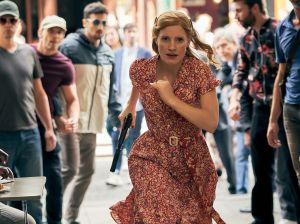 Formulaic to a fault, The 355 reminded me of 2017’s The Great Wall, a $150-million Chinese-set action movie directed by Zhang Yimou and starring Matt Damon. It was a suitable action spectacle but I concluded with this question: “It’s not much better or worse than other empty-headed big-budget action cinema from the Hollywood assembly line, but is that progress? Is making an indistinguishable mediocre B-movie a success story?” That same question hangs over my analysis of The 355. It’s indistinguishable from other bland spy thrillers but this time with a group of lead characters played by women, several of them in their 40s at that. Maybe that’s progress considering the budget and representation, or maybe we can expect more than what we got here, a movie that recycles the same dated and tired tropes but now – with women! The action is middling, the characters are dull, the villain is predictable, and it finds itself in a frustrating middle-ground where it takes itself too seriously but doesn’t have the substantial material to cover. The 355 wastes its fab cast, possible points of intrigue, and proves that tropes without comment or exception are still as boring no matter the gender, race, or identity of those involved.
Nate’s Grade: C
Share this:

Rumble (2021)
 No more and no less than exactly what you’re expecting, Rumble is a giant monsters wrestling movie that’s cute enough to entertain young kids and pass the time agreeably and not much more. The world isn’t exactly fleshed out and the characters are very archetypal and the plot is entirely predictable, but I found it mostly fun and low-level escapism. It’s nothing that will wrestle with the better animated films of the year, but if you have little ones that are fans of wrestling or giant monsters then that might be enough to keep their attention for 90 minutes.
Nate’s Grade: C+
Share this:

Spider-Man: No Way Home (2021)
 This is going to be a difficult review to write. It’s the third Spider-Man movie in the Tom Holland era, though his sixth Marvel Cinematic Universe (MCU) appearance as the character, that much can be said. The MCU has been teasing a universe of parallel universes for a while now, even famously in 2019’s Far From Home, the previous Spider-Man film, and which No Way Home opens seconds later to deal with its immediate aftermath. The scuttlebutt with this new Spider-Man movie is that it is the most Spider-Man in all senses, bringing past iterations from the original Tobey Maguire run (2002-2007) and the maligned Andrew Garfield reboot (2012-2014). We know villains from each non-MCU Spider-Man film are making special appearances, and there are expectations for plenty more special appearances, so by that notion, writing a film review about a movie built upon surprise inclusions and secret revelations can be daunting to even be readable without giving too much away. I’ll do my best, dear reader. Spider-Man: No Way Home is not the best Spider-Man movie, in the MCU or prior, but it’s a rollicking adventure that will play like catnip for fans of the series, all iterations, and has some of the strongest moments of any web-slinging blockbuster.
In the wake of Mysterio framing Spider-Man (Holland) and revealing Peter Parker’s real identity, life has not been kind to your friendly neighborhood Spidey. The public has turned on him and even his best friends are suffering the consequences of their personal relationship. It’s enough that Peter seeks out his old pal, the wizard Doctor Strange (Benedict Cumberbatch), to cast a spell to erase the world’s memory of who Spider-Man really is. The magic spell, naturally, goes wrong, and villains of Spider-Man from other universes begin to appear. These larger-than-life characters are dangerous but also confused; this isn’t their universe, and this isn’t their Peter Parker. Doctor Strange is happy to send them all back to their primary universes, to correct the loose ends of the spell, but Peter doesn’t want to send them all to their fated deaths. He wonders if maybe they can be cured or reformed and if it’s too late to still do the right thing.
 First things first, you need to know that this movie is going to play much, much better if you are familiar with, and especially if you’re a fan of, the previous Spider-Man movies. No Way Home almost feels like it was written by a fan who has been nurturing a desire to do right by all past Spider-Man films. This feels like someone who had assembled a list of unresolved issues from different Spider-Man movies for over twenty years and said, “Hey, could I write these characters another ending that can redeem them and provide better closure in a way that is meaningful?” Because of that, each new character that comes through has a definite jolt of fan excitement like an all-star reunion, especially for characters you never thought you would see again. Certainly, some characters have more meaning than others, but I was pleasantly surprised how well integrated and written so many of the villains come across. Returning screenwriters Erik Sommers and Chris McKenna have ret-conned and redeemed the various Spider-Man missteps of old and have given characters more attention and fitting resolution, which makes this a surprisingly emotionally deep Spider-Man in ways you weren’t expecting. There are character reunions and resolutions that I didn’t know I needed, and I was smiling and even battling back tears of my own at various points. If you’re a fan of the recent Holland run, then the movie will still play well, but if you’ve been with Spider-Man from his cinematic beginning (if you really want to feel old, the original Spider-Man teaser involved the World Trade Center) then this movie will feel like a nostalgic blanket to warm you all over.
I think it’s safe to discuss some of the villains that have been prominent in the advertisement and later trailers, but if you wish to skip any character details, then skip to the next paragraph. It shouldn’t be much of a surprise that the two biggest villains are the ones with the biggest screen time and most allowance at redemption. Willem Dafoe as Norman Osborne (Green Goblin) and Alfred Molina as Doctor Octavius (Doc Ock) are treasures. It’s so good to see them again in these roles and each actor is just as good as you recall from their time 15-plus years ago. I was worried that bringing Doc Ock back could spoil the redemptive turn he has at the end of 2004’s Spider-Man 2, sacrificing himself to save the day from his own dangerous experiment. Little did I know that the entire movie was going to seek redemptive arcs for a veritable Sinister Six-worth of Spider-Man villains. It becomes the backbone of the movie, and I was skeptical at first but the movie found ways to win me over with just about every character’s inclusion. Norman and Octavius are similar in that they are battling other sinister personas in their heads, and when the real versions of each man break through, it’s often in heartbreaking moments of existential confusion and sadness. This is a movie that has time to fit in Spider-Man memes as well as question the moral culpability. It’s fascinating that a huge Marvel movie is so concerned with providing glimpses of humanity and compassion to bad guys from movies that the general public didn’t even generally like.
 This is the best acting of Holland’s Spider-Man run. He really gets put through the wringer about the consequences of trying to make the moral choice, both good and bad. His most emotional moments got me each time because of the investment in his character growth over six movies as well as the added investment in the supporting characters too. This is the most integrated and important both Ned (Jacob Batalon) and MJ (Zendaya) have been to the plot, and they have a platonic hug at the end that sent me into a tailspin of emotions for what it meant. The humor and natural camaraderie of the actors is still there, a hallmark of the MCU Spider-Man series. I laughed plenty, especially with certain characters deconstructing their parallels and connections (“Gotta watch where you fall,” a villainous understatement). However, this is the most emotional Spider-Man likely ever, and the actors all perform ably. I want to single out Marissa Tomei as Aunt May because she’s been undervalued in these movies until now. This is the biggest role Aunt May has played and she serves as the voice of morality to push Peter to do what he knows is right even in the face of outlandish adversity and personal cost.
No Way Home works better thematically than as a well-constructed plot. The solutions to the villain redemption are laughably convenient, and while it’s not as expressly magic as Doctor Strange’s spells, it’s pretty much the equivalent of technological magic. That’s fine, because it’s less the struggle of invention and more the choice that matters for each character. The mechanics of the ending also feel overly convenient and tidy (you could have just done this the whole time?). When Doctor Strange is chastising characters for hasty decision-making, it’s the movie calling attention to its own cheats. The movie splits so much of its time across multiple villains and drafting off of your old feelings. There are other narrative shortcuts taken and abbreviated, especially Strange’s involvement. He’s left out of much of the movie for the same reason Captain Marvel was left out of much of the final battle with Thanos in 2019’s Avengers: Endgame: he’s too powerful to have on the board. I’m not saying the screenwriters made the wrong choices on what to emphasize. The emotional beats of this movie hit strongly, and if they have to rely on a few cheats and nit-picky hand-waves to get there, then so be it.
 From an action standpoint, I think this might rank last for me in the series. Returning director John Watts has never wowed me as an action director. He’s not bad at staging the big moments but he seems more present in zippy tone than in style on a big stage. The added wow factor of seeing the various characters assembled on screen will compensate for much of the action feeling contained to dank sound stages. I think this was done as a cautionary measure to keep the secrets from being leaked, but it also shortchanges the action possibility. There’s nothing in this movie, from a pure action standpoint, that rivals the Venice or London sequences in Far From Home. The movie utilizes portals, and it got my hopes up for clever action inventions, but it serves as more plot device than action complication. There have been some artistic sacrifices, narratively and visually, to accommodate the Spider-Man Movie All-Stars approach, and while I think the filmmakers have emphasized the correct parts, it does still feel like there are some nagging shortcomings to an overall experience that plays exuberantly.
Finding a comfortable medium between fan service and creative constriction, Spider-Man: No Way Home is not the best Spider-Man movie but at the same time it just might be. It serves as a salve to the rest of the franchise, five iterations across two different runs, and because of that level of attention and compassion, the past movies get a little bit better, with more added resolution, more character moments, and second chances to correct miscues and blunders. Who among us wouldn’t want another opportunity to correct our mistakes? While ostensibly setting up the troubles ahead for the MCU (the trailer for 2022’s Doctor Strange: The Madness of the Multiverse is the final post-credit scene), the movie feels entirely backward-looking, rewarding fans of the character and resolving to do better where other films had gone awry. Maybe (Disney)Fox could do something like this for the bad X-Men movies? I don’t know if the same punitive charges of being slavishly nostalgic will hit No Way Home like they’ve done for the new Ghostbusters and Star Wars. It’s definitely still accessible for newer fans but plays best to the people with the longest investment, but isn’t that every continuing movie series? No Way Home is a rewarding cinematic experience of many highs and fun surprises and cameos as well as a humane redemption for the sins of Spider-Man’s past. It’s not the best superhero movie but it might be the most joyous one yet.
Nate’s Grade: B+
Share this:

No Time to Die (2021)
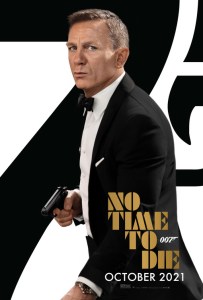 One cannot talk about No Time to Die without talking about finality. I’ll try and dance around significant spoilers but the movie by design is meant to serve as the capper to the Daniel Craig era filling out the world’s favorite martini-drinking British secret agent. I thought that 2015’s Spectre was the swan song for Craig as it brought back a famous franchise villain Blofeld (Christoph Waltz) made the man Bond’s secret half-brother, and it tried to explain how every bad thing that seemed to befall Bond was the machinations of an evil conspiracy, and then it literally ends with Bond driving into the sunset in his classic car with his girl (Lea Seydoux) by his side. It felt like the end, and it felt very much like everyone was just done and tired. And then the Bond producers wanted one more shot, or more likely one more lucrative franchise entry, to send an even older, battle-tested Craig on his way. I was wary of another Spectre-like entry, one that was tying back to the elements of decades-old for empty homage. Does anyone really care that the villain is meant to be Blofeld who means next to nothing to audiences in this era? After watching all 160 minutes of the longest Bond on record, for an actor who has portrayed 007 for 15 years, I have to say that No Time to Die is a terrific action movie and a welcomed second chance at a sendoff for the modern era of Bond that has gone through great artistic rebirth.
Bond’s cozy retirement is short-lived. Spectre agents have found him and Madeleine (Seydoux) and now Bond is forced to ship off his love for her safety. Years later, Lyutsifer Safin (Rami Malek) is determined to take down the last vestiges of the Spectre organization, the same group responsible for murdering his family. Bond is recruited by the newest 007 agent, Nomi (Lashana Lynch), to help MI-6 locate a kidnapped scientist with a powerful nanobot poison that can be genetically targeted to a specific person. Bond agrees especially once he realizes that Safn and his dangerous organization are targeting Madeleine, who has a big surprise of her own.
 As an action movie, I will argue that No Time to Die is better than 2012’s Skyfall, the Bond film that is widely seen as the high point of Craig’s tenure but one I find overrated. Director and co-screenwriter Cary Fukunaga, the second director ever given a writing credit for a Bond film, has crafted a beautiful movie with a real sense on how to showcase the majesty and suspense. Nothing will likely rival the superb cinematography by the legendary Roger Deakins on Skyfall, but this movie gets as close as you can get. It’s a remarkably beautiful looking movie. I mean that not just in the exotic locales and scenic vistas but simply in its depiction of action. The visual arrangements are noticeably several levels higher in quality, elegantly composed and lit to make each scene so pleasing to the eyes even before the information of the scene translates. Fukunaga (True Detective) frames the action in clear shots and clean edits so the audience is oriented with every shot and each patient edit point. For an era that began by trying to adopt the Paul Greengrass-style of docu-drama edits popularized with the Bourne sequels, it’s quite a welcomed change. I appreciate that action directors have creatively gone more in a direction of longer takes, wider shots, and a conscious effort to showcase the ingenuity and skills of its action choreography. Let us enjoy watching the masters of action operate at their highest level. Fukunaga understands this, and while the action might not be the best in the series, it is lovingly orchestrated and displayed.
There is a delightful mid-movie set piece that deserves its own attention mainly because of how actress Ana de Armas (Knives Out, Blade Runner 2049) steals the show. She plays Paloma, a CIA agent working in coordination with Bond, and the two of them wreak havoc across a Cuban neighborhood while wearing their finest evening wear. She immediately leaves a favorable impression and struts her stuff while operating heavy machinery with confidence. This part feels the most aided by co-screenwriter Phoebe Waller-Bridge’s contributions. Craig personally requested that Waller-Bridge, best known for award-winning TV like Fleabag and the first season of Killing Eve, come aboard and help polish the script, including characterization and dialogue. This sequence feels the most in keeping with her past spy thriller work and penchant for strong female characters who are meant to take the lead. de Armas is so memorable, and her segment so self-contained, that it feels like a backdoor spinoff to set up her own character’s franchise, and one that I wouldn’t hesitate to watch.
 If you thought Spectre was getting convoluted with how it tried to bend over backwards to explain how one man and one villainous conspiracy were manipulating all of Bond’s many miseries and setbacks, well then things are going to get even worse for you to keep up with. I’ll credit returning screenwriters Neal Purvis and Robert Wade, who have been with the storied franchise even before Craig’s 2006 debut, with attempting to make the continuity matter for a franchise that often throws up its hands at continued emotional stakes. By stretching backwards with ret-cons and added flashbacks, every new Bond movie tries to better evaluate the previous ones including the poorer movies, like Spectre and 2008’s Quantum of Solace. It’s like saying, “Hey, you didn’t like those bad guys in that movie? Well, these are the real bad guys,” or, “Well, maybe you didn’t like them, but their heinous actions gave rise to these new bad guys.” However, a consequence of continuing to add further and further clandestine machinations, and spiraling consequence from those machinations, is that Bond has now become a tangled web that is more convoluted without offering much in the way of payoff. I don’t think much more is gained introducing a new villain saying, “It was me all along,” when we don’t have an established relationship or interest with these new villains. Imagine introducing the Emperor back in Episode 9 of Star Wars and saying he was secretly behind everything… oh wait.
There are also benefits to this approach and No Time to Die crafts a sendoff unlike any other final entry for a Bond actor. This is a franchise going back sixty years, but the 007 brand has endured because no one actor is bigger than the brand. The franchise is regularly resetting with each new addition. The hyperbolic bombast and tongue-in-cheek frivolity of the Pierce Brosnan years (1995-2002) was replaced with a more grounded, gritty, and psychologically wounded Bond, made even more so by giving him personal attachments and then taking them away. I would argue this decade-plus with Craig (2006-2021) has involved the most mature and personal movies of the franchise;s history. It’s fitting then for the final film to pay service to that elevated take on the character. If you’re treating the secret spy as more of a person than a suit and a gun and a wisecrack, then that character deserves an ending that stays true to prioritizing more human elements of the character. To that end, No Time to Die works as a final sendoff, and I feel pretty confidant saying Craig is officially done now.
After a year and a half of delays from COVID, as well as its parent company, MGM, being bought for billions by Amazon, we finally have the final Bond movie in Daniel Craig’s successful run, and it’s a worthy finale for an era of the franchise becoming relevant again. I don’t know if that many people are emotionally attached to the character, likely more so just the nostalgia and the franchise, but if ever you were going to tear up from a James Bond thriller, this would be the one. It’s an exceptionally strong visual caper, with smooth and steady direction from Fukunaga, and while overly long and convoluted and a dull villain, it comes together for a worthy and celebratory conclusion that stands with the best of Bond. I’ll still cite 2006’s Casino Royale as the best Craig Bond, and one of the best ever, but No Time to Die is a solid second-place entry, and it does what few other Bonds ever could: fitting finality. Until, naturally, the popular series inevitably reboots with the next handsome leading man sipping a signature vodka martini (shaken, not stirred).
Nate’s Grade: B+
Share this:

Venom: Let There Be Carnage (2021)
 Whatever feelings you may have had for 2018’s Venom, I imagine they will only be magnified with the sequel, Let There Be Carnage, where it appears that the filmmakers took the goofy, campy elements from the original and magnified them exponentially. This is a silly, dumb movie that seems almost too aware of its existence as a silly, dumb movie; it reminded me of what a Roger Corman movie might feel like as a modern-day superhero blockbuster. This movie is ridiculous, and that will either be its major selling point of its point of condemnation. I was not a fan of the 2018 predecessor but I found myself enjoying the goofier aspects of Tom Hardy’s performance as journalist Eddie Brock after he shares his body with an alien symbiotic goo. This time we have a second alien symbiotic goo, which is actually what the villain of the first movie was, but this time it’s red and extra trendril-y! The appeal for any viewer is going to be the bonkers buddy film at its core, Eddie Brock and his living id personified as the Venom alien that keeps asking to be allowed to eat people. The movie is almost sitcom-level in it’s portrayal of the two butting heads and going their separate ways to prove they don’t need the other only to learn they were really meant to be. There are some comedic moments that just keep doubling down on silly jokes at the expense of everything else, like the “Not you, Father, you, father” bit that actually made me laugh out loud. Under the guise of actor-turned-director Andy Serkis (Mowgli), the movie is simply a broad cartoon that manages to walk a line between good-bad and laughably bad. It doesn’t always keep that balance but it’s sure entertaining to watch its goofball energy and it’s only a merciful 90 minutes long (almost one half of Eternals). I can’t really tell if everyone attached to the movie is trying hard or really just goofing off on the company’s dime. Regardless, if you were not a fan of Venom before, this movie won’t convince you there’s a compelling character or universe here. Michelle Williams (Manchester by the Sea) is pitifully wasted as Eddie’s ex-girlfriend. The accents are terrible all around. The new villain is a scenery-chewing serial killing dullard and then transforms into a goop monster. The love story with Woody Harrelson (Zombieland) and Naomie Harris (Moonlight) made me think if someone combined Natural Born Killers with X-Men but short-changed us on both counts. What works in this movie is what worked for me in the previous film, but now all elements feel more in alignment with the goofy energy of star-producer-and-credited-“story by”-writer Hardy. I don’t know if this franchise will ever qualify as traditionally good no matter how successful it proves to be. Maybe what the people really want is a screwball comedy with Hardy mugging alongside a wise-cracking, homicidal alien goo suit. Bon appetite, fans of expensive trash.
Nate’s Grade: C


 nathanzoebl
You must be logged in to post a comment.