Holy Motors (2012)
 I like movies that are different. I like movies that can be hard to understand. Holy Motors, a surreal French film, is both very different and very hard to understand. The movie follows a man as he goes about transforming into nine different characters, each with their own bizarre mission. Is he performing? For whom? Who is behind all this? Does he ever stop assuming false roles? Questions such as these hardly matter in movies such as this. You’re either transported by the lyrical weirdness and unpredictability, or you find it tiresome and much ado about nothing. After a while, I just gave up with this movie. I’m not a fan of weird for weird’s sake and I felt like that was all I got with Holy Motors. I’m sure you could write a doctoral-level thesis decoding this movie, but why waste valuable hours of your life? This movie is nothing but strange imagery that adds up to precious little. I thought the concept of playing roles/manufactured realities was better explored in Charlie Kaufman’s Synecdoche, New York. When a Kaufman movie is more accessible than your film, your name better be David Lynch or you’re in trouble. I’m sure several fans of the obscure and outrageous will find amusement at the sheer randomness with Holy Motors. It’s got martial arts acrobats, Kylie Minogue breaking out into song, magical resurrection, spontaneous band performances, talking cars, and for good measure chimpanzees. I hope you get more out of it than I did. I found the enterprise to be more tedious than titillating, more frustrating than fascinating, and not worth the trouble of fashioning meaning from the discarded puzzle pieces.
Nate’s Grade: C
Share this:

Breaking Dawn: Part Two (2012)
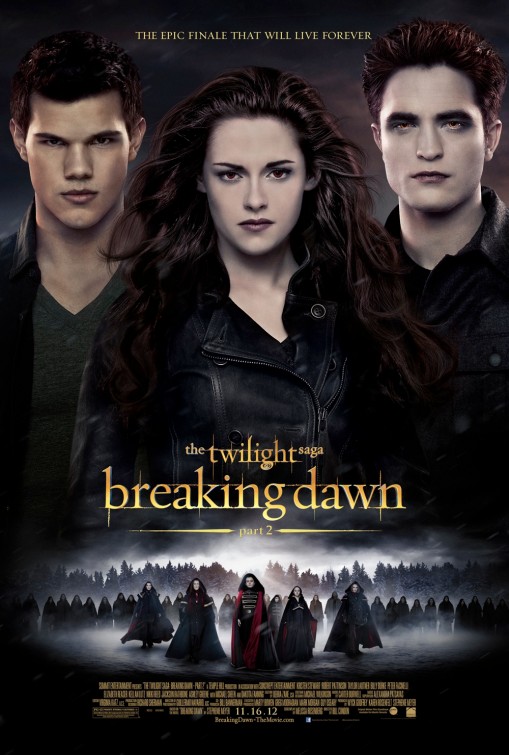 Ignoring the ironic nature of the Breaking Dawn Part 2 poster taglines declaring love to be “forever,” the box-office juggernaut that is the Twilight franchise is coming to an end. Based upon Stephenie Meyer’s outrageously popular series of books, we’ve followed the love life of Bella Swan as she’s experimented with human, vampire, and werewolf. The studio heads decided to take Meyer’s final book and split it into two books. Breaking Dawn Part 1 had a wedding, honeymoon, pregnancy, supernatural birth, and Bella’s death/resurrection. And yet, that movie was still crushingly boring. My hopes were substantially low for Part 2, despite director Bill Condon’s (Dreamgirls) best efforts to jazz up all the awful plotting, characters, and romance. Then a funny thing happened. I started enjoying myself, and then the movie took some chances that I felt were daring considering its rabid fanbase. And then watching Breaking Dawn Part 2 became more than watching the film, it was also the experience of watching the audience. To that end, the movie delivers and I may rue these words but I kinda sorta almost liked enough of it.
Bella Cullen nee Swan (Kristen Stewart) and her husband, immortal vampire Edward (Robert Pattinson), have gone through the wringer. In her waning days as a human, Bella got knocked up during her honeymoon, and her half-human half-vampire baby killed its mama on the way out. Now Bella’s a vampire and a mom (note to self: start writing new script – “Single Mom Vampire”). Her daughter, Renesmee (Mackenzie Foy’s face on a whole lot of other people’s bodies), is rapidly growing. She’s mistaken for a vampire baby, which is a punishment worthy of death. This news gets Aro (Michael Sheen) to rustle up his Volturi forces, a group of vampires with super powers. They’re coming for the Cullens and little Renesmee. The friendly vampires scour the world, gathering “witnesses” to the tyke’s half-vampire status, but really they’re gathering an army to defend themselves. It’s super vamp against super vamp and heads will roll.
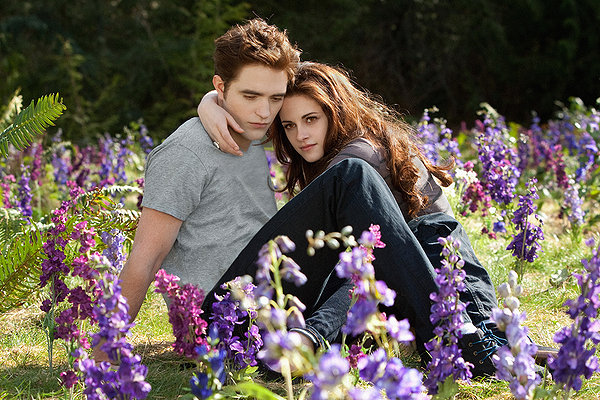 I clearly understand that I am in no way the target audience for this franchise and that my reams of pithy words will find little traction in the hearts of the Twi-hard faithful, but I’d like to state that I’ve never been a hater of the movies. Well, let me rephrase that. My thoughts ping-pong from liked okay (Twilight) to hated (New Moon) back to liked okay (Eclipse) back to hated (Breaking Dawn Part 1), and now here we back are to liked okay. Consider it a double-dip recession in quality. I still view the whole franchise as an exercise in pre-teen wish fulfillment, but I’ve already written extensively upon that theory so I won’t bother re-litigating that battle. With all that said, I found myself oddly enjoying myself for sustained durations. It’s just as silly as the other movies but finally we can move on from mopey Bella and her dubious romantic triangle. Finally we don’t have to suffer through two hours of kids making (new) mooneyes at each other (did I just out myself as “old”?). By this I mean finally something ELSE happens rather than the incremental coupling of Bella and Edward. Granted their kid is really more a prop than a character, but at least the story has taken one gigantic leap forward. Finally Stewart can actually smile and, you know, do things of actual consequence!
It’s no secret that the Twilight saga, as its monetary benefactors would like to dub the franchise, has noticeably been better the less time it spends with its female protagonist, Bella. Breaking Dawn Part 2 might just be the least Bella-filled episode yet, a cause of celebration for my brethren who view Ms. Cullen as an infuriating, insufferable, insulting protagonist. At least in this movie she develops a sense of self-identity, though too often that identity falls into the camps of Wife and Mother. With this movie, she’s adjusting to life as a vampire, so we get cutesy scenes of her hunting prey, learning how to fake looking like a puny human, and arm-wrestling the strong cocky vampire guy to, you know, for the strides in girl power. Too little too late, Bella. I find it more than a little funny that Bella’s super power is passive in nature, fitting a passive protagonist that waist for people to give her meaning and tell her what to do. I should stop before another rant unspools as I’ve done on previous Twilight writing occasions. In short: Bella sucks.
We’re introduced to a lot of new characters in this movie and each brings some sliver of backstory to develop. I’m not saying they’re all deserving of attention or interest, but at least these new clans of vampires brought some much-needed life to what has often been a claustrophobic, monotonous love triangle. Opening up Meyer’s world and seeing other vamps with special powers are a fun detour that I wish had taken place sooner. I liked seeing Lee Pace (TV’s Pushing Daisies) as a soldier from back to America’s colonial days. I’m left scratching my head why certain vampire members were added to the ranks when they didn’t even show up for the final showdown. What was the point of having Joe Anderson (Across the Universe) show up and be all skeptical about the group’s chances of winning… and then not have him join? So he was skeptical from the start and then remained so, choosing to sit the finale out. Well I’m sure glad we spent time on him then. Also, the movie falls into the trap of establishing super-powered beings that are too powerful. We get one guy who can control the elements. Not just one or two but freaking all of the elements. He’s like Captain Planet minus that dumb kid with the lame heart power. During the climactic battle, this kid uses his power ONCE. How do you give him a wealth of super powers and then sideline him? There’s also an Amazon vampire who can control people’s vision, namely making them see whatever she wants. How are these two assets not utilized for tactical supremacy?
 I had the suspicion that Breaking Dawn Part 2 might be the best film in the series simply by the fact that it’s the one with the most Michael Sheen. God I love this man. His last-minute turn in the appalling New Moon banished the suicidal thoughts swirling in my head. Even when he’s in bad movies, Sheen is usually the best thing about them (see: TRON: Legacy or the Underworld films). Here’s an actor who knows exactly how ridiculous everything about this universe is, and by God he sinks his teeth in. The benefit of added Sheen cannot be overstated. The movie greatly benefits by having a strong outside threat early. Only the third movie, Eclipse, had an external threat from the start, and that gave the film a much-needed sense of urgency. I was with Sheen and the Volturi on this one. They were merely following the laws of vampires meant to protect their own kind. Vampire babies are a no-no since they cannot control their otherworldly urges, so they and their makes must be destroyed. You know you’re in for a darker Twilight when early on we witness a baby getting tossed into a roaring fire. I admit that I have a susceptibility to falling under the sway of magnetic villains. Perhaps this speaks to some character defect of my own. It probably just speaks to the fact that movies often have boring heroes and charismatic villains. Sheen is so hammy and delightful and I just wanted more of him amidst the melee that punctuates the end. The man even looks like he’s about to lead a marching band during the battle and he’s still badass. Such is the awesomeness of Michael Sheen. Of this there can be no question.
But then the Condon and series scribe Melissa Rosenberg do something almost extraordinary given the slavish devotion to the series fans have. They divert from the source material in broad strokes during the climactic vampire brawl. I won’t go into exact details but the preview audience I was with was absolutely losing their collective minds. Women were screaming, cries of “Nooo” rang through the room; all around me was the echo of consternation and shock, women trying to absorb the reality of what they were viewing. Sitting with them, taking in their shrieks and lamentations, the general horror of what might happen next… it was a thing of beauty. I can almost recommend seeing Breaking Dawn Part 2 simply to be part of this experience. However, you’ll have to act quickly and be selective. You’ll need a packed theater filled with vocal Twi-hards, likely an opening weekend evening crowd, the kind that openly cheer shirtless revelries from the male co-stars. And then just sit and wait, knowing that soon all that revelry will turn to shock. I sound so mean-spirited explaining this and that’s not my intention. I didn’t necessarily enjoy the discomfort of the Twi-hards. I enjoyed the bewilderment. It felt like the theater was alive, coursing with the energy of alert uncertainty. Anything could happen, including some very not nice things. To be one tiny drop in an ocean of furious estrogen, well it’s an experience that deserves mentioning. Its strange experiences like this that make me love going to the movies, and that, ladies and gentlemen, is a combination of words I’d never thought I would write about any Twilight film.
Also, though my expectations were never that high to begin with, I have to credit Condon with fashioning a fairly exciting action brawl, one that’s surprisingly graphic at spots for a PG-13 movie primarily aimed at young girls. The series has been building up to a massive showdown, and the movie itself has been putting the feuding factions into place, so it’s satisfying that the finale truly feels climactic and delivers some thrills. For the record, Meyer’s book was free of any climactic battle. This movie is chock full of decapitations. I cannot recall another PG-13 film that had this many beheadings. I think you could watch a drama set during the French Revolution and you wouldn’t witness this many people lose their heads. Is there no other ay to kill a vampire? What ever happened to the good old fashioned staking of the heart? These kids these days; all they want to do is decapitate. To dull the grisly spectacle, the beheadings are weirdly bloodless. Condon does a bangup job of setting up plenty of mini-payoffs and duels throughout his busy action centerpiece. Then when it looks like the carnage is at an end, the movie takes a page from the Final Destination playbook, which Twi-hards will probably find relieving. I thought it was a major cop-out but whatever. Let the kids have their happy ending.
 Before you get your hopes up too extravagantly, this movie still offers plenty of stupid. I don’t care how you explain it, the imprinting thing is stupid incarnate. I still find it eternally creepy that Jacob couldn’t have the mother so he settles for the daughter. The fact that everyone treats this development so seriously makes me laugh. And oh boy, let’s talk about those Amazon vampires. First off, I find it hilarious that Meyer’s vision of vampire clans from around the world really just boils down to Europe and the Amazon. When they stepped onto screen wearing, and I kid you not, loin clothes and tribal markings, I was flabbergasted. Doesn’t anyone find this depiction to be at least deeply ignorant and culturally insensitive? I’ll stop short of calling it quasi-racist; though attaching “quasi” to anything lets you get away with most declarations (“This movie is quasi-watchable”). But when our big battle over a frozen lake takes place, why are these Amazon characters STILL wearing loincloths in the frozen landscape? Then there’s the annoying fact that Renesmee rapidly grows, meaning that Bella and Edward get to skip out on actually raising a baby. If Meyer intended to punish these kids for having sex in Part 1, then she needs to follow through on her antiquated sexual hang-ups.
As the franchise draws to a close, I’m trying to take stock of the five films and their overall impact (sadly, we all know with the potential riches, a reboot is likely only five years out). The end credits play out like a gauzy yearbook for the franchise, visually highlighting every significant speaking role, including the two different actresses who played villainous Rachel. The Twilight series has been very good to me as a writer; I’ve produced long-winded reviews with each new entry, and the opening-day people watching has become part of the spectacle I enjoy. That’s really what we’re dealing with here – spectacle. It’s all gooey romantic fantasy nonsense with some pretty bland characters, questionable messages for young girls, and such deadly seriousness. If we were grading on a curve, I’d say Breaking Dawn Part 2 is actually tolerable thanks to nominal character development, less whiny Bella, an influx of new characters, extra Sheen time, a better sense of humor, and a climax that truly feels climactic.
I can’t say the Twilight movies have gotten better as they’ve gone, though Condon has proven to be an apt choice to steer this franchise to a close. He’s given the franchise a bit more life, a bit more blood. I’ll never admit that the love story of Bella and Edward deserved five full-fledged movies, but I recognize the significance Twilight stands in many young girls lives. Fans will eat this stuff up. They’ll certainly enjoy the Bella/Edward sex where she doesn’t end up bruised. For them, it ends in a fitting sendoff, even after the jolts of text deviation morphs into giggled recounts on car rides home. For them, Breaking Dawn Part 2 will be the perfect ending to their beloved series. I can’t imagine anyone indifferent to the series working up that much interest, but I can say with sincerity that Breaking Dawn Part 2 is the best film in the Twilight series and potentially worth seeing for the rollercoaster ride of bewildered fan reactions. Now that the last blood has been drained from this franchise, let’s move on to more important items… like the next Hunger Games movie.
Nate’s Grade: B-
Share this:

The Sessions (2012)
 When The Session (formerly The Surrogate) debuted at the Sundance film festival, it seemed like Oscar catnip. You’ve got Oscar-pedigree cast, the limitations of disability (iron lung), and writer/director Ben Lewin (Paperback Romance) certainly knows a thing or two on the subject. He’s a polio survivor himself. But the story of a man in an iron lung’s sexual reawakening, as my mother would say, is a harder sell to the public. The movie has enough bizarre intrigue to garner a curiosity factor in many, and the sweeping acting and light-hearted tone will win over many a follower. I just wished that Lewin had focused more on his central character than what’s below the waist.
Mark O’Brian (John Hawkes) is a 37-year-old virgin looking to fix that oversight. The problem is that he’s suffered from polio all his life and can only be outside of his iron lung for upwards of a few hours. He’s not paralyzed, mind you; it’s just that his muscles don’t work too well. To move forward, Mark is set up with a sex surrogate, a sort of alternative therapy that is intended to help the disabled learn how to take control of their bodies for healthy physical relationships. Cheryl (Helen Hunt) has a set of rules as she goes about her business. There will only be six sessions to limit any emotional attachment. Mark is certainly a challenge, a man who doesn’t have muscle control below his neck (he confides that he hasn’t seen his penis in over 30 years). Together they work on getting Mark experienced and aware of his own body and abilities.
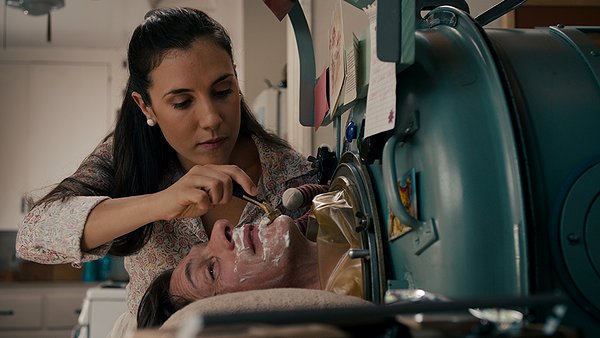 The Sessions is essentially a two-actor showcase (William H. Macy as a helpful priest is really just an ear to listen/audience surrogate), an ongoing dialogue and set of interactions between Mark and Cheryl. The script could have worked as a play though film certainly does open up the viewing possibilities when you’re dealing with an immobilized character. From that stand point, The Sessions is often a fascinating and funny portrait of a world that few of us will ever comprehend. We seem to have this concept that immobility is a death sentence; In Million Dollar Baby, Hilary Swank preferred death over disability. There’s the standard uplifting personal tales of success, the triumph of the human spirit, that sort of thing when we talk about disability in the movies. The Sessions is different. It’s all about sex, and it’s refreshingly frank about the realities of sexuality for those with disability. The human body is an amazingly adaptable creation, so no matter the setback, there is still plenty hope of having a relatively healthy sex life. Beyond a section in Murderball, I cannot think of another movie to explore the reality of sex for those with disabilities. It’s like a wondrous combination of two topics that makes people feel uncomfortable. So, in short, this is not going to be a movie for everyone.
That’s too bad because The Sessions is an engrossing story of a man trying to experience a world of human sexuality denied to him due to cruel circumstance. Mark is a relatively nice guy, a poet, though he can be a little quick with the emotional attachment and declarations of love. Can you blame the guy? I believe some will argue that limiting the focus to Mark’s sexuality, and his desire to shape himself into a better lover, is a misuse of the narrative potential. Some will chide that the film could be the indie version of any number of horny male sex comedies. To some degree, I can agree with this assessment, mostly because I wanted to follow more of Mark’s life and the movie is only 90 minutes long. But I also think the strict focus on human sexuality is also a boon for a movie like this. The fact that you could place a movie about a man in an iron lung and, say, American Pie in the same conversation is a testament that we are losing some of the stigma of disability. This guy wants to get laid. Period. And we can be grown up about this.
Hawkes (Winter’s Bone) is excellent in a role that requires him to do all his acting from above the neck. He’s convincing in every detail, down to his pained, willowy voice and his handling of a pointer for his mouth is first rate. Beyond the physical tics, Mark exists as a complex character that Hawkes is able to fully open up. He’s caustically funny, overcome with self-doubt, sweetly naïve, yet he’s also just like every other man on the planet. Hawkes doesn’t overplay the physical restrictions so it doesn’t end up being a performance dominated in showy actor traits. It’s a sweet and affecting performance that moves in small waves but makes a noted impact. Expect the man to get his second Oscar nomination this winter, as respected actor + disability is a combination they cannot refuse. Also, Hawkes is completely deserving of praise.
Hunt (Soul Surfer) has been grabbing a lot of headlines for the amount of skin she exposes, but her performance deserves more attention than a secondhand reference to her nudity. To be fair, it is copious nudity of Helen Hunt. I think she recites more lines while in different states of undress than clothed. It’s so much nudity that when you close your eyes, you may still be able to see it (not complaining here…). She does a lot of fine acting while naked. It’s hard exactly to get a bead on her character. She seems displeased with her insensitive husband, though he has to have some level of understanding to be okay with her profession. It feels like she’s looking to Mark as… something more, something else, but then it feels like her rationality returns and she returns back to the parameters of her job title. It’s a strong performance and the movie is at its best when Hunt and Hawkes are together. I just can’t help but feel if the ending wasn’t so blunted (more on that below) than maybe her performance would hit an even higher register.
 The actors are so good and the movie is so tender, I almost forgive it for lacking a proper third act (some major end spoilers to follow). Naturally the number one concern you’d imagine for a sex surrogate would be the danger of building emotional attachment. This is why Cheryl limits her sessions to six max. That doesn’t stop attachments from forming. Mark and Cheryl are dreading the conclusion of the sessions, having grown close emotionally as well as physically. So to spare them lingering pain, Cheryl suggests they stop early. Mark reluctantly agrees. There, ladies and gents, is your second act break. But then rather than get a third act, the movie simply gives you a slightly extended resolution instead. Mark meets a nice volunteer at the hospital and flirts with her, crowing with pride to inform he is no virgin. But then… we cut right into Mark’s voice over telling us that he spent the last five years of his life with this new woman. We get an introduction and then immediately jump to the end of the relationship. I understand that without Cheryl’s kindness and education, Mark’s long and healthy romantic relationship would not have happened. I understand that he’s able to succeed because they broke down barriers of confidence together. This doesn’t stop the ending from feeling missing, absent the payoffs we yearn for in drama. It’s a curious and muffled close to a movie that was so interesting and audacious.
The Sessions is more than just an Oscar-bait disability movie. It’s really an arty version of a sex comedy with some extraordinary participants played by skilled actors. It has a frankness that’s refreshing and it’s never less than interesting, exploring the minutia of Mark’s life and the difficulties he overcomes. It’s not exactly a triumph of adversity, per se. It’s not exactly a chamber piece devoted to characters even though two dominate the conversation. The Sessions is a hard movie to pin down. It’s perfectly enjoyable and funny, touching, disarming, and well acted, but I can’t help but feel like Lewin should have aimed higher. To focus solely on Mark’s budding sexuality seems rather limiting for the character, and the disappearance of a final act proves bewildering, blunting the dramatic climax, thwarting further involvement. I’ve seen the film twice now and my opinion of it improved slightly the second go-round, but I’m still left scratching my head over that ending. I get it, I just don’t get why Lewin felt like racing to the end rather than exploring the conflicts and personal struggles of his characters. I suppose there’s some testament to sticking to the facts but that doesn’t matter when it comes to telling me a good story. I’m of a mixed mind here because The Sessions has plenty to recommend but I also feel that the film’s finale and light-hearted, limited sense of purpose hamstring the emotional impact of the whole enterprise. Disabled people can lead healthy sex lives. I get it. Now show me more signs of that life.
Nate’s Grade: B
Share this:

The Man with the Iron Fists (2012)
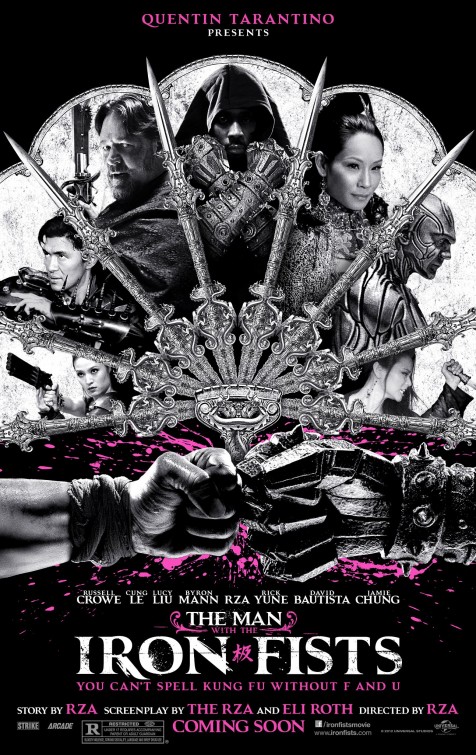 In my lifetime, I’ve developed a fine taste for schlock cinema. I appreciate a jolly good bad movie that knows what it is. With that said, when you’re bad at being bad, then that’s a special case of bad, and such is the case of the hip-hop martial arts junk that is The Man with the Iron Fists. It looks like the kind of campy schlock I’d eat up, and with Russell Crowe as a murderous lascivious scoundrel to boot. The problem with this movie is that it has hip-hop artist RZA as a writer and director. It’s not horribly directed but RZA doesn’t have a firm grasp on action, relying too heavily on wires and spurts of graphic blood. But where the movie completely misfires is with a script that feels cobbled together with subplots belonging to other movies. There’s a basic vengeance storyline, but the first hour of this mess is awash in confusion with a flurry of characters and storylines that fail to coalesce. It feels like everything is just rattling around waiting to be given greater significance. It has a few memorable moments but just as many tacky eye-rollers, like Crowe pulling out anal beads with his teeth. The Man with the Iron Fists just feels so flat overall, lacking a jocular tone or a distinct personality that would have given it a little life. I appreciate the detail that RZA put into his violent world, but I’d appreciate it more if he worked harder at developing a clear story that also was engaging. For all its exploitation elements and fantastic characters, the ultimate sin of The Man with the Iron Fists is that it’s just too boring for too long.
Nate’s Grade: C-
Share this:

Skyfall (2012)
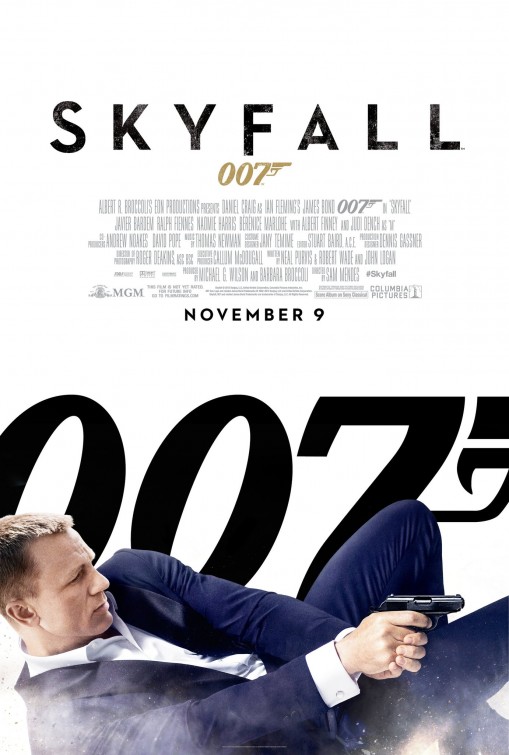 The James Bond franchise, one of the most enduring of all time, has been open to criticism since it came back in a big way with 2006’s Casino Royale. Fans have started to whine that the Bond movies are no longer the Bond they remember, and they’re probably right. In 2006, the producers decided to go back, reboot the series, and introduce a more grounded Bond, a man with more demons than quips. This backlash to a successful reboot seems so funny to me, especially considering the dubious nature of these older Bond movies. Can we all just take a moment and objectively admit that half of the Bond movies are absolutely awful? Skyfall is the third in the new Daniel Craig Bond era, and it’s received universally ecstatic reviews. It’s a fine work, surprising and satisfying in equal measure, but it’s no Casino Royale for me, but what can be?
James Bond (Craig) is recovering from a serious injury after a fellow agent, Eve (Naomie Harris), accidentally shoots Agent 007. In her defense, he was atop a speeding train battling a baddie and her boss, M (Judi Dench), ordered her to fire. In the weeks that follow, Bond is struggling to adapt. He’s lost a step physically and now has to deal with his own doubts. Naturally, this isn’t the most opportune time for crises of faith. MI6 is under attack by one of their own, a former agent turned powerful techno-terrorist named Silva (Javier Bardem). The man has a serious grudge against M and is exposing MI6 undercover agents to punish her. After an attack at MI6 HQ, the agency is left scrambling and sends Bond out to nab Silva, even if Bond isn’t physically ready to return to field duty. Silva is determined to kill M and destroy the agency that left him for dead.
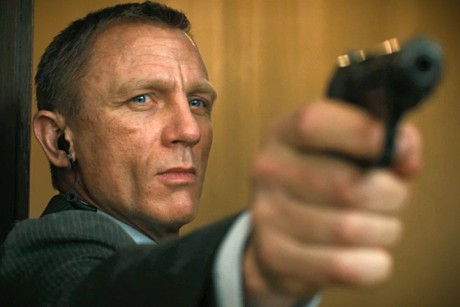 While Skyfall is indeed a good Bond movie and worlds better than 2008’s Quantum of Solace, it still cannot meet the rapturous applause it’s receiving among critical circles. It starts off strong with a nifty action sequence in Istanbul (the go-to action setting for 2012). Bond is chasing a bad guy, and we go from foot chase to car chase to rumbling on top of a speeding train. And there are natural complications that take advantage of geography! When Bond hops on the train, he climbs into a construction crane to fight back, smashing open the back of the train car. It’s a terrific opener that gets things starts briskly, and the sexual chemistry between Craig and Harris (28 Days Later) is palpable. Then the movie pretty much deflates in the second half. There’s a build-up to the villain and his master plot, but once that plot is revealed the film can’t live up to the hype. There are enough plot elements that feel important but eventually get discarded. Here’s a minor example: Bond is given a handgun programmed to his palm print, so it will only fire with Bond wielding it. It’s the only gadget in the movie, so you’d expect it to be utilized in a significant way. One nameless thug uses it then gets eaten by a Komodo dragon. That is it. Seems like an awful waste of funds for it to be thrown away so casually.
The last act has a protracted finale in Scotland, exploring Bond’s ancestral home and his tragic backstory. I’d like to think the insights we’re offered are important but I don’t believe they are. Bond was an orphan (the best recruits, says M) and Albert Finney (Big Fish) was his quasi-father figure/caretaker. It’s not enough to compensate for the slack pacing and encroaching boredom present. The good guys are holed up in an estate, waiting. And that’s what you want in a Bond movie, let alone any action film, for the heroes to sit and wait. An action movie should be building to a climax of intensity, thematically as well as plot-wise. Skyfall is that rare Bond film that flirts with coming undone; each passing action sequence seems less interesting than the one before.
With Mendes directing and Roger Deakens, the greatest working cinematographer, at his disposal, this has to be the best looking Bond movie. The shot compositions are often stunning, making fine use of the visual space and the balance of light and shadow. There are even some shots that might remind you of Mendes previous films like American Beauty or Road to Perdition. Added with some above average action, it makes the thrills an even better sight. There was a fight sequence in a Chinese high-rise almost completely in unbroken silhouette, with the neon tentacles of advertisements dancing in the background. It’s a wonderful image. Even when the movie was losing me at points, I could at least admire the visuals. I was worried that Mendes would not have a deft feel for action. After all, another indie director mostly known for dramatic work, Marc Foster, helmed Solace. That selection did not work out so well, though the script was notably weak. Mendes, on the other hand, can stage some pretty exciting action sequences with judicious editing, allowing the audience to follow along with ease. He’s not exactly a knockout when it comes to constructing action sequences, but the results are more than adequate for a guy whose last two movies were Away We Go and Revolutionary Road.
For the previous Craig entries, it feels like the movies have borrowed more from Jason Bourne than Bond. They’ve gone for a grittier, darker, more realistic portrayal. Skyfall takes a very interesting angle with the character, showing a Bond coming to terms with his physical limitations. It’s a Bond that has to confront his most nefarious foe: aging. Mallory (Ralph Fiennes) tells the agent that the whole spy business is “a young man’s game.” In the old days, you needed men with lairs in volcanoes and giant doomsday lasers. Now you can send the world into irreversible chaos with a laptop. Skyfall is at its most engaging when it confronts the old world of spies and the scary new world of technology. Can the Queen and MI6 compete or will they be left behind? Bond and his organization must confront their limitations and mortality, and this added dimension of vulnerability makes the series far more emotionally resonant.
 Here’s my main problem with the villain: it’s a bait and switch affair that leads to unfulfilled potential. Silva has been spoken of with such awe, a man who could bring governments to their knees with the click of a button. He’s made out to be this dangerous cyber-terrorist genius. So what happens for the second half of the movie? He chases people around and shoots guns. It’s like Skyfall completely forgets what made their villain special. Bardem gives a flamboyant performance with an extra dash of actorly nuttiness, but it’s nowhere near the memorable menace of 2007’s No Country for Old Men. That’s an unfair comparison, I know, but where the movie really starts losing it is when Silva loses it. He becomes just another garden variety psychopath, though one with a creepy oedipal complex. Psychopaths do not work in the James Bond universe. Agent 007 needs a foil that is smart, not crazy and a mad genius rather than mad. I recognize that Silva’s psychological shambles is meant to be a sign of the potential fate of all agents, let alone agents that are given up by M. That doesn’t mean you abandon all the traits that make the villain who he is. The problem with Silva, despite a rather jarring monologue about the effects of surviving a cyanide capsule, peaks with his first appearance. He has a grand entrance and places Bond in a very precarious position, forcing him to confront his physical failures. That’s the villain I want to see. And the awkward handsiness of Silva will also lead many to question whether he’s gay, which wouldn’t matter if the movie wasn’t so clunky.
It also feels like Skyfall may be the conclusion to this incarnation of Bond. I know Craig has been signed for two more films, and that’s great news as he’s fully made the character his own at this point, but the movie seems to setup the Bond we’re better acquainted with. We started from scratch with Casino Royale and now the familiar world, with the reemergence of familiar characters, is coming into focus. The scenes with the new Q (Ben Wishaw), a gangly whiz kid, are enjoyable and they contribute thematically to the old vs. new/age vs. youth conflict at heart. This feels like a transition film, meant to pass from the bruising realism into the polished pyrotechnics of the franchise’s past. There’s a reason the famous gun barrel shot happens to conclude the movie, because by the end of those 142 minutes, it now feels like the formation of James Bond has completed. There are also plenty of in-jokes and references for Bond aficionados to lap up. Even the (lackluster) title song by Adele is in the vein of the old Shirley Bassey numbers.
While not living up to the exultant hype machine, Skyfall is certainly a good Bond movie, though not nearly good enough to be in the conversation of the best. The action starts strong but is prone to diminishing returns especially as the movie transforms into a more ordinary action thriller. The most memorable sequence is in the opening, which isn’t a very good sign for the rest of the movie. It’s still a suitable action movie, and one that pays closer attention at character for a character that’s lived for 50 years in various film incarnations, but just because it pays more attention to character doesn’t mean it does it well. Perhaps I’ve just become spoiled after the artistic and commercial heights of Casino Royale. This is still an entertaining movie that often looks great and has some great actors doing suitable work. We’re still far and away from the loonier Pierce Brosnan episodes, so there is that. I imagine audiences will be more favorable than I am and make Skyfall the most successful James Bond film in history. That’s fine because it feels like, with everything established, that we’re about to hit a new and exciting phase with Craig’s version of the character, and that will leave me shaken and stirred.
Nate’s Grade: B
Share this:

Flight (2012)
 The advertising for Flight has highlighted the sexier elements, the star wattage of Denzel Washington and director Robert Zemeckis, and the thrills of the air disaster. What you get is a different matter. The first thirty minutes prepares you for one movie, and then Flight takes off in a different direction, a path that fails to capitalize on the potential of the subject matter.
Whip Whitaker (Washington) is one hell of a pilot. He miraculously lands a downed airplane, limiting the loss of life to six. He is also a hell of a drunk. Whip also happened to be drunk and high on cocaine at the time of the crash. As the airline investigation searches for the causes that lead to the crash, Whip and his team, longtime friend and union ally (Bruce Greenwood) and high-priced ethically sketchy defense lawyer (Don Cheadle) try and protect their own. The media is agog in hero worship with Whip, but they don’t know about what awaits in his blood test drawn at the scene of the crash. As Whip prepares for possible criminal charges, he meets a recovering addict Nicole (Kelly Reilly) and the two form a connection. He hides out at his father’s old estate, invites her along, and they struggle to stay clean and fly right. But temptation is too powerful a beast for Whip, and he will continue to make poor decisions.
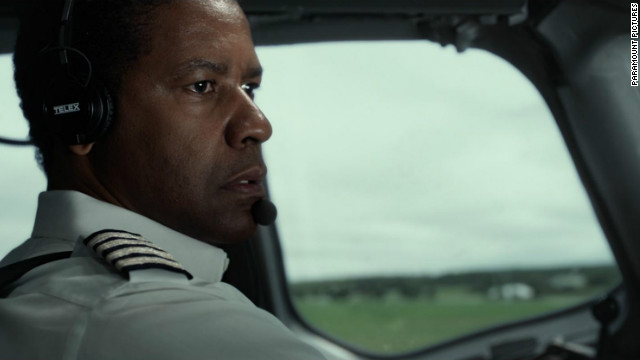 It’s really a modern-age version of The Lost Weekend or The Days of Wine and Roses. It is an alcoholism story. We’re all familiar with them at this point in the movies. A part of me thinks addiction stories are some of the easiest ones to write; you take a flawed character, introduce the addiction, have them determined to get sober, and then provide temptation after temptation. And that’s kind of what Flight feels like. The compelling elements of the movie, notably the legal ramifications of the crash and the political maneuvering, get too often sidelined by a repetitious mélange of Whip getting drunk or thinking about getting drunk or trying not to get drunk. There are many ups and downs, but the cycle of addiction and abuse starts to grow weary, especially when the movie offers more interesting and unique story avenues worth exploring. The airplane sequence is a taut, horrifying, intense sequence. The legal wrangling resulting from it seems like the stuff of good drama. The airline is trying to limit its monetary damage, the lawyers are trying to cover for their clients including having the dead crew stripped from the fatality numbers, and all the while the investigation is getting closer to uncovering Whip’s secret. That’s the movie I wanted to see with Flight. The majority of what I got was a by-the-books addiction parable with some good actors. The movie seems to be going in too many different directions.
Zemeckis’ return to live-action is welcomed and long overdue, and it’s great seeing him direct real people in real environments again, even if the finished film is flawed. His interests seem more with the special effects-laden crash, a harrowing sequence for the ages. When it gets to the addict stuff, it seems like Zemeckis goes on autopilot himself, bowing to the strength of his charismatic star sucking everything into his orbit. The movie becomes an acting showcase for Washington’s abilities at the expense of a completely coherent plot or tone. At times the film seems cavalierly comic, particularly with John Goodman’s character that gets treated like an endearing figure. He’s Whip’s chief source of drugs and his chief enabler and his casual nature with hardcore drugs, and the film’s noncommittal stance, gives the movie a strange, unsettling quality. Then there’s the religious aspect that feels like it flew in from a whole other screenplay (I can’t tell whether the film is dismissive of religion or just flippant). Plus Zemeckis just can’t help himself when it comes to on-the-nose literal music selections (after Whip gets high due to his compatriots, the elevator plays the Muzak version of the Beatles’ “Some Help from My Friends.”). It’s at this point I’m so happy for Zemeckis to be back making live-action movies, I’m probably giving Flight an even bigger pass than it may deserve.
I’m not sure the Nicole character provides anything substantial to this movie, let alone the movie treating her as a co-lead for the first thirty minutes. In between our moments of watching Whip on the plane, we have scenes of Nicole going about her sad day. I’m wondering how in the world these storylines are going to connect and why we have to leave the drama of the plane for the mundane life of an addict eeking out a desperate life. These should not be parallel storylines; the audience interest is not divided here. Nobody is complaining about spending too much time with Whip and the plane crash. No one is saying, “I wish I could see that woman’s sad life some more.” Why did we even need to see Nicole before she meets Whip in the hospital? Were all of those early scenes just too essential to lose in a movie over two hours? Thematically, I can understand that Nicole presents a romantic possibility but also a reward for Whip if he stays clean and sober. Seeing him screw up this pseudo-relationship is another example to convey the self-destructive nature of Whip. I get that. But if this woman were really integral to the plot, she wouldn’t vanish for the entire final act.
It’s easy to see why actors are always attracted to addict roles. They’re usually showy parts that allow for many opportunities to bottom out. Rest assured, Washington (Safe House) is uniformly excellent, portraying a deeply flawed individual prone to grandiose self-delusion and justification for his behavior. We’re so used to seeing Washington play the calm, cool, collected men of dignity, men who seem preternaturally gifted at leading others. With Flight, he becomes far more vulnerable, a self-destructive character that pushes others away and betrays the trust and faith of others. He’s not fighting some larger external force; he’s battling his internal demons that continually lead him astray. He can be petty, mean, weak, delusional, and downright unlikable at turns. It’s a strong performance that anchors the film. The other actors all provide admirable backup duties, from Cheadle to Greenwood to a brief appearance from Melissa Leo (The Fighter) as an airline investigator. I want to single out James Badge Dale (HBO’s The Pacific) for the impression he makes with a part that amounts to one single scene in the movie. He plays a gaunt cancer patient sneaking away for a stairwell smoke (“Wouldn’t want to give my cancer cancer”), joined by Whip and Nicole. He’s so good with the gallows humor and surprisingly poignancy that I wanted the camera to just start following him.
 I want to point out one quirk during my movie going experience with Flight. I was easily the youngest person in my theater by 20 years minimum. I don’t enjoy seeing movies with a predominantly elderly crowd because they do not follow the agreed-upon rules of movie decorum. They often engage in conversations or provide a running commentary. A man two rows behind me had his watch beep for a solid minute to inform him, and the theater, it was now seven o’clock. Either he didn’t hear it beeping (which defeats the purpose) or couldn’t figure out this new-fangled 1980s watch technology to turn it off (which also defeats the purpose). Anyway, what I really enjoyed then was the audible reactions when Flight’s beginning, its very opening images, was a pair of naked breasts. The first scene features Whip and flight attendant Katerina (My Name is Earl’s Nadine Velaquez) getting dressed after a wild night of booze, cocaine, and sex. Whip talks to his ex-wife on the phone, and in one ongoing camera shot, we watch Velaquez walk around completely naked. Then she leaves off screen… and comes back still completely naked. Now I mention this because it delighted me to no end to listen to the grumbling of the older audience members. And yeah, the nudity is fairly gratuitous but I’m happy Zemeckis was able to rankle my elder audience before the second second of film.
Flight is also unique in the sense that it may be the only film I know of to posit that drugs and alcohol could save lives. Will is drunk and high while flying, but he saves the day because of his impairment. Ordinarily in the event of a crash or a dive he would revert to his training; every pilot in a flight simulator recreating the events crashed and killed all passengers. Instead, Will goes by instinct, thinking outside the box, and saving the day. And what enables him to do this? Booze, sweet life-saving booze! He’s so calm and relaxed in the moment that he’s able to think straight and discover unorthodox solutions in limited time. Flight never makes this fact explicit but I think it would have made a more interesting film if this debate had been given more airtime. Yeah Whip was drunk, but not every drunk is impaired the same. I’m not excusing driving while intoxicated, but the movie presents a strange situation, fictional yes, where drugs and alcohol saved lives. Then in the end, and our lead is in trouble, what does it look like will save the day? Cocaine! Seriously, the white knight in the final act is the white powder.
I think audience might be in for a rude awakening while they sit through Flight, advertised as an airline thriller. It’s still a competent, occasionally compelling movie with strong acting from Washington and others, but are audiences really interested in another alcoholism drama even if it has Big Stars? The most frustrating part of Flight is that it has so much potential, so many intriguing storylines or angles to choose from, and it settles on the most mainstream one, the familiar arc of an alcoholic coming to terms with their addiction. How is that more dramatic than an airline crash or the later investigation and legal witch-hunt to find a culprit to blame? The movie prefers to focus on the minor rather than the major, following the familiar formula to the very end when our lead has to make a grave moral decision. It’s a character study but the character and his path are the familiar. All the stuff that makes Flight different (the airline disaster, the investigation, the politics of blame) is the stuff that gets relegated so we can watch Whip screw up time and again. There’s an interesting study on hero worship buried somewhere in all this. I enjoyed Flight more in the moment but it has been crumbling under further reflection and analysis. I’m dearly glad Zemeckis has stepped back to the land of the living but Flight has too much baggage to go anywhere new and exciting.
Nate’s Grade: B-
Share this:

Wreck-It Ralph (2012)
 Disney has taken plenty of drubbings with its non-Pixar animation output. They’ve all but abandoned traditional 2D animation, and the failure of The Princess and the Frog is unlikely to alter that decision-making. The Disney stand-alones have gotten better in quality; last year’s Tangled was well received and banked some nice dough. I expect Wreck-It Ralph to do even better. A film about the lives of video game characters seems ripe for a merchandizing bonanza, plus all the parents will need something to shut up their sweet little bundles of joy for two hours of relief.
Wreck-It Ralph (voiced by John C. Reilly) is the villain of a classic arcade game. He climbs a condo building, Donkey Kong-style, and smashes windows. Felix (Jack McBrayer) is the handyman the player controls, hopping from ledge to ledge fixing what is broken with his magic hammer. But Ralph is tired of always being the bad guy, getting hurled off the roof at the end of every game by the residents. He’s labeled as a “bad guy” but he doesn’t believe he’s so bad. To convince the townspeople of his game of his worth, Ralph abandons his game to seek a medal like what Felix earns at the end of every game. He trounces around an assortment of games, including a space Marine shoot-em-up led by the no-nonsense Calhoun (Jane Lynch), before landing in Sugar Rush, a girlie version of Mario Kart. Here he meets the rascally girl Vanellope (Sarah Silverman). She agrees to help Ralph get his medal if he’ll help her build a racing car and get her in the game. Vanellope lives on the run as a glitch in programming. The other game characters tell her she’s a mistake, but she knows she’s a racer at heart. Except without Ralph, Felix and the other game characters seem like they’re glitching. If they can’t get him back, they may lose their game and their home.
 It’s essentially a Toy Story for gamers, discovering the hidden world of video games when nobody’s looking. There’s a great sense of fun and discovery learning about these characters and their worlds as well as what they do off the clock. I love the idea of a support group for video game villains coping with their lot in life. I feel like this could have been a movie unto itself and I would have been pleased. There are plenty of references to games from the 80s and 90s, before everything became an endless variation on first-person shoot and kill games of sport. Really the references are only going to work for former or current gamers in their 20s or 30s, maybe even 40s. Are teenagers even going to understand the famous Konami code or get the subway scrawl, “All your base are belong to us”? Heck, are teenagers even going to know what arcades are at this point? The cameos are kept to a minimum as we switch over to our main characters. Wreck-It Ralph isn’t as clever or groundbreaking as the Toy Story films, but it gets points for trying something different than most family films, which are content with the somehow irresistible combination of fart jokes and inappropriate pop-culture references. Even non-gamers will likely find something to enjoy with the movie. I’ve gone on record saying that there will likely never be a good video game movie. Allow me to amend that statement: there will never be a good movie BASED upon a video game.
Set in the world of video games is another matter. The animation style is very colorful and impressive, with some fun quirks to give the movie an extra dash of personality. I really enjoyed how the Weeble-like people in Ralph’s game move in staccato 8-bit style; a herky-jerky movement that left me smiling every time. The running jokes helped to turn a half-hearted gag into a thing of beauty, like Calhoun’s tragic bridal backstory. The antagonist of King Candy (voiced by an unrecognizable Alan Tudyk) proves to be more interesting than at first glance. The different game settings all have very different tones, allowing the movie to present a nice variety of visual imagery. Some of the more frenzied action of the “Hero’s Duty” game might scare young children. The animation looks wonderful and even the recreation of the graphically limited games is cause for some amusement. That’s probably the best word for Wreck-It Ralph; it’s routinely amusing and provides enough chuckles for me to mildly recommend to others. I would not, however, recommend seeing this movie in 3D. You would think a world of video games would be quite a boon in the extra dimension, but the 3D is hardly noticeable at all. This may be the worst 3D rendering of a major movie I’ve ever seen, and usually animated films are the best ones to see with 3D. Regardless, the substandard 3D won’t detract from what is an enjoyable theatrical experience.
What helps smooth over the film’s flaws is the presence of heart. Yes it too can get saccharine at turns, and that’s not a joke about Sugar Rush, but you’ll be surprised that by the end of the movie, you may actually be feeling things in your heart-space for these characters and their plights. Again, here is another 2012 movie that rips off the ending to the brilliant 1999 animated classic, The Iron Giant. Perhaps some of my emotional engagement is residual association from that masterpiece. If this is true, and Hollywood filmmakers have found the secret formula to make audiences feel emotions, then I await the onslaught of movies copying the ending to The Iron Giant (I won’t spoil it but for God’s sake, go out and see that movie). After about 30 minutes, the film really becomes a buddy picture between Ralph and Vanellope, outcasts from their games. Neither character is that deep, though perhaps that goes with the programming. They both are denied better lives because of others prejudices against them. When they join forces as a team to buck the establishment is when the movie finds a wealth of sweetness. While their character arcs will be completely predictable, from the misunderstanding and reconciliation, but that doesn’t mean it misses the mark. Their relationship, and the film’s simple goals, can get bogged down in the messy plot mechanics of the movie (there are a lot of rules to digest). The climax, though, is filled with all number of payoffs, some big some small, some you’d forgotten about; I’m genuinely impressed how smoothly the movie ties together storylines, finding a perfect return of the bad guy support group pledge to form an emotional peak.
 There is a fun to be had and Wreck-It Ralph has enough colorful imagery to make your eyes glaze over. However, the story is a blend of familiar “be yourself” aphorisms given a retro polish. The motivation for Ralph, and Vanellope as well, is very flimsy, and the more time they repeat these miniscule goals (get a medal/compete in a race) the flimsier they become. Ralph is risking it all to get a medal because a shiny award is all it takes to convince the people in his game that he deserves better. The dubious logic seems pulled right out of a video game. There’s also a fair amount of messages about not being trapped by labels, breaking from the herd, believing in yourself, all those sorts of Disney beatitudes they’ve been dishing since the 90s. The plot also seems to fly well below its potential. We’re talking about a world of video games, and there’s a definite interest in seeing these realms mix and match. Unfortunately, the movie spends 2/3 of its running time in the candy-coated land of Sugar Rush. It’s here where Vanellope takes over the movie. Her relationship with Ralph works in fits and starts, and her annoyance level will vary sharply depending upon your tolerance index for Silverman’s baby-doll voice. Aside from a few retro cameos and puns, the humor is assuredly juvenile and filled with endless slapstick. Hope you like three minutes of “duty/doodie” jokes. You’re better than this, Wreck-It Ralph.
There’s one glaring plot hole that I feel deserves some deliberation. Throughout the film we glimpse Felix’s hammer magically fixing things that are broken. Just one whap and good as new. A late conflict arrives with the danger of the Sugar Rush game getting its plug pulled. The residents of the game could flee, but Vanellope would be stuck because she is a glitch, she cannot escape the game if it goes dead. Well couldn’t Felix use his hammer, tap Vanellope, and then “fix” her? To that end, what happens if the whole arcade goes out of business? We see the displaced game characters hang out at the surge protector, modeled like a train station. But what if that gets unhooked as well? How far can these guys run away to? They all seem inevitably doomed due to the dwindling business of arcades. Maybe somebody should start up a non-profit charity. Cue the Sarah McLachlan song (for just quarters a day, you can help a video game character in need…).
Colorful, vibrant, and occasionally witty, Wreck-It Ralph is Disney’s latest animated film to succeed with a solid formula of heart, attitude, and with an extra dash of nostalgia. I did enjoy the film but I always kept thinking there were so many better movies ready to be made given this setup. It does seem a little confused about who its audience is. It’s a bit too childish for grown-ups and a bit too plot-heavy and full of nostalgia for little kids. It packs a lot of jokes and plot into 108 minutes, which feels draggy at turns but flies by with enough spirit and energy that it’s hard to complain. Wreck-It Ralph is a perfectly entertaining movie that fits the definition of cute. It manages to make you care about the characters, which is a small miracle when you’re dealing with characters named Vanellope. Now that they’ve established this universe, hopefully Disney and the writers can expand their storytelling and really have fun with the possibilities at play.
Oh, and the short before the movie about a couple looking to find one another in the big city is rather cute though I liked it better before it went overboard with the supernatural.
Nate’s Grade: B
Share this:

Piranha 3DD (2012)
 Wow, I was not expecting the follow-up to the so-bad-it’s-excellent Piranha 3D to pretty much just inhabit the “so bad” spectrum, though I ignored warning signs at my own risk. I found the 2010 Piranha to be a sheer blast of campy entertainment, with some world-class gore effects and a game cast. I was actually terribly excited about a sequel; I’m ashamed to admit it now. Where did things go so horribly wrong? Much like Expendables 2, the movie’s tone shifts from tongue-in-cheek 80s throwback to meta self-awareness. The movie becomes more of a lousy comedy with some absurd violence rather than a horror movie with a nasty sense of humor. The entire premise is so labored, that a water park would become piranha-infested, and the characters are so unlikable; to dub them one-dimensional is to be too kind. The acting is abysmal even by bottom-of-the-barrel B-movie standards. The celebrity cameos feel wasted, with David Hasselhoff soaking up every second of desperation. The tension is next to nil and the gore effects are pretty cheesy, trading gallons of blood for ingenuity (many character deaths occur off screen, like Gary Busey’s). Then once the piranhas strike, the movie just completely abandons any sense of reality and becomes a gonzo comedy of the absurd, with characters behaving like idiots from another dimension. There’s even one character that gets decapitated by a simple string of flags. It’s at this point that Piranha 3DD drops any slapped-together sense of purpose. And yet this ghoulish mess can only barely make it to a scant 70 minutes (good luck getting through the abominably unfunny end credits outtakes). Reportedly, 3DD had almost the same budget of 3D. Where the hell did that money go? Piranha 3DD completely misfires on every level, failing as a horror movie, a horror-comedy, a comedy, a gore movie, hell, as a suitable movie. Whatever the metric, this movie blows. If you’re hard-pressed for gratuitous nudity soaked in blood, watch the superior 2010 Piranha film instead. I’m going to start drinking heavily and forget I ever looked forward to this monstrosity on taste.
Nate’s Grade: D
Share this:

Cloud Atlas (2012)
 Most people regarded David Mitchell’s 2004 sprawling novel Cloud Atlas was unfilmable. It has six different stories each set in a different time period, slotted into a different genre, and each a variation on storytelling. Mitchell’s tome was structured like a series of nesting dolls, each narrative pulling back to reveal a character reading the previous manuscript, and eventually the direction was reversed. We go from the mid-nineteenth century to post-apocalyptic and back again. I read the book over the summer and found it to be enthralling, especially because each storyline was written so distinctively in a different writing style. The post-apocalyptic linguistics definitely took some getting used to. How could you turn this unwieldy book into a workable movie?
The Wachowski siblings, Andy and Lana, teamed up with German director Tom Tyker (Run Lola Run) to try and find a way. They decided to split up the stories into a musical syncopation, with stories blending into one another. As a result, Cloud Atlas is six different movies for the price of one but it’s far more than the sum of its parts. Cloud Atlas coalesces, bleeds, and bends, becoming a Mobius strip of causality and courage and love. The trio of directors, who shot simultaneously with two separate film crews, has done the impossible and translated Mitchell’s brilliant novel into a soaring, compelling, and multifaceted epic on hope and humanism.
Where to begin with this one? Well, in 1849, Adam Ewing (Jim Sturgess) is traveling across the Pacific back to his home in San Francisco. He’s fallen ill on the ship and keeping the secret of a stowaway in his chamber, a Moriori slave named Autua (David Gyasi). In 1931, Robert Frobisher (Ben Whishaw) is a penniless gay musician looking for refuge. He offers his services to the aged but still famed composer, Vyvian Ayers (Jim Broadbent). Ayers will dictate and Frobisher will assist in writing. In 1971, Luisa Rey (Halle Berry) is a reporter investigating a series of murders tied to a nuclear facility and a report the head honcho (Hugh Grant) doesn’t want exposed. In 2012, Timothy Cavendish (Broadbent) is a small-time publisher who mistakenly checks himself into a nursing home that won’t allow him to leave. In 2140, a new working class is grown from the lab. Somni 451 (Doona Bae) is one of these fabricants. With the help of a revolutionary (Sturgess), she escapes her confines and learns the horrors of the totalitarian world and becomes part of the rebellion. And 100 winters after “The Fall,” mankind has descended into agrarian tribes. Zachry (Hanks) is a goat herder who reluctantly agrees to take Meronym (Berry) to a hallowed mountain. Meronym belongs to the last group of technology-abled civilization, the Prescients, and Zachry mistrusts her and is tempted to kill her to protect his people. Just describing this stuff is tiring and could take up two reviews.
 This is going to be a very divisive movie, this much I can tell. It’s so powerfully earnest that you either embrace its mushiness and ambitions or you smirk and mock its New Age philosophy and optimism. There will be no middle ground with this film. We’re talking about transmigrating souls over the course of 500 years, Tom Hanks as a post-apocalyptic goat herder, and an evil presence known as Old Georgie, who looks like the forgotten cousin to the Wicked Witch of the West. There is some stuff in this movie that is plenty goofy, especially when seen on the surface. It takes a while to ease into the film, adjust to its tempo and accept the context of those goofy elements. But once that’s established then it feels like you can handle anything. There’s such an overflowing of feeling in this movie that it’s easy to make fun of it, to dismiss it under the safety of ironic detachment. It would be easy to decry the Cloud Atlas team for being self-indulgent or pretentious. What they are doing is far from normal, but the achievement of Cloud Atlas is the graceful way it finds to connect the rhythms of a deeply felt humanity. It has its stirring moments and memorable scenes, but when compacted and collected into a beautiful whole, that’s where the movie transcends. When an authoritative character barks, “You are but a drop in an ocean,” and our hero responds, “What is an ocean but a series of drops?” you either roll your eyes or you cheer. This is an earnest movie that wears its humanism on its sleeve. You either roll with that or you don’t, and I decided to embrace the big, messy, mushiness of the whole project and was swept away.
For a three-hour movie, the time flew by, and by the end I knew I had to see Cloud Atlas again. The first viewing requires much in the way of processing. You’re stringing together the disparate strands of the narrative, you’re listening hard to decipher the post-apocalyptic tongue of Zachry and company, and then you’re also keeping track of what actors are playing what characters, crossing lines of race and gender. The disguised actor factor is something of a fun ”who’s who” party game throughout the movie; initially distracting and somewhat questionable (especially the cross-racial makeup). I think seeing Cloud Atlas a second time will allow me to immerse myself further, finding new depths and connections. The pacing is surprisingly swift for a three-hour movie. You barely notice the time is gone, and honestly I could have done with even more movie, especially during the Neo Seoul segment. Given the six segments, some stories are going to be more compelling than others. I don’t think too many people are going to be as compelled with Frobisher’s creative sessions as they are Somni’s escape from enslavement. Initially, you’ll be scratching your head what they all have in common, and the lighthearted segments seem to clash with the more severe segments of systemic abuses. But then the big picture starts to eventually emerge and you see the parallel themes of oppression, bondage, rebellion, sacrifice, abolition and the yearning for freedom at all costs. The filmmakers find clever ways to thematically link their different tales. The movie starts to become a musical experience, much like Frobisher’s central melody, the overlapping notes of repetition and the swelling movements of human life in minor and major.
 As anyone who endured the Matrix sequels will attest, the Wachoswkis are film theologians and Cloud Atlas is unabashedly spiritual. The filmmakers openly favor examining the spiritual side of Mitchell’s novel rather than the political. I found the results to be intriguing but short of profound. From a philosophical/theological standpoint, Cloud Atlas is not breaking new ground or even going into great depth. We’ve got some basic Eastern notions like reincarnation and trying to improve upon one’s soul through various lifetimes. There’s also the notion that death is just a transitional phase and not the end. The film is also very interested in the transcendentalist interconnections of human history. “With each crime and each act of kindness, we give way to our future,” says Somni at one point. I like this; it’s essentially karma in its purest form but it also denotes that every choice gives ways to multitudes of possible futures (perhaps pedestrian but I still like it). I feel that human kindness is long-reaching and casts out many ripples, and Cloud Atlas is a film all about the ripples, seeing the long-reaching effects to causes, and discovering that individuals can become movements and movements can become inspiration. I also like the relatable debate over religious belief in the far-flung future; the Valley people worship Somni as their gracious Goddess, but the more advanced Prescients view her as a person, noble and with strong and important ideas but flesh and blood. And yet the film doesn’t look down on Zachry and his people for their beliefs; Somni inspires them to do good. Do the details matter when the results are positive? Cloud Atlas has plenty of intriguing questions roiling around, moments of pause worthy of post-screening debate. It’s not too deep but it’s far from shallow (the Wachoswkis love their Christ-like imagery, don’t they?).
From a filmmaking craft standpoint, Cloud Atlas is often breathtaking. In some respects it feels like something radically new, a $100 million dollar art film. The visuals are wonderful and the different time periods all come across handsomely mounted, perfectly realized, the details vivid and period appropriate. The future worlds are easily the most engrossing just because of how different they are. You’re never spoon-fed the answers in this movie, so we’re left to put together what lead to each future. I would have loved to have gotten even more details about Somni’s world, a time where democracy has been replaced by “corpocracy,” a world run by corporations. The ambitious story structure of Cloud Atlas could have easily become confusing, but the filmmakers smartly give each segment its own little undivided period to set up that world and its unique tone. They even provide date stamps. Then things get more spliced together, the different storylines cascading and braided together. Some of the storylines have to wrap up early and others are saved for heartbreaking finales of tragic resonance. The elliptical romances spanning centuries provide nice counterpoints and satisfying out-of-time conclusions for storylines that don’t always end cheerful. The movie is often thrilling, intellectually stimulating, disturbing, and poignant, though to be fair it comes up short when it comes to emotional involvement. Like the stunted depth of its philosophy, the movie has a way of drawing you in but never fully; it’s all about a wealth of human feelings and the nature of humanity yet it quixotically comes up short emotionally.
With up to six roles to play, the actors are given plenty to work with. It would be redundant to say you’ve never seen many of these actors like they are in Cloud Atlas (has anyone ever seen Berry in whiteface?). Every actor gets to play heroes and villains, saints and sinners. Only Weaving (The Matrix) and Grant (The Pirates! Band of Misfits) play antagonists in just about every story, and when you have Weaving at your disposal you have to give the man a role with menace. Grant gets to play a post-apocalyptic marauding cannibal. You won’t see him eat anybody’s face in one of those Bridget Jones movies. Like the filmmakers, the actors display full commitment to their varied roles no matter how silly some of the future diction may sound (“for true-true”). Hanks instantly anchors your empathy as Zachry and grounds a storyline that has the biggest danger of slipping into silliness. Readers will know I’m not the biggest Berry fan, and that is probably being charitable. However, I was truly impressed with her work in Cloud Atlas and would easily classify this as her best work since her Oscar-winning turn in Monster’s Ball. Her portrayal of Luisa Rey has such fire and her Meronym has such melancholy. Broadbent (The Iron Lady) is still highly enjoyable as a pompous sort, I’m always happy to see Keith David, and Weaving is delightful in his venomous villains, as a devil, a hit man, and most vividly as the Nurse Ratchet-style sadistic head nurse antagonizing Cavendish. The real breakaway star is Bae (The Host), who also benefits by having the most involving storyline. Her gradual awakening is just about note-perfect, alternating between curiosity, horror, amazement, and finally anger. All of those emotions need to be free of histrionics but if too underplayed then Somni seems like a walking zombie. Bae finds the right somber middle ground and her journey is the most emotionally rewarding.
 In the end, there’s so much to unpack, dissect, discuss, debate, and contemplate with this movie, and every hour I think of some new connection that dovetails the plots. Cloud Atlas is a thrillingly artistic mosaic, a giant puzzle that begs for closer examination. Unlike the films of Terrence Malick, this is a dense, challenging work that is also accessible and, here’s the heretical part film snobs, entertaining. We get a kaleidoscope of the human experience told in beautiful flourishes. There are a lot of demands with Cloud Atlas, and ultimately it may demand multiple viewings to completely sort out one’s opinion on this gigantic picture of gigantic feeling. I’m still uncertain whether I really enjoyed it or loved it, nagging doubts concerning the limited emotional attachment to consider. I’m curious what a second viewing, stripped of analyzing which actor is in what body, will allow me to further appreciate the scale and scope of the film’s achievement.
The individual stories of Cloud Atlas may not be terribly profound but collectively this movie is something special. I anticipate it will be trendy to mock its sincerity and ambition and New Agey spirituality (not that a negative opinion is automatically invalid). We live in a cynical world. It’s rare to find a movie that has so many things to say with such intense earnestness. It’s even more rare for that movie to be good. Due to the sci-fi elements and time hopping, The Fountain and 2001 will be natural film comparisons, but In some ways Cloud Atlas reminds me more of another divisive film, 2001’s Moulin Rouge!. Both were sincere movies about the genuine power of love and human connection, told with such artistic flair, drive, and ambition, and both attempt to transform the traditional tropes of storytelling and drama into a brave new 21st century collage of sight and sound and sprawling spirits. Simply put, you’ll never see a movie like Cloud Atlas again. So do yourself a favor and see it already, then find someone to talk about it and compare how fast the time goes. Then, if you’re like me, see it again.
Nate’s Grade: A
Share this:

Seven Psychopaths (2012)
 Writer/director Martin McDonagh only has one movie to his name but the man has already accrued legendary status in some circles. The 2008 dark comedy In Bruges didn’t create much of a blip at the box-office, but its blend of absurdist comedy, dark drama, shocking violence, and languid contemplation found a rabid cult following. I have several friends who regard In Bruges as the best film of 2008 (WALL-E still reigns supreme for me but I quite enjoyed In Bruges).McDonuagh’s latest, Seven Psychopaths, reminds me of Barton Fink: both are about struggling writers, both are satires of the film industry, and both have sudden splashes of violence and a serial killer who pushes the protagonist to artistic completion. In other words, Seven Psychopaths is a fun film and a great time at the movies.
Marty (Colin Farrell) is experiencing some killer writer’s block. He’s stuck on his new screenplay titled “Seven Psychopaths.” His buddy Billy (Sam Rockwell) is eager to help out. The guys run afoul of another psychopath, mob boss Charlie (Woody Harrelson), due to Billy’s side business. He kidnaps rich people’s dogs and then his partner, Hans (Christopher Walken), returns them and collects a reward. Billy and Hans have kidnapped the wrong shih tzu, and now Charlie and his muscle is going to make them pay.
 The refreshing thing about the bloody, wickedly entertaining Seven Psychopaths is that it constantly surprises you. This is such a rarity with modern movies, particularly Hollywood movies that attract as notable a cast as this one. McDonagh is wonderfully adept at throwing narrative curveballs. There were a few surprises where I literally jumped in my seat. You constantly think you have the movie figured out, and then it goes down a different alley and becomes more interesting. One of the pleasures of having psychopathic lead characters is that they are impulsive and do not have to follow the normal purview of logical decision making. They might just call the bad guys and divulge where they are hiding. They can do anything at any moment, and part of that unpredictability is what makes the movie feel so electric, so creatively alive. I must stress that McDonagh surprises in ways that feel satisfying and yet believable given the world he’s concocted. Part of the fun in the first half is just figuring out who the seven psychopaths will be. It’s not like it’s some laconic chamber piece mystery but the psychopaths are an eclectic mix from the real to the fictional to real characters doubling as inspiration for fictional ones. I think in the end there may only be six psychopaths, unless McDonagh is counting himself amongst the numbers.
McDonagh also has a blast deconstructing the very kind of movie that he’s providing. Marty bemoans writing another rote psychopathic killer movie where the violence is fetishized and the bad guys are mythologized into idols. You think the film is headed in one direction, in the Guy Ritchie-style standoffs and shootouts, and then it takes a less traveled path, one where it criticizes these sorts of movies and ponders existential questions about the nature of self-expression and death. It began as a care-free movie about thugs and writers and transformed into a movie that manages to have something to say about life, philosophy, and the cyclical nature of vengeance. Two of our three main protagonists are pacifists and remain so to their imperilment. At one point, a character narrates how this story as a proper movie would end, and it covers all the nihilistic clichés of vengeance and epic body counts. But then Marty, and McDonagh as well, wants to turn away from the expected, from violence for the sake of violence, from the exploitation of stylized suffering. McDonagh doesn’t forget to entertain while he’s making you think in between those handfuls of popcorn. The female characters in the movie (Abbie Cornish, Olga Kurylenko) are generally wasted, in different senses, but McDonagh uses this as another charge against this type of film (a boy’s night out of carnage). This is an accessible movie that can be enjoyed on a whole other meta level. I loved the various gear changes. For me it took the pulpy action material and elevated it to another level of genius.
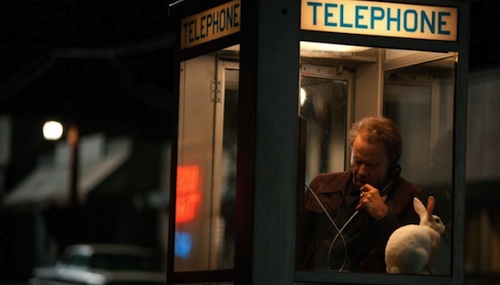 McDonagh still maintains his darkly sardonic streak of humor that made In Bruges such a riot. I was laughing throughout Seven Psychopaths; chortles, snorts, giggles, big belly laughs. With its heedless violence, obviously this will not be a film that runs on every person’s wavelength of funny. The very opening involves two mafia hitman debating whether shooting somebody in the eye takes actual precision or just dumb luck. It’s the sort of mundane conversation you’d see in a Quentin Tarantino movie, and also the precursor to something nasty and ironic. McDonagh’s sense of humor is similar to Ritchie or the Coen brothers, but the man establishes his own sense of wicked whimsy. The absurdist dialogue is always a hoot and can generate serious malice, especially when delivered by stern psychopaths. Rockwell (Moon) in particular is outstanding and delivers a virtuoso performance of the unhinged. The man just radiates energy. You’ll feel jacked up just watching him. I keep waiting for this underrated actor to break out with each star-making turn, and his comedic zing is played to perfection in Seven Psychopaths. In contrast, Walken (Hairspray) is rather reserved as he underplays his character, one of the saner men he’s played. It feels like the passing of the torch from the older generation of psychopath to the newer generation.
Being a colorful movie about colorful bad guys, and girls, you’d expect there to be some grade-A oddballs, and McDonagh does not disappoint. Some of the psychopaths in question have little bearing on the story plot-wise. There’s Zachariah played by the impeccable Tom Waits (The Imaginarium of Doctor Parnassus). He answers an ad that Billy set up for psychopaths to share their stories to Marty. His tale involves cross-country spree killing of serial killers, rabbit petting, and the love of his life, and partner in crime, leaving him. As far as plot, this little aside has little significance to the plot other than setting up a superb joke to end the movie with. But the character is so interesting, multidimensional, and played with equal parts aloofness and sincerity by Waits, that you can’t imagine the movie without him. Several of these psychopaths could have been the stars of their own movie, from the vigilante killing mob thugs to the tale of one father’s long path to vengeance. Even the fictional psychopath, the Vietnamese man (Long Nguyen) seeking vengeance against G.I.’s, could have enough weight to carry a feature film. The amazing part of the movie is that you don’t feel like any of these characters are shortchanged. McDonagh finds ways to emotionally ground his characters, allowing the audience to empathize amidst the bloodshed and loony characters. We care about Hans and his ailing wife; we care about the friendship between Marty and Billy. It’s real for these characters and so it feels real to us, despite the hyper-real flourishes of the movie.
If you’re a fan of In Bruges, or just dark comedies mixed with sudden violence, then you’ll probably find something to enjoy with Seven Psychopaths. You don’t have to be nuts but it helps. McDonagh has crafted another winner with sharp dialogue, a twisty plot full of surprises, incisive commentary on movies and movie expectations, as well as some sincere soul-searching and poignancy. This baby has it all, folks. Above all else, it’s just a blast of fun. the actors all seem to be having the times of their lives, notably Rockwell, and the morbid laughs and off-kilter thrills should cement another McDonaugh film for cult status. Seven Psychopaths is a palyful movie along the lines of Kiss Kiss Bang Bang and even Adaptation. It’s bursting with ideas and comments and jokes. when you leave the theater you almost want to get back in line and start the ride all over again.
Nate’s Grade: A-


 nathanzoebl
You must be logged in to post a comment.