Getaway (2013)
 The biggest problem with Getaway was also likely its main selling point to gear heads: it’s one long 90-minute car chase. That may sound like a good thing to audiences that love them some high-speed thrills, but back up a moment because this scenario could be like getting sick from eating too much ice cream. Car chases are one of the greatest things in movies, but they are still dependent upon execution and overall context within the narrative. If you got nothing but relentless car chases, wouldn’t that start to get boring? And so it is with Getaway whose endless stream of car chases becomes one long, plodding, monotonous blur of tedium.
Brent Magna (Ethan Hawke) is a former racecar driver looking for a fresh start in Bulgaria. One day he comes home, sees the Christmas decorations shattered, and is told that his wife has been kidnapped. The mysterious The Voice (Jon Voight in constant close-up) threatens to kill Brent’s wife unless he plays along. As per his orders, Brent hops into an impressive stolen car, outfitted with cameras so The Voice can keep tabs. Brent is ordered to drive around the city wildly. At one point, The Kid (Selena Gomez) pulls a gun on him, claiming that the car belongs to her. She’s forced inside the car and the two unlikely partners are made to do the bidding of The Voice.
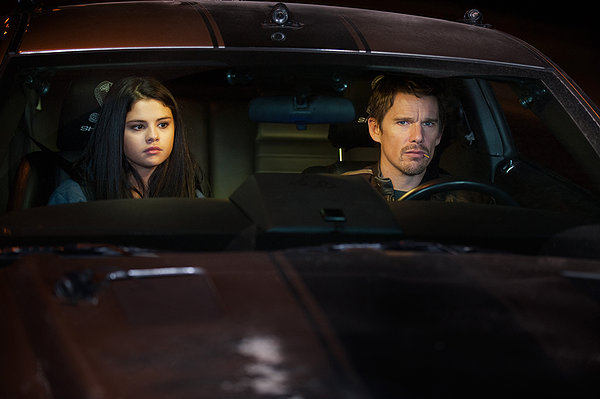 A major problem for the movie being stuck in neutral is that it’s directed by Courtney Solomon, the man who previously helmed notorious stinkers like Dungeons and Dragons and An American Haunting. The action sequences are so badly edited together that often it’s a collage of fast-paced imagery without feeling the impact. It’s hard to tell what’s going on much of the time, so you just give up. There is one extended uncut scene of high-speed driving, but ordinarily Getaway is replete with confusing quick-cuts. More so, Solomon has difficulty properly staging the action sequences to draw out tension, falling back on speedy resolutions and rote action tropes. He doesn’t have a strong feel to visually orchestrate action. I cannot recall one action sequence that grabbed my attention, partly because they just run together into a flavorless meringue. The most annoying feature is Solomon placing a series of cameras all over the interior and exterior of Brent’s car. The movie frequently cuts around these security camera POVs, which are visually unappealing and remind you of a lame reality TV competition show. I think the camera aspect was included to give a grander visceral aspect of the car chases, to put you in the middle of the action. However, isn’t that the point of a really good car chase anyway? Shouldn’t proper execution make me feel thrills rather than dumb camera angles glommed onto the car? I would argue that Getaway was sold on the notion that the added Webcams make it “found footage-y.”
The scenes that aren’t car chases end up becoming respites, something to strangely look forward to, and judging by the atrocious dialogue, this is not a positive. Another problem is that the car chases are all relatively the same. It’s alleys, it’s streets, sometimes ice rinks, but we’re in Bulgaria and the particulars of the car chases will not budge. There is nothing to distinguish Car Chase #13 from Car Chase #86, and so it all just becomes bland even with all the vehicular mayhem. The stunt work is certainly impressive but I just wish it had been put to far better use.
Then there’s the matter of the characters and plot, or rather, the complete lack of them. The movie doesn’t waste any time, putting Brent in his muscle car and speeding around by minute two. I can almost respect that expediency, but it comes at a severe cost. All we know is that the guy drives good, which will be self-evident in seconds, and that his lovely wife was kidnapped by bad people who want him to drive. That’s it. Naturally, having one dude in a car doesn’t lead to great moments of characterization, and so we’re given the plucky teenage misfit partner played by the absurdly miscast Gomez (Monte Carlo, Spring Breakers). This character is annoying from the start and played by an actress who cannot convincingly portray an edgy character. So she comes off as artificial and irritating. It’s uncertain at this point whether Gomez can step outside her doe-eyed Disney Channel branding, but this awful movie certainly isn’t helping. Being stuck in the car with these two terribly written characters is like being trapped on a long vacation with the relatives you hate.
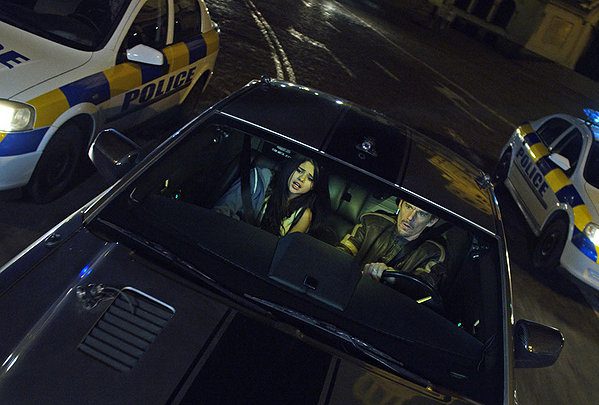 The plot is about as simple as you could think, and then most of it fails to make much sense. The car belongs to The Kid. The bad guys want to hit up her dad’s bank, stealing funds about to be liquidated, and then this all requires Brent to drive like a maniac throughout Bulgaria, where the country apparently hasn’t invented helicopters yet to track speeding cars. The plot really is the thinnest tissue to get the movie from one loud car chase to the next, with some asides where Gomez can spit out a few adult profanities (no F-bombs kids, this is still PG-13 after all). The conclusion makes little sense (spoilers). In the end, the villainous Voice congratulates Brent and his sidekick for winning, vanquishing his greedy scheme. Okay, but the Mr. Voice goes one step further claiming that this was his plan all along, to push Brent to his full potential that he always knew he was capable of. What does this mean? This man staged a highly elaborate heist, hired men with fierce firepower, and installed all this fancy technology just to make Brent a more self-actualized individual? This ending clearly points to a conclusive lack of an ending. Once the car chases were over, the screenwriters looked at each other and said, “Now what?” and that was when they typed “The end.”
I’m struggling to come up with any verifiable positives I can say about Getaway. I suppose if you’re an auto aficionado, you’ll get a kick out of watching Brent’s car, a Shelby Super Snake Mustang (I readily admit to looking this up because I don’t care about cars), in action. Other than that, unless you have a strong desire to watch Voight’s mouth in extreme close-ups for 90 minutes (you know who you are), there really isn’t anything of value to be found in the wreck that is Getaway.
If you’re a car chase junkie, I think taking a shot with Getaway could be just the trick to sober you up. It’s one long 90-minute car chase but made so ineptly, at every angle of filmmaking, that it gets so monotonous and boring far too early. When you don’t have characters to keep your interest, a plot that makes sense, action sequences that offer some variety, editing that makes the action coherent, and direction that hamstrings the viewer to lousy dashboard-esque cameras, then it’s easy to fall asleep to the sounds of near-constant vehicle crunching. Getaway is a terrible action movie, a terrible movie in general, and proof positive that action fans should be careful what they wish for.
Nate’s Grade: D
Share this:

The Family (2013)
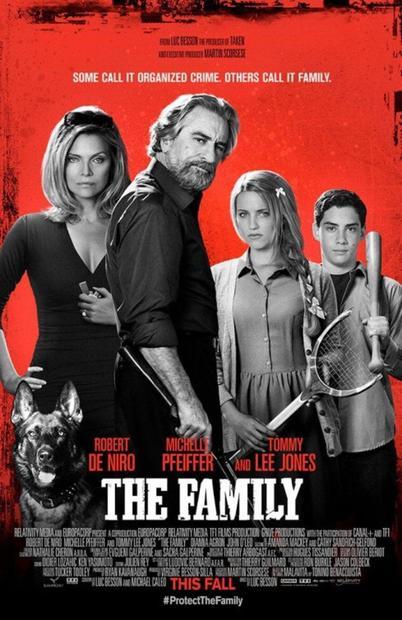 The most impressive thing I can credit The Family, an otherwise adequate action-comedy with identity issues, is that it makes each member of its titular family worth watching. Robert De Niro is the patriarch of a family on the run from the Mob, who used to serve as De Niro’s chief employer. They’re hiding in Normandy, France, and trying to blend in, with very mixed results. I was worried that everything was going to be too obvious, but the movie does a fine job of rounding out its cast, giving each family member a personality, flaws, and a reason you want to keep tabs with them. I enjoyed the son’s single-minded manipulation of his school, able to suss out everyone’s needs and how to turn alliances. De Niro starts writing his memoirs as a therapeutic exercise, but really nothing comes from this obvious plot catalyst. The nagging problem that dogs the movie is an inconsistent tone. The violence can be rather brutal and much of it is meant to be silly, but it doesn’t come across that way. In fact, most of the film’s laughs are tied up in over-the-top, and often, bloody violence. But the movie isn’t dark enough to work as a twisted comedy, holding back to become something of an uneven mob cartoon with plenty of hoary Italian stereotypes. As a result, when the third act is all bloody mayhem, it feels like The Family is three half-baked movies badly stitched together. I laughed enough and was passably entertained but The Family is too dark to work as a lark, too juvenile to be substantial, and too predictable by half.
Nate’s Grade: C+
Share this:

Kick-Ass 2 (2013)
 It’s hard for me to discuss Kick-Ass 2 without sounding like a hypocrite. I enjoyed the first film’s visceral thrills, style, and satire of superhero tropes. The sequel gives me more of the same except not nearly as well polished, and in typical sequel mentality, it goes bigger, expanding the world and the height of the sick puppy violence. Kick-Ass (Aaron Taylor-Johnson) and Hit Girl (Chloe Grace-Moritz) are trying to live ordinary lives but keep feeling the need to don their suits and fight crime. Kick-Ass joins a ragtag team of other costumed vigilantes to battle a super villain team, lead by the former Red Mist (Christopher Mintz-Plasse). For long stretches, the movie seems like an unwanted Heathers knockoff as Hit Girl attempts to fit in at high school. She has some particularly nasty vengeance against a popular bully, and if there is a line, it may have been crossed here. I don’t know what it says about me, but I guess I’m fine with a pint-sized kid slicing up bad guys and cursing like a sailor, but making a woman simultaneously vomit and defecate herself, watching both projectile streams spray out her ends, is too much for me. This is a darker, cruel, and mean-spirited feel with the material, and writer/director Jeff Wadlow fails to compensate for the lack of creativity this go-round (I miss you Matthew Vaughn). The humor is still lively, but the plot is predictable at every step, the characters behave in ways that don’t make sense, and the action sequences are poorly filmed, leading to an anticlimactic ending that simply peters out. Kick-Ass 2 won’t be knocking anyone out.
Nate’s Grade: C+
Share this:

Tyler Perry’s Temptation (2013)
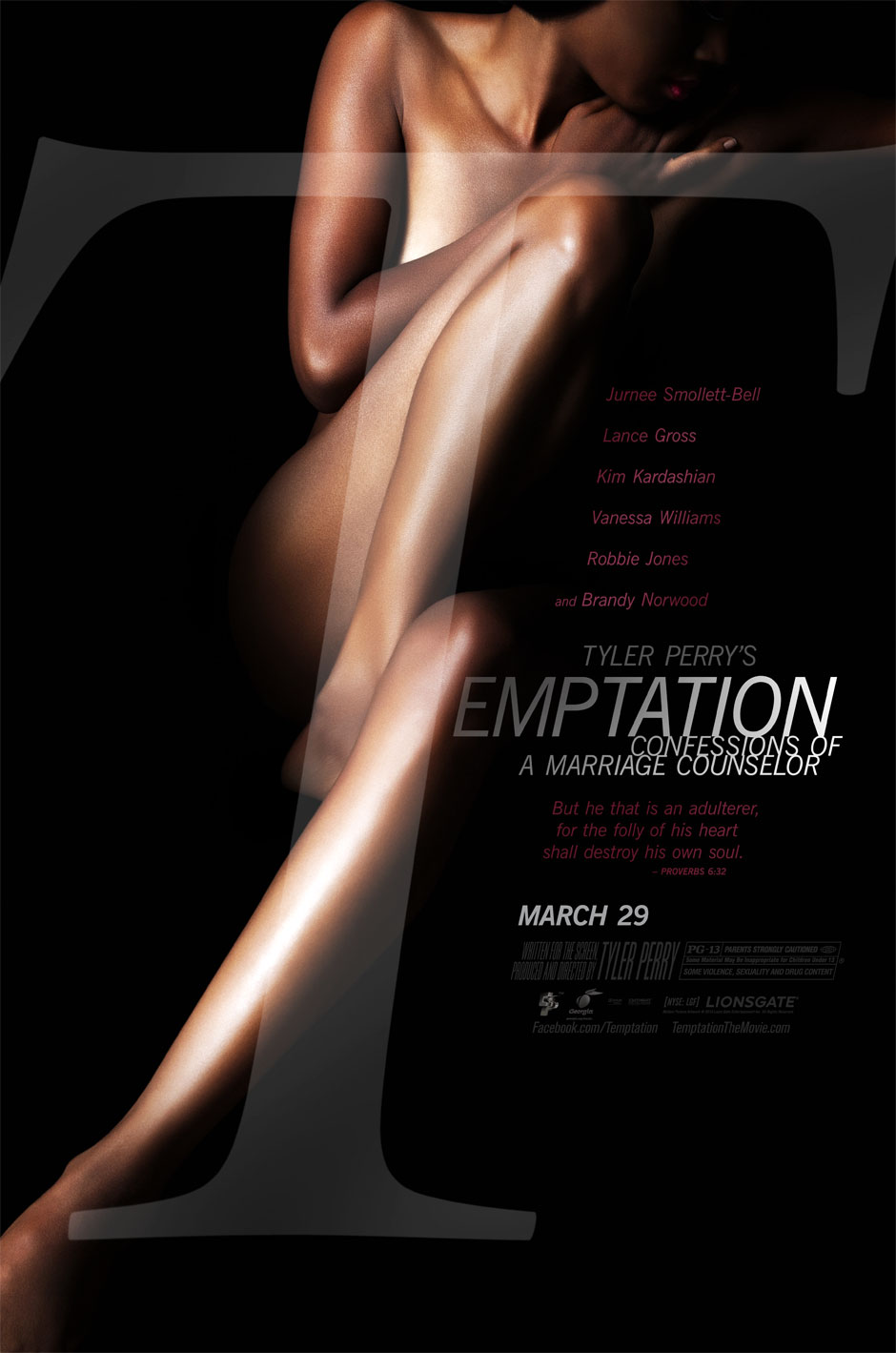 I’ve never seen a Tyler Perry movie before this review. I’ve paid attention to the noted writer/director making his own empire with healthy returns from African-American audiences, primarily female. The man has developed a monstrous following built upon his stage plays and now his films. Honestly, I just never felt the desire to watch a Perry film. I sort of figured what I’d be getting and decided I had other things to do with my time. So why did I finally take the leap and watch a Perry film? I don’t think most objective critics would refer to Perry’s oeuvre as quality, but I also don’t think a past Perry production has been as derided as Temptation: Confessions of a Marriage Counselor (based upon his play). One of my duties as a film critic is to seek out the movies I suspect may be the worst of that year so that I can have a better perspective on the best and worst movies in a calendar year (my only rationale, besides morbid curiosity, for watching InAPPropriate Comedy). Chiefly I watched Temptation because I feared it would be bad, and it was indeed, but what I didn’t expect was how incensed it would make me with its repugnant, piggish, and asinine portrayal of women. Oh, and the rest of the movie isn’t good either.
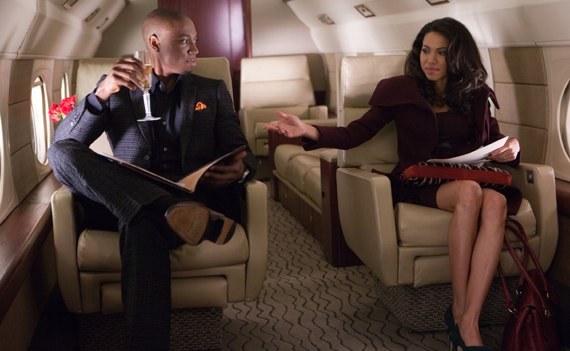
A marriage counselor tells a young couple the cautionary tale of Judith (Jumee Smollet-Bell), a 26-year-old therapist working for a high end Washington D.C. matchmaker service. She’s married to her childhood sweetheart, Brice (Lance Gross), who works as a pharmacist with dreams of opening his own store one day. Judith would like to open her own counselor office but is told to wait. Then Harley (Robbie Jones) steps into her life. He’s the rich successful inventor of Class-Meet, “the third most successful social media guru since Zuckerberg.” Let that one soak in (who or what is #2?). Harley wants to develop a personality matching service and thinks Judith’s unique insights into people are key to cracking this business. In reality, he just wants to sleep with her and eventually does one night when he forces herself on her. Judith is a wreck and can’t stop seeking more attention from Harley. Not even Judith’s mother, Reverend Sarah (Ella Joyce), can save her as she plummets into a life of drugs and shocking behavior.
 The ostensible message from Perry’s film/sermon is so odious that it caused me great discomfort and made me question Perry’s reputation as a female-friendly writer. This is designed to be a cautionary tale about the power of lust leading good women astray, and it appears that it’s only women in this world, but moving on. It’s designed to impart lessons to the audience, but the only lesson I kept partaking, again and again, was that, ladies, it’s all your fault. It’s all Judith’s fault and she must be punished for her wicked ways, except it only takes a small moment of pause to realize that this is completely untrue. First of all, Judith’s marriage is not the wellspring of happiness that Perry may want people to interpret. Her husband has fallen into old routines and clearly neglects her needs; the guy forgot her birthday TWO YEARS IN A ROW. How does that happen? There are clear communication issues as well. He’s unwilling to expand his sexual activity beyond chaste lovemaking in the same location. He expects her to cook him food by the end of the night (more on this topic later) and he downplays her desires, not just sexually, but professionally, her goal to open her own counseling office. They’ve been childhood sweethearts for over twenty years, but that time commitment doesn’t necessarily mean that they are meant for one another (more of that topic later).
Regardless, all of this is context for Judith considering straying from her husband with the more assertive, dangerous, and attentive Harley. But here’s the distinction. Judith is raped. She doesn’t cheat on her husband, Harley rapes her, and she blames herself. Not just that, Perry and the film appear to take the position that she is to blame, that she brought it all on herself. She tells Harley no, he advances anyway, she physically tries to push him away but he overpowers her, finally adding, “Now you can say you resisted.” I’m sorry to be blunt but what the fuck is that? What kind of sick, rape-culture coddling erroneous thinking is this, that all women secretly want sex despite physically trying to escape and screaming no? Harley isn’t supposed to be an upstanding character, so his actions have some degree of understanding in context, but how could Perry posit this garbage? And apparently, according to the movie, she really wanted it all along despite her protests because only a day later she’s flooding Harley with phone calls begging for more. She’s fallen for her rapist. At no point does any character refer to this as rape. At no point does Judith consider herself a victim. At no point does any character blame someone other than Judith.
What’s even more disgusting is that Judith must continue to be punished, and so (spoiler alert) she is given HIV. Harley is HIV-positive, and so the man who raped her transmitted a deadly STD, and it’s all Judith’s fault. She should have known better than letting a man like that rape her. I have to stop from throwing up in my mouth just typing these sentences. And for the final insult, the end reveals that Brice didn’t catch her HIV and in fact has a new wife and a lovely family. Judith is all alone. Because it’s not possible for HIV-positive people to raise children, right? The closing shot, I kid you not, is Judith’s sad long walk into the distance, to essentially contemplate what she did and all that has been wrought. Forget that despicable nonsense.
Perry’s films deal with such unrelenting melodrama that you’d be hard-pressed to find anything subtle, least of all is the religious content. Thanks to my colleague, Ben Bailey, and his self-imposed penalty of watching all of the Madea films (enjoy Madea Saves Christmas, Ben) I have a better understanding of the man’s tropes in his prolific filmography, and Perry’s proselytizing is a constant. I don’t have a problem with faith and spirituality, a personal subject, but rarely are matters of faith as simplistic as Perry’s solutions seem. Perry’s ongoing solution seems to be going back to Jesus for the one-size-fits-all problem of… not enough Jesus. That’s about it. Every problem seems to stem from a deficient amount of religion or spiritual virtues in a person’s life. This notion extends to Judith as well, as her reverend mother seems to pinpoint all her troubles to not going to church. You see, sleeping in on Sundays has made Judith a less moral person, even though she still firmly believes in no sex before marriage enough to not even consider questions of sexuality with her profile service she’s designing with Harley. Really Judith, do you think everyone has those same values? I could lay that same inquiry to Perry, because none other than the devil besets Judith, at least that’s literally what Harley is referenced to at several points. And in such black and white concepts, the complexity of a relationship naturally deteriorating and entering malaise is summed up with a ham-fisted account that our heroine wouldn’t have had her troubles if she had just been more religious. She was raped and given HIV as a lesson to go to church, you see.
The mother character is the embodiment of self-righteous indignation and hypocrisy. At no point is any of her judgmental sermonizing helpful, and the fact that she breaks into her daughter’s home to have a spiritual intervention is just ridiculous. What is most appalling is a revelation that the movie barely has time to note before speeding past. Rev. Sarah has told Judith her whole life that her father died when she was young. He’s actually alive. Judith unloads this bombshell, throwing the full weight of her mother’s hypocrisy in her face, which mom causally brushes aside and says, “This isn’t about me. It’s about you.” No, lady, you lying about your daughter’s father is definitely about you. She offers no explanation for her decades of deceit and immediately moves back to demonizing Judith’s behavior. That’s very godly of her.
 Another ongoing theme in Temptation as well as Perry’s previous films is the all-out taboo of divorce. This old-fashioned perspective dictates that people, and notably women, should stick it out no matter what, even if their spouse is abusive, as in Diary of a Mad Black Woman. Apparently in this world it’s better to be a married woman who gets beaten than a divorced woman who is physically safe. Newsflash: some relationships are not worth saving. Some people, despite effort and love, are just not meant to be together and some relationships just cannot be fixed. That conclusion isn’t giving up, it’s accepting a hard reality and meeting it with guts. This warped perspective is also tied in with the expectations placed upon Judith, namely being subservient to her husband. Seriously, her mom complains that she doesn’t cook enough meals for her husband. The depiction of this old-fashioned relationship itself isn’t as insulting, but when given certain credence that this subservient-woman relationship is superior, that’s when any freethinking individual, man or woman, should feel offended.
And I haven’t even mentioned that Kim Kardashian is in this movie, and oh ye God is she terrible. Written especially for her, Kardashian acts like a whiny child with one baby-voiced way of delivering any line. She could recite the Declaration of Independence and it would sound like a helium-voiced robot. Smollet-Bell (TV’s True Blood, The Great Debaters) actually delivers an acceptable performance given everything she has to fight against. She has a memorable face and displays enough talent to be noticed. The gentlemen do fine jobs, though Gross (TV’s House of Payne, Our Family Wedding) is far, far too sexy for a pharmacist. The man stepped out of the shower and has the physique of a superhero, not some guy who’s going to give pills to little old ladies.
Need one more example as to how astonishingly false and misguided and downright offensive Temptation is? In the opening narration, Judith explains that her childhood dream was to become a marriage counselor, and Brice’s childhood dream was to become a pharmacist. What? I doubt you’ll be able to find any two children on this planet where pharmacist and marriage counselor are at the top of the list. It’s details like this that showcase the lack of care given to the plot, characters, and general attempts at subtlety. The details don’t matter in Perry’s world because all that matters are the Big Points he has to say with the force of a falling anvil, usually about marriage and God. Temptation is a detestable film because of how ugly it treats women and its myopic, pigheaded, and often outdated views on relationships. It’s like the movie was created in a different era, one where women were expected to know their place. In the realm of Tyler Perry’s Temptation, if you go away from Jesus, you will get raped and you will get AIDS and you will have no one else to blame but yourself, ladies. This tone-deaf sermon is full of bad messages, bad writing, bad acting, and naive answers to complex human problems. The only real temptation you should feel while watching this movie is to eject it and break the DVD in half.
Nate’s Grade: D-
Share this:

Blue Jasmine (2013)
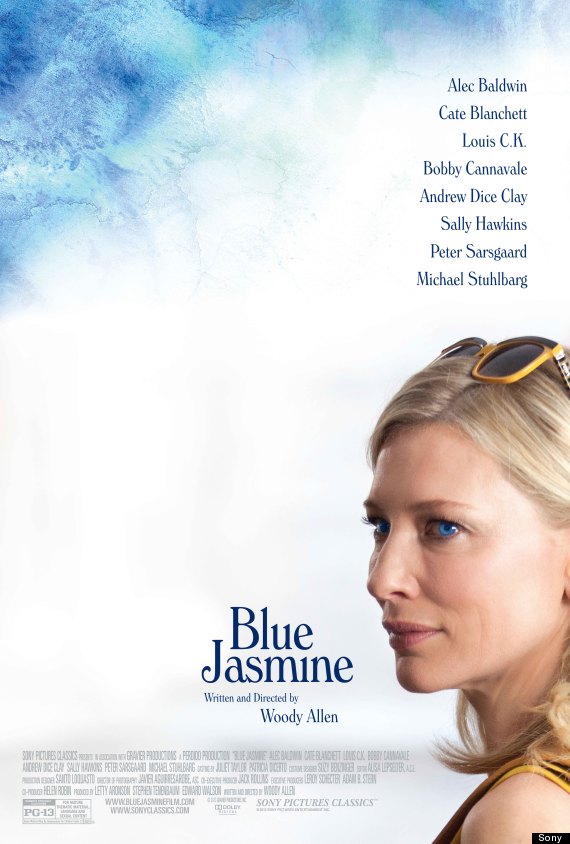 With writer/director Woody Allen’s proliferate output, cranking out a movie every year, it’s all too easy to take the man for granted. Critics will argue his halcyon days are long gone, that the man is coasting on his past laurels. Of course when you’re comparing everything to Manhattan, Annie Hall, or Crimes and Misdemeanors, well sure most movies will be found lacking, even Allen’s. And there’s no real forgiving of 2001’s Curse of the Jade Scorpion. But when Allen hits a rich topic with a capable cast, he can still produce knockout cinema, as is exactly the case with the engrossing Blue Jasmine.
Jasmine (Cate Blanchett) is experiencing a tumultuous change of living. Her wealthy husband Hal (Alec Baldwin) has been indicted for a Ponzi scheme that fleeced millions. Her posh New York lifestyle has vanished, Uncle Sam has frozen the assets that haven’t been repossessed, and she’s forced to move in with her working class sister, Ginger (Sally Hawkins), in San Francisco. Jasmine immediately has her complaints, mostly about the men that Ginger seems to date. She also tries adapting to a life she has been ill prepared for. Much like a domesticated animal, Jasmine’s social skills and pricy tastes do not have real-world transitions into her getting a job and supporting herself. She’s looking for a way to re-enter the shrine of privilege, and that it through a man of means.
 Blue Jasmine is a fascinating character study of a life of self-delusion, denial, greed, and guilt, and it is a marvelous film. Allen hasn’t done something this cutting, this precise in several years and it’s a reminder at just how skilled the man can be at building magnetic, fully realized characters, especially women. This is a rich, complex, and juicy character for an actress of the caliber of Blanchett (Hanna) to go wild with. Jasmine is something of a modern-day Blanch DuBois with a sprinkling of Jay Gatsby; she’s a woman who’s become accustomed to a luxurious fantasy world that she’s still striving to recreate, but she also is a woman who reinvented herself. As we learn in the opening scene, Jasmine left school without finishing her degree when Hal whisked her off her feet, to a world of privilege. She even changed her name from Jeanette to Jasmine at her husband’s whim. She also became particularly adept at looking the other way when it concerned her husband’s shady dealings. Surely she must have known what was happening (in the end, it’s pretty clear) but as long as her illusion of wealth was maintained then it was easy to not ask questions. Why ruin a good thing, even if that good thing is built upon ruining the lives of ordinary people? Two of those people bilked of their money were Ginger and Augie (Andrew Dice Clay), which make Jasmine’s complicity all the more troubling. Every line of dialogue from Jasmine needs to be studied and dissected, analyzing how buried is the real Jasmine.
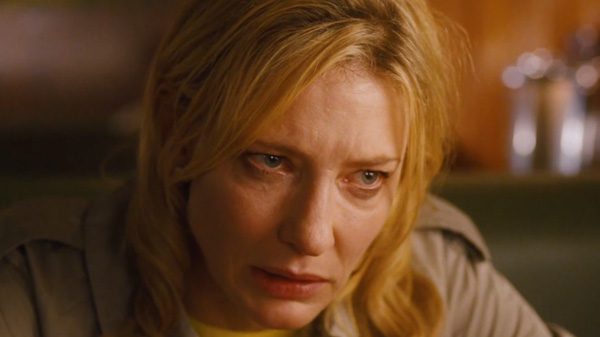
Jasmine’s declining mental state is also given much attention and curiosity. We are watching in full view a woman go through various stages of a nervous breakdown. She’s medicating herself via booze and a cocktail of prescription drugs, but there are hints that point to something other than substances at play. She hints at undergoing electric chock therapy (does this still exist?) and she may have a touch of mental illness as well, though it’s unclear. Jasmine is given to talking to herself, reciting anecdotes and patter from previous parties with the rich and fabulous. It could be a sign of madness or it could be a desperate attempt by Jasmine to zone out, to return to that former life, to relive her former glory. Personally, I’ve done something similar, recited old conversations out loud to myself, though usually a line or so, not to the degree of recitation that Jasmine engages in. In the opening, it’s revealed that the lady she’s sitting next to on the plane, who we assume she’s talking with, is really just a bystander. She tells her husband she was confused because Jasmine was really just talking to herself. As Jasmine tries to get back on her feet, with delusions of grandeur about reinventing herself again, her world seems to be collapsing around her as she struggles to adapt to the real working world. A receptionist job for a dentist is beneath her as well as far too much for her to handle. She has one real sincere heart-to-heart where she lays out her true feelings, and it’s to her nephews in a pizza shop with no other adult present: “There’s only so many traumas a person can withstand until they take to the streets and start screaming.
An enthralling character study, but Blue Jasmine also benefits from Allen’s precise plotting, folding back into flashbacks to create contrast and revelations. There is an economical finesse to Allen’s writing and directing. Every scene is short and sweet and imparts key knowledge, keeping the plot moving and fresh. It also provides back-story in a manner that feels unobtrusive. Jasmine’s more modest living conditions with her sister are contrasted with apartment shopping in New York City’s Upper West side. The class differences between Jasmine and her sister are put on full display when Ginger and Augie visit New York. However, Allen isn’t only lambasting the out-of-touch rich elite here. Few characters escape analysis. In this story, everyone is pretending to be someone else, putting on fronts, personas, to try and puff themselves up. Once living with her sophisticated sister, Ginger starts seeing her world with new eyes, mainly finding dissatisfaction and a yearning that she could do better. She meets Al (Louis C.K.) at a fancy party and gets smitten, though he’s not what he seems. She dumps her current boyfriend, buying into Jasmine’s theory that she “dates losers because that’s what she thinks she deserves.” She tries to remodel herself into a posh, inaccurate version of herself, a knockoff on Jeanette to Jasmine. It’s a bad fit. The person with the most integrity in the entire film appears to be, surprise, Andrew Dice Clay’s character. Augie is a straightforward blue-collar guy but he has a clear sense of right and wrong, one that comes in handy when he’s able to bust people.
 This is much more a dramatic character study than a typical Allen comedy of neurosis, but I want to add that there are a number of laughs to be had, mostly derisive. There is comedy but it’s of a tragicomedy vibe, one where we laugh at the social absurdities of self-deluded characters and the irony of chance encounters. It’s far less bubbly than Midnight in Paris, Allen’s last hit, but that serves the more serious, critical tone. The class conflicts made me chuckle, as well as Jasmine’s hysterical antics and self-aggrandizing, but I was so thoroughly engaged with the characters and stories to complain about a lack of sufficient yuks. Confession: I generally enjoy Allen’s dramas more than his straight-up comedies.
Naturally, the movie hinges on Blanchett’s performance and the Oscar-winning actress is remarkable. I expect her to be a lock for another Oscar nomination if not the front-runner until later. She fully inhabits the character and lays out every tic, every neurosis, every anxiety, and every glimmer of doubt, of delusion, of humanity. She is a fully developed character given center stage, and it’s a sheer pleasure to watch Blanchett give her such life. You’ll feel a mixture of emotions with the character, from intrigue, to derision, to perhaps some fraying sense of sympathy, especially as the movie comes to an end. Blanchett balances the different faces of Jasmine with startling ease; she can slip into glamorous hostess to self-pitying victim to naiveté like turning a dial. I never tired of the character and I certainly never tired of watching Blanchett on screen.
Woody Allen has been a hit-or-miss filmmaker for over a decade, and you’ll have that when the man has the perseverance to write and direct a movie every freaking year. I had a pet theory that, as of late, every three years was when we really got a great Allen movie: 2005’s Match Point, 2008’s Vicky Cristina Barcelona, 2011’s Midnight in Paris. Well now my theory has been put to rest, thank you very much, all because Allen couldn’t wait one more year to deliver Blue Jasmine, a truly great film. It’s a tragicomedy of entertainment, an exacting character study of a flawed, complex, deeply deluded woman as her carefully calculated world breaks down. Anchored by Blanchett’s supreme performance, the movie glides along with swift acumen, doling out revelations at a steady pace and consistently giving something dishy for the actors and audience to think about. It’s funny, it’s sad, but more than anything Blue Jasmine is compelling as hell. This is one of Allen’s best films and one I’d recommend even to non-fans of the Woodman. Give Blue Jasmine a chance and you may be surprised what you feel, for the film and the woman, both complex, engaging, and memorable.
Nate’s Grade: A
Share this:

The World’s End (2013)
 The third in the Cornetto trilogy, the series of loving homages to genre films that end up transforming into those films, written by star Simon Pegg and director Edgar Wright (Scott Pilgrim vs. the World), is so self-assured, so witty, and so stylish, but it’s also the best film Wright has done. While my heart will always bleed for 2004’s Shaun of the Dead, it’s something of a revelation how everything comes together so magically in The World’s End. Every joke, every sight gag, every offhand reference, it somehow is all tied up together or has some greater narrative connection, like the names of the 12 pubs on a pub crawl reunion that discovers an alien invasion. The dialogue is packed with layered humor, with choice bon mots like, “That’s why I drink out of a crazy straw. Not so crazy now, huh?” and, “Or selective memory like that one guy… who? Oh yeah. Me.” Given the previous films, Shaun and 2007’s Hot Fuzz, I knew this would be a funny movie, but I was unprepared for how emotionally adept it is. The characters are given surprising depth and pain and anger, mostly stemming from Pegg’s screw-up alcoholic character desperately trying to relive the good times. The writing is so textured that the characters come across like actual people, and the twists and turns, while entertaining, are far more emotionally grounded than in any previous Wright movie. There is real pain and atonement for these fallible characters, which makes us root for them even more against the robot invaders. Pegg and Nick Frost are terrific again. The action is frenetic and inventive, the laughs are frequent, and the characters are so fully realized that The World’s End isn’t just the best film in a stellar, pop-culture savvy trilogy, it’s also one of the best movies you’ll see this year.
Nate’s Grade: A
Share this:

The Spectacular Now (2013)
 I say this as a fan but John Hughes was probably the best and worst thing that happened to the modern teen movie. He certainly brought an extra level of pathos and relatability to the genre, but then again he also dealt in stereotypes, often languishing his characters to stock archetype ghettos (the Jock, the Prep, the Nerd, etc.). In the ensuing decades, it’s been hard to break as many teen films, of those aimed at teenagers, have casually dealt in these easy labels. That’s why something like The Spectacular Now is such a welcomed respite. Here is a teen movie that aims to tell a story about people and their problems, not simply a regurgitation of high school cliques and clichés. This isn’t a film where all the pieces magically come together; this is a high school movie that more closely approximates real life. This is more Cameron Crowe than John Hughes material.
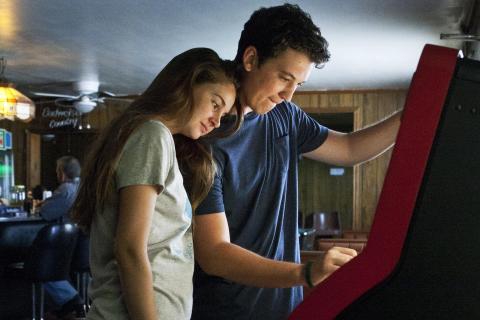
Sutter (Miles Teller) is the most popular guy in school, or so he’d tell you. He’s the life of every party, the kind of guy who everyone enjoyed, and the guy who could charm the pants off any girl. He’s recently broken up with his girlfriend Cassidy (Brie Larson), though still harboring serious feelings for her. Of course the best way to get over the old girl is with a new one, and Sutter sets his sights on Aimee (Shailene Woodley). She’s a smart, somewhat quiet gal that immediately takes a shine to the spotlight that is Sutter’s affections and attention. He’s not entirely over his old girlfriend, still angling to get back together, but also Sutter’s whole perspective could be summed up as an extreme case of carpe diem. The kid is partying like there’s no tomorrow because he’s convinced he has no real future, so he’s going to live it up while he can.
 You’ve easily seen this movie before but it’s rare to see it given so much depth, maturity, and care. At heart, this is the story of Sutter learning he’s a screw-up and getting his life back in order, learning some self-control and responsibility, and winning over the good girl. But The Spectacular Now is so much more than that, and it’s especially sadder than you may have expected with its wise-talking, charming protagonist. This is the story of a teen coming to grips with parental abandonment, gaining insight into his own delusional detours to avoid pain, and the horrible realization that he is, in his present reckless condition, a bad influence dragging down the future of the girl he genuinely cares for. That’s a lot of heavy emotional drama and none of it revolves around the clichéd staples of teen movies, like those checkpoints such as prom and the Big Test. This is the story about one damaged man coming to terms with the state of his damage and gaining the courage to change his direction. He’s an alcoholic but the movie doesn’t ever put the narrative on hold for soapbox preaching. If anything, Sutter’s alcoholism is handled so subtlety, with most character silently acknowledging but unsure or indifferent to act, that it may strike a few chords with audience members. Then there’s the fact that none of this is heavy-handed; the filmmakers have done a fabulous job of giving each character credibility. They behave like real human beings. Even the easily slotted antagonists, namely Cassidy and Sutter’s deadbeat dad, are given shades of recognizable humanity and depth. Even though Cassidy waffles in her feelings for her ex, I cannot dislike her because her character portrayal is so honest. She’s struggling with her feelings for a screw-up with redeeming qualities. That’s fairly relatable, even if she’s not our winsome romantic lead. The filmmakers drag a typical teen movie story into our real world setting, adding depth and telling observance. You will recognize many of these characters.
There are few superlatives to describe the cuteness of the blossoming relationship between Sutter and Aimee. It’s so smooth and relaxed yet completely believable, and the two actors have such a warm and natural chemistry with one another, enough that I seriously contemplated if they dated outside the film (rumored but nothing conclusive). You feel their budding affections, the sweet swoon of young love, and the hiccups along the way. Woodley (The Descendants) does an outstanding job with her mannerisms and affectations; her awkwardness around her feelings is adorable, but not in that prefabricated cutesy way often ascribed to the oft-mentioned Manic Pixie Dream Girl roles. She’s a fairly normal teenager on the fringes of high school, keeping her nose down and looking ahead. In movie terms, you couldn’t readily classify a gal like Aimee, and that’s because she’s a real character fully fleshed out by the screenwriters and the actress. Woodley’s performance is near invisible of acting tropes and constraints. She just dissolves into the character as all exceptional actors do.
But this is Sutter’s movie and, in accordance, Teller’s (Rabbit Hole) film. The young man puts on an acting camp in this film, shedding the various layers of armor from his sad clown of a character. As I said, we’ve seen this character before, but Teller and the screenplay are able to give Sutter such extraordinary depth. The carefree life-of-the-party character is turned into an introspective character study, essentially examining the darker side of Ferris Bueller. He’s using alcohol and his blithe attitude to blunt the pain that he fears he’ll end up like his old man, that his life has already peaked and he’s not even out of high school. Teller is such a successful charmer that he already wins you over to his side despite some boorish behavior because we see that the guy has a good heart. In the film’s opening, he’s propping up his friend to finally get the guy a girl, and the ensuing mess ends Sutter’s own relationship. The last act involves Sutter coming to grips with the negative impact of his actions, notably on Aimee. Teller is so effective at giving you glimpses of the sadness eating him whole. His concluding scenes when he finally breaks down feel like a hard-fought victory for the character as he confronts his doomed fate. At every turn, Teller impresses, and compounded with Woodley, they form an unbeatable team of sterling young acting talent.
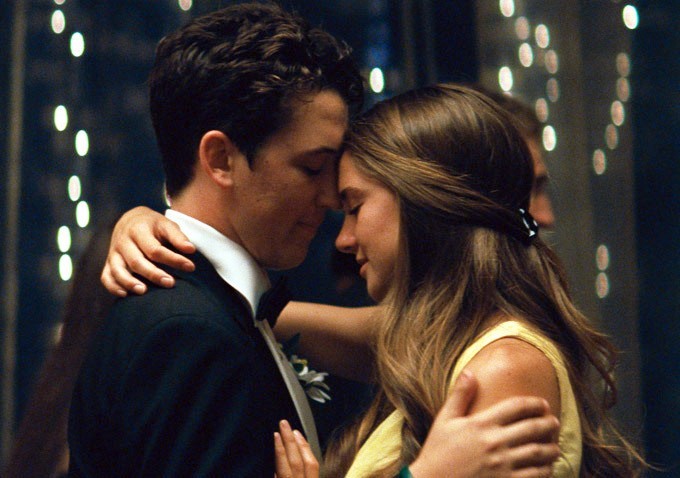 Special mention to Kyle Chandler (Super 8) for his pivotal walk-on roll as Sutter’s bad dad. He’s so pathetic and so desperate and so wonderfully realized by Chandler. He doesn’t get a Big Scene, he doesn’t get a Big Speech, he doesn’t even do anything out of the ordinary for a shifty, unreliable, selfish drunk, but those few minutes he’s onscreen, it all becomes so deeply sad and clear where Sutter’s life is headed without intervention.
The only depiction that I had trouble believing was Sutter’s almost consistent drinking and driving. Throughout the film, he has his trusty Styrofoam Big Gulp cup with him, spiked with booze. The man hasn’t graduated high school yet and is already a high-functioning alcoholic. Because of this I can believe that people would not be alarmed seeing him drive after imbibing a few drinks. However, the man is constantly drinking while behind the wheel of an auto and several times he appears completely trashed. I find it alarming as well as a bit far-fetched that not one character, not even Aimee, would raise objection to Sutter’s continued dangerous behavior. We also witness several scenes of Sutter drinking in bars. It’s conceivable he has a fake ID at his disposal, and it’s even more conceivable that he could talk his way into any establishment, but it’s more food for thought. Then again maybe this is just one of those towns where nobody cares about innocent lives being snuffed out by drunk drivers.
The Spectacular Now is an earnest film that doesn’t overdo it, providing challenging life lessons to fully formed, complex, believable characters. It doesn’t sugarcoat the heartache and harsh reality out there for vulnerable teens. It’s a charming romance tied up with an insightful character study of one young man hiding his sadness and anxiety of life’s disappointments with humor and booze. Thanks to the tremendous acting of its onscreen pair, you root for Sutter to turn his life around because you see value in him as a person, even if he doubts it himself. You’re on his side from the start, and you know how nicely he matches up with Aimee. You want this movie to pull off the spectacular, and for long stretches it feels just as if that will happen. The ending aims for ambiguity but is far more hopeful than its source material. I was charmed thoroughly by this film and its lead characters but even more I was thoroughly engaged in their dilemmas, moved by their struggles, and encouraged by their perseverance and growth. The Spectacular Now (extra points for never even having a character spout the title) is a funny, warmhearted, measurable restrained, knowing film that could open eyes. It may not be spectacular to some, but it’s surely a great film.
Nate’s Grade: A-
Share this:

You’re Next (2013)
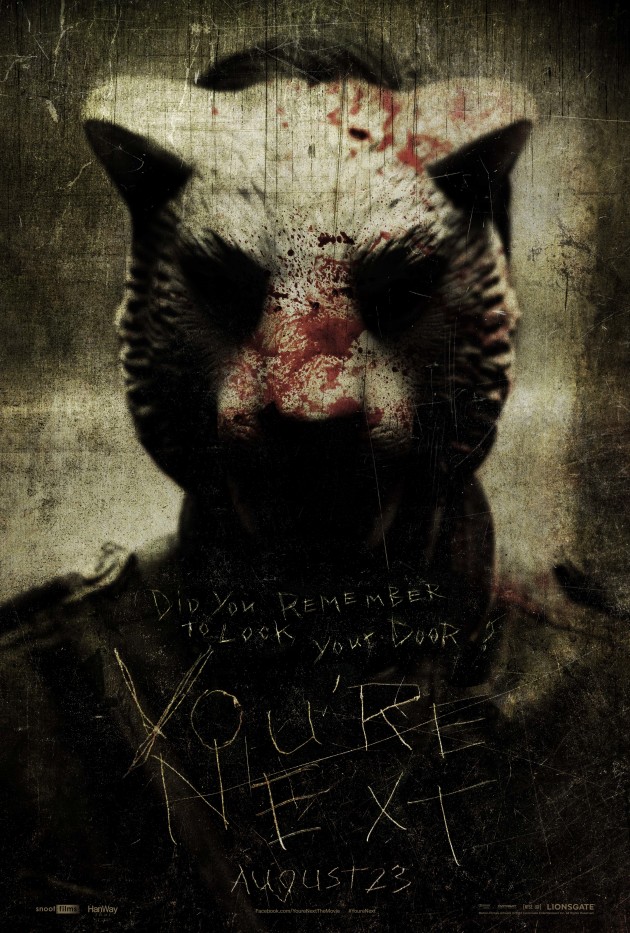 There has been a notable rise in home invasion thrillers in recent years but I am doubtful we’ve hit the crest just yet (this may also be hope speaking since I co-wrote one). Perhaps in an age of real-life anxiety on the news, the invasion of our personal sanctuary strikes an even more horrific chord. Whether you argue the upswing began with Panic Room, or Funny Games, or even the old Audrey Hepburn feature Wait Until Dark, the message is universal: nobody likes having their stuff messed with. This year we’ve already had The Purge make a splash at the box-office, and I’m sure Lionsgate is hopeful that their indie horror flick, You’re Next, which has been reaping great buzz along the festival circuit for years now, will make a similar splash. For me, You’re Next checked every box I would want in an effective horror film: good thrills, good humor, and a good ending. That adds up to one hell of a good time at the movies.
Crispian (AJ Bowen) is traveling all the way upstate for a family reunion at his parent’s palatial mansion in the woods. He’s also going to introduce his new girlfriend, Erin (Charni Vinson), an Australian graduate student that used to work as his teaching assistant at his college. Crispian’s rich family includes his excitable younger sister, his obnoxious older brother, his youngest detached brother, everyone’s boyfriend and girlfriend, and mom and dad. In between a lively family discussion/argument at the dinner table, arrows start flying through their window. Three mean wearing ominous animals masks are stalking outside, armed, and with every intent to kill everyone inside. The masked killers leave ominous messages painted in blood, noting, “You’re next” (I know they’re senseless murderers, but points for using the correct form of “you’re”). Erin snaps into survival mode and assembles a system of defenses but there are more threats than anyone imagined.
 To take nothing away from the artistic merits of You’re Next, the biggest selling point, and its greatest attribute, is that it knows how to properly work over an audience. While nowhere near the genre deconstruction that was last year’s Cabin in the Woods, nor as clever, here is a movie that knows it’s a horror movie, knows you’ve seen these movies before, and knows what you’re looking for as an audience member. And once the killing starts, the movie also gains a delightfully macabre sense of humor, an impish darkness that will leave you chuckling. I heartily recommend seeing this movie in a packed theater because the collective response will add to your enjoyment, or at least it did mine. Never have I experienced a movie where the audience cheered the plugging in of an ordinary kitchen appliance with such reckless enthusiasm. Thanks to director Adam Wingard and screenwriter Simon Barrett, the movie packs great payoffs in its second half, as our prototypical Final Girl outflanks her attackers. There are enough twists and turns to keep things interesting and the pacing swift. Once those arrows pop, this thing just flies by, moving at a speed that keeps you satiated with scares, thrills, and humor. In essence, You’re Next knows how to have fun with an audience, and for whatever reason, with the glut of dank home invasion horror thrillers, this is a surprise. With all the family trauma and killing, watching their loved ones cruelly slip away in horrific fashion, it’s worth praise that Wingard and Barrett find a happy tonal middle-ground that doesn’t blunt the horror or the comedy. The laughs don’t feel out of place with the screams. They make this work. And there are some really sick laughs to be had too.
My only familiarity with Wingard is from his involvement in the horror anthology series V/H/S and The ABCs of Death. It’s also somewhat entertaining to note that all three movies, both V/H/S and its sequel, have been released before You’re Next, a film that was completed two years prior. His anthology segments didn’t point to the same level of promise on full display with You’re Next. Wingard does a great job of orienting his audience to the geography of the play area, so to speak, while juggling different simultaneous threats and maintain a sense of clarity. He knows when to hold back, and he knows when the audience needs a peak of something gruesome. Initially, with the animal masks and the attack on the wealthy, I thought the film was gearing up for a dose of environmental social commentary, as if the killers were extreme defenders of Mother Nature. I’m actually relieved that the film never picks up any ham-handed political subtext.
 As a horror movie, it’s far more effective than most genre deconstructions that will undercut the terror for the chance at a good joke. Even Cabin in the Woods was like this. Again, You’re Next can be riotously funny, especially in the last act, but it can also, and often is, quite suspenseful as well. Once the game get sunder way, you start playing along as well, guessing which of our participants will indeed be next. They place themselves in precarious positions often, especially early, which makes it all the more suspenseful, because you’re suspecting anything can happen at any time. You’re lying in wait, and Wingard does an excellent job of drawing out that tension to a peak level before hitting the horror or gore. There are some gruesomely bloody moments in the film but it doesn’t lovingly linger on the deconstruction of the human body. And just when it seems like the number of housemates fighting for their lives has gotten so low that the thrills would have to be successfully all wrung out, You’re Next supplies a twist that changes gears, introducing a new threat and a new level of dramatic tension. When Erin assembles an ax to smash into the skull of whoever opens the front door, you’re eagerly waiting for that Chekov’s gun to fire (Can we rename it Chekov’s Ax to the Face?). The fact that the movie is almost designed as a Home Alone for demented adults is ingenious.
The acting is a bit hit or miss but the standout, by far, is Vinson (Step Up 3D). She’s our lead heroine, yes, but she takes charge in a way usually reserved for men in these types of movies. She has all sorts of crafty experience with wilderness survival and setting up traps, plus she is able to marshal the family from a bunch of WASPs screaming their guts out into something of a fighting force. And plus, Vinson just has an awesome screen presence to her. It’s a great role for her but credit the actress for knocking it out, giving the audience a strong, extremely capable, and empathetic hero. It’s satisfying to watch the masked killers be outfoxed by their prey. Many of the actors in the film are filmmakers themselves (Joe Swanberg, Ti West, Amy Seimetz), and they’ve collaborated on numerous projects, including other lo-fi horror features, the new Splat Pack if you will.
If you’re looking for a fun horror movie with a dark sense of humor, then You’re Next should be next on your list. It’s savvy, scary, and knows how to goose an audience at just the right moments. Wingard and Barrett know how to give an audience what they want without pandering, and that’s what elevates You’re Next from its peers. This is a horror film that can scare you one minute, make you laugh uncomfortably the next, and then ultimate leave you cheering the vengeful dismemberment of human life with kitchen appliances. It is a more than effectively put together horror thriller from beginning to end.
Nate’s Grade: B+
Share this:

Safe Haven (2013)
 For a solid two acts, I couldn’t hate Safe Haven, the latest in the bland, paint-by-numbers coastal romances based on a novel by Nicholas Sparks. It was chiefly inoffensive but predictable at every step, but I didn’t mind. At this point, Sparks is a brand and you know what you’re getting. Julianne Hough (Rock of Ages) plays a woman on the run from a corrupt Boston cop. She may or may not have killed a man. She hides out in a North Carolina fishing village and comes to love a hunky widower (Josh Duhamel) with a pair of annoying kids. Their coupling is somewhat restrained given the sudsy context; they don’t kiss until close to an hour in. What benefited the film was having a dangerous external threat, the corrupt cop, circling in. This alone raised the stakes of what ordinarily would be a pleasant but mostly mild romance between two pretty people. However, it is that third act, the concluding half hour, where Safe Haven just loses its mind. One twist is a given, though it makes the Boston PD look either incompetent or collusive, but the final twist comes out of nowhere, bringing in a supernatural factor that left me gob smacked. All I kept repeating was, “What?” It’s such a contrived, immediately stupid twist ending, trying to bridge a simple romance with something like The Sixth Sense. I can’t say whether the twist existed in Sparks’ source material, but wherever it originated, I can predict you won’t find a dumber twist ending to a film all year. Safe Haven is two parts of a good-looking albeit mediocre movie with a final dash of half-baked lunacy.
Nate’s Grade: C-
Share this:

Lee Daniels’ The Butler (2013)
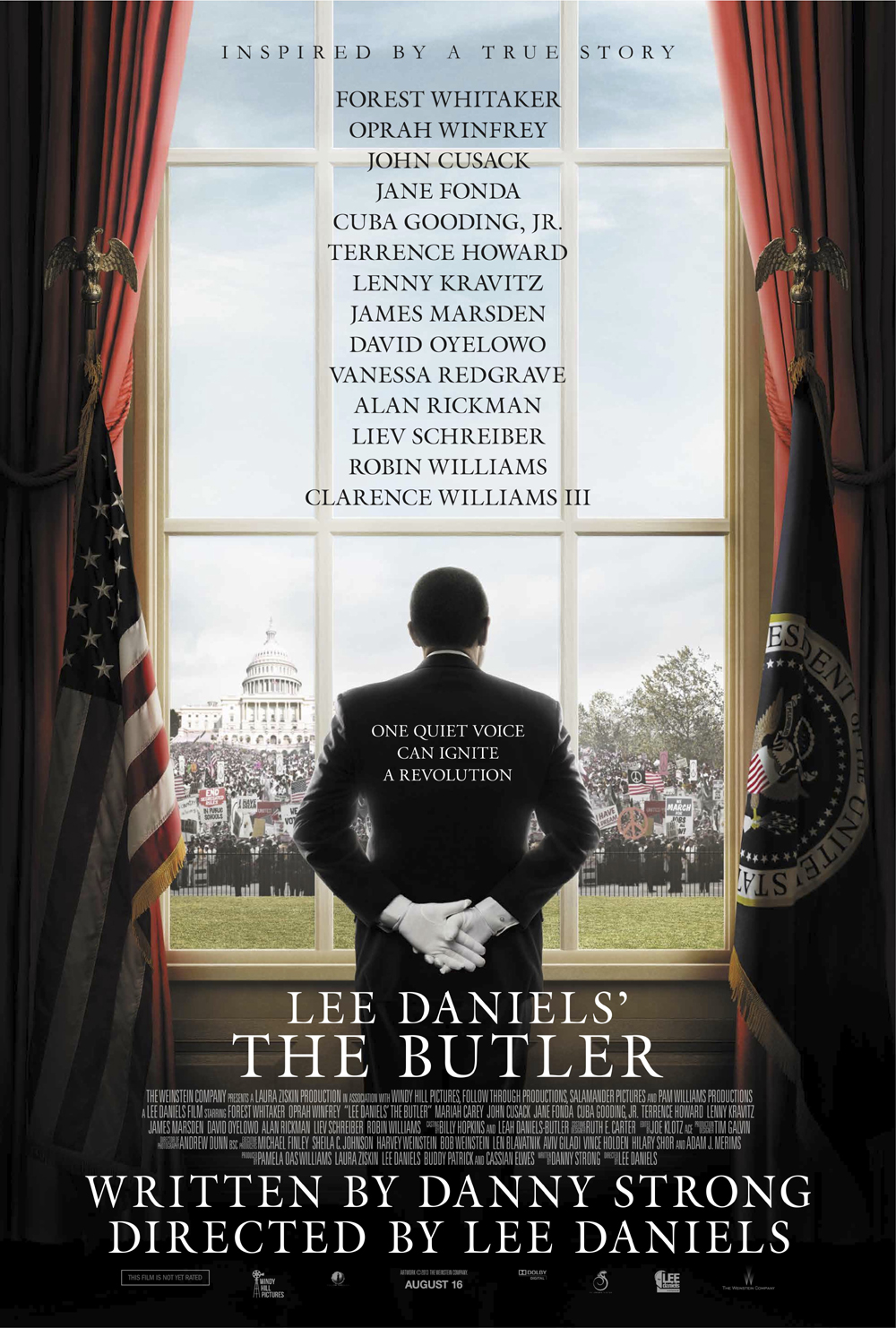 Before I begin my review, I feel the need to come to the defense of Oscar-nominated director Lee Daniels (Precious). Despite what Internet message boards and detractors may have you believe, it was never the man’s intention to insert his name into the title of his latest film, Lee Daniels’ The Butler. Warner Brothers claimed copyright ownership over the title of The Butler. The MPAA mediates title discrepancies in cases where one movie could clearly be confused for another. However, Warner Brothers’ claims a 1915 silent short film in their vault by the same name. Is anyone in the year 2013 really going to pay a ticket for the Butler and reasonably expect a silent short that’s almost 100 years old? Rather than pay a financial settlement, The Weinstein Company decided to alter the original title, adding the director’s name. This isn’t The Butler. Now it’s Lee Daniels’ The Butler. So before I get into the thick of my review, I’d like to absolve Daniels of Tyler Perry-levels of hubris. You’ll excuse me for just referring to it as The Butler throughout the duration of this review, not to be confused with a 1915 short film.
From Harry Truman to Ronald Reagan, one man served them all and his name is Cecil Gaines (Forrest Whitaker). He was a White House butler for over 30 years, even attending a state dinner at the behest of Nancy Reagan. Cecil grew up on a Georgia cotton plantation and moved up the ranks in high-class service. His wife, Gloria (Oprah Winfrey), wishes her husband would worry more about his own home than the White House. Cecil’s two sons, Louis (David Oyelowo) and Charlie (Elijah Kelley), have very different views of their father. Louis feels like dear old dad is too close to the men of power, and Louis is going to do what he can on the frontlines of change.
 I’m sure everyone had good intentions with this movie, but I walked away with the overwhelming impression that The Butler was too heavy-handed, too corny, and too mishandled with its plot construction for it to be the effective drama all desired. I also know that my opinion is of a minority, but that has never bothered me as a critic. Let’s start with the biggest handicap the film has going, and that’s the fact that its central character, the titular butler, is too opaque for a biopic. Early on, Cecil rises through the ranks of black service workers because of his skill, and that skill is none other than “having a room feel empty with [him] inside it.” I’m not downplaying the man’s dedication, or the culture he grew up in that preferred their black workers to be silent, but here is a movie where the man’s claim to fame is that he served eight presidents but he was in the background for all that history. I wasn’t expecting Cecil to lean over and go, “Mr. President, that Voting Rights Act might be a good idea, and I’ll help ya with it.” He is just sort of there. I was expecting him to have some larger significance, especially in his own life, but here’s the kicker: by the end of the movie, you’re left with the impression that all of his years of service were for naught. Cecil comes to the realization that his son, who he has sparred with for decades, was right and he was wrong. Is this the intended point? My colleague Ben Bailey will argue this is Daniels’ subversive intent, to undermine the tenets of typical biopics, to fashion an anti-biopic. I am not as convinced.
The problem is that Cecil is a passive character, which makes him the least interesting character in his own story. He served eight presidents, yes, but what else can you say about him as presented? What greater insights into life, himself, or politics does he have during those years with seven different presidential administrations? I cannot tell. I was thoroughly astounded that Cecil, as a character, was boring. I suspect this is why screenwriter Danny Strong (Recount, Game Change) chose to split Cecil’s story with his son, Louis. Here is a character on the front lines of the Civil Rights movement, getting chased by mobs, beaten, sprayed with firehouses. Here is an active character that wants to make a difference. He also happens to be mostly fictional.
While the film opens with the phrase “inspired by a true story” you should be wary. Upon further inspection, very little is as it happened. I think all true stories, when adapted to the confines of a two-hour film narrative, are going to have to be modified, and pure fidelity to the truth should not get in the way of telling a good story, within reason. I don’t have an issue with Louis being fictional, but it points to the larger problem with the biopic of such an opaque man. The real-life Cecil, Eugene Allen, had one son who went to Vietnam and married a former Black Panther. Strong splits the difference, supplying two sons with different paths. Because of his invention, this means Louis has the benefit of being present at a plethora of famous Civil Rights events, like the Woolworth counter sit-in, the Freedom Rider bus burning, and the assassination of both Malcolm X and Martin Luther King Jr. Seriously, he’s in the same motel room with MLK in Memphis. With the exception of the Woolworth sit-in, the Civil Rights events feel like minor pit stops, barely spending any time to develop. It ends up feeling like a facile Forrest Gump-like trip through the greatest hits of the Civil Rights movement.
This narrative expediency also translates to the supporting characters in The Butler. Beyond Cecil, Louis, and Gloria, there aren’t any characters that last more than one or two scenes. Cecil’s White House co-workers, played by Cuba Gooding Jr. (Red Tails) and Lenny Kravitz (The Hunger Games), provide amiable comic relief but little else to the narrative. Terrence Howard (Dead Man Down) has an affair with Gloria and then is never seen again. That affair, by the way, is also never referenced again nor does it have any further ramifications with the relationship between Cecil and Gloria. So then what was the point? There is a litany of famous faces playing real people, but they’re all in and out before you know it. The actors portraying the presidents are more an entertaining diversion than anything of real substance. Alan Rickman (Harry Potter) as Reagan gets the closest in the physical resemblance game, though I strongly doubt Reagan, as presented in the film, sat down and openly admitted he was wrong to his African-American service workers. John Cusack (The Raven) as Nixon is a hoot. The movie speeds right through the Ford and Carter administrations, so I’ll play my own game of casting (Ford: Dan Akroyd; Carter: Billy Bob Thornton). The presidents, like the clear majority of supporting players, don’t stick around long enough to leave an impression. It’s as if our prior knowledge of these famous faces is meant to serve as characterization. Beyond the immediate Gaines family, you don’t feel like you’re getting to know anyone.
 Then you bring in Daniels as director and the man has not shown much of a penchant for, let’s call, subtlety. This is, after all, the same man who directed Nicole Kidman in the ways of urinating upon Zac Efron. A coherent tone has often been elusive in Daniels’ films, which veer into wild, loud, sometimes clashing melodrama. The most clashing thing in The Butler are the matching 1970s and 80s fashion that will burn your eyes. He tones down his wilder sensibilities but The Butler is an especially earnest movie; but overly earnest without earned drama usually begets a corny movie, and that’s what much of The Butler unfortunately feels like. The significance of the Civil Rights movement and the bravery of the ordinary men and women, and children, fighting for equality cannot be overstated. These were serious heroes combating serious hate. I expect a serious movie, yes, but one that isn’t so transparent about its Staid Seriousness. The Butler is very respectful to history (fictional additions aside) but too often relies on the historical context to do the heavy lifting. It also hurts when the film is so predictable. At one point, I thought to myself, “I bet Cecil’s other son gets shipped to Vietnam and probably dies.” Mere seconds after this thought, young Charlie Gaines says he’s going to Vietnam. I’ll leave it to you to discover his eventual fate.
Daniels’ true power as a director is his skill with actors. The man nurtured Mo’Nique into an Academy Award-winning actress. From top to bottom, no actor in this film delivers a bad performance, which is a real accomplishment considering its stable of speaking roles. Whitaker (Repo Men) is the anchor of the movie and he puts his all into a character that gives him little to work with. He brings a quiet strength and dignity to Cecil, able to draw you in even as he’s presented so passively and ultimately perhaps in the wrong. Winfrey hasn’t been acting onscreen since 1998’s Beloved. Gloria is an underwritten part but she does the most with it and I’d like to see more of Oprah the actress more often. Another highlight is Oyelowo (Jack Reacher) as the defiant son fighting for what he believes is right. I want to also single out former America’s Next Top Model contestant Yaya Alafia as Louis’ girlfriend and eventual Black Power participant, Carol. She’s got real potential as an actress and if she gets the right role she could breakout and surprise people.
Lee Daniels’ The Butler (just one last time for feeling) is an earnest, emotional, but ultimately unsatisfying picture and it’s mostly because of its title figure. The figure of Cecil Gaines is not the kind of man that the entire perspective of the Civil Rights movement can be hung onto as an allegory. He’s treated as background of his own story. If the filmmakers wanted to highlight the life of a man who grew up on a cotton plantation, worked in the White House, and who lived long enough to see an African-American be president, well then tell me that story. But they don’t. I think Daniels and Strong knew the limitations of their central figure, which is why the son’s role was invented to provide a more active perspective outside the hallowed walls of 1600 Pennsylvania Avenue. In the end, I really don’t know what the message is, because the one I’m left with is that Cecil Gaines realizes late in life how wrong he was, not just with his son, but his faith in the office of the presidency. I doubt the majority of filmgoers are going to walk away with this message. While well acted and with a sharp eye for period details, The Butler is earnest without having earned your emotions.
Nate’s Grade: C


 nathanzoebl
You must be logged in to post a comment.