Category Archives: 2025 Movies
If I Had Legs I’d Kick You (2025)
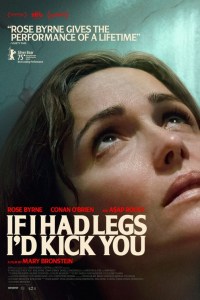
I have been told by numerous friends and other critics that If I Had Legs I’d Kick You falls in that dreaded entertainment zone of the “difficult watch.” These are usually made up of admired movies tackling challenging subjects in unflinching ways, movies that are easier to admire than love. I was girding myself to finally watch If I Had Legs (this will be the reference for the title from here out because, frankly, I’m too lazy to type out an extra three words every reference), I found it pretty despairing, especially for women, especially for parents of young children, and especially for those suffering or who have suffered through some degree of post-partum depression. This movie is a sensory immersion into the frazzled, anxious, and punishing existence of our heroine, just trying to catch her breath or get a break in a universe that seems cruelly engineered to only provide stressors. It’s a truly phenomenal movie giving bristling life to the perspective of writer/director Mary Bronstein (Yeast), with stylistic and surreal touches that reminded me of Charlie Kaufman or even Franz Kafka. The tragi-comic absurdity, as well as the unrelenting existential anxiety, is meant to provoke a primal, wince-inducing response, eliciting sympathy for the countless mothers coasting hour-to-hour looking for a little oasis of relief. If I Had Legs is one of those rare feel-bad experiences that I not only admire but I think I actually love.
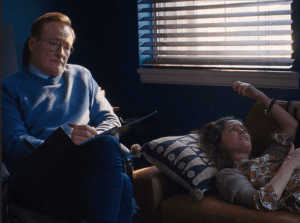
Rose Byrne plays Linda, a forty-something woman being pulled in every direction. Her young daughter is suffering from a physical malady that requires her to have a feeding tube, and she needs to gain weight in order to have the tube removed, but the child can’t gain weight because she doesn’t want to eat, and this obstacle is compounded by the hospital telling Linda if the child doesn’t meet her goal weight, then it’s a reflection of neglect, and Linda herself will have to attend parenting classes. The child is also, let’s put this nicely, very high-maintenance and attention-demanding. There’s also Linda’s husband who is away at sea and generally unhelpful and curt whenever caught on the phone. Linda also has a therapist (Conan O’Brien) who is likewise generally unhelpful and seems disdainful even talking to her. Then the roof of her apartment explodes with a torrent of water, and now Linda and her daughter have to live out of a local motel, further exacerbating all of their personal problems. It’s forty minutes in when the movie reveals Linda’s profession and I genuinely gasped: she’s a psychiatrist with her own very demanding clients to counsel. It’s not easy being Linda, but then again, there are plenty of Lindas in the world just waiting to catch a break.
This movie is a lot. It’s a lot to process, and it’s very deliberately using disorienting creative decisions to test your limits. The sound design is an especially effective dynamic that raises anxiety. Bronstein never shows you the face of Linda’s daughter, at least not until the very end of the movie, and there’s a stark reason for this. Our identity is Linda, and this voice that keeps coming in, frequently interrupting, occasionally screaming, and often compounding the stress of her mom, is designed to be viewed as a primary source of agitation. We don’t see the daughter because in this vision she doesn’t exist as a character but more as a burden. We view the child as Linda perceives her. There’s a trying sequence where Linda’s client leaves her baby behind and vanishes, forcing Linda to cart around a crying baby while frantically looking for the mother. The soundtrack of a crying baby is like a direct line to your nervous system that something is wrong and all you want is for the child to be soothed, but it keeps going for nearly five minutes straight, with that screechy wailing eating away at you one cry at a time. I can readily imagine my wife watching this movie and just turning it off after ten minutes.
The movie is packed with these creative decisions, all designed to make Linda’s perspective that much more empathetic and exhausting. For those tut-tuting Linda viewing her daughter as a burden, I’d ask for some grace, but also the movie doesn’t withhold criticism from its protagonist. She can be selfish as she’s spiraling, even seeking comfort in bad places. It would be harder to endure if the perspective was purely Job-like, wherein Linda relentlessly suffers because the universe is indifferent, or God is unhappy and spitefully targeting this poor woman. It does feel like everything is going wrong, but that’s also because we’re anchored in Linda’s perspective. Seeing things from her daughter’s perspective would make for a fairly different movie, but that’s not what this movie aspires to be. It’s not meant to be balanced, it’s meant to convey a very specific viewpoint, and that perspective feels like everything is stacked against you. In one key moment, what my pal Eric Muller dubbed Byrne’s “Oscar clip moment,” she unloads on her therapist and desperately pleads for someone to just tell her exactly what to do, to have responsibility and uncertainty stripped from her life. She wants a clear direction and the relief of knowing what to do, something that is rarely so clear in the adult world. It’s hard not to feel for Linda in the movie unless you’re actively trying to reject the vision of the director. If I Had Legs is a movie deliberately designed to be overstimulating and upsetting, so it’s going to be a select audience willing to wallow in the discomfort for the insight offered. I can see plenty saying, “Yeah, I live this, so no thanks.” I get it. After becoming a parent myself, my tolerance for emotionally-draining media certainly lowered. However, I think there’s ample artistic accomplishment to be savored with If I Had Legs that is worth treading the discomfort.
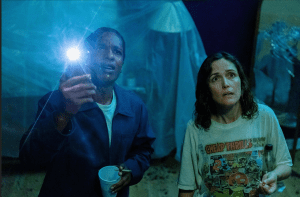
Byrne has been playing around the world of comedies since 2010’s Get Him to the Greek (a peak candidate for “most canceled cast” of the modern era, Byrne excluded) that I forgot how great she can also be in dramas. This is my favorite female performance of 2025. She is astounding. It’s smart to hire an actress of Byrne’s caliber, someone capable of finding the dark humor and exasperated guffaws of a life that feels like an assembly line of slaps to the face. The camera also rarely leaves her orbit, tacitly tying our sympathies, and it takes a lot to command the screen knowing your face is often going to be the measured focal point of every reaction to every slight and surprise and shock. She is the face of beleaguered motherhood, and it’s hard not to relate to at least a dozen moments of this nuanced and transcendent performance.
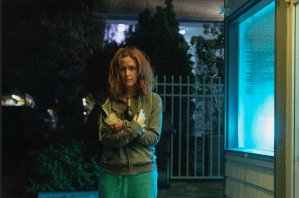
I don’t believe that If I Had Legs is unforgivably bleak; it’s certainly intense and agitating, but in order to make my finer point I need to spoil the end of the movie. However, dear reader, I truly don’t believe this is a movie that can be ruined through spoilers. So much of its appeal is the execution of such a specific vision, and to give one’s self over to that voice and its effect cannot be diminished through prior knowledge. It’s about the experience. Consider yourself warned, folks. Throughout the movie, the hole in Linda’s apartment ceiling becomes a sort of metaphor for her experience, an empty void. She dreams about losing herself inside the void, giving herself to the emptiness, and it’s easy to make a connection to darker impulses of self-destruction. This comes to a head at the very end, when Linda literally tries to run into the ocean to escape the troubles of her life, and the sea won’t have it, repeatedly throwing her back onto the shore. Even her attempt to escape ends up in tragic-comic slapstick. But it’s here where the movie switches gears, and we now see Linda’s daughter for the first time just as Linda is promising to be better for her. This changing of perspective effectively communicates Linda seeing her daughter, actually seeing her as a person rather than a nuisance, a peripheral voice of need and stress. The movie ends not on the harried breathing of Linda trying to calm down but on the hopeful smile of her daughter, and it might be misplaced optimism after a movie that feels plenty pessimistic, but I viewed this as a meaningful change. Even after all her struggles, even after her mistakes, there’s still the desire to do right for your loved ones, to improve.
I originally wanted to do a double review, pairing If I Had Legs with Die My Love, the newest Lynn Ramsey movie that explores the inexplicable loneliness of post-partum depression with Jennifer Lawrence trying to reconnect with her body, her sense of self, and the world as it was and is. I felt beforehand that the movies would have the connecting themes of the difficulties of motherhood, and they do, but I feel both movies are so tonally different in approach and execution that they deserve to be judged separately. If I Had Legs I’d Kick You might just be that hard-to-stomach film-experience so many have warned about (don’t expect the hamster to last long), but it’s such a transporting, exhilarating, and deeply humane vision executed to a remarkable degree of vibrant life. It’s personal and yet easily empathetic. It’s an unflinching and unsentimental portrayal not just of motherhood but of the difficulties of maintaining sanity in a world that often feels indifferent to your needs. It’s a difficult movie to watch, yes, but that doesn’t mean it lacks value and impact. If you’re brave and willing to wade through the deliberate discomfort, If I Had Legs is a remarkably good bad time at the movies.
Nate’s Grade: A
Share this:

Five Nights at Freddy’s 2 (2025)
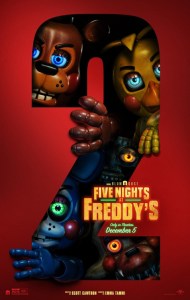 I wasn’t a fan of the original 2023 movie based upon the insanely popular video game series that serves as an entry point into horror for kids. It didn’t work for me but I thought fans of the series would have fun watching the characters come to life in live-action. Now with the sequel, I don’t know anyone that could enjoy this dreck except for the most diehard of the Freddy’s fanbase. I’ve watched the movie and I couldn’t understand it. I read the Wikipedia summary and that didn’t clear it up. So much hinges on so many characters having peculiar responses and relationships to what are… killer animatronics powered by the spirits and literal corpses of murdered children. Why is this pizza parlor even still standing? These robots went on a killing spree in the first movie, and yet this lonely little girl misses her “friends” and runs away to see them again. This isn’t E.T. here, it’s a weird killer robot horror movie that seems to be making up its lore and rules as it goes, like one unending “yes and?’ improv game you’re desperate to tap out from. I guess there’s more killer robots this time, and some unintelligible distinction between the good bad robots and the really bad robots. I don’t know. I gave up trying to comprehend what was happening and felt like maybe I could just try and enjoy the minimal PG-13 scares and tension. The animatronic designs are solid. Wayne Knight (Seinfeld) appears as a villainous robotics teacher. There’s a marionette character that’s kind of sinister to watch. That’s about it, folks. It’s a fairly nonsensical waste of 100 minutes, and unless you’re steeped in the lore and history of the series, you too will wish that this town would just set fire to the whole parlor.
Nate’s Grade: D+
Share this:

Oh, Hi! (2025)
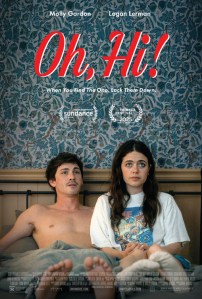 This feels like a charming rom-com by way of a 2010s no-budget mumblecore character-centric dramedy. Oh, Hi! follows a couple (Logan Lerman, Molly Hopkins) on a small vacation to the country to stay at an Air B&B farmhouse. They discover a closet full of bondage gear and get silly with it, strapping Lerman to the bed post. After their fun, it becomes clear there’s a dramatic misunderstanding between the couple. She thought they were an official exclusive couple. He thought they were non-exclusive and he says he’s not ready for any commitment. She leaves him in cuffs attached to the bed and promises that, in 24 hours, she can convince him to agree to be official boyfriend and girlfriend. I thought Oh, Hi! was going to be one kind of movie, maybe a kinky sex comedy (the comedic version of Gerald’s Game?), but it’s really more of a quirky relationship drama by way of kidnapping. The tone is balanced so you never feel the characters are at great risk, but it’s also hard to fathom how this turn of events will be an unorthodox relationship-builder (definitely a scenario that would play very differently if the genders were reversed). Oh, Hi! becomes more of a vehicle to reveal whether this couple should stay together or not, with Hopkins unleashing all of her romantic neuroses as a cathartic deluge. There is an organic escalation as more characters get drawn into this anxious scenario, but the movie loses its comic momentum in the last 20-30 minutes. There really is only so far you can go with this scenario, and when characters are reaching out to witchy spells to instill memory loss, we’re probably tapped out of ideas. Hopkins, who also co-wrote the script with director Sophie Brooks (The Boy Downstairs), is a charismatic find who elevates the comedy while still finding room to ground it in emotional vulnerability. Lerman can only do so much tied to a bed for most of the movie. It’s a fun little movie that finds some natural and effective comedy from its absurd kidnap-for-the-sake-of-the-relationship premise but it ultimately stalls out. Still, Oh, Hi! is full of small pleasures for a good while, from its ensemble, to its surprises, to the ever-shifting dynamic between the couple, and may prove worthwhile even for the commitment-phobic.
Nate’s Grade: B-
Share this:

Die My Love (2025)
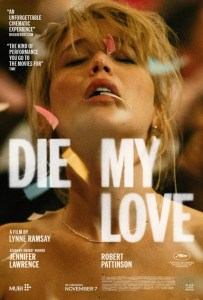 A new Lynne Ramsay (We Need to Talk About Kevin) movie should be a cause of celebration. She’s only directed three movies since 2002 and each is worth every ounce of your consideration. They’re typically genre-defying triptych character studies of people with deep reservoirs of pain and isolation, and so her latest, Die My Love, is a natural fit as it explores one woman’s headfirst descent into post-partum depression. Jennifer Lawrence plays our lead character Grace, a vaguely defined “writer” transplanted to rural Montana, living in her husband’s (Robert Pattinson) family’s old home, but in reality confined is the better term. Ever since her child’s birth, Grace has felt disconnected; from her body, from her feelings, from her husband, from her sense of self. This is a showcase for Lawrence to unravel in a stylistic manner that could feel deeply authentic to millions of women post-birth. She’s struggling to feel something as strongly as she used to, to lift her head above the stormy waters of depression that has engulfed her, and this can lead to some dangerous and impulsive outbursts, like throwing herself through a glass door just to feel something. Her husband is no help, who leaves for long stretches of time on business and tries to act like nothing’s wrong (example of reading the situation entirely wrong: thinking this woman needs a puppy – note, it will not end well for the dog). He also may or may not be having affairs with other women, it’s hard to say what exactly is literal reality here. Ramsay and her co-screenwriters have elected to make a movie more about evoking the feeling of our lead’s alienation and confusion. It’s less about plotting, which unfortunately also hampers the characterization, keeping Grace more of a symbol for accessibility. What she’s going through feels vivid and authentic but she rarely feels like a fleshed-out character rather than an archetype to examine. The same with the supporting roles, including Lakeith Stanfield as her neighbor who she may be fantasizing about or more, it’s hard to say. There’s plenty of unspoken commentary on mental illness and the unfair expectations thrust upon women, especially new mothers, but much of Die My Love feels like winding up Lawrence and setting her loose to make a scene. Make no mistake, she is very very good at being disconnected and angry and raw. There are some bold artistic choices throughout but ultimately, because I didn’t feel connected to the characters, by the end I felt more exhausted by the emotional tumult rather than gaining better awareness of her plight.
Nate’s Grade: C+
Share this:

Blue Moon (2025)
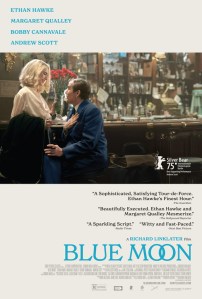 Ethan Hawke is transcendent in Richard Linklater’s Blue Moon, a glorified play set on the opening night of Rodgers and Hammerstein’s Oklahoma! on Broadway, except our star is Lorenz Hart (Hawke), the former lyricist and creative partner of twenty-five years for Rodgers (Andrew Scott). He’s nursing his gripes and hard-won insights at Sardi’s, commiserating with whomever might listen. This is a man who would talk himself hoarse. It’s a great showcase for Hart to expound upon his life, perspective, and desperation, whether it’s re-teaming with his former partner, hoping to get ahead of his alcoholism, the reason for Rodgers’ split, or the hope for love from a college girl (Maragret Qualley) who he’s so clearly projecting confused infatuation upon. Hawke is sensational as the troubled, egotistical, catty, funny, and clearly flailing musical genius who has accomplished so much but is so restless. There is so much to this performance, and each new conversation with someone at this bar feels like it’s unveiling a new dimension to our understanding of Hart, who can be convivial one moment and lacerating the next. I could listen to him prattle for hours. The subplot with the college girl infatuation has some obvious Lolita overtures, though it’s less lecherous middle-aged lust than an over-the-hill artist trying to feel important and wanted by somebody, even if he’s abusing his teacher-student relationship to achieve this (Hart was dealing with his repressed sexuality on top of everything). I found it illuminating in how someone as creative and cutting and incisive as Hart could be taken by his own self-delusions. Linklater lets the story take center stage and gives his stars the needed room to shine. This is that rare character study that finds its perfect lead and the best creative team to bring it to life. Blue Moon is one of the best movies of 2025 and I feel that Hawke’s career-best turn is the best male acting of the year.
Nate’s Grade: A-
Share this:

Nuremberg (2025)
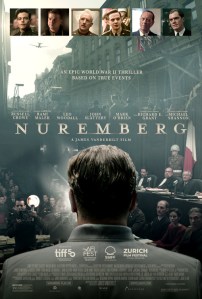 Taking an Oscar-winning courtroom classic and eliminating 40 minutes sounds like a surefire gamble, and while Nuremberg has its heart in the right place, bringing Nazis to justice, it cannot help but feel like a more shallow and rushed version of 1961’s Judgement at Nuremberg. That’s not to say different movies cannot exist from the same source material or true story, even in the shadow of famous stories. However, this version feels strangely perfunctory, condensing the worldwide judicial response to the horrors of the Holocaust into a simplified buddy movie about a psychologist (Rami Malek) who has to learn the hard way that maybe, just maybe, Hermann Goring (Russell Crowe) might not be trustworthy. It’s frustrating that the depth of this story and the plight of so many is reduced to one guy getting too close to his subject as well as having to learn the most obvious lessons about applied evil. Also, the culminating courtroom showdown, where so much hangs in the balance and Goring has been hyped as the most of challenging of cross-examination opponents, and it all resolves so easily, with a different prosecutor essentially using a cheat code to undo Goring’s pseudo-intellectual front. It’s quite a lot of buildup for a, “Wait, that’s it?” response, and much of the movie follows this same disappointing route. The acting is relatively good all around, with Crowe especially good as a chummy narcissist, and the production quality is sufficient to recreate its post-war period, but I couldn’t help but feel that I was missing out on a richer story. It’s so flattened out and self-important with its limited details to actually satisfy. The ending tries to draw a direct line to Trump today and I don’t quite know if it’s done the work. Nuremberg is one of those Important Movies that garners early Oscar buzz on paper, and then when people actually see it, falls away as an also-ran, mostly because it was missing a few too many important elements to resonate. It takes 130 minutes for Malik to learn that Nazis might not make good friends. You’ll probably know that already.
Nate’s Grade: C+
Share this:

Hurry Up Tomorrow (2025)
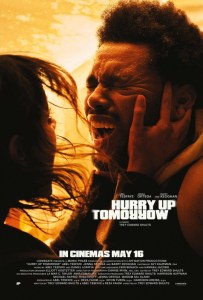
The pop star vanity project is a dubious film enterprise, though it’s been quite a while since we had a theatrically released bauble from one of the most popular singers in the world. Typically, if musicians want to get experimental and “arty” with a visual medium, they turn to longer-form music videos for even the entirety of a new album release, like what Beyonce and Halsey have done. That wasn’t good enough for The Weeknd, a.k.a. Abel Tesfaye, as he co-wrote a starring vehicle for himself that could be filmed alongside his world tour where he essentially plays an enigmatic version of himself that Jenna Ortega is obsessed with. At this rate, I’m surprised he didn’t write a scene where a bunch of women congratulate him on being the world’s best lover. Hurry Up Tomorrow is a glorified longer-form music video collection of extended musical performances and some more trippy experimental videos in the second half. It’s also a low-rent Misery with Ortega being a crazy fan who eventually takes her target of obsession hostage. She thinks she can help the troubled singer confront his past through her extreme therapy. If this was the whole dynamic, this could have been the movie rather than the final twenty minutes of it. It’s gob-smacking that Tesfaye is able to spare his life through the unquestioned power of song and his talent (“You had it in you all along, most talented superstar”). By the end, I don’t think anyone has learned anything after all the kidnapping and murders and arson except that Tesfaye has a pretty high opinion of himself. Unless you’re the biggest Weeknd fan, you’ll be left blinded by the meandering artistic hubris of Hurry Up Tomorrow. There’s just nothing here to grapple with besides the self-serious self-indulgence. What to expect from two of the three credited creators of HBO’s abysmal and cringe-inducing canceled-after-one-season show, The Idol?
Nate’s Grade: D
Share this:

It Was Just an Accident (2025)
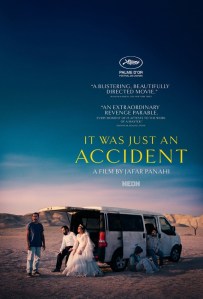
Iranian writer/director Jafar Panahi (The White Balloon, The Circle) is an example of an artist literally willing to put it all on the line for his art. He’s been banned by the authorities of Iran from making movies, and then Panahi secretly made a documentary of himself serving as a taxi driver in 2015. Scanning his filmography, all of his movies after 2000 were either made “illegally” or banned in his home country before their release. He was sentenced to a six-year prison sentence in 2022 and was released shortly after undergoing a hunger strike. Panahi filmed his latest movie, It Was Just an Accident, in secret without knowledge by the Iranian Authority, which makes sense considering how openly critical it is about the regime. It won the Palm D’or, the top prize, at the 2025 Cannes film festival and has been one of the most acclaimed movies of the year. It’s also likely going to make life much harder for Panahi, who was also sentenced in absentia by Iran to another prison sentence for “propaganda activities.” Yet his art persists, and It Was Just an Accident is easily one of the finest movies of 2025 and it’s no accident.
It begins simple enough. A middle-aged man and his family have car trouble after accidentally hitting a stray dog (sorry fellow animal lovers, but at least you don’t see it). They are taken into a nearby garage and that’s where the owner overhears the family man’s voice and then freezes in terror. He sounds EXACTLY like the man who interrogated and tortured him for the Iranian government years ago. Could it be the same man? How can he verify? And if so, what does he plan to do with his possible former captor?
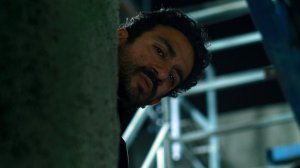
What a brilliantly developed and executed movie this is, taking a concept that’s easy to plug right into no matter the language and cultural barriers, and then to unfold in such contemplative, bold, and unexpected ways. It captures mordant laughter, poignant human drama, and a nerve-wracking thrills. Most of all it’s terribly unexpected. As more and more people get brought in on the kidnapping, and more reveal their personal trauma from their shared captor, I really didn’t know what the fate would be for anyone. Would they kill this man? If so, what would that say and how would they view themselves after? If not, what lessons might they have learned from this ordeal and what lessons might their former captor have learned? It really kept me guessing and because it’s so exceptionally well developed and written, the script could have gone in any direction and I would have likely found satisfaction. There’s even the question over whether or not all these people are mistaken and projecting their fury onto an innocent man. However, I will say, the movie flirts with Coen-essque dark comedy, almost at a farcical level for its first half as these amateurs stumble their way through a kidnapping plot they are not equipped to control (a woman is stuck in her wedding dress for the entirety of these vigilante deliberations). Then in its second half it transitions into a really affecting moral drama about the lengths of trauma and the desire for forgiveness as a key point toward processing grief and preparing oneself to move forward. Even though the circumstances are specific to Iran, the movie is emblematic of accountability and reconciliation, and those elements can be easily empathized with no matter one’s cultural borders.
As you might expect, this is a movie brimming with anger, but it’s not suffused with bitterness, which is a remarkable feat given its subject matter. This is a movie that unfolds like a crime thriller, with each scene unlocking a better understanding of a hidden shared history. Each new character provides a larger sense of a bigger picture of oppressive state control and abuses, with each new person adding to the chorus of complaints. Naturally, many of these victims want to seek the harshest retribution possible for a man who tortured them with impunity. It’s easy to summon intense feelings of outrage and to demand vengeance. The filmmakers have other ideas in mind that aren’t quite as tidy. It’s easy to be consumed by anger, by outrage, that surging sense of righteous indignation filling you with vibrant purpose. It’s another matter to work through one’s anger rather than simply serve it. I’m reminded of the masterful 2021 movie Mass, a small indie about two groups of parents having a lengthy conversation; it just so happens one couple’s son was killed in a school shooting and the other couple’s son was the gunman responsible. It was a remarkably written movie (seriously, go watch it) and a remarkably empathetic movie for every character. It’s easy to pick sides of right and wrong, but it’s so much more engaging, intriguing, but also humane to find the foundations of connections, that every person lives with their own regrets and guilt and doubts. It Was Just an Accident follows a similar moral edict. Every character is a person, and every person is deserving of having their perspective better known, and we are better having given them this grace.

I think the movie is also especially prescient about this time and place in American history. It very well may prove a sign of the future, detailing a populace of the abused and traumatized and the former aggressors who worked for an authoritarian agent and administered cruel violence to cruel ends. It’s not difficult to see a version of this movie set in, say, 2035 America, with a ragtag group of characters discovering a retired ICE agent who they all have an antagonistic relationship with. In many ways the movie is about Iran and its history of an oppressive government turning on its own people, but in many ways it can also be about any system of power abusing that power to inflict fear and repudiation. It’s about a reckoning, and that’s why I think while the movie is clearly of its culture and time it’s very easy to apply the movie’s lessons and themes and larger ideas to any country, It’s all about characters coming to terms with harm and accountability, and sometimes it takes a long time after the fact for the perpetrators to accept that harm has been done, especially if they can fall on the morally indefensible “just following orders” defense. In the near future, will ICE agents, especially the ones who joined up after Trump took office for the second time, argue the same as the Nazis at Nuremberg? Will they rationalize their actions as just fulfilling a job to pay a mortgage? It might even be overly optimistic to believe a reckoning would even occur in the not-so-distant future, not to the profile of the Nuremberg trials but even just an individual accounting of individual wrongdoing. That assumes an acceptance of wrong and ostensibly a sincere request for forgiveness. As I write this, with an ICE officer whisked away to the protective bosom of federal government after executing a woman shortly after dropping her child off at school, it’s difficult for me to even accept that those in power and so eager to impose their bottomless grievances upon the vulnerable and innocent would ever allow themselves to accept the possibility of blame or regret. But then again this is perhaps what the citizens of Iran felt and they’re presently marching in the thousands to protest their authoritarian government in 2026, so maybe there’s hope yet for we Americans in 2026 too.
There is a deliberate sense to every minute of It Was Just an Accident, from its long takes to its interlocking sense of discovery, to the questions it raises, answers, and leaves for you to ponder. It’s a movie that drops you into a fully-realized world with rich characters that reveal themselves over time. If there’s one pressing moral for Panahi, I think it’s that every person matters, even the ones we’re told have less value. This is an insightful, searing, and ultimately compassionate cry for justice and empathy. It will be just as effective no matter the date you watch it, but with a movie this good, why wait?
Nate’s Grade: A
Share this:

HIM (2025)
 Setting a horror movie in the world of competitive sports, especially American football with its fandoms akin to dangerous cults of zealots, is a smart concept that could have so much possible commentary, from the sacrifices and exploitation of the players for the blood-lust of the fans, to the conspiracy of a cadre of white owners profiting from the labor of black athletes, to even the blinding psychopathy of extreme tribalism as an identity and dividing line. HIM does little to none of this, and being produced by Jordan Peele, I expected so much more than what I got. We follow a college phenom quarterback who wants to be the greatest, so he accepts an offer to train with a famous champion (Marlon Wayans) who puts him through a series of intense trials to prove whether he has what it takes. The horror elements are more confusing and surreal than unsettling, often crashing into unintentional comedy, like watching mascots with sledgehammers. This is one of those movies that seems to shift from scene to scene, with murky elements meant to keep the main character guessing but really just keeps the viewer guessing if this will ever come to something meaningful. The horror grew tiresome and repetitive. I was hoping for more scenes like where our young QB’s misses in practice lead to other players being physically abused, but mostly HIM hinges on tired occultly leftover furnishings, including an ending that is simultaneously underwhelming and predictable, a shrug meant as catharsis. An electrifying horror movie can certainly be made about the world of football. HIM isn’t it, let alone the possible GOAT.
Nate’s Grade: D
Share this:

No Other Choice (2025)
 The title of the Korean movie No Other Choice is spoken, in English actually, a few minutes into the movie. It’s the brief, unhelpful reasoning from an American exec that just bought a South Korean paper company and is reducing the local labor force. Our main character, Yoo Man-su (Lee Byung-hun), has been work-shopping his spirited speech about how important these jobs are to appeal to the American businessmen, and then when it comes time to deliver, he’s reduced to chasing them down as they quickly depart. Before he can even get into a second poorly-formed sentence, the exec cuts him off by saying, “No other choice,” and then sidles into the protective safety of a chauffeured vehicle. The implication is that this business has to reduce its labor force to stay profitable, and yet rarely is this so simple. In legendary director Park Chan-wook’s (Old Boy, Decision to Leave) latest, characters will often repeat the title of the movie as a deference to guilt, that they were forced to make hard decisions because those were the only decisions that could be had. Unfortunately, as this mordantly funny, exciting, and intelligent movie proves, people have a way of deluding themselves when it comes to finding justifications for their bad behavior and greed.
 The real plot of No Other Choice is Man-su’s readjustment. In the beginning, we see the life he’s built for his family, his wife Lee Mi-ri (Son Ye-jin), stepson Si-one, and daughter Ri-one, with their two big dogs. After a year of job searching, Man-su is bouncing from one job to another, and the family has been forced to make cutbacks to their lifestyle (“No Netflix?!” the son says in shock). Lee Mi-ri takes on a part-time job as a dental assistant to a hunky doctor. The dogs are shipped to Lee Mi-ri’s parents. Ri-one might have to stop her expensive cello lessons, which is a big deal as her teacher says the Autistic child is a prodigy, but her parents never hear her play. The paterfamilias needs to find a good job fast. That’s when Man-su gets the idea to post a fake job for a paper company manager to better scope out his competition. He takes the top applicants, the guys he acknowledges would be hired ahead of him, and creates a list. From there, Man-su pledges to track them down and eliminate them so his own odds of being rehired climb up.
The movie keeps shifting in new directions and tones with each new target, and it creates a much more fascinating and intriguing experience. I loved how each of the targeted rivals is treated differently and how each of these men come across as people who are struggling, hopeful, and quite like our beleaguered protagonist. There are good reasons why this movie has been described as Chan-wook’s Parasite, his culminating condemnation on the pitfalls of capitalism, how it pits peers against one another when they should be allies. Man-su views each man as his competition, impediments to him getting that prized position. However, each of these people is far more complicated than just their resume. At any time the movie could stop on a dime and just have two strangers, one of them intending to possibly kill the other, just have a heartfelt conversation about the difficulties of providing for your children and knowing that there are hard limitations that cannot be overcome. One man is struggling to adapt to a new marketplace after working in the paper industry for twenty years, and Man-su even echoes the complaints from the man’s wife, chiefly that he could have applied himself to other industries and jobs, that he didn’t have to be so discriminating when it came to a paycheck. Now, from her perspective, she’s arguing this point because she feels he is not casting a wider net for promising non-paper job opportunities. From Man-su’s perspective, he’s chiding the man because he doesn’t want to kill him but the guy’s intractability has put him in Man-su’s crosshairs. The unspoken comment is that Man-su is doing the same thing. At no point does he really consider getting a different job and thus being in a position where he does not feel forced to literally eliminate his best competition. He too is just as stubborn and blind to his own intractability. The system has a way of turning men against one another in order to boost a corporate balance sheet. This movie is just taking things a little further to the extreme when it comes to cutthroat competition.
 I also appreciated that the movie has a larger canvas when it comes to charting the ups and downs of its conspiracy. Man-su’s wife is not kept as some afterthought, you know the kind of movie where the husband goes on these wild journeys of the soul and his wife is just as home going, “Where have you been?” She’s an active member of her household and she is not blind to their financial shortfalls nor her husband’s increasingly worrying behavior and absences. She’s worried her husband may have begun drinking again after years of sobriety and peace. She makes attempts to reconnect with her distant husband, who is becoming more consumed with jealousy about her boss and his desirability. She’s not just the doting spouse or concerned spouse. She’s a resourceful character who recognizes problems. When another threat to their family materializes, Lee Mi-ri takes it upon herself to find a solution. Naturally, given the premise, whenever you have one member of a couple doing dastardly deeds, whether they get caught by their partner is a primary point of tension, as well as if so, how will their partner respond. I think the track that Chan-wook and co-writers Lee Kyoung-mi, Don McKeller, and Le Ja-hye decide is perfect for the story that has been established and especially for the darker satirical tone of the enterprise.
Despite the murder and gnawing guilt, No Other Choice is also a very funny dark comedy as it channels the absurdity of its premise. It’s always a plus to have amateur murderers actually come across as awkward. Just because they decide to make that moral leap shouldn’t translate into them being good at killing. There’s unexpected humor to Man-su’s amateur stalking and preparations. He’s also not immune to the aftereffects of his actions, getting queasy with having to dispose of these men and thinking of the best ways to obscure his physical presence from crime scenes (there was one moment I was literally screaming at the screen because I thought he forgot a key detail). Lee Byung-hun (Squid Games) is terrific as our lead and finds such fascinating reactions as the movie effortlessly alters its style and tone, one minute asking him to engage in silly slapstick and the next heartfelt rumination. I don’t think the film would be nearly as successful without his sturdy performance serving as our foundation. You really do feel for him and his plight, and perhaps more than a few viewers might feel the urge for Man-su to get away with it. The culmination of the first target is a masterful sequence where three characters all have a different misunderstanding of one another as they literally wrestle for a gun inside an oven mitt. It’s one of those moments in movies where you can stop and think about all the small choices that got us here and appreciate the careful plotting from the screenwriters. I found myself guffawing at various points throughout the movie and I think many others will have the same wonderfully wicked reaction.
 I could go on about the movie but hopefully I’ve done enough to convince you, dear reader, to give No Other Choice the ultimate decision for your potential entertainment. It’s a movie that covers plenty and leaves you deeply satisfied by its final minutes, feeling like you’ve just eaten a full meal. The ending is note-perfect, but then I could say just about every scene beforehand is also at that same artistic level. I won’t go so far as some of my critical brethren declaring this as Chan-wook’s best movie; I’ll always fall back on 2016’s The Handmaiden, also an adaptation of an English novel, much like No Other Choice (would you believe the source materiel is from the same author who gave us the novel for Play Dirty?). Regardless, this is exceptional filmmaking with a story that grabs you, surprises you, and glues you to the screen because you don’t know what may happen next (Patricia Highsmith would have loved this film).
Nate’s Grade: A


 nathanzoebl
You must be logged in to post a comment.