Author Archives: natezoebl
Hard Candy (2006)
 Pedophilia is all the rage these days in the media spotlight, though people are misusing the term most of the time. Pedophilia denotes an attraction to pre-pubescent kids, not, say, a 16 year-old girl. But anyway, this is a nasty little firecracker of a film that pushes the audience into increasingly uncomfortable moral quagmires. I enjoyed being made uncomfortable, being forced to question who was in the right, when the truth of the matter is neither party, the accused pedophile or the vengeful 14 year-old girl, is totally justified in their actions. Ellen Page gives a shocking and intense performance, one of the year’s biggest surprises. She’s a skinny coil of rage, deception, and questionable ethics. Most of the film is just watching two actors argue back and forth, each vying for dominance, and the results are pretty absorbing. The movie trips up late by spelling things out when it should have remained a nagging mystery. Sure it’s not entirely believable but damn if it doesn’t put you into a tight spot.
Nate’s Grade: B+
Share this:

Who Killed the Electric Car? (2006)
 The answer should be pretty obvious. However, this is not a slapped together bundle of liberal outrage. This is a lucid and refined argument that car companies, oil companies, and other interests essentially turned back the clock on invention and progress, something that is deeply upsetting. The market for an electric car was here and continues to be here, and this film shows that the car companies would rather destroy every electric car and pretend it never existed. This documentary relies on a lot of talking heads, many in the auto industry or former electric car drivers, but the information is easy to grasp and does not overwhelm the viewer. All I can say is, thank God for the Japanese. When the electric cars were up and zooming, car companies proposed their own cleaner-air alternative, the hydrogen car, something we’re told is never going to happen. But the Japanese were so scared by the amount of talk American car companies made that they themselves developed a hybrid car while their American competitors were just twiddling their thumbs idly. Well done, nation of the rising sun.
Nate’s Grade: B
Share this:

Jesus Camp (2006)
 Every year Pastor Becky holds a camp in North Dakota called “Kids on Fire.” It isn’t your typical summer camp where they weave baskets or go swimming. This is a Christian-based camp with one objective: to brainwash impressionable children. Jesus Camp is nothing short of startling and eye opening. These people mean well, I hope, but what we’re witnessing is nothing short of child abuse. I was watching these kids’ childhoods vanish right before my eyes as grown-ups recruit them to be foot soldiers in the army of God. These kids are shoveled dogma to the point that they become robots, and it’s because kids are so impressionable that the adults know it will stick. I defy anyone not to die a little when they hear a kid say he was “saved” at age five because he wanted more out of life. FIVE! Another little girl, around 10, uneasily admits she finds herself dancing “for the flesh” at times instead of for the Lord.
The most heartbreaking moment of the film is when we see one kid share his faith. He so badly wants a religious experience, to feel the touch of God in his life, but he regrets that doubt keeps setting in and life has a habit of making faith a hard commodity to grasp. All around him are kids writhing on the ground, bleating in tongues, weeping because they feel God inside them, and here?s this poor kid dealing with the same struggles that most adults go through when it comes to religion and spirituality. There’s a moment when he?s even rocking back and forth with his hands open, tears down his face, desperately wanting what the others seem to so easily be channeling. My goodness, it’s hard to watch. You just want to hug the kid.
 Where things get really scary is when the people supporting the camp blur the line between religion and politics. His mother home schools Levi, and there’s a moment where he’s reading his textbook and his mother says, “Did you get to the part where they say science hasn’t proven anything?” His mother then dissects global warming as myth and propaganda. What does the Bible have to do with global warming? Absolutely nothing, but it’s a conservative Republican talking point to question the validity of science and climate change. And that’s when the realization dawns: this camp isn’t creating soldiers for God but a broader voting base for the Republican Party. That’s why they debunk global warming, that’s why they ignore science, that’s why they learn about aborted fetuses, and that’s why they’re reminded of the “murder” of Terri Schiavo. I’m sorry but it is just entirely inappropriate to berate 6 and 7-year-old kids about abortion practices. One camp leader instructs the kids to smash a cup representing “government” and to pray for righteous Supreme Court nominees. These items have nothing to do with the actual Christian religion but they sure have a lot to do with how the Republican Party courts the religious vote. At one point Pastor Becky dredges up a cardboard cutout of George W. Bush and the kids are instructed to kiss it and bless him. Excuse me madam pastor, isn’t that idol worship?
The idea is that taking away a child’s reason and ability to think is in their best interest. I do not subscribe to the theory that ignorance is a defense against the world. But that’s exactly what these children are being forced to become — ignorant. They will become true believers and there’s no debate with a true believer, because they know they’re right no matter what evidence is set before them. Personally I don’t understand why science and religion have to be butting forces that cancel each other out, but that’s because I reason my beliefs with the realities of the observable world. These kids will never have that chance.
But what these people are doing is fear mongering and preying on a child?s instinct to belong. Pastor Becky condemns Harry Potter: “[He’s] an evil warlock and in biblical times he would have been burned!” She breaks down these kids and then rebuilds them just like the military. However, I don’t think the army of God needs wee ones knocking on doors to say the Earth is 6000 years old and fossils were just something the Jews hid as a hoax (this is a joke, but who knows what these kids could be led to think). One girl walks up to a group of older black men and asks if they know where they’re going when they die. “Heaven,” they simply reply. She questions if they’re sure and then leaves, and as she walks across the street she quietly tells her friends, “I think they were Muslim.” Sigh.
 The movie also has the best unintentionally hilarious moment of 2006. Pastor Ted Haggard is interviewed in depth and we see him preach to a congregation of hundreds. He says that as long as evangelicals vote, then no one can topple them. Months after the theatrical release of Jesus Camp, and a week before the 2006 midterm elections, a gay prostitute came forward confessing that Haggard had paid for sex on numerous occasions and even used meth. Haggard released a statement saying he had a lot of demons that made him do vile acts. In Jesus Camp, we see Haggard looking directly into the camera where he speaks as his conscience, saying, “I know what you did. I’m going to tell your wife.” The transparency is amazing and quite funny.
From a technical point of view, Jesus Camp doesn’t have a lot going for it. The music is pretty keen and the editing has a nice narrative to it, framed by a pastor on talk radio denouncing tactics and proselytizing. Mostly the filmmakers have such a harrowing scene that they just point their cameras and let their subjects be. There’s not a lot of commentary from their part, instead they choose to convince their audience through the power of what they see. The documentary is even-handed and could be commended by both sides of the political aisle. Some will be infuriated while others will be stimulated.
Jesus Camp is the scariest movie I’ve seen all year and also one of the saddest. Children should be allowed to be children and enjoy the time they have before the world gets complicated. They are not to be used as pawns in someone?s attempt to steady their political status quo. I know people mean well, but this isn’t helping. Pastor Becky is in awe at the Muslims who are willing to die for their cause. She wants the exact same thing from a Christian point of view. And that’s where she fails. You don’t fight fundamentalism with fundamentalism. You create a dialogue and try to reason, but how can you reason when all you know is that you’re right at all costs and everyone else is wrong? Jesus Camp did have a positive impact. Pastor Becky has decided to close the camp. I feel it may be a small victory though. There will be plenty more that pop up in her wake. These people want to “take back America.” Does that mean for the rest of us that our country is being taken away?
Nate’s Grade: B+
Share this:

Catch and Release (2007)
 Catch and Release may in fact have the most bizarre meet-cute in movie history. Gray (Jennifer Garner) is mourning the loss of Grady, the man that would have been her husband. She seeks a refuge from all the well-wishers and lies down in a bathtub with the shower curtain drawn. Fritz (Timothy Olyphant), one of the deceased’s best friends, enters the room with a female caterer. They position themselves against a wall and engage in some opportune sex. Gray is trapped and forced to hear the whole thing. The caterer keeps screaming, “Sock it to me” in increasing orgiastic pleasure. I was waiting for some more 1950s hipster dirty talk, like, “Lay it in me, Daddy-O.” Eventually the sex comes to an end and Fritz lights up a post-coital cigarette. But then Gray flings the shower curtain back. Aha! It’s boy meets girl in the most preposterous fashion, but that’s Catch and Release for you, a romantic comedy with enough to be different but still too limited to become anything other than a lukewarm date movie.
Now absent one less earner, Gray is forced to move into a house occupied by Sam (Kevin Smith) and Dennis (Sam Jaeger). They were friends of Gray’s ex as well. Then life proceeds to give Gray a series of curve balls. She discovers that her dead fiancé had over a million dollars in the bank and an 8-year-old son with another woman (Juliet Lewis), a flighty New Age massage therapist. Grady might not have been the same man Gray thought she was set to have and to hold (her married name would have been Gray Grady?).
 Things get off to an interesting start. The proposed wedding party has been transformed into a wake. Then as she is trying to cope with loss and put the pieces of her life together she’s further undone by revelation after revelation of secrets her ex kept from her. That’s pretty dark for a usual airy genre but also a pretty interesting setup for something different. Catch and Release flirts with being unconventional but then is on a fairly predictable trajectory once its promise settles down and completely dissolves.
Thankfully, despite all the doom and gloom there isn’t any grating sense of whininess. The perspective feels knowing and in search of wisdom through life’s unexpected calamities. Writer/director Susannah Grant (Erin Brockovich, Ever After) has a worthy adult sensibility that helps make the film feel a bit more credible and less like an inane melodrama. Catch and Release feels less pre-programmed and unlike most paint-by-numbers romantic comedies, and yet it still wears the weight of its genre around its neck and can never take a step forward without taking two backwards. There’s ample opportunity for a romantic comedy that begins at the literal end of a relationship, with the widow discovering more than she ever knew about her dearly departed (a rom-com version of The Constant Gardener? Call me, Hollywood). However, the movie seems too content to walk the same beaten path many have before it. It may be nothing more than a throwaway genre movie but it got my hopes up that it could have been something more. I feel spurned and betrayed, somewhat like Gray must have felt.
Catch and Release is a hit-and-miss date movie that can never really reel in what it wants to do. The film has some somewhat inspired moments but is also dominated by romantic comedy clichés and sitcom generalizations when it comes to its characters and setting. Of course the nice guy has had a lifelong crush on Gray. Of course the fat guy is also funny and rude. And of course we’re going to house all of these people under one roof so it will produce plenty of Gray-Fritz interactions that will lead to their eventual coupling. Plus, who could forget the classic eleventh hour misunderstanding followed by the pursuit that ends in a glib line like, “What took you so long?” The movie seems to be trying too hard to make Fritz seem like a suitable replacement when we never really know much about him. He’s kind of sleazy and he knows it, but when exactly does he become likeably sleazy? Their union feels forced and unrealistic, even by romantic comedy standards. It also feels like Grant named Garner’s character Gray just so she could include this passage:
Gray: “What’s your favorite color?”
Fritz: “Gray.”
 This prompted an entire row of teenage girls to go “ahhhhh” in my theater. I wanted to laugh, but then I was grossly outnumbered in my theater.
Catch and Release is mostly a grab bag of other romantic comedies. It doesn’t even know what to do with the fly fishing metaphor it valiantly tries to lift into some deeper meaning. I don’t get it myself. Gray says that her dead ex was always a “catch and release” man; does this mean he never had the heart to finish off his prey, or that he was too sympathetic with struggling creatures? It doesn’t matter what the metaphor attempts are because it allows for the cast to put on their rubber boots and wade in the cool waters of predictability. At least only one character works in the usual romantic comedy job pool (publishing, advertising, theater). Though Sam does come up with quotes for boxes.
Garner is such a winning actress but still finding her stride. She’s being positioned to fill the void of Meg Ryan and Julia Roberts, which is fine, but when I see her more as a modern Sigourney Weaver, someone who can excel in light comedy but also kick your ass when the time came. Gray’s world goes into upheaval and Garner is up to the task balancing emotion and wry life observations, but too often there’s little else for her to do but pout or crinkle her eyebrows. Her cheekbones certainly get quite a workout in Catch and Release but I wouldn’t exactly call that dramatic acting. I have been a fan of Olyphant since 1999’s Go. He’s always had a scary sexiness to him, and works best playing assholes you just can’t help but love. Grant totally drops the ball on his character. Fritz is behind the eight ball early and never really recovers when it comes to audience loyalty. Olyphant is also given a problematic shaggy haircut that manages to neutralize his natural alluring danger and still make him seem aloof. His role is a stock role and nothing more.
 Thank God for Kevin Smith. Grant wisely chose Silent Bob as her comic relief and Smith has such natural laid back charm and great timing that he should get more acting gigs full time. His presence is deeply missed when he steps offstage and the film returns back to its familiar roots. I don?t know why Grant has Sam eating or making food, or talking about eating in almost every scene. After the fourth scene in a row where Sam has a chicken leg in his fist, it gets tiresome, like she defined a character by hunger. Smith has the best scenes and the best chemistry, whether it’s with Garner, Lewis, or a little kid. I think someone should cast Kevin Smith as the lead of a romantic comedy. Now that’s an unconventional date movie I’d pay to see.
Catch and Release has some glimmers of promise before succumbing to the weight of the romantic comedy genre. The movie just cannot get past mounting clichés and shallow characters, plus some fairly contrived situations like the bizarre meet-cute. Garner and her dimples will survive to enchant another day. At the end of the day, Catch and Release is just like any other romantic comedy movie, and there’s plenty more of those in the sea.
Nate’s Grade: C+
Share this:

Big Momma’s House 2 (2006)
 Men in drag is one of the truest tenets of comedy. Billy Wilder proved it, Dustin Hoffman proved it, even Robin Williams proved it. Eddie Murphy found career resurgence when he put on a fat suit for 1996’s The Nutty Professor. I think Martin Lawrence thought, why not combine them both? Thus was the unholy birth of 2000’s Big Momma’s House, where Lawrence goes undercover for the FBI as a morbidly obese older woman. If that doesn’t spell comedy then what will. Forgotten amidst the fat jokes and flatulence is the fact that Oscar-nominated Paul Giamatti was Lawrence’s beleaguered co-star.
Now, I myself had never seen the first trip to Big Momma’s House but in order to give a rounder opinion of the year 2006 in film, I felt it was my duty to see its sequel. For fun I felt a traditional review would do a disservice to the fine craftsmanship and invigorating cinema I was about to witness, so I decided to create a rundown of my viewing thoughts by the minute. Here, ladies and gents, is Big Momma’s House 2. Beware plot spoilers below.
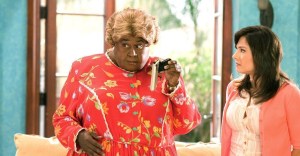 03: Martin Lawrence is dressed as an eagle and teaching kids about safety during a school assembly. Somehow his adolescent stepson is embarrassed by this.
04: Apparently Mrs. Big Momma (Gabriel Union) has a bun in the oven. Or an egg in the nest. She has the most unrealistic looking pregnancy ever. It’s almost like a cone.
10: Lawrence climbs back into the fat suit to go undercover as a nanny to stop computer hackers from dismantling the secrets of national security and selling them to terrorists. That’s right, it’s Big Momma vs. terrorism.
11: Also, apparently the rich do not do background checks on those in charge of watching their children. Has Dateline taught us nothing?
18: Here are the kids: dumb kid, cheerleader wannabe, and Hot Topic rocker chick (the daughter in 40 Year-Old Virgin that wanted to have sex).
22: Wife discovers Lawrence’s secret supply of XXXXXXXXL panties. Does she not know of Big Momma?
26: Nope. No she doesn’t, as she mentions her concern to a gal pal. “A woman this big wearing a thong? That can’t be comfortable.” Cue cut to Big Momma lamenting her thong. Why is Lawrence even wearing a thong? What are the benefits of dressing as a large woman and also wearing a thong?
32: Even the FBI, who put Big Momma into the field years ago, doesn’t even know Big Momma is not real. No wonder we have intelligence failures. Send Big Momma to fix Iraq. That’s a sequel I’d be interested in.
34: What school plays “Baby Got Back” for a gym dance class? Big Momma shows the uncoordinated cheerleader wannabe how to dance. The gym leaders ask for Big Momma to lead them to glory. Maybe he/she can also sink the winning last-second shot for the high school basketball championship too.
40: 19-year-old Chad is lurking in the bushes for the 15-year-old Hot Topic girl. Nothing spells romantic like “lurking” and “interested in dating a 15-year-old.” Again, did Dateline teach us nothing?
 45: Lawrence has to spy on the baddies and attempt to outrun his pregnant wife. Who do you think will win in a footrace?
46: The FBI finally realizes Big Momma is neither. The FBI earns a lollipop.
48: Lawrence decides to actually do housework for his nanny job but he decides to do it outside of his Big Momma costume, you know, in case the family walks in and wonders what a strange man is doing cleaning dishes and cooking dinner.
49: Big Momma pours the doggie a bowl full of tequila to lift its spirits. Dog depression is no laughing matter.
52: Big Momma teaches young girls how to dance like video stars.
56: Big Momma is at a spa with naked women and massages. Her advice to women for long-lasting marriage: put out often. That’s Big Momma for you, teaching our youth to dance salaciously, liquoring up animals, and turning back on the clock on feminism.
60: Big Momma runs on the beach in a 10 parody that no one seeing the movie will ever get. I guess it’s supposed to be funny because she’s fat? I think that’s the punchline for most of the movie.
63: Again, the limitations of an agent undercover in a fat suit (and thong) are revealed when Big Momma tries to chase down a suspect.
73: The dumb kid’s first words are, “Big Momma.” Then, “stakeout” and “investigate” and “hackneyed plot.” I made that last one up but it would have been something.
79: Big Momma enters a club to rescue Hot Topic girl at her plea. Oh, but Chad did not send a message it’s… THE BAD GUYS! And they’re taking her and Big Momma hostage.
80: My first laugh. Hot Topic girl and Big Momma tied in the back of a speeding van and rolling on top of each other with the sharp turns. Big Momma crushes the girl. Hot Topic Girl: “This is not how I imagined my death.” I’ll say.
83: Big Momma on a jet ski battles terrorists. Doesn’t being a large woman also make you a bigger target for bullets? Regardless, she kicks ass and we’re treated to a half-hearted payoff for thong wearing.
 86: Big Momma gets shot just as the FBI arrives to shoot the bad guy. Excellent timing. Big Momma saves the day and is unmasked.
89: Have no fear, Big Momma stands in for the girls’ cheerleading dance. They apparently have a matching uniform in Big Momma size. There’s nothing Big Momma can’t do except star in a decent movie.
93: Lawrence brings home his new baby. He also threatens, in voice over, “You never know when Big Momma might be back.” Great, now I have to check under my bed every night.
I’m somewhat surprised that the movie isn’t as bad as I had feared. It’s mostly bland, with cookie-cutter characters, contrived situations, mishandled life lessons, and a dearth of comedy. Martin Lawrence must have been in bad shape to bring the fat suit out of the closet for one more go-round. The film is a dumb comedy that relies heavily on slapstick and Lawrence’s patter but neither ever feels inspired. This is a big bland mess, but it’s somewhat depressing in how cut-and-paste it all is and still designed to boost Lawrence’s career. If it wasn’t obvious before, it should be now — it’s time for Big Momma to pack her bags for good.
Nate?s Grade: D+
Share this:

Children of Men (2006)
 Alfonso Cuaron is a master filmmaker and a gifted storyteller. He excels at telling entertaining stories whether they be about kids or adults. His Harry Potter film is still the most watchable and imaginative, and his earlier children’s movie, 1995’s A Little Princess, has enough power to still get me misty. Even when Cuaron sets his sights on a sex comedy (Y Tu Mama Tambien) he can’t help but turn it into an affecting art movie. This man just knows how to tell a good story. Children of Men, a bleak science fiction thriller, is just the latest example of how effortless Cuaron makes it all blissfully appear.
In the year 2027, and the world is on the brink of annihilation. It’s not plague or rampant warfare that are the obvious culprits. The reason for mankind’s end is something more natural and depressing — women have stopped being able to make babies. England seems to be the lone country with some fraction of stability. Illegal immigrants are rounded up and housed in refugee camps for deportation. Cages full of crying and pleading foreigners are on many street corners. In a world of danger and hopelessness, always count on the kindness of xenophobia.
Theo (Clive Owen) is a bureaucrat that combats the future with cynicism. He can barely escape getting blown up for his morning coffee. Theo used to be an activist and married to Julian (Julianne Moore), the current leader of the Fishies, deemed a terrorist group by those in power. She finds him and asks for one last favor. Her people need transit papers to get Kee (Claire-Hope Ashitey), a refugee, and Miriam (Pam Ferris), a former mid-wife, to safety. Then Theo discovers the importance of his assistance. Kee is eight months pregnant. The government would never admit that that the first baby in 18 years belongs to a refugee, and political groups would like to use Kee and her baby as a rallying point for an uprising. But first Theo must get her out of harm’s way.
 The idea of a world of infertile women is fascinating and full of big questions. This dystopian future must confront its own mortality in a very real way. Theo asks a friend hoarding classic art why he bothers. There will be no one alive in 100 years to even see them. Miriam says strange and heartbreaking things happen to a world that forgets the sound of children’s voices. Plenty of heady discussion is generated from a premise that affects every person on the planet. Why can’t women have babies? No explanation is given and none would seem credible. A religious faction believes this is the punishment of a vengeful God. People forget what babies even look like and what is commonly done for their care. The film also has a stark and timely portrait about the treatment of illegal immigrants. Children of Men is an intellectually stimulating movie that never rubs your nose in it. It trusts the intellect of the audience enough to leave many unanswered questions left to chew over and debate long after the movie ends.
The answers Children of Men finds seem reasonable and appropriate. Home suicide products exist for people that want to take back some control over their life, or at the least, are sick of waiting for the even more inevitable. It also seems entirely likely that this future world would turn the youngest living person (“Baby Diego” at 18-years-old) into a celebrity worthy of incredible mourning upon his untimely demise. These coping elements feel dead-on and only enhance the realistic tone of the film.
The film is a beguiling think piece but it also succeeds magnificently as a straightforward thriller. The majority of the second half is built around chase scenes and navigating to perilous outposts of safety that eventual crumble. Cuaron has a dizzying sense of believability as he puts together his world, and his roving camera feels like an embedded reporter on the front lines of chaos. The gorgeous cinematography and realistic set design contribute to the visceral sensation Cuaron sets alive with his visuals. There are long stretches where the camera continues rolling for nine minutes uninterrupted. I was left spellbound and felt trapped in this world just like the people onscreen. I was also wondering how much planning it took to coordinate and choreograph these long takes.
There are two very memorable scenes to quicken the pulse and both of them involve Cuaron’s mobile unblinking camera. The first involves a car chase perhaps unlike any I’ve ever seen before. Theo is leading an escape at dawn and robs the other cars of their keys. However, his own escape car refuses to start and the bad guys take notice. The sequence seems to last forever as Theo is forced to literally roll the car down a hill to outrun his pursuers who continually catch up with him. The second sequence follows Theo making his way through a refuge camp in the midst of a violent uprising being put down by heavily armored government troops. We watch every excruciating second of his survival as he navigates past gunfire, tanks outside a hotel, and then climbs through the different levels of the hotel being bombarded until we see, at a distance, where Theo’s trek all began. Exhilarating might just be the best word to describe Children of Men.
 But nothing feels cheap or too sentimental in this world. This is a harsh and dark world where anything can happen, so the audience is left in constant peril worrying about the fates of every person onscreen. Like Casablanca, it strips away idealized notions of bravery and duty and just shows humanity for what it is and what it can be. That is gutsy but then that’s Cuaron as a filmmaker.
Speaking of Casablanca, Owen seems like a modern-day Bogart in this role. He’s ruggedly good looking but also a sly charmer. I’ve stated before my undying man-crush on Owen and Children of Men has only added to it. Owen has a remarkable way of playing detached but still noble and conflicted. He has the best slow burn in movies. The moments of wonder for him become our moments of wonder and worry. The rest of the actors appear in limited functions but provide good work. Michael Caine practically steals the movie as a crude yet philosophical hippie.
This is science fiction at its best. Children of Men is stark and realistic and truly immersive; you really feel like a member of this tumultuous future. It works simultaneously as a thought-provoking what-if scenario and as an exciting thriller. Simply put, this is a highly engrossing movie that separates itself from the pack. Cuaron has created a disquieting and entertaining sci-fi think piece that succeeds on its numerous merits. I knew half way into the movie that the newly minted wife, Mrs. Me, was only going to want a baby more from what we were watching. At least she now has a new argument: “It’s for the good of humanity.”
Nate’s Grade: A
Share this:

Date Movie (2006)
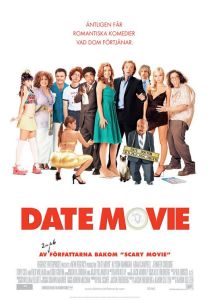 This film was just another nail in the coffin of spoof comedy. Date Movie was supposed to be a spoof on romantic comedies, but what it ended up becoming was a spoof on anything. The film confused referencing with parodying, and they are world’s apart. Just because, for a split-second, someone dressed like Ben Stiller throws a dodge ball does not mean it is a parody. This painfully unfunny comedy went from setup to setup, blindly trying to grasp for a joke and falling back on scatological humor. Most of the film references mean nothing and don’t even parlay into jokes, the joke itself is simply the reference, like the appearance of Napoleon Dynamite and King Kong. There was not a single point in this entire movie where I laughed out loud, a death sentence for a comedy. This movie makes Scary Movie and its geysers of semen look like Shakespeare.
Nate’s Grade: D+
Share this:

The Queen (2006)
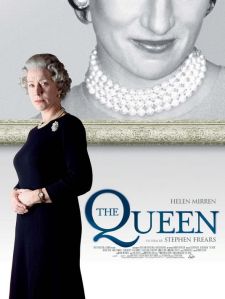
Long live the queen. In this instance Helen Mirren. After giving a majestic performance of Queen Elisabeth on HBO?s 2006 miniseries, here she is at it again this time as Queen Elisabeth II. Mirren is utterly magnificent in the role and burrows her way deep into her character, completely losing herself. Director Stephen Frears’ The Queen is a docu-drama examining the royals’ response to the tragedy of Princess Di’s death. It’s both a comedy of culture clash between the tradition-oriented world of the royals and the modern world that has moved beyond figureheads and symbols of monarchy and a drama exploring the grieving process. Frears and screenwriter Peter Morgan build great sympathy for the queen and the rest of these nutty royals, all stuck in a different age and hesitant and confused about mounting outcries for change. The royal family doesn’t understand the public’s demand to fly the flag over the palace at half mast in honor of Di’s passing; it hasn’t flown at half mast for over 400 years for anybody, kings and queens, let alone someone no longer part of that family. Even Prince Charles comes across remorseful, heartfelt, a little strange, but very identifiable. Plus, the actor looks a lot better than his real-life counterpart. It’s funny but also sad when the Queen Mum is hurt when her own funeral arrangements, the ones she picked out, will be used in a hurry for Di. The film pays equal attention to the rise of the new Prime Minister Tony Blair (Michael Sheen) and his frustrated relationship trying to save the royal family in a PR nightmare. Mirren, though, is absolute royalty. She plays a character prided in her decades-long approach to shielding emotion, to stoicism, to stiff upper lips, and Mirren displays the flashes of grief, befuddlement, and tenderness that register through that tricky prism. Queen Elisabeth II figures the public doesn’t want someone all weepy. She did, after all, begin her service around World War II when Winston Churchill was her first Prime Minister. The world has changed, she fears, and wonders if she’s fit to lead her people when she doesn’t even know what they want. The Queen is a sterling character piece with excellent direction and great performances. It’s quiet and moving but also a deeply fascinating behind the curtain view at a moment in time. And yet… I cannot help but feel some distance to the movie; I cannot put my arms around it just quite yet. The Queen is a very good film, of course, with an Oscar shoo-in performance by Mirren, but the free-floating plot and the intentional repetition and disconnect kept me from embracing this movie totally.
Nate?s Grade: B+
Share this:

Pan’s Labyrinth (2006)
 Fantasy has a naturally cheerful tone. Someone did not tell that to Mexican writer/director Guillermo del Toro. The Hellboy director is obsessed with all things creepy, crawly, and gooey, and his films all seem to revel in the things that go squish in the night. Pan’s Labyrinth is a children’s tale not intended for children. It’s more in line with the fairy tales of old that were violent, sickening, and something to strike fear in disobedient kids.
Ofelia (Ivana Baquero) travels with her pregnant mother to live in a cottage along the Spanish countryside. Her mother has remarried The Captain (Sergi Lopez), a brutal officer in the ruling fascist government. He’s a stern and unforgiving man and plotting to eliminate the remaining scattered resistance soldiers. Ofelia discovers a series of stone stairs that lead to an underground labyrinth. Inside is a faun (the titular Pan) who recognizes the spirit of his world’s missing princess inside Ofelia. He gives her tasks to complete that will prove whether or not she can return to the other world.
This is a fabulously dark Alice in Wonderland for a more mature set. Pan’s Labyrinth is very similar to del Toro’s 2002 The Devil’s Backbone, a smart and affecting ghost story set against Spain’s bloody civil war. del Toro has set his supernatural fantasies against some very real and very dangerous backdrops. The Devil’s Backbone was more than just a ghost story, and now Pan’s Labyrinth is more than just a fairy tale. The real world is a violent and cruel place and worthy of a magical escape. However, the fairy tale creatures are not from the Disney school of kinder, gentler folklore. The faun is evasive and prone to outbursts when he/it does not get his hooved way. The other creatures, like a giant slimy toad, are all after their own gain and don’t much care for a little girl’s interference. There is no escape to safety.
 There are plenty of staples commonly found in fairy tales. Ofelia has to complete three tasks before the cycle of the moon. She has to complete trials of courage and prove her purity of heart. The characters look familiar but they definitely don?t behave the same. Pan’s Labyrinth has a continuing sense of dread. People die vicious deaths and the threat of violence is ever present.
The real world segments are just as engaging as the grander flights of fantasy. del Toro spins a very worthy tale of secrecy and suspicion at the dawn of Franco’s Spain. Several members of The Captain’s quarters are aiding the remaining resistance officers and risking their lives to hide their allegiance. It also draws the viewer in because these characters are the kind ones that look after Ofelia, who accidentally stumbles upon their secrets. The Captain is an earthly monster equal to the horrors of the fairy tale world. He has a deadly fixation with wasted time and punctuality (another Alice in Wonderland homage – the ticking pocket watch). Whether he’s torturing or shaving, the man seems peeved in all that he does. He tells the doctor that if a choice must be made, save the baby over the mother. His legacy demands an heir.
del Toro straddles differing genre lines like few artists out there. He has a great love for monster movies and horror but he also has great feel for human drama and a child’s wide-eyed point of view. Ofelia rests her head on her mother’s pregnant belly and speaks to her unborn brother. When her mother is experiencing complications she implores her brother to be gentle. It’s a little action but comes across as so honest and heartfelt from a child. The film is touching and exciting and pretty scary when it wants to be. Pan’s Labyrinth is a genre-bending gem that?s exceptionally well executed. The production design and make-up effects are terrific and lend to the otherworldly feel. The special effects are mostly a mix of practical designs and creepy make-up work, especially with the “Pale Man.” I especially enjoyed how the fawn moved and sounded, all clicks and creaks like he hadn’t moved his bones in ages. del Toro and his movie magicians do an excellent job of transporting you to two distinct worlds.
I could have used more labyrinth in my Pan’s Labyrinth. As it stands, the movie is divided as 15% fantasy world and 85% real world. That?s not enough for me. Maybe I just loved the fantasy elements too much or was expecting more of a live-action Spirited Away. Then again, del Toro has his mind set on an ambiguous ending that will divide the skeptics from the believers. Are there opposing worlds? Is Ofelia just making it up to escape reality? Whether what’s happening is real or not is irrelevant; Ofelia believes it is real. I feel that the movie could have been even greater had it utilized its fantasy side more.
 Take for instance the “Pale Man,” a grotesque monster that has to place its eyeballs in the palms of its hands to see. When Ofelia enters his realm its covered in ancient art showing this faceless creature devouring children. A giant pile of shoes sits in a corner as a constant reminder of the creature’s appetites. However, the creature sits at the head of a table motionless, unless some irresponsible child takes a bite from the illustrious feast of food at the table. Then the “Pale Man” springs to life. The imagery is horrifying but beautifully sickening, and it’s just too regrettable that Pan’s Labyrinth only gives such a memorable monster one single scene. I kept hoping that the movie would revisit the world it had begun establishing, all for not. I thought at least del Toro would have a fascist officer chasing after Ofelia and she would trace a portal back into the “Pale Man’s” world. Then she would escape but the officer would be trapped. He’s take a bite from the feast and then our occularly-challenged friend would go, “Well, you’re a little older than I like, but hey, beggars can’t be choosers.” CRUNCH! You must judge a movie for what it is, not what it could be, but I am certain Pan’s Labyrinth would have been even more remarkable had it just done more with its wild imagination. Oh well.
2006 has been something of a revelatory year for Mexican directors working within the Hollywood system. Alejandro Gonzalez Inarritu released Babel (bleh); Alfonso Curaon released Children of Men (wonderful), and now del Toro’s dark fantasy Pan’s Labyrinth is just starting to get a wider release. The film straddles the lines of genre, touching upon horror, human drama, fairy tale, historical action, and still finds time to be invigorating and moving. The production design and make-up effects do wonders to bring del Toro’s mordant imagination to chilling life. del Toro reigns supreme in the realm of sticky and icky things. Had the film actually spent more time interacting with its twisted fantasy creatures, I would gladly call Pan’s Labyrinth the best film of 2006. But alas we can’t all have our wishes comes true no matter how many fauns we encounter.
Nate’s Grade: A
Share this:

Rocky Balboa (2006)
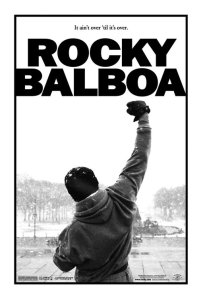 The idea of another Rocky movie, already 16 years since the last installment, sounded as good an idea as a punch to the face. Sylvester Stallone is an actor bottoming out after tons of high profile shit-for-hire jobs, and it looked like the industry was ready to yawn and put him to bed for a long winter?s nap. The idea of a Rocky 6 seemed like a thinly veiled vanity project for Stallone, going back to his bread and butter to try and resurrect some kind of acting pulse. Well, I reasoned, it couldn’t be any worse than Rocky V. I figured we were entering Godfather III territory and that is a scary place. But then I saw Rocky Balboa and realized what Stallone had in mind, and that is a proper sendoff to wipe the acid taste of Rocky V from the collective mouth of the populace. The great big lug can hang up his gloves and rest easy with a job well done.
Rocky (Stallone) has settled into a comfortable retirement. He owns a restaurant named after his deceased wife Adrian, and he regales diners with boxing tales and poses for pictures. His son (Milo Ventimiglia) is trying to make it as a businessman and distance himself from dad. Rocky rediscovers “Little Marie” (Geraldine Hughes), the same girl in 1976 he advised against smoking. She’s got a kid, a lousy job, and a weary perspective. Rocky reconnects with her and gets her to work in his own restaurant. She’s hesitant but he assures her that good ole Rock isn’t expecting anything in return for his kindness.
 Then one day ESPN runs a computer simulation pitting fighters of different eras. Rocky in his prime is paired against the current heavyweight champ Mason “The Line” Dixon (real-life boxer Antonio Tarver). Computer simulation Rocky KO’s computer simulation Dixon and the debate starts. The knock on Dixon is that he has no heart and the current level of boxing competition is beyond barrel scraping. Could an aging fighter from the past last 10 rounds with the current untested champ? Boxing promoters visit Rocky’s restaurant to convince him to an exhibition bout. Rocky mulls over the decision, not wanting “to get mangled and embarrassed.” Ultimately, he feels that he still has something to prove and decides to step back into the ring one more time.
The story is much like past Rocky installments. He spends a lot of time mulling over whether to fight or not, then trains, then we get the fight, though usually it’s some rematch of a Rocky setback. Rocky Balboa doesn’t stray far from the well-worn formula. The character has actually benefited with time and become an underdog once more, one with all sorts of new issues like calcified joints and arthritis. I would have loved a longer training sequence to show how a, presumably, 60-year-old man gets back into shape and how he plans to utilize his strengths (“hurtin’ bombs”). I agree with my friend George Bailey, somewhere along the line Stallone perfected the montage, and Rocky Balboa has an excellent training montage set to the same bom-bom horn theme that will still get your blood pumping.
The film presents some interesting characters but doesn’t spend much time with them. Rocky’s son has to deal with the long shadow his father casts and the idea that, no matter what he accomplishes, he?ll still be seen more as scion than individual. There’s a lot of meat there but Rocky Jr. only gets to huff at dad and then joins the team. Once everyone officially joins the Rocky team they essentially blend into the background of various faces shouting things like, “Come on!” and “Go Rocky!” The biggest supporting player is Hughes who gives a stirring speech for Rocky to confirm that this old man still matters. She has a great sadness to her and the character is played with non-threatening sexuality. Rocky isn’t about to jump anyone’s bones just yet, even years after Adrian’s passing.
 The only reasoning I have for why a so-so plot works as well as it does is because of our warm attachment to Rocky. Arguably the greatest movie figure in the last 30 years, Rocky could do it all, even get a Soviet crowd in Moscow to cheer for the American during the Cold War (don’t neglect to give Rocky his due for the breakup of the Soviet Union). Rocky Balboa, the character, is an old shoe that fits Stallone exceedingly well. Stallone has always been a mumble-heavy droopy dog of an actor, best described like Rocky’s new pet as a “cute ugly.” In short, the man never seemed to fit whatever character he played, and you don’t need to see Stop or My Mom Will Shoot for proof. But Rocky is his masterpiece, and after five sequels and 30 years, America loves its prized prizefighter. When you see the good soul trying to do right you forget all of Stallone’s many cinematic transgressions and you simply fall in love with the character all over again. Old feelings are reawakened and Stallone works his big-hearted, optimistic palooka charm. I watched Rocky Balboa and got swept up. Finally, the great American character can step away with the proper and fitting sendoff he deserves. In some ways, Rocky Balboa feels like a eulogy, as we reflect back on old times and how much these people have meant to us through the years, and the desire to see a lasting legacy intact.
It’s that sense of history that gives this new Rocky movie its heart. It is quite invigorating to see characters in new stations in life when we’ve seen glimpses of these characters for decades. It’s like a high school reunion that can include turtles. Stallone, who also wrote and directed this new movie, really has a strong shopworn affection for his blue-collar characters and a love of Philadelphia. It’s easy to feel the same warm and fuzzy feelings.
Rocky Balboa is a welcomed and surprisingly emotional end for one of American film’s greatest characters. Stallone puts the gloves back on and, like Rocky, still has “stuff in the basement” he needs to get done before he can rest. This is probably the best Rocky movie since the original and time has only made the characters more resonant and endearing. In 1976, Rocky defined the underdog and became well woven into our culture. Who would have guessed that 30 years and countless parodies later Rocky would still pack a punch? Stallone has earned his sendoff. Now about the idea for a Rambo 4.
Nate’s Grade: B


You must be logged in to post a comment.