Author Archives: natezoebl
Remember Me (2010)
 How much time do we give before our memories are used as unnecessary and cheap dramatic ploys to wring out tears? Remember Me will test your sensibilities on what should be classified as art and what should be designated as hacky, shameless exploitation.
Tyler Hawkins (Robert Pattinson) is a troubled 21-year-old college student in New York City. He’s mostly estranged from his rich, distant father (Pierce Brosnan). Tyler’s older brother hanged himself five years earlier, and that personal tragedy still lingers. Tyler quotes poetry, writes letters to his dead brother, and has his share of run-ins with the police. Sergeant Neil Craig (Chris Cooper) busts Tyler and his friend (Tate Ellington, mostly annoying) one night after the duo tries to clear up a brawl. Then the boys discover that the sergeant’s daughter, Ally (Lost‘s Emilie de Ravin) also attends their college. They devise a sketchy means of getting even: Tyler will date Ally. A subway mugger killed her mother when she was 9 years old, so the two bond over family misfortune. He asks her out for dinner and she appears cautious, but it isn’t long before love is in the air. Dad doesn’t approve but that won’t stop Ally from spending time with her special someone. Suddenly Tyler is vulnerable and coming out of his shell. It looks like things might work out though you don?t really comprehend why, then things take a sudden turn and very much do not work out. More details on that plot development later.
Remember Me does not work for many reasons, but as designed, it was never going to work. Allow me to go into greater analysis, which will naturally unleash a horde of spoilers concerning the film’s conclusion.
 This movie will not work; in fact it refuses to work from a conceptual standpoint. The story seems retrofitted to lead directly to the ending. Screenwriter Will Fetters seems to have followed the M. Night Shyamalan approach to screenwriting and come up with a twist ending and worked backwards. You see dear reader, the film climaxes on a day burned into the memories of everyone who lived through it — September 11, 2001. The movie plays coy with its timeline the whole time, never drawing too much attention to its exact setting. Tyler even goes to see American Pie 2 to lift his spirits, and who besides people who are crazy about film release dates would know that was released back in August 2001? There’s also a jump forward of ten years from the murder of Ally’s mother in 1991, but that’s the last time the movie ever reminds you about time. Instead, it makes sure that all the pieces will be in place so that Tyler will be standing on the 90th floor of the World Trade Center, looking off into the horizon for the last day. Fetters’ story uses a national trauma as a dramatic tragedy for his doomed lovers. But here’s the thing: anything else would have worked the same. Did Tyler really have to die in the 9/11 attacks? Could he not have had an accident, gotten mugged, hit by a car, or any number of other missteps that would have the same effect? The emphasis isn’t on the relationship of 9/11 to the characters; 9/11 just serves as the event to wipe out one half of our relationship. But any other event would have resulted in the same effect without coming across as so icky and exploitative. The movie does not work because it’s designed as a ?gotcha? ending but the only “gotcha” is that 9/11 is shamefully used to spin this illusion that Remember Me is meaningful and transcendent.
The other half of this argument could go as such: Fetters was trying to tell but one tale of the many that lost their lives on 9/11, illuminating the fantastic human toll and how each number was a person with a family and friends that will forever miss them. That would have been sufficient. Hollywood and the cinema have a history of taking national tragedies and showcasing individuals who were lost. I even declared United 93, the docu-drama painstakingly detailing the final moments aboard that downed airline, the best film of 2006, and four years later I still stand by that declaration. Artists can take collective pain and showcase triumph and substance, allowing us a cathartic means for therapy and working through trauma. I believe with every fiber of my being that art has the power to heal and elucidate.
However, Remember Me is not that kind of art. If Fetters had a strong desire to showcase one of the lives lost that horrific day, that’s a noble effort. But the drama of Remember Me is stagnant and suffused with stereotypes and one-note characters bumbling around, uncertain what exactly they should be doing. It almost seems like everyone is simply waiting for the Big Event at the end, and that in itself is disquieting. The character dynamics of this movie couldn’t get more cliché. This sloppy, overcooked weepie has the Bad Boy and you know he?s troubled because he has stubble and smokes. Pattinson also spends 80 percent of his screen time looking forlorn. I’m sorry, but looking off screen and being forlorn are not replacements for good character development. He’s lost a brother and he?s mad at his distant, workaholic father, but you might as well describe him as Boy. That’s pretty much his extent in this film. His love interest could equally be named simply Girl. The two have a shared history of family tragedy, but then what? Do we learn anything about Ally as a person, about what draws her to Tyler (besides that haircut, of course), or how her life is made more whole thanks to the brooding bad boy? No. It would be generous to even refer to these characters as archetypes. They are characters in name only. Fetters has cobbled an equation that simply boils down to Boy + troubled past + Girl + troubled past = perfect future. Even worse, their whirlwind courtship feels like it exists in some movie world where gazes and hugs substitute for the excitement of romance, of feeling out the interested party and becoming overwhelmed with the sheer possibility of a relationship. This is only a love story from a the standpoint of that equation. You never believe for a second that anybody matters because they only feel like puppets meant to go through the motions until the film reaches its anvil of a climax. Then, you see, we’re supposed to feel because there is death, except I didn?t see any convincing signs of life beforehand.
 The rest of the story is awash with bizarre and mostly lame elements meant to heighten the ensemble drama. For whatever reason, Tyler’s friend coaxes him into initially dating Ally as a contrived means of sticking it to her father. This tiny yet stupid hurdle will of course be revisited when the film’s second act break comes calling. But why does this past run-in even matter? Romantic comedies have all sorts of plots where the couple begins their time together through some duplicitous guise, and of course the truth drops just as guy and girl are starting to really like one another. But in Remember Me it isn’t a bet or something nefarious that brings boy and girl together. If anything, the run-in with dad could be seen as an introduction. The “get revenge” idea isn’t something that’s ever revisited by Tyler or his friend, nor do they at any point provide further detail. It remains a vague notion from beginning to end.
Then there’s Tyler’s own family drama. The strangest plot addition is when Tyler’s younger sister attends a birthday party. It is at this birthday party that a cohort of mean girls gives Caroline Hawkins an unflattering makeover. This bad haircut is then played for ridiculous dramatic overkill. Everyone around the kid is speaking in hushed tones, trembling, recollecting as a family unit, and pretty much acting like Caroline had been molested when, at worst, she got her hair cut by some mean girls. Tyler even escorts his kid sis to school and almost decks one of the little girls responsible, instead choosing to huff and puff in her face like a raging bull. I guess when you’re Pattinson and a good third of your acting comes from your haircut, you take follicle care very seriously.
Remember Me is so anxious to be poetic. It’s not. It’s pedantic and faux intellectual. It wants to be a moving romance. It?s not. It?s two pretty but bland characters that just seem to play around furniture and eventually do it. They’re as interesting as bland pretty people usually are in these things. It wants to be a significant drama that manages to say something big. It’s not. It’s a slapdash effort revolving entirely around the eventual reveal of a “gotcha” ending that does nothing to justify all the strained spinning. At best, the ending is in poor taste and a cheap trick to gin up sympathy and give the impression of substance. At worst, it’s ugly exploitation that reduces a national tragedy into a last-ditch effort to cover the empathetic deficiencies of a lackluster drama. Flogging national suffering to make an audience feel for your bland characters after an empty 100 minutes? That’s offensive. Remember Me isn’t worth any outrage. It?s a pretty but mostly empty venture designed around a twist. It is anything but worth remembering, even in disgust.
Nate’s Grade: D+
Share this:

The Town (2010)
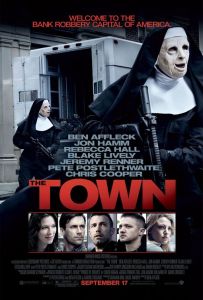 There are many people who think they can direct. It just looks easy to people. You get to tell everybody what to do all day. Who wouldn’t want that, right? And actors always think they know everything already, so there’s a litany of actors who feel like they can make the jump from in front of the camera to behind it with ease. Not everybody is going to be a Clint Eastwood, or a Robert Redford, or even the best of the current crop, a George Clooney. Every now and then you’ll find a true surprise, like Todd Field (In the Bedroom, Little Children) or Sarah Polley (Away From Her), but most actor/director projects come across like indulgent one-time pet projects (see: Drew Barrymore’s Whip It). Ben Affleck has easily endured his slings and arrows as an actor, though I’ve always found the man to be likeable, charming, and intelligent. Even so, nobody can excuse Gigli. When Affleck tried on the director hat for 2007’s Gone Baby Gone, it was easy to be skeptical. But then critics and audiences saw the film, which Affleck also co-wrote, and realized that this guy might have some serious chops after all. The Town, Affleck’s second directorial effort, proves that Affleck has found his rightful place in movies.
Doug (Ben Affleck) is a lifelong criminal living in the working class Boston neighborhood of Charlestown. We learn that this one-square mile produces more bank robbers than anywhere else in the world. It is a neighborhood seeped in the lifestyle of crime, the silent omissions of sin. Doug and his crew’s latest heist went according to plan except for one detail. Jem (Jeremy Renner), fresh from doing a nine-year prison stint, has taken the bank manager hostage in a moment of panic. The men blindfold Claire (Rebecca Hall) and deposit her along the Boston shoreline. Doug and his guys then become alarmed when they spot Claire in their neighborhood. She lives in Charlestown. Will she recognize them? FBI Agent Frawley (Jon Hamm) check up on her and requests interviews. Is it only a matter of time before she discovers the truth? Jem wants to handle it quick and dirty, but Doug insists that he take the lead. He watches her from afar and can’t help but feel sorry for the trauma he has caused her. He asks her out for a drink after meeting her and Doug can’t stop himself from falling for her. Jem is incensed and convinced she’ll give them all away. Doug must reconcile his life?s choices and Claire now gives him a reason to finally walk away from the only life he’s known.
 It didn’t take long for me to know I was in for something good. The pre-title opening sequence sets the tone and informs you that Affleck will be firmly settled in the director’s chair for some time. The opening bank heist crashes your attention. It’s filmed in quick cuts, swift camera movements, mimicking the ambush of the criminals as they throw people to the ground, upturn desks, and smash general office supplies. Then the scene cuts to a security camera footage of the same scene, and it’s static, and eerily silent and the contrast is fantastic. Then we smash right back into the fray and the chaos. Affleck refrains from the film turning into senseless genre junk. The violence in this film hurts. You feel its impact and wince at its approach, and you already get this sense before the credits even show up. Affleck wants his visceral violence to mean something, and these men of violence become more intimidating. Then there’s a scene about an hour in that had me gnawing my hand in anxiety. It all revolved around the possible reveal of an identifiable neck tattoo, where the only character who knows all the particulars of danger is Doug. He’s trying to nervously watch the eye line of the conversation, and I was physically trying to instruct the characters onscreen. The fact that I could get so caught up in a sequence of stellar tension that doesn’t involve cars, guns, or even overt threats of violence is a testament to the abilities of Affleck the director.
Doug’s crew is not a fly-by-night operation. They are honed professionals, knowing the timing codes for bank locks, how to dismantle security camera systems, and splash bottles of bleach all over the premises to eliminate usable fingerprints. And yet, when is enough enough? It feels like only days before Jem is pushing everybody for another job. They’ve barely had time to launder the money through drugs and gambling, given a cut to the local crime boss (Pete Postlethwaite), and they?re anxious for another score. Doesn’t anybody want to lie low for a while before the heat dissipates? Either this is just a conceit of only being able to work in a two-hour narrative or indicative or what a consistently dangerous life these men lead. These men know exactly where they?re headed; in fact, they seem resigned to their fate. Perhaps the expedited schedule is just another form of self-destruction or an impatient death wish, or perhaps it’s just an inflated sense of invincibility by guys who are good at what they do.
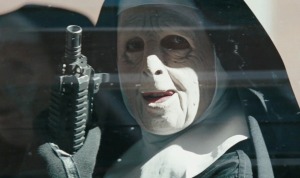
 The area where The Town could have been better is with its higher ambitions. The Town dutifully delivers the goods when it comes to a crime picture. The three holdups are all satisfying, taut, well paced, and the action is choreographed in a manner that’s easy to comprehend. The middle holdup creates some dynamic images as the men speed through Boston dressed in plastic nun masks and armed with machine guns. There are several standout moments and images that prove Affleck knows how to frame an exciting action thriller. The climax is great, though the denouement leaves something to be desired. You pretty much anticipate what beats the movie has to hit as a genre piece. These brothers in arms will likely follow the path of doomed protagonists. But Affleck clearly wanted his second feature to be more than a slick genre flick. He had his sights set on examining systemic and cyclical nature of crime and abandonment. The opening informs us that bank robbing is a trade passed down in Charleston from fathers to sons. Doug’s crew are all second-generation criminals, their long absent fathers serving sentences in federal prisons. Affleck wants to explore the nature of what separates good people who make bad decisions, digging into the limited lifestyles afforded to these blue-collar lugs who have lived in brutality. The Town doesn’t quite succeed in this regard. The somewhat saggy middle touches upon these ideas but fails to spend enough time for anything substantial to stick. Gone Baby Gone was a better study of class and moral ambiguity. With The Town, you readily identify who the good bad guys are and who the bad bad guys are.
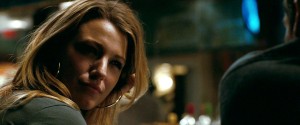
Just like Gone Baby Gone, Affleck’s second feature excels with a glorified group of actors all given room to find their characters and show off their skills. Each actor kind of gets their own space to work and they all, from top to bottom, give stirring performances. The standouts among the cast include Renner and Lively, both barely recognizable in their parts. Renner (The Hurt Locker) is channeling James Cagney from his 1930s gangster pictures. Renner is a live-wire and creates bundles of nervous tension whenever he enters a scene. He doesn’t even have to say a word. His intensity radiates and keeps all the other actors on their toes, rightfully wary of the short-fused Jem. He’s magnetic, steals the film, and even gets a slightly touching sendoff that has managed to stay with me. Lively, best known as the fabulous face of the fabulous high-end TV show Gossip Girl, is going to open plenty of eyes about her potential. She plays Krista, Jem’s sister and damaged love interest to Doug before Claire comes onto the scene. Lively has levels of makeup and hard living coating her magazine-friendly good looks. Lively just doesn’t rely on makeup tricks to stand in the way for her character. She feels like the most tragic soul in the film. She has a kid, likely destined to be removed from her at some point, she operates as a drug mule, and she’s hitched her wagon to Doug as the man that will save her. When that comes apart, Lively herself disintegrates as well, but it’s never in a showy style. She barely conceals the pain consuming her very being. Her eyes are dead of life. Plus, her accent is spot-on.
 The other performers give strong work just at a level slightly below Renner and Lively. Directing himself, Affleck gives a fine if overly whispery lead performance. Hall (Frost/Nixon, The Prestige) is effectively broken as she works through the post-traumatic stress and uncertainty her character suffers from. She’s highly empathetic, though you’re left wondering what she sees in Doug. Hamm (TV’s Mad Men) is so damn handsome but I wish he had more to do than running around and barking orders. His character always seems to be a mouth for exposition and chews over his righteous indignation. Chris Cooper (Breach) has one total scene in this movie as Doug’s imprisoned father but he nails it. His antipathy for his son and his late mother spills over but the moment never screams what can be expressed with subtlety. To Affleck notable credit, nobody in a movie about cops and robbers gives a performance that could be labeled as over-the-top or campy. These are genre roles but they are treated like real, muscular characters.
The Town cements Affleck’s status as a director. This is a more accessible, streamlined yet sturdy genre picture that has real reverence for working class Boston neighborhoods. I love the faces Affleck peoples his films with, real people. It’s small touches that add to the authenticity and visceral nature of the movie, touches that help make The Town more than just another run-of-the-mill crime movie. While there may not be anything groundbreaking on display (though I think Renner may get remembered when it comes time for awards season), Affleck’s directing credentials are only strengthened. This isn’t as good a movie as Gone Baby Gone, but what this film showcases is Affleck’s ongoing journey as a director, the shaping of his Michael Mann-esque style, and his intent to marry great drama with great characters played by great actors. I can genuinely say that I look forward to whatever Affleck picks to be his next feature. He?s here to stay, baby.
Nate’s Grade: B
Share this:

Cop Out (2010)
 As an avid Kevin Smith fan, it pains me to say this but Cop Out might be one of the least funny movies of the year. Sure it made me chuckle here and there, but mostly I sat staring slack-jawed, yawning, and wondering how this movie went so completely wrong. Smith is known without exception as a talent behind the typewriter, not the camera. He’s an ingeniously crass playwright in a filmmaker’s body. To hire Smith solely as director/visual storyteller is like hiring Picasso to mow your lawn — not the best use of his talents. To Smith’s credit, the film has a much stronger visual pulse than anything he’s ever committed to celluloid before, however, it still only looks like a marginal, mediocre Hollywood movie. Is that considered a success? The movie wants to parody the buddy cop action films of the 1980s. One of the more amusing additions is that Harold Faltermeyer (Beverly Hills Cop, Top Gun) fashions a brand new 80s style synth and guitar styled score. It’s the best and funniest part of the movie. Cop Out spends an inordinate amount of time and attention to a tortuous plot that nobody should care about. Another miscalculation is that the tone never really settles and often Smith and company attempt a light touch when it comes to parody, which makes the film just look like an incompetent retread of 80s action movies. Just because we’re familiar with stuff doesn’t mean it can be funny without comment. The movie looks even shabbier in comparison with Will Ferrell’s similarly aimed The Other Guys, a far more winning and funnier venture. I wanted to laugh; I strained to find something to appreciate, which was especially hard as the movie tilts more toward action in the final 20 minutes. The slack pacing, lame dialogue, poor chemistry between lead cops Bruce Willis and Tracy Morgan (who just comes off as an unfunny idiot with a loudspeaker for a mouth), disjointed tonality, and ill-conceived comic setups (car chase in a cemetery leads to? nothing? Morgan chases a suspect while he wears a cell phone costume … *crickets*) all take their toll and make me seriously question what drew the interest of so many, otherwise, talented people. Smith got hours of stories after shooting a small role alongside Willis for Die Hard 4. I hope Smith can justify this load with a few more hours of entertaining and juvenile stories for his road shows and podcasts. If that sounds like a faint attempt to find a silver lining for what is otherwise a tremendously botched comedy, then let it be seen as such.
Nate’s Grade: C-
Share this:

R.E.D. (2010)
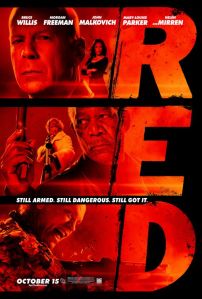 I can watch Helen Mirren fire high-powered weapons all day. RED is a jaunt throwaway that manages to be far more entertaining than it has any right to be. This isn’t excess on the level of The A-Team, nor is it all cynical and emotionless like Wanted. RED is the film that The Expendables could have been with a bit more polish and a little less muscle flexing. The premise almost seems worn out by this point in 2010: retired CIA agents are being hunted down and killed for some mysterious reason. Thus Bruce Willis must travel across the country and recruit his former spooks like Morgan Freeman, a daffy John Malkovich, and dame Mirren. He also gets a rather charming romance with Mary-Louise Parker (TV’s Weeds) as a pension customer service rep that Willis dials up for small talk. She gets whisked along this madcap adventure and enjoys it for the ride that it is. And I think that’s the best summation of the film. What other movie of this sort has actors of this caliber? Four Oscar winners, one nominee, plus solid work from Karl Urban (Star Trek) and beloved character actor Brian Cox to boot. The film definitely has a style, slick enough to please without being heavy-handed to rip you out of the film. The plot may be full of holes, the characters aren’t fully drawn, and certain action sequences are derivative, but thanks to the charms of its golden cast, RED is fun while it lasts.
Nate’s Grade: B
Share this:

Robin Hood (2010)
 So what happens when you make a Robin Hood movie that doesn’t have any Robin Hood? What’s the point of revisiting the legend when you don’t even bother incorporating the elements that made it legendary to begin with? It’s not like they sacrificed familiarity for historical accuracy. Director Ridley Scott’s film spends more time setting up the various pieces of a Robin Hood tale; it’s a prequel at best. This is mostly a historical drama about the English faring off French invasions (the opening text also identifies the setting as the wrong century). The film still manages to be relatively entertaining. The production design and cinematography are top-notch, the acting is robust, Russell Crowe makes a good, if aged, Hood, and the action sequences are thrilling and visually striking. The problem is that there are few action sequences and way too much yakking about foreign policy and Medieval politics and debt. I don’t think people were clamoring for a big-budget Robin Hood revival that explores in depth the financial consequences of an overextended military on the English treasury. This is just not an appealing origin story. The movie resorts to having Hood pose as Maid Marion’s (Cate Blanchett) husband, and it’s as eye-rollingly contrived as any sitcom setup. Originally, the film was designed so that Crowe would play both Hood and the villainous Sheriff of Nottingham (barely seen in the movie). While that is a terrible and senseless idea, at least it would have made the film worth watching from morbid curiosity. Robin Hood isn’t a bad film, but it barely ranks as a Hood outing, and it’s steps behind the delightfully cheesy Kevin Costner version.
Nate’s Grade: B-
Share this:

Vampires Suck (2010)
 I anticipate and dread the arrival of each new spoof from the wretched comedy team of writer/directors Jason Friedberg and Aaron Seltzer. The pair are responsible for some of the worst movies of the modern era, blindly groping for some sort of fleeting pop-culture relevance. I vehemently oppose their idea of what constitutes comedy and I resent that these two nitwits get to keep making their reprehensibly awful spoof movies at the pace of one a year. They may have taken 2009 off but they released two regrettable spoof movies in 2008 (Meet the Spartans and Disaster Movie), and those two films tied for the honor of my Worst Film of that year. Think of all the exciting, groundbreaking, eclectic, and challenging independent movies that could be bankrolled with the budget of one of these self-indulgent, disposable, juvenile, pop-culture-saturated comedies. Each new Friedberg/Seltzer movie is like a slap in the face and a reminder that the lowest common denominator rules along with the almighty dollar. So I have an open slot at number one on my annual Worst Movies list for whatever Friedberg/Seltzer slap together. I anticipated that their spoof of the popular Twilight series would be more of the same. Vampires Sucks is another ghastly, failed attempt at parody that goes off the rails early and often, but it’s not as egregious as past Friedberg/Seltzer comedy abortions. It’s not even the worst movie of 2010 I’ve seen this year, which is a complete shock. After careful deliberation, that ignoble honor remains with The Bounty Hunter. I never thought a movie could out-suck a Friedberg/Seltzer suckfest.
The plot pretty much follows the first two Twilight films closely. Becca Crane (Becca Proske) is the new girl in Sporks, Washington (laughing yet?). She’s living back with her father (Diedrich Bader) and looking for a way to fit in. Then along comes Edward Sullen (Matt Lanter) and the two can’t resist each other. He’s a vampire, she’s a moody teen girl, blah blah blah. There’s also Jacob White (Chris Riggi) who turns into a little toy dog instead of a werewolf. He also chases after cats. How can you resist?
 There are less throwaway pop-culture references that have a predetermined expiration date soon approaching. Sure, there’s still references to pop-culture figures without any meaning of setup, context, or satire, like half-hearted momentary glances to the Jersey Shore goons, Gossip Girl, The Real Housewives of Atlanta, and an inexplicable reference to Alice in Wonderland. The heroine is seen getting shot by a stray bullet and falling down the rabbit hole. What makes that funny? Is it funny because we recognize the identity of who was shot? Would it therefore not be funny if it was an unknown victim? Wouldn’t it be more amusing if the figure who got clipped was someone who people secretly, or openly, wished would get injured? Does anyone hold such animosity against Alice? But this example also showcases the comedy construction issues that plague Friedberg/Seltzer movies. I just don’t know if these guys understand the fundamentals (fall down = funny) but they haven’t advanced beyond the infantile stage. Take for instance a scene where Edward promises Becca that he won’t ever let anything hurt her. Obviously we know what will happen next and sure enough the roof caves in on her while Edward stands and grimaces. The joke sort of works (I’m feeling charitable) as long as the onslaught of bricks keeps falling on the off camera Becca. But when Friedberg and Seltzer cut to a shot of legs kicking underneath an increasing pile of bricks and hold onto the shot for ten seconds, it kills the gag. Editing choices change the violence from cartoonish to uncomfortable, and realistic violence is rarely funny.
Friedberg and Seltzer litter their script with wandering setups in desperate search for punch lines. Take the line: “We’re just like any normal family, except we never go to sleep and drink blood.” The line is begging for a “like” reference to make a further connection. As is, it’s a setup disguised as a weak punch line, and they’re everywhere in Vampires Sucks. I kept waiting for punch lines that never came. The best example is Bella and her friend leaving a theater that is playing the final Twilight film, Breaking Dawn (unclear which half). They stroll along the theater loudly complaining about the absurd ending and then the Twilight fans waiting outside are upset that the ending has been spoiled for them. This joke stands in direct conflict with the Twilight subculture it intends to satirize. Twilight fans are obsessed about their brand and alliances (Team Edward vs. Team Jacob). And these people would not wait a nano-second to be surprised by plot. They voraciously consume all things Twilight and know every detail. The idea that obsessive Twilight fans would willingly abstain from knowing the ending of the book series is preposterous. This joke does not work at the construction level.
 Perhaps the reason why Vampires Sucks feels less scattershot and cannibalistic of pop-culture is because the film spends less time lampooning Twilight and more time replicating them. Many scenes play out in the same fashion as Twilight and New Moon, so you’re left scratching your head and waiting for when something deemed a “joke” in other contexts, though they don’t have the same feel here. What happens is that you end up with a Twilight movie that just ends scenes with people getting subjected to slapstick violence. A rule you can set your watch to: in a Friedberg/Seltzer movie, if a character throws something off screen, it will hit another character in the head or, if recipient of broadside is male, the junk.
Since the Twilight series is so overwrought with teenager hormones and old-fashioned yearning, it practically begs to be mocked. Because it’s so ripe a subject for ridicule every now and then Friedberg and Seltzer stumble upon a mildly effective shot at the goofy, gooey nature of the vampire series. It’s all criticisms that have been well established, including the pre-teen wish-fulfillment angle I’ve touched upon in all three of my personal Twilight reviews. One of the three and a half laughs I gave this movie was a faux alt-rock song by Magicwandos called “Panties” with lyrics like, “I feel so lonely/ Nobody gets me/ I feel so unhappy/ Why can’t I find a cool, alternative boyfriend?” and the chorus, “We can watch Degrassi/ Shop at Hot Topic/ Sexting dirty pics of me in my panties.” It’s pretty one-the-nose and not very nuanced but it got me to laugh, plus it’s a laugh I can credit to the band Magicwandos and not Friedberg and Seltzer. After five movies, Friedberg and Seltzer have made me laugh a total estimate of 8 times. At a combined 410 minutes, that’s .87 laughs per hour.
The lead actress is far, far too good for this movie. Proske delivers a spot-on impersonation of Kristen Stewart’s acting mannerisms, from playing with her hair, to lip biting, to the blink-heavy shifty eyes and mumbled monotone. Proske isn’t given much assistance from Friedberg and Seltzer but she still provides one reason to watch the screen for those painful 80 minutes. It’s too bad she isn’t given anything funny to do or say. It’s a waste of a perfectly good Kristen Stewart impersonation. You may also recognize Ken Jeong (The Hangover) and Dave Foley (Kids in the Hall) and openly wonder why good comedic actors would be duped into a Friedberg/Seltzer production. The answer can only be that of gambling debts. I’m shocked that Carmen Electra is nowhere to be seen, thus breaking her streak of appearances in 4 Friedberg/Seltzer movies.
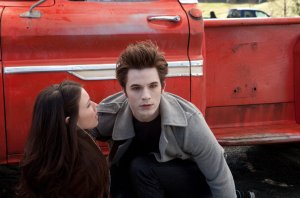 In the realm of crappy cinema, Vampires Sucks definitely lives up to its lofty title. Yet it’s not the outright creative abomination and entertainment vacuum that was Epic Movie (worst films of 2007), Meet the Spartans, and Disaster Movie. Does that qualify the film as good? Not even close. Relying less on Friedberg and Seltzer’s M.O. of disposable pop-culture references posing as “jokes,” Vampires Sucks manages to suck less by the sheer genius act of laziness. The film doesn’t attempt as many jokes therefore offering fewer opportunities for jokes to die horrible, excruciating deaths. The ratio of comedic failure is still the same depressing level of ineptitude, but less jokes equates to less mind-numbing torture disguised as comedy. It also makes the movie more pointless and an even bigger waste of time than previous Friedberg/Seltzer efforts. It’s the kind of accident that doesn’t even allow for rubbernecking.
I’m finding it hard to as incensed as other Friedberg/Seltzer movies have made me. These guys bring out something virulent from me. Maybe it’s my love of movies and comedy and my distaste for hacks being rewarded for repeated hackwork. Maybe I’m trying to take a final stand against the cultural shift that confuses situation-free pop-culture references as jokes. Whatever the case, the guys are at the top of my cinematic shit list. So you can trust me when I say that Vampires Sucks is easily terrible, poorly conceived, poorly filmed, and with limited aims that it still misses by a mile, but it’s not the abysmal, faith-destroying experiences that the last three Friedberg/Seltzer offerings were. It is simply just bad. Really, really bad. And yet with Friedberg and Seltzer, that is an improvement. It’s all about perspective, people.
Nate’s Grade: D
Share this:

Get Low (2010)
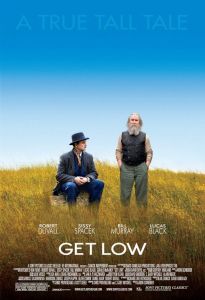 This slice-of-life Depression era tale examines a hermit named Felix (Robert Duvall) coming to terms with his life. He’s the scary old man that everyone has a story about, and now he’s come to town to make his funeral arrangements with a sleazy funeral director (Bill Murray). Except Felix wants to have his funeral while he’s alive, invite everybody in town, and have them share their collected stories, and he?s got his own story to share that’s been haunting him for decades. This is a very slow burn of a drama, to a fault. It works itself into a corner, and when Felix reveals his haunting secret you sort of shrug and think, “Is that all?” The pacing is languid; the movie feels lived-in and authentic down to its terse sense of humor and local color. You can feel the fingerprints of the Coen brothers on the film even though they had no involvement. This is a mildly touching, occasionally inert drama that benefits tremendously from the talents of Duvall and Murray, both relishing their folksy characters. This is a movie where the actors have time and space to dig in and explore their characters. Duvall and company keeps the movie from drifting off into melodrama. Get Low follows a cue from its lead actor. It’s understated, low key, and will likely go unappreciated because of its emphasis on subtlety, sometimes too much subtlety.
Nate’s Grade: B
Share this:

Scott Pilgrim vs. the World (2010)
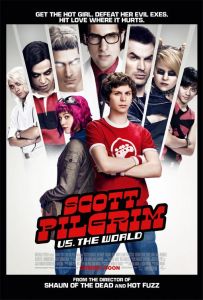 What happens when the millennial generation gets its own (attempted) seminal movie? It stays home and plays video games, letting the film, Scott Pilgrim vs. the World, languish at the box-office. I guess that’s what happens when you finance a movie whose target demographic will just as readily download the movie for free off the Internet.
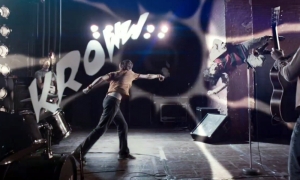
Scott Pilgrim (Michael Cera) is a 22-year-old Toronto slacker. He?s the bass player for the band Sex Bob-Omb, along with lead singer Stephen Stills (Mark Webber) and acerbic drummer Kim (Alison Pill), a former ex-girlfriend of Scott’s from high school. The band’s biggest fan is 17-year-old Knives Chau (Ellen Wong), who also happens to be Scott?s new girlfriend. The world of Scott Pilgrim is abuzz with this scandal, especially Scott’s gay roommate Wallace (Kieran Culkin) and Scott?s younger sister (Anna Kendrick). Scott insists it’s all on the level and he has no ulterior motives for dating a high schooler. Then he sees the mysterious and alluring Ramona Flowers (Mary Elizabeth Winstead) who?s new to the area and American. Scott rabidly pursues her in what could best be described as stalking, eventually getting her to agree to date him. Trouble is, he hasn’t broken up with Knives just yet before starting this new venture. Scott is then confronted at the Battle of the Bands concert by a man who comes bursting out from the ceiling. He is the first of Ramona’s seven evil exes and Scott must defeat them all in order to earn the right to the violet-haired beauty. “Everybody has baggage,” Ramona says. “Yeah, but my baggage doesn’t try and kill me,” Scott wearily replies.
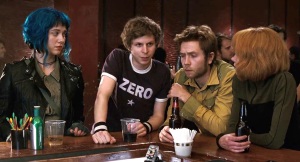 Visually, this movie showcases director Edgar Wright (Hot Fuzz, Shaun of the Dead) using every crayon in the Crayola box. This is a visually resplendent film where every scene seems crammed with details to delight the eyes and light up the senses. It’s a rush to watch the kaleidoscope of colors and motions. The Scott Pilgrim universe clearly differs from our own. This is a realm that borrows heavily from old school video games, where people burst into coins when vanquished, where life-decisions are met with “leveling up,” where people have onscreen pee bars that will deplete after a trip to a urinal. Sound effects will routinely be verbalized on screen, everything from a “RIIIIIIIIIIING” of a telephone to the “Ding Dong” of a door. It’s amusing, though also easily overused. Jobs and stuff like that are for the real world, hence too square to be depicted. It’s this entire idiosyncratic comic book world treated like everyday reality.
The enormous display of style is impossible to ignore. Scott Pilgrim is a slick, flashy piece of entertainment that is riddled with nostalgic references for a select crowd. I appreciated how a nice walk was accompanied by the theme song from The Legend of Zelda, or that sound effects and onscreen graphics echoed the fights from Street Fighter II (don’t ask me which of the 800 versions). Scott Pilgrim is an excellent pop pastiche of a specific culture, namely a slacker, hipster, amiable, comics and gamer group. I myself was an avid Nintendo gamer back in my day, but I admit to waning interest when the games got too complicated and grisly (“Back in my day we had two buttons to push, one to jump and the other to shoot, and that’s how we liked it!”). The movie is an explosion of color, light, and (lo-fi garage rock) sound, which also might sound like the description of a seizure or a stroke to some. Like those ailments, Scott Pilgrim will be seen by some as an infliction. It’s hyperactivity and eagerness to please via nostalgic reference points will be what drives people to this film and what drives them away in equal measure.
The Scott Pilgrim graphic novels total six volumes and approximately 1200 pages, which means it?s not the easiest fit for a two-hour window. It also hurts that the Pilgrim books have a wide supporting cast of characters to tussle with, plus there?s the whole seven deadly exes thing which means the movie has to provide about a solid 20 minutes of set-up before finding enough time for seven antagonists (or boss battles, following gamer parlance) and a reasonable amount of resolution. Add on top of this the fact that Wright keeps the movie moving at an outrageous, ADD-addled pace, like the plot conveyor belt lever got broken and the scenes speed one after another. Everything about this movie feels fast and over caffeinated. The editing in particular has characters holding conversations where every line is in a new location, implying an added sense of movement. So you shouldn’t be too surprised when the Scott Pilgrim film feels like a whole lot of a little; it’s moving at the speed of light to entertain.
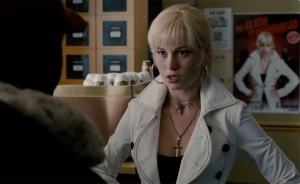 Because of the plot mechanics and oversized cast of characters, Pilgrim can give off the impression of shallowness. It seems like all style and little substance and that’s because the movie attempts to cram an entire series of stories, back-stories, and conflict into two hours. The film version only has enough time to attempt to give Scott and Ramona characterization, though both come across as weak-willed, tentative, and less than charismatic, wondering if either party is worth the trouble. The movie tries to paint over these differences through distraction and force of will. The large cast of supporting players all elbows each other just to be mouthpieces for one-liners. Knives actually comes across as the most complete character, consumed by her infatuation, heartbreak, and then quest for misguided vengeance. She’s somewhat dismissed and yet she is the most developed person on screen thanks to Wong’s endearing and relatable performance. The entire experience of Scott Pilgrim vs. the World can be somewhat fatiguing when there’s little evidence presented for emotional investment. The books supplied the reasons for caring besides the whole underdog angle.
The movie aims to be a battle over love, but it’s not entirely convincing. Scott appreciates Knives because she’s simple, a relationship he doesn’t have to invest much within, something casual and enjoyable while it lasts or until it becomes too taxing. Then he goes ga-ga for Ramona and stalks her, wearing down her defenses. He’s purely smitten with her and willing to do whatever it takes to earn her affections, though he can?t explain why he feels this way. Here’s a note to screenwriters: when characters are asked why they love somebody, do not have them say, “I don’t know.” But for Ramona, Scott is her Knives. He’s something easy that won?t break her heart, an escape from the jerks she’s been dating before. He?s low maintenance. He’s something to pass the time. There’s an interesting dynamic here, made even more complicated by the fact that Scott’s time with Knives blended with his time with Ramona. There was not a clear end point. The movie takes a literal approach to the idea of love being a destructive force of nature. Scott is punished throughout because of his infatuation with Ramona, but he persists despite the bruises. And he doesn’t even really know much about her. There’s an interesting statement somewhere there about the punishment we endure, sometimes foolishly, over the affections of people we may love, or convince ourselves of, but not even like.
 It may sound peculiar but I’m paying Michael Cera a compliment by saying his performance in Scott Pilgrim is the least Michael Cera the actor has ever been on screen. Gone is his gawky, awkward, ironic shtick that has fast become the Cera persona in films like Superbad and Year One. Scott is unjustifiably confident in his life’s pursuits, and Cera gets to act cocky and quippy, even if it?s done with a wink. He?s an unlikely kung-fu star but then again he?s also an unlikely leading man. Winstead (Live Free or Die Hard) is cute but plays her part a bit too toned down, like Ramona’s still searching for the right medication combination. Culkin and Pill are both scene-stealers of the first order, doing so with unabashed and flippant sarcasm. Every scene is made better by their presence. Among the evil exes, Brandon Routh (Superman Returns) has plenty of fun as a dim-witted super-powered Vegan bassist (“Vegans are just better than other people”), and Jason Schwartzman epitomizes hipster snark with such relish. The film is exceedingly well cast from top to bottom.
I’ve read some reviews positing that Scott Pilgrim vs. the World is an elaborate fantasy taking place in the mind of its titular hero, that he blends his knowledge of comics and video games to help make sense of the troubled waters of relationships and lingering hurt from the demise of love. I think that’s a nice explanation but perhaps trying too hard to frame this film as some form of psychoanalytical commentary on modern youth’s interpersonal relationships and the value of love. Scott Pilgrim vs. the World is really just a spastic, hip, clever wank that, as presented, gives little room or emotional investment. It?s a blurry, messy, prankish good time at the cinema that doesn’t translate into much more than the equivalent of sensory button mashing (video game reference). It’s fun while it lasts but it doesn’t have much beyond those astounding visuals to make it feel lasting, and I say this as a genuine fan of the graphic novels by Bryan Lee O’Malley. Alas, heavier discussions about the thorny, maddening issues of love are better left to more dramatic, and romantic, movies like Brokeback Mountain, Eternal Sunshine of the Spotless Mind, and even WALL-E. This movie is more preoccupied with spinning as fast as it can and then vomiting.
Nate’s Grade: B
Share this:

The Expendables (2010)
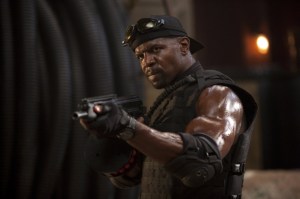
 Casting can make or break a movie, and occasionally the cast is the only advertised reason why the public should give a damn about a movie. Ocean’s Eleven wasn’t sold on its craft plot or cool director, it was the George Clooney, Brad Pitt, Matt Damon, Julia Roberts movie. Sylvester Stallone is an actor who?s had some lengthy dry spells but he redeemed his legacy a bit with the modestly affecting Rocky Balboa and his ultra-violent modern Rambo. Now he has set his sights on co-writing and directing The Expendables, a film that gathers as many action movie stars together as possible and dares you not to buy a ticket. There?s Stallone, Jason Statham (Transporter), Jet Li (Unleashed), Dolph Lundgren (Masters of the Universe), Mickey Rourke (The Wrestler), Terry Crews (Gamer), Eric Roberts (The Dark Knight), along with wrestler Steve Austin, mixed martial arts champ Randy Couture, and direct-to-video kickboxing ace Gary Daniels. It?s a smorgasbord of testosterone, a group of guys whose median age qualifies them for an AARP membership. The selling point of The Expendables is the cast and the cast alone. The story about some military general (Dexter”s David Zayas) is completely incidental. These men are here to inflict punishment.
The Expendables is ridiculous with a capital R. Whether it’s punching guys in the face while they’re on fire, breaking necks through kickboxing, or, my favorite, hurling an ammunition shell like a shot-put and shooting it in the air, The Expendables exists in that 1980s world of brute and mostly brainless action. It’s a throwback to those halcyon days for the majority of the cast members, back when men were men, women were damsels or temptresses, and action heroes didn’t have to have more than one dimension, and usually that dimension was muscle. The Expendables is enjoyable but much of that enjoyment is because it’s simply enjoyably bad. I have to assume that Stallone had his tongue firmly in cheek when he was designing and executing this film. How else to explain the bizarre moments of action overkill described above, the premise of saving a single girl from a small Latin American military, the fact that the sleazy CIA villain takes off with the damsel, for no personal gain whatsoever, and even gets to deliver the all-important, “You and I are alike” speech villains are always fond of giving.
I was laughing throughout the movie from its excesses and logistical and narrative shortcomings. This is the kind of movie where characters make veiled comments about a family but then we never see the family. This is the kind of movie where the good guys have perfect aim and it never matters how many bad guys there are because they never know how to wield a firearm. This is the kind of movie where Statham’s ex-girlfriend (Charisma Carpenter) gets beat up by her new dude, so Statham goes to confront the guy at a basketball court with all his friends. But the weird part is that the guy’s posse of friends shows no regret that their dude struck a woman. They all rally behind the domestic abuser, and Statham promptly hands them their asses. Just look at the character names: Ying Yang, Lee Christmas, Gunner Jensen, Tool, Barney Ross, James Munroe (no relation to the fifth president), Toll Road, Hale Caesar. Those aren’t cagey nick-names, those are the characters honest-to-God real names. You can?t help watching The Expendables without the impression that the whole movie is one big joke. However, I cannot rationalize that Stallone spent time and money to make a satire of the burly action genre.
 Throughout The Expendables you quickly realize why these guys are men of action and not men of debate. Their speaking voices are terrible. Some are marble-mouthed mumblers, like Stallone and Rourke. Some are just hard to understand, like Lundgren. Some have pretty bad English, like Li. Some are weirdly whisper-quiet in their intensity, like Statham. And others are just plainly bad actors, like Austin and Couture. The characters they?re given to play are pretty thin, defined by a quirk or two but not much else. Statham’s character is away from his girl too often, that’s why she becomes an ex. The film is basically a contest of machismo. Everyone tries to out-do the competition in glaring and teeth grinding. Also, given the title, (semi-spoiler) is it a little much to think that Stallone’s entire wrecking crew can escape death, even the guy that gets shot inches above his heart? These are men you want to see doing things, preferably painful plural things, and speaking at a minimum. Only Crews seems capable of doing both acting and action. Too bad he gets short supply when it comes to screen time.
And that’s certainly another problem when the selling point of the movie is an all-star collection of action movie badasses — screen time. Everybody has to be juggled around and fight for screen time. As you’d assume, Stallone and Statham rise into the upper character branch while everybody else must be content for a series of moments and one-liners. Part of the fun of seeing this group of actors together is seeing this group of actors together, which is in relatively short supply save for an all-out assault climax. There’s a scene with some great cameos, ruined through TV advertising, where Bruce Willis and Arnold Schwarzenegger appear on screen and playfully jab at one another. For some, it will be a movie moment decades in the making. My response: “Oh my God! The founders of Planet Hollywood are finally together again (minus Demi Moore).”
On the subject of action, the film presents plenty of bloody, macho men-on-a-mission mayhem, but Stallone edits the sequences too quickly. It becomes a rush of images that the brain barely has time to process before moving on to another location and fight. There are a handful of gory money shots to the R-rated spectacle, but I just wish I was able to understand what was happening. I know Stallone was not trying to emulate the hyper-kinetic verite editing style of the Bourne movies, which have influenced much of action cinema for the last five years. Perhaps given the realities of shooting fight sequences around aging superstars, Stallone was forced to rely on quick edits to mask the illusion that these geriatric men are still capable of intense beat downs. The editing is occasionally disorienting but even worse it?s distracting. It’s harder to enjoy the action. Nor are the action sequences really well thought-out or specific to their location. It’s mostly the guys with guns chase other guys with guns variety. There are some impressive knife fights and brawls, but the concluding 30-minutes consists mostly of action chaos. Men with guns run, get shot, people hurl grenades (why does a martial arts guru like Li forced to use guns most of the time?), explosions occur, rather, rinse, repeat. From a fighting standpoint, there are six good guys and three bad guys, though t?s hard to take Roberts seriously. That’s not a good ratio for battles. There needs to be more colorful henchmen.
 My friend Eric Muller and I came to an intriguing ending that would have made The Expendables legendary. After the film’s mission is complete, the gang collects back at Rourke’s tattoo parlor/clubhouse. Instead of palling around and talking shop, the gang all of a sudden starts having a giant orgy, and then Stallone looks directly into the camera and says, “It was always leading up to this. You just never wanted to admit it, audience!” The movie is awash in testosterone and nostalgia, naturally gathering an older male audience. Would it not be hilarious to instantaneously make all those men uncomfortable? They love their masculine superheroes when it comes to death but love is too out of bounds. It would be the greatest piece of performance art ever and certainly gives people something to think about (now that you mention it, those character names sound like porn names anyway).
The Expendables is pretty clear in its intentions. It wants to be a gritty, bloody, hard-edged action movie throwback to the 1980s when the world was simpler and all you needed was one man with a gun running through the jungle to solve political disputes. The film’s entire selling point is its cast of action stalwarts from past and present, though many are beefcake past their prime (Statham is only 37, though). The movie works as a casting gimmick but it doesn’t work as a movie. I’d be lying if I said The Expendables wasn’t entertaining and with its moments of silly, mindless fun, but clearly this could have been a much sharper action movie. At times it feels like a winking satire of the genre that helped make these men stars, but perhaps that’s just me projecting onto the film. Perhaps I’m trying to make it more self-aware to excuse its various shortcomings. This is a fairly mediocre action product despite the all-star reunion. Given the film’s relatively warm reception by its core audience, I await future installments of the Equally Expendables to feature Kurt Russell, Wesley Snipes, Rutger Hauer, Patrick Swayze (composed of archival footage), Steven Seagal, Hulk Hogan, Mr. T, and, naturally, the biggest badass of them all Chuck Norris. As long as Norris roundhouse kicks a live ammunition shell, consider my ticket bought and my sense of dignity put on review.
Nate’s Grade: C+
Share this:

Killers (2010)
 Where to begin with this? It’s an action romantic comedy that can?t commit to either genre. First off, this witless rip-off of Mr. and Mrs. Smith (or Knight & Day) can?t even get on track thanks to zero chemistry between Katherine Heigl and a routinely shirt-free Ashton Kutcher. They don’t gel at all. Just because two actors can make goofy faces doesn’t mean they’ll light up the screen as a couple. Their energies do not click. Heigl emits some magic combination of elements that makes her an unusually likeable and compelling actress on screen; note, I never said good, but she’s an ace with the rom-com material. When will she start choosing better material, and movies where she gets to assert herself instead of being a ditz and the butt of jokes? The plot is absurd and the film’s tone doesn’t know how to settle down. One second it’s a jaunty, irreverent action jag, and then the next it’s trying to be some winsome romance about two people who may have rushed into marriage. Oh, and they happen to be living in a neighborhood crammed with sleeper agents all trying to kill Ashton. When you hear the reveal for why this is happening, it will seriously make you rethink the notion of “tough love.” It makes little sense in any realm of thought. The action lacks flair and sizzle, let alone minute tension, and the comedy is just as joyless. Heigl slides right into screwball mode and the film confuses an ongoing argument as characterization. The duo act so cavalier conveniently forgetting that people from all walks of life are trying to kill them at every turn, for the lamest of reasons. Why hire sleeper agents to lie and wait if you want to kill a guy? Is that really the most cost efficient policy? They don’t even get a single decent joke out of this premise. The only thing this movie kills effectively is time.
Nate’s Grade: C-


You must be logged in to post a comment.