 Dan Brown’s The Da Vinci Code has been a best selling novel for three years running. Continents of trees have been felled to produce the 50 million published copies worldwide. Brown’s novel details a centuries long cover-up of some crucial background on Jesus Christ, as well as certain omissions about the role of women in Jesus’ discipleship. The book has been condemned by Christian watchdog groups as heresy, never mind that it is clearly labeled “Fiction.” Debunking fiction is simply redundant. Now Hollywood has adapted The Da Vinci Code into a massive movie, directed by Ron Howard. I must be one of eight who have not read the book, so I entered the theater with little expectation and no idea where the story would take me. Is this a great threat to the Christian church, as some argue, or is it just another dime-store thriller that lucked into becoming a national phenomenon?
Robert Langdon (Tom Hanks) is a Harvard professor of symbolism lecturing in Paris. He’s called in by a police captain (Jean Reno) about a local murder. The curator for the famous Louvre museum has been killed and his death leads to a series of coded clues about a deeper conspiracy involving Leonardo Da Vinci. Sophie (Audrey Tautou) is an investigator, and the granddaughter of the museum curator. She helps Robert escape and the two of them set off on an adventure through France and England, finding clues that lead them closer to the location of the Holy Grail. They get help from Leigh Teabing (Ian McKellen), an old friend of Roberts that has his own theories about what the Catholic Church may be so desperate to keep hush-hush. All the while Silas (Paul Bettany), an albino monk, is on the warpath to dispatch all who know too much, including Robert and Sophie.
There are just so many harebrained, hokey moments in The Da Vinci Code that can rip you right from the movie. Why does Sophie have to pay someone to leave a park bench when she and Robert can just walk out of earshot? Why does a bank teller, with his own devious intentions, drive Sophie and Robert to safety and then threaten them at gunpoint? Surely letting them be captured by the police would have served his needs better. Oh, the bank also has a payable escape clause, like it was a Scooby-Doo mansion. But the hokiest moment comes in the opening minutes. The museum curator, an old man who couldn’t hobble away from his attacker, gets shot in the gut, a quite painful place for a bullet to lodge itself. So he’s fatally shot in the stomach, but the man still has time to scribble coded messages on three separate paintings at different points in the museum, strip down, pose, write a message on the floor and a symbol on his chest. And remember, he’s an old man on top of all this. It’s like he had a checklist he pulled out in case he was ever mortally wounded at the Louvre.
 The characters aren’t any better. There’s little to any depth to these people and most of them are irrational stock roles. The Jean Reno cop character is laughable in how doggedly he’s convinced Robert is his man. Apparently, a priest told the cop Robert confessed. Case closed? Perhaps the cop, in his furtive rush to judgment, should do some outside research. The museum curator?s time of death, something any crime scene tech could denote, would prove that Robert would be ruled out, given that the man was giving a lecture in front of hundreds of alibis. That’s verifiable science, but no matter. Would not a place as heavily trafficked as the Louvre, with so many priceless pieces of art, have security cameras? I think that alone would tell you who murdered the museum curator. These details make the Reno character stupid and unbelievable. The police work hasn’t been this sloppy since the Police Academy saga.
There’s a late scene where a character addresses another and more or less says, “No one will suspect us, my partner. Let us split our winnings together. I will take your identity to my grave. What? Yes I will take a drink from your flask you’re offering me but not drinking from yourself.” The film could not hit you over the head harder with what is to come. I’d expect these kinds of half-hearted character turns from a rote made-for-TV thriller, but The Da Vinci Code has too much intended intellectual prestige to wallow in this manner.
This is not a good film adaptation. This isn’t structured like a thriller, let alone a movie. There?s no sense of momentum and the story is really an ongoing series of mini-climaxes, sputtering out to no payoff. Puzzle-solving and word games can work on the page, with the reader feeling like they’re right along, but onscreen it cannot work in a story of images. Howard highlights certain letters a la A Beautiful Mind, but then it simply becomes less a puzzle and more just witnessing how a character’s mind breaks down the code, nothing more. As a thriller, Brown seems to do just enough to push his narrative further, but he frequently writes himself into a corner and relies on plot contrivances to save his ass. There’s a scene at Leigh Teabing’s mansion involving a gun standoff, and how does Brown get his characters out of it? By conveniently having a bird fly and distract the evil gun-bearing monk. Talk about a cheat. The Da Vinci Code‘s lame behavioral explanations and short cuts are expected in a rote thriller, but Da Vinci doesn’t want to be seen as one.
But that’s the fundamental error of The Da Vinci Code: it wants to have it both ways. The film, and I’d judge that the novel as well, wants you to shut your brain off and swallow these trite lapses in judgment and reality, forgiving the movie for zero character development and polluting the narrative with stupid genre stock roles, but then it also wants you to pay close attention and activate your brain to untangle the origins of symbols, conspiracies, and church doctrine. This flick was destined to fail at birth. You can’t be a brainy thriller and fill the story with hokey moments and lapses in thought, and likewise you can’t be an enjoyably straight forward thriller if you bookend all your action sequences with talky sit-downs to explain the minutia of your story. The Da Vinci Code is thusly pulled in two directions and grinds its gears to the very end.
 This is not a very entertaining flick, in fact is nearly put me to sleep a half dozen times. The Da Vinci Code has tiny bursts of action, and most are easily swept away before the viewer can get a grip. These moments are then succeeded by lengthy, ponderous sessions of heavy exposition. It’s like characters will breathe a sigh of relief at another ludicrous escape and then say, “Well, now let’s discuss in detail some more convoluted theories.” The dialogue reeks, and characters spout plot points whenever they’re needed. The conspiracy doesn’t even make sense. Why would the Church protect a secret that could supposedly destroy its hierarchy? If Jesus was not divine then what difference does it make to go after relatives 2000 years removed? And if Jesus did have heirs would there not be thousands in 2000 years time, not one convenient individual? Even The Da Vinci Code‘s ending seems to soft peddle its “dangerous” message, where Robert, after learning all he has, says it’s all about what you believe.
If it wasn’t for Bettany and McKellen I really would have nodded off. Silas is by far the most interesting character in the whole film, and the only one with a penetrable personality. A deeply religious albino killer monk is a great character, and Bettany makes him scary but also frightfully sympathetic. I was rooting for Silas to knock off the film’s heroes and go on a better adventure of his own. McKellen is handed most of the monologues and he gives his character all the gravitas needed. Thank God for these two actors, because Hanks is miscast and Tautou isn’t nearly as endearing as her work with Jean-Pierre Jeunet. There’s a really good international cast assembled for The Da Vinci Code and the movie manages to mishandle most of them.
The Da Vinci Code played out on the big screen is ponderous, talky, boring, poorly adapted and poorly written. Some things work better on a page than onscreen, and I guess if this is the final product than the whole damn things works better on the page. The story is brimming with lame, hokey moments you’d see in a lazy TV thriller, but then the story also wants to talk you to death with its convoluted storyline. The action sequences are brief, the dialogue is smothered by lengthy exposition, and the plot just isn’t that entertaining. The cast is mostly wasted in thankless stock roles. So let me get this straight. After seeing The Da Vinci Code, the biggest threat the Christian church is facing is … bad movies? I think they’ll be alright.
Nate’s Grade: C-



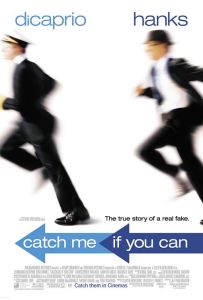

 Strand Tom Hanks on a desert island for years? Sounds too good to be true to many a disgruntled movie goer. Such is the state in Cast Away, Robert Zemeckis’ existential meditation on man, nature, FedEx and their product placement checks, and of course… volleyballs.
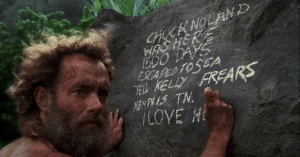 Hanks’ acting is his usually above average output, but his whole role seems more like a showcase for his method acting than the acting itself. The first half of Cast Away was shot then they took a year off so Hanks could become scruffy, thin Caveman/Unibomber Hanks. The transition is fun to watch and remarkable for an actor to devote themself completely to their role. But the part itself, and Hanks’ show, seem more spectacle than substance. Helen Hunt pops up in the beginning and end proving that she can somehow manage to be in every film in December. Pretty much the next actor in the film would be… well, a volleyball. Cast Away is basically a one-man show.




 nathanzoebl
You must be logged in to post a comment.