Blog Archives
Captain Marvel (2019)
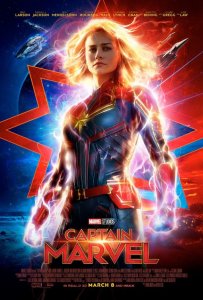 Wonder Woman may have beaten her to the punch but Carol Danvers, a.k.a. Captain Marvel, deserves her own share of headlines as the first woman to have her own starring vehicle in the highly successful Marvel Cinematic Universe (MCU). Her presence was first teased in the post-credit scene of Infinity War. After twenty-one films, Captain Marvel gets squeezed into the penultimate chapter before closing the book on the MCU as we know it for a decade, and it feels like a throwback in both good and bad ways.
Carol Danvers (Brie Larson), or “Vers” as she’s known on the Kree home planet, is part of an elite alien squad of “noble warrior heroes” fighting in a long-running war against another alien race, the shape-shifting Skrulls. Carol Danvers goes back to her home planet of Earth (a.k.a. Planet C-53) in the 1990s to look for a hidden weapon linked to a mentor she can’t quite remember, a woman (Annette Bening) from her past life on Earth as an Air Force pilot. Carol Danvers must try and recall who she is with the help of Agent Nick Fury (Samuel L. Jackson) and stay one step ahead from the invading Skrulls.
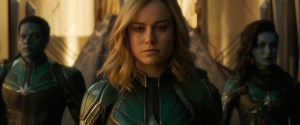 This definitely feels like a lower-to-mid tier Marvel entry, something more akin to the Phase One years (2008-2012) where the initial franchises were just starting to get a sense of direction and personality. They were also lacking the larger depth of character development, social and political messaging, as well as judicious independence from the overall studio formula that has come to define dozens of superhero blockbusters. It’s not a bad movie, and is fairly entertaining throughout its 124-minute run time, but it’s hard not to notice the shortcomings that, frankly, haven’t been this transparent in an MCU movie for some years now. I had to think back on a comparable MCU experience and I had to go back to 2015 with Avengers: Age of Ultron or maybe even 2013’s Thor: The Dark World. In short, Captain Marvel just feels a little less super in many important areas.
This is the first female-lead superhero film in the MCU (sorry Black Widow) and Carol Danvers has been a character in Marvel comics since 1968, and yet the film doesn’t put together a compelling case why she is the one getting her big screen moment. The character suffers that wonderfully tired movie trope of the foggy memory, so we have a protagonist trying to discover who she is alongside the audience. This would be a fine starting point for her to essentially reclaim her humanity and her agency as she travels back to good ole C-53 and learns more about her past. There’s a core of a beginning theme already present there, the nature of what it means to be human, and how it can be viewed as a weakness by n alien species and how it comes to be a strength for her. Maybe that’s too pat but it’s a start. The problem is that Carol Danvers isn’t seen to be that interesting. She’s somewhat boring and the presentation feels a tad inauthentic; when she’s quippy it feels forced, and when she’s badass it feels lethargic. There’s a personal journey that challenges her to assess her preconceived notions of good and evil in an ongoing intergalactic conflict, but it’s so impersonal. Even when she’s revisiting with friends and reminiscing (what she can) it doesn’t feel like we’re getting that much more insight than we had before. She’s a warrior. She’s upstanding. She definitely doesn’t like men telling her what she can and cannot do. But what else do we know besides her increasingly invincible super powers? What is most important to her that drives her? What are her flaws other than a faulty memory? When she goes full super saiyan it should be celebratory and joyous and instead it feels more weirdly perfunctory.
 I love Larson as an actress and have been singing her praises for dramas (Room, Short Term 12) and comedies (21 Jump Street, Scott Pilgrim) for years, and I kept waiting and waiting to be wowed by her in this role. I was left unfulfilled. Larson is a terrific actress and can be so expressive, resolute, heartbreaking, and inspiring, and I grew frustrated as the movie kept her talents buttoned up for too long. She seems too removed from the action even as it’s happening in the moment. It’s not that she’s too serious (“smile more” chime the denizens of cretinous “men’s rights activists”) because her character should be serious. It’s that she hasn’t been given enough depth and interest a hero deserves.
Jackson (Glass) and Mendelsohn (Ready Player One) were my favorite parts of the movie. Watching a 40-something Jackson front and center looking like he was ripped out from 90s cinema is remarkable. The movie is at its best when Jackson and Larson are working their 90s buddy cop chemistry together. There’s a fun running joke about how Fury loses his eye with some near-misses played for comedy (reminiscent of Crispin Glover’s eventual armless bellhop in Hot Tub Time Machine) and while the film does a disservice to Carol Danvers’ character it opens up Fury even more as a person. Mendelsohn has become a go-to villain for Hollywood and the filmmakers use this to their advantage. He slinks around having a good time being bad, but there’s also a surprising turn that provides unexpected pathos and depth to what could have been a one-note scary-looking bad guy. In a movie that deserves headlines for being the first female-lead MCU entry, the supporting dudes end up having the most depth and success, which is rather odd.
Captain Marvel is missing a larger sense of vision and purpose, which is why it feels more like a throwback to those early days. Directing/co-witting husband-and-wife team Anna Bodin and Ryan Fleck (Half Nelson, Mississippi Grind) don’t manage to have a feel for the material and for action as a whole. There are some pretty-looking sequences and some moments that strike their intended effect well, but the structure of their movie could use a bit of an overhaul. The first act, the pre-Earth return, is a bit convoluted and could be condensed. This even goes for the Kree Special Forces team (Kree Team Six?), which comprise many differentiated soldiers when really three non-Jude Law members would suffice. The Kree characters are stranded for the middle act and when they come back it’s hard not to feel disinterest. The concluding act brings the various plotlines together better with some good twists I did not see coming and appreciated. However, the climax is missing out on its triumphant jubilation because of the spotty characterization and the haphazard action direction. From the start, the action is unimpressive and poorly choreographed and edited. The chases are humdrum and the special effects are surprisingly substandard at too many turns. It’s hard to tell what’s happening in many fight scenes, and once Carol Danvers gets her full super laser-blasting powers, the screen becomes even more obstructed and even harder to decipher. Bodin and Fleck have showcased a natural feel for visual storytelling but action appears beyond their grasp for now.
 Captain Marvel suffers from being asked to do too much, slap together an origin tale for the last essential character for the conclusion to a larger multi-movie storyline, also forging the beginning of the MCU timeline as a prequel for Fury and S.H.I.E.L.D, as well as some connective back-story with the Guardians universe. It has to do a lot of heavy lifting in two hours that the screenplay and characterization do not seem best equipped to handle. The humor is a bit dull and unsure of itself, relying upon certain beats one too may times, notably a cute orange cat tagging along. Even the 90s setting feels like something tacked on for easy jokes about dial-up Internet and references to Radio Shack. It feels like simple nostalgia and that goes to the soundtrack selections as well. This must have been the easiest job the music supervisor ever had for a film, having to do a mere cursory scan of 90s alternative rock for the hits. An action sequence set to No Doubt’s “Just a Girl” should have more attitude than it does. A dream/trance sequence set to Nirvana’s “Come As You Are” should be creepier and more unsettling. By the end, as the credits flash onscreen set to the guitar chords of Hole’s “Celebrity Skin,” I felt certifiable 90s fatigue.
I feel like I’m piling on Captain Marvel with complaints and quibbles and presenting the impression that it’s a bad or dimly entertaining film. It’s not a bad experience but it definitely has its share of flaws that hinder the enjoyment factor. As a white guy in his thirties, Hollywood has been making movies tailor-made for me as their default setting. I cannot underestimate the cultural and personal impact this will have for millions of women and young girls who have been eagerly waiting for a big-budget movie with a strong female protagonist front and center. Wonder Woman was a cultural and commercial touchstone that might diminish the luster of Captain Marvel for some, but the MCU is its own unparalleled zeitgeist. Having a woman carry a movie in this special high-profile film universe will mean considerably much to many. I wish it was a better movie, but even lower-tier Marvel is still better than plenty, and that may be enough. I’ll look forward to see how other screenwriters and filmmakers make use of the character in the ensuing Avengers sequel coming out next month. I’ll reserve my final judgment on the character after I see how she fits into the larger picture and with storytelling talents that have shown more aptitude toward the super stuff.
Nate’s Grade: B-
Share this:

Alita: Battle Angel (2019)
 James Cameron has been dreaming about making Alita: Battle Angel for decades. He bought the rights to the 90s manga and has been sitting on the property, having to continuously push it back because of technological demands and the demands of, at last count, a thousand Avatar sequels. Cameron co-wrote the screenplay and handed the directorial duties over to Robert Rodriguez (Sin City), a talented visual stylist who has been struggling of late. The marriage looks good and the final 122-minute feature is the closest a live-action film has ever gotten into replicating the look and feel of an anime, for better and worse.
Hundreds of years after the fall of civilization, a lonely scrapper and doctor, Dr. Ido (Christoph Waltz) discovers the remains of a cyborg with a still beating heart. He puts her back together with a new body and names her Alita (Rosa Salazar). She’s special and learning about the big new world, trying to unlock her memories of the past, and we’re talking way way back into the past. She’s old technology, something that’s quite valuable for the street gangs that strip amputees for parts and for the global corporation whose emissary (Mahershala Ali) needs to reclaim the powerful tech. Alita falls in love, learns about her sense of humanity, and fights lots and lots of robotic villains.
This visual decadence of Battle Angel is the greatest reason to see it, especially on the big screen if able. The future setting is immediately visually engaging, with people walking around with mechanical limbs that look like they were literally cobbled together with whatever junk was lying around. There is a have/have not dichotomy between the huddled masses trying to eek out a living in a garbage city and the floating metropolis above that regularly dumps its trash onto the people below. It’s easy to see the influences of Battle Angel in other media, like Elysium, as well as its own cyberpunk influences, from the likes of Blade Runner to recycling the chief sport of Rollerball. The character design is to die for in this movie, with exceptionally assembled figures that stand out in memorable, dangerous, sometimes junky ways. There are a number of different robotic killers with colorful and unique weapons and personalities, and the larger world invites further scrutiny. There is a bustling post-apocalyptic life here and it’s plastered on a splashy, broad visual canvas with some spectacular special effects. Not all of the effects are at the highest level, from some compositing issues with faces to the big anime eyes (more on that later), but Battle Angel is an expensive movie that puts it all onscreen. The world is fun to watch and the action sequences feel ripped directly from the manga, with larger-than-life creatures fighting in vicious and frenetic ways. Even when the movie feels like it’s losing its momentum there’s always the visuals to enjoy.
 The central idea of this post-apocalyptic junk town being populated with deadly bounty hunters who work for a mysterious conspiracy is a great starting point. There is a bevy of killers with different allegiances and different codes, and then you throw in a powerful new addition who doesn’t remember her hidden past and you’ve got a recipe for drama and conflict with some crazy characters. There are even little dark touches that I would have thought would have been clipped in the adaptation process. Battle Angel has so much going for it that it can get a little frustrating when it feels like it’s spending so long to stay in the same place. The plot revelations are fairly predictable but still effective, but the long delays between them are filled with numerous action set pieces that diminish a sense of progression. I liked the Alita character and her relationship with her surrogate human father, but I didn’t think enough of any other relationship she had in the film. I wasn’t that invested in uncovering her past, which was still a bit too vague for me as a non-reader of the source material. At the end of the story, Rodriguez has set up his audience for a continuing saga of strife that feels too incomplete. Alita has learned more about herself (though I’m still confused) and has a goal of vengeance (against a force that is left too vague) and a renewed sense of purpose (built upon a relationship that doesn’t feel that affecting). It’s a curious end point and a questionable decision for a movie this expensive to assume it would secure demand for a presumptive sequel.
Where Battle Angel began losing me was because its title character, Alita, became too overpowered for her own good, eliminating a sense of stakes early on. The battle calculus skewed far too quickly. After the first act, actually from her first fight onward, there is never any doubt whether Alita will triumph. She doesn’t undergo any training or any real learning curve when it comes to her superhuman defense. Right from the get-go she’s doing amazing acts of fight choreography and making it all look easy. She even defeats an enemy when she’s only a one-armed torso. That’s admittedly impressive but another indicator that there is no real threat that can be posed against her. No matter how huge the cyborg, or how many pointy appendages at their disposal, it’s only a matter of time before our little pint-sized warrior is eventually triumphant. There is really only one fight where she’s presented with any slight disadvantage, the aforementioned one-armed torso sequence, but this too is shortly rectified. She goes from having a nigh-invincible body to an even more nigh-invincible body, making her, you guessed it, even more powerful. This reality takes something away from the numerous cyborg-on-cyborg battles, and without greater variance on the scene-to-scene needs, the fights become somewhat stale. Visually they are still impressive with a sense of fun watching the manga pages come to startling life, but without stakes and variance, it’s all the same punches with less power.
 Now Battle Angel isn’t the only story to deal with an overwhelmingly powerful protagonist (see: Neo, Superman, just about every character on Dragonball). The solution is usually a specifically applied weakness or, most often, the vulnerability of those closest to the hero. It’s the regular people that can be gotten to, that can be endangered, that approximate the “weakness” for the overpowered protagonist. However, for this to work, you need an emotional connection to the characters in order to feel their potential loss. This cannot work if the characters are stuck in archetypal mode and add little help. That’s the problem with Battle Angel; I didn’t really care about any of the other characters. They had points of interest, a tragic shared back-story, a dream to escape their earthbound poverty, some secrets they don’t want getting out, but it’s never enough to make them feel that much more refined than the secondary background players. The film doesn’t even go the route of really threatening the more vulnerable people in Alita’s life, which is a strange miscalculation. What we’re left with is a very kickass robot woman doing her thing and taking down the big bad cyborgs. It’s entertaining and there’s enough of an interest in bullies being beaten by the underdog, but Alita isn’t really the underdog and so the many action sequences become a tad tedious.
Salazar (The Maze Runner: The Death Cure) gives an expressive performance and enables her superhuman cyborg to find a semblance of her humanity. Because of the character design the degree of performance capture relies much on the micro expressions of Salazar, so if she overdoes it then Alita can lose that tenuous sense of reality. She finds a balance that makes her feel real, at least real enough to exist in this world. Waltz (Downsizing) is enjoyably paternal with a few dark secrets of his own. His rocket-powered pickax thingy falls under my category of something that’s futuristic but not exactly practical. This wouldn’t present much of a problem except his character is an expert at using the parts he can scrounge up to get the job done. Skrein (Deadpool) has found a real career for being sneering villains with oh-so punchable faces, and he succeeds yet again. Ali (Green Book) and Jennifer Connelly (Only the Brave) deliver enough with so little that you wish the screenplay asked more of them than the occasional in-shadows skulking. It’s interesting to look at this cast, which has four Oscars to their names (possibly another one for Ali), and an additional nominee with Jackie Earl Haley.
 Let’s talk about those eyes. The film is based upon a popular manga and anime and James Cameron was determined, from the earliest point, to recreate that stylized big-eyed look famous to Japanese art. It’s one thing on the page and another brought into real life, and the response has been all over the place. Some cite the uncanny valley and cringe while others argue it makes Alita more vulnerable, the eyes being the window to the soul and all. It does set her apart from the crowd, which is supposed to befit her character and where she came from, so to that end it works. It’s not as distracting as I feared and you do grow accustomed to them. However, was any of it necessary? Would we feel any different for Alita if she had more human-sized eyes? I doubt it. The costly effect of a very costly movie ($200 million reported) made me think of a similar quirk with the 2011 Green Lantern film where Ryan Reynolds’ suit was a CGI effect. Rather than simply wearing a costume the filmmakers spent millions applying one in post-production, and in the end what of value did it offer to the experience?
It’s hard for me to watch Alita: Battle Angel and understand why this was a property that James Cameron set aside for almost two decades. What about this makes it special or at least separates it from the pack of imitators? It’s a world with points of interest and characters that could be interesting, though many stop short at the design phase. The live-action version is entertaining and visually sumptuous, but I was finding myself grow tired of the film’s loose stakes, predictable plotting, simplistic themes, and archetypal characterization. The action can be pretty fun but even as Alita lines up more obstacles and more enemies we never feel threatened or concerned. Without a larger sense of danger and plot development the many fights start to grow monotonous. The special effects are wild but they service a story that seems ordinary genre. Alita: Battle Angel ought to please fans of the source material but it short-circuited for my attention.
Nate’s Grade: C+
Share this:

On the Basis of Sex (2018)
 Given the high-profile treatment of a popular documentary and an awards-bait caliber feature, you’d be forgiven for thinking that people either thought justice Ruth Bader Ginsberg was due for recognition or was about to die. On the Basis of Sex takes more than a few nods from 2012’s Lincoln, showcasing its subject trying to pass key reforms/legislation as a means of better insight into his or her lasting legacy. To that end the film is a success. It’s an intelligent legal procedural taking time to find judicial footholds, craft compelling arguments, and the back-and-forth challenges of overturning hundreds of years of precedent that viewed women as essentially lesser. If you enjoy rhetorical debates on legal minutia, this might be the movie for you. However, if you wanted to get a better understanding of Ginsburg (Felicity Jones) the person, then you’re out of luck. She’s more or less the vessel for social justice and the film keeps her more as a lionized symbol for change than as a person. Her frustrations, such as being denied the same opportunities as men, are meant to serve as a reminder of the frustrations of the many. There are a handful of scenes with dismissive, doddering middle-aged men that feel too stagy, and yet I’m sure that these same curt comments and patronizing behaviors were a daily affair (and still are). Jones doesn’t feel like she has a full grasp on the character beyond as symbol (her Brooklyn accent is a bit slippery as well). You also get to process the reality of Ginsburg as a sexual being as she initiates PG-13 sex with her supportive husband (Armie Hammer). It’s kind of like thinking about your parents having sex. On the Basis of Sex feels a bit, ironically enough, too old-fashioned. It’s got dramatic courtroom showdowns, including an eleventh hour speech, and all the old Oscar bait tropes we’d expect from this sort of movie. It plays to every expectation of its audience. Beyond learning about the legal arguments, there’s nothing new or insightful here. Stick with the RBG documentary and hear the same stories from the real deal herself.
Nate’s Grade: B-
Share this:

Bird Box (2018)
 As a film critic, I feel compelled to write about Bird Box because, apparently, one third of the entire Internet is currently talking about this Netflix sci-fi horror movie. It’s about killer monsters that cause people to violently kill themselves upon sight. Netflix has reported that over 40 million customers have watched Bird Box in its first week of its streaming release, which basically means 35 million people likely fell asleep to Netflix and it started playing the new high-profile movie on auto play. I know people that love this movie. I know people that hate this movie. I know people who hate this movie with a passion and go into apoplexy trying to describe their disgust. Bird Box isn’t a movie worth strong feelings, both good and bad. It’s a fittingly entertaining movie with too many structural flaws, underdeveloped ideas, and diminished tension and stakes.
Malorie (Sandra Bullock) is trying to navigate the post-apocalyptic world of monsters. She’s traveling down river with her two children, all blindfolded. Meanwhile, she flashes back to the first few days of the monster outbreak when she found security in a stranger’s home until things went from bad to worse to murderous.
Part of the problem with Bird Box is that the monsters never feel that threatening because the hazy rules manage to defang them. Given the unknowable nature of monsters, I’m not expecting a textbook but some level of consistency that won’t rip me out of the film. The monsters are only a threat when you look at them, which is fine, except they cannot or choose to refrain from physically interacting with their human targets. I don’t know if this is a natural limitation, a choice, or simply anecdotal evidence that will be disproved. Just because the monsters haven’t done something yet doesn’t mean they might not be able to. Just because the monsters don’t attack anyone wearing a blue sweatshirt with a googly-eyed reindeer doesn’t mean this is standard. We see at one point the collateral movement of a monster chasing after Sandy and the kids, shoving trees and other forest vegetation aside. They do physically interact with the world; they just do not interact with our characters. This takes away much of the danger of these creatures. There’s one scene where a character is struggling to get indoors and, oh no, the garage door is opening. Look out; all he has to do is… continue not looking at the monsters as he was doing without effort. It makes me think of The Simpsons Halloween episode where the key to defeating killer mutant advertisements was not to look (it had Paul Anka’s guarantee).
 The monsters also adopt the voices of loved ones, so survivors would start to learn from these experiences and begin to carry a deep skepticism about suddenly prevalent loved ones begging for blindfolds to be removed. Does this mean the monsters can psychically read the thoughts of human beings to know what voices to tap into? It made me think of The Bye Bye Man and its Bye Bye Man-induced hallucinations (“Is this cop’s face really oozing black blood through empty eye sockets, or is that you Bye Bye Man, you scamp?”). This is an interesting aspect that never feels fully developed, the mistrusting nature of the calls for help. Instead of adopting the voice of dead loved ones, I wish the monsters had chosen more judiciously. You could feature a sequence with someone genuinely calling for help and being left behind by Sandy because, in their blindfolded state, they cannot tell the difference in the authenticity of the speaker’s claims.
But what I kept coming back to is why can’t the monsters go indoors? This was a hurdle I could never fully get over because it cheapened the threat for me. As with any apocalyptic or viral outbreak, there is danger in having to leave the sanctuary, and there will be a need to gather supplies, but once you have a home base the monsters can’t enter, it loses a level of stakes. It makes me think of M. Night Shyamalan’s Signs where space aliens can travel the stars but cannot open a pantry door. Having limitations on your monsters is essential or else the threat will feel too overwhelming, but these limitations need to make consistent sense. The monsters in A Quiet Place had superior hearing but were essentially blind. The monsters in Bird Box are deadly to look at, will tempt you with auditory siren songs, but as long as one remains indoors and stays away from windows, you can live a happy and healthy albeit sheltered life of repose.
 This is one reason why the story has to find a new threat that is allowed to venture into the safe spaces. There are certain people who seem immune to the suicidal impulses of the monsters. The screenplay by Eric Heisserer (Arrival) implies people who were crazy beforehand are unaffected, though what degree of crazy or mental instability is up to interpretation. These people worship the monsters and actively try to force others to look at them, to also be enlightened. This could have been an interesting addition to the world of Bird Box but it plays it too straight. These cultist people are just another obstacle, a group of standard movie crazy killers. I was hoping that the screenplay was playing coy with this subject and biding its time only to introduce this group in a more meaningful and manipulative fashion later. It never happens. They’re just crazy killers meant to enter buildings and pose a new indoors threat. Now you can’t trust anyone!
The structure of Bird Box constrains the overall impact of its story. The movie is divided almost equally between two different timelines, one shortly after the start of the monster attacks and one five years later. I was waiting for these two different storylines to inform one another, and they do in essentially superficial ways. We know in the future story that it’s only Sandy and the kids, so it’s only a matter of time before everyone in this house will end up dead. It also hurts that this segment is best described as “dime store Stephen King.” We’re stuck with a group of strangers who have all been given one note to play, therefore the extra time feels tedious because we don’t care about them or what happens to them next (sorry John Malkovich, Jacki Weaver, BD Wong, and others). Winnowing these extended flashbacks and sticking with the current day storyline would have improved the movie. There’s a more immediate threat and it presents a more intriguing scenario of being on the run and learning as we go about the monsters and the accrued survival tactics. I think learning on the run would be more exciting rather than conveniently finding refuge with a guy who explains everything because he was doing a book report on the supernatural and somehow knows the rules. This would also better hone the theme because the “before” of our before-and-after dynamic doesn’t establish Sandy enough as a disinterested mother.
Much of this could be forgiven or mitigated if the suspense sequences were engaging and smartly developed. I can forgive any nagging plot quibble with A Quiet Place (Why don’t they live closer to the waterfall? Why don’t they have a sound system to draw away monsters?) because the suspense sequences were brilliantly executed and highly unnerving. This just isn’t the case with Bird Box. There is one clever sequence that seems to capitalize on the possibilities of its sight-challenged premise. During the house half, the gang climbs into a car and uses its motion sensors and GPS to navigate a trip to the local grocery store for a supply run. It’s fun and decently staged. The inclusion of caged birds being a monster alarm is interesting until it starts to become more ridiculous. People never seem to listen to these birds and pay the price. The initial outbreak in the opening, with cars flipping and people flipping out, has a nice escalation into madness and chaos. The movie never quite recovers that same tense feeling. Watching people wander with blindfolds doesn’t make for great visual tension unless we see what they do not and dread what’s to come. Bird Box settles into a generic paranoia thriller about who can be trusted, and that’s even before the crazy cultists come knocking. Outside in the woods, the final act involves running to sanctuary, but without the killer cultists, it’s only running away from a thing that can’t touch them. It makes for a curiously inept climax and a sentimental resolution that feels unearned.
 The arc of the movie is about Sandra Bullock’s character accepting motherhood and attachment to others but this theme is murky. She named her children “Girl” and “Boy” because she didn’t want to think of them as her own. This is the kind of thing that seems more symbolic and meaningful in theory than practice. She tells the children that in order to survive in this brave new world that they must be ready to cut another person loose at any moment. Attachments to others will get you killed, or so Sandy argues but not in deed. Because this storyline covers half of the film, the relationship she has with the kids feels underdeveloped but not by Sandy’s choice, by the filmmakers. If Sandy’s character arc was going to end at the destination of her realizing love is not a detriment even in a horrible, terrifying world, then we needed more time spent on this emotional journey, which is another reason why we could have used more time in the present-day storyline. A degree of self-sacrifice feels missing to better signify the theme of attachment and the emotional stakes.
I reiterate that Bird Box is not worth the strong feelings of love or hate. It’s got a wobbly structure where either half fails to better inform the other, the limitations of the monsters guts too much of the tension and stakes, and the actors deserve better. Bullock delivers a strong central performance and serves as our entertainment anchor. She makes the movie more watchable and does her best with some less-than-stellar expository dialogue. It’s enough to make you wish this movie was better and better realized with its spooky premise.
Nate’s Grade: C
Share this:

Bumblebee (2018)
 Why haven’t they been making these kind of Transformers movies from the beginning? Bumblebee is a scaled-down, character-driven family film where the bigger moments re about fitting in, finding your sense of self, and keeping your new alien robot friend hidden from your parents. Set in the late 80s, Hailee Steinfeld (Edge of Seventeen) plays a high school senior dreaming of a life beyond her neighborhood and family. The ticket out is a new car, which just happens to be an Autobot from another planet disguised as a VW beetle. Because Bumblbee had his memory wiped from a fight years earlier, he’s very childlike and endearing, and the interaction between the big robot and Steinfeld will rekindle more than a few memories for The Iron Giant, E.T., and other classic “boy and his dog” tales. There’s a real attention to the characters, big and small, that makes this the best Transformers movie. Not everything has to be about the next world-destroying cataclysm. There’s plenty of formidable drama in watching a teen girl navigate the world with an unconventional new friend. Director Travis Knight (Kubo and the Two Strings) graduates to the world of live-action with a terrific feel for the visual parameters and material. It helps that Knight gives his film a sense of scale without sacrificing coherency. The camera prefers wider shots and longer takes so the audience can follow the action. The movie also has a sly sense of humor it knows when it call upon, like a highly enjoyable John Cena who is baffled at his government’s open door policy to evil robot aliens: “They have Decepticon in their name. Is that not a red flag to anyone else?” This is a well-paced, sweetly heartfelt movie with good humor, good characters, and good action. If this is what happens when you strip Michael Bay from the franchise, then lock him up.
Nate’s Grade B+
Share this:

Mary Queen of Scots (2018)
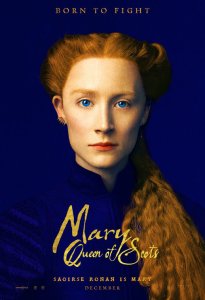 Serving as a feminist reclamation project, Mary Queen of Scots attempts to re-contextualize “Bloody Mary” in the royal dispute for the English throne. As played by Saoirse Ronan, Mary is portrayed as an empathetic, open-minded but strong-willed ruler looking to make peace between the two nations, and Elizabeth is portrayed as a flinty, scared, aloof woman that literally tells her younger cousin that she is her better in every manner. It’s a flip of how the two women are often portrayed throughout history, which raises the question of whether history has been twisted from centuries of revisionist and political obfuscation. There are definitely elements in this movie that I know are historically questionable, like Mary accepting a gay man into her royal court of ladies with open arms and a dismissive view of his sexual leanings. I find it hard to fathom that a devout Catholic woman who ordered heathens burned at the stake would be so anachronistically tolerant of homosexuality. If there’s a new theme for this costume drama it’s that women, even those in power, even those who were deemed wicked or corrupt by historians (universally men for centuries), were hemmed in by scheming men who were trying to usurp their power, undermine them, and manipulate them. Mary is thrown into one faulty suitor after another, positioning her as the victim of a patriarchal society. Again, I suspect there is validity to this context but it treats Mary with kid gloves, denying her righteous impulses. Ronan (Lady Bird) delivers a fine performance of grit and grace, but it’s Margot Robbie (I, Tonya) as Elizabeth that really misses the mark. She is sadly miscast and seems to shrink in the role. The depiction of Queen Elizabeth is also a disservice for drama and the concluding makeup reminded me of the Queen of Hearts from Tim Burton’s Alice in Wonderand. Mary Queen of Scots is an acceptable costume drama told with a little more heat (it’s R-rated for some reason) and a little more consideration to its subjects, but Mary Queen of Scots made me question the voracity of its portraits and made me really wish I was watching the Cate Blanchett Elizabeth movie instead.
Edit: There are two Marys at this time, Stuart and Tudor, and I have conflated them. In my defense, it seems like there shouldn’t be more than one Mary by name when you’re talking about a Catholic rival who is related to Elizabeth. I’ve left my review uncorrected to further own my ignorance.
Nate’s Grade: B-
Share this:

The Favourite (2018)
 As soon as I saw the name Yorgos Lanthimos attached to the royal costume drama The Favourite I knew it would be one of my most anticipated films of 2018. I’m not naturally a sucker for these kinds of movies without some interesting new angle (Mary Queen of Scotts, we’ll meet soon), but Lanthimos has quickly become one of my favorite (favourite?) voices in cinema, rivaling perhaps even the esteemed Charlie Kaufman. His movies are so wonderfully weird and tonally distinct. A Lanthimos joint, if you will, is two hours of surprises and expanding the surreal with assured foresight. He’s earned such a highly regarded reputation as far as I’m concerned that I’ll see any movie with his name attached in any creative capacity. The Favourite is a different kind of costume drama.
In the early 18th century, Queen Anne (Olivia Colman) is leading her country through a protracted conflict with the French that is weighing heavily on everyone. Lady Sarah Marlborough (Rachel Weisz) is the Queen’s childhood friend, close confidant, and secret lover. She’s also perhaps the real power behind the throne, directly influencing the Queen to enact her own bullish policies. Harley (Nicholas Hoult), leader of a parliament, is worried about the country going bankrupt from the military expenditures. Enter Abigail (Emma Stone), a cousin to Sarah and someone seeking to save her once proud family’s name. She rises through the ranks and becomes a rival for the Queen’s affections and a threat for Sarah to maintain her position of power in the court and with the Queen.
 What distinguishes a Lanthimos experience is the development and commitment to a distinct vision and the sheer unpredictability. You really never know where the man’s films will go next. One minute you’re following a man struggle to find a romantic partner, and the next they’re talking about turning people into lobsters. One minute you’re watching a family deal with a creepy stalker, and the next people are debating which family member should be killed in the darkest family game night ever enabled. Even though Lanthimos did not write The Favoruite, it still feels of his unique, deadpan, darkly comic worlds and his fingertips are all over it. The story is already playing fast and loose with the history (it’s pretty unlikely Queen Anne was a lesbian, despite the centuries of character assassination from Sarah) so its curiosity where it might go next is electric, especially when it shows some bite. This is a movie that’s not afraid to be dark, where characters can behave badly, testing our sympathy and allegiance as they fight for supremacy. I love how unapologetic the characters are in their pursuits. They will scheme and manipulate to whatever extent works and demonstrate abuse of power for power’s sake (poor bunny). “Favor is a breeze the shifts direction all the time,” says Harley. “Then in an instant you’re back sleeping with a bunch of scabrous whores.” The ensuring two hours of palace intrigue and political gamesmanship is given a sordid boost from the historical deviations, making the political more personal and even more intriguing. I cackled often throughout with the amazingly witty one-liners and curt insults as well as the wonky asides and tonal juxtaposition. It’s a funny movie for offbeat audiences who enjoy offbeat humor.
This is a costume drama that is radical amongst the stuffy world of prim and proper Oscar bait involving kings and queens and the ostentatious royal courts. I’d say it reminds me of Stanley Kubrick’s Barry Lyndon and how it broke from the long film tradition of costume dramas, but I’ve never watched Barry Lyndon, my lone Kubrick omission (what, do you have three hours to spare?). Lanthimos has an anachronistic visual style that allows The Favourite to feel modern and different as it plays in familiar terrain. What other Oscar drama can you expect to see a modern dance-off in the queen’s court? The visuals make use of very stylized deep photography with the use of fish-eyed lenses and a locked camera position even while panning and moving. It’s not exactly the colorful, punk rock aesthetic of Sofia Coppola’s Marie Antoinette but it gives the film a dreamlike, odd sensibility. It’s a nice visual pairing that achieves the same effect as the screenplay by Deborah Davis and Tom McNamara; it piques your interest, drawing you closer with each moment.
 Lanthimos requires a very specifically attuned ironic wavelength that comes across as purposely deadpan, muted to better make the bizarre as the mundane. It’s a type of acting that can be very restrictive unless an actor can tap into that specific rhythm. The three women that top line The Favourite are each terrific. Colman (taking over Queen Elizabeth from Claire Foy in Netflix’s The Crown) is the standout as the temperamental monarch. Her favor is the prize and at some level she knows that people are playing games with her. It’s hard to know what degree of self-awareness Queen Anne is capable of considering she is beset by maladies both physical and mental (she really did lose 17 children in her lifetime, a dozen of them miscarriages). Because of all of this, the unpredictable nature of the Queen matches the unpredictable nature of the film, and one second she can be childish and defiant, the next playful and warm-hearted, the next manipulative and pushy, the next easily cowed and embarrassed. It’s a performance that has definite comic high-points as she howls at her servants and confuses her confidants, but there are layers to the character that Colman digs into. Sure she can be volcanic in rage or extremely funny when giving into the Queen’s whims, but it’s the degrees of sadness and vulnerability that creep through that round out the performance and person.
Weisz (Disobedience) has already starred in one kooky Lanthimos film (The Lobster) and easily slips into those peculiar comic rhythms again like a nicely fitting dress. Hers is the “fall” of the rise-and-fall tale, so she begins self-satisfied and ends humbled, except under Weisz she is never truly humbled. Her spirit does not break regardless of her unfortunate circumstances, including at one point being held hostage at a brothel. Even when she knows she must write a gracious letter she can’t help herself, composing drafts that keep veering into profane insults. Weisz is deliciously deadpan and never abandons the confines of that narrow acting range required for a pristine Lanthimos performance. Stone (La La Land) is the freshest face of the troupe as the underestimated young companion who rises through the ranks thanks to her cunning. Stone adopts a solid British accent, which is helpful, but her intonations are perfectly suited for Lanthimos. There are small, stranger moments where the character is breaking the facade with the audience to reveal an eager peculiarity, an imitation of a monster that’s random, or the most delightfully dismissive “yeah, sure” snort in the history of film. Stone is a versatile talent with comic bonafides, so it’s fun and satisfying to see her expand her already impressive, Oscar-winning range.
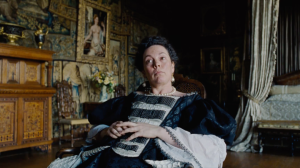 This is a movie that does not work without a distinct vision, sure handed direction, and pitch-perfect acting, all seamlessly working in tandem to create such a finely crafted dark comedy that can go in many perversely entertaining directions at a moment’s notice. Lanthimos and his cadre of award-worthy actresses have great, prankish fun playing dress up in their fancy locations and making a costume drama with a dash of anarchic farce. The Favourite doesn’t quite rise to the top of my own list of Lanthimos favorites (I’d probably rank it a noble third) but it’s still a razor-sharp, sardonic, unpredictable, and wonderfully, vibrantly weird movie worth celebrating.
Nate’s Grade: A
Share this:

Widows (2018)
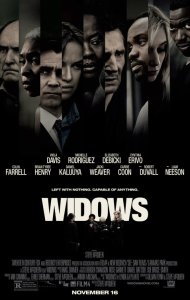 Widows has an all-star cast, an Oscar-nominated director, and a best-selling novelist-turned screenwriter, so my expectations might have been turned up a bit too high. It follows a team of titular widows (Viola Davis, Michelle Rodriguez, Elizabeth Dibecki) picking up the pieces in the wake of their husbands’ deaths. It seems their dearly departed spouses stole money from a local criminal who very much demands the sum returned. The women must enter into a criminal heist, using notes left behind by a dead hubby, to settle the debt and spare their lives. Widows is a higher caliber crime movie with notable texture given to a wide assortment of characters; even the villains are given small character touches to better flesh them out and feel more realized. There’s a concurrent election tying together different corrupt and criminal enterprises that widens the scope of the film into a grander scale. The characters and performances are the selling point of the movie and provide consistent entertainment. Davis (Fences) is the strong-willed linchpin of the group and I could watch her boss around people for hours. Dibecki (The Great Gatsby) has a nice turn as a trophy wife accustomed to being abused. The problem is that there might be too many characters. Rodriguez has far more significance in the first thirty minutes and then is put on ice. Likewise, Carrie Coon and Cynthia Erivo are hastily added when the plot requires something of them. That plot, adapted by Gillian Flynn (Gone Girl) and director Steve McQueen (12 Years a Slave), proves to be the film’s biggest hindrance by the end. The second half plot turns seem to come from a schlockier version of this story, not the classier version we had been treated to beforehand. There are character decisions that baffle credulity and personal safety. The quality of the characters deserved a movie that could refrain from the hacky genre twists. McQueen’s precise camerawork is still alive and well and highlights tension and also moments of social commentary, like when we watch a car travel mere blocks from a rundown inner city neighborhood to a fancy gated residence. There’s a lot to like with Widows, and plenty to get excited about, but I wanted to like even more.
Nate’s Grade: B
Share this:

The Girl in the Spider’s Web (2018)

The Girl with the Dragon Tattoo was an international best-selling trilogy that gave way to three hit Swedish movies, one Hollywood remake that netted a Best Actress nomination, and millions in worldwide revenue. The problem was that its author, Stieg Larsson, died of a heart attack in 2004, before the publication of any of the original novels. The property was too valuable to simply collect dust and thus a new author came aboard to tell further adventures of Lisbeth Salander, the pint-sized Gothic avenger. A new set of novels began being published in 2015, and after David Fincher’s 2011 version underperformed at the box-office, it seemed expected to reboot the franchise with a new big screen story that had yet to be adapted. In steps a new director, a new dragon-tattooed lady for The Girl in the Spider’s Web. Unfortunately, my fears have come true and the eventual reckoning has happened: they have made Lisbeth Salander boring.
Lisbeth (Claire Foy) is thrown into another criminal conspiracy with shadowy forces at play. A network of high-powered assassins, known as “spiders,” has stolen a dangerous technology that will allow the user control of nuclear arsenals. Lisbeth is hired to retrieve this tech, betrayed, and then on the run from Swedish authorities, professional killers, a dogged NSA operative (Laketih Stanfield), and the head of this cabal, Camilla Salander (Sylvia Hoeks, Blade Runner 2049), her long lost sister Lisbeth left behind years ago.
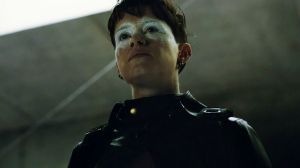
In her first 2010 outing, Salander was presented as a complex, emotionally withdrawn figure, eminently capable but flawed, hurt, and looking to punish others from her fraught history with terrible men. Strip away all the Gothic trinkets and camouflage, her assertions of identity, and she’s still a deeply intriguing human being. However, even the latter Swedish films started veering in this more derivative direction. As I wrote presciently with the second Swedish Dragon Tattoo movie back in 2010: “We project the interest we felt for her from the first film to the Salander stand-in represented in the second film. She’s still a resourceful, loyal, and cavalier presence, but the plot corners her into being a creature of action. She becomes the fantasy bisexual ass-kicking protagonist that was merely hinted at previously. That sounds like a good thing, but trust me, it does the audience a disservice to box in such a fascinating character.” With Spider’s Web, Lisbeth Salander has become a Gothic Jason Bourne spy figure, and as anyone who has seen the Bourne movies can attest, he’s the most boring character in his own movies, which is why he needs to be kept constantly on the move and hunted. He’s only interesting when he’s getting out of jams, and Lisbeth is now sadly in that realm.
Lisbeth has been reduced to her most essential, and most superficial, characteristics, which also go for the film as a whole. The Dragon Tattoo series began as a twisty investigative procedural with a litany of suspects and dark secrets worth killing over. From there, the Swedish films turned Lisbeth into an indestructible Terminator capable of getting the drop on anyone and axe-fighting oversized men. The Swedish series began more grounded as a mystery/thriller and suddenly, and regrettably, transformed into a preposterous Hollywood-style action-thriller, following the edict of bigger being better. That same mentality has carried over past Larsson’s contributions, and now Lisbeth has become an action superhero and the series has become trashy fun, high-calorie junk food, a safe excursion to a seedy underbelly. The Girl in the Spider’s Web still provides a consistent degree of entertainment, but it’s not playing at a higher level, content to hand-wave away its story for cool chases and fights. It’s the kind of movie where, to escape an encroaching fireball, Lisbeth dives into a bathtub of water. It makes for a visually interesting shot but it’s pretty cliché 90s action movie stuff. Director Fede Alvarez has a slick handle with visuals and evidenced real talent at sustaining and developing tension with 2016’s Don’t Breathe. He has obvious visual talent. There are some engaging fights, like a close-quarter struggle in a bathroom, and some nifty chase scenes, like a motorcycle chase over a frozen lake. I would have liked even more action if Spider’s Web was going to brush aside narrative and moral complexity for stylish set pieces.

The story of The Girl in the Spider’s Web feels like a lukewarm repackaging of spy clichés, and the film does little to make any of it feel important or relevant. There’s a super powerful technology that everyone wants, which falls into the wrong hands, and now it’s about retrieving this device and saving the world. That’s like the plot of just about every James Bond movie. It’s a formula, but where Spider’s Web missteps are that it doesn’t add anything else to this staid foundation. There are scenes but it’s usually about this group going after this group, or this group now going after this group, and without wider relevance it becomes redundant plot placeholders, something meant to distract long enough to get our characters from Point A to Point B. With a mystery, there’s a natural momentum that builds as the case builds coherency and the investigation focuses the direction. With action thriller mode, Spider’s Web just has a bunch of guys that occasionally interact until the movie needs some of them dead. This model by itself can work but it requires concerted effort, and that just isn’t present here.
The most interesting aspect of Spider’s Web is the further examination on Salander’s troubled upbringing, this time introducing a sister that has been plotting vengeance. Salander is, first and foremost, the selling point of this franchise; she is, after all, the titular girl with that particular tattoo. She is what separates this from any other paperback thriller. The Swedish sequels opened up her past traumas with her Soviet-defected father. He was the Big Bad Man behind the scenes trying to institutionalize and neutralize her. While skirting into the above-stated dangerous territory, the Swedish sequels still knew that Lisbeth Salander’s complicated history was the real mystery the audience craved, and it set up a series of antagonists ready to be foiled for years-in-the-making payback. I don’t really know how the events of Spider’s Web gibe with the overall series. I had to look up whether the evil father in the opening was the same evil father in the other films (both are listed as Alexander Zalachenko, so I think so). But the established history has Lisbeth committed after trying to set dear old dad on fire to save her abused mother. I don’t see how any of that is likely if she escapes her father’s clutches as a pre-teen and is supposedly on the run. The secret Salander sister revelation also impacts little. She was the one left behind, whose continued abuse and degradation are strongly referenced. It doesn’t feel like Lisbeth harbors great guilt over leaving her sister behind. During their final face-to-face, Camilla actually poses a worthy question: “Why did the woman who hurts men who hurt women never come back and save her own abused sister?” Because this storyline is flagrantly underdeveloped, the evil sister angle is a cheap twist. There’s nothing to the Camilla character, so she serves as a symbol of shame, and yet the movie doesn’t seem to capitalize on this in the slightest, which is a puzzling disservice.

Foy (Netflix’s The Crown, First Man) is having a big year for herself but feels slightly miscast. She never really gets an opportunity to show off her range, which is a byproduct of the streamlined, reductionist screenplay emphasizing bare plot mechanics. She is missing the intensity or fire that we’ve seen in prior Salanders, breakout-star Noomi Rapace and the Oscar-nominated Rooney Mara. When Foy tries for glower you see the effort. She’s more grumpy than tortured, like maybe she skipped a meal. Even with the requisite piercings, tattoos, and black leather wardrobe, Foy seems a bit too clean-cut for the part. Personal admission: Foy with her sharp bangs, saucer-eyes, facial shape, and Gothic accessories, looks remarkably like an ex-girlfriend of mine from the early 2000s. That was something that kept sneaking into my mind throughout the film, which made the experience a tad stranger as if I was imagining an ex engaged in action heroics. Even excusing that personal connection, Foy ranks a distant third place for the Girls With.
The new Dragon Tattoo movie will likely also be its last. I can’t imagine fans getting too much pleasure out of a streamlined, underdeveloped spy thriller that sands away the edge and complexity of its characters for rote action movie chases. It’s not a bad movie and it does carry moments of excitement and entertainment, but it’s also become a standard Hollywood thriller, no different than a dozen other high-tech, junky hacker thrillers. The Girl in the Spider’s Web gets caught in its own formulaic web. If Lisbeth Salander has been transformed into a standard action hero, then we don’t deserve more adventures.
Nate’s Grade: C
Share this:

Peppermint (2018)

I invite all my readers to re-watch the trailer for Peppermint and apply this simple listening test. It opens with Jennifer Garner repeating the precious nursery rhyme claim about her daughter’s virtues. She has “love in her heart, snow in her eyes,” and the final claim, “peppermint in her blood.” At least I’m certain it’s got to be “blood,” because the first time I watched this trailer and my ears got a hold of that line, it genuinely sounded like Garner was saying “peppermint in her butt.” This flummoxed me and even more so that they would name the movie after this. Try it yourself and see what you hear, then listen for the other word (it’s like the new yanny/laurel aural conundrum). If I concentrate on either interpretation, I can hear it. Regardless of whether this “butt” vs. “blood” mystery can ever be resolved, the filmmakers decided to cut the entire verbal exchange from the finished version, leaving no reason for Peppermint to be called Peppermint other than the daughter’s passing affinity for the ice cream flavor. As asinine and odd as this whole endeavor reads for you, this might actually be the best part of Peppermint, a rote and tiresome action exercise that does too little too often and squanders the resources of a perfectly game Garner.
Our heroine, Riley North (Garner), started as mild-mannered mom and bank teller. Then one day Latinx gang members brazenly gun down her husband and child. A corrupt legal system lets the killers go free and Riley disappears for five years. When she returns, she’s become a ninja trained in an array of weapons. She takes her one-woman crusade against the gang, the cartel, and the corrupt judges and lawyers who serve them, while the police, lead by John Gallagher Jr., try and stop her from going too far and becoming the very monster that she’s been fighting to protect others from.

This is basically another Death Wish-style grisly revenge thriller when, as a true sign of how repeated this formula has become, we already even had a literal Death Wish remake with Bruce Willis earlier in 2018. It’s easy to understand the appeal of the lurid revenge fantasy, but they require more effort than Peppermint is willing to provide if they’re to rise above the litany of direct-to-DVD drivel. I’m in no way against this kind of movie, or direct-to-DVD action entities, but it all comes down to development and execution, and that’s where Peppermint slips up, having peaked at the idea stage. Clearly this was sold to film executives as a “lady Punisher or Taken” and it’s from the director of the first Taken, Pierre Morel. Garner was kicking (peppermint) butt and taking names for years on TV’s Alias. Why not? The problem is that there’s so little thought put to the characters, the plot, the action, and even the structure of basic payoffs. Here’s a telling example. The three gang members responsible for killing Riley’s family are themselves killed around the 45-minute mark, and they’re killed off-screen in a terribly anti-climactic and abrupt plot move robbing the viewer of any sort of emotional punch watching our heroine gain her years-in-the-making vengeance. Think this over. The only characters we’re really rooting for her to topple, to watch them be punished on screen for their misdeeds, and it’s off-screen. This isn’t No Country for Old Men here; it’s barely the eightieth rendition of Death Wish.
Garner’s character is too opaque to be that interesting. She’s allowed to vacillate between Grieving and Angry but that’s the extent of her depth. We never really get a sense of what’s going on with her, how her actions are affecting her. She’s not even that interesting as an action lead. There’s no real glimpse of a personality here. She’s more a weapon poised to her next target, with little down time between. Garner gets into toned fighting shape and has a flinty, F-you vibe and it all feels wasted on creatively lacking fight choreography. Riley becomes a social media avenger and this is about as much commentary or depth the film affords her. Because we squandered the catharsis of seeing the guilty gang members get their just rewards, the movie has to manufacture more disposable Latinx criminals, like they put out a casting call for characters they forgot they were going to need. From a structural standpoint, you never get a great sense of where Peppermint is going after that 45-minute mark. It just opens on one location after another and we watch Riley wreck havoc on personality-free bad guys we never got a chance to know and loathe. It starts to feel like a series of mundane video game stages to be cleared.

Many of the shortcomings can be forgiven if the action delivers, and it simply cannot. It’s one bland fistfight and shootout after another. There isn’t a sequence I can remember that stands out. There are moments, punctuations of vicious violence that has a brusque, darkly comic accentuation. There’s nothing remotely John Wick, or Atomic Blonde, when it comes to the fight choreography. The geography is too rarely taken into account and there are few organic complications. This is flabbergasting when you remember that Morel also directed the vividly kinetic French action movie District B13. The editing here also feels very choppy, taking more away from Garner’s physical skills having their showcase. One of the great moments of 2017 was the brutal and brutally long tracking shot following Charlize Theron’s super spy pummeling men through her growing fatigue. It was a sequence designed to showcase the choreography and the actress’ refined skills. What constitutes Riley North’s own “particular set of skills”? There’s nothing especially clever about how she dispatches with the bad guys. Her path to vengeance comes across as too easy. She’s able to torch an entire piñata warehouse of gang members like a cheap… piñata. The easy victories and lazy action development are the final reminders that this is a rote genre paycheck and little more.
Whether the peppermint was in her daughter’s blood, her butt, or any other personal cavity, it’s a terrible title for an R-rated action movie and reeks of the forced sweet/nasty irony I think the filmmakers, or marketing team, want to employ by having a woman as their Charles Bronson-styled deliverer of death and destruction (what, a woman as a killer?). The action is forgettable, the characters are barely one-dimensional clichés, and Garner deserves better. She’s 47 years old and as spry and captivating as ever. Give her an Atomic Blonde of her own. Peppermint isn’t it. If your expectations are generous, you may find just enough to keep your interest with Peppermint. It left me with a bad taste in my mouth.
Nate’s Grade: C-


 nathanzoebl
You must be logged in to post a comment.