Blog Archives
The Three Musketeers (2011)
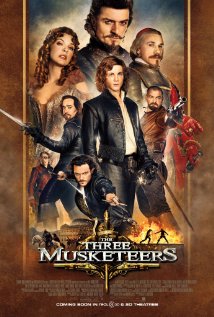 I suppose I should have known better seeing director Paul W.S. Anderson’s name attached to the loose adaptation of The Three Musketeers. From the previews, I thought that the film could perhaps settle on an enjoyable level of stupidity, something of a wink while it obliterates all fidelity to Alexander Dumas source material. Well, the movie sure is stupid but it’s far from enjoyable. This swashbuckling-on-steroids flick has got 17th century zeppelin-battleships, booby-trapped secret passages, and a confluence of English accents in France, but by far the dumbest part of this incredibly dumb movie is that war (or the “looming apocalypse”) rests entirely upon a diamond necklace. A ludicrous amount of the movie’s conflict rests on getting the Queen of France her stolen necklace back so that her husband doesn’t think she’s unfaithful. Instead of two people just having a conversation to clear up a misunderstanding, the movie pushes this marital conflict as the climactic push that will lead to global war. The action sequences are dull and none of the actors seem to be successful at faking enthusiasm. What does it say that Anderson rips off his own Resident Evil series as he concludes Musketeers, setting up a sequel that surely will never exist? This movie is bereft of any whiff of fun even with all its fantastical elements crashing through classic literature. It had a slight chance of being the right kind of stupid, but instead it’s just stupid times a thousand. Beware, canonical literature, because as long as Anderson lives none of you are safe.
Nate’s Grade: D+
Share this:

Lockout (2012)
 Rather derivative and not very clever, the sci-fi prison break movie Lockout is surprisingly enjoyable, in a brain-dead sort of way, mostly thanks to a few lean suspense sequences and the deadpan glory of star, Guy Pearce. The man plays a reluctant hero sent to a space prison to rescue the president’s daughter (Maggie Grace) hiding amidst the dangerous inmates. It’s like every action, sci-fi cliché rolled into one, and yet the movie is consistently entertaining. Pearce carries the same deadpan gumption throughout; it doesn’t matter what’s happening, it will not faze him and he has a quip for everything. When the first daughter asks him if her dad had any words to pass along, he quips, “Yeah, you’re adopted.” The roguish charm of Pearce keeps the movie grounded even when it goes a little nutty with conspiracies, obstacles, and a mad rush of a climax. The movie is set only 40 years or so in the future, and as such it feels too weirdly futuristic for the minimal time jump. Would we really have an orbiting space prison and put prisoners in hyper sleep? Anyway, the movie is a lot more fun and tolerable than I would have expected, and Columbus, Ohio’s own Grace (Taken) actually gives the most mature performance of her still young career, for what that’s worth. It’s not great, but thanks to Pearce, it’s pretty passable entertainment, especially for generous genre fans.
Nate’s Grade: B-
Share this:

The Hunger Games (2012)
 Suzanne Collins’ smash novel The Hunger Games isn’t your normal young adult reading material. Dystopian future, corrupt government, oppressive forces, twisted media culture, and then there’s the whole inhumane concept of children murdering each other for sport. The book trilogy has been consumed by millions of readers, young and old, and inspired rabid devotion reminiscent of other successful publishing franchises like Twilight and Harry Potter. Yes, Battle Royale fans, the premise is not original, but Collins’ book could just as well cite inspiration from The Most Dangerous Game, Lord of the Flies, The Running Man, or even an Outer Limits episode known as “Fun and Games.” Producers are hoping those legions of fans will turn up in droves and start a new lucrative film franchise. Reliably squishy filmmaker Gary Ross (Seabiscuit) was tapped to shepherd the book to the big screen. The Hunger Games movie doesn’t commit any major blunders to screw up a good story, which is good enough for many.
Set in a distant future, the ashes of North America have given way to the country of Panem. It is lead by a Capitol government and ringed by 12 mostly poor districts. Every year the Capitol commemorates the failed revolution of the districts by holding the nation’s favorite televised sport, the Hunger Games. Each district holds a reaping, which randomly draws one boy and one girl aged 12-18 years. These lucky chosen children, known as tributes, are then whisked to the Capitol where they will be placed into an arena and fight to the death. 24 tributes go in and there can be only one winner. In the outlying District 12, day-to-day life is a struggle, and Katniss Everdeen (Jennifer Lawrence) is burdened with providing for her family. She hunts illegally to provide food for her family and to trade for goods that they need. She’s excellent with a bow and arrow. Her hunting partner, Gale (Liam Hemsworth), suggests that they could run away. “We’d never make it more than five miles,” Katniss reasons. The two of them have too many responsibilities to ignore. Then Reaping Day comes, and Katniss’ 12-year-old younger sister Prim (Willow Shields) is chosen as the female tribute. Katniss volunteers to take her place, saving her sister, but throwing herself into a sport where the odds will not be in her favor. Joining Katniss as the male tribute is Peeta Melark (Josh Hutcherson), the baker’s son who has some history with Katniss.
 The tributes are paired with mentors, the oblivious Effie Trinket (Elizabeth Banks) and former District 12 Hunger Games winner Haymitch Abernathy (Woody Harrelson) whose helpfulness is tempered by the fact that he’s drunk often. He advises his newest tributes that they must make the audience like them to earn sponsors, people willing to pay big money to supply the tributes necessary supplies in the middle of the game. The Capitol is full of lush excess, the people donned in cartoonish and colorful garb. Katniss is dolled up and paraded around. She showcases her skills to the Game makers, who will give each tribute a rating that bettors will use. She’s interviewed by TV host Caesar Flickerman (Stanley Tucci) to make an impression. While with Caesar, Peeta reveals that there is a girl he’s had a crush on back home for the longest time – Katniss. The star-crossed lover angle hooks the audience and immediately transforms the dynamic of the games. Katniss is upset, but Haymitch rationalizes that Peeta’s confession has made them more marketable.
Then the dreaded day arrives and the 24 tributes are gathered up, injected with tracking devices, and launched into the outdoor arena to fight to the death. Katniss’ biggest threats will be the tributes from District 1, Glimmer (Leven Rambin) and Marvel (Jack Quaid), and District 2, Clove (Isabelle Fuhman) and Cato (Alexander Lutig). These tributes have trained their whole lives in the deadly arts so that they could volunteer to enter the games, hence why they are dubbed the Career tributes. And they usually win. Once the games begin, Katniss must survive the Careers, whatever surprises the Game makers have, the elements, and win over the affections of the TV audience. Let the games begin.
Firstly, fans can breathe a sigh of relief because The Hunger Games movie is a mostly successful venture brought to visual life. The legions of Collins’ fans celebrating the movie of their beloved book will mostly be satisfied. Collins’ story is still a good story no matter the medium. It establishes its alternative world and the stakes quickly and then it’s off to the killing fields. This is dark and disturbing stuff, far darker than even the darkest days of Harry Potter, and fans will be relived that the movie does not go soft. It’s not the exploitation-vehicle that Battle Royale was. This is trying to tell a story and not revel in the geysers of teenage bloodshed. This is a movie that satirizes reality TV and media culture as much class warfare. Katniss is primed and prepped to manufacture an impressionable image to TV audiences. It’s all about calculation, image control, and the manipulations of the media and audience to produce a star. Here’s a world where the 1% literally celebrate and toast the deaths of the 99%. Here’s a world that takes it cues from the Romans concerning spectator sports. I do wish the movie had channeled more of the book’s accusatory tone against the Capitol citizens, the silent majority complicit in villainy. And of course it was Collins’ point that we, too, the audience could be accountable in our own YA bloodlust.
 This is a story that grabs you and rarely lets go, centered on a heroine that is refreshingly a strong female role model for girls. Bella Swan has nothing on Katniss Everdeen. Here is a heroine that is proactive, resourceful, resolute, compassionate, and she doesn’t need a man to complete her. Sorry Ms. Swan, but Katniss has a lot more important things on her mind than getting a boyfriend. She’s got to provide for her impoverished family and shoulder plenty of responsibility, and that’s before she’s plucked into a death sport. In short, Bella Swan sucks. Katniss Everdeen rules 4-ever.
Since the book was written in first person, we were inside Katniss’ head the whole time. There are disadvantages of leaving that POV, namely that Katniss’ survival skills and cunning can be brushed over. She’s not just fighting the other tributes, she’s trying to think how best to play certain moments, how to appeal to the viewers at home. During the games, the movie jumps back and forth between the action and what I’d like to call Mission Control from Hell, the game makers HQ. This is a smart move that provides a greater antagonistic sense with the book’s unseen game makers. The exposition, mostly handled by Tucci as color commentary throughout the games, is presented in a way that doesn’t feel clunky. I also enjoyed the two sit-downs we get with President Snow (Donald Sutherland), the autocratic ruler of the Capitol, who sees early on the danger of Katniss. He explains that the games are meant to give hope to the poor citizens. “Hope is the only thing more powerful than fear. A little hope is good. A lot of hope is not,” he explains while pruning flowers. It’s nice to have a villain who understands the calculations needed for a proper oppression. It’s also nice to see Sutherland sink his teeth into a role that will only get more enjoyably evil as the films progress. I felt that the tracker jacker sequence, the interviews with Caesar, and the time in the caves were the best-adapted sequences.
Lawrence (X-Men: First Class) is a star, pure and simple. She was the perfect choice to play Katniss Everdeen. The Oscar-nominated young actress brings great steely determination and grit to the Girl on Fire. Katniss isn’t supposed to be a teenage warrior (that would be the Careers), even though she is thrust into that role. She doesn’t celebrate killing. This is not fun for her. Lawrence can play an array of emotions silently, deftly, like her hoarse, wild panic at Prim being chosen, her shell-shocked disorientation at going into the games, her quiet fury at her irresponsible mother and others like the game makers, her budding warmth for Peeta while he rubs a salve over her facial cut. Pages of description can be consolidated in just one pensive, conflicted expression on Lawrence’s lovely face. Lawrence is the heart of the movie and a tremendous presence to ground our sympathy and emotions.
Katniss is a dangerous competitor but she’s also vulnerable. She’s emotionally guarded and thrust into a situation where she has to “pretend” to be in love. Now the romance angle, and the self-awareness on Katniss’ part to give a good show, was a far bigger storyline in the book. In the book, she begins by playing a part and by the end doesn’t know if her feelings are false or genuine. It’s strange that in the movie their this-is-love kiss, meant to make the audience swoon on Katniss’ part, is followed up with nothing but hugs. Maybe the filmmakers thought a romantic angle was in poor taste given the kill-or-be-killed scenario, except that the romance angle is what keeps Katniss and Peeta alive. Want to know the best way to irk a Hunger Games fan? Start comparing the complicated romantic triangle of Peeta and Gale to dismissive terms like Team Jacob and Team Edward.
 The supporting cast performs ably, some better than others. Hutcherson (The Kids Are All Right) is given the most material to work with. He’s a nice kid, strong, but worried about his humanity, and the filmmakers never portray him as anything close to a badass or a helpless baby. Hutcherson shines in the moments where he comes clean with his emotions, like admitting that he has no chance of winning (his mom thinks so too). Peeta’s much easier at charm than bravado, and Hutcherson is a charming guy. I think Banks (Zack and Miri Make a Porno) actually gives the best performance, short of our lead heroine, as the maniacally bent Effie Trinket. Half the performance is the garish outfits, wigs, and makeup, but Banks nails the affluent insensitivity and ignorance of her character. Her forced enthusiasm is good for a few laughs. Harrelson (Zombieland) gives hints about the demons behind his character, a man who has to watch a pair of children under his tutelage die every year as his “prize” for winning. He’s a colorful character in a movie filled with colorful characters, but his sauced sarcasm can sting. Tucci (Easy A) hams it up with great pleasure as the smarmy, inauthentic, over-the-top TV host, Caesar Flickerman. They dolled up actor Toby Jones (Tinker, Tailor, Soldier, Spy) in a bouffant wig and sit him beside Caesar for commentary, but, and I literally counted, he has three lines where he speaks onscreen. Still, I love his oily voice as the games’ announcer.
The movie distills just about everything from the book, plot-wise, so the fans will be sure to see just about every plot event that they’ve developed a mental checklist for. However, this narrative approach, an attempt to satiate the fans that bristle when the movies of their favorite books deviate too much from the source material, blunts the impact of the material. I was astounded at how overwhelmingly rushed and hurried the movie is, spending little time on those variety of plot events, rarely allowing the movie enough room to breathe. With this brisk and brusque pacing, it stops the movie’s vitality. The context and history of important items and people feel clipped, becoming just set decoration. Ross has not done an adequate job of making his movie universe feel richly realized. The significance of the mockingjay, a symbol of perseverance under the oppression of the Capitol, is left unexplained. It just becomes a dinky pin that makes Katniss think about home. The ghoulish mutts have been turned into just a bunch of vicious dogs that eerily resemble the dog demons from Ghostbusters (actually, I’m relieved the mutts were toned down). The contrasts between the impoverished outer districts and the lavish Capitol denizens are nicely showcased thanks to luxurious and weird art direction and costume design; these people took fashion advice from Marie Antoinette and maybe their political outlooks as well (“Let them eat cake… or death”). There are also some passing moments of dark satire as far as the Capitol’s overall stance with the games, and their blasé attitude about the value of human life, though the movie could have and should have pushed harder with its class warfare.
The Hunger Games reminded me of the first two Harry Potter films where the producers crammed in all the plot points they felt fans wanted to see rather than just, you know, adapting it into a good movie. If they wanted to keep everything from the book, plot wise, then they should have followed their convictions and produced a three-hour movie. Imagine The Godfather being cut down to two hours and twenty minutes. Imagine rushing through all that drama. Now I’m not in any way comparing The Hunger Games to The Godfather in terms of quality, but movies need sufficient time to establish their worlds and develop characters. They need time to breathe. The fact that a 142-minute long movie doesn’t have time to breathe is plain inexcusable.
 The characterization, beyond Katniss and Peeta, is extremely limited, and so when he deaths do occur the impact is minimal; only one tribute’s death is given time for mourning, and even this character’s death is limited due to superficial characterization and about two minutes of screen time. I’m not saying that every one of these 24 tributes needs a detailed back-story, but they’ve got to have some personality to them and the movie has to devote some time to develop that; good writing can tell a lot with little. Otherwise they just become somewhat recognizable faces and not characters. Cinna (Lenny Kravitz), Katniss’ stylist for the pre-game publicity in the Capitol, is reduced to being a bland companion. Let me single out the villains, our group of Career tributes. The movies have a long tradition of villains who aren’t given much characterization but are given personality. I need my bad guys to be given an opportunity to make an impression, and no, weapon distinction is not enough. With The Hunger Games, the bad guys just become a series of sneering faces, and these kids (Ludig, Rambin, Quaid, Fuhman) have got some good sneer faces. True, the movie’s entire twisted premise lays enough overwrought tragedy to the entire setup, turning children into killers, and President Snow is the ultimate villain, but the movie should be agonizing, terrifying, devastating, upsetting, and not merely inferential and rushed. I want to feel the deaths. Instead, the movie can’t even be bothered to briefly show the faces of the dead kids during the game’s daily death montage. There are all sorts of kids who were hired to be tributes from districts and I question if they ever got a second onscreen.
I also feel that Ross is, at times, completely wrong for this material. The man behind Pleasantville and Seabiscuit is not the first name you’d think of to tackle a dystopian sci-fi survival thriller built upon the premise of dead children. I almost wish they had hired Paul Verhoeven (Robocop, Starship Troopers), an artist well versed in sci-fi spectacle and subversion. Ross’ misguided visual approach, borrowing a page from the Bourne franchise, can make it hard to enjoy the film. During the opening segment in District 12, as well as the games themselves, Ross will attempt to up the visceral ante with his bobbing handheld camera. Now I’m not one of the people who loudly decry the use of “shaky cam” during action sequences, but before the second minute was over, I turned to my friend and said, “I already hate the shaky cam.” There’s a difference between handheld camerawork, which has some jostle to it, and a deliberately inauthentic docu-drama approach that makes exaggerated and distracting camera bobbling. There are long segments of this movie that is nothing but shaky close-ups cut together. There’s a climactic battle atop a metal structure that is completely incomprehensible to follow. It’s all just a blur of flashes save for two wide shots to thankfully attempt to orient the viewer. When an audience can’t follow the action, it not only kills tension but it also kills investment. The docu-drama visual approach is completely wrong for this movie. When was the last time you saw a dystopian sci-fi movie that had a docu-drama aesthetic? Try never.
 Likewise, to achieve the all-important PG-13 rating, Ross sanitizes the blood sport, utilizing lots of implied violence. The jangly aesthetic works for the duration of the race to the Cornucopia to start the games, as tributes turn a fight over supplies into a bloodbath, communicating the chaotic frenzy. I’m not clamoring for explicit carnage to get its message across, but just seeing children as far-off lifeless heaps is a disservice to the power of the story. Also, I don’t feel like Ross properly takes full advantage of the visual medium. Instead of being told, twice, about mines that will explode if any tribute steps off their platform before the conclusion of the countdown, let’s see it. Since half of these kids are about to become faceless corpses anyway, why can’t one of them lose their balance, fall out of the ring, and blow up? And then we cut to a nearby tribute dusted with pieces of dirt and blood, trying to keep their cool and failing. It would have kicked up the tension and shown the immediate danger that awaits. I don’t want the one-minute countdown to cut around the globe, seeing the different districts watching TV. I want that entire minute spent in the arena, hearing every second counted down, seeing every face of the tributes sick with anxiety and unease, gritting themselves for combat. I want to feel the same sense of doom that they do, not cut around the globe and then have the audio drop out. That’s a sorry way to start the games, even with a PG-13 mandate.
There are heavy expectations for The Hunger Games on all fronts, from studio execs to the millions of eager fans. I consider myself one of their legion. I voraciously read through the trilogy, getting hooked early, and have even helped teach the book as part of an American Literature curriculum. It’s a thrill to watch reluctant readers get excited about the book. The Hunger Games succeeds mostly as the pilot to an exciting film franchise. But having seen the Hunger Games movie twice in 14 hours, and being a huge fan of the book, here are my chief criticisms: the movie is far too rushed, speeding over so many plot points and characters, never getting time to breathe; nascent characterization for supporting characters; the context of so many things is missing; shaky cam overuse to the point of incomprehensible action sequences; dodgy CGI; not taking full advantage of visual medium; intensity a bit muted; and finally, a forgettable score. But, hey, good movie. It just frustrates me because it could have been a great movie, a searing, powerful, provocative, thrilling movie. Good movie will be good enough, especially when it makes more money opening weekend than the citizens of District 12 will ever see in their lifetimes. When you got a fan base as large as this series, the odds will usually be in your favor.
Nate’s Grade: B
Share this:

John Carter (2012)
 John Carter has been in the longest development hell of any movie project in the history of cinema. If nothing else, that’s at least an accomplishment. Author Edgar Rice Burroughs first published his tale of interplanetary adventure in “A Princess of Mars” way back in 1912. It was his first published work, even before the phenomenon that would make him a star, Tarzan. Ever since 1931, filmmakers have been trying to realize Burroughs’ grandiose sci-fi vision but have never been able to finish. In the last decade, the movie has gone through different stages of development, with Robert Rodriguez, Kerry Conran (Sky Captain and the World of Tomorrow), and Jon Favreau attached as director at different points. Then Disney snatched up the rights and hired one of its own, Pixar director Andrew Stanton, to do what nobody has been able to do for 80 years –bring Burroughs’ vision to the big screen. It doesn’t hurt when Disney gives you a reported $250 million to spend.
John Carter (Taylor Kitsch) is a Civil War veteran haunted by his past. He’s chased by a group of bandits and stumbles into a cave that transports him to Mars, known as Barsoom to the natives. Carter discovers that he’s found himself in the middle of another civil war, this time between the cities of Zodanga and Helium. The Tharks are a race of 10-foot tall four-armed warrior creatures, and their leader, Tars Tarkus (Willem Dafoe), sees Carter as the turning point in getting his people’s lands back. Carter will also help solidify Tars Tarkus’ place as leader to his people. John Carter is a coveted free agent on the red planet. Princess Dejah Thoris (Lynn Collins) wants John to help her people survive against the Zodangans, lead by Sab Than (Dominic West). Dejah’s father (Cirian Hinds) has brokered a shaky peace on the promise that she and Sab Than will marry. The mysterious Therns, lead by Matai Shang (Mark Strong), are the real power players on Mars. They have offered a powerful new weapon known as the “ninth ray” to give Sab Than the upper hand. All John really wants to do is return home, but first he has to find a way back.
 John Carter is an amusing, entertaining throwback to old-fashioned B-movies. Even the depiction of life on Mars is charmingly retro, what a future would look like to a man from the early twentieth century perspective. As a result, the aliens fight with Bronze era weapons and guns that behave like trinkets from a Western. Even the minimalist alien design, the Roman-esque costumes, the fact that everyone can breathe air, and low-grade technology of these advanced species (flying machines that look like Da Vinci designed them) come across as nostalgic, vestiges of the past more so than insights into the future. It’s like watching those old sci-fi TV shows from the 1950s and how they predicted man would have colonized the solar system by now and already have a working lunar colony (Newt Gingrich is trying his best). The movie channels the spirit of old adventure serials and captures a certain gee-whiz, childlike sense of fun. There are moments where Stanton has a playful sense of storytelling, like a near montage of Carter’s determined escapes from officer Powell (Bryan Cranston? Why not?). While being PG-13, there is still a feeling of the Disney-fication of the tale, complete with tamer outfits for Dejah Thoris (do a Google image search) and an adorable alien “dog” sidekick that befriends John.
The best moments are easily the scenes where John integrates into the indigenous Thark tribes, finding a sense of community and a bonding with Tars Tarkas. If the movie had only featured this alien race instead of all those warring people-who-have-red-henna-tattoos-on-so-they-must-be-aliens-right, I think the movie would have succeeded better. One alien race focuses the narrative but instead we get four (three?). When our climax does come into view, the pieces have all fallen into place and the action is suitably thrilling. Stanton’s live-action debut isn’t the homerun that Brad Bird’s Mission: Impossible 4 was, but the large-scale action is satisfying and imaginative enough. The payoffs work and Stanton has nicely intertwined his storylines so that everything comes to a head. The Earthbound framing device, with Edgar Rice Burroughs (Daryl Sabara) reading the diary of his rich departed Uncle John, enriches the narrative once the full context is revealed, gearing up the audience for a long-awaited reunion to end the movie on a perfect high note.
What John Carter also has going against it is the pull of time. It’s hard not to see how derivative the story and characters are; Burroughs’ original novels were hugely influential to science fiction writers, and you can see similarities in Star Wars, Avatar, and other works. Scenes in this movie will feel like rip-offs from other movies, like an arena battle with giant alien hordes from Attack of the Clones, riling up a native alien species against its imperial antagonists in Avatar, Deja Thoris clearly has her DNA all over Princess Leia, and the dynamics of jumping through space travel via gateways made me think of how excellent a movie Stargate was (watch it again; it’s terrifically executed). Carter can easily be credited as the predecessor to superheroes. Now it’s unfair to say that John Carter rips off these other sci-fi movies when every one of them was released long after Burroughs’s novels had been widely published. It’s unfair, but you can’t help but feel the way you feel, and I was feeling a fairly resounding sense that I had seen much of this tale before and better. The actual terrain of Mars is a little less than inspiring. Its rocky vistas don’t make it feel too noticeably alien. We don’t ever really get a good view of alien culture outside of the Tharks. John Carter’s one big addition is that the character, given his physiological makeup and Mars’ gravity, can leap to impressive heights that were only previously known by Italian plumbers in video games. This means we get a lot of John Carter jumping up, jumping around, jumping like a Martian jumping bean. But just because you can jump really high, doesn’t that mean you’d be plummeting at a high rate of force? Wouldn’t John seriously break his legs leaping 500 feet in the air and then landing?
 The script, credited to Stanton, Mark Andrews (co-director of Pixar’s upcoming Brave), and Pulitzer Prize-winner Michael Chabon, is weighed down with expositional slog that it cannot break until the third act. I was expecting a better and more graceful story given Stanton’s previous film, WALL-E, which could be taught in film classes as a textbook example of elegant visual storytelling. With John Carter, it feels like we’ve been hit with the Martian phone book. We’re inundated with unfamiliar names and given scant time to adjust. While a gamble that the audience intelligence will catch up, it also makes for a confusing half of a movie. It’s hard to keep track of all the different names; Tharks this, Hellium that, Zodanga this, Jeddak that, Therns here, Barsoom there, etc. The movie doesn’t gradually expand its Martian history, it just plops us, along with Carter, right into the middle. The opening structure is also a bit confusing, as we’re jumping around time without any proper setup. Still, the movie cannot be accused of being stupid; hokey and convoluted, yes, but not stupid.
And boy do we get a lot of talking for an action movie set on Mars. The middle section is quite heavy with yapping. Kids who came thank to their trust of the Disney name will probably be bored as the movie explains to us things we already know and things we don’t care about knowing. For a two-hour plus film that has a lot of political infighting, I’m surprised that the movie is pretty pedestrian when it comes to its politics. It all really comes down to an arranged marriage to broker peace. That’s not very complicated. The main villains, the ghostly Therns, are completely incomprehensible when it comes to motivation. I have no idea what they stood to gain. If they have a gateway that can take them to Earth, or they have their own copies on Earth, why aren’t they using this to their advantage? Why aren’t they grabbing more Earthmen to form an army of jumping Jacks? Why the significance of the “ninth element” when we all know the fifth element is love? But more importantly, as last year’s Green Lantern proved, it hurts your movie when your hero can’t be bothered to be heroic. It takes far too long for John Carter to seem like he gives a damn about anything. I understand he’s a war-weary vet, but the movie feels like 90 minutes of him shrugging while everyone on Mars desperately pleads with him to save them.
Kitsch (X-Men Origins: Wolverine) is going to be having a fairly big breakout year given his mug appearing in several high-profile, high-budgeted movies. The guy has already proven with steady work on TV’s Friday Night Lights that he can act, though the results are not so convincing with John Carter. I think he was going for some sort of gruff, Clint Eastwood-esque loner but he just comes across as wooden. Add his character’s reluctant nature, and it makes for a pretty uninvolving hero. Fortunately for Kitsch (what an unfortunate last name), the supporting cast is there to pick up the slack. Collins (TV’s True Blood) is the real breakout star of the movie. She’s feisty and strong and passionate and altogether easy on the eyes she could give Leia a run for her money in a metal bikini competition. Collins’ performance is filled with urgency, like she’s compensating for our taciturn lead actor. When she’s on screen you feel engaged in the story. Dafoe (Spider-Man) finds the right mixture of humor and pathos as the leader of the Tharks. West (300) has such a slimy sneer to him, it’s magnificent to watch. I’m starting to think that Strong needs to take a break from playing villains (I count eight bad guy roles sine his breakout in 2008’s RocknRolla) except that he’s so good at playing them. I think if Mark Strong ever plays himself in a movie about his own life, he’ll inevitably be the bad guy.
John Carter is an entertaining throwback to the adventure serials of old, a retro sci-fi action film that falters somewhat from a talky, uneven, exposition-laden script. When this movie works, it works quite well. There’s just too much stuff in this movie, too many alien races, too much exposition, and too many other movies that make John Carter feel derivative. What was once amazing and imaginative in 1912 will not have the same effect on audiences in 2012, especially those who have grown up on pop culture inspired by John Carter. I don’t think anyone can say the final product was worth the wait, but John Carter is a modestly fun adventure. I wouldn’t mind taking another trip to Mars, just as long as it doesn’t take 80 years.
Nate’s Grade: B-
Share this:

Chronicle (2012)
 I’ve learned a valuable lesson when it comes to genre movies – do not trust the marketing department of 20th Century Fox. Every promotional clip, trailer, TV spot, even the notion that people were flying around in cities as an attempt at viral marketing, it all coalesced into making me turn up my nose at Chronicle. It just looked like a bad movie. Then the critical reception was rather glowing and I took a chance, pleasantly surprised by the skill and execution of the flick. What made this thought-process notable was that it was almost an exact repeat of what I went through with Rise of the Planet of the Apes. Every piece of promotion stoked my disinterest into outright loathing, and then after the positive press I saw the movie, begrudgingly, and was floored. I guess when it comes to future 20th Century Fox genre releases, I’ll try and figure out my reaction and then turn that upside down. If a movie looks like utter crap, then under this new value system it must be good. I’m sure my new cinematic equation will prove me wrong as soon as the latest Eddie Murphy family vehicle terrorizes theaters (“This fall, Eddie Murphy is… The Governor. And his political opponent? His wife! Also played by Eddie Murphy”). In short, the marketing department at 20th Century Fox sucks but Chronicle does not.
Chronicle is the chronicle (heh) of three high-school friends who contract telekinetic powers. Andrew (Dane DeHaan) is a social outcast, determined to videotape his life as a means of escape from his ailing mother, his violent, alcoholic father (Michael Kelly), and the torment of school bullies. His cousin, Matt (Alex Russell), is trying to read up on philosophy to impress Casey (Ashley Hinshaw), a blogger/amateur documentary filmmaker. He’s more than some dumb jock. Steve (Michael B. Jordan) is the popular athlete planning to run for political office one day. The three guys discover what looks to be an alien craft underground. After coming into physical contact, the guys discover they suddenly have the ability to control objects with their minds. They test out their new powers in small ways at first, stopping speeding balls, assembling Legos. Matt insists they establish some system of rules to ensure they use their new powers for good. Andrew chafes at the idea of holding back, especially since he is by far the most powerful member of the group and eager to settle a few scores.
 Just as the found footage motif is starting to get old along comes a movie that makes creative and clever use of the narrative structure. Documenting one’s life, including the endless trivialities, has become normal habit for a younger generation accustomed to Twitter-style instantaneous information dissemination. Given that Andrew is abused and harassed, it makes sense for his character to use his camera as a means of security physical and emotional: the promise of being recorded should at least keep some of the bullying and physical abuse at bay, and it also provides a barrier for him and the real world, letting him stand outside himself. As John Malkovich said in Shadow of the Vampire, “If it isn’t in the frame, then it doesn’t exist.” This is one of the few found footage films where I didn’t feel constrained by the limitations of its concept. I suppose it helps when your main characters have super powers and can fly into the sky for a game of pigskin. The climactic battle is plenty thrilling but also subtly ingenuitous, as we cut back from various camera footage to piece together our super smackdown; we jump from security cameras, police dashboard cams, helicopter cameras, to even personal video cameras of people doing what people do… document the strange and unusual (I’m just curious who assembled the footage, though I have my theories).
The key to Chronicle’s success is that it’s a well-written, character-based piece that just so happens to morph into a superhero cautionary tale. Andrew has a pretty hard life and it’s easy to see why this insecure, neurotic, and angry young man takes his new-found gifts as a cosmic opportunity for retribution. In a way, Chronicle is like an all-male version of Carrie for the digital age; incidentally, Andrew was set to perform in a school talent show and I was cringing, saying to myself, “Oh no, here comes the Carrie moment.” He’s a tragic figure and you feel for the kid, which gives him a little more leeway when he starts to veer to the dark side. Until the very end, you can follow Andrew’s motivation for every action, so when he dresses up in his father’s firefighter outfit to shake down the neighborhood bullies, you can justify it to yourself, saying, “Well, he’s desperate and needs to pay for him mother’s super expensive medication. Oh, and those guys had it coming. Jerk.” The power of empathy is a mighty one, and writer Max Landis (son of director John Landis) takes a measured amount of time to connect everything back to the character. The best compliment I can give Landis is that nothing feels out of place. The characters behave in a relatively believable manner, the action intensifies at a natural incline, and the characters manage to have some brainy, existential debates about power and responsibility in between typical teenage pranks/antics (it’s only natural that teen boys would somehow use telekinesis to improve their sex life). Sure these characters aren’t terribly deep and the multitude of Andrew’s misery heaped upon misery almost seems ridiculous. In another universe, perhaps Andrew uses his powers to lash out at his tormentors at school, though that approach would questionably glamorize school shootings. However, by the time the big action hits, we’re emotionally invested in the characters and have watched Andrew’s long fuse finally blow.
The special effects are even more impressive given the low budget and the found footage gimmick. The camera makes some nifty telekinetic moves, floating around and giving the film a bigger space to play within. The flying effects are pretty convincing, especially when one of our guys ends up tumbling back to Earth in one tense sequence. Whether it’s floating Pringles or cars crushed inside out, the effects are smooth and well integrated, and any noticeable lack of polish just fits in with the fuzzy nature of our video recording as lone record of the events. There’s a notable solution for sub-par special effects in movies: blame the nature of the movie (Uwe Boll, that suggestion is free of charge).
 But the best special effect is young actor DeHaan (HBO’s first-rate show, In Treatment). Looking eerily like a young Leonardo DiCaprio, the guy manages to channel pent-up rage, frustration, and helplessness in a way that doesn’t feel histrionic or twerpy. His character is the point of view for our tale given that it is Andrew’s camera after all; we’re mostly locked into his perspective. Good thing that the character is interesting enough and so well played by DeHaan that I didn’t feel stuck with a loser. He reacts like most teenagers would react when bullied and harassed, trying to be aloof and ambivalent but only able to hide the pain and resentment for so long. When Andrew does start to give in to the allure of his powers, DeHaan seems practically seduced by his sense of superiority. There’s a dangerous look in his eyes that turns on that cues the audience for trouble to come. Russell is an amiable actor even if his character is bland and somewhat inconsistent as a foil to Andrew. Jordan (TV’s Friday Night Lights) is a charming guy who finds the right balance of exuberance and sarcasm with his character. Together, the threesome of guys has a winning chemistry and character dynamic. When they’re getting along and the good times are rolling, you feel part of the gang.
Being a super hero has become a dominant male fantasy as of late in the movies, so it’s invigorating to see a movie that puts a fresh spin on what seems ad infinitum. Chronicle is something of a small wonder, bringing new life to the found footage concept, making smart use of its narrative confines rather than chained by its limitations. The story is just as involving from a character standpoint as much as its sci-fi genre elements and superhero wish fulfillment. Landis and debut director Josh Trank are talents that I have no doubt Hollywood will snatch up. They’ve given the super hero genre a necessary human element, too often lost in the splashes of action and merchandising. Along with its engaging character-work, Chronicle also happens to be a clever action movie with some soaring thrills. Ignore the shoddy marketing and take a chance on Chronicle.
Nate’s Grade: B+
Share this:

Dylan Dog: Dead of Night (2011)
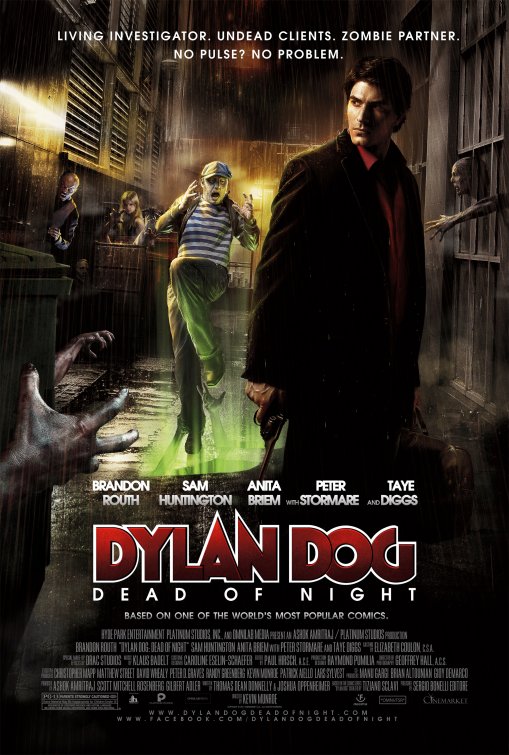 Cheap in just about every aspect, Dylan Dog is a monster noir that turns out to be one dog of a film. The conceit of a private detective for the monster world is a pretty keen idea and one that could certainly have fun skewering genre conventions. But this movie is not clever, not in the slightest. It’s a lousy detective story where Dylan Dog (Brandon Routh) investigates a murder victim (death by werewolf) that threatens to break the shaky peace between the vampire and werewolf families. The story flounders and even messes up its limited flashes of comic potential, like Dylan’s partner adjusting to life as a zombie (maggot burgers, yum). Dylan Dog is a rather uninspired horror comedy with little scares, little intentional laughs, and a critical lack of imagination. It’s got legions of supernatural creatures and a noir setting to play with, and this is the best they could do? Director Kevin Munroe (TMNT) cannot hide the shoddy budget and shoddier special effects. Routh (Superman Returns) is a likeable guy but he delivers every single line in the same wooden style mistakenly believed to be hard-boiled. What was the last good PG-13 horror comedy that didn’t involve Tim Burton? The rating kneecaps the movie’s darkness, which means the monsters don’t seem too monstrous. Everyone seems to take a cue from the undead and just acts resoundingly bored. Dylan Dog is one shaggy mess.
Nate’s Grade: D
Share this:

In Time (2011)
 Andrew Niccol is a filmmaker that has earned my respect and my hard-earned money. After The Truman Show, Gattaca, and Lord of War, this guy has me hooked. I forgive him 2002’s S1mone, which had some good ideas in need of a better plot. Lo and behold, his latest film, the sci-fi thriller In Time, falls victim to the same issue. Niccol’s premise is more intriguing than the people onscreen.
In the near future, science has solved the age-old question or mortality, for a price. Every human has an internal clock somehow embedded in his or her arm. It kicks in at age 25 and then people have one year remaining. Time is the only currency that matters. People work jobs to add minutes to their time. When it comes to a cup of coffee or a bus fare, you pay in minutes off your time (a hooker says, “I’ll give you ten minutes for an hour”). The rich are well stocked in time but the poor must fight every day just to keep alive. Sam (Justine Timberlake) works in a factory just to make ends meet. His mother (Olivia Wilde, we should al be so lucky) gives her son an extra 30 minutes for his lunch; humans can “pass” time from one to another through touch. This will come back to bite her. One day Sam meets a tall dark stranger who’s lived for over 100 years and is tired of it all. He donates all his time to Sam. This is a no-no in the future. The timekeepers are a police force, lead by Raymond Leon (Cillian Murphy), that polices time allowances. They’re paid to basically make sure that time remains the property of the upper class. Sam hobnobs with the elites, including Philippe Weiss (Vincent Kartheiser), a man who owns thousands of years. When the (Van Damme-less) time cops come looking for Sam, he makes a run for it, taking Sylvia (Amanda Seyfried) as his hostage. The two eventually fall for one another as they dash across the country stealing time.
 In Time has all sorts of ideas running through its system. What it doesn’t have it much of a plot to go with its heady sci-fi setup. Will is a fugitive but he never really formulates any sort of tangible plan. There’s no higher plot or goal here other than “sticking it to the man” but what exactly does that mean in this context? I understand he’s upset about losing a loved one, but his plan for vengeance or justice or whatever you want to call it lacks needed clarity. It feels like he and his cohort are just making it up as they go along. The film is at its worst when it descends into a populist, sci-fi Bonnie and Clyde, where Sam and Sylvia storm these time banks and redistribute the minutes, becoming heroes to the day-to-day drudgers. The ease that these two people have at knocking over bank after bank, armed only with a handgun, seems hard to swallow. The banks aren’t going to have tougher security especially after word gets out? Niccol adds plenty of chase scenes to fill out his plot but it doesn’t do much more than pad a half-baked story. The end confrontation goes in a direction I shall shamefully describe as “action movie idiocy.” You’re going to tell me that a timekeeping pro doesn’t pay attention when his clock is minutes away from death? Furthermore, I’m stunned that the people onscreen don’t act with more urgency when their time runs out. When death is on the line, I imagine a human being would resort to any kind of irrational desperation just to get a few minutes more, yet In Time shows a demoralized populace that just seems to give up. That makes the heroes-as-revolutionaries storyline even more implausible. Here’s a tip to Niccol: if it’s Sylvia’s last day on Earth, maybe you don’t have her racing for her life in heels. I’d think the gal would have purchased some decent running shoes by this time.
The ideas presented are compelling, though I wish Niccol had continued to push further. The social satire is pretty on-the-nose about the class system. I would have liked Niccol to be more biting in his social critique, perhaps carving up the rich as more venal than pampered. It’s true that they can live forever… unless something violent happens. This may be the future but there’s still no cure for a bullet to the head. The rich may live but they must live in sheltered, insular communities; a life encased in bubble-wrap. There is much potential there that goes unexplored. I also wanted a global sense of what was happening. Is time traded on the stock market? Are there different values placed on human time based upon geography? Is a Japanese life more valuable than a Ukrainian? The glimpses we do get about how the world operates are enticing and clever. The time roadblocks, tolls asking increasing amounts of time to pass into more affluent communities, feel authentic to the world and a cruel way to limit class mobility. When Sam pays for his expensive dinner he tells the waitress, “And take a week for yourself.” The timekeepers are only allotted a day at a time, so they can’t get carried away (I think it’s the futuristic equivalent of having the pizza delivery guy only have twenty bucks on him so he’s less likely to be the victim of theft). For the most part, In Time feels like it has some of the neat sociological quirks down but misses the psychological ramifications of its premise. People stop aging at 25. What does that do to a person’s sense of self? What about the peculiarities of dating? There’s definitely a sexual farce waiting to be written here. But let’s focus on the main dilemma – scrapping every day for just enough to stay ahead of the countdown. It’s an apt allusion to the working poor, but we never really see the tremulous stress that such a situation demands. This is life and death stuff, folks. The panic of inflation should also have been something Niccol paid more attention to. Just upsetting their time budgets could rock people’s world. There’s a lot more human drama inherent in this story that Niccol ignores, or flat out dismisses, for some standard Hollywood frills, namely chases and contrived romances.
 Timberlake has shown that he has some chops when it comes to acting in shrewd supporting roles (The Social Network, Black Snake Moan). His skills aren’t really well utilized by In Time. The role of Sam is pretty bland, lacking edge or depth. This part could have been played by anyone not befitting Timberlake’s genetic credentials. Timberlake can make a credible action hero, though his charm covers up for his lack of intimidating presence. There is one regrettable moment where he wails at the death of a loved one, and it hits the wrong notes and feels laughably awkward. Seyfried (Red Riding Hood) also turns on a dime from being a scared hostage to a romantic partner. Her role gets reduced to being dragged by the hand by Timberlake; she’s human luggage. Murphy (Inception) does a fine job of being a dogged, Tommy Lee Jones-style pursuer. Kartheiser works that reptilian sleaze he’s perfected on Mad Men. The guy is like a younger version of Sam Neill (Jurassic Park, Daybreakers), possibly the most reptilian of all living actors. The strangest part about casting is that it’s an Alpha Dog reunion (Timberlake, Seyfried, and Kartheiser all had supporting roles).
In Time is a better idea than a movie, and it’s an idea that deserves more examination. Niccol’s film has some interesting ideas and concepts, but it seems too slavish to a typical Hollywood blockbuster boilerplate. The characters are pretty bland and the thrills are too. I wanted to spend more time in this brave new time-obsessed world; I just wanted to spend it with other characters. The populist Bonnie and Clyde plotline doesn’t seem to gel. If the rich can control the arbitration of time, why don’t they just ungodly raise the price of things? In a a generation or two, the rich will weed out all lower classes thanks to near literal social Darwinism. The social commentary is a bit heavy-handed and simplistic. I wish Niccol had ditched his young heroes/lovers and explored the particulars of his world more, especially the portent psychological implications. In Time doesn’t feel like a complete movie, just a finished one. Ultimately, the film’s greatest sin may be that it wastes too much of your own time.
Nate’s Grade: C+
Share this:

The Thing (2011)
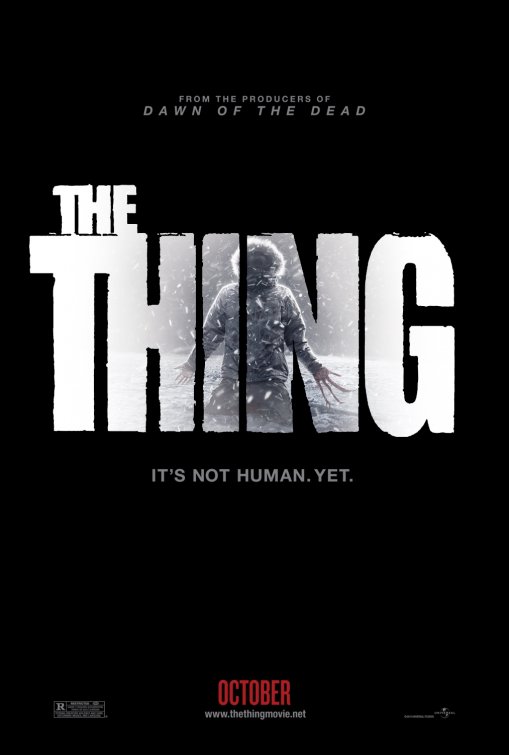 Has any modern filmmaker endured more crappy remakes of their films than John Carpenter? The man has suffered through remakes of Halloween, The Fog, Assault on Precinct 13, and now his 1982 creep-fest The Thing, itself a remake of the 1951 Cold War allegory, The Thing From Another World, gets the same awful treatment. This new Thing is some hybrid of remake and prequel, because it’s set before the events of the 1982 film but it pretty much follows the same overall plot. Once again a group of scientists (this time they’re Norwegian!) on a remote Antarctic outpost discovers an alien body buried in the ice. Once again the alien breaks loose and can assume the fleshy form of man. But this new film forgoes the rampant paranoia and rising tension of Carpenter’s film for cheap Boogeyman thrills. The alien monster is introduced early and the rest of the film succumbs to people looking around pensively, afraid it will jump out and attack. This alien creation is an odd quirk of evolution; a species that seems to be made of nothing but gnashing teeth, spindly legs, and vaginal imagery. How these things built and fly spaceships, I have no idea. Some of the gore effects are crafty and stomach-churning, but nothing is as memorable as the practical effects used sparingly and to great effect in the 1982 flick. This Thing is too much of a familiar monster to make an impact.
Nate’s Grade: C
Share this:

Real Steel (2011)
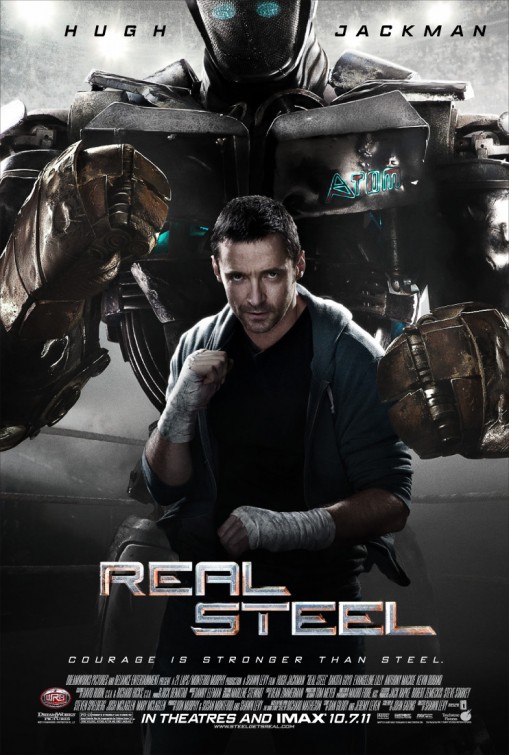 In the future world of Real Steel, set in 2020, robot boxing has become a huge sensation. It seems that audience bloodlust was not being satisfied with flesh and blood hitting the canvas, so robot brutality will do. Whatever happened to mixed martial arts, a sport arguably more popular than boxing in this day and age, popular enough it even got its own uplifting sports drama earlier this year (the overlooked Warrior). I strongly doubt that in only nine years we’d have giant fighting robots and that this “sport” would be nationally recognized. Did anyone see Comedy Central’s mechanical Coliseum showdown, Battlebots? There’s your answer, America.
In this future world where trucks have glass panels to show the world your feet (why? Because it’s “futuristic” you fool), Charlie Kenton (Hugh Jackman) is a has been. He enjoyed a fleeting career as a professional boxer before the mechanical men came into popularity. Now he goes from town to town trying to scrounge up some petty money with small-market robot boxing rings. His only pal is Bailey (Evangeline Lilly), his former flame and the owner of the boxing ring/chop shop that Charlie calls home. Charlie owes plenty of money to plenty of not nice people. His solution arrives in the form of his 11-year-old son, Max (Dakota Goyo). Charlie ran out on Max and his mother when Max was a baby, but now mom’s dead and custody is being discussed. Mom’s aunt (Hope Davis) and her rich hubby want Charlie to sign away his parental rights, which he agrees to do for the right price. Max spends one last/first summer with his estranged father before going off to live with his auntie. The two bond when Max discovers a beat-up old sparring robot when father and son are skimming parts illegally at a junkyard. The old bot, which Max names Atom, becomes a champion fighter. Father and son ride the success all the way to a championship bout with Zeus, a legendary robot that destroys all challengers. Can they stun the world? Can father and son bury the hatchet? If these answers are in doubt, I advise you to see any sports movie ever released.
J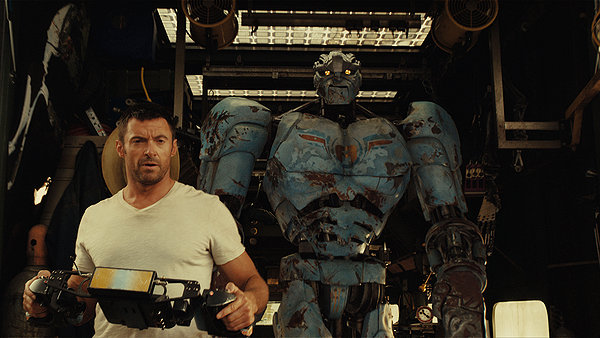 ust in case you stood clueless and slack jawed at the film’s storytelling prowess, you’re in luck because every character will take great pains to explain the significance of plot points, key metaphors and symbols, and personal motivations. Usually this stuff is tucked away as subtext, but Reel Steal decided that it would rather rub the audience’s nose in the architecture of its screenplay. Characters will just go around speaking blurting out their feelings in the most transparent way possible: “I can’t be with you again, I’m afraid of being hurt again, and seeing you in that ring is like seeing my father again in that ring, and fighting this fight is your attempt to regain redemption and prove yourself wrong, and the robot is old and busted but still has some fight in it left, just like you Charlie…” It gets tiresome. Max squeals, “All I’ve ever wanted was for you to fight for me!” Your dad’s kind of a lout, kid. You’d be better off being adopted by your preposterously rich aunt, which is really the moral we learned from Annie. Who talks like these people? It’s astounding how blatant the film is about explaining its sotry mechanics so that the dumbest common denominator in the audience can walk away feeling like Roger Ebert (“Did you notice how the robot was a metaphor for Charlie? I did.”).
Never in my life would I have anticipated that someone would watch Over the Top and say, “What if we added robots?” This movie essentially is a souped-up version of Sylvester Stallone’s 1987 flick where a dad fights for the custody of his kids through the weirdly court-approved process of the gentleman’s game of arm wrestling. First off, who in their right mind would make a movie about professional arm wrestling? There’s a reason this specific sports genre still stands with one entry. Charlie finds redemption over one summer spent with the kid he abandoned and then sold. The strange thing is that Max knows from the start that he’s more a commodity than a valued son. Yet he still bonds with dear old dad though he’s still going off to live with his rich aunt by the end. The father/son relationship becomes the heart of the movie, but what good can come from two annoying characters learning to get along? They’re still too annoying for me.
Charlie’s fight to become a better father is hampered by the fact that I wanted to strangle his kid. There was rarely a moment that passed where I didn’t want to punt this little brat. From the moment he first steps on screen, Max is surly and aggravating. Given that he’s meeting the father who abandoned him, I’d expect some confrontation but this little twerp cops a bratty attitude throughout. He hops on the boxing ring mic and walks around with a phony swagger and challenges the biggest baddest robot. The kid seems like a chip off the ole block, falling victim to hubris just like dead. When Goyo (Thor) screams it becomes a high-pitched caterwaul that caused me to writhe in physical pain. The subplot of Max teaching the robot how to dance is just embarrassing. You better believe the kid teaches his metal friend how to do the robot. The young actor deserves a fair share of the blame. Goyo flounders, overselling every emotion and hovering at a persistant petulant level of acting. I do not advocate the endangerment of children, obviously but I’d be lying if I failed to admit that I would have slept soundly had Max tumbled to his death in the robot junkyard. Goyo is so powerfully awful that he may well be the tarred as the Jake Lloyd of this decade (Lloyd infamously played the twerpy kiddie Darth Vader in the first of the regrettable Star Wars prequels). It’s hard for me to root for the reunion of father and son when I’d rather see father bury son in the ground.
 Real Steel is littered with nonsensical or dropped subplots, the worst offense being Atom’s secret. It’s revealed midway into the film that Atom is not just a sparring robot but a sentient being. It’s faking that it can only shadow human movement. When Charlie “teaches” Atom how to box he really is teaching the robot, though conveniently Atom seems to keep this knowledge to itself. Even when it’s being battered mercilessly, Atom doesn’t employ the skills it’s been taught. Maintaining his cover is more important than self-preservation, so suck on that Asimov. The fact that Atom is sentient is the filmmaker’s desperate attempt to add empathy to the robot. Without sentience, the robot is just a junky avatar that can be scrapped. It’s a piece of equipment but if sentient it becomes a character we can feel for. You don’t share empathy with a coffee maker. I kept waiting for this secret to somehow get out because it’s kind of a monumental deal. But it never does get out. The story never once revisits this gigantically important revelation. What does this mean about other robot boxers? Are they too sentient? What do they think about destroying each other for sport? There are important questions here that are ignored. What’s the point of making Atom sentient if you never do anything with it? It’s only a ploy to drum up empathy, but at no point does Atom feel like a character, only a collection of parts. It’s a coffee maker on steroids.
The movie borrows liberally from other sports movies, taking the emotional beats from Rocky and the family drama from a film like The Champ, though loses the downer ending. Everything is too recognizable, too formulaic, as if it was assembled on a factory floor. The only points of surprise are when Real Steel just carelessly drops plotlines, as mentioned above. What’s the point of introducing a plot point like the robots can malfunction if hit correctly in Act One and not have it resurface in Act Three? Jackman (X-Men) acts with all the power his neck veins can afford. He seems to be constantly growling or on the precipice of said growling. The romantic subplot with Bailey is an undeveloped thread only meant to tie back together into a pretty bow at the plot’s earliest convenience. Lily (TV’s Lost) plays the “girl,” which means all she’s given to do is remind the hero of his potential and be the warm body waiting in bed. But this is a family film, so we stop at late-night cuddling. Then Max ends up being a savant at mechanical engineering and electronics because… he plays video games? Give me a break. And it just so happens that every character we’ve been introduced to will be in attendance for the big fight, even the Texas bookie (the great and underutilized Anthony Mackie). Wouldn’t Detroit bookies take umbrage to this?
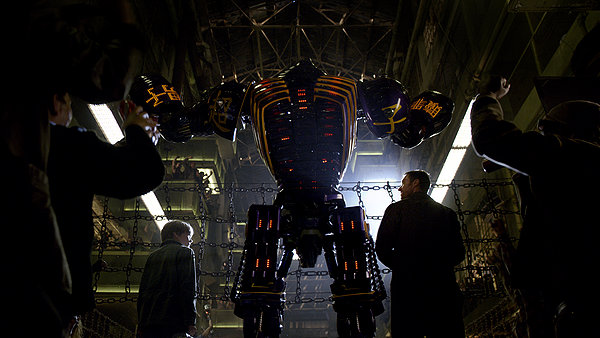
Do you like reaction shots? Real Steel is chock full of them: people wincing, people yelling and clapping at TVs, people muttering under their breath the optimistic instructions, “C’mon, c’mon, c’mon.” You accept some reaction shots as part pf the terrain of the sports movie, but when they’re presented in excess then it becomes a crutch, the director reminding the audience what to feel with the subtlety of a sharp stick to the eye. Then again subtlety was never the forte of director Shawn Levy, he of Date Night and Night at the Museum fame. The special effects are strong and the boxing sequences even have some livened suspense to them, though why would anyone build a robot boxer with two heads? What advantage does that offer other than two things to hit? Levy gets lost in the special effects and treats the actors with the same indifferent level of care that the humans show the robots.
Real Steel wants to be a rousing, family-friendly crowd pleaser; it just won’t ever let you forget that this is its primary function. This outlandish sports flick is much like its robotic pugilists: big, dumb, loud, and prone to malfunction. The film has no faith in its audience’s intelligence so every feeling and symbol is plainly explained with unwanted diligence. The characters are unlikable or underwritten, the story is shackled by lockstep devotion to formula, and Goyo’s wretched performance makes it damn near impossible to sympathize with the father/son reunion. Filled with unresolved plot setups and a mystifying similarity to Over the Top, Real Steel is just like every other boxing movie on record except this one has robots. I’m fairly certain the screenwriters were robots too. Why else would they make a robot becoming sentient seem like no big deal? Obviously this is propaganda to lull us into complacency before the impending robot war. Real Steel is a classic example of a movie done by committee; it feels like it was crudely assembled from the spare parts of other, better movies.
Nate’s Grade: C
Share this:

Attack the Block (2011)
 Attack the Block is the hip new sci-fi comedy/thriller from across the pond. The Brtis know a thing or two about elevating genre movies to an art form. While not rising to the same level of executive producer Edgar Wright’s oeuvre, this is one of the most fun experiences I’ve had in a movie theater all year.
On New Year’s Eve in a South London ghetto, a very different kid of firework is lighting the moonlit sky. An alien race is crashing to Earth as fiery meteorites, which the kids of the neighborhood term “Gollums.” Moses (John Boyega) is the leader of a group of teenage wannabe hoodlums. Their crazy night begins with mugging Sam (Jodie Whitaker), a nurse who lives in the boys’ apartment complex. Moses and his crew later run into Sam and need her help when one of their own is injured. The alien monsters have descended upon their block, scaling the apartment building looking for easy prey. Moses and other block residents band together to battle a common foe, the outer space monsters, which have the misfortune of trying to invade the wrong neighborhood.
Attack the Block is a refreshing spin on a genre that seemingly had covered every ground. But lo, it never covered the modern urban landscape, or, as the tagline succinctly puts it: inner city vs. outer space. It’s not long before you realize that writer/director Joe Cornish (writer of the upcoming Tin Tin flick) is the real deal. The camera angles are lively and inventive, without crossing over into self-infatuation for style’s sake. The cinematography by Thomas Townend is delightful to look at, often making our own home feel like an alien landscape with harsh color tones. The movie has the slick look we associate with music videos and commercials, but never does the movie let the visuals overwhelm the story. The edits are crisp and quick, packing a lot of material into a small 99 minutes and doing well to quicken your pulse during several iterations of the alien attacks. But most of all, the film is completely, unabashedly fun with a capital F. It has a swagger to it, adopting the same cocksure attitude of its main characters. The accents and the breathless jargon take some adjusting, but by the time we’re running from aliens you’re pretty much at the same pace of astonishment with the characters, forgetting the language barrier. I was quickly sucked into the world of this movie, able to enjoy the depth of skill by the invisible technicians. There’s an immense sense of satisfaction watching this crew band together to take out superior numbers of baddies, some of them even Earthlings. Cornish confines his narrative focus to one apartment building over the course of one night, setting up our orientation to the building so that when we have characters running back and forth, and various storylines criss-crossing, we are kept in the loop. As people start becoming monster chow, the stakes get even higher.
 The dialogue is regularly clever without having to stoop for self-aware gags. This is not a genre spoof. This is played relatively straight, just with amusing characters (“You’d be better off calling the Ghostbusters, love.”). One of the kids, who is on a pay-as-you-go cell plan, breathlessly says, “I only got one text left. This is just too much madness for one text!” Attack the Block is the right combination of scary and funny, the same fine line that its forebear, Shaun of the Dead, so successfully walked. This is the kind of movie that genre fans tell their pals about in breathless declarations of awesome before falling over dizzy. Nick Frost, star of Hot Fuzz and Shaun of the Dead, even has a minor roll as the neighborhood pot supplier. While Block doesn’t approach Shaun’s utter genre-spoofing greatness, there is enough of squandered potential in Cornish’s script, particularly how the various pieces ultimately stack together for its standard but effective fist-pumping climax, to keep Block from being crowned an instant genre classic. The characters remain little more than types, distinguishable by the few traits thrown to the actors like meager breadcrumbs (kid with glasses, angrier kid, white kid, etc.). If you’re a fan of Shaun of the Dead, and witty, bloody sci-fi, then you already know that Attack of the Block is destined to beam into your home.
The aliens themselves deserve a special mention since they break away from the traditional mold of cosmic movie monster we’re familiar with. These minimalist aliens look more like giant yeti creatures that run on all fours. They’re all black, like inky black hole light-cannot-penetrate black, which is scary but also a clever way to hide the shortages of a limited budget and the reality of people in suits. The only thing that stands out is a set of fluorescent blue jaws that snap wildly. It’s like the monsters ate a can of glow sticks. This aspect is smartly used at points to pump up suspense. It’s a novel approach that veers away from the H.R. Geiger (Alien) stuff that’s been copied and recopied to death for the last 30 years. These aren’t smart aliens. They’re more like rabid beasts overwhelmed by their biological impulses. These aliens don’t come across as organized as other movie aliens. It seems like they’re just floating around through the void of space waiting to land on the right rock and multiply.
The musical score is greatly enhanced through the talents of Felix Buxton and Simon Ratcliffe, better known to big beat electronica fans as Basement Jaxx. The musical duo provide a score tinged with their famous electronic mélange of sound, including pieces that sound like retro video game sound effects (Space Invaders?), 1950s sci-fi movie scores thick with Theremin use, and an ongoing sludgy beat that weaves in and out of the picture. Working with Steven Price (Scott Pilgrim vs. the World), traditional rousing musical pieces are enhanced with the Basement brothers’ dubsetp influenced bass and drum lines. The score perfectly matches the frenzy of what’s happening onscreen, evoking a fuzzy mood. I have been listening to clips of the Attack the Block score for days. It’s not as integrated and essential to the film as Run Lola Run’s famously kinetic electronica score (the standard bearer of all electronica-enhanced scores), but I was delighted every time it remerged. With the Chemical Brothers score for Hanna and Oscar-winner Trent Reznor’s score for the Girl with the Dragon Tattoo later this year, this may be the best time yet for film lovers that enjoy toe tapping to some electronic beats. These kinds of scores age so much better than synth scores, one of the absolute worst things ever to happen in the history of movies (Apocalypse Now is almost unmatchable thanks to its dreadful synth score).
 Of course your level of enjoyment is going to severely rest upon whether you want the main characters to survive or get eaten. Attack the Block begins with an empathy deficit, meaning it puts its hoodlums immediately in a hole that they might not get out of. Our first introduction to Moses and the gang is watching them mug Sam. Later on one of the guys says the knife that was bared was just for show, and that the boys were just as scared as she was. I doubt that. When you’re on the receiving end of a weapon, and outnumbered, and surprised, it sure seems like you got it worse. The movie then spends the rest of its running time with these wannabe ruffians, and we do get to know them slightly better but really only slightly. Some of the kids have absentee parenting situations, which isn’t too shocking, and occasionally a character will take a moment to reflect, thinking beyond the situation, blaming the government in a fit of paranoia for being behind the alien nasties. One kid even makes a curt remark when he finds out Sam’s boyfriend helps impoverished kids in Africa. “We don’t got poor kids here that could use some help?” he comments. Well, kid, I wouldn’t dismiss the magnitude of systemic poverty in the African continent, but you could have made your point without seeming like a dick. And these are our characters. They blather a lot; in fact they rarely stop talking. Eventually they do apologize to Sam for mugging her and Moses does take the mantle of hero to redeem himself. However, by that time some audience members may have checked out. Attack of the Block is decidedly less fun if you don’t give a fig for its wannabe thug figures.
Attack the Block is like a delirious head rush, witty, full of energy and style to spare, and an infectious attitude that washes over you. The movie delivers what Super 8 promised, namely the bond of kids coming together to thwart an alien invasion on their home turf. This is a high-energy flick that succeeds as a comedy and a thriller, with a few nasty splashes of gore thrown in for good measure. It has some issues that keep it from the pantheon of genre greatness, but I won’t quibble the movie to death. Not when I get something as deliriously entertaining as Attack the Block.
Nate’s Grade: A-


 nathanzoebl
You must be logged in to post a comment.