Blog Archives
Cinderella (2015)
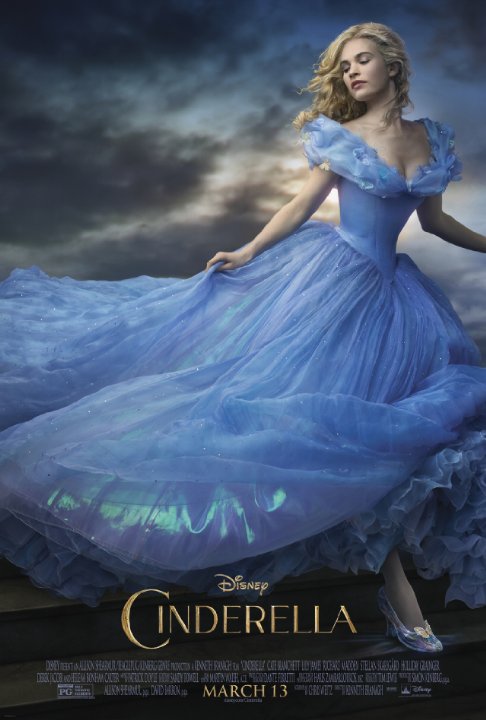 What is it about old stories that we enjoy so much? I pose this question after watching a commercial for the TV movie, Killing Jesus, based upon Bill O’Reilly’s best-selling novel. While it’s based upon a popular book, what can possibly be told with this newest rendition of the death of Jesus that hasn’t been shown a thousand times in other movies? There was even a movie that was released in theaters last year, Son of God, which covered the same territory with equal reverence. There’s something to be said for good stories and the universal appeal of the familiar, but why do people constantly pay more money for new renditions of the same old same old? That question leads me to Disney’s live-action Cinderella, a fairly faithful and warm-hearted rendition of the oft-told tale. I can’t exactly muster many reasons for an audience to dust off their best glass slippers and run out to the theater, but if you’re looking for the comforts of old and some family-friendly entertainment, then Cinderella will charm with its modest and achievable goals.
Cinderella (Lily James) is the titular put-upon heroine suffering under the cruelty of her two stepsisters and her new Stepmother (Cate Blanchett). Cinderella thinks back to the advice her mother gave her at a young age, to always be “kind and courageous.” One day she rides off into the countryside and comes upon a handsome man who just happens to be the Prince (Richard Madden). He’s smitten with their exchange and convinces his father to open the royal ball to all members of their kingdom, in order to see his special someone once more. His adviser (Stellan Skarsgard) is against such matters because he wants the Prince to marry for a political alliance, not for love. Cinderella is forbidden from attending the ball by her Stepmother, but luckily she has a Fairy Godmother (Helena Bonham Carter) who, with a pinch of magic, will make sure Cinderella attends in style and steals the Prince’s heart. None of this should be rather new to you, dear reader.
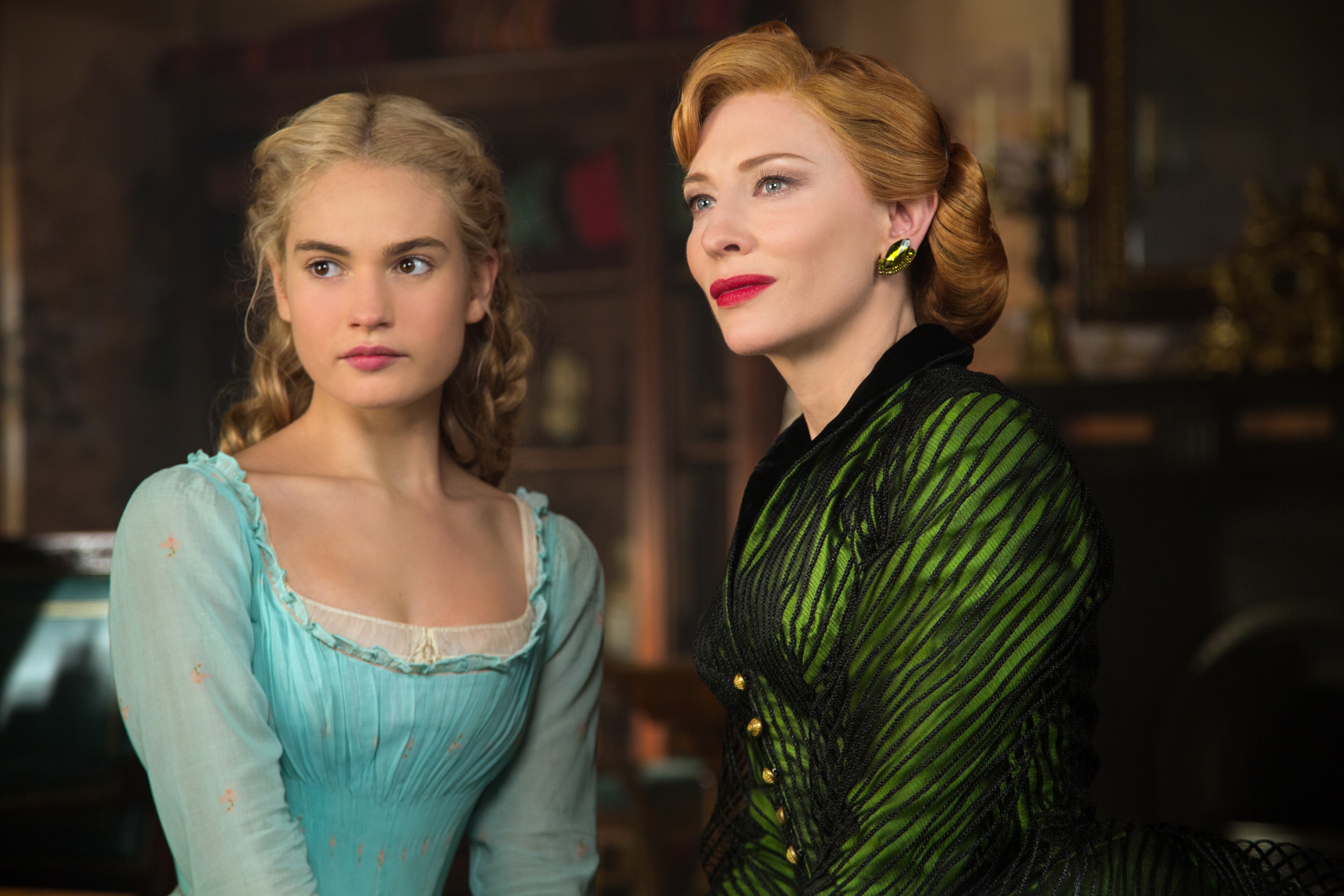 The first aspect of Cinderella I enjoyed was how it attempts to ground the story without losing a sense of magic to the proceedings. It’s still a fantasy film under director Kenneth Branagh (Thor), but there’s a concerted effort to place these characters in a world that resembles more of our own than the animated landscape from Disney’s original 1950 classic. Thankfully, half the movie isn’t spent with anthropomorphic mice wearing clothes and escaping the clutches of a house cat. There are a handful of helpful mice but at least they don’t talk and are mostly kept as cute accessories rather than co-stars. The reality of Cinderella’s hardships, especially after the death of her parents, is given an appropriate degree of solemnity. I also appreciated that the Prince is given an entire character to portray, one where his pursuit of a bride is placed in a political context about the security of his kingdom. He’s pressured to marry several available ladies for various political reasons, but he’s smitten with the girl he saw in the woods one fine day. The movie also succeeds in advancing a stronger, more developed relationship between Cinderella and her Prince. Instead of love-at-first-sight, they interact before the ball, and there is terrific chemistry between James and Madden (HBO’s Game of Thrones). There’s also a rather nice subplot between the Prince and his father (Derek Jacobi) that opens up their relationship. It’s a subplot that could have just as likely never existed and yet there’s something touching about the love shown between father and son. These moments, and the care to develop them, allow the characters to feel like flesh-and-blood people and to charm us all over again.
Another tilt toward greater narrative realism occurs with the villains, played by Blanchett (Blue Jasmine) and Skarsgard (Thor 2). While she’s still an arch villain, the treacherous Stepmother, who has no actual name, is given a generous treatment by Blanchett and especially writer Chris Weitz (The Golden Compass). The movie actually attempts to articulate her position, one where a woman of her age is left with few options to secure her family’s stability after the death of a husband. She clearly knows how society sees her waning value and Blanchett does a good job of casting that bitterness in way that you’re still reminded why she’s so furious and devious. I was so pleased I wanted more. I wanted the Stepmother to break down and admit that Cinderella is proof that her father will never love the Stepmother the same as Cinderella’s mother; she’ll always be second place to a ghost, and Cinderella is a constant reminder of this. Blanchett is also deliciously dishy as the wicked stepmother every moment she’s onscreen. Skarsgard can’t compete with the main attraction, but he provides an interesting secondary antagonist as he schemes behind the scenes to ensure the Prince marries a specific maiden with a reliable family name. He’s seemingly devoted to strengthening his kingdom, and he can’t let something as important as a marriage securing an alliance to fall aside because the Prince happens to be in love with a commoner. The extra dose of political intrigue is further attempt to ground and humanize the fairy tale, and it mostly succeeds.
 That’s not to say that the movie is without its fantasy pleasures. It is still a Disney movie about a famous Disney princess, and as such it maintains a bouncy, exuberant tone that keeps the heavier moments of drama from getting too heavy. Carter (Les Miserables) works wonders as the Fairy Godmother; she’s only in the movie for a solid ten minutes but she makes every second count. She has a silly nature that provides a welcomed jolt of scatterbrained comedy. Carter is clearly having a ball of her own with the role. The magical coachmen and assorted helpers supply extra cuteness. I also appreciated the quick fix of just creating a spell so that Cinderella’s step-family doesn’t recognize her at the ball. However, I never understood why all the artifacts of magic disappear at midnight but the shoes are left behind. Are they not magic too? Maybe only one of them happens to be magic and that was the one left behind. As presented, the shoe fitting is merely a ceremony rather than the missing clue toward finding the absent Cinderella.
So with all that said, does the new live-action Cinderella justify retelling what is one of the most retold stories in cinema history? I’d conclude a mild affirmative. It’s a charming adaptation that develops its characters with greater attention to detail, providing flights of fancy but also further humanizing the good guys and the bad. It’s no a deconstruction of the fairy tale, nor is it a revision, but it’s a faithful attempt to take what works but ground it in a slightly more realistic context, and it works. It’s at turns magical and touching and fun and buoyant and heartwarming. The casting all around is excellent, with every role impeccably chosen. Blanchett and Carter are great fun, and James and Madden have a winning chemistry. The technical merits are up to the same challenge, as the costumes and set design are gorgeous. Of course the aims of a new Cinderella movie are modest. Even if it benefits from a reworked attention to detail, we’re not reinventing the wheel here. It’s still the same story with the same major plot beats and the same ending we’ll all expect from the moment the Disney logo appears onscreen. The greatest achievement of Branagh’s Cinderella is that it makes you ignore these impulses. You find yourself once again returning to a familiar world and enjoying it all again.
Nate’s Grade: B
Share this:

Insurgent (2015)
 A return to the world of Divergent yields little forward momentum, in fact just enough to end on the point that I thought where a sequel would naturally begin. Turns out we needed a whole other movie, Insurgent, to arrive at this obvious narrative next step. Insurgent picks up with Tris (Shailene Woodley) and company on the run following the coup of two of the five social factions. Tris is a Divergent, able to apply herself to multiple factions, and she and her kind are the only ones who can open a secret box left behind by the founders of this post-apocalyptic civilization. The film does enough to hold your attention and we get to visit the other two factions we missed the first time, providing further shape to what is still a confusing world. I think the Divergent series will always fall short of the YA pacesetter, The Hunger Games, but they offer their escapist moments of entertainment. The second film is a bigger, louder, and more heavily coated CGI affair, especially the magic box’s mental trials that amount to a repeat of the first movie’s psychological trials of fear. Woodley is the strong center of the film and she processes her own PTSD over being forced to kill friends in order to survive; you do start to sense that Woodley is growing restless with the franchise. The third book is, as required by the mandate of milking YA franchises, being split into two movies, and while it served little to the Hunger Games, I hope better for the Divergent series, a group of movies inferior and somewhat mystifying but still interesting enough. For now.
Nate’s Grade: C+
Share this:

Focus (2015)
 The appeal and drawback of con artist films is that you know you’re being conned. You want to be fooled, but at the same time you’re conditioned to never take anything you see at face value, to be waiting for the turns and reveals and twists, and because of this fact it is rare for a con artist film to deserve more than one viewing. Focus fits this description. Will Smith is a smooth con artist who takes Margot Robbie (The Wolf of Wall Street) as his apprentice, but then he dumps her just as their feelings for one another get too real. It’s a shame then that the film peaks during its first act, when Smith and Robbie are first working together to shake down a gloriously irresponsible gambler played by B.D. Wong. The two lovebirds meet again in Argentina as they’re both circling the same rich mark. It’s fun to watch them mess around with one another and spar, and Robbie really shines, but the plot is just too formulaic to be anything more substantial. It’s fun and entertaining in spots, but the end is a cascade of twists that further muddle and complicate an already convoluted con caper involving secret race car fuel. The problem is you’re never engaged enough to forget you’re watching a con, and so you’re always suspecting every angle and doubting every character, which Focus eventually does confirm your suspicions. It’s nice to watch Smith transition into a less flashy role, though his effortless charisma still shines. It’s the kind of role he should be taking more often. You won’t have a bad time watching Focus but you won’t remember much in the morning.
Nate’s Grade: B-
Share this:

50 Shades of Grey (2015)
 It’s hard to be ignorant of the publishing phenomenon that is 50 Shades of Grey by E.L. James. The erotic trilogy became notorious for its numerous and often outrageous sex scenes. I have many female friends, and relatives, who read the series, and while not a one will admit to finding the series ostensibly “good,” they each read every book. In a way it reminds me of another popular yet critically maligned romantic series – Twilight. It should be no coincidence then that Grey began its early life as Twilight fan fiction. The movie adaptation was a hotly followed topic. After all, people argued, how could it possibly be rated R? How could you adapt it to the screen? With a female director (Sam Taylor-Johnson, wife to actor Aaron Taylor-Johnson) and a female screenwriter (Kelly Marcel) to steer the adaptation process, I figured I would at least get a sense of exactly what was so uncontrollably appealing about the series. For a film designed to be titillating and provocative, I came away wishing it had more action (of any sort) because the movie was just so freaking boring.
Anna (Dakota Johnson) subs for her sick roommate and gets to interview playboy billionaire Christian Grey (Jamie Dornan). He takes an interest in her innocence. And so he runs into her at the hardware store where she works, he fetches her after a drunken text on her part, and whisks her away to his luxurious Seattle high-rise. Before things can get frisky he has to share a secret. He’s a dominant looking the world over for women who are willing to submit to him and be his submissive. The world of sadomasochism is a new one for Anna, a 22-year-old on the verge of graduating college. However, she’s drawn to Christian and accepts his terms, and that’s when the sex gets taken to another level.
 So much of the film is the drawn out flirtation between two characters that I found painfully uninteresting. Wasn’t this supposed to be the exciting and sexy story of risqué sex and overpowering urges? I’m by no means the target demographic but I felt unmoved by the onscreen sex because it was so sedate by Hollywood standards. I’ve seen more enthusiastic and engaging sex scenes skimming the channels of late-night cable TV. It certainly doesn’t even come close to rivaling some of the steamier sequences of films past, like 9 ½ Weeks, The Dreamers, Henry & June, Last Tango in Paris, The Piano, Risky Business, Sex and Lucia, Don’t Look Now, Y Tu Mama Tambien, Dangerous Liaisons, sex, lies, and videotape, Little Children, Mullholland Drive, and Secretary. For fans of romance with BDSM, please give 2002’s Secretary a chance since it is 500 shades superior to E.L. James.
I understand that most erotic TV series and films are readily designed for men, and 50 Shades was designed for women, and there are differences in approach and stimulation, but for a product that is famous for the degree of kink involved, I was sorely disappointed by the results. In short, the movie needs more kink. It plays out as an introductory guide to bondage and S&M. This aspect isn’t even explored until the very end. It’s too timid to really give in to the thrills of its premise and likewise the demand of its readership. There’s a lot of nudity, mostly from Johnson, but the sex scenes themselves are rather ordinary and sedate, all things considered. There are four of them in total for those curious readers wishing to keep track (I also tried keeping track of the times Anna bit her lower lip but lost count). The sex scenes are filled with plenty of moaning but not a one of them builds up to climax, a strange omission since we’re tracking Anna’s pleasures. I wasn’t expecting the graphic, and graphically drawn out, onscreen sex of Blue is the Warmest Color, but I was certainly expecting more after all the hubbub. In the end, a sexy movie is going to be known for its sexy scenes, which may or may not include sex (I feel like fans are going to be justifiably irked by the absence of full-frontal male nudity – come on, give the fans a bone here). 50 Shades of Grey is ironically far too tepid to register as much more than sub-soft core eroticism.
Then there are the characters, both of which are too one-dimensional, and also boring, to bring much interest. Cinema has always been interested in good-looking people getting it on, but unless there’s careful attention to plot and character, then you’re just recycling the same soft core setups. It is wholly transparent that James’ novel began as Twilight fan fiction because the couple occupies the same unhealthy relationship roles. The female lead is a stand-in for the audience/readers; she’s a mousey, shy, normal girl who gets swept away by a brooding and dangerous man who tells her he’s no good, insists she should not be with him, but cannot help himself falling for her because he sees her inner beauty. He’s more male chauvinist than complex character, and his obsession is less a sign of a tortured psyche and more, as displayed, a clear indication of a sexual predator. Anybody who requires his paramours to sign legal documents about what he can put inside them seems like somebody not worth knowing. He tracks her down across the country when she dares to see her mother because Anna didn’t ask his permission. Control freak or a budding sociopath? With a lack of tawdry sex scenes, the far majority of the film is Anna and Christian ramping up their almost endless sexual tension, which the movie will hit you over the head with. I didn’t feel a single thing between the two of them, partly because of how poorly written they are and also because of the lack of chemistry. We watch her bite her lip a thousand times. We watch her stammer. We watch him stare rather intently like a shark. The filmmakers are doing the work for us rather than allowing a romance to blossom organically. It’s cajoled and manipulated and feels inauthentic in every sense, even before the trip to the playroom begins.
There is one standout scene that is actually sexy, and apparently it’s quite different from the source material. As Anna and Christian go over his legal language for his submissive, they treat it as a business meeting with an arch sense of professionalism. It’s one of the few times Anna displays a spark of personality, as well as decision-making, as she goes line by line and says what she will and will not do. It’s played with a wry sense of humor but there’s also a sexy undercurrent throughout the scene, where these two adults are having fun with the preliminaries. If the rest of 50 Shades of Grey had this same sense of personality and fun, it might have worked as an engrossing erotic fantasy.
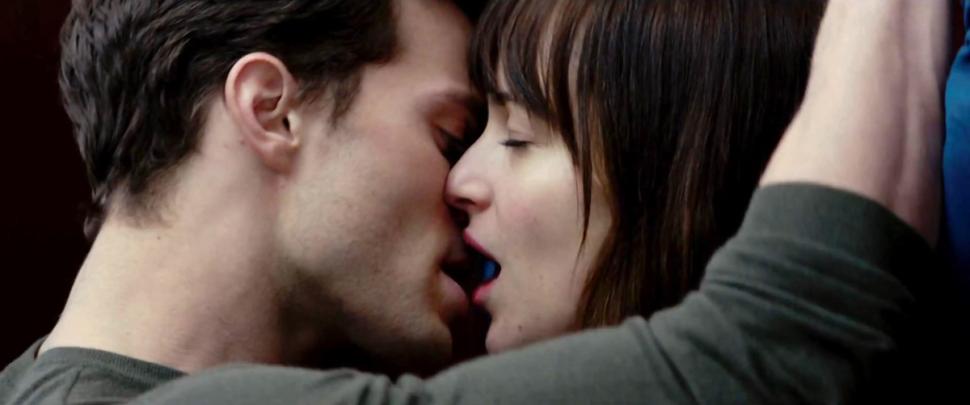 Johnson (Need For Speed) is an enjoyable screen presence even if there’s absolutely nothing interesting about her character. Anna is so absent a personality that it makes it easier for the story to present someone else doing all the work for her, pushing her, prodding her, giving her form. Johnson plays a lot of scenes for laughs, which work in a titter-generating way. I kept hearing Patricia Arquette’s voice whenever she spoke, but I may be alone in this unusual observation. Dornan (TV’s The Fall) on the other hand is terribly wooden. Again, he’s playing a rather terrible character with rather terrible dialogue, but it’s hard to feel any authentic sense of passion from the guy. It’s hard to say whether these actors are miscast or whether there could ever possibly be a suitable matching because of how lacking the simplistic characters are. They’re archetypes, and ones the movie has to keep persuading you are totally hot for one another.
So what is it that makes this property the would-be blockbuster that it is? The story arc has been done before for decades, going all the way back to Rudolph Valentino’s Son of the Sheik: the mysterious prince who comes and sweeps the princess off her feet to his exotic world of privilege. 50 Shades isn’t reinventing the wheel but it has struck a chord, and perhaps it’s the wish fulfillment angle, the introductory angle to a world of BDSM, or the plain Jane ordinary heroine that acts as a cipher for readership. The books are the books and the movie must be judged on its own account. I’m sure most of the series’ fans will be pleased one way or another, though I doubt many of them will find the movie an improvement over the book. Then again it does strip away James’ wretchedly torrid writing. If it wasn’t for the 100 million books sold worldwide, this movie wouldn’t be generating any of the hype it is, but is that the film’s fault? The hype machine unfairly builds expectations that will fail to be met, but then again it’s the over-saturated exposure that has ensured 50 Shades of being a Valentine’s weekend event for half the planet.
Surprisingly boring and rather tepid, 50 Shades of Grey feels too callow to be the provocative film experience it wants to be. It needs more of just about everything; more characterization, more organic coupling, more story, more romance, more kink. It is lacking in too many areas, though the production values are sleek, like it’s the most technically accomplished episode of Red Shoe Diaries. It’s a tedious story of the hazards and joys of giving up control, but I didn’t care about the characters. I need more than pretty people staring at each other for an hour while a breathy remix of a Beyonce song plays over the scene (to be fair that Beyonce remix is hot). The actors don’t connect together and the Christian character comes across as more of a monotone jerk than wounded bad boy. I’m sure 50 Shades has pushed millions into exploring aspects of their own sex lives they would not have felt comfortable exploring beforehand, and good for them. My friend Angie quipped that, if nothing else, the release of 50 Shades of Grey will cause a spike in battery sales for its opening weekend. It’s a shame then that the movie is too limp where it counts to be serviceable.
Nate’s Grade: C
Share this:

Jupiter Ascending (2015)
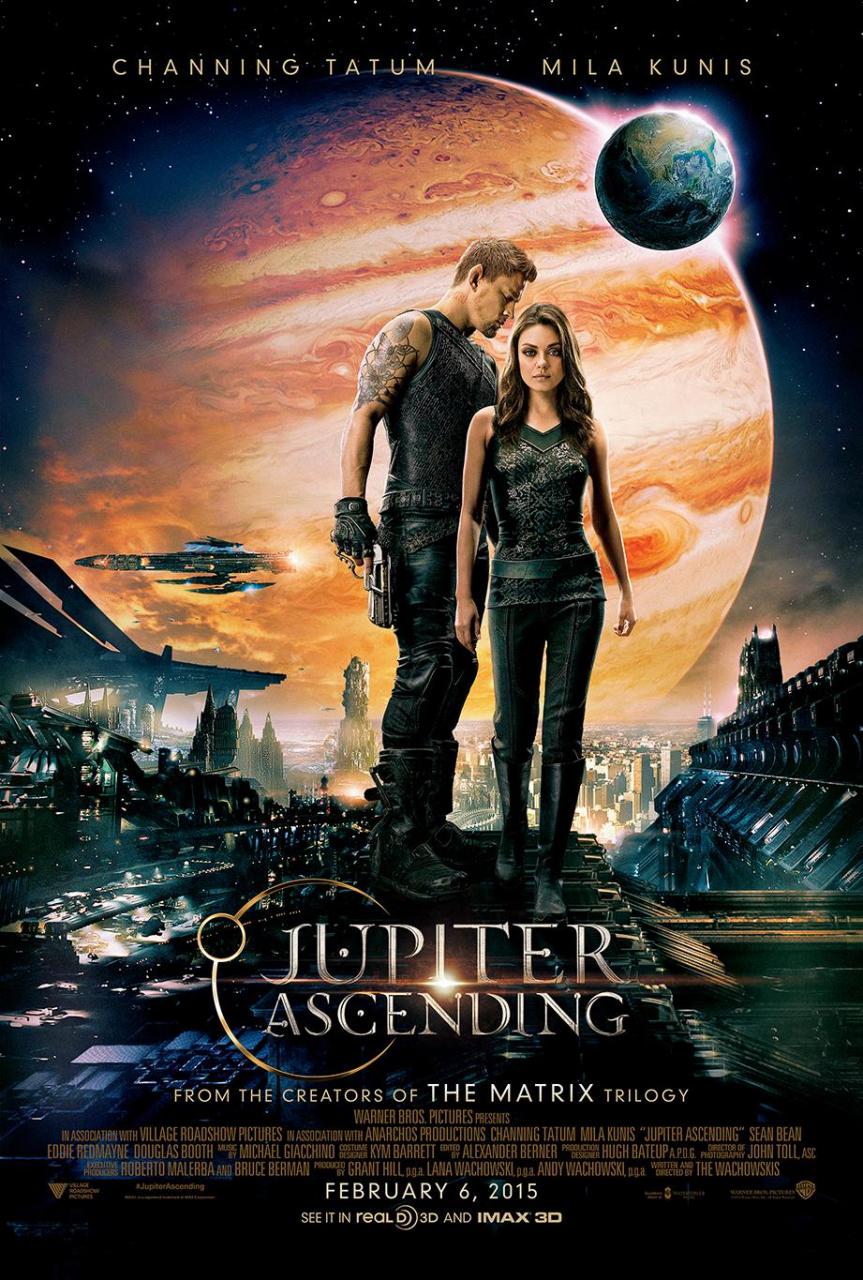 Few would dispute the imaginative powers of Andy and Lana Wachowski. They probably got a free pass from Warner Brothers after creating The Matrix, one of those culture-changing movies that come along so rarely. I was leery of Jupiter Ascending, their newest original science-fiction opus, when Warner Brothers delayed its summer release by nine months. The trailers and commercials were also doing a dandy job of hiding what exactly the movie was about besides cool visuals. I was holding out hope, thinking that maybe Jupiter would be silly but fun in a Fifth Element way, but instead ladies and gentlemen, we have an heir to 1980’s campy Flash Gordon.
Jupiter Jones (Mila Kunis) is an unhappy maid who cleans toilets for a living. Then one day she becomes the most important person in the universe. She discovers she is the reincarnation of the matriarch of House Abrasax, whose three children, Titus (Douglas Booth), Kalique (Tuppance Middleto), and Balem (Eddie Redmayne), are fighting over their inheritance. The biggest prize of them all is Earth, and now the appearance of Jupiter complicates ownership. Various alien species are sent to kill her, but Jupiter has a savior in disgraced galactic solider Caine Wise (Channing Tatum). He’s a “splice,” a result of gene splicing people with animals. He rescues Jupiter and they head off world to explore the much larger, much stranger universe.

Oh look, she’s falling again.
Right away, mere moments after leaving the theater, I knew the first step to make Jupiter Ascending a significantly better movie: completely remove the title character. First off, her name is awful and makes me think she’d be a character in the Jetsons universe. Mostly, she’s a terrible protagonist because she is merely a fairy tale wish fulfillment masquerading as a person. Her normal life is miserable but secretly she’s a space princess who is the reincarnation of a space queen. Allow me to momentarily pause and question this line of monarchy and inheritance law. Apparently Jupiter shares some genes with the deceased Lady Abrasax, but she has no direct bloodline. Does that automatically thrust her into another family’s inheritance squabbles? Why should they even consider her claim valid? Why does that place her at the top of the pecking order? When did we start recognizing reincarnation with inheritance law?
Back to the matter at hand, Jupiter is an annoyingly weak character that’s supposed to follow the arc of weak to strong, inactive to active. Except she doesn’t. Beyond accepting her incredible new position, there’s really not much that changes for her. She remains, from start to finish, weak-willed, gullible, always in need of saving, and so wretchedly annoying and without merit. Her cousin arranges her with a doctor for Jupiter to donate her eggs, but he expects a majority of the money. Why does she need this middleman in this arrangement? It’s another reminder how dim the character is and devoid of agency. And then all of a sudden a romance materializes between her and Caine because of course it does. I use “materializes” because there is no actual setup of any kind beyond the fact that Kunis and Tatum are attractive specimens. Their romantic dialogue will produce dangerously violent eye rolls.
The Wachoswkis are certainly imaginative filmmakers but their ambitious world-building impulses get the better of them and their story. The imagination is on full display when it comes to the visuals, the production design, costumes, and alien designs. There’s a grand mixture of creatures big and small, and even an elephant pilot because why not? However, the storytelling meant to house these cool things is notably deficient. Jupiter Ascending feels less like a story that naturally develops and whose complications arise in a semi-logistical fashion. It feels like somebody guiding you on a tour of Weird Stuff. It’s not so much a story as a collection of Weird Stuff, Weird Incidents, Weird Places, and Weird Creatures. You feel like you’re being skipped off from one exhibit to another, especially when Jupiter is kidnapped and threatened by each of the three Abrasax children in a row. Seriously, the entire scenario is on repeat, so when Jupiter continues making naïve choices, you can slap yourself extra hard having been through this purgatory just moments before. It’s only a matter of time before she gives in to whatever Abrasax demands again. There’s a general sense of repetition to the plot compounded by Jupiter’s incessant need to be saved (she seems to be falling a lot, out of spaceships, buildings, vehicles, etc., which also gets tiresome). The scheming Abrasax children seem to just slide in and out as the plot requires, with little in the way of resolution.
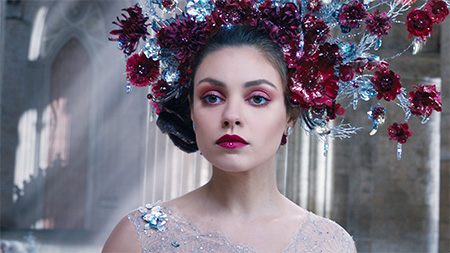 It’s impossible to discuss the film without acknowledging how damn goofy the whole enterprise comes across. Caine is part wolf, part albino, part human, and apparently part angel since he got his wings removed as a punishment. Does that seem like a good combination of elements or like the aftermath of a drunken writing session? Let’s just run down some of these names: Jupiter Jones, Balem, Kalique, Stinger, Gemma Chatterjee, Phylo Percadium, Chicanery Night (!). To be fair, it’s not like Luke Skywalker or Darth Vader are less preposterous names. Caine has a pair of anti-gravity boots but they’re really just hovering rollerblades. There’s just something silly about watching a guy rollerblade, even if you attach a futuristic spin to it. There’s a hidden factory beneath the stormy Eye of Jupiter, and yet this same important factory seems ready made to fall apart if the slightest projectile pierces its exterior (it’s the Death Star all over again). There are weird small aliens, weird alien bounty hunters who can turn invisible but don’t, weird space police that are really bad at their jobs, weird robots with human faces, and there’s also weird stereotypical Russian immigrants for Jupiter’s obnoxious family. Perhaps all the goofy camp will enchant you but I never got onboard mostly because the story and central characters left me so thoroughly unengaged.
Another ongoing problem is that the Wachowskis are constantly telling you things rather than showing you and allowing the story to organically develop. There are no less than three times when Character A looks at Character B and literally verbalizes what they are thinking or feeling in this moment. It’s lazy screenwriting, beholden to constantly having to explain everything to an audience because either you think they are dumb or your plot is far too convoluted; either way, a problem. Such sample pieces of dialogue include these informational asides: “Bees are genetically programmed to recognize royalty,” and, mere seconds later, “Bees don’t lie.” There you have it; bees don’t lie. Now you know.
The most frustrating part of Jupiter Ascending is that there is a genuinely interesting movie buried under so much of this silly nonsense and ear-clanging noise. The starting premise that Earth is nothing more than a stock portfolio for an alien species, that’s good. The idea that a trio of siblings is squabbling over who gets their galactic inheritance, which includes the deed to Earth, that’s good. The idea that human life is seeded on planets merely to be harvested into an eternal youth elixir for the rich and powerful, that’s even better. It’s not exactly a nuanced critique of capitalism but it’ll do. I’m disappointed that we don’t find out more about a larger market for this rejuvenation technique. There has to be more customers for such a miracle product than one rich family. If this were an intergalactic King Lear or even a space version of Margin Call, it would be far more exciting and creative. Instead, the bigger ideas are grounded into pulp so that we can have more CGI-drenched action sequences. There’s one segment that tonally breaks away from the film, diving headlong into Douglas Adams-style satire on bureaucracy. Like most of the film, it has its moments of entertainment, but it comes from nowhere and has trouble fitting with everything else. I’ll give credit where it’s due and praise the special effects, as well as the overall production design. It’s too bad that the action too often feels like a bunch of pixels exploding, failing to provide a sense of immersion. It’s hard to get a feel for most of the action and its use of space, save for portions of the finale. There is one very fun and well-choreographed fight between Caine and a… dragon… sentry guy (I don’t really know what to call these winged henchmen). That fight is exciting. It’s a shame there aren’t more of them. Bring on more dragon sentry guys.
Kunis is certainly miscast on the part, though I doubt any actress could pull off such a lackluster heroine who is always needing to be rescued. Kunis is more adept in the realm of comedy (Ted) or seduction (Black Swan), neither of which is featured with Jupiter. Let me say one more reason this Jupiter Jones character is awful; part of her struggle concerns whether or not to marry a playboy space prince. I don’t know if the Wachowskis believed that Jupiter was supposed to be a “strong” figure, but reducing feminine value to her being married feels rather reductive for sci-fi (not that there isn’t a storied history of women being treated as objects of fantasy in the genre). Tatum’s (22 Jump Street) remarkable charms are dulled by his silly albino beard and general guard dog characterization. He’s less a character than a protector who inexplicably instantly falls in love with his charge. Both actors will no doubt rebound in short order.
 Reserve some pity for poor Eddie Redmayne, a man who will be experiencing the highs and lows of acting this month. He’s the frontrunner to win Best Actor for his stirring work as Stephen Hawking in The Theory of Everything, which is what makes his performance here even more astonishingly awful. He speaks in this effete whisper for the entire movie, one that is hardly audible at all, except for the occasional line where he screams and spasms, making the contrast all the more funny. He constantly holds his head back like he’s in danger of nosebleeds. This is a performance of such startling misdirection that I physically felt bad for Redmayne. He seemed to be reaching out to me, pleading through his glassy eyes, communicating, “Help me, help me.” Even if his character’s vocal range wasn’t so nonthreatening, Balem makes for a terrible main villain. As a rich lord with power at his disposal, he works, but late in the movie all of that is removed, and he has to be a physical threat. After 90 minutes of watching him on screen, you will never be able to see him as a credible physical threat, and even the movie doesn’t fully treat him this way, and yet the plot still places him in this role. He’s not a heavy. Balem is laughable but he’s another component of a generally laughable movie.
Jupiter Ascending is a rarity in Hollywood, a big-budget epic that overpowers you with a singular sense of style and imagination; it just so happens that so much of the creative fireworks are laughably terrible. The Wachowskis don’t do anything in half-measure, and the film is put in overdrive. There’s a mess of characters and peculiar details to make this world feel larger than life and tethered to the idea of fun. Then why oh why did we have to be saddled with such boring, one-dimensional characters and a secret princess storyline lifted from countless sources? In the past, the Wachoswkis have found ways to turn pop philosophy and pop-culture into an entertaining alchemy that separated them from the sci-fi pack of imitators, which were legion. I still have great fondness for the original Matrix (you can keep the sequels), V for Vendetta, and especially Cloud Atlas of late. The Wachowskis are ambitious filmmakers and they have the imagination and narrative sensibilities to achieve great things. It’s just that with Jupiter Ascending it feels like their real passion was in all the background artifacts, the minutia of the worlds, the alien costumes and makeup, the histories of worlds. It certainly wasn’t on a story or characters or a credible romance. And yet even after all of these words, I have to admit that Jupiter Ascending is entertaining, just not in the way its creators may have intended. It reminds me of 2014’s disastrous Winter’s Tale, a passion project that was so baffling and bafflingly terrible. If you’re curious and willing to part with some money, gather some friends and check out Jupiter Ascending. Just make sure you’ll have suitable time planned afterwards to discuss its particular brand of big screen lunacy.
Nate’s Grade: C
Share this:

The One I Love (2014)
 A simple yet high-concept sci-fi hook that’s nicely examined and developed for its duration, The One I Love is a relationship drama with a twist, one I won’t feel bad about spoiling considering it happens in the first 15 minutes. Mark Duplass and Elizabeth Moss play a married couple going through counseling to work out their trust issues. They head out to a resort home to spend a weekend getaway; however, whenever one of them enters the guesthouse, their spouse is magically there. Not just them but an idealized version of them, the best representation. The two explore what this means, establishing a series of rules of intimacy that of course will start to be ignored. The mystery of why this doppelganger honeymoon suite is happening is inconsequential. What matters is how our couple responds to it and the film thankfully allows this conflict to stew, maximizing its potential to explore the jealousies and insecurities of relationships. Duplass and Moss are terrific and have fun with their many iterations. The One I Love finds ways to continually surprise while still feeling grounded by its real-world application of its science fiction premise. The ending is a tad predictable but still satisfying, likely inspiring many conversations afterwards with would-be couples who watch the film. At its core, it’s an intriguing story that’s very well developed while never losing sight of its characters and their relatable nature. It’s smart, funny, and always interesting, and well worth exploring on your own when given the chance.
Nate’s Grade: B+
Share this:

Fateful Findings (2013)
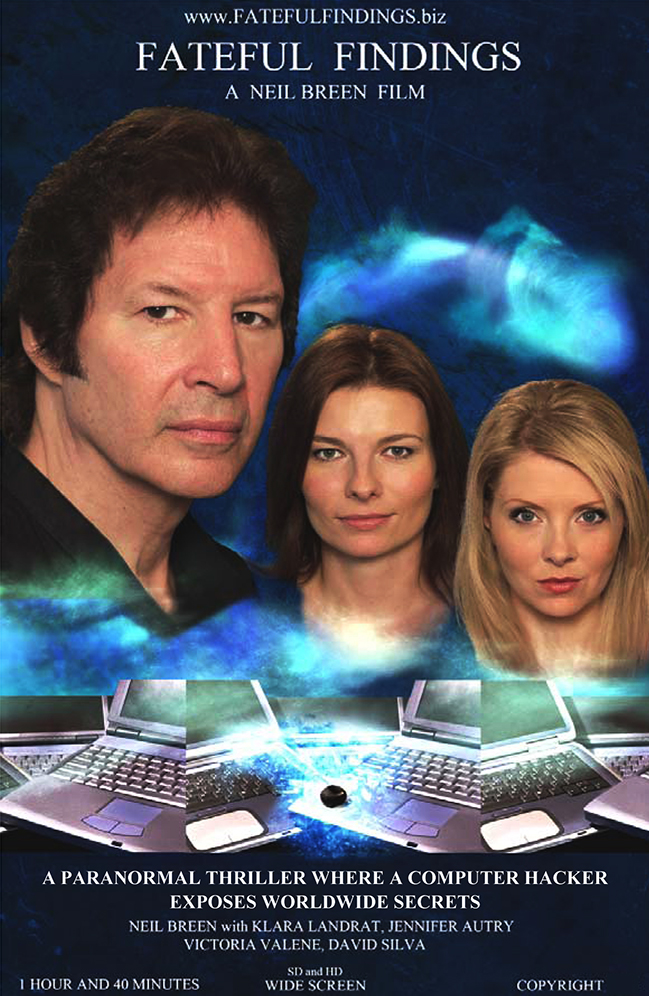 Ever since the ascent of Tommy Wiseau’s The Room atop the dung heap mountain of midnight movie fare, the world has been avidly searching for the next so-bad-it’s-amazing film. There have been several contenders over the years, most of which were amusing, such as Troll 2 or the original Birdemic, but some of which made you consider the value of life itself, such as 2009’s After Last Season. Oh, that one still makes me wince. Don’t even see that one. But as a lifelong lover of all things cinematically terrible, thanks in part to growing up on a healthy appetite of Mystery Science Theater 3000, I am compelled to seek out the worst of the worst. The Room is one of my favorite movies of all time; my love for it knows no heavenly bounds. I have to sniff out anything that comes remotely close to replicating that wonderful experience.
Enter Las Vegas realtor and architect Neil Breen. According to a Deadline Hollywood report from October 2013, Breen wrote/directed/produced/starred/edited/and just about everything else a little bundle of love called Fateful Findings. He sent it out blindly to distributors looking for any takers. It just so happens one bit, and now Fateful Findings is gearing up for a nationwide release specifically targeted at the midnight movie crowd that made The Room the sizeable cultural hit it is. Like Wiseau’s accidental masterpiece of cinematic miscalculation, Breen’s film is awash with bizarre directing choices, curious line readings, painful acting, subplots that come and go as they please, a lack of resolution, characters that behave more like aliens than human beings, odd camera framing and compositions, and, naturally, an ending that must be seen to be believed. For fans of woefully bad cinema, there’s a lot to dig in and I’ve got my knife and fork. First, I want to describe four of my favorite things about Fateful Findings and Breen.
 1) “It’s a magical day!”
The film opens with an eight-year-old boy and girl waking through the woods, coming across a magic mushroom (not that kind). The mushroom disappears, revealing a jewelry box, and inside is a black rock. “It must mean something,” young Dylan lets the audience know. Young Leah then says, twice, “It’s a magical day!” Oh, but if that wasn’t made abundantly clear, she also writes it in a notebook and shows it to the audience. But this opening scene isn’t done with its magic. We flash forward many years to an adult Dylan (Breen), who looks at least ten years older than the adult version of Leah (Jennifer Autry). Prepare for the sudden time jump shock. Anyway, Dylan and Leah never saw each other again after that magical summer that is… until she’s invited to a family barbeque. Why is this stranger, and her then fiancé, invited to a limited family engagement? Anyway, the way that these two people reconnect is that adult Leah bumps into adult Dylan and drops, what for it, the SAME notebook. It falls magically open to the SAME page, revealing the SAME message: “It’s a magical day!” Apparently she still carries that notebook around everywhere she goes and has never written in it since that fateful day. Who doesn’t bring a 30-year-old notebook with them to a barbeque?
2) “It was the Rolls Royce that hit ‘em. I saw it. I’m a witness.”
Also in the first ten minutes, we watch adult Dylan get creamed by a Rolls Royce. The speeded-up sequence itself is just hilarious to watch, especially since the car appears to be going rather slowly in the previous shot. Anyway, Dylan recovers in a hospital thanks to the black rock reviving him (make note when the EMTs arrive and their lagging sense of urgency). The collection of rubberneckers gathers at the accident scene, including one gentleman who, God bless him, foolishly attempts a British accent out of the blue, reciting the above line. I’m sure it would have been in question since the one car resting right next to the injured man is covered in his blood (how much did that cost to rent and splatter a car like that?). It’s at the hospital where Dylan unknowingly meets the adult Leah for the first time. She’s a doctor and pronounces Dylan “semi-comatose.” How is that a thing; can you be semi-pregnant? After his miraculous revival, Dylan leaves the hospital and re-enters his home, taking a shower. His wife, Emily (Klara Landrat, a former model), steps into the shower with him and happily embraces her man. Except beforehand we see a shot of his feet in the shower and blood is profusely streaming down his leg. Remember, all this is from a head wound, so how much does his head have to be bleeding to get down his leg? The shower is filled with blood, Dylan’s bandages are blotted red, and she steps inside. Gross. What kicks this entire sequence even higher in hilarity is that Dylan’s facial bandages actually cover his ENTIRE mouth and nose with no indentations for him to breathe out. When he detaches the oxygen mask, you’ll see there’s nowhere for him to actually breathe. Damn you, Obamacare!
 3) “No more books!”
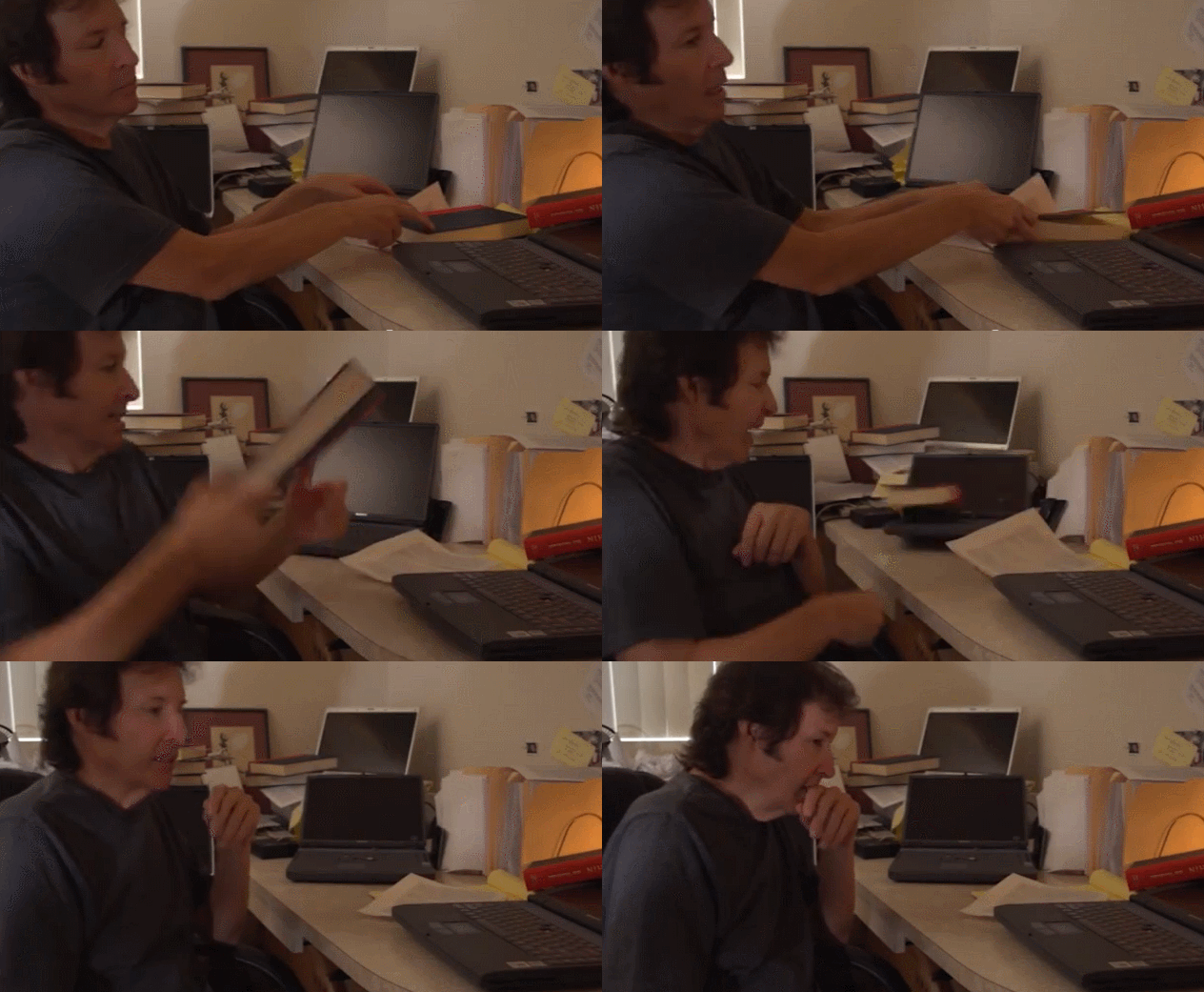
Once home, we learn that Dylan has a Master’s degree in computer science but became a successful novelist, a fact he seems almost disdainful about. This dichotomy is illustrated by the fact that Dylan has four laptops out at all times, none of which are ever really turned on. Why four? Why not? He pounds away, literally, trying to complete his next book, but when his temper arises, he almost always takes it out on the poor laptops. This is a very abusive film when it comes to laptops. My favorite moment is when Dylan is holding a cup of coffee and it looks like he’s going to spill it on that laptop. It’s a ten-second sequence that leaves you on the edge of your seat, finally ending in an even greater comic punchline. At another point, Dylan throws two books into two laptops before holding back his incalculable rage onto a third laptop. The only way people communicate is by throwing things in this film. You could turn Dylan’s tortured mistreatment of laptops into a drinking game.
4) “I can’t believe you killed yourself. I cannot believe you killed yourself. I can’t help you out of this one.”
I won’t go into detail about the context of this quote, to spare some spoilers, but it illustrates the habit of actors repeating lines of dialogue ad nasuem. The dialogue itself is rather plain, so it’s weird that Breen and company feel the need to keep repeating themselves, as if we’re missing some deeper hidden meaning. We’re not.
Breen has described his film in interviews as a genre-bending psychological thriller, and while some of those elements may be present in the faintest, most diluted distillation, the man’s movie is really the long story of two marriages coming apart. Dylan’s marriage with Emily hits the skids when she gets addicted to his pain medication, but neither person seems to treat this as the serious development it is; what makes this worse is that Dylan enables her addiction. He keeps getting her the meds when he clearly no longer needs them. It seems once his childhood sweetheart re-enters his life, Dylan just forgets he has a wife. The other marriage consists of Dylan’s bickering neighbors, Amy (Victoria Valene) and Jim (David Silva), and they really have no impact on the greater plot whatsoever, and yet Breen’s film wastes so much time on their story. They’re unhappy. He wants sex. She doesn’t. Eventually in the heat of the moment Amy does something impulsive and very criminal, and the movie treats it like any nominal plot moment. A vital witness to this crime doesn’t bother speaking up until fifteen minutes later in the film, as if they just had some nagging chores to do before alerting others about a serious crime. Perhaps Jim and Amy are, in some twisted perspective, Breen’s idea of comic relief (Jim’s exaggerated “drunk” movement, throwing drinks on one another, etc.), but for a movie that is nonstop comic blunders, what difference does it make?
 And then there’s the supernatural story that permeates the edges of the film, popping in from time to time to remind you during the marital discord that, oh yeah, there’s a mysterious ghost or something or other. The supernatural stuff begins muddled and unexplained and never really clarifies. It’s thanks to the black rock, which Dylan refers to as a cube, that he’s able to survive being hit by the car. If that’s the case, then I don’t think I’d ever let that sucker out of my pocket. I’d glue it to my hand. Inexplicably, the rock also gives Dylan the ability to transport himself through walls, though he only does this once and never explains how he knew. The way we know something “magical” is happening is when a little puff of grey vapor appears onscreen. Is it a spirit, a malevolent force? Does it have anything to do with this stupid book that keeps haunting Dylan? I feel like Breen is patterning himself after the work of David Lynch, except that Lynch’s films, which can consist of weirdness for weird’s sake, have cohesion, a vision. Fateful Findings has the occasional supernatural entity, but it’s rarely examined, and then we’re off to the next subplot as if spinning a board game wheel. Then the supernatural angle, which is only barely toyed with, and with such peculiar indifference, is abandoned and the movie wholly chases after another storyline.
The movie’s final focus is on Dylan’s super secret hacking uncovering all sorts of vague secrets and corruption from governments and corporations (“As president of… The Bank…”). Throughout the film, Dylan keeps mentioning this but it never seems terribly significant, at least judging by the characters’ actions. It isn’t until the very end where Breen spends more than a passing interest in this subplot, because we have more important storylines to feature, like Ally (Danielle Andrade), his neighbor’s teen daughter, inexplicably trying to seduce him. It comes out of nowhere and is just as quickly pushed aside (I also wonder how old Ally is supposed to be). Allow me to thread an analytical narrative to make sense of these dispirit storylines. Assessing the film, it sure comes across like Breen’s attempt to bolster his sense of self. In every scenario, people treat him as a treasured human being, he’s at the center of a diabolical conspiracy, he’s gifted with magic powers that separate him from normal men, all women want to seduce him, and then in the end he’s the one who makes the world a better place by exposing corruption. It sounds like a hero complex to me. Even acts that deserve harsh scrutiny, like his enabling of his wife’s addiction or his blasé attitude about carrying on an affair, are ignored. In this universe, Dylan is always right, always desired, always respected, and always special.
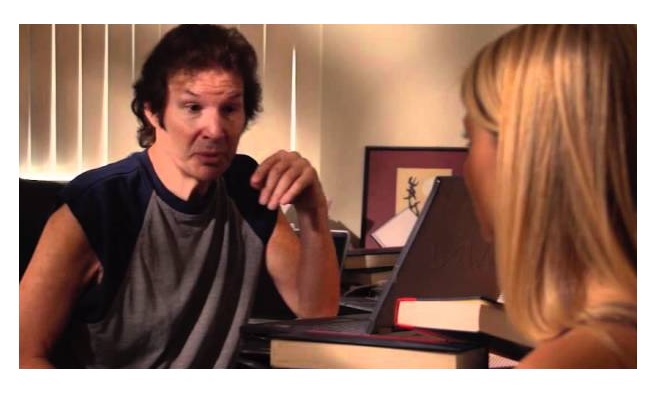
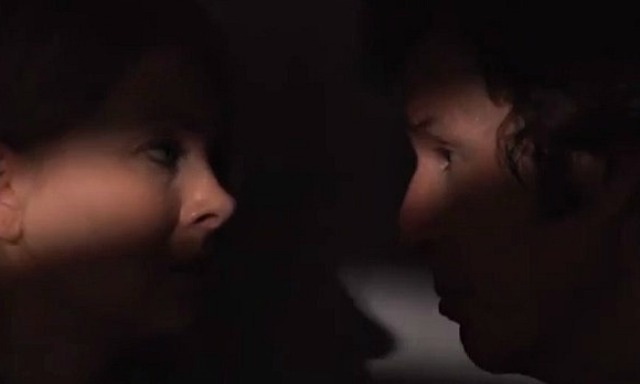 The production has a hard time hiding its obvious shortcomings, sometimes hilariously so. It becomes clear very early that most of the film was likely shot in Breen’s home, which is fine except it also unsuccessfully doubles as other locations (the blinds are the big giveaway). The worst is the hospital room, which mostly consists of a bed and three oxygen canisters. What hospital room is going to have carpet? So much of the movie takes place in Dylan’s home office, with that plethora of laptops, that you’ll start to memorize the home layout. In the opening, with Dylan and Leah as kids, we’re shown modern-day vehicles and then flash forward at least 35 years. Could Breen not have shot the scene with some older vehicles? Then there are Dylan’s two therapist’s offices. The first one is the guy who keeps prescribing pain meds. Perhaps to communicate his overall incompetence as a doctor, Breen stages all of the therapy scenes in a conference room with both men sitting as far apart, at either end of the long conference table. What better way to foster patient intimacy? He also magically switches jackets in the middle of one session. The second therapist operates in what looks like a closet, and the only thing we see are two folding chairs. She may not really exist, or was in on the unexplained supernatural conspiracy, so perhaps the old lady therapist didn’t feel like putting that much effort into decoration.
The technical abilities of the Fateful Findings crew are, to be expected, less than stellar. The editing is another clumsy detraction, namely that Breen and his TWO other editors let their scenes meander several seconds longer than where they should have cut, giving the film a loping feeling. It’s like each person is counting mentally when to respond to the dialogue, and when one person finishes the film holds, counts as well, and then cuts. There are slow pans that add nothing to the film but space in between lines of dialogue. I don’t need rapid-fire cuts for what is essentially a domestic drama, but why the hesitant editing? Is it just a sneaky way of inflating the film’s running time? Even Breen’s staging of the camera can often be confounding. For whatever reason, the film often features camera shots of people’s feet or people very carefully cut off at the head, meaning their heads are not visible. It happens enough and for such nonessential scenes that I started to wonder if Breen found himself an Ed Wood-esque solution for not having his same actors for the scenes he needed them for. Beyond a Tarantino-size foot fetish, I don’t know why there are so many shots of feet. At least Breen is not as inept in his visual staging as the makers of After Last Season, a movie so bad it’s just bad beyond measure. Breen knows enough to adequately stage his scenes, which makes his choices all the more curious.
The acting is generally terrible across the board, occasionally breathtakingly bad. Let’s start with Breen himself, who is fairly listless and deadpan throughout. He raises his voice but rarely does he change how he’s responding. He’s aloof and strikingly self-serious at the same time. Breen’s command of his actors is limited to directing them to just ham it up. Most of the actors will exaggerate facial expressions and physical movements, providing more drama. Landrat is trapped by her storyline too early, and so she succumbs to the screaming wife with an Eastern European accent. Autry does no better, looking uncomfortable in every moment onscreen. The worst actor in the movie, easily, is Valene, who squawks in the same pained sing-songy manner with every line with nasally incredulity. The best performance in the film may belong to the mysterious old lady therapist who may not really exist. And yet, she’s the most grounded.
 Making the film seem even more alien is Breen’s chaste sense of human sensuality. One of the adjectives on the poster describing the film is “passionate,” but you have to wonder if Breen was just too uncomfortable, or perhaps his female actresses were, to make the onscreen passion a bit more palpable. The very way people kiss in this movie is so chaste. They lean in, pecking each other slightly on the lips, as if one was kissing their grandmother goodbye rather than engaging in uncontrollable passions. They were doing hotter fake kissing in 1940s Hayes code era Hollywood (check out Hitchcock’s Notorious and tell me that Cary Grant-Ingrid Bergman kiss still isn’t hot today). Breen’s passions are so modest and contained. Take for instance a scene of passion directly following a spat between Dylan and Emily, one where she threatens to leave him. Apparently that revved up their engines because they start tearing apart one another’s clothes and doing their chicken peck kissing. Breen, as is his usually fashion by this point, knocks over several laptops and throws papers into the air for what feels like a solid minute. Whenever disrobing one of the actresses, be it tearing of clothes or the more gentlemanly “unbuttoning” method, he always stops above his ladies bosoms, allowing a hint more cleavage but nothing beyond. It happens enough that it starts to become a noticeable artistic choice, as is his consistent framing of topless women sleeping face down on their beds. It gives just enough of a glimpse of partial nudity without revealing more (all four main actresses will go partially nude at some point in the film). This puzzled me because I was certain the only reason these actresses were selected is because they likely accepted a part where they would eventually display their physical assets. They’re not here because they can act, that’s for sure.
In fact, the only nudity in the entire movie belongs to Breen himself as he bares his behind while stumbling out of his carpeted hospital room. If you dare look closer, you’ll see the end of his gown catches the end of the hospital bed just so, allowing the flap to stretch and display Breen’s posterior. Either this was a one-time thing and Breen said, “why not?” or, and I think, given the nature of hero complex evidenced, this is more likely, that they kept shooting the scene until the flap caught and proudly displayed Breen’s rump. I suppose in the Garbage Bag Room (a reoccurring dream/nightmare in a space literally lined with garbage bags), there is a nude woman accompanying him, but she’s tastefully composed and likely a body double for Autry. For a man who looks visibly uncomfortable even kissing women, let alone disrobing them, it defies logic that Breen would acquiesce to his own nudity in his own film.
But the question that must be asked of all craptacular movies is whether it is the right kind of bad, the kind made with sincerity in equal measure with its incompetence. It’s one thing to make a bad movie and another to make it purposefully, chasing after the ever-hungry midnight movie crowd, looking to cash in with some canny filmmaking ineptitude (Birdemic 2, people). From everything I’ve gathered via Breen’s interviews, he’s legit. He even has previous movies to his name and I can only hope those will see a wider release. Breen’s film hits that so-bad-it’s-good sweet spot of derisive entertainment enjoyment. I was laughing just as many times as I was shaking my head. However, as a connoisseur of crap cinema, I must say that The Room maintains its throne. Breen’s film is a bit too lackadaisical in its nonsensical plotting and starts to feel redundant, and I’m not just talking about the oft-repeated dialogue. There is a finite level of bad to this film whereas The Room is a thousand brushstrokes of terrible. Breen’s film marvels but it may also test your patience at turns, unless you’ve been drinking heavily.
 Fateful Findings is awash in terrible decision-making, to the world’s benefit. Breen and his team have put together a movie that is baffling, ridiculous, and greatly entertaining. From the dropped subplots, repeated laptop abuse, inauthentic human behavior, hazy plotting, laughable special effects, chaste human interaction, strange feet-heavy framing, and that ending, oh the ending is just comedy gold; there’s a little something here for every discerning ironic viewer of bad movies, though the film does lag and repeat its offenses enough that it feels stretched and redundant. I’d say, amongst the spectrum of recent bad midnight movie fare, it’s probably just below Birdemic. I don’t know what the repeat value will be for Breen’s film, or whether it will catch on with audiences like Wiseau’s unexpected success. I can’t even say whether I really want to watch it again, but I will, and with a gathering of friends, and likely with the added benefit of some adult beverages. If Fateful Findings is playing at a theater near you, by means see it and bring your pals along for the fateful experience. It will make you think. Mostly about laptops.
Nate’s Grade: F
Entertainment value: A
Share this:

Her (2013)
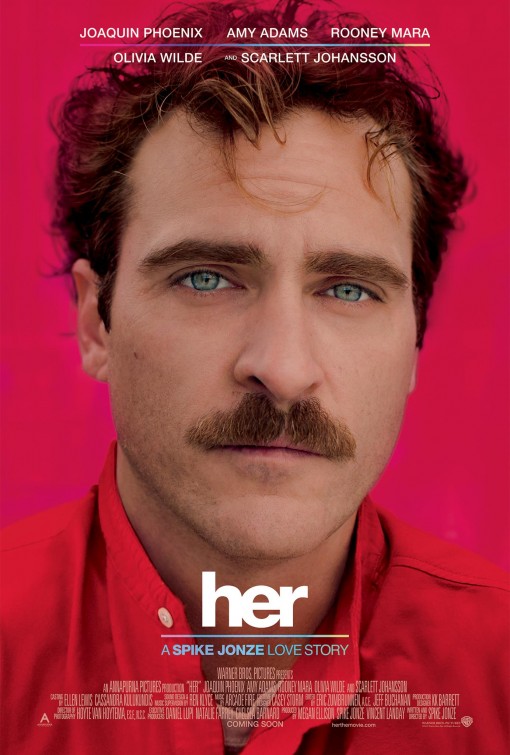 It’s been several years for Spike Jonze since he escaped the turmoil around Where the Wild Things Are, an ambitious adaptation that ran afoul with studio execs over the oppressively sad tone (I agreed with the execs). He’s one of the most stylish visual directors working today, but Her is something very different for the man. For starters, it’s a film Jonze wrote himself; no collaboration with Charlie Kaufman this time. It’s also a pared down love story, focusing heavily on two characters and their exciting and emerging union. There are no visual tricks, no gimmicks, no overt special effects, nothing to distract from the central relationship commanding the screen. It’s a different kind of film from Jonze but one that’s just as brilliantly well made as his best. Her is a beguiling winner.
Theodore (Joaquin Phoenix) is a man struggling to get his life back together. He’s a star at his job where he writes other people’s personal letters for them, but he’s a sensitive soul still refusing to sign the divorce papers from his ex-wife, Catherine (Rooney Mara). He doesn’t want to lose that part of his life. After watching an ad, Theodore buys a new computer operating system (OS) that promises to be the most lifelike possible. He pops the software onto his computer and, voila, the voice of Samantha (Scarlett Johansson) emerges, chipper, helpful, and compassionate. Theodore is a new man with her assistance, and soon they grow even closer together on a romantic scale. Theodore and Samantha embark on the greta unknown together, but can a relationship work when it’s with a voice in your computer.
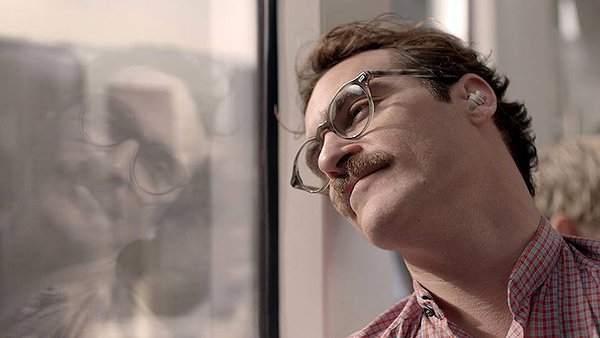 It’s been weeks since I first watched Her and I keep thinking back upon it, turning it over in my mind, finding more and more to like about this captivating little movie. It’s a tenderhearted and poignant movie that also manages to have something to say about human connection. And this really is a love story, and an engrossing one at that, despite the fact that it’s man and machine. The romance between Samantha and Theodore is never looked down upon, marginalized, the setup to some punch line about how nerd can’t get dates with real women. You think the film might go there, and then Theodore’s co-workers just shrug when the truth comes out and treat his relationship like any other. I suppose you could make all sorts of analogues, but they are unnecessary because Samantha truly feels like another person. She’s given complexity, curiosity, impulses, and, yes, as voiced by the husky-voiced Johansson, an alluring edge. Because she’s a disembodied voice minus form, theirs is a relationship built upon intellect, conversation, personality, and a burgeoning connection, though they do cover the sex part as well. In fact, the climactic (pardon the pun) vocal exploration is simultaneously awkward, funny, heartfelt, and yes, even a little sexy, and the music crescendos to give it even more oomph. Samantha is learning just as much about herself as Theodore is. Their relationship is opening both of them up to the possibilities they might never have sought. In that respect, Jonze’s film falls under that sweet spell all engaging romances achieve where our spirits are lifted and we swoon along with the onscreen coupling.
I’ve found it tricky to talk about Her at least in describing the premise to other people; comparing Samantha to Siri has helped rather than just referring to her as an “operating system.” One concern I had was that Jonze was just going to deliver the premise in a very expected manner and Her would serve up more of the same. But he doesn’t. While this is a light science fiction film, it is extremely well developed and thought out. Jonze has taken remarkable care to flesh out his story and enrich the not too distant future world. It felt like a world that could reasonably exist. I enjoyed the fact that there were so-called surrogates for hire, people that would serve as the physical embodiments of the OS personalities, providing a different kind of encounter, one meant to converge intimacy with touch. I could see these people existing if this were the future. Even better, Jonze takes great care to develop the central relationship between his lovers, so that every unique complication is given some form of respectful coverage. They discuss the limitations but not just what you would assume. Yes Samantha has no body, but she can also be in many places at once, doing many things at once, and simply will outlive all her carbon-based life form companions. Can they make this last? Even with the technological component, old problems can rear their head, particularly jealousy, like when Samantha begins communicating with other OS personalities. Then there’s Theodore’s lingering divorce with his wife, a woman who can stir up old feelings and doubts. Without giving too much away, the end manages to be hopeful, melancholy, expected, and satisfying.
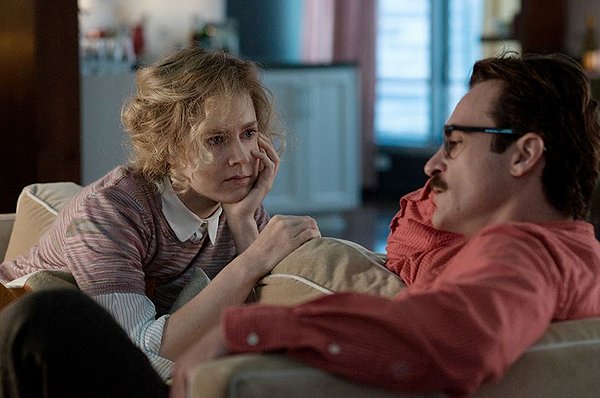 Jonze also manages to slide in some subtle jabs about the state of communication and connection. There’s an early shot where Theodore is riding a train and everyone on board appears to be talking except that they’re all talking to their OS, each person an isolated unit. Theodore’s job also seems like a perfect social commentary as well as a clever conceit for a man who has unsurpassed skill with words but difficulty with the flesh-and-blood interaction. It works directly with the theme of the film. I also find it humorous, and a bit subversive, that Theodore has long-standing relationships with clients. He’s been writing letters for certain couples for years going all the way back to their first meeting. Think about that, this couple’s communication and courtship rest upon the words of an intermediary paid for his services. These people could go their entire lives thinking their partner is the author of such wonderful, heartfelt, observant words. That’s the dearth of honest communication plaguing human relationships, but it’s not a new problem. We’ve all ducked hard conversations. Many of us would love to have someone come in and do the dirty work while we sit back and reap the rewards. But a relationship built upon deceit or convenience will ultimately fall apart, or, in this new age of technological isolation and greater deception, will it?
Jonze’s direction seems invisible, like we’re dropping in on these characters and peaking on their lives. The overall technical aesthetic of Her is a clean, simplified look and feel for a love story that manages to be new and familiar. The production design has an eye-catching degree of colors, which bathe the film in a consistently dreamy, gauzy aura, echoing the screenplay’s warm heart. The score by the Canadian alternative band Arcade Fire is low-key but just as vulnerable, resonant, and special as the characters in the film. It’s mostly pared down piano trinkles but the reoccurring motifs stick in your head, elevating Jonze’s film. When Samantha takes up composing songs to express her sum total feelings of a moment, capturing a snapshot of a particular time as she refers, it’s nice to have talented musicians able to bring this to life.
Phoneix (The Master) gives such a tender, vulnerable performance that you worry that he’s going to be crushed by life. He has this remarkable way of making you want to hug Theodore, like he’s this sad puppy that just needs a good home. There are moments in the film where just one perfectly executed crinkly-eyed crooked smile tells me everything about this character. Phoenix plays his character as a good-hearted, amiable, and deeply romantic individual, and the sheer strength of his performance will knock you back. Theodore has such great pools of empathy, and a poet’s soul, which allows him to excel at his job but it also makes relationships hard. A relationship takes work, and Theodore may have not been up to the labor, as his ex-wife argues. Personally, I found a lot of striking points of similarity with the character and I think others will as well. Who hasn’t, in a moment of dark-clouded funk, wondered if they’ve reached the apex of their emotional experiences, that everything will somehow be lesser variations? Who hasn’t feared that they somehow tapped out on their ability to love as powerfully as before? As Theodore is picking up the pieces of his life, trying to determine his new sense of self, we’re learning alongside him exactly how Samantha is changing him.
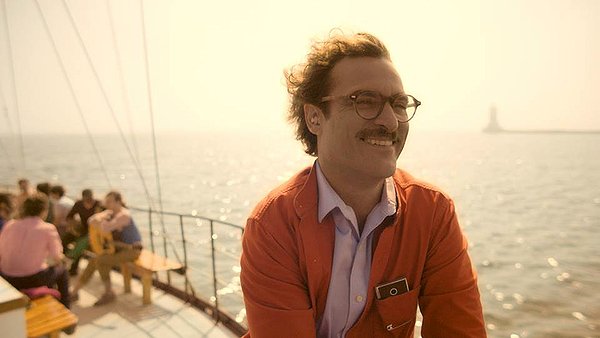 Before this movie, I would have said a Johansson (Don Jon) performance minus her body would be a travesty, but damn if she doesn’t give a performance that is worthy of the Oscar buzz. It’s easy to understand why Theodore falls for Samantha, and you will too. Johansson has never been this winsome and loveable but she’s far more than some idealized Super Girlfriend to be placed precariously on a pedestal. She’s learning too, making choices, some of them bad, and exploring the consequences. The depth of emotion she’s able to convey with a character only heard audibly is impressive. Samantha is a fully formed character that wants to be treated as such, and Johansson give her all the shadings of a living being. She’s inquisitive, funny, curious, but also eerily human in her mannerisms, like when she uses short breaths when feeling awkward even though she has no use for breath, obviously. Johansson is so easily sultry, voice included, but Samantha is not relegated to some high-tech toy, some quirky sexual fantasy. She feels real, which is why their relationship feels genuine and so moving and charming.
Who knew the most affecting love story of 2013 would involve a man and his computer? Her is an insightful, touching, and rewarding movie that hits you on many levels, satisfying all of them. It’s a smart film that explores the various complications of its premise while widening its scope further, it’s heartfelt and humble as it approaches relatable matters of love and loss and feeling adrift, it’s sweetly romantic while at the same time being tethered to reality, finding a perfect balance, and at its core it’s the tale of two people, one human and one mechanical, that find happiness in one another. People will likely pick the movie apart to search for personal messages from Jonze about his own divorce from filmmaker Sofia Coppola in 2003. Maybe that stuff is buried in there, but Jonze has crafted something far more applicable and enjoyable. Her is an openly romantic film that doesn’t shortchange heartache, and it posits that love is love no matter whom it’s directed at. Her is an extraordinary sort of movie and one I plan on revisiting again. Give this unconventional romance a chance and you may be delightfully surprised.
Nate’s Grade: A
Share this:

Blue is the Warmest Color (2013)
 The French drama Blue is the Warmest Color has been bathed in publicity and controversy ever since its debut at the prestigious Cannes Film Festival. It’s a three-hour lesbian romance about sexual awakening and finding a deep human connection, but all anyone wanted to talk about was the graphic sex. The drama split audiences down the middle, with people like Steven Spielberg praising its unflinching examination on the craving and heartache of young love, and others like New York Times film critic Manohla Dargis called the director/writer Abdellatif Kechiche “oblivious to real women.” It’s an impressive film, a rapturous love story for the twenty-first century that defies swift categorization. This isn’t just a gay film. This isn’t just a romance. This is a highly relatable, appealing, and heartbreaking movie of the first-order; however, both the defenders and detractors of Blue have substantial merits to their claims.
Adele (Adele Exarchopoulos) is a normal 17-year old girl trying to gather a sense of her self. Her peers are pressuring her to lose her virginity with a popular guy, but it’s another person, a mysterious blue-haired lass, that Adele can’t stop thinking about. This woman, the somewhat older Emma (Lea Seydoux) is an art student and an out lesbian. One night, Adele follows her into a lesbian bar and they strike up a friendship, one that quickly translates into something more romantic. Over the rest of the movie, we cover several years of Adele and Emma’s lives together and learn that each has left an indelible mark on the other, for good and bad.
 Let’s tackle the portion that’s gotten the most coverage in the media, the graphic sex sequences that earned the film the rare stateside NC-17 rating. You may have thought 2011’s sex addict drama, Shame, earned its NC-17 rating, but Blue trounces it. Short of unsimulated sex scenes in movies like Shortbus and 9 Songs, I doubt many audience members have experienced sex sequences this explicit and this lengthy (you may start checking your watch at some point). At its Cannes premier, the critical response breathlessly hyped a sexual encounter that went on for 18 minutes. That number may be the total onscreen copulation time; the longest sex scene is seven minutes or so, but you do feel the vigorous extension. Is there a particular reason the steamy sex scenes needed to be this long or this graphic? Kechiche likely wanted to communicate an explosion of immeasurable passion unlike anything Emma or Adele will experience in their lives. But did this need to be communicated with seven minutes of orgasmic fingers, lips, and tongues exploring every crevice of their bodies? Would six minutes of enthusiastic sex prove insufficient? I’d be a hypocrite if I said I found little entertainment in watching. I just don’t think the film demanded as much drawn out sex when the drama is this strong.
And that’s the mass appeal blurb when it comes to Blue is the Warmest Color: come for the intensity of the sex, stay for the intensity of the feelings. You will swiftly feel the nervousness and sexual tension that comes from the exploration of attraction. All those high school butterflies come fluttering back. The depth of feeling is easily relatable. The characters are searching for unparalleled human connection but also discovering more about who they are. This is a moving, absorbing, and crushing love story, but it’s just as much about two people falling out of love. That was a major surprise for me. What’s more is that the forces behind their breakup are completely understandable and you can see them coming; at heart, they are two different people that operate in different worlds, and they do change over time. That’s excellent storytelling when one can feel for both sides of a breakup, comprehend how this moment arrived, and looking back, see how inevitable a conflict like this would be. Emma’s sphere of friends is one that Adele does not feel a comfortable place within. Emma worries that Adele needs to find a sense of identity outside their relationship. Adele is still too timid to admit the truth about her relationship with a woman to her colleagues and family. These are major conflicts and they simmer and gestate in ways that feel like real life. Beyond some of the specifics in the bedroom (more on that later), there isn’t a moment that feels unbelievable in the entire three hours. This is a naturalistic love story that unfolds in small waves, allowing us to get to know the characters and their lives.
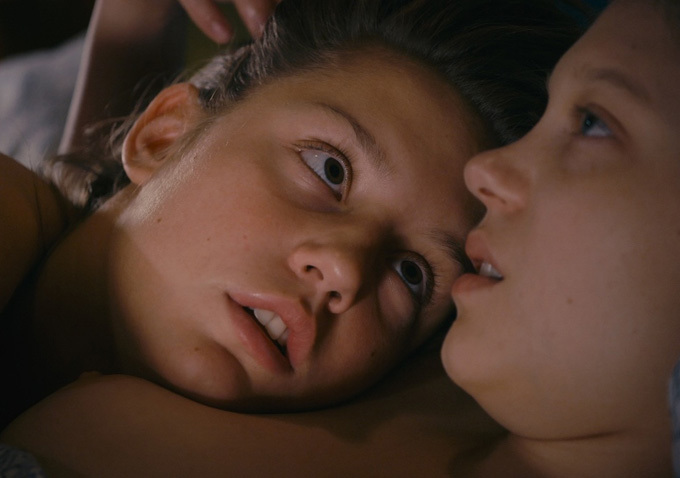
 The two actresses are outstanding and bare much more than their flesh for this film. Exarchopoulos and Seydoux disappear into their characters. These are richly developed characters, and each actress does her best to bring them to startling life. Exachopoulos (who looks like a Parisian Maggie Grace) has so much of the film riding on her 19-year-old shoulders since her character is the film’s major point of view; we often see the world through her perspective. She’s excellent as the curious, anxious, bashful young woman, and her encounters with Emma open her world up, allowing Adele to broaden as a person. She’s still not confidant, given to doubts that Emma seems to lack, but Exarchopoulos convinces you of the difference. Every step along her journey is credible, acted with poise, even the uncontrolled weeping. In a just world, this French newcomer would be up for serious acting award consideration. Seydoux is the more assured character, the one who sizes up her interest, but when hurt, the ferocity of Emma’s fury is staggering. This is not a woman to scorn, and Adele will learn this the hard way. Later in the film, as the history hangs in the air between Emma and Adele, we get a powerful sense of how conflicted both women are, having never turned off their feelings but trapped by circumstance and consequences. You feel each member cycle through the myriad of emotions, fumbling between desire and desperation. The actresses work together beautifully, raising one another’s performance, and giving one another the environment to get truly intimate, emotionally and physically.
The film is more a representation of a man’s fantasy of lesbian sex. The male gaze, a term referred to often in feminist film criticism, is trenchant in this film. Kechiche’s camera doesn’t just love his two young stars; it fawns over them, lusts over them. The camera is always within inches of Adele’s face, glued to tight shots lingering over Exarchopoulos’s pouty lips. Seriously, the actress has her mouth open the entire movie, her lips forever pillowy, forever pouting. It’s a sensual movie, yes, but does every shot of young Adele need to be so tawny and voyeuristic, her hair always slightly askew in her face, her body positioned just so that her assets are featured? Critics like Dargis are correct about Kechiche’s fawning camera pushing over into the boundary of erotic fetishism. This is where my questioning of sexual positioning comes back; going ass backwards when it comes to cunnilingus (and yes, I will intend that pun) is aesthetically pleasing in a sensuous manner, and that feels like the dictum of Kechiche’s intimate camerawork. It’s heterosexual male pleasure represented on screen, at least in its depiction. Otherwise, with the camera always tethered inches away from Adele’s face, why don’t we remain focused on her face during all this physical pleasure? It can be just as erotic. However, with all that out there, why can’t lesbian sex be given the same ridiculous fantasy depictions of heterosexual sex in the movies? I can almost guarantee that pool tables are not a prime location for indulging one’s urges. And just showcasing lesbian sex onscreen between a committed couple (not just girl-on-girl flings like in Black Swan) and normalizing it, whatever intention, is a virtue.
 But it’s not just the sex scenes that could use some judicious snipping; the entire three-hour enterprise could be easily consolidated. The film is replete with loping scenes that sort of drift along, recreating the ordinary rhythms of life rather than the plot beat connect-the-dots we associate with most film narratives. That’s fine, you need time to establish characters and setting, but do we need people interpreting poetry at length and indulging in gender philosophy for minutes on end? Perhaps if I watched Blue is the Warmest Color a second time I’d be more tolerable of the narrative bloat, finding added subtext and metaphor to all those ponderous philosophical discussions over the nature of the self and gender identity. Of course seeing a three-hour movie, again, is going to take a significant time commitment.
Sensual throughout, beautifully developed, richly observed, and brought to life with bristling and audacious acting, Blue is the Warmest Color is a love story that hits hard with emotional force. By nicely realizing the characters, providing them depth and fallibility, we can empathize with them along the different stops of their romantic journey, seeing where each is coming from and understanding the yearning, frustration, and passion. When things are good, there’s a frisson on screen, a palpable sense of desire accentuated by Kechiche’s loving (and occasionally obsessive/fetishized) camerawork. The acting by Exarchopoulos and Seydoux is as raw and fevered as their onscreen lovemaking. I doubt it needed to be a full three hours long, and I doubt the notorious NC-17-earning sex scenes needed to be as graphic to communicate delight, but I’m most pleased that Blue is offering a full movegoing experience, watching the formation of two characters over time and how they change. It’s easily watchable even during its more ponderous, dare I say French-y, sidesteps. The ending is a slight misstep, calling out for greater certainty, but the French title for the film was, Adele: Chapters 1 & 2, the implication being there may be future cinematic adventures that await these people. I don’t know if this will ever come to fruition considering the original graphic novel by Julie Maroh is a mere 160 pages, rather shrift considering the medium, but I can hope. Romances this involving, observant, and intense don’t come around too often and deserve to be cherished. Just consider the sex a bonus.
Nate’s Grade: A
Share this:

About Time (2013)
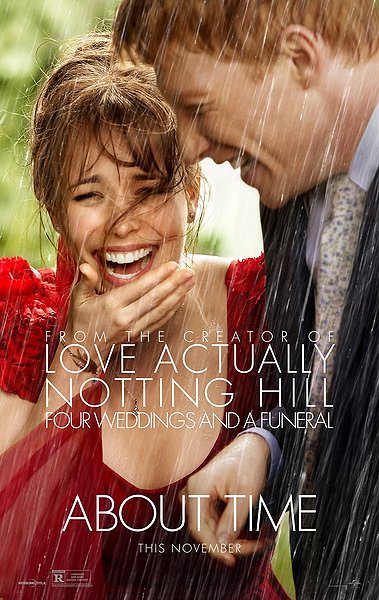 Richard Curtis is something equivalent to royalty in romantic comedy circles. The man wrote Four Weddings and a Funeral, Notting Hill, the screenplay for Bridget Jones’ Diary, and he wrote and directed Love, Actually. If you are a fan of those movies, then About Time is already at the top of your to-do list. Reportedly Curtis’ last movie he will direct (he’s only done three), this time-travel romance looks to be a break from a genre burdened by convention. If you like your British rom-coms to be mildly cheeky, hopelessly dewy-eyed romantic, filled with beautiful people, and loaded with hugs, then About Time with suffice. If you were expecting something grander from the premise you’ll walk away shaking your head at all the squandered potential.
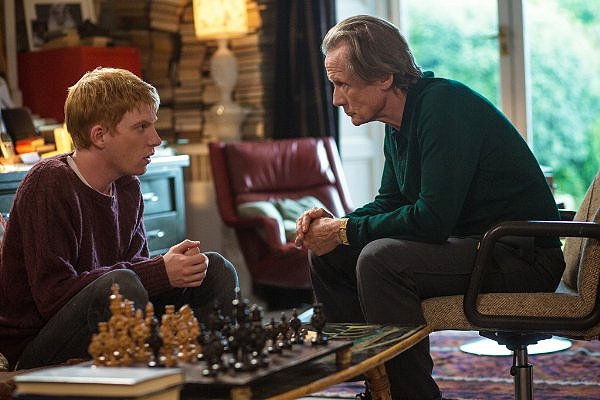
Tim (Domhnall Gleeson, son of Brendan) is a normal upper class British student when his father (Bill Nighy) sits him down to have… The Talk. This one isn’t about birds and bees so much as it is the space-time continuum. It seems that the men in their family have the unique ability to travel through time, though only during their lifetimes. All Tim need do is find a somewhat secluded, dark corner, clench his fists, and think his way back to a particular memory. Tim is able to blink out embarrassing incidents and use his foreknowledge. He meets Mary (Rachel McAdams) and sets his sights on making her fall in love with him. He corrects their courtship until he gets everything “right.”
 While eminently pleasant and suitably funny and emotional, About Time is a tale of wasted potential. I’m unsure why Curtis even brought in such an unconventional element like time travel if he was just going to play it safe. The standard, feel-good rom-com route feels the safe way through, and while it’s well done in that regard, I almost wish the film had pushed further with its concept. To begin with, the time travel restrictions are arbitrarily applied and will later be broken altogether as the film continues. When time travel is used it’s played out like Groundhog Day, with Tim immediately going back to fine-tune his actions, particularly his courting of Mary. That works, as we get used to the inertia of the edits, but that seems to be the lone focus. Once he gets the girl, Tim rarely uses his amazing gift. He’s content and so time travel is an afterthought when, as I suspect for any of us, it would be all we could think about. Tim lacks suitable ambition. I think the film would have been weightier had its lead been less idealistic. He’s a nice guy but imagine a Lothario having the power to travel back in time. He could physically cheat on his wife, go back and make sure it never happened, and live his life, having his cake and eating it too, except for the guilt. Is it cheating if it happened in an alternate timeline? Or what if he was a stockbroker committing insider trading with his past self. In fact, what if he just interacted with his older, more morally wanton self? There’s also the fact that Mary never finds out about any of this. At no point does Tim reveal his family’s incredible ability and have to atone for his actions. I’m fairly certain Mary would feel like her marital bliss could be the end product to manipulation. Alas, we’re stuck with our cute, acceptable, but mostly square rom-com.
While likeable, I didn’t think the characters themselves were sketched out well; I like McAdams and Gleeson, but I couldn’t really say much about them as people. He’s a lawyer. She works as a reader for a publisher. His family is kind of rich. And that’s about it. Even through their interactions we don’t learn much about Tim or Mary. They fall in love, and it’s nice, but the lack of characterization, besides the fact that they are cute together, kept me from fully investing in their love story. I doubt the target audience will have this same issue. I found them cute and their scenes are cute together but I need more about my main characters than a collection of cute scenes. Another nagging aspect of their courtship is that it seems too easy. Tim has the amazing power of time travel so he can fix any problem presented, but that shouldn’t stop the appearance of problems. Tim and Mary are nice people that seem to have no discernible differences, besides Tim’s leftover feelings for a first love. An audience may say they want a couple to be sweet together always. They don’t. It’s boring. We need conflict. With About Time, there just isn’t enough of it and Tim and Mary are too underdeveloped for me to pine for them.
There are loads of dangling storylines that feel like they are leftovers from past drafts. You would think wrapping up a peachy marriage early would lead to some sort of personal crossroads and sacrifice. Everything was coming far too easily for Tim, so I kept waiting for another shoe to drop late in the film, to give him the chance to undo his own personal happiness and marriage to, say, save a beloved family member. I kept waiting for some kind of greater personal stakes, but it never came. Then the movie has all sorts of dangling storylines that do not seem conceptualized. The doddy uncle who seems to be experiencing the ravaged effects of too much time travel? Not much there. They never explain him and so he is just the standard Brit com-com kooky family member to say weird things offhand. Seems like a waste of greater pathos. Tim’s troubled sister? She’s fixed in a pinch and of course it all has to do with the men she’s dating.
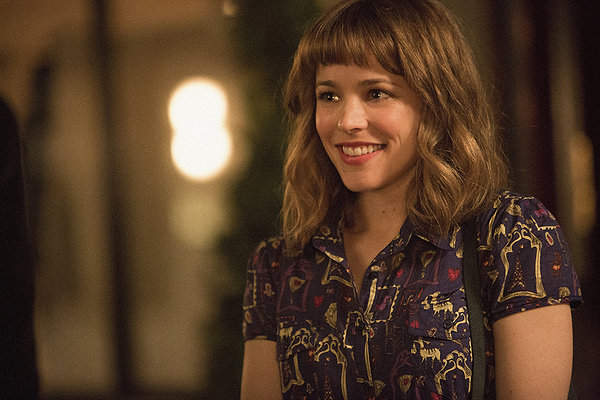 Then there are the rules, which in time travel need to be adhered to closely or else the butterfly effect ripples cascade. We’re told at first that Tim can only go backwards in time. This gives the impression that he has to live out all that extra time. So, say, if Tim traveled back two years, he’d have to live out all two years to get back to the presumed moment he began his journey backwards (writing about time travel does wonderful things with sentence tenses). So every jump back requires reliving your life. But then all of a sudden Tim can jump forward in time as well. No one comments about this. If the men in the family are reliving days and possibly years of time, then shouldn’t they be preternaturally aging, looking 70 at 50 and so on? Then there’s the fact that Tim introduces the ability to travel back in time WITH another person. This is never dealt with again, sadly, and it’s a big deal. You can bring other people with you through time. This is an amazing opportunity but it’s wasted like so many others.
However, with all that said, the movie won me over more as it transitioned into a greater emphasis on the father/son relationship, enough so that it feels like Curtis trying to get the sense of closure we so rarely get in life. I though a late trip backwards, as a young son skipping stones with his dad before he may never see him again, was quite beautiful. It got me wishing the film had given more time to explore the dynamics of father/son time travelers, a rich dramatic possibility that only reminds you how much more interesting About Time could have been.
About Time will be catnip to its target audience, namely female rom-com fans. I found it a fairly pleasant movie and its stars wholly likeable. I laughed at spots and even got teary-eyed a bit toward the end as the film’s emphasis shifted from a guy-gets-girl narrative to more of a father-son examination. The funny Brit characters do their thing, the lovely scenery remains lovely, and the declarations of love get a spit-shine. It is an effective romantic comedy that will charm and please and get its audience to swoon, but I was left feeling that its potential went untapped as it settled on a safer, more conventional story despite all the unconventional possibility. Why introduce time travel if you’re just going to take the safest route possible with your storytelling, never pitting Tim in a difficult decision he has to make, or jeopardizing his carefully manipulated happiness? There are so many possibilities Curtis had with a premise that opens up alternative histories, but it seems like he settled for another dash of more-of-the-same.
Nate’s Grade: B-


 nathanzoebl
You must be logged in to post a comment.