Blog Archives
The Lives of Others (2006)
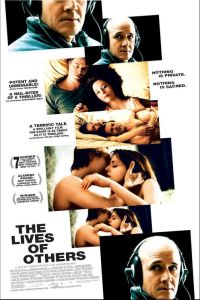 A mesmerizing and piercing human drama that burns into your memory long after it’s over. This Oscar-winner for Best Foreign Film actually deserved to beat out Pan’s Labyrinth. This vastly intriguing, dense, and extremely moving film explores life inside East Germany before the Wall fell, a life not often seen in the movies. The crux of the movie follows a career officer (Ulrich Mühe) in the secret police who has been assigned to eavesdrop on a playwright and his actress girlfriend. It is this assignment that shakes the man’s blind faith in his government, and The Lives of Others becomes nerve-wracking when our silent listener decides to become active in trying to protect his subjects from his boss. This is masterful, artistically illuminating filmmaking with a tight, deeply felt story and superb acting and direction. Germany has been crafting some of the world’s finest cinema as of late, including Oscar-winner Nowhere in Africa and Oscar-nominees Downfall and Sophie Scholl. See this film before Hollywood remakes it and ruins it. Tragically, Mühe died of stomach cancer in July 2007 just as American audiences began to see The Lives of Others and witness the depths of his talent. He will be missed by the world of cinema but his work in The Lives of Others is a lasting testament.
Nate’s Grade: A
Share this:

No Country for Old Men (2007)
 Joel and Ethan Coen are two of cinema’s most talented oddballs. Together, they’ve created some of the most intricate, eclectic, and best movies of the last 25 years. Their last two efforts, 2003’s Intolerable Cruelty and 2004’s remake of The Ladykillers, didn’t feel like Coen movies; they felt like they were compromised and missed the artistically deft touch. As a result, both movies were mild failures for filmmakers that have a series of genre-spanning masterpieces to their name. No Country for Old Men is the first time the brothers have adapted someone else’s work, in this instance Pulitzer Prize-winning author Cormac McCarthy’s 2005 novel. Not too shabby if I say so. Fortunately for all lovers of film, the Coens have embraced McCarthy’s blood-soaked tale and crafted an exciting, honest, and intensely provocative modern Western that stands out as one of the greatest films of the year.
In dusty West Texas, Llewellyn Moss (Josh Brolin) is out hunting the lonely plains when he discovers a blood trail. It leads him to four empty cars riddled with bullet holes, dead bodies collecting flies, and a sack containing two million dollars in cash. The signs are all there that this was a drug deal gone badly, and two million will never go unnoticed, but Moss sees this as an opportunity of a lifetime and takes the money. The men in power have hired Anton Chigurh (Javier Bardem) to find their drugs and money and exact retribution. Chigurh’s preferred method of killing involves a high-pressured air canister that can blow out doorknobs and human brains. Chigurh chases after Moss all the while Sheriff Ed Tom Bell (Tommy Lee Jones) is following the trail of death to try and save Moss or any future innocent victims.
 What a fine-tuned, nerve-wracking, and engrossing cat-and-mouse thriller this film is. The action is brief but the buildup can be nearly unbearable to endure. The tension is magnificent. Chigurh chases Moss from hideout to hideout and some of the tensest moments are just waiting. There’s a moment where Moss is calling the front desk of his newest motel and we hear the phone ringing unanswered again and again from the hall, all the while Chigurh’s footsteps inch closer. But it’s the moments of silence that cause the most dread. When Moss is trying to recover his loot, all the while Chigurh is in the opposite motel room, it becomes a balancing act of sound and silence. No Country for Old Men is expertly orchestrated to involve the use of sound as a tool for high suspense. None of our main three characters inhabit a scene together. Sure Moss and Chigurh shoot at one another but even then it’s short and focused on waiting for response and counter response. Moss is no dummy and he sets up some traps for his would-be dispatcher. No Country for Old Men is unnerving, intelligent, near flawless entertainment.
Chigurh, as masterfully played by Bardem, is the stuff of nightmares. I was literally afraid to go home after seeing this movie and it is because No Country for Old Men fashions a villain so methodical, so cold-blooded, and so downright deadly and cunning that I felt as if he could very well be residing under my bed at night waiting. Bardem is hypnotically horrifying and the Coen brothers establish early on how ruthless their cinematic boogeyman is. The very first moment we’re introduced to Chigurh he escapes from police custody and strangles the inattentive officer on duty. He drags him to the floor and chokes the life out of him, but the Coens position the camera not on the last desperate kicks of the officer but on the face of Anton Chigurh, and it is nasty. His eyes are bugged out and his intensity comes across as sadistically jubilant. He seems like a caged animal finally let loose. It’s a scary yet fascinating introduction to a deadly character.
Chigurh is a humorless and determined man, and every scene he steps into instantly changes. A gas attendant casually asks Chigurh about the weather and gets on his bad side and the stone-faced killer in the Dutch boy haircut proceeds to press the poor man with increasing agitation, yet Chigurh always speaks in such a placid tone that makes him far creepier. He’s a maniac that never raises his voice. Chigurh then corrals the man into one of his signatures, having a victim decide their fate by the flip of a coin. Before the man can say anything the coin is flipped, Chigurh intones to “call it,” and the man nervously repeats that he needs to know what he’s at stake to win. “Everything,” Chigurh responds. This scene starts off so innocuous but becomes monumentally unsettling thanks to the rising dread and Bardem’s deeply committed portrayal. Bardem is alarming, ferocious, grimly efficient, mesmerizing, and deserves an Oscar win, not just a mere nomination, for what is his finest performance to date.
 There are many ways to describe Chigurh, but it seems most appropriate to speak of him as nothing short but the full-tilt vengeance of God. He’s a hired killer, yes, but that doesn’t stop him from killing indiscriminately. He murders several innocent victims, he murders his competition sent out to nab Moss just because it insults him, and even after the money no longer becomes a concern, Chigurh still plans to continue his wrath out of sheer moral principle. He made a promise of swooping vengeance and he will stick to it. This means that anyone could die at any moment while onscreen with Chigurh, and No Country for Old Men has plenty of surprises as it toys around with our baited anticipation. When Chigurh gets the drop on his competition he doesn’t shoot the man immediately; instead the scene plays out for an agonizing length even after we listen to the room phone ring several times, and then blam! Chigurh answers the phone and casually raises his boots so the pooling blood doesn’t touch his feet. This is the most memorable incarnation of soulless evil I have seen in the movies since Hannibal Lector came to iconic form in 1991’s Silence of the Lambs.
Brolin is having quite a career year for himself after compelling turns in American Gangster (where he also shoots a dog), In the Valley of Elah, and Robert Rodriguez’s Planet Terror half of Grindhouse. Brolin gives the audience a figure to root for even though he never actually displays true heroism, just survival instincts. Jones serves as a wise and guiding father figure that feels out of place in a world that is becoming increasingly, shockingly violent. It’s a role that Jones has performed before but it’s a role that fits the actor exceptionally well. Woody Harrelson pops up as a charming and laid back handler trying to convince Moss to give up before things get worse. Kelly Macdonald, as Moss’ wife, cuts through the darkness in a refreshing performance.
The technical craftsmanship is on par with previous Coen excellence. Roger Deakins’ cinematography is exquisite, Carter Burwell’s score barely makes its presence felt, and the editing is tight and focused. The sound design, which I’ve already discussed in detail, deserves an Oscar. This being a Coen brothers’ film, it wouldn’t be complete without some dark humor to punctuate the bleakness. They have a perfect ear for local vernacular and Texas shorthand, so the dialogue feels sharp but realistically twangy without being condescending as some had accused Fargo (I do not agree with this accusation).
 What works in the favor of No Country for Old Men may perhaps be its undoing for a mainstream audience. The film works against conventions and this provides for some stellar surprises and upheavals, none of which is bigger than killing a certain character off-screen. No Country for Old Men definitely seems like it’s laying stage for a climactic showdown and then one key figure has been bumped off by a group of ancillary characters that have little overall bearing over the plot (I have read that the same gap happens in McCarthy’s novel). If this doesn’t perturb audiences then the final 10 minutes ought to do it. There’s no sense of closure for the movie and this will frustrate many, but it all fits rather nicely with the movie’s highly nihilistic tone. Like Chigurh’s coin, the film focuses much on the randomness and cruelty of fate. By sticking to this ethic, the Coen bothers are eschewing the traditional Hollywood rulebook and playing around with our expectations for characters and plot. The outlook isn’t too sunny for many involved. It works and demands an audience remain on edge for fear that anything could happen at any moment. However, don’t say I didn’t warn you if you walk out of No Country for Old Men and say, “What was that all about?”
No Country for Old Men is exactly the kind of material the Coen brothers needed to return to form. This is a lean and stirring thriller that plays to their strengths and echoes some of their most riveting and twisty work, like Blood Simple and Fargo. In many ways the film feels like a Western, a high-stakes drama, and a tragedy that takes its time to unravel. It may have taken some time but the Coen brothers are back, baby, and No Country for Old Men is fit to stand beside their hallowed pedigree of cinematic classics.
Nate’s Grade: A
Share this:

Juno (2007)
 Juno is a hysterical teen comedy with equal parts sweetness and sour. The idea of an underage pregnancy certainly presents a lot of conflicts and seriousness but the film avoids direct messages on the big topics thanks to large doses of levity and some hard-earned wisdom. With this serving as a companion piece to Knocked Up, I suppose Hollywood is convinced there’s something inherently funny about unplanned pregnancy. Remember that, suddenly expectant fathers and mothers.
16-year-old Juno MacGuff (Ellen Page) drinks her “weight in Sunny D” to take pregnancy test after test, but each pee-dipped stick gives the same result: Juno is going to become a mommy. The father is Paulie Bleaker (Michael Cera), a fellow high school student who has a fondness for jogging shorts and orange Tic-Tacs. Juno’s father and step-mother (J.K. Simmons, Allison Janney) lament that they wish their daughter would have told them she was expelled or into hard drugs instead of being pregnant. Still, they are supportive and Juno decides to give away her bun in the oven to a childless couple, Mark and Vanessa (Jason Bateman, Jennifer Garner).
 Juno doesn’t patronize or dismiss the gravity of what is indeed happening (a life is being brought into this world); Juno says she is trying to come to grips with issues “way beyond my maturity level.” There are moments that reveal real sadness and regret for some of these characters, and moments of palpable doubt about what it means to officially grow up and assume responsibility for another. Juno also refrains from easy high school stereotypes and coarse humor. Juno is an intelligent comedy that doesn’t make light of its circumstances even if the sarcasm is off the charts. It’s this winning combination of wicked wit and heart that makes [I]Juno[/I] destined to be a crowd-pleaser.
Writer/blogger/former stripper Diablo Cody makes one hell of an impressive screenwriting debut. The dialogue is practically sparkling and revels in the hip, hyper-literate realm that used to dominate the teenage speech patterns of shows like Dawson’s Creek. Sure, it’s not terribly realistic when characters can spout pithy one-liners mixed in with heavy jargon and lots of cool speak, but what do I care when I’m cracking up with laughter so often. But Juno cannot easily be dismissed as glib because Cody throws in some incisive moments that display shades of vulnerability and tenderness with her wacky assortment of characters. Even the aloof oddballs have moments that deepen them from just being quirky for quirky’s sake. These people are more than just receptacles for Cody’s wonderful words; they may begin that way but through the course of 96 minutes they manage to transform into flesh-and-blood where we, the audience, feel their pain and celebrate their happiness. You may be surprised, as I was, to discover yourself holding back tears during the movie’s inevitable and tidy conclusion.
The heavily acoustic score banks on a lot of pleasant, leisurely strumming but it suits the film and the song selections are apt. The very end involves a long acoustic duet rendition of the Moody Peaches’ “Anyone Else But You” and it may be one of the most disarmingly sweet, romantic moments of the year (the repeated lyric “I don’t see what anyone can see in anyone else” is a perfect summary for two outsiders finding their match). In fact, it’s probably the most potentially romantic song ever to include the line “shook a little turd out of the bottom of your pants,” but then again I do profess ignorance when it comes to romantic odes that include defecation references. Somewhere there has to be a Barry White song that has to cover this.
 Director Jason Reitman feels like a natural fit for this smart-allecky material. He lets the story take center-stage and, just as he proved with last year’s Thank You for Smoking, he can coax terrific performances from a strong body of actors. He keeps the pace chugging along and keeps form command of the many storylines and characters needing to be juggled. Juno is a comedy that says more about a character through a handful of smart, wry observations that cut to the bone, which is helpful considering the short running time means the film needs to do the most with its time.
Page should have been crowned a star immediately after her blistering performance as jail bait with claws in Hard Candy, but perhaps her top notch comedic turn in Juno will right this slip-up and give Page the opportunity to star in, at least, the same amount of movies as, oh, I don’t know, Amanda Bynes (Seriously, Hollywood, are you just throwing money at her?). Page is the perfect embodiment of the wiseacre teenager that thinks she knows more than anyone else. She recites the refined dialogue with such precision and ease, always knowing what segments to enunciate or de-emphasize to maintain a seamless comedic tone. Page brings great empathy to a know-it-all character and is the snarky spirit that makes Juno resonate.
The supporting cast around Page doesn’t let her down. Cera gives another fine performance of comic awkwardness befitting a teenager contemplating fatherhood. Simmons and Janney make a great pair of unflappable parents, particularly Janney who gives an ultrasound doc a memorable tongue-lashing for an off the cuff remark about Juno. Bateman works the same laid-back demeanor that he excelled at on TV’s Arrested Development. Rainn Wilson (TV’s The Office) makes a very funny cameo in the beginning.
 Garner as an actress has been somewhat hamstrung by her roles, either focusing on her multitude of ass-kicking abilities or landing her leads in romantic comedies that don’t require more than dimples and twinkling eyes. In Juno she is driven by her desire to have a baby; she’s affluent, prim, and an easy joke thanks to her stick-in-the-mud seriousness. But then Juno and the audience get a glimpse about how important being a mother is to Vanessa, and Garner nails a rather touching scene where she directly speaks to the growing child inside Juno’s belly upon Juno’s request. She speaks softly to the baby, briefly mentioning how loved they will be, and then she marvels at feeling the baby move. In lesser hands this scene could have induced eye rolls but instead seems genuine and a turning point for how we see Vanessa.
If Juno does have a flaw it is a minor one. The film places its teen romance on the back burner for so long that when it resurfaces and positions itself front and center the storyline lacks credence and believability. The conclusion would have had more emotional weight had the filmmakers spent more time on the teen romance angle, but regardless I was still amused, entertained, and grateful for the ending that came.
Juno is a delightfully tart and hysterical comedy that is easily quote-able thanks to Cody’s quick-fire retorts and snappy dialogue. Page is destined for greatness and Reitman proves once more that he can handle anything thrown at him with deftly comic aplomb. This is an impressive and assured comedy that bristles with comic vitality and confidence. This holiday season, make sure to take a trip to Juno.
Nate’s Grade: A
Share this:

Away From Her (2007)
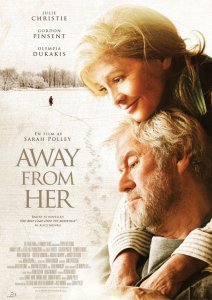 Actress Sarah Polley makes a remarkable directorial/screenwriting debut telling the story of a couple going through the late stages of Alzheimer’s. This is a truly adult tale that deals in the heartbreak of losing a loved one gradually and slowly. The film centers on a long-standing marriage that endures the hardships of becoming a victim in your own mind, first forgetting small things and then finally shutting down completely. While plenty of films have articulately dealt with the point of view of the afflicted, I feel Away from Her is one of the better perspectives on seeing the devastating effects of the illness from the spouse. The movie deals with its real world dilemmas in a respectful and realistic manner and Polley has put herself on the map as a thoughtful, mature, and engrossing talent to watch whenever she hops behind the camera.
Nate’s Grade: B+
Share this:

Once (2007)
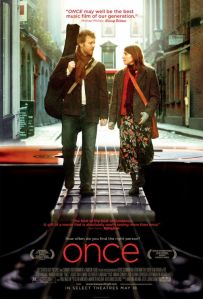 Once is the perfect antidote to noisy summer blockbusters assaulting the theaters. It’s a small, hardscrabble indie that’s completely unpretentious, unassuming, and sweetly divine. Once is not mawkish, nor overly sentimental, but it does leave you with the sensation that you’ve just had your best hopes about love reaffirmed, no small feat. This is a movie for people that love music and the innate power it can unleash.
A Dublin street singer (Glen Hansard) works in his father’s shop and fixes vacuums by day, while he sings his heart out in public at night. Then one day he meets a Czech immigrant (Markéta Irglová) who becomes his biggest fan. They start seeing more of each other and share their joint passion for music. It’s through the music that the beginning of a special relationship forms between them, however each has their own baggage. He’s nursing a broken heart after his girlfriend cheated on him and then moved to London. She lives with her mother and works several jobs to take care of her young child. Her husband left the family but there’s a chance he may return. Together, they write enough songs and raise enough money to record an actual album in a studio, something that can stand the test of time.
 When you boil it down the story is very simple. Boy meets girl. They run into each other some more. They help each other write music, ending with the accomplishment of a studio-produced album. Then they part. That’s it from a synopsis point of view, but Once is far more than that. This is an honest to God real-life musical, where the songs advance the storyline and the lyrics express the emotional desires and changing moods of our leads. People don’t break out into choreographed song and dance numbers; no, this is set in a modern and realistic world. Once could be described as a musical for people that hate traditional musicals but I think that sells the film too short on its merits. Once is a very stripped down but enormously romantic love letter to music and human connection. Watching the movie is akin to be serenaded by a soulful crooner that clearly wears its idealistic heart on its sleeve. There’s something undeniably magical about watching Once; you feel transported by the sheer exuberance of feeling and emotion. The openness may seem awkward or a bit cheesy to a more cynical lot. The story is a rather bare-bones affair (no pun intended), but that’s where the film takes the opportunity to explore the burgeoning relationship between our leads in their short yet important time together.
Of course it helps a musical if the music is something worthy of listening. I’ll say this: Once is the first movie since 1999’s Run Lola Run that I immediately went out and got the soundtrack for after watching. Unfortunately, as Once is still expanding most large retail stores do not carry it just yet. I guarantee by the end of the summer that every one of them will have it well stocked. The songs are largely acoustic guitar and piano arrangements, and the heartfelt, slightly biting yet optimistic lyrics are reminiscent of acts like Bright Eyes and The Shins. The music is softly beautiful and lilting and a great showcase for Hansard’s sensitive yet powerfully evocative vocals. Irglova is a classically trained Czech pianist and sings with a breathy Bjork-like style that blends well with Hansard’s graceful and rich tenor.
The music is a big reason for the film’s success as a sweeping romance and human drama. The standout track is “Falling Slowly,” which is a stunning turning point for the film and for the characters. In the film, they assemble in a piano shop and put together an impromptu duet. The song builds, and our singers coalesce smoothly, and the soothing sounds stir something inside them as well as the audience. Both characters are realizing that they can make beautiful music together, and they’re exploring one another’s desires and intentions. They definitely sense something new; the music is what binds them, but the music is also their most lucid platform for expressing their escalating feelings.
 Writer/director John Carney, who used to be a bassist in Hansard’s band The Frames, gives the movie a fly-on-the-wall viewpoint, probably more due to a limited budget of around $150,000. In fact, the home movies footage Hansard watches of his former flame looks identical to the rest of the movie. The performances are naturalistic if a bit amateurish, but this also works with the realistic tone of the film. Much of the 85-minute movie consists of full-length songs and performances, so any audience that isn’t really jazzed by the music may grow restless.
The MPAA, in its irritating wisdom, has decided that Once should be rated R, thus distancing it from an armada of impressionable youth. Once has a handful of F-bombs, though you could argue their inclusion is diminished because of the occasional indecipherable nature of heavy Irish accents. The restricted rating is a shame because this movie doesn’t have a profane bone in its body. Teenagers, people who are struggling for meaning and acceptance, and re-configuring their musical tastes, should see this movie. I think they would relate to the personal struggles and the romanticism. Hansard may populate many a teen girl’s bedroom in poster form soon enough.
Once is a lovely and charming modern musical. I suppose the music is really going to be the breaking point for people; either you enjoy its sweet harmonies and light acoustic arrangements, or, um, you don’t. I adored the music and was transported by the deeply romantic current running through the film. Once is a small movie with a big heart and some wonderful music. In between pirates, robots, super heroes, and wizards, I think there’s plenty time to squeeze in a beguiling and earnest musical.
Nate’s Grade: A
Share this:

Black Book (2006)
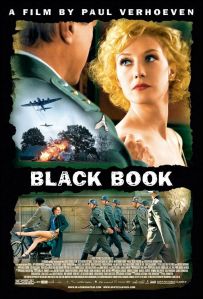 If there’s one thing you can say about Dutch filmmaker Paul Verhoeven, it’s that his films are never boring. He’s shameless when it comes to the amounts of sex and violence he squeezes into his films, and this isn’t typical bouncy violence but cold, serious violence that manage to have whiffs of dark comedy to it. The sex is sleazy and ridiculous, often outpacing the late-night flesh peddlers on Cinemax. I don’t think Verhoeven knows how to do anything subtle, and frankly I wouldn’t want him to. The man is responsible for brawny sci-fi (Total Recall, Robocop), killer lesbians (Basic Instinct), the most subversive mainstream Hollywood movie of the modern era (Starship Troopers is pro-fascism, people), and the most surreal visual effect I have seen in my life – a breast groping itself (Hollow Man). Verhoeven even shows up in person to accept his Razzie award for Worst Director for 1995’s camp classic, Showgirls. This man doesn’t have an off switch. The man makes enjoyable movies, both intentionally and unintentionally.
It’s been a long six years since Verhoeven’s last film and in that time off he’s settled back into his homeland. Black Book (Zwartboek) is a tale loosely based around true stories involving the Dutch resistance in the Nazi-occupied occupied Netherlands. And if there is anyone that can throw in some sex with our good old-fashioned WWII violence, it is Paul Verhoeven.
Rachel (Carice van Houten) is a Jew hiding out in the Netherlands. She and her family is trying to pass out of the country by river when they are ambushed by the guns of a Nazi boat. Rachel is the lone survivor and watches all of her family members get mowed down. She joins the underground resistance movement to find out who betrayed her family. She dyes her hair blonde, both above and below the waist to be thorough, and cuddles up to a stamp-collecting S.S. leader, Ludwig Muntz (Sebastian Koch). She works her way into his trust and along the way uncovers a twisty conspiracy to trick rich Jews into ambushed escapes.
 Black Book is skillfully made and pulpy enough to keep the viewer’s enjoyment level in a good place. From start to finish the movie presents enough trials and setbacks to keep an audience satisfied, and enough sex and violence to meet out the standard Verhoeven quota. Nazi occupation hasn’t been deeply explored from the Dutch point of view, and Verhoeven decides not to make everything so black and white. Muntz is a compassionate S.S. officer that wants to work negotiations with resistance fighters to stop further bloodshed. Rachel deeply falls for him, at the disgust of some of her fellow men at arms. On the other side of the coin, once the Nazis have been toppled there are several Dutch civilians and bureaucrats that can behave just as cruel. Those now with power strike out against those deemed to have sympathized and collaborated with German rule. Verhoeven is making a point that there was good and bad on both sides, which is admirable, though this point has been made better elsewhere. Black Book is filled with various twists and double-crosses, so the audience is involved until the very end. Plus, the sex and violence help too.
There’s terribly little below the surface when it comes to Black Book. It’s a thrilling, unabashedly entertaining movie but nothing beyond a sexed-up, suped-up version of a 1940s behind-enemy-lines potboiler. The characters have little to them beyond basic motivations like greed and lust and revenge, so it all can seem like an empty but high-spirited, fun-filled time at the movies. Verhoeven has never imbued his female roles with much characterization, more often showcasing them as ass-kicking vaginas on legs (whoa, now there’s a mental image for you). Another flaw is how Black Book is structured. We open on a tourist trip to Israel in 1954 and see Rachel teaching a class of schoolchildren. This colossal misstep drains the tension from whenever Rachel is in danger; we already know she has to survive to teach our little ones. [I]Black Book[/I] is a largely fictional take, a collection of various historical pieces and figures, so that means that the outcome for our heroine is not preordained. Rachel very well could die amidst her undercover infiltration, but alas the movie opening in flashback erases this threat.
Van Houten is an enticing screen beauty that brings to mind Hollywood stars of old. She has a very simple, prim, elegant look to her, and a presence that is coy and sensual but far from trashy or vulgar. This helps add traces of believability to a figure that does some incredible acts in the name of God and country. Hollywood would have cast Rachel as a tall, buxom bombshell, but it would all be wrong. If this girl turned heads she would be dead. Van Houten gets thrown through the wringer, and at one point literally shit upon, and she handles it with steely grit. The best moments are when we see how Rachel rebounds from setbacks, when she is forced to break from her resolve and think. Her first encounter with Muntz in a train car is a good example, but even better is how she reacts when Muntz accuses her of dying her hair and being a Jew. She grabs his hands and places them on her hips and finally rests them on her exposed breasts. “Are these Jewish?” she asks. She defuses the situation and lives another day, and it’s perfectly played by a nervous but nervy Van Houten. She makes two plus enjoyable hours even more enjoyable.
 Black Book is clearly and fairly rated R, but part of its rating piqued my curiosity. One of the items that help push the film into the restricted rating is “graphic nudity.” Now, what exactly is graphic nudity? I recall last year’s Babel also getting an R-rating for what was deemed “graphic nudity.” One thing the two films have in common is that they both show quick glimpses of exposed female genitalia. I suppose that the MPAA feels that nudity becomes graphic when we see pubic hair. This confounds me. What about pubic hair turns nudity into an extra, more offensive category of nudity? At the end of the day, it’s just hair, people. I did some quick research and [I]Basic Instinct[/I], infamous for Sharon Stone’s career-making leg crossing, is rated R for mere “strong sexuality.” For the record, when Stone flashes her naughty bits they were bare. So let the record show that hair seems to be the qualifier between what is nudity and what is graphic nudity. Maybe I’ll write a dissertation on this some day.
As for another aside, how freaking cool is the name Zwartboek? It sounds like some fun term I’d come across in the pages of Douglas Adams’ The Hitchhiker’s Guide to the Galaxy. The Dutch language is a tad bizarre for my American ears; it’s sounds like a mixture of English and German, and sometimes it seems like a subtitled sentence is actually direct English. I know I can’t stop saying “zwatboek” around my home in place of gasps and curses.
Black Book is Verhoeven’s first Dutch language film in over 25 years, and it also feels like he’s enjoying movies again after his bad experiences across the Atlantic. I welcome more entertaining Dutch films from their favorite filmmaking son. He may not be he most subtle man behind a camera, but we already have plenty Terrence Mallicks and Gus van Sants to bring confounding contemplation to movies. We need more people like Vanhoeven who know how to please the sense, kick you in the balls, and make you grateful for the experience.
Nate’s Grade: B
Share this:

Dreamgirls (2006)
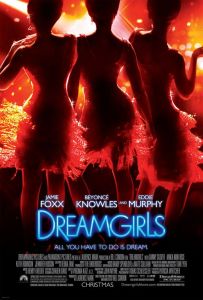 When the smoke cleared after the 2006 Academy Award nominations, there were some media members in disbelief. How could Dreamgirls, an expensive, glitzy musical that many perceived as the front-runner for Best Picture, fail to even get nominated in the Best Picture category? Theories abounded; the mostly white Academy couldn’t acknowledge a movie steeped in black culture, the film fell prey to backlash against a momentous hype machine that rubbed people the wrong way, or even that it was unfairly judged against recent musicals, like 2002’s Best Picture winner Chicago, instead of being judged on its own merits. After having now seen the film, I have an altogether simple explanation: the Academy thought there were better movies and I couldn’t agree more. Here are five reasons why Dreamgirls just didn’t cut it.
1) The film just falls apart after the halfway mark. The focus is on the rise of the all girl group the Dreamettes in the 1960s Detroit music scene. Effie (Oscar-winner Jennifer Hudson) is the strong-willed lead singer with big curves and a big voice. She’s pushed out of the way by her band mates so pretty face Deena (Beyonce Knowles) can front and sell records. Effie is our star and she doesn’t take the news well, and explodes in an emotional fury that results in the film’s true showstopper song, “And I Am Telling You I Am Not Going.” Trouble is, there’s still an hour of movie left. The second hour of Dreamgirls feels like a plot layover, as our characters don’t do much more than stuff their hands in their pockets and grumble. It’s astonishing how deflating the second hour to this movie is, and the film cannot sustain a viable interest or energy, leaving the audience to tap their toes to songs that already ended an hour prior. It’s a troubling sign when a film peaks at the halfway point and seems to only stall and sputter after.
 2) The songs are not that special. Dreamgirls would have been far more entertaining if what we got was some honest, soulful, groove-inducing Motown music. Instead, what we get is the same pop filler that the characters bemoan what commercialism has transformed their music into. None of these ditzy ditties are very memorable and many of them start to just blend together, thanks in part to montage-obsessed editing. The other focus of Dreamgirls is on the rise of Motown, how a very Berry Gordy-like figure, played by Jamie Foxx, patterned black music and made it hit for white listeners. I think this was the most depressing part of the film for me, the fact that I could have done without the music in a musical.
3) The tone lacks clarity and can be grating. For about 80% of the movie when the characters sing it’s on stage as performance. Then two characters sing their displeasure with each other and the audience is like, “What the hell?” I accept the laws that govern musicals, and people spontaneously bursting into song and choreographed hoofing does not bother me, but whatever the choice it needs to be consistent. When the audience is used to seeing the singing contained to the stage, it becomes jarring when it transpires in reality. Director Bill Condon (Kinsey, Gods and Monsters) cleverly worked around this problem in his screenplay for Chicago by placing all the song-and-dance moments as glimpses into one woman?s musical-obsessed psyche. It seems so careless and easily remedied, so what were they thinking?
4) Dreamgirls is desperate for Oscar attention. At the end of the movie, after an awfully messy run to the finish line, come the end credits, however they aren’t so much as end credits as they are “for your consideration” ads. When the director of photography credit appears you see a man in a camera crane. When the costume designer is credited we see her sketches and the real outfits side-by-side. Some of it is silly, like when the casting director is listed and we see, no kidding, a checkerboard of faces, like the movie is saying, “This is what a casting director does, look.” The sequence is moderately annoying and a little patronizing, but it is a splendid example of the filmmaking ethos. It feels like the over zealous studios thought that by throwing together a bunch of musical staples and covering it with fancy decoration that they could fool audiences into thinking they saw a full-blooded story.
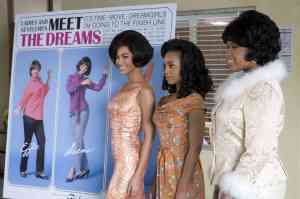 5) You fail to feel for any of the characters. In the rush of production numbers and period detail, the characters all suffer horrendously. The Dreamettes are obviously a take on the Supremes, and Deena is obviously supposed to be Diana Ross; they even recreate iconic Diana Ross pictures with her. By this token, it seems like the filmmakers felt they could slack off on characterization and just banish their actors to the ghettos of genre archetypes. I didn’t feel for anyone, even Effie once she got her walking papers for being essentially fussy, overweight, and sticking with her integrity. She tries to pick up the pieces of her life but even she seems disinterested once the stage lights no longer shine upon her. The characters have about a dewdrop of depth to them and can be summarized each by one sentence. Shallow characters and a less-than-compelling second half doom the movie.
There are enjoyable aspects to Dreamgirls, notably the performances from the supporting players. Eddie Murphy experiences nothing short of a career resurgence playing Jimmy Earl Haley, a groundbreaking soul singer with a fiery stage presence. Murphy puts his all into the performance and is such a live wire that Dreamgirls seems downright downtrodden without him. Former American Idol contestant Hudson has been collecting accolades for her diva-like performance, and while her singing is full of bluster and verve, I cannot say the same for her acting. She gives a solid overall performance but doesn’t try hard to hide her inexperience with acting. I wouldn’t have given Hudson an Oscar, but then I wouldn’t have given Oscars to a lot of the eventual winners (Julia Roberts, your hardware rightly belongs to Ellen Burstyn).
Film critic David Poland was nearly beside himself with Dreamgirls‘ omission from the Best Picture contenders. He argued that had it been nominated it would have won (I’m not sure how that logic works, but I do have a bridge I’d like to sell Poland). Dreamgirls is not bereft of technical charms and entertainment, but to posit this as anything above a mediocre musical is just plain madness. The characters barely leave an impact, the music is the same pop pap it laments, and the movie just simply peaks too soon. There’s nothing daring or innovative with this song and dance revue, and for long periods it feels like a pandering exercise in dress-up and nostalgia. I suppose in the end the Academy just thought there were five better movies than Dreamgirls, and, for once, I agree with them.
Nate’s Grade: C+
Share this:

This Film is Not Yet Rated (2006)
 Filmmaker Kirby Dick is a ballsy man. First, he crafts a rousing journalistic expose on the un-impartial and arcane practices of the Motion Picture Association of America ratings board. Then, and this is genius, he submits his own muckraking documentary to that same board for a rating. Dick’s potent film is ambitious and tries to do too much, touching every topic related to the MPAA it can think of; it practically steamrolls over the ideas of piracy and the fact that a national ratings board eliminates the all-too-likelihood of arbitrary local ratings systems. But Dick squares the MPAA in his sights and his aim is deadly. This is an organization that says it is voluntary and has no editorial control over how movies are made. But how voluntary is it when the NC-17 rating is treated as a commercial kiss of death, where newspapers won’t run ads, video stores won?t carry the film, and advertising is strictly limited?
Dick makes brilliant note of the different hypocrisies of the ratings systems. Sex is graded far more harshly than wanton violence, and what’s even worse is homosexual sex. Dick juxtaposes film clips side-by-side, one with heterosexual sex where the film received an R-rating, and the other with homosexual sex where the film received an NC-17 rating. The scenes are nearly identical except for the gender of the people involved. Also, sexual thrusting also seems to get the MPAA’s goat. An animated sequence detailing what is and isn’t allowed in a film per rating is hilarious (you did know you got one F-bomb for a PG-13 as long as it is not in reference to sex, right?). There’s a lot of filmmakers in here to share their MPAA horror stories of what was and wasn’t accountable for taste and some of it is baffling; Hilary Swank wiping her mouth after going down, off camera, on a girl is the difference between R and NC-17. The MPAA also has a disturbing habit of grading harshly when it comes to films that show women receiving pleasure through sexual intercourse.
The MPAA is also the only ratings board where its members are kept in secret in an effort, they say, to thwart coercion. Dick hires a private eye, who happens to be a lesbian no less, and together they hunt down the raters and reveal to the public for the first time who these arbitrators of taste really are. MPAA mastermind Jack Valenti said the raters would be comprised of normal parents; well Dick’s film exposes that many on the board have adult children, and some don’t have any kids at all. Plus there are two members of the clergy on this board in an “advisory” function. The film isn’t mean-spirited but is very angry but it’s an anger that Dick makes sure you understand and relate to. The most astonishing aspect of this documentary is that the MPAA actually listened and is loosening certain rules, allowing filmmakers to cite precedence when arguing for or against their ruling (“Hey, you can stab a guy in an ear with a penis in Scary Movie but we can?t have two women kiss?”). This is a must-see for film fanatics and those curious how the industry ceded power to a small group of middle-aged homeowners.
Nate?s Grade: B+
Share this:

Half Nelson (2006)
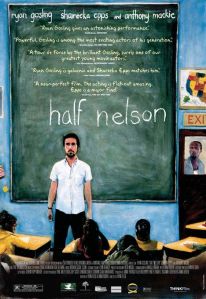 Ryan Gosling gives a devastating performance as an inner city schoolteacher addicted to crack. This is a thoughtful look at friendship and vice as Gosling befriends one of his female students and becomes something of a mentor, trying to steer her in a good direction. The film is refreshing because of how awkward and authentic it is, and it does not pull punches; there are no happy endings or storylines wrapped with bows. The biggest drawback from this powerful film is that it’s too insular and doesn’t get much of an outside perspective. Scenes have a tendency to drag, but the movie is set ablaze by the troubled yet hopeful turn by Gosling, already firmly established as the most astonishing talent of his age. Who ever would have guessed a former Mousekateer would be our next Marlon Brando?
Nate’s Grade: B+
Share this:

Jesus Camp (2006)
 Every year Pastor Becky holds a camp in North Dakota called “Kids on Fire.” It isn’t your typical summer camp where they weave baskets or go swimming. This is a Christian-based camp with one objective: to brainwash impressionable children. Jesus Camp is nothing short of startling and eye opening. These people mean well, I hope, but what we’re witnessing is nothing short of child abuse. I was watching these kids’ childhoods vanish right before my eyes as grown-ups recruit them to be foot soldiers in the army of God. These kids are shoveled dogma to the point that they become robots, and it’s because kids are so impressionable that the adults know it will stick. I defy anyone not to die a little when they hear a kid say he was “saved” at age five because he wanted more out of life. FIVE! Another little girl, around 10, uneasily admits she finds herself dancing “for the flesh” at times instead of for the Lord.
The most heartbreaking moment of the film is when we see one kid share his faith. He so badly wants a religious experience, to feel the touch of God in his life, but he regrets that doubt keeps setting in and life has a habit of making faith a hard commodity to grasp. All around him are kids writhing on the ground, bleating in tongues, weeping because they feel God inside them, and here?s this poor kid dealing with the same struggles that most adults go through when it comes to religion and spirituality. There’s a moment when he?s even rocking back and forth with his hands open, tears down his face, desperately wanting what the others seem to so easily be channeling. My goodness, it’s hard to watch. You just want to hug the kid.
 Where things get really scary is when the people supporting the camp blur the line between religion and politics. His mother home schools Levi, and there’s a moment where he’s reading his textbook and his mother says, “Did you get to the part where they say science hasn’t proven anything?” His mother then dissects global warming as myth and propaganda. What does the Bible have to do with global warming? Absolutely nothing, but it’s a conservative Republican talking point to question the validity of science and climate change. And that’s when the realization dawns: this camp isn’t creating soldiers for God but a broader voting base for the Republican Party. That’s why they debunk global warming, that’s why they ignore science, that’s why they learn about aborted fetuses, and that’s why they’re reminded of the “murder” of Terri Schiavo. I’m sorry but it is just entirely inappropriate to berate 6 and 7-year-old kids about abortion practices. One camp leader instructs the kids to smash a cup representing “government” and to pray for righteous Supreme Court nominees. These items have nothing to do with the actual Christian religion but they sure have a lot to do with how the Republican Party courts the religious vote. At one point Pastor Becky dredges up a cardboard cutout of George W. Bush and the kids are instructed to kiss it and bless him. Excuse me madam pastor, isn’t that idol worship?
The idea is that taking away a child’s reason and ability to think is in their best interest. I do not subscribe to the theory that ignorance is a defense against the world. But that’s exactly what these children are being forced to become — ignorant. They will become true believers and there’s no debate with a true believer, because they know they’re right no matter what evidence is set before them. Personally I don’t understand why science and religion have to be butting forces that cancel each other out, but that’s because I reason my beliefs with the realities of the observable world. These kids will never have that chance.
But what these people are doing is fear mongering and preying on a child?s instinct to belong. Pastor Becky condemns Harry Potter: “[He’s] an evil warlock and in biblical times he would have been burned!” She breaks down these kids and then rebuilds them just like the military. However, I don’t think the army of God needs wee ones knocking on doors to say the Earth is 6000 years old and fossils were just something the Jews hid as a hoax (this is a joke, but who knows what these kids could be led to think). One girl walks up to a group of older black men and asks if they know where they’re going when they die. “Heaven,” they simply reply. She questions if they’re sure and then leaves, and as she walks across the street she quietly tells her friends, “I think they were Muslim.” Sigh.
 The movie also has the best unintentionally hilarious moment of 2006. Pastor Ted Haggard is interviewed in depth and we see him preach to a congregation of hundreds. He says that as long as evangelicals vote, then no one can topple them. Months after the theatrical release of Jesus Camp, and a week before the 2006 midterm elections, a gay prostitute came forward confessing that Haggard had paid for sex on numerous occasions and even used meth. Haggard released a statement saying he had a lot of demons that made him do vile acts. In Jesus Camp, we see Haggard looking directly into the camera where he speaks as his conscience, saying, “I know what you did. I’m going to tell your wife.” The transparency is amazing and quite funny.
From a technical point of view, Jesus Camp doesn’t have a lot going for it. The music is pretty keen and the editing has a nice narrative to it, framed by a pastor on talk radio denouncing tactics and proselytizing. Mostly the filmmakers have such a harrowing scene that they just point their cameras and let their subjects be. There’s not a lot of commentary from their part, instead they choose to convince their audience through the power of what they see. The documentary is even-handed and could be commended by both sides of the political aisle. Some will be infuriated while others will be stimulated.
Jesus Camp is the scariest movie I’ve seen all year and also one of the saddest. Children should be allowed to be children and enjoy the time they have before the world gets complicated. They are not to be used as pawns in someone?s attempt to steady their political status quo. I know people mean well, but this isn’t helping. Pastor Becky is in awe at the Muslims who are willing to die for their cause. She wants the exact same thing from a Christian point of view. And that’s where she fails. You don’t fight fundamentalism with fundamentalism. You create a dialogue and try to reason, but how can you reason when all you know is that you’re right at all costs and everyone else is wrong? Jesus Camp did have a positive impact. Pastor Becky has decided to close the camp. I feel it may be a small victory though. There will be plenty more that pop up in her wake. These people want to “take back America.” Does that mean for the rest of us that our country is being taken away?
Nate’s Grade: B+


 nathanzoebl
You must be logged in to post a comment.