Blog Archives
The Wrestler (2008)
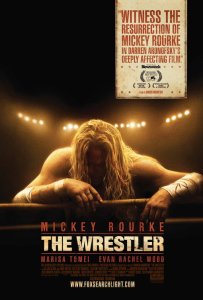 The Wrestler came out of nowhere to be hailed as one of the most stirring dramas of the year. Who would have possibly guessed that a movie that stars Mickey Rourke in spandex would be one of the best films of 2008?
Randy “The Ram” (Rourke) was one of the biggest professional wrestlers in the 1980s. His pay-per-view battle with “The Ayatollah” in 1988 is legendary to wrestling aficionados. But nobody ever stays on top forever. Twenty years later, Randy is a self-described “old broken down piece of meat.” He’s barely staying afloat working at a supermarket during the day. On weekends he adorns his old tights and fights in wrestling bouts at VFW halls, where small numbers still flock to see the scripted carnage. Randy is fighting against the ravages of time and is determined to stick it out with the profession that has both made him a super star and also left him broken and lonely. He can relate to Cassidy (Marisa Tomei), a 40-something stripper that gets disrespected by customers because of her age. Randy seeks out his teenage daughter (Evan Rachel Wood) to attempt to be a father for the first time in the girl’s life. Then a wrestling promoter wants to stage a twentieth anniversary rematch between Randy and “The Ayatollah” (who runs a successful used car business in Arizona now). The opportunity means Randy has one more shot in the limelight before his health sidelines him for good.
 There isn’t a note in The Wrestler that feels misplaced or a moment of drama that feels false or contrived. The scenes of emotional revelation feel genuine and aren’t delivered with deliberate emphasis, like Randy’s moving speech where he tells his neglected daughter how rotten of a father he was, which he accepts bitterly, but he pleads to fashion enough understanding just for his little girl not to hate him. The Wrestler skews against convention and ends on its own terms, following the fated trajectory of its tragic hero. This isn’t a generic or sentimental tale of uplift and redemption. Randy is eager to make amends for a lifetime of bad decisions but he is also keenly aware that he has little to offer and that the outside world has little place for him. The Wrestler is a tender tale about a man trying to find his place in a world no longer familiar to him. Randy tells Cassidy at one point that the only place he ever truly feels pain is outside of the ring.
The film skillfully explores what is fake and what is real in the wrestling world. The matches may be predetermined but the injuries are very real. These muscled warriors are essentially pro stuntmen with some charisma and their bodies are their offering to the screaming masses. They give everything they have for the crowds but what do they get in return once the applause dies down? After witnessing the bloody aftermath of an especially brutal match, which included Randy being lacerated with barb wire and having a staple gun decorate his back, it’s easy to wonder why any sane person would subject themselves to this kind of punishment and for so long. Cassidy is in another profession that tends to grind up and spit out its star attractions. She reaches out to Randy not out of romance (a lesser film would have demanded she fall in love with the big lug) but out of a desire for human companionship, for something real. These two characters are both at a crossroads and must come to grips with the cold realization that the world has passed them by.
 The script by Robert Siegel came alive for me in the details. I love discovering that Randy endures shame that his real name is the more effeminate-sounding Robin. I love that the film shows a scene where a batch of old wrestlers sit next to folding tables and hawk tapes of their greatest matches that no one wants to relive but the old timers. I loved that Randy’s long walk through the bowels of the supermarket to greet his “fans” at the deli counter mirrors his entrances to wrestling bouts.
Astonishingly, Darren Aronofsky directed this movie. The film departs sharply from Aronofsky’s highly artistic yet stylistically mannered previous films, like Requiem for a Dream and The Fountain. He strips away the style pyrotechnics and follows a no-frills docu-drama approach. This dynamic helps accentuate the raw and harsh reality of the film. It’s the most relaxed direction the man has ever done. He’s able to churn the myriad of emotions and broken dreams into a powerful character study that never feels manipulative. The Wrestler feels remarkably intimate and emotionally bruising.
The Wrestler is built to be a one-man show and it’s a terrific show. Rourke’s performance is invigorating and the former Hollywood bad boy channels his own personal history of regret and missed opportunities. The line between character and individual is noticeably blurred. Rourke’s busted and mangled face tells a long history for Randy. The physical shellacking that the 52-year-old Rourke takes is brutal, and you realize that he throws his body into the performance with wild abandon for a man his age. I cannot imagine this film working or having nearly the poignancy with Nicolas Cage in the lead role, which is what was originally planned (Cage might have had a more bizarre haircut). Rourke is the role. It is a perfect marriage of actor and character. The character of Randy is the latest in the long film tradition of the noble loser that must fight to reclaim his victory, which makes for a deeply empathetic experience. Randy is a gentle giant, courteous even to the people that insult him and his glory days. You will feel the man’s every high and low. When he’s working at the deli counter and begins to have fun, joking around with customers, you’ll feel his sense of revelry too. When he’s lonely and invites a neighbor kid over to play an old 8-bit Nintendo video game featuring Randy, you’ll feel the same ache of sadness to connect. When Randy screws up, you’ll feel the same angry disappointment. When Randy is out shopping for wrestling props and playfully involves others in “testing” them, you’ll feel the man’s amusement and sense of peace. Other actors might have given in to the setting and played Randy as a caricature, but Rourke plays with subtlety when he could have gone big. He’s reflective and somber and has a well of repressed anger buried deep within. It’s a performance for the ages and cements Rourke’s cinematic comeback.
 The Wrestler is a rich and engrossing character study that aches and wheezes with the pain of real life. Randy is a man that’s lived a hard life, by design, but at his core he is a kind and decent man. The film takes after its star and proves to be quiet, unassuming, brutally honest, and deeply affecting. Rourke bares his own tortured soul by playing Randy, and his performance is unquestionably one of the best of the year. This is a surprising, heartfelt, and equally heartbreaking movie that finds many truths through the self-dawning of its title hero. It’s not the wrestling matches that I’ll remember most, no sir. I will remember the small interludes, like Randy dancing with his daughter, the beer he shares with Cassidy as they lament the 1990s, the love and brotherhood backstage between with the wrestling opponents, Randy delighting the kids in his trailer park by pretending to fight them. Randy may not find solace or stability outside the ring but the people around him prove that Randy was bigger than “The Ram.”
Nate’s Grade: A
Share this:

Gran Torino (2008)
 Clint Eastwood is an icon but he’s also proven to be a remarkable and thoughtful director in his twilight years. When the star first traveled behind the camera he mostly stuck with the action films that were his cinematic bread and butter. Then he showed something grander with 1992’s Unforgiven and rebounded back to that quality with a string of critically lauded flicks like Mystic River, Million Dollar Baby, Flags of our Fathers, and Letters from Iwo Jima. Three of those films were nominated for Best Picture, including three Best Director noms, and Baby won. The prolific screen icon has taken his directing skills up to another level in his older age and Eastwood has chosen to work on somber, mature, and meditative tales. Gran Torino is a movie caught between two different eras of Eastwood direction. It has the sheen and intentions of one of the recent loftier works and the film also taps into the suspense of his earlier action vehicles. It’s the only non-Batman movie targeted for Oscars this year that features ass kicking.
Walt Kowalski (Eastwood) is a retired Korean War veteran living in Detroit. He worked on the Ford factory lines for over 30 years and now has the pleasure of seeing his spoiled children driving foreign cars. His neighborhood has been inundated with Hmong immigrants from South East Asia. It seems the Hmong people sided with the Americans during the Vietnam War, and when the Americans left, well, it didn’t turn out so well for them. One old Hmong lady chastises Walt as a stupid old man and doesn’t know why he hasn’t fled like the other whites that used to live in the neighborhood. Things aren’t like they used to be. Gangs run rampant and terrorize the people into silence. We’re told that when it comes to the Hmong, the women go to college and the men go to jail. A Hmong gang keeps trying to recruit Tao (Bee Vang) into their ranks. He is looked down upon as a weakling and for doing women’s work, like gardening and the dishes. His initiation into the gang is to steal Walt’s pristine 1972 Gran Torino, the old man’s prized possession and one he helped build on the assembly line. Walt catches Tao in the act and eventually the boy works for Walt to repay the offense. Together, Walt and Tao form an unlikely bond. His Hmong neighbors cherish Walt for saving Tao from the gangs and the community opens its arms to him. Walt helps Tao find a job and stand up for himself, but the pull of the gangs is too strong. Walt realizes that Tao and his bright sister Sue (Ahney Her) will never be allowed to have a future as long as the Hmong gang is around.
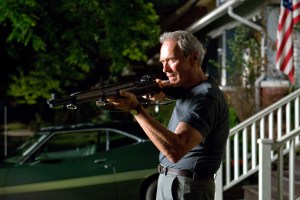 It’s hard to take the movie purely on the surface without some preparation. Because in synopsis, Gran Torino sounds like a ham-fisted after school special where Old Man Dirty Harry teaches the youngsters about the dangers of gangs and violence. The film is hard to fully describe without it sounding like a parody. Yet Gran Torino manages to come together along the journey. The movie balances gracefully even when it seems like it is going to dip into self-parody. Simply put, having Eastwood point a gun and growl, “Get off my lawn,” the quintessential geezer line, is almost calling out for ridicule. The gang storyline feels at times incredibly natural in approach and its casual, realistic dialogue, and at other times the storyline, like the film, feels like it is leading you by the nose. Some of the stock characters are sketched so thin, like the self-centered granddaughter who wears a midriff-bearing outfit to her grandmother’s funeral (all the better to witness your navel piercing, my dear). The spoiled children and grandchildren come across as too broad to be believable. The messages are all familiar, the characters are even somewhat familiar, but Gran Torino emerges as something more understated and perceptive than “Archie Bunker with a gun.” It’s a moderately rich character piece that follows one man resorting to his better nature in his golden years. Walt’s redemption may be predictable from the first minute but that doesn’t make Gran Torino any less satisfying. In fact, the movie on a whole is an embarrassingly entertaining experience. Sure, there’s a certain primal rah-rah vengeance angle to it, and watching a 78-year-old man kick around some youngster is always worth watching. But the novelty of the movie is not cheap xenophobic wish fulfillment, watching an old white war vet eliminate the immigrants in his neighborhood. The draw of this movie is an old-fashioned tale told well, which is equally earnest and glum.
The dialogue can be forcibly blunt as it spits out every offensive racial epithet, slur, and stereotype known to human ears (it’s practically the comedy routine of the unfunny Carlos Mencia). The screenplay by Nick Schenk confuses racist pabulum with comedy gold, like hearing an old lady cuss, but Eastwood manages to make it work. The rampant racist dialogue tends to get tiresome unless it begins to chip away and reveal more about a character. Naturally, Walt shuns being politically correct because he is uncompromising. He shakes his head and glowers at what the kids today have turned into. He’s meant to make others feel the same discomfort he feels in today’s world, and words are his weapons at his old age. The backbone of the script is the friendship Walt forms with Tao and his family. Because it begins so reluctantly and moves at a steady pace, the audience is emotionally invested and the friendship is rewarding to witness. The movie presents a fairly universal message about the redemptive power of human kindness, of helping one’s neighbor. It’s a petty big melting pot out there and there’s no reason to dig in and combat change. Gran Torino lacks the forced sanctimony and transparent manipulation of other “important” race-relations movies, like 2005’s Best Picture-winning Crash.
 The movie is impossible to view without it also becoming a commentary on an iconic actor’s screen legacy. What does a retired Dirty Harry at 80 look like? I imagine something like Walt, an embittered war vet grumbling about the change all around him that he is powerless to ignore. Eastwood takes great pains to be an angry curmudgeon even until the end, which allows the actor to tap his little seen comic ability. There’s a funny scene where Walt takes Tao to the barbershop for a lesson in how to “talk like a man,” which naturally involves playfully insulting your fellow man. Eastwood knows how to make a racist and standoffish character sympathetic and engaging. It’s a pleasure watching Walt become affectionate and protective, and yet the character’s redemption doesn’t ever feel contrived. His character is scarred and weary and wears his pants up to his armpits, but Clint makes it work. He can be sad and badass and appalling all at the same time. The character is somewhat similar to his character in Million Dollar Baby, a grumpy man closed off to the world who mentors a young kid. The flick presents a semi-dignified swan song to what happens when men of action grow old.
Eastwood directs with his typical steady hand and cool decision-making. The camerawork is intimate and sparing, never yanking the audience out of the story. The visuals mimic the characters in that nothing feels over polished. I enjoyed the small bits that pointed to something deeper, like Walt pointing his finger, a pistol and lining up his antagonists. I also enjoyed that Walt refrains from ever spilling his guts about his guilt during the Korean War except in a way that feels true to the character. Eastwood also shows a bit of his directorial prowess by hiring a bunch of Hmong actors that have had no acting experience. Some of them fare better than others, and some are in fact kind of bad, but this decision makes the movie feel more authentic. Now, it’s rare for me to cite sketchy acting as a plus for a movie, and that should be a testament to Eastwood’s directing skills. The man has a way with people; since 2003 he’s directed four different actors to Oscars. It must have been what Angelina Jolie was hoping for when she signed up for Changeling, the earlier Eastwood directorial effort from the fall. I think the biggest mistake Eastwood makes as a director is singing the closing song that unrolls right before the credits. Clint’s raspy singing voice is not the best way to close a movie.
 Gran Torino isn’t among the same ranks as Eastwood’s other output, like Letters from Iwo Jima or Mystic River, but it’s a small-scale story told with fortitude. Even as I write this review, and you dear reader read them, I feel like I’m failing in my attempt to make the movie sound good. True, on the surface it sounds like a bizarre after school special that would be destined to slip into self-parody and open mockery. Eastwood as star and director makes the material click. Walt’s journey from grumpy bigot to grumpy bigot who has opened up and made amends is greatly entertaining and humorous throughout. Gran Torino can be seen as a deconstructionist take on the fading era of Dirty Harry and Eastwood’s cinematic tough-guy legacy. Clint fans will eat all of this up.
Nate’s Grade: B+
Share this:

Happy-Go-Lucky (2008)
 I wanted to turn this movie off for the first 30 minutes or so and that’s because of Poppy (Sally Hawkins), the deranged optimist that the movie follows. Writer/director Mike Leigh’s latest semi-improvised tale following the English working class centers on a primary school teacher who makes the conscious choice to be happy in life, no matter what life throws her way. Her presence is somewhat exhausting, like a customer who doesn’t know when making jokes has gone from fun to downright annoying. But you know what? Poppy eventually won me over, and I’m all but positive it was the scenes of her and her raging, pessimistic, tightly wound driving instructor (Eddie Marsan) that did it. Before their first driving lesson, I felt like the movie was giving me a slice-of-life that I was hesitant about; Poppy, like anyone who is insanely happy, can be grating. The humor is extremely dry and most of the clever dialogue exchanges will likely go by unnoticed because the actors aren’t delivering big punch lines. Hawkins goes all-out as the unflappable Poppy and she will make you smile through sheer force of will. This was a film I liked more by the time it was winding down, perhaps because Poppy might be easier to take knowing that time is coming to a close much like spending time with a distant relative during the holidays.
Nate’s Grade: B
Share this:

The Visitor (2008)
 The follow-up by Thomas McCarthy, the writer/director of the sparkling Station Agent, is an affecting indictment on our nation’s immigration policies that manages to say a lot of important things in small touches, ditching histrionic messages. Walter (Richard Jenkins, in a commanding and deeply empathetic performance) discovers a pair of illegal immigrant squatters living in his seldom-used New York City apartment. He strikes up an unlikely friendship that moves in subtle strokes that keeps the movie very character-based. The second half of the film revolves around Walter’s attempts to work within the system to free his new friend from detention. I could have spent more time with Walter and Tariq, the Syrian immigrant who teaches Walter how to play the African drum. The Visitor explores a man learning in his autumn years how to reconnect with people, and it has moments of astonishing emotional clarity. McCarthy is a filmmaker that can spin narrative gold from just about anything; The Station Agent had a hot dog vendor, a single mom, and a dwarf. The Visitor is further proof that McCarthy is an extremely talented man who knows how to target and tap the humanity of his unique characters. There are very few moments in this movie that feel false.
Nate’s Grade: B+
Share this:

Man on Wire (2008)
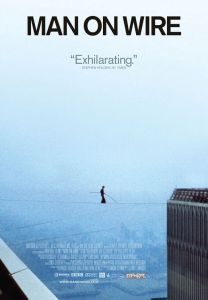 Why? That’s likely to be the question on many people’s minds when this documentary concludes. Why did effete Frenchman Philippe Petit decide to walk on a tight rope between the World Trade Center towers in 1974? Why devote an entire feature-length documentary to a subject that seems pretty limited? Well, Man on Wire is certainly an engaging film; amusingly, director James Marsh structures the flick like a heist movie, where we watch Petit assemble his team and practice his stunt. There is a sense of beauty watching a man balance on a wire hundreds of feet above the ground. The film also has colorfully French characters to fill in the details on how they pulled off the “artistic crime of the century.” Of course any modern art dealing with the World Trade Center is given new meaning, and Man on Wire is aided by added poignancy of watching the building construction and then the daring feats of Petit. I confess, though, that I’m dumbstruck at this movie being declared the finest documentary of 2008. It’s a good movie, sure, but not even the fourth best documentary I’ve seen in a doc-heavy year. The footage of Man on Wire is more amazing than the story behind how it happened.
Nate’s Grade: B
Share this:

Slumdog Millionaire (2008)
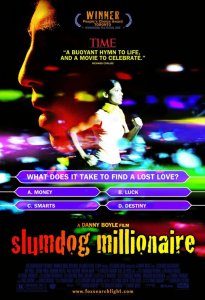 If there is one independent movie that seems to be picking up momentum this awards season, it’s Slumdog Millionaire. The film seems destined to break out into the mainstream, especially in a time where audiences could use a happy story given the ongoing news of economic downturns. Slumdog Millionaire is a highly spirited rags-to-riches tale that marries Hollywood and Bollywood into one fantastic product.
Jamal (Dev Patel) is an 18-year-old kid who grew up impoverished in India’s favellas. He’s also on the verge of winning 20 million rupees on the Indian version of the Who Wants to Be a Millionaire? Game show. The TV host reminds Jamal that lawyers and doctors have never gotten as far as he, a lowly “slumdog” from such humble origins. As each question emerges we discover more about Jamal’s life, from escaping a riot, touring India as a stowaway on a train, conning American tourists at the Taj Mahal, to his assistant work at a call center. Throughout Jamal’s life are two constants: Salim (Madhur Mittal) and Latika (Frieda Pinto). Salim is Jamal’s scheming older brother who has a loose sense of morals. He finds a life of crime as a suitable escape from poverty. Latika is a young orphan girl that Jamal befriended as a child. He declared that she was the “third Musketeer” in their group and has always sworn to love her. This is complicated because Salim’s crime boss wants Latika for a prize, and Salim keeps his younger brother away from Latika. Ultimately, as an entire nation watches with baited breath, Jamal explains that he is appearing on TV because he knew that Latika, his love, would be watching somewhere.
 It’s like City of God and Forrest Gump had a baby that was raised by Oliver Twist. The film is given a dynamic energy thanks to director Danny Boyle’s exuberant camerawork and skillful style. Boyle is a director that knows how to make images jump and Slumdog feels like it is coursing with life. The feel-good fantasy nature of the rags-to-riches plot is offset by some pretty harrowing violence, and Boyle makes great pains to show the realities of living in squalor. At one point a very Fagin-esque local crime lord collects young orphans to be beggars and he has a foolproof scenario to make these kids sympathetic and thus big earners — he blinds them with hot liquid. Despite the fantastical elements, Slumdog is rated R for a reason and that’s because it does show the cruel reality of a life in the slums, granted it’s nowhere near as bleak and formidable as something like City of God. After all, the kid gets to win on a game show, though the movie does open with Jamal being tortured by the police. Boyle has a tremendously natural eye for crafting visuals that delight the senses; he can make his shot compositions feel interesting without ever truly calling attention to being flashy. The views of India are beautiful and fascinating. Plus, having a majority of the movie in a foreign dialect was appreciated (Boyle provides different color background for different character’s subtitles, a nice touch). There’s a magic feeling to the film that definitely takes hold of the audience, an uplift that channels smiles and gasps of joy. While I’ll still credit Millions as Boyle’s best film since Trainspotting, his work on Slumdog is deserving of praise. I don’t know if another director could have made a film with so many contradictory elements (feel-good flick with child prostitutes?) run so smoothly.
The movie is also given a brilliant story structure by screenwriter Simon Beaufoy (The Full Monty). The movie is built around a steady stream of flashbacks linked to the questions Jamal tackles on the game show. So the host will pose a question and then we’ll be treated to a 10-15-minute flashback to Jamal’s life to discover how he knows the answer. The approach is fresh and it reinforces the magical notion that Jamal’s life has all been leading up to this moment of glory. Beaufoy’s script smartly weaves many storylines together to give us an emerging sense of who Jamal truly is. He manages to write an uplifting and hopeful tale that stays clear from easy sentiment. Indeed, Slumdog is an accomplished feat of writing as well as direction. Working from the Indian novel Q&A, Beaufoy has written a modern-day fairy tale in the same fashion as the Brothers Grimm, which means he didn’t skimp on the unpleasantness and hardship. Yet Slumdog is able to find great human spirit amidst the squalor. I doubt I’ll see a climax more rousing and crowd-pleasing all year. Seriously, you’d have to have a pretty hard heart not to feel some excitement and jubilation in the closing moments.
 This unlikely fantasy is aided by sharp performances by a collection of actors. Jamal is an unassuming yet plucky underdog, and Patel nicely handles these elements. He’s a stringy kid but he carries himself with charm and fortitude. As he grows confident he spars with the combative TV host, and it’s fun to watch. Pinto is a swell looking beauty with a great smile but I wish the story had given her more to do as an actress. The young actors who play Jamal, Salim, and Latika as young children actually give the best performances.
And now after all my effusive talk comes the time where I must voice my minor reservations. First off, the structure is ingenious but having Jamal interrogated by the police after the fact seems unnecessary, plus it also tips off the audience from the beginning that this kid has already won it all, which sucks some of the tension out of the game show format. I really think the movie would have been better served just playing out the game show in real time instead. Also, it’s a bit too convenient that every one of the quiz questions triggers a memory in a linear fashion. Jamal can tell his life’s story from beginning to end, but the movie would have been more challenging and interesting if the quiz questions forced Jamal to bounce around in his own memory. That way the script would provide more mysteries that could lead to even more satisfying answers. The Millionaire game show also goes on a commercial break and Jamal is astoundingly allowed to leave and go to the bathroom after he knows one of the high-money questions. In the age of wireless Internet, no game show would ever allow the contestant to leave its sight. Finally, the movie is presented like a Dickensian fable told in chunks, which means I found it hard to fully embrace the central romance that drives Jamal. I will readily follow the romantic notion of locating your true love, however, I will feel more involved in that search if the combined time Jamal and Latika spent together was longer then like a week. Seriously, they see each other every few years for a moment and then are broken apart, only to find each other again for a few moments to be broken apart. She’s more a symbol than a fully translated character, though this did not stop me from rooting for a happy ending.
 Slumdog Millionaire is a thrilling, funny, and triumphant story that courses with lively electricity, thanks to the deft direction of Danny Boyle. This movie is enormously entertaining while still baring a social conscious about the plight of those impoverished, though I hope people don’t get the mistaken idea that all that character-building impoverished life styles will lead to future fortunes like Jamal. The movie is hopeful and uplifting while also balancing tense violence and improbable circumstances. While I’m not on board with the critics calling this the best film of 2008, it has some minor flaws in approach to storytelling and character, Slumdog Millionaire has all the right markings to be a crowd-pleasing sensation. After all, it is destiny. And that’s my final answer.
Nate’s Grade: A-
Share this:

Tropic Thunder (2008)
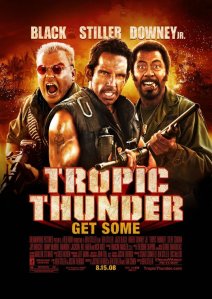 Ben Stiller has been kicking around the idea for Tropic Thunder for nearly 20 years. It took a lot of time to get the script in fighting shape, but the time was well worth it. Tropic Thunder is tasteless and occasionally appalling but it is also wickedly, deliriously funny.
Set inside modern-day Vietnam, Hollywood is filming another epic war movie but this one’s in trouble. It’s over budget, behind schedule, and the first-time director (Steve Coogan) can’t control his actors. Tugg Speedman (Stiller) is a fading action star looking for another hit. Jeff Portnoy (Jack Black) is a crass comedian who’s after some real acting credibility. He’s also addicted to heroin and worries that people will only ever see him as a funny man who farts. Kirk Lazarus (Robert Downey Jr.) is a five-time Oscar-winning actor who, thanks to makeup and a lot of hubris, is playing the film’s African-American sergeant. Alpa Chino (Brandon T. Jackson) is a rapper breaking into acting and is steamed that the Hollywood producers gave the sizeable black role to a white guy.
The director is at his wit’s end and being bullied by producers back in America. He is advised by “Four Leaf” Tayback (Nick Nolte), the Vietnam vet whose story the film is based upon. Tayback says to get real emotion and real fear that the actors should be stranded in the jungle without their precious handlers and demands. So the director takes Speedman, Portnoy, Lazarus, Alpa, and newcomer Kevin Sandusky (Jay Baruchel) in a helicopter and out into the wild. Trouble is, the actors have been left in the middle of an actual drug war, except they think it’s all apart of the script.
 Tropic Thunder is all things to all comedies. It could be tagged as being a bit incoherent but that’s because the movie has so much going on. It’s a sharp satire of Hollywood moviemaking and the raging egos of actors, it’s a send-up of Vietnam war movies and their bloody clichés, it’s a fairly worthwhile action film, and it’s a stupendously politically incorrect comedy with plenty of crude humor mixed side-by-side with genuine wit. It’s a comedy that has the potential to leave you aching from slapstick humor one second and biting satire the next. This feels like a complete comedy and not merely a series of sketches. Every character has an arc, some great moments, and each actor brings something different and something wonderful to the fray. This is clearly Stiller’s greatest achievement as a director.
The focus of Tropic Thunder is all over the place, and no one is safe from Stiller and his co-writers Etan Cohen and actor Justin Theroux. This is a brutal insider satire that plays it broad and loud. There are great jokes that ridicule the pomposity of the entire movie industry and the pitfalls of celebrity as a whole. I loved the jabs at celebrities going overseas and adopting children like they’re souvenirs. The movie has caught flak from disability groups that are mad about the movie’s liberal use of the term “retard.” I don’t want to say these people are missing the point of satire, or the fact that an R-rated comedy should offend on some level, but the joke is clearly on Hollywood and how movies exploit those with mental handicaps under the guise of telling their harrowing and inspiring stories. Movies have long been chronicling the adventurous lives of those with disabilities, which also has the side effect of making these people seem less like, well, just people. In the film, Speedman stared in a movie called “Simple Jack” about a mentally challenged boy who thinks he can talk with animals. Then the character has to pop up later in the film, complete with hysterical dialogue that blows apart just how exploitative these movies are (“I’ll see you in my head movies, but this is one head movie that makes my eyes rain”). It’s performed in just the right tone to make you laugh at the industry and the individual and not because of any disability.
The way the film establishes character back-story is genius. Tropic Thunder introduces all four major characters through fake commercials and trailers, like Grindhouse. The trailers are hilarious and a great way to kick off the movie. Stiller stars in a sinking action franchise where the world keeps being overtaken by fire (“Now, the one man who saved the world five straight times — will have to do it again”). The action franchise’s idea is to just reverse the scenario and, as sequels do, make everything bigger. Black’s trailer revolves around an obese family of super flatulent idiots all played by Black. The sequence is constant farting but it’s so over-the-top and pumped with contempt for lame-brained Hollywood comedies. The best trailer is the one that gives us Downey Jr.’s character, the esteemed Kirk Lazarus. Set in an Augustine monastery around the Middle Ages, Downey plays a monk who finds that he must conceal his inflamed passions for another man of the cloth (a figure I won’t spoil). Think of it as a 12th century Brokeback Mountain, and Stiller and company know exactly where to hammer Hollywood: the go-go eye stares, the hesitant naughtiness, and the ridiculous marketing angles – the title is inexplicably Satan’s Alley. The opening collection of fake trailers serves as perfect comedy bon mots for the feast that is to follow. They whet your appetite and may be the greatest opening 10 minutes of any comedy in memory.
 Downey Jr. gives an unforgettable performance comprised of sheer brilliant comedic bliss. I loved every second he was onscreen and I fully expect the man to get an Oscar nomination for his work here. Now, the role of a Method actor playing a black actor naturally presents a tightrope that needs to be walked just the right manner to maintain a satiric tone that doesn’t turn ugly. Let me state clearly that blackface is never funny. It is repugnant and Hollywood has a rather depressing history with the unsavory practice (Gene Kelly and even Bing Crosby sadly did it). Tropic Thunder is not a Stepin Fetchit-style minstrel show where Downey makes eye-rolling racist stereotypes. The joke is not that Downey is playing a black man, the joke is that he is such an arrogant and egotistical actor that he thinks he can play anyone. Besides, Jackson chides him throughout the film for his unorthodox portrayal, which tells you where the filmmakers stand. Downey elevates every scene he steps into and gives a performance, like the film, that is densely layered with comedy. He never breaks character even when the cameras aren’t filming and even when he’s alone. He’s two steps removed; channeling a performance as a heralded Australian actor playing his idea of a 1970s black male. When Alpa derogatorily drops the N-word, Lazarus slaps him and then begins a speech with, “For over 400 years they have been using that word to keep us down,” and ends it reciting the lyrics to the theme song from The Jefferson’s. In that span of time, Downey takes you along on every stop in the dense, hilarious mind of Lazarus.
While the rest of the actors don’t ascend to Downey’s heights (years ago this would have doubled as a drug reference), the ensemble of Tropic Thunder works together smoothly and they help make the film so much more enjoyable. Black is great when he’s trying to be seen as a “serious” actor when they are filming. I love his rushed and hushed line deliveries. But he’s even funnier after going through the wringer of heroin withdrawal. A sight gag involving Black digging through his speedo had me in stitches. Stiller is playing his usual dimwitted blowhard but propels the plot forward. He knows exactly how to oversell for laughs, like when he’s being riddled with bullets in dramatic slow-mo or when he’s playing Simple Jack. Baruchel is a nice counter foil to the uncheck bravado and craziness of the other actors. Jackson has fun voicing his mounting vexation with Lazarus. Coogan and Nolte provide good small moments, and Danny McBride steals his scenes as a pyrotechnic special effects expert that wants to “make Mother Nature piss her pants.”
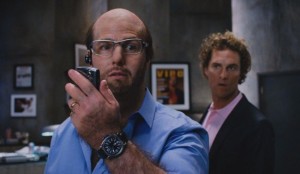 By now you’ve likely heard all about Tom Cruise’s small role in the movie as an irate, bald, fat, extremely hairy studio executive. It’s nice and amusing but I could have done with something different. Downey is unrecognizable in both physical appearance and through his speech; he fully inhabits a character that fully inhabits characters. Cruise, on the other hand, is instantly recognizable even with glasses, a paunch, and a shiny dome. It’s Tom Cruise playing a profane asshole but the joke wears thin. Cruise either needed to do something different or just be seen less, including his hip hop dance moves. And yet, Tropic Thunder has a running joke about Hollywood taking its beautiful A-listers and thinking that, through the power of makeup and superficial physicality, they can play any role. We’ve had a streak of Best Actress Oscar winners that have won accolades by stripping away their beauty and packing on the pounds (check out Charlize Theron in Monster). It seems like even the pretty girls are getting the ugly girl roles now; what’s a homely actress to do nowadays? So, in a way, Tropic Thunder is making fun of this line of thinking, that fat suits and some makeup are the great equalizer, but then it has Tom Cruise more or less falling into the same trap. He puts on a fat suit, a bald cap, but it’s still him and you hear Tom Cruise in every utterance. Maybe it would have been funnier if Cruise were playing a parody of himself since he is a studio executive at United Artists.
Tropic Thunder is a wildly funny movie that takes no prisoners when it comes to its sprawling satire. Stiller and company cut down the self-absorbed lifestyle and mentality inside the film industry and insecure actors. The film really shares the spotlight and each actor provides something different and welcome, and there isn’t a weak link in the bunch. Downey Jr. gives a brilliant comedic performance that will be long remembered. The movie is rude, crude, stupid, smart, and all over the place thanks to such a broad comic canvass. It took many years for Stiller to finally get Tropic Thunder off the ground but the wait was worth it. This is a rare comedy that eels loose, hits hard, and may warrant multiple viewings just to catch all the jokes-within-jokes. This is a movie with plenty on its mind, perhaps too much, but I wish more comedies were as well executed and skillful in their gags about gas passing.
Nate’s Grade: A
Share this:

The Dark Knight (2008)
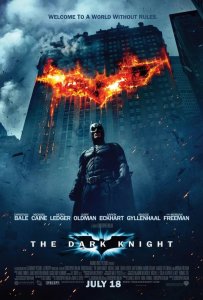 In 2005, Christopher Nolan’s reboot of the Batman series was a critical and commercial success. Gone were the campy and opulent sequences of old and the nipples on the Batsuit felt simply like a bad dream. Nolan served as director and screenwriter and brought serious psychological depth to his story and characters. As a life-long Batman fan, I loved it and wanted a sequel immediately with the exact same people responsible. The Dark Knight has been overshadowed by the passing of actor Heath Ledger, a gifted young actor nominated for a Best Actor Oscar for 2005’s Brokeback Mountain. He’s gone from gay cowboy to the criminally insane, and it’s all anyone can talk about. The buzz on Ledger and The Dark Knight is deafening and I am about to join that joyous chorus. This is a movie for grown-ups and makes lesser super hero adventures look downright stupid.
Bruce Wayne (Christian Bale) is dealing with the repercussions of his choice to assume the masked identity of Batman. He’s cracked down on Gotham City’s mobsters, and in their desperation they have turned to a crazed anarchist that likes to wear strange makeup. The Joker (Ledger) promises to return Gotham back to its old ways but even he knows this isn’t possible. “You’ve changed things,” he tells Batman. “There’s no going back.” The Joker wants to break the will of Batman and Gotham City and sets up elaborate and disturbing moral dilemmas that push many to the edge. His purpose is chaos, which isn’t exactly what the Mob had in mind when they subcontracted his services. Bruce must rely on his trusted butler Alfred (Michael Caine) and company tech guru Lucius Fox (Morgan Freeman) to help him combat a man that “just wants to watch the world burn.” Gotham also has a new district attorney, Harvey Dent (Aaron Eckhart), who is willing to put his name on the line to clean up the city. He’s butting heads with Lt. Gordon (Gary Oldman) because of Gordon’s secrecy and his reliance on Batman to do the things the law won’t allow. Dent wants to prosecute mobsters and is willing to put himself in jeopardy. He believes Batman is waiting for men like him to take the baton. Bruce’s old squeeze Rachel Dawes (Maggie Gyllenhaal replacing Katie Holmes — upgrade) has fallen for Dent. He’s an emotionally available man who wants to do good. Naturally, Dent and Rachel will becomes targets of the Joker.
 First off, believe the hype because everything you’ve read and heard about Ledger’s performance is the gospel truth. The actor vanishes completely underneath the gnarly latex scars, stringy hair, and smeared makeup. He transforms into this menacing figure and he makes Jack Nicholson look like a circus clown in comparison. He’s creepy and funny in a totally demented and spooky way, but he almost comes across like a feral creature that enjoys toying with his prey. Ledger fully inhabits his character and brings a snarling ferocity to the role. The Joker is given no back-story and he takes a macabre delight in crafting differing versions of his sordid past depending upon the audience. Ledger’s Joker is like a mixture of sadist and intellectual, of Alex from A Clockwork Orange and Hannibal Lector; he finds a way to get inside your mind and unleashes torment. There’s a great scene where he’s left alone in a holding cell with a police officer. The Joker taunts the man, getting little reaction from the trained lawman, but then he hits a nerve. The Joker asks how many of his friends, his fellow officers has he murdered. He then rhapsodizes the finer points of using knives instead of guns because guns are too quick. With knives he can see who people truly are in the final moments of existence. “So in a way, I know your friends better than you ever did,” he tells the officer. “Would you like to know which of them are cowards?” This triggers the officer to break his protocol and play into the Joker’s scheme. I’m not ready to say Ledger’s performance overtakes Javier Bardem’s Anton Chigurh (No Country for Old Men) as the most menacing villain of late, but Ledger certainly will make your skin do more than crawl.
Ledger gives a performance worthy of posthumous Oscar consideration. Toward the end of the film I found myself lingering on sadness that, well, this was it. This is all we are ever going to get of the Joker, such a fabulous character, but even more, this was the last full performance we are ever going to get from Ledger. His unnerving performance will stand the test of time when it comes to haunting screen villains, and I’m sure the actor had many more incredibly performances left in him before he passed away.
 The Dark Knight has less in common with other superhero series and should be considered a modern crime drama. It has more in common with Heat than with Spider-Man. Even compared to Nolan’s excellent Batman Begins, this is the first Batman film that feels like it occurs in a real city in our own reality. In Batman Begins, we had the CGI ghetto that happened to be conveniently where all the city’s scum lived, an ancient league of ninjas that wanted to wipe an entire modern city off the map, and then a super microwave that zapped water molecules in the air. Even though it was the most realistic Batman yet, it still had some fantastic elements that kept it from feeling fully believable. This newest Batman adventure feels more like a real city and a city that is being torn apart. You get to see a lot of Gotham City’s moving parts and different social circles and then see the Joker tear them apart. The knotty screenplay by Christopher Nolan and his brother Jonathon is dense and packed with subtext and ambiguity not seen in the likes of other spandex-clad super hero movies. This isn’t a super hero movie so much as an enthralling crime thriller with better gadgets.
Whereas Batman Begins focused on the psychology of a man that dresses up in a costume and fights crime, now the attention turns into examining the impact of Batman. There has been escalation, just as Gordon hinted at the close of the last film. Batman has stepped up law enforcement and now Gotham’s criminal element has placed their trust in a psychopath that promises results. This is a movie about symbols and ideals and about the tenets of civilization. The movie presents an arsenal of mature questions and rarely gives absolute answers. Batman I supposed to be a hero but does he play by the law? Can he make decisions that no one else can? Batman believes in the goodness of others and serves as a symbol for the city to stand up against corruption, but can Batman be corruptible? Does he have a breaking point? Is implanting hidden surveillance and spying on 30 million people in the name of security overstepping? Is it acceptable to cross a line if your enemy crossed it first? The Joker lives at the other ideological end and believes that human beings are selfish and will eat each other when the chips are down. He devises disturbing social experiments that test the limits of ordinary citizens and how far they are willing to go out of self-interest. The Joker is an anarchic force that seeks to tear down civilization itself, and that is a far more interesting and devastating plot than vaporizing water molecules with ninjas. When the movie covers the tired “we’re one in the same” territory that most super hero flicks hit (the Joker responds to Batman with, “I don’t want to kill you. What would I do without you? You complete me.”), it even makes sense given the psychological and philosophical complexity at root.
And oh boy, is The Dark Knight dark. This flick racks up a body count that could compete with movies usually involving some cataclysmic act of nature. The Joker’s unpredictable nature, and the dark twists the film plumbs, creates an atmosphere where you dread anything happening at any time, and mostly bad things happen. Batman must come face to face with his limitations and the realization that his actions, no matter how altruistic, will have negative consequences. This is not a movie for young children. If any parent buys their child a Joker doll and takes them to see this movie then expect years of therapy bills down the line. Much of the violence is implied but the overall effect is still chilling. It’s difficult to call The Dark Knight a “fun” movie. Batman Begins was fun as we followed Bruce Wayne tinker and become his crime-fighting avenger. This movie watches much of what he built get taken away. The movie makes gutsy decisions and for a super hero movie, let alone a summer blockbuster, and this is one decidedly dour flick where no character ends in a particularly pleasant place, especially poor Harvey Dent.
 Speaking of Mr. Dent, while Ledger is deservedly getting all the buzz and plaudits, Eckhart’s excellent performance is going unnoticed. Dent gets just as much screen time as Batman and is the white knight of Gotham, the man unwilling to break the boundaries of the law to merit out justice. Like Batman, he serves as a symbol for Gotham City and its resurrection from the stranglehold of crime. Batman fights in the shadows and serves as an anonymous vigilante but Dent is the face that can inspire the city. That’s what makes his transformation into Two-Face all the more tragic. You really do care about the characters in this movie, so when Dent turns on his principles and seeks out vengeance you feel a weighted sense of sorrow for the demise of a truly decent man. Eckhart and his lantern jaw easily sell Dent’s idealism and courage. After his horrific transformation, Eckhart burrows deep enough to show the intense hatred and mistrust he has even in fate. He gives a terrific performance that plays a variety of emotions and does justice to them all.
The rest of the cast, just to be mentioned, is excellent yet again.
Nolan has also stepped up his directing skills and delivered some high-intensity action. His first foray with Batman had some dicey action sequences that suffered from choppy editing, but he pulls back his camera lens and lets the audience see the action in The Dark Knight. The explosive high point is a long car chase where the Joker tries to attack an armored police car via an 18-wheeler truck. The police look for safe detours to escape the Joker’s line of fire, and when Batman surfaces with the sleek Batpod motorcycle thing get even cooler. What makes the sequence even better is that all of the peripheral characters behave in semi-logical ways, meaning that your secondary cop characters are respectable decision makers. Nolan also shot several sections of the film in IMAX, which boasts the highest resolution possible for film stock. The panoramic views of Batman atop buildings are breathtaking and may strike vertigo in some moviegoers. The movie looks great and it delivers the action goods but it’s really more of a tense thriller with more tiny moments of unease than an out-and-out action flick with gargantuan explosions and blanket gunfire.
Despite the undeniable brilliance of The Dark Knight, the movie is rather exhausting. After a decent 45 minutes of establishing the characters and setting up the stakes, the movie is essentially two hours of climax after climax, and you will be perched on the edge of your seat and tense until the end credits crash onto the screen. It’s exciting and overwhelming but you will feel wiped out by the end of the movie. There are a lot of characters and a lot of subplots and while I’m thrilled the movie has so much intricacy it also makes it hard for the film to come to a stop. The climax with Two-Face and Gordon’s family also feels misplaced. At a tremendous 2 hours and 30 minute running time, The Dark Knight will test your endurance skills in the best way.
 I honestly have no idea where Nolan and crew can take the story now. The Dark Knight seems unlikely to be topped. This is an intense, epic crime thriller with a labyrinthine plot that is packed with emotion, subtext, philosophy, penetrating open-ended questions, and genuine nerve-racking tension. It’s hard for me even to think of this movie as a super hero flick despite that fact that it’s about a billionaire in a rubber suit. This is an engrossing modern crime drama that just so happens to have people in weird costumes. Nolan and his brother have crafted a stirring addition to, not just the Batman canon, but to cinema as a whole. Ledger’s character is the driving force behind the film, the man that makes everyone else react, and his incredibly daring and haunting performance will stand as a last reminder of what talent was lost to the world when he passed away. I for one will be amongst the throng crying out for Oscar recognition but not just for Ledger, for The Dark Knight in general. And I may not be alone. The Dark Knight is currently breaking every box-office record imaginable and seems destined to finish as the number two highest grossing movie of all time, steadily behind James Cameron’s Titanic. If the Academy is looking for a way to shore in better ratings for the Oscars, it might seriously consider nominating The Dark Knight in some key races. It certainly deserves recognition.
Nate’s Grade: A
Share this:

Taxi to the Dark Side (2007)
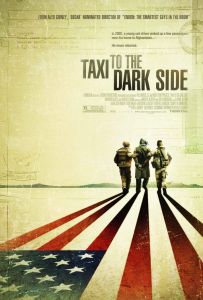 Just like he did in 2005’s excellent documentary Enron: The Smartest Guys in the Room, filmmaker Alex Gibney is able to distill a complex topic into a coherent argument. His Oscar-winning documentary Taxi to the Dark Side looks deep into the repugnant state of justice after 9/11 and the Bush Administration’s disregard for the law. It’s decidedly uncomfortable and upsetting, but Gibney’s film should be essential viewing for everyone to fully understand what questionable lessons we are sending out to the world under the guise of winning the indefinite War on Terror.
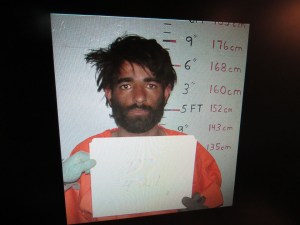
In late 2002, Dilawar drove two passengers out of town in his taxi. He was stopped at an Afghan militia checkpoint and he and his passengers were turned over to the U.S. military. The Afghan militia leader accused the trio of being responsible for rocket attacks against U.S. forces (In reality, the militia leader was responsible and just turning over innocent men to make inroads with military personnel). Dilawar was sent to Bagram prison where he was subjected to sleep deprivation, physical abuse, and made to stand for hours on end handcuffed to the ceiling. He died after two days in custody. The military coroner ruled that Dilawar’s death was a homicide. The report was swept under the rug until a New York Times journalist went searching for answers. The official who instigated the “interrogation techniques” was rewarded and sent to teach her harsh brand of degrading interrogation to another prison – Abu Ghraib. I think we all know how well that turned out.
 Like No End in Sight, which Gibney also produced, the film benefits enormously by staying away from brash finger pointing and hysterics. It slowly assembles its methodical case using hard evidence, like the prison coroner’s report and declassified memos, and a bevy of interviews from the people who were on the frontlines and behind the scenes in Washington. Gibney builds a devastating case that left me sick to my stomach and overwhelmed with the urge to weep. Taxi to the Dark Side is a powerful and masterfully assembled indictment on how far the United States of America has slid from its moral high ground. I felt sorry for the numerous innocent men plucked from their homes and tortured. I felt sorry for the soldiers being pressured to get results fast and through whatever creative means only to be turned into patsies by a government looking to pin “a few bad apples.” I felt intense shame in my own government condoning degrading and humiliating practices that stretch the legal definition of torture. And I felt burning anger at the realization that President Bush had tucked away a little provision in a bill signed into law that stated no officials in his administration could be tried for war crimes. The soldiers on the ground who followed orders set out by those officials, however, were fair game. Bush pardoned himself!
Gibney uses Dilawar’s story as a framing device that broadens the scope of the film. He explores the whole nature of torture and the questionable tactics our government and military have engaged in since 9/11 in the name of keeping the country safe. But as the film continues on we still remember Dilawar. His death casts a pall that hangs over the entire running time that serves as a potent rejoinder to any interview clip or TV segment where officials dismiss the severity of torture techniques (Secretary of Defense Rumsfeld scribbled on one memo complaining that he stands many hours a day, so how could this be torture?). Thankfully, the film also comes back to Dilawar during the closing moments to draw out the man’s humanity and shine a closer look at the personal cost of such illegal practices. It’s sad and shocking that well over 90 percent of the prisoners in Guantanamo Bay and U.S. coalition prisons were turned in by locals for money. Who knows however many innocent men like Dilawar are imprisoned without any path to see a court (recent Supreme Court rulings have said that detainees do have a right to contest their imprisonment in U.S. courts).
What is all too evident is that Bush administration officials were establishing a hazy and vague definition of torture on purpose. This of course had the benefit of not linking their names to illegal practices that could lead to war crimes. This also made sure there was no set guideline for interrogation and detention. Without any guidelines and rules the soldiers were expected to get results with no oversight. It doesn’t take a genius to figure out that being isolated in a foreign country and surrounded by a culture of machismo is going to breed cruelty if there is no enforcement of law. The U.S. skirted the Geneva Conventions by denying suspects any rights and saying they could be detained, without charge, for the rest of their lives. Vice President Cheney proudly declares that the enemy plays dirty and therefore America has to resort to the same dirty tactics. One soldier recounts a mentally handicapped prisoner who officials kept swearing was just putting on an act. “This is the new cover for al-Qaeda,” they were told even as the man ate his own feces. I’m sorry, but my country should be morally above whomever we deem an enemy. The “he started it” defense does not register for me.
 But perhaps the biggest non moral related sticking point is that torture is notorious for not generating factual claims. When someone is being tortured they will say whatever to make the situation cease, and this includes fabricating tales about terrorists and an Iraq link to 9/11. Instead of verifying and corroborating these confessions, the interrogators jot them down as fact, send them to the brass above, and that’s how the U.S. produced sources that said Saddam Hussein and Osama bin Ladin share a friendship bracelet and have brunch on Tuesdays. Even if you do not object to torture on moral grounds, and I pity you if you cannot, then a thinking person should at least object to torture on the very basis that it does not work. It produces bad intelligence, false intelligence, and in a rush to conflict that can yield terrible and far-reaching ramifications (six years in Iraq and counting, insurgent recruitment rising, the erosion of the U.S.’s standing over the world). The ends clearly do not even approach justifying the means.
After detainee abuses, President Bush declared to TV reporters that, “The United States doesn’t torture.” The asterisk to that declaration is that the U.S. rejects the internationally agreed upon definition of torture and will decide what constitutes torture, and even then we’ll just outsource it to countries that will torture. Taxi to the Dark Side is a sobering and powerful film that will serve as an important reminder for generations to come about the damning evidence of torture. The film is presented with clam and precise logic but it still manages to eradicate any argument that torture is acceptable under the right circumstances (advocates like to cite the idea of a ticking bomb and a suspect who knows the location). One interview says it all. He’s an FBI interrogator for over 20 years, and he says that to glean workable intelligence you don’t beat someone and make them fear you; you make them like you. You play “good cop” not “insane cop,” and you will gather actionable, verifiable, helpful intelligence and you have nothing to feel guilty over. If only the current administration had more men with such clarity and moral fiber.
Nate’s Grade: A
Share this:

The Counterfeiters (2007)
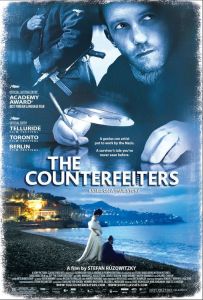 The Oscar-winner for 2007 foreign film is certainly a fine film and a respectable winner, but let’s be honest, the foreign film category was watered down a tad. France nominated Persepolis over The Diving Bell and the Butterfly because a country is only allowed to nominate a single film (sucks to be you, countries with good movies). This rule has resulted in past incidents like Spain nominating Tuesdays in the Sun over Pedro Almodovar’s Talk to Her, which ended up winning the 2002 Best Original Screenplay Oscar despite Spain’s snub. The hard decision by France was moot because Persepolis didn’t make the Academy 2007 shortlist of nine nominees. The biggest snub from that shortlist was Romania’s 4 Months, 3 Weeks, and 2 Days, a harrowing film about two college-aged women seeking an illegal abortion in 1980s communist Romania. It won the Palme d’Or at the Cannes Film Festival and also won the Best Picture award by the European Film Awards (Austria’s The Counterfeiters wasn’t even nominated). Then there was Israel’s amusing and touching film, The Band’s Visit, about an Egyptian band that takes a wrong bus and finds itself in an Israeli town. But the Academy’s foreign films ruled that The Band’s Visit had too much spoken English and therefore could not be ruled as a foreign film. Also left out were Germany’s Edge of Heaven and Spain’s The Orphanage. Nothing against The Counterfeiters but the foreign language field had already snubbed most of the main contenders.
The Counterfeiters is a deeply fascinating true-story about the world’s largest counterfeiting ring. Sal Sorowitsch (Karl Markovics, with a face as hard as flint) is a master forger leading a life of luxury in Berlin until the police capture him and send him to a concentration camp with his fellow Jews. As World War II carries on, the Nazis recruit Sal to lead a team to forge the British pound and the American dollar. The Nazis hope to destabilize their enemies’ economies. Sal is given greater freedoms in the camp and the S.S. officers try to become his chums. But he has to ask himself what his cost his actions will have. He could be prolonging the conflict and actually helping Germany win, but if he doesn’t assist the Nazis then he will surely be murdered as will his team.
Write/director Stefan Ruzowitzky creates great tension from scene to scene but it is the moral dilemmas that stick. What are principles worth? Are they worth dying for? Are they worth endangering others’ lives? The movie takes a docu-drama approach with bobbing handheld camerawork; even the film stock looks like it was soaked in grime for authenticity. And yet I wish The Counterfeiters had chosen to be less enigmatic. The main character is a criminal that keeps his emotions close to the vest, but Ruzowitzky cheats the audience by keeping Sal mostly in his head. The story is filled with factual intrigue and the natural tension given the situation, but after it’s over there isn’t much that’s memorable for a genre that expects more of itself. The Holocaust genre (and let’s not kid ourselves, it is a genre at this point) has some pretty high dramatic expectations and produces films that sear into our brains. The Counterfeiters is a very well told tale with great acting and some interesting character relationships but it can’t fully measure up to other Holocaust parables.
Nate’s Grade: B+


 nathanzoebl
You must be logged in to post a comment.