Blog Archives
Zero Dark Thirty (2012)
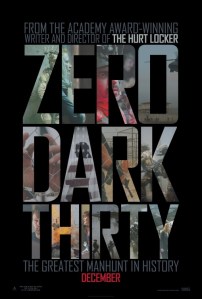 Director Kathryn Bigelow and journalist-turned-screenwriter Mark Boal, Oscar winners for 2009’s Best Picture-winner war film The Hurt Locker, were hard at work on their next movie when fate intervened. They were about to start production on a film about a 2001 incident where U.S. Special Forces almost nabbed Osama bin Laden, the notorious mastermind behind 9/11. Then on May 1, 2011, the world learned that Seal Team Six stormed bin Laden’s secret compound in Pakistan and executed the most wanted man in the world. Bigelow and Boal scrapped all plans and rewrote their movie from scratch. Now they had the ending we’d all demand; isn’t a movie where we get bin Laden way better than one where he narrowly escapes? Zero Dark Thirty (military terminology for well after dark) is the stunning result of Boal’s impressive reporting and condensing, Bigelow’s masterful direction, and a great supporting cast that brings history to vivid life. If you’re like me, you’ll walk out of the theater whistling to yourself, speechless at the spellbinding artistic achievement of the movie. This, ladies and gentlemen, is what essential, invigorating, quality filmmaking is all about.
We may know about Seal Team Six and the lead presented from tracking the courier, but few people know of the CIA analyst at the heart of the manhunt. Maya (Jessica Chastain) is a young agent stationed in Afghanistan who desires nothing more than to be the one who helps ensure that bin Laden gets killed. We follow her decade-long quest as she chases down leads, interrogates prisoners, and successfully presses the CIA brass for action, resulting in the fateful raid that took out bin Laden.
 You can tell early on that Zero Dark Thirty is going to be an excellent film. Given the pedigree of is creators, my expectations were enormously high. I rated their previous collaboration as my top film of that year. I knew I was in capable hands when the film opens on September 11, 2001 but skips any visuals. We sit and watch a minute of a blank screen while the sounds of desperate 911 calls become a wall of sound. It’s enough to reassert the stakes while still being restrained. Bigelow’s directorial command is astonishing, pitting you in the thick of the action. There are a lot of moving parts with a movie like this, wheels within wheels, and Bigelow keeps everything moving and focused. It helps that the bigger manhunt is broken up into a series of mini-missions over the ten years. Bigelow and her talented production team have recreated the ends of the world to bring this story to life. That added sheen of verisimilitude gives every moment a sense of magnified power, an electric sense of relevancy. You’ll get goose bumps as they start circling the actual location of bin Laden. Bigelow, who won an Oscar for her virtuoso work on The Hurt Locker, still knows how to play every one of your nerves. There’s a clandestine meet up with a possible turncoat that is stuffed with dread. Every checkpoint, every safety procedure waved, you’ll be biting your nails, the voice in your head clearly saying, “Oh no, this isn’t going to go well.” Zero Dark Thirty is more crime procedural than the action thriller. Even so, Bigelow’s direction is top-notch and brings an intense, churning verve to the film, down to the smallest detail.
The film plays out like an absorbing, hard-hitting piece of investigative journalism, recreating the steps and false turns over the ten-year manhunt for bin Laden. There is a lot of information to process and over 100 speaking roles, and Boal and Bigelow do not stoop to pander to the less intelligent in the audience. You will be expected to catch up or fall behind. It can get confusing at points but Boal does an exceedingly articulate job of narrowing the particulars of the bin Laden case and presenting a clear through line. It’s a story that hops around the globe through a series of mini-missions, from a meet up with a possible al Qaeda spy to locking down a phone number to trace a courier in Pakistan. You see every step, every deal, and every effort that it takes to land the big break, namely tracking down bin Laden’s trusted courier to his Abbottabad compound. Boal even separates his narrative with titled sub-sections like a lengthy piece of journalism. We all know where the story is going to end up, but Boal’s supreme talent is making every step meaningful and tense leading up to that fateful raid May 1, 2011. The level of reportage detail is completely enthralling and will be relatively unknown to most filmgoers. Beyond 9/11 and the London bombings, I confess to being ignorant of the other al Qaeda attacks highlighted throughout. Therefore, not only is Zero Dark Thirty an exciting manhunt, it’s also an educational endeavor for most Americans.
 The proceeding two hours are an engrossing manhunt, but when Zero Dark Thirty gets to the raid sequence, that is when the movie ascends to a level of cinematic excellence unsurpassed this year at the movies. There is nothing else in 2012 that comes close to matching the 30-minute raid on bin Laden’s compound. My heart was in my throat the whole time. I was physically shaking. I was pinned to my chair. The conclusion, nabbing bin Laden, is one of the most riveting sequences in film I have ever seen. It’s like Bigelow has complete control of your senses, and even though we all know how this story ends, you’ll be glued to the screen, pulse racing, anticipating every step. After the film ended, I told my friend Eric that I felt like I needed to start smoking, thus was how exhilarated I felt leaving the theater (message to kids: don’t smoke, even if you see Zero Dark Thirty). My head was bustling afterwards. All I could think about was the masterful conclusion to a very good movie. The raid sequence is brilliantly recreated and just about portrayed in exacting real time; you feel like you’re right there along with the members of Seal Team Six. For a civilian, it’s fascinating jut to watch the minutiae of what went down, but under Bigelow’s taut direction, it’s the moment every American has been waiting for since September 11, 2001. Bigelow is also careful not to portray the death in any sort of jingoistic, fist-pumping context. She sticks with her docu-drama approach, avoiding sensationalism, and you don’t even see the shot that takes down bin Laden. The film is also very careful not to linger on bin Laden’s dead body or even reveal his face; she doesn’t, as President Obama said, “spike the football.” Bigelow deserves a second Oscar just for her superlative handling of those unparalleled 30 minutes of pure filmmaking bravado. Plus, it’s the best ending of the year at the movies.
Let me address the brewing controversy ensnaring the movie regarding its depiction of torture. Zero Dark Thirty does demonstrate torture but it never glorifies it or presents it as anything less than dehumanizing and morally repugnant. But torture did happen (I’m sorry Dick Cheney… “enhanced interrogations”) and to whitewash this regrettable period of time from the historical record is a disservice to the truth. This country, as well as any other, engages in extreme and detestable measures; we only hope that our leaders have the moral clarity to make these ethical lapses as few and far between as possible. Now, the politicians and bloggers have attacked Bigelow’s movie as tacitly condoning torture, indicting that it was successful in getting that big break. This is not the case. Zero Dark Thirty shows a variety of methods being used, and yes we get a heavy helping of torture and humiliation, but it’s when Maya and others start treating the detainee like a human being again, offering food and conversation, is when the progress is made. The film does not explicitly declare one interrogation method successful, however, I can see where people will draw their own (wrong) conclusion. If anyone wants to read my exact stance on torture, just check out my lengthy review of the 2007 Oscar-winning documentary, Taxi to the Dark Side. In short, torture does not work and Zero Dark Thirty does not purport that it does, though many may conclude otherwise. It seems to me that the critics don’t have enough faith in the audience to accept ambiguity.
2011’s breakout actress, Chastain (The Help), is the focal point of the movie and she delivers. Her character has no life outside of doggedly hunting for bin Laden. She’s completely driven by the goal of killing him, and as such she gets to uncork some dandy angry monologues dressing down her colleagues for their failing dedication. Chastian does a fine job of keeping a veneer around Maya, shrouding her emotions into a mysterious calm, which seems realistic given the nature of the character but also makes it tricky to connect with her emotionally. This movie is not the great character study that The Hurt Locker was, and so Maya gets some rather shrift characterization: she’s a workaholic fighting for credibility. The real star of the movie is the story so all the characters take a back seat to Boal’s journalism. While Chastain is quite good, I have to shrug my shoulders at the various critics groups throwing Best Actress accolades her way (go Jennifer Lawrence).
 The supporting cast doesn’t have a weak link amongst them, from Kyle Chandler (Super 8) as an outpost boss, Mark Strong (Tinker Tailor Soldier Spy) as a CIA superior screaming at the bin Laden team to “find me targets to kill,” Jennifer Ehle (Contagion) as Maya’s closest friend in a hostile land, James Gandolfini (TV’s Sopranos) as CIA director Leon Panetta, Stephen Dillane (Game of Thrones’ Stannis Baratheon) as a skeptical NSA head, and Chris Pratt (TV’s Parks and Recreation) as a member of Seal Team Six. That’s right America, TV’s Andy Dwyer helps cap bin Laden. But the real standout is Jason Clarke (Lawless) as an interrogator who eventually leaves the field for an office but still makes headway for Maya.
Much like The Hurt Locker, here is a movie that transcends politics and genre. Zero Dark Thirty is a nerve-wracking thriller, it’s an intelligent crime procedural, and it’s an engrossing and powerful work of relevant art. It operates on such a high level of artistic achievement that little else from 2012 even comes close. This thorough, intense, provocative, thought-provoking, morally ambiguous, thrilling, and generally tremendous movie is taken to a whole other level with its concluding act, brilliantly recreating the raid that took down Osama bin Laden, the most cathartic and satisfying ending of the year. You’ll be liable to whistle in awe at how accomplished Zero Dark Thirty is. Of course audiences should not accept every thing they see in the movie as unimpeachable gospel, as dramatic license is needed to help shape a formidable narrative. This is still a movie that desires to entertain and yea does it entertain. I look forward to the American public getting a chance to experience the same riveting theatrical experience that I had with my critical brethren, as well as the sense of catharsis and relief by film’s end. Zero Dark Thirty forgoes sensationalism for modulation, eschews moral righteousness for ambiguity, and expects the audience to keep up with its retinue of information. And you’ll be grateful to be given the chance to tag along. Run out and see this remarkable movie when you have the chance. Movies don’t get much better than this, folks.
Nate’s Grade: A
Share this:

Life of Pi (2012)
 Director Ang Lee’s openly spiritual survival drama is really all about a kid, a lifeboat, and a tiger. Or is it? Based on the best-selling book, Life of Pi is a hard movie to put into words. You can assess what you’ve seen on screen but the emotional experience and the narrative purpose are a little trickier to nail. Our main character, Pi, is trying to survive adrift in the ocean, his only “companion” an angry tiger. I appreciated that the tiger acts, well, mostly like a tiger; ferocious, scared, territorial, and hungry for some tasty Pi. Just because they’re stuck together doesn’t mean this wild animal becomes cuddly. Lee has put careful attention into crafting a film that uses 3D artfully, and you can tell a big difference from the normal slapdash efforts made for an extra buck. The shipwreck scene is terrifying, the moments of wonder at sea are majestic, and the tiger is a marvel of CGI, rarely looking fake. Despite the life-and-death circumstances, I cannot say I was truly emotionally invested in the story, and I think that has to do with the reveal at the end. I won’t spoil it but we find out the story is also an allegory and there’s a deeper, sadder meaning to the dramatic events onscreen. The very nature of storytelling as a means of psychological redress is an idea worth pondering by film’s end. I just don’t know if it was a strong enough ending to send me on my way. The movie looks great, it’s imaginative and contemplative, but by the end, Life of Pi hadn’t convinced me about the existence of God, as it promised to do, but left me emotionally at arm’s length. Maybe that’s subtext for man’s relationship with God, but I won’t go there. I wish Pi’s emotional journey was held to the same level of art as the physical struggle.
Nate’s Grade: B
Share this:

Anna Karenina (2012)
 I’ve never read a Russian novel before, mostly because I don’t need to read 900 pages of bleakness and repressed happiness. With that said, I knew very little going into Anna Karenina (the very title sounds too heavy in syllables, like you’re stuttering). What didn’t help matters was director Joe Wright’s edict to set the story as if it was being performed on a living stage. This bizarre visual concept is interesting for a little while until you realize that it never goes further than the obvious note that the lives of the elites were played out in public for cruel judgment. The staging also gave me many periods of confusion where it felt like a character fantasy was taking place. The peculiar staging seems superfluous and the real draw for the film, not the relatively fine performances or Tom Stoppard’s (Shakespeare in Love) adaptation. I don’t think it works as a movie because, much like Wright’s Atonement, it feels too self-satisfied in its own mannered artifice. It’s an overload on style and the film neglects to give me a reason to care about the story and the characters. Keira Knightley as the titular heroine is hard to embrace, Aaron Taylor-Johnson (Savages) seems miscast as her dashing lover, and Jude Law (Hugo) comes across as unreasonably tolerable of his wife’s flights of fancy, so much so it makes it hard to sympathize with her downward spiral. It’s a pretty movie and I applaud its attempt to do something different, but Wright’s Anna Karenina feels too fanciful to come across as tragic.
Nate’s Grade: B-
Share this:

Lincoln (2012)

Steven Spielberg’s long in the works biopic of Abraham Lincoln could have easily been retitled, The Thirteenth Amendment: The Movie, such is the narrow band of focus. Lincoln is an engrossing, handsomely mounted study in the political machinations that went into passing the 13th amendment to outlaw slavery. Unless you’re a fan of history or politics, I can’t imagine that this movie is going to prove that engaging for you. This is a big movie about Big Moments with lots of people with beards giving speeches. Daniel Day-Lewis does a tremendous job as our titular sixteenth president, giving the man more foibles and traces of humanity than I can remember from any screen portrayal. Liam Neeson (The Grey) had long been attached to be Spielberg’s Lincoln, but I cannot fathom any other actor in the role after seeing Day-Lewis’s amazing work. I think he’s a shoo-in for his third Oscar. It’s intriguing to witness what a political animal Lincoln was, able to play off different sides to get his way. In the end, you may even feel a stir of patriotic pride, inspired by the good that government can grant with the right leaders for the right causes. The supporting cast all provide great performances, from Sally Field as the volatile Mrs. Lincoln, to James Spader as a conniving lobbyist, to Tommy Lee Jones as a stubborn curmudgeon… so basically Tommy Lee Jones. Just about every speaking part is a recognizable character actor. Who’s going to turn down the prospect of a Spielberg Lincoln movie? The tighter window of focus allows the movie greater depth as an important political juncture in our nation’s history, but Lincoln could have also been the 19th century equivalent of that Schoolhouse Rock song, “I’m Just a Bill.” This is an easy movie to admire but I think a more difficult film to love, to fully embrace.
Nate’s Grade: B+
Share this:

Silver Linings Playbook (2012)
 I am in love. It’s been days since I watched Silver Linings Playbook and I’m still under its spell. It’s a movie that gave me such rapturous emotional peaks, a deeply satisfying crowd-pleaser that doesn’t just nail the big moments, it crushes them. This is a movie that works so well with just about every facet of storytelling, from acting to writing to directing, that you’re liable to be in awe as I was.
Pat (Bradley Cooper), a high school history teacher, came home one day to find his wife in the shower with another man. He admittedly lost it, beating the man bloody, and has been remanded to a state psych ward for the past eight months. It’s determined that Pat is an undiagnosed bipolar case, and the court orders him to stay on his meds and stay 500 feet away from his now ex-wife, Nikki. Having lost his home, Pat is living with his parents (Robert De Niro and Jackie Weaver), both of whom don’t know how to help their troubled son. Pat is convinced he can win back his wife. He starts conditioning by running, wearing a garbage bag to better sweat off the pounds, and meets Tiffany (Jennifer Lawrence). She’s been fighting through depression after coping from the sudden death of her police officer husband. She agrees to help Pat get in contact with his ex, passing a letter, but at a price. He must compete with her in a dancing competition. They spend hours practicing their routine, getting to know one another, and stabilizing one another, providing a foundation for healing and success.
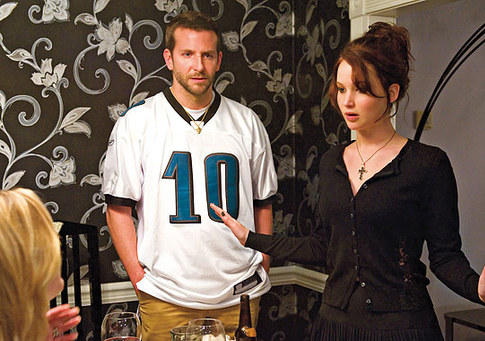 The story itself isn’t anything groundbreaking; you could glibly label it as the “bipolar rom-com” and it does adhere to that structure for the second half. But this is David O. Russell we’re talking about, the man behind 2010’s The Fighter, yes, but also offbeat dysfunctional family comedies like Spanking the Monkey and Flirting with Disaster. The man has a way of working within the framework of conventions and finding the rough edges, to make stories at once familiar and excitingly new. Is there anything groundbreaking with Silver Linings Playbook? It’s your boy-meets-girl formula at heart, but the execution is so extremely sure-footed, so exceptionally handled, that the movie leaves you buzzy and beaming. Once it ended, I wanted to run around, shouting from the rooftops for people to run out and see this movie. You want others to share in something so special and affecting. I felt a similar passion after seeing the unconventional romance Safety Not Guaranteed, and I’d advise any fans of Safety to certainly check out Silver. Being a rousing, crowd-pleasing sort of movie is not necessarily a yoke to weigh down its artistic integrity. As if enjoyment and creative accomplishment are opposing forces. I freely admit that Silver Linings Playbook is a masterful movie that knows what it takes to get an audience cheering, and I was thrilled to be part of that cheering throng. Here is a movie that just makes you feel good, and when was the last movie you saw that made you feel glowing with happiness?
This in an emotionally rich film; I was so happy after my screening that it felt like a high I didn’t want to come down from. To engineer a reaction that enhanced, that enlightened, that potent, well I must sing the praises of Russell and his actors. I bought into the love story and family drama big time. The payoffs are meaty and numerous, and I often found the film to be sincerely moving. There’s a great satisfaction in watching two oddballs find their special someone’s, and when the characters are this interesting, this human, and so well portrayed, it makes every stop along the journey that much more engaging and emotionally triumphant. It’s got an ending that pulls it all together in spectacular fashion, giving us exactly what we want while feeling earned and on its own eccentric terms. This is a deeply felt and compassionate film, one with as much uplift as acerbic rebellion. You feel like these people really do love one another. Silver Linings Playbook has memorized the playbook on how to win over an audience, but it always comes down to the same Xs and Os: strong characters, a compelling story, and people we genuinely care about, and that includes distaff supporting characters too.
 The characters are so interesting and beautifully flawed, and the actors are so in tune with one another, delivering bar-raising performances that take the movie into another realm of enjoyment. When actors are given plum roles about people with mental illnesses or disabilities, it must be very enticing to overindulge in tics and self-conscious mannerisms. That doesn’t happen with Silver Linings Playbook. Beyond an uptick in tempo, the actors portray their parts as characters rather than ailments. If anything, the acting in this movie is practically restrained given the circumstances. What’s more, Silver Linings Playbook is a fine example of what can happen when the cast works in tandem, challenging one another to up their game. It’s like every actor felt revived from all the talent on display. Russell knows how to push his actors like few other directors, and while this has lead to notorious Internet videos of his actors losing their cool, it’s also given way to raw performances that burn in your memory. Russell gets his actors to bring their A-game and then some. The Fighter got three Oscar nods for acting and I wouldn’t be surprised if Silver Linings Playbook gets three as well (I think Lawrence and De Niro are locks).
Cooper (The Hangover) has always had a certain smirking, leering quality about him, a guy used to portraying louts with charisma. I have never seen him tackle anything nearly as challenging as what he does with Pat. He’s unpredictably combustible, ready to explode at any moment, but also empathetic, trying to do better. Pat isn’t meant to be seen as a loveable loser. This guy has serious problems he’s working through. Cooper is simply incredible, showcasing skills and nuance you didn’t know the man had, radiating with an intense outpouring of spontaneous energy that doesn’t ever feel forced. Cooper is not bouncing off the walls here as some wild-eyed loony, playing upon codified ideas of what a bipolar person behaves like. He’s a deeply complicated guy, processing challenging and contradicting feelings in a brain that doesn’t necessarily follow the rules. He has so many impulses leading him in different directions. Pat is obsessed with his goal of impressing his wife, so much that he seems blind to the tangible connection he’s formed with Tiffany, and we yearn that he realizes the catch in front of him. I was won over completely by Cooper’s committed, attentive, anxious, and lively performance.
Readers will know that I harbor a serious crush when it comes to the talented actress, Lawrence (The Hunger Games). I was expecting her to be great in this movie, as this is pretty much my default setting with the actress at this point. I was not expecting what she delivered, a performance that is so enthralling, so astonishing, that you’ll be left stupefied that a woman at only the young age of 22 could be this phenomenally gifted. Lawrence had several scenes that just left me speechless. Lawrence is in elite territory now as far as I’m concerned. Her command of the character is just about impeccable, and you perk up every moment she’s onscreen. She’s a damaged woman recovering from her own powerful grief, but she’s so many things at any one moment. She can be lusty, provocative, angry, sullen, commanding, vulnerable, and hurtful. There are scenes where she will bounce around a plethora of emotional states, but each one gradually shifts to the other, making the transformation genuine and another layer to the character. If she were just some crazy girl we wouldn’t care if she eventually got her happy ending with Pat. With Lawrence’s talents, and Russell’s sharp writing, Tiffany becomes a figure worth fighting for, a bruised romantic that finds her rare kindred spirit who accepts and appreciates her messiness.
The supporting cast from top to bottom may not be at the same level as Cooper and Lawrence, but their output is also impressive. De Niro (Limitless) hasn’t been this good in ages, delivering a few monologues that will hit you square in the gut. Weaver (The Five-Year Engagement) is something of an enabler for the family, but she also gets her moments to shine and reassert her strength and dignity. Chris Tucker (in his first non-Rush Hour movie since 1997) is the least Chris Tucker I’ve ever seen him. He’s downplayed his motor mouth tendencies completely, and he’s a wonderful presence as he ducks in and out. He even teaches Tiffany how to “black up” her dance, a fact that most heterosexual males in the audience will be thankful for this time of year.
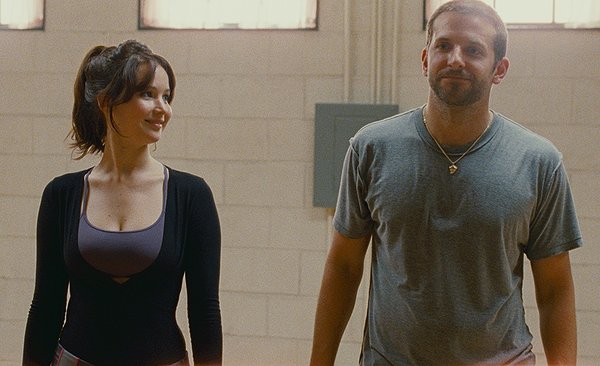 Russell deserves serious credit for portraying mental illness in a manner that doesn’t dance around the seriousness of the condition. Statistically one in three people suffer from a mental illness at some point in their life, and I’ll even admit that post-divorce, I too fell amongst those ranks (I’m a statistic!). In the case of Pat, He’s not just some unfeeling jerk who says inappropriate things or has problems reading social cues. He’s a guy going through serious personal struggles, same with Tiffany. These are not jokes. They are not send-ups of mental illness; they are people. At no point does the humanity of these characters get lost. We will laugh at their inappropriate comments, sure, but we are never laughing at them from some cushy sanctuary of superiority. I also think Russell examines an interesting, more socially-acceptable form of mass mental illness, namely the OCD-nature associated with sports superstitions. Smart and capable people can get caught up in the allure of superstitions, and when it concerns sports in general, groupthink overpowers. I consider myself a sports fan as well (I’m a double statistic!) and fully accept the ridiculous nature of fandom, but I thought it was a clever move for Russell to hold the mirror up to our own cracked community and its irrational behavior. And as any Philadelphia sports fan will acknowledge, they take fandom to a whole other level.
At this point, I don’t know what more I can write about this movie without coming across as a complete, frothing madman. Football, mental illness, ballroom dancing! I’m smitten big time with Silver Linings Playbook. I’m completely in the tank for this film. Future viewings (already planning one soon) will probably highlight certain minute flaws I’ve failed to notice the first go-round. And even if those flaws become more apparent (yes the final dance is something of a contrived climax) I simply do not care. The movie’s many virtues far exceed any shortcomings that could potentially arise. It plays to some familiar rom-com elements but it goes about its business with its own funky charm. The acting, writing, and directing are all on such a heightened level of excellence, it’s amazing just to watch all the parts work together so masterfully. I wasn’t just won over by this movie; I’ve become its disciple. I preach the gospel of Silver Linings Playbook. Here is a rapturous feel-good movie that doesn’t feel like it’s pandering or dulling its edge even after it takes some conventional turns. Cooper is terrific, Lawrence is astounding, and together they form the couple you cheer for. Silver Linings Playbook is everything you’d want in a stellar movie. I can’t wait to watch it again and get caught up in its wondrous spell once more. It took a long ten months but The Grey has finally been knocked off the perch. Silver Linings Playbook is nothing short of the best film I’ve seen this year.
Nate’s Grade: A
Share this:

The Sessions (2012)
 When The Session (formerly The Surrogate) debuted at the Sundance film festival, it seemed like Oscar catnip. You’ve got Oscar-pedigree cast, the limitations of disability (iron lung), and writer/director Ben Lewin (Paperback Romance) certainly knows a thing or two on the subject. He’s a polio survivor himself. But the story of a man in an iron lung’s sexual reawakening, as my mother would say, is a harder sell to the public. The movie has enough bizarre intrigue to garner a curiosity factor in many, and the sweeping acting and light-hearted tone will win over many a follower. I just wished that Lewin had focused more on his central character than what’s below the waist.
Mark O’Brian (John Hawkes) is a 37-year-old virgin looking to fix that oversight. The problem is that he’s suffered from polio all his life and can only be outside of his iron lung for upwards of a few hours. He’s not paralyzed, mind you; it’s just that his muscles don’t work too well. To move forward, Mark is set up with a sex surrogate, a sort of alternative therapy that is intended to help the disabled learn how to take control of their bodies for healthy physical relationships. Cheryl (Helen Hunt) has a set of rules as she goes about her business. There will only be six sessions to limit any emotional attachment. Mark is certainly a challenge, a man who doesn’t have muscle control below his neck (he confides that he hasn’t seen his penis in over 30 years). Together they work on getting Mark experienced and aware of his own body and abilities.
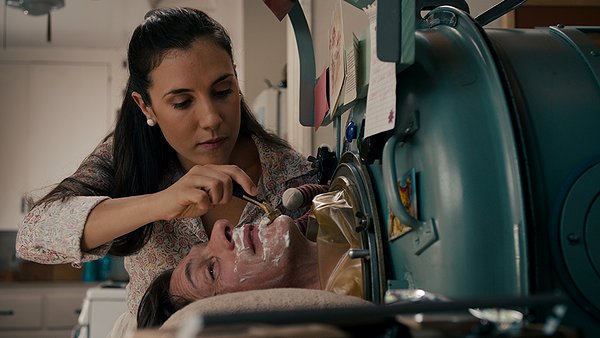 The Sessions is essentially a two-actor showcase (William H. Macy as a helpful priest is really just an ear to listen/audience surrogate), an ongoing dialogue and set of interactions between Mark and Cheryl. The script could have worked as a play though film certainly does open up the viewing possibilities when you’re dealing with an immobilized character. From that stand point, The Sessions is often a fascinating and funny portrait of a world that few of us will ever comprehend. We seem to have this concept that immobility is a death sentence; In Million Dollar Baby, Hilary Swank preferred death over disability. There’s the standard uplifting personal tales of success, the triumph of the human spirit, that sort of thing when we talk about disability in the movies. The Sessions is different. It’s all about sex, and it’s refreshingly frank about the realities of sexuality for those with disability. The human body is an amazingly adaptable creation, so no matter the setback, there is still plenty hope of having a relatively healthy sex life. Beyond a section in Murderball, I cannot think of another movie to explore the reality of sex for those with disabilities. It’s like a wondrous combination of two topics that makes people feel uncomfortable. So, in short, this is not going to be a movie for everyone.
That’s too bad because The Sessions is an engrossing story of a man trying to experience a world of human sexuality denied to him due to cruel circumstance. Mark is a relatively nice guy, a poet, though he can be a little quick with the emotional attachment and declarations of love. Can you blame the guy? I believe some will argue that limiting the focus to Mark’s sexuality, and his desire to shape himself into a better lover, is a misuse of the narrative potential. Some will chide that the film could be the indie version of any number of horny male sex comedies. To some degree, I can agree with this assessment, mostly because I wanted to follow more of Mark’s life and the movie is only 90 minutes long. But I also think the strict focus on human sexuality is also a boon for a movie like this. The fact that you could place a movie about a man in an iron lung and, say, American Pie in the same conversation is a testament that we are losing some of the stigma of disability. This guy wants to get laid. Period. And we can be grown up about this.
Hawkes (Winter’s Bone) is excellent in a role that requires him to do all his acting from above the neck. He’s convincing in every detail, down to his pained, willowy voice and his handling of a pointer for his mouth is first rate. Beyond the physical tics, Mark exists as a complex character that Hawkes is able to fully open up. He’s caustically funny, overcome with self-doubt, sweetly naïve, yet he’s also just like every other man on the planet. Hawkes doesn’t overplay the physical restrictions so it doesn’t end up being a performance dominated in showy actor traits. It’s a sweet and affecting performance that moves in small waves but makes a noted impact. Expect the man to get his second Oscar nomination this winter, as respected actor + disability is a combination they cannot refuse. Also, Hawkes is completely deserving of praise.
Hunt (Soul Surfer) has been grabbing a lot of headlines for the amount of skin she exposes, but her performance deserves more attention than a secondhand reference to her nudity. To be fair, it is copious nudity of Helen Hunt. I think she recites more lines while in different states of undress than clothed. It’s so much nudity that when you close your eyes, you may still be able to see it (not complaining here…). She does a lot of fine acting while naked. It’s hard exactly to get a bead on her character. She seems displeased with her insensitive husband, though he has to have some level of understanding to be okay with her profession. It feels like she’s looking to Mark as… something more, something else, but then it feels like her rationality returns and she returns back to the parameters of her job title. It’s a strong performance and the movie is at its best when Hunt and Hawkes are together. I just can’t help but feel if the ending wasn’t so blunted (more on that below) than maybe her performance would hit an even higher register.
 The actors are so good and the movie is so tender, I almost forgive it for lacking a proper third act (some major end spoilers to follow). Naturally the number one concern you’d imagine for a sex surrogate would be the danger of building emotional attachment. This is why Cheryl limits her sessions to six max. That doesn’t stop attachments from forming. Mark and Cheryl are dreading the conclusion of the sessions, having grown close emotionally as well as physically. So to spare them lingering pain, Cheryl suggests they stop early. Mark reluctantly agrees. There, ladies and gents, is your second act break. But then rather than get a third act, the movie simply gives you a slightly extended resolution instead. Mark meets a nice volunteer at the hospital and flirts with her, crowing with pride to inform he is no virgin. But then… we cut right into Mark’s voice over telling us that he spent the last five years of his life with this new woman. We get an introduction and then immediately jump to the end of the relationship. I understand that without Cheryl’s kindness and education, Mark’s long and healthy romantic relationship would not have happened. I understand that he’s able to succeed because they broke down barriers of confidence together. This doesn’t stop the ending from feeling missing, absent the payoffs we yearn for in drama. It’s a curious and muffled close to a movie that was so interesting and audacious.
The Sessions is more than just an Oscar-bait disability movie. It’s really an arty version of a sex comedy with some extraordinary participants played by skilled actors. It has a frankness that’s refreshing and it’s never less than interesting, exploring the minutia of Mark’s life and the difficulties he overcomes. It’s not exactly a triumph of adversity, per se. It’s not exactly a chamber piece devoted to characters even though two dominate the conversation. The Sessions is a hard movie to pin down. It’s perfectly enjoyable and funny, touching, disarming, and well acted, but I can’t help but feel like Lewin should have aimed higher. To focus solely on Mark’s budding sexuality seems rather limiting for the character, and the disappearance of a final act proves bewildering, blunting the dramatic climax, thwarting further involvement. I’ve seen the film twice now and my opinion of it improved slightly the second go-round, but I’m still left scratching my head over that ending. I get it, I just don’t get why Lewin felt like racing to the end rather than exploring the conflicts and personal struggles of his characters. I suppose there’s some testament to sticking to the facts but that doesn’t matter when it comes to telling me a good story. I’m of a mixed mind here because The Sessions has plenty to recommend but I also feel that the film’s finale and light-hearted, limited sense of purpose hamstring the emotional impact of the whole enterprise. Disabled people can lead healthy sex lives. I get it. Now show me more signs of that life.
Nate’s Grade: B
Share this:

Flight (2012)
 The advertising for Flight has highlighted the sexier elements, the star wattage of Denzel Washington and director Robert Zemeckis, and the thrills of the air disaster. What you get is a different matter. The first thirty minutes prepares you for one movie, and then Flight takes off in a different direction, a path that fails to capitalize on the potential of the subject matter.
Whip Whitaker (Washington) is one hell of a pilot. He miraculously lands a downed airplane, limiting the loss of life to six. He is also a hell of a drunk. Whip also happened to be drunk and high on cocaine at the time of the crash. As the airline investigation searches for the causes that lead to the crash, Whip and his team, longtime friend and union ally (Bruce Greenwood) and high-priced ethically sketchy defense lawyer (Don Cheadle) try and protect their own. The media is agog in hero worship with Whip, but they don’t know about what awaits in his blood test drawn at the scene of the crash. As Whip prepares for possible criminal charges, he meets a recovering addict Nicole (Kelly Reilly) and the two form a connection. He hides out at his father’s old estate, invites her along, and they struggle to stay clean and fly right. But temptation is too powerful a beast for Whip, and he will continue to make poor decisions.
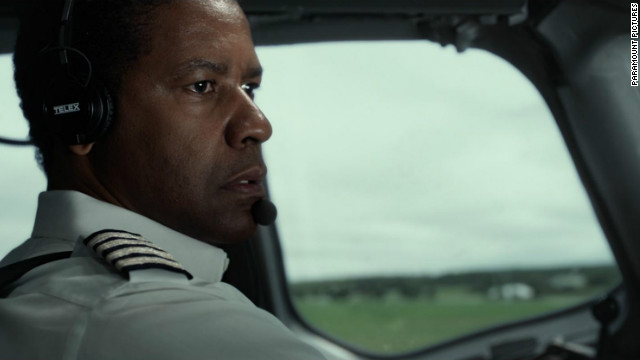 It’s really a modern-age version of The Lost Weekend or The Days of Wine and Roses. It is an alcoholism story. We’re all familiar with them at this point in the movies. A part of me thinks addiction stories are some of the easiest ones to write; you take a flawed character, introduce the addiction, have them determined to get sober, and then provide temptation after temptation. And that’s kind of what Flight feels like. The compelling elements of the movie, notably the legal ramifications of the crash and the political maneuvering, get too often sidelined by a repetitious mélange of Whip getting drunk or thinking about getting drunk or trying not to get drunk. There are many ups and downs, but the cycle of addiction and abuse starts to grow weary, especially when the movie offers more interesting and unique story avenues worth exploring. The airplane sequence is a taut, horrifying, intense sequence. The legal wrangling resulting from it seems like the stuff of good drama. The airline is trying to limit its monetary damage, the lawyers are trying to cover for their clients including having the dead crew stripped from the fatality numbers, and all the while the investigation is getting closer to uncovering Whip’s secret. That’s the movie I wanted to see with Flight. The majority of what I got was a by-the-books addiction parable with some good actors. The movie seems to be going in too many different directions.
Zemeckis’ return to live-action is welcomed and long overdue, and it’s great seeing him direct real people in real environments again, even if the finished film is flawed. His interests seem more with the special effects-laden crash, a harrowing sequence for the ages. When it gets to the addict stuff, it seems like Zemeckis goes on autopilot himself, bowing to the strength of his charismatic star sucking everything into his orbit. The movie becomes an acting showcase for Washington’s abilities at the expense of a completely coherent plot or tone. At times the film seems cavalierly comic, particularly with John Goodman’s character that gets treated like an endearing figure. He’s Whip’s chief source of drugs and his chief enabler and his casual nature with hardcore drugs, and the film’s noncommittal stance, gives the movie a strange, unsettling quality. Then there’s the religious aspect that feels like it flew in from a whole other screenplay (I can’t tell whether the film is dismissive of religion or just flippant). Plus Zemeckis just can’t help himself when it comes to on-the-nose literal music selections (after Whip gets high due to his compatriots, the elevator plays the Muzak version of the Beatles’ “Some Help from My Friends.”). It’s at this point I’m so happy for Zemeckis to be back making live-action movies, I’m probably giving Flight an even bigger pass than it may deserve.
I’m not sure the Nicole character provides anything substantial to this movie, let alone the movie treating her as a co-lead for the first thirty minutes. In between our moments of watching Whip on the plane, we have scenes of Nicole going about her sad day. I’m wondering how in the world these storylines are going to connect and why we have to leave the drama of the plane for the mundane life of an addict eeking out a desperate life. These should not be parallel storylines; the audience interest is not divided here. Nobody is complaining about spending too much time with Whip and the plane crash. No one is saying, “I wish I could see that woman’s sad life some more.” Why did we even need to see Nicole before she meets Whip in the hospital? Were all of those early scenes just too essential to lose in a movie over two hours? Thematically, I can understand that Nicole presents a romantic possibility but also a reward for Whip if he stays clean and sober. Seeing him screw up this pseudo-relationship is another example to convey the self-destructive nature of Whip. I get that. But if this woman were really integral to the plot, she wouldn’t vanish for the entire final act.
It’s easy to see why actors are always attracted to addict roles. They’re usually showy parts that allow for many opportunities to bottom out. Rest assured, Washington (Safe House) is uniformly excellent, portraying a deeply flawed individual prone to grandiose self-delusion and justification for his behavior. We’re so used to seeing Washington play the calm, cool, collected men of dignity, men who seem preternaturally gifted at leading others. With Flight, he becomes far more vulnerable, a self-destructive character that pushes others away and betrays the trust and faith of others. He’s not fighting some larger external force; he’s battling his internal demons that continually lead him astray. He can be petty, mean, weak, delusional, and downright unlikable at turns. It’s a strong performance that anchors the film. The other actors all provide admirable backup duties, from Cheadle to Greenwood to a brief appearance from Melissa Leo (The Fighter) as an airline investigator. I want to single out James Badge Dale (HBO’s The Pacific) for the impression he makes with a part that amounts to one single scene in the movie. He plays a gaunt cancer patient sneaking away for a stairwell smoke (“Wouldn’t want to give my cancer cancer”), joined by Whip and Nicole. He’s so good with the gallows humor and surprisingly poignancy that I wanted the camera to just start following him.
 I want to point out one quirk during my movie going experience with Flight. I was easily the youngest person in my theater by 20 years minimum. I don’t enjoy seeing movies with a predominantly elderly crowd because they do not follow the agreed-upon rules of movie decorum. They often engage in conversations or provide a running commentary. A man two rows behind me had his watch beep for a solid minute to inform him, and the theater, it was now seven o’clock. Either he didn’t hear it beeping (which defeats the purpose) or couldn’t figure out this new-fangled 1980s watch technology to turn it off (which also defeats the purpose). Anyway, what I really enjoyed then was the audible reactions when Flight’s beginning, its very opening images, was a pair of naked breasts. The first scene features Whip and flight attendant Katerina (My Name is Earl’s Nadine Velaquez) getting dressed after a wild night of booze, cocaine, and sex. Whip talks to his ex-wife on the phone, and in one ongoing camera shot, we watch Velaquez walk around completely naked. Then she leaves off screen… and comes back still completely naked. Now I mention this because it delighted me to no end to listen to the grumbling of the older audience members. And yeah, the nudity is fairly gratuitous but I’m happy Zemeckis was able to rankle my elder audience before the second second of film.
Flight is also unique in the sense that it may be the only film I know of to posit that drugs and alcohol could save lives. Will is drunk and high while flying, but he saves the day because of his impairment. Ordinarily in the event of a crash or a dive he would revert to his training; every pilot in a flight simulator recreating the events crashed and killed all passengers. Instead, Will goes by instinct, thinking outside the box, and saving the day. And what enables him to do this? Booze, sweet life-saving booze! He’s so calm and relaxed in the moment that he’s able to think straight and discover unorthodox solutions in limited time. Flight never makes this fact explicit but I think it would have made a more interesting film if this debate had been given more airtime. Yeah Whip was drunk, but not every drunk is impaired the same. I’m not excusing driving while intoxicated, but the movie presents a strange situation, fictional yes, where drugs and alcohol saved lives. Then in the end, and our lead is in trouble, what does it look like will save the day? Cocaine! Seriously, the white knight in the final act is the white powder.
I think audience might be in for a rude awakening while they sit through Flight, advertised as an airline thriller. It’s still a competent, occasionally compelling movie with strong acting from Washington and others, but are audiences really interested in another alcoholism drama even if it has Big Stars? The most frustrating part of Flight is that it has so much potential, so many intriguing storylines or angles to choose from, and it settles on the most mainstream one, the familiar arc of an alcoholic coming to terms with their addiction. How is that more dramatic than an airline crash or the later investigation and legal witch-hunt to find a culprit to blame? The movie prefers to focus on the minor rather than the major, following the familiar formula to the very end when our lead has to make a grave moral decision. It’s a character study but the character and his path are the familiar. All the stuff that makes Flight different (the airline disaster, the investigation, the politics of blame) is the stuff that gets relegated so we can watch Whip screw up time and again. There’s an interesting study on hero worship buried somewhere in all this. I enjoyed Flight more in the moment but it has been crumbling under further reflection and analysis. I’m dearly glad Zemeckis has stepped back to the land of the living but Flight has too much baggage to go anywhere new and exciting.
Nate’s Grade: B-
Share this:

Argo (2012)
 The reinvention of Ben Affleck as movie director took a big step forward with the critical and commercial success of the 2010 Boston cops-and-robbers thriller, The Town. While I’d argue Affleck’s first outing as a director, 2007’s Gone Baby Gone, is still his best, The Town won over plenty of doubters. Here was an actor-turned-director who could deliver smart drama, intense suspense, and coax Oscar-caliber performances from his brilliantly assembled casts. Have you seen Blake Lively half as good in anything as she was as a tragic junkie single mom in The Town? She’ll be able to get work for years just from the demo reels of that performance. But with two sturdy, complex, taut genre movies under his belt, Affleck still had doubters. The political thriller Argo takes Affleck far out of his Bostonian comfort zone. The creative stretching proves fruitful because Argo is a stirring, fascinating, and engrossing true-life story that should at last silence the remainng doubters concerning Affleck’s talents behind the camera.
In 1979, The U.S. embassy in Tehran was overtaken by a storm of Iranian protestors. Fifty-two Americans were held hostage for an exasperating 444 days. During the takeover, six Americans escapes through a back alley and found asylum with the Canadian ambassador (Victor Garber). There they waited for months, trying to work out a plan to escape. If caught by the mob, it’s very likely they would be deemed spies and executed. Enter CIA agent Tony Mendez (Ben Affleck) and his scheme. His idea is to pretend the six American hostages are part of a Canadian film crew scouting locations in Iran for their sci-fi movie. His superiors seem dubious but Mendez gets the green light. He heads to Hollywood and puts together his team, a veteran makeup artist (John Goodman) and an established producer (Alan Arkin) on the outs with the industry. They settle on the screenplay “Argo” and have to build a credible cover story. From there, Mendez travels into Iran to meet with the hidden hostages to sell them his scheme. They were all coming out together or nobody was getting back home.
 Argo is a fascinating story that seems like it could only exist in the movies, and yet it’s a true story and one hell of a story. It’s a mission movie, so we know the familiar flow of the film even as the details seem fresh (unless you’re Canadian). The very idea is one of those “so crazy it might work” plans; one State department official asks, “You don’t have any better bad ideas than this?” Even though we know it was a success, that doesn’t stop the movie from being engrossing. Argo flies by like a caper film as the CIA gathers the resources and experts to try and put together a ramshackle rescue mission. There’s feeling out the Hollywood angle, gathering the pieces to create the illusion of an actual film production, and the urgency of the façade. Even though it’s a bit outlandish, the fake movie plot seems worlds better than the other possible plans being pitched by the government agencies (smuggling in bicycles and maps?). I thought it was genuinely interesting just to be granted access to a room where people where debating rescue options and picking them apart. The film is consistently intriguing watching smart people come up with smart solutions to challenging problems.
Argo really is three movies expertly rolled together into one; a Middle East thriller, a Hollywood satire, and a D.C. procedural. It’s a bonus that every one of these segments works but it’s even more surprising, and rewarding, that the different segments all snap together without breaking tone. Credit Affleck the director for making sure his movie parts don’t overpower one another. We can go from a tense Middle East sequence where the hostages might have just risked exposure, and then we’ll cut to Hollywood and laugh at the cantankerous Lester. It’s a delicate balancing act that Affleck superbly handles. The humor of Hollywood doesn’t detract or minimize the seriousness of the Middle East chapters; it allows room to breathe, to let off steam. The D.C. segments are the biggest expository moments but they give scope and meaning to the danger. Each of these segments is compelling and each one could have been a captivating movie all its own. We’re fortunate that Argo gives us all three.
Audience ignorance aside, we may know how this story ends but that doesn’t stop the film from being completely nerve-wracking. Affleck showed remarkable skill in The Town when it came to building exciting sequences that felt like they would explode with tension. When it came to Argo, there were moments that literally kept me on the edge of my seat, a rarity with action films. The beginning sequence of the American embassy is rapt with suspense, as the security system deteriorates and the people inside realize the inevitable. They start destroying classified state evidence but really they just have to sit and wait, hearing the footsteps, knowing what is near. The sharp screenplay from Chris Terrio (Heights) does a tremendous job of developing clear suspense sequences. There’s the tension of the precarious subterfuge, of the hostages hiding behind enemy lines, so to speak. If one wrong person were to discover their identity, it could quickly unravel. There’s a whole team of children being paid to piece together shredded documents and photos like they were jigsaw puzzles. Knowing this, it makes the scenes where the group ventures out of the embassy thrilling. The group has to visit a marketplace as part of their cover and it’s terrifying. We know the steps of escape, and each one could easily blow up and get everyone killed. Just when you think you can breathe a sigh of relief we’ve moved onto the next challenge and the tension washes over you again. The climax is so tense that your audience will likely erupt in applause when the hostages eventually escape, relieved and proud of the accomplishment.
The maturation of Affleck as a bonafide directing talent continues. There’s a growing confidence in his direction. The man doesn’t have to rely on flashy visual artifice nor does he seem to be hewing to one notable style. He’s directing each movie as its own beast, be it crime thrillers or true-life suspense story. The man knows where to put his camera in the thick of the action. Affleck also eschews the popular shakycam docu-drama approach that too many filmmakers automatically does all the work of establishing realism. Docu-drama visuals can work when properly utilized, but too often I find it to be self-consciously arty and an annoying distraction. Affleck’s camera remains steady but holds on his actors, giving them space to emote. Three movies into his directing career, Affleck has established himself as one of the best men to direct actors. He’s already lead two actors to Oscar nominations and might just earn a third for Arkin. Plus there’s the fact that Argo, top to bottom, is cast with great character actors. You have people the likes of Michael Parks (Red State) who are there for one line. It also helps Affleck the actor to have Affleck the director.
 The only nagging problem with Argo is that it’s rather light when it comes to character development. The caper is the star of the movie and sucks up most of the screen time. The film does an excellent job of recreating the anxiety that the hostages felt. I can’t say we get to know any of them well as people. I can’t say we get to know much about Tony Mendez either, beside the de rigueur parts of being a CIA agent like divorce, child custody, and long nights of loneliness. The best-developed character in the movie is Lester Siegel, and while he’s terrifically entertaining, it’s something of a misstep for the cranky Hollywood producer to win that title. He’s a man who knows his value in the ever-changing currency of Hollywood; bitter, crabby, but hopeful of making a difference. Arkin (Little Miss Sunshine) is a natural fit for the character and brings more dimensions to the role. I wish the same care were given for the other people in the story, particularly those in harm’s way. The nuanced approach to character with Gone Baby Gone and The Town is just absent. Thankfully, the story is so engrossing that it’s not a mortal wound, but you do wish there was a greater emotional involvement in the film rather than a generic empathy of rescuing those in danger. Also, the Canadian involvement seems curiously downplayed even though their ambassador was the one hiding them for months. His role in the movie plays like he’s Guy #8. I know we tackle the CIA’s involvement but Canada could use more recognition for their integral contributions.
Argo establishes Ben Affleck as a dependable, versatile, actor’s director; someone along the likes of a Sidney Lumet or Sydney Pollack (I swear I don’t have a “Sydney” key lock in my brain). Affleck has proven to be a director who immerses himself into his stories, and his fingerprints are on every frame, every performance. He just nails it. The pacing is tight, the suspense builds to near unsustainable levels, and the tones are expertly juggled to prove complimentary rather than distractions. Best of all, Affleck lets Terrio’s terrific script take center stage. The incredible true-story of Argo is the biggest selling point for the movie, and Affleck doesn’t try to gussy up a whopper of a tale. The film has even more unexpected resonance given the recent spur of violent protests in the Middle East, notably the deadly attack on the U.S. embassy in Benghazi. Argo doesn’t sensationalize the hostage crises for cheap popcorn entertainment. Nor does it glorify or denigrate the Iranian’s outrage over the U.S. giving sanctuary to the deposed Shah. For a very political subject, the movie takes a very muted political stance, relying on the facts of the situation. The movie finds a rare poignancy in its appeal to the power of international cooperation. By the end of the movie, you might even tear up when you hear the actual hostages and government officials recount their struggle and ultimate triumph. Argo is that rare breed of a movie that seems to have everything. While it’s not perfect, it’s clear that Affleck is here to stay as a top-level director.
Nate’s Grade: A-
Share this:

The Master (2012)
 Writer/director Paul Thomas Anderson met with great resistance when he was shopping his script around for The Master. It was dubbed the “Scientology movie” and reportedly based upon the controversial religion and its leader, L. Ron Hubbard. It looked like Hollywood was spooked by the prospect of a movie that appeared to take on Scientology. Eventually Anderson got his financing and made the movie he wanted to make. Calling it the “Scientology movie” is misleading. I wish The Master was a Scientology expose because that would be far more interesting than the exasperating film I got, which is one nutty guy who dabbled in a Scientology-like cult. Maybe the resistance Anderson experienced wasn’t an indication of the subject matter. Perhaps it was only an indication that The Master just wasn’t a compelling story, a charge I can agree with wholeheartedly after viewing this disappointing film.
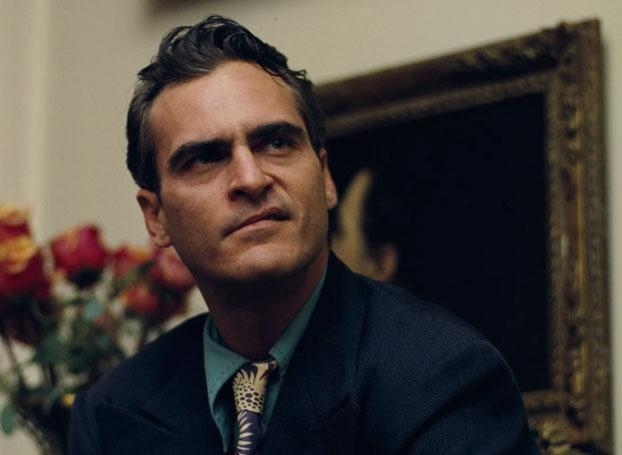
Freddie Quells (Joaquin Phoenix) is struggling to adjust to life after World War II. Fresh out of the Navy, he works as a department store photographer, until his rage and social awkwardness lead to him being fired. He’s drifting about and hops onto a ferry leaving town. Onboard is Lancaster Dodd (Phillip Seymour Hoffman) who describes himself as “a writer, a doctor, a nuclear physicist, a theoretical philosopher, but above all, a man.” Dodd has gathered a revered following. He believes that people can regress to past lives trillions, yes you read that right, of years into the past. Dodd’s own children admit that dear old dad is “making it up as he goes along.” His movement, known as The Cause, has been called a cult by detractors, the will of one man, and the followers don’t take kindly to challenges from the outside. Dodd adopts Freddie as a project. He’s on the verge of completing his second major treatise and Freddie seems to be an inspiration for him. Freddie finds some measure of acceptance within Dodd’s community of followers, but his erratic behavior keeps people on constant edge.
I found The Master to be boring; uncompromisingly boring, hopelessly boring, but worse than all that, pointlessly boring. Was this really a story that needed to be told? I cannot fathom why Anderson chose to tell this story or, in particular, why he chose to tell it through the character of Freddie Quell. A story about a huckster exploiting people with a religion he made up is a fascinating story with or without the Scientology/L. Ron Hubbard connections. That’s a story worthy of being made. Now, instead of this, we have two hours of a guy acting nuts. I would better be able to stomach the Freddie character if I felt like anything of significance was happening to him. He’s a broken man, clearly mentally ill in some capacity, and prone to outbursts that turn violent. Does he change? Does he grow? Does he do anything? Does his life have anything of significance happen to him over the course of 137 minutes? Not really. He’s pretty much the same guy from start to finish; his arc is essentially that he’s crazy at the start, meets Dodd, and then is crazy at the end. We get it, the guy is messed up. He makes a drink out of paint thinner for crying out loud. I didn’t care about him at all. I don’t need to see static scene after static scene of this guy acting out. I wasn’t a There Will Be Blood fan but at least Daniel Plainview was a strong central character with enough dimensions to carry a film. Freddie Quell just isn’t that interesting or entertaining. He’s actually a tiresome character because you get a perfect sense of who he is in just 10 minutes. The rest of the movie just seems to remind you what you already know.
 It is a disappointing realization but I feel like the Paul Thomas Anderson I enjoyed is slipping away, as his flashy, propulsive, plot-heavy early work has given way to opaque, reserved, and plotless movies. It’s like I just watched someone with the verve of Martin Scorsese transform into a poetic film somnambulist like Terrence Malick; not a good move. I don’t know what Anderson’s message is or what he was trying to say, and I’m unsure why he decided to use a limited character like Freddy Quells as his prism. It almost feels like Anderson is compensating for his plot-driven films of his early career, like he has to balance the scales in his mind. I shudder where this recompense might take Anderson for his next film. I like to think of myself as an intelligent moviegoer who enjoys being challenged by movies. But that doesn’t mean I’ll accept anything challenging as quality. Case in point: Jean-Luc Godard’s Film Socialism, which was contemptuous of its audience. I don’t mind doing work but you have to give me a reason. There has to be a reward, either with the narrative or with the characters. I found no rewards with The Master and it’s not because I didn’t “get it,” film snobs, it’s because the movie was too opaque to say anything of substance beyond simplistic observations about the abuse of power and influence.
When I say plotless I don’t mean that we’re simply watching paint dry, though there are stretches of The Master where I would feel that could be a suitable test from Dodd. There are events. There are scenes. There are changing relationships. It’s just that none of this seems to matter, or at least it never feels like it does. There’s no build, no increase in urgency, and The Master just sort of drifts along to the detached rhythms of Freddie. The movie can feel interminable, and you may ask yourself, on a loop, “Is this going anywhere?” There are two scenes that stand out because there are so few that seem to matter. One is shortly after Dodd and Freddie have been arrested. The two men are locked in opposing cells and they explode in venomous anger. It feels like Anderson can finally allow his characters to vent out what they’ve truly been feeling. Another memorable scene, just for weirdness, is when we jump inside Freddie’s head. All the women, young and old, at a social gathering suddenly lose their clothing (think: Choke). It’s one of the best scenes at exploring Freddie’s sexual compulsions, plus it’s just peculiar. I wanted more scenes like this where we try and get inside the man’s mind. The rest of the characters are underwritten, especially Amy Adams (Trouble with the Curve) as Dodd’s wife and fierce protector. This is a movie about two strong-willed men and everybody else gets relegated to minimal supporting positions. I miss the sprawling humanism of Boogie Nights and Magnolia.
From a technical standpoint, the movie is very accomplished. The 1950s era setting is lushly recreated, aided by cinematography that seems to present this bygone age in a colorless manner. By this I mean that the world feels muted, repressed, the colors are there but they don’t pop, and I think this look fits the movie marvelously. Anderson shot the film in 70mm, which would offer startling detail to his images. I did not see the film projected this way (as will most) but you could sense the time and effort put into getting the details of his world right. The musical score by Johnny Greenwood is minimalist but effective, with a few key strokes of a guitar to note rising tension.
 The true draw of the film is the performances, which are excellent and at least provide a reason for staying awake. This is Phoenix’s first role since his two-year performance stunt documented in I’m Still Here. It feels like his off-putting, confrontational, bizarre antics for that faux documentary were all just training for playing the character of Freddie. The man has sad, droopy eyes, a fixed sneer that denotes his permanent displeasure and cocksure attitude. He speaks in mumbled sentences, he walks with his arms pinned out, donning the posture and behavior of a chicken. It’s at once an odd and striking performance, and Phoenix does his best to make the character worthy of your attention. He gives it his all, but sadly Freddie just doesn’t merit prominence. Hoffman (Moneyball) is equally alluring as the charming huckster who seems to come alive under a spotlight; the man exudes an oily presence, and yet there are a handful of moments where he lashes out, venting the roiling anger that seems to be barely contained at times. Hoffman’s performance is one of willful self-delusion rather than rampant self-destruction, which makes him far more compelling in my opinion. I would have preferred a Lancaster Dodd movie rather than a Freddie Quells movie.
The Master is a confounding, airless, opaque character study that is far from masterful. The faults of the film and its stilted ambitions lay squarely at the feet of its flawed central character, Freddie Quell. The movie adopts Freddie’s demeanor, managing a distant, standoffish, defiant attitude that thumbs its nose at audience demands. Don’t you know entertainment has no place in art, silly filmgoers?
Anderson is still a vastly talented filmmaker but I lament the path his career has taken. I adored the first four movies of Anderson’s career, but now I wonder if I’ll ever get something along the likes of Boogie Nights or even Punch-Drunk Love again. At this point Anderson has earned enough artistic latitude to tell whatever stories he so chooses. This is why my frustration has mounted because I am at a loss to why he feels compelled to tell this story and in this manner. The Master is an artistically stillborn affair. You want to believe there’s more under the surface but I don’t see it. The main ideas and themes are hammered with little variation, the slight plot drifts aimlessly finding no sense of momentum, and the characters are kept at such distance that the film feels clinical, like we’re observing creatures under glass for study. It just so happens that none of these characters warrant the attention. The Master will be praised by a plethora of film critics. Peter Travers of Rolling Stone said it renews your faith in American cinema. I had the opposite reaction. The Master made me lose faith, mainly that I’ll ever enjoy a Paul Thomas Anderson film from this point on.
Nate’s Grade: C
Share this:

The Invisible War (2012)
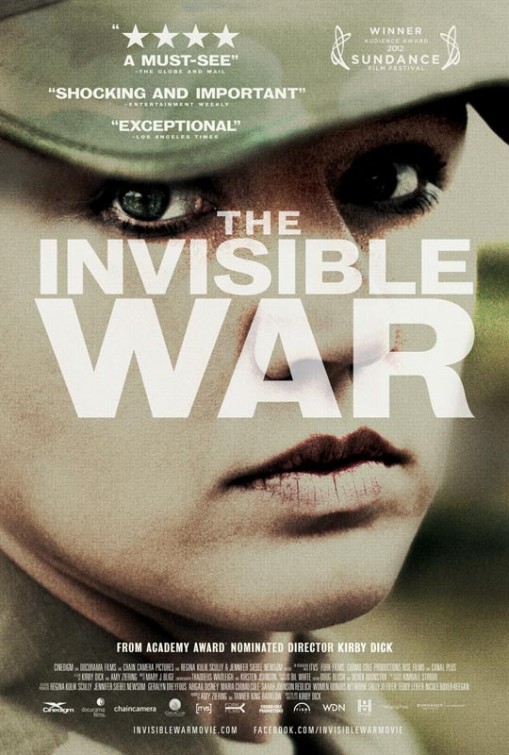 Kirby Dick is a documentary filmmaker known for picking fights with powerful institutions that operate in secrecy. In the Oscar-nominated Twist of Faith, he scrutinized the abuses of the Catholic Church covering up for sexual predators. In 2006’s This Film is Not Yet Rated, he hunted down the then-unknown members of the MPAA ratings board and delivered an overwhelming critique of their ratings hypocrisies. With The Invisible War, Dick has taken on a subject that’s even more powerful. The Invisible War, which won some awards at the Sundance film festival, examines the rampant numbers of sexual assaults and rape within the military. Through extensive, emotionally draining interviews and enraging statistics, Dick shows that most of the victims, when courageous enough to report their abuse, are met with skepticism, contempt, and injustice. One interview subject says that being raped isn’t what makes her angry the most: “It’s the commanders that were complicit in covering up everything that happened.” This is a shocking, sobering, and eye-opening documentary that deserves to be seen by every American. You owe it to the brave men and women who serve this country, to see this movie. The ugly truth needs to come out and be finally dealt with.
The upsetting statistics of sexual abuse within the military come from the Department of Defense, not an advocacy group, but our own government. Here are some of the most devastating stats:
-20 percent of all women in the military have been sexually assaulted and/or raped while serving.
-Women are twice as likely to be raped in the military rather than outside it.
-Military sexual assault/rape victims have a higher rate of PTSD than soldiers who have fought in combat.
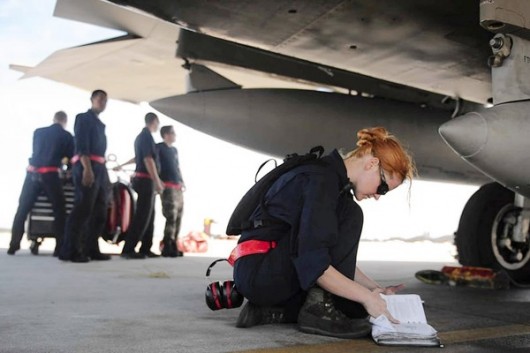 This is a profoundly revolting, morally repugnant, and infuriating story presented with damning testimonials clear-eyed logic. When I left the theater, I was radiating unquenchable fury. You could have harnessed my rage as an alternative resource. A lot of people blithely say they support the troops but we as a nation are letting these brave men and women down. The system is letting these people down, protecting rapists, training them to be better rapists, and then setting them loose upon the civilian population to continue their heinous crimes (it’s estimated the average sexual predator commits 300 acts in his or her lifetime). Listening to these heartbreaking stories can be grueling, but it is vital to listen. The women speak with such candor and bravery, befitting those ready to lay down their lives out of service for this country. But lest you believe this is merely a “women’s issue,” the film has a few interviews with male victims as well. With men outnumbering women six to one in the military, men are the majority of the victims of sexual abuse, a fact I doubt many would have known. As the experts attest, for an organization that rewards machismo, the shame for men can be compounded by the rampant homophobia within the American military culture.
It’s sadly understandable that so many of the interview subjects contemplated or attempted suicide. “Suicide or AWOL, those are your only two real options,” a military investigator laments. According to TIME’s investigative report, one Iraq and/or Afghanistan veteran commits suicide every day in America. Now remember that stat above concerning PTSD, and think about what the suicide rate must be like for victims of sexual abuse. One military man, husband to a rape victim, breaks down in sobs recounting his phone call for help while he tried to stop his wife from taking her own life. Watching proud, grown men break down into tears when they try and make sense of their institution harming their wives or daughters, it’s heartbreaking all its own. These veterans would not advise any woman to consider a career in the military, not when this is the sorry state of justice.
These victims were often handled with apathetic, callous, or downright hostile behavior, often being blamed for being attacked. These victims risked their careers to report their abuses, expecting some semblance of justice, and many times they were simply ignored or punished for “making waves.” One interview subject talks about how her commanding officer related that he had heard about three rape accusations that week and incredulously asked if the women were all in cahoots. One woman was raped and then charged with adultery; she wasn’t married but her rapist was, though he was never brought up on charges. Dick’s documentary lays a clear argument that giving the commanding officers, people often without any legal training whatsoever, the power to prosecute cases leads to plenty of ignored abuses. In 2010, the military reported 3,158 reports of sexual abuse (remember that 80 percent of cases generally go unreported), but only one-sixth of those cases lead to a court martial and only 175 of the assailants served jail time. And when they do serve jail time, it’s often knocked down to mere weeks. That way, the convicted serviceman doesn’t get charged with a felony. This also means when they leave the military, the convicted sexual offender does not have to register with a national sex offender database. When investigations do arise, they are routinely stonewalled.
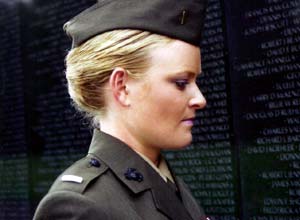 What emerges from this inflammatory documentary is that the command’s response wasn’t to protect the victims but to protect the accused, time and again. These commanders are supposed to be objective and impartial arbitrators, but this is hardly the case. It’s all about saving face, and a commander looks bad when he has a rapist in his unit, so rather than expel and punish the rapist, the military often drops the case and punishes the victim. Sometimes the commanding officer the victims are supposed to report the abuse to was in fact the perpetrator. In those instances, the victims have no possible path to justice. Major General Mary Kay Kellogg, Director of the Sexual Assault Prevention and Response Office (DOSAPRO), said victims could appeal to the Defense Department’s Attorney General, hence going over their commander’s head. Except that of the almost 3,000 cases sent to the DOD AG, not a single case was ever prosecuted. Kellogg also absurdly suggests that victims petition their Congressman. Just imagine a civilian being raped and told, “Better ask your Congressman if you want justice.”
The response to the systemic abuses has been ineffectual. The military response was to raise awareness, not sift out rapists from the ranks and protect their own soldiers from sexual predators. The ad campaign to raise awareness is jaw-dropping, with slogans like, “Wait til she’s sober,” and a horrendously ear-splitting rap song about sexual assault prevention. It’s so bad you can almost feel the seething resentment of the military. There’s also an informative video with a dramatization of a woman, fleeing helplessly after a man tries to touch her (the fact that this dramatization makes the woman look silly is intentional, me thinks). This woman runs into another serviceman who admonishes her, “Where’s your buddy?” The implication is that women should know that they can be raped at any time unless accompanied by a buddy. Does this not imply that every man in the military is capable of rape at the drop of a hat? And what if that buddy ends up being your rapist? The military builds a greater sense of camaraderie, and the men and women in uniform feel like a family. As one interview subject notes, when one soldier rapes another, it is akin to a crime of incest, a betrayal of that family. One victim was told she brought on the sexual harassment because of what she was wearing… which just happened to be her military uniform.
Dick’s film is obviously advocating a very specific side, but who cares about the idea of presenting balance given the subject? The Department of Defense spokespersons and their rote, officious responses are edited for some major points of baffled, incredulous laughter, as we contrast their company line with the testimonials of the men and women they failed to protect. Again, I return to the notion that not every story has two sides. What exactly is the other side in this epidemic of abuses? What possibly could the merits of the other side be, the status quo? This is not just some anti-military screed. In fact, many of the participants speak so highly of the ideals of the military, the duty to serve, and their genuine feelings of belonging to these hallowed institutions. This makes their disillusionment all the more distressing. Almost every interview subject has a military background, some discharged and some retired, and the movie presents its claims with clear, level evidence. The testimonials are so damming, the abuses so clearly documented, the obfuscation from justice so repeatedly maintained, that I cannot even fathom a second side to this story. When it comes to sexual assault, there is only one side to this issue.
 Dick also doesn’t overplay the obvious emotional appeals in the film. There is plenty, but he doesn’t sensationalize the drama or amplify the emotions in a self-serving manner. Instead, the film looks to clearly examine a systematic problem. Rather than deal only with potent outrage, Dick’s film is also a call to action with some strong ideas on how to better protect the victims of sexual abuses. Set up an independent system of justice outside of the commanders’ control, and work on preventing rapists from joining the military rather than cutting down the possibilities of how women can be raped. How about we punish the guilty party?
Last year, a group of veterans who had been sexually abused, initiated a class-action lawsuit against the military. This suit was dismissed by the court because, in their words, rape was an “occupational hazard of military service.” Reread that sentence again. Let it sink in. Now ask yourself is that at all acceptable given the values we profess for our country? The culture within the military is simply that rape and sexual abuses are just not that big of a deal (a Congresswoman admits that the Defense AG told her they have “other, higher priorities” to worry about), and so it all continues. The implication is that for the military to function, you’re going to have to excuse some excess, that excess being an estimated 30,000 sexual assaults a year. I’d like the military brass to explain to me what number would be unacceptable. How prevalent do these abuses need to be before proper action is taken, and not some facile PR, face-saving empty gesture, but something real? To me, one rape is one too many.
Dick’s excoriating advocacy documentary is powerful, furious, but sensitive to the victims and their horrifying ordeals. It declares that we can and should do better. In April, Secretary of Defense Leon Panetta watched The Invisible War and two days later made some changes. He took the decision to prosecute away from the commanders. It’s a start, but there’s a long way to go to fixing the military’s patronizing view of women. The movie opens with a series of advertisements targeted at women through the years, and the treatment is astoundingly patronizing and the film’s only spot of bleak humor. At one point, one of the victims asks if she and her fellow victims hypothetically deserve purple hearts for being wounded in battle too. “We’re never going to get anything,” another replies. These victims deserve recognition and justice, which has long been denied them. You won’t see a more challenging, infuriating, and compelling documentary of this year. It’s hard to watch at many points, and I cried at five separate occasions, but this is a movie that needs to be watched. I invite all readers to visit the Not Invisible site and consider joining the advocacy of this noble cause. You say you support the troops? Prove it.
Nate’s Grade: A


 nathanzoebl
You must be logged in to post a comment.