Blog Archives
Wicked: Part One (2024)

It’s shocking that it took this long for Wicked to make its way from the Broadway stage to the big screen. The musical, based upon Gregory Maguire’s novel, began in 2003 and while it may have lost out on the biggest Tony Awards that year to Avenue Q (it seems astonishing now but… you just had to be there in 2004, theater kids) the show has been a smash for over two decades, accruing over a billion dollars as the second highest-grossing stage show of all time. As show after show got its turn as a movie, I kept wondering what was taking so long with an obviously mass appealing show like Wicked. It’s the classic Hollywood desire of “same but different,” a reclamation project for none other than the Wicked Witch of the West, retelling her tale from her perspective. Well, Wicked’s time has eventually dawned, and the studio is going to feast upon its protracted wait. Taking a page from the YA adaptation trend that dominated the 2010s, they’ve split the show into two movies, separated by a full year, hoping to better capitalize on the phenomenon. I was wary about Part One being 150 minutes, the same length as the ENTIRE Wicked stage show, but having seen the finished product, and by “finished” I mean one half, I can safely say that Wicked is genuinely fabulous and deftly defies the gravity of expectations.
In the fantasy world of Oz, the green-skinned outcast Elphaba (Cynthia Erivo) is looked at with scorn, derision, and fear. She’s always been different and never fully accepted by her father who blames her for her mother’s death and her younger sister Nessarose (Marissa Bode) being stricken to a wheelchair. Nessa is going to study at Shiz University with all the other up-and-coming coeds of the land of Oz, including Glinda (Arianna Grande), a popular and frivolous preppie gal peppered in pink pastels. Glinda desperately wants to be taken seriously and become a witch, studying magic under the tutelage of the esteemed Madame Morrible (Michelle Yeoh). Instead, Morrible’s fascination falls upon Elphaba after she reveals her tremendous magical ability in a moment of extreme emotion. Now Elphaba is enrolled at the magic school and learning about the way of the world, and she’s stuck with Glinda as her roommate. The two women couldn’t be any more different but over the course of the movie, we’ll uncover how one became Glinda the Good and the other the Wicked Witch of the West.

At two-and-a-half hours long, again the length of both acts of the stage show, Wicked Part One only covers the events of the show’s first act, and yet it feels complete and satisfying and, even most surprising, extremely well paced. It’s hard for me to fathom what could have been lost to get the running time down as each scene adds something valuable to our better understanding of these characters and their progression and the discovery of the larger world. It’s a movie that feels constantly in motion, propelling forward with such winning ebullient energy that it becomes infectious. It’s also not afraid to slow things down, to allow moments to breathe, and to provide further characterization and shading that wasn’t included in the stage show. The adaptation brings the fireworks for the finale and raises the visual stakes and danger in a manner that feels exciting and compellingly cinematic. Considering the resplendent results, I feel I could argue that the movie is actually -here comes the heretical hyperbole, theater kids- an improvement over the stage musical. It makes me even more excited for a bolder, longer, potentially even more emotionally satisfying second part in November 2025.
One of my primary praises for 2021’s In the Heights was that director John M. Chu, who cut his teeth helming the Step Up movies, knows exactly how to adapt musicals to maximize the potential of the big screen. If you’re a fan of musicals, old and new, you’ll find yourself swept away with the scope and intricacy of these large fantasy worlds, the flourishes of costume and production design, as well as the creative choreography making fine use of spaces and the power of film editing. There’s a rousing dance sequence set in a library with shelves that rotate around the room, making the slippery choreography that much more immersive, impressive, and acrobatic. Even big crowd numbers are given the knowing framing and sense of scale to hit their full potential, from the opening rendition of Munchkinland celebrating the death of the Wicked Witch of the West complete with giant burning effigy that would make a Wickerman envious, to the introduction to the City of Oz where it appears every citizen has a jovial role to play in welcoming strangers to their enchanted capital city. Chu’s nimble camerawork allows us to really enjoy the staging and skills of the talent onscreen, bringing a beating sense of vitality we crave from musical theater writ large. Wicked is simply one of the best stage-to-screen adaptations in musical theater history and a joyous experience that allows the viewer sumptuous visuals.
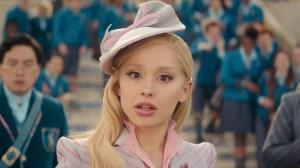
At its core, the story of Wicked is about some pretty resonant themes like self-acceptance, bullying, the fear of what is different or misunderstood, and all of this is built upon an irresistible friendship between Glinda and Elphaba. The rivals-to-allies formula isn’t new but it is tremendously effective and satisfying, especially when both characters are as well drawn and deserving of our empathy as these two ladies. They’re each on a different meaningful character arc for us to chart their personal growth and disillusion with what they’ve been taught is The Way Things Are. One is starting from a disadvantaged position and gaining traction through an outward demonstration of power, and the other is beginning in a position of privilege and becoming humble and more considerate as she acknowledges the challenges of others in a manner that doesn’t have to reconfirm her enviable “goodness.” It just works, and both women are fantastic in their roles. I was on the verge of tears at several points and my heart felt as full as a balloon throughout because of the emotional engagement and heartwarming camaraderie between our two leading ladies. With all its razzle dazzle, Wicked is a story of feminine friendship first and foremost and emotionally rewarding to experience, with the soaring music as a bonus.
Let’s finally talk about the music, a key factor in the enjoyment of any musical, naturally. The music was written by Stephen Schwartz, the Oscar-winning composer for “Colors of the Wind” from Pocahontas as well as “Believe” from The Prince of Egypt. I found his Wicked numbers to range from good to astoundingly good, with catchy ear-worms like “Popular” to the anthemic power and sweep of “Defying Gravity.” The cheeky and toe-tapping “Dancing Through Life” is a showcase for Jonathan Bailey (Bridgerton) and benefits from the aforementioned creative library choreography. “I’m Not That Girl” is a heartbreaking ode to the girls who don’t think of themselves as enough, which is begging for a reappearance in Part Two. The only clunker is “A Sentimental Man” but that’s more the result of the deficiencies of Jeff Goldblum as a singer than the song. I await the reuse of themes and motifs that will make the music even more thematically rich in the eventual Part Two.

Count me as part of the skeptical throng when it was announced that Grande, who hasn’t acted in over ten years, was cast as Glinda. I’m here to say that she is uniformly great. The Glinda role is the more outwardly showy role and thus immediately more memorable. It’s the far more comedic role, in fact the main source of comedy in the show, and Grande has serious comedic chops. Naturally she excels with the singing and its purposeful miasmic bombast, but it’s the subtle comedic styling and the exaggerated physicality that impressed me the most, like a moment of her twirling on the floor as an added dramatic flourish. There’s one scene where she’s just marching up and down a hallway in full exuberance, kicking, dancing, and exploding with joy. I anticipated that Erivo (Bad Times at the El Royale) would be exceptional, and of course the Broadway vet is, as she brings such simmering life to Elphaba. There’s a strength in equal measure to her vulnerability, making the character fully felt. Erivo also delivers during the big moments, like the climax of the movie that can give you goosebumps in hiw it weaves together empowerment and defiance and self-acceptance. Together, the two women are an unbreakable pair of performers and heroes that we’ll want to see triumph over adversity.
After decades of belabored waiting, Wicked finally makes its journey from stage to screen and I must say it was worth every minute. The film, even at only one half, feels complete and richly realized, building upon the strong foundation of the stage show and its numerous winning elements and masterfully translating them to cinema, taking full advantage of the visual possibilities while also expanding upon the story and themes for further enrichment. While born in the early 2000s War on Terror Bush era of politics, Wicked’s themes of anti-immigrant fear-mongering as scapegoats still bears striking resonance today, as do the emerging warnings of fascism in Oz. If you’re a fan of The Wizard of Oz, musical theater, or even just grandiose spectacle that doesn’t dilute grandiose feelings, then step into Wicked and you too will feel like you’re floating on air.
Nate’s Grade: A
Share this:

Dungeons & Dragons: Honor Among Thieves (2023)
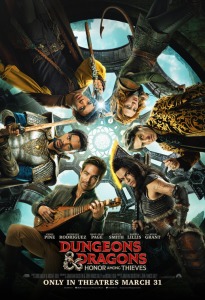 As required for every film critic before discussing the new Dungeons and Dragons movie, subtitled Honor Among Thieves, I must tell you my personal history with the seminal tabletop game. Well, I don’t think D&D is for me. Many of my friends are heavily involved in D&D, several as the quest-fashioning dungeon masters, and I’ve even sat in for a few games, but there’s something about the group improv experience that I never feel comfortable while playing, like my mind just runs into imagination roadblocks trying to come up with options in a near limitless space. Plus I think character creation is one of my lesser storytelling skills; I typically build characters more out of plot and concept and theme. Also, the demanding time commitment to play a game that can take possibly months or years to conclude makes me hesitant. I already think Monopoly lasts too long and has a habit of ruining friendships (if I was ever paid to write a Monopoly movie, that would be my starting point, not bringing to life Mr. Moneybags).
Anyway, D&D has had something of a cultural renaissance the last decade, reaching new levels of wider acceptance partly thanks to its prominent placement in Stranger Things. Pretty good for an ever-evolving 50-year-old game system that was at one point blamed for luring impressionable youth into the ways of Satanism and insanity (see the ridiculous 1982 movie Mazes and Monsters starring a young Tom Hanks as a student who cannot distinguish between reality and the game world to murderous effect). It’s such a substantial fantasy property that it was only a matter of time for movies to follow. There was an abysmal D&D movie from 2000 co-starring Thora Birch and a go-for-broke Jeremy Irons that isn’t worth your time. I wasn’t excited for a new Dungeons and Dragons movie until I saw that its directors and co-writers were Jonathan Goldstein and John Francis Daley. I was a big fan of 2018’s Game Night, their last directing effort, and they’ve been a dependable comedic writing duo. It was with them that I placed my faith and that faith was fully rewarded when my wife and I watched Honor Among Thieves and had a delightful time. This is a wildly fun D&D movie for every viewer.
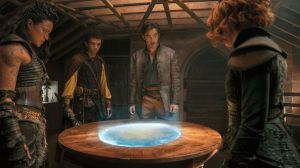 In the world of owl bears and sorcerers, Edgin (Chris Pine) and his trusted partner, Holga (Michelle Rodriguez), are looking to settle the score. They’ve broken out of prison and are trying to gather their old team back together but everyone has a grudge. Forge (Hugh Grant) has betrayed the group for power and especially riches, serving as the city’s reigning lord. He’s recommissioned a gathering of games and sport, drawing crowds back to the city, and with games comes betting and with betting come large sums of money from the rich. Edgin plans to rob from the treasure hold for the games and with that score he can regain his daughter and possibly reclaim a magical totem that can bring his dearly departed wife back.
I have no prior understanding of anything relating to the world and lore of D&D, and I found it to be extremely accessible and engaging. That’s because Goldstein and Daley have put the emphasis of their movie not on its lore or history or locations but on its characters. I appreciate that here is a major work of IP for a studio that is attempting to tell one very good and accessible story for the masses rather than set up a cinematic universe and ready it for possible sequel bait. Get the movie right and have that make me desire more movies rather than establishing a world that has potential but otherwise goes unfulfilled. The very concept of Honor Among Thieves helps to keep things light-hearted and moving. My pal Ben Bailey and I have been clamoring for years for a heist movie set within a fantasy world. It was ready-made to satisfy with the genre structure of heists, and putting a team together that rolls with unexpected adversity, and the cleverness of incorporating fantasy abilities and elements into heist genre familiarities. Thankfully, Goldstein and Daley realized how entertainingly plentiful this combo can prove.
The fun characters are what help to make the movie so enchanting. Rather than settling on a subsection of class representation (one dwarf, one elf, one wizard, etc.), the characters are more about what they bring to the team and what motivates them for character arcs. We have a shapeshifter (Sophia Lillis) who is trying to protect the kingdom’s encroachment on her kind. We have a shaky wizard (Justice Smith) who is battling for his own self-confidence and respect. Nobody feels like a token appointment. Even characters that would seem like a D&D player’s dream, a powerful paladin played by the dashing Rege-Jean Page (Bridgerton), are given more purpose. He serves as a contrast to our hero’s journey back to respectability, and the character is so noble and serious that it’s yet another shade of comedy to explore. His obliviousness to irony and sarcasm reminded me of the very literal-minded Drax (Guardians of the Galaxy). This is a character that would appear in standard fantasy epics, and yet he’s played for laughs just through sheer juxtaposition without ever mocking the reality of this world. At no point will characters condescend to their reality, saying self-aware critiques like, “Well that’s a very inconvenient and stupid place to put a castle,” etc. There is a cameo where the gag is that this person is much smaller. The appearance is played for goofy laughs and yet it’s also shocking in its emotional sincerity. If you removed the size differential, this would be a dramatic and eventful scene (I did enjoy the unspoken preference of this individual when it comes to a romantic partner). The movie is very funny and very skilled at being funny without reliance upon meta genre riffs.
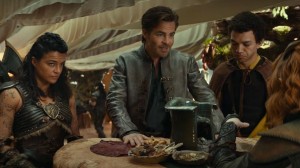 Elevating an already great movie, Pine (Don’t Worry Darling) is robustly charming as a bard/secret agent. He secured my loyalty within two minutes of the movie when he gave up on his prison knitting project and said, summarily, “I’m just gonna make a mitten. Who am I trying to impress?” Pine has long been one of our most effortlessly charming leading men, and playing a rakish heist leader who also sings will only magnify the man’s innate appeal to the masses. He works even better alongside Rodriguez (any Fast and Furious movie after 6) who becomes the real physical presence. This is a career-best performance with Rodriguez sliding right into exactly the comedy wavelength she’s needed for – the gruff and cynical worldview of the weary warrior. They make for a great bantering lead duo.
The set pieces are also tailored to the character arcs while still being memorable and entertaining. This is a movie that doesn’t get complacent over its 134 minutes. Each sequence must stand out, whether it’s because of creative and intuitive fight choreography that makes keen use of geography and circumstance, or a graveyard Q&A with very constrained magical rules to follow that leads to a lot of digging to find the right corpse with the right information, or escaping from an obese dragon (with its “widdle wings”) that resembles a chonky cat, or a dangerous trip through a maze that abruptly reconfigures itself, or a prison escape that doesn’t quite go as you expect, nor at the characters expect. Every scene has a purpose. Every magical item has a specific use, and every set piece sets itself apart visually and from a story standpoint.
Goldstein and Daley have excelled as writers, but they’re also proving to be visually adept directors. With the emphasis on characters, it’s not CGI spectacle for spectacle’s sake. There’s a pleasing physicality to this world. The budget is in the $150-million range, which is quite a show of confidence for the directors, but the emphasis is on what best elevates the moment. There’s a thrilling escape performed as a tracking shot with a zooming camera tracing the escape of our shapeshifter from harm, and there’s fantastic visual inventiveness with a magic portal and its application for the film’s equivalent of a rollicking stagecoach robbery. There’s a noted intention here with the shots and scenes and visual arrangements, so Honor Among Thieves feels like a studio film with vision.
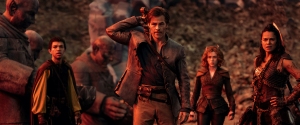 Allow me to take one very fleeting moment to digress just how much care Goldstein and Daley put into even the smallest of details. After we’ve met the last core member of our crew, he confidently leans backwards and falls into a pit leading to an underground cavern. The rest of the crew creep toward the opening and stare down below with trepidation. Simon then says, “I’m going last.” We then cut to the group at the bottom of the cavern. It’s such a small detail, but the previous scene ends on a character-appropriate punchline for Simon reconfirming his squeamishness, but then by transitioning to the entire collected crew together, we know he was last and so we’re ready to move forward. Again, it’s a small detail but it’s a microscopic example that proves, to me, how much thought and care the directors have given.
As a novice to the famous role-playing world, I found Dungeons & Dragons: Honor Among Thieves to be an exhilarating and highly entertaining fantasy adventure where fun is the chief priority. It’s not at the expense of great characters, good humor, and satisfying payoffs with well-developed setups strewn throughout. It’s a reminder how enjoyable and escapist blockbusters can be when you have the right artists using the expansive box of paints. It’s great for all ages and families too. I don’t have any personal connection to this sword-and-sorcery universe but now I want many more adventures if this is kind of quality they’re offering.
Nate’s Grade: A-
Share this:

Guillermo del Toro’s Pinocchio (2022)/ Pinocchio (2022)
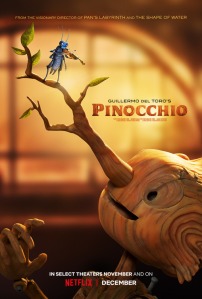 It seems 2022 has unexpectedly become the year of Pinocchio. The 1883 fantasy novel by Carlo Collodui (1826-1890) is best known via the classic Walt Disney animated movie, the second ever for the company, and it was Disney that released a live-action remake earlier in the year on their streaming service. Now widely available on Netflix is Guillermo del Toro’s stop-motion Pinocchio, so I wanted to review both films together but I was also presented with a unique circumstance. Both of these movies were adaptations of the same story, so the comparison is more direct, and I’ve decided to take a few cues from sports writing and break down the movies in a head-to-head competitive battle to see which has the edge in a series of five categories. Which fantastical story about a little puppet yearning to be a real boy will prove superior?
1. VISUAL PRESENTATION
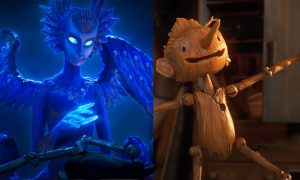
The Netflix Pinocchio is a lovingly realized stop-motion marvel. It’s del Toro’s first animated movie and his style translates easily to this hand-crafted realm. There is something special about stop-motion animation for me; I love the tactile nature of it all, the knowledge that everything I’m watching is pain-stakingly crafted by artisans, and it just increases my appreciation. I fully acknowledge that any animated movie is the work of thousands of hours of labor and love, but there’s something about stop-motion animation that I just experience more viscerally. The level of detail in the Netflix Pinocchio is astounding. There is dirt under Geppetto’s fingernails, red around the eyes after crying, the folds and rolls of fabric, and the textures feel like you can walk up to the screen and run your fingers over their surfaces. I loved the character designs, their clean simplicity but able readability, especially the sister creatures of life and death with peacock feather wings, and the animation underwater made me question how they did what they did. del Toro’s imagination is not limited from animation but expanded, and there are adept camera movements that require even more arduous work to achieve and they do. I loved the life each character has, the fluidity of their movements, that they even animated characters making mistakes or losing their balance or acting so recognizably human and sprightly. There’s a depth of life here plus an added meta-textual layer about puppets telling the story about a puppet who was given life.
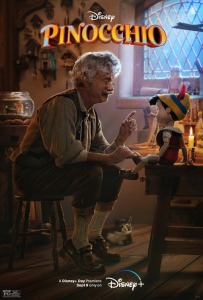 In contrast, the Disney live-action Pinocchio is harsh on the eyes. It’s another CGI smorgasbord from writer/director Robert Zemeckis akin to his mo-cap semi-animated movies from the 2000s. The brightness levels of the outside world are blastingly white, and it eliminates so much of the detail of the landscapes. When watching actors interact, it never overcomes the reality of it being a big empty set. The CGI can also be alarming with the recreation of the many animal sidekicks of the 1940 original. Why did Zemeckis make the pet goldfish look sultry? Why did they make Jiminy Cricket (Joseph Gordon-Levitt) look like a Brussel sprout come to life? It might not be the dead-eyed nightmare fuel of 2004’s The Polar Express, but the visual landscape of the movie is bleached and overdone, making everything feel overly fake or overly muddy and glum. The fact that this movie looks like this with a $150 million budget is disheartening but maybe inevitable. I suppose Zemeckis had no choice but to replicate the Pinocchio character design from 1940, but it looks remarkably out of step and just worse. When we have the 1940 original to compare to, everything in the 2022 remake looks garish or ugly or just wrong. The expressiveness of the hand-drawn animation is replaced with creepy-looking CGI animal-human hybrids.
Edge: Netflix Pinocchio
2. FATHER/SON CHARACTERIZATION
The relationship between Pinocchio (voiced by Gregory Mann) and Geppetto (David Bradley) is the heart of the Netflix Pinocchio, and I don’t mind sharing that it brought me to tears a couple of times. As much as the movie is about a young boy learning about the world, it’s also about the love of a father for a child. The opening ten minutes establish Geppetto’s tragedy with such surefooted efficiency that it reminded me of the early gut punch that was 2009’s Up. This Geppetto is constantly reminded of his loss and, during a drunken fit, he carved a replacement child that happens to come to life. This boy is very different from his last, and there is a great learning curve for both father and son about relating to one another. This is the heart of the movie, one I’ll discuss more in another section. With del Toro’s version, Geppetto is a wounded and hurting man, one where every decision is connected to character. This Pinocchio is a far more entertaining creature, a child of explosive energy, curiosity, and spitefulness. He feels like an excitable newborn exploring the way of the world. He’s so enthusiastic so quickly (“Work? I love work, papa!” “I love it, I love it!… What is it?”) that his wonder can become infectious. This Pinocchio also cannot die, and each time he comes back to life he must wait longer in a netherworld plane. It provides even more for Pinocchio to understand about loss and being human. This is a funny, whimsical, but also deftly emotive Pinocchio. He points to a crucifix and asks why everyone likes that wooden man but not him. He is an outsider learning about human emotions and morals and it’s more meaningful because of the character investment.
 In contrast, the Disney live-action Pinocchio treats its title character as a simpleton. The problem with a story about a child who breaks rules and learns lessons by dealing with the consequences of his actions is if you have a character that makes no mistakes then their suffering feels cruel. This Pinocchio is simply a sweet-natured wannabe performer. He means well but he doesn’t even lie until a sequence requires him to lie to successfully escape his imprisonment. The relationship with Geppetto (Tom Hanks) is strange. This kindly woodcarver is a widower who also has buried a son, but he comes across like a doddering old man who is quick to make dad jokes to nobody (I guess to his CGI cat and goldfish and multitude of Disney-tie-in cuckoo clocks). I don’t know what Hanks is doing with this daffy performance. It feels like Geppetto lost his mind and became stir crazy and this performance is the man pleading for help from the town, from the audience, from Zemeckis. It’s perplexing and it kept me from seeing this man as an actual character. He bounces from catalyst to late damsel in distress needing saving. The relationship between father and son lacks the warmth of the Netflix version. Yet again, the live-action Pinocchio is a pale imitation of its cartoon origins with either main character failing to be fleshed out or made new.
Edge: Netflix Pinocchio
3. THEMES
There are a few key themes that emerge over the near two-hours of the Netflix Pinocchio, which is the longest stop-motion animated film ever. Sebastian J. Cricket (Ewan McGregor) repeats that he “tried his best and that’s the best anyone can do,” and the parallelism makes it sound smarter than it actually is. The actual theme revolves around acceptance and the burdens of love. Geppetto cannot fully accept Pinocchio because he’s constantly comparing him to Carlo. When he can fully accept Pinocchio for who he is, the weird little kid with the big heart and unique perspective, is when he can finally begin to heal over the wound of his grief over Carlo, allowing himself to be vulnerable again and to accept his unexpected new family on their own terms. There’s plenty of available extra applications here to historically marginalized groups, and del Toro is an avowed fan of freaks and outcasts getting their due and thumbing their nose at the hypocritical moral authorities. By setting his story in 1930s Italy under the fascist rule of Benito Mussolini, del Toro underlines his themes of monsters and scapegoats and moral hypocrites even better, and the change of scenery really enlivens the familiar story with extra depth and resonance. All these different people want something out of Pinocchio that he is not. Geppetto wants him to strip away his individuality and be his old son. Count Volpe (Christoph Waltz) wants Pinocchio to be his dancing minion and secure him fame and fortune. Podesta (Ron Perlman) wants Pinocchio as the state’s ultimate soldier, a boy who cannot die and always comes back fighting. When Pinocchio is recruited to train for war with the other young boys to better serve the fatherland’s nationalistic aims, it’s a far more affecting and unsettling experience than Pleasure Island, which is removed from this version. In the end, the movie also becomes a funny and touching exploration of mortality from a magic little child. The Wood Sprite (Tilda Swinton), this version of the Blue Fairy, says she only wanted to grant Geppetto joy. “But you did,” he says. “Terrible, terrible joy.” The fleeting nature of life, as well as its mixture of pain and elation, is an ongoing theme that isn’t revelatory but still feels impressively restated.
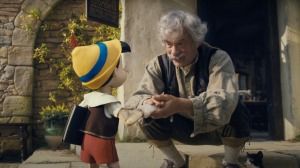 I don’t know what theme the Disney live-action movie has beyond its identity as a product launch. I suppose several years into the Disney live-action assembly line I shouldn’t be surprised that these movies are generally listless, inferior repetitions made to reignite old company IP. For a story about the gift of life, the Disney Pinocchio feels so utterly lifeless. I thought the little wooden boy was meant to learn rights and wrongs but the movie doesn’t allow Pinocchio to err. He’s an innocent simpleton who gets taken advantage of and dragged from encounter to encounter like a lost child. The Pleasure Island sequence has been tamed from the 1940s; children are no longer drinking beer or smoking cigars. They’re gathered to a carnival and then given root beer and told to break items and then punished for this entrapment. The grief Geppetto feels for his deceased loved ones is played out like a barely conceived backstory. He’s just yukking it up like nothing really matters. By the end, when he’s begging for Pinocchio to come back to life, you wonder why he cares. If you were being quite generous, you might be able to uncover themes of acceptance and understanding, but they’re so poorly developed and utilized. That stuff gets in the way of Pinocchio staring at a big pile of horse excrement on the street, which if you needed a summative visual metaphor for the adaptation, there it is.
Edge: Netflix Pinocchio
4. EMOTIONAL STAKES
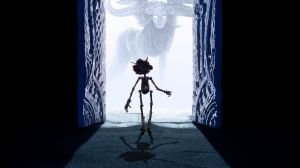 One of these movies made me cry. The other one made me sigh in exasperation. The Netflix Pinocchio nails the characterization in a way that is universal and accessible while staying true to its roots, whereas the Disney live-action film feels like a crudely packaged remake on the assembly line of soulless live-action Disney remakes. By securing my investment early with Geppetto’s loss, I found more to relish in the layers of his relationship with Pinocchio. In trying to teach him about the world, Geppetto is relying upon what he started with his past son, and there are intriguing echoes that lead to a spiritual examination. Pinocchio is made from the tree from the pinecone that Carlo chased that lead to his death. Pinocchio hums the tune that Geppetto sang to Carlo. Is there something more here? When he visits Death for the first time, the winged creature remarks, “I feel as though you’ve been here before.” These little questions and ambiguity make the movie much more rewarding, as does del Toro’s ability to supply character arcs for every supporting player. Even the monkey sidekick of the villain gets their own character arc. Another boy desperately desires his stern father’s approval, and he’s presented as a parallel for Pinocchio, another son trying to measure up to his father’s demands. Even this kid gets meaningful character moments and an arc. With this story, nobody gets left behind when it comes to thoughtful and meaningful characterization. It makes the movie much more heartwarming and engaging, and by the end, as we get our poignant coda jumping forward in time and serving as multiple curtain calls for our many characters, I was definitely shedding a flurry of tears. Hearing Geppetto bawl, “I need you… my boy,” to the lifeless body of Pinocchio still breaks me. Under del Toro’s compassionate lens, everyone is deserving of kindness.
As should be expected by now, the Disney live-action movie is lackluster at best when it comes to any kind of emotional investment. The characters stay as archetypes but they haven’t been personalized, so they merely remain as grubby facsimiles to what we recall from the 1940 version. Jiminy Cricket is meant as Pinocchio’s conscience but he vacillates from being a nag to being a smart aleck who even breaks the fourth wall to argue with his own narration. I hated every time he called the main character “Pee-noke” and he did it quite often. He’s far more annoying than endearing. There’s also a wise-cracking seagull that is just awful. The Honest John (Keegan Michael-Key) character is obnoxious, and in a world with a talking fox who dresses in human clothing, why would a “living puppet” be such a draw? He even has a joke about Pinocchio being an “influencer.” The only addition I liked was a coworker in Stromboli’s traveling circus, a former ballerina who injured herself and now gets to live out her dancing dreams by operating a marionette puppet. However, the movie treats the puppet like it’s a living peer to Pinocchio and talks directly to the puppet rather than the human operating the puppet, and the camera treats her like she’s the brains too. Safe to say, by the end when Pinocchio magically revives for whatever reason, just as he magically reverted from being a donkey boy, I was left coldly indifferent and more so just relieved that the movie was finally over.
Edge: Netflix Pinocchio
5. MUSIC
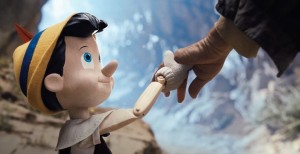 This was one area where I would have assumed the Disney live-action film had an advantage. Its signature banger, “When You Wish Upon a Star,” became the de facto Disney theme song and plays over the opening title card for the company. It’s still a sweet song, and Cynthia Erivo (Harriet) is the best part of the movie as the Blue Fairy. It’s a shame she only appears once, which is kind of negligent considering she sets everything in motion. The Netflix Pinocchio is also a musical and the songs by Alexandre Desplat (The Shape of Water) are slight and low-key, easy to dismiss upon first listen. However, the second time I watched the movie, the simplicity as a leitmotif really stood out, and I noticed the melody was the foundation for most other songs, which created an intriguing interconnected comparison. While nothing in the Netflix Pinocchio comes close to being the instantly humable classic of “When You Wish Upon a Star,” the songs are more thoughtful and emotionally felt and not just repeating the hits of yore, so in the closest of categories, I’m going to say that Netflix’s Pinocchio wins by a nose (pun intended).
Edge: Netflix Pinocchio
CONCLUSIONS
One of these Pinocchio movies is a visual marvel, heartfelt and moving, wondrous, and one of the best films of 2022. The other is a hollow vessel for corporate profit that copies the imprint of the 1940 animated film but only more frantic, scatalogical, and confused. In the year of our lord Pinocchio Two Thousand and Twenty-Two, there is only one movie you should see, and at this point ever see as it concerns this old tale. Guillermo del Toro has harnessed magic, and we are all the better for his bayonet imagination and enormous heart for his fellow outsiders.
Nate’s Grades:
Guillermo del Toro’s Pinocchio: A
2022 Pinocchio: C-
Share this:

Fantastic Beasts: The Secrets of Dumbledore (2022)
 If ever a film franchise looked to be in decline, I submit to you, the Fantastic Beasts movies. Begun in 2016 as a presumed five-part series, Harry Potter author J.K. Rowling was the one writing the screenplays this time and going back to 1920s America. Fantastic Beasts and Where to Find Them, chronicling bashful magical animal caretaker Newt Scamander (Eddie Redmayne), made $800 million worldwide. In the years since, Rowling has burned through much of her good will with transphobic comments, Johnny Depp has been replaced as series villain Grindelwald by Mads Mikkelsen, and 2018’s Crimes of Grindelwald made $150 million less than its predecessor. Now with COVID transforming the box-office, the question remains whether the Wizarding World franchise (as Warner Brothers has been calling the Harry Potter universe) can survive without its Boy Who Lived. The third film, Fantastic Beasts: The Secrets of Dumbledore, finds young(er) Dumbledore (Jude Law) confronting his old foe –- franchise fatigue.
It’s hard for me to fathom anyone, even the most ardent of Harry Potter fans, watching this movie and exclaiming, “I can’t wait for two more of these!” The Secrets of Dumbledore feels more like a regular episode of an ongoing TV series than a story that demanded to be told as a big screen adventure, something that meaningfully reassembles the key characters and moves the larger wizarding world story forward. By the end of the movie, Wizard Hitler still looks like Wizard Hitler. The end. The last movie set the stage for a looming wizard-vs-wizard civil war that would push the magic world to choose its sides. That’s why it’s so bizarre to then go right into a weird election conspiracy with a weird magic deer creature. This is a fantasy world with crazy characters and weird rules and I can’t adequately explain why this whole plot point with a magic deer wrings so silly and ridiculous for me. It’s like if we replaced our electoral system with letting the groundhog choose the president on Groundhog Day. Why bother with democratic elections when we can just have a pure magical creature provide its endorsement? The big scheme for Grindelwald to rig the election at any costs, which has a bizarre 2020 Donald Trump political parallel that also makes me dislike the plot more. The entire movie is hinging on this little creature making its opinion known, so why not guard it better if it’s so integral to their foundation of wizarding governance (warning: animal cruelty early)? This plot line does not work for me, and it feels clumsy both in contemporary political parallels as well as an effort to find reason to continue inserting Newt Scamander into these movies. The franchise began as a light distraction with a goofy zookeeper for magical creatures. Now it’s become a political thriller about the fate of the world against Wizard Hitler. It’s a bit different tonally, and perhaps it’s time to let Newt tend to his animals off-screen, much like what has happened to Tina Goldstein (Katherine Waterston), the co-lead of the other movies, casually “staying home.”
 This is also the first Fantastic Beasts movie where Rowling is sharing screenplay credit, with Steve Kloves, the man who adapted all but one of the Harry Potter movies. It feels like another act of trying to salvage this franchise. I’ve read plenty of critics claiming that this movie corrects the screenwriting miscues of the past films, and to this I do not agree. Reaching out for help from an industry veteran used to adapting Rowling’s imagination is a smart move, but the movie still suffers like the previous Fantastic Beast movie from a plot overburdened with incident and less on substance, willfully obtuse and convoluted in its plotting. Since Grindelwald gains the power to see into the future, a power that is woefully underutilized, the only way to disguise Dumbledore’s plot to uncover election fraud is through sheer confusion. They have to make things purposely confusing and hard to follow on purpose, dear reader. A purposely convoluted and confusing movie is the only way they can beat the bad guy. It’s like Kloves is speaking directly to the audience and admitting defeat at keeping anything clear. I went to brush up by reading the Wikipedia summary for this review and even that made me tired. A wizard heist is a great setup, but Secrets of Dumbledore cannot live up to that potential. The set pieces don’t lean into what a wizard heist could bestow. There’s one memorable sequence where Newt and his brother must escape from a crustacean prison by literal crab-walking. It’s the only light in an otherwise dismal, overwhelmingly grey movie. It all feels less transporting and more plodding.
What even are the “secrets of Dumbledore”? If it’s that he’s gay, well at least the movie finally has the temerity to finally say that Dumbledore and Grindelwald were more than just really special friends who decided to wear vials of each other’s blood as necklaces. The movie unequivocally confirms that they were lovers, had a relationship, and yet it’s all also contained in a prologue flashback that can easily be cut for foreign markets that would object. So congrats, Warner Brothers, for going far enough to at least say Dumbledore and Grindelwald were boyfriends at one point. However, this secret has been publicly known since Rowling outed Dumbledore in the late 2000s, so that’s not it. I guess we’re carrying over the revelation at the end of 2018 that Credence (Ezra Miller) is a Dumbledore, except that it’s revealed he’s the son of Dumbledore’s brother, meaning the big reveal in 2018 was… Dumbledore had a nephew? This character has even less screen time than the other two movies and it feels like the filmmakers are actively trying to work him back to the sidelines (perhaps Miller’s penchant for legal trouble accelerating matters). This all seems pretty minor, and I suspect the filmmakers are ret-conning a direction they thought would be pivotal and have since changed their minds. That’s all I can gather as what might constitute a “secret of Dumbledore,” although allow me to posit a different theory why the third movie has this subtitle. This is a franchise that has been leaking cultural cache and fan interest, and so the producers say, “Nobody knows a Newt or a Grindelwald. They know Dumbledore. They care about Dumbledore. That’s the title.” It’s about rescuing a flagging franchise with the only character that reaches forward to Harry Potter.
 It’s also a little strange that the movie doesn’t even comment that Grindelwald’s appearance has changed. This is made more confusing because of that prologue flashback where Grindelwald had the face of Mikkelsen, so I guess he just chose to hang as Depp for a while. Even a passing reference to this being his “preferred form” would have sufficed. It was established that the big bad wizard could alter his visage, but we shouldn’t just go movie-by-movie with a brand-new actor (really the third actor in three films) as the main antagonist without even the barest of references for the audience. I guess it’s just all assumed.
I think this franchise also needs a break from David Yates as its visual steward, the same director of the last two Beasts films and the last four Potter movies. This is the dankest, most greyed out blockbuster movie I can recall. Yates’ muted color palate and somber handling of the material has begun to drain the fun and magic from this universe for me. I said 2020’s Ammonite was “all grey skies, grey pebbles, grey shores, grey bonnets, grey leggings, grey carts, grey houses, grey this, grey that, irrepressible grey.” This movie is the Ammonite of studio blockbusters (it’s not quite Zack Snyder’s Justice League, where color is not allowed to exist by force of law). The last time someone else directed a Wizarding World picture was 2005’s Goblet of Fire. Yates has served his time, although considering he’s only helmed one non-Potter movie in the same ensuing years (2016’s The Legend of Tarzan), maybe he’s just as reluctant to walk away from this universe.
My personal interest in this franchise has been decreasing with each additional movie, and at this point I’d be content if the planned fourth and fifth movies stayed purely theoretical. Fantastic Beasts: The Secrets of Dumbledore feels, front to back, like a filler movie, a story that is rambling and haphazard (but on purpose!) and a franchise that has outgrown its initial parameters and is struggling to explain why these adventures are persisting and what the overall appeal would be. If you’re happy to just step back into this special world one last time, then you’ll at least walk away satisfied. I still enjoy Dan Fogler as Jacob Kowalksi, the Muggle pulled into the crazy world, the character that should have been the protagonist of the series. Mikkelsen is an upgrade for any franchise. I liked Jessica Williams (Booksmart) and her posh British accent. The special effects are solid if a bit twitchy. I just don’t see the driving force to continue this series, and Warner Brothers as of this writing has not greenlit either of the two proposed sequels to close Fantastic Beasts out, so we may end as a trilogy after all. If that’s the case, what will the legacy be for Fantastic Beasts? It feels like a franchise that started in one direction and was quickly course corrected to another, leeching the initial charm and light-hearted energy. Just like The Matrix universe, I think there are more creative stories that can be told here, but maybe it’s time to allow some fresh voices into the creative process. Maybe it’s time for Rowling to gracefully open her storytelling sandbox for others to dabble within. In many ways, it feels like the fan community and even the movies themselves have simply grown beyond Rowling.
Nate’s Grade: C+
Share this:

Encanto (2021)
 2021 has been quite a year for Lin-Manuel Miranda who has provided the musical accompaniment to three movies, Vivo, In the Heights, and now Encanto, Disney’s latest animated musical (Miranda also has the live-action Little Mermaid, though that’s 2023). It would be unfair to expect a generation-defining Hamilton-esque masterpiece every time Miranda sets pen to paper; I’d happily settle for even a lesser Moana, as far as quality goes (to be fair, Moana is also brilliant). With Encanto, the musical numbers have interesting tone/melody shifts and the hip-hop syncopation we’re used to from Miranda’s style, but none of them will be able to be hummed by the end credits. They evaporate from memory pretty quickly. They seem on par with Vivo and less than In the Heights. With that being said, I found the remainder of Encanto to be quite charming and emotionally resonant. It’s set in Columbia and follows a magic home to a magic family where at a certain age the children are blessed with a unique magic power with a ceremony and celebration. Except for Mirabel (voiced by Stephanie Beatriz) who was denied a power and is looked at with skepticism by her Abuela, who insists on sticking to their family traditions no matter if her children and grandchildren chafe from her expectations. This is a much more insular and contained musical, almost taking place entirely on the family grounds. Its great quest is much more about repairing family relationships and actually listening to another person rather than making assumptions about their life because of their status. Because of this story design, it leads to plenty of catharsis and reconciliation, and it made me blubber like a baby at points. I bought into the emotional stakes of the family, of Mirabel feeling like an outsider, and the pressure to conform. I enjoyed that near everyone in this extended family gets a chance to share their own perspective. The story felt very empathetic to its supporting players while still remembering to be entertaining and funny. The conclusion feels a bit rushed, with happy endings being doled out rather hastily, but quite satisfying. I found Encanto to be colorful, rich in feeling and theme, and delightful to experience. Also, the animated short with the raccoons beforehand hit me hard too.
Nate’s Grade: B+
Share this:

Clifford the Big Red Dog (2021)
 What can one expect from the 80-minute live-action feature film of a children’s book series that was about a giant red dog? While ostensibly made for little kids, like those strictly under ten, Clifford the Big Red Dog (not to be confused with the equally alarming Clifford) is banal entertainment that’s inoffensive as long as you don’t have a deep personal attachment to the best-selling source material. It’s your standard children’s fantasy come alive with a giant dog that needs to be cared for as well as kept a secret. There are rambunctious moments of quelling the dog, mischievous moments of chasing the dog, and frantic moments of running away from a gene-splicing tech guru (Tony Hale). And oh, you bet there is scatological humor. We got dog farts. We got dog butt humor. We got dog pee. We got dog poop, at least in reference though thankfully never seen. I don’t know why we needed an added story of a little girl struggling to fit in at middle school with preppy, mean girls. I guess because a big red dog is also struggling to fit in? For that matter, the movie never returns to the opening scene of Clifford’s dog family being taken from him (a baffling and sad opening). There’s a more charming, heartfelt movie somewhere in here, akin to a Paddington where the central character changes those around them for the better, but our little New York City neighborhood is strictly in a more plastic and safe world. There are a few jokes that slipped past and made me laugh, so it’s not all a loss. Clifford doesn’t pretend to be anything more or less than its meagerly stated goals, and it’s a serviceable family film as long as your little ones have a low threshold for realistic-looking CGI dogs.
Nate’s Grade: C, for Clifford
Share this:

Raya and the Last Dragon (2021)
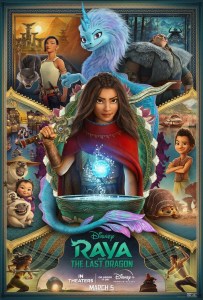
Disney’s new animated feature, Raya and the Last Dragon, is coming at an opportune time and in some ways it’s a movie of the moment. It’s all about a divided nation learning to heal and learning to trust one another despite bitter disputes. I can only hope the ensuring months and years of political dispute in this country can end as fortunately as Disney’s fantasy fable.
We follow Raya (voiced by Kelly Marie Tran) as she embarks on a quest to save her people and the divided lands of Kumandra from a mythical evil that has returned to the land. Dragons gave their lives to fight this monstrous force known as the Druun that turns life into stone. The world has been divided into separate nations surrounding a dragon-shaped body of water. There is Tail, Claw, Heart, Fang, and Spine, Raya ventures to uncover the last dragon, Sisu (Awkwafina), the dragon that originally thwarted the Druun, except Sisu says she’s not exactly the best at magic and dragon stuff. Together, Sisu and Raya are chased by Raya’s childhood nemesis Namaari (Gemma Chan), the next-in line with Fang, the nation blamed for the new outbreak of the Druun. Raya must find a broken piece of Sisu’s dragon stone from each nation to level up her powers and banish the Druun once and for all and return everyone who has turned to stone, including her father.

In many ways, Raya feels like Disney trying to do its own fantasy universe akin to the Last Airbender series. The world building is tantalizing and feels lived-in, the lands distinct and with personalities and different cultures, and those cultures are respective of their environments. I was pleased to continue with the movie and discover more well laid details that built out this world and its inhabitants, the relationships to the dragons, and the veneration of magic. The stone statues each represent a person succumbed to the evil, itself a byproduct of the inability of the splintered nations to unify and trust one another (more on theme later). I appreciated the respect and reverence given to the fallen and to the dragon statues as well. There’s a scene where Namaari and her crew are walking through a field of overgrown dragon statues and they treat it with such reverence like it was a war memorial. For Namaari personally and for Fang especially, the sacrifice of these creatures is one that humanity has been struggling to live up to. I also appreciated that the magic and lore is presented as we need it, so that the audience is overloaded early with an onslaught of new information needed to orient this make-believe world. The filmmakers do a fine job of building from previous established information and expanding naturally to complicate their world and the larger conflict. The plot through line is left pretty simple, collect the pieces of the magic rock, but because of the accessible formula it also builds anticipation we can attune to. It gets me to wonder what new power Sisu will inherit, how that new nation has dealt in the ensuing time with the power and influence of the magic shard, and what new fun character we’ll pick up along the way.
Raya is also an exciting edition to the Disney animated collection. I’ve watched the movie twice, and would watch again, but I really honed in on the action during my second viewing. The fight choreography is impressive and not simple standard kicks, punches, and sword slashes. There are specific moves and countermoves here, and the long takes with the action allow the audience to appreciate the complexity of the brawls as if we were watching The Raid. There were some moments that genuinely gave me goosebumps. I also appreciated that the action isn’t gratuitous; each scene has an emotional connection to a character and their conflict, even the many run-ins between Raya and Namaari trying to prove themselves against one another. This is also a movie where we are replete with strong female characters, diversity, and women in positions of power, and nobody makes a big deal out of it. It’s accepted as the norm and I think that’s smart. It’s nice to add another kick-ass Disney “princess” and for there to be not a single mention of romance throughout the movie. There are bigger issues and the ladies aren’t fighting over a boy’s attention but over their personal rivalry and anger. For a briskly paced 100-minute movie, Raya and the Last Dragon has enough action and awe to provide satisfying thrills for all ages.
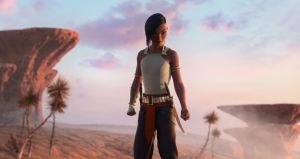
Where Raya admirably succeeds is with its adherence and execution of theme. The characterization can be limited at times for anyone beyond our protagonist, but that doesn’t mean that the supporting players are without charm and resonance and importance. They contribute nicely, just in other ways. The screenplay does an excellent job of supporting the theme of trust and unity, a topic that is in short supply today in a turbulent time of social and political upheaval. The different clans of this fantasy land have resentment, animosity, and decades of score-settling to make it even harder to trust, especially anyone from the Fang nation, the people blamed for the current epidemic. It’s much easier to project anger on an outward force rather to blame than look at our own culpability, and it’s even harder to take that first step to repair the damage done from broken trust and manipulation. Still, the entire journey of Raya, both film and character, is on the importance of taking that step regardless of whether or not it works. Each character from a different nation represents another factor in dealing with grief, and each has reasons not to trust the others, to only think about themselves and their interests, to perpetuate a failing cycle.
The movie articulates the dangers of holding onto grudges and distrust with every moment, so when the climax happens it’s a small yet very meaningful payoff, where the characters don’t make grand final stands and showcase amazing powers against an overwhelming force. No, instead it’s about demonstrating faith in the possible goodness of another person and taking a leap. Sisu suggests offering a friendly gift to make amends and it becomes a running joke but it’s also indicative of her character and personal experiences, how she differs from the contemporary and more nihilistic world, and the larger theme. The movie mentions several points how empowering trust can be, to be valued and believed in, regardless of mistakes and misgivings, and Raya embodies this with every decision, meaning even the small moments and silly side characters have a larger purpose and contribution to the overall message of this tale.
There are some elements that hold Raya and the Last Dragon back from true greatness, joining the ranks of Disney’s recent epic 2010s run of Wreck-It Ralph, Zootopia, Moana, and yes, Frozen (sorry haters, it’s still great). As I said before, the supporting characters are kept more at the idea level than multi-dimensional. They each represent a facet of loss, but I would have liked a little more attention given to them to have more tiny character moments and maybe even some realized arcs. As it stands, they support Raya on her arc and they become subsumed by her arc, and it works, but there was an opportunity to deepen these cute supporting players into more meaningful members. There are some elements that feel like holdovers or clues about earlier drafts, little remnants of scrubbed storylines. Repeatedly Sisu will remind us what an excellent swimmer she is as her special dragon power and we witness this once to use in a minor escape. With the build-up given, you’d expect the movie would make more with this in a climactic manner.

Raya and the Last Dragon is a worthy and exciting entry into the Disney animated canon and presents a fantasy world of its own making with detail, ingenuity, and care, supporting a central theme with every primary creative decision, even if some of them hinder what could have expanded the film into an ever bigger and more diverse ensemble. As it is, it’s all about Raya, who is an engaging and compelling figure trying to prove herself and atone for her own guilt. Her rival is given consideration as well from the pressure she’s under to serve her people. However, this is the Raya show (her name is in the title after all) and that’s plenty for 100-plus minutes of entertainment. Raya and the Last Dragon is a good-to-great animated fantasy film and one I think could support further exploration. This could be the start of Disney’s own Airbender world if they wanted. The animation is fluid and colorful and gorgeous and the character designs are easy to distinguish without placing undue emphasis on exaggerated features to characterize this as a Chinese fable. The vocal acting is great, and by the end of the movie, as its theme comes full circle, I don’t mind admitting I was even tearing up a bit. It’s a well-designed and well-developed fantasy with a secure emotional foundation to build upon.
Nate’s Grade: B+
Share this:

Wendy (2020)
 I was not a big fan of writer/director Benh Zeitlin’s first movie, 2012’s indie darling and surprise Oscar contender, Beasts of the Southern Wild. Some choice highlights from my mixed review include: “This movie is awash in all sorts of tones and storylines, failing to cohesively gel together or form some kind of meaningful message…. [it] offers half-formed ideas, strange, conflicting imagery, and characters that are rather thinly written and barely register… This is just a swampy mess of a movie, one that sinks under the weight of its own pretensions. It’s admirable from a technical standpoint but, as a movie, Beasts of the Southern Wild is an exercise in eclectic indie navel-gazing.” So as you can see, I wasn’t exactly heartbroken that Zeitlin took eight years for his follow-up, Wendy, a loose reinterpretation of the Peter Pan story. It has many of the same flaws as Beasts and not enough of its few virtues, which means Wendy is its own lost movie experience.
We follow a group of children from a working-class diner waitress in small-town Louisiana. They watch the trains speed by on the neighboring tracks and dream of far-off adventures. Wendy (Devin France) and her two younger twin brothers (Gage and Gavin Naqui) sneak off one night onto a passing train and meet Peter (Yashua Mack), a boy who promises to guide them to a magical island where they will never grow old as long as they believe in Mother, the spirit of the island and embodied as a giant glowing fish. Wendy enjoys the freedom but worries if she’ll ever see her mother again and if this extended excursion is worth that level of sacrifice.
 Maybe I’m just going through Peter Pan fatigue or maybe this latest variation on the mythology of J.M. Barrie just failed to provide any really thorough message, theme, or entry point of interest for me. Wendy seems to be going for whimsy and flights of fancy, once again attaching its perspective to that of children escaping into the realm of fantasy as a means of avoiding the hardships of their impoverished lives and what it means to be a working stiff (one child in the opening runs away at the prospect of becoming “a mop and broom man”). It’s meant to be diverting but it’s never really that exciting or involving, tapping into a wellspring of awe. There’s a beautifully idyllic island and a volcano, and of course our magic fish, but there aren’t nearly enough genuine magical elements to convey that desired whimsy. The freedom of a life without adults seems less free when there’s less to do. Much of the movie feels closer to The Florida Project where a group of poor kids are playing around junk to keep from being bored. This Neverland universe feels very limited as far as what can be done. They run around, they pretend, there are even some decrepit buildings, but what else? There isn’t really a society here in concert with our lost children and former lost children. It’s a pretty empty island retreat.
Perhaps that was Zeitlin’s goal, to strip away the romanticized notions we attach to forever staying young, chasing the fleeting feeling of the past while ignoring the present and adulthood, but this more critical theme doesn’t come across thoroughly either. There is one interesting aspect of the island’s unexplained magic and that is the older adults are former lost boys and girls who lost faith in Mother, thus activating their advanced aging and expulsion from Peter’s posse. I like the idea that the future villainous pirates of a Neverland are former lost boys; it gives an interesting personal dynamic for Peter. These adults, though, want to go back to being young again and they are convinced that killing Mother will achieve this, and it doesn’t go as planned. The deconstruction of fantasy with real violence doesn’t work because the consequences aren’t at the same level of realism. A child, in an effort to avoid growing old, makes a drastic decision, but the brushed-off aftermath makes the insertion of the harsher violence feel perfunctory. Peter is portrayed as an idealist leader one moment and ignorant and selfish the next, even with Wendy scolding him that there’s nothing wrong with growing up and becoming an adult, despite the mixed message of the former lost boys. The movie concludes with a goofy sing-a-long for magic resolution purposes that is played so earnestly that it makes it hard for me to believe Zeitlin was intending to be too critical of his magical world.
 Is Wendy about rejecting adulthood or the unavoidable perils of rejecting adulthood? I cannot say because the themes are so muddled with such a precious lack of significant storytelling content. Once again, a Zeitlin film feels like an improvised series of redundant scenes, where we watch kids play fight, we watch kids yell at one another, we watch kids run, we watch kids swim, all with headache-inducing handheld camerawork, but do we get to know these kids on a deeper level where they feel like people rather than figures? The plot of Wendy, written by Zeitlin and his sister Eliza, is very unclear about the rules of its magical world, which makes for a hard time to understand why anything is really happening. It also makes the movie less fun to experience because we don’t get to play along with the discovery of a fantasy world, its new parameters, and how we can develop and complicate them (not that there’s really much to discover; Neverland gets old quickly). This is definitely a movie that’s meant to convey more in feeling and inference, so the plot beats are very inconsequential outside of a few key movements. I didn’t find myself caring about any of the kids and their general well-being, even after they take it upon themselves to make some rash medical decisions. Wendy is our best realized character as she at least seems conflicted about the appeal and consequences of staying young indefinitely. The others are easily replaceable.
Wendy isn’t a bad movie and it’s clearly a very personally designed project from Zeitlin given the years of preparation. It has consistently gorgeous photography by Sturla Brandth Grovlen, the first film production shot on location on Montserrat island, and the score by Dan Romer (Maniac, Atypical) excels at the big swooning, churning melodies that crescendo into triumphant bliss. But even these positive technical qualities can only distract you momentarily from the missing center of Wendy, the story and characters and themes and discernible messages. I’m not asking for my entertainment to spoon-feed me what to think and feel from my art, but having a consistent message, or even an accessible entry point to decode and debate the art would help, as would engaging characters and a plot that felt more meaningful than just another disposable color to blend into a murky abstract mess of childhood whimsy, magic realism, and coming-of-age themes. A little of Wendy goes a long way, and two hours gets quite tedious. I just cannot foresee people falling under the spell of this movie. I wrote that Beasts had “half-formed ideas, strange, conflicting imagery, and characters that are rather thinly written and barely register,” and this much is also true with Wendy. I also wrote that Beasts was “an exercise in eclectic indie navel-gazing,” and this much is also true with Wendy. Maybe I’m just not the right fit for a Benh Zeitlin film. This is two hours of kids running around on an island without supervision and the occasional Peter Pan element thrown in. Maybe that sounds like a grand retreat as a viewer but it made me happy to be an adult and leave.
Nate’s Grade: C
Share this:

Cadia: The World Within (2019)
 Cadia: The World Within (pronounced Kuh-Dee-uh) is a fantasy film that was made in my hometown of Columbus, Ohio and directed by an alumnus of my own college. 24-year-old Cedric Gegel (The Coroner’s Assistant) wrote and directed Cadia, which was inspired by a story he was making up to entertain 12-year-old triplets backstage during a theater show. He spent years revising and elaborating that tale and elected to make it a big screen adventure, and starring those same triplets in starring roles. He even attracted known actors like Corbin Bernson and one of the two Harry Potter twins. I attended the special Capital University screening before Cadia begins hitting festivals and seeking distribution. As I have in the past, I happen to know several people that were involved in this production, primarily behind the camera, and I promise to try and be as objective as possible in this review.
Three teenagers are dealing with the recent loss of their mother. Renee (Carly Sells), David (Keegan Sells), and Matthew (Tanner Sells) are now living with their Aunt Alice (Nicky Buggs) and their Grandpa George (Bernson). One day, a magic set of stones takes the kids to another world, Cadia, where they meet Elza (John Wells) shortly after escaping a monster. They learn there are dueling factions in this realm, and Tannion (James Phelps) wants one of the siblings to tap into an elemental power supply to rewrite the cosmos for the better.
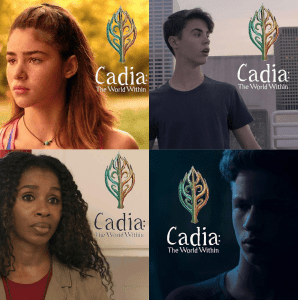 I’m going to caution that this review will likely sound more negative than I intend. I want to be supportive of local filmmakers and encourage their efforts, and any movie by itself is something of a miracle considering the countless people who work in tandem to bring together a vision. The people behind Cadia seem like genuinely sweet and thoughtful individuals who cared about the movie they were making. I wish them all well. However, it does nobody good to avoid constructive criticism where it’s warranted, because ignoring problems is unhelpful. The characters of Cadia might even agree with that sentiment. So, dear reader, let’s dive into what doesn’t quite work here and keeps Cadia from being more than the sum total of its many influences and good intentions. Much of the faults chiefly come down to the writing.
Fantasy stories are tricky because they need to be transporting but also accessible, otherwise they will feel like they’re being made up on the spot or like a private story that wasn’t intended for a wider audience (Lady in the Water, anyone?). With Cadia, the influences are easy to pick up on (Narnia, Harry Potter, Peter Pan, the Bible) but the rules and understanding of this new world feel too murky and unclear. It’s a magic world with… warring factions that are at war because… power? I never understood who just about anyone was and what their purpose served beyond allegiances. It’s too vague and the world feels too small and undeveloped, making it feel less a new world and more like a weekend excursion. What is the relationship between this family and the history of Cadia exactly as it comes to Grandpa George? Did this world come into existence with George telling the story and thus linking it to this particular family and giving them larger importance, or did it exist on its own? Why do some people have powers and what are the extents of those powers, the limitations, the costs of those powers? Is dead mom alive in this world or simply a ghost? Are there more potential ghosts? What started the factions? There are teleporting stones but are they direct portals or can they be manipulated? It feels like this should be of greater importance just from a novelty of how they can be clever (and cheap to execute). There’s one malevolent monster witnessed but otherwise it’s just a bunch of people hanging out in the woods. Too many of the too many characters are just sitting around, seemingly like they’re waiting for something to do. Cadia operates on a level that assumes you know what is happening or find this new world intriguing, but as a viewer it feels like you’re missing vital critical info to make that happen.
Fantasy world building is essential because the new world has to be teeming with interesting life and details, the stuff a viewer could immerse themselves within. Barring that, the fantasy details can be shaped and pruned to serve the thematic journey of a character, externalizing the internal. I thought Cadia was going here. It kind of does and kind of doesn’t. The central trio are dealing with their grief over their late mother, except when the movie doesn’t need them to. I thought the world of Cadia would present itself as symbol for the grief and anger of a character, luring him or her as temptation to reverse course and save dear dead mom, and therefore we would learn a lesson about healing and about facing loss. This element is present, yes, but “element” is the proper term; it’s not a theme or anything larger in plotting, it’s merely there as needed like any other sudden magic power that goes without explanation or question. Overall, the fantasy world just felt under developed in detail and scope.
 I was hoping for the thematic personalization because there’s a general lack of urgency when it comes to any looming sense of danger. For being transported to a new world, these kids take it all in amazing stride. Even after a long-clawed monster chases after them, the kids are so casual and nonplussed the next scene even as they have just barely eluded this monster. Nobody seems in a hurry to return home. We’re constantly told of warring factions but the only outward danger felt is from this one monster, and even when the kids are close their fear seems fleeting. The characters they encounter don’t present (immediate) danger, which makes the film feel rather loping and without conflict and danger. It’s lacking potent stakes. What’s stopping these kids from returning? What’s stopping anyone from anything? The world of Cadia is too plain and safe, which coupled with its undeveloped nature, only makes things less interesting. If the world doesn’t present interest, it can at least present a palpable threat, and Cadia does not.
Another miscue that hampers the stakes is that the film keeps cutting back and forth between the kids in Cadia and the adults on Earth. Why? Do we really need to see Aunt Alice having coffee with her friend while the kids are lost in a new realm? Do we really need two check-ins with Grandpa George to literally watch him put together a puzzle? Cutting away from the discovery of the magic world to watch characters do mundane things back home is detrimental to pacing and establishing a growing threat. Can it be much of a threat if the kids seem chill and we cut back to puzzle formation? Without a threat, without an interesting setting, and without a personalization toward one of the main characters, Cadia feels like a less-than-magical retreat.
The characters also suffer from both being underwritten and simply having far too many of them. The main trio of real-life triplets are left as archetypes; there’s the more introverted one (The Nerd), the more rebellious, aggressive one (The Jock), and the… girl (The Girl). Seriously, that’s her characterization. The other brothers get starting points on a scale to grow from but her characterization is simply not being the things her brothers are, and also being a girl. It’s not like the characters are running away from confronting the hard truth of death and Cadia will allow them to better process their grief, like A Monster Calls and I Kill Giants. Other characters talk more about their mother than the actual children of that mother mourning that mother. It’s difficult for me to go much further in describing the characters because once they travel to the fantasy realm their characterization gets put on hold as they encounter a slew of dull new people.
 There are several scenes where we introduce a group of new, personality-free characters. That’s the other necessity with fantasy, writing larger, expressive, and memorable characters. There’s a Lost Boys-esque group of centuries-old Cadia dwellers, but this group could have been one person, could have been twelve, because there aren’t differentiated characters within, only actors fulfilling space in the frame. This isn’t the fault of the actors. They just weren’t given material to work with. A way to establish a memorable character is through a memorable entrance or at least with significant contrasts. Cadia has trouble with this even as it presents characters on opposite sides of its vague conflict that is eventually resolved through platitudes about love that could have been reached at any time prior to the characters’ fortuitous arrivals. The narrative feels polluted with extraneous characters that exist for no other reason than to squeeze another actor onscreen. Characters should have a purpose for their inclusion and the narrative shouldn’t be more or less the same without their involvement. With Cadia, you could eliminate 80% of the characters and still tell this story. Do we need a lady in the river? Do we need two untrustworthy schemers to tempt the kids? Is the cousin needed? When the big fight arrives, with side-versus-side, your guess is as good as mine who they are, why they are important, and what they’re even doing here.
The dialogue is also heavily expository, where characters are tasked with asking questions or making statements so that the audience will know critical points of information. Characters talk in inauthentic manners, the kind of stuff that seems like they know an audience is watching. “I know you’re having a hard time dealing with mom’s death,” sort of thing. Or you’ll have characters talk so point-of-fact, like this exchange: “Who’s good and bad?” and then, “Well that depends on who ‘you’ is. Good and bad depends.” It’s pretty on-the-nose, but even ignoring that, the two sentences in response are redundant, conveying the same idea. Naturally exposition is going to be needed when establishing an alternate, living world, but when it feels like characters are going from person to person to only digest info because the plot demands it, then it feels less like a film narrative and more of a museum display guiding you to the next exhibit.
The acting is a high-point for the movie. The triplets all handle their first big screen acting job reasonably well and demonstrate future promise. My favorite was probably Carly Sells as Renee, which is even more impressive considering she has the least amount of material to work with of the three. She has a particular sense of poise that lends to better imbuing life to her character. Keegan Sells is at his best in the beginning as he’s internalizing his grief and frustrations. Tanner Sells has a nonchalance to much of the world, which can be funny. Bernson is a lovable grump that doesn’t feel too off from his father figure in TV’s Psych. He doesn’t have much to do in the film but he’s a welcome presence who feels glad to be there. Phelps (Harry Potter) and Wells (Piranha Sharks) do a fine job as the resident schemers, concealing their intentions. Brittany Picard (Alan and the Fullness of Time) had a nice ethereal charm even in brief moments as the departed mother Maggie. Why wasn’t she in more? If mom is potentially alive, or at least corporeal in Cadia, why isn’t that a narrative resource to be tapped for further drama especially as it pertains to acknowledging loss? I was most impressed by Buggs (Powers) who was the one immediately processing the emotions of grief. She sells her scenes with subtlety and grace. Another pleasant standout was Grace Kelly (Kill Mamba Kill!) as Jade, the school guidance counselor. She has a presence that grabs you, and the fact that she’s a Marine athlete makes me yearn for her to have a starring action vehicle that can show off a full range of her capabilities. She’s a breakout star waiting to happen, so somebody make it happen.
 The technical merits are pretty agreeable for being a low-budget feature, but there are a couple aspects that I think take away from the overall achievement. The cinematography is very limited in how it presents the scenes, which follows the pattern of master and then shot-reverse shot. There are very long running takes with a swooping Steadicam that centers the action. It can be impressive at points but at other points, as the scene carries on without variation, I began to wonder if this was continuing because, frankly, that was all they had to work with. The editing can also be curious with certain choices. There’s a scene where Aunt Alice runs out of the coffee shop, having learned of the children’s disappearance. Instead of the scene ending there, the moment holds for another four or five seconds on Jade’s reaction, which is fine considering later revelations. But even after that we hold on the scene and a waitress comes to ask about taking away the coffee cups, and Jade says, “Yes, you can take them.” Why was any of that necessary? The scene just carries on awkwardly after its import has literally left the building. During the family dinner, the camera circles around the table for a full minute while they gab and reach for the food. Did we need a full minute of them vamping while eating? Is this included simply because they wanted to maximize the amount of Bernson screen time they could? The costumes are pretty standard fantasy garb except when they’re not. During the big showdown, there are characters dressed in flowing robes and tunics, and then there are others just in ordinary clothes. There’s one woman in like a polka-dot skirt and it just directly draws your eye. This incongruity almost made me chuckle, and then polka-dot skirt lady is given prominence in the fight too. It’s unfair to be too critical on any technical limitations of a low-budget film as long as they don’t impede the vision and intent of the filmmakers, but these decisions occasionally took me out of the movie.
I honestly feel conflicted about writing this review because I knew it was going to have some significant criticisms. It’s genuinely impressive that a film like Cadia: The World Within got made, attracted known actors, and pulled it all off on a low budget with many artists who were eager to sink their teeth into a bigger project. I definitely think there is an audience for Cadia and that there will be plenty of people that genuinely enjoy the movie on its own terms. Afterwards, at the screening, one such fan asked about the possibility of a sequel (Gegel respectfully demurred). For me, the fantasy world felt diminished, opaque, and too often as ordinary as the “normal world.” The characters are kept at an archetypal level, or are superfluous additions, and the plot seems to lack urgency, propulsion, or needed steps to tap into larger emotions and themes or intrigue. It felt like watching a bunch of people having fun with make believe and putting on a show, and they just happened to have larger names involved in the fun. Cadia is a family fantasy that might play well for its intended audience but unfortunately is a fantasy that feels less than magical.
Nate’s Grade: C
Share this:

Aladdin (2019)
 I walked away from the new live-action Aladdin feeling less agitated than I did for the 2017 Beauty and the Beast, and I’m trying to determine whether that was because this was a better interpretation or simply because my expectations have now been calibrated to know what to expect from these remakes, namely an inferior version of an animated classic. I’ve written about it before, recently with Dumbo, but the problem with the recent spate of live-action Disney releases is that they are too new, too beloved, and thus the audience is beholden to their nostalgia and resistant to dramatic changes from those original movies. The audiences demand fidelity over creative liberties. Without much attempted change, the finished versions end up feeling like big screen cover bands, going through the motions imitating the famous predecessor but ultimately reminding you how much more you’d rather be watching that original. I felt it with the 2017 Beauty and the Beast and now I’ve felt it again with the 2019 Aladdin.
The plot should be familiar to anyone who grew up with the 1992 classic. Aladdin (Mena Massoud) is an orphaned street thief (“street rat”) who runs into Princess Jasmine (Naomi Scott), a woman yearning to have a life on her own terms rather than being sold off via marriage. The evil advisor Jafar (Marwin Kenzari, a surprise highlight) is after a special hidden treasure, a long-lost lamp said to house a wish-granting genie. Aladdin is entrusted on this mission, gets trapped, and meets Genie (Will Smith), a boisterous figure trapped by the laws of the lamp. He must grant his new master’s three wishes, with some limitations. Aladdin wishes to become a prince and impress Jasmine, but he must withhold the truth, or so he feels. What rich woman could fall in love with a poor theif with nothing to offer but his heart?

So does the new Aladdin bring anything new and improved? It does sport a more feminist-friendly message and a more active Jasmine, who wishes not to simply be a free-minded princess but her people’s sultan, taking on the responsibility of leadership. It’s a nice addition that makes her more integrated into the story and developed. Unfortunately, Jasmine is also the recipient of the newest songs and they are, in a word, dreadful. They have little life to them or are crushed to death by simplified intentions, like when Jasmine storms around in a quasi-dream sequence belting how she won’t be silenced by the sexist men of her kingdom (the song is called… “Speechless”). It’s a pretty tuneless number and it doesn’t help that the entirety of it feels screamed at the audience. The portraits of Arabs aren’t terribly improved. Thirty years later and much of the story is still built around rather stereotypical depictions of heroic and villainous Arabic figures, though the movie seems to also be influenced by neighboring Bollywood. It just feels like there were some areas the filmmakers could have updated in the ensuing 27 years, but perhaps again they were too hesitant to not anger their core audience of fans.
Guy Ritchie (Snatch, King Arthur) was a strange choice when he was tapped to direct and, having seen the finished product, he shows no feel for musicals whatsoever. It’s a surprising realization considering his background in action and crime movies, genres that likewise rely upon a heavy understanding of choreography, use of screen space, editing, and furthering plot with action. It’s apparent very early, by the time we segue into “One Jump Ahead,” that this is going to be a tepid experience devoid of a sense of energy and style. Ritchie isn’t a bland director even in his bad movies, but his Aladdin feels like a for-hire gig where he has mitigated any stylistic flourishes. Aladdin is also a mystifying 38 minutes longer than the original cartoon and yet feels far more rushed. Even the song numbers feel like we’re speeding through them. The signature showstopper “A Whole New World” feels less than revelatory as we quickly traverse the city at night, muddy colors making the magic carpet ride less than magical. The entire movie feels weirdly paced and awkwardly developed, rushing to hit familiar plot points and yet paradoxically taking longer to do so. I’ll say that it doesn’t feel like a movie that runs over two hours long.

There is a middle portion of Aladdin becomes something like a fantasy version of Hitch, a romantic comedy where Smith was playing the confident wingman to an awkward foil. This is the only part of the film that feels like it’s settling down and giving the characters time to develop in a more organic fashion. The interplay between Aladdin and the Genie is entertaining and Smith puts his smooth charm to maximum effect during this sequence. The filmmakers even add a love interest for the Genie himself played by Nasim Pedrad (Saturday Night Live), and this allows him to put his own advice to the test and stumble in the game of affections as well. It’s quite reminiscent of Hitch but it made me smile and laugh more than any other part. It also felt like the one portion of the film where it was staking out its own identity and utilizing the talents of its own cast. I wish the entire movie had been retrofitted to be an Arabian Hitch of old.
Nobody can replace Robin Williams’ iconic performance as the Genie, but Smith is a mighty fine choice for a replacement. His effervescent charm cannot be killed but it can be dulled, and too often the new Aladdin feels like it’s misusing the man’s many natural talents. Smith has a very shaky singing voice, and I was wincing in the opening minutes as he began to warble “Arabian Nights.” Oh no, I feared, what have we gotten ourselves into? Smith is no stranger to musical performances but his career is in rap, so I was expecting the Disney folk to re-imagine several of the songs with a more contemporary hip-hop angle to play to his strengths. They do not. The best performance is easily “Prince Ali” with its propulsive drive that Smith stakes full command of like the head of a drumline, slowing the tempo down and asking for participation from the sultan in order to ramp things back up. It’s a fun moment and made me wish the songs (with brief additional lyrics by the team behind The Greatest Showman) had been allowed to stray further and discover new angles that make better use of this version of this story. Also, the special effects make his blue genie look horrifying and should have been scrubbed as soon as somebody first saw him as a blue Shrek creature.
The highlight performer for me was Scott as Jasmine, an actress that first caught my attention as the Pink Power Ranger in, what else, the big-budget Rangers reboot. She demonstrates the most range and has an immediate presence; her Jasmine seems to be holding back, always wary, always assessing, and knowing more than she lets on. It feels like a more politically astute figure that can still give in to carefree moments of jubilation. Her singing is also pretty good even if she’s saddled with the worst solo songs. It’s not her fault that her onscreen lover seems to have better chemistry with Smith than her.
The new Aladdin does have some of its own virtues. The costumes are gorgeous and the sets are carefully crafted, making the world feel lavish and real and often stunning. Smith is still a charming performer and Scott feels like a great pick for a character given more agency. I enjoyed that Jafar is given a new character inferiority complex about being second best, and this is better used to fool him into his downfall. Even a less accomplished rendition of great sings reminds you that they are still great. Likewise the story is so well constructed that it’s hard to completely mitigate its delights and payoffs. The 2019 Aladdin is everything you expect from it, though possibly less, and it never truly justifies its own existence. There are moments to tantalize what a slightly different big screen revitalization could have been, like its rendition of Hitch. If you’re a super fan of Aladdin, it might be enough to get you over the rough spots. However, if that’s your starting point, I would advise staying home and just watching the superior and shorter version.
Nate’s Grade: C


 nathanzoebl
You must be logged in to post a comment.