Blog Archives
One Battle After Another (2025)
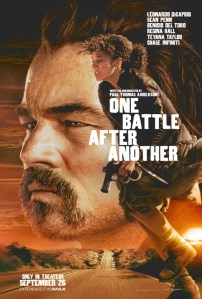
Over his thirty-year career, writer/ director Paul Thomas Anderson (PTA) has developed a mystique and reputation like few other auteurs working in cinema. He’s a visionary filmmaker whose first few movies count among my favorites of all time (Boogie Nights, Magnolia) and whose latter output can leave me shrugging and sighing (Licorice Pizza, Inherent Vice, The Master). My decade-plus-long observational bon mot has been that Anderson decided to make amends for his plot-heavy early movies with more airy, far less plotted vibes-movies. One Battle After Another is something far different from Anderson. He’s making his own version of a $150-million studio action movie, with big ideas and Leonardo DiCaprio as lead (DiCaprio has long regretted passing on Dirk Diggler, still Mark Wahlberg’s acting high-point, so thanks Leo). PTA is using the big-budget storytelling of action cinema to tell something new and personal and politically relevant behind all the gunfire and daring car chases. It’s been dubbed the movie of the moment and perhaps the one to beat for the 2025 Academy Awards. Now that I’ve finally watched all 150 minutes of Anderson’s opus, I’m not as high on it as others but do acknowledge it is a thrilling, engrossing, and occasionally frustrating work from a visionary artist.
Bob (DiCaprio) used to run with a leftist military group known as the French 75. He fell in love with Perfidia (Teyana Taylor), one of the leaders of the group, and together they had a baby, little Willa. Perfidia runs off, unable to settle down, leaving Bob to raise their daughter under a different identity. Sixteen years later, that old life comes back to Bob. It so happens Colonel Steven J. Lockjaw (Sean Penn) had an ongoing sexual tryst with Perfidia during one of their stings. There’s a chance that Willa (Chase Infiniti), now a teenager wanting to live a normal life, is actually his biological daughter. He needs to capture her under any circumstance and possibly dispose of her in order to be admitted to an exclusive white supremacist cabal within the U.S. government. Bob is forced back to action to find and protect Willa but he’s not exactly in the best shape. He’s been a burnout for so long. Can he now be a hero?
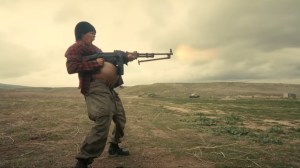
While the movie was filmed throughout 2024, and supposedly has been in the works for over twenty years by Anderson, One Battle After Another feels extremely timely and relatable in these troubled political days of ours (even the title expresses what it’s like to get up and try and process the daily barrage of horrifying news in this Trump Administration 2.0 Era). Anderson’s screenplay, loosely adapted from Thomas Pynchon’s 1990 novel Vineland, proposes a right-wing U.S. government swept up in fascist impulses that is highly militarized and declares war on immigration, rounding up primarily Hispanic men, women, and children and locking them away in camps. It’s also a law enforcement unit that pose as protestors to create a rationale for enacting physical violence and intimidation against peaceful protestors. At the core is a secret society of white supremacists running the show. Short of a concurrent documentary, it will be harder to find a movie more politically topical to the status of life in 2025, especially for the many shaking their heads and wondering how exactly we got here. Pynchon’s original novel was about the transformation of 1960s America to the 1980s, and it feels highly relevant to our 2025 times where there yet again seems to be great upheaval and conflict over those in power operating said power against the governed. It’s impossible to watch One Battle After Another and not think about the headlines. It’s not exactly the escapism many might be seeking. There’s never been a leftist paramilitary group as organized and as successful as the French 75 (they have their own affiliated convent – nuns with guns). The movie isn’t leftist wish-fulfillment to take down the current administration. It’s more a father-daughter battle to reunite in the face of state terror. It certainly has its fiery political commentary, but it’s more a family striving to stay together.
I did quite enjoy that the movie undercuts Bob as our hero, using him more as an entry point into other characters in this story, others who have a much larger impact and prove more capable. The character of Bob serves as a gateway for the other characters to really take over and shine, and it’s smart to use the familiar archetype of the old gunslinger being called back into action past his prime to atone for the sins of the past. We’ve seen this kind of character before, but Bob is kind of hapless and far out of his depth, and it makes the movie so much more entertaining. The rest of the movie exists in a more familiar action-thriller setting, albeit with some fun house mirror edges for pointed satire, but Bob is this bumbling, stumbling dope from a stoner comedy whose been copy-pasted into a different genre. He provided explosives for the French 75 but that doesn’t mean he’s got a wealth of clandestine knowledge and cunning at his disposal, especially since he’s normally inebriated. Now sixteen years later, the archetype would typically have to pull out their old skills that have calcified over a long hibernation, but Bob doesn’t have those skills. When he has an opportunity to take the big heroic shot, he misses. When he has the opportunity to make a daring escape, he falls off the side of a building. When he has to remember the coded exchanges of old, he can’t remember all of the parts. The climax doesn’t really even involve him as he’s playing catch-up for most of the extended conclusion. He’s more like the Big Lebowski waking up in, say, No Country for Old Men and desperately seeking shelter.
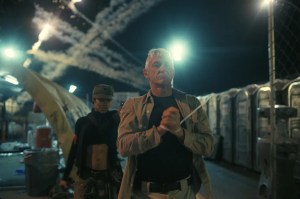
However, Anderson’s empathy for his characters of all stripes shines through, and while Bob is presented as diminished or bumbling, he’s not a complete moron without any redeeming qualities. His most resounding positive quality is his complete dedication and love for his daughter. We’ve seen this kind of story before, the overbearing parental figure trying to drill their child to be prepared for when danger inevitably arises, and the child growing resentful and distant to the parent because of that demanding and limiting home life. Then trouble strikes and the child has to rely upon those seasoned skills they practiced while that paranoid and obsessive adult was ultimately proven right for their unorthodox parenting. Bob’s love for Willa is what has shaped his life for these past sixteen years. He’s the parent who stayed, the one who settled from his old life to take on the responsibility of raising a child as a new life. He’s the one who changed her diapers, the one who shows up for parent-teacher conferences even if it’s to lecture the teachers about the curriculum while lighting up a joint. His love for his daughter is the thing that drives him forward and keeps him going. You feel that love between them, and in the climax of the movie, it becomes something poignant about the connection between these two over such extreme circumstances. There’s an ongoing question over the paternity of Willa but this never for a second changes Bob’s view of his daughter or his willingness to do anything to save her. If he was a Liam Neeson-styled master spy with a particular set of skills, the journey wouldn’t feel as rewarding. With Bob being punched down by the universe again and again but still going, it makes us root for him more.
Penn is completely enthralling as Lockjaw. His danger is never downplayed, and he’s frequently shown as a man who will use his considerable means of power to get what he wants, but Anderson also finds interesting ways to lampoon him and complicate him. I loved that the secret white supremacist society Lockjaw is so eager to join is called the Christmas Adventurers Club. It’s so stupidly anodyne that it sounds like a rejected title for a Boxcar Children novel. The members even pledge, “Merry Christmas. Hail Saint Nick.” It’s so stupid but so are many of the associative slogans of these right-wing groups (I learned the Proud Boys are named after a cut song from Disney’s animated Aladdin, “Proud of Your Boy,” and no I am not kidding). These men are indeed dangerous but they’re also not insurmountable, and I think that’s an important distinction. They’re small, angry, racist men trying to forcibly reshape the world but they are a minority of a minority clinging to power to reject progressive reforms. Lockjaw’s big problem is that he has a tremendous attraction to African-American women, the type of people he should see as inferior. The movie’s momentum is kicked into gear all because Lockjaw wants to be accepted in this special club. Penn is incredible in how he brings to life the snarling contradictions of this man, someone so aggressively challenging but who is also given to gnawing insecurities. Even the way Penn holds his body and walks is an indication of who this man is, with stick firmly planted in rear. He’s scary but he is also stupid, a fine encapsulation of our present political quandary. I’d expect him to be the current front-runner for Best Supporting Actor at the Oscars but it is still plenty early for predictions.

I do wish those engaging supporting characters had more to do besides Lockjaw. Even at 150 minutes, there isn’t much development for Willa to really grow as a character. She’s the target for the chase, and she’s the one trying to understand what is happening as it happens. It would make sense for her to have been the protagonist as she has the most to learn. For far too much of the movie she’s just a passive passenger, being shipped from one location to another. I wish we had more moments to really grapple with her perspective and her shifting opinion about her father and his past. I do enjoy that she’s the real star of the climax but at that point I wished we had seen far more of her resilience and determination and making use of what her father had been teaching her, not simply trading coded conversations. If she is the future, the possibility of turning this world around as someone declares by film’s end, then maybe let’s spend a little more time with her being active and reflective and taking more ownership of her survival. It’s as much her movie as it is Bob’s but he gets far more generous screen time over those 150 minutes.
The same can be said for Willa’s mother, Perfidia. I never found her that interesting as a character. She’s a true-born revolutionary from a family of revolutionaries, but some part of her is drawn back to Lockjaw, whether it’s simply the transactional exchange of sex for protection and assurances, or maybe something more, perhaps the power play of dominance over the very kind of bad men in power she wanted to control. She runs away from a domestic life with baby Willa because she knows she’s ill-suited for it. From there, she gets captured and turns on her former comrades to enter Witness Protection, which she runs away from. I kept waiting for her to resurface in a meaningful way in the story since we’re shown that she escapes into Mexico (Lockjaw lies that he killed her rather than admit she ran off). However, Anderson only utilizes the character as a catalyst, a means of entangling the two men into a paternal showdown. It’s disappointing that Perfidia is reduced to such a nothing of a character when there was much to explore.
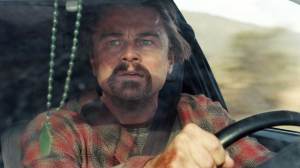
And now comes the part of the review where we talk about Anderson’s bold leap into action filmmaking. He’s not the first prestige indie darling to make a grand genre jump into action-thriller bravado. One thinks of Sam Mendes tackling Skyfall with aplomb, Paul Greengrass with the Bourne series, Patty Jenkins going from Monster to Wonder Woman, Lee Issac Chung going from Minari to Twisters, and of course the big man himself, Christopher Nolan. It can be done with the right filmmaker understanding the key tenets of action, in particular how to connect the various set pieces and conflicts with the characters and their emotional state and chain of needs and priorities. I was impressed with Anderson’s sense of scope and his ability to wring tension. There aren’t really many strict action scenes. Much ink has been spilled on the climactic chase that utilizes a series of rolling hills as the focal point of this battle, and it’s immersive and exciting and different. I’d also be lying if I said I wasn’t a little disappointed by it. This is because this sequence, up until the very very end, is all about one car tailing another. It’s taut and extremely well photographed, but ultimately it amounts to two cars following one another until one clever conclusion. It’s not really a sequence that changes and finds organic complications. It has the makings of a great action sequence but stalls. I thought back to 2014’s Snowpiercer and the sniper shooting match at two different points in the train, where each participant was waiting for the train to curve just so to better facilitate their shot. That was geography as advantage. Overall, Anderson is definitely making his version of an action movie but I don’t feel like he’s fully committed to the planning and development of those sequences. It feels more like ironic subversion when the genuine article would have been more appealing and impactful and just novel.
While One Battle After Another doesn’t rise to the capital-M masterpiece that so many of my critical brethren are falling over themselves to proclaim, it is a good movie with bold artistic swings. It thrums with energy and empathy. It’s probably PTA’s most accessible movie since There Will Be Blood or arguably Boogie Nights. I enjoyed the different characters and the brimming conflict and how much of the movie is grounded on the character relationships and their perspectives. There is a clear command of craft here like every PTA movie. He’s definitely passionate about bringing this world to life, which is eerily relevant to our own politically tumultuous times, but he still finds room for satirical mockery that doesn’t diminish the tension of the villains. It’s a universe I wanted more explanation and exploration, and the most interesting character by far is Benicio del Toro as a humble town sensei who is at the forefront of an immigrant underground railroad. I was never bored and often quite entertained but I stepped away wanting more, and maybe that’s greedy of me or an entitlement of the viewer. One Battle After Another flashes such terrific intrigue and personality that I wanted more refinement and development to better accentuate its mighty potential.
Nate’s Grade: B
Share this:

Killers of the Flower Moon (2023)
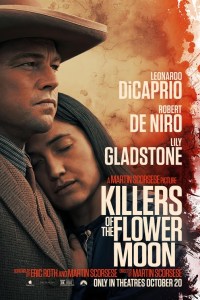
Killers of the Flower Moon has the banner of an Important Movie, telling a story many history books have overlooked for too long, an American tragedy built upon one of America’s original sins with the indigenous peoples, and tying a direct line to not only how we live now as well as how we choose to remember the past. The true story behind the murder of the Osage Nation natives in the 1920s is an urgent story that gets to the heart of greed and the human capacity for evil, and Martin Scorsese’s three-and-a-half-hour movie is somber and mournful and appropriately devastating. But I’m also wondering why I wasn’t as enchanted with it as a movie-going experience. Should I feel movie critic guilt for finding the movie merely good but not transcendentally great?
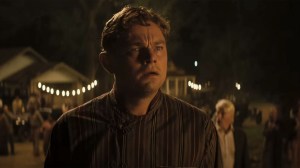
The whole of Killers of the Flower Moon is bleak, which is naturally much of the point. It’s difficult to retell the history of Native Americans in this country, or before there was a “this country,” without making use of lots of synonyms for the word “bleak.” The first hour presents the Native Americans as being legally incapable of greater agency; the murders are consistent, sloppy, and obvious, but the fact that no investigation was triggered for years in an acknowledgement that, simply put, the government just didn’t care about dead Indians. Oh, I hear you saying, but weren’t these Osage different? They had so much money from their oil rights that the local economy exploded with vultures offering common services for egregiously inflated prices to take advantage of people unaccustomed to having money and options. Even with a surge of riches, the Osage didn’t have an elevation in status. They were still looked upon as interlopers in the way of powerful white men getting that money, and there’s nothing these greedy people won’t do to get that money, especially with a system of justice of little accountability for dead minorities. One of the more galling scenes is when the town coroners are questioned over their unusual protocols, like chopping a corpse into tiny pieces so it could not be re-examined by other professionals. The whole town is in on this vile scheme, every doting neighbor can be guilty through complicity or complacency. Death after death, they all know what’s really going on; it’s plain as day, but nobody outside of the Osage feels the burning outrage, and that’s the point of the first half of the movie, to give the audience the same sense of anger and futility.
The majority of the lengthy movie follows our villains plotting their very obvious conspiracy, with Leonardo DiCaprio badly clenching his jaw in every scene as Ernest Burkhart, a WWI-veteran who comes home, becomes a cabbie, and marries Mollie (Lily Gladstone), one of the rich local Osage women. The question for the rest of the movie is whether or not his love for her is genuine or perhaps she is just a means to an end. He’s the lead of the movie and a total dope, a man who unironically proclaims repeatedly, “I love me some money!” Seems hard to read this guy, right? He’s an idiot, and again this might be the point, that this sort of small-thinking man could be the hinge on this entire conspiracy, which results in a lot of Mollie’s family members dying under increasingly mysterious circumstances to consolidate their inheritance. It’s a frustrating and spiritually exhausting experience to watch all these poor characters get murdered, again, so casually and transparently. One of them is staged as a would-be suicide except he’s shot through the back of the head and the gun wasn’t left at the scene. Eventually, the FBI does finally (finally!) arrive in town at the two-hour mark, but by then, I’ve been watching two hours of people dying without a legal stir.

This perspective is best embodied through Mollie, beautifully played by Gladstone (Certain Women, First Cow). When we first meet her, she’s a forward woman who can assert herself and what she wants. Then it all goes downhill after marrying Ernest. She loses damn near every family member she has and is forced to rely upon her husband for support, the same idiot bungling his way through arranging the deaths of her family members. She’s a personal stand-in for the Osage Nation as a whole, as we watch what they have whittled down and bled dry, watching the weight of all this suffering deteriorate their spirits and dignity. This is Mollie, our avatar for tragedy. She’s literally bedridden for a solid hour, and I dearly missed Gladstone’s presence. Since we’ve been aware of the bad deeds of the bad men from the start, much of Killers of the Flower Moon becomes a waiting game of when Mollie is hopefully going to wise up or at least suspect what is happening to her and her family. When will she see Ernest as a more nefarious force in her life, the kind of person you don’t want to solely trust with the responsibility of delivering your life-saving intravenous medicine. It adds to the overall frustrations of watching. Gladstone’s performance rises above whatever limitations her character is stricken with. First off, it’s a powerful performance of immense sorrow; having to watch her pained reaction to overhearing her sister’s skull sawed open for a disrespectful public autopsy is just sickening. The movie lives off this woman’s response to unfathomable trauma on repeat. When she is bedridden and lost in a medical fog, she still manages to communicate her wariness and suspicion through these extra layers of obfuscation.
Robert DeNiro, appearing in his eleventh Scorsese movie, is terrifying as a kindly cattle baron who fashions himself as the best friend of the Osage, preferring to refer to them by their indigenous names and warmly speaking their language. He’s also a monster, a stand-in for American big business and the blood-stained hands of capitalism without morals and oversight. The dramatic core of the movie, besides how far will this go before consequences will at long last germinate, is how can such self-styled men of God commit such heinous acts? How can people justify and equivocate over their own cruel crimes? This question is epitomized in Ernest and his direct connection to Mollie, but it’s also epitomized through DeNiro’s character, William Hale. We have two characters fulfilling the same thematic purpose, which might be the point, but it makes for a redundant narrative experience. DeNiro’s character is so much more interesting than Ernest too, with the full cognitive dissonance of being an avowed man of the people and true ally to the Osage while he’s plotting their demise. DeNiro holds to this homespun, Foghorn Leghorn accent throughout, and I can’t recall him ever raising his voice. It’s a performance where the lasting terror comes through its friendly disconnect. It’s a more impressive performance than watching DiCaprio grimace and mumble through three and a half hours.

Some chastise Killers of the Flower Moon for choosing to tell its story from the perspective of its white perpetrators. I understand from a narrative standpoint and an overall larger thematic point why this was done. Scorsese clearly thinks of his own limits of being the one to tell this story, appearing as a cameo in the coda to provide commentary on how the American morbid desire for true crime and historical atrocities will lead to yesterday’s outrages becoming today’s distilled and de-contextualized “content.” The problem is the movie already feels frustrating as is while we wait for there to finally be some accounting for the ongoing injustices, and centering the entire perspective on only the Osage would magnify this frustration with even less elucidation on the depths of what was happening. Scorsese strips away a lot of the stylistic flourishes and even the electric pacing and editing that we come to expect from his filmography. This is a slow, ponderous movie. It’s meant to provoke outrage. It’s also designed to frustrate, and I suppose I can admire that while also impatiently shifting in my seat and wondering how many of these 206 minutes could have been lost. I feel like a philistine for looking at a $200-million Scorsese movie, while this man is in the late stages of his career and clearly thinking of this reality, and asking, “Hey, can you give me maybe less movie?”
If you haven’t noticed, dear reader, I am a critic in conflict. Killers of the Flower Moon has fantastic production values, strong acting, and the importance of staging history as it was rather than how it may be remembered, especially over events long ignored by history. I even admire the choices that are deliberate that make the movie feel less like easily consumed entertainment. It’s a movie that I feel compelled to see a second time before I settle on my eventual rating (a seven-hour commitment). It’s a sad movie, a bleak movie, a challenging movie, a meaningful movie, and an Important Movie about Important Things. It’s also long, frustrating in structure and execution, and occasionally redundant with its characterization and plotting, giving the impression that things have been stretched beyond breaking. Again, maybe that’s the larger thematic point, but then again I might just be stuck in a rabbit hole of excuses to find some justification for my less-than-ecstatic reaction to Killers of the Flower Moon, a movie of strident artistic vision that can also feel like you’re eating your vegetables for three nonplussed hours.
Nate’s Grade: B
Share this:

Gangs of New York (2002) [Review Re-View]
 Originally released December 20, 2002:
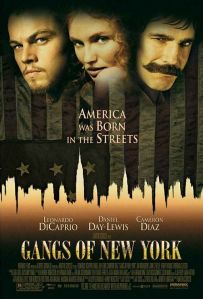
Watching Martin Scorsese’s long-in-the-making Gangs of New York is like watching a 12-round bout between two weary and staggering prize fighters. You witness the onslaught of blows, see the momentum change several times, and in the end can’t really tell which fighter is victorious. This is the experience of watching Gangs of New York, and the two fighters are called “Ambitions” and “Flaws.”
The film begins in the Five Points district of 1840s New York among a vivid gang war over turf. Amsterdam (Leonardo DiCaprio) witnesses the slaying of his father, Priest Vallon (Liam Neeson), at the blade of William “Bill the Butcher” Cutting (Daniel Day-Lewis) and his “Native” Americans gang. So what does this son of a dead preacher-man do? Well he grows up, plots revenge by making a name under the wing of the Butcher becoming like a surrogate son. But will vengeance consume him?
 Watch Leo DiCaprio assemble toughs, rake heels, and ne’er do wells to his Irish gang of rapscallions with facial hair that looks to be tweezed! Witness a one-dimensional Leo suck the life out of the film like a black hole! See Leo become the least frightening gangster since Fredo. Watch the horribly miscast Cameron Diaz play pin-the-tail-on-an-accent! Witness as she tries to play a pickpocket with a heart of gold that falls hopelessly and illogically in love with Leo! Marvel how someone looking like Diaz would exist in a mangy slum! See the brilliant Daniel Day-Lewis upstage our stupid hero and steal every scene he inhabits! Witness one of the greatest villains in the last decade of movies! Watch Day-Lewis almost single-handedly compensate for the film’s flaws with his virtuoso performance! Admire his stove-top hat and handlebar mustache!
Witness a wonderful supporting cast including John C. Reilly, Jim Broadbent and Brendan Gleeson! Wish that they had more screen time to work with! Wonder to yourself why in all good graces this film took nearly two years of delays to get out! Speculate away!
Gangs has the sharp aroma of a film heavily interfered with by its producers. The whole exercise feels like Scorsese being compromised. Gangs is a meticulous recreation of 1860s New York that often evokes an epic sense of awe. The story has more resonance when it flashes to small yet tasty historical asides, like the dueling fire houses and the Draft Riots. But all of these interesting tidbits get pushed aside for our pedantic revenge storyline with Leo front and center. You know the producers wanted a more commercial storyline, which probably explains why Diaz has anything to do with this.
 The script is credited to longtime Scorsese collaborator Jay Cocks, Steven Zallian (Academy Award winner for Schindler’’s List) and Kenneth Lonergan (Academy award nominee for You Can Count on Me). So with all these writing credentials, don’t you think one of them would realize all of the dumb things going on with the story? The ending is also very anticlimactic and ham-fisted. Just watch as we segue from a graveyard to present day New York, all thanks to the Irish rockers of U2!
I know this much, Day-Lewis needs to stop cobbling shoes and act more often. Gangs is his first visit to the big screen since 1997’’s The Boxer. He spent part of this hiatus in Italy actually making shoes. I don’’t know about everyone else but this man has too much talent to only be acting once every five years. Somebody buy his shoes and get him a script, post haste!
Scorsese’s Gangs of New York is at times sprawling with entertainment in its historic vision and at other times is infuriating, always dragging behind it a ball and chain called “stupid revenge story/love story.” I’’m sure the film will get plenty of awards and Oscar nods in prominent categories, and this seems like the Academy’’s familiar plan: ignore a brilliant artist for the majority of their career and then finally reward them late for one of their lesser films. So here’’s hoping Scorsese wins the Oscar he deserved for Raging Bull and Goodfellas.
Nate’s Grade: C+
——————————————————
WRITER REFLECTIONS 20 YEARS LATER
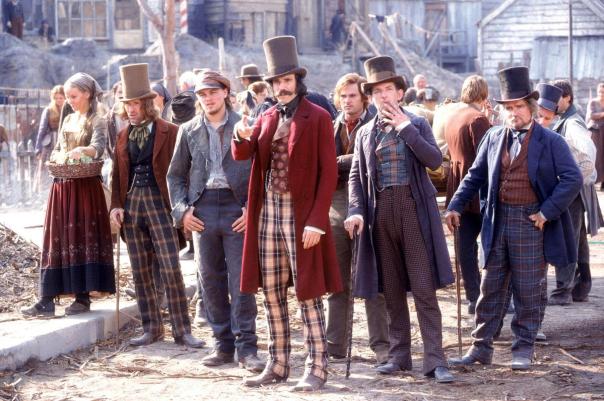
It is rare to find a movie that is almost exact in its percentage of good aspects and poor aspects. This 50/50 balance is best exemplified by 2002’s Gangs of New York. The ten-time Oscar nominated movie (and zero-time winner) was intended to be director Martin Scorsese’s epic, and twenty years later it’s still his biggest movie in size. Scorsese waited twenty years to tell this sprawling story of New York City’s early criminal underworld, so at 160 unwieldy minutes it’s no surprise how overstuffed and unfocused the finished product ended up. It’s a movie with so many engrossing historical anecdotes, amazing texture and supporting actors, and a stunning return to upper-tier acting by Daniel Day-Lewis, and yet it is hampered by Leonardo DiCaprio’s lackluster storylines, both for vengeance and for love (maybe a love of vengeance?). It’s so bizarre to watch this movie because there can be sequences where the movie just excels, and then there are sequences where I just want to sigh deeply. It’s like the movie is in conflict with itself, and you, the viewer, are ultimately the frustrated victim.
Let’s focus on the good first. Day-Lewis had essentially retired from acting and went to work in Italy as a cobbler until Scorsese appealed to him to reconsider acting. Every second this man is onscreen deserves your utmost attention. DiCaprio was the advertised star of the movie but Day-Lewis was the real star. The movie is almost a Trojan horse of sorts, luring you in with a standard revenge plot line only for you to lose all interest and root for the charismatic villain. Day-Lewis is so enthralling, so commanding as Bill the Butcher that every moment he is absent feels like an eternity. He remained in character for the duration of the shoot, spooking waitresses, and learned how to throw knives from circus performers and how to cut meat from an actual butcher. Considering the man’s famous Method-acting approach, I wonder just how many skills Day-Lewis has acquired over decades. This man could be the living embodiment of Michelle Yeoh’s character in Everything Everywhere All at Once, able to, at a moment’s notice, tap into a uniquely honed skill-set upon need. I wish that itself was a movie; Day-Lewis filming a role when terrorists invade the set, and now he has to utilize every lesson and skill of his past acting roles to defeat the baddies and save the day. He may be the most interesting man in the world. Since Gangs, Day-Lewis has only appeared in five other movies, and amazingly he has been nominated for Best Actor three times, winning twice (that averages an Oscar every 2.5 movie roles). This man has become like an acting Halley’s Comet, waiting for him to swing around again and burn brightly and then, just as suddenly, pass back into the lengthy waiting period.
I loved the historical asides in this movie. I loved the scene showing, in one unbroken take, Irish immigrants stepping off the boat into New York harbor and getting immediately signed into service, given a rifle and uniform, and lined up to board another boat to fight the Confederacy. I loved the entire character of Boss Tweed (Jim Broadbent) and how transparently corrupt he is, reminding me of Claude Rains in Casablanca. I loved him competing with the dozens of other firefighting units squabbling over turf while a house burned down to cinders. I loved him scrambling for some entertainment for the masses, and he asks Bill to gather up four nobodies that they can publicly hang, and then we cut right to these relatively innocent men saying their last words before being hanged, including one man’s young son watching. It’s an incredible sequence. The culmination of the 1863 Draft Riots is terrific and maximizes the messy nature of the movie best, communicating the many breaking points that lead to this notorious riot. The opening of this movie is wonderful and a terrific mood setter as we watch the members of the Dead Rabbits assemble for battle, with the rattling percussive score by Howard Shore (The Lord of the Rings), finally breaking outdoors and watching gangs advance like armies. I loved the narrated history of the different gangs settled in New York and their peculiarities and fixations. I loved the before and after stories of Happy Jack (John C. Reilly), who settled as a corrupt police officer, and Monk McGinn (Brendan Gleeson), a mercenary who tries to go straight through, of all things, politics. I loved that the movie reminds us that just because these people reside in the North doesn’t stop them from being racist (an archbishop is especially aghast at a black man being allowed in his church). I loved the occasional P.T. Barnum appearance. I loved the proliferation of so many tall hats amidst all the handlebar mustache-twirling villainy. I loved when the movie felt like a living documentary, soaking up the richness of the recreated history.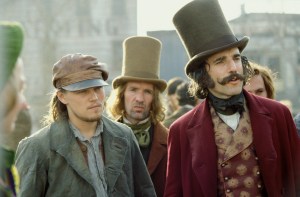
Where the movie sputters is with just about all that involves DiCaprio’s character, Amsterdam. The revenge storyline is just so boring compared to everything else going on, enough so that I think even the movie forgets about it. Amsterdam becomes Bill’s budding protege and literally saves his life at several points (if your goal is for him to die, why save the man?). He’s such a boring character because all he thinks about is vengeance, so every relationship he builds is only about how much closer to achieving his goal he can be. Amsterdam is a thoroughly dull character, and DiCaprio doesn’t come across as a credible tough guy yet, especially diminished in the large shadow from Day-Lewis’s Butcher. It wasn’t until 2006’s The Departed where I felt like he shed his boyishness fully to play a credible adult man. DiCaprio has been great with Scorsese, and this movie was the start of a decade of collaborations (four movies, two Oscar nominations), but he feels miscast here as a brooding hero given inordinate attention.
Worse is the romance with a pick-pocket prostitute played by Cameron Diaz. I pity Diaz. She’s been given the spunky love interest role in the Oscar-bait movie, which is generally underwritten and only viewed as aiding the hero’s journey of our male lead or being the offramp not taken (“Don’ get y’er refenge, Amsti’dam, ‘stead come wit me to San Fran in Calyfer’nia”). This is not a good character and she’s meant to give voice to the female underclass perspective, so it’s even more irksome when her headstrong, defiant nature gets sublimated as a rote romantic option. Diaz is also woefully miscast and my 2002 quip of her playing “pin-the-tail-on-the-accent” is accurate. I might argue that maybe dramas aren’t her strong suit, but she was great in Being John Malkovich and In Her Shoes and The Holiday, though all of those had notable comedy elements. She has the ability but this might just have been too unfamiliar for her, and so she struggles throughout with a character defined by her sexual connections to the villain and the hero.
While these characters and the performances are the biggest misses in Gangs of New York, there are other misguided or poor elements adding to that 50/50 margin. The opening sequence is great until the actual gang warfare begins and you realize that Scorsese, arguably the greatest living American director, cannot direct action to save his life. The action is choppy and lacking any of the kinetic qualities we associate with most Scorsese movies. Not even the talents of editor Thelma Schoonmaker can help save this deficit. The movie’s overall scattershot nature also makes it rather uneven and difficult to build momentum. The ending plays out like a footnote to the Draft Riots and robs the viewer of whatever catharsis could be granted from the long vengeance plot. If the whole movie has been leading up to Amsterdam’s vengeance, well robbing him of it could be meaningful, if the self-destructive nature of vengeance had been a theme. It’s not like Amsterdam has suffered at all, beyond the occasional stab wound or black eye, so him learning a lesson about the futility of vengeance would seem inappropriate and trite. I also want it known for posterity that there is an un-credited actor listed online as playing “Hot Corn Girl.”
”Twenty years later, Gangs of New York is still a frustrating and sometimes exhilarating viewing. It began a road for Scorsese that led to him finally winning his first, and still only, Oscar for directing The Departed. The sprawling nature of the movie is both a blessing and a hindrance. It allows for a wider scope and cast of characters but it also means that if you’re liking a subplot or a supporting character, you’ll have to wait your turn before they re-emerge. My old review back in 2002 perfectly sums up the majority of my feelings in 2022. There’s much to see and much to like with Gangs of New York but also too much to restrain its potential greatness.
Re-View Grade: C+
Share this:

Don’t Look Up (2021)
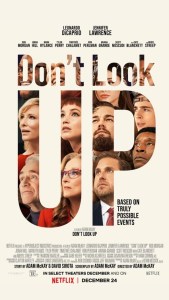 A scorched Earth satire that flirts with a literal scorched Earth, Don’t Look Up is writer/director Adam McKay’s star-studded condemnation of everything stupid and myopic in media, politics, and pop culture. Jennifer Lawrence plays a doctoral student who discovers a comet heading for direct cataclysmic impact with Earth, and she and her astronomy mentor (Leonardo DiCaprio) are trying to sound the alarm but nobody seems to be listening. Not the president (Meryl Streep) and her inept chief of staff/son (Jonah Hill). Not the greedy CEO (Mark Rylance) of a tech company. Not the media where morning TV co-hosts (Cate Blanchett, Tyler Perry) are more compelled by music star breakups than pressing science. It makes a person want to stand up and scream about priorities, and that’s McKay’s point, one that will be bludgeoned again and again. This movie is animated with seething rage about the state of the world and the cowardice about facing obvious problems head-on. It’s fit as a climate change allegory but COVID-19 or any scientific crisis could be applied as well. It’s about choosing ignorance and greed, about deferring to our worst instincts, and those in power who profit from inaction. I laughed at several points, some of it good cackling, and the movie is dark to its bitter end. This is the bleakest movie of McKay’s foray into his more sober, activist movie-making (The Big Short, Vice). It’s less Seeking a Friend for the End of the World, exploring the foibles of humans reconciling their last moments of existence, and more Idiocracy, where there is a lone voice of reason and the rest of the population are aggravating morons that refuse to accept reality even if it literally means just looking up with their own eyes. In some ways, the dark laughter the movie inspires is cathartic after years of COVID denials and mask tirades and horse medicine. The satire is bracingly blunt but also one joke on repeat. If you’re the right audience, that one joke will be sufficient. I don’t think the movie quite achieves the poignancy it’s aiming for by the end of its 138 minutes, but the anger is veritably felt. Don’t Look Up wants us to save the world before it’s too late, though the people that need to see the movie the most will be the ones fastest to dismiss it. Still, congrats to McKay for making a movie this depressing and relevant for the holidays.
Nate’s Grade: B+
Share this:

Once Upon a Time… in Hollywood (2019)

Quentin Tarantino has been playing in the realm of genre filmmaking for much of the last twenty years. He’s made highly artful, Oscar-winning variations on B-movies and grindhouse exploitation pictures. There are some film fans that wished he would return to the time of the 90s where he was telling more personal, grounded stories. His ninth movie, Once Upon a Time… in Hollywood, is Tarantino returning to the landscape of his youth, the Hollywood back lots and television serials that gave birth to his budding imagination. Tarantino has said this is his most personal film and it’s easy to see as a love letter to his influences. It’s going to be a divisive movie with likely as many moviegoers finding it boring as others find it spellbinding.
In February 1969, actor Rick Dalton (Leonardo DiCaprio) is struggling to recapture his past glory as a popular TV star from a decade prior. Cliff Booth (Brad Pitt) is Rick’s longtime stuntman, personal driver, and possibly only real friend. Rick’s next-door neighbor happens to be Sharon Tate (Margot Robbie), a rising star and the wife to famed director Roman Polanski. All three are on a collision course with the Manson family.
 The thing you must know before embarking into a theater to see all of the 160 minutes of Tarantino’s latest opus is that it’s the least plot-driven of all his movies, and it’s also in the least hurry. This feels like a hang-out movie through Tarantino’s memories of an older Hollywood that he grew up relishing. It’s very much a loving homage to the people who filled his head with dreams, with specific affection given to the life of an actor. Tarantino is exploring three different points of an actor’s journey through fame; Sharon Tate is the in-bloom star highly in demand, Rick Dalton is the one who has tasted fame but is hanging on as tightly as he can to his past image and wondering if he’s hit has-been status, and then there’s Cliff Booth who was a never-was, a replaceable man happy to be behind the scenes and who has met his lot in life with a Zen-like acceptance. Each character is at a different stage of the rise-and-fall trajectory of Hollywood fame and yet they remain there. This isn’t a movie where Rick starts in the dumps and turns his life around, or even where it goes from worse to worse. Each character kind of remains in a stasis, which will likely drive many people mad. It will feel like nothing of import is happening and that Once Upon a Time… in Hollywood is more a collection of scenes than a whole.
What elevated the film was how much I enjoyed hanging out with these characters. Tarantino is such a strong storyteller that even when he’s just noodling around there are pleasures to be had. Tarantino movies have always favored a vignette approach, unwieldy scenes that serve as little mini movies with their own beginnings, middles, and often violently climactic ends. An excellent example of this is 2009’s Inglourious Basterds where the moments are brilliantly staged and developed while also serving to push the larger narrative forward. That’s missing with Hollywood, the sense of momentum with the characters. We’re spending time and getting to know them, watching them through various tasks and adventures over the course of two days on sets, at home, and on a former film set-turned-ranch for a strange commune. If you’re not enjoying the characters, there won’t be as much for you as a viewer, and I accept that. None of the central trio will crack Tarantino’s list for top characters, but each provides a different viewpoint in a different facet of the industry, though Sharon Tate is underutilized (more on that below). It’s a bit of glorified navel-gazing for Tarantino’s ode to Hollywood nostalgia. There are several inserts that simply exist to serve as silly inclusions that seem to be scratching a personal itch for the director, less the story. I was smiling at most and enjoyed the time because it felt like Tarantino’s affection translated from the screen. I enjoyed hanging out with these people as they explored the Hollywood of yesteryear.
 DiCaprio hasn’t been in a movie since winning an Oscar for 2015’s The Revenant and he has been missed. His character is in a very vulnerable place as he’s slipping from the radars of producers and casting agents, filling a string of TV guest appearances as heavies to be bested by the new hero. He’s self-loathing, insecure, boastful, and struggling to reconcile what he may have permanently lost. Has he missed his moment? Is his time in the spotlight eclipsed? There’s a new breed of actors emerging, typified by a little girl who chooses to stay in character in between filming. Everything is about status, gaining it or losing it, and Rick is desperate. There’s a terrific stretch where he’s playing another heavy on another TV Western and you get the highs and lows, from him struggling to remember his lines and being ashamed by the embarrassment of his shaky professionalism, to showing off the talent he still has, if only given the right opportunity. DiCaprio is highly entertaining as he sputters and soars.
The real star of the film is Pitt (The Big Short) playing a man who seems at supernatural ease no matter the circumstance. He’s got that unforced swagger of a man content with his life. He enjoys driving Rick around and providing support to his longtime friend and collaborator. He has a shady past where he may or may not have killed his wife on purpose, but regardless apparently he “got away with it.” This sinister back-story doesn’t seem to jibe with the persona we see onscreen, and maybe that’s the point, or maybe it’s merely a means to rouse suspicion whether he may become persuaded by the Manson family he visits later in the movie dropping off a hitchhiker he’s encountered all day long. The role of Cliff seems to coast on movie star cool. There is supreme enjoyment just watching Pitt be. Watch him feed his dog to a trained routine, watch him fix a broken TV antenna and show off his ageless abs, and watch him navigate trepidatious new territory even as others are trying to intimidate him. It’s Pitt’s movie as far as I’m concerned. He was the only character I felt nervous about when minimal danger presented itself. There’s something to be said that the best character is the unsung one meant to take the falls for others, the kind of back-breaking work that often goes unnoticed and unheralded to keep the movie illusion alive.
There aren’t that many surprises with Once Upon a Time… in Hollywood as it moseys at its own loping pace. It reminded me of a Robert Altman movie or even a Richard Linklater film. It’s definitely different from Tarantino’s more genre-fed excursions of the twenty-first century. It’s a softer movie without the undercurrent of malice and looming violence. There is the Manson family and Tarantino knows our knowledge of the Manson family so we’re waiting for their return and that fateful night in August, 1969 like a ticking clock. It wouldn’t be a Tarantino movie without an explosion of bloody violence as its climax, and he delivers again, but I was shocked how uproariously funny I found the ending. I laughed throughout but as the movie reached its conclusion I was doubled over with laughter and clapping along. There’s a flashback where Cliff and a young Bruce Lee challenge each other to a fight, and it’s so richly entertaining. The phony film clips are also a consistent hoot, especially when Rick goes to Italy. It’s a funnier movie than advertised and, despite its ending, a far less violent movie than his reputation.
 As Tarantino’s memory collection, the level of loving homage can start to eat the narrative, and this is most noticeable with the handling of Sharon Tate. The initial worries that Tarantino would exploit the horrendous Manson murders for his own neo-pop pulp was unfounded. Tate is portrayed with empathy and compassion, and as played by Robbie she nearly glides through the film as if she were an angel gracing the rest of us unfortunate specimens. She has a great moment where she enters a movie theater playing a comedy she is a supporting player in. The camera focuses on Robbie’s (I,Tonya) face as an array of micro expressions flash as she takes in the approving laughter of the crowd. It’s a heartwarming moment. But all of that doesn’t make Tate a character. She’s more a symbol of promise, a young starlet with the world at her fingertips, the beginning phase of fame. Even the Manson clan doesn’t play much significance until the final act. Charles Manson is only witnessed in one fleeting scene. I thought Tarantino was including Tate in order to right a historical wrong and empower a victim into a champion, and that doesn’t quite happen. I won’t say further than that though her narrative significance is anticlimactic. You could have easily cut Sharon Tate completely out of this movie and not affected it much at all. In fact, given the 160-minute running time, that might have been a good idea. The movie never really comes to much of something, whether it’s a statement, whether it’s a definitive end, it just feels like we’ve run out of stories rather than crafted an ending that was fated to arrive given the preceding events.
The Tarantino foot fetish joke has long been an obvious and hacky criticism that I find too many people reach for to seem edgy or clever, so I haven’t mentioned it in other reviews. He does feature feet in his films but they’ve had purpose before, from arguing over the exact implications of a foot rub in Pulp Fiction to Uma Thurman commanding her big toe to wiggle and break years of entropy in Kill Bill. However, with Hollywood, it feels like Tarantino is now trolling his detractors. There are three separate sequences featuring women’s feet, two of which just casually place them right in the camera lens. At this point in his career, I know he knows this lame critique, and I feel like this is his response. It’s facetious feet displays.
 When it comes to Once Upon a Time… in Hollywood, if you’re not digging the vibe, man, then there’s less to latch onto as an audience member. It’s a definite hang-out movie reminiscent of Altman or Linklater where we watch characters go about their lives, providing peaks into a different world. It’s a movie about meandering but I always found it interesting or had faith that was rewarded by Tarantino. It doesn’t just feel like empty nostalgia masquerading as a movie. It’s funnier and more appealing than I thought it would be, and even though it’s 160 minutes it didn’t feel long. The acting by DiCaprio and Pitt is great, as is the general large ensemble featuring lots of familiar faces from Tarantino’s catalogue. I do think the inclusion of Sharon Tate serves more of a symbolic purpose than a narrative purpose and wish the movie had given her more to do or even illuminated her more as a character. However, the buddy film we get between DiCaprio and Pitt is plenty entertaining. It might not be as narratively ambitious or intricate or even as satisfying as Tarantino’s other works, but Once Upon a Time… in Hollywood is a fable for a Hollywood that may have only existed in Tarantino’s mind, but he’s recreated it with uncompromising affection.
Nate’s Grade: B+
Share this:

The Revenant (2015)
 Which do you value more, verisimilitude or narrative? If you’re looking for an intense, immersive filmgoing experience that’s just as harrowing as it is beautiful, then perhaps The Revenant is your movie. If you are looking for characters and a story to engage with, then maybe it won’t be. Leonardo DiCaprio plays the real-life frontiersman Hugh Glass who was mauled by a bear and left for dead by his companions. He miraculously survives and tracks down those who betrayed him for some frontier justice Under the unyielding vision of director Alejandro Gonzalez Innarito (Birdman), the movie opens up its scary world with an exhilarating sense of detail. Inarritu favors lots of natural light and long, gorgeous tracking shots, which creates a spellbinding sense of realism. The attacks and escapes and moment-to-moment survival communicate the remarkable dangers of this natural world. The cinematography by Emmanuel Lubezki is flawless, using light and camera placement to stunning effect. However, The Revenant (meaning a person who has come back from the dead) is a series of beautifully rendered moments delicately stretched over a ponderous running time of 157 minutes. There’s just not enough plot events to fill that running time, so to compensate Inarritu gives way to some Terrence Malick (Tree of Life) impulses that try for philosophical poetry but miss. DiCaprio is getting plenty of plaudits for his demanding role, and he’s quite good and visceral (and no, he does not get raped by a bear). I was more impressed with Tom Hardy, who plays the target of Glass’ fury. Hardy imbues depth into his antagonist, and while you won’t exactly be rooting for him to get away you can see the guy as more pragmatist than mustache-twirling rogue. He even has an interesting back-story surviving being scalped that informs his decision-making. Much of the film is watching Glass endure physical hardship after physical hardship, which may grow wearying for many audience members, especially those most squeamish. When it’s firing, The Revenant is a magnificent and stunningly realized survival thriller with sprinkles of engaging human drama. The problem is that there isn’t enough to go around for its running time.
Nate’s Grade: B
Share this:

The Wolf of Wall Street (2013)
 Martin Scorsese. The greatest living filmmaker on the planet. Enough said. When his latest, The Wolf of Wall Street, was pushed back due to an editing crunch, the rumor mill started as it normally does. Are there problems? Is it any good? Will it be forgotten this late into the awards season? While I can’t speak for the Academy, but for me The Wolf of Wall Street just about blows every competing movie out of the water this season. It’s brash, exhilarating, uproarious, mesmerizing, and just about every other adjective you can fetch from a dictionary. This is first-class filmmaking from a master, and consider Wolf of Wall Street the white-collar companion piece to Scorsese’s gangster masterpiece, Goodfellas. It’s that good, folks.
Based on his memoirs, Jordan Belfort (Leonardo DiCaprio) rises on Wall Street from a rookie stock trader to the king of his own empire. From the late 80s to the 90s, Jordan assembles a cutthroat team that knowingly sells lousy stocks to gullible investors and stuffing their pockets with hefty commissions. “Better there money was with me. I knew how to spend it better,” he admits. His closest friend and business partner, Donnie Azoff (Jonah Hill), literally quits his job to work for Jordan after spying one of his pay stubs. The guys start their own firm, specializing in high-pressure sales and on penny stock commissions. From there, they expand and expand until they’re making their own noise on Wall Street. The trading floor more closely resembles a frathouse party, complete with chimp, strippers, marching bands in their underwear, midget tossing, and other objectionable behavior. Jordan easily succumbs to the sex and drugs of the high-finance world of money, leaving his plain wife for Naomi (Margot Robbie), a gorgeous underwear model. He’s got a giant estate, a huge yacht, his own helicopter, and more money than he can spend. He’s also got the attention of the FBI and Agent Patrick Denham (Kyle Chandler). With the feds circling in, Jordan has to take extra steps to keep the good times rolling.
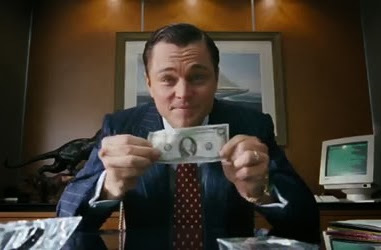 With a running time exactly one minute shy of three hours, it’s easy to call The Wolf of Wall Street self-indulgent and excessive, except that’s exactly the point. The movie is an orgy of unchecked male ego, a perverse bacchanal of Earthly pleasures that Caligula might blushingly admire. They are literally two orgies depicted in the movie and plenty of thrust-heavy sexual congress (I counted eight walkouts in my theater, most of them the little old lady variety). Here is a tilt-o-wheel of madness. These people were living like there was no tomorrow, had more money than they knew what to possibly do with, and would figuratively dance while Rome burns (in this instance, the stability of the U.S. economy). What’s important is to communicate that these individuals were having the time of their lives. It wasn’t just the hedonistic pleasures and the mountains of drugs; it was the power, the uninhibited embrace of a life available via poorly regulated capitalism. Many of those brokers in Jordan’s company were people from ordinary backgrounds. Their self-made success (that wasn’t so much earned as swindled) is a point of pride that fills them with purpose. They are seizing their full potential. There is no doubt in my mind that every broker in this movie would do it all again in a heartbeat. There is no remorse on display anywhere. The only remorse is having the ride unceremoniously end. “Was it obscene? Yeah it was obscene. In the normal world,” Jordan narrates. “And who wants to live there?”
I won’t say that there aren’t scenes and moments that could have been trimmed, but I was enjoying myself way too much to care about the bloat. This is the fastest three hours you’ll ever experience in your life. There’s some fat, yes, but man does this picture just move along like a freight train. The screenplay by Terence Winter (creator of HBO’s Boardwalk Empire) is impeccably drawn. The movie just courses with energy and watching it is often an exhilarating rush, communicating the highs the characters are undergoing. The supporting players are used to great effect to punctuate the comedy moment to moment. I loved Rob Reiner’s exasperated and profane performance as Jordan’s father. Naturally the bad behavior is entertaining in how absurd and over-the-top it can get, but one key sequence ranks up there with the finest sequences Scorsese has ever put to film. It’s the “Lemon” sequence, named after a legendarily potent batch of Quaaludes. It is a sequence of pure movie bliss, brilliantly edited and staged, as Jordan is placed in a precarious position when the drugs kick in, and his comic floundering is riotous. Winter and Scorsese have taken what, in other hands, could have been a modern American tragedy and decided to portray it as a darkly comic fantasia. I laughed long and hard throughout the movie. There are numerous scenes I can think back on and start laughing again. The ridiculous nature of moments, like discussing the logistics of tossing midgets at a dart board (“This is their gift”) is to be expected, but it’s the overall degenerate lifestyle these clowns chase after with impunity that kept me laughing.
I’ve read cantankerous critiques of the film, chastising Scorsese for celebrating the lavish lifestyle and excessive hedonism of his characters. I could not disagree with this appraisal more. The error is assuming that witnessing Jordan behaving badly is akin to celebrating it, as if adopting the perspective of our lead is the same as excusing his actions. Scorsese makes it clear early, and often, that Jordan Belfort is not a good person. Hopefully you don’t need him hitting his wife for this point to stick. This guy is fleecing people out of their life savings, living high off the fat of the land, and openly admitting to the camera how deeply illegal his activities are. But you’re under his spell, much like his brokers that worship him with unflinching zeal. Jordan, especially as portrayed by DiCaprio, is a volcano of energy and single-minded determination. He whips his troops up like a religious revival, manipulating you with every tactic in his employ. Early on, he’s defrauding ordinary middle-class and low-income clients, but because we’re all addicted to the adrenaline rush of the sale, of the con, we push this troubling reality from our minds. When he moves onto wealthier clients, we adopt a similar attitude of Teresa, Jordan’s first wife, mainly that these people can afford the losses and therefore get what they deserve from a silver-tongued shyster. It’s the audience that proves to have a selective memory because we’re drawn to Jordan’s charisma, expertise, and talent, so we ignore the pesky details of who gets stuck with the bill. Don’t pin that on Scorsese. He makes it abundantly clear that Jordan is a bad man, and the depths of his greed is but the tip of the iceberg when it comes to Wall Street. Jordan’s firm was a tiny player. Think of what horror stories Goldman Sachs or Lehman Brothers would offer if ever exposed.
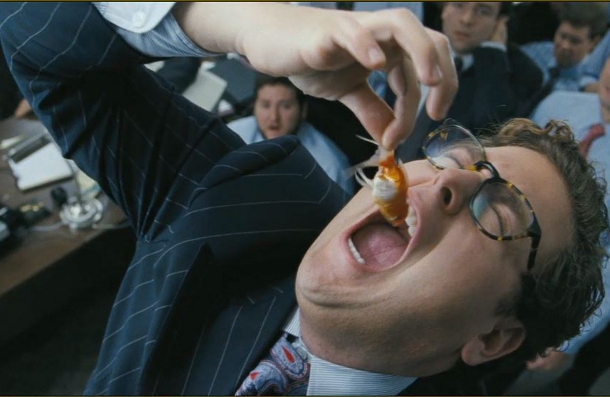 This is my favorite Scorsese film since Goodfellas, and they have plenty of similarities. It makes sense because these men of finance take their cues from movie gangsters, styling themselves as tough guys. At one point, brokers hold a guy over a building to intimidate him. There’s also certainly as much cocaine as there may have been in Scarface. But like that classic of the gangster cinema, Scorsese propels us into the hidden world of the financial institution run amok, allowing us a backstage pass to the people profiting from wrecking the economy. It’s a fascinating perspective that confirms some of our worst fears about stockbrokers. It’s a misogynistic boys club and the few women that do participate have to play by their hyper masculine, juvenile rules. These are people that find any number of ways to skirt the law, rip off their clients, and live in luxury until they can find another sucker. It’s a system built for the entertainment of the few on the backs of the many, and it’s just as relevant today as it was in the 90s. With Jordan’s inside knowledge, we’re educated on the many corrupt ways of Wall Street.
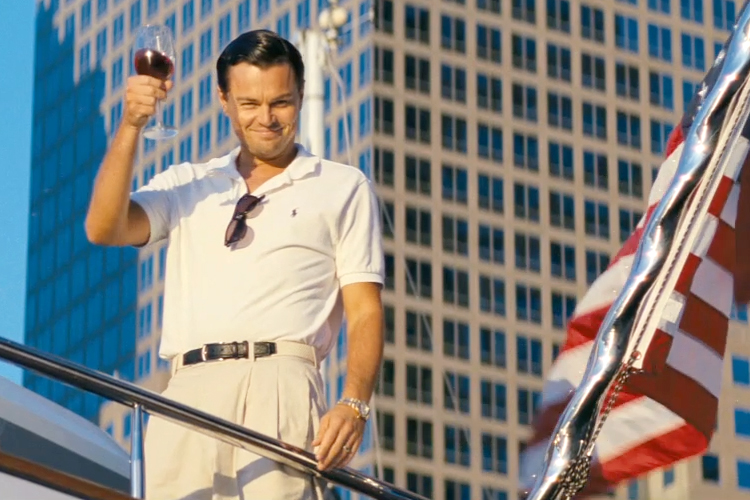
Marking the fifth collaboration with Scorsese, this may be the finest DiCaprio (The Great Gatsby) performance yet. The man sheds his vanity, easily fitting into the shark that is Jordan Belfort. He’s ruthless in one moment and completely inept in another, at the whim of his vices. DiCaprio taps into Jordan’s leadership qualities with the dynamite sales speeches, but he also shows what an insecure man he is at heart. He’s got a taste for the good life and is reinventing himself, including trading up in wives to attain that proverbial American Dream. He’s living empty pleasure to empty pleasure and he doesn’t care. DiCaprio acts as our ringmaster through his own circus, and you’ll be delighted and horrified by his actions (and also his peculiar, bird-like dance moves). There’s not a bad performance in the whole cast, and this is one huge cast. Hill (This is the End) is a becoming more and more credible as a dramatic actor, though he excels at the blustery outrageousness as Jordan’s number two. He’s a treat. Robbie (About Time) nails her New Yawk accent but more importantly nails the portrayal of a trophy wife who recognizes and eventually resents her lifestyle. And oh does she just exude sexual heat.
I want to focus on the very end of the film, so there will be some mild spoilers in this paragraph but nothing I feel that would ruin the viewing experience. You have been warned, spoiler phobes. As expected, Jordan eventually winds up in jail for his felonious misdeeds. Ordinarily this would be the end of our traditional law-and-order morality tales; the bad guys are locked away to pay for their crimes. Jordan tells us how nervous he was on his first day of prison, that is, until he remembered one very important fact: he’s rich. White-collar prison is not the same as other penitentiaries, and we see Jordan loftily playing tennis. His sentence is only three years as well, which seems like an insult given the thousands of lives he may have instrumentally ruined. But that’s the ultimate condemnation in the end: the system is rigged for people like Jordan, people with money. In the end, he wins. He goes to prison, his family life is torn asunder, and his personal relationships are strained, but the guy wins. He continues his speaking engagements motivating everyday saps how, with his cherished expertise, they too can rake in wealth. The final shot of the movie tells me everything I need to know. It’s a slight pan out to the crowd in attendance of Jordan’s speaking session. We see the collection of faces, each person hanging onto Jordan’s every word, each filled with idolatry. They want to be him. Despite everything, the bad behavior, the crimes, the waste, they all want to be him, and that’s why people like Jordan will always succeed, will always prevail, will always have the last laugh. There will always be a healthy supply of suckers that want to believe whatever nonsense he’s peddling. That’s the point. He won.
 Recently I watched the very good crime caper American Hustle and noted that its director looked to be fashioning a loving Martin Scorsese homage. Well, after watching The Wolf of Wall Street twice (not back to back, mind you; I’m not nuts) I can say that there is no Scorsese like the source. This is vintage Scorsese. This is brilliant filmmaking, a bold movie that practically sings, it flies by with exhilarating force and acumen, daring you to keep watching. The fact that 71-year-old Scorsese could make a movie this highly energetic, this debased, this brash, this borderline indecent, and this awesomely entertaining is encouraging. It’s even more hilarious to me that older Academy members at a recent screening of the film accosted Scorsese, essentially being termed a “debauched scoundrel.” That’s got to count as some badge of honor. Yes, at three hours the movie can get long but it’s never dull or taxing. The propulsive narrative, the hilarious humor, the shrewd characterization, the wanton excess, the filmmaking bravado that hums, it all coalesces into a disturbing and disturbingly enjoyable condemnation of greed and our inherent celebration of this lifestyle. There is not one aspect of this movie that falls flat. The Wolf of Wall Street is an invigorating piece of cinema. The choice of music, the swinging cinematography, the wide ensemble of actors, the feverish editing, it all comes beautifully together to form a whole that surpasses everything else in cinema this year. Dig in.
Nate’s Grade: A
Share this:

The Great Gatsby (2013)
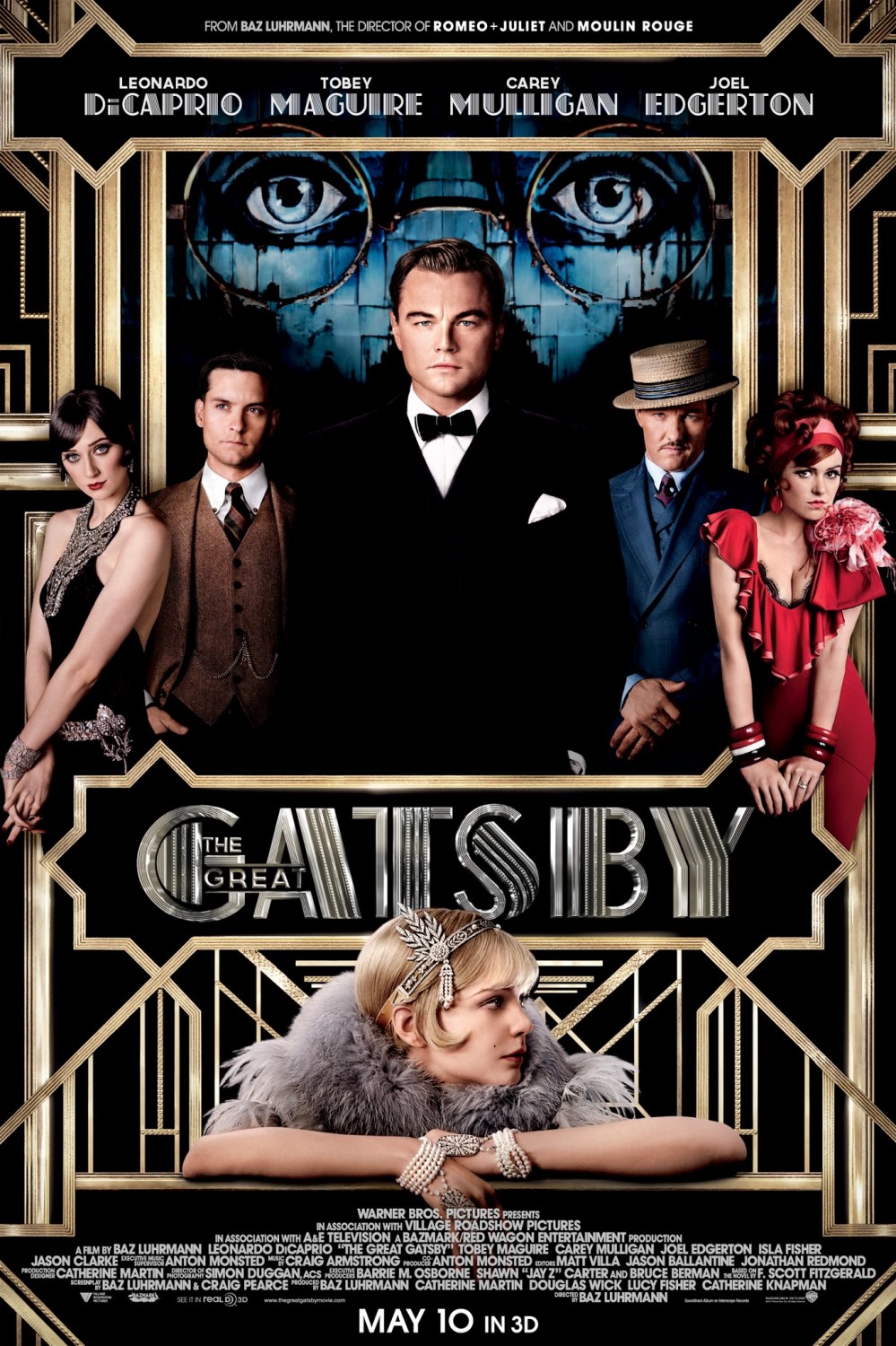 It seemed like some sort of educational mandate that every child in the United States was forced to read F. Scott Fitzgerald’s novel, The Great Gatsby, when they were in high school. In my highly unscientific number crunching, it appears that those who actually enjoyed the book are in the minority. I recall loathing it, but then again, when you’re fifteen, you sort of loath everything. Enter Australian director Baz Luhrmann, the showman who exploded the screen in razzle-dazzle run amok with Romeo and Juliet and Moulin Rouge!. Not exactly the kind of filmmaker one would fathom helming an adaptation of a classic of American literature, but the man’s style of excess seems like a suitable match for Fitzgerald’s tale of high-class overindulgence.
In 1922, young Nick Carraway (Tobey Maguire) moves to the hustle and bustle of New York City, living close to his cousin Daisy (Carey Mulligan) and her rich husband Tom Buchanan (Joel Edgerton). He’s also the neighbor to the mysterious and newly rich Jay Gatsby (Leonardo DiCaprio), a reclusive man who opens his mansion up to prolific bacchanals. Rumors persist in who he is and how he accrued his enormous fortune. He’s an old flame of Daisy’s and is secretly hoping she’ll attend one of his raucous soirees. He enlists Nick to help arrange a reunion for them, and soon enough Gatsby is already planning their happy future together again. Trouble is, Tom isn’t willing to lose his wife without a fight.
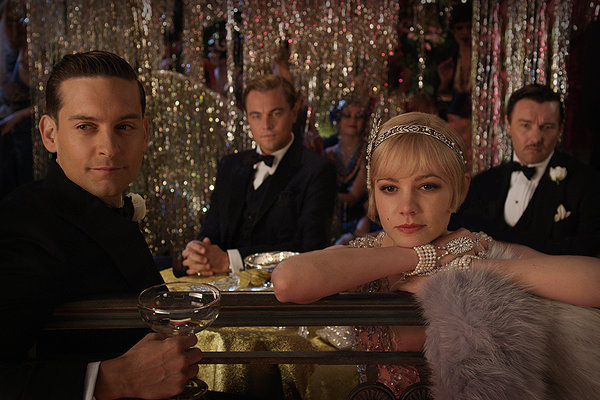 Luhrmann’s helming of The Great Gatsby gave me exactly what I desired and expected. The movie is convulsing with energy and the first hour just moves; be it the camerawork or people onscreen, for long stretches there always seems to be some degree of onscreen movement. Luhrmann’s signature theatrical visual atmosphere is vibrant, joyous, and a perfect translator of the lavish lifestyles of the noveau rich in the Roaring ‘20s. The man brings to startling life the sensations of being young, privileged, and carefree, and the use of anachronistic music, while not nearly as textured and thematically relevant as Moulin Rouge!, adds to the fun. I quite enjoyed a low-key, jazzy rendition of Beyonce’s “Crazy in Love.” Luhrmann’s style treks in excess but it’s a much more pleasant, dreamy, and altogether beguiling form of artistic indulgence than, say, Michael Bay or Tony Scott and their respective macho visual fetishes. Luhrmann’s campy sense of style doesn’t come across as overly suffocating or distracting, at least to my eyes, and instead the man injects his movies with tremendous energy, immersing you into a new world of old and modern. This is what Luhrmann was meant for. While other canonical classics of American literature may not survive a glitzy Lurhmann treatment, it’s a good match for the extravagant excess of Fitzgerald’s setting. Lurhmann’s visuals are glorious, and the 1920s era is brought to glamorous life. You get the sense it was one giant party without any lasting consequences (if you were rich enough).
The second half of the movie slows down considerably after the amped-up introduction. We’re caught up in the characters at this point, as we should be, and the Gatsby/Daisy reunion dominates the plot. I suppose there are only so many Busby Berkeley numbers and confetti explosions one can encounter before the plot has to set in. Lurhmann and company stick pretty faithfully to Fitzgerald’s plot (rest easy, lazy high school students of today and tomorrow). Interestingly, they are far more explicit about Gatsby’s securities fraud, knowingly making a fortune off junk bonds, all in the name to impress Daisy. There’s a genuine sense of respect for the source material even with Luhrmann’s visual flourishes; at several points, Fitzgerald’s text floats onscreen. The problem is that Luhrmann’s Gatsby is almost entirely focused on the romantic coupling of its title figure and Daisy. Gone is the class criticism, the indictment of the follies of the rich, the examination of the dark side of the American Dream, and the subtext. You’ll get plenty of shots of that famous green light, 20th century literature’s most famous and unsophisticated symbol (pay attention kids: green means go), but there’s little time for complexity. It’s not a screen romance worth this much attention, which is kind of the point, but when the movie clocks at over 2 hours and 20 minutes, drawing out a lackluster romance can become rather grating.
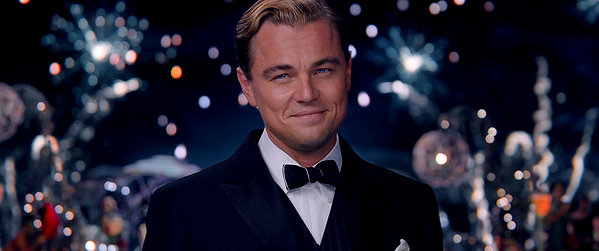 If I were top cite one major fault in Luhrmann’s incarnation, it’s that it adopts Nick’s fawning perspective and treats Gatsby as this tragic romantic figure. I acknowledge with every adaption there is a degree of interpretation, and romantic hero is certainly one facet of Gatsby, certainly how he sees himself, but by the end of Fitzgerald’s novel, Gatsby is really more a naïve man who really only sees Daisy as trophy, a prize for his reinvention and jumping up to the storied moneyed class. Daisy herself is certainly weak-willed but her emptiness (she says there’s nothing better than for a girl to be a “beautiful, young fool”) is part of the appeal to Gatsby because he can remake her however he wants. He’s not interested insomuch as her as a person. I don’t think that the Gatsby/Daisy escapades fall into the ranks of Great Tragic Couples of Literature, but that’s how Luhrmann interprets the novel, transforming Gatsby into a revered, honorable, and heartbreaking romantic we’re meant to shed a tear for. I suppose since we’re reliving the story through Nick’s perspective that events could be colored differently. Beyond just a simplistic analysis, it also misses the greater and more futile tragedy of a man trying to escape his past by obsessively recreating it.
The acting is fairly good all around, though the standout is certainly not whom you’d expect. DiCaprio (Django Unchained) is a good fit for the handsome social-climber, but the movie only asks him to play a limited range of emotions, rarely breaking free to show glimpses of the darker, less polished side of Gatsby’s carefully crafted image. He doesn’t exactly exude the charisma you would think necessary for the man, plus his use of “old sport” is so overly abundant it approaches farce. Maguire (Brothers) is a bit too earnest even for his role. It becomes readily clear within minutes that Maguire does not possess a voice for narration. The man is also a bit too old, at 37, to play the naïve, stars-in-his-eyes Nick Carraway. Mulligan (Shame) is given the least to work with since Daisy is meant to be rather opaque but she brings an extra amount of sympathy for a character trapped by her indecision and the demands of men. Easily the best actor in the bunch is Edgerton (Warrior). It would be easy for the guy to simply be the brutish heavy, the angry husband and easy to hate antagonist. Edgerton showcases a surprising depth, and you may find yourself feeling some smidge of sympathy for the lout.
Much like Luhrmann’s Moulin Rouge!, it’s an easy prediction that his Great Gatsby will be equally divisive. There will probably be as many critics decrying Luhrmann’s blitzkrieg of confetti and style as a campy cannibalization of an American classic as there will be celebrating the mad energy and obsequious reverence exhibited in a handsomely mounted, big-budget adaptation. The movie is even being presented in 3D, and did you ever think you’d hear the phrase “The Great Gatsby in 3D” in your life? I enjoyed Luhrmann’s gaudiness and indulgences, painting the screen with his vivid imagination. The impressive production design, costumes, visual effects, and overall visual aesthetic of the movie are a feast for the eyes. Now there are plenty of indulgences and excesses in the movie, particularly the emphasis on grand romance, but Gatsby entertains with few lags. Having read the book once and disliked it heartily in my youth, I can readily say that here is an example of where the movie is better than the book. Now if someone could go about making an improved version of The Lord of the Flies and A Tale of Two Cities, whatever you have to do, my teenage self will thank you kindly.
Nate’s Grade: B
Share this:

Django Unchained (2012)
 It’s an understatement that no one makes films like Quentin Tarantino, though after Pulp Fiction it seemed like everyone was trying. The famous writer/director is an audacious filmic DJ, taking samples from all genres and mixing and matching them into a new and elevated form of art; he takes low-grade B-movie concepts and genres and turns them into highly literate A-class films. My only quibble is that, while I heartily enjoy the man’s unique efforts, I don’t know if we’re ever going to see a different Tarantino anymore. Since 1997’s Jackie Brown, he seems intent on re-imagining exploitation films and B-movies and putting his articulate spin on them. I have yet to dislike a Tarantino film (I rate Jackie Brown the lowest but that’s still an A-) and I’ll be first in line for anything the man attaches himself to as writer/director. Django Unchained is Tarantino’s ode to spaghetti Westerns, and it’s every bit as violent and tense and entertaining as you’d hope it to be.
In 1858 Texas, an abolitionist bounty hunter, Dr. King Shultz (Christoph Waltz) frees a slave named Django (Jamie Foxx) and enlists his help in tracking down a team of outlaws. They strike up a mentorship, gunning down outlaws for money. “Kill white folk and they pay you for it? What’s not to like?” Django reasons. After a successful season nabbing bad guys and training Django in the ways of shooting, the men come to a crossroads. Django is looking for his wife Broomhilda (Kerry Washington). She was torn away from him and sold off to wealthy Mississippi plantation owner Calvin Candie (Leonardo DiCaprio). Schultz and Django cook up a scheme to rescue Broomhilda. Schultz will pose as a rich power player wanting to enter the “mandingo fighting” game (think savage gladiatorial combat). Django will play a black slaver, and expert when it comes to picking out prized fighters. With a generous offer, the two get invited to Candie’s family plantation, dubbed Candieland. Standing in the way of their plan is Stephen (Samuel L. Jackson), Candie’s head of the house. Stephen is deeply suspicious of their guests and ready to expose them for who they truly are.
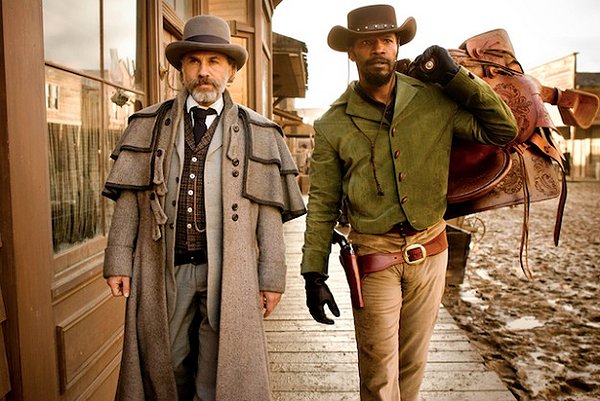 I’ve been dragging my feet writing a review of Django Unchained and I’m trying to determine why that is. Just after typing that sentence I spent 30 minutes checking my e-mail. I’m an avid Tarantino fan, so I’m left wondering what my hesitation is about. I certainly enjoyed the film, thoroughly, but perhaps my question is whether I should have enjoyed the film as much as I did given the historical reality of slavery. No movie will ever approach the true horrors of slavery; even the very act of owning another human is a detestable and crushing reality. Of course I’m coming at this movie from the perspective of a white male, so I feel like aspects of my commentary can only be minor. Is the backdrop of slavery too horrific for Tarantino to stage his spin on a revenge-filled Western? Spike Lee seems to think so via his critical public remarks. Tarantino has great glee in reveling in over-the-top movie violence, the kind that audiences (at least mine) cheer for. I guess the questionable angle is marrying the two realities and tones. You don’t want to take away from the brutality of slavery and at the same time you want to tell a compelling revenge-soaked thriller that satisfies with its buckets of blood. I’d say Django Unchained mostly finds the right balance to hit you in the gut one minute and the next have you clapping along.
It seems like the media is pressing every black celebrity for his or her personal thoughts on Django and especially Tarantino’s copious use of the N-word. Tarantino has gotten into hot water before with his penchant for the N-word, notably his own sequence in Pulp Fiction, but the N-word is entirely period appropriate for Django. Let’s face it, a majority of Americans, let alone Southerners, had really one word for slaves, and it wasn’t kind. This is the word that would have been uttered. However, after seeing the film a second time, I can see the complaints about the overwhelming use of the N-word. If you were to turn this into an awful and disrespectful drinking game, you’d probably pass out before DiCaprio even steps onscreen.
Like Inglourious Basterds, this movie is really a series of sit-downs that simmer with tension. The man has gotten so good with establishing the particulars of a scene, what the characters desire, and to push it to its breaking point when it comes to tension. While I don’t think anything approaches the highpoints of Basterds, this is still a movie that luxuriates in beautifully played tension and the danger lurking underneath Tarantino’s finely crafted words. And let’s talk about those wonderful words of Tarantino talk, the kind that seem so effortless to build sensationally interesting characters. The man sure enjoys writing his umpteenth variances on badasses engaging in verbal pissing contests (the literal kind are far less entertaining, at least for me). When you have character this sharply developed with such counter objectives, I could watch them duke it out all day. There are some pacing concerns with the movie, particularly once we get to Candieland, but when I’m engaged this much in a movie, I’d rather it go overboard than scrimp. Tarantino’s signature cool/funny/funny cool dialogue is alive and well. Every scene advances the plot, pushes it toward its bloody conclusion where bodies explode with sprays of red mist. It’s completely over-the-top in the Kill Bill vein, enough to draw snickers and laughter from a crowd, but Tarantino knows how to serve up a satisfying ending even with a body count to rival Hamlet.
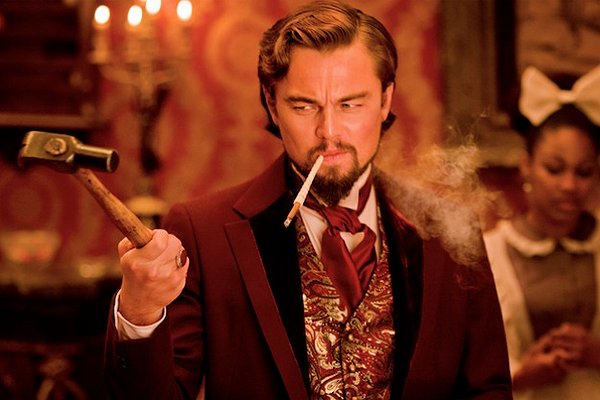 I don’t want to give the wrong impression that Django Unchained is deadly serious given the subject matter and historical context. I don’t think it disrespectfully sanitizes the horrors of slavery, but Tarantino’s brand of humor finds opportune moments to poke through. There’s a sequence with an early version of the KKK, a group of Southerners on horses arguing over whether they need to wear the ill-fitting bags on their head they prepared (plus Jonah Hill cameo). I was laughing so hard I thought people around me were going to shush me. It may well be the funniest thing Tarantino has ever written. There’s also natural humor to be had in the awkward handling of race relations, something that hasn’t exactly been perfectly ironed out to this day. A wealthy plantation owner (Don Johnson) struggles to explain how his slaves should treat Django, presented as a freeman by Schultz. “You want me to treat him like white people?” someone asks. This is followed promptly with a curt, “No.” There’s also plenty of gallows humor to be had with the over-the-top violence that pervades in the finale. It’s all key moments to blow off steam, so to speak, and make the film more bearable.
Django Unchained follows a traditional Western plot; in fact I’d say what we watch is essentially Tarantino’s whacked out spin on The Count of Monte Cristo (Alexander Dumas is even referenced in the film by name). Our lead character, Django, is in the Clint Eastwood mode of the strong and silent type. Schultz is the one who does all the talking while Django learns and glowers. They make a terrific buddy team and you almost wish that Tarantino had just diverged his story and allowed them to keep doing their bounty business. But Django’s wife needs some saving and that’s where the movie slows down. I wish Broomhilda had been given more character development. She’s pretty much the princess that needs saving, much like the German folk tale we learn is where Broomhilda gets her uncommon name. My sister described Django Unchained as a love story and I think that’s being a little generous (Tarantino did cut much of her torture, physical and sexual, from his script). We certainly feel Django’s desire to rescue her, and we worry about all the plot machinations and masks the characters must wear to accomplish this feat. With that said, the movie still has plenty of sucker punch surprises, much like Basterds, where violence erupts and despicable characters are given arias to illuminate the depths of their depraved worldviews.
I do wish that Tarantino had been a bit more judicious with his editing (the first without longtime editor Sally Menke who died in 2010) and curtailed all his self-indulgent meta film homage nods. We get stuff like Amber Tamblyn (The Sisterhood of the Traveling Pants) in one shot. Why you ask? See her father also stars in the movie in a small role, and he once played a character titled “Son of a Gunfighter.” So in his own credits, Tarantino lists him as “Son of a Gunfighter” and his daughter as, what else, “Daughter of a Son of a Gunfighter.” When all of that contorting is for an end credits gag and one shot in the whole movie, you feel like it was strictly masturbatory. Then there’s the original Django, Franco Nero, asking Foxx how to spell his name. Old Django asking new Django how to spell his name. I guess it’s supposed to be like a cinematic passing of the torch but it’s another moment that feels superfluous in a 165-minute movie. The movie can get a tad exhausting. The final 15 minutes, while still smartly written and boasting some terrific bloody comeuppance, feels like an add-on that wasn’t needed. It does manage to tie some elements back together but at this point the audience is ready for Django to ride off into the sunset, not have another obstacle to overcome in improbable yet badass fashion. At my first viewing, the kid behind me kept complaining to his parents that the movie had failed to end (“This is still going? It’s already been two hours!”). I also understand the fruitless and ironic nature of asking Tarantino to reign in his self-indulgences; that is, after all, what makes him who he is.
As expected from Westerns, the movie is a boy’s show. Foxx (Ray) has a steely screen presence that works very effectively for the character. The man’s quiet confidence and growing insolence play well, as he burrows into a role that boosts his confidence and assertiveness. Foxx’s journey from beleaguered and shell-shocked slave to mighty walking vengeance is definitely a full performance and one that Foxx delivers without any winks to the camera. Waltz (Carnage) will be dinged for playing a character similar to his Oscar-winning role in Basterds, but he’s still joyously entertaining, with that strange speech pattern of his that he plays like a musical instrument. He has a lot to say with plenty of theatrical flourishes, but that’s what makes him so entrancing. Simply put, Waltz and Tarantino are a match made in heaven.
 DiCaprio (Inception) doesn’t appear until over an hour into the film but he’s worth the wait. At my first screening, I thought DiCaprio was good but was unimpressed. Upon a second viewing, I must say my appreciation grew for the man’s performance. Calvin Candie is certainly a vile man and DiCaprio is able to give him such an intriguing brio; he’s not the magnetic source of evil that Waltz was in Basterds, a man able to stay two steps ahead of his prey. Candie is easily taken for a fool. He’s not the smartest guy in the room but he can work up a pretty sizable fury; DiCaprio actually cuts open his hand during a confrontation and remains in character, undeterred. But the best actor in the movie is Jackson (The Avengers). There are far more layers to his head house slave than meets the eyes. It sure seems like he’s really the fist behind the glove. He may put on an act for company, but the man is far more calculating and sinister than anyone else in the film. You know he’s a good villain when the audience cheers the loudest at his demise (don’t act surprised, spoiler-phobes). I wouldn’t be surprised if Waltz, DiCaprio, or even Jackson get nominated for supporting Oscars.
It seems like Tarantino has also stumbled into a hidden lucrative subgenre at the box-office, namely the historical revenge film. Who doesn’t want to see a group historically shafted get some sweet revenge, the bad guys punished, and all with sparkling dialogue? In 2009, Tarantino went on a Nazi scalping spree and got to shoot Hitler in the face. With Django, a brutalized slave becomes the hero of his own story and kills some vile slave owners and traders. It’s essentially a Nat Turner-style rebellion from history, albeit with some harebrained scams and colorful characters. Following this lucrative model, Tarantino could take other maligned minorities and give them cinematic justice. Sadly, there are too many examples to count where Tarantino can take inspiration.
Django Unchained is a bloody, rollicking, talky, messy, exciting, surprising, uncomfortable yet satisfying movie and probably one of the oddest crowd-pleasers in recent memory. I saw it on Christmas day and my theater was a sell out. They loved it, soaking up every minute, laughing at the funny parts and wincing at the gruesome violence. I couldn’t think of a better way to celebrate the birth of baby Jesus. It doesn’t whitewash the evils and viciousness of slavery, but at the same time Tarantino knows how to serve an audience and their demands for big characters, big set pieces, and big vengeance. Django is a sturdy Western/blaxploitation film, and whatever other genres Tarantino feels like tossing into his cinematic blender. Whatever you classify it as, Django Unchained is another Tarantino original specialty and his tremendous talent comes through loud and clear, even with a few false endings and self-indulgences at play. It looks great, has a great soundtrack, and presents great acting talent reciting Tarantino’s great words like they were prized possessions. It’s a bit long and a bit overdone, but when you’re enjoying yourself, who wants to leave the party early?
Nate’s Grade: A
Share this:

J. Edgar (2011)
 J. Edgar has all the qualities you’d want in a high profile, awards-friendly movie. It charts the life of legendary FBI head J. Edgar Hoover, it stars Leonardo DiCaprio in its title role, and it has Oscar-winner attached as screenwriter (Dustin Lance Black) and director (Clint Eastwood). The only way this movie could be bigger awards bait was if Hoover personally challenged Adolf Hitler to a duel. At a running time of 137 minutes, J. Edgar misses out on explaining why this complex man was who he was, a difficult prospect but I would have at least appreciated some effort.
J. Edgar Hoover (DiCaprio) was, at his height, said to be the second most powerful man in the United States. The first director of the Federal Bureau of Investigations served under eight presidents and for over 50 years. The man rose to power fighting against radicals and Bolshevik terrorists in 1919. Hoover successfully arranged for America to deport foreigners with “suspected radical leanings.” He was appointed to head the, then, Bureau of Investigations, where Hoover remade the agency in the image he desired. His agents were going to be clean-cut, college-educated, physically fit, and God help you if you had facial hair. Hoover also fought to bring modern forensic science into investigations and trials, proposing a centralized catalogue of fingerprints, which at the time was dismissed by many as a “speculative science.” Hoover also amassed an extensive system of confidential files on thousands of American citizens he felt were potential threats or if he just didn’t like them. Hoover wasn’t afraid to bully presidents with this secret catalogue. On a personal level, Hoover was admittedly without any friends or interests outside the agency he felt responsible for. His life was defined by three close personal relationships: his mother (Judi Dench), whom Hoover lived with until the day she died; Helen Gandy (Naomi Watts), his loyal secretary and confidant of 40 years; and Clyde Tolson (The Social Network’s Armie Hammer), an FBI agent that Hoover shared a decades-long unrequited romance with. Upon Hoover’s death in 1972, Tolson was given Hoover’s burial flag, and Tolson’s own grave is a mere couple plots away from J. Edgar’s.
 The movie feels trapped in a closet alongside Hoover. The guy was rather enigmatic and hard to nail down, but I would have appreciated Eastwood and Black at least trying to figure the guy out. They treat the subject with such fragility, such sympathetic stateliness about his more salient personality points. It feels like Eastwood doesn’t want to get his hands too dirty, so the provocative material, like the gay stuff, is kept to very period appropriate acts of discretion. A handholding in the backseat of a car is practically scandalous given the treatment on the gay material. The oft rumored cross-dressing aspect is hinted at but explained, in context of the scene, as Hoover’s way of mourning the loss of his mother. With Hoover, there was only his public persona of a moral crusader, a face that he never removed even in his private moments. The guy could never embrace happiness, only duty. It feels like Eastwood couldn’t decide on what stance to take, and thus the film settles on a bloodless examination that won’t upset any of the, presumably, delicate sensibilities of the older audience members. A towering figure of moral certainty, extreme paranoia, righteous conviction, a vindictive streak against his mounting collection of enemies, and a shaky hold on the truth, all in the name of protection against America’s many real and imagined enemies – I feel like the blueprint has been established for the eventual Dick Cheney biopic. It’ll just be slightly less gay.
Let’s talk more about the gay factor. It feels like this area is where Eastwood definitely could have pushed much further, but the old school director seems to be of the opinion that a biopic need not pry nor speculate. Excuse me, but you’re telling me about a man’s life, the least you could do is dig deeper. A domineering mother, who said she’d rather have a dead son than one of those “daffodils,” and the moral restraints of the time, are easy enough to identify why Hoover was a repressed homosexual. That doesn’t separate him from probably a far majority of homosexual men in the first half of the twenty-first century. What makes Hoover, a repressed homosexual, tick? This is no Brokeback Mountain style whirlwind of untamable emotion. Eastwood keeps things chaste, choosing to view Hoover as a celibate man. Hoover and Clyde becomes inseparable “companions,” eating every dinner together, going away on trips, and enjoying the pleasure of one another’s company – the life of the lifelong “bachelor.” But that’s as far as the movie is willing to go (remember the scandalous handholding?). There are hints about how socially awkward Hoover can be, a guy who seems downright asexual at times. He proposed to Helen on a first date where his attempts to charm included showing off his card catalogue system at the Library of Congress (“I bet you show this to all the girls…”). You get the impression he’s not comfortable with this necessary area of human biology. That’s fine room to start, but J. Edgar doesn’t do anything but start its characterization ideas. It gives you ideas to toy with and then moves along. The relationship with Clyde hits a breaking point when Hoover discusses, during one of their weekend getaways, the prospect of finally choosing a “Mrs. Hoover.” Naturally Clyde does not react well to this development, and the two engage in a brawl that ends in a shared bloody kiss. This is about as passionate as Eastwood’s movie ever dares to get.
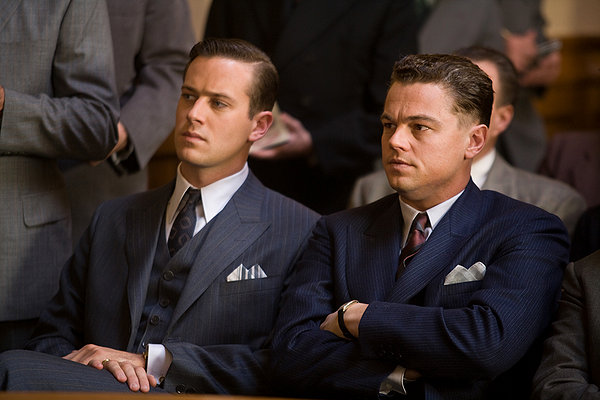 I expected more from the Oscar-winning writer of Milk. Black’s lumpy script can often be confusing, lacking a direct narrative through line. Some leaps in time can just be confusing, like when J. Edgar is asking his junior agent typist what figure was most important in the 20th century thus far. The agent answers, “Joe McCarthy,” and then we have a new agent sitting there, and Hoover asks again. Finally we have another agent who responds with Hoover’s desired answer, “Charles Lindbergh.” I suppose we’re left to assume that Hoover fired his typists until he found one who mirrored his own thoughts. There is also far too much time spent over the Lindbergh baby case. I understand it’s the so-called Crime of the Century and, as Black sets up, a situation for Hoover to prove his bureau’s value when it comes to modern criminal science. It just goes on for so long and rarely offers insight into Hoover. Sans Clyde, the majority of the supporting characters offer little insight as well. Hoover’s mother never goes beyond the domineering matrimonial figure. Helen seems like a cipher, rarely giving any explanation for her decades of loyalty despite clear objections to certain choices. She’s too often just a “secretary” there to move the plot along by introducing more characters of minimal impact. With Hoover being such an enigmatic and closeted figure, the supporting characters could have been the areas we found the most insight into the man. Nope.
The entire plot structure feels like a mistake. Hoover is dictating his memoirs so we primarily flash from the 1930s, when Hoover was making a name for himself, to the 1960s, when Hoover is fighting a secret war against, of all things, the Civil Rights movement and Martin Luther King Jr. (he was convinced King was tied to communists). The back-and-forth nature of the story can lead to some confusion over facts and timelines, but the concept of Hoover dictating his memoirs means that the movie becomes a greatest hits compilation, a showcase of Hoover’s finest hours in an attempt to win public support back. He can explain his obsessions and justify his overreaches. That’s why Hoover’s entire catalogue of secret files on thousands of American citizens, including presidents, is given such short shrift. Why would he want to discuss his own subversive tactics hunting subversive elements? The only time the screenplay discusses this secret catalogue is when Hoover and Clyde want to have a good laugh over Eleanor Roosevelt’s lesbian paramour (irony?). Richard Nixon covets these files, so Helen swears that upon the death of her boss that she will shred every page before Tricky Dick can get his hands on them (J. Edgar is rated R for “brief strong language,” and they are all provided by potty-mouthed Nixon). Black attempts something of an Atonement-styled ending with an unreliable narrator, but the effects are slight and only superficial and too late.
 At this point it’s probably going to be rare for DiCaprio (Inception, Revolutionary Road) to give a dud performance. The actor isn’t the first name you’d think of for a Hoover biography. Regardless, the guy does a great job especially with the emotional handicaps given to him by Black’s script and Eastwood’s direction. Given all the emotional reserve, it’s amazing that DiCaprio is able to make his character resonate as much as he can, finding small nuances to work with. Hoover’s clipped speaking style, likely the most readily recognizable feature of the man, is here but DiCaprio does not stoop to impression. He’s coated in what looks like 800 pounds of makeup to portray Hoover in the 1960s. The old age makeup looks good on DiCaprio, though the same cannot be said for his inner circle. Older Clyde looks like he is suffocating behind a gummy Halloween mask; the man looks like he is mummified in his own liver-spotted skin. Older Helen just looks like they powdered her face and added some gray to her hair.
The movie seems to take its emotional cues from its subject; far too much of J. Edgar is reserved, hands-off, and afraid to assert judgment on what was a highly judgmental man of history. What makes Hoover compelling is his array of contradictions. He’s defined by three personal relationships (mother, Clyde, Helen), all of whom he could never have. That’s got to mean something. Instead of exploring these contradictions in any meaningful psychological depth, Eastwood seems to take his hand off the wheel and the film just casually drifts along, steered by the self-aggrandizing of Hoover himself, given so much room to explain detestable behavior in the name of protecting America. J. Edgar is a handsomely mounted biopic with some strong acting, but from Eastwood’s impassive direction (his piano-trinkle score isn’t too good either) and Black’s lumpy script, the finished work feels too closed off and arid for such a controversial subject worthy of closer inspection.
Nate’s Grade: B-


 nathanzoebl
You must be logged in to post a comment.