Blog Archives
Juror #2 (2024)
 Clint Eastwood’s possible last movie as a director (the man is 94 years old, people) was buried at the theater through a limited release by its studio, which is a shame because Juror #2 is a fairly solid adult drama with some grueling tension built right in. I was wondering how screenwriter Jonathan Abrams was going to make this premise work, where a recovering alcoholic and expectant father, Justin Kemp (Nicholas Hoult), is impaneled on a jury for a murder case and discovers, over the presentation of evidence, that he might actually be the culprit. That same night, at the same location of where the supposed murder took place, is where Justin thought he hit a deer. What follows is a soul-searching account of one man being torn apart as far as what he should do. Does he let this other man take the blame so Justin can live out his life with his new baby and wife? Or does he come forward and admit his own firsthand knowledge of the events would present a very reasonable doubt for this trial? The movie becomes an extended balancing act of how long Justin can keep this secret and what angles he will work, trying to push the jury one direction or another through persuasive appeals. It’s familiar dramatic territory to anyone who grew up on 12 Angry Men, though with an extra high-concept twist. It’s a fairly straightforward drama that allows the story to take center stage and puts the focus on one man’s personal crisis. The acting is strong all around with Hoult (Nosferatu) being the predicted standout, showing the heavy weight of his guilt wirh every pained expeession. I think the ending does a disservice to the kind of movie that came before it, namely that it should be more definitive in its conclusion and provide a fitting resolution. This isn’t exactly the kind of movie that benefits from prolonged ambiguity, so the abrupt ending feels like a miscalculation and hampers a bit of the ending’s impact. However, Juror #2 is a good squirm session.
Nate’s Grade: B
Share this:

Emilia Perez (2024)

Movie musicals can be sweeping, invigorating, and at their very best transporting, They mingle the high-flying fantasies and visual potential of the cinema, and we’ve gone through many waves of kinds of musicals. Today, we’re in an outlandish world of the outlandish musical, an experience in ironic air 210quotes, where stories that you never would have thought could be musicals would then dare to be different and attempt to be musicals. The much-anticipated Joker sequel, Folie a Deux, dares to be a challenging jukebox musical of old favorites. The French movie Emilia Perez tells the story of a cartel leader that undergoes a sex change and tries to do good with her second life. Both movies are deeply interesting messes as well as experiences I don’t think work as musicals.
In contrast, Netflix’s Emilia Perez is like an entire season of a telenovela streamlined into a two-hour-plus movie that manages to also, for better or worse, be a musical. It is filled with many outlandish and provocative elements you would never expect to be associated with singing and dancing, like a sex change surgery center. This movie mixes so many genres and tones that at one point it feels like you’re watching a crime thriller about Mexican cartels and their manipulation of those in power, and then the next moment it feels like you’re watching an absurd rendition of Mrs. Doubtfire, where a spouse has adopted a new identity and uses this to spend time with their kids they otherwise would not be able to do so. It’s a wild film-going experience; I can’t recall too many musicals that use street stabbings in syncopation with percussion. Because of its go-for-broke ambitions and veering tones, Emilia Perez is destined to be a cult movie, some that fall in love with its bizarre mishmash of elements, but most will probably be stupefied by the entire experience and questioning why, exactly, this was made into a musical.

In Mexico City, Rita Castro (Zoe Saldana) is a savvy defense lawyer tired of living in the shadows of her buffoonish bosses that rely upon her writing prowess to win cases. Someone sees great potential with her, and it happens to be Manitas del Monte (Karla Sofia Gascon), the head of a dangerous cartel. He wants Rita to find the international means to finish the process of Manitas surgically becoming a woman. Under the gun, metaphorically and literally, Rita finds the doctors who will transform the dangerous him into a new her. Manitas then fakes their death, leaving his old life behind to start anew, including their children and wife, Jessi (Selena Gomez). Manitas becomes the titular Emila Perez, but rather retire in luxury, she wants to do good, and Emilia begins a non-profit organization that exhumes bodies, victims from the cartels, to provide closure for their widows and grieving families. Emilia then invites Jessi and their kids to come live in her estate, explaining she is a formerly unknown “aunt” to Manitas. Now Rita is trying to run Emilia’s organization, keeps Emilia from going too far in revealing her identity, and looking out for her own sake considering she’s one of the few that knows about a life before Emila Perez.
I know there will be hand-wringing and cultural tut-tut-ing about the movie’s implicit and explicit themes dealing with trans issues, exploring one woman’s exploration of self and securing the identity she’s always wanted through the lens of a lurid soap opera trading in stereotypes. It’s a lot of movie to digest, and while it feels entirely sincere in every one of its strange creative decisions, it’s also the kind of movie whose tone can invite snickers or derision, like the sex change clinic where a heavily bandaged chorus repeats words like, “vagioplastia” and “penoplastia.” It’s a movie with extreme feelings to go along with its extreme plot turns, but the whole movie feels like it’s trying to settle on a better calibrated wavelength of melodrama.

I think this could have been significantly improved by director/co-writer Jacques Audiard (Rust and Bone, A Prophet) had he embraced more of the movie’s outlandish reality breaking through. Too few of the musical numbers actually do something more than witness someone singing. The opening number, one of the best, involves Rita trying to compose a defense through the streets of Mexico City, while a crowd sweeps around her, often stopping to chime in as an impromptu chorus, sometimes setting up props for her use. It’s a great kickoff, the energy crackling, and I was looking forward to what the rest of the movie could offer. There’s only one other musical number that recreates this significant energy and engagement, a fundraising dinner for Emilia’s organization amongst the powerful members of society. While Emilia speaks at a podium, Rita struts around the floor, sashaying between the tables, and informing the audience about all the dirty deeds and skeletons of the assembled muckety-mucks. She’s literally manhandling the frozen participants, dancing atop their tables in defiance, and it’s a magnificent moment because of how it breaks from our reality to lean into the storytelling potential of musicals. These sequences work so well that it’s flabbergasting that Audiard has, essentially, settled for far less creatively for too much of his movie’s staging. The big Selena Gomez song is just her listlessly singing to the camera while shifting her weight while standing, like the laziest music video of her career. Why tease the audience with the crazy heights as a musical if you’re unwilling?
And now let’s tackle the music, which to my ears was too often rather underwhelming.It sounds like temp music that was intended to be replaced and never was. It’s lacking distinct personality, catchy or memorable melodies, anthems and themes, the things that make musicals enjoyable. The best songs also happen to be the best staged sequences, both involving Rita. These songs have a different vivacious energy by incorporating a hip-hop style of syncopation. “El Mar,” the song during the fundraising dinner, offers an infectious chorus adding extra percussive elements like people slamming fists down onto tables, listening to plates and glasses rattle. These are the moments that enliven a musical and convey its style and panache. Alas, too many of the songs lack that vitality, and can best be described as blandly competent and too readily forgettable.

It’s a shame because Saldana is giving her finest screen performance to date (to be fair, I never watched her Nina Simone biopic). The actress best known for being the strong warrior in sci-fi franchises like Avatar, Guardians of the Galaxy, and Star Trek plays an intriguing character with a rising fire of purpose and paranoia. Early on. Rita is ambitious but unhappy, practically dowdy in appearance, and she begins to come alive under her new role for Emilia. Saldana is electric as she sings and dances and slips effortlessly between Spanish and English, possibly to her first Oscar nomination. She’s the standout, which is slightly strange considering the role of Emilia Perez should be the breakout. Gascon, a trans actress, is quite good in such an outsized role, and gets to play her pre-transitioned identity as well under gobs of masculine makeup and tattoos. The fault isn’t with Gascon’s performance, the issue is that her character has such amazing potential but feels criminally underdeveloped. There is a world of issues of self-identity, culture, repression, shame, anger, jealousy, desire, to name but a few, that could be richly explored from the perspective of the leader of a deadly gang wanting to become a woman. The character is left too inscrutable for my tastes, leaving behind so much unobserved drama. As a result, even though the movie is literally named after her, Emilia Perez feels like a projection more than a character, and if that was indeed the point, then we needed more conflict about that friction.
Emilia Perez is a lot of things all at once; campy, ridiculous, sincere, crazy. It’s messy but it’s an admirably ambitious mess, one that even the faults can be the unexpected charms for someone else. I didn’t fall in love with this genre-bending experiment, although I found portions to be fascinating and others to be confounding. I don’t even think the musical aspects were finely integrated and explored, and so they feel like more of a gimmick, a splashy attempt to marry the high-art of musical theater with the perceived lower-art of grisly crime thrillers and melodrama. It earns marks for daring but the execution is haphazard and scattershot at best. There are moments that elevate the material, where the musical elements feel confidently integrated and supported with the dramatic sequence of events, providing an unexpected and rousing response. However, those moments are few and far between, and the absence only further cements what could have been. Emilia Perez might be your worst movie of the year, a grave miscalculation in tone and storytelling, or it might be a transporting and wild experience, one that can lock up multiple Academy Award combinations for its artistic bravura, a middle-aged Frenchman telling the story of trans empowerment through the guise of a Spanish-speaking musical framework. It sounds like so much and yet paradoxically I was left disappointed that it wasn’t more.
Nate’s Grade: C+
Share this:

Rebel Ridge (2024)
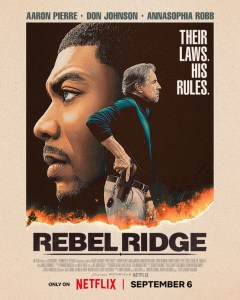 It only took minutes for me to be both engrossed and enraged by Rebel Ridge, the latest film from Jeremy Saulnier, a master of genre elevation. The scene begins with Terry Richmond (Aaron Pierce) riding his bike down a country road. A police cruiser appears behind him impatient to get around, and eventually the officer decides to use his vehicle to ram the bicyclist off the road. Afterwards, the officer tells Terry to stay on the ground and, upon a search of his belongings, discovers a stack of cash. Terry explains he cashed out his ownership in a restaurant and he’s on his way to do two things: buy a truck, and post bail for his cousin who was recently arrested for a minor drug possession. The police confiscate the money, accuse Terry of being involved with a drug conspiracy, and tell him that if he wants to fight for his money back, he’ll need to hire a lawyer and petition the court. Oh, and also the casual racism of the police officers is galling. With just his opening scene, Saulnier and his actors have made me feel vivid emotions and given me an underdog who I’m pulling for, a man who will come to serve as an honorable wrecking ball to this small-town police force who think they are above the law as it suits them. Saulnier’s movie tackles pertinent social topics with great care and detail, but it also delivers a masterful and satisfying action-thriller that knows how to entertain first and foremost rather than just incite.
 There are some serious criminal justice topics here dealt with unusually convincing clarity and accessibility, and that proves to be the ethos of Rebel Ridge, a message movie that knows it needs to be a movie first and a good one. Saulnier’s prior film work just oozes with dread and menace, though Blue Ruin and Green Room and even 2018’s Hold the Dark, by far the lesser work, dwell in bleak human outlooks. Very bad things will happen to people who stumbled into situations beyond their control, and usually by the end of the movie, there’s no recompense and we’re left to wonder about the empty cost of suffering. With Rebel Ridge, it feels like Saulnier has taken an assignment, like Netflix said to make one of your movies with your level of craft and thought, but also make it so the underdog is a badass and wins. I suppose one could argue that it’s turning a formula meant to defy convention back to convention, but by providing a crusader, we’re given a champion to root along that we can share confidence with. Terry isn’t invincible, some fearless behemoth who goes unopposed at every turn. He’s a formidable force but he’s also one man fighting against the forces of injustice and one black man fighting against racist white men in authority (superbly epitomized by Don Johnson’s good ole’ boy chief). Even with the power at his disposal, there are still limitations, which still makes the movie thrilling even if we ultimately suspect good might win out at the end. There’s nothing wrong with a triumphant ending as long as the work before establishes it as a fitting conclusion; tragedy and misery are not somehow more meaningful endings just because they are more serious or subversive. More people will learn valuable lessons about civil asset forfeiture and bail reform from this movie because it has a stirring and accessible story for a mass audience. The genuine thrills allow the messages to prosper.
And what thrills there are. There’s a staggeringly taut sequence where Terry is racing against time to get his cousin’s bail money deposited to prevent him from being transferred to prison. He’s checking the clock, looking down the small courthouse hallways, waiting for the officers he indisposed to come rushing back to arrest him. If only he can get this money deposited first. Saulnier does his own editing and creates a masterful sequence that left me nervously tapping my foot and awaiting the worst. The later confrontations with the police have a deeply satisfying turnabout, as these bullies come to realize far too late that they picked on the wrong man. Terry is an ex-Marine who taught martial arts and hand-to-hand combat to the Corps, but the most dangerous weapon he has is his mind. He’s constantly thinking about plans and implementation and adaptation. He’s intimidating already, but then when he starts to adapt, the sheer force of what this man is capable of makes him that much more incomparable. Even as a man on a mission, he’s still one black man fighting against a system of entrenched power that doesn’t like to bend when it comes to compromise or imposed oversight. He’s still got institutional power against him, and in one of Sauliner’s other movies, he probably would end with Terry winning a Pyrrhic victory but with the system ultimately standing, readjusting to maintain its dominance against further reforms. Here, that may still be true in a larger sense, but at least this one man can make a difference and bust a few racist bullies.
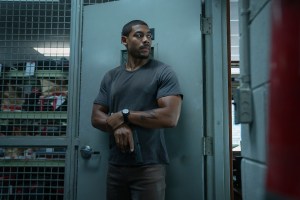 This experience wouldn’t be nearly as awesome without the commanding presence of its leading man. Pierce has had some noteworthy roles in Krypton and The Underground Railroad (he was also the amazingly named rapper “Mid-Sized Sedan” in M. Night Shyalaman’s Old). Originally, John Boyega (Star Wars: The Rise of Skywalker) was the lead role of Terry but Boyega bowed out weeks into filming in 2021 reportedly for “creative differences.” I cannot fathom any other actor in this role now that I have seen how thoroughly magnetic Pierce comes across. He’s a future star in the making and this should serve as a showcase for Hollywood. I like Boyega as an actor and have since 2011’s Attack the Block, but Pierce is a far more intimidating presence and likely candidate for action retribution. I cannot overstate how much better this movie is because it found the perfect leading man for its hero. Saulnier’s excellent command of the genre and tension is made even more compelling because of Pierce being our vehicle for comeuppance. His smooth intensity beautifully amplifies Saulnier’s percolating dialogue, finding the exact right tone and presence to make the challenges to power feel oh so combustible.
I wish the second half of Rebel Ridge was as perfectly structured and executed as that first scene. The second half gets a little lost in the details of its overarching small-town conspiracy. The momentum of the movie starts to slag a bit, and the clear connection of cause-effect plotting gets bogged down. There’s still important revelations and you get nice moments from the likes of James Cromwell as a judge and Steve Zissis as a courthouse clerk trying not to make waves within a system he acknowledges is unjust. The real significant supporting character is Summer (AnnaSophia Robb) as a lawyer with a past of drug addiction that she’s still trying to put behind her to earn back parental rights to her kids. She’s a good foil for our crusading hero, and her storyline also smartly allows for more social-political tangents to be hit about the difficulty of addicts and ex-cons to try and start over in the workforce. I wish she was more involved in the climax, as she’s relegated to being mostly a damsel needing to be saved after she proved so capable and cunning throughout the rest of the movie assisting Terry. The second half just isn’t as strong as the first half because the movie overextends with its conspiracy and history without the same tremendous clarity and urgency that drove the first hour of Rebel Ridge. The ultimate conclusion, while still satisfying, lacks the fireworks that we crave. It’s more a race against time and hoping that certain elements finally stand up against the corrupt police forces. It’s a solid ending, enough for a catharsis that Saulnier so rarely allows, but it’s not quite the release we might want, and maybe that’s the ultimate point.
 Rebel Ridge is a great genre movie that flirts with true excellence. It’s Jeremy Saulnier’s most accessible and crowd-pleasing movie, an action-thriller that executes its sequences of tension and retribution with as much care as it incorporates its Big Ideas for viewers to think over. Genre movies have long tackled relevant social and political topics, sometimes in ways that are far more meaningful and impactful than message movies that get bogged down in didactic dogma. But if you can link a relevant social issue to a story that grabs us and makes us want to inch closer to the screen, something that links a larger problem to a personal story, then you’ve found an accessible illustration that people will actually want to see. Rebel Ridge stands out among the Netflix house of action movies and proves that even a mainstream Saulnier can deliver the goods. Just because he’s working with a more conventional formula doesn’t mean that he hasn’t put thought and care into his characters and action. Rebel Ridge may leave you wanting a little more with its ending, but what it supplies is so engaging and entertaining that I’m happy to report Saulnier hasn’t lost his edge. Keep ‘em coming like this, Jeremy.
Nate’s Grade: B+
Share this:

Anatomy of a Fall (2023)

I was so looking forward to watching the French drama Anatomy of a Fall, nominated for five Oscars including Best Picture and Best Director for Justine Triet, that I had to track down the publicity department for Neon Studios and hound them to finally get my annual Neon screener box-set for critics. It took several weeks, and email chains, but thankfully the good folks at Neon supplied me with their screener box, like Christmas morning for a film critic. The surprise Oscar nominations only made me more eager to finally watch this movie. As Anatomy of a Fall played, and the criminal case became ever more complicated, shedding further light upon the characters and their stormy marriage, I found myself sitting closer and closer to my TV, finally sitting on the floor right in front of it. Part of this can be explained by trying to better read the subtitles, though truthfully half of the movie is in English, but the real reason was that I became absorbed, waiting anxiously to see where it could go next, what twist and turn would further reassess our fragile understanding of the events, the people, and the possible circumstances. The original screenplay is so thoroughly engaging, and with supremely talented acting and clever directing, that I knew I was in good hands to ensure my investment of 140 minutes wouldn’t be wasted.
Popular novelist Sandra Voyter (Sandra Huller) is talking with a female reporter about her process as they lounge in her home. They’re drinking, laughing, and then the loud sounds of a steel drum start echoing from upstairs, thanks to Sandra’s husband, Samuel (Samuel Maleski), who puts the song on repeat. He’s passive aggressively sabotaging the interview, and Sandra bids goodbye to the interviewer. Hours later Samuel is found on the ground outside with blood seeping from a head wound. The attic window is open, the same attic he was remodeling before presumably falling to his death. Did he take his own life or was foul play involved? Did Sandra actually kill her husband?

At its core, the movie is an anatomy of a criminal investigation, a prosecution and the personal defense, but it’s really an anatomy of people and the versions of themselves that they selectively present to others and themselves. It’s an old maxim that you can never know what’s going on inside a marriage, or really any relationship, as the inner reality is far more complex than what is easy to digest and categorize by the public. It’s not new to hide aspects of ourselves from wider scrutiny and consumption. It also isn’t new for a larger public profile to invite speculation from online busybodies who think they are entitled to know more. The mystery about whether or not Sandra is guilty or a cruel victim of suspicious circumstance is a question that Triet values, but clearly she values other more personal mysteries more, chiefly the mystery of our understanding of people and why they may choose to do inexplicable acts. How close can we ever really know a person? The upending of her life pushes Sandra to re-examine her own marriage in such a high stakes crucible that can determine whether or not she spends the rest of her life in jail. Under those extreme circumstances, the bigger question isn’t how someone may have committed murder, or taken their life, but the unexamined why of it all that nibbles away at Sandra as well as our collective consciousness as viewers. To me, that’s a more compelling and worthwhile mystery to explore than whether or not it was a murder or suicide (there is a wild theory finding some traction online blaming the death on the family dog).
I don’t feel it’s a significant spoiler to prepare the viewer to know that Triet keeps to ambiguity to the bitter end, refusing to specify what actually happened to Samuel. It’s ultimately up to the viewer to determine whether they think Sandra is guilty or innocent, and there’s enough room to have a debate with your friends and Francophile colleagues. I’ll profess that I found myself on the Team Sandra bandwagon and fully believed she was being railroaded by the French judicial system and press. The righteous anger I felt on behalf of this woman rose to volcanic levels, as it felt like much of the French prosecution’s line of questioning and theorizing was mired in blatant eye-rolling misogyny and conjecture. They insist that because Sandra is bisexual that she must have been flirting with her female interviewer on the day of Samuel’s death, because that’s how it works for bisexuals, obviously, to only be able to size every person they meet, no matter whatever anodyne circumstances, as some possible or inevitable sexual conquest. As an outsider to the French judicial system, I was intrigued just by how the trials are conducted, which seems far less formal despite the wigs and robes, where the accused can interrupt anytime to deliver speeches and question experts. I also appreciated how much attention Sandra’s family friend and defense attorney puts into helping her shape her image, to the press, to the court, to the judge, down to her perspective of her marriage to her vocabulary choices. Rather than be a reflection of Sandra as coolly calculated, I viewed it as learning to prepare for the dangers ahead. It reminded me of Gone Girl with the media-savvy lawyer coaching his high-profile client through their trouble.

Of course, there are larger implications with this prosecution. Sandra isn’t just on trial for suspicion of killing her husband to clear the way for her next lover, she’s the victim of all the ways that women are judged and found guilty by society. Sandra is a successful novelist, the top provider, and her husband isn’t, and it eats away at him, festering resentment that she is somehow stifling his own creative dreams. Is she giving him space or being distant? Is she doing enough or too little? Is she a supportive spouse or selfish? Is she a good mom or a bad mom? Is she allowed an independent life or should she be fully devoted to the titles of mom and wife? It’s the struggle to fit into everyone’s impossible and conflicting definition of what makes an acceptable woman and mother, and it’s infuriating to watch (think America Ferrera’s Barbie speech but as a movie). It’s also an indication of the cultural true crime obsession and turning people’s complicated identities and nuanced relationships into easy-to-digest fodder for morbid entertainment. It’s not like there’s some grand speech that positions Sandra as the martyr for all of embattled womanhood, but through her trial and media scrutiny, these social issues are projected onto her like a case study.
As much as I loved Lily Gladstone and Emma Stone in their respective performances in 2023, at this point I’d gladly give the Best Actress Oscar to Huller (The Zone of Interest). First off, she delivers a tremendous performance in three separate languages, as her character is a native German who marries a Frenchman and then they agree to speak in English as their linguistic “middle ground,” a language that isn’t native to either of them. Huller slips into her character seamlessly and it’s thrilling to watch her assert herself, press against the bad faith assumptions of others. One of the highlights of the movie is the most extended flashback where we witness the simmering resentment of this marriage come fully to force, and while it’s unclear whether this moment, as the other occasional flashbacks, is meant to be conveyed as Sandra’s subjective memory or objective reality, it serves as a mini-climax for the story. It’s here where Sandra pushes back against her husband’s self-pitying criticisms and projections. It’s a well-written, highly satisfying “Amen, sister” moment, and Huller crushes it and him. There were moments where I was in awe of Huller that I had to simply whistle to myself and remark how this woman is really good at acting. With such juicy material and layers to sift through, Huller astounds.

Another actor worth celebrating is Milo Machado-Graner (Waiting for Bojangles) as the couple’s only child Daniel, a young boy who is partially blind because of an earlier accident from Samuel’s negligence and the one who discovers his dad’s body. This kid becomes our entry point into the history of this marriage but it also turns on his perceptions of his parents, as Sandra is worried over the course of the trial that Daniel will learn aspects of their marriage that she was trying to shield from him, and he may never be able to see his father and mother the same way again. It’s a rude awakening for him, and key parts of the trial rest upon a child’s shaky memory, adding intense pressure onto a hurting little boy. There’s a key flashback that will change the direction of the case, but again Triet doesn’t specify whether this is Daniel’s memory, Daniel’s distorted memory looking for answers whereupon there might not be any, or the objective reality of what happened and what was said. Machado-Graner delivers a performance that is built upon such fragility that my heart sank for him. It’s a far more natural performance free of histrionics and easy exaggerations, making the response to such trying events all the more devastating.
Anatomy of a Fall was not selected by its home country for consideration for the Academy’s Best International Film competition despite winning the Palme D’Or, the top prize, at the prestigious Cannes Film Festival. Not to take anything away from 2023’s The Taste of Things, a French drama I’ve heard only fabulous responses, but clearly they picked the wrong contender and lost a winnable race. Do you know the last time France won the Oscar for Best Foreign/International Film? You have to go all the way back to 1991’s Indochine, a movie about the history of France’s colonial occupation of Vietnam. For a nation known for its rich history of cinema, it’s now been over thirty years since one of their own movies won the top international prize at the Academy. Oh well, there’s always next year, France. It’s truly befuddling because Anatomy of a Fall is such an easily accessible movie that draws you in and reveals itself with more tantalizing questions. It has supremely accomplished acting, directing, and writing. Anatomy of a Fall is a spellbinding, twisty movie and one of the absolute best films of 2023, in any language.
Nate’s Grade: A
Share this:

Argentina 1985 (2022)
 How does one adjudicate a country’s own nightmare and find justice? That was the situation Argentina found itself in after returning to a democratic state following seven years under a military junta that kidnapped, tortured, interrogated, and killed thousands of its own citizens in the guise of “stopping radical communists.” Argentina 1985 gives you its setting in the title but it’s really about the chief prosecutor (Ricardo Darin) trying to hold the top generals accountable for their crimes against humanity. There is a lot riding on this case and plenty going against him, including near-constant death threats for he and his supportive family. There are some very harrowing personal accounts in the movie, but it’s set up almost like an underdog courtroom drama conceived by Aaron Sorkin, and much is made about putting together the young hotshot team and seizing the day. The movie is swiftly paced for being over two hours and has notable comic relief to keep things from getting too overwhelmingly gloomy given the subject matter. However, Argentina 1985 never loses its focus on making the powerful account for their sins. It’s a rousing courtroom drama with piercing details, engrossing human stories, and the temerity of history. In the light of rising authoritarian movements around the world and even in the U.S., this movie has even more urgent political relevancy about making sure the crimes of government officials are accounted for and that justice is served. It’s a testament to the heroism of everyday citizens and it makes for an invigorating drama that doesn’t lose sight of the big picture amidst the plethora of procedural details.
Nate’s Grade: B+
Share this:

The Conjuring: The Devil Made Me Do It (2021)
 Three movies in, plus four spinoff films and more on the way, and The Conjuring franchise is losing some of its luster. The original director, James Wan, is still involved in an advisory capacity but his absence is felt in the director’s chair, not that The Devil Made Me Do It is poorly directed by Michael Chaves (Curse of La Llorona), but it’s starting to feel stale. The Warrens (Patrick Wilson, Vera Farmiga) are a husband-and-wife team of paranormal investigators traveling the country and solving 1970s/80s mysteries. This third entry feels the most like an expanded episode from a TV series, like X-Files, and maybe that’s because of its inherently procedural nature. The Warrens are defending a young man accused of murder but who says, as the subtitle describes, that he is not guilty by reason of demonic possession. From there, the Warrens are investigating to prove the demon exists and then trace its demonic history. The scares are low although the intensity feels cranked just as high; there are lots of scenes of gale force winds, shattered windows, characters yelling, and loud music. I miss the perfectly executed Old School horror sequences that were the hallmark of the earlier movies. It set up its rules, wound up the scene, and you just squirmed in anticipation. This franchise has never been revolutionary but more an expertly polished and honed tension machine. However, when the calibrations are off, then the franchise has even less going for it. There are some interesting ideas and elements, like Lorraine (Farmiga) being able to see from the eyes of the demonic killer, but the franchise feels more repetitive and stalled, with multiple exorcisms and Ed (Wilson)’s health being a motivating factor for his wife to prevent, again. The supporting characters are bland or broad and the mystery itself isn’t that interesting, nor is the ultimate villain. In the realm of Conjuring as weekly TV show formula, this feels like an acceptable middle episode with the expectations that they can improve the next week. The “based on true cases” selling point is also starting to grate in light of the reality that a man blamed his own actions on the devil and these controversial people sought to exonerate a murderer. The real-life version is morally abhorrent. The junky horror version can work as long as it doesn’t take itself too seriously. If the other Conjuring movies were gourmet entries, then this is more the fast food version. It may still satisfy fans but it’s definitely not as well made and with questionable ingredients.
Nate’s Grade: C+
Share this:

Trial of the Chicago 7 (2020)/ Borat Subsequent Moviefilm (2020)
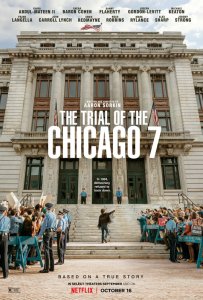 Two new movies have been released for streaming, both coincidentally starring Sacha Baron Cohen, and both are highly political, one by design and the other through fortuitous circumstances of history regrettably repeating itself, and both are simultaneously everything you would expect from their creative forces and worth watching in our tumultuous times.
The Trial of the Chicago 7 is a courtroom drama depicting the injustices applied to a dispirit group of anti-war activists who were charged with inciting a riot at the 1968 Democratic National Convention. The various men of different backgrounds and affiliations had their reasons for being there to protest, whether it was building public support to end the Vietnam War, to gain personal publicity, or to get laid, and tensions mounted inside and out the group as the police plan to send a message, harassed protesters, and in one amazingly prescient moment, remove their badges and name tags to then inflict state-sanctioned violence. This is an Aaron Sorkin movie through and through, and his second offering as a director after 2017’s Molly’s Game, and the best thing about the Oscar-winning wordsmith is that watching one of his movies feels like you’ve just downloaded a complete syllabus. The sheer audacious density of information can be overwhelming, but when Sorkin is able to get into his well-established rhythms, the actors feel like wonderful pieces in an orchestra playing to its peak. The real-life story of the activists has plenty of juicy drama and intriguing characters and intra-group conflicts breaking open, mostly between the divided poles of political leaders Tom Hayden (Eddie Redmayne) and counter-culture prankster Abbie Hoffman (Cohen). Bobby Seale (Yahya Abdul Mateen, HBO’s Watchmen) could have gotten his own movie and suffers many of the worst indignities as a member of the Black Panthers who was grafted onto the case in order to make the rest of the indicted men seem scarier by association. The consistent interference by the trial judge (Frank Langella) is shocking. It’s so transparently biased, racist, and unprofessional that I have to believe that many of these anecdotes actually happened because otherwise they seem so absurdly prejudicial that nobody would believe this happened. For a movie with such a sizeable cast of trial litigants, lawyers on both sides, friends and family, and maybe every police officer in Chicago, it’s impressive that Sorkin is able to provide so many with great Sorkin moments, meaning those grandstanding speeches, cutting one-liners, and intensive cross-examination. Not everyone is on the same level of importance. Several of the Chicago 7 are merely bodies on screen, two of the guys serve as little more than a quip-peddling Greek chorus. You sense there’s more being left out to fit into a crammed yet tidy narrative that plays to our demands for satisfying character arcs, reconciliation, and a morally stirring final stand. As a director, Sorkin doesn’t distinguish himself but he lets his meaty script and the performances of his actors get all the attention. The editing, like in Molly’s Game, can be a bit jumpy but it’s to serve the sheer size of information being downloaded during the 129 minutes. The political parallels for today are remarkable and a condemnation of our modern times. The Trial of the Chicago 7 is an invigorating and, at points, exhausting film going experience that can feel like a retro, overstuffed special episode of The West Wing. It’s everything you should expect and want in an Aaron Sorkin courtroom drama, so if you’re already in that anxious camp then this Netflix original will be preaching to the overly verbose choir.
 Secretly filmed over the past year, Sacha Baron Cohen reprises his outlandish Borat character to once again lampoon people’s not-so-hidden prejudices, anti-Semitism, xenophobia, and misogyny, which seem to have only gotten worse since the first Borat movie in 2006. The flimsy story follows international journalist Borat returning to America to help improve the standing of his home nation Kazakhstan by offering his daughter Tutar (Maria Bakalova) to the Trump administration. It’s really just a platform for Cohen to adopt a series of disguises (his Borat is too recognizable) and dupe some rubes while exploiting their ignorance and patience. Much of the entertainment comes from the cringe-inducing interactions of how far Cohen and Bakalova will go, marveling at their improvisational skills and also dreading what lines they might cross next. I was laughing fairly consistently, though the schitck naturally won’t be as funny the second time around, even with a 14-year gap in movies. I was really impressed by Bakalova and her own commitment and quick-thinking, keeping pace with a pro like Cohen and really stealing the show because Borat can’t go out in public as before. There are some outrageous moments that work, like Cohen imitating a country singer leading an anti-masking crowd into a singalong with ridiculous verses, and some that simply don’t, like an ongoing stretch where Bakalova explains the appeal of masturbation to a gaggle of deadly silent Republican ladies. Sometimes the comedy seems so broadly caricatured that it’s questionable whether its helpful or harmful, especially the anti-Semitic tropes that Cohen embraces as means of satire. Saying something outrageous to an outraged or shocked party isn’t quite enough. When compiling these hidden camera comedies, they thrive on the oxygen given to them by the targets of the prank. If they don’t really engage, it can feel a bit tired and desperate. I’d say the ratio of hits-to-misses is about half and half but the movie has enough big moments to keep fans happy. The most notorious moment has already been widely disseminated through social media and serves as the climax of the movie, strangely both as the high-point of pranks with big names but also as the emotional catharsis. Tutar poses as a foreign journalist and interviews Trump surrogate Rudy “America’s mayor” Giuliani, who drinks, goes into a hotel bedroom alone with Bakalova, and then lays on the bed while slipping his hand down his pants (like a gentleman does). Borat realizes he doesn’t want to offer his daughter to this creepy, sleazy man and rescues her because he truly does care about her. Borat 2, or Borat: Subsequent Moviefilm, takes a scattershot approach to satire and squarely aims at the science-denying MAGA crowd celebrating the excesses of their leader (who doesn’t sound that different from Borat, come to think of it). It might be more admirable in intent than execution but the new Borat can provide a few belly laughs and a more than a few groans as Cohen attempts to make American funny again.
Nate’s Grades:
Trial of the Chicago 7: B+
Borat: Subsequent Moviefilm: B-
Share this:

Richard Jewell (2019)
 As I was watching Richard Jewell, a shocking realization began to form in my mind, something I had not anticipated from an awards-friendly venture from the likes of director Clint Eastwood – I was watching a strange secular version of a Kirk Cameron movie. Suddenly it all made sense where I had experienced this exact feeling before while watching a movie I knew wasn’t working. For those who have never watched the low-budget Christian indie dramas starring Cameron, such as Fireproof or the hilariously titled Kirk Cameron Saves Christmas (spoiler: he encourages materialism), they aren’t so much movies as they are filmed sermons, morals that have been given lackluster attention to turn into actual stories with actual characters. They don’t quite exist in a recognizably human reality, so they are often heavy-handed, tone deaf, and very very clunky, and sadly I can ascribe those very same qualities to the movie Richard Jewell.
Jewell (Paul Walter Hauser) is an eager, kind, awkward man who desperately wants to become a police officer and serve the public. His experience with law enforcement hasn’t quite worked out, so he’s currently serving as a security guard during the time of the 1996 Atlanta summer Olympics. He spots a suspicious bag during a concert in Centennial Park, follows protocol alerting others, and in doing so saves lives as it turns out to be a homemade bomb. At first Jewell is a national hero, and the everyman is on talk shows, thanked by strangers, and has a potential book deal in the works. Then the FBI, led by Agent Tom Shaw (Jon Hamm), and the media, represented by Atlanta journalist Kathy Scruggs (Olivia Wilde), turn the scrutiny onto Jewell himself. Suddenly the narrative twists and Jewell is believed to have planted the bomb to become the hero. Jewell is harassed by law enforcement, media speculation, and the pressure of trying to clear his name. He reaches out to an old colleague, rascally lawyer Watson Bryant (Sam Rockwell), to launch a defense and fight back against the Powers That Be.
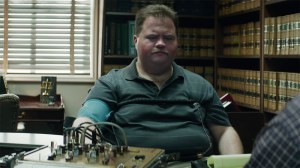 This is the passion play of Richard Jewell but nobody actually feels like a human being, let alone the person at the center of attention. There isn’t a single person onscreen that feels like a person, though the closest is the lawyer, Bryant. Jewell’s mother, Bobi (Kathy Bates), serves no other purpose but to act as her son’s cheerleader through good times and bad. When she has her teary media speech late in the film, I was relatively unmoved, because she was a figurehead. Everyone in the movie represents an idea or an organization, thus serving them up for double duty. Much like a passion play, we’re just here to watch the suffering and scold the abusers. It’s a movie meant to get our blood boiling, but other movies have been made to provoke outrage, especially highlighting past injustices under-reported through history. There’s nothing wrong with a movie that is made with the direct purpose of provoking anger at the mistreatment of others. The key is to make that central story relatable, otherwise the main figure is simply a one-dimensional martyr who only has the emotion of suffering. Without careful plotting and characterization, it can become an empty spectacle. With Richard Jewell, the main character is simply too boring as presented to be the lead. He’s an ordinary guy, but rarely do we see him in moments that provide layers or depth to him. And maybe that’s who he was, a transparent, average man who was too trusting of authority figures and a fair system of justice. Still, it’s the filmmakers’ responsibilities to make Richard Jewell feel like a compelling and multi-dimensional character in a movie literally called Richard Jewell. Even if the character arc is this poor sap starts to stand up for himself, this is severely underplayed. I sympathized with him but he felt more like a Saturday morning children’s mascot. He doesn’t feel like a person, let alone an interesting person, and that’s a big problem when he’s the closest thing the movie offers as a character and not a figurehead.
By far the worst character is Wilde’s media stand-in, a character so abrasively tone deaf and odious that when the bombing happens, she prays that she will be the one to get a scoop. The Evil Media Lady, which is what I’m renaming her because that’s all she serves in the story, is an awful amalgamation of the worst critiques people have with the media: rushing to judgment, callous indifference, and naked self-serving greed. The fact that she’s an invented character means she’s meant to represent the whole of the media, and yes, the media is one of the bad guys in the Richard Jewell story. They deserve ample criticism and condemnation, but when you serve them up in this careless, over-the-top manner, the vilification becomes more apparent than their culpability. Evil Media Lady literally sleeps with an FBI agent to get her scoops, scoops that end up being wrong, because she’s so devious and doesn’t care about The Truth. There is literally a dialogue exchange where she says, “I print the facts,” and another character retorts, “What about the truth, huh?” And wouldn’t you know, by the end, when Jewell’s mother gives her speech, who is listening and having a completely out-of-character turnaround but Evil Media Lady. I texted my friend Joe Marino as this was happening: “The power of her old white lady sad is making EVIL MEDIA LADY sad too, which means old white lady sad is the most powerful sad on Earth.”
 The FBI are also portrayed as a group of conniving snakes who must have thought Jewell was the dumbest human being on the planet the way they interacted with him. When the FBI sets its sights on Jewell as the prime suspect, they bring him in under the guise that they’re filming a training video and he needs help them with some role-playing scenarios. It’s so obvious that it feels fake, and yet my pal Joe Marino replied that this was a real moment, that the FBI had such a low opinion of Jewell that they could get him to sign away his confession through trickery: “We’re going to… pretend… see, that we brought you in as a suspect… and pretend we read you your rights… and you’re going to… pretend… you’re the bomber. Now please actually sign this… pretend form and do not ask for a real lawyer.” I almost need a Big Short-style fourth-wall break where somebody turns to the camera and says, “This really happened.” In fact, a Big Short mixture of documentary, drama, and education would have served this movie well. Here’s the problem with serving up the media and FBI in this manner. They deserve scorn and scrutiny, but when you turn them into exaggerated cartoons of villainy, then it colors the moments onscreen when they’re actually doing the things that they did in real life. This is mitigating the movie’s level of realism as well as the emotional impact. It’s not a person versus a system but rather a martyr versus a series of cartoonish cretins all trying to punish this good Christian man.
The shame of the matter is that Jewell was done great harm for acting courageously, and there is definitely a movie in his tale, but I think the way to go would have been making his lawyer the main focal point. That way there’s more of a dynamic character arc of a man putting it all on the line to defend a media pariah, it could open up to the doubts the lawyer has early on, especially as Jewell is aloof or cagey about certain damaging info (he didn’t pay taxes for years?), eventually coming to realize the quality of man he was defending. Jewell, as a character, is static and stays the same throughout despite his great emotional upheaval. A story benefits from its protagonist changing through the story’s circumstances, and that’s where Rockwell’s character could come into view. He’s also by far the most engaging person and he has enough savvy to be able to fight back in the courts and court of public opinion, becoming an effective ally for a desperate man. That way it’s a story of trust and friendship and righting a wrong rather than a good-if-misunderstood man being martyred.
 Throughout the two hours, Richard Jewell kept adding more and more examples of being a clunky and heavy-handed exercise. It would have been better for the bombing to be the inciting incident rather than the Act One break, sparing us so many scenes that do little and could be referenced rather than witnessed. Do we need to actually see Jewell getting fired from jobs to feel for him? There’s a reoccurring motif of Jewell bringing Snickers candy bars to Bryant as a friendly gift, and it’s so clumsy and weird. I started wondering if maybe Mars, Incorporated had paid for the bizarre product placement (“When you definitely did not plant a bomb in Centennial Park, break into a Snickers!”). There’s a dramatic beat where Jewell is trying to coax his distraught mother on the other side of a closed door. He just keeps repeatedly saying, “Momma please,” over and over while the music builds, and I guess the magic number was 17, and after that iteration she opens the door and they hug. It’s such an amazingly awkward scene. The dialogue has that same unreality as the rest of the movie, trying too hard to be declarative or leading, giving us lines like, “I’d rather be crazy than wrong,” and, “A little power can make a man into a monster.” It’s the kind of portentous, inauthentic dialogue exchanges I see in those Kirk Cameron movies. I wouldn’t have been that shocked if, by the end, the patriarch of Duck Dynasty showed up, running over the Evil Media Lady, and then they held a benefit concert for the persecution of white Christian males. I’m being a bit facetious here but Richard Jewell shouldn’t remind me of the derelict storytelling and characterization in hammy message-driven religious panoplies.
I was honestly shocked by Richard Jewell. I was expecting far more given the caliber of talent involved in the project as well as the inherent injustice in Jewell’s plight. Eastwood’s modern passion play feels too insufficient in passion. It’s an awkward movie that doesn’t give us a real character at its center, and it plays like every other human being in the universe is a representative of some storytelling function to service that empty center. There were lines of dialogue I just had to scoff over. There were moments that made me roll my eyes. I just couldn’t believe something this clunky could be designed for a late run for awards. The acting is all suitable, and Hauser does fine work as a mild-mannered everyman in a crucible, though I think he showed more adept skill in the enormously compelling I, Tonya. In fact, that 2017 movie could have been a lesson in how to tackle the filmic story of Richard Jewell, mixing in non-fiction elements to retell a story from multiple, fractured, contentious points of view that leapt off the pages. It feels there are many steps that should have been taken instead. Richard Jewell isn’t an awful or irredeemable movie, even though Eastwood’s typically plain shooting style feels even more strained and bland. It’s a movie I could see a contingent of the public genuinely enjoying, especially those already with a healthy mistrust of the FBI and media (you know who you are). But for me, it felt like I was watching the awards-friendly version of Kirk Cameron’s Christians are People Too. And again, Jewell deserves a major expose to chronicle his real injustices. He also deserves better than this.
Nate’s Grade: C
Share this:

Marriage Story (2019)
 Noah Baumbach is a writer and director most known for acerbic dramas with a very dark, pessimistic viewpoint. That changed somewhat once he began a filmmaking partnership with actress Greta Gerwig that began with 2013’s Frances Ha. Gerwig has since gone on to become an accomplished filmmaker in her own right with 2017’s Lady Bird, which earned her Oscar nominations for writing and directing. The partnership seemed to bring out a softer side for Baumbach and they became a romantic couple who had a child earlier in 2019. Hell, Gerwig and Baumbach are even circling writing a Barbie movie together. This is a changed filmmaker and he brings that changed perspective to Marriage Story. It’s very different from Baumbach’s other movie about divorce, 2005’s The Squid and the Whale. I found that movie difficult, detached, and hard to emotionally engage with. Marriage Story, on the other hand, is a deeply felt, deeply observed, and deeply moving film experience that counts as one of the finest films of 2019.
Charlie (Adam Driver) and Nicole (Scarlett Johansson) are heading for divorce. He’s a successful theater director. She was a successful movie actress who relocated to New York City and has gotten an offer to shoot a pilot in L.A. Both say they want what’s best for their young son Henry (Azhy Robertson) but this will be tested as Charlie and Nicole push one another for what they feel is their best version of their family.
 The observational detail in Marriage Story is awe inspiring. I was floored by how involved I got and how quickly, and that’s because Baumbach has achieved what few filmmakers are able to, namely present a world of startling authenticity. There is a richness in the details, small and large, that makes the entire story feel like you’ve captured real life and thrown it onscreen. I wouldn’t pry but Baumbach himself went through divorce around the time he was writing this, and I have to think some of those feelings and details seeped into this screenplay. Baumbach’s direction favors clarity and giving his actors wide berths to unleash meaty monologues or dynamic dialogue exchanges. The writing is sensational and every character is given a point of view that feels well realized. Even the combative lawyers (Laura Dern, Ray Liotta) have perspectives you can see why they’re fighting for what they believe is right. But it’s watching Charlie and Nicole together that brings the most excitement. Watching the both of them onscreen allows for so much study of the little histories behind their words, their gestures, their impulses, and they feel like a great mystery to unpack. It feels like a real relationship you’ve been dropped into and left to pick up the histories and contradictions and all the rest that make people who they are.
It’s very easy and understandable for divorce dramas to essentially pick sides, to present a clearly defined protagonist and antagonist, like 1979’s Kramer vs. Kramer. It’s easier for an audience to have a clear side to root for and a clear villain to root against, someone who they can see is more responsible for this breakdown of the family unit or for the infliction of emotional pain. What Baumbach does is something rare and exceedingly compassionate; he makes us like these two people as a couple in the opening ten minutes so that we can see how they could have shared a loving relationship for so long. The opening is mirrored voice over where each spouse narrates what they love or admire about the other person, and by doing this it’s like we too get to see these people in this adoring light. It’s like a ten-minute love letter and then it gets ripped away. However, by starting with this foundation, Baumbach has invested the audience immediately. We care about both of these people because we’ve seen them at their best, and now as things get more acrimonious and harder, it hurts us too because of that emotional investment. Marriage Story does not adopt a side or ask its audience to choose. It presents both parties as essentially good people but with their flaws and combustibility that point to them being likely better apart. That doesn’t mean they don’t still care for one another or have essential elements of friendship. A simple shoelace tying at the very end of the movie nearly had me in tears because of its everyday act of kindness. These are complex human beings with needs, desires, egos, pressure points, and we watch both of them struggle through a stressful process where they’re trying to do right but that definition keeps morphing with every next step. If there are villains, it’s the lawyers, but even they are given degrees of explanation and perspectives to explain why they fight as hard as they do.
 I have read several reviews that disagree with my “no sides” assessment, citing how the movie presents more of Charlie’s perspective during Act Two, and this is true. The extra time onscreen, however, doesn’t erase his faults as a husband. The transition to this handover is Nicole unburdening herself to her lawyer (Dern) in a gorgeous seven-minute monologue. It’s a thrilling moment for Johansson as the character begins guarded and afraid of saying anything too harsh, and then as she starts talking it’s like you watch layer after layer get pulled free, allowing this woman to open up about her untended wants and desires and to legitimately be heard in perhaps the first time in a decade, and it’s so powerful and sympathetic and natural. To then think that Baumbach intends to portray this same woman as a villain seems like a misreading. The second act does involve Charlie being more reactive to the new obstacles of divorce, like being forced to hire a lawyer to officially respond, to start a residence in L.A., and to eventually be observed by an evaluator of the court. He holds to the belief that he and Nicole don’t need the acrimony, don’t need the pain, and that they can be adults when it comes to deciding their end. Whether this is naivety will depend on your own worldview, but holding to this belief gets Charlie playing catch-up a lot and having to roll with changes for fear of being seen as an uncooperative parent, like when Nicole’s friends don’t want to go trick-or-treating with Charlie present so he’s forced into a second later more pathetic outing. We do get to see Charlie beset with challenges but that doesn’t erase Nicole’s challenges too.
For a movie as deeply human as this one, it’s also disarming just how funny it can be. The humor is never cheap or distracting but just another element that makes Marriage Story so adept. While the movie has its lows, it can also find delicate and absurd humor in the moment, reminding the audience that life isn’t always doom and gloom even when things are going poorly. The sequence where Nicole and her sister (Merritt Weaver, wonderful) are bickering over the exact steps to legally serve Charlie divorce papers reminded me of a screwball comedy, how the nerves and fumbles of the characters were elevating the experience into touching the absurd. Nicole’s entire family is a great comedic array of characters including her mother (Julie Hagerty) who says she has her own personal relationship with her daughter’s ex-husband that she wishes to maintain. They even have pet names for one another (this brought back memories for me as I’ve had mothers of ex-girlfriends still want to talk with me weeks after their daughter dumped me). The legal asides are also filled with absurdist moments of comedy about double-speak and the arcane or idiosyncratic rules of divorce and representation in the courts. The sequence of Charlie being watched by the deadpanned court evaluator (Martha Kelley, TV’s Baskets) is a terrific example of cringe comedy. He’s trying to impress her but she’s generally unflappable, to hilarious degree, and it only leads to more miscues that Charlie tries to ignore or downplay to win her favor.
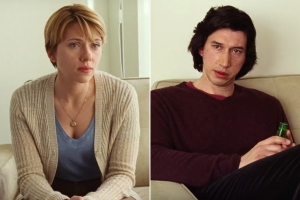 Make no mistake, Marriage Story is also one of the hardest hitting dramas of the year. Because we like both participants, because there is something at stake, watching them tear each other apart is a painful and revelatory experience. There is one gigantic confrontation that, like Nicole’s first confession, begins small and cordial and builds and builds in intensity, to the point where walls are punched, threats are unleashed, and both parties end in tears. It’s a thrilling sequence that feels akin to watching the defusing of a bomb ready to explode. Baumbach never feels the need to artificially inflate his drama, so we stick with that observational and compassionate ethos that has guided the entire film, even during the ugly moments. These are two people with pain and frustrations who both feel they have been wronged and are in the right. They’re both entitled to their pain, they’re both at fault for letting things get to this precipice, and they can both acknowledge that as well. Because even at their worst, Nicole and Charlie are still portrayed as human beings and human beings worthy of our empathy. They aren’t heroes or villains, they’re simply real people trying to navigate a hard time with conflicting feelings and needs.
The acting is outstanding. Driver (BlackkKlansman) is sensational and goes through an emotional wringer to portray Charlie, trying to stay above it all for so long and losing parts of himself along the way. His outbursts are raw and cut right through, but it’s also his smaller moments of ignorance, dismissiveness, or tenderness that linger, providing a fuller picture of who Charlie is, why one could fall in love with him and why one could fall out of love. I fully expect Driver to be the front-runner for the Best Actor Oscar. He even gets to sing a Sondheim tune and uses it as a reflection point. A late moment, when he’s reading a particular letter, drew tears and got me choked up. He’s always been such a visceral actor, a man with a magnetic charisma and animalistic sense of energy that draws your attention. He’s finally found a role that showcases how brilliant an actor Driver can be. This is also easily the best work of Johansson’s (Avengers: Endgame) career. Let there be no doubt – this woman can be a tremendous actress with the right material. She’s struggling with her sense of identity, being tied to Charlie for so long, and “wanting my own Earth” for so long that the dissolution process is both tumultuous but also exciting for what it promises. Nicole can take those chances, her Hollywood viability still alive, and strike out doing the things she’s wanted to do, like direct. Her character has felt like a supportive prisoner for so long and now she gets to make a jailbreak. Johansson is an equal partner onscreen to Driver, trading the tenderness and hostility moment-for-moment.
 This is Noah Baumbach’s finest film to date, and I adored Frances Ha. I was expecting a degree of bitterness from the normally prickly filmmaker, and that’s to be had considering the subject matter of divorce. What I wasn’t expecting was the depth of feeling and compassion that flows from this movie’s very steady beating heart. It feels real and honest in a way that a movie simply about the horrors of divorce and breakups and custody battles could not. Baumbach’s characters aren’t just meant to suffer and inflict pain, they’re meant to come through the other side with something still intact. I’d argue that Marriage Story, even with its suffering, is ultimately a hopeful movie. It shows how two people can navigate the pain they’ve caused one another and still find an understanding on the other side. Driver and Johansson are fantastic and deliver two of the finest acting performances of this year. Baumbach’s incredible level of detail makes the movie feel instantly authentic, lived-in, and resonant. I was hooked early, pulling for both characters, and spellbound by the complexity and development. There isn’t a false note in the entire two-plus hours onscreen. It feels like you’re watching real people. Marriage Story is a wonderful movie and I hope people won’t be scared off by its subject matter. It’s funny, empathetic, and resoundingly humane, gifting audiences with a rich portrait. It should be arriving to Netflix streaming by December 6, so fire up your queue and have the tissues at the ready.
Nate’s Grade: A
Share this:

On the Basis of Sex (2018)
 Given the high-profile treatment of a popular documentary and an awards-bait caliber feature, you’d be forgiven for thinking that people either thought justice Ruth Bader Ginsberg was due for recognition or was about to die. On the Basis of Sex takes more than a few nods from 2012’s Lincoln, showcasing its subject trying to pass key reforms/legislation as a means of better insight into his or her lasting legacy. To that end the film is a success. It’s an intelligent legal procedural taking time to find judicial footholds, craft compelling arguments, and the back-and-forth challenges of overturning hundreds of years of precedent that viewed women as essentially lesser. If you enjoy rhetorical debates on legal minutia, this might be the movie for you. However, if you wanted to get a better understanding of Ginsburg (Felicity Jones) the person, then you’re out of luck. She’s more or less the vessel for social justice and the film keeps her more as a lionized symbol for change than as a person. Her frustrations, such as being denied the same opportunities as men, are meant to serve as a reminder of the frustrations of the many. There are a handful of scenes with dismissive, doddering middle-aged men that feel too stagy, and yet I’m sure that these same curt comments and patronizing behaviors were a daily affair (and still are). Jones doesn’t feel like she has a full grasp on the character beyond as symbol (her Brooklyn accent is a bit slippery as well). You also get to process the reality of Ginsburg as a sexual being as she initiates PG-13 sex with her supportive husband (Armie Hammer). It’s kind of like thinking about your parents having sex. On the Basis of Sex feels a bit, ironically enough, too old-fashioned. It’s got dramatic courtroom showdowns, including an eleventh hour speech, and all the old Oscar bait tropes we’d expect from this sort of movie. It plays to every expectation of its audience. Beyond learning about the legal arguments, there’s nothing new or insightful here. Stick with the RBG documentary and hear the same stories from the real deal herself.
Nate’s Grade: B-


 nathanzoebl
You must be logged in to post a comment.