Blog Archives
The Long Walk (2025)

The quality of Stephen King adaptations may be the scariest legacy for publishing’s Master of Horror. The best-selling author has given us many modern horror classics but the good King movies are more a minority to what has become a graveyard of schlocky productions. Everyone has their own top-tier but I think most would agree that for such a prolific author, you can probably count on two hands the “good to great” King movies and have a few fingers to spare. 2025 is a bountiful year for King fans, with the critically-acclaimed The Life of Chuck, the remake of The Monkey, the upcoming remake of The Running Man, which was originally set in a nightmarish future world of… 2025, and now The Long Walk. Interestingly, two of these films are adaptations from King’s Richard Bauchman books, the pseudonym he adopted to release more novels without “diluting the King brand,” or whatever his publisher believed. The Long Walk exists in an alternative America where teen boys compete to see who can last the longest in a walking contest. If they drop below three miles per hour, they die. If they step off the paved path, they die. If they stop too often, they die. There is no finish line. The game continues until only one boy is left.

The Long Walk is juiced with tension. It’s like The Hunger Games on tour. (director Francis Lawrence has directed four Hunger Games movies) I was shocked at how emotional I got so early in the movie, and that’s a testament to the stirring concept and the development that wrings the most dread and anxiety from each moment. Just watching a teary-eyed Judy Greer say a very likely final goodbye to her teenage son Ray (Cooper Hoffman), contemplating what those final words might be if he never returns to her, which is statistically unlikely since he’s one of 50 competitors. How do you comprise a lifetime of feeling, hope, and love into a scant few seconds? It’s an emotionally fraught opening that only paves the way for a consistently emotionally fraught journey. In essence, you’re going along on this ride knowing that 49 of these boys are going to be killed over the course of two hours, and yet when the first execution actually takes place, it is jarring and horrifying. The violence is painful. From there, we know the cruel fate that awaits any boy that cannot follow the limited rules of the contest. The first dozen or so executions are given brutish violent showcases, but as the film progresses and we become more attached to the ever-dwindling number of walkers, the majority of the final executions happen in the distance, out of focus, but are just as hard-hitting because of the investment. Every time someone drops, your mind soon pivots to who will be next, and if you’re like me, there’s a heartbreak that goes with each loss. From there, it becomes a series of goodbyes, and it’s much like that super-charged opening between mother and son. Each person dropping out becomes another chance to try and summarize a lifetime, to communicate their worth in a society that literally sees them as disposable marketing tools. I was genuinely moved at many points, especially as Ray takes it upon himself to let the guys know they had friends, they will be remembered, and that they too mattered. I had tears in my eyes at several points. The Long Walk is a grueling experience but it has defiant glimmers of humanity to challenge the prevailing darkness.
I appreciated that thought has been taken to deal with the natural questions that would arise from an all-day all-night walkathon. What happens when you have to poop? What happens when you have to sleep? The screenplay finds little concise examples of different walkers having to deal with these different plights (it seems especially undignified for so many to be killed as a result of uncontrollable defecation). There’s a late-night jaunt with a steep incline, which feels like a nasty trap considering how sleep-deprived many will be to keep the minimal speed requirement. That’s an organic complication related to specific geography. It’s moments like this that prove how much thought was given to making this premise as well-developed as possible, really thinking through different complications. I’m surprised more boys don’t drop dead from sheer exhaustion walking over 300 miles without rest over multiple days. I am surprised though that after they drop rules about leaving the pavement equals disqualification and death that this doesn’t really arise. I was envisioning some angry walker shoving another boy off the path to sabotage him and get him eliminated. This kind of duplicitous betrayal never actually happens.

There’s certainly room for larger social commentary on the outskirts of this alternative world. King wrote the short story as a response to what he felt was the senseless slaughter of the Vietnam War. In this quasi-1970s America, a fascist government has determined that its workforce is just too lazy, and so the Long Walk contest is meant as an inspiration to the labor to work harder. I suppose the argument is that if these young boys can go day and night while walking with the omnipresent threat of death, then I guess you can work your factory shift and stop complaining, you commie scum. The solution of more dead young men will solve what ails the country can clearly still resonate even though we’re now four decades removed from the generational mistakes of the Vietnam War. The senselessness of the brutality is the point, meant to confront a populace growing weary with The Way Things Are, and as such, it’s a malleable condemnation on any authority that looks to operate by fear and brutality to keep their people compliant. There are some passing moments of commentary, like when the occasional onlooker is sitting and watching the walkers, drawing the ire of Ray who considers these rubberneckers to a public execution. They’re here for the blood, for the sacrifices, for the thrill. It’s risible but the movie doesn’t really explore this mentality except for some glancing shots and as a tool to reveal different perspectives.
Let’s talk about those leads because that’s really the heart of the movie, the growing friendship and even love between Ray and Pete (David Jonsson). They attach themselves early to one another and form a real sense of brotherhood, even dubbing each other the brother they’ve never had before. They’re the best realized characters in the movie and each has competing reasons for wanting to win. For Ray, it’s about a sense of misplaced righteousness and vengeance. For Pete, it’s about trying to do something better with society. His whole philosophy is about finding the light in the darkness but he is very clear how hard living this out can be on a daily basis. It’s a conscious choice that requires work but a bleak universe needs its points of light. Of course, as these gents grow closer to one another, saving each other at different points, the realization sets in that only one of these guys is going to make it across the proverbial finish line. We’re going to have to say goodbye to one of them, and that adds such a potent melancholy to their growing friendship, that it’s a relationship destined to be meaningful but transitional, a mere moment but a lifetime condensed into that moment. It’s easy to make the connection between this shared camaraderie built from overwhelming danger to soldiers being willing to die for their brothers in arms. Hoffman (Licorice Pizza) and Jonsson (Alien: Romulus) are both so immediately compelling, rounding out their characters, so much so that the whole movie could have been a 90-minute Richard Linklater-style unbroken conversation between the great actors and I would’ve been content.

My one reservation concerns the ending and, naturally, in order to discuss this I’ll be dealing with significant spoilers. If you wish to remain pure, dear reader, skip to the final paragraph ahead. It should be no real surprise who our final two contestants are because the filmmakers want us to really agonize over which of these two men will die for the other. Since we begin with Ray being dropped off, we’re already assuming he’s going to be the eventual winner. He’s got the motivation to seek vengeance against the evil Major who killed his father for sedition by educating Ray about banned art. He’s also been elevated to our lead. Even Pete has a monologue criticizing his friend for ever getting involved when he still has family. Pete has no family left and he has ideals to change the system. The screenplay seems to be setting us up for Pete being a change agent that forces Ray to recognize his initial winning wish of vengeance is selfish and myopic for all the bad out there in this warped society. It seems like Pete is being set up to influence Ray to think of the big picture and perhaps enact meaningful change with his winning wish. There’s even a couple of moments in the movie Pete directly saves Ray, going so far as to purposely kneel to allow Ray the opportunity to win. There’s also the Hollywood meta-textual familiarity of the noble black character serving as guide for the white lead to undergo meaningful change. It all feels thoroughly fated.
Then in a surprise, Ray pulls the same stunt and purposely stops so his buddy can win by default. As Ray dies, he admits that he thinks Pete was the best equipped to bring about that new world they were talking about. He dies sacrificing his own vengeance for something larger and more relevant to the masses. And then Pete, as per his winning wish, asks for a rifle, shoots and kills the Major, thus fulfilling Ray’s vendetta, and walks off. The end. The theme of thinking about something beyond personal grievance to help the masses, to enact possible change, is thrown away. So what was it all about? The carnage continues? It seems like thematic malpractice to me that the movie is setting up its two main characters at philosophical odds, with one preaching the value of forgoing selfish wish-fulfillment for actual change. The character arc of Ray is about coming to terms not just with the inevitability of his death but the acceptance of it because he knows that Pete will be the best person to see a better world. The fact that Pete immediately seeks bloody retribution feels out of character. The Long Walk didn’t feel like a story about a guy learning the opposite lesson, that he should be more selfish and myopic. It mitigates the value of the sacrifice if this is all there is. Furthermore, it’s strange that the bylaws of this whole contest allow a winner to murder one of the high-ranking government officials. Even The Purge had rules against government officials and emergency medical technicians being targeted (not that people followed those rules to the letter). Still, it calls into question the reality of this deadly contest and its open-ended rewards. If a winner demanded to go to Mars, would the nation be indebted to see this through no matter the cost? Suddenly contestant wishes like “sleep with ten women” seem not just banal but a derelict of imagination.

Affecting and routinely nerve-racking, The Long Walk is an intense and intensely felt movie. I was overwhelmed by tension at different points as well as being moved to tears at other points. While its dystopian world-building might be hazy, the human drama at its center is rife with spirit and life, allowing the audience to effortlessly attach themselves to these characters and their suffering. I feel strongly that the very end is a misstep that jettisons pertinent themes the rest of the movie had been building, but it’s not enough to jettison the power and poignancy of what transpires before that climactic moment. The Long Walk has earned its rightful place in the top-tier of Stephen King adaptations.
Nate’s Grade: B+
Share this:

Elizabethtown (2005) [Review Re-View]
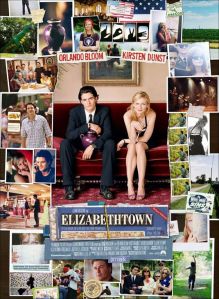 Originally released October 14, 2005:
Cameron Crowe is a filmmaker I generally admire. He makes highly enjoyable fables about love conquering all, grand romantic gestures, and finding your voice. His track record speaks for itself: Say Anything, Singles, Jerry Maguire, Almost Famous (I forgive him the slipshod remake of Vanilla Sky, though it did have great artistry and a bitchin’ soundtrack). Crowe is a writer that can zero in on character with the precision of a surgeon. He’s a man that can turn simple formula (boy meets girl) and spin mountains of gold. With these possibly unfair expectations, I saw Elizabethtown while visiting my fiancé in New Haven, Connecticut. We made a mad dash to the theater to be there on time, which involved me ordering tickets over my cell phone. I was eager to see what Crowe had in store but was vastly disappointed with what Elizabethtown had to teach me.
Drew Baylor (Orlando Bloom) opens the film by narrating the difference between a failure and a fiasco. Unfortunately for him, he’s in the corporate cross-hairs for the latter. Drew is responsible for designing a shoe whose recall will cost his company an astounding “billion with a B” dollars (some research of an earlier cut of the film says the shoe whistled while you ran). His boss (Alec Baldwin) takes Drew aside to allow him to comprehend the force of such a loss. Drew returns to his apartment fully prepared to engineer his own suicide machine, which naturally falls apart in a great comedic beat. Interrupting his plans to follow career suicide with personal suicide is a phone call from his sister (Judy Greer). Turns out Drew’s father has died on a trip visiting family in Elizabethtown, Kentucky. Drew is sent on a mission from his mother (Susan Sarandon) to retrieve his father and impart the family’s wishes. On the flight to Kentucky, Drew gets his brain picked by Claire (Kirsten Dunst), a cheery flight attendant. While Drew is surrounded by his extended family and their down homsey charm and eccentricities, he seeks out some form of release and calls Claire. They talk for hours upon hours and form a fast friendship and stand on the cusp of maybe something special.
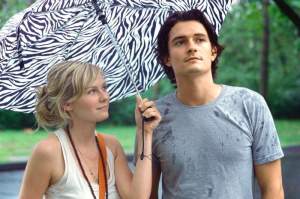 I think the most disappointing aspect of Elizabethtown for me is how it doesn’t have enough depth to it. Crowe definitely wears his heart on his sleeve but has never been clumsy about it. Elizabethtown wants to be folksy and cute and impart great lessons about love, life, and death. You can’t reach that plateau when you have characters walking around stating their inner feelings all the time, like Drew and Claire do. They might as well be wearing T-shirts that explain any intended subtext. Crowe squanders his film’s potential by stuffing too many storylines into one pot, thus leaving very little attachment to any character. Elizabethtown has some entertaining details, chiefly Chuck and Cindy’s drunk-on-love wedding, but the film as a whole feels too loose and disconnected to hit any emotional highs. If you want a better movie about self-reawakening, rent Garden State. If you want a better movie about dealing with loss, rent Moonlight Mile.
This is Bloom’s first test of acting that doesn’t involve a faux British accent and some kind of heavy weaponry. The results are not promising. Bloom is a pin-up come to life like a female version of Weird Science, a living mannequin, possibly an alien with great skin, but he isn’t a real compelling actor. He has about two emotions in his repertoire. His whiny American-ized accent seems to be playing a game of tag. He’s not a bad actor per se; he just gets the job done without leaving any sort of impression. To paraphrase Claire, he’s a “substitute leading man.”
Dunst is chirpy, kooky and cute-as-a-button but is better in small doses. Her accent is much more convincing than Bloom’s. Sarandon deserves pity for being involved in Elizabethtown‘s most improbable, cringe-worthy moment. At her husband’s wake, she turns her time of reflection into a talent show with a stand-up routine and then a horrifying tap dance. Apparently this gesture wins over the extended family who has hated her for decades. Greer (The Village) is utterly wasted in a role that approximates a cameo. Without a doubt, the funniest and most memorable performance is delivered by Baldwin, who perfectly mixes menace and amusement. He takes Drew on a tour of some of the consequences of the loss of a billion dollars, including the inevitable closing of his Wildlife Watchdog group. “We could have saved the planet,” Baldwin says in the most comically dry fashion. Baldwin nails the balance between discomfort and bewilderment.
 Elizabethtown wants to be another of Crowe’s smart, feel-good sentimental field trips, but it falls well short. I was dumbfounded to see how little the story progressed. It lays the groundwork for a menagerie of subplots and then, in a rush to finish, caps everyone off with some emotionally unearned payoff. To put it simply, Elizabethtown wants credit and refuses to show its work. The film is packed with characters and ideas before succumbing into an interminable travelogue of America in its closing act, but what cripples Crowe’s film about opening up to emotional growth is that the movie itself doesn’t showcase growth. We see the rough and tumble beginnings of everyone, we see the hugs-all-around end, but we don’t witness that most critical movement that takes the audience from Point A to Point B. The results are beguiling and quite frustrating. Take the subplot about Drew’s cousin, who can?t connect to his father either and wants to be friends to his own son, a shrill little terror, instead of a father. Like most of Elizabethtown‘s storylines, these subplots die of neglect until a half-hearted nod to wrap everything up. Father sees son perform and all is well. Son does little to discipline child but all is well. Elizabethtown is sadly awash in undeveloped storylines and characters and unjustified emotions, and when they’re unjustified we go from sentiment (warm and fuzzy) to schmaltz (eye-rolling and false). I truly thought Crowe would know better than this.
Crowe has always been the defacto master of marrying music to film. Does anyone ever remember people singing Elton John’s “Tiny Dancer” before its virtuoso appearance in 2000’s Almost Famous? Crowe has a nimble ear but his penchant for emotional catharsis set to song gets the better of him with Elizabethtown. There’s just way too many musical montages (10? 15?) covering the emotional ground caused by the script’s massive shortcomings. By the time a montage is followed by another montage, you may start growing an unhealthy ire for acoustic guitar. Because there are so many unproductive musical numbers and montages, especially when we hit the last formless act, Elizabethtown feels like Crowe is shooting the soundtrack instead of a story.
Elizabethtown is an under-cooked, unfocused travelogue set to music. Crowe intends his personal venture to belt one from the heart, but like most personal ventures the significance can rarely translate to a third party. It’s too personal a film to leave any lasting power, like a friend narrating his vacation slide show. Elizabethtown is gestating with plot lines that it can’t devote time to, even time to merely show the progression of relationships. The overload of musical montages makes the movie feels like the longest most somber music video ever. Bloom’s limited acting isn’t doing anyone any favors either. In the end, it all rings too phony and becomes too meandering to be entertaining. Elizabethtown is a journey the film won’t even let you ride along for. This movie isn’t an outright fiasco but given Crowe’s remarkable track record it can’t help but be anything but a failure.
Nate’s Grade: C
——————————————————
WRITER REFLECTIONS 20 YEARS LATER
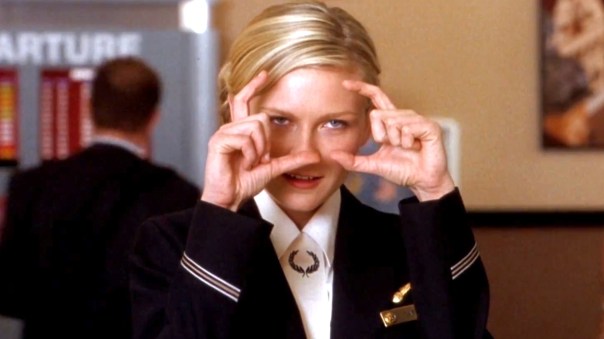
I truly hope some day Cameron Crowe reads this. I owe him an apology.
I’ve always considered Elizabethtown the turning point in Crowe’s career, where things took an errant path that he’s been stuck on ever since, though there were certain warning signs with 2001’s Vanilla Sky. I was disappointed by this movie and the ensuing twenty years have only made me think back less favorably, since this was the juncture where Crowe’s hit-making streak of such tender, personal, and tremendously entertaining studio dramedies came to an end, where the Crowe projects afterwards felt more like Crowe was chasing after the idea of what makes a Cameron Crowe movie and losing his sense of self. I selected Elizabethtown for my 2025 re-watch mostly because I’ve never gone back to it in the proceeding two decades but also because it’s an important switch point in a popular artist’s career. What I wasn’t expecting when I re-watched the movie was to be so taken in by it considering my own personal circumstances.
 This is a movie about grief, about putting one foot in front of the other, about coming to terms with mistakes and regrets, and ultimately looking ahead. It’s still a little corny, and it’s still got some flaws, but in 2025, having lost my own father not even a year ago as of this writing, Elizabethtown hit me square in the chest. It made me a mess of emotions and I could plug myself into this bittersweet yet gentle nudge of a film. Even the amiable tone and gentle, searching nature worked for me, as it felt like it was expertly channeling the fog of grief upon experiencing significant loss. Your body is sort of operating on autopilot and you feel outside yourself, like you’re watching a documentary about your life. You feel numb and recognize you’re in pain but you never really want to talk about it yet you crave human connectivity, and even when people awkwardly ask the question, “Are you doing okay?”, while the answer is obvious to all parties, you’re still unexpressively grateful for someone else granting the kindness of reaching out. This movie encapsulates this drifting feeling of loss and shock better than any I can recall. And in Crowe’s universe, which is like a more filled-in and colorful version of our own, strangers will take a moment to recognize your emotional pain and give you a hug. It’s a universe that cares about you, where even a guy getting married in your same hotel wants to invite you to his reception. There are no cynics in a Cameron Crowe universe, or at least if there are, they will be converted by the end like a Charles Dickens tale. It is a universe supremely about feeling and connectivity, and that’s what Drew (Orlando Bloom) has to learn.
Drew is under personal and professional crises. He’s been cast off at his job as an athletic shoe designer because his big design was recalled to the cost of a billion dollars. He says he’s begun cataloging “last looks” by co-workers, when people think this will be the last time they see him again. It’s a nice detail that comes back but also gets us thinking about the later drama with life and death, how every one of us will give our last looks to the people in our lives, we just won’t have the same sense of clarity. Drew is traveling to Kentucky to retrieve his father’s body and return home to his immediate family. This is intended to be a pit stop, a brief sojourn with extended family he doesn’t really see often, a respite before he gets his life back together. These significant loops in life become a natural reflective point, and that’s where Drew is coming from. His life has seemingly bottomed out, and the movie functions as his therapy session to process his grief and his shattered self-image. His sister, an undervalued Judy Greer, keeps asking if he’s had his “big cry” yet, and reminds him that it’s coming. By the end of the movie, it’s not Drew having come full-circle and found his way out of his grief fog. The whole movie is about just setting him up to actually address the loss and feel the completeness of his sadness. Under this perspective, the movie’s many menial supporting characters that dot the plot feel like gentle well-wishers. I complained about them in 2005 but in 2025 it makes the entire world feel like therapy accessories.
 Much of the movie is also pinned on the romance between Drew and quirky flight attendant Claire (Kirsten Dunst), and it was her performance that coined the term Manic Pixie Dream Girl (MPDG). She can definitely fit that mold but there’s a more subtle sadness to her that you see along the edges, like she’s putting so much effort into maintaining this front in public lest the mask drop and she has to deal properly with her own loneliness and disappointments. I think a more accurate depiction of the MPDG trope as a transparent sop to male fantasy is 2004’s Garden State with Natalie Portman’s spunky character. There is a sense that Claire’s off-screen long-distance bad boyfriend, Ben, is actually made up, an excuse to stop her from getting too close. She uses the term “tourist” to describe herself and Drew, and it’s fitting. The reality of her job makes her feel like she’s constantly in motion without setting down roots, prone to a thousand superficial human interactions that get washed from her memory as the day resets. It’s a transitory life and it can make a person feel outside of themself, questioning which version is their true self. The romantic dance between Claire and Drew really is all about both of them working up the nerve. It’s less a relationship that is fully formed and banging the drum of love; it’s far more an infatuation, where each side is circling over whether to risk the fun for something more. Under that guise, I’m more forgiving of the movie not exactly “showing its work” as I criticized in my original review. It’s not there because they aren’t there. This isn’t a relationship but a flirtation and friendship coalescing. It’s sweet and pleasant, like much of the movie, falling right in line with Crowe’s compassionate, humanist vibes.
It’s hard to exactly quantify but Elizabethtown is more of its moments and the gradual pull that is tugging Drew toward his ultimate destiny, which amounts to self-acceptance and fully processing his grief. I originally castigated Drew’s mother (Susan Sarandon) trying out new hobbies as a means of busying herself in the wake of her husband’s demise, including turning the wake into a standup comedy audition. The jokes themselves can be a little cringey or in poor taste for a funeral, but the overall effort is about this woman trying to define her life now that her partner, the old sturdy definition, has departed. I see something similar with my own mother in the wake of my father’s death. I’m not expecting my mother to start making boner jokes like Sarandon, but I see how this identity crisis can become all-too familiar. I love the absolute chaos of the actual wake that erupts into a literal flaming bird while the family band jams out to Lyndard Skynard’s “Free Bird,” and as that famous guitar solo hits the stratosphere, the movie’s built-up pressure all seems to come to a head, and the continued playing of the song despite all the chaos is its own defiant act of catharsis. It unbounded something inside me as it does for the characters. Then there’s the extended conclusion where Drew drives all over with his father’s ashes and with Claire’s travel guide, notes, and curated soundtrack as companion. It’s a lot, but it’s also the final stretch that gets Drew to finally accept his feelings, to finally feel the totality of loss but also that totality of love, and while his father may be gone, that does not eliminate the lessons and love and memories that live within him. Having this personal deeper dive happen on a father-son road trip actually feels rather fitting and poignant even.
 This is the third Cameron Crowe movie I’ve re-examined for my twenty-year re-reviews and it’s also my last. I never formally reviewed any of Crowe’s follow-up movies after 2005. I’ve already talked about how his career has taken a different track in other re-reviews, but I’ve come around on Elizabethtown, and that makes me wonder if maybe I’ll be more charitable to We Bought a Zoo or Aloha in time as well. In 2005, I found Elizabethtown to be a disappointing grab bag of Crowe’s touchy-feely familiarity, and now twenty years later, the movie really gelled for me. Perhaps I needed to go through a similar experience as the protagonist to be more open to its charms and artistic waves, or perhaps I’m getting nostalgic for Crowe’s kind of big-hearted romantic storytelling that hasn’t exactly been proliferating cinemas for some time. Perhaps I’ll watch Elizabethtown again years later and feel completely different, but I kind of doubt it, because now this movie is linked with my own reconciliation of grief after my father’s passing. It’s now been elevated from a disappointment from a revered filmmaker to something personal and passingly profound. It exemplified the foggy feelings and desire for connection for me post-funeral. As Claire says, “We are intrepid. We carry on.” Responding to failures and regrets should continue to resonate, and so Elizabethtown might actually become a personal movie I cherish over the years. It’s not the masterpiece that Almost Famous is, an all-timer, but hardly any other movies will rise to that level. I’ll accept Elizabethtown on its own terms in 2025, and those were the exact terms I needed to feel more whole.
So thank you Cameron Crowe. It took twenty years but I’ve come around. This isn’t a folly, a failure, and certainly no fiasco. It’s actually a sweet and moving tale about trying to find your direction in the face of grief and shame and just finding your way out the other side of the fog. For me, this whole movie was about the universe working through a million cheerful helpers to nudge Drew back onto his feet, including our love interest, which seems less damnable if the entire movie is achieving the same results. For a person looking through tragedy and asking why, it’s just enough encouragement, wisdom, and empathy to feel nourishing without feeling overwhelming, and it doesn’t feel phony at all to me in 2025.
Elizabethtown was what I needed. I love you dad and miss you every day.
Re-View Review: B+

Share this:

Aporia (2023)
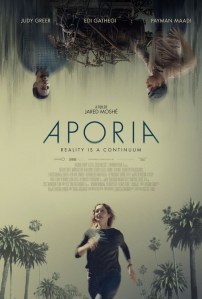
In writer/director Jared Moshe’s low-budget indie film Aporia, the Trolley Debate, killing one person in order to spare the lives of, presumably, more people or a greater number of people, gets its own movie in a thoughtful and provocative little indie. The thorny ethical questions are given their rightful due, and this is where Aporia really shines for me, as a small-scale sci-fi story with Big Ideas bursting forth and the understanding to give them adequate space for satisfying contemplation. It bowled me over.
Sophie (Judy Greer) is still very much not over the death of her husband, Malcolm (Ed Gathegi). He was killed by a drunk driver months ago and that driver also seems to have escaped justice. Sophie is left alone to raise their pre-teen daughter Riley. That’s where Jabir (Payman Maadi) comes in. He was a friend of Malcolm and reveals they had been working on a prototype for a time machine in secret. The machine has its own limits. It sends a photon particle back in time, which will kill any living creature that it materializes inside. All you need are the time, place, and coordinates and you could kill anyone. The further in time you need to go the more power the machine will have to draw. Sophie is beside herself but taken over with the excitement of possibly bringing her husband back to life. All it takes is murder.

What the characters have created is essentially a magic gun that can shoot into the past, which means the only use for this time travel device is to take life. They will only ever be murderers if they decide to use it, and so it becomes a question over under what circumstances would it be permissible to utilize this weapon. The first victim is obvious, the man responsible for the death of Sophie’s husband, and like magic he returns good as new without any memory of ever having been gone. It’s an important rule introduced that only the people in the room with the machine will still have memories of the previous timelines before the space-time revisions. This is a good move for an obvious dramatic one, so that the characters will be able to be impacted by the changes because they can recall a life without them, but it also sneakily supplies another complication. Each one of them has the potential to use the machine alone and thus never having the others realize what they had done. It’s one more tricky ethical question, asking whether you would betray the trust of someone close to you if you could get away with it. Naturally, the characters debate the merits of when to use the machine and when not to, with each new use further complicating matters because the next change can always destabilize the state of things, and then it’s a chain of changes to try and find the right order, and that leaves a trail of bodies littering the past.
It wouldn’t be a compelling time travel narrative without the ole’ favorite of unintended consequences. By removing the drunk driver before he could ever fatefully get behind the wheel, Sophie has brought back her husband and felt like the cost was negligible, as that driver in present-day is an abusive husband who gets drunk and yells at his family while he escapes justice for manslaughter. However, once you start pulling at the knots of the human timeline, some interesting and unexpected results can happen. That same man has been removed but his family isn’t necessarily better off. Kara (Whitney Morgan Cox), the widowed wife, is struggling to make ends meet as a single mom with a daughter (Veda Cienfuegos) suffering from multiple sclerosis (MS). They are deep in medical debt. It seems that the least this man did was help provide a financial cushion. Without his presence, they’ve had to go it alone and they’re broke and likely unable to continue paying the costly medical treatment for this adolescent girl. Because of Sophie’s desire to bring back her husband, she has doomed this innocent victim. Sophie’s guilt causes her to seek out the family, check up on them, and upon the discovery of their hardships, befriend mother and daughter and find a way to make things right as the unknowing perpetrator of their dilemma. From there it becomes a game of thinking how she can erase their misfortune while keeping her own husband.
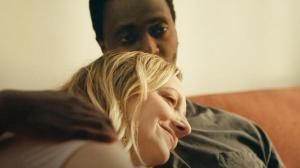
I will discuss one significant turn because I think it’s an evocative example of the thought-provoking nature of the screenplay, but I will warn you there will be significant spoilers. If you wish to remain pure, dear reader, then skip to the next paragraph. The team comes up with a new name to eliminate to solve the fortunes for Kara and her daughter, a man who swindled her, a Ponzi scam artist who left her penniless and forced to close her bakery. Seems open and shut with an obvious bad person, thus an easy solution. But you should recognize there are no easy solutions in stories untangling timeline interference. All of a sudden, Sophie and Malcolm come home to discover that they have a completely different child. Their teen daughter is now a teenage boy with a different personality and different interests. How? How could eliminating one bad man in a completely different state change the course of history enough that their child has been affected? They debate the possibilities, perhaps something as small as a different sperm winning out or conceiving her on a different day or month, but the results are irrefutable. While their child is alive in this timeline, in a very real sense they have both now lost their daughter. The person they raised together, loved, and helped shape has been eliminated and the grief is palatable. This new child is a stranger, but they too are strangers to this child. They are absent formative memories and do not have the shared connections and history to draw upon. When Sophie tries to comfort this new Riley, she doesn’t know what may work because she doesn’t know anything about this child. I don’t think the filmmakers are making negative commentary on adoption, which is essentially what this scenario mirrors, but the grief goes two ways. They mourn the child blinked from existence, and this child also had his parents blinked from existence and replaced with lookalikes, they just don’t understand it yet. It’s this escalation that personalizes the unintended harm of what they’re doing and sets the stage for the final decision.
The ending is going to divide people but it felt note-perfect for me. It ends on an emotional high of coming to terms with their culpability but also on accepting uncertainty. We end on an ambiguous note, absent a resolution about the final extension of the final decision. I think it works very well not just in trying to have it multiple ways but because after being in the know, it puts the characters, and vicariously the viewer, in a state of vulnerability and the acceptance of staying there. It’s an uplifting conclusion thematically because it’s about accepting loss but also accepting our limitations. The final conversations are inadequate because how can you summarize a life with another person, whether a lover or a friend or a spouse, into just a handful of clumsy words. Our vocabulary does us a disservice when it comes to expressing the glorious debt we feel having had these people in our lives. That is why the movie ends on an emotional high for me and really comes together, personalizing the ethical conundrums.

Greer (Halloween Kills) has had a long career as a supporting actress, usually the funny but supportive best friend to the lead, and as an outstanding voice actress (Archer, Let’s Go Luna), but rarely does she get a meaty dramatic lead role. She’s terrific here and serves as our dramatic anchor through the turbulent changes and moral soul-searching. She is our reflection, and Greer’s emotional journey is well encapsulated in a performance that doesn’t go big into histrionics but is more carefully grounded and natural. I don’t think the movie would work as well, at least on an emotional level, without her.
Is Aporia a perfect film? Well, very few are, and the movie could have even more development, leaving possibilities behind given its tantalizing premise. I’m glad the movie didn’t go overboard into some slapdash thriller territory and instead grounded its science fiction timeline wonkiness into engaging human drama about loss, sacrifice, and acceptance. As my pal Eric Muller said, Aporia likely works better as a screenplay than a finished film, though this discounts the heavy-hearted contributions of Greer. I’m glad this movie emphasized its ideas and provided the time to really dwell in them, even if the movie is only about 90 minutes altogether. Aporia is a deeply engaging movie that worked on all levels for me, enriching emotions and satisfying intellect, and is definitely worth the discovery.
Nate’s Grade: A-
Share this:

Halloween Kills (2021)
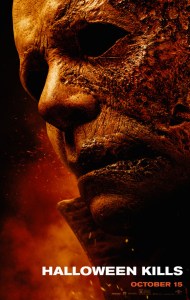 In 2018, versatile indie director David Gordon Green (Stronger, Pineapple Express) and actor Danny McBride (Eastbound & Down) rebooted the Halloween franchise with a monstrous box-office return for their efforts. From there, the studio planned two immediate sequels to cash in. Delayed by a year, Halloween Kills is the first sequel and coming out just in time for the spooky season. The problem is the only thing this movie is going to adequately kill is 100 minutes of your time.
Laurie Strode (Jamie Lee Curtis) and her daughter (Judy Greer) and granddaughter (Andi Matichak) have trapped Michael Myers into their basement and set the house ablaze. Unfortunately for everyone, a team of firefighters rescues the giant killing machine. Michael wanders the town of Haddonfield, killing whomever he encounters, eventually circling back to his childhood home, the site of his first murder. The townsfolk have decided that they are sick of living in fear from the legend of Myers. They form a violent mob, chanting “Evil dies tonight,” and break into armed clusters to snuff out Michael Myers and put him in the ground for good.
 There is one intriguing aspect of the movie that gives it some fleeting life. The 2018 predecessor tantalizing explored the idea of generational trauma from terror, with Laurie raising her daughter in a constant state of paranoia and anxiety to prepare her for the eventual return of the unstoppable menace. The fraught relationship between three generations of Strodes was deserving of far more attention than it ultimately received in the 2018 film, although at least the filmmakers were smart enough to realize having them join their multi-generational talents would be a natural payoff. With Halloween Kills, we get a similar concept of generational trauma but from the point of view the supporting townsfolk, many meant to resemble middle-aged versions of bit characters from the older Halloween movies from the John Carpenter era. That sort of dedication to furthering the mythology of this town seems misplaced for the fan base. I doubt many hardcore Halloween fans were chomping to find out what happened to the little kid Laurie babysat. However, these obscure Haddonfield characters become a support group for trauma, a lasting memory of the horrible history of their town, and when Myers returns, they’re the first to fight back and form a mob to round up the masked boogeyman. The town’s social order breaks down and people give into the mob mentality of ends-justify-the-means violence. Even though Halloween Kills was originally scheduled to be released a year ago, it has a different feel in a world after the 2021 U.S. Capital insurrection, watching a sea of angry, misinformed citizens run wild in misplaced fear and loathing. It leads to tragedy and mistakes as the Haddonfield mob sweeps up, gathers more momentum, and doesn’t stop to think who it may trample upon next.
It was enough that made me wish the entire movie had been told from this peanut gallery perspective. Rather than following the silent killer stalk and brutally slay, let’s focus on the lesser seen cost of terror. Let’s concentrate on the side characters, the kinds who would normally play out as Cop #3 or Concerned Mom #2 in a normal slasher movie. What if we elevated them and told a slasher story from their victimized perspective and we stayed with their fear and anxiety while they remained in the dark about a madman terrorizing their town? The earlier movie was about how trauma had racked Laurie Strode’s life and personal relationships. It’s fitting that a sequel would widen the scope and show how many others have also suffered and are still haunted by their own trauma and PTSD from their fateful experiences with homegrown evil. Maybe it’s the less cinematic approach, but it’s something new and different and looking at a more human perspective for a sub-genre better known as serving as a relentless conveyor belt for wanton vivisection.
 What I’m saying is that these standard genre slasher movies bore me unless they have some exhilarating style, fresh ideas, or clever perspective shifts. With Halloween Kills, I’m watching a dull silent killer slowly murder disposable supporting characters and none of it qualifies as interesting. I don’t care about these people. I don’t find Michael Myers to be interesting (even when Rob Zombie foolishly tried to establish a trashy childhood back-story). The only thing I found worthwhile from the 2018 movie was the mother-daughter drama with the Strodes, which has all but been sidelined for the 2021 sequel. Perhaps I’m not the right audience for these kinds of movies, or perhaps this one just simply isn’t trying hard enough where it counts. The kills aren’t particularly memorable, though several are quite brutal and even a bit mean-spirited. The suspense set pieces are rote. The movie just feels far too much like it’s on autopilot, trying to provide enough filler material until its eventual concluding chapter, 2022’s Halloween Ends (yeah, we’ll see about that, title). We’re still watching a man pushing 70 years of age defy multiple stab wounds, bullets, contusions and beatings, and any number of aggressive defensive violence. It gets irritating. He’s not some supernatural force back from the dead like a Jason Voorhees; he’s just a beefy AARP member.
Green has an affinity for the franchise and the gore can be downright gooey and wince-inducing. The opening segment is an impressive recreation of the filmmaking techniques John Carpenter used in the late 1970s, even down to the period appropriate synth score. It’s a fun inclusion that essentially gives added context to the adult versions of many supporting charterers, seeing their own youthful run-ins with Michael Myers that fateful Halloween night so long ago. It’s clever but it adds up to little else as the movie progresses. If these moments with these characters had been more meaningful, maybe their eventual deaths would have meant more, but just because we spent more time with Cop #3 doesn’t mean their ultimate demise feels more than the death of Cop #3. Ultimately, it feels like this early section, a superfluous reminder of the past, is just here as something to entertain Green as a returning director for a filler sequel to a so-so movie. The strange humor of the 2018 edition has been completely eliminated, so what we’re left with is a thoroughly redundant slasher movie with some intriguing ideas percolating but not coming to fruition.
 If you were a fan of Curtis (Knives Out) as the gritty survivalist, the Cassandra trying to warn others of the impending doom they seem so oblivious to, then you’ll be disappointed here. I don’t know if Green and his co-writers were making a purposeful homage to the 1981 sequel where Laurie keeps to a hospital for the entire movie. Either way, Laurie is stuck in a hospital bed because the movie only follows mere hours from the events of the 2018 movie and only goes forward mere hours from there. We’re stuck, and so is Curtis, as she practically sits this one out. Judy Greer is likewise wasted as Laurie’s adult daughter. If there’s a star of this 2021 sequel, it’s Anthony Michael Hall (Live by Night) as the leader of the town’s mob. He has an intensity to him that feels believable without crossing over into exaggerated cartoon zealot.
If you’re a sucker for the Halloween franchise, or the glut of slasher movies that have exploded in the age of streaming, then perhaps enough of the crimson stuff gets spilled to satiate your horror appetites. I’m just bored by another movie about another slow-moving guy in a mask at this point. I need more, anything more, and Halloween Kills gives me too much of the same old same dead.
Nate’s Grade: C
Share this:

Valley Girl (2020)
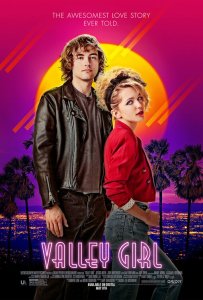 If you’re a big fan of 80s music and looking to congenially pass 90 minutes, I suppose you could watch the new musical Valley Girl as it whisks you away on a cloud of simple nostalgia. That’s the word for this movie. Everything is very simple, from the stock characterizations, to the boy-meets-girl romance, to even the performance of the dozens of popular 80s songs, which are reworked into being blander vanilla versions that reminded me of what Kids Bop does to music. We follow a titular valley girl (Jessica Rothe, so great in the Happy Death Day franchise) as she falls for a punk rocker (Josh Whitehouse, struggling in the singing department) from the wrong side of the tracks. The romance is very familiar as are their trials of stepping outside their individual comfort zones for the other person. The big problem with Valley Girl is that the first half feels like it’s at warp speed; nary a minute goes by without a song-and-dance number barreling onto the screen. The second half, in contrast, has only a handful of these numbers and tries to expand the characters but by that point it’s too late. I don’t care about them. Since it’s a jukebox musical, the songs should be selected to provide better insights into the characters’ emotional states, but too often they feel superfluous and clunky. “Hey Mickey” introduces our selfish jock (Logan Paul of YouTube infamy) at a pep rally. “Girls Just Wanna Have Fun” is about having fun on the beach. “Boys Don’t Cry” about dealing with being sad. It’s that kind of application. There’s a frame device where an older mom (Alicia Silverstone) is recounting her 80s experiences to her teenage daughter, and this could have provided a satirical and clever development, allowing the recounted experiences to blend into fantasy and her hazy memory. Valley Girl isn’t a bad movie, just one lacking significant purpose outside nostalgia and cleaning out a big music clearance account. If watching watered down 80s hits sounds like your thing, then party to the max, man.
Nate’s Grade: C
Share this:

Where Did You Go, Bernadette? (2019)
 I have no idea who Where Did You Go, Bernadette? is for. It’s based upon a best-selling book, directed and adapted by Richard Linklater (Boyhood), and starring great actors, chief among them Cate Blanchett in the title role. After a half hour, I kept wondering why I wasn’t engaged with what was happening, why everything felt so directionless, and I’m still looking for answers. I felt like the movie was gaslighting me because so many characters devote so much time to preach that Bernadette is the worst. She’s no rabble-rousing outsider setting fire to the world; she’s just a quirky out-of-work architect with some undiagnosed mental illness. Yet the other people want to convince me that she’s anti-social, that she’s mean, that she’s ruinous, and I just never saw much evidence on screen. This is symptomatic of the movie’s problem of characters talking in declarative statements, telling the audience things we need to know, but rarely do we see these events. It felt like I was watching a movie where everyone else had seen some prequel and was relying on that information, leaving me out of the loop to catch up. It felt like I was being talked at. The movie feels like it’s lacking a spark and a workable tone. It feels like it’s presenting quirk but without whimsy, so things are recognized as offbeat and just left there alone. Thank God for Blanchett, who delivers a sturdy and great performance as a woman losing her sense of self and trying to follow her passions. She’s funny, defiant, vulnerable, and has the dramatic potential to be even more involving. An extended third act in Antarctica feels like the movie is just biding its time for a reunion, something that already feels low stakes given that everyone is on the same page and would eventually find one another anyway. The pacing of the movie and its slipshod structure contribute to its sluggish sense of direction and a whopping 130 minutes in length. Where Did You Go, Bernadette? wants us to believe that Bernadette is self-absorbed, or everyone else is self-absorbed, or that passions are worth chasing even to the opposite ends of the Earth. I don’t know. It’s a mildly amusing comedy with some dramatic moments but I wouldn’t be surprised if this quickly vanishes from theaters and few if any will be asking where exactly it went.
Nate’s Grade: C
Share this:

Halloween (2018)
 It’s been 40 years since the original Halloween changed the horror industry. That is no overstatement. The low-budget 1978 movie by John Carpenter was a box-office sensation and ushered in a decade-plus of bloody slasher cinema. It’s even been 20 years since Halloween: H20, which was a 20-years-later sequel bringing original scream queen Jamie Lee Curtis back into the mix. It’s now been another full H20 of time since that film, which makes me feel old, personally. Rob Zombie revived the franchise in 2007 with a back-story for methodical killing machine Michael Myers that nobody asked for (surprise: his family life was not great). Now an H40 later, director David Gordon Green and actor/writer Danny McBride have revived the franchise by going back to its roots, namely by ignoring all of the seven sequels and bringing back Curtis yet again. The new Halloween 2018 edition is a strange experience for fans. The first half feels like an elusive parody of the franchise, and then the second half drops comedic pretext and becomes much more serious and straightforward. As my pal Ben Bailey said, I can understand people hating this movie or loving it depending upon the half they focus on. This new Halloween ends on a high note but still could have been so much more.
In the decades since the original murders on Halloween, Laurie Strode (Curtis) is living a hermetic life. She’s never fully recovered from the events of her traumatic youth, and so has been preparing intensely for Michael’s eventual return. She rigorously trained her own daughter, Karen (Judy Greer), for self-defense to be a survivalist, locking her in the basement and training her with an array of firearms. Laurie thought she was drilling her daughter to be strong and a survivor, but the state had other interpretations, and so Karen was removed from her mother’s home and grew up resenting her oppressive, paranoid mom who took away her childhood. Karen has forbidden her own daughter, Allyson (Andi Matichak), from interacting with her crazy grandma, but both find ways. Michael Myers breaks loose from a prison transport and is heading back to Haddonfield with a mission to find and kill Laurie. They’re on a collision course H40 years in the making.
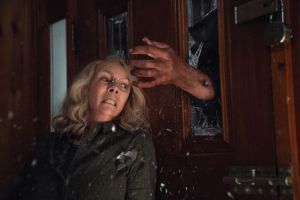 Let’s focus on that peculiar first half first. There were several points that made me shake my head and wonder if they were trying to be subtlety tongue-in-cheek or bad on purpose, and because of the pedigree behind the project, I had to give it the benefit of the doubt, but to what end? Why skewer horror tropes in a subtle way that could be construed as simply being bad instead? Why even do it for this franchise and then mostly drop it by the second half? There were several moments where I had to laugh and I wasn’t fully sure it was intended. This was my dilemma watching Halloween 2018 and I’m sure others will have a similar experience, scratching their heads and wondering why the movie is going the route that it is. Take for instance the horror trope of the bad babysitter. We have another situation where a nubile high school girl is going to invite her boyfriend over for some late-night action, nodding to the 1978 original film. Except the kid being babysat sees through everything and calls out his babysitter. He’s a street-smart kid who speaks with the voice of the knowing participant, like when he tells the boyfriend that he will die if he goes upstairs (spoiler alert: this kid is prophetic). There’s a string of kills that feel perfunctory, like the filmmakers have noticed that too much time has passed and have to satiate audience bloodlust to buy them another ten or so minutes of setup and characters. The kills themselves are lackluster. Even the gratuitous nudity is fleeting, confined to a quick flashback relating to young Michael Myers spying on his big sister (one of these days a slasher movie is going to be replete with wall-to-wall male nudity and no boobs just to mess with its target audience). There’s the trope of the ineffective police officer. After finding out Michael Myers is on the loose, an officer bluntly says, “What are we gonna do? Cancel Halloween?” The answer is, yes, you cancel the trick-or-treat activities for the town where this guy is clearly heading and you adequately warn the populace. You ask for assistance from anyone with a cell phone to broadcast the whereabouts of fugitive Michael Myers. The guy is pretty large and easy to spot, plus he’s not that traditionally fast. A citywide digital manhunt might have made for a more interesting movie premise with some genuine cultural commentary.
Or take for instance the stupid side characters meant to be fodder for the merciless kill count. The movie mysteriously gives these disposable characters little one-minute asides to present a glimpse of another story that we’re just not privy to. There’s the little kid who doesn’t want to go hunting and wants to be accepted by his father as a dancer. Okay, that’s a more interesting conflict than I thought, and then the dad immediately stops at the site of a bus crash with wandering chained inmates and says, “I’m gonna check this out, stay here.” It’s like Green and McBride gave us one page of characters from an indie drama and then had them smash back into idiotic plot devices making the most headache-inducing decisions. Another instance is a pair of cops debating over adult meals and bread. I appreciate the effort to try and flesh out the characters in a way that makes them feel more real, but then they have no larger bearing than being the next in a line of victims. There are other strange reminders that things just aren’t exact with the movie, at least for the first half. It’s this curiously overwrought, off sensation that keeps the audience from fully engaging, being told to possibly laugh with or at the movie.
 I also think the film is fundamentally flawed in its approach, namely by elevating Laurie’s granddaughter as a co-lead. Allyson is too removed from the situation to give an interesting perspective, so she becomes any other teenage heroine we’ve seen in scores of slasher cinema likely meant to appeal to a teenage ticket-buying audience. The real conflict and the real story is the relationship between Laurie and her estranged adult daughter. There is so much drama there to unpack and the movie would be far better had the filmmakers eliminated the majority of the extraneous characters and focused on these two women and their decades-long acrimony. Get rid of Allyson’s boyfriend, who gets way too much screen time to simply be jettisoned without resolution (his lone purpose seems to be disposing of her cell phone). Get rid of his friend, a supposed “nice guy” with his own entitlement issues. Get rid of the babysitter friend and her dumb boyfriend. Get rid of the cops. Get rid of the Doctor Loomis prison doctor replacement, nicknamed the “new Loomis.” Get rid of them all, including Allyson. I would have preferred Allyson being murdered in the middle of the second act as a means of raising the stakes and forcing Laurie and Karen together again. This is very much a PTSD film about the long ramifications of trauma and how it affects multiple generations. I would have loved seeing that play out in the interplay between Laurie and the daughter that she pushed away in an attempt to save her life. There is so much palpable drama there that I’m genuinely shocked how little Karen figures in Halloween 2018. It’s such wasted dramatic potential as well as a better focal point for the movie.
It’s the second half, and in particular the third act, that saved the movie for me. The finale is everything fans would want, transforming into a surging siege thriller built around Laurie’s well-armed abode. It’s here where the movie becomes a multi-generational fight to the finish and the Strode women must team up to fight the man responsible for the long lingering trauma that has defined their lives in innumerable ways. It’s a climax that feels elevated by the pull of history, and it’s terrific and terrifically satisfying. Watching Laurie stalk the house in search of Michael Myers, going from room to room and locking them down, is the first actually nervous sequence in the film, benefiting from the investment we have in Laurie as an avenging figure. It’s during this sequence where Curtis (Freaky Friday) and Greer (Jurassic World) remind us what wonderful actors they can be. It made me wish for my more realized version of the two of them and their relationship even more. This is where Green (Stronger) also demonstrates his best sense of geography and escalation. Beforehand there are a few nifty tracking shots, paying homage to the opening of the original, but they’re self-contained, congratulatory moments. It’s the finale that made me realize what this movie should have been from its first frame. Lucky for Halloween 2018 it ends a high note (excluding the cliche post-credit revelation).
 The newest Halloween movie has lit up the recent box-office charts and ensures this won’t be the last we see of Michael Myers and potentially old lady Laurie Strode. That’s kind of a shame because Green’s movie serves up a fitting finale for the series that could work as a capper for Laurie as a character and a survivor of trauma. But alas, the ringing of cash registers will be enough to extend the franchise and carry on more blood-letting adventures for the man in the William Shatner mask. Halloween 2018 starts off fairly rocky with a question concerning overall tone and intent. There’s humor that feels grafted on from other parallel reality versions of this story, somehow blurring together into a weird final product. The second half works much better than the first when it stops cracking wise and takes itself seriously enough to realize where the real drama lies, with Laurie facing down her demons and working together with the women of her family for maximum vengeance. Watching three generations of Strode women fighting together is a triumphant conclusion. It’s a shame that it won’t actually exist as a conclusion for that much longer.
Nate’s Grade: C+
Share this:

Ant-Man and the Wasp (2018)
 Coming off the cataclysm of Avengers: Infinity War, Marvel’s latest serves as a palate cleanser, a breezy and light-hearted comic adventure with little more on its mind than having fun with its possibilities and leaving the audience happy. The basic premise of a team of thieves that can shrink or expand at will calls for a light touch, and returning director Peyton Reed (Bring it On) and his team have a strong idea of what an Ant-Man movie should be. Ant-Man and the Wasp won’t blow anyone away with its story or characters but it hits a sweet spot of silly comic affability that kept me smiling.
Scott Lang (Paul Rudd) is close to ending his two-year house arrest following the events of the Berlin brawl in Captain America: Civil War. His old partner Hope Van Dyne (Evangeline Lily) a.k.a. the Wasp is working with her scientist father, Hank Pym (Michael Douglas), to discover the location of the missing Janet Van Dyne (Michelle Pfeiffer), lost for decades in the subatomic quantum realm. They need Scott’s help to steal the final parts necessary to complete their quantum field transporter. There are other forces looking to make use of Hank Pym’s technology, namely Ghost (Hannah John-Kamen), a woman who can phase through matter, and an unscrupulous local buyer (Walton Goggins) looking to profit. With the help of the Wasp, Scott Lang must protect his friends and allies so they can rescue Janet Van Dyne before she’s lost for good, and he cannot be caught before his house arrest period comes to an end or he’ll go to jail.
 When any action movie has unique circumstances, especially those in the superhero realm because of their unique powers, I crave the proper development of the concept and the action sequences to make clever and imaginative use of their available tools. If you have characters that can shrink, that can make other objects big or small, and there’s a villain that can phase, then I expect a thorough and fun implementation of these elements to separate the movie from others. It takes a while to get going, but once the streamlined exposition is behind us, including multiple instances of explaining the plot to the audience, Ant-Man and the Wasp zips by on its sheer sense of sprightly whimsy and visual wonder. Paul Rudd (Wet Hot American Summer) is still as effortlessly charming as ever and elevates every scene partner. When it’s moving, the film does a fine job at entertaining, with funny quips and charming actors and visual panache. When it slows things down to explain or introduce perfunctory characters (looking at you, Laurence Fishburne) that’s when it becomes less than mighty. Ant-Man and the Wasp kept me laughing throughout, especially with the triumphant return of series MVP Michael Pena (CHIPs) as the energetic, motor-mouthed Luis. There are enjoyable payoffs strewn throughout and solid comic asides. It doesn’t feel too jokey to the point that nobody involved cares. It feels like everyone is united with the same mission statement.
The final act in particular is a blast, as now we have our MacGuffin and all of the various teams vying for it in an elaborate series of chase scenes. The cars are racing back and forth, under and over one another, with characters constantly jockeying for top position. It’s an exciting flourish to a conclusion, and every time a car went tiny for a split-second escape, or an ordinary item like a Pez dispenser went huge to form an obstacle, I grew happier and happier. The screenwriters unleashed a flurry of fun and zippy action ideas. Some will balk at the lower level of stakes in the Ant-Man films, or their general aw-shucks silly charm, but I view both as a virtue. Just because it’s a superhero movie doesn’t mean there can’t be a healthy degree of amusement, if properly executed and applied.
 The villains are kept interesting enough, through concept or casting. With Ghost, here’s another character that can manipulate matter to her advantage. Her back-story is pretty ordinary (science experiment, looking for way to end pain/save her life) and kept mostly uncomplicated, as her plan is a matter of life and death. Hannah John-Kamen (Ready Player One) has a terrific look and physicality to her, but she’s lacking anything really memorable to do as a performer. Her character has some cool moves but that’s all. It feels like more could have been done with this antagonist. Then there’s genteel local criminal Sonny Burch who is given great gusto by Walton Goggins (The Hateful Eight). It’s like he simply plugged his Justified character’s smooth charisma. He’s a gentleman robber who has just enough self-awareness to acknowledge the absurd. A highlight of the film is an exchange between Goggins and Pena. He’s so good in such a relatively throwaway criminal role that I wish Marvel had saved Goggins for something grander down the line, something to really let his charisma seep into his wild, anarchic energy below the surface.
With all that said, the events involving the rescue of Janet Van Dyne are the weakest parts of the movie, and this saps the other Van Dyne characters as well. I just found myself caring very little for this excursion into the quantum realm, especially when we have fancy heists and opponents who can walk through walls. I understand the importance the rescue mission has with the other characters, but it didn’t feel that important to me. I was more invested in Scott’s ever-increasing near misses being caught breaking his house arrest, which was days away from being lifted by the FBI. Those scenes gave me the delightful Randall Park too (TV’s Fresh Off the Boat). Maybe it’s a casualty of the film’s genial tone, but I think the real culprit why I found myself unmoved is that the Janet rescue is the core storyline attached to Hope and Hank. Beforehand, Hank Pym served as a grumpy mentor figure for Scott, and now he’s mostly complaining about Scott’s exploits and how they invariably jeopardize the retrieval of his wife. Hope gets her spotlight, and name in the title, as Wasp, but she too is saddled with the same humdrum boring material. Lily (The Hobbit films) goes from scene to scene with a cloud of pinched annoyance. They’ve taken two characters who were more interesting in the first film, sanded off things that made them interesting, and bumped up their screen time, which is not a great formula. Everyone seems so irritable around this plotline, and when you haven’t invested much in it, that irritation becomes dangerously off-putting.
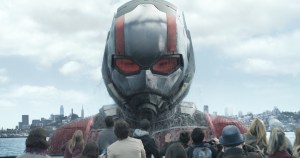 If you’re looking for silly, lighthearted escapism, Ant-Man and the Wasp is a superhero flick with entertainment as its top priority and enough infectious fun to achieve its more modest goal. It doesn’t follow the heist formula of the first film but it still finds room for comic asides and stacking payoffs for a lively, inventive final act. It’s definitely a lesser movie in the Marvel Cinematic Universe (MCU) but you need adventures in lower stakes too, especially after twenty movies and counting. Ant-Man and the Wasp could have used some fine-tuning and tightening, especially in its second act, and the quantum stuff definitely didn’t register for me, but it’s a mostly fun and acceptable summer escapade.
Nate’s Grade: B
Share this:

The 15:17 to Paris (2018)
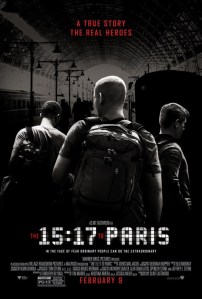
Spencer Stone, Alek Skarlatos, and Anthony Sadler were three ordinary servicemen taking a train ride into Paris when they found themselves in the middle of an armed terrorist attack. The three men rushes into danger, disarmed and subdued the attacker, and treated the injured on the scene. The 15:17 to Paris is a big screen movie directed by Clint Eastwood (American Sniper) that tells their life stories played by the men themselves. It got some of the worst reviews of Eastwood’s storied career (mine won’t be better). There are two gigantic miscalculations when it comes to 15:17 to Paris: 1) having the real-life subjects play the adult versions of themselves, and 2) that there was enough material here to fill out an engaging, enlightening, fulfilling film experience.
I assumed telling this real-life story as a movie was going to be a challenge to produce enough meaningful material to eek out a feature-length running time, and within the first five minutes I knew that I was doomed. We’re sitting down to two single moms discussing their boys with their classroom teacher, and that teacher literally says, “If you don’t medicate them now they’ll just self-medicate later. Statistically, boys of single moms are more likely to have problems.” My response: “What the hell, lady?!” This character was obviously engineered, from her very foundation, to be a walking, talking point of exposition and disagreement. No real teacher would ever utter these words so callously. It was this rude awakening that made me realize what a terribly written slog I was in for. At no point were these supporting characters going to come across as authentic human beings. Instead, it’s a world populated by robots with bad social skills or unshakable faith played by familiar actors (Judy Greer, Jenna Fischer, Thomas Lennon, Tony Hale, Jaleel White of all people). Also, what little kid has a Full Metal Jacket poster in his bedroom? Did he not understand what that movie was about?

These men can rightly serve as an inspiration, rising to the occasion in a true test of courage. No one will challenge the heroism. But what else is there to this story? The attack is presented as the framing device and as it plays out we segue into lengthy flashbacks about their lives leading up to this pivotal point in time. It’s just that these three men lived fairly uneventful, normal lives until finding themselves in a unique situation. We don’t seem to trace any significant, formative moments. Spending time with them as kids, then teens, and finally as adults doesn’t so much provide greater understanding of them as people as it does pad out the running time. We watch them get in trouble twice at school for not having a hall pass. We watch them watch football. We watch them endure training montages. We watch the trio tour the sights of Italy and eat gelato. We watch an Army team retrieve a backpack. We watch Spencer get demoted for not stitching properly. Seriously, this is given time. It’s not even until a full hour-plus into the movie before they confront the attack on the train.
Chronicling the lives of normal, real-life people under extraordinary circumstances is not by itself a fatal flaw, as evidenced by the masterful and mournful United 93. The power of empathy allows us to leap into a multitude of perspectives. However, with United 93 there was an ongoing story that could unfold because of the scope of events. There were developments, deadly complications, and the slow realization of what was happening, what was going to happen, and what needed to be done. With 15:17 to Paris, the attack is uncomplicated and over relatively quickly. There’s a reason Eastwood saves the train attack for the end because it cannot function as a sufficient movie plot on its own. Eastwood had a similar predicament with his previous film chronicling the heroism of the pilot who landed a plane on the Hudson River. The plane crash was thrilling and Tom Hanks added some layers to the portrayal of a man uncomfortable with the spotlight. 15:17 to Paris doesn’t even have that much. It’s a tedious trek to an all-too swift climax.
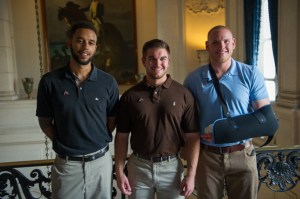
The other large miscalculation was having the real-life actors portray themselves. These guys just are not actors. I suppose Eastwood felt the real-life figures would best understand the emotions of each scene, in particular the attack, but another approach would be simply teaching actors. The forced verisimilitude feels like a marketing gimmick meant to appeal to a select audience. Making things more difficult is that these guys just aren’t that interesting as subjects. Sure there are broad strokes of characterization applied here and there but it’s with very minimal effort (see above for some of the just-had-to-include plot moments). This is another reason actors would have been preferable, because these guys’ lives don’t have to be interesting for my benefit. Their lives were not destined to one day entertain me on the big screen. They can simply be normal people. On the other hand, watching normal people do normal, boring things without a more enriching sense of introspection, personalities, or depth is like being trapped watching someone else’s home movies on a loop. Spencer Stone performs the best of his buds but none of them should expect a second career as an in-demand thespian.
I feel bad saying this but I really just didn’t care, and that’s because the movie gave me no reason to do so here. Yes, these three men are heroes and their sense of normality might lend itself toward a larger theme about the everyday capabilities of heroism, but there isn’t enough here to make me care beyond the train attack. The screenwriting does not present them as multi-dimensional characters and perhaps that’s because of the guys’ limitations as actors, exacerbating a spiral that only makes 15:17 to Paris less involving as it chases after the idol of authenticity. Eastwood is known for being an economical filmmaker but it feels like he should have been even more judicious here. The adherence to strictly the facts strips the film of some of its larger emotional power. There’s far too much filler and not enough substance to balance out 90-plus minutes. You’ll grow restless. If there’s a lesson to be learned from The 15:17 to Paris, let it be that every story needs a reason to exist and, when in doubt, trust actors to deliver that story.
Nate’s Grade: C-
Share this:

War for the Planet of the Apes (2017)
 Matt Reeves is a director who seems to have found his true calling refashioning the work of others. He remade the Swedish film Let the Right One In and improved it in several areas, though having Richard Jenkins and Chloe Grace Mortiz and a complete lack of CGI cats certainly helps. Then he inherited the new Apes franchise with 2014’s Dawn of the Planet of the Apes and the fledgling franchise didn’t miss a beat. I’ve been pleasantly surprised about these damn dirty apes ever since the 2011 prequel kicked things off. Reeves took control of the franchise and deepened it, following a very non-Hollywood playbook that embraced subtleties, patience, and quiet moments. It had its crazy apes action but it was a movie in service to its characters first and foremost. Reeves, serving as co-writer once more with Mark Bomback, brings the franchise to its natural and thrilling conclusion. War for the Planet of the Apes is a blockbuster with soul.
It’s been fifteen years after the outbreak of the devastating Simian Flu. Mankind is dwindling and falling victim to a secondary virus as well. There are only pockets of humans left and small militias taking the fight to the super-intelligent apes. Caesar (Andy Serkis once more in mo-cap) and his followers have taken refuge near a waterfall. The ape community is ambushed by soldiers led by The Colonel (Woody Harrelson). With their home exposed, Caesar splits up the remaining numbers and sends them out to find a new shelter. He is determined to seek out the Colonel for vengeance. Eventually the other apes are captured and put into a slave labor camp and Caesar and company must rescue them and flee mankind’s last gasp at staying atop the food chain.
 This may be one of the bleakest blockbusters in recent memory, especially when you consider that you’ll be actively cheering for the relative extinction of mankind by the end credits. Human beings are on the brink of extinction and this has drawn out the worst fight-or-flight instincts in the remaining numbers. This is about a final fight for survival on a visceral, us versus them level, and after two movies it should be abundantly clear what direction this is all heading. Even as humankind is doing a terrific job of wiping itself off the planet, humans still present a clear threat to the remaining apes. The second film explored how a working trust was improbable and unfathomable to many on both sides of the conflict because of the injustices. That’s pretty heady for a talking ape summer blockbuster. War closes the series with an even bigger and bleaker scenario, as humanity is entering the hospice phase of its social dominance. Roger Ebert referred to the movie theater as an empathy machine, and it’s amazing how far you will empathize with non-human characters. You will feel their triumphs, setbacks, loss, and anger, and you will root for the demise of mankind. We had a good run but maybe it’s time for a different species to become the caretakers of dear Mother Earth.
This is a final film that makes allusions to some of the darkest aspects of human history including, but not limited to, slavery and the Holocaust. It doesn’t traffic in black-and-white moral absolutes. There is good in some humans, several of whom were thrown into military service unprepared, under-trained, and simply existentially lost. There are apes that have made the calculation that it’s better to work with the humans than be killed. That’s right, there are collaborationist apes, and Reeves doesn’t look down on them. They too are allowed complexity and nuance and even the possibility of redemption. No one, man or ape, is beyond the capacity for compassion. You strongly feel their shame brought from moral compromises. It’s hard not to think about real-life analogues like the Jewish police that chose to work at the behest of their Nazi oppressors. They’re all still victims.
 There is great suffering and vengeance on display with War, and it’s all too easy for characters to justify it on a literal specist argument (“Apes aren’t people, and they would have done the same to you”). Caesar is trying his best to manage a fragile co-existence, though this becomes untenable with every new attack. It’s a cycle of violence that only knows recriminations and fear. This struggle is personalized for Caesar as he wrestles with his own selfish, self-destructive impulses to seek out vengeance at the potential cost of the greater good for apekind. Caesar is still haunted by the ghost of Koba (Toby Kebbel, in a welcomed albeit brief appearance), the ape he slew in the previous film. Koba could not let go of the hatred he carried for mankind for their myriad abuses. It consumed him at great cost. Caesar is battling these same impulses but is self-aware about his responsibilities as the leader of his people, but even that might not be enough to dissuade him. To have that kind of emotional conflict within a CGI animal who happens to be the protagonist in a major Hollywood production is simply remarkable.
I don’t want to scare people away. War for the Planet of the Apes is still a very entertaining and gripping movie that can easily warrant stuffing your face full of popcorn. It’s also a blockbuster with tremendous weight. At a steep 140 minutes long, I still could have used even more of this movie. Reeves displays an uncommon sense of patience for a blockbuster filmmaker given a big studio’s checkbook. A majority of this movie is silent and this doesn’t panic Reeves. The director tells his story in a visually appealing and accessible way that doesn’t scrimp on characterization and depth. For long stretches the only communication on screen is ape sign language (small quibble: the apes too often fail to look at one another when they do this). There’s a lingering hush over much of the film, allowing the audience to immerse themselves fully. When the action does heat up, the sounds and music matter more. The solemn silences, hunting parties, and tense standoffs should remind people of Westerns and prisoner-of-war movies. This is the second big-budget 2017 movie making direct Vietnam parallels concerning a man-vs-apes conflict. The prison escape structure of the second half is immediately compelling and just as well developed as what came before. The multiple points needed for an elaborate escape are presented one-by-one and organically. The mini-goals and geography are clear at all times. It leads to an all-out assault climax that is thrilling on multiple levels but also deeply satisfying because of the extensive legwork.
Serkis (Star Wars: The Force Awakens) has been the beating heart of this franchise and his work as Casaer has been a monumental achievement in the advancement of special effects (the series has never won an Oscar for its VFX). Caesar is a fully formed character with relatable flaws and doubts, and thanks to the wizards at Weta, you can see the nuances flash across his face. Serkis brings an impressive range of emotions to a non-human character that’s piercingly silent often. It’s a performance that deserves shared credit to the animators and to Serkis, who is deserving once again of awards consideration that I know will unfairly never come. Harrelson (Now You See Me 2) is definitely evoking a Colonel Kurtz homage, a man given over to the darkness. I appreciated that his character has a credible back-story that informs his actions. He’s not simply a maniacal madman. He respects Caesar and the apes, but views life as a zero-sum game, which makes genocide an appealing last-ditch option. The pleasant surprise among the cast is Steve Zahn (Captain Fantastic) who plays Bad Ape. It’s a character that seems prone to comic relief non-sequitors, but he’s scarred from his own survival experiences. This is an ape still going through PTSD and that presents even the comedic with a twinge of tragedy. The unseen actors behind their mo-cap performances breathe startling life into the numerous non-human characters, bringing unparalleled realism to this sci-fi realm.
 As the conclusion to the Apes prequel trilogy, you will also experience plenty of powerful emotions. I full-on cried twice and teared up about four other separate occasions. I cannot even remember another major summer tentpole that triggered that kind of emotional response (maybe a Pixar title or two). We’ve traveled with Caesar and several of these apes for three movies and six years. We’re emotionally invested. I knew I was going to lose it if anything happened to the orangutan, Maurice (I won’t confirm his fate). The community and empathy we’ve shared with these characters for three movies comes to a gratifying conclusion that feels appropriate, sizeable, and aching with potential for further adventures in this new and exciting world.
War for the Planet of the Apes is a movie so rewarding, so engaging, that you walk away angry that other Hollywood blockbusters can’t be this good or aren’t even trying to be. It’s emotionally rich and resonant, hitting you in the heart just as often as it quickens your pulse. Because of the investment in the characters, and their ongoing progression, we genuinely care about what happens like few blockbusters. The characters don’t take a backseat to the plot mechanics. Serkis and his amazing cast of mo-cap performers have delivered performances that rival live-action actors. There are clever nods to the original series that fans will enjoy but this Apes franchise has been its own beast from the beginning. This is a thoughtful, reflective, and contemplative film that fits well for such a thoughtful and contemplative series, and yet it still knows how to deliver stupendous sci-fi action (our lives are just that much more complete having watched an ape fire dual machine guns while riding a horse). I would declare Dawn as the best action of the trilogy, but I think War is the best movie because of how much everything matters and finishes. I think once the initial dust settles, it’s time to start thinking about this new Apes trilogy place among the all-time great movie trilogies. It’s been consistently enthralling from the beginning and has treated its animal cast as equally worthy of the greatest stories movies can deliver. War for the Planet of the Apes is powerful proof of what blockbuster filmmaking is capable of offering at its absolute finest.
Nate’s Grade: A


 nathanzoebl
You must be logged in to post a comment.