Blog Archives
Civil War (2024)
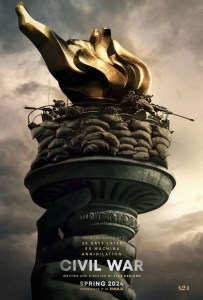 In writer/director Alex Garland’s Civil War, the United States has broken after a third-term president (Nick Offerman) has disbanded the FBI, attacked his own citizens, and used the power of the government to remain in office. The forces of California and Texas have joined an unlikely alliance to depose the American president. With this conflict escalating, we follow a group of journalists, primarily prize-winning war photographer Lee (Kirsten Dunst) and her would-be protege Jessie (Priscilla’s Cailee Spaeny), as they drive from New York down to D.C. with the intention of getting one more interview with the president before it all comes to a bloody end.
Civil War is Garland’s (Ex Machina, Men) attempt to evoke the ethos of journalists who stress merely trying to depict the world rather than question it. It’s a movie really about shared trauma, as these characters are plunged into a world where your neighbor might be stringing up men at the car wash. Garland’s sound design does him major credit at being able to keep his audience unsettled, not just in the melange of gunfire and explosions but also the absence of sound. After one close explosion, the sound drops completely for over a minute. During key parts of the frantic action, the movie will cut to the black and white images of our photographers, providing an immediate reprieve to contemplate as a depiction of what is taking place. Garland’s movie keeps things on a realistic level and is really less of a movie about an America on the brink than a story of journalists going about their dangerous job. It just so happens that instead of it being Afghanistan or Syria or other more familiar war zones that it’s the United States. As a simplified, point-A-to-point B war zone road trip, the movie works well enough, unless, that is, you’re expecting anything more than the quasi-objective documentation of terrible acts.
 However, that same ethos of centrist non-engagement also kept me struggling to really invest in the movie. I kept waiting for… simply more to happen, for insightful exchanges with our characters, for harrowing moments really crystallizing the state of this nation, for clues that gave a clearer picture of the larger conflicts and how the United States got to this point. For anyone expecting much from Offerman’s presidential character, he’s literally in the movie for, at best, two minutes. The far majority of the movie follows along on this road trip with these undeveloped characters taking pictures of occasionally upsetting and occasionally mundane events, although the totality of these events fails to add up to a clearer picture or more coherent social commentary. I just kept waiting for the characters to get more compelling, along with the conflict, and it just didn’t. I think we were following the wrong characters, people who are trying to stay objective and above it all, because then they’re just stand-ins for a camera and a microphone. We know Lee is a celebrated war photographer, and we get snippets of her past worldwide skirmishes, but what else do we know about her? What else do we know about Jessie, besides she’s an aspiring photographer who idolizes Lee? Does a mentorship relationship form? Not really. Does a rivalry form? Not really. The characters are just there, opaque, acting essentially no more than a stand-in for the audience. Now there’s a deeper conversation to be had about the ethics of embedded journalism, of documenting horror rather than intervening, or turning tragedy into digestible art for the masses. What are the ethics of non-intervention and holding to one’s moral objectivity in the face of the most objectionable? However, this is not the movie interested in having that conversation.
 The world of this civil war felt strangely unaffected. Hotels are going about their business, WiFi is carrying on, local shops are carrying on their discounts. I understand that part of this is meant to be surreal, the juxtaposition of a nation going about business as usual, even though these are unusual circumstances, but it makes the movie feel less significant, and the cavalier attitude of the characters continually betraying the stakes of the drama. If it’s just another assignment, how bad can it be? It makes Civil War feel like there’s hardly much of a civil war going on, which begs the question why even tackle this concept if this is it? If you have a movie about an American civil war but pussyfoot around on the why, forgo making the impact felt, and have the majority of the characters shrug it all off, then why are you even going through this story? The apolitical nature makes it so that many viewers will project their own perspectives and prejudices to fill out the unspoken history. It’s an interesting artistic decision but also one that nagged at me as a “both sides are bad” declaration to the middle to tell us that polarization is the real enemy.
There are a few sudden jolts and unsettling moments in the movie, but watching Civil War feels like I’m only watching 45% of a movie that will never be filled in. By that I don’t mean I need every point spoon-fed to my stupid plebeian brain, but I needed a movie where the time added up to something more substantial than “people do bad things during war.” I kept mentally going back to The Purge franchise, a concept that asked what people might do if they had a brief window of lawless freedom, and what that says about us as a society when the rules are put on hold. That is a franchise that embraces its genre roots and premise but finds ways to make its concept a reflection of our troubled times, and while it’s blunt commentary, when we have Nazis marching in the streets, maybe blunt times call for blunt commentary. Civil War feels so timid to say anything really that might be relevant to our current anxious and fractious political climate. Civil War was disappointing to the point that I was longing for the clarity and conviction of The Purge franchise.
 There are so many different versions of this story and concept that can prove compelling, so it’s all the more mystifying for me why Garland wanted to pick this version. Imagine a grueling Downfall-style drama about the last hours inside the White House of a three-term fascistic president who turned on his own people and enacted a bloody civil war, and imagine watching those closest to him reconcile with their own culpability as well as the resignation of the end coming for all of them and what they have done. Or even imagine a similar version about being behind enemy lines and looking for safe harbor, not knowing which American could be trustworthy and which might ultimately be a defector (as Jesse Plemons so ominously says in the movie’s intense high point, “Okay, but what kind of American are you?”). There’s a little known indie war movie from 2017 called Bushwick, starring Brittany Snow and Dave Bautista, that has a similar premise, following a military invasion of Brooklyn (Texas allies with the Southern states to attack the big cities, though they didn’t expect so much push-back from the locals). This is a better version of the similar modern civil war premise, with characters that are more compelling, a conflict that keeps upending our sense of safety, and some gutsy filmmaking choices, not all of them successful (the ending is too bleak and mean and deserved a ray of hope). There are myriad ways to tell this story and make it engaging and though-provoking, and Garland inexplicably chose this dull option. You could do worse than Civil War, but with such tantalizing dramatic potential, you could do better.
Nate’s Grade: C+
Share this:

Scoop (2024)
 It’s like a British Bombshell, a behind-the-scenes account of the media attempting to hold key political and public figures to account for gross sexual imposition. With the Netflix drama Scoop, it just so happens to be Prince Andrew (Rufus Sewell), interviewed by BBC TV journalist Emily Maitlis (Gillian Anderson) in 2019 and scrutinized heavily for his close ties to former friend Jeffrey Epstein. The first half of the movie is about the wheeling and dealing behind the scenes to garner the high-profile interview, to convince Andrew he can clear his name after his connections to Epstein resurfaced. The second half of the movie is pretty much just the interview, which is indeed interesting to watch for the inherent drama, but after a while, I wondered what this movie was adding that I otherwise couldn’t gain from simply watching the actual 2019 BBC interview? There aren’t really scintillating details or clever scheming to guarantee the interview or outfox its news rivals, and the newsroom personalities, lead by Billie Piper (Doctor Who), are hard-working and tireless stock types that don’t leave much of a distinct impression even after the time together. It’s really a plainly presented dramatized version of the infamous interview, the one where Andrew was professing his innocence against his Epstein accuser with his bizarre argument that he has a condition where his body doesn’t sweat. Anderson is great, and Sewell is terrific as he melds into this figure of complacent arrogance and self-delusion (the makeup is also quite impressive). Still, if you’re really interested in gaining further insight, you might be better off looking elsewhere, or just watching the original interview. Consider this a bonus epilogue to Netflix’s The Crown for any die-hard royal aficionados.
Nate’s Grade: B-
Share this:

She Said (2022)
 The fall of Harvey Weinstein was a long, long time coming, and the journalistic procedural drama She Said demonstrates just how hard it is to hold bad men accountable. This is a very similar movie to 2015’s Best Picture-winning Spotlight, following hard-nosed professionals as they go through beat-after-beat of assembling their case, following the leads, and convincing those who have been wronged to come forward and share their personal stories. The star is the details, the main crusading New York Times journalists (Carey Mulligan, Zoe Kazan) being defined by their tenacity and determination. As should be obvious, it’s galling how many people protected this awful man, including the police, because of how influential he was as a movie producer. Peeling back the layers of protection revolves around working on the niggling moral concerns of many who looked the other way, out of financial incentive or fear or disregard for rocking the “way things were.” When the expose picks up actual momentum, you can feel the same excitement of holding the powerful to account, even already knowing the end results that would land Weinstein in jail for the remainder of his life. It’s a simple yet effective approach. She Said is little more than a dramatized in-depth news article on its relevant subject, but the ensemble of actors give it a fire that simply scanning the written word can miss. The direction is very matter-of-fact, the writing is thoughtful though a bit heavy with data dumps, and outside of the victims narrating their experiences, or relatives discovering the extent of those experiences that have been kept hidden from them, there isn’t much sustainable tension. Much has been made of Samantha Morton’s one-scene wonder but I think Jennifer Ehle (Braveheart) does even more with her scenes as a victim choosing to speak during a health scare that reassess her thinking. I wish the movie had extrapolated about the entire film industry protecting abusers, but it keeps its focus squarely narrowed on taking down Weinstein. She Said is a worthy movie with a worthy subject and heavy in the details but maybe light on its own drama.
Nate’s Grade: B
Share this:

The French Dispatch (2021)
 Wes Anderson’s latest quirk-fest is his usual cavalcade of straight-laced absurdity, exquisite dollhouse-level production design, famous faces popping in for droll deadpans, and the overall air of not fully getting it. The French Dispatch is structured like you’re watching the issue of a news magazine come to visual life, meaning that the two-hour movie is comprised of mainly three lengthy vignettes and a couple of short asides. This narrative decision limits the emotional involvement and I found myself growing restless with each of the three segments. I was amused throughout but each felt like a short film that had been pushed beyond its breaking point. Perhaps that is Anderson’s wry, subtle point considering the entire journalistic voice of the movie feels like somebody made a movie in the style of one of those esoteric, supposedly “funny” New Yorker cartoons. It’s occasionally so arch and droll that it feels too removed from actual comedy. This is not the most accessible Anderson movie for a newbie; it’s very bourgeois in the kinds of people it follows, the stories it pursues, and the intellectual and political conflicts it demonstrates. The first and best segment follows Tilda Swinton discussing a heralded but imprisoned experimental artist (Benicio del Toro) who is dealing with the pressure to produce. The second segment follows Frances McDormand as she investigates a Parisian student union revolting against the ignorant powers that be. The third segment follows Jeffrey Wright recounting an assignment where he investigated a master police chef (not “chief”) and gets in the middle of a wacky hostage negotiation. Each of them has the requisite charm and random asides we’ve come to expect from Anderson, including a leotard-wearing strongman that is called upon by the police to help during the hostage crisis, but it felt more like a collection of overlong short films than a cohesive whole. If you’re already a fan, by all means, step into The French Dispatch. If you’re new to the idiosyncratic world of indie film’s most precise curator, then I’d advise starting with a more digestible and earlier Anderson entry. I enjoyed myself during stretches, was getting frustrated during other stretches, and I hope Anderson focuses more on the big picture of his next picture.
Nate’s Grade: C+
Share this:

Collective (2020)
 I already know the idea of watching a Romanian documentary is going to be a challenge for many, and that’s before I mention its core subject of government reforms, but this really is one of the best films of the year and worth your valuable time. Collective begins with a heavy metal band’s pyrotechnics catching fire at a club in 2015 (the title of the film), and from there the aftermath leads to journalists uncovering mismanaged hospitals, corrupt government officials, cozy relationships between big business and the mob, and preventable calamities. Collective is at turns fascinating, horrifying, dispiriting, aggravating, and always passionately compelling as a document of real-world journalism at the highest stages of moral righteousness.
 I’m surprised that the filmmakers managed to get such extraordinary access during such a tumultuous time. This is not a documentary where the experts talk to the camera with the distance of time, where the leading players recount their perspectives and contributions. You’re side-by-side with them in the moment as the news is being broken and challenged. It’s am amazing example of being at the right place and the right time, and then midway through the filmmakers get even more critical access. The health minister is forced to resign and a new, younger one is appointed in his stead. Vlad Voiculescu is determined to learn why mistakes have happened and to correct them. He’s uncovering just how deep the rot goes in the layers of Romanian governmental bureaucracy, and he’s invited the Collective cameras to follow him and his staff. He really seemed determined to make lasting change, and their conversations have a deep-sigh quality of realizing how normalized corruption has become. Going back and forth between the journalists uncovering the broadening extent of the corruption, and the government health officials trying to enact meaningful reforms and regulations, it’s like a good movie just reached greatness and you have the privilege to watch different sides of the crusade.
I thought the movie was initially going to be about the fire at the Collective club but it keeps transforming and metastasizing into something bigger and more damning. Early on, there is footage from within the club that terrible night and it is horrifying. We already know the fire and ensuing panic to escape lead to 27 people dying. The initial stunned reactions build and build as the fire spreads, covering the ceiling like a glowing blanket of death. It’s one of the scariest moments of footage I’ve ever seen. People died because the fire exits didn’t exist, because there was no system of safety inspections. The fire, very metaphorically, starts small but will become something far more widespread. The survivors of the fire should have been protected by the nation’s hospitals and medical care, and yet so many more died because of the consequences of corruption. The journalist team uncovers dilution of disinfectants, meaning the hospitals are awash in powerfully resistant bacteria. The hospital managers claimed otherwise and the initial minister of health pushes back, saying these same managers tested their disinfectants and they were up to code. From there it just grows and grows, as more people in the nation’s hospital system come forward to confess abuses and coverups and kickbacks to a thriving mob presence. There are suicides that sure look like murders later in this movie and I was not expecting that from its opening.
 The filmmaking is very forceful without being strident, very political without being preachy, and it’s always moving forward even when it’s constantly looking at the faults of the past. Director Alexander Nanau (Toto and His Sisters, The Prince of Nothingwood) lets the story and events do the talking, and we never break from the verité approach. A person is never directly talking to the camera, there are never any info-graphics or visual inserts. The editing is precise, and every scene gives you exactly what you need, though sometimes it might take a little while to understand the full context of the scene and the leap in time from the prior scene. The movie is 110 minutes and it feels like it’s sprinting because there is so much to cover. It doesn’t make the movie feel like it’s spread too thin, or we’re missing important deliberation and context, but it does require a viewer to stay more active to jump from moment to moment. Those 110 minutes are a clear indictment and examination on corruption and government negligence, but it lets the totality of the details and the horrors convey its message rather than overt appeals.
It’s in the concluding ten minutes that perhaps Collective reaches its most depressing and most damning point (there will be spoilers going forward with this paragraph). For the second half of the film, we’ve been following our crusading new health minister try and shake up a corrupt system and install real reforms that will improve the lives of the Romanian citizens. It’s inspiring and makes you go, “Ah, at least there are still good men in the world capable of enacting good when they are summoned to a level of power and authority.” It looks like he’s actually making real changes because there are many forces pushing against his dismantling of the status quo. Those that benefit from the graft and corruption of the old system, including criminal elements deeply entwined in the country’s infrastructure, push back through their media allies, and broadcasting personalities start questioning whether the health minister is being controlled by foreign influence. It’s familiar to those who have watched the outer reaches of conservative media over the past few decades (Romania’s own Fox News?), and it’s the same kind of slimy, nationalistic, and xenophobic rhetoric meant to alarm and distract. An election is looming in the coming weeks and our new health minister says the regulations can only be implemented if his party, the Socialist Democrats, retain power. Then they don’t. They lose by a lot. Like a historical loss. It was 2016, where nationalistic, anti-immigration forces swept into government across the world, and Collective ends on the depressing note without any silver lining of resolution. The hospital appoints a manager who is “legally unable to manage a hospital.” Just like that, all the hard work to break free from the intransigence has ended in a historical rebuke of the party literally trying to preserve life (“Forget it, Jake; it’s Chinatown”).
 Collective is an inspiring, crushing, and compelling document of corruption, incompetence, and the difficulty of trying to turn around a system too content on not doing more. The journalistic access is stunning and the movie is quietly powerful as we follow diligent politicians and reporters putting in the hard work of trying to make a difference and expose rampant maleficence. By the end, the good guys have taken some significant lumps, though I’ve since read that Vlad is back in the Romanian government again as the minister of health. What does this say about the crusaders for reform? To me, it says it’s a lot easier to go backwards once any reform is met with opposition from those who stand to benefit from a broken system continuing to remain broken. It’s all too easy to fall back on the status quo even when it’s deeply problematic because it’s “what the people know,” but that doesn’t make it good. Change is a powerful force, but it’s still worth fighting for, even if powerful forces of the world manage to unfairly delay that change. Collective is a movie everyone should watch if they want to become a journalist or work in government, and it should be on a shortlist of 2020 films to see for everyone else too.
Nate’s Grade: A-
Share this:

Bombshell (2019)
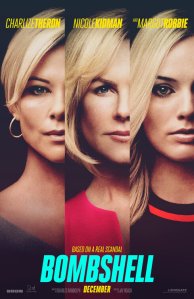 More an expose on toxic work environments than anything overtly political, Bombshell is an effective true-life drama about the many pitfalls, humiliations, traps, harassment, and compromises that women face in the workforce. We follow the downfall of news magnate Roger Ailes (John Lithgow), the imposing man who built the Fox News empire and who also bullied his employees and solicited sexual favors from the many women who were on his payroll. Margot Robbie plays an invented character meant to provide that entry point into Ailes the creep in creepy action. She’ll be harassed and pressured for sex by a man described as “Jabba the Hut,” and Robbie is terrific in her big dramatic moments portraying what the pressure and shame does for her ambitious anchor. The other two main characters wrestle with how far to go in a corporate culture of keeping secrets from very powerful, very dirty old men. Gretchen Carlson (Nicole Kidman) is consulting lawyers for a personal harassment lawsuit against Ailes the person, not Fox News, but she needs other women to come forward. Megyn Kelly (Charlize Theron) is struggling with the scrutiny she has endured after then-presidential candidate Donald Trump turns his small Twitter thumbs against her. The Fox bigwigs won’t go on record to defend her, and their journalists, because they need Trump to drive ratings. The movie uses several Big Short-style narrative tricks to help tell its sordid tale, including swapping narration and fourth-wall breaks; a run through of hearing from Ailes’ past victims in their own words is striking, especially a woman who says she was only 16 at the time. Part of the fun are the many many cameos and just watching actors portray different Fox News personalities (Richard Kind as Rudy Guiliani!). The makeup is also phenomenal and Theron looks unrecognizable as Kelly. The film itself doesn’t feel like it’s telling you anything you already don’t know about the subject; people will compromise their morals for personal gain, power leads to exploitation, women are unfairly treated, and it’s easier to fall in line than stand up to power. There’s still a thrill of watching the downfall of a serial abuser, and the acting is strong throughout, but Bombshell can’t shake the feeling of being a slicker, more star-studded TV movie version of recent history. Even with the urgency of the topic, it feels light, and not because of its use of incredulous humor. I could have used more behind-the-scenes details, and maybe that’s where Showtime’s miniseries The Loudest Voice comes in, retelling the same story with Russell Crowe as Ailes. It’s a solid movie on a very pertinent subject and worth seeing but it also makes me wish for a harder-hitting, more widely sourced expose on this very bad man who felt forever protected by the status quo of power.
Nate’s Grade: B
Share this:

A Beautiful Day in the Neighborhood (2019)
 As I was watching the sweetly good-natured but somewhat superficial 2018 documentary Won’t You Be My Neighbor?, I was left wondering if there could be a big screen story on minister-turned-children’s TV host Fred Rogers, a.k.a. “Mr. Rogers.” Was there enough material to open up this kind, affirming, gentle man into a three-dimensional character worthy of a deep dive? I’m still unsure after watching A Beautiful Day in the Neighborhood with Tom Hanks as Rogers. The filmmakers made the conscious decision to construct a fictional narrative of family strife between a father (Chris Cooper) and his son, Lloyd (Matthew Rhys), a magazine writer. Fred Rogers begins as an assignment for Lloyd and becomes the change agent, pushing Lloyd, in the gentlest and most empathetic manner, to reflect on his anger over his father’s abandonment and to work through his feelings and potentially forgive the old man. Like the PBS star, the movie is sweet and optimistic and gentle and just a little bit boring. The film follows a pretty strict formula of catharsis, and while it works it doesn’t make A Beautiful Day in the Neighborhood feel more than a TV-movie plot attached to a malnourished Fred Rogers biopic. I understand the storytelling difficulties of trying to make a soft-spoken man who isn’t given to long-winded speeches a starring role, so it makes sense that his presence would be a catalyst for a family in crisis, basically serving as therapist. Hanks is fitting and affecting, and once again I feel like there are glimmers of a more complex man underneath the persona we’ll never be treated to in any big screen examination, like about his struggles raising his own children, his crisis of relevancy late in life. The majority of the movie is a father/son story that is well acted and pretty much fine, and “pretty much fine” is a perfect description of the film as a whole. It’s nothing you’ll regret seeing and it will generally be uplifting and sincere, but it’s basically a 108-minute greeting card.
Nate’s Grade: B
Share this:

The Post (2017)
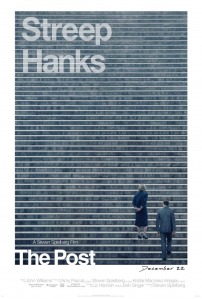 Even with the added timely benefit of championing a free press in the era of Trump, Steven Spielberg’s The Post is a movie held together by big speeches and Meryl Streep. It’s the story of the Pentagon Papers but it’s told from the wrong perspective. It’s told through the reference of whether the owner of the Washington Post (Streep) will or will not publish and how this endangers her family’s financial control over the newspaper. Plenty of dismissive men doubt her because she’s a woman. It’s simply one of the least interesting versions of an important story. Streep is her standard excellent self and has a few standout moments where you can actively see her character thinking. I just don’t understand why all these talented people put so much effort into telling this version of this story. I missed the active investigation of Spotlight, how one piece lead to another and the bigger picture emerged. There was an urgency there that is strangely lacking with The Post. The question of whether she will publish is already answered. It feels like the screenplay is designed for Big Important Speeches from Important People. Tom Hanks plays the gruff editor of the newspaper and Streep’s chief scene partner. They’re enjoyable to watch, as is the large collection of great supporting actors (Bradley Whitford, Carrie Coon, Sarah Paulson, Tracy Letts, Matthew Rhys, Jesse Plemons, Bruce Greenwood, and a Mr. Show reunion with David Cross and Bob Odenkirk). This is a movie that is easier to admire than like, but I don’t even know if I admire it that much. The film has to call attention to Streep’s big decision and the stakes involved by underlining just what she has to lose and reminding you how brave she’s being. When Streep leaves the U.S. Supreme Court, there’s a bevy of supportive women lined up to bask in her accomplishment. It’s a bit much and another reminder that The Post doesn’t think you’ll understand its major themes. It’s a perfectly acceptable Oscar-bait drama but it sells its subject short and its audience.
Nate’s Grade: B
Share this:

Tickled (2016) / The Lovers and the Despot (2016)
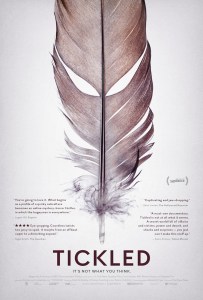 Some of the greatest stories are so bizarre and unpredictable that they could only come from real life, and documentaries are a terrific showcase for the strange-but-true realities of our world that have escaped notice. Two of the more fascinating documentaries of 2016 are also two of its most strange films that have to be seen to be believed. Tickled begins as an innocuous look into amateur competitive tickle videos online, an obvious minor fetish industry that swears by its integrity as legitimate sport. A curious New Zealand journalist is then beset by homophobic harassment, personal attacks, and legal threats, which only makes him more determined to unravel the source of these tickle videos. It reminds me of 2010’s Catfish except this story actually has the stakes that film ultimately lacked. It’s an investigative piece of journalism that involves working through false identities, spooked video participants that have had their lives ruined from persecution, interviewing lackeys on hidden video, and ultimately discovering the true source behind the web of lies, a man that uses his privileged class position and wealth to intimidate and exploit others. It’s a movie that starts off goofy and just becomes darker, more serious, and downright sad by the end, leaving you with the sinister impression of the danger of a powerful bully using Internet anonymity to satisfy his repressed kinks including emotional sadism. Tickled could be better as it feels disorganized and padded out, including an extended trip to another tickle fetish vendor. The ending leaves something to be desired as well and will send you online to scour for more information. Still, the story is naturally intriguing and the filmmakers don’t mess up a good thing by allowing the curiosity to grab an audience.
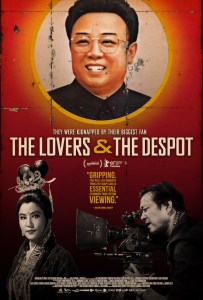 The same can be said for The Lovers and the Despot, a film that leaves you wanting more just because its own true-life tale is so engrossing and deserving of further examination. North Korean dictator Kim Jong-il was so frustrated with his country’s film industry that he kidnapped his favorite South Korean filmmaking husband and wife team, actress Choi Eun-hee and director Shin Sang-ok. The couple made over 17 films for the dictator and had to earn his trust before they could plot an escape. This is a fascinating story about the power and entitlement others feel of art, with Kim Jong-il desperate for world recognition through the cinematic arts. He gave the couple a blank check and unrivaled artistic freedom, enough that some in South Korea suspect that Shin defected to the North rather than having been kidnapped. There are astonishing gets for this doc, namely Kim Jong-il’s actual audio conversations secretly recorded by Choi Eun-hee. When the couple defected to an American embassy, the U.S. government had never heard the dictator’s voice before, and here it was thanks to an actress. It feels like there’s so much more to this story that’s missing, either from the interview subjects’ reticence to share too much or the filmmakers reluctance to embrace more of the Cold War paranoia thriller trappings the story can veer into. There are some insights into the despot but they mostly fall into daddy issues. The omnipresent threat of the dictator is best visually showcased during the funeral marches for his father and then eventually Kim Jong-il himself. The masses are in a state of hysterical grief that crosses into parody, until you realize that these people are adopting a false front to protect themselves and their families just like Choi. Those not “properly grieving” could be punished, and so the miles of people wailing and hyperventilating becomes a chilling symbol of the hold one man has on the country even after death. The Lovers and the Despot is a fascinating story of artists held hostage by their biggest fan, who happened to be a ruthless dictator. It’s naturally compelling but you wish that someone else might better realize its potential on a second crack.
Both films follow the powerful exploiting others for their whims and both movies leave a little something to be desired for, but both are prime examples on how documentaries can shine a light on the wealth of human experiences we wouldn’t believe in other movies.
Nate’s Grade:
Tickled: B
The Lovers and the Despot: B
Share this:

Spotlight (2015)
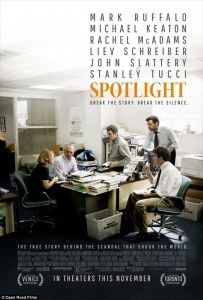 Spotlight is the true-story behind the 2002 expose into the Catholic Church’s cover-up of decades of sexual abuse and it is unflinching in its focus and animated by its outrage, which is the best and worst part of this awards-caliber movie. Writer/director Tom McCarthy (The Station Agent, Win Win) is a splendid curator of unlikely movie families, and with Spotlight he follows the titular investigative team (Michael Keaton, Rachel McAdams, Mark Ruffalo, Brian d’Arcy James) at the Boston Globe as they go about their jobs. That’s really about it. Over the course of two tightly packed hours, we watch as the Spotlight team chases down leads, goes through archives, interview subjects and know when to push harder and when to fall back, and day-by-day build their case to expose the massive corruption within the Church. It’s invigorating material and worthy of the careful and sincere reverence that McCarthy and co-writer Josh Singer have afforded, though the flurry of names can be difficult to keep track of. However, that’s about the extent of the movie. We don’t really get to know any of the journalists on much of a personal level or as a character; they are defined by their tenacity and competence. We don’t get much time for reflection or contemplation on the subject, especially its psychological impact on a majority Catholic city/staff, and the culpability of those within systems of power that chose to ignore rather than accept the monstrous truth. I don’t need more “movie moments” or emotionally manipulative flashbacks, per se. With its nose to the grindstone, Spotlight is an affecting and absorbing news article given life but it feels less like a fully formed movie of its own. It’s confidently directed, written, acted, and executed to perfection, and I feel like a cad even grumbling, but the ceiling for this movie could have been set higher had the filmmakers widened its focus.
Nate’s Grade: B+


 nathanzoebl
You must be logged in to post a comment.