Blog Archives
Exodus: Gods and Kings (2014)
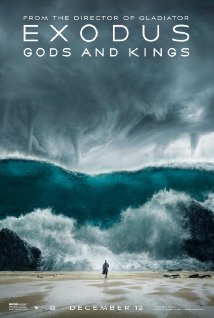 Director Ridley Scott (Prometheus) is back to work some of his Gladiator magic on another sword-and-sandals epic, the classic story of Moses, this time played by an ever-bedraggled and bearded Christian Bale. It’s been a banner year for Christianity at the movies, though most of those films have been uninspiring save for Darren Arofonsoky’s radical and ambitious Noah. That movie did not go over well with many conservative ticket-buyers. That’s the danger of adapting the biblical epics; pleasing the core audience means not straying too far from the accepted renditions of the oft-told tales, no matter if those popular renditions are themselves inerrant. Exodus: Gods and Kings is an underwhelming translation that slogs through the miraculous. It’s empty CGI wonder in place of authentic storytelling and emotional resonance.
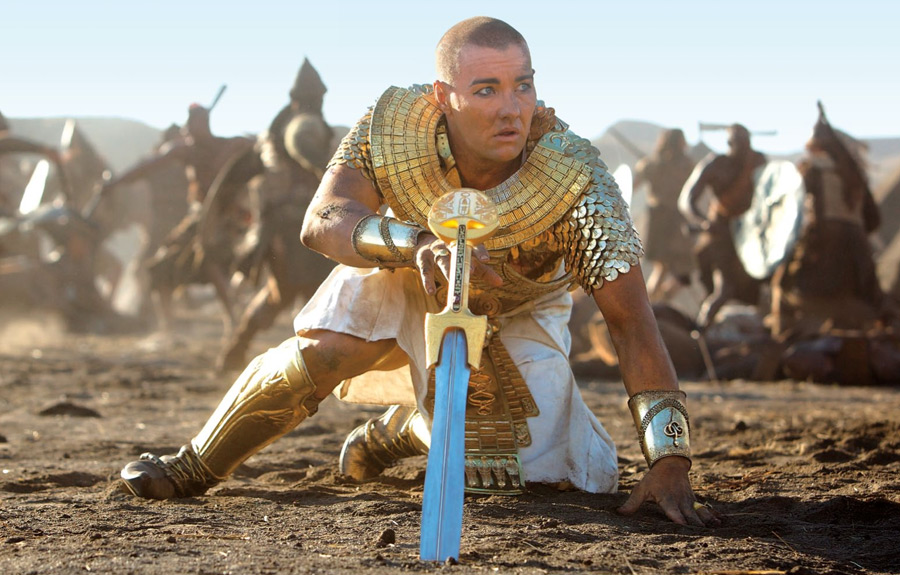
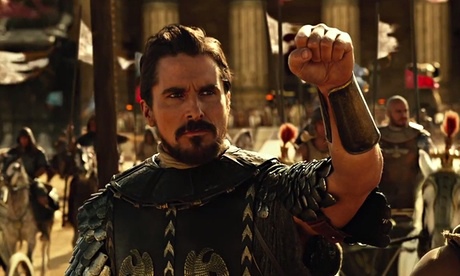 Exodus: Gods and Kings is a big-budget biblical epic that is startling in what it lacks, namely any amount of surprise or character development. The Moses story is oft told so I’m glad that Scott’s film skips ahead to when he’s already an adult. No basket in the reeds necessary. The brotherly conflict has little impact because, besides Moses, no other character is even given proper attention. Ramses (Joel Edgerton) is pretty much a thoughtless killer from the start, someone who ignores his advisers when it comes to political unrest and just slaughters his own starving people. He is by no means a dynamic villain in any shape, which is disappointing because the role has such dramatic potential. The 1998 animated film The Prince of Egypt did a better job exploring the relationship between Moses and Ramses, the pharaoh. In fact, that movie did just about everything better, and it had some pretty songs too. Stuck with a one-note villain, Exodus tries to round out Moses by making him a figure of doubt, providing an arc where he finds his voice when he finds his faith in Judaism. The film even sets it up so Moses has to go on his quest so he can just return home to his family. It’s a pretty strict hero’s journey storyline. Bale is plenty good. His character just isn’t that interesting nor is anyone else. Being stuck with this crew for 150 minutes can get to be rather tedious. That’s because the real emphasis has been put on the special effects and digital landscapes. The action is acceptable but little sticks in your memory. I’m starting to become numb to CGI spectacle. I’m starting to think back to the epics from the 1950s and 60s, when there was no such thing as computer effects. Every person assembled for those epic shots of huddled masses was a real human being, and that’s becoming more impressive with each and every CGI spectacle with copy-and-paste digital figurines.
Given the predictable nature of the plot, you try and find little moments or directions that stand out, something, anything to mark this newest Moses story as different from the numerous retellings of cinema’s past. Beyond the modern-day special effects and the strength of Scott as a visual artist, here is a short list of what you have to look forward to with Exodus: Gods and Kings.
1) An attempt to ground a biblical epic with realism. If conservative audiences were upset with Aronofsky’s portrayal of the Almighty in Noah, just wait till they see what Exodus does. It’s not that God has been removed from the tale, it’s just that God has been mitigated in a way as to provide a rational throughline to follow the supernatural events of the ten plagues and so on. There’s even the possibility that Moses is just seeing things in his head. Two different characters advise Moses that being hit on the head could be the real source for his visions of God. Joshua (Aaron Paul) spies on Moses at several points arguing with God but sees no one else. The plagues are presented in a cause and effect series of misfortunes, with the Nile being turned red due to a surge of crocodiles munching on all the fish. The polluted water then causes the frogs to leave en mass, which then causes them to die and bring about waves of flies, which bring disease to sicken the livestock as well as boils for the Egyptians. Some thought went into this, however, it’s all inconsequential with the Angel of Death killing the first-born sons. There’s no real skeptical or scientific method to explain away this one, as the biblical story relates, and so the grounded approach seems misplaced. It takes away the miraculous from the miracles. And yet, even the parting of the Red Sea is given this same approach, with it resembling low tides brought about by perhaps a meteor strike. The fantastical nature of the Moses story feels handicapped by going a more realistic route. This is not the biblical epic for realism.
 2) God is literally represented as a petulant child. When God does make Himself present for Moses, it’s in the form of a young child who is often mocking his servant. This is an angry often-bloodthirsty God who doesn’t appreciate being challenged. He complains how long Moses is taking with his war of attrition, and Moses says right back, “Impatient? You waited 400 years with ‘your people’ in slavery.” A fair complaint, and one that God does not answer.
3) Bad overall casting. Whitewashing isn’t exactly a new trend in Hollywood. It’s not like Charlton Heston looked particularly Middle Eastern. However, it’s rather distracting to watch a movie starring Egyptians and Middle Eastern Jews portrayed by a Welshman, an Australian, John Turturro, Sigoruney Weaver and Aaron Paul. I am a fan of each of these actors but they are just wrong for these parts. There are very little people of any color in the film despite the fact of its geographic location. Moses marries Zipporah, who several biblical scholars believe to be Ethiopian, which seems like a natural opportunity for some much-needed diversity in the cast. Just because you give Paul a bushy beard does not mean he suddenly resembles a Middle Eastern Jew. Same thing with adding eyeliner and bronzer to Edgerton. Then there’s the bizarre appearance of Scottish actor Ewen Bremner (The Rundown) as an adviser for the king. Taken as a whole, the whitewashing is a nagging distraction from a supposedly more grounded approach. To be fair, having relatively unknown (as far as the public is concerned) actors of appropriate ethnic background speaking in subtitled Hebrew and Egyptian sounds like a hard sell for a studio footing a $140 million dollar bill.
4) Lots of dead horses. This is not a friendly movie for our equine friends.
5) Moses sex. Well, sort of, because showing a husband and wife being physically intimate will still offend some of the more conservative ticket-buyers. So after Moses goes through his somewhat romantic question and answer ritual with his wife, the camera pans away from the disrobing couple and fades out. Classy. Now on to more CGI spectacle and carnage thank you very much.
I admire Noah more and more and think he successfully found a way to make a biblical epic accessible, challenging, and complex morally and psychologically without sparing the dark details. In essence he found a way to make a popular story new and interesting again. Scott’s Exodus just leaves me shrugging my shoulders. It’s by no means an appalling film. Beyond the big-budget modern-day spectacle, there isn’t enough going on in this movie to even justify all the expenses. The characters are too sketchy and given little to do, especially Ramses who pretty much just sneers and barks for 90 minutes. The costumes are fancy, the production design is lush, and all the technical elements are impeccable. It just falls woefully short on what should make you care. It feels like a product more than a film and a resonating story, and as such it’s delivered just in time for the Christmas shopping season for the masses. The film takes too long to get started and too long to conclude. It has some moments in the middle, especially when Moses is plotting his political insurrection, but as a whole Exodus is disappointingly lackluster. It ends up becoming empty and noisy CGI spectacle, with lots of yelling to compensate. It’s hard to find inspiration from the film when you’re checking your watch.
Nate’s Grade: C
Share this:

The Great Gatsby (2013)
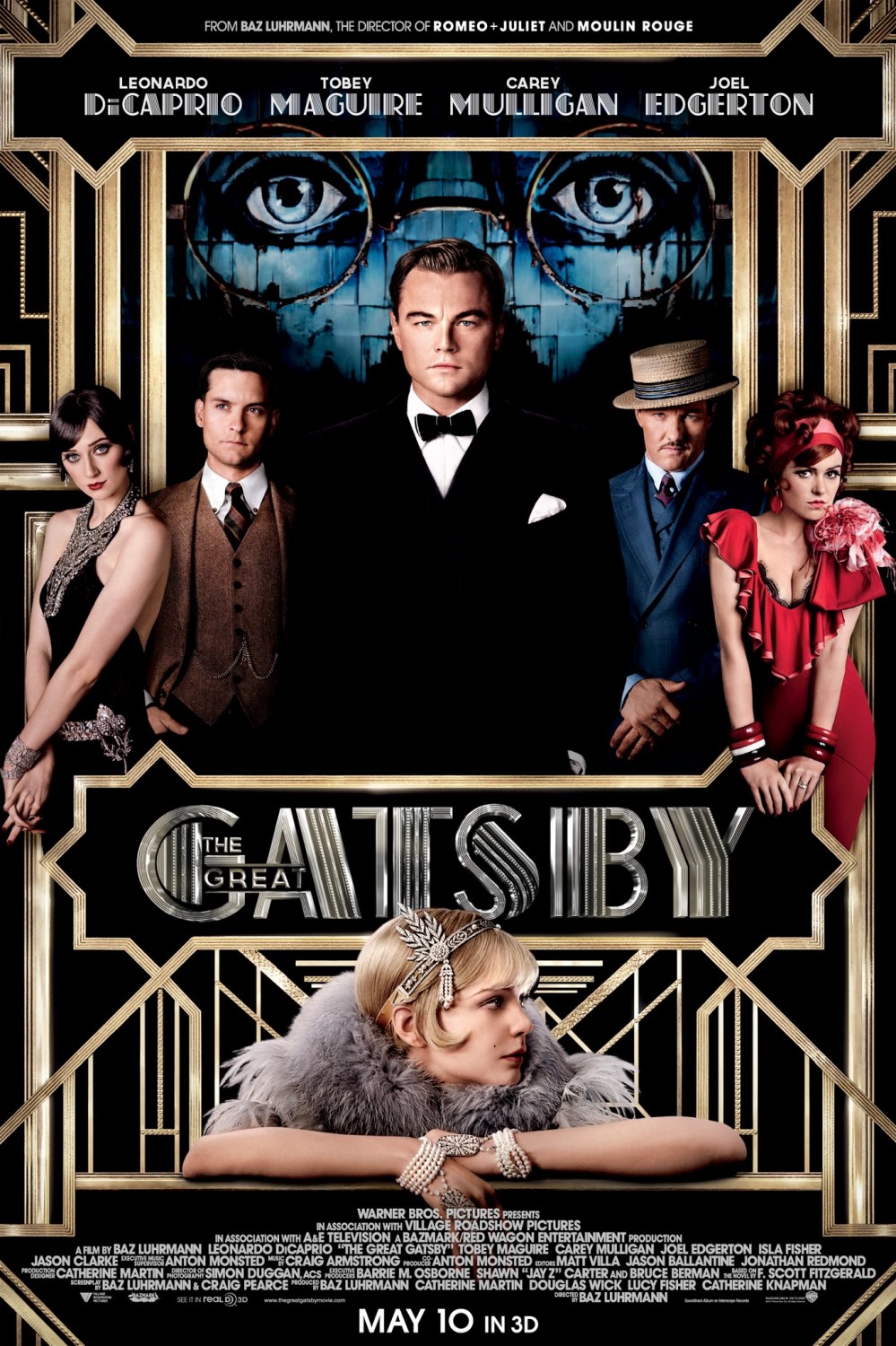 It seemed like some sort of educational mandate that every child in the United States was forced to read F. Scott Fitzgerald’s novel, The Great Gatsby, when they were in high school. In my highly unscientific number crunching, it appears that those who actually enjoyed the book are in the minority. I recall loathing it, but then again, when you’re fifteen, you sort of loath everything. Enter Australian director Baz Luhrmann, the showman who exploded the screen in razzle-dazzle run amok with Romeo and Juliet and Moulin Rouge!. Not exactly the kind of filmmaker one would fathom helming an adaptation of a classic of American literature, but the man’s style of excess seems like a suitable match for Fitzgerald’s tale of high-class overindulgence.
In 1922, young Nick Carraway (Tobey Maguire) moves to the hustle and bustle of New York City, living close to his cousin Daisy (Carey Mulligan) and her rich husband Tom Buchanan (Joel Edgerton). He’s also the neighbor to the mysterious and newly rich Jay Gatsby (Leonardo DiCaprio), a reclusive man who opens his mansion up to prolific bacchanals. Rumors persist in who he is and how he accrued his enormous fortune. He’s an old flame of Daisy’s and is secretly hoping she’ll attend one of his raucous soirees. He enlists Nick to help arrange a reunion for them, and soon enough Gatsby is already planning their happy future together again. Trouble is, Tom isn’t willing to lose his wife without a fight.
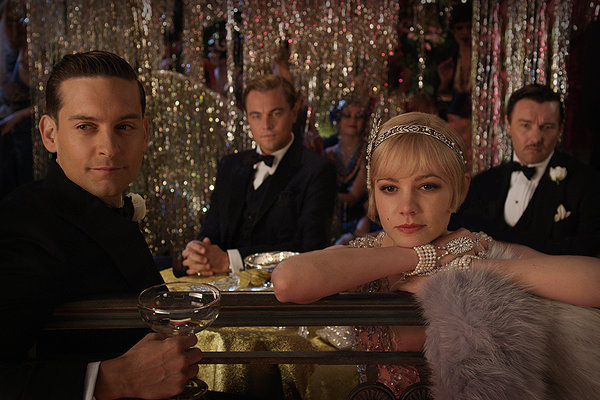 Luhrmann’s helming of The Great Gatsby gave me exactly what I desired and expected. The movie is convulsing with energy and the first hour just moves; be it the camerawork or people onscreen, for long stretches there always seems to be some degree of onscreen movement. Luhrmann’s signature theatrical visual atmosphere is vibrant, joyous, and a perfect translator of the lavish lifestyles of the noveau rich in the Roaring ‘20s. The man brings to startling life the sensations of being young, privileged, and carefree, and the use of anachronistic music, while not nearly as textured and thematically relevant as Moulin Rouge!, adds to the fun. I quite enjoyed a low-key, jazzy rendition of Beyonce’s “Crazy in Love.” Luhrmann’s style treks in excess but it’s a much more pleasant, dreamy, and altogether beguiling form of artistic indulgence than, say, Michael Bay or Tony Scott and their respective macho visual fetishes. Luhrmann’s campy sense of style doesn’t come across as overly suffocating or distracting, at least to my eyes, and instead the man injects his movies with tremendous energy, immersing you into a new world of old and modern. This is what Luhrmann was meant for. While other canonical classics of American literature may not survive a glitzy Lurhmann treatment, it’s a good match for the extravagant excess of Fitzgerald’s setting. Lurhmann’s visuals are glorious, and the 1920s era is brought to glamorous life. You get the sense it was one giant party without any lasting consequences (if you were rich enough).
The second half of the movie slows down considerably after the amped-up introduction. We’re caught up in the characters at this point, as we should be, and the Gatsby/Daisy reunion dominates the plot. I suppose there are only so many Busby Berkeley numbers and confetti explosions one can encounter before the plot has to set in. Lurhmann and company stick pretty faithfully to Fitzgerald’s plot (rest easy, lazy high school students of today and tomorrow). Interestingly, they are far more explicit about Gatsby’s securities fraud, knowingly making a fortune off junk bonds, all in the name to impress Daisy. There’s a genuine sense of respect for the source material even with Luhrmann’s visual flourishes; at several points, Fitzgerald’s text floats onscreen. The problem is that Luhrmann’s Gatsby is almost entirely focused on the romantic coupling of its title figure and Daisy. Gone is the class criticism, the indictment of the follies of the rich, the examination of the dark side of the American Dream, and the subtext. You’ll get plenty of shots of that famous green light, 20th century literature’s most famous and unsophisticated symbol (pay attention kids: green means go), but there’s little time for complexity. It’s not a screen romance worth this much attention, which is kind of the point, but when the movie clocks at over 2 hours and 20 minutes, drawing out a lackluster romance can become rather grating.
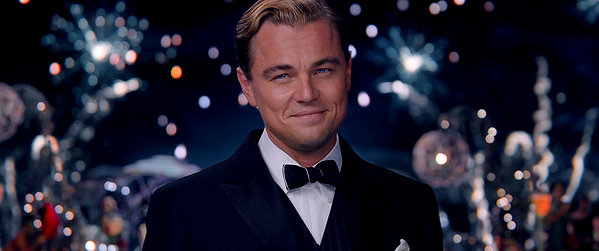 If I were top cite one major fault in Luhrmann’s incarnation, it’s that it adopts Nick’s fawning perspective and treats Gatsby as this tragic romantic figure. I acknowledge with every adaption there is a degree of interpretation, and romantic hero is certainly one facet of Gatsby, certainly how he sees himself, but by the end of Fitzgerald’s novel, Gatsby is really more a naïve man who really only sees Daisy as trophy, a prize for his reinvention and jumping up to the storied moneyed class. Daisy herself is certainly weak-willed but her emptiness (she says there’s nothing better than for a girl to be a “beautiful, young fool”) is part of the appeal to Gatsby because he can remake her however he wants. He’s not interested insomuch as her as a person. I don’t think that the Gatsby/Daisy escapades fall into the ranks of Great Tragic Couples of Literature, but that’s how Luhrmann interprets the novel, transforming Gatsby into a revered, honorable, and heartbreaking romantic we’re meant to shed a tear for. I suppose since we’re reliving the story through Nick’s perspective that events could be colored differently. Beyond just a simplistic analysis, it also misses the greater and more futile tragedy of a man trying to escape his past by obsessively recreating it.
The acting is fairly good all around, though the standout is certainly not whom you’d expect. DiCaprio (Django Unchained) is a good fit for the handsome social-climber, but the movie only asks him to play a limited range of emotions, rarely breaking free to show glimpses of the darker, less polished side of Gatsby’s carefully crafted image. He doesn’t exactly exude the charisma you would think necessary for the man, plus his use of “old sport” is so overly abundant it approaches farce. Maguire (Brothers) is a bit too earnest even for his role. It becomes readily clear within minutes that Maguire does not possess a voice for narration. The man is also a bit too old, at 37, to play the naïve, stars-in-his-eyes Nick Carraway. Mulligan (Shame) is given the least to work with since Daisy is meant to be rather opaque but she brings an extra amount of sympathy for a character trapped by her indecision and the demands of men. Easily the best actor in the bunch is Edgerton (Warrior). It would be easy for the guy to simply be the brutish heavy, the angry husband and easy to hate antagonist. Edgerton showcases a surprising depth, and you may find yourself feeling some smidge of sympathy for the lout.
Much like Luhrmann’s Moulin Rouge!, it’s an easy prediction that his Great Gatsby will be equally divisive. There will probably be as many critics decrying Luhrmann’s blitzkrieg of confetti and style as a campy cannibalization of an American classic as there will be celebrating the mad energy and obsequious reverence exhibited in a handsomely mounted, big-budget adaptation. The movie is even being presented in 3D, and did you ever think you’d hear the phrase “The Great Gatsby in 3D” in your life? I enjoyed Luhrmann’s gaudiness and indulgences, painting the screen with his vivid imagination. The impressive production design, costumes, visual effects, and overall visual aesthetic of the movie are a feast for the eyes. Now there are plenty of indulgences and excesses in the movie, particularly the emphasis on grand romance, but Gatsby entertains with few lags. Having read the book once and disliked it heartily in my youth, I can readily say that here is an example of where the movie is better than the book. Now if someone could go about making an improved version of The Lord of the Flies and A Tale of Two Cities, whatever you have to do, my teenage self will thank you kindly.
Nate’s Grade: B
Share this:

The Odd Life of Timothy Green (2012)
 My friend and critical colleague Ben Bailey had warned me about The Odd Life of Timothy Green and he quite eloquently voiced his dumbfounded musings, which I will try my best not to knowingly replicate though I’m sure there will be some carryover. But whatever he wrote could not prepare me for what I ultimately got with The Odd Life of Timothy Green. Ladies and gentlemen, I think this movie broke my brain.
Cindy and Jim Green (Jennifer Garner and Joel Edgerton) are having trouble conceiving a child. One night they write a list of their hopes for a future child, place them in a box, and bury this chest of hopes in their garden. The next day they are shocked to discover a child covered in dirt claiming to be their son, Timothy (CJ Adams). He is the physical manifestation of all those buried hopes and wishes with some leaves attached to his ankles. The Greens take their magical parenthood in stride, trying their best to impart wisdom to their new son. They teach the kid how to play soccer, stand up to bullies, and interact with other human beings. Timothy has a secret he can’t bring himself to tell his new mom and dad, but if you have a hard time figuring out what his leaves falling off means, then there’s nothing I can do for you.
I feel like I just watched a movie where every person on Earth is depicted as being insane. Not goofy, not eccentric, not a little funny, no, we’re talking get the butterfly nets and padded cells. I feel partially insane just having watched the film, obviously still suffering from a contact buzz of insanity. I accept suspension of disbelief and that fantasy-based family films are going to have a whimsical nature to them. We cannot apply every rule of reality and logic to them, and I accept this. But The Odd Life of Timothy Green seems to exist in a fractured, cracked version of our own world, where the most bizarre and fantastical elements are just given a halfhearted shoulder shrug. People react to otherworldly events as if they were doing laundry. Where’s the awe? Or, more so, where is the skepticism? Seriously, if anybody told you they grew a child from a garden, would you accept this notion at face value? Their great piece of proof is that the kid has leaves attached to his ankles. Don’t you think, I don’t know, the parents could have taped those on? Beyond one guy, no one investigates this strange botanical phenomenon or even has the slightest inclination to. Where’s the intellectual curiosity, people? It’s like everyone in town has a lobotomy. Is there not one person in this small town that will dare stand and say, “You know, I think I’m going to require more empirical evidence to buy the story that this kid was formerly plant food.” And then they ran that one man out of town on a rail and salted his land.
 Timothy Green tries to gather a slew of messages and feel-good moments; it’s just that none of them feel coherent or truly earned. The parents don’t feel like responsible or even interesting adults. I understand we’re not going to dwell too much on the disappointments of a couple unsuccessful in conceiving a child (this is becoming an odd trend for Garner), but I expected more than one good cry and a bottle of wine. I want to empathize with these people but the movie makes it impossible time and again with their nonsensical behavior; it’s like they’re adults as envisioned by a child. On that note, I think the movie probably makes more sense from a fantasy point of view to flip the participants. It seems more likely that a child would try and grow new, ideal parents only to learn a lesson about the duds they’re stuck with. The Green family members all work one note, whether it’s the snide sister (Rosemarie DeWitt), the slaphappy grandpappy (M. Emmet Walsh), or the emotionally distant dad (David Morse), it’s all a tiny nub of characterization that gets whittled down to nothing. And then Timothy just seems to step into everyone’s lives and change them forever with little effort. He gets an older girl to fall in love with him, his father to stand up for himself and his family, and all the not nice people in town to be somewhat less not nice. He gets his mom to speak her mind to her bitchy boss (Dianne Wiest), which ends up getting her fired, so it’s a mixed message.
You want a prime example of this film’s collective shared insanity? Take this line from one of the board members from the town pencil factory: “If this boy can have leaves on his ankles, then we can make a pencil out of leaves.” What exactly does one have to do with the other, you may ask? I suppose it’s some claptrap about what is truly possible or whatever. My apologies to Ben Bailey for treading ground he has examined closely, but this cautionary line of dialogue glows with the intensity of 100 neon signs. It’s everything that is wrong and crazy about this movie, and the fact that it is spoken without a hint of irony or humor is all the more galling.
Here’s my problem with Timothy the life-changer: the kid is a dullard. He has no personality, he has no real insights or perceptions into life, he’s not funny, he’s not that interesting, and he eerily stays in the same modulated emotional presence. I found this kid far more unintentionally creepy than endearing. On paper, Timothy Green sounds like it should be a horror film and not the saccharine family slop that it is. Timothy just comes across like a rather bland kid with some weird tendencies, like his repeated inclination to soak up any sunny opportunity to photosynthesize (he gives Scott Stapp a run for his arms-wide-open pose throne). If a character is going to touch people’s lives and change their perspectives on life, then at least make that person fitting of praise. This kid just seems like a hazy mystic that’s playing it as he goes. Come to think of it, did anyone see him do anything superhuman? Cindy and Jim didn’t even find him in the garden, only inside their home covered in dirt. Who’s to say that young Timothy Green wasn’t a con artist this whole time?
 Then, likely as a defensive means to soothe my ailing brain, I started coming up with my own version of where Timothy Green should have gone. The ability to write down a bunch of general attributes and then grow a child seems too good to pass up. I desire more of this unique child cultivation process. For instance, Cindy and Jim want their kid to rock out as a musician, but they simply write “rocks” on their slip of paper before burying it. How is the magical entity that raises mutant plant kids going to be able to understand what the family intends with this vague entry? What if Timothy Green was born with rocks in his head? I wanted the film to simply turn into a comical version of The Monkey’s Paw, where every new version of Timothy Green would go horribly wrong. The first was born and then immediately suffocated because Cindy and Jim forgot to write “working lungs.” Then there would be the Timothy born with a “hunger for life” and become a cannibalistic plant zombie. Or the Timothy born with “his mother’s heart” and then upon his birth Cindy’s heart would go missing. What I wanted was a macabre trial and error game where the would-be parents had to refine exactly what they were asking for with the nondescript magical being in charge of answering hopeful parents. I want The Odd Lives and Deaths of Timothy Green and I want Cindy and Jim to have to bury all the malfunctioning prototypes in the same garden. Then, when they do perfect their perfect kid, the police find a yard littered with the corpses of children and haul them away.
The movie is told through the framing device of the Greens telling their story to the adoption agency, and why this adoption agency continues to listen after, “We grew a boy in our yard,” is beyond my guess. In a film breaking every boundary of believability known to mankind, this aspect to me seems the most incredulous. This is an adoption agency with standards and rules to follow, and to think they would allow a couple to drone on and on about their magical child that grew from a garden and changed people’s lives, instead of calling security and having them escorted from the premises, followed home, and then have their home exhumed for human remains of this child, is beyond me. And then, spoiler alert, they get a kid in the end. What adoption agency could reasonably and responsibly allow these two people, with no physical shred of evidence about their magical child other than some leaves and testimonies, to care for another human being?
Allow me to also question the sincerity of these two damaged people especially concerning their desire for a child. It sure seems like Cindy and Jim are planning on using their present and/or future child as means of settling some longstanding scores between relatives. When it looks like Timothy is finally going to do well in soccer, that’s when they pounce, airing out their resentments. Cindy brattily unloads against her sister: “I’ve had to listen to your perfect kids, well look at my kid! That’s my kid!” And then Jim finally let’s his distant father have a piece of his mind: “I could have been a good player too, dad. I had skills. If only you would have been more supportive.” Am I supposed to find any of this funny, because it comes across as far more sad. I feel like the reason that Cindy and Jim want a child is to desperately prove to their family that they are superior parents. It feels like one very crazy way of proving a point and one where the child will suffer, especially if he or she cannot live to a degree of excellence to provide mom and dad filial ammunition. Another example: both Cindy and Jim are oddly very jealous over the relationship their pseudo son forms with the slightly older gal, Joni (Odeya Rush). They try and talk him out of spending time with her, arguing there are so many fish in the sea for him to pay attention to. Are you really laying the argument that a 10-year-old should be playing the field? It also seems weirdly petty and controlling for two supposed adults to be jealous that their son chooses to spend part of his waking hours with another human being. So, does that sound like a loving and healthy family?
The Odd Life of Timothy Green is certainly odd but probably not for the reasons that Disney or the filmmakers had in mind. It feels like it exists in an alternative universe where everyone lacks any common sense, curiosity, or relatable human emotions. Nobody acts like a recognizable human being in this film, not for a single second. These people are all zombies, cowed into the cult of Timothy, the magical and, ultimately, messianic figure. But allow me to declare the emperor has no clothes. This Timothy is not worthy of the adulation he receives. He walks around like an ecological Forrest Gump, spitting sappy platitudes and changing lives with the insipid nature of all these easy messages. I wish I could say there was one genuine moment in this movie, but I cannot. It takes a magical premise and suffocates it with unearned solemnity. Why can’t a movie about growing a kid in your garden try and be, you know, fun? Well, I suppose embarrassing music recitals and kids getting hit in the head could be mistaken for fun, but I prefer a well developed story, characters I care about, and a genuine sense of enchantment to go with the supernatural. If we can make a movie about a kid with leaves on his ankles, then we can turn any sort of half-formed maudlin pap into family entertainment. Kids deserve better than The Odd Life of Timothy Green, and, for the record, so do plants.
Nate’s Grade: D
Share this:

Warrior (2011)
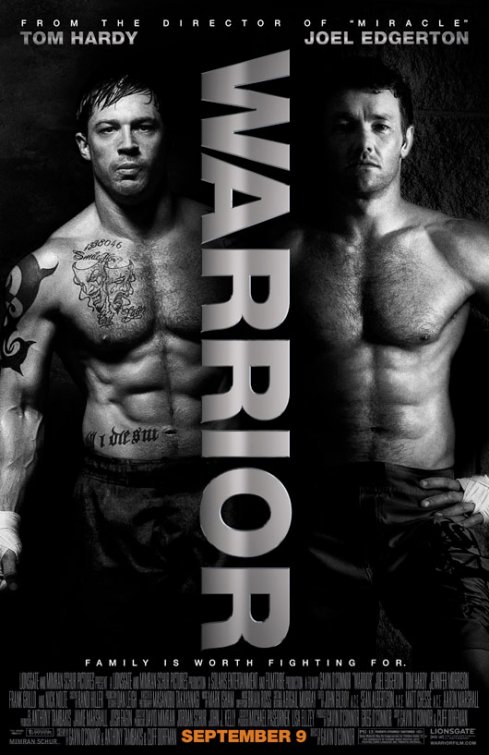 This may be a mixed martial arts (MMA) movie in appearance, but really Warrior is put together like a traditional boxing movie. Director/co-writer Gavin O’Connor (Miracle) takes a kitchen-sink approach to storytelling; just about every damn dramatic thing you can think of, short of emergency baby deliveries, is stuffed into this movie. You’ve got two brothers, one a hard luck school teacher (Joel Edgerton) trying to save the bank from taking his home (his family is broke due to his sick daughter’s medical condition), and the other (Tom Hardy) an Iraq War vet who saved lives and wants no glory, for he’s haunted by the men in his platoon who did not survive. Add a drunken father (Nick Nolte) trying to live life on the straight-and-narrow who wants to get back in his sons’ good graces, the teacher’s community rallying around him, the Marine’s comrades in service rallying around him, and some major personal issues between brothers (Hardy feels that his bro abandoned him and their sick mother), and two competing underdog tales, and my God, it’s hard not to feel beaten into submission. But damn if it isn’t effective stuff. I was tearing up at multiple points, completely sucked into the drama, riveted by the brutal, adrenaline-pumping MMA fight scenes, and pining for family reconciliation. Hardy and Edgerton flex more than their muscles on screen; each gives terse, heartbreaking, completely convincing performances as broken-down men struggling for redemption. You don’t have to no a lick about MMA to get hooked by the heavy emotional beats of the movie. Warrior is by no means a subtle movie, but it pushes all the sports genre buttons expertly, presenting a gratifying, affecting meat-and-potatoes drama that grown men are given permission to get weepy over.
Nate’s Grade: A-
Share this:

The Thing (2011)
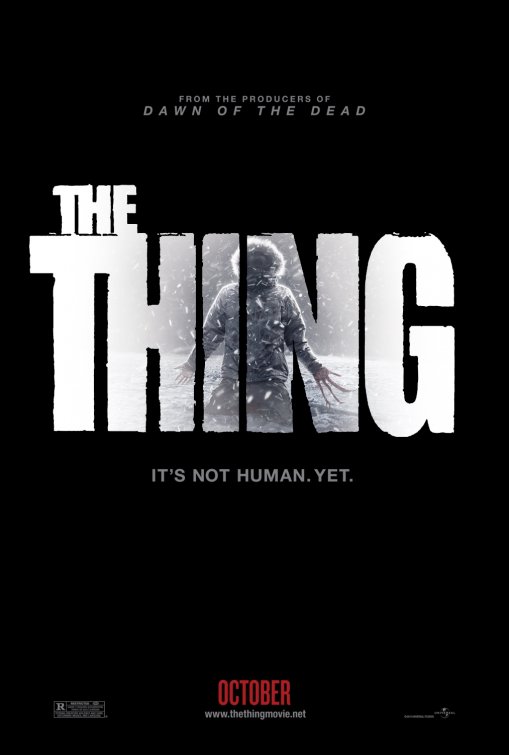 Has any modern filmmaker endured more crappy remakes of their films than John Carpenter? The man has suffered through remakes of Halloween, The Fog, Assault on Precinct 13, and now his 1982 creep-fest The Thing, itself a remake of the 1951 Cold War allegory, The Thing From Another World, gets the same awful treatment. This new Thing is some hybrid of remake and prequel, because it’s set before the events of the 1982 film but it pretty much follows the same overall plot. Once again a group of scientists (this time they’re Norwegian!) on a remote Antarctic outpost discovers an alien body buried in the ice. Once again the alien breaks loose and can assume the fleshy form of man. But this new film forgoes the rampant paranoia and rising tension of Carpenter’s film for cheap Boogeyman thrills. The alien monster is introduced early and the rest of the film succumbs to people looking around pensively, afraid it will jump out and attack. This alien creation is an odd quirk of evolution; a species that seems to be made of nothing but gnashing teeth, spindly legs, and vaginal imagery. How these things built and fly spaceships, I have no idea. Some of the gore effects are crafty and stomach-churning, but nothing is as memorable as the practical effects used sparingly and to great effect in the 1982 flick. This Thing is too much of a familiar monster to make an impact.
Nate’s Grade: C
Share this:

Legend of the Guardians: The Owls of Ga’Hoole (2010)
 This lushly animated tale about good owls, and bad owls, but mostly owls feels indebted to Don Bluth’s The Secret of NIHM. There’s a legendary story about the guardians who would save the… remaining owls? The plot doesn’t ever really leap beyond the basic fantasy concepts of good and evil, heroic and manipulative. It’s hard for the tale’s drama to reach grandiose heights because, well, it’s owls. Not anthropomorphic owls, pretty much plain old owls. Some characters were just hard to distinguish between. I can firmly say that some things work better on page than screen, and descriptions of grand owl societies and owl-on-owl combat are definitely items that, when fully realized in such a literal fashion, just come across as goofy. Being directed by Zack Snyder (300, Watchmen), the movie looks gorgeously rendered but fails to leave any emotional mark for anybody who has ever seen a scrappy band of misfits topple the mean bad guys. The action follows the Snyder fast-slow-fast visual motif, which allows the audience opportunities to drink in the visual effects work. The mostly Australian vocal cast, plus Helen Mirren, provides some levels of amusement, but it’s the story that ultimately disappoints. Legends of the Guardians looks fantastic, but it’s story is far from legendary. And they needed to have a pop song by Owl City because the man has “owl” in his name, apparently.
Nate’s Grade: C+
Share this:

Smokin’ Aces (2007)
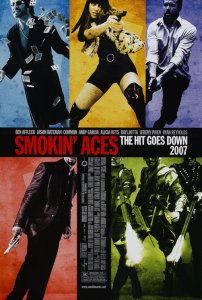 Writer/director Joe Carnahan (Narc) wants to impress an audience so bad with his muscular and macho gangster flick, but his Smokin’ Aces is vapid, nihilistic, and opines not to simply be a Tarantino rip-off, but a rip-off of a Tarantino rip-off. The premise seems ripe enough as we follow a rogue’s gallery of hitmen and killers trying to be the first to knock off a mob snitch/Vegas magician (Jeremy Piven) for a million dollar bounty. The colorful characters are introduced and some are quickly and unexpectedly taken out, but Carnahan never fully knows what to do with his bushel of baddies after he establishes their character quirks. The killers don’t really interact that much with one another and some of them hardly have any screen time at all; perhaps less would have been more in this jumbled stew. Carnahan throws out a few nifty visual tricks but it’s all superfluous and empty. Smokin’ Aces moves quickly, doesn’t make much sense in the beginning and end, and little to any of the characters have satisfying conclusions. So much of the writing feels like lame macho posturing without anything new or interesting to add to an overstuffed shoot-em-up. There are cops, robbers, plenty of gunfire, lesbians, and all sorts of convoluted twists, but it never holds together. Carnahan throws a lot of different elements together but they never extend beyond the elemental stage, so every storyline and character feels like an introduction that?s never capped off. The man has no idea what to do with what he’s started, and a karate kid on Ritalin is all the proof I need. Guy Ritchie did this territory far better service with the marvelously entertaining 2001 film Snatch. Rent that instead and save yourself the headache.
Nate’s Grade: D+


 nathanzoebl
You must be logged in to post a comment.