Blog Archives

Wicked: For Good (2025)

To paraphrase a famous debate line, I knew Wicked, Wicked was one of my top films of 2024, and you, Wicked: For Good, are no Wicked. Obviously that’s not completely true as For Good is the second half of the adaptation of the popular Broadway musical, of which only the first act compromised the prior movie released a year ago. The problem was that the first Wicked movie felt complete, and had there never been another second after, it would have served as a fitting and even moving portrait of the unknown back-story to the Wicked Witch of the West and the implied propaganda that would taint the perception of the citizens of Oz. The movie was two hours and forty minutes but it felt extremely well-paced and developed. It felt, more or less, complete, even though I know it was only adapting half the musical. In short, it did too good of a job, and now Wicked: For Good suffers as a sequel because what’s left to tell just isn’t as compelling or as emotionally or thematically coherent as its charming predecessor. Plus, all the banger songs were clearly in the first movie.

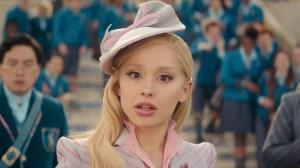
After the events of the first movie, Elphaba (Cynthia Erivio) has assumed the mantle of the Wicked Witch of the West and is sabotaging the Wizard of Oz’s (Jeff Goldblum) plans at expansion and animal abuse. Glinda (Ariana Grande) is the Wizard’s public ambassador and the “good witch” to inspire the masses, even though she doesn’t possess actual magical abilities. Glinda wishes dearly that Elphaba will change her mind and decide to work with her and the Wizard. However, Elphaba wants to expose corruption, and the Wizard is at the top of her list of the corrupt and powerful needing to be toppled for good.

For Good suffers from the adaptation struggles the 2024 Wicked film was able to avoid. The first movie was an effervescent treat built upon a poignant friendship and some killer songs given the full showstopper visual treatment. It was a vibrant adaptation, and while it expanded upon the stage show significantly, the extra time with the characters felt like breathing space, and it all contributed to what felt to me like an extremely well paced and well developed and arguably complete movie experience. Now the second act of a musical is almost always the shorter of the two, and For Good is about 30 minutes shorter than its predecessor. The filmmakers even added two new songs for Oscar eligibility and further padding, neither of which are winners (more on the songs later in the review). That sense of care is not present in For Good, as characters are frustratingly repeating beats they already worked through. Take for instance Glinda, who begins the first movie as an entitled popular girl used to getting her own way, and by the end of the movie, she’s grown to see the world differently and through her sisterly friendship with Elphaba, she has a more empathetic and grounded perspective. She has already changed for the better, and yet in For Good it feels like the movie kicks her character growth backwards. She has to again learn that maybe the Wizard and others are not the best people in charge just because they are. Wicked is a victim of its own success. The character development and arc was so well realized in the first movie that Glinda feels like she’s repeating lessons she’s already learned. I also don’t buy Elphaba being seriously tempted by the Wizard’s offer of collaboration after all she experienced and learned earlier. It’s irksome to have the characters seem curiously different from where we left them in 2024’s Wicked. There is also a character relationship revelation that I and many others had figured out FROM THE OPENING SCENE of the first movie. Behold, dear reader, For Good doesn’t even address this until the last twenty minutes of the movie and it does absolutely nothing with this revelation. I was flabbergasted.

The biggest time-waster and padding is when Wicked drags The Wizard of Oz characters and plot incidents awkwardly into its own universe. Granted, the entire enterprise is supposed to be the unknown back-story for the villain of The Wizard of Oz which gives it its identity. Except Dorothy and her lot are not essential at all to telling this story, as evident with the sense that the 2024 Wicked could feel complete. Dorothy and her motley crew of locals, some of whom are made up of previously established characters, are given the Rosencrantz and Gildenstern treatment, meaning they’re primarily kept off-screen and incidental. You don’t even see Dorothy’s face once. These characters feel annoyingly tacked-on and inconsequential to the story we’ve already spent three hours with. They’re knowing nods for the audience and they’re also making efforts to better pad out the running time. I don’t fully comprehend their importance in this new retelling. The treacherous Madame Morrible (Michelle Yeoh) sees the presence of Dorothy as an advantageous development, like she can use her as a Chosen One to thwart Elphaba. It’s never remotely explained why this makes sense. Why this person versus any other Oz citizen? Dorothy possesses special shoes but we’ve seen what can be accomplished with them. They’re not really some superpower or a weapon, more an item of personal attachment for Elphaba she would like returned. In this retelling, the entire inclusion of Dorothy and her friends is a means to an end for a public ruse. It might seem odd to say this Wizard of Oz back-story would have been better minus Dorothy but there it is.

Now it’s time to discuss the actual songs for this movie musical. The best known and most popular tunes were all in the first act and thus the first movie. The songs for For Good are a combination of middling ballads and continuation of the leitmotifs and themes of the previous one. There’s perhaps a bigger emotional current when characters bring back melodies and lyrics from the first movie to expand or contrast, like “I’m Not That Girl.” Did you want another song with Goldblum singing? The biggest number is “For Good” where Elphaba and Glinda face off and admit their shared sisterly love for one another, but again this was already established by the end of 2024’s Wicked. It’s more explicitly stated through song but the sentiment was evident to me already. Adding further disappointment, returning director John M. Chu (Into the Heights, Crazy Rich Asians) lacks the same thoughtful staging of the musical numbers in this edition. He is a filmmaker who innately knows how to adapt stage musicals into the medium of film, and he did so splendidly with 2024’s Wicked. With For Good, the staging lacks a real immersion and visual dynamism, often murky or overly saturated, like “No Good Deed” being performed almost entirely with intrusive sunsetting silhouettes dominating the screen. The less engaging songs, added with less engaging visual staging, make the movie feel longer and less jubilant. I don’t know if “For Good” has the intended emotional crescendo simply because this movie isn’t nearly as good.

As a personal note, the 2024 Wicked was the last movie I saw in theaters with my father while he was alive. We were supposed to see Gladiator II together as a family after Thanksgiving but he wasn’t feeling up to it, and then a little more than two weeks later he was unresponsive. I’m happy Wicked was such a pleasant and enjoyable experience for him, but as we left the theater, he asked me, “Wasn’t there supposed to be more?” We had seen the stage show when it toured through our city many years ago, and I remarked that there was going to be a whole second movie adapting the second act of the musical and it was going to be released in a year. He nodded and I felt the silent acknowledgement shared between us: he would not be around to see the conclusion, that it was a future unavailable to him. So it’s hard for me to not have some melancholy feelings with For Good, and I’ll admit maybe that’s influencing my critique.

Wicked: For Good is a frustrating, disappointing extension of what had been a sterling and magical original movie. It doesn’t outright ruin what came before it but confirms for me that 2024’s Wicked could stand on its own. The songs aren’t as good. The staging and visuals aren’t as good. The character development feels repeated and occasionally confounding. The plotting is stretched and unsatisfying. The inclusion of the more direct Wizard of Oz characters feels arbitrary and unnecessary. The actors are still charming and affecting and sing wonderfully, but they’re also unable to defy the gravity of the material they’re stuck with. If you’re a super fan of the source material, albeit the original story by L. Frank Baum, the 1939 Wizard of Oz movie, the Gregory Maguire book, the 2000s stage musical, or even the first movie, you will probably find enough to sing along to and walk away fairly happy. I loved the 2024 Wicked and was left mostly cold at the concluding half but I realize I very well may be a curmudgeonly minority here. My advice would be to consider the 2024 Wicked a complete movie and skip For Good.

Nate’s Grade: C+

Wicked: Part One (2024)

It’s shocking that it took this long for Wicked to make its way from the Broadway stage to the big screen. The musical, based upon Gregory Maguire’s novel, began in 2003 and while it may have lost out on the biggest Tony Awards that year to Avenue Q (it seems astonishing now but… you just had to be there in 2004, theater kids) the show has been a smash for over two decades, accruing over a billion dollars as the second highest-grossing stage show of all time. As show after show got its turn as a movie, I kept wondering what was taking so long with an obviously mass appealing show like Wicked. It’s the classic Hollywood desire of “same but different,” a reclamation project for none other than the Wicked Witch of the West, retelling her tale from her perspective. Well, Wicked’s time has eventually dawned, and the studio is going to feast upon its protracted wait. Taking a page from the YA adaptation trend that dominated the 2010s, they’ve split the show into two movies, separated by a full year, hoping to better capitalize on the phenomenon. I was wary about Part One being 150 minutes, the same length as the ENTIRE Wicked stage show, but having seen the finished product, and by “finished” I mean one half, I can safely say that Wicked is genuinely fabulous and deftly defies the gravity of expectations.

In the fantasy world of Oz, the green-skinned outcast Elphaba (Cynthia Erivo) is looked at with scorn, derision, and fear. She’s always been different and never fully accepted by her father who blames her for her mother’s death and her younger sister Nessarose (Marissa Bode) being stricken to a wheelchair. Nessa is going to study at Shiz University with all the other up-and-coming coeds of the land of Oz, including Glinda (Arianna Grande), a popular and frivolous preppie gal peppered in pink pastels. Glinda desperately wants to be taken seriously and become a witch, studying magic under the tutelage of the esteemed Madame Morrible (Michelle Yeoh). Instead, Morrible’s fascination falls upon Elphaba after she reveals her tremendous magical ability in a moment of extreme emotion. Now Elphaba is enrolled at the magic school and learning about the way of the world, and she’s stuck with Glinda as her roommate. The two women couldn’t be any more different but over the course of the movie, we’ll uncover how one became Glinda the Good and the other the Wicked Witch of the West.

At two-and-a-half hours long, again the length of both acts of the stage show, Wicked Part One only covers the events of the show’s first act, and yet it feels complete and satisfying and, even most surprising, extremely well paced. It’s hard for me to fathom what could have been lost to get the running time down as each scene adds something valuable to our better understanding of these characters and their progression and the discovery of the larger world. It’s a movie that feels constantly in motion, propelling forward with such winning ebullient energy that it becomes infectious. It’s also not afraid to slow things down, to allow moments to breathe, and to provide further characterization and shading that wasn’t included in the stage show. The adaptation brings the fireworks for the finale and raises the visual stakes and danger in a manner that feels exciting and compellingly cinematic. Considering the resplendent results, I feel I could argue that the movie is actually -here comes the heretical hyperbole, theater kids- an improvement over the stage musical. It makes me even more excited for a bolder, longer, potentially even more emotionally satisfying second part in November 2025.

One of my primary praises for 2021’s In the Heights was that director John M. Chu, who cut his teeth helming the Step Up movies, knows exactly how to adapt musicals to maximize the potential of the big screen. If you’re a fan of musicals, old and new, you’ll find yourself swept away with the scope and intricacy of these large fantasy worlds, the flourishes of costume and production design, as well as the creative choreography making fine use of spaces and the power of film editing. There’s a rousing dance sequence set in a library with shelves that rotate around the room, making the slippery choreography that much more immersive, impressive, and acrobatic. Even big crowd numbers are given the knowing framing and sense of scale to hit their full potential, from the opening rendition of Munchkinland celebrating the death of the Wicked Witch of the West complete with giant burning effigy that would make a Wickerman envious, to the introduction to the City of Oz where it appears every citizen has a jovial role to play in welcoming strangers to their enchanted capital city. Chu’s nimble camerawork allows us to really enjoy the staging and skills of the talent onscreen, bringing a beating sense of vitality we crave from musical theater writ large. Wicked is simply one of the best stage-to-screen adaptations in musical theater history and a joyous experience that allows the viewer sumptuous visuals.

At its core, the story of Wicked is about some pretty resonant themes like self-acceptance, bullying, the fear of what is different or misunderstood, and all of this is built upon an irresistible friendship between Glinda and Elphaba. The rivals-to-allies formula isn’t new but it is tremendously effective and satisfying, especially when both characters are as well drawn and deserving of our empathy as these two ladies. They’re each on a different meaningful character arc for us to chart their personal growth and disillusion with what they’ve been taught is The Way Things Are. One is starting from a disadvantaged position and gaining traction through an outward demonstration of power, and the other is beginning in a position of privilege and becoming humble and more considerate as she acknowledges the challenges of others in a manner that doesn’t have to reconfirm her enviable “goodness.” It just works, and both women are fantastic in their roles. I was on the verge of tears at several points and my heart felt as full as a balloon throughout because of the emotional engagement and heartwarming camaraderie between our two leading ladies. With all its razzle dazzle, Wicked is a story of feminine friendship first and foremost and emotionally rewarding to experience, with the soaring music as a bonus.

Let’s finally talk about the music, a key factor in the enjoyment of any musical, naturally. The music was written by Stephen Schwartz, the Oscar-winning composer for “Colors of the Wind” from Pocahontas as well as “Believe” from The Prince of Egypt. I found his Wicked numbers to range from good to astoundingly good, with catchy ear-worms like “Popular” to the anthemic power and sweep of “Defying Gravity.” The cheeky and toe-tapping “Dancing Through Life” is a showcase for Jonathan Bailey (Bridgerton) and benefits from the aforementioned creative library choreography. “I’m Not That Girl” is a heartbreaking ode to the girls who don’t think of themselves as enough, which is begging for a reappearance in Part Two. The only clunker is “A Sentimental Man” but that’s more the result of the deficiencies of Jeff Goldblum as a singer than the song. I await the reuse of themes and motifs that will make the music even more thematically rich in the eventual Part Two.

Count me as part of the skeptical throng when it was announced that Grande, who hasn’t acted in over ten years, was cast as Glinda. I’m here to say that she is uniformly great. The Glinda role is the more outwardly showy role and thus immediately more memorable. It’s the far more comedic role, in fact the main source of comedy in the show, and Grande has serious comedic chops. Naturally she excels with the singing and its purposeful miasmic bombast, but it’s the subtle comedic styling and the exaggerated physicality that impressed me the most, like a moment of her twirling on the floor as an added dramatic flourish. There’s one scene where she’s just marching up and down a hallway in full exuberance, kicking, dancing, and exploding with joy. I anticipated that Erivo (Bad Times at the El Royale) would be exceptional, and of course the Broadway vet is, as she brings such simmering life to Elphaba. There’s a strength in equal measure to her vulnerability, making the character fully felt. Erivo also delivers during the big moments, like the climax of the movie that can give you goosebumps in hiw it weaves together empowerment and defiance and self-acceptance. Together, the two women are an unbreakable pair of performers and heroes that we’ll want to see triumph over adversity.

After decades of belabored waiting, Wicked finally makes its journey from stage to screen and I must say it was worth every minute. The film, even at only one half, feels complete and richly realized, building upon the strong foundation of the stage show and its numerous winning elements and masterfully translating them to cinema, taking full advantage of the visual possibilities while also expanding upon the story and themes for further enrichment. While born in the early 2000s War on Terror Bush era of politics, Wicked’s themes of anti-immigrant fear-mongering as scapegoats still bears striking resonance today, as do the emerging warnings of fascism in Oz. If you’re a fan of The Wizard of Oz, musical theater, or even just grandiose spectacle that doesn’t dilute grandiose feelings, then step into Wicked and you too will feel like you’re floating on air.

Nate’s Grade: A

Jurassic World: Dominion (2022)

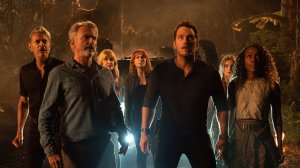
Jurassic World: Dominion has received, by far, the worst reviews and reception of the six-film franchise that has taught us the valuable life lesson that dinosaurs will eat people. Director Colin Trevorrow (Jurassic World) is back though he remained a screenwriter for the entire World trilogy along with Derek Connolly (Safety Not Guaranteed). It’s also bringing the band back together by including Sam Neill, Laura Dern, and Jeff Goldblum as their beloved original trilogy characters (there’s also B.D. Wong, again, if that does anything for ya). I’ve delayed seeing the movie because of my own sense of caution and resignation. Is it as bad as feared?

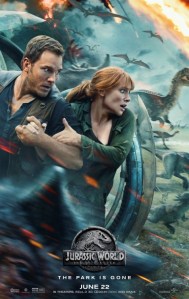
It’s years after dinosaurs have become reintegrated into the human world. Owen (Chris Pratt) and Claire (Bryce Dallas Howard) are living out West together with the clone girl from 2018’s Fallen Kingdom. He’s lassoing wild dinos and she’s breaking them out of illegal testing sites. The BioSyn CEO (modeled after Apple’s Tim Cook, here played by Campbell Scott) has big plans for… world domination? It’s actually unclear besides general profit. The evil businessman hires kidnappers to abscond with the little clone girl, the baby dinosaur to Blue, America’s favorite family-friendly raptor, and for good measure, he’s also unleashing swarms of killer locusts. Owen and Claire are hopping the world to find their missing family (Owen promises the raptor he will return her baby) and uncover yet another evil scheme from an evil rich person.

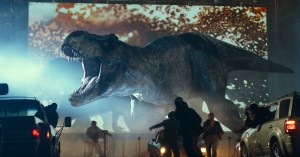
There is a lot going on with Jurassic World: Dominion and yet so little is happening, at least from an intellectual standpoint. This feels like three different movies inartly slammed together and it is overstuffed with subplots all competing for screen time, so every few minutes feels like a possible off-ramp for another episode of what the opening concept portends. The concept of a world where humans are forced to co-exist with dinosaurs is a genuinely exciting starting point, and it’s a Jurassic movie I would want to see, and I do… for a montage to open and close the movie. It’s a shame that the most interesting part of this movie, the global acclimation of creatures of an older millennium rejoining our ecosystem, is kept as literal background. I suppose by the end nature just took care of itself. Instead, the majority of the movie is split between two less engaging stories: giant locusts and a rich guy’s private dino enclosure. Yes, dear reader, you read that correctly. After five movies of dinosaurs in parks, where we begin with dinosaurs in the real world, it’s back to spending time in another glorified dino park, and would you believe that something goes wrong at this park too? Why even bother setting up an exciting premise if it’s abandoned so completely? The movie we do get is a lesson in diminished returns and accepting disappointment. This feels more like a giant locust movie for half, about a villainous corporation weaponizing genetically modified plagues to kill their competitors’ stock. It’s certainly something that seems plausible for a massive corporation, but what is this doing in my Jurassic World movie? Why did we need another blankly evil CEO, this time the guy who appeared in one scene in Jurassic Park, as if that mattered? Why do we need more extraneous characters taking away oxygen from the legacy characters returning especially when they seem too similar to the already established characters? Why should I care about three dinosaurs fighting at the end like I’m personally invested in any of these creatures? My sadness manifested watching this franchise descend into even more farcical dumb blockbuster nonsense.

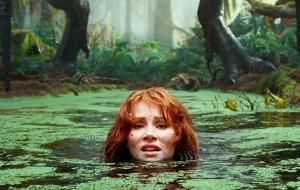
The best part of this movie might actually be its most ridiculous. There’s a mid-movie set piece where our heroes infiltrate an underground dinosaur fighting ring in Malta. That’s cool, and we’re introduced into new secondary villains we can enjoy get their just desserts once the dinosaurs inevitably get set loose. The lead trafficking lady says the raptors have been trained to kill anything that she shines a laser pointer on, which was also introduced in the last film. She targets Claire and then it becomes a foot chase between Claire and a determined raptor. It’s a silly excuse for a chase but it has an extra sense of urgency. It’s also completely ridiculous and ridiculously fun. Claire transforms immediately into Jason Bourne and is leaping from rooftop to rooftop and crashing through windows. Owen is riding a motorcycle through the narrow streets while being chased himself. It’s all action movie pablum and it works for what it is in the moment. Treverrow’s action set pieces have some moments that pop, especially Claire cautiously slipping into a pond to escape a supposedly blind dinosaur. There are even dinosaurs with feathers now. Alas, the movie can only work as dumb fun for so long before it just becomes infinitely more of the latter.

There are so many moments on repeat here that Dominion feels like it’s stitched together like another genetically modified dinosaur clumsily patched with parts of the franchise’s past. Oh, and you better believe we’re going three movies in a row with a new genetically-modified super monster to better sell toys (at least this one isn’t stated as being part raptor). The appeal of this movie, besides the concept abandoned above that I mentioned, is the old characters coming back together, even though Goldblum and Neill each headlined a Jurassic sequel. This action is also a tacit condemnation of the investment in the new trilogy’s main characters. I doubt anyone is going to say, “Wait, Owen Grady and Claire Dearing are back for another movie? Count me in.” I bet most people didn’t even remember either of their names. But if we’re bringing back important characters of franchise past, let’s give them something important to do. They get into danger and scrapes but it’s also always with a wink and a nod that is grating. Goldblum gets to wave his arms around to distract like he did in Jurassic Park. Dern gets to cuddle a triceratops like she did in Jurassic Park. Even Neill features in a dangerous teetering automobile like he did in Jurassic Park. The contrivances to get them all in the movie were already there, but then you give them little to do other than go through the motions of their past (I will always demand more Goldblum time). There are certain dinosaurs reappearing to hit that nostalgia button. It’s the poison-spewing dinos, the ones that blinded and killed Nedry (Wayne Knight), and they’re back, except they can also have their mouth grabbed shut in the most unintentionally hilarious moment. Why even bring back an evil CEO barely mentioned in 1993? Do we need that strained connection for a role recast because the original actor is in jail for assaulting a minor? It’s an excellent example of losing track of the appeal of nostalgia by metric volume.

As far as I’m concerned, that little clone girl, a.k.a. Maisie (Isabella Sermon), is responsible for all the pain and suffering in the world because of deadly dinosaurs. At the end of Fallen Kingdom, this little kid single-handedly rescues the dinosaurs from extinction because, as she said, “They’re alive, like me.” I guess her reasoning is they weren’t supposed to exist, but they do, so we should value life. The problem with that occurs when that creature also happens to be a predator. I would have loved Dominion to explain why Maisie is living in an isolated cabin is because she’s the world’s most wanted person, as mobs of victims blame her for their loved ones dying at the hands, feet, and claws of dinosaur mayhem. The world is in chaos because of this little kid’s rash decision. This cloned girl storyline was the worst part of Fallen Kingdom and now she gets to be the worst part of Dominion as well. Her entire presence is once again as a plot device. I guess she served a purpose as her realization over her identity lead to her decision to save the poor dinosaurs, but here she’s a literal savior cure with legs. Apparently, the reason why the big bad corporation kidnaps her, along with baby Blue, is because her DNA is the key to eradicating genetic disorders. Fortunately, you only need some blood or saliva for a DNA sample and kidnapping seems like overkill. You could have just asked her nicely for a sample, fellas.

Why would this gesture work on other dinosaurs?

However, the dumbest aspect of this requires some sticky spoilers discussion, so you have been warned. Maisie was the grandchild of Benjamin Lockwood (James Cromwell), a retcon character to elbow in another rich co-founder of Jurassic Park that we just never heard about until the fifth movie. Except she was really his daughter but as a clone. Well now we get even more retconning because Maisie’s mom, herself, gave birth to her… self. The adult Maisie impregnated herself with her own clone (because this was the easiest way to have a child?) but she’s also genetically modified her DNA to exclude a terminal disorder killing the adult Maisie. If adult Maisie wanted to save others from having her genetic disorder, why not publicize this valuable information? Why not tell her colleagues? Why leave her clone as the lone evidence? This new info makes me kind of hate the adult Maisie. She brought her clone into the world and made her a target. This seems cruel and unnecessary. It also doesn’t make sense for a person supposedly valuing life or the larger scientific community or even her own child. I’ll say it: she’s a bad mom.

The wild swings and retcons reminded me of what happened with the newer Star Wars trilogy. In 2015, both The Force Awakens and Jurassic World are released to massive success and kickoff reboots of their respective franchises. Both of the movies purposely leaned onto nostalgia for their originals, even repeating similar plot beats and reminders to trigger positive association. Then both directors, J.J. Abrams and Treverrow, left the franchise and the second movies, 2017’s The Last Jedi and Fallen Kingdom, took big swings, tried to be something different from the mold, and were met with divisive responses from the larger fanbase. I appreciate both of these movies attempting to do something different with something so entrenched in formula. Then for the concluding movie, both franchises had the original director return to essentially retcon the retcons, to bring the movies back to what was familiar and ultimately dull. It’s even more interesting when you take into account that Treverrow left the Jurassic series to spend a year of his life developing Episode 9 before being fired and hastily replaced with Abrams.

I remember the meta-commentary in Jurassic World about modern audiences becoming jaded and complacent to scientific wonders mirroring movie audiences becoming blasé to what used to marvel us in the realm of special effects extravaganzas. As it leaned into its considerable nostalgia, it was doing so in a thinly veiled satirical criticism of, “Is this what you want?” Now all the meta-commentary and irony have been stripped clean and it’s simply a big, dumb, lumbering beast awaiting its own creative extinction as it meets an end. The franchise is still a colossal moneymaker and Dominion has a chance of topping one billion in box-office, so there will be more adventures cannibalizing the past for inevitably diminished returns, and then we’ll get the special reappearances of, like, Jake Johnson’s character or Guy at Computer #4 to the celebration of few if any. None of the Jurassic movies have ever come close to capturing that certain magic from the first movie but they have all been, in some way, serviceably entertaining even at their worst. Dominion is the worst of the franchise and feels devoid of passion and awe and curiosity. To paraphrase a clever man, the studio execs were too busy thinking about whether they could and less busy worrying about whether they should. I guess you could shut off your brain and possibly enjoy it but that’s admitting defeat. Jurassic World: Dominion makes dinosaurs dull and that’s a disservice of imagination.

Nate’s Grade: D+

Jurassic World: Fallen Kingdom (2018)

There has always been an element of suspension of disbelief with the Jurassic Park films even with the hubris-pushing premise, but the sequels specifically have had to manage a rising tide of incredulity and sense of dumb. You can only keep going back to a dinosaur-infested island or thinking this time mucking with the DNA of large, extinct, highly advanced killing machines will be different. Jurassic World: Fallen Kingdom may be the dumbest yet, and while it does have moments of fun and excitement, the dumb outweighs all else.

Years after the deadly attacks at Jurassic World, the volcano on the island has reactivated and the remaining dinosaurs are in imminent danger of another extinction (except for the flying ones, but whatever). Claire (Bryce Dallas Howard), with sensible footwear this go-round, is looking to raise money and awareness to save the thunder lizards. A wealthy magnate (James Cromwell) wants to save the dinosaurs and whisk them to a wildlife preserve far from mankind, but first they must secure the raptor Blue, and in order for that to happen Claire needs to convince her former flame and co-worker Owen (Chris Pratt) to go back. They venture back to the endangered island only to run into more trouble from stampeding dinosaurs, new super predators, and a plot to house and sell the creatures off the island.

Maybe it’s just a side effect of being the fifth movie in a generation-spanning franchise, or maybe it’s a holdover effect of the 2015 film’s meta-commentary about audiences becoming complacent with what used to inspire awe, but it feels like returning screenwriters Colin Trevorrow (The Book of Henry) and Derek Connolly (Safety Not Guaranteed) couldn’t be bothered picking a tone or developing their plot. It reminds me of the seventh season of HBO’s Game of Thrones, specifically the back half of episodes. It felt like the creators had certain conclusions in mind and rather than smartly develop storylines that would naturally reach those conclusions, the “how” of the narrative became jumbled, confounding, and frustrating. I felt the same way while watching Fallen Kingdom; the stylish set pieces were likely established first and foremost and the stuff in between, you know the story and characters and their interaction, was given far less attention. It didn’t matter how we got from one set piece to another. This lack of consideration leads to many moments that keep you from fully engaging with the movie, namely dumb and/or awful characters doing dumb things for dumb reasons. The conclusion of Fallen Kingdom seems meant to leverage interest in a third movie, which is already scheduled for release in 2021. Was this 128 minutes the best way to get there?

When people repeatedly do stupid things, it tests your limits of empathy. This happens to me with horror movies and it happened for me with Fallen Kingdom. It’s the kind of movie where a little girl runs into her bedroom and hides under her covers from an approaching hungry dinosaur. The ensuing image of the stalking beast entering the bed with the claws is a killer image, but what did we lose getting here? This little girl was not established as some dumb kid either. The preceding hour showed her as resourceful and plucky, so this just erases all that. There’s another moment where characters have to choose between escaping through an ordinary door or an open window and crawling along the edge of the roof… and guess what they choose. This is the kind of movie where characters will be in danger and then, hooray, another character arrived in time to save the day, and then another character arrived to save the shortly-after next day. Then there’s a bad guy who enters a dinosaur cage simply to retrieve a dino tooth for his personal necklace of dinosaur teeth. I’ll repeat that. He’s not extracting them to sell to another bio-engineering company for its DNA (the opening scene presents this very example). He’s removing dinosaur teeth for his own personal decorative hobby. My preview screening groaned in unison loudly at how stupid all of this was. How am I supposed to even enjoy this dumb character’s inevitable death when they’re this dumb and undefined?

The dumbest action of all is tied to its central premise of saving the dinosaurs. When Jeff Goldblum’s Ian Malcolm (relegated to a two-minute cameo, don’t expect much) was championing letting the dinosaurs go extinct again and the folly of mankind playing God in the realm of genetics, I was right with him, and I’m no GMO spook. Bringing gigantic, killing machines back to life was clearly a mistake as five movies have now shown in great, bloody detail. At some point a lesson must be learned. I know that Fallen Kingdom is meant to imbue the dinosaurs in an animal rights lens, with Claire trying to atone for her time shaping and selling these creatures for public consumption. The animal rights angle never clicked for me. There are moments the film really tries, wanting you to shed a few tears for the fate of these gigantic creatures. Maybe you will, and there are a few shameless sequences to make you (the child sitting next to me was losing it at points). That’s why it’s not enough to have the bad guys have bad guy plans but they also have to be cruel and abusive in their treatment of the dinosaurs. The multi-million dollar ploy to weaponize the dinos also baffled me. Are they going to be that much better than firepower? There’s a reason we don’t just drop hungry lions into our war zones.

The new characters fail to add anything of merit to the story and larger Jurassic world. Cromwell’s Benjamin Lockwood is basically just a John Hammond stand-in (“Oh, there were TWO super rich dudes who funded the research and park now”). He’s confined to a bed for most of the movie and adds little besides his bank account. Then there are the two main team members, computer whiz Franklin Webb (Justice Smith) and med vet Zia Rodriguez (Daniella Pineda). He’s only here for comic relief and to do computer magic whenever called upon, and she’s only here for spiky attitude (she gets called a “nasty woman” for commentary?) and to do medical magic when called upon. Each of these characters is less a person than a handy plot resolution. When the movie transitions into its second half, both of them are kept on the sidelines. Then there’s little Maisie (Isabella Sermon) who has her own secret that really doesn’t come to much of anything and begs further examination. I suppose her perspective relates to a difficult moral choice at the end over the value of life, but she still felt underdeveloped. Even the villains are disappointing with the exception of Toby Jones (Atomic Blonde) as a slimy, one percent businessman looking for new thrills. I wish the screenplay had devoted more time to establishing the rich’s entitled sense of privilege even as it comes to a new world with living dinosaurs as the next big, commoditized play thing to buy and sell.

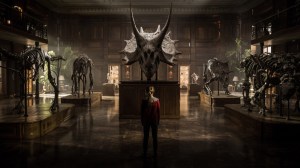
With all that said, there are moments of enjoyment and excitement to be had with Fallen Kingdom. Director J.A. Bayona (A Monster Calls) has a great gift for finding the right image and holding onto it for maximum impact. He showcased this in his crafty, brooding, and highly effective ghost story The Orphanage and in his emotionally uplifting and harrowing tsunami survival drama The Impossible. With his first crack at a major studio movie, Bayona comes most alive in its second half when the movie transitions into a haunted house thriller in a mansion of secrets. His command of visuals and mood comes into sharper focus and there are some tense, delightful sequences. As much as I wrote about Fallen Kingdom being a movie of set pieces and little else, those set pieces are actually pretty entertaining. The island material only lasts about a half hour, wasting little time in getting the important pieces in play. There’s one long take inside a submerged capsule taking on water that keeps spinning and ratcheting up the tension that reminded me a bit of Alfonso Cuaron’s Children of Men. There’s another sequence involving a blood transfusion that I thought married comedy and tension better than anything else in the film, and it served a purpose that was credible.

If you can shut off your brain and stuff your mouth with a steady supply of popcorn to thwart your incredulous grumbling, there might be enough to enjoy with Jurassic World: Fallen Kingdom. It’s technically well made and the special effects are pretty good, the photography is evocative, and there are potent set pieces and imagery to stimulate the pulse. It’s loud, dumb fun, but for me, this time, the dumb outweighed the fun.

Nate’s Grade: C

Isle of Dogs (2018)

The quirky imagination of Wes Anderson and his stylized, symmetrical, painterly approach to filmmaking has always seemed like a natural fit for the world of animation. Stop-motion has a wonderfully tactile and woebegone appreciation that furthermore seems like a natural fit, and 2009’s Fantastic Mr. Fox is one of Anderson’s best and most enjoyable films. If it were not for the considerable time it takes to make animated films, I’d be happy if Anderson stayed in this realm. Isle of Dogs is about a future where dogs are blamed for an infectious disease and as a result are banned and quarantined to a garbage island off the coast of Japan. One little boy dares to venture to this island to find his beloved missing dog. From there, he’s escorted by a pack of dogs, led by Chief (voiced by Bryan Cranston), across dangerous tracks of the island while avoiding the boy’s adopted family, the mayor of Nagasaki. This is a whimsical, beguiling, detail-rich world to absorb, but it also has splashes of unexpected darkness and violence to jolt (though the dark turns are consistently nullified). It’s a highly entertaining movie although the characters and story are rather thin. The different dogs are kept as stock roles, and the main boy, Atari, is pretty much a cipher for dog owners. However, the film can tap into an elemental emotional response when discussing the relationship between man and dog. If you’re a dog person, it’s hard not to feel a twinge of emotions when a dog is given a loving owner and sense of family. There is one element of the movie that feels notably off, and that’s the fact that the dogs speak English and the local Japanese characters speak their native tongue but without the aid of subtitles. it doesn’t exactly feel like Anderson is doing this as a source of humor, but I can’t figure out a good alternative reason for it. I’m sure Cranston’s distinctive growl would have sounded just as good speaking Japanese. Regardless, Isle of Dogs is a mid-pack Wes Anderson fantasia of inventive imagination and well worth getting lost within.

Nate’s Grade: B

Thor: Ragnarok (2017)

With the continued runaway success of the box-office juggernaut that is the Marvel Cinematic Universe (MCU), it becomes more and more preposterous just how strange and unique it can be. You would think a mega franchise this valuable would be more prone to playing it safe, hiring established visual stylists who can produce product. Instead, the MCU finds interesting creative voices that can succeed within their very big sandbox. Enter New Zealand actor and quirky director Taika Waititi (What We Do in the Shadows), one of the most surprising directorial hires in a decade of blockbusters. The Thor movies are generally considered some of the weakest films in the MCU, so there’s already plenty of room for improvement. With Waititi, Thor: Ragnarok is easily the best Thor movie and one of the funniest to date for the MCU. It’s finally a Thor movie that embraces its silly, campy, ridiculous world and finds space to cram in more eccentricity.

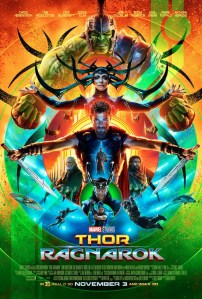
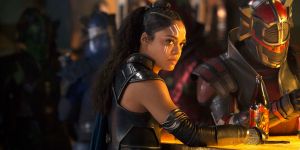
Thor (Chris Hemsworth) has returned to his home world of Asgard to find it in great peril. His brother Loki (Tom Hiddleston) has been ruling in their father’s stead, and that’s not even the worst part. Thor’s heretofore-unannounced older sister Hera (Cate Blanchett) has been unleashed from her prison and is seeking the throne she feels is rightfully hers. She is the goddess of death and chafes at Asgard’s revisionist history, trying to paint over its history as conquerors for something kinder and gentler. Thor is banished to an outlying planet, Sakaar, that’s essentially a junkyard for the universe. He’s captured by Valkyrie (Tessa Thompson) and sold to fight in the Grandmaster’s (Jeff Goldblum) arena. Thor is trained to fight in gladiatorial combat, and his opponent and reigning champion is none other than the Hulk a.k.a. Bruce Banner’s (Mark Ruffalo) alter ego. Thor must break free, convince the Hulk for help, get off this planet, and save Asgard before it’s too late.

Waititi has acclimated himself extremely well in the large-scaled world of blockbuster filmmaking, and yet his signature quirky sense of style and humor are still evident throughout, making Ragnarok the best Thor film. Let’s face it, the Thor films are completely ridiculous and trying to treat them as anything but is wasted effort. These movies involve alien Norse gods traveling by rainbow bridges and even though they can traverse the cosmos in spaceships they still sling giant broad swords. The more the films embrace the inherent silliness of the series the better. Ragnarok is the Thor movie that gets all the serious stuff out of the way in the first act, tying up loose ends from 2013’s Dark World, checking in with Anthony Hopkins’ Odin and the requisite MCU cameo (a superfluous Doctor Strange), and then introducing Thor’s long-lost twisted sister. From Blanchett’s intro, the movie becomes what it was set out to be, a lavish and consistently funny buddy comedy. Gone are all the Earthly constraints from the prior two films. It’s all aliens from here on out. Thor has everything stripped from him, his hammer, his family, his hair, and becomes an underdog once again. It’s a surefire way to make a living god more relatable. Fighting from the ground up, Thor makes all sorts of new friends and enemies, and it’s this evolution into an ensemble comedy where Waititi’s film shines. There’s a jovial touch to the world building that extends from the visuals to the variety of odd characters. Thor has never been more entertaining as Hemsworth (Ghostbusters) is able to stop being so serious and embrace his underutilized comedic chops. The man has a stunning sense of comedic delivery and a dry wit that’s right at home for Waititi. Hemsworth and his daffy sense of humor have never been better in the MCU.

Even with the added comic refinery, Thor is still the most boring of the Avengers, so Ragnarok solves this by introducing a new bevy of side characters that steal the show. The wacky world of the Thor universe was always its best aspect, and each new film pushes the boundaries a little further out, revealing more weird and wild planets and creatures. It feels like a Star Wars where we spend our time with the weird, scuzzy part of the universe. Ragnarok pushes those boundaries the furthest yet and introduces an entire cadre of loveable supporting players that you want to spend more time with. Tessa Thompson has a wonderful and intimidating introduction as she swoops in on a spaceship, makes her badass claim of her prized bounty, and then trips and falls, as she is quite tipsy from drinking. She regains her literal footing and still seems a bit out of it, but the ensuring process she goes through to claim what is hers is thoroughly impressive. As a Valkyrie, this is one tough woman, and Thompson (Creed) has great fun playing bad. She really reminded me of a female Han Solo. Thompson has a wily screwball chemistry with Hemsworth, and both actors elevate the other with lively give-and-take. Thompson is a terrific new addition. She has an enticing, irascible appeal without overt sexualization that sometimes befalls the Marvel female sidekicks (Black Widow, Pepper Potts).

Another character you’ll fall in love with is Korg, a rock monster gladiator played in motion-capture and drolly voiced by director Waititi himself. My question: is it possible for a director to steal his own movie? This is a character that feels stripped from one of Waititi’s dry, absurdist comedies and placed into the MCU. Korg is a would-be revolutionary but really he’s a joke machine and just about every line is gold. By the end of the movie, I needed a Korg spin-off series to further explore this unusual character.

The requisite villains of the film definitely play their roles to full camp, enjoying every moment. Blanchett (Carol) is like a Gothic Joan Crawford, marching with a slinky step and a sneer. Her multi-antler helmet completes the operatic sweep of the character. You’ll forgive me for my above comment on recognizing female characters independent of their sexuality, but man oh man does Goth Blanchett make me happy (especially with her hair down). It’s a shame that the movie doesn’t really know what to do with Hela though. Every time we cut back to her I found myself getting somewhat impatient. I wanted to return back to the weird and wild world Thor was on. Blanchett is entertaining but her character can’t help but feel a bit shoehorned in (“Hey, you had a long-lost sister, and oh by the way, she’s basically Death itself, and she’s coming by to retake everything, so have fun with that and sorry for the short notice”). Goldblum (Independence Day: Resurgence) is left to his Goldblum devices and it’s everything you would want. His signature stuttering deadpan is just as potent in the MCU, and the film finds strange little asides for him to make him even more entertaining. Karl Urban (Star Trek Beyond) has a plum role as Hela’s second-in-command who doesn’t really want the job. They actually gave this guy a character arc. It’s simple, sure, but it was more than I was expecting.

Ragnarok is a swan dive into a stylized, candy-colored explosion of 80s album covers come alive. The visuals and action feel inspired as much from the art of Jack Kirby as they do the pages of Heavy Metal. The overwhelming feel is one of irresistible fun, something you lean back, soak up, and smile from ear to ear in between handfuls of popcorn. The final battle feels suitably climactic and revisits Led Zeppelin’s immortal “Immigrant Song” once the action peaks, coalescing into a crescendo of cool. The trinkly 80s synth score from Mark Mothersbaugh (The Lego Movie) is fantastic and helps to achieve an extra kitschy kick. This movie is just flat-out fun throughout. It finds fun things for the characters to do, like when Banner has to not Hulk out on an alien world filled with stressors to trigger such an occurrence. That sequence almost feels like the grown-up, polished version of Adam West desperately running around as TV’s Batman in need of trying to find a place to dispose of a lit bomb. There’s an archness to the action and character interactions that is playful without being obnoxiously glib. I also enjoyed a climax that involved more than just out-punching the villains. Some might even charitably read it as a commentary on the over reliance of apocalyptic grandeur.

Playing from behind because of its hero’s limitations, Thor: Ragnarok finally embraces the silliness of its franchise, opening up more comic channels and vastly improving its entertainment quotient. The weird word and its collection of odd and oddly compelling characters is the best feature, and though it takes Ragnarok a bit of time for house cleaning, it becomes a steadily amusing big-budget blockbuster that maintains a cracked and lively sense of humor. It’s allowed to be strange and silly and campy. Waititi’s imaginative voice is still very present throughout the film, pushing the movie into fun and funny directions while still delivering the sci-fi action spectacle we’ve come to expect from the MCU. Ragnarok isn’t as deep as Civil War, as perfectly structured as Homecoming, or as subversive and different as Guardians of the Galaxy, but with a droll creative mind like Waititi, it becomes about the best possible Thor movie it can be.

Nate’s Grade: B+

Independence Day: Resurgence (2016)

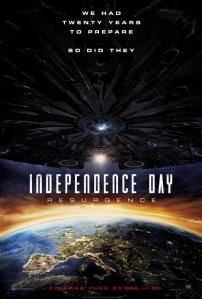
independence_day_resurgenceI can recall actively counting down the days until Independence Day was released in 1996, gobbling up every newspaper clipping and magazine article I could. I was a big fan of director Roland Emmerich’s Stargate, which is still a terrific movie, and I was eager to watch the end of the world, as we know it, in the privacy of my local theater. It was a blast, no pun intended, and one of the biggest box-office successes at the time. Surely there would be a sequel, especially after it helped launch Will Smith into another level of stardom. Flash forward twenty years, and here comes Independence Day: Resurgence, a sequel that misses what marked the original as escapist entertainment.

Twenty years later, human beings have been planning for the eventual return of their intergalactic invaders. Former president Whitmore (Bill Pullman) and CIA director David Levinson (Jeff Goldblum) have been trying to get the world prepared and studying our alien enemy. A psychic link is still formed from Whitmore’s brief bond in the first movie, and he keeps drawing mysterious symbols. Whitmore’s daughter, Patricia (Maika Munroe), is a former fighter pilot who works for the current president (Sela Ward). Patricia’s boyfriend and fellow fighter pilot, Jake Morrison (Liam Hemsworth), is stationed on the moon building a defense system. Then the aliens come back and pick up where they left off, annihilating Earth’s landmarks and population centers. It seems that their spaceship is going to suck out the Earth’s molten core, and by all accounts, that’s bad. Our ragtag group of characters must come together and overcome substantial odds once more to save the Earth from certain doom.

So where exactly did things go wrong? I’m not one to simply state that the filmmakers missed their window of making a quality sequel. While twenty years is a long time in between outings, it doesn’t mean that you will fail to come up with a compelling movie. Mad Max was 30 years between movies and this didn’t stop Fury Road from being a masterpiece. By most accounts, yes, there is certainly less of an appetite for an Independence Day sequel in 2016 than there would have been in 1998, but the first film is still fondly remembered and a worthy sequel would be welcomed regardless.

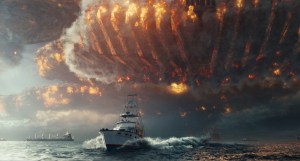
746I think one of the bigger causes to Resurgence not working is the fact that the rest of the moviegoing world has caught up when it comes to big screen spectacle, therefore spectacle by itself is not enough without a zeitgeist edge. In 1996, cutting-edge special effects-laden destruction on a global scale was reason enough to buy a ticket and the largest tub of popcorn. In the ensuring two decades, large-scale cataclysm has become commonplace on the big screen; just about every climax of a Marvel movie involves some world-devastating threat. What once quickened pulses has now become ho-hum. Emmerich himself has become a modern-day Irwin Allen since the first Independence Day, almost specifically focused on global disaster movies. I honestly don’t think there’s a better director working in Hollywood for that gig (his next movie is about the moon crashing into the Earth, so “familiar” territory). I think Emmerich’s skill and vision for big screen spectacle goes unheralded too often and he gets lumped in with empty visual stylists like Zack Snyder and Michael Bay. He’s better than that. However, the tide has turned, and audiences have become sated from empty spectacle. They need something more, or at least something compelling, and Resurgence struggles to achieve this. It feels like the aliens are back and they’re bigger, and that’s about it, folks.

Disaster movies are generally judged by their set pieces, and what is most surprising about Resurgence is that it really doesn’t have action set pieces as it does skirmishes. The movie is only two hours long, which seems like a rarity nowadays, but this is one of the few movies I think could have benefited from some extra breathing room. It feels too rushed, its internal logic often forcibly contrived, and this is evident most in its action sequences. A better term would be “skirmishes” because the sequences themselves are so curiously brief save for the climactic fight during the third act. We’ll get bursts of intensity or dread that comes to a head with violence, but then that’s it and the movie moves along. It’s usually mere moments of brief alien destruction. The action lacks proper development. One of the keys to great action sequences is naturally complicating and developing the events. Resurgence doesn’t even change gears. It provides exactly what you expect, and then it’s over, the surprise being how unsatisfying and short the unimaginative experience was for all parties. It’s a long wait until the third act where the alien queen comes outside to play. The movie shifts into a giant monster melee and it’s the one time where Resurgence feels most lively. It still follows a contrived logic (the Queen has a shield… now she doesn’t…) but I’ll credit the movie with at least saving the best for last and finally letting the action expand. I had enough fun with the final act of Resurgence that I was able to forgive some of its early transgressions.

The first Independence Day wasn’t by any means a cinematic milestone but it was fun and had a clean enough throughline. We spent the first hour in typical Emmerich fashion being introduced to the different characters and then watching the dispirit elements come together. The mystery of what was out there was intriguing and it became a step-by-step process of deducing how mankind should respond. When their hostile intent was revealed, it then became a learning experience as to how to fight back. Aerial dogfights won’t work. Nuclear weapons won’t work. It was a simplistic examination of the threat. While the solution of giving an alien operating system a virus is still a head-scratcher, at that point the movie had earned its ham-fisted solution because it had followed a logically satisfying path of discovery and response from the moment of first contact. Resurgence lacks any real internal logic. Things just sort of happen when the plot requires them and then don’t. If you’re establishing a science-fiction landscape, establishing the rules of what is possible and allowable is essential to the audience’s understanding and enjoyment. Otherwise it feels arbitrary, much like Judd Hirsch driving a school bus of children across the salt flats into danger. This literally happens in Resurgence.

Also fighting for time is a slew of new characters that are charisma-free and contribute little to nothing to the larger story. The biggest offender may be Dylan Hiller (Jessie T. Usher), the son of Will Smith’s character. What does Dylan offer as a character? His entire characterization is, and I kid you not, that he’s upset with Jake over a training accident. He punches Jake in the first act and then… he just sort of pilots ships and shoots things in the sky. That’s it. He doesn’t feel the burden of living up to his father’s reputation, or trying to make his own name for himself. He just has a quarrel to settle and does and then he still just sort of exists in the movie and the screenwriters were like, “Oh right, he’s still here. Well, have him fly something.” Jake and the rest of the young pilots don’t fare that much better as characters. Besides superficial distinguishing characteristics, they’re all variations on the same person. They’re a multi-ethnic collection of vacuous character placeholders; it’s like you took Randy Quaid’s kids from the first movie and made them on par with Smith and Goldblum. These bland characters inspire little love and are often boring with little investment. If the next movie started with them in a car and a giant pillar crushing it, I would not mourn their cinematic loss.

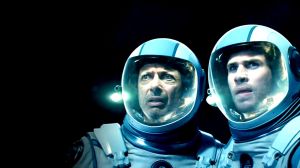
independence-day-2-resurgence-trailer-breakdown-easter-eggs-753096There are some familiar faces returning but none of them are able to compensate for the deficit of charisma and screen presence that is Will Smith. Goldblum is on autopilot and doing his stare off into the distance and talk deadly serious thing. Pullman shows up again as a warning of what was coming, though a superfluous one at that. The biggest screen presence from the first movie belongs to Brent Spiner (TV’s Star Trek) as the Area 51 scientist who conveniently has also been in a coma for twenty years. Some of his comic relief is rather labored and cheesy, but it’s at least something. Charlotte Gainsbourg (Nymphomaniac) collects a check as a psychiatrist who has little bearing other than to be Goldblum’s ex. The most interesting new character feels like he stepped out of a Street Fighter arcade game; he’s an African warlord (Deobia Oparei) who likes to use a pair of machetes to kill the aliens. “You have to get them from behind,” he keeps insisting, and I keep snickering. There’s also that Emmerich staple of an officious government weakling who comically grows a spine. It just so happens this part is played by one of the screenwriters of Resurgence, Nicolas Wright. He studied, apparently.

The best thing Resurgence has going for it is the expansive world building, one of the few aspects of the movie that shows actual thought and care. This is one of the few movies I can recall where people actually try and use the technology of their defeated invaders. Rather than just throwing all those dead spaceships on a junk pile, mankind has decided to backwards engineer technological advancements. As a result, the contemporary feels like a sci-fi hybrid of humanity and the alien technology. It’s interesting to see what advancements have been made and how these have been integrated into regular society. I do question why we only have one defensive weapon/colony on the moon when there’s also one as far as Saturn. I wanted a bit more of a sociological examination on what life post-War of 1996 means. Life would be so fundamentally altered by the realization we are not alone in the universe, and not only that but that we need to play catch up fast to survive. The assumption would be that they will be back. The threat of annihilation unifies the world but what are those consequences? What are the consequences of living in a permanent military state of readiness and anxiety, wondering is it all going to be enough?

If you have fond feelings for the original Independence Day, there may be enough good will with the sequel to appease your demands, though probably only barely. Resurgence suffers from CGI-heavy spectacle that has long lost its appeal without supplying helpful additions like characters to care about, exciting action sequences that develop and impact the plot, meaningful plot turns, and a story that follows some form of logic. It’s not a disaster in all senses of the word. In a summer that’s already building a reputation for its mediocrity, I think there may be enough that Independence Day: Resurgence has to offer that select moviegoers will walk away feeling momentary entertainment. It’s not that the first film was intellectually rigorous sci-fi, but it went about its destructive business with a satisfying precision. This movie all too often just feels like things happening, then not happening, and with characters that are there but without any compelling reason beyond survival. The end of the movie sets up an intended sequel and possible extended franchise of sequels with a larger galactic war against the alien invaders. It’s both hopeful and naïve, dangling the promise of another tantalizing humans vs. aliens throwdown. It’s also a bit aggravating because the premise of the hypothetical sequel (I’m going on record saying it won’t come to fruition for another 20 years) is much better than the “they came back again” sequel we get with Resurgence. Don’t make me pay my money and then tease me with a better movie down the road. Nothing should be taken for granted. Independence Day: Resurgence takes too much for granted, and that’s likely why this resurgence will stop with one entry.

Nate’s Grade: C

The Grand Budapest Hotel (2014)

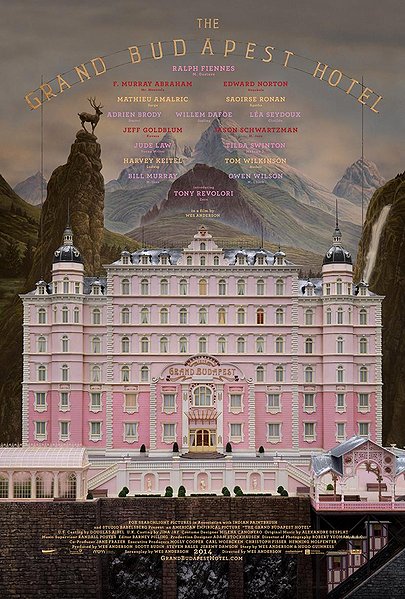
112446_galWes Anderson is a filmmaker whose very name is a brand itself. There are a small number of filmmakers who have an audience that will pay to see their next film regardless of whatever the hell it may be about. Steven Spielberg is the world’s most successful director but just having his name attached to a movie, is that enough to make you seek it out and assume quality? If so, I imagine there were more than a few disappointed with War Horse and Kingdom of the Crystal Skull. But Wes Anderson has gotten to that height of audience loyalty after only seven movies, mostly because there are expectations of what an Anderson film will deliver. And deliver is what the quirky, fast-paced, darkly comic, and overall delightful Grand Budapest Hotel does.

In the far-off country of Zubrowka, there lays the famous hotel known the world over, the Grand Budapest. The head of the hotel, the concierge, is Gustave (Ralph Fiennes), a highly mannered Renaissance man who caters to the every whim of his cliental. Zero (Tony Revolori), an orphaned refugee, is Mr. Gustave’s apprentice, a lobby boy in training learning from the master in the ways of hospitality. Gustave likes to leave people satisfied, including the wealthy dowagers that come from far just for him (Gustave: “She was dynamite in the sack,” Zero: “She was… 84,” Gustave: “I’ve had older.”). One of these very old, very rich ladies is found murdered and in her rewritten will, the old bitty had left a priceless portrait to Gustave. Her scheming family, lead by a combustible Adrien Brody, plots to regain the painting, which Gustave and Zero have absconded with.
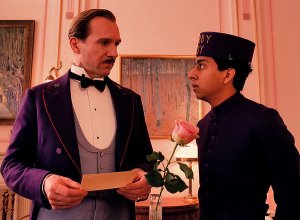
115032_galFor Wes Anderson fans, they’ll be in heaven. I recently climbed back aboard the bandwagon after the charming and accessible Moonrise Kingdom, and Grand Budapest is an excellent use of the man’s many idiosyncratic skills. The dollhouse meticulous art design is present, as well as the supercharged sense of cock-eyed whimsy, but it’s a rush for Anderson to pair a story that fits snuggly with his sensibilities. The movie is a series of elaborate chases, all coordinated with the flair of a great caper, and the result is a movie over pouring with entertainment. Just when you think you have the film nailed down, Anderson introduces another conflict, another element, another spinning plate to his narrative trickery, and the whimsy and the stakes get taken up another notch. The point of contention I have with the Anderson films I dislike (Life Aquatic, Darjeeling Limited) is the superficial nature of the films. As I said in my review for Darjeeling, Anderson was coming across like a man “more interested in showing off his highly elaborate production design than crafting interesting things for his characters to do inside those complex sets.” With this film, he hones his central character relationships down to Gustave and Zero, and he can’t stop giving them things to do. Thankfully, those things have merit, they impact the story rather than serving as curlicue diversions. We get an art heist, a prison break, a ski chase, a murderous Willem Dafoe leaving behind a trail of bodies, not to mention several other perilous escapes. This is a film packed with fast-paced plot, with interesting actions for his actors, maybe even too packed, opening with three relatively unnecessary frame stories, jumping from modern-day, to the 1980s, back to the 1960s, and finally settling into the 1930s in our fictional Eastern European country.

The other issue with Anderson’s past films, when they have underachieved, is that the flights of whimsy come into conflict with the reality of the characters. That is not to say you cannot have a mix of pathos and the fantastical, but it needs to be a healthy combination, one where the reality of the creation goes undisturbed. With Grand Budapest, Anderson has concocted his best character since Rushmore’s Max Fisher. Gustave is another overachieving, highly literate, forward-driving charmer that casually collects admirers into his orbit, but he’s also a man putting on a performance for others. As the head of the Grand Budapest, he must keep the illusion of refinement, the erudite and all-knowing face of the luxurious respite for the many moneyed guests. He has to conceal all the sweat and labor to fulfill this image, and so he is a character with two faces. His officiously courtly manner of speaking can be quite comical, but it’s also an insightful indication that he is a man of the Old World, a nostalgic European realm of class and civilization on the way out with looming war and brutality. And as played by the effortlessly charming Fiennes (Skyfall), Gustave is a scoundrel that the audience roots for, sympathizes with, scolds, but secretly desire his approval, much like Zero. It is a magnificent performance that stands as one of the best in any Anderson film.
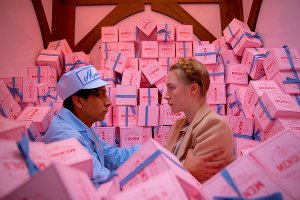
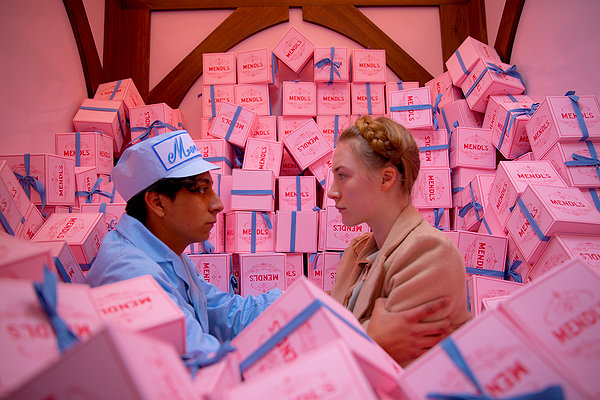
115052_galThe fun of a Wes Anderson movie is the zany surprises played with deadpan sincerity, and there is plenty in Grand Budapest to produce smiles and laughter. It’s hard to describe exactly which jokes land the best in a Wes Anderson film because they form a patchwork that elevates the entire movie, building an odd world where oddballs can fit right in. It was under a minute before I laughed, and I smiled through just about every remaining minute of the film. I enjoyed a joke involving a dead cat that just kept being carried from scene to scene. I enjoyed a sexually graphic painting that just happened to be lying around. I enjoyed the fact that Zero draws on a mustache every morning to better fit in with the men of his day. But mostly I just enjoyed the characters interacting with one another, especially Gustave and Zero, which forms into the emotional core of the film. It begins as a zany chase film and matures as it continues, tugging at your feelings with the father/son relationship (there’s also a subtly sweet romance for Zero and a pastry girl played by Saoirse Ronan). One of the big surprises is the splash of dark violence that grounds the whimsy, reminding you of the reality of death as war and fascism creep on the periphery. In fact, the movie is rather matter-of-fact about human capacity for cruelty, so much so that significant characters will be bumped off (mostly off screen) in a style that might seem disarming and unsatisfying. It’s the mixture of the melancholy and the whimsy that transforms Grand Budapest into a macabre fairy tale of grand proportions.

The only warning I have is that many of the star-studded cast members have very brief time on screen. It’s certainly Fiennes and Revolori’s show, but familiar names like Bill Murray, Tilda Swinton, Tom Wilkinson, Jeff Goldblum, Lea Seydoux, Jude Law, Harvey Keitel, Jason Schwartzman, Owen Wilson, F. Murray Abraham, and Bob Balaban are in the film for perhaps two scenes apiece, no more than three minutes of screen time apiece. Norton, Brody, and Dafoe have the most screen time of the supporting cast. Though how does Revolori age into the very non-ethnic Abraham? It reminded me of Street Fighter: The Legend of Chun-Li (here me out) where, as she ages, Chun-Li becomes less and less Chinese in her facial appearance. Anyway, the brevity of cast screen time is not detrimental to the enjoyment of the film, considering all the plot elements being juggled, but I would have liked even more with the dispirit array of fun characters.

The Grand Budapest Hotel is Wes Anderson at his best, pared down into a quirky crime caper anchored by a hilariously verbose scoundrel and his protégé. Naturally, the technical merits of the film are outstanding, from the intricate art direction and set dressing, to the period appropriate costumes, to the camerawork by longtime cinematographer Robert Yeoman. The movie is a visually lavish and handcrafted biosphere, a living dollhouse whose central setting ends up becoming a character itself. The trademark fanciful artifice is alive and well but this time populated with interesting characters, a sense of agency, and an accessible emotional core. The faults in Anderson’s lesser films have been fine-tuned and fixed here, and the high-speed plotting and crazy characters that continually collide left me amused and excited. If you’re looking for a pair of films to introduce neophytes into the magical world of Wes Anderson, you may want to consider Grand Budapest with Moonrise Kingdom (Royal Tenenbaums if they need bigger names). In the end, I think Anderson more than identifies with his main character, Gustave, a man enchanted in a world of his own creation, a world better than the real one. Who needs the real world when you’ve got The Grand Budapest Hotel?

Nate’s Grade: A

The Prince of Egypt (1998)

Holy Moses, a Bible story made for a mass audience? The first animated feature from the folks at Dreamworks is ambitious, and crazy enough… it just might work. I’ll start right off by saying hands down this is great animation. The scenes are constructed with beauty and at certain times I did had something stirred inside me from the wondrous eye-candy. People look like people, not sketched cartoons. The animation and movement are so lifelike and fluid that you’ll easily be lost inside it and forget you are indeed watching a film people drawn by hand.

But while the visuals are lavish and splendid and just about every other adjective you can think of, the story suffers. The head folks had difficulty using the story of Moses because three separate religions use that story for their own purposes and beliefs. The trick is not pissing off any of the religions, and the end product is a very vague and gentile Sunday School lesson. They give you the message to believe, but believe in what? It’s never explained. The main characters tread over the thin ice of religious ire, and because of that intimidation they are often vague in descriptions and purpose. The idea of faith is pretty much gagged and taken away to be replaced with the supposedly more noble (and note; more universally agreed upon) issue that slavery is bad. You can’t help but feel a little like the producers chickened out with the material and hid behind the idea of slavery to not rise anyone’s blood pressure over a cartoon tale.

By making Ramses (Ralph Fiennes actually getting his second chance this decade to persecute Jews in a movie) and Moses (Val Kilmer, who also surmises the voice of God, but if God were Kilmer don’t you think he would’ve passed on The Saint?) not so black and white you have established that they are indeed people and both have their reasons for what they each do. You can see the motives and understanding for each, plus the tension and drama gets a shot in the arm.

While the music and message can be easily passable they can’t detract from the greatness that this movie projects with its simple and marvelous visions. You may gasp when the Red Sea is parted. I must confess though after multiple viewings on DVD the story and songs are indeed growing on me as is my impression of the film. This movie is more effective on your TV screen than the big screen.

Nate’s Grade: B