Blog Archives
Midsommar (2019)
 I was not a fan of Hereditary. It had some admirable craft and a potent sense of dread, but it felt like it was being made up as it went and little came to much without exposition that was literally highlighted. I worried the same was about to transpire with writer/director Ari Aster’s newest indie horror darling with the critics, Midsommar. It has many of the same faults I found with the earlier Hereditary yet I walked away mostly pleased from his campy, weird, and disturbing follow-up. I’m still processing why I hold one over the other, so come along with me, dear reader, as I work through this conundrum.
Dani (Florence Pugh) and her boyfriend Christian (Jack Reynor) are hanging on in a relationship past its prime. Each is wondering whether to end it, and then tragedy strikes and Dani’s family is killed in one large suicide. She’s lost to her grief and Christian feels compelled to comfort her and guilty to leave. He invites her to a retreat he had been intending with his friends (Will Poulter, William Jackson Harper) to the idyllic home of a Swedish-born pal, Pelle (Vilhelm Blomgren). The group travels to the northern reaches of Sweden to attend the pagan mid-summer festival, an event that happens once every ninety years, but things are not what they appear and soon it may be too late to leave.
 From a technical perspective, Aster has some serious skills even if they don’t fully amount to much. His decision to film the majority of the film in bright sunlight provides a disarming contrast to most horror films that use darkness and our primal fear of it as the backdrop for their scary shenanigans. It produces a different landscape for the movie and the illusion of tranquility that will be shaken. The photography by Pawel Pogorzelski is often gorgeous in its framing and deliberate shot compositions. Aster’s command of technical craft and his ability with actors gives him such a great starting point with his projects. I just wish they amounted to more than the sum of their parts, and I’m not sure Midsommar is different.
It’s hard not to notice that Midsommar is decidedly less ambitious and more streamlined than Hereditary, and I think this has positives and negatives. First, it makes the film more condensed and accessible. It’s also a smart move to personalize the story through the experiences of Dani and her recovery from trauma. The plot presented is pretty predictable; you’ve seen enough other cult movies to know what should be ominous and what decisions will be regretted. I strongly suspect that Aster recognizes that his audience knows these things and that’s why the narrative isn’t built around what will happen next but more so how will Dani respond to what will happen next. There’s a deadly ritual at about the hour mark that just about everyone and their invalid grandmother will be able to see coming, though that doesn’t take away from the sick brutality of the moment and some stomach-churning prosthetics. However, even though I knew it was coming, the dread was more palpable for me because I knew it would trigger Dani, so I was lying in wait to observe her response and how it reopened her fresh emotional trauma. Midsommar is filled with these moments, where the audience may know what’s coming but not exactly how Dani will respond, and that personalization and emphasis on her perspective made the simplification work.
On the other end, Midsommar is very obvious with its very obvious influences. I’m hesitant to cite by name these influences because it gives away the game as far as where the plot is headed, but if you’ve seen the trailer then you likely already have a healthy guess. Again, it feels like Aster knows what his audience is anticipating because the homages are apparent. There’s literally a bear suit at one point and a homemade lottery system to determine participation. It’s all right there, in your face, and yet the movie doesn’t move beyond these unsubtle reference points. Midsommar ends exactly where you would expect it to end and without a more satisfying sense of resolution to tie things up. While it hinges on the choices made by Dani and her response to them, it doesn’t go into the consequences or implications of those choices, and leaves the audience hanging for more meaning never to materialize.
 Lord knows they could have carved some of that needed resolution from the overindulgent 140-minute running time. Much of Midsommar is methodically paced to build its unnerving and inquisitive atmosphere, to better immerse the audience in the peculiar rites and customs of this secluded cult. But a little goes a long way and after so many rituals it can become repetitious. There’s at least twenty minutes that could have been trimmed to makes this movie less meandering. The woman sitting behind me at my screening openly complained, during yet another ritual, “When is this going to be over?”
I was genuinely surprised to be laughing as often as I did, and that’s because Midsommar has a very intentional camp element at its disposal. The cult rituals and behaviors are meant to be creepy but also goofy as we view them from the perspective of the outsider. It’s the same perspective that informs the whole movie. We’re learning alongside the characters about what this hidden world is like, layer by layer, and there’s a sense of discovery that helps drive the film and kept my interest attained. These are pretty stupid characters because they should be turning around and running for home time and time again, and yet they stay behind. It becomes an unexpected dark comedy watching them ignore the many warning signs that are obvious to the audience. It’s dumbfounding that after everything these characters would still drink what they are served. Horror is rife with stupid characters being ignorant to obvious dangers, but this movie turns it into consistent humor. There are moments of pure weirdness that just forced me to laugh heartily, and it definitely feels like that is the intended response. How else should one respond when a nude woman interrupts sexual coitus to start singing in your face?
The characters aren’t exactly the Ugly American depictions we’ve come to expect in movies where we root for their demise in a foreign setting. Nobody matters except for Dani and Christian, and even he is more a foil for her. He’s not a bad person but he’s also not helping her. The movie is dominated by Dani and her emotional journey. There are many scenes of her breaking down and Pugh (the breakout from the underseen Lady Macbeth) is our emotional anchor. Her performance is more grounded than Toni Colette’s in Hereditary and a respite for the audience to come back to. The empathetic community of the pagan cult provides a comfort she is searching for. Pugh feels like a normal person struggling under trauma and relatable relationship woes.
 With two horror movies under his belt, Aster’s style and signatures as a filmmaker are coming more into focus. He emphasizes atmosphere and mystery at the expense of plot. His movies have creepy images and moments, and Midsommar definitely has its spooky share, but these moments can also feel rather arbitrary. Why does someone wear a bear suit and not a moose suit? It doesn’t matter because it’s just atmospheric ephemera that doesn’t tie into the plot. Why is there a “seer” with elephantitus who happens to be the byproduct of inbreeding? Because it looks weird, and never mind that that much inbreeding would take generations. The world building feels at the behest of the imagery and not the other way around. Also, you’ll know you’re watching an Ari Aster film if there’s older full-frontal nudity, an emphasis on mental illness, suicide, religious cults, and wailing women. I mean like loud, painfully prolonged caterwauling. There are even moments where the cult acts like a chorus to the cries, climaxes, and wailing of others, and it goes from being weird to being obnoxious rather quickly.
I predict Midsommar is going to be another hit with critics and self-styled horror elites and leave most general audiences bewildered and frustrated (Hereditary received a D+ rating from opening day audiences via CinemaScore). It’s hard for me to see a broad audience willingly hopping aboard Ari Aster’s wavelength, which seems engineered to be insular. It prizes creepy atmosphere at the behest of plot and structure, the pacing can be stubbornly slow and repetitious, and you’re left wondering if anything amounted to anything. At least with Midsommar I feel like stripping down the narrative and streamlining made me more empathetic with the main heroine and her reactions, but it does make for a less ambitious and more predictable film that, despite being in bright sunlight, is content to stay hidden in the shadows of its influences.
Nate’s Grade: B-
Share this:

The Dead Don’t Die (2019)
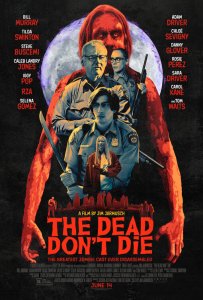 If you’re a Jim Jarmusch fan, you can probably stop reading now. I encourage you to continue but I don’t know if anything will be of help for you from here on out because, frankly, I don’t understand you. Jarmusch is a longtime staple of indie film and I’ve watched three of his films (Only Lovers Left Alive, Broken Flowers, Ghost Dog) and disliked all three to varying degrees, and that’s fine. There are plenty of hallowed names in filmmaking that are just beyond me, like Terrence Malick and Nicolas Refn, but I can at least partially understand what the fans of those auteurs value, an immersive visual, sensory experience at the sacrifice of narrative and coherency. When it comes to Jarmusch, I just don’t understand the appeal whatsoever. This is a man who found a way to make vampires crushingly boring, and now he finds a way to do the same with zombies. The Dead Don’t Die is the widest release of his career and it might be the worst movie I’ve seen in a theater all this year. It certainly feels like the longest.
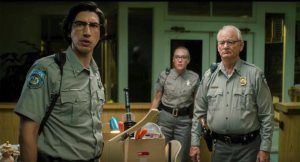
In a sleepy small Ohio town, the police force consists of Chief Robertson (Bill Murray), Ronnie (Adam Driver), and Mindy (Chloe Sevigny). They’re going about their typical day, warning Hermit Bob (Tom Waits), listening to the alarmist worries of Farmer Frank (Steve Buscemi), and picking up supplies at the hardware store run by Hank (Danny Glover) and Bobby (Caleb Landry Jones). There’s a traveling group of students, lead by Zoe (Selena Gomez), as well as a group of kids in a juvenile detention center. Then the dead come back and small-town life will never be the same.
 Anyone walking in expecting a zany comedy from the premise and cast, not to mention marketing materials, will be sorely disappointed, because what The Dead Don’t Die better resembles are the humorless anti-comedies of late-night Adult Swim blocs. It’s not so much that there are jokes, it’s more the absence of jokes, and somehow that might be the joke? The humor is stuck in one mode throughout the film. A character will slowly say something understated or obvious (Example: “That’s not good”) and then the reaction of others will be delayed, and then after that nobody will say anything for several painful seconds later. That’s about it, folks. It’s hard to find humor with that. The deadpan jokes are too obvious and too uniform to really strike any potent comedy targets. The consumer “satire” is brittle to the point of breaking. Various zombies will shamble around and say one-word items of whatever was important to them, ranging from “Coffee,” to, “Fashion,” to, “Chardonnay.” It’s like the one-word utterances are the entire joke (Hey, this dead guy liked fishing, isn’t that a riot?). It’s not satire and it’s not funny. How about the characters of Rosie Perez and Tilda Swinton being named Posie Juarez and Zelda Winston? Is that the kind of humor that sounds appealing? How about Tilda Swinton flexing a samurai sword to slice and dice the undead. Is that supposed to be cool? Is it supposed to be funny? Is it supposed to be funny that it’s trying to be “cool”? What is anything?
Later, the film inserts a new comedy element with meta asides where people seem to know they’re in a movie, and yet again the jokes are obvious and uniform, except now it’s even lazier, relying upon the meta recognition to simply stand in the place of a joke. If anything can happen in the small town, especially toward its crazy end, then why do these things have to happen? Or better yet why don’t better things happen? Because of the deadly pacing it makes every attempted bad joke feel that much more unbearable.
This movie is only 105 minutes but it felt so much longer. the pacing not just as a whole but scene-to-scene and even line-to-line from conversations is deadly still. Every moment feels stretched out but it doesn’t ever feel like you’re going anywhere. Characters will be introduced and given meet-cute moments and little indicators they might be significant players later, and then we’ll just find them dead. Other characters will be introduced and then never leave their locations, having no bearing on the larger story. It’s rare that I could honestly say there are entire supporting swaths of this movie that could be cut completely and not impact the story at all. It makes the many storylines we hopscotch across feel like they don’t matter and are generally wasting our valuable time.
 Then there’s the ending where Jarmusch just instructs Tom Waits to unleash a torrent of narration bemoaning how society deserves whatever downfall it incurs and that we’re all just zombies anyway. It’s so clumsy and overbearing and unearned after an entire movie where the cultural criticism amounted to a racist saying he doesn’t like his coffee black and then pointedly staring at the only black man in the movie. Even if we got more moments like that I might say some of the ending vitriol is justified, but the commentary gets muted in the middle until Waits has to finally tell us what the point is. There are scant political and environmental references but they feel like tossed asides themselves.
I don’t blame the cast for any of this although I can’t say what on the page must have seemed attractive. Murray is always going to be an amiable screen presence and Driver is a fun partner, slipping into a skillful deadpan and straining to find humor where there is precious little. Everyone feels wasted on screen because even if you’ve never seen these actors before you know, instantly and instinctively, that they have been far better.
The Dead Don’t Die is further proof that I am not a Jim Jarmusch fan. I can’t fathom how someone can actually be a fan of this writer/director. I was tempted to walk out at several points but I held in there. The jokes are too obvious and barely jokes, the pacing is awfully slack, and the whole movie is reprehensibly boring. Even when it has moments of weirdness it finds ways to make it boring. The structure does little to nothing with a large ensemble of very good actors. The movie and premise had potential. The idea of a zombie outbreak in a small town where everybody knows everybody is ripe for comedy and tragedy. Ultimately The Dead Don’t Die feels like one egregiously long in-joke that the audience isn’t privy to. The joke’s on us, folks.
Nate’s Grade: D
Share this:

Late Night (2019)
 Late Night follows the fictional long-running TV talk show host Katherine Newberry (Emma Thompson) who has been informed by her network exec that his current season will be her last season. She will be replaced and the show will be retooled. Along comes Molly (Mindy Kaling), an aspiring comedy writer who works in a chemical plant. She’s hired on the spot to serve as a token and offer more diversity in Newberry’s all white, all-male writers room. She has to find herself, find her voice, stand up for herself, and try to get the show to change with the times if it’s going to potentially survive the eager network axe.
For fans of the inner workings of show business, and the ups and downs and push and pull of creatives, Late Night was made for you. I’ve always been fascinated by the nuts-and-bolts of creative ventures in the entertainment industry and especially a writer’s room where people hash out ideas, build out a storyline, and generally bring our TV to life. I enjoyed the short-lived show where Jim Rash would interview different TV showrunners about their writer’s room processes and how they would resolve creative decisions. It’s one reason I loved HBO’s The Larry Sanders Show, a deeply satirical and self-deprecating look at the bowels of Hollywood. So if you’re like me and enjoy the inner workings of creative people working in tandem, then Late Night is already starting on fertile ground for you. Kaling’s world is informed by her years of television writers room experience, as well as running her own show, and that experience better informs the reality of Late Night, from the joke-writing process, to the wariness of content that may push away sponsors, to the means of staying relevant in a vastly changing landscape of how people get their media and entertainment. You feel Molly’s sense of triumph, and disappointment, when her first joke is placed into the monologue and then removed. The movie feels informed and real to its tiniest detail, which makes it all the more interesting.
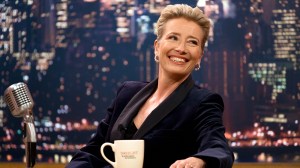 The film is consistently funny because Kaling is writing with such a sharp grasp of her characters. Right away the dynamic between Katherine, a cynic with an acid tongue, and Molly, an idealist but a novice who is pushing for reforms, establishes so much wonderful conflict and eventual resolution. It’s universally enjoyable watching a character come into her own, transform the lives of others for the better, and to have characters who butted heads form a mutual friendship and understanding. That’s all present, but with Kaling’s command of writing the characters come first. They drive the story, and while the destination is rather predictable with this sort of thing, that doesn’t make the journey any less satisfying. The character of Katherine Newberry is interesting because she’s a woman who has established her own perch in late night, but she’s still older, white, and from an elitist, privileged bubble. She’s stuck in the middle, which makes her such an interesting character to explore and push into new territory. Kaling has mined some talk show headlines for her story’s drama and it doesn’t feel cheap. Past mistakes are given weight and force characters to reckon with them in a way that acknowledges the extent of the ramifications and the people that have been hurt. Kaling also has a generous sense of writing for her supporting players, giving many a small moment to make an impression and enough for serviceable secondary character arcs.
There’s a definite message afoot with Late Night and it goes about it in a way that makes it far more accessible — as entertainment. Rather than dragging out a soapbox, the movie does the smarter ploy by demonstrating why a homogeneous writers room of the same kind of voice/perspective can be limiting and potentially regressive. Molly is the long-overdue change agent to the show, to the characters, and to the old ways of thinking of what television, and by extension the entertainment industry, had to be simply because it had always been that way. The film’s sense of advocacy for representation is strong and a central tenet, but this doesn’t get in the way of telling a good story with enjoyable characters. By demonstrating through its tale, Kaling has smartly packaged her movie as an empathy test designed to expand the perspectives of its audience, to get them to think how difficult it may be for a woman, let alone a woman of color, to find work in her chosen field. It’s the kind of movie you could take your grandparents to and have them nod along in approval.
Allow me to get a little personal here as I reflect on the topic of representation. I think recognizing one’s self and one’s stories is a huge deal. The power of empathy is potentially endless but that doesn’t mean that all stories need to be told from the familiar template of a straight white dude encountering conflict and change. With good storytelling, anybody can feel for anybody’s plight, but that doesn’t mean that those in the industry should stop trying to give voice to others who have historically been marginalized. TV, and particularly late night TV, is something of a boy’s club and needing more women. A recent analysis on late night TV concluded, with the exception of TBS’ Samantha Bee, that the typical late night talk show writing staff is only one quarter female. More people deserve more opportunities to shine because we, as a society, benefit when we have a plurality of stories from a plurality of voices and perspectives. It makes us all better.
 During the summer of 2018, I wrote a rom-com Web series (The Spirit Inside Me) that was told from the perspective of a bisexual woman and dealt with an eventual romance with another woman. You better believe I consulted with my queer friends to make sure every script didn’t feel like it had been written by a straight dude. Then we started to make it a real thing throughout the fall and winter of 2018/early 2019, and the mission statement of the series, and for me, was to try and get as many women involved in the production as we could. There were nine total episodes and I wanted to try and line up as many female directors as possible (if able all of them would be directed by women). Our show was from a feminine perspective, concerning an unorthodox LGBTQ relationship, and I wanted a feminine perspective to imbue as many facets of the production as possible. We put out notices for crew and emphasized that we were looking for women first. You would have thought I had just insulted people’s mothers the way some men responded back. They told me this was “reverse discrimination” and insulting and that the best talent should win out. I dismissed these whiny grievances and continued to seek and hire women. I know many women, even in our small community of filmmaking, don’t get as many opportunities as men. I wanted to give them those experiences. I felt it would make our series better and, personally, it just felt like the right thing to do because I could. With the show currently in editing (stay tuned!), it’s actually one of my happiest decisions as I really enjoyed seeing several women rise to their opportunity and shine. I’m not writing this to pat myself on the back or seek woke plaudits. This is such a slight example of mine over the overwhelming obstacles women face breaking through in a male-dominated industry that doesn’t want to share, but I felt it was worth sharing, dear reader.
Late Night was a movie that kept me smiling and feeling good all over. It warmed my heart, it made me laugh, and it gave me a group of characters to latch onto that earned my affections. Thompson is tart and witty and wonderful. Kaling is lovable and charming and hopeful. They make for a dynamic, combustible combination. Late Night is a fine example about the benefits of diversity, representation, and empathy, and it’s also a cute and funny movie that will make you happy by the time the credits roll. Tune in.
Nate’s Grade: B+
Share this:

Booksmart (2019)
 Booksmart is the directorial debut of actress Olivia Wilde and it’s a hilarious, heartfelt, and often delightful teen sex comedy that has more on its mind than studying. The focus is on two overachieving best friends (Beanie Feldstein, Kaitlyn Dever) who realize, on the last day at school, that they haven’t cut loose for their entire high school careers. They pledge to find a big party, make a move on their crushes, and show all the popular kids just how much fun they can be too. The concept might resemble Superbad (including starring Jonah Hill’s sister, Feldtsein) but this is much more than simply a “female Superbad.” The movie doesn’t do anything revolutionary in the teen movie mold, but it adapts to its new settings. There’s a prominent gay first love storyline that leads to elation and heartache. There’s a strong feminist undercurrent about what expectations are placed on women, fairly and unfairly. There’s also a wider sense of empathy and complexity to the whole movie; the large ensemble of supporting players get considerate shading, which makes them more than how they’re casually perceived. It all relates to a larger theme that people are more than their appearances and reputations. It’s also wonderfully funny and had me laughing routinely from beginning to end including some big moments and set pieces that were smartly developed. There are fantastic running jokes and great surprises, while not losing the grounded sense of what makes the film special. The humor is also character-based and there’s a genuine honesty to its depiction of the reality of being young in modern America. Dever and Feldstein are a terrific pair and feel like legitimate best friends. The whole movie floats along with such effortless charm, tying up our wide ensemble of characters in a concluding graduation ceremony that feels downright joyous. I really cared about these women by the end. Booksmart is the kind of movie more teen comedies should aspire to be, and it’s worth definitely worth checking out.
Nate’s Grade: A-
Share this:

Brightburn (2019)
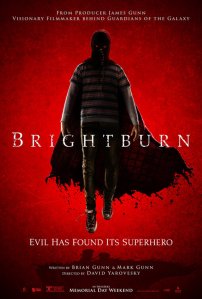 Many writers and artists have re-imagined the origin of Superman, the alien orphan sent to Earth and raised by the Kents into a thoughtful young man who empathizes with the humans he has come to identify with. What if that alien child, blessed with powerful abilities, didn’t decide to become a hero and instead saw himself as superior? That’s the premise of Brightburn which looks at the Man of Steel through the lens of The Omen.
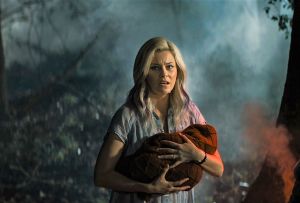
In the small Midwestern town of Brightburn, Tori (Elizabeth Banks) and Kyle Breyer (David Denman) are a couple struggling to conceive, and then one fateful night a spaceship crash lands on their farm. Inside is a baby boy they decide to raise as their own son. Flash ahead a decade and Brandon Breyer (Jackson A. Dunn) is a normal kid except he’s never been sick, he cannot be cut, and he’s starting to develop even more powers thanks to his spaceship seeming to activate something within him. It also fills his head with an alien message, one not too friendly for the people of Earth. Tori and Kyle must reconcile how far they’re willing to go to protect their son and whether it’s at the expense of the well-being of billions.
 Brightburn takes its thought exercise to the limit, fully developing its intriguing angle of what if the story of Superman went in a much darker, much bleaker direction. Instead of representing a hope for mankind, what if this alien son represented its demise? As I was sitting back and watching, each element felt well placed and well thought out, contributing to a feeling of satisfaction that the screenwriters have given considerable thought to telling not just a good story but the best version of their story. There’s a very early science reference to wasps that tells you exactly where the film is going. I have some small quibbles when it comes to motivations, in particular the flip in Brandon, but these are minor and honestly could have been smoothed out with one or two added scenes. I appreciate that writers Brian Gunn and Mark Gunn (cousins to James) start things rather dark and see it through. This is the kind of movie you pray doesn’t go soft and squishy by the end, where the irredeemable monster is reached through the power of love. This is not that movie. With an all-powerful monster, it would be a cop-out to somehow slide in a happy ending. The entire trajectory of the movie feels appropriate, quibbles over rushed motivation aside, and where we end up feels predictable but right.
The biggest comparison I can make with the film isn’t any of the Superman adventures but a little indie, 2011’s powerful character study, We Need to Talk About Kevin. For those unaware, that movie followed a woman whose son grows up to be a school shooter who also kills her husband and daughter. The movie skips around in time and in doing so reveals through flashes of memory key incidents, flashpoints, where mom realizes something just isn’t right with her dear old son. It’s a test of a parent’s love but it’s also a test of how far a parent can ignore the warning signs that are amassing like a cancer. Like that film, Brightburn demonstrates the limits of parental love and rationalization. For much of the movie, Tori refuses to accept her son’s darker impulses and the reality that is getting harder to ignore. Her son was a gift from the sky and that needs to mean something. Her love and parenting should be enough to keep her child on the path of good and responsibility, she reasons. This only delays the intervention that might have made a difference, but then again, when you’re dealing with a kid with invulnerability and laser eyes, is there any intervention to turn things around? Are some too far gone? There are moments that even touch upon the creepy loner status of deranged spree killers. I genuinely felt sorry this one teenage girl ever showed a glint of kindness to Brandon because all it does is place her and her family into his obsessive fixation to control.
 I do believe that your enjoyment of Brightburn will partly rest on your prior knowledge of the Superman mythos and its clever, darker reworking. Considering this is an essential aspect of its premise and execution, I don’t see this as a fault, though it will limit the audience that can simply plug into Brightburn and enjoy it as is. The film leans heavily on the iconography of Superman and purposely twists it as a perverse thought experiment. If you’re indifferent or unfamiliar with Superman, it may play out as an efficient thriller with some solid acting and gross-out effects. However, if you’re a canny follower of the Superman origins, then it becomes a meta commentary with even more to unpack. How does one exactly keep a god grounded in the ways of morality? I don’t mean to make it seem like Brightburn is inaccessible to non-comic book fans. It’s not, but part of the enjoyment for me was how it took something familiar and twisted anew.
Those gore effects are impressively gross. This is a movie that doesn’t shy away from the destructive power of its super demon seed. It builds in intensity and is actually pretty restrained, all things considered, but when it wants to pack a punch, the movie does. There was one extended bit of eye trauma that made me shield my face. How in the world can a person have that much glass shard lodged that far into one eyeball? It causes me shudders even thinking back on it. There’s another scene where a person’s jaw is dislodged like they were the Tin Man from The Wizard of Oz, a lanky part that stubbornly won’t stay put. The person even holds their hand over their face, knowingly teasing the audience. As the film hurtles toward its final act, if you can think of a way that Superman could kill a vulnerable mortal, this movie covers it. Super speed splattering a person? Check. Laser eyes boring a hole through a skull? Check. There’s even a scary sense of visual poetry to one kill that goes flying into the heavens in slow motion. The gore and grisly deaths are another aspect that reminds me how well developed the film is.
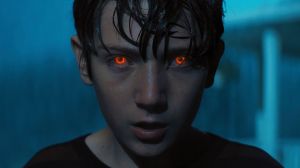 The acting may be better than you’re anticipating. The screenplay doesn’t simply rely on the main characters being stand-ins for their Superman analogues. While they don’t feel like three-dimensional characters, care has been put to give them more substance so that the drama of their choices can be compelling on its own. Banks (Lego Movie 2) and Denman (16 Hours) debate their increasingly fraught choices with clarity. He’s convinced their son isn’t right and poses a danger, and she doesn’t disagree but refuses to abandon their son after all these years together. Early on, they feel like a real family, and that only makes the tragic events feel much more resonant as things spiral out of control. Banks and Denman are certainly not playing any scene for a knowing wink. To them and the rest of the production the events are very real and very scary. Dunn (Avengers: Endgame) is eerily spooky with his stares and glares, but there are also moments that remind you he is or was still a kid and experiencing the same desire to belong.
This is not going to be a movie for everyone but if you’re intrigued by the premise and/or have an affinity for Superman what if scenarios like Red Son, then it should be right up your alley. It’s a clever and satisfying thriller that appeals to fans with darker desires. It’s about as well executed as its premise could go, and I left my theater thoroughly satisfied with only some minor quibbles for motivation clarity and an extended epilogue (I don’t know if Billie Eilish fits for the end credits but that’s just a personal preference). Brightburn takes the Superman mythos and twists it into a creepy horror film, the origin of a super villain, and an apocalyptic death sentence for the rest of humanity. It’s actually a lot of fun to watch even as it’s disturbing you and leaving you wincing.
Nate’s Grade: B+
Share this:

Red Joan (2019)
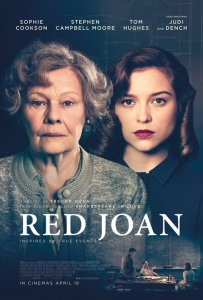 Red Joan is inspired by a true story of an elderly British woman being outed in the 1980s for being a spy for the Russians and passing along British nuclear secrets. If the real story were as boring as what appears onscreen, I doubt anyone would care. Judi Dench plays the older Joan dealing with the public reckoning decades in the making and Sophie Cookson (Kingsmen) plays the young college grad in the 1940s who lands a top nuclear physicists job with the government and alongside a married man she falls for. Some friends who might not really be her friends snooker Joan into becoming a spy, and her rationale is that the world will be a safer place if other countries have the bomb other than simply America. Older Joan says history has proven her right and she takes partial credit for helping to ensure peace. First off, this logic seems faulty. If something is dangerous, I don’t know if it’s less dangerous if more people/countries have it (see: the firearm industry). Secondly, there were numerous incidents that almost brought the U.S. and the U.S.S.R. to mutually assured self-destruction including the Cuban Missile Crisis. The biggest problem with Red Joan is how shockingly boring it all is. A young woman pulled into espionage and treason, having to maintain her secrets while they eat away at her and she betrays her colleagues and loved ones, that’s the stuff of complex human drama, or at least it should be if the storytelling knows what it’s doing. The movie never seems to treat what she’s doing with great stakes. Here’s an example of how rushed and under developed the story can be: scene 1) Joan learns her co-worker doesn’t have a great marriage; scene 2) they complete a crossword together and he nudges closer; scene 3) they kiss and he declares his love for her. This sequence of events is portrayed during a travel montage or all things. The characters are so underwritten and their compromises and conflicts rarely feel real because of moments like this. The acting is generally good all around and I wish Cookson would get a starring vehicle worthy of her talents. The biggest mystery for me with Red Joan is that the story depicted onscreen is made up, diverging from the real events, so why didn’t they tell a better story with their freedom?
Nate’s Grade: C
Share this:

Peterloo (2019)
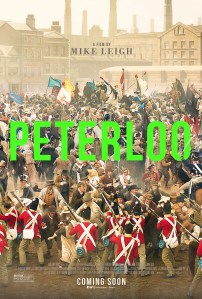
Mike Leigh is a famed writer/director who often writes from a working class perspective, so it’s no surprise he would go back to a notable 1819 British massacre where local ruling magistrates and abusive militia mowed down and killed a dozen citizens that had gathered in Manchester to rally for worker rights and voting representation. I was ignorant to the injustice in history but went in suspecting a horrible confrontation by the end. When the tragedy does strike, it’s searing and upsetting and moving. The problem is that it takes forever to get to the moment that we’ve been waiting for and that finally provides meaning for the movie. Peterloo is far too long at two and a half hours and it takes a solid two of those hours just to finally march our characters into the awaiting tragedy of its title. Leigh paints a realistic mosaic of the many working class and middle-class people of the time, families struggling for work, men processing PTSD from the recent Napoleonic wars, political leaders articulating the pathways for reform measures, and Leigh and his production team are very good at recreating the industrial Manchester reality with care and precision. Leigh’s ear for dialogue is almost documentarian. However, for those two hours, Peterloo amounts to a slice of life of relatively boring people living boring lives until the big incident that makes them notable, namely that they were abused and died horribly. It becomes a waiting game where you get anxious for the tragedy to arrive. Another choice that harms the film’s impact is how incredibly over-the-top the villains are written and performed; these are mustache-twirling caricatures of greedy, venal business men, factory owners, and power brokers and their performances are so slimy that they feel like they transported from the most black-and-white of fantasy tropes. It feels like these people would be relaxing by putting their feet up over a pile of child corpses. It gets to be downright campy how the villains are portrayed. Peterloo is ultimately an enraging movie that is far too boring for far too long to feel much more than a sense of relief when it’s over.
Nate’s Grade: C+
Share this:

Captive State (2019)
 The fraught world of Captive State is interesting, a political landscape ten years into an alien occupation. We follow a small band of human resistance fighters working to get past a security stopgap to strike back at the alien overlords who resemble human-sized pine trees. John Goodman plays a police security chief trying to unravel the insurgent conspiracy while working with the collaborative government. It has a slight cat-and-mouse feel of a good conspiracy thriller and there are asides that broaden the world, giving an interesting peak at the realities of this strange new world. The problem is that it feels like a whole mini-series stripped into a two-hour movie. The characters feel less like people and more like impressions of people, and the story is plowing through so many incidents that there isn’t much time to flesh them out except for the occasional trope. As a result, the movie feels like it has a lot of things happening but my interest level flagged because I felt little for the characters. The limitations of the budget are felt here and there as far as the sense of scale. Director/co-writer Rupert Wyatt (Rise of the Planet of the Apes) takes a docu-drama approach and favors nighttime chases and sneaking, which also conceals special effects restrictions. The visual grittiness adds a visceral level of realism but can lend itself to additional logic questions. I kept waiting for the world to feel more lived-in and offer important slivers to add layers of context to this conspiracy. Captive State is frustrating with how much it leaves unspoken and unclear. It’s ten years in to this occupation and what exactly have the aliens offered the world? What has changed? Why are these freedom fighters fighting back? What are the goals of the aliens? I can handle ambiguity and nuance but with too much the world building can feel unsatisfying and incomplete. It comes together well but by the climactic end I felt the universe it established was more intriguing with potential than the story it delivered.
Nate’s Grade: C+
Share this:

Arctic (2019)
 Mads Mikkelsen is stranded in the Arctic and that’s about all you need to know plot-wise about the film, a thrilling and immersive survival thriller. Right away the film lets us in on the routine of this survivor of a plane crash and how resilient and resourceful he had become. Then it introduces a new sense of urgency, a critically injured pilot in another aircraft, that pushes him into leaving the safety of his homemade confines. The movie relies so heavily on elemental, visual storytelling that I think any person on the planet could easily understand and appreciate the pared-down storytelling. The visuals are so immersive and accessible that every item bears import or sets up critical information to be relied upon later. The harsh Arctic landscape and unique dangers push our hero to the extreme in order to save another life. It’s enough to inure us to this relatively silent man. Mikkelsen (Polar) uses every physical muscle of acting to communicate the struggle his character is undergoing. You believe every moment. There’s not much in the way of story beyond stubborn survival against brutal conditions. We don’t get any flashbacks. We don’t get any monologues. It’s one man against the full force of nature and it’s enough for a brisk, simple, straightforward focused 97-minute survival story with Mads persevering amongst the beautiful and terrifying wasteland.
Nate’s Grade: B
Share this:

Stan & Ollie (2018)
 This sweetly nostalgic film looks back at the friendly and fractious relationship between classic comedy partners Stan Laurel (Steve Coogan) and Oliver Hardy (John C. Reilly), the top comedy duo for decades. Flash forward to 1957 and they’re older and touring England to regain enough relevancy to scrap together a movie deal. It’s a delight to watch both actors just perform as the famous comedians and they cannily turn any opportunity into a recitation of a physical comedy bit. At its heart, the film is about the close relationship of the two men, what pushed them apart, and what brings them back together. It’s a very undemanding movie that is very nice, populated with nice people doing nice things for one another, bowled over by the sincere power of humor. Coogan and Reilly (in a very big fat suit) give honest performances rather than impressions. I never knew Laurel was so instrumental in developing their material, and he continued writing Laurel and Hardy material long after his partner died. The movie glides along on its good feelings and historical recreations, settling into a nostalgic sweet spot that isn’t too far into maudlin but interesting enough to justify the trip. If you’re a fan of Old Hollywood magic and Laurel and Hardy, then Stan & Ollie is a dream.
Nate’s Grade: B


 nathanzoebl
You must be logged in to post a comment.