Blog Archives
6 Underground (2019)/ Portrait of a Lady on Fire (2019)
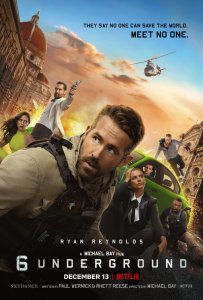 I recently watched two movies this holiday season that could not be any more opposite, so naturally I decided to pair them together as a joint review. 6 Underground is a chaotic and bombastic action-thriller that cost $150 million dollars, is directed by maestro of the machismo Michael Bay, and is widely available for streaming through Netflix and its bottomless pit of money. Portrait of a Lady on Fire is a small, subtle French film depicting a reserved love story that takes its sweet time and is as much a repudiation on how women are commonly portrayed in art. One of these two movies is an obnoxiously arduous enterprise that many have dubbed represents the worst in movies, and the other is a hard-to-find foreign indie that is one of the best films you will see in 2019. Two very different uses of cinema, and I’ll let you decide which is which by the end of this double review, dear reader.
The mastermind of the special forces team of “ghosts” is billionaire inventor “One” (Ryan Reynolds). He’s assembled a team of specialists that have faked their own deaths to work as an elite team taking out an elite array of bad guys, tyrants, and war criminals. That’s the plot of 6 Underground. What follows is a collection of loud noises, colorful explosions, blood splatter, and mainlined madness pumping through all of your demolished senses.
 6 Underground is like a direct pipeline into Michel Bay’s childhood brain. It’s Bay at his most unfiltered, which means that the tone isn’t just over-the-top, it destroys the top, establishes a new higher top, and then obliterates that designation as well. Watching the movie is like a descent into juvenile hysteria and I couldn’t help laughing at the excess. It’s the kind of action movie where cars don’t just fly and careen off the road, they split in two and smash just so the driver’s dead body plops out in the camera angle. It’s the kind of movie where the bad guys don’t just get shot but get shot in lovingly disgusting ways, like a bullet going through a cigar and a pimple-popping setup leading to brain explosions. It’s the kind of movie where a dangling eyeball is played for giggles. It’s the kind of movie where people aren’t just getting hit by cars, they’re getting propelled into other objects from the blunt force. It’s the kind of movie where the bad guy names his generals The Four Horsemen. It’s the kind of movie where a character removes a bullet-proof helmet right before re-entering a firefight for… reasons. It’s the kind of movie with 100 needle-drop music selections, including, by my count, five Muse songs (but not one use of the Sneakerpimp’s “6 Underground,” which is an egregious oversight). It’s the kind of movie where someone unleashes a crashing crate full of metal poles and they launch like heat-seeking projectiles, filleting bad guys and bad guy cars. The opening twenty minutes is a non-stop car chase through the streets of Florence, Italy that must lead to billions in damages and, in one moment that screamed the only self-aware flash in the entire two-plus hours, the cars are racing through museums and laying waste to precious works of art. It’s like Bay is winking at his critics and saying, “This is how you see me, a gleeful provocateur that destroys the very concept of high art, so here I am, doing it for real.” To say this movie is crazy is a disservice to the word itself.
6 Underground is pure, testosterone-pumping id, and it can become exhausting without any foundation to hold it all together. The plot is extremely generic and feels like a relic from the 1990s, a billionaire assembling an elite team of criminals/killers/spies to go undercover and take out the world’s bad guys. They’re “ghosts” in the fact that they’ve faked their deaths, but what exactly is gained from this process beyond, say, going off the grid? The idea of them being dead is meant to be freeing, but their friends and family are still living and can be used to apply pressure on these still-living people. Except this never happens. The plotting is incredibly sloppy and elects to skip around in time in a misplaced attempt to seem cool. The entire opening twenty minutes feels like it’s one-upping itself out of naked fear that somehow an audience will be bored, like the viewer is somehow building a tolerance to the mayhem and will walk away unless it just keeps going up up up. The opening sequence has a florescent green sports car spinning through the streets, chased by armed vehicles, while bullet-removal surgery is being performed in the backseat, while an eyeball is being dangled to open a security code, while the narrative jumps back and forth in time to present whose eyeball this belongs to and what happened, and that’s even before the art museum smash-up and a slow-mo spin that twirls into absurd self-parody, where someone screams not to hit a woman with a baby, which we narrowly miss, followed by someone screaming not to hit a dog, which we next narrowly miss. Then there’s nuns on bicycles knocked onto the ground who respond with raised middle fingers. It’s so much, all the time, with Bay’s hyper edits and swirling camerawork that you feel beaten down. It’s all the outrageous spectacle we’ve seen in other Bay films but now it’s condensed to its essence and splashed into your eyeballs.
 There aren’t so much characters in this movie but action movie avatars or, even simpler, Person-Shaped Entities Who Hold Guns or Drive Fast. Reynolds is playing the same variation we’ve seen for the last few years since his success in Deadpool, which makes me think this is the only Ryan Reynolds we’ll be getting in movies from now on. The plot even provides completely frivolous flashbacks to provide answers to the non-burning question of how the crew was gathered together. I suppose it’s an excuse to squeeze in more action sequences but that only ever happens with the parkour Brit member. Speaking of which, the parkour action sequences are, by far, the best parts of this movie and it made me wonder what a parkour action movie under Bay’s command could be like. Every character has three modes: Badass, Quippy, and, least convincing, Self-Serious. These are not recognizable people, and the female characters are even less versions of not-people. The movie thinks it’s being cool by assigning code names that are just numbers, like they won’t get close to one another without the convenience of names. It’s just another sign of how disposable every character is and how little thought was given to character arcs beyond redemption. There’s one mission in Hong Kong that utilizes them as a team but even that is fleeting as far as developing a more cohesive camaraderie. They’re basically like distaff superheroes that have been forcibly crossed over for some special event and are waiting to return home for solo adventures. You could create a sequel with a brand-new team and not miss a beat.
Is any of this bombastic silliness genuinely entertaining? Much of Bay’s popular works exist in that strange space where you willingly shut off your brain for the popcorn thrills. I like half of the Transformers movies (though quite dislike the other half) and think Pain and Gain showed real promise, before it wore out its welcome, that Bay hasn’t been able to better tap into. I’m not an automatic hater of Michael Bay as a filmmaker; he’s a born cineaste when it comes to style. Even when his movies are running off the rails, they’re never truly boring. With the unlimited freedom of Netflix, Bay was able to unleash his full chaotic imagination, and the results can prove to be entertaining in spurts. I found more bafflement just trying to process everything. Bay’s advertising instincts are part of his style, so every over-saturated moment of 6 Underground looks like it could be a commercial for the military, cars, perfume, or some expensive watch. It’s a world of wanton excess and disposable thrills, and that relates to its portrayal of women too. Women become another interchangeable object to be fetishized and commoditized by Bay’s roving camera. It’s the male gaze cranked up on high, lovingly depicting fast cars, sexy women, and human carnage. Even the brains and blood being blown apart feel fetishized (bad guys don’t just get shot; they ooze goop for several seconds from gory head wounds). It’s a movie that wants to overpower you by every means available, with the excessive trivialities of action movies, with aggressive style that desperately wants to be seen as cool, and with its exaggerated concepts of hyper masculinity.
 At the complete other end of the movie spectrum is France’s gentle, understated period drama, Portrait of a Lady on Fire. Set in 1760 on a remote island, Marianne (Noemie Merlant) is commissioned to paint the portrait of Heloise (Adele Haenel) for the purpose of snagging her a husband. Heloise had been planning to become a nun but her family pulled her from the convent once she became their only living daughter, a.k.a. hope for the family to secure prosperity through marriage. Marianne must hide her true intentions and grow close to her subject, memorizing her face enough to paint it in secret. An intimacy builds between the two women that will change both of their lives even long after the fateful painting is finished (spoilers?).
Writer/director Celine Sciamma has primarily worked with contemporary stories (Girlhood, Tomboy, Water Lilies) but, in stepping back in time, she has tapped into something elementally beautiful and poignant. It is very much a slow-burn of a movie but, in essence, that is the most relatable form of love, a feeling that builds, transforms, and can eventually consume. There’s a liberation for the characters in the time they share together, first as companions and then as lovers. This is a transitory time, one locked in isolation and free from men, though the presence of the patriarchy is unavoidable as it limits their life choices. For Heloise, she had no desire to become someone’s wife and then it was no longer her choice. Her greatest value lies in marriage, and a portrait during this era was essentially someone’s dating profile picture. It’s on Marianne to paint an accurate depiction that can ensnare this woman a husband, which gets even more complicated when Marianne falls for her. The movie tenderly moves along with guarded caution, as two women explore their feelings for one another in a time that didn’t care about their feelings. This is a love story that feels alive but also realistic in how it forms and develops. It’s about halfway through the movie before the ladies finally make their intentions known. I can understand why this might be too slow for many viewers but the movie never came across as dull for me, and it’s because I was so drawn into this world, these characters, and their yearnings being unleashed.
 When it comes to movies exemplifying the difference in the female gaze, allow Portrait of a Lady on Fire to be one of the prime examples. This is miles away from the crass objectification featured in the likes of Michael Bay’s oeuvre and his very explicit definition of sexy. This is a movie where the only nudity casually happens after the sex (and body hair isn’t a big deal). There’s more ASMR action for the senses (lots of loud lip-smacking sound design) than ogling naked bodies. The emphasis isn’t on the contours of lithe feminine forms but more on the emotional and physical impact of a person as a whole. There’s one scene that is tremendously affecting and quite sexy, and it begins with the painter telling her subject every small physical response she has studied while painting her. It’s little observations that are romantically relayed. The subject then turns around and says, “Who do you think I’ve been looking at as I’ve posed for hours?” and proceeds to unfurl her own richly earned romantic observations about her painter’s physical responses. It’s such a wonderful scene bristling with palpable sexual tension and infatuation, so much more being said in glances than in declarative speeches. The movie also opens up a larger discussion of the male gaze as it pertains to the world of art. They must play into the established conventions driven by a rigid patriarchy designating how women are best represented in media, and the implications to modern cinematic portraits are clearly felt. Funny enough, Heloise is chastised for not smiling enough in her portraits to woo a worthwhile suitor.
I assumed this love story wasn’t going to have a happy ending given the confines of its era, but I want every reader to know that Portrait of a Lady on Fire just absolutely crushes its ending. You may expect it coming, in a general sense, but the resolution to this love story floored me. There are two consecutive scenes that each elicit different emotions. The first is a winsome feeling of being remembered, of having a sense of permanence after the fact, of a moment in time that will long be fondly recalled and celebrated for its fleeting perfection and lifelong significance. Then the next scene involves a payoff of great empathy that almost brought tears to my eyes. It delivers a long-desired payoff to a character’s lifelong request, and the camera simply holds for over a minute while we watch the indescribable impression this woman is experiencing. It’s so joyous, so heartfelt, and so luxuriously earned that I felt like my heart was going to burst. The fact that both of these emotional conclusions happen without a single word being uttered is even more impressive.
 The acting from the leads is phenomenal and the nuances they navigate are so precise and subtle. This isn’t a movie about grand gestures and big dialogue exchanges. It’s a romance in that genteel fashion of furtive movements and words encased in subtext. We’ve seen this kind of restrained love story before in other period pieces, as well as gay cinema with its socially forbidden love. The intimacy between these two women must start slow and, like a fire, be given the right amount of oxygen to allow it to spread. There’s an understandable bitterness that this love will not be allowed but this cannot abate the desire to proceed anyway. These women are more than just tragic figures coming into one another’s orbit. They’re fleshed-out and multi-dimensional characters with their own goals and imperfections. They feel like real people, and while disappointed by their limitations within a patriarchy, they will continue to pursue their personal dreams. The portrayal is so empathetic that your heart can’t help but ache when it isn’t swooning from the sumptuously understated romance of it all.
6 Underground is a hyper-edited, hyper-masculine, and hyper-tiresome action vehicle that exhibits every unchecked impulse of Bay as a filmmaker. The plot is inconsequential because it’s all just gristle for action sequences, which aren’t even developed scenarios as they are (occasionally literal) eye-popping moments of excess. Someone in those Netflix suites really should have second-guessed giving Bay a blank check and little-to-no supervision. At the other end of the movie spectrum is an intimately felt and intimately developed forbidden love that feels natural, nuanced, and enormously engaging. It reminds us that movies only need compelling characters or a compelling scenario to grab us good. I’m fairly certain Bay’s music licensing budget was more than this French indie. Portrait of a Lady on Fire isn’t a revolutionary movie. We’ve seen variations on this story before, but what makes it unmissable is the degree of feeling and artistry crammed into every breathable moment. I know there’s an ample audience that will enjoy 6 Underground, especially with its wider availability, and that’s fine. Netflix paid a pretty penny betting there are enough people looking for the film equivalent of a drunken, disheveled one-night stand. If you’re looking for something more authentic, deeply felt, and, let’s face it, generous to women, then look for Portrait of a Lady on Fire, a beautiful indie romance that warmed my heart, broke it, and then fastened it back together.
Nate’s Grades:
6 Underground: C-
Portrait of a Lady on Fire: A
Share this:

Lucy in the Sky (2019)
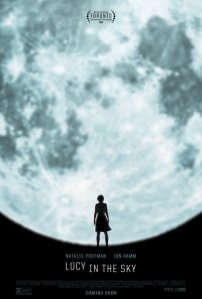 I don’t really know what this movie was trying to say. I think co-writer/director Noah Hawley (TV’s Fargo, Legion) was better trying to humanize the story of Lisa Novak, the astronaut who drove 900 miles, while wearing diapers to skip bathroom breaks, to confront the current lover of an ex-boyfriend, all three NASA employees. It was a story so bizarre, so tabloid ready, that a big screen adaptation was inevitable. What I wasn’t expecting was an artist to take this and discard the attention-grabbing details and turn this into a ponderous existential meditation. Lucy (Natalie Portman) has recently returned from Earth and our big blue planet doesn’t feel the same after she’s touched the majesty of space. Her life seems small, meaningless, boring, and she can’t shake her terrestrial depression. She begins an affair with a co-worker (Jon Hamm) to feel that same special sensation again, but she’s chasing something uniquely elusive. Lucy in the Sky is structured like a meandering Terrence Malick movie was crossbred with a heavy-handed addiction melodrama. It’s not a good fit. The ever-changing aspect ratios are meant to convey her emotional state, but just when I thought I had a handle on how to decode them, Hawley would frustratingly break the rules with them. As far as I can tell, the wider ratio (during space) is meant to convey… good things, and the smaller, boxier ratios (Earthbound) are meant to convey… not good things. But then wide shots will be filmed in super widescreen and it throws away that interpretation. It’s an annoying visual tic in a movie that feels over-directed. The blunt characterization for Lucy fails to open her up beyond that of a self-destructive addict. She had a demanding mother (Ellen Burstyn), an existential crisis, and a boring husband (Dan Stevens), so does that explain her behavior? Portman commits to the madness and I give her credit, though her thick Texas accent made me rear back (it sounded like Reba McEntire). The movie is almost worth watching just for her game performance, kind of like last year’s similar artistic misfire, Vox Lux. Lucy is definitely unhinged by the time she’s making her fateful cross-state road trip. She mutters that women are regarded as “too emotional” as a common slight to sideline, but her behavior isn’t exactly dispelling this criticism. Maybe trying to turn “diaper astronaut love triangle” into a symbol for female discrimination wasn’t exactly the best call. Lucy in the Sky is an arty mess that is trying so hard to say something profound but loses the very appeal of its source material. Either you embrace “diaper astronaut love triangle” or you don’t.
Nate’s Grade: C
Share this:

Honey Boy (2019)
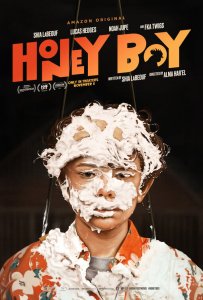 Honey Boy may be one of the most fascinating movies before you even watch a single second. It’s begging for an intensely ambitious psychological analysis as Shia LaBeouf lays bare his soul in an act of art as therapeutic device. He wrote the screenplay of a very autobiographical tale of a young child actor (nick-named “Honey Boy” by his father) hitting new levels of fame and his abrasive, abusive, and very controlling father, an alcoholic entertainer that relishes his son’s growing success and also resents his accomplishments. That alone would have made Honey Boy an interesting film experience, but LaBeouf goes the extra mile, as he does, and he literally plays the father character, putting him in the position of bringing to life the hurtful authority figure and thinking from his skewed perspective. It makes every moment LaBeouf is onscreen deeply fascinating and deserving of a deep dive to unpack the layers of personal meaning for the man. LaBeouf is also startling and terrific as the self-destructive and self-determined father, a man who finds slights in the slightest but can also be very encouraging of his son’s dreams. Seriously, every moment he is onscreen is suffused with layers of artistic meaning for what it represents in the story, its relationship to LaBeouf the person, and what LaBeouf the son is discovering while playing his father. It becomes a cathartic exercise that also could prove to be literal empathy. The problem with Honey Boy is that it feels more like that dramatic exercise than an actual story; the secondary storyline with the adult protagonist, played by Lucas Hedges (Manchester by the Sea), hardly provides much significance. He’s going through rehab and dealing with his unresolved feelings and addictions, but it’s more a framing device than a story itself or a worthwhile contrast to provide helpful details. The movie would just have been fine without it. However, there isn’t really a development of a plot as there is a general repetition of the relationship, namely the complicated and fractious father/son relationship. We spend a lot of time at this motel. We spend a lot of time with father speaking to son. I think a clear majority of the lines are spoken by LaBeouf. It’s always fascinating, with the exception of a misfire of a young romance that seems to float by more on yearning, but after a while I started to notice it felt like we were getting more of the same. We weren’t generating new insights into the characters and how they might change. Is this movie an act of forgiving his father or understanding him? I don’t know, but I’d happily debate Honey Boy with a pal over a beer for the next hour. It’s an inherently intriguing movie loaded with subtext that has its own subtext, a touch of the surreal from documentary filmmaker Alma Har’el, and powerful acting from LaBeouf. It can also feel like more of the same after the first hour. It’s a movie you need to see but it’s ultimately more LaBeouf opening up his intensive therapy role-play than it is a fully-formed movie. James Franco must watch this movie and weep.
Nate’s Grade: B
Share this:

Uncut Gems (2019)
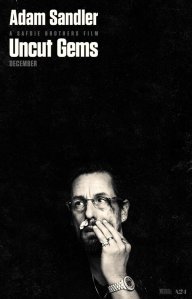 Uncut Gems is like having a panic attack. It’s frantic, unpredictable, exhausting, anxious, paranoid, visceral, and I still don’t know if I can say I actually enjoyed the actual movie. I can admire it and its effectiveness at putting the viewer in the world of Howard Ratner (Adam Sandler), a middle-aged jeweler that owes money to every shady human in New York City, though I don’t know if I want to step back into this mucky world of crime, losers, and lowlifes. It’s 2012, and Howard has procured a rare gemstone from Ethiopia and considers this his big score, which is important considering he keeps taking on more debts to pay off the last debts to angry, violent men. Basketball star Kevin Garnett, playing himself surprisingly well, visits the shop and is obsessed with the gem and the mythic power he feels it offers him. Howard agrees to allow the NBA star to borrow the gem, and from there Uncut Gems is a nonstop descent into chaos, with creditors, auction houses, family members, mistresses, and every goon in the tri-state area colliding with Howard as he spins desperate deals, escapes, and anything he can to attain that big score. The Safdie brothers, a writing/directing pair, made a big splash with 2017’s gloriously thrilling Good Time, a movie that was as brilliantly streamlined and direct as this new one is deliberately sloppy. It feels like one plot event crashing into another, with characters speaking over one another, a throbbing score constantly in your ear, and with claustrophobic camerawork and grimy lighting. You feel like you’re experiencing the constant rush of anxiety of Howard, and it’s very potent, but the movie can also feel repetitive. There’s so much happening all the time that it can feel less like things are escalating worse than things are just still happening. There are stellar sequences, in particular the later act with an auction and pulling off an escape leading to a very complicated high-risk-high-reward bet, but the movie’s sloppiness and overlapping nature also makes it feel smothering. Sandler is superb as an adrenaline junkie seeking his next fix, a self-destructive gambler who knows he can never be satisfied. With Sandler’s able assist, Howard has an offbeat charm that makes you listen when you should be punching him in the nose. Without Sandler and his live-wire performance, you probably wouldn’t care what happens to this mess of a man. Julia Fox plays Howard’s mistress and she’s a real discovery. This is her film debut and it certainly won’t be her last. She’s more than a pretty face and finds a screwball sweetness to her relationship with her boss, enough so that you think she may actually love Howard for real, in her own way. Uncut Gems is also shockingly unsentimental about its characters and what befalls them. You may laugh, you may gasp, but you’ll be surprised one way or another. The Safdie brothers continue to solidify themselves as some of the most exciting filmmakers working in the thriller genre. I’ll still prefer Good Time and a scuzzy Robert Pattinson to a scuzzy, bruised, beaten, and always-smiling Sandler, but Uncut Gems is two hours of collective adrenaline spikes.
Nate’s Grade: B
Share this:

Climax (2019)
 I honestly have no idea who could enjoy Climax. I have watched dozens of movies where I knew it wasn’t for me but I could at least fathom some appeal to a select viewer. Climax is the rare film where I cannot even fathom any person enjoying it, because to even attempt to enjoy it on its fever dream level it purports would only lead to disappointment. I don’t think it’s even possible to enjoy this movie, and maybe that’s even some subversive point from writer/director Gaspar Noe. Is the very act of titling a movie called Climax with no climax itself a post-modern jape? Is that it? I’m confounded by this monotonous experimental triviality.
The plot: a Parisian group of dancers is practicing in an old school building one 1990s wintry night. One of the members spikes a bowl of sangria with LSD. The dancers unwittingly get high, freak out, and lash out, leading to one long sordid night of tumult. That’s it, folks.
 Firstly, Climax is incredibly, unbearably, crushingly tedious. It’s 97 minutes that could literally be condensed into a music video for a three-minute song as far as substance is concerned. Apparently Noe was working off of a five-page script (note to readers: typically, in screenwriting terms, one page equals one minute of movie), so it’s no surprise that the overwhelming majority of this movie feels empty. The first six minutes or so are watching boring interviews of the various dance troupe members answering mundane questions. It’s still difficult to attach impressionable personalities or points of distinction for them beyond the superficial (Tall Blonde, Girl with Glasses, etc.). After that it’s an extended dance sequence, then about twenty minutes of chit chat where the dancers are improvising, and then we have another extended group dance, and then we get to the fateful spiked punch. What I’ve just described is the first 45 minutes of the movie, also known as half of the film, and it could have all been removed without missing a beat. That’s a serious storytelling problem. Oh, I hear others preparing the defense, the movie is intended to be an experience and not a story. If that’s the case I need more of an experience. Noe described the first half of Climax as a “roller coaster” but it feels more like the long wait in line and then the brief five minutes of actual activity. Even the opening dance sequence, while energetic, is less than extraordinary. It’s not exactly a sequence that would wow me any more than a deleted scene from a direct-to-DVD Step Up sequel.
Climax fatally errs by, of all things, restraint. I could accept the slow buildup, the tedium, and even the paper-thin characters if, and that’s a big if, Noe was able to pull out all the stops with his freak-out finale and just went bonkers. However, it’s not quite the same when we don’t also experience the hallucinations and madness befalling our dancers. Instead we watch them pace around and scream, cry, sometimes writhe, sometimes fall down, sometimes fall down and writhe, sometimes fall down and writhe and cry, and that’s about the extent. It can be downright embarrassing to watch especially as Noe’s penchant for tracking shots makes the performance takes so agonizingly long. There are brief moments of unpredictability where the dancers become violent and paranoid, but these are fleeting and we’re back to watching people we don’t care about scream about imaginary things. Imagine if Noe let the audience in on these personal, psychedelic, and monstrous drug trips. Imagine how much more visually alive that would be and also how much more it would connect us with the characters, perhaps linking their hallucinations to personal traumas and anxieties. I’ve had friends discuss going along for the ride with Climax, but what ride does it even offer? The final ten minutes consists of a confusing upside-down camera angle, a scathing red light, and more antic writhing on the floor with the occasional sexual copulation. At that point, I had long lost any interest to even attempt to decipher the screen.
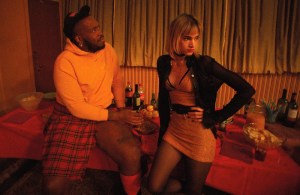 None of these characters matter, so I kept waiting for the eventual bad fates to fall upon them as the movie ramped into its horror section but Climax doesn’t even do this. I was expecting things to get progressively worse and take on a tragic momentum of escalating mistakes. I was expecting something and all I got was an extended music video where the extras had taken over, trying to convince me that their little spheres of drama were worth following (there were not). The little moments of conversation between the characters feel like you’re eavesdropping on normal, ordinary, and boring people but also people without clear indication for character arcs, ironic reversals, or any of the sort of contexts that can make people interesting in narratives. There’s just no potential here for the characters and nothing that amounts to satisfaction (oh the ongoing irony of its title, I know). Here’s how bad Noe miscalculates: at the very end, we discover which character was responsible for spiking the sangria, and it’s treated like a big reveal, except this was never an important mystery and I didn’t even recognize the culprit. It didn’t matter because the mystery never mattered and the characters especially never mattered.
Noe has been a cinematic provocateur ever since his first film, 2002’s Irreversible, began with a grueling, graphic nine-minute rape scene. He seems more drawn to pushing button so he might devote an entire movie to a floating spiritual perspective (Into the Void) or shoot a love story with un-simulated sex including graphic 3D use of said parts (Love). He’s not exactly the kind of man who wants to tell a simple story in a simple way (though I would argue a majority of his stories are pretty simple). So, if it’s all about technical bravura and showmanship and pushing the envelope, then let the man be judged on those grounds, and he is found wanting with Climax. The long swooping camerawork can be impressive as it tracks all over the confines of this building but the positives are weighed down by the banality of the visuals. Far too much of this movie is simply following people walk down corridors. There aren’t key, striking visuals to sear into your memory and it feels like Noe’s heart just isn’t in this. There’s one scene where a dancer, goaded by an angry and accusatory crowd, starts stabbing herself in the face. I was expecting something far more graphic or bloody or consequential, but it’s like a shrug. It feels like he’s even bored by the assignment of directing his own movie and just keeping the camera running so he can cross the 90-minute finish line and call it over.
I come back again and again to the question of how it is even possible to enjoy Climax. I think, even if you were to be overly generous, Noe’s film just cannot measure up on any artistic or entertainment metric. If you’re eager for a crazy, trippy, immersive drug-fueled experience, get ready for something more akin to standing by and holding the hair of your friend while they vomit into a toilet.
Nate’s Grade: D
Share this:

Jay and Silent Bob Reboot (2019)
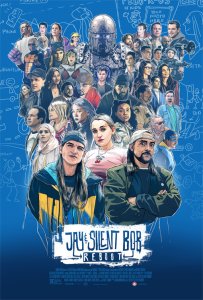 Jay and Silent Bob Reboot is strictly made for writer/director Kevin Smith’s fanbase, so does trying to play outside this cultivated audience even matter? Honestly, there’s no way this is going to be anyone’s first Smith movie, so it’s already running on an assumed sense of familiarity with the characters and stories of old, which is often a perquisite to enjoying many of the jokes (more on this later). It’s been 25 years since Clerks originally debuted and showcased Smith’s ribald and shrewd sense of dialogue-driven, pop-culture-drenched humor. He’s created his own little sphere with a fervent fanbase, so does he need to strive for a larger audience with any forthcoming movies or does he simply exclusively serve the existing crowd?
Jay (Jason Mewes) and his hetero life-mate Silent Bob (Smith) are out for vengeance once again. Hollywood is rebooting the old Bluntman and Chronic superhero movie from 2001, this time in a dark and edgy direction, and since Jay and Silent Bob are the inspirations for those characters, even their likenesses and names now belong to the studio. The stoner duo, older and not so much wiser, chart a cross-country trip to California to attend ChronicCon and thwart the filming of the new movie, directed by none other than Kevin Smith (himself). Along the way, Jay and Bob discover that Jay’s old flame, Justice (Shannon Elizabeth), had a daughter, Millennium “Milly” Falcon (Harley Quinn Smith) and Jay is the father. Milly forces Jay and Bob to escort her and her group of friends to ChronicCon and Jay struggles with holding back his real connection to her.
 One of my major complaints with 2016’s Yoga Hosers (still the worst film of his career) was that it felt like it was made for his daughter, her friends, and there was no point of access for anyone else. It felt like a higher-budget home movie that just happened to get a theatrical release. Jay and Silent Bob Reboot feels somewhat similar, reaching back to the 2001 comedy that itself was reaching back on a half-decade of inter-connected Smithian characters. There is a certain degree of frantic self-cannibalism here but if the fans are happy then does Smith need to branch out? This is a question that every fan will have to answer personally. At this point, do they want new stories in the same style of the old or do they just want new moments with the aging characters of old to provide an ever-extending coda to their fictional lives?
I certainly enjoyed myself but I could not escape the fact at how eager and stale much of the comedy felt. Smith has never been one to hinge on set pieces and more on character interactions, usually profane conversations with the occasional slapstick element. This is one reason why the original Jay and Silent Bob Strikes Back suffers in comparison to his more character-driven comedies. Alas, the intended comedy set pieces in Reboot come across very flat. A lustful fantasy sequence never seems to take off into outrageousness. A drug trip sequence begins in a promising and specific angle and then stalls. The final act has a surprise villain that comes from nowhere, feels incredibly dated, and delivers few jokes beyond a badly over-the-top accent and its sheer bizarre randomness. There’s a scene where the characters stumble across a KKK rally. The escape is too juvenile and arbitrary. A courtroom scene has promise when Justin Long appears as a litigation attorney for both sides but the joke doesn’t go further, capping out merely at the revelation of the idea. This is indicative of much of Reboot where the jokes appear but are routinely easy to digest and surface-level, seldom deepening or expanding. There’s a character played by Fred Armison who makes a second appearance, leading you to believe he will become a running gag that will get even more desperate and unhinged with each new appearance as he seeks vengeance. He’s never seen again after that second time. There are other moments that feel like setups for larger comedic payoffs but they never arrive. The actual clip of the Bluntman and Chronic film, modeled after Zack Snyder’s Batman v. Superman, is almost absent any jokes or satire. There are fourth-wall breaks that are too obvious to be funny as they rest on recognition alone. There’s a running joke where Silent Bob furiously taps away at a smart phone to then turn around and showcase a single emoji. It’s cute the first time, but then this happens like six more times. Strangely it feels like Smith’s sense of humor has been turned off for painfully long durations on this trip down memory lane. The structure is so heavily reminiscent of Jay and Silent Bob Strike Back that there are moments that repeat step-for-step joke patterns but without new context, meaning the joke is practically the repetition itself.
 The problem with comedy is that familiarity can breed boredom, and during the funny stretches, I found myself growing restless with Reboot as we transitioned from stop to stop among the familiar faces. I enjoyed seeing the different characters again but many of them had no reason to be involved except in a general “we’re bringing the band back together” camaraderie. It’s nice to see Jason Lee again but if he doesn’t have any strong jokes, why use him in this way? Let me dig further with Lee to illustrate the problem at heart with Reboot. Jay and Silent Bob visit Brodie (Lee) at his comic book shop, which happens to be at the mall now. He complains that nobody comes to the mall any longer and he has to worry about the “mallrats,” and then he clarifies, he’s talking about actual rodents invading the space, and he throws a shoe off screen. I challenge anyone to find that joke amusing beyond a so-bad-it’s-fun dad joke reclamation. I kept waiting for Smith to rip open some satirical jabs on pop culture since 2006’s Clerks II. In the ensuing years, Star Wars and Marvel have taken over and geek culture and comic books rule the roost. Surely a man who made his name on these topics would have something to say about this moment of over saturation, let alone Hollywood’s narrow insistence on cash-grab remakes. I kept waiting for the Smith of old to have some biting remarks or trenchant commentary. Milly’s diverse group of friends (including a Muslim woman named “Jihad”) is referred to like it’s a satirical swipe at reboots, but there isn’t a joke there unless the joke is, “Ha ha, everyone has to be woke these days,” which is clunky and doesn’t feel like Smith’s point of view. There are several moments where I felt like the humor was trying too hard or not hard enough. As a result, I chuckled with a sense of familiarity but the new material failed to gain much traction.
I do want to single out one new addition that I found to be hysterical, and that is Chris Hemsworth as a hologram version of himself at a convention. The Thor actor has opened up an exciting career path in comedy as highlighted by 2017’s Ragnarok, but just watching his natural self-effacing charm as he riffs about the dos and don’ts of acceptable behavior with his hologram is yet another reminder that this man is so skilled at hitting all the jokes given to him.
 Where the movie succeeds best is as an unexpected and heartfelt father/daughter vehicle, with Jay getting a long-delayed chance to mature. It’s weird to say that a movie with Jay and Silent Bob in starring roles would succeed on its dramatic elements, but that’s because it feels like this is the territory that Smith genuinely has the most interest in exploring. The concept of Jay circling fatherhood and its responsibilities is a momentous turn for a character that has previously been regarded as a cartoon. His growing relationship with Milly is the source of the movie’s best scenes and the two actors have an enjoyable and combative chemistry, surely aided by the fact that Mewes has known Harley Quinn Smith her entire existence. This change agent leads to some unexpected bursts of paternal guidance from Jay, which presents an amusing contrast. There’s a clever through line of the difference between a reboot and a remake, and Smith takes this concept and brilliantly repackages it into a poignant metaphor about parenthood in a concluding monologue. Smith’s position as a father has softened him up a bit but it’s also informed his worldview and he’s become very unabashedly sentimental, and when he puts in the right amount of attention, it works. There’s an end credit clip with the late Stan Lee where Smith is playing a potential Reboot scene with Stan the Man, and it’s so sweet to watch the genuine affection both men have for one another. I’m raising the entire grade for this movie simply for a wonderful extended return of Ben Affleck’s Holden McNeil character, the creator of Bluntman and Chronic. We get a new ending for 1997’s Chasing Amy that touches upon all the major characters and allows them to be wise and compassionate. It’s a well-written epilogue that allows the characters to open up on weightier topics beyond the standard “dick and fart” jokes that are expected from a Smith comedy vehicle. It’s during this sequence where the movie is allowed to settle and say something, and it hits big time.
The highly verbose filmmaker has been a favorite of mine since I discovered a VHS copy of Clerks in the late 90s. I will always have a special place reserved for the man and see any of his movies, even if I’m discovering that maybe some of the appeal is starting to fade. I don’t know if we’re ever going to get a Kevin Smith movie that is intended for wide appeal again. Up next is Clerks 3, which the released plot synopsis reveals is essentially the characters of Clerks making Clerks in the convenience store, which just sounds overpoweringly meta-textual. He’s working within the confines of a narrow band and he seems content with that reality. I had the great fortune to attend the traveling road show for this film and saw Smith and Mewes in person where they introduced Reboot and answered several questions afterwards. Even though it was after midnight (on a school night!) I was happy I stayed because it was easy to once again get caught up in just how effortlessly Smith can be as a storyteller, as he spins his engaging personal yarns that you don’t want to end. As a storyteller, I’ll always be front and center for this gregarious and generous man. As a filmmaker, I’ll always be thankful for his impact he had on my fledgling ideas of indie cinema and comedy, even if that means an inevitable parting of ways as he charts a well-trod familiar path. Jay and Silent Bob Reboot is made strictly for the fans, and if you count yourself among that throng, you’ll likely find enough to justify a viewing, though it may also be one of diminished returns.
Nate’s Grade: C+
Share this:

Jojo Rabbit (2019)
 Writer/director Taika Waititi has played a vampire, an intergalactic rock monster, and now perhaps the most challenging role of his career, Adolf Hitler. Coming off his meteoric success with the MCU, Waititi is using the time in between mega-budget Thor sequels to write/direct/produce/co-star in a smaller daring indie comedy. Jojo Rabbit follows a young German boy, Jojo (Roman Griffin Dais), during the last year of World War Two. He fantasizes about having an imaginary Hitler (Waititi) as the voice over his shoulder, reinforcing the teachings of adults and authority figures. His worldview is challenged when he discovers a teenager hiding in the family’s walls who just happens to be Jewish. Jojo doesn’t know what to make of Elsa (Thomasin McKenzie), nor does she know what to make of him, and Jojo decides to keep her presence a secret to spare his doting and put-upon mother (Scarlet Johansson). Jojo tries interrogating this wily girl but ends up learning more than he ever imagined.
Given the subject matter, setting, and overall tone, it’s a wonder how well Jojo Rabbit works. I was worried about what kind of tone the movie would be striving for given the delicacy of its subject matter, not that other filmmakers have shied away from incorporating comedy into Holocaust settings. I don’t mean this to be overly flippant but for portions of the movie I felt like I was watching “Wes Anderson’s Nazi Germany.” The entire Act One camp sequence feels like a warped deleted scene from Moonrise Kingdom. I was genuinely surprised how often I was laughing with Jojo Rabbit. Waititi can be hysterical as a bratty, temperamental version of the Fuhrer, but there are moments where he gets caught up in the oratory of his hateful rhetoric that serve as a reminder that even for Jojo, he realizes this man isn’t exactly best friend material. The Hitler imaginary friend goes away for long stretches in the second half as the film emphasizes more drama, which is the right choice as Jojo is coming to doubt what he has been taught from that imaginary friend. The portrayal of Hitler might be offensive to some viewers but I feel like Waititi walks a fine line to root it from the perspective of childhood fantasy. It’s taking the figure on TV and adapting it to suit the needs of a lonely kid wanting to belong. Of course he’d want Hitler to select him as the best little young Aryan that Germany has going. It’s not dismissing the evil of the man but instead serving him up through a specific prism that allows laughter not necessarily even at Hitler himself but at a youthful and immature understanding of something far more complex.
 I was also worried that the comedy might dampen some of the more dramatic turns coming, and this was so not the case. There are dramatic moments hiding under the surface thanks to seeing them from Jojo’s naïve perspective, but then there also big obvious dramatic moments of suffering that hit. As much as the whimsy prevails early, the dramatic moments are delivered in tasteful ways that do not detract from the feelings being felt by the characters as well as the willing viewers. There are a few gut punches that remind you that even with the whimsy of childhood naivete, real people are dying in awful ways because of those complicit in racist genocidal policies. The relationship between Jojo and his mother is the second most significant one, after he and Elsa, but it’s this central focus where we see the starting point of his character arc. His mother tries to shield her child from the larger terrors of their society but that’s increasingly difficult when people are being hanged in the street for helping Jews. She’s hoping to simply play her part in public, get through this terrible time, and finally have the son back that she knows, hoping he will eventually shake free from the propaganda. It’s a role that requires Johansson to play like another cartoonish adult, all bubbling energy and quirky nonchalance, while burying her increasing concern. Part of me almost wishes that she was a co-equal protagonist so we could get an even richer perspective to contrast more fully.
There’s a sprightly whimsy to the proceedings that comes from being locked into the perspective of an imaginative child. It’s not that the world is 100 percent his vision, it’s more that we know that the representation of what we’re seeing might not be a completely objective reflection of the reality Jojo is encountering. This especially includes the portrayal of many adults involved in various levels of the Nazi party. They play out like cartoons and buffoons but are still dangerous cartoons and buffoons. When Jojo’s childhood friend Yorki is talking about fighting on the front and we see him handling a rocket launcher, this is clearly an exaggeration of the desperation of the moment and a young boy’s eagerness to be involved. This creative approach allows Waititi to dabble in the fantastic and keep his audience alert, allowing them to second-guess what we’re seeing on screen and look for the reality in hiding. I laughed pretty consistently at the intended humor and incredulous nature of the adults trying to pass off wrongheaded insights and suggestions as scientific fact or common sense. It’s a movie where you laugh at the ridiculous idiots while hoping that the idiots won’t get the people we care about killed.
 The acting is very strong overall. Newcomer Roman Griffin Davis is exuberant and relatable without coming across as overly cloying or mannered, which can be a rarity for child actors. He has a very difficult role to play from a tone and perspective standpoint, and he succeeds. Another great child actor is Thomasin McKenzie (Leave No Trace) as Elsa, a young girl in an extremely vulnerable position who looks upon this new boy with equal amounts fear, disdain, and pity. She cannot be herself and must choose her words and responses carefully, so it’s a guarded performance of restraint but McKenzie is fabulous in quieter, subtler shifts. The adults are all enjoyable as broadly comical cartoons, with Stephen Merchant (Logan) earning considerable unease as an S.S. officer leading a team sweeping for Jews in hiding. Johansson (Avengers: Endgame) seems a little too eager, a little too antic, but this may pertain to her character’s nerves and desperation, trying to overcompensate her anxiety. Rockwell (Vice) gets the biggest adult role as a disenchanted military vet who sees the writing on the wall. At first his detached nihilism is a source of dark comedy and later he becomes an unexpected father figure for Jojo. I don’t quite know if his hero moments have the desired impact but he’s still an amusing presence.
However, there are also some drawbacks to being a fable, namely a lack of larger specific substance beyond general lessons and general characterization. Jojo Rabbit is being billed as an “anti-hate satire” and I definitely think that summary fits the intent, but “anti-hate” sounds like such a nebulous buzzword that seems more meaningful at first glance and less upon reflection. I would assume every responsible story set during the era of the Holocaust would adopt an “anti-hate” sensibility, because the alternative would be championing the foundations of Nazism. It’s hard for me to imagine any movie desiring a public release being anything other than “anti-hate.” Essentially, we have a character coming to see through the propaganda of the era, judging people as people rather than scary caricatures, and start to reject the teachings of manipulative authority figures. This isn’t a new formula for coming-of-age stories or tales set during times of great strife. It’s a lesson in empathy and rejecting dogma on its face. When it comes to Nazism, that should be the easy part, facilitated by any prolonged exposure to anyone previously deemed an undesirable.
My nagging issue with Jojo Rabbit is that for all its impish whimsy with such a serious historical subject, it ultimately plays things pretty safe. That’s fine, it doesn’t have to a revolutionary film, but it does dull the message a bit when the ultimate lasting takeaway is “hate is bad, Jews are people too.” It’s a bit pat, a bit simple, and a bit too easy. The characterization can also be hampered by this same ethos. The characters are pretty much exactly what you see at first blush. The only character who changes or has room to explore is Jojo. Even Elsie feels more like a stagnant person despite her unique circumstances. This may be because she’s more change agent than character, a figure for Jojo to be horrified by, then entranced with, and finally see as a friend. I still felt moments of genuine emotion for characters onscreen and for Jojo’s journey of self. The movie still works well with its stated goals and direction, it’s just a bit limited because of the simplicity of its message and the lack of greater substance for its many characters.
 The Jojo Rabbit novel was written before the rise of Donald Trump but Waititi has said that when they were filming that America’s current political climate was on his mind, and it’s not hard to make a few adaptations to apply this for the modern era. Perhaps a young boy sees Donald Trump as his imaginary friend and together they’re both all-in on trying to “make America great again” by first and foremost reporting any immigrant they see as illegal. Then later in the story he discovers his family is willfully hiding an undocumented child from being deported after they were stripped from their parents who were then deported. Now our naïve protagonist must reconcile the harsh rhetoric he has been taught with the growing empathy of connecting with another human being who doesn’t seem as dangerous or as sub-human as others claim. If you wanted to even make this parallel, it’s there, though I think that diminishes the setting. We shouldn’t need to tell movies during the Holocaust as metaphors for our modern struggles. I suppose this is another scenario where if you want to Inuit more of a relevant modern message, you can.
Jojo Rabbit (a nickname that seems forgotten after its christening) is a coming-of-age fable with equal parts charm and horror. Waititi takes a serious subject and doesn’t mitigate the evils of Nazism with his portrayal of a daffy imaginary Hitler. The production has an admirable swagger to it as it charts its own course, tackling serious subjects and young whimsy to portray a poignant story about childhood, loss, and growing up. It’s an amusing and heartfelt enterprise that I can’t help but feel could have done more than settling for some pretty safe messages and limited characterization. There wasn’t a moment with Jojo Rabbit where I wasn’t entertained, but I do wish the movie had more on its mind that reminding everyone that hate is bad.
Nate’s Grade: B
Share this:

The Lighthouse (2019)
 If you’re writer/director Robert Eggers and just made a most delicious impression with your debut movie, 2016’s The Witch (or, stupidly, The VVitch), where do you go next? Apparently it was off the coast of Nova Scotia with Robert Pattinson, Willem Dafoe, and a sexy mermaid? The Lighthouse follows the story of two men, Thomas Wake (Dafoe) and Ephraim Winslow (Pattinson), as lighthouse keepers trapped during a torrential New England storm in the 1890s. This fraught relationship comes undone over the course of some very severe cabin fever. While The Lighthouse might not be as enjoyable as The Witch, nor the arthouse genre masterpiece some critics have been hailing, it is an exceptionally realized throwback with its own beguiling sense of peculiarity. They don’t really make them like this anymore, folks.
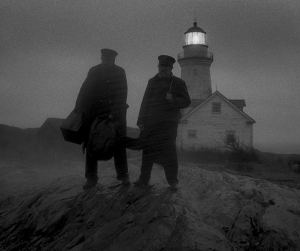
The Lighthouse feels exactly like somebody meticulously melded an episode of The Twilight Zone with an episode of Alfred Hitchcock Presents. The vision is so specific and so fine-tuned that it can be startling, like watching a high-wire act of an artist perform a feat and so well. Eggers is definitely a man with definite talent and here is a movie that serves as a strange, loving homage to an earlier age. The shooting style, camera equipment, lenses, and nearly 4:3 aspect ratio coalesce to make The Lighthouse feel like a forgotten curio of an older age. The very nature of the movie’s presentation adds to the enjoyment level of the two hours of madness. This is a highly impressive movie, first and foremost from its technical side. The black and white photography is rich and stunning, making elaborate and precise use of shadows and camera movement. You feel the grime and salt. Pattinson’s face is filmed with such heaviness, shadows draped over him, that he looks like he was carved from stone to resemble a modern-day Robert Mitchum. There are several moments that unveil themselves with startling meticulousness. There are several images that stick in my memory. There are moments of levity that had me snickering madly. Eggers has a terrific instinct when it comes to staging scenes and drawing out the suspense as well as the humor. Some scenes will cycle from horror to comedy and then back again, allowing the movie to continuously feel slippery in tone as well as effect. It’s such a handsomely mounted production that it’s easy to admire the dedication. The craft is remarkable. Eggers had a very exact style he was going for with his second film,and he commits fully to the process. Whatever you think of the lasting impression, the man achieved his vision to the bitter end.
 Being a two-hander, the entire movie is going to rest on the shoulders of our acting duo and what insights we can glean from them as they become combative and ultimately suspicious. There’s only one other credited actor for the entire film, Valeriia Karaman, as a lustful fantasy for Winslow, or maybe she’s not a fantasy? We’re stuck with two very capable thespians and they just dig into these meaty, hammy roles. The dialogue has a delightfully daffy out-of-time cadence and vernacular that adds authenticity as well as a sprinkle of approaching madness. Dafoe (Aquaman) is a delight as a soused old captain given to self-important and abrasive behavior. An insult over his cooking unleashes a ridiculous monologue where he lays out in great, poetic detail a curse, and like much in the movie, it goes from being funny to being serious to being outright impressive. It’s like watching actors get to play with Shakespeare, that’s how immensely pleasing it can be to listen to Dafoe and Pattinson deliver Eggers’ dialogue with great flourish. Pattinson (Good Time) has gotten a bad rap for being the Twilight pretty boy but he’s taken exciting chances on artistically daring and dangerous prospects (this is his SECOND 2019 indie thriller that prominently features his furious masturbation). Pattinson serves as our entry point into this secluded seaside shack, and it’s through him we watch the madness of the movie plant. He’s got a real fire he’s able to harness that makes him vulnerable, sympathetic, and dangerous. Should we root for Winslow? Being trapped alone with them never gets boring because of their characters, the revelation of secrets each man may or may not be embellishing, and their explosive confrontations.
This is also very funny movie. Eggers understands the thin line between madness and humor and uses this to his great advantage where the embrace of comedy enhances the overall feeling of WTF insanity. You’ll be forgiven for laughing but Eggers seems to invite it almost as a needed release. Much like Ari Aster did with Midsommar, the filmmaker is clearly playing with camp elements intentionally. It’s a tricky artistic maneuver to willingly invite camp and to make sure it doesn’t pervert the rest of the film and its ambitions, but I think Eggers pulls it off. There is literally an audible fart before the two main characters share a line of dialogue together. You’ll be surprised how much farting is actually in the movie (all added in post-production, the Internet trivia proudly crows, because I guess Dafoe didn’t want to go that far Method). There’s an exciting unpredictability to the movie even as it feels very much on a foreseeable collision course that you await.
 After all that artistic sturm und drang, I was left wondering what exactly there was to hold onto for clarity and substance. Firstly, the artistic exercise, dedication to a specific vision, and level of execution will likely be enough for a certain group of viewers, especially those titillated by old school horror peppered with David Lynch peculiarities. It’s a moody work of art with definite finesse but ultimately I don’t know how much there is to take away from it. The Lighthouse feels like a well-handled experiment that deserves your admiration but I don’t know what engagement exists beyond simply the experience and then the discussion it leads. There are plenty of movies that invite an active deconstruction and this interactive interpretation serves as a central selling point, but I was wondering what I should be thinking here. I don’t know if the movie is adopting Winslow’s point of view and I shouldn’t trust what I see onscreen, or I shouldn’t trust Thomas, or I shouldn’t trust either, or whether the movie was adopting either of their perspectives or neither. By the end, I don’t know what is supposed to be taken as legitimate, and this can work with plenty of movies but the majority doesn’t seem to operate on a dream-logic. It’s a dank, claustrophobic, paranoid thriller but it’s so dutiful to an older style of thriller that the eccentricities don’t take over and become the movie. It’s entirely a movie about men being stranded, going mad, and turning on one another, and that’s about it. There is a definite Promethean analogy with Winslow’s desire to “have the light” and the old man standing in his way (this is hit even harder in the very obvious, concluding image). If you cut out maybe 40 seconds of the movie it could have played on TV back in Hitchcock’s day and would fit.
It’s hard for me to articulate but The Lighthouse is an A-level execution of an idea that feels all too limited and small. It’s thrilling and accomplished and a fun movie to just get lost within and laugh at the screen when it goes overboard. I wouldn’t even mind taking another trip and getting lost in this sea-soaked curiosity. Maybe I’ll be able to impart more meaning, because while the technical craft and extraordinarily honed artistic vision shine through, the lasting power of the whole enterprise feels a bit too locked in place. It very much is a remnant of the past, a loving homage to old Hammer films and television anthologies and tales of men losing their minds when it comes to loneliness, desperation, and helplessness. There’s much to champion with The Lighthouse and I’ll assuredly be in line for whatever Eggers decides will be his next project (a quick search comes up with a tenth-century Viking revenge thriller starring Dafoe, Ana Taylor-Joy, two Skarsgards, and Nicole Kidman). When Eggers commits to a story and style, he commits completely and the results can be breath-taking. I hope he aims for more than A-level execution with his next movie and goes for an A-level story experience to match. Still, The Lighthouse is a fascinating and delightfully weird experience that will enchant and baffle.
Nate’s Grade: B+
Share this:

The Fanatic (2019)
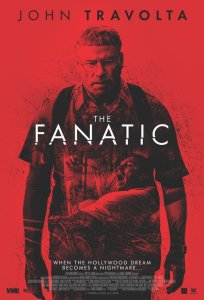 As a connoisseur of crappy cinema, I often seek out movies that I feel might hit that so-bad-it’s-good sweet spot. There are scads and scads of bad movies but few manage to land in the realm where their utter inanity and ineptitude provide genuine, baffled entertainment. The Internet would have you believe that the new movie The Fanatic fits that bill. On its face it seems like it might. It’s directed and co-written by Limp Bizkit front man Fred Durst, stars John Travolta, and is about a mentally challenged fan stalking and holding his idol hostage. That sounds like it has plenty of potential. The Fanatic is not a fun watch, especially by the last act, and I was mostly left scratching my head and wondering who in the world this movie was crafted for and why.
Moose (Travolta) is an obsessive fan. He also has a mental disability, which makes it hard for him to connect with other people. He’s obsessed with the actor Hunter Dunbar (Devon Sawa, fairly good here) and getting an autograph. After a misunderstanding, Moose is determined to track down his favorite actor and let him know why fans are important.
I have no idea who this movie was made for. I wasn’t so much laughing at it, though it did happen occasionally, as I was just staring slack-jawed and completely mystified. I didn’t really have fun watching something like this and I doubt most people would. It’s a bad movie but really it’s a gigantically miscalculated movie because what is the point and perspective presented? Are we meant to be weirded out by our mentally challenged protagonist, because that seems in bad taste? Are we meant to endorse his actions, because that seems in bad taste too considering how many transgressions he makes? Are we meant to feel that he is justified in his alienation or in how he responds to Hunter Dunbar, because that seems like enabling criminal behavior? Are we meant to feel for Hunter Dunbar when he gets the upper hand and tortures Moose in vengeance, because I can tell you listening to Travolta wail on the floor in pained cries is not exactly a hoot. Am I meant to have a squeamish sympathy for Moose that is then tested over time as he crosses more and more lines? That doesn’t really happen either. I don’t know what the movie wants me to think about Moose and Travolta’s committed yet stereotypical performance, which I think is why so many are holding this up as an example of something to ridicule because they don’t know what to make of it. It’s like the film just took a lot of bizarre and controversial plot elements, threw them together, and said, “You decide” when it comes to commentary.
 What is the message about fanaticism? It’s the title of the movie so I would assume it’s being presented at least as a subject worthy of discussion. Moose is a fanatic and his fandom drives his life. It’s all he can think about. It gives his life purpose. Yet the movie takes away any real negative interpretation by applying the mental disability to the character. He’s a fanatic but he can’t be all that bad because he’s mentally disabled and, maybe according to the movie, not fully in control or cognizant of his own actions. This is a cop-out on multiple fronts. The completely superfluous voice over narration from Leah (Ana Golja), a side character at best, is generally just describing what is literally happening as well as offering an occasional dismissive comment about the facile nature of reality in Hollywood. Hey, have you heard how the entertainment industry is shallow and surface-level and exploits dreams and dreamers for profit? This is new to me! The narration almost presents a weak justification for Moose, like he was entitled to strike back when he discovered that actors don’t like it when you track down their home addresses and harass them. “You’re nothing without your fans,” Moose screams at Hunter in anger, and in an ordinary movie I would consider this a sign that the movie is lambasting the self-aggrandized sense of entitlement from fans and how toxic this can be to the psyche. Except The Fanatic won’t do any of that. It won’t set up Moose as an example of toxic fandom, and his disability is proof enough why.
I did not enjoy this movie. For thirty minutes I’m watching Travolta go from scene to scene and try out every clichéd acting trope for playing somebody with mental retardation. I may have missed something, and I don’t have the interest to watch it again, but I was left wondering how in the world Moose even supports himself. He has friends across Hollywood plugged into different tourist ventures but we only ever see him dressing as a British policeman and running around the Boulevard trying to coax strangers into snapping pictures with him. He’s terrible and off-putting to the average person on the street, so he can’t be making money from this. It seems like the filmmakers are weeding out any and all things that could keep Moose away from this very select path of being an obsessive stalker. That’s all he does. He’s not focused on anything else other than finding this star and letting him know how much he loves his work. There’s so little to this character but because the film strips any other complications or attachments from his life, it feels downright manipulative to basically set him up for this collision course. I’m reminded of 2002’s One Hour Photo where Robin Williams played a disturbed man who formed an inappropriate attachment to a group of strangers and became more and more undone, finally stalking them, intervening with horrific results, and hinting at a deeper history of abuse. None of that is present with Moose and it makes the experience feel like it’s either pandering or dithering.
 When Moose does kidnap Hunter in the last act it’s meant to evoke a Misery situation but it felt to me like a much sloppier version of 2006’s Hard Candy. In that film, it was a battle of wills between an angry young girl (Ellen Page) seeking righteous vengeance and a man swearing his innocence (Patrick Wilson), and your sympathies were meant to be tested and question who was correct and who was going too far. I think that’s what Durst and company were going for but oh do they miss the mark and then some. I didn’t feel like Hunter was getting comeuppance for his behavior because his responses to Moose seemed fairly reasonable. I didn’t feel like Moose had become the villain now because the movie was presenting him still as the same figure from the opening minutes; he hadn’t become more disturbed or aggressive even after doing some very bad, very criminal things. I didn’t feel like the film was setting up some form of tragedy where Moose and his ignorance of the severity of his actions would escalate beyond his control. Mostly I was just waiting for the movie to be over, again watching with the fascination of a rubbernecker. I didn’t feel tension during any moment of this movie and I didn’t really care what happened to anyone.
I don’t know what would exactly appeal to Travolta with this part, besides the actorly possibilities of playing someone with mental disabilities. God bless him, Travolta goes all-in on this part and is practically bouncing off the walls. He’s so unrestrained, so dug into the tics and mannerisms of his character, which feel more informed by the portrayals of other famous actors playing this kind of person than it does on anything else. It is a performance that makes you second guess many of the actor’s choices, including the … shaved mullet haircut, and there are certain line readings that are so awkward they will make you leave the room in embarrassment. Of note is one frantic threat about what Moose will do to a man in a way reminiscent of Freddy Kruger, and the level of detail said in such a serious, scream-heavy tone just adds more ammunition for its unintentional hilarity. The problem is that the movie certainly doesn’t see Moose as a tragic figure, until his brutal beating at the end, and it doesn’t see him as a comic figure, so he’s just kind of hanging around like an unwanted guest. Travolta’s wince-inducing go-for-broke, almost Nicolas Cage-ian performance (I’m making this a term) is the best reason to watch The Fanatic, and you should really not watch this movie at all.
Another reason the movie isn’t derisively enjoyable is because it’s fairly competent and actually a bit stylish in several areas. Durst will get a lot of mockery for his involvement but the man has always had an eye for visuals (he directed most of his band’s music videos). There are some pretty nicely composed shots with some moody lighting thanks to cinematographer Conrad W. Hall (Panic Room). The score is pretty good too, using a lot of Max Richter-esque strings for pointed punctuation of key moments of unease and dread. This isn’t a bad movie because of the technical merits or through Durst’s direction. Sure, you could argue he should have reined in Travolta’s eagerness, but when the movie seems made to indulge those impulses, I can’t fault him for basically just letting his lead actor throw subtlety out the window and dance on its grave and other mixed metaphors.
 It’s for these reasons that I found The Fanatic to just be a dispiriting movie, missing the electric charge of the truly and entertainingly bad movies like The Room or the oeuvre of Neil Breen. It’s just a bad movie by design, not on purpose. It’s hard to even find sincerity with it, an essential element of so-bad-it’s-good cinema, because I don’t really know what the movie finds sincere. It’s inconclusive what message I’m supposed to garner, what perspective is being delivered, and how I’m supposed to feel about any of this. It’s not executed in an intriguing ambiguity that pushes the audience to draw their own interpretations and conclusions. It feels more like the movie is simply incomplete, that it’s missing core elements to make it worth watching. Travolta unleashes a flurry of unrestrained acting tics and some may find it snicker-worthy, but Travolta hasn’t exactly been holding back as of late in his film choices. The Fanatic is really a dank genre thriller that doesn’t know what it wants to say and what it wants to do, and by slapping the mental disability factor into the mix, it definitely has no courage to pick a direction or statement. If you’re morbidly curious, you might find some degree of interest here but I wouldn’t advise it. The Fanatic is not the next best bad movie. It’s just a miscalculated effort and a sad one.
Nate’s Grade: C-
Share this:

Hustlers (2019)
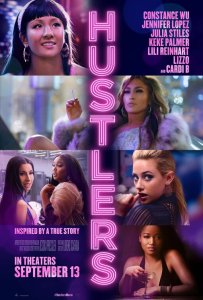 Think of it as a feminist companion piece to The Wolf of Wall Street or The Big Short. Inspired by a true story, Hustlers follows a diverse group of strippers who wine and dine Wall Street middlemen and execs, feeding off the spoils of their feeding frenzy, and then eventually upping their game, drugging them and fleecing them for one wild night that they’ll be too embarrassed to report that next morning. The story grabs you early on and is stuffed full of interesting details about the ins and outs of the stripping industry as well as how to service and manipulate the wealthier men who frequent said clubs. Hustlers becomes a combination of a crime caper, a con artist thriller, and a class-conscious drama about the haves and have nots, but it really becomes a showcase for the talents of one Jennifer Lopez, a woman who does not seem at all close to her fifty years on this planet (her introduction is quite the jaw-dropper). Lopez plays Ramona, the alpha leader of the group, a loving single mom with a healthy distaste for the hand she’s been dealt. She is sensational and delivers the best performance of her long career. Even when she’s doing bad things, even when she’s taking bold risks, there is a moral center to that woman, an unbreakable heart for the people she chooses to let into her life, and it does not budge, which was a poignant note. In many ways she is more the main character than Constance Wu (Crazy Rich Asians), a figure that serves as more entry point than fully-fleshed out character. I enjoyed learning the various tricks of the trade writer/director Lorene Scarfaria (Seeking a Friend for the End of the World) peppers throughout with her love of montage and stylish transitions, but it really picked up after the 2008 financial crash where the women cross over into direct criminality. At first they figure they’re just skipping ahead, drugging with MDMA rather than waiting for their marks to get drunk (“Drunk enough to order the bill but sober enough to sign the check,” Ramona cautions). Then things get escalated and sloppy and the women are in trouble. It’s a fun ride watching the ladies get theirs, and I was challenged to muster much of any sympathy for their Wall Street marks. Part of me wishes more women would be inspired by this movie and follow suit, fleecing the people who fleeced our economy. The movie rides that wave of the good times you know can’t last, prolonging the fall we’re all anticipating coming. The supporting characters can be a bit weak; several of the other girls involved in the scheme merit one note of description, and some of the humor feels a bit out of place, like a running joke where one of the women nervously vomits often (this is like her single character trait, and it’s weird). It’s also likely the stripper-centric movie with the least nudity I’ve ever seen, thanks to Scarfaria treating a sensational story with candor rather than exploitation. Hustlers is a glitzy drama that will entertain you with its flash and then surprise you with its edge. And all hail, Jennifer Lopez, ageless wonder and underrated actress getting her due.
Nate’s Grade: B


 nathanzoebl
You must be logged in to post a comment.