Blog Archives
Immortal Combat: The Code (2020)
 In many ways, the Cleveland-made indie Immortal Combat feels like a bigger version of what a bunch of little kids might accomplish with a camera, a backyard, a bunch of pretend weapons, and a lively imagination fed from martial arts epics and actions movies of old. There is a certain charm to it, escaping into the pure play of childhood, including wrist devices that are merely tapping your bare wrist, but as an actual movie, it might have some problems. Look, this is a martial arts action movie. You watch a martial arts action movie to be entertained with the feats of action, and that’s what you should be looking for with any movie with “combat” in the title (albeit in a misguided font that looks like a child’s chalk). On that front, Immortal Combat is flawed but still passable entertainment, though it feels like a project that was never intended to entertain more than its own select cast and crew.
Neil (Ben Zgorecki) is a member of the villainous Four 11 gang. He’s tasked with infiltrating the rival Five Elements gang but he turns against his former gang. The Five Elements have come into possession of a code that will save humanity from environmental disasters. The world is running low on breathable air and implantable medical devices are malfunctioning. The gangs are going to war to control this code and thus control the trajectory for mankind’s future.
 The performers have physical skills they have honed over years, and director Johnny K. Wu (Innserself) emphasizes angles and cuts to fully appreciate those skills. There are extended shots where you can admire how much the performers practiced and memorized their routines. However, that deference also comes at the expense of the vitality of the action as depicted on screen. Because we’re at a medium range or farther distance, because there are longer takes, we’re watching the actors perform and realizing just how slow everyone is with their pacing. Without quicker cuts, the energy level of these fights comes across as too often lackluster, with many of the fighters just kind of hanging around and treating these battles as less life and death and more like a grocery aisle they cannot commit to. I can appreciate someone doing a fancy spin kick from a technical standpoint, but it feels less impressive when everyone else around them seems gassed or drugged in response. There is a lot of fighting in Immortal Combat but the editing and staging choices make it feel less believable, exciting, and potent. That’s why it feels like a bunch of grown-up kids running around, falling over, and continuing their pretend fighting rather than something, say, along the lines of a John Wick, an action franchise that is built around the appeal of expertly executed fight choreography.
The plot of Immortal Combat, written by Wu, Andras Zoid, and Linda Robertson, ignores the first rule of hidden conspiracies and alternate fantasies, which is to shepherd your audience gradually and not to make assumptions. I see this plenty of times with fantasy films that incorrectly assume an audience has as much understanding as the filmmakers do about the histories of their world, the intricacies, the rules and challenges, etc. A new world, or a conspiracy, needs to be unraveled slowly and in pieces to be accessible, to not overwhelm the audience. We need the right components as if they were building blocks, creating a sturdy foundation to attach new information and new rules and lessons. If you have a mysterious Chosen One, you don’t vomit up every last bit of expositional know-how right away, you have to draw things out at a natural, inclined pace. With Immortal Combat, we have an entry point into this new world through the rather non-intimidating character Neil (a.k.a. “Cloud”). He’s our learning curve. The problem is that Neil just runs with any information at once and this presents a confusing overload. The world of Immortal Combat resembles ours except there are martial arts gangs, some of them with elemental powers, or at least names, and a vast corporate conspiracy with implanted medical devices and environmental disaster, but the communication of these elements is so muddled that I kept having to rewind the movie to try and follow. Take the opening narration as an example:
“IN OUR future, one simple breath could mean life or death. As we search for a solution, pollution engulfs our world. If we don’t find an answer fast, all living things shall perish. We are the Five Elements, we strive to protect humanity… Years ago, many warriors came to us seeking change, joined our way of life. Right after, A Code was discovered that could save the world and was injected into one of us. We even lost one of our clan’s mate. Now we must fight for our lives to bring the code – to the world…or die trying. With the MediCan Research Corporation and The FOUR 11 gang on our tails….We must protect the code….AT ALL COSTS.”
 I guess the pollution is killing everyone, yet we don’t really get a sense of this impending and immediate danger because life seems pretty normal; people are hanging out at bars, strolling around, not rationing what might be their final breath. Because of this pollution, a corporation is looking for a solution for its implantable medical devices, yet why is this even introduced except to provide another batch of shadowy bad guys with a plot crowded with shadowy villains? The corporation wants a solution, a code, which is what the heroes have, and the heroes want to get the code out to save humanity, so why aren’t they actively working together? Why introduce two sides who have the same goal if they are never going to meaningfully interact? I suppose the evil corporation would exploit the code for profit, but why not express this through actions? Also, why is this world-saving code only injected into one person rather than, say, uploaded to the Internet? Why risk your only vessel containing the world-saving magic code getting hit by a bus? If the goal is proliferation, there seems to be more safety in diversifying the code-carriers. The rival evil gang, the Four 11s, are a criminal syndicate but their leader has a sick child. Wouldn’t this code also help cure this child? Why are all these organizations working against one another? The world building of this universe feels cluttered and confusing and lacking narrative purpose. It resembles a little kid making up the rules as they go for a game you didn’t recognize.
As Neil is introduced into the Five Elements gang, we’re inundated with names but not so identifying personalities and things to better cement the deluge of characters. We have Cloud, Water, Earth, Fire, Wood, Gold, and if you forced me to identify who was who I would not even under penalty of law. There are so many characters in this movie and very few, if any, leave a favorable impression at all. They are repositories of kicks and punches and the occasional grunt. Water (the exquisitely named Crystle Paynther Collins) keeps bringing up her dead sister to the point that I waited for her to reference it every time she was onscreen, and she did not disappoint. Naming your main character Neil, and sticking him in khakis to perform martial arts, made me laugh. It’s not that his code name “Cloud” is that much more intimidating. When you introduce characters in movies, it’s a good idea to give them a moment to set them apart, and through action, which will better convey who they are and through visual storytelling. This is one of those movies where a character says, “You need to see Earth and Gold or else Wood and Fire will combust,” and you just shake your head and try and determine who these people are and what are their connections. It’s clumsy writing and there are too many characters to keep track of without stronger involvement. After watching 80 minutes, everyone just blurred together into People Who Kick (except for Neil and his mighty fighting khakis).
 The problem with Immortal Combat is the same I’ve seen with other low-budget indies, namely that these movie projects were not made for a mass audience. They play like an insular group project for friends and family of the production, people who are already in the know and on board, and the writing and development are tailored for this narrow band rather than a broader outside audience. To make a movie for others, you’d have to carefully explain your plot in a way that would be engaging, clear, and escalating, with characters distinguishable by personality, goals, and choices, and you’d want to integrate them in meaningful ways that also push our protagonist or heroes to victory. You’d have to put the work in to make it an actual movie. Immortal Combat feels like it was made strictly for its friends and family, like finding excuses to squeeze in extras for gang group shots despite the fact that the very presence of “non-threatening-looking” members calls into question the hiring practices and determination of this vicious martial arts gang. When people who look like your ordinary neighbors are in a martial arts gang, do you fear them? This also extends to our invisible special forces team. Some of these guys have a noticeable deficit in their effort or duty to their job. There’s nothing wrong with creating art with a small intended audience. I’m sure corporate offices make little videos all the time only intended to play to their employees. If you’re thinking beyond your immediate circle, however, then you must put more thought into your storytelling choices and make the plot and characters matter rather than finding room for everyone to fit onscreen.
Immortal Combat plays like an overextended martial arts demo reel and a plot was strung together to justify more and more exercises, resulting in a calamitous collection of confusing characters that are nearly interchangeable and often extraneous and expendable. The impact and excitement of all that martial arts choreography is blunted somewhat by the choices how to present the fighting and revealing the lackluster energy levels of some of the performers. I know in reality that fight sequences are often at a slower speed when filmed, same with car chases that typically only go at speeds of 30 miles per hour, but you make choices to obscure those nagging parts of reality to maintain the illusion that these kicks are furious and these cars go fast. It’s the same thinking when it comes to casting and crafting a story that naturally widens rather than simply polluting it with more names and faces that will only leave a dent for making dents. It looks like the actors and people behind Immortal Combat had fun making a movie, and to that end I have no qualms with any of them. Unfortunately, it doesn’t have the elements to reach beyond its circle.
Nate’s Grade: C-
Side note: the poster for this movie is wildly inaccurate. Like amazingly inaccurate. There are no characters in the movie resembling those on the poster, which definitely seems designed to be the Asylum version of Mortal Kombat.
Share this:

A Father’s Fight (2021)

Even though it doesn’t quite count as an Ohio indie, filmed primarily in southern Indiana, I was requested to write a review for the low-budget, faith-based film, A Father’s Fight, which is currently enjoying a small theatrical run in West Virginia and in its Hoosier home state. This was a passion project years in the making for director Tyler Sansom (Restore). Its $30,000 budget was fully financed by a local church and many of the cast and crew worked as volunteers, aiding the production which was filmed during COVID. In many ways, the movie is already a success story, a lot of people worked together to see an artistic vision to completion and during some of the most dire and restrictive circumstances of modern times. A Father’s Fight is a rare Christian indie that has more in mind than preaching to the choir. It wants to entertain too as it uplifts.
Bo Lawson (Travis Hancock) is a drunk. He’s also a lousy husband, yelling at his wife, Kacie (Sarah Cleveland), and ignoring her threats to leave with their two kids. Then she does it, and Bo doesn’t know how he can get his life back together. Enter Sal Burton (John French), his old boxing trainer, with an offer of a lifetime. It seems the reigning boxing champ wants to come back to his home town to stage a charity bout for the community, and the champ has personally requested to fight his old rival, Bo. This is his chance to make a statement, to shape up, and to win back his wife and perhaps find a new strength through Christianity.
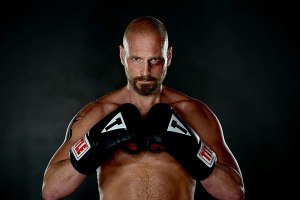
For a faith-based film, I am happy to report that A Father’s Fight is refreshingly more concerned with its characters than purporting a big message. This has been my bias for Christian movies time and again, and it’s usually reinforced by slapdash storytelling that spells out a pragmatic assessment of, “Well they’re coming for the message and not the intricacies of plot and multi-dimensional characters.” Any viewer, no matter their personal belief, deserves a story worthy of their attention and characters that have depth and care. With this movie, it’s far more a domestic drama than a sports film. It has more to do with Marriage Story than Rocky. The boxing doesn’t even come until the final five minutes, which in hindsight also feels like too little boxing. I was impressed that the screenplay by Hannah Mowery does not get pushy with its spiritual message. The first real reference to the power of faith doesn’t even occur until 45 minutes or so into the film, and Bo doesn’t attend church until after an hour into the movie. In the realm of Christian indies, this is remarkable restraint. By no means are the filmmakers soft-pedaling their affirmative message. They just realize that it will be more powerful, and accessible to a wider audience, if you’re sincerely invested in the characters, their humanity, and their redemption. The power of their story will be better translated if they feel like characters rather than bland figures.
It’s here where A Father’s Fight shines brightest, with its depiction of alcoholism and abuse. He’s spiraling, angry all the time, drinking whenever he can, projecting much of his disdain into outbursts against his wife trying to control his behavior, judging him and his failures, and we recognize it as the Drunk Abusive Husband in your standard made-for-TV melodrama. Granted, this is a faith-based film in a PG realm, so the danger of abusive behavior will only go so far, but this movie pushes it. This does a few things for the narrative. It establishes a clear baseline of bad behavior, the Before, that we can judge the protagonist’s progress against, the After period, the triumph. It also makes it more challenging to connect with Bo. He has to earn our respect just like his wife. What’s even more appreciated is how the screenplay really treats Kacie as her own character worthy of consideration, heartache, and struggle. She gets a lot of screen time here, almost equal to Bo during those first 40 minutes, and I thought it was terrific. It’s shockingly rare for the other half of an abusive relationship to be given legitimate consideration and voice. Too often movies will place the wife as a prize needing to be won through penitence or the symbol of How Far the Man Has Fallen, the chief victim that represents the toll of his decline and misery. With A Father’s Fight, my favorite moments where when the script just gives Kacie time to share her complicated feelings, and they are refreshingly complex. She’s torn over what to do, she’s upset with herself that she still worries over this man, she sees her kids and sees her husband in them, and she recognizes her value and that she deserves to be treated better. The brief monologues where Kacie pours out her heart, her frustrations, with Bo, with herself, are the highlights of the film. The characterization is nuanced and empathetic.

The other main characters stand tall. Bo is following a pretty familiar redemption arc, and the vehicle of boxing seems tailor-made for a redemption story, a man voluntarily inflicted with pain to atone or prove a larger point of sacrifice. Adding a spiritual element to that redemption story seems pretty natural and familiar for a formula. The character of Bo isn’t quite as nuanced or clear as Kacie but there’s enough there to qualify as a heartfelt if not entirely satisfying character arc. His apologies and personal growth by the end feel genuine, and his acknowledgement that he has hurt those he loved and doesn’t deserve their forgiveness sets a nice balance for a Christian message about mankind not deserving its own sinful forgiveness. It works, it just could have worked better (more on that later). Bo is strapped into the reliable redemption track but there are points that confused me. At one point, he is backing out of a parking space, almost hits a pedestrian, and the angry pedestrian provokes Bo to almost fight him. This passing incident, with a guy we’ve never seen before, is curiously the thing that almost pushes Bo off the wagon and back to drinking. Why? Why would this one incident have that drastic effect? It’s not like he did get into a fight with the guy. The early Bo is never really clarified why he’s in such a stupor. He’s angry, but angry at what and why? Does he just feel stuck? Emasculated? Unable to provide? A little more time setting up how he fell into drinking and his life before would have smoothed this out. Also, this upcoming fight is with the literal champion of boxing but we don’t ever get a strong sense of what it means for Bo. This is a big deal, something that would attract national media attention, and yet it is never treated like a big deal (Bo is only making a laughably paltry $5,000 for his participation – IN A FIGHT WITH THE CHAMPION). What does this fight, the very title of the movie, represent for him? He’s told he needs to fight for what he believes in, which will ostensibly be the lessons of family, self, faith, etc., but why boxing? Why this guy? Why a champion? Does he want to become a boxer again? Is this his failed dream? It feels just like another odd job for our blue-collar protagonist.
There are two primary areas that detract from the mighty goals of A Father’s Fight: the second act squeeze and the strange editing. There seems to be a switch about 50 minutes into the movie where Act Two and all the personal growth we’re waiting to experience gets severely truncated. It’s hard to explain but the patience and nuance that was exhibited in the first 45 minutes starts to wave and the movie gets sloppy with its storytelling shortcuts. There’s one extending grocery shopping scene that seems to be the changing point. It’s Bo explaining all the changes in his life through one methodical trip down a grocery aisle, chatting to local busybody, Tammy Lynn (Lindsay Rawert). He’s explaining all the changes he’s undergone that we haven’t witnessed. He explains the guy he greeted was his AA sponsor, shows her his chip for being sober for a month, talks about how much he enjoys his time with his kids. All of this is important information and would certainly push Bo along on his predetermined redemption arc, but why are we being told it like we’re catching up with a long-lost friend who only has a few minutes to cover the basics? Why haven’t we been seeing these moments? Why didn’t we see Bo go to an AA meeting, feel uncomfortable and out of place, and then eventually open up, talk about his own history with alcohol and the wreckage it has caused him? It would be a dramatic breakthrough. The same with his interaction with his children. Let’s witness these moments, so that we can see their attitudes changing about their father that once scared and upset them in Act One. Movies are meant to be a visual medium and the screenwriting edict is “show, don’t tell.” The first half of A Father’s Fight was following this model. The second half seems to be rushed to tell us what it feels we need to know to fulfill our redemption obligations and get to the big finish.

The work by three credited editors, including the director, is also a frequent concern. There are several weird editing choices that took me out of the movie or undercut the intended drama. First off, many conversation scenes will awkwardly jump around an assortment of angles, and the pacing feels jumbled, especially when the 180-degree rule is frequently being broken and disorienting the viewer. I’m not a stickler that the 180-degree rule in film should be ironclad but flagrant violation throughout a scene creates unconscious disconnection. That can be put to good use if you’re going for something like loopy David Lynch territory. With a faith-based film, it’s distracting. There are drone shots wedged into montages that don’t need them because the production had drone shots and by golly they were going to be utilized regardless. The inclusion of certain shots and sequences also feels baffling. In the first act, Bo is picked up from the police station by his wife, and during the drive home we get flashbacks of Bo as a child watching his drunken father berate his mother. Minutes later, Bo returns home, immediately starts drinking again, and Kacie confronts him. He berates his wife and his two kids appear, horrified and afraid of how their father is behaving. Wouldn’t it make more thematic sense to include that flashback scene here, to make the connection that he is following in his father’s footsteps, and wouldn’t the scene simply have more dramatic impact here? Likewise, at the end of the movie, when Bo is fighting in the boxing ring, the movie’s big question is not whether Bo will beat the champion but whether Kacie will be present in support (so yes, it’s basically entirely Rocky). Bo gets knocked to the mat. He looks over. He sees his wife. He smiles. He has a reason to get back up, to continue fighting, renewed and stronger. Except that’s not what happens. He gets up, and the ref is checking with him, and he looks over and there she is. This is truly baffling to me. The obvious movie moment is, when he’s at his lowest, after taking the hit, he looks over and there she is. We don’t need to see her enter. It should be a surprise for the audience too and including it at its most dramatic point. We feel Bo’s elation. Fortunately, the movie doesn’t have a plethora of these moments but enough that add up and make me wish there had been a fourth editor to help.
The acting is much more subtle and controlled than what I was expecting from a faith-based indie where big theatrical acting can make the proceedings feel overly staged and phony. The three central performers deliver. Cleveland (End of the Road) is very emotionally affecting as Kacie, and she deftly handles the multiple conflicting emotions of a woman at the end of her patience. She’s the most nuanced character in the movie and Cleveland digs deep. She is not a cliche. Hancock (A Soldier’s Secret) has the more traditional role and leans into that familiarity but carries himself well physically and emotionally. His outbursts can be wince-inducing but his pleas for forgiveness can also ring true, aided by the character’s reflection and personal growth. French (The Right to Remain) has a really strong monologue where he reflects on his own war experiences and what motivated him to keep fighting. It relates to the larger theme of the movie, allows the versatile actor to slow things down, to open up, and become very vulnerable, and it’s a welcomed humanizing aside for a character that could have just been a standard coach cheering on our hero’s conditioning from the sidelines. I must admit this monologue is hampered by poor editing choices with quick camera pans and push-ins that feel entirely wrong. You want to slow things down and let the character have the moment, not ramp things up and distract. There is one major acting curiosity I need to cite and this belongs to Rawert and her thick accent. She sounds like she’s auditioning to be on Fargo (“Oh yay, yer’ goin’ inta tha boxin’ ring, doncha know”), and it’s a pronounced lilt that’s missing from every other actor in the movie. I don’t know if maybe this was her idea of a typical “Midwest voice” or a misplaced character choice.

As a faith-based drama, A Father’s Fight has a lot going for it and a lot I wish more Christian indies would prioritize. It puts its characters and story above its feel-good message, at least for half of the movie. The second half does feel rushed and sloppy, and while it does take away from the conclusion feeling fully earned, it cannot detract from the early good feelings. It’s a strange assessment that a movie has a first act, a third act, and a smushed second act, the one meant to bridge the problems to solutions, but there you have it. It’s quite possible there was more intended for the movie and the reality of budget and filming during COVID caused unfortunate shortcuts and the like. It definitely feels like the promise of the first 45 minutes was unable to be fulfilled for the second half. At 90 minutes, the movie could have even stood an additional 20-30 minutes of material to provide room for that character development and some time to breathe. Still, this is a professional looking production for its budget and the song selections are great finds, even if they quite often literalize the inner emotional state of characters onscreen. There’s much more right than wrong with this polished production, and I’m impressed with the consideration given to the characters, especially from the wife’s perspective. Most Christian indies feel more like elaborate sermons than genuine stories (sometimes they’re just Kirk Cameron lecturing you in a driveway). I think this film will play well with its target audience and even earn some fans from outside the flock, people who recognize the humanity of the people onscreen. Even with its limitations and weird edits, A Father’s Fight knows what it’s fighting for – your entertainment value.
Nate’s Grade: B-
Share this:

Slaxx (2020)
 You would imagine a movie about a possessed pair of pants would be outrageously entertaining, and yet the Canadian horror comedy Slaxx is too stretched out and made from conflicting material. This movie needed to be more… something; more ridiculous, more exploitative, more gory and over-the-top, more satirical. It feels like a lost Tales From the Crypt episode that is over-extended and repeating the same points and carnage over and over. The haunted pants are unleashing a trail of vengeance against a department store’s employees one long night before a social media star makes an special live appearance. The kills are bloody without being very memorable or clever given the unique circumstances of the monster. Much of the gore is done off-screen as well, denying one more potential point of appeal for a movie that is supposed to be crazy. I found the movie and its social commentary to be rather tame and limited, which meant I was watching the same annoying, one-note joke supporting characters repeat the same abrasive activities and points. It got so redundant, and without really outrageous kills, that I just became bored as the movie dithered. The jeans are haunted by the victims of overseas child labor, and the serious points about labor exploitation are undercut by the goofy asides, like the pants dancing a Bollywood jig from unseen puppeteers (the highlight of the movie). By the time it concludes at the 70-minute mark, Slaxx feels like it’s been creatively gasping for some time. It’s not scary. It’s not really funny. It’s not gross. It’s not crazy enough. It’s just a killer jeans movie that could have been condensed down into an entertaining short film of fifteen minutes max. As a feature, Slaxx is slack.
Nate’s Grade: C
Share this:

Ride or Die (2021)
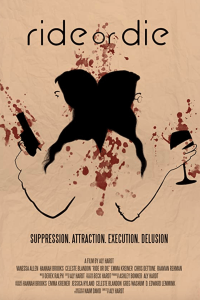 As I’ve been tackling more Ohio-made indies recently, I’ve gotten to know local filmmakers and started having films suggested for me by people within he local film industry, and as I’ve watched more and more that do not work, I’ve begun to dread writing these reviews. Nobody wants to be the killjoy after so many people have sacrificed time and money to bring a movie to life. It’s hard work. Ride or Die is a low-budget indie written and directed and edited by Aly Hardt (Lilith) and filmed in Cincinnati. It’s currently available on Amazon streaming but I wouldn’t advise a casual viewing. It’s confused and meandering and hard to process what is happening frequently without attachment to compelling characters.
Ashley (Vanessa Allen) is willing to do whatever it takes to protect her bestie, Mandy (Hannah Brooks). When a boyfriend mistreats Mandy, that’s when Ashley takes matters into her own hands. She kills an abusive (ex?)boyfriend (Raavian Rehman) and the witness, a girl he was dating called Lemonade (Celeste Blandon) too. Ashley hides the bodies and learns shocking secrets from Mandy that make her reconsider everything she knew about her BFF.
 Ride or Die could support a hasty drinking game because scene-to-scene you have no idea what to expect. That can be a bonus if your tone allows for it like a mystery that keeps you upended or a wacky comedy, and for a short period of time I thought that this indie was headed in a black comedy direction. After our protagonist has killed two people within ten minutes, she’s beset by another interloper, a woman who works at a café delivering food (without a car?) and needing a ride. Ashley, who has just stashed bodies in her trunk, reluctantly agrees to help, and as this new woman is yammering away about any topic that enters her brain, I started to wonder if this was what the rest of the movie would be like, a series of outrageous pile-ups that result from the opening murder, becoming harder and harder to cover-up. Nope. After this scene, and the “comedy” of mistaking the blood on Ashley’s fingertips as a sign of her menstruation (“It must be a bad period. I just finished mine.”), we will never see this self-involved whipped cream-loving woman again, and we will never really cover the tone of intentional comedy again short of a no-nonsense Uber driver. Ride or Die wobbles severely from tone to tone, never settling down, and feeling inauthentic whatever the current tonal footing featured. As things were getting serious, I knew it was only a matter of minutes before something ridiculous would happen to ruin it. As things were crazy, I knew it was only a matter of minutes before something self-serious and disjointed would happen to ruin it. If you’re expecting constant tonal self-sabotage, then you won’t be disappointed with the results of this wildly messy 76-minute experiment. Tone switches can work, even serious to darkly funny as demonstrated so skillfully in Promising Young Woman. This movie just can’t manage the abrupt shifts.
The worst part for me was how these tonal shifts and creative decision-making harmed the thematic implications around domestic violence. There are serious subjects at play with Ride or Die and I don’t want to say that humor cannot be found in even the most uncomfortable of topics. It just requires a deft touch, a touch sorely lacking from this movie. In the first TEN MINUTES alone, we endure watching Mandy get assaulted by her bad boyfriend, Ashley gets assaulted by her bad father or step-father (Chris Dettone, Confiend), and then Ashley murders two people, one of whom admits to being a victim of rape from high school before inexplicably falling head-over-heels for Ashley. The first three women introduced onscreen are all victims of sexual abuse. It’s a lot to handle, and I was worried this path was going to continue and every female character introduced would have their own story, not because this would be unlikely from a statistical standpoint of unreported assaults but because it would possibly approach self-parody through blunt overuse.
 However, the good intentions of highlighting the struggle to reclaim your identity after sexual abuse is seriously compromised by a late revelation (spoilers to follow, you are warned). After getting drunk, Mandy reveals that she really appreciated the ferocity of protection from her bestie, so she would lie about past abuse from past boyfriends so that Ashley would “take care of her.” She even admits to giving herself the black eye she sports for most of the movie. In a post-Me Too era where victims are fighting to be heard, it’s morally queasy to have a main character falsify numerous assaults for attention. Any good feelings I had for this movie vanished after that point. I don’t know if Mandy fully understood what Ashley would do in response but she had to pick up some disconcerting theory considering all these people went mysteriously absent after Mandy’s accusations. Either her selfish ignorance has led to all these supposedly innocent people being harmed and/or killed or she knew what the consequences would be and set them up for deadly retribution. Whatever the scenario, Mandy is an irredeemably bad person and I couldn’t care about her whatsoever, not that the prior development meaningfully rounded her out. This happens at the halfway mark and the movie cannot sustain itself with 40 minutes after to spend. For a movie that features so many victims of sexual abuse dealing with the long-term effects, it seems very irresponsible to go this route while also trying to treat the topic with reverence.
Another ongoing problem that really tears apart Ride or Die is that there are so many moments that well and truly make no sense. The entire character of Lemonade is getting her own paragraph of confusion. Why does Lemonade respond at all like she does? Ashley has a gun against her head and threatening her if she doesn’t forget her face, providing an out, and Lemonade chooses this moment to come onto her attacker (“What if I don’t want to forget your face?” she coos). I accepted her confessing her own abuse as a means of eliciting sympathy from her attacker, but to get a horny case of Stockholm syndrome instantaneously is beyond bizarre. The kiss triggers Ashley to think about her father (or stepfather) and she kills Lemonade. This scene made me scream “what?” to my TV screen for several prolonged utterances. The entire Lemonade character makes no sense to me. Ashley is haunted by Lemonade’s pale ghost because, we’re told much later, she was her first innocent she killed. However, this confession is occurring directly after she learns about Mandy’s secret, meaning this is entirely false. Maybe beforehand she thought she was an innocent, fine, but why does this woman who spent exactly two minutes on camera before being killed merit such attention? Lemonade then becomes a personification of Ashley’s guilt or self-destruction, or maybe she is a ghost and looking for payback, either would be credible here. I laughed when ghost Lemonade brings it to Ashley’s attention that driving around in the stolen car of the person she may have just killed might not be the best decision. In this moment, the literal ghost trying to murder Ashley is also trying to be the voice of reason, because inexplicably Ashley needs to go dancing and find herself a companion at this exact moment. “I need this for me,” she says, trying to guilt the ghost whose job it is to guilt her. What is going on?
 I kept expecting there to be, you know, consequences for the trail of bodies, but apparently the police in this universe can’t be bothered to investigate crimes with scads of physical evidence. I guess no detective has bothered to put together the coincidental nature of all of the men who Mandy goes on dates with or forms relationships with winding up missing. No worried family member? No nosy neighbor? If Ashley were like a professional at murder and body disposal, maybe I’d give her more leeway because she’s demonstrated that she knows what she’s doing after a wealth of experience. This is not the case. She chooses to store the dead bodies in her home, and not buried in the yard but in an accessible space where it’s only a matter of time before the smell spreads. The conflict of covering up the dead bodies feels resolved far too easily and without necessary tension. Because of this, the girl time spent between Mandy and Ashley can become insufferable and filled with awkward dialogue exchanges like, “Why don’t you ever talk about why your parents left you behind?” and, “Maybe this question’s more for me because I don’t know how to deal with losing my mom, and I know it’s not the same thing, but when my mom died, I was just crushed. I mean, your parents might as well be dead with what happened.” Characters explain things they obviously would already know with their years of BFF-ing, like asking to talk about your happiest childhood memory, which happens to be when they first met. The inauthentic, overly expositional dialogue is often a bad sign that a screenplay needs a few more drafts of work.
So much of this movie is built upon a friendship we’re repeatedly told is super close, but they interact less like friends who have known one another since the fourth grade and more like sorority sisters who have shared the same floor for a couple of weeks. The writing just isn’t there to sustain anything character-centric with Ride or Die, which is why the characters seem to flip flop at random in frustrating and annoying ways, when they too aren’t being frustrating and annoying. It’s a clear case of being told relationship importance and bonds rather than witnessing them. There are no real supporting characters. The off-screen grandmother is always heard and never seen and a one-joke character where the joke was never even funny. There are propagators of trauma, like the bad men of the past, and there are victims, like the all-purpose ghost, but it’s the story of these two women and they are so boring together even with repeated murder and cover-ups.
 Ride or Die is unlikely to win over any fans who aren’t already personally connected with the indie production. There are definite technical limitations given the budget was only $16,000. The sets never seem to feel lived in. The dialogue often sounds like it was dubbed over. The music drones on and on and at a volume that needs to be dialed back. The acting is flat across the board, with Allen (Girl/Girl Scene) sounding overwhelmingly monotone no matter the intensity of the scene. Scrolling through the end credits, I noticed the same names appearing over and over. Most everyone on this crew worked four or five jobs to see Ride or Die get made. That’s commendable, but I have to ask what about this story deserved all their hard work and dedication? It’s the script that sinks this movie. We get stuff like a ten-second “in media res” opening when we simply get caught up within eight minutes. That’s not how that should work. Likewise, why even bother with a three months earlier/three months later timeline that only muddles things? Was it Ashley’s stepfather or father who committed her abuse? The movie needs clarity but it really needs a driving plot to tie things together. The confusing fantasies, the wildly fluctuating characters and tone, the meandering plot, the overwrought dramatic elements, it all starts to coalesce into a sporadically baffling example of modern camp. I hope everyone involved enjoyed working on this. I don’t think many others will find much to enjoy on the merits of its storytelling and execution. Unfortunately, it’s best left in the rear view.
Nate’s Grade: D
Share this:

Willy’s Wonderland (2021)

I wanted to love Willy’s Wonderland. It’s easy to see the pitch: Nicolas Cage in Five Nights at Freddy’s. That sounds like everything you would need for a gonzo movie experience with, hopefully, an unrestrained Cage. The problem with Willy’s Wonderland is that it seems to have peaked at its inception. I’ll credit the creature designs of the many killer animatronic animals inhabited by the spirits of a dead Satanic cult demanding sacrifice. They’re chintzy and creepy and effective in their Chuck E. Cheese/Freddy’s reference points. However, the movie clearly appears to be out of ideas pretty early. Cage plays a janitor hoodwinked into working overnight at the abandoned pizza parlor and he doesn’t say a word for the entire movie. For those looking for the splendidly crazy moments that can define Nicolas Cage performances, I think you’ll be slightly disappointed. The character has a few quirks, like his surprisingly ironclad work ethic, but the character is just as underwritten, absent personality, and replaceable as any of the killer robots. For a movie where Cage fights a bunch of bloodthirsty robots, it starts to get a little boring because of the narrative redundancy. Toppling one robot after another feels too easy and the specific set pieces are unmemorable. There are a slew of highly annoying teenagers that stumble in so there are more victims to be terrorized. In one moment, these teens will denounce doing stupid acts and the unreasonable risk, and then the next minute they’re splitting up to go have sex in the scary birthday room or murder and not keeping their distance from the murder robots they know are alive and murderous. If the movie was more satirical, I might even give the filmmakers credit for the dumb teenagers reverting to form regardless of obvious circumstances. My disappointment is that what you get with any ten-minute segment of the movie is generally the same thing you’ll get with any other portion. It’s a lot of the same. Is that consistency or a lack of development and imagination? The movie still presents some degree of fun because that premise is enough to at least hold your attention if you’re a fan of horror, Cageisms, and movie kitsch. However, Willy’s Wonderland could have used more drafts and variety to really tap into the sheer gonzo potential of its ridiculous pitch.
Nate’s Grade: C-
Share this:

Psycho Goreman (2021)

The Canadian quintet Astron-6 is a production company that specializes in practical horror effects to delight the eyes and churn the stomachs. In 2011, they decided to make their own films and released Manborg, a hilarious if sketchy and stretched-out horror-comedy replete with loving references to 1980s culture and movies. Their crazy, low-budget schlocky efforts have developed a following, and they earned extra credibility when they played things gravely serious and terrifying in 2016’s The Void. Now writer/director Steven Kostanski (one-fifth of Astron-6) has delivered Psycho Goreman, and this is what happens when gonzo, genre filmmakers are working at the top of their chintzy, delightfully deranged capability. The results are highly entertaining with equal parts great, good, and bad-good, and lovers of silly, schlock cinema will be in high heaven.
Mimi (Nita-Josee Hanna) is a little girl used to bullying her big brother Luke (Owen Myre) and generally getting her way. She and her brother discover a gem hidden in their backyard and it just so happens to connect to a powerful and murderous alien monster, the self-described “Archduke of Nightmares,” named by Mimi as Psycho Goreman (Matthew Ninaber), or PG for short. The creature was imprisoned by a galactic council who feared that unleashed he might conquer the universe in fire and blood. Unfortunately for PG, he’s at the mercy of Mimi, who can command him thanks to her ownership of that magic gem. For her, PG is her greatest new friend and play partner and woe unto thee anyone who tries to take PG away from her.
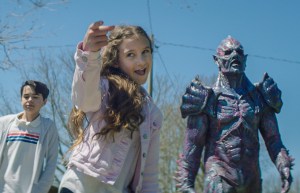
The movie feels like a cleverly constructed episode of Rick and Morty where a crazy idea is given unusual consideration and development and layers of humor and ridiculousness are uncovered so that the whole enterprise impresses. The basic premise is what if a brat had the power to control a monster, and while the movie pretends like life lessons will be learned or earned (“humans are the real monsters” is so trite that it’s an obvious put-upon), the movie also never downplays how much of a terror the little girl can be. It might be an easy joke but it’s still a good one, the fact that the universe shouldn’t fear this hideous monster but really this mean little girl is a fact that many parents will nod along with. The movie does some effort to redeem her, if that’s really important to you, but it also doesn’t soften her rough edges and her impudence. She is a brat, and she will inflict pain on others, and the fact that she has awesome power makes her a scary being the entire universe should really be quaking over.
The enjoyable fish-out-of-water dynamic elevates the comedy and payoffs of Psycho Goreman. This powerful monster is beholden to the childish whims and forced to do the bidding of a child, and he hates being out of control and every moment he is forced to play with her. The begrudging acclimation makes for several fun scenarios where he learns from her and also learns how far she’s willing to go. I enjoyed PG trying to make sense of Mimi’s made-up game and its nonsensical rules, and I enjoyed the levels of bizarre family domestic drama as PG integrates himself with this terrified clan. Having a normal dinner between humans and a blood-thirsty alien marauder is rife with comedic potential, and that’s even before the additional side story of the strife between the put-upon mother and the father who is just a gigantic loser. Their ongoing relationship troubles relate to some hilarious motivational turnarounds, like the father (Adam Brooks, another Astron-6 member) resenting the mother for thinking he’s a loser, so he’ll prove her wrong by being a supportive parent, which just happens to include helping his daughter’s involvement with a killer alien. He has an inspirational speech to his daughter late in the movie that had me cackling. The movie is more than its crazy, schlocky moments of gore and rubber costumes. It’s a fun but cleverly constructed comedy that understands the tenets of what makes crazy so genuinely funny.

But along the lines of gore and rubber costumes, Psycho Goreman is like a gloriously inappropriate Power Rangers episode for adults. The elaborate care and design of these monster and alien costumes is outstanding, especially for a relatively low-budget movie. It might look cheap from time to time, though I would argue this is also part of its unassailable charm, but the filmmakers show their real priorities with their monster designs. They are so varied and weird and good looking and have levels of detail to them as well. There’s one design that is simply a living cauldron of corpses (I think voiced by Rich Evans from Red Letter Media). Every new character is a new joy to behold, and when the clashes begin, as they inevitably do, you discover the extra care put into the creature designs with how they viciously come apart. There is a simple pleasure watching the great production design of the costumes and outfits as well as the outrageous gore. I loved that a kid is turned into a giant living brain monster and nobody seems to really care and it becomes a running joke of how callously everyone has viewed this child, including his own indifferent parents. If you’re a fan of goofy monster costumes and extravagant gore, this film is a twisted treat.
Mimi is going to be a love-her-or-hate-her character because she is exactly what Angela Pickles (Rugrats) would be like if given ultimate, unchecked authority over human life. She wields her power flippantly and will joke about siccing PG on her brother to kill him. She also hoots and hollers for PG’s violence against innocents because to her it’s all a big show of amusement. I found the high level of energy of Hanna’s performance to be the difference maker for me. Her character is an unrepentant brat but she’s so entertaining to watch because she holds to this very specific vision. Hanna is downright brilliant in her smarty-pants, mean girl articulation and has great physical expression. Watching her dance in discombobulated movements like the queen of the world made me laugh every time. I thought Hanna was terrific and her comedic timing was so well-honed for being so young. I understand many will find Mimi grating or overbearing or simply too much to handle. I get it, and I don’t think Psycho Goreman will be nearly as enjoyable for anyone who dislikes Mimi. You’re not meant to approve of her actions and warpath of destruction, but you can still enjoy the mayhem all the same.
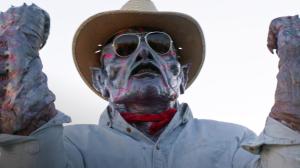
If you’re a fan of low-rent, cheesy midnight movies, the deranged and demented, and giant silly costumes and bloody excess, Psycho Goreman will be everything you hope it to be. I will admit it peters out a little right before its big showdown, but otherwise the movie is consistently entertaining, consistently strange, and consistently funny. The comedy is better than you think as the filmmakers refuse to rest on the appeal of easy jokes and easy sentiment. They know why you’re watching and deliver, but the work under the surface is impressive and admirable. The filmmakers know they have a very specific, tailored audience that will celebrate their unique retro pastiche sensibilities, and if you happen to live on that same wavelength as I do, then you too will find Psycho Goreman to be an insane near masterpiece of low-budget, high-concept schlock. Give your 2021 a boost by checking out this Canadian splatter comedy and give in to the madness.
Nate’s Grade: A-
Share this:

On the Rocks (2020)
 Sofia Coppola’s examination on the relationship between fathers and daughters feels like it would have been more entertaining had it gone for a more farcical tone. On the Rocks follows a struggling writer (Rashida Jones) who is questioning whether her husband (Marlon Wayans) is having an affair. Her partner in this makeshift investigation is her bigwig father (Bill Murray), a notorious Lothario whose own penchant for cheating and flirting with every woman has shaped his daughter’s perspective on relationships. If this is a comedy, I can’t tell you where the comedy parts are. The premise sounds rife with potential for hijinks and comedic mishaps trying to remain elusive. The father-daughter history is also ready for some combustible confrontations and perhaps some shades of earned empathy by the end. The problem is that the movie just sort of happens. It unfurls before your eyes, and those elements are there for the taking, but Coppola’s story never seems to really grab at any of them to build more sustained engagement. It feels like Coppola has taken a zany sitcom premise and adopted the tone of a somber indie exploring middle-class ennui. The amusement is under the oppressive force of melancholy. The dramatic substance also feels too dithering and without greater observation and exploration. Jones has some outstanding moments and Murray is at his best when he’s onscreen with her, his outwardly performative qualities shining light on a relative unspoken history that hangs over them. Even Marlon Wayans is good as the possibly philandering spouse. Really, the movie seems to be about the gnawing questions of doubt and suspicion and how quickly one can succumb to them. By the end, I don’t really know what Coppola was going for here. It’s a nice enough film, it holds your interest, and it has a few surprises, though I don’t know if they amount to much. On the Rocks feels like an early draft of a much better or much funnier movie.
Nate’s Grade: B-
Share this:

Black Bear (2020)
 What an intriguing little movie Black Bear turns out to be that inspires so much interpretation and dissection. I spent time reading through different interpretations on Reddit about writer/director Lawrence Michael Levine’s (Always Shine) surreal indie, each one providing new insights and connections. It all just made me realize even further how intriguing and rare a movie like Black Bear can be, an accessible puzzle that still works outside of the guise of sifting the pieces for larger meaning.
Allison (Aubrey Plaza) is a director who is looking to rebound her career. She takes a retreat to a bed and breakfast out in the woods run by a husband and wife Gabe (Christopher Abbot) and Blair (Sarah Gadon). There’s a lot of tension between these two and perhaps some unwanted romantic advances toward Allison. Then the movie changes, and now Allison is an actress in a movie filming at the same cabin in the woods. Gabe is now her director and her husband, and Blair is now the co-star that she suspects is having an affair, both with her real husband and the husband character in the movie they are making. Things get a little weird from there.
 There are really three primary stories here: 1) Allison sitting on the dock and then trying to write, 2) Allison coming into the realm of a dysfunctional married couple and adding extra jealousy and combustion, and 3) Allison is starring in an independent film that appears loosely connected to the second story, and this time she is being manipulated by her director/husband into thinking he is having an affair in order to add more realism to her screen performance. From there, the movie invites you to build your own connections from its many surreal parallels that fold onto one another begging for discussion. Is the second story what really happened in real-life to Allison and then the third story is the film version of these events, with the roles swapped for greater personal anguish? Is the third segment what really happened in real life and, in her anguish, she has projected her hard feelings into her own movie version of her torment, achieving a delayed vengeance? Are both segments mere fictional accounts from Allison in the first segment struggling through serious writer’s block? Dear reader, I cannot say because any of the interpretations I have cited, and many more, would be valid with enough careful corroborating evidence. I was delighted to read new takes. Part of the movie’s fun becomes building the meaning and finding more hidden clues after you’re done with it.
The second story plays like an identifiable mumblecore indie and one of the most awkward dinners you’d never want to be part of. Allison becomes the catalyst that pushes the husband and wife to open up their mounting disagreements and simmering conflicts with one another. He’s feeling like he’s compromised too much as an artist who still wants to be considered an artist, so he seeks a solidarity with their guest. She wants to bring a dash of reality to Gabe’s sense of self, which includes pushing him to adapt rather than holding onto a version of himself that no longer fits. Blair also seeks solidarity from a fellow woman to call out Gabe’s questionable viewpoints where he says life was simpler and perhaps better when gender norms were rigid. The night starts out amenable but ratchets up the discomfort moment by moment, opening up the characters and their histories and looking for allies through a cross-section of confrontation. We’re put in Allison’s position and different people might find fault with either husband or wife. Allison seems to enjoy being contrarian, admitting she was even lying about key points just to get or stifle a reaction from the others. As the night wears on, you worry mistakes will be made.
 The third story is about twice as long and has multiple times the participants. Whereas the first film is a tightly wound threesome, this new story involves a small family of indie filmmakers. You start to notice repetitions and your mind begins to form potential connectivity. Allison is now starring in a movie directed by her husband, Gabe, who is carefully constructing a cruel ruse that he is engaging in an onset affair with her co-star, Blair. In the previous story, Allison was the interloper and thought to be the homewrecker, and now in this tale Allison and Blair have swapped positions. Gabe’s rationale is that he is pushing his wife to give the best performance of her career, where her powerful emotions will feed the role of the jealous wife breaking down. It’s blatant manipulation and again I was growing in fear that this was going to build to something calamitous and that a misunderstanding could have tragic, possible fatal results. The third story calls into question the complicity of artists when it comes to abusive behavior. Everyone benefits from Allison delivering a headline-grabbing comeback performance, their careers get a boost, and yet the torment she goes through is undeniable and it sure doesn’t feel justified for the sake of art.
Despite an amusing and diverse ensemble of the film crew, this is really a three-person movie and Plaza (Child’s Play) is the constant. For those saying Plaza will only be able to play some variation on her famous sarcastic, detached persona, I happily invite you to watch Black Bear because she is capable of so much more. The second story, the mumblecore version, is playing upon the kind of role we’re used to seeing from Plaza, which I must think the filmmakers anticipate. That’s why the next version either deconstructs it or perhaps contrasts it. With the third version, Plaza digs deep and unleashes some startling dramatic outbursts, enough that the crew feel entirely uncomfortable and perhaps a little guilty over how far things have gone. There are moments with Allison breaking down that reminded me of like Gena Rowlands in a John Cassavetes movie. There’s an extra meta layer to the performance where if you argue Plaza is going bigger than she should, well perhaps that is her portraying an actress who is modeling her breakdown after depictions in movies and award-caliber movies. Had I watched Black Bear mere hours before I handed in my critics’ nominations, I would have found a place for Plaza on my shortlist.
 I invite you to watch Black Bear and join the discussion. It’s well written and engaging from moment-to-moment, so even if you don’t care about larger textual connections you can still enjoy yourself watching interesting characters simmer and explode. If your mind does enjoy rearranging the building blocks into more meanings, then the movie becomes even more fun. It’s also just a great showcase that proves Plaza is more than an actress stuck playing snide comedic roles. Seek out Black Bear, read other interpretations, and then craft your own.
Nate’s Grade: B+
Share this:

Never Rarely Sometimes Always (2020)/ Unpregnant (2020)
 Abortion is one of the most hot-button cultural issues even almost 50 years after the landmark legal case made the procedure legal in the United States. Two 2020 movies elected to normalize the topic of abortion as a healthcare option but through very different approaches.
Never Rarely Sometimes Always plays out like a horror movie but not just with the hard-hitting reality of abortion access for many in this country, it’s also a horror movie about being a teenage girl in modern America. Autumn (Sidney Flanigan) is 17 years old, a budding musician, and about 18 weeks pregnant with the baby of her abusive boyfriend. She’s living in small-town Pennsylvania and the closest clinic that will treat her and not require parental permission and notification is in New York City. Her best friend, Skyler (Talia Ryder), steals a stash of cash from their supermarket job and books bus tickets to the big city. They travel on their own without informing their parents. However, the two girls must run around the city to jump through bureaucratic hoops while their dwindling money supply makes their options more desperate.
 The movie is steeped in realism, which at different points comes across as an indictment on the burdens placed upon young women, but it’s also an understated case that wants to preach through its actions rather than any hokey soap box moments. Writer/director Eliza Hitman keeps things simple and to the bone for her narrative. We follow Autumn sneak out and try and get an abortion, only to have to wait longer and longer, with no place to stay overnight in a city she and her friend are unfamiliar with. I was fearing for both Autumn and Skyler as their stay increased and their money supply decreased. Just about every man depicted onscreen has an ulterior motive. Autumn’s boyfriend is controlling and abusive (inspiring a song Autumn performs for a school talent show in the opening scene). The supermarket boss insists on kissing the girls’ hands when they turn in their registers at the end of their shift. The creepy guy on the bus clearly has his sights set on Skyler. The guy on the subway just starts masturbating while staring at them. Being alone, far from home, and limited in means and transportation, you feel an overwhelming dread that something bad is going to happen to these two girls and it will be at the hands of men. They are victimized in small ways and large throughout their very existence. This dread does not go away until the very end of the movie. Skyler walks away to make some risky choices to earn needed money, and it’s not exaggerated but you do worry you may never see her again. Surely, many will reflect, it shouldn’t be this arduous for women to seek legal medical procedures, and when mostly-male legislators create extra burdens, it pushes desperate people into danger. At no point does anyone opine about body autonomy or anything overtly political. However, the movie’s entire function is to demonstrate these undue burdens.
 Flanigan has been getting serious Oscar buzz for her performance and deservedly so. Autumn is definitely intended to be a relatable representation for many women going through similar struggles. Much of the performance relies upon her guarded acting through a veil of emotional detachment. She’s been ground down by her small town, by her family, by her abusive boyfriend and his jerk friends, and this can make her seem like a numb zombie at points. Autumn isn’t, though, she’s just trying to stay afloat from trauma and anxiety eating away at her. Flanigan has a quiet strength to her that keeps you pinned to the screen. She does have one standout scene that I’m sure would be her Oscar clip. At one New York clinic, an employee runs through a standard questionnaire (where the film gets its title from) and hits upon whether Autumn has been coerced into sex she didn’t want to have, and that’s when the emotions of Flanigan’s performance break through, her eyes welling with tears, her inability to answer while still answering. The off-screen employee recognizes the confirmations and responds with adept compassion. With that you also can glean how many times this clinic employee has heard these same gut-wrenching responses.
Beyond being a dread-filled horror movie of discomfort, Never Rarely Sometimes Always also becomes an unexpectedly touching movie about the great lengths that friends will go for one another. While there aren’t extensive conversations about how much they love one another, the actions speak for themselves, much like the rest of the understated movie. It’s Skyler who takes the lead in putting together this journey, keeping track of their progress, and eventually doing what needs to be done to gain money to go home. Both Skyler and Autumn support one another and rely upon one another and will go the extra mile for one another. A hand held tightly can be all the confirmation we need of their love and friendship during the most trying of times.
 Unpregnant is easily the more entertaining and light-hearted of the 2020 abortion movies, using a raucous road trip of misadventures to reform the friendship of two high school girls. While applying a lighter touch (it is, after all, titled Unpregnant) it doesn’t trivialize the experiences of those making these choices. Veronica (Haley Lu Richardson) is 17 years old, the valedictorian, and 6 weeks pregnant, Her lousy X-Games-aspiring boyfriend Kevin (Alex MacNicoll) thinks it means they’re meant to be together forever. Veronica is mortified and certain she’s not ready to be a mother, let alone having Kevin’s baby. She’s afraid to tell her parents, her snooty friends at school, and so the only ally she can find is the outcast Bailey (Barbie Ferreira), a former friend with access to a working car. They must travel from Missouri to Albuquerque, New Mexico to find the nearest state and clinic without first requiring parental permission and notification.
Unpregnant is very much a road trip movie with the assorted mishaps along the way pushing the two teens together and reminiscing about how close they used to be as friends until going down separate paths in high school. Naturally, the formula calls for them to each confront their own personal demons, assert themselves, and reconcile, and it happens at regular pit stops, but that doesn’t mean that Unpregnant isn’t satisfying just because you suspect where it’s going. The overall comedic tone takes you off guard, at least it did for me, and it happens immediately. We’re used to movies where abortion is a central storyline being heavy and depressing (4 Months, 3 Weeks, and 2 Days), and when they do go for some degree of comedy, it’s usually quite dark (HBO’s Girls) or satirical (Citizen Ruth). Unpregnant lets you know right from its peppy start that it’s okay to laugh. It’s okay to find humor in the awkwardness. It’s also okay to assess choices relating to an unplanned pregnancy without the stigma of shame or guilt. The movie doesn’t downplay the character’s dilemma, but instead of the conflict being whether she will keep the baby or not, the crux of conflict is, much like Never Rarely Always Sometimes, on equitable access to abortion services. Whereas that Sundance drama overwhelms with dedication to its real-life hardships and hurdles, Unpregnant chooses to take on these same hurdles with incredulous defiance and an F-you attitude that still feels political but aligned with its tone.
 All road trips are dependent upon the co-pilots, and Unpregnant is an infectiously enjoyable experience spending time with Veronica and Bailey bantering and ultimately reconnecting. They are fun, and despite the circumstances that make this movie’s plot, they still find ways to have fun with one another. There’s an easy affection for one another that warms your heart. They clearly care about one another and watching them reunite and grow in their admiration for one another makes me like them even more. With any road trip movie, you must enjoy the people you’re stuck with. I appreciated both making amends of their past, why they fell out as friends, and what moments shaped each into being the headstrong woman they are today. Bailey uses this opportunity to try and reconnect with her absentee father. Veronica uses it to test her boundaries of what she felt needed sacrificing to stay on her master plan of academic success. Their kinship reminded me of Booksmart. The chemistry is so good, the dialogue snappy without being self-conscious, and the big dramatic moments nicely felt without being cloying, that Richardson (Split) and Ferreira (TV’s Euphoria) really feel like amusing best friends.
As per road trip comedy rules, we go from place to place getting into new hijinks. I appreciated that the mishaps don’t derail the light-hearted tone and direction even when they get broad. The girls become potential criminals when Bailey confesses their getaway vehicle might belong to her mom’s boyfriend and she might not have gotten his permission. This raises the stakes while still keeping things fun and feisty. A pit stop in Texas turns into a suspense thriller parody as the girls discover the kindly couple giving them a ride might be religious zealots who won’t let them leave. This leads to a wacky chase scene that ends in a hasty faked death and trying to jump onto a speeding train like “old timey hobos.” There’s also a running gag where Kevin keeps resurfacing, not exactly taking no for an answer, and arguing his nice guy credentials that aren’t being as respected as he deems necessary. For those worrying out there, Unpregnant does not condemn all men in this heightened universe or look upon them with dark suspicion.
 I don’t think it’s a spoiler to admit that Veronica does, in fact, get to her appointment and have an abortion. I also think its noteworthy how this is portrayed and its aftermath. She’s lead through the different steps of the procedure with the calm instruction from an empathetic nurse, they don’t sensationalize any of the medical realities, and afterwards Veronica comes back home and has a heart-to-heart with her mother who, while admitting she would not make the same choice, still emphatically confirms her love for her daughter. Veronica also admits that she feels like she should feel bad or ashamed or guilty and she doesn’t. She feels relieved, she feels deep down that she made the right call. Never Rarely Sometimes Always covers this same ground with level-headed clarity but I think there’s something extra appreciative for Unpregnant. Between the two, this is going to be the more widely viewed film. Its very ambition is to be a crowd-pleasing road trip comedy built upon the bond of female friendship. I would expect an indie drama to try and normalize abortion, but it’s another thing when a light-hearted and readily accessible comedy (it’s PG-13!) has the sensitivity to normalize abortion. Many viewers will find this approach refreshing and helpful. The topic of abortion should never be made flippant but it doesn’t need to be a condemnation of inevitable ruination and regret either.
Never Rarely Sometimes Always is a hard-hitting drama that’s understated, realistic, compelling, but also a little too numbing. It’s quite artistic and empathetic and yet it can also be quite grueling to endure. I was wincing when Autumn felt the need to batter her own pregnant stomach. It’s more than effective but also sometimes its understatement can be a hindrance. On the complete other end of the tone spectrum is Unpregnant, a funny and entertaining road trip that doesn’t dismiss the certainty of its female characters and their choices. Both movies are worthy of being viewed and will leave an impression and could change some hearts and minds on the subject of abortion if those same people are willing to listen. I just found one film to be more generally entertaining.
Nate’s Grades:
Never Rarely Sometimes Always: B
Unpregnant: B+
Share this:

The Wager (2020)
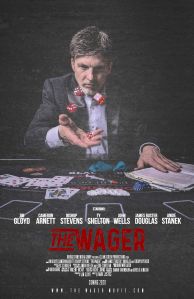 The Wager is a gob smacking example about the utmost significance of screenplay structure and a lesson for others to learn and avoid. I was beside myself with frustration from this 90-minute movie available on Amazon streaming, occasionally yelling at my TV screen, but mostly I was dumbfounded by the storytelling choices. The wager of the title, which is also prominently noted in the synopsis attached for the film, doesn’t even occur until 78 minutes in. That’s right, you don’t get the hook of the movie until the very end. This astounds me. The Wager is an Ohio-made faith-based indie that generally bored me and occasionally made me guffaw or scream in bafflement. I’d wager unless you’re already among the faithful flock, you’re going to be unmoved and more than a little mystified by this tone-deaf drama.
Bruce (Ty Shelton) is a young man abandoned as a child and raised in the foster system. He gets into trouble at school and eventually gets plunged into a life of crime against his will. As an adult (Jim Gloyd), he’s strung out on drugs and resorting to petty robbery to find his scores. His childhood friend Suzy (Stephanie Haff) runs into him at a casino and offers spiritual outreach, but Bruce wants nothing to do with God. That is until an angel enters his life with a big bet about reliving Bruce’s tortured past with a new perspective.
 If you’re going to present a Christian spin on the classic It’s a Wonderful Life formula, having a guardian angel intervene in a person’s life to show them a highlight reel of memories and what could have been, why wait until there’s only ten or so minutes left in your entire movie? Once Bruce does review his tortured life, it includes scenes we’ve already seen, including his birth, which begs the question why we needed to see these moments twice. It’s not like what came before this celestial review needed 78 minutes of undivided attention. For the first 15 minutes, all that happens is that an abused woman gives birth, drops the baby on the doorstep of the police, and the officers call social services. Did we need that to take up 15 minutes? From there we witness young Bruce getting in trouble at school and then being kidnapped (oh, there will definitely be more on this later) and living life as a drug dealer. We spend an hour establishing Bruce’s life as being awful, from child to adult, and it’s repetitive and deflating. How many scenes do we need to see of Bruce sleeping on the ground or shooting up drugs or being pushed around? Not only could the far, far majority of this plotting have been condensed considerably, it would have been more impactful to watch Bruce reflect on his experiences by re-living them rather than dwelling in the extended misery that made me wonder if this was going to be a modern-day passion play. Truly, imagine It’s a Wonderful Life but we spent an hour of watching George Bailey haggle over business practices with Mr. Potter. This central screenwriting miscue is just so catastrophic to the entertainment factor.
We could have easily established adult Bruce being a troubled man and the people of his past having difficulty recognizing the man they thought they knew from the movie’s start. This would establish that bad things have happened, and he could hint at more that he doesn’t want to reveal, and then the end of your first act could be him hitting rock bottom and getting his angelic intervention. We don’t need more than 20-25 minutes to establish how crummy this man’s life is. When given an hour, it just becomes too crushing and risks undercutting the message of personal redemption. Learning with the character about his life’s hardships would be more engaging with him having to come face-to-face with the them and his guardian angel partner. It also allows us to not have to be dependent on chronology and jump around to the major events we need to best define Bruce. This obvious structure makes so much sense that I am shocked the filmmakers missed out. Having an angelic guide would also force the character into conversation and confrontation and potential reflection, giving us better insight into the man than simply watching the events on our own without commentary. Simply put, you shouldn’t name your movie after a key plot event that happens in the last 15 minutes unless you’re a disaster movie and the Big One is finally striking.
 The mistakes in plot structure also harm the overall slack pacing. The pacing is practically nonexistent for long portions. The energy level is so subdued that I thought I might just fall asleep. The camera movements will often utilize long takes and slow pans with minimal cuts, which just makes the lack of energy that much more palpable. So many dialogue exchanges sound like people are just reanimated zombies, and so much dialogue feels needlessly expositional. People talk in that phony way where they’re constantly repeating what the other person says but turning it into a question. It’s an inauthentic way of conversing that reminded me of Neil Breen’s silly films. Take these examples of poor onscreen conversations and see what I’m talking about:
“I have no clue what we’re going to do in Science today.”
“Me neither. I guess we’ll find out soon.”
“You’re right. See you there.”
Wow, did we need to be privy for that vital information? Or how about:
“I know you have your troubles, but I know you.”
“No, you don’t. That’s just how I act around you. I don’t think you know.”
“Just stop. I know what you’re trying to do. You’re trying to make excuses rather than accepting yourself for who you really are.”
Isn’t writing better when characters just blurt out another person’s internal dilemma for the audience? Or:
“He asked me for Herb’s Garage.”
“Oh yeah. I remember that place.”
“We all did. So, I didn’t expect a thing.”
We needed less time with scenes like these, where it feels like characters are detached and drifting with excess time to fill. There’s one long hallway exchange between a young Bruce and Suzy that lasts over a minute of chit-chat that feels like they’re just reading off the script. The performances have that rushed feeling, of sentences starting immediately after the next, but lacking an energy level that would justify the delivery. Simply put, when two or more characters are sitting down and talking, you might as well go get a refill or hit the bathroom. The chances will be good they will still be in that same sedate conversation and you will have missed little. This is why the structural choice to spend 78 MINUTES OF MOVIE on establishment scenes is so maddening, because writer/producer/co-star Gloyd did not have the material to cover the time.
 Let’s get into what I think is the most egregious portion of The Wager and that is the lengthy middle where Bruce gets kidnapped and coerced into a life of crime. I thought we were headed for some Oliver Twist territory and we’d watch Bruce’s struggles over the pressure to commit criminal acts he was uncomfortable doing, maybe even while he schemed to escape. First off, the fact that the criminals are stereotypical depictions of black males made me sigh. I also was confounded why they placed so much emphasis on kidnapping teenagers and runaways to serve as drug dealers. When you have access to money and power, you have people that will come to you for opportunities (you’re a job creator). You don’t need to kidnap children and hold them hostage to sell your wares, especially having to worry whether they will run away or whether someone will recognize them as missing. It’s stupid risk. Considering these men just sit in the car and watch young Bruce make his first street corner deal, it’s not like they’re being terribly conspicuous.
And then there’s the undetermined time jump, which is revealed during one of those static camera angle montages. It’s a nice surprise; however, it means that Bruce has been sleeping on this same dirty mattress in the same room for, like, twenty or thirty years (also none of the items on the shelves moved in that same time, meaning Bruce never touched a thing in his living quarters or he is very, very particular about where things should go). The same crime bosses are still alive and in their same position of leadership. Bruce is now played by Gloyd in a horrendous looking ratty wig and I needed to know desperately how much time has passed. Gloyd definitely looks to be in his 40s, and this significant jump in time raises so many irksome questions. The police haven’t found adult Bruce in 30 years but the same officer who found him as a baby, who is still alive and working as a security officer, can recognize him on the spot? How old are these same criminal leaders then, and Bruce hasn’t ascended higher up the organization than street dealer? If we’re jumping that far ahead, wouldn’t it make more sense for Bruce to be the new leader, letting us know he has been molded under the negative influence of his captors? If he’s just going to be a drug-addicted adult then why do we need to jump so far ahead in time? The answer, it seems, is so that the writer/producer can have a starring role. That’s fine, but we could have done more structurally to maximize the drama rather than dwelling in redundant misery.
Let’s analyze the spiritual message at the heart of The Wager. Bruce’s life is pretty bad. He’s in and out of foster homes, gets abducted and held hostage as a criminal lackey, becomes addicted to drugs and desperate, and then homeless and contemplating suicide. He’s had, by all accounts, a hard go of things. He’s understandably resentful about the forces he feels have conspired to lock him into agony, so when other characters raise the notion of a loving God that has his back and watches over him, Bruce scoffs and views his life as refutation. There’s even a nature versus nurture argument to be had. In fact, the first time Bruce went to Suzy’s church was when he was abducted. The cop character tells Bruce he’s been praying for him since the moment they first crossed paths, but considering what Bruce has endured, that’s not exactly a ringing endorsement for the power of prayer. Now obviously Bruce will conclude with accepting the love of God and finding a greater purpose with his life, but why did we need to wait so long? The end is never going to be in doubt with a Christian-themed indie any more than whether or not James Bond will get out of his latest scrape. That’s why refocusing the structure onto Bruce having to confront an angel over his feelings of abandonment from God would be far more dynamic, powerful, and I’ll say it, even Christian than the message as presented. Don’t get me wrong. I’m not questioning the faith and credentials of the filmmakers. I’m saying the way they go about telling their story makes the overall message less believably impactful.
 The acting in The Wager is typically rather flat, given that energy-sapping direction that makes each scene feel twice as long. However, there is one actor I want to single out and that’s Cameron Arnett (Overcomer) as the unfortunately named Gabe Angelus (get it?). Arnett reappears in different roles, my favorite being a batty homeless man that helps out Bruce from time to time. In that moment, Arnett is so believable and arguably natural even while playing a highly mannered character. He immediately drew my attention and I remarked, “Here’s a good actor.” As for the other thespians, it’s hard for me to tell whether they just didn’t get the material to showcase their skills or whether those skills are in need of polishing. I know KateLynn Newberry (Widow’s Point, Dark Iris) as the queen of Ohio indies, and she’s pretty much wasted as a doting wife who lives to ask her husband what he wants for dinner. Fun fact: one of the crime lords is played by former Columbus resident and famous boxer James “Buster” Douglas.
With The Wager, I couldn’t believe what I was watching. Obvious dramatic setups seem to be sorely missed, a structural reformatting was in dire need to maximize the hook, because without that it’s like watching one poor man spiral and suffer for an entire feature-length film. It feels like overwrought overkill. Do we need a half-hour of a guy slinging drugs and sticking needles in his arm, without any supporting characters to interact with, or can this information be conveyed with practiced brevity? I am amazed at so many choices that left me scratching my head. The movie ends with our guardian angel staring into the screen and laughing maniacally for several prolonged seconds, even over the cut to black. What? This is the kind of behavior we associate with evil beings. Why do we need a flashback of a young girl running out the door when the adult version could have just relayed this event in words? I know Christian movie audiences aren’t exactly the most discerning audiences, prioritizing message over storytelling and technical achievement, but the decisions that the filmmakers make impair that faithful message. You don’t make an It’s a Wonderful Life story and just reserve it for the last 15 minutes. I advise select people to watch The Wager simply to learn what not to do with the importance of screenwriting structure. That’s its ultimate cautionary tale.
Nate’s Grade: C-


 nathanzoebl
You must be logged in to post a comment.