Blog Archives
Doctor Strange in the Multiverse of Madness (2022)
 The first Doctor Strange is one of my favorite movies in the ever-expanding and incredibly popular Marvel Cinematic Universe (MCU). It was a visually audacious and imaginative sci-fi action movie that just had one standout set piece after another. The original director, Scott Derickson, departed over creative differences with the MCU brass, and having now seen Doctor Strange in the Multiverse of Madness, I might have the same stark differences of opinion.
Dr. Stephen Strange (Benedict Cumberbatch) is still nursing his regret over his former flame, Dr. Christine Palmer (Rachel McAdams), who is now getting married to another man. During their wedding reception, Strange helps a young woman being chased by a giant one-eyed monster. America Chavez (Xochitil Gomez) is from another universe and has the power to open portals to other dimensions. Unfortunately, she doesn’t know how to control these powers and they only seem to activate when she’s reached a level of fear. Strange protects America Chavez from a malevolent force that wants to gain her unique power and open the multiverse for conquest.

It’s been almost ten years since Sam Raimi directed a movie and Multiverse of Madness is at its best when it feels most like a Raimi picture. The man’s beginnings in low-budget horror comedy are still evident, and it’s that campy combination that entertained me the most in Multiverse of Madness. There are some creepy, goofy moments that definitely reminded me of Evil Dead 2 and Army of Darkness. If you’re not a fan of these heightened levels of horror that incorporate slapstick and camp, then you might roll your eyes and find these moments to be too goofy for the MCU. As much attention as this movie has gotten for being darker, which is a tad overblown, it’s also one of the goofier Marvel movies. The MCU has a relatively breezy, wiseacre sense of humor that can occasionally undercut some of its more serious or sentimental moments of drama, but with Multiverse of Madness, Raimi is inviting the audience to laugh and cringe in equal measure. A horror sequence where reflections are a vulnerable point has both laughs and creeps. It’s a different kind of tone for a Marvel movie, which propelled my entertainment level when it occurred. Raimi getting to play once again in the superhero sandbox and still retain his signature style and impulses, which is exactly what I would want from this man as a blockbuster filmmaker. I loved the match cuts of Wanda experiencing two different universes in one smooth camera move. I cackled when Doctor Strange took his final form for the finale, and how ridiculous it looked, and that screenwriter Michael Waldron (creator of Loki) set it up with Chekov’s corpse.
For a movie with “multiverse” in its title, we don’t really get much of an exploration of the alternate universes. The concept of a multiverse is mostly kept at a thematic level and as a delivery system for wishes. The villain views the prospect of a multiverse as their means of fulfilling a vision of their life that is unrealized in their present reality. Strange thinks of an alternate version of himself where he got the girl. Beyond these reflections, that’s really about it. We jump to about two alternate realms and the only real exploration we have is that, hey, in this version of the universe people walk on red lights. It’s a bit trifling considering that there are endless imaginative possibilities, some of which are showcased during some stylish visual transition sequences crashing through different realms. It feels far too small for a concept with boundless possibility. Strange was already in another multiverse movie six months earlier with 2021’s Spider-Man: No Way Home. That movie also explored the idea of second chances, redemption, and sacrifice but far better. For a better multiverse movie that really lets loose on the wild possibilities of alternate realities, as well as grounding the feats of imagination in relatable human drama enriched by its theme, see the amazing Everything Everywhere All At Once.

I’m not just disappointed because the movie doesn’t take full advantage of its plot possibility, it’s because what it settles for is so much more predictable and disposable as fan service. This current phase of the MCU is setting up a dilemma of multiverse proportions, so things are getting very expansive and their slate of Disney Plus TV series are becoming more incorporated into the direction they’re heading. The danger starts to become whether the entire process is becoming more and more specialized, insular, and directed for the most hardcore of hardcore fans, and whether or not such a heavy undertaking, across platforms and franchises, can be done well. Marvel has earned some faith from me with how they’ve handled their interconnected franchises and film universe, but my main complaint with 2010’s Iron Man 2 and 2015’s Age of Ultron was that they were spread too thin trying to set up other movies and offshoot franchises, so this still remains a danger. As the MCU gets more and more successful, and integrates more characters, this is always a risk, the balancing of the spinning plates, making the movies their own but fitting into a larger whole. With Multiverse of Madness, it feels like the mighty gears of the Marvel machine are a little too forceful and crushing for this endeavor. This doesn’t feel like an essential next chapter in Doctor Strange’s ongoing cinematic journey. The first film was already about him regretting what his life could have been, an expert surgeon, and learning to accept his new role as a sorcerer and ultimately sacrificing his ego and old sense of self. We’re running through the same motions this time but instead of lamenting he could have been a great surgeon he’s lamenting he could have gotten the girl. It’s again coming to terms with his personal regrets.
The other notable aspect of the multiverse is the inclusion of fun but diverting cameos that don’t so much as serve this story as provide winks and nods of what is down the line. I won’t spoil who shows up in the middle portion of the movie but there are a few alternate version characters and a few characters that have yet to be fully integrated in the MCU, meaning these early appearances also serve as confirmation of the intention to bring these characters, stories, and worlds into the ever-expanding reach of their storytelling. This sequence is best as throwaway fun and has some neat visual moments including a disturbing death played for effective gallows humor. Ultimately though, it’s meaningless because it’s one other universe of characters who only serve as reflections of the past and coming attractions for the future. Even the mid-credits sequence is just more of this (and it’s becoming a trend). It’s disposable fan service and no more meaningful than serving as a tacit promise of what’s to come.
But the biggest problem I have with Multiverse of Madness is also its biggest storyline, which concerns a certain character making a big villainous turn and becoming the primary antagonist. I was getting a lot of Game of Thrones season 8 vibes from this plotting insofar as the end result is not out of the question but it sure feels like we skipped a lot of necessary stops along the way. I won’t be able to go into greater detail without delving into spoilers, so dear reader now is the time to skip to the last paragraph if you wish to remain pure. I like the concept of a friend becoming a foe because we already have an investment in that relationship and therefore there’s more at stake with the fights and possible consequences. That’s the kind of drama that lends itself to heartache and tragedy. When it feels forced, that’s a tragedy of characterization.

I have to imagine that fans of Wanda Maximoff (Elizabeth Olsen) a.k.a. The Scarlet Witch are going to be let down from this movie’s calamitous turn of events. I wasn’t the biggest fan of the character prior to the WandaVision TV series, which I also found to be pastiche that wore thin before finally settling on what the show’s core would examine, the messy process of one woman dealing with her powerful grief. I liked that they didn’t excuse Wanda’s misdeeds, namely holding an entire town of people hostage to her reality-bending whims. However, by the end, the show had her come to terms with letting go of Vision and her fake life with him she had manifested. To then have her next film appearance revolve around her universe-destroying mission to get her fake kids back doesn’t just feel like backtracking, it feels like we’ve erased the character journey and growth from her TV series. If you hadn’t watched the series, then this villainous turn would feel especially jarring. The whole “You’re a monster’/”No, I’m a mother” hysterical villain lady is tiresome. This is why I was making the Game of Thrones season 8 comparisons. It’s cool to see Wanda fully unleashed and how formidable she can be, but it’s at the expense of wiping out her character’s growth for a single-minded crazy momma. It’s reductive. If she can assume the life of her multiverse self, why not just do that? Also, what’s the great urgency? Wanda wants to kill America Chavez and absorb her power so she can jump through multiverses. Why can’t she just wait a matter of months to allow America to learn how best to control her powers? The movie never explains why the villain can’t just work with her magic MacGuffin rather than kill her. And then it all comes to Wanda realizing, “Oh no, what have I become?” and allowing herself to die as penance for the hundreds if not thousands she has killed over the multiverses. It’s all just a rather dispiriting development and questionable end for a character that I feel deserved better.
Walking away from Doctor Strange in the Multiverse of Madness, I feel like there’s a better movie buried under everything (everywhere all at once). This movie was originally supposed to come out before Spider-Man: No Way Home, and America Chavez was the original reason for Spider-Man’s multiverse dilemma, but it was delayed because of COVID. Raimi has gone on record that they figured out the plot of the movie while filming and conceived of the ending halfway through the film shoot. That’s not a great place to be for creativity, but then again, neither is being the twenty-eighth film in an ongoing interconnected chain of franchises. I won’t harp on that too much because plenty other MCU movies have excelled under such conditions and requirements, but every now and then one of Marvel’s movies just feels like a sacrificial offering to the greater altar of the MCU’s need to keep progressing with its multiple projects. Doctor Strange in the Multiverse of Madness isn’t a good Doctor Strange sequel, it isn’t a good multiverse movie, and it could have even used a little more madness, as those were my favorite moments, excluding the sharp villainous turn. I’d consider this film in the bottom tier of the MCU, among the likes of Iron Man 2 and Age of Ultron, other similar altar offerings.
Nate’s Grade: C+
Share this:

X (2022)/ Choose or Die (2022)
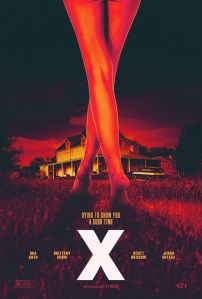 Horror is likely the most forgiving genre out there for being derivative. Just about every modern horror movie wears its many influences, even the recent trend of elevated horror movies that are trying to say Big Things with equal amounts of arty style and bloodshed. There’s only so many monsters that can chase so many teenagers. Ti West (House of the Devil) is a director I haven’t fully enjoyed, though I would say X is his most accomplished film to date for me. It’s clearly going for a Texas Chainsaw Massacre vibe and docu-drama aesthetic. It’s set in 1979 and we follow a ragtag film crew trying to make “a good dirty movie.” They’ve rented a guest house in the middle of nowhere Texas as their film site because who knows. The octogenarian couple who owns the farm property doesn’t seem to approve of these young folk, and the old lady ends up becoming the slasher killer that mows down the randy young adults. Turns out the old lady has her own urges that the old husband is no longer physically able to satisfy, so she seeks out solace one way or another with the newcomers, whether that be through her sexual satisfaction or through violence. To West’s credit, he has given more attention to his characters. These people are not going to be confused with three-dimensional figures but there’s enough character shading that made me more interested in spending time with them and a little more rueful that most of them will probably die horribly soon enough (Chekhov’s alligator). The slow burn is not wasted time or dawdling, and there are some very well-executed squirm-worthy moments of discomfort. I don’t think X quite works on that elevated horror level of late; it’s mostly a slasher movie with a dollop more complexity and style. The real reason to appreciate X is from the dual performances from actress Mia Goth (Suspiria), the first as a stripper-turned-ingenue that sees pornography as a path of possible self-actualization, but she’s also secretly the killer old lady under piles and piles of makeup. Her wild performances, including scenes where she is facing off against herself, makes the movie far more interesting. Goth goes for broke. I don’t think the X is as fun as it thinks it is, nor is it as thoughtful as it thinks it is, and I don’t know if I care about a prequel that was shot back-to-back that illuminates the killer old lady’s younger life. Is this character really that interesting to warrant her own movie? As a horror movie, it’s disturbing and bloody and surprising in equal measure even as it doesn’t do much with re-configuring the many conventions of its genre.
 Netflix’s Choose or Die is one of those spooky horror movies that wants the audience to play its deadly games alongside the unfortunate characters, much like Saw and Would You Rather?, and I typically enjoy these kinds of movies and thinking what options or strategies I would undergo if I was in their place. The structure is pretty straight forward, with a young woman (Iola Evans) and her programmer friend (Asa Butterfield) coming across a cursed old school text-based computer video game that forces its users to make awful choices. The game turns itself on every 24 hours, so there’s a natural delivery of set pieces, each increasing in its personal stakes. There’s the amateur investigation of the history of this 80s video game and uncovering the possible owner who might be benefiting from all this cruelty and sadism. This is a movie built around its set pieces and they start strong. When the protagonist sees the game in action, with a poor diner worker force-feeding herself broken pieces of glass, it’s truly horrifying and the sound design makes it so much worse. The movie isn’t s gory as it could have been and implies a lot more than it shows. The problem with Choose or Die is that there are too many leaps in logic and characters doing silly things just for the sake of the plot. There needs to be an established system of rules or else everything will feel arbitrary, and eventually that is what dooms Choose or Die. Even while we get more of an explanation behind the makers of the game and their occult connections it never feels like we’re better positioned to beat the game. I will say the final act, the Boss Battle, is where the movie cranks things up and gets really intense and darkly humorous. There’s a showdown that involves a key concept of self-harm that plays out in moderately clever, bizarre, and surprising ways, and this splashy, silly finish made me wish the rest of the movie could have lived in this tonal space. I found the overall sound design to be very annoying as it cranked up the volume on lots of glitchy electronic noises that just made me want to turn it off. There are some good ideas here, like the criticisms of being too nostalgic to the past, and of misogynist men believing nobody else is deserving of being the hero of their story, but this is a movie that lives or dies on its killer set pieces, and those just fall flat after its unsettling first level. Watching someone vomit VHS tape is not scary. Watching people move their bodies like they have no control over them will inherently look goofy. Choose or Die wouldn’t be the worst choice of a movie to kill 85 minutes but it’s certainly not much more than the sum of its parts, and even those are overly derivative and been done better by its predecessors.
Nate’s Grades:
X: C+
Choose or Die: C
Share this:

The Texas Chainsaw Massacre (2022)
 What are we doing here? This new Netflix Texas Chainsaw Massacre is part reboot and part distant sequel to the 1974 original, even bringing back sole survivor Sally Hardesty to get her very grizzled Jamie Lee Curtis-in-Halloween 2018 vengeance. There are a lot of bad sequels and remakes in this franchise’s history, blinked out of existence here with this ret-con, so keep your expectations pretty low. This is a 75-minute movie with a wisp of a plot, so much so that it doesn’t even wait until the twenty-minute mark for the conveyor belt of carnage to begin. I suppose that can be a virtue for genre audiences. This is a decidedly gory and crunchy horror movie, gleefully splashing in entrails and jump scares rather than taking the time to develop something more. If we’re upholding the original’s timeline, then this Leatherface is in his mid-seventies. We need fun slasher movies too (I enjoyed the fifth Scream), but this one just feels spiteful and creatively hollow. I don’t really even understand the premise, that a group of political activists are literally buying or auctioning a ghost town to turn it into a gentrified, liberal mecca in the Texas desert. Young liberals are removing racist Texans from their homes and Fyre Fest-chasing Zoomers are invading? What? Then there’s our Final Girl who herself is the survivor of a school shooting and working through her trauma, and flashbacks, to regain her control by literally learning to arm herself. Oh no. Elise Fisher (Eighth Grade), you deserve so much better. It’s fast-paced. It’s exceedingly bloody. It’s over quickly. I guess there are ways this new Texas Chainsaw Massacre could have been worse but there’s even more ways it could have been better.
Nate’s Grade: C
Share this:

Entropy (2022)
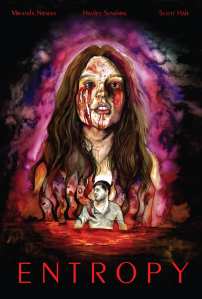
I was unaware of the horror movie Entropy until the production sought me out to review their movie. It was filmed in Ohio for a minimal budget over the course of six days and nights during the 2020 COVID-19 outbreak. I think it’s admirable that, as things were shutting down and lives were thrown out of balance, that this small group of filmmakers banded together and made something creative with that unexpected down time. The final ten minutes of credits includes behind the scenes video of the special effects process and it looks like everyone was enjoying themselves with this project to keep their minds off the pandemic. As a finished film, however, Entropy leaves a lot to be desired even as a low-budget, lowered expectations chiller thriller.
Abby (Miranda Nieman) hates her girlfriend Miranda’s (Hayley Sunshine, and what a fabulous name) friends. She used to be part of a self-improvement group that some have labeled a cult. Miranda pressures Abby to come to dinner and meet these people and understand they’re not so bad. Also at this friendly dinner is Scott (Scott Hale), their former leader, who has come back from his time overseas with stories of horror. Is he to be believed? Is he dangerous? And how far out of the pull of this group is Miranda and should Abby begin planning her escape?

While the movie is labeled as that feature-film-qualifying metric of 80 minutes, in reality it’s 70 minutes, and even within that minimal running time there is plenty of padding and dead air. I have found this fault with many of the Ohio indies I’ve seen, and it’s essentially a case of not having enough material to fulfill the demands of a feature length running time. Director/co-writer Kameron Hale and his fellow co-writer, producer, and brother Scott Hale, have made several horror short films, and it’s easy to see how Entropy likely started as a short script that the brothers thought could expand into a larger story. There just isn’t enough material here as presented although it had the potential for further exploration. The idea of finding out your lover is formerly in a cult has some nice juicy character reverberations, which would make anyone second-guess things. The premise of a cult leader returning from his mystical and mysterious sojourn is also rife with potential for a horror movie. From a strict psychological thriller level, over the course of one very disconcerting dinner, he could be re-consolidating power, and Abby could slowly understand the dawning threat that her girlfriend is succumbing to, like an addict plunging once more into the self-destructive behaviors of their past. From a body horror standpoint, you can use the returned guru as the bringer of otherworldly terror. Something supernatural could have hitched a ride and taken over him, and now it wants more flesh. There are ideas that, with careful plotting and characterization, could sustain a feature film. Entropy doesn’t quite do that, so that’s why we get situations like three minutes of sustained driving or three minutes walking through the woods that’s meant to be moody but is really just padding.
The movie’s small budget becomes a handicap at parts but what really harms the movie is the sloppy, clunky manner in how the story establishes its needed points. Characters will often speak in a “Hey, you remember when…?”-style of artificial conversation for the benefit of informing the audience of things they would naturally likely already know. Every movie needs exposition to better orient an audience, but the trick of the writer is to mask it as much as possible. It’s stuff like, “Don’t you guys hate Scott? Wasn’t he in a cult?” and, “I thought you were wrapped up in the medical scene like the rest of them. Cody said he’s seen you at the hospital a lot.” With each of those lines, you can tell where the screenplay wants to go for info, but it’s so clunky and lacking the opportunity to shed light about the character doing the speaking. Writing for characters is not something that automatically improves with a higher budget, so one way a low-budget indie can make its mark is through its writing of people, making them intriguing, memorable, and drawing us in. With a cult of people in pain, there should be potential there. Unfortunately, the characters are kept as walking-talking expository devices. I didn’t even realize Abby had cancer and I think the movie was expecting me to know upfront (the cancer diagnosis is in the plot description supplied by the production). Early on she’s in her bathroom crying, and she refers to “whatever’s growing inside me,” and I thought she was pregnant, which brings its own follow-up questions for a lesbian relationship. It is not until 26 minutes into the movie when the word “cancer” is actually spoken via text: “I have ovarian cancer. I need to go home.” She then texts, “My vagina is literally killing me” twice, and I chuckled (also, a possible misuse of “literally”). Other lines of dialogue I found to be tin-eared yet memorable include, “I’ll go to the party but I won’t go to a pity party,” and, in reference to Abby’s ovarian cancer, “If anyone’s gonna understand what’s going on inside you, it’s gonna be them, and me, if you’d let me,” and, “I was drugging the drinks but not like you think. The drinks were already drugged, and I was drugging them to counteract the drugs,” and my favorite toward the very end, “I don’t know where the fuck this basement came from but I guess it’s part of the house now.”
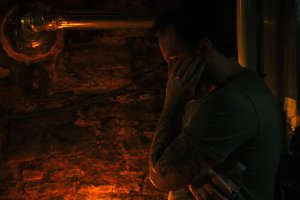
You can see the better version of this movie, one that strips away much of the exposition-heavy and dawdling first half hour. Rather than being told upfront that Abby is sick, or at least being told with a lack of clarity, let’s let this be a much later revelation. The same with Miranda’s relationship to being in a cult. It would have been more interesting and creepier for Miranda to have withheld this vital background and for Abby to realize over the course of one long awkward dinner. Likewise, the dinner setting could have been a great showcase for Scott to demonstrate his manipulative Svengali tendencies. The dinner could be a reunion of friends Miranda hadn’t seen since college rather than her best friends; best friends, I might add, that have not been told anything about the girl she has been dating for over three months. The fear of thinking you really know someone but they’ve been hiding key parts of themselves, and who they may actually be under the surface, is a universal plight. That way the truth comes out piece by piece and we are placed in Abby’s shoes, the outsider to this gathering and trying to understand. It’s a dynamic that would have played to a low-budget production and put emphasis on the character writing and performances as the night descends into Rosemary’s Baby “who are these people?” territory.
When Entropy does go all-in on its Lovecraftian body horror in the final twenty minutes, it’s certainly a leap ahead in entertainment. The lighting favors lots of indigo and purple, which reminded me of 2020’s Color Out of Space, a surefire artistic influence here. The body horror is gross and slimy and the practical effects, while limited, are designed to be more impressionable and shape-defining, triggering our innate sense that something is very wrong. It’s during this wild stretch that the movie tries to do too much with its remaining time (while still padding things out, of course) and by then it’s too late. The lack of clarity in the writing with the characters at the beginning resurfaces and now we have a lack of clarity about what is happening. While Lovecraftian horror often features imperceptible qualities of terror, the story feels more purposely vague out of convenience than a grand design of the unknowable.
At only 70 minutes of movie length, I can’t say that Entropy is an easy watch. My patience was grinding down with all the tedium and padding. Fans of micro-budget horror movies and especially with a taste for the lurid and wild machinations of body horror could be entertained, though it’s a long wait to get to the gory goods. That protracted setup should establish the characters, their dilemma, and most importantly, our interest in what is happening so that when everything goes crazy that we care about what happens next. The characterization, plotting, and dialogue are disappointing and stilted. The acting is pretty limited all around, and that may be another reason why the script didn’t become a tense chamber piece. I found Hale as the cult leader to be the best actor of the bunch. I credit the filmmakers with striving to make something, working together during such fraught times, and succeeding in getting a level of distribution through the prolific Gravitas Ventures. However, next time, and I hope for the Hale brothers there is a next time, that they work just as hard on creating the core elements that will make people care about what dastardly thing happens next to the people in their story, and maybe get an outside set of eyes to read their script for clarity.
Nate’s Grade: D+
Share this:

Scream 5 (2022)
 The fun of the Scream franchise has been its meta-textual commentary, wry jabs at horror, and the guessing game of who the killer culprit(s) could be, and Scream 5 or Scr5am (what it SHOULD be called) is a good-fun B-movie that knows precisely what it wants to be and plays to the strengths of the franchise. We haven’t had a Scream sequel since 2011, and the landscape of horror has changed as well as the landscape of multi-media entertainment. There are new satirical horizons to be targeted. This is the first Scream after the death of legendary horror director Wes Craven, but it’s in good hands with the directors and writer of 2019’s bloody excellent Ready or Not. The fun, knowingly goofy elements are retained, and the filmmakers clearly have love for what they’re sending up. There’s a sequence of languishing shots of a character opening fridge doors and pantry doors and I felt everyone in my theater tense for the eventual reveal of the killer on the other side. Moments like these are the good kind of tension-release giggle that Scream can get away with. The plot is sufficient to gather the “legacy characters” back to the site of the original murders for a new stab at rewriting the movie franchise. There’s even some plot elements that are surprisingly resonant and deeper for a satirical slasher franchise, like tear-filled discussions over loss, abandonment, mental illness, and personal responsibility. There’s a sister-to-sister reconciliation that plays like a straight drama, and it plays well. There’s nothing terribly gruesome or memorable about the kills, and some of the meta-commentary can feel like talking in circles, especially as characters knowingly enact scenes from the original. It’s a copy of a copy, meant to mock Hollywood’s reboots, but it’s still a copy of a copy. Sometimes the knowing winks are obvious, like a shower sequence recreating Hitchcock’s angles, and sometimes the potential homage feels lost in translation. Still, Scream 5 is a fun, ironic, bloody hoot of a movie, and for fans of the franchise a more welcomed return to the creative heights of the original movie.
Nate’s Grade: B
Share this:

The Humans (2021)
 I was left cold and confused by The Humans. It’s an adaptation of a Tony-award-winning play, by the playwright himself, and I don’t know what all the fuss is about. It’s a sparse movie set during a tense Thanksgiving dinner while a dysfunctional family moves one of their own into her New York City apartment. The conversation style is very natural and the characters behave like recognizable people; however, that doesn’t make them particularly interesting. This was the same issue I had with last year’s Shit House movie, a movie that confused realistic conversations with interesting conversations. Just eavesdropping on people and getting the occasional spark of conflict is not enough. I was relatively bored throughout and then when the movie tries to lurch into paranoia horror I had no idea what was happening. It feels like a dull drama that had no real ending and then someone said, “What if we spent the last ten minutes of this chamber piece conversation walking down dark corridors and inspecting noise?” The acting talent here is tremendous, including Amy Schumer in a rare dramatic role, and it just feels like a waste of their time. I don’t know what proved so appealing to critics here.
Nate’s Grade: C
Share this:

Titane (2021)
 What’s the point of a weird, gonzo movie when it stops being weird? That’s my takeaway from French director Julia Docournau’s (Raw) Palme D’Or winning oddity, a movie that has been nicknamed, “That film where the lady gets impregnated by a car.” That does inexplicably happen, and I was waiting for more bizarre interludes, but then Titane becomes a completely different movie. The first half hour involves the car copulation and then becomes a slasher movie, as it’s revealed our heroine has been killing locals for months. We watch her kill her friend, on a whim, and then her roommate walks downstairs, a witness needing killing, and then another and another, and this for me was the darkly comic high-point of the film. From there she goes on the run, poses as a man’s missing adult son, and the movie becomes entirely about hiding her real identity, whether this grieving father fully suspects or even cares, and learning the ropes of fire department protocol. To say the second half of the movie is a creative letdown is an understatement. Titane feels like Docournau was combining different stray story elements from half-finished scripts and trying to, through sheer force of will, cram them together. The car fetish is never quite explained, which is fine, but once she’s impregnated, the movie becomes more of a standard drama about hiding her burgeoning pregnant belly to keep her cover. It seems quite strange for me to say that a movie about a woman impregnated by a car isn’t strange enough, and yet there it is. Titane will appeal to fans of David Cronenberg’s body horror and the French noveau horror scene, but I found its exploitation excess to be short-lived, and the creativity on display felt more stuck in neutral than as advertised.
Nate’s Grade: C
Share this:

Double Walker (2021)
 After watching so many nominal Ohio-made indies, it’s a welcomed surprise to come across one that falls into the category of an “almost” movie, and by that I mean one with clear ambition and talent that almost fully works as a legit movie without any lingering qualifiers. Double Walker, filmed partially in Columbus and now given a national digital release, comes so tantalizingly close to being a full recommendation without hesitation. I can see what it’s going for, and with a little more careful development and clarity I think it would have achieved all of its genre-busting goals.
Sylvie Mix plays Ghost, a young woman who appears in a white nightgown in the woods. Who is she? What does she want? She is escorted by a young man into his home, disrobes, and then murders him. We come to learn that this adult woman is the ghost of a deceased child, and she’s chosen to walk the Earth as a spirit to seek vengeance. She’s only able to be seen by believers and sinners, though technically every person is a sinner unless there is an unspecified threshold to pass. The Ghost makes a friend, visits with her grieving parents, and reevaluates what it means to be human.
 The first thing to know about this movie is that it is only 65 minutes long, short of the 80 minutes typically seen as the minimum expectation for a theatrical release. It’s not that far from meeting that goal, though the airy nature of the movie also makes it feel already stretched out. The other thing you should know about the movie is that you could describe it as Promising Young Woman meets The Crow, an avenging angel targeting the bad men responsible for her death, except tonally it’s not really a hard-hitting revenge thriller. It has those elements where our Ghost is stalking her very bad men, luring them into positions of vulnerability, and striking back for justice, but the movie seems more aligned in tone with something more ponderous and poetic like 2017’s A Ghost Story (though absent ten minutes of Rooney Mara eating a pie – thus fulfilling my obligation to mention this dumbfounding cinematic moment whenever I have the opportunity, you’re welcome).
For those people looking for sundry exploitation thrills, seized by the striking central image of its poster, you may be left checking your watch, but I found this middle ground between thriller and art film to be an interesting space for Double Walker to inhabit. The screenplay drops you into its bizarre scenario and unfolds slowly, which I think worked to the film’s potent atmosphere. You don’t really know what’s going on or what the character relationships are like. At first you see a grieving family, and next we cut to a man discovering a pale woman who seems lost in the woods. She comes across ethereal and mysterious. Then there is a murder, and from there we’re trying to identify the character connections and back-story, which comes across at a gentle yet assured pace that trusts the audience to put the different pieces together to form a whole. This works well except for an ending that comes across as too confusing, muddling an already convoluted system of supernatural rules that the movie seems to be undercutting, unless the whole thing is presented as a hopeful but passing dream, and if that’s the ending then I’m going to be quite disappointed. Still, this is a movie at its core more interested with the question over being human, being remembered, and personal identity than as a blood-soaked revenge thriller.
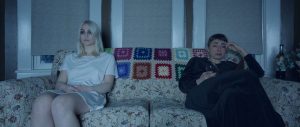 Again, it has its moments of blood, but there’s a somber tone poem quality to the movie that elevates its ambitions and also ties down its ultimate execution. Director and co-screenwriter Colin West is using the structure of an exploitation film to do more than deliver sleazy thrills. He devotes much more time to watching our Ghost character adjust to life as a spirit. The Ghost is the same spirit as the little girl we saw being eulogized in the opening. This presents some awkwardness for the character and the viewer. For the character, she’s gone from the mind of a child to being in the body of an adult, and it’s not determined whether this adult body is what she would have eventually grown into being or whether it’s just a default model. This allows for an even more curious performance as a character that feels alien in their own skin but also fascinated by that change in perspective, like Scarlet Johansson in Under the Skin. I understand the Ghost studying her adult body with curiosity. However, for the viewer, the numerous nude scenes can make you uncomfortable with the understanding that this is a little girl transported into the body of an adult and she is using her sexuality to lure men to their perverted doom. Maybe I’m just more sensitive to this connotation, and “using her sexuality” seems like an overstatement as she’s simply a woman being present with predatory men. I will say the nude scenes are tastefully portrayed where the camera doesn’t feel like it’s going to painful lengths to feature flesh. I was about to accuse the movie of possibly being skeevy with its plurality of nude scenes (does the Ghost need to run out into the woods in the buff?) when I noticed that Mix is also the producer and co-screenwriter. I assume she approved of her depiction.
Because of her newfound identity, and separation from most living beings, Double Walker presents a main character who is trying to form connections but cannot. The Ghost tries to console her grieving mother but is unable to be seen or felt by her. She does meet a kind man (Jacob Rice) at a movie theater who helps her out and who is not looking to take advantage of her. He shares his family’s home movies, which is a slightly strange thing to do so soon with a nearly mute stranger, and compares the images captured on film like ghosts, crystalized memories of people no longer with us. I have thought of this comparison myself and will morbidly watch background extras in old movies and think, “Here they are, alive once more, but likely gone for some time.” The direct connection of ghosts and memory allows the movie another layer to provide additional meaning. However, Double Walker feels more like a stretched out short film than a fleshed-out feature. With a few extra wrinkles and plot development, this could have readily afforded a larger story. Later on, the Ghost makes a rash decision and an innocent is harmed in her path to vengeance. I think that’s an interesting direction and questions the righteousness of her cause, while at the same time the script finds a personal way to make that mistake even more grueling. Again, the script really could have gone into this consequence and pushed the character into more inner turmoil, to question the cost of her mission, and to question her perception of human life. There are areas where the movie could have gone into further deliberation, but they feel short-changed. Double Walker is settled being the extra long version of the movie it presents in its first act.
 This is a very professional looking and sounding movie and probably has the best photography of any Ohio-made indie I’ve watched yet. West also served as his director of photography, and his eye for visuals is crisp and pleasing. The use of light, shadow, foreground and background, composition, movement, it was very deliberate as well as being artistic in a way that didn’t feel like it was overly self-indulgent. West achieves an artistry without making it flashy, and that’s even harder to accomplish. The score and sound design are also polished as well. When the Ghost is luring a victim, the eerie sound is reminiscent of metallic scraping to elicit unease. The costuming keeps our Ghost in white outfits, noting her innocence but also visually connecting you to the associated color of traditional spirits (an also, maybe, A Ghost Story). It makes her standout on the screen. Speaking of that, Mix (Poser) is a natural actor. She has a presence to her and ably communicates the curiosity and otherworldly nature of her character’s dilemma. She doesn’t talk much, nobody really does in this movie, but there’s a melancholy to her that feels more pained than forced. The other actors do well with their minor roles, including other Ohio actors I’ve covered before like Justin Rose (False Flag) and Ralph Scott (Constraint) playing bad men who become ghostly prey.
By the end of Double Walker, I was left feeling almost satisfied, one of those film experiences where you can see the better movie just on the peripheral, the one that was so close. As it stands, it’s an arty and contemplative movie that uses the exploitation formula as a vehicle to explore more existential questions. I wish the movie had developed the story more from the potential on display, and what potential is on display. The filmmakers here feel like they are headed for great things. West has already filmed another movie he wrote, Linoleum, starring Jim Gaffigan and Tony Shalhoub about a science teacher who always wanted to be an astronaut and builds his own rocket ship in his garage. That sounds amazing and it has big names to fill out the cast. I’m rooting for West. This guy has the talent and ability to be a rising indie director and can do Ohio proud. Double Walker could end up being the flawed but promising start to a burgeoning film career. It’s worth watching but be warned that it might not be the movie you anticipate at first glance.
Nate’s Grade: B
Share this:

Last Night in Soho (2021)
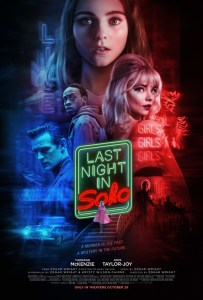
Edgar Wright’s Last Night in Soho is the writer/director’s first work of genuine horror and it’s in many ways unlike his previous movies, both in good ways and not as good. We follow an aspiring fashion student, Eloise (Thomasin McKenzie), as she leaves her small town for the bright lights of London. She has difficulty fitting in with the snobby city girls at school and her new apartment might be haunted. When she goes to sleep, under the alternating neon light filtering through her window, she wakes up back in the 1960s and takes the form of another woman, Sandie (Ana Taylor-Joy). Eloise investigates what happened to Sandie and grows increasingly consumed with solving the crimes of the past and possibly getting lost in it as well.
This is the least Wright-ian movie when it comes to his signature sense of frenetic visual decadence and creative, intuitive editing. This is a more modulated and patient movie, one that doesn’t ape the style of other flashy genre movies for post-modern, meta-textual in-joke commentary. If you had told me that Last Night in Soho was directed by another filmmaker, I would have believed you. It’s a different kind of story and movie, co-written by Krysty Wilson-Cairns (1917, Penny Dreadful), and while mysteries have factored into other Wright films, this one is built upon one. The technical recreation of the swinging ‘60s in London is impressive on every level. The film has an acute sense of style that doesn’t overshadow the unsettling mood of its horror. There’s a period of discovery that keeps your attention into the first half. When Eloise travels back in time, she’s attached as the reflection of Sandie, and this creates very beguiling and imaginative images, like watching Eloise keep pace with Sandie down a mirrored staircase. It made me start to mentally dissect the filming ingenuity, even though it was likely filming the scene in separate pieces, but part of me wondered if they just got the two actresses precise at timing one another’s movements. There are some knockout disturbing images to crank up the horror, like hands reaching out from all manner of spaces, and the grey faces of male phantoms blurring together. There is one visual shot that is so striking on multiple levels, watching the panic of eyes in the reflection of a knife and it plunges in and out of the frame, only increasingly bloodier. Even though I’d consider Soho to be perhaps less visually audacious as Wright’s past works, it’s still a cut above even the better giallo genre homages.

Last Night in Soho is a clear homage but the spooky story ultimately gets caught up in its own machinations and narrative off-ramps. Once the central premise is established by the end of Act One, I was ready for the movie to develop its plot by establishing further rules as we explore the mystery. Is it time travel? I thought if this was established the movie could go several different enticing routes. Perhaps Eloise is going to solve the 1960s tragedy by collecting evidence and investigating witnesses through two different time periods, including people and leads that are lost in present-day. Perhaps Eloise was going to steal the fashions of the 1960s she found as inspirations for her class assignments, becoming more and more dependent on taking the ideas of others rather than trusting her own creative instincts. Is it physical or psychic possession? Perhaps Eloise is finding a freedom in pretending to be someone else and gets addicted to that power and possibility. Perhaps it’s a partnership where both women interact to resolve an unresolved murder case and avenge a past wrong. Perhaps it’s Sandie who discovers the new freedom of being able to be alive in modern-day and it becomes a battle over who will have dominance over Eloise’s body and soul. What about Eloise seeing her dead mother? Does this mean she herself has a special connection to the dead? Will her mother follow her to aid in her safety? Or could Eloise use her trips to the past to find her grandmother? Could this be a manner of learning more about her grandmother while they were similar ages? There are many routes that Wright could have gone, and I would have been interested by any of them with careful plotting and natural development to layer the intrigue and complications. To my surprise, Last Night in Soho doesn’t really clarify or develop its out-of-body setup with more rules.
Without additional rules or development from the plot, it comes down to watching the personal impact this has on Eloise, and at least there the film provides enough of its attention. She’s becoming haunted by the tragic story of Sandie. The movie is very much about the horror of rape culture and how it can traumatize for decades after. It may have been postponed a year due to COVID but it feels very much in response to the Me Too movement that raised awareness of sexual harassment and assault. For Wright’s position, his last movie, 2017’s Baby Driver, starred two actors that have since had their careers affected by reports of predatory behavior, Kevin Spacey and Ansel Elgort, and it almost feels like Soho is a reflective response, in a manner of speaking. It’s Wright’s latent acknowledging how ensnared one can find themselves in an industry or system that profits from the exploitation, humiliation, and silencing of women. Naturally, Hollywood has been an exploitation factory from its very troubled start, with many young women arriving with stars in their eyes only to be taken advantage of by hungry men looking for their next fix. This acknowledgement is nothing new, but Soho feels like repackaging the woman-terrorized-by-unknown giallo films into something more socially relevant and reflective.

The story of Sandie is meant to be an intentional stand-in for thousands of other women who have suffered similar fates at the hands of predatory men promising fame and fortune. It has an undeniable horror, but it’s also somewhat limited with its impact or intrigue because Sandie is kept chiefly as symbol. I didn’t find the extended excursions with her in the past to be as interesting as I’d hoped because Sandie herself isn’t presented as a multi-dimensional figure. That doesn’t mean she’s undeserving of sympathy, it just means I found her to be rather boring. We don’t really learn more about her, until a third act twist that creates some very uncomfortable and potentially troublesome questions. There was a moment where I thought, “Is Wright really trying to make me root for…?” and it did not work. The ending twist feels more like the kind of thing you’d find in the hacky direct-to-DVD version of this kind of genre homage, not from the likes of Wright, a master study on genre recreation. The story of Sandie serves as an industry cautionary tale but by the end I don’t know if Eloise or the audience have learned anything more meaningful other than bad things happen to women.
This is Dame Diana Rigg’s last performance. She died on September 10, 2020 at the age of 82 (the movie opens with a dedication, “For Diana”). The woman who came to fame from the BBC’s Avengers spy series in the 1960s and renewed resurgence from playing the tart-tongued Queen of Thorns on Game of Thrones has a final role that lets her go out in grand style. By the end, it might not fully make as much sense, and invites all sort of questions that tear away the logic of staying in her living conditions for 50 years, but it’s fun to watch this octogenarian go all-in on the messy horror. She’s also the best actor in the movie. Too many other characters are meant as symbols, stand-ins, or conflations, and in fact I wish other characters had been conflated but that’s going into potential spoiler territory to detail. McKenzie (Jojo Rabbit) is a solid lead but not as much is asked of her that could have been. I was expecting her character to become more mentally and emotionally undone, though she sells her fear with effective wide-eyed terror. Matt Smith looks alarmingly identical in 2021 as he did in 2011 with Doctor Who.

I mean no great offense to say that Last Night in Soho is the least of Wright’s impressive and exciting filmography. It’s a solid genre movie with style and intrigue, and while it doesn’t live up to the tantalizing possibilities of its premise, as a horror movie, as a character study, and as a genre homage, it’s still plenty entertaining and with a relevant message about how often women in our society have been the sacrificial victims, not just in the movies.
Nate’s Grade: B
Share this:

Mulholland Drive (2001) [Review Re-View]

Originally released October 19, 2001:
Mulholland Dr. has had a long and winding path to get to the state it is presented today. In the beginning it was 120 minutes of a pilot for ABC, though it was skimmed to 90 for the insertion of commercials. But ABC just didn’t seem to get it and declined to pick up David Lynch’s bizarre pilot. Contacted by the French producers of Lynch’s last film, The Straight Story, it was then financed to be a feature film. Lynch went about regathering his cast and filming an additional twenty minutes of material to be added to the 120-minute pilot. And now Mulholland Dr. has gone on to win the Best Director award at Cannes and Best Picture by the New York Film Critics Association.
Laura Harring plays a woman who survives a car crash one night. It appears just before a speeding car full of reckless teens collided into her limo she was intended to be bumped off. She stumbles across the dark streets of Hollywood and finds shelter in an empty apartment where she rests. Betty Elms (Naomi Watts) is a young girl that just got off the bus to sunny California with aspirations of being a big time movie star. She enters her aunt’s apartment to find a nude woman (Harring) in the shower. She tells Betty her name is Rita after glancing at a hanging poster of Rita Hayworth. Rita is suffering from amnesia and has no idea who she is, or for that fact, why her purse is full of thousands of dollars. Betty eagerly wants to help Rita discover who she is and they set off trying to unravel this mystery.

Across town, young hotshot director Adam Kesher (Justin Theroux) is getting ready to go into production for his new film. He angers his mob producers by refusing to cast their chosen girl for his movie. After some harassment, threats, and a visit by an eyebrow-less cowboy assassin (God bless you David Lynch), he relents.
In the meanwhile, people are tracking the streets looking for Rita. Betty and Rita do some detective work and begin amassing clues to her true identify. As they plunge further into their investigation the two also plunge into the roles of lovers. Rita discovers a mysterious blue box and key in her possession. After a night out with Betty she decides to open it, and just when she does and the audience thinks it has a hold on the film, the camera zooms into the abyss of the box and our whole world is turned upside down.
David Lynch has made a meditation on dreams, for that is at the heart of Mulholland Dr. His direction is swift and careful and his writing is just as precise. The noir archetypes are doing battle with noir expectations. The lesbian love scenes could have been handled to look like late night Cinemax fluff, but instead Lynch’s finesse pays off in creating some truly erotic moments. Despite the population of espresso despising mobsters, wheelchair bound dwarfs, and role-reversal lesbians, the audience knows that it is in hands that they can trust. It’s Lynch back to his glorious incomprehensible roots.
Watts is the true breakthrough of Lynch’s casting and she will surely be seen in more films. Watts has to play many facets of possibly the same character, from starry-eyed perky Nancy Drew to a forceful and embittered lesbian lover.
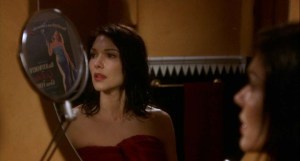
One scene stands out as a perfect example of the talent Watts possesses. Betty has just been shuffled off to an audition for a film and rehearsing with Rita all morning. She’s introduced to her leathery co-star and the directors await her to play out the audition scene of two kids and their forbidden love. As soon as the scene begins Betty vanishes and is totally inhabited by the spirit of her character. She speaks her lines in a breathy, yet whisper-like, voice running over with sensuality but also elements of power. In this moment the characters know, as the audience does, that Betty and Naomi Watts are born movie stars.
It’s not too difficult for a viewer to figure out what portions of the film are from the pilot and what were shot afterwards. I truly doubt if ABC’s standards and practices allows for lesbian sex. The pilot parts seem to have more sheen to them and simpler camera moves, nothing too fancy. The additional footage seems completely opposite and to great effect. Mulholland Dr. has many plot threads that go nowhere or are never touched upon again, most likely parts that were going to be reincorporated with the series.
The truly weirdest part of Mulholland Drive is that the film seems to be working best when it actually is still the pilot. The story is intriguing and one that earns its suspense, mystery, and humor that oozes from this noir heavy dreamscape. The additional twenty minutes of story could be successfully argued one of two ways. It could be said it’s there just to confound an audience and self-indulgent to the good story it abandons. It could also be argued that the ending is meticulously thought out and accentuates the 120 minutes before it with more thought and understanding.
Mulholland Dr. is a tale that would have made an intriguing ongoing television series complete with ripe characters and drama. However, as a movie it still exceeds in entertainment but seems more promising in a different venue.
Nate’s Grade: B
——————————————————
WRITER REFLECTIONS 20 YEARS LATER
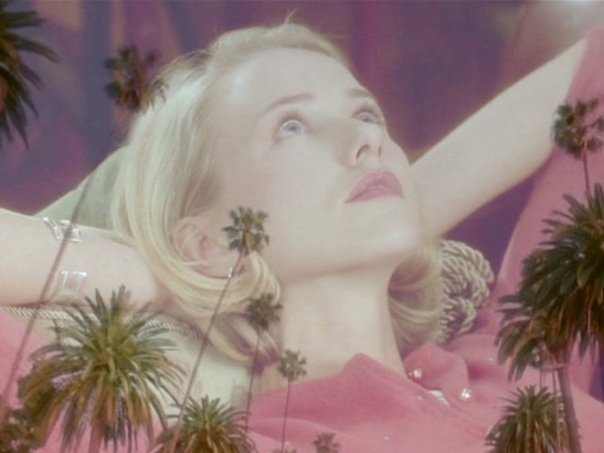
How much is a dream worth to you? That’s my main takeaway re-watching David Lynch’s surreal indie Mulholland Drive twenty years later from its release. Lynch has had plenty of his own run-ins with the dream makers of Tinseltown, from the difficulty to see his admittedly weird projects off the ground to the swift cancellation of his once zeitgeist, and deeply weird, TV series, Twin Peaks. It’s common knowledge now that Mulholland Drive began as a 1999 TV pilot that Lynch re-conceived as a movie, shot 30 minutes of additional footage, and earned a 2001 Best Directing Oscar nomination for his perseverance and creative adaptability. The movie has since taken on quite a reputation. The BBC and Los Angeles Society of Film Critics have both hailed it as the best film of the twenty-first century (so far). Lynch has retreated back to his insular world of weirdness with hypnotic, over-indulgent retreads, Inland Empire, and bringing back his signature TV series for a Showtime run in 2017. In 2001, Mulholland’s Drive’s success seemed to be the last point with Lynch working with the studio system he so despised. In a way, this is his farewell letter to chasing his own dreams of stardom, at least as far as a director can have creative control and a steady supply of protection and money to see his vision through. Watching Mulholland Drive is like stepping through a dream, which has been the hallmark of Lynch’s more celebrated, obtuse filmography from 1977’s Eraserhead onward. The movie is meant to operate on a certain dream logic, sustained with choices that seem artistically self-destructive, but the journey might feel as emotionally or intellectually fleeting as a dream as well, so I ask you, dear reader, to think as you continue, how much is a dream worth?

The failed pilot serves as a majority of the film’s running time and it’s filled with peculiar beginnings that will never pay off. There are actors like Robert Forster (Jackie Brown) and Brent Briscoe (Sling Blade) who show up for one whole scene and then are never seen again. Presumably, the roles would have been more significant as detectives snooping around from the peripheral. There are mysterious forces chasing after “Rita” (Laura Harring), an important-looking woman who has conveniently lost her memory and adopted her name after seeing a poster of Rita Hayworth. She’s got a bag filled with money, a gun, and blue key. One would assume over the course of a network season that we would get closer to discovering the real identity of our amnesiac leading lady. There are also scenes that seem to exist as their own short films, like the darkly comedic hapless hitman and the scared man detailing his spooky dream to a concerned friend in a diner. These characters, presumably, would come back for more significance or at least larger interplay. The same with the mysterious locked box and key. You can practically identify the J.J. Abrams “mystery box”-style of storytelling for future intrigue. The role of a TV pilot is to serve up a storytelling engine that can keep churning, as well as ensuring that there’s enough curiosity to hook an audience through commercial breaks. Lynch is used to inserting strange symbols and starts in his movies that potentially go nowhere, so the difference between a Lynch pilot and a Lynch movie aren’t terribly noticeable. These characters, clues, and moments were perhaps intended to be developed further, or perhaps they never were. It’s as if the movie itself is a nightmare of different television programs colliding incoherently.
There does seem to be a consensus interpretation for Mulholland Drive, one that synchs up the various doubles and symbols. For two hours, we’re riding along with Betty (Naomi Watts) as she moves to L.A. with big dreams and perky naivete. She finds the amnesiac Rita in her aunt’s apartment and takes it upon herself to give her a home and investigate her identity. They grow close together, Betty nails her big acting audition, and then Betty and Rita become lovers. They go to a club (Silencio) where performance artists insist “everything is recorded,” and thus already happened, phony, and a replication of memory, and then Rita inserts that mystery blue key into the mystery box and mysteriously vanishes. We next return to the scene of Diane, who at first was a dead body that Rita and Betty found during their investigation. Now it’s Betty, or at least Watts playing her, and she’s a struggling actress who is jealous of the success and favor her girlfriend, Camilla (also played by Harring), is indulging in from their seedy director, Adam (Justin Theroux). Overcome with torment, she hires a hitman to kill Camilla. From there, she’s attacked by a homeless monster, tiny versions of the people portraying Betty’s parents in the first part, and she takes her own life in grief and guilt. The most common interpretation is that the final twenty or so minutes with Watts as Diane is the real story and that the proceedings 110 minutes was Diane’s dream trying to process her guilty conscience and mixed emotions. The blue key, the symbol from Diane’s hired hitman of a job completed, is the point of transportation between the dream and returning to a living nightmare of regret. Adam’s prominence in the first two hours is explained as punishment from Diane’s mind, so this is why he is emasculated repeatedly, from being robbed of control over his movie, his marriage, and ultimately his future.
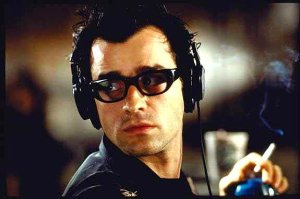
Just because this is the most prominent interpretation, and even perhaps the author’s intended one, doesn’t mean other viewers cannot find equally valid and differing interpretations. That’s the appeal or point of frustration with Lynch’s most Lynchian work. However, the problem with asserting that the first two hours of your two-hour-plus movie were all a dream can make it feel overindulgent and unsatisfying. The TV pilot segments are shot in a way that evokes the cliché storytelling stye that prevailed at the time, with overly lit scenes and flat acting. I cannot say for certain but it feels like Lynch purposely told Watts (King Kong) to try and be hammy. Lynch has been known to purposely ape the style of prime-time soaps to provide subtle satirical contexts. Is Watts doing a bad job with the purpose of making us think of other bad actors from soaps? The one scene Betty comes alive is during her audition scene. We’ve already seen her act it out once so we’re expecting more of the same, but in that moment, she comes alive with sensuality, taking control from the aged acting partner who was just there to exploit some young new starlets. The intensity she unleashes, a mixture of carnal desire and self-loathing, is nothing like bright-eyed Betty. Is the irony that when Betty is pretending to be someone else that’s when the performance excels? You can see the points for interpretation, especially considering the ending thesis, but if so, it’s such a bold gamble by Lynch that could prove so alienating. You’re deliberately having your lead actress act in a cliched and stilted manner to perhaps make a point fewer will grasp? Obviously, the ending wasn’t intended to pair with the pilot parts, so it feels like projecting an unintended meaning onto the intentions of acting decisions, but dreams are murky that way.
I wouldn’t be surprised if just as many people are tested by Mulholland Drive as they are mesmerized. It’s a combination of different genres and film iconography, from Manning as a living-breathing femme fatale, to dark whimsical comedy, to surreal mystery, to tawdry erotic drama, to industry-obsessed soap. As much as it feels like a pilot retooled into a new beast, it also feels like a collection of genres being retooled for whatever intended association Lynch wants to impart. It’s ready-made for dissection and ready to take apart the Hollywood studio system. I enjoyed some of the strange moments that felt most ancillary, like the mobster with the extremely refined taste for espressos, and the eyebrow-less cowboy assassin threatening Adam. That scene in particular still has an unsettling menace to it, as Lynch takes what could have been absurd and finds a way to make this man overtly threatening without ever explicitly doing anything threatening. His browbeating to Adam over the difference between listening and hearing is well written and ends perfectly: “You will see me one more time, if you do good. You will see me… two more times, if you do bad. Good night.” I wish more sequences like this could stand on their own. So much of Mulholland Drive seems intended to provide a skeleton for meaning to be provided later as the added meat that Lynch didn’t value as highly.
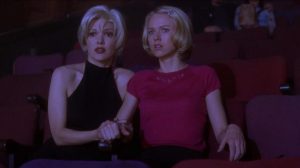
Watts became a star from this movie and was taken to another level with the success of 2002’s The Ring. From there, she was in the Hollywood system of stars and after toiling for ten years from rejected interviews to rejected interviews. She was thinking of quitting acting and going back to her native Australia at the time she got asked to play Betty/Diane. The audition scene, the later distraught and frail Diane, as well as the mannered Betty served as an acting reel for every casting agent that had rejected her. Here was Watts, capable of doing it all and then some (she was nominated for two Oscars – 2003’s 21 Grams and 2012’s The Impossible).
My original review in 2001 is also wrestling with the question over interpretation versus intention, with the genre mash-ups as symbolic satire or as laborious TV pandering. Mulholland Drive is like watching a dream and trying to dissect its many meanings. Some people will relish the puzzle pieces that Lynch has provided and finding further hidden mirrored meanings, and other people will throw up their hands and ask for a road map, or lose interest by then. I don’t think this is the best film of the first twenty years of this new century. I don’t even think it’s close. I think at its best it can be hypnotic and intriguing; it’s a shame that these are only moments for me, and twenty years later these moments felt even further spaced apart. I just didn’t find Lynch’s movie quite worth the long, surreal drive into the dark of his imagination.
Re-View Grade: B-


 nathanzoebl
You must be logged in to post a comment.