Blog Archives
The Black Phone 2 (2025)
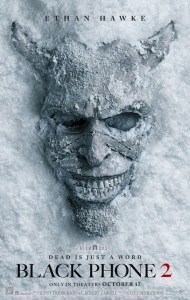
The original 2022 Black Phone was a relatively entertaining contained thriller where a kid was relying upon the ghosts of victims to escape the clutches of an evil kidnapper. It had other elements to fill it out as a movie, like a psychic sister, but the central conceit and execution worked well, especially a disturbing performance by Ethan Hawke as The Grabber, the aforementioned grabber and locker-away-er of unfortunate children. Then it was popular enough to demand a sequel, but where do you go when the villain has been killed and the source material, a short story by Joe Hill, has been exhausted? The answer is to turn the very-human Grabber into a Freddy Krueger-style supernatural predator terrorizing our survivors in their dreams. The kids from the first film are now teenagers and really the psychic sis is the main character. She’s the one most affected by the Grabber’s supernatural vengeance. Most of the movie is watching the sister get tossed around invisibly in the real world and talking to irritable ghost kids. There’s a mystery about uncovering the truth about what happened to their deceased mother, who too could have a personal connection to the Grabber from a Christian summer camp located in the far mountains. The snowy locale makes for a visually distinctive setting, though once you see the Grabber ghost ice skating it does take a little of the mystique away from the overall menace. The Black Phone 2 just didn’t work for me, feeling like another “let’s help these dead kids be at peace” adventure like a weekly TV series, but the scenario just didn’t have the draw and satisfaction of the original. I suppose the returning filmmakers wanted to expand their universe and its mythology, Dream Children-style, but the material doesn’t seem there to build a franchise foundation. The first film was simple and complete (makes me think of a variation on a line at the end of Bioshock Infinite: “There’s always a Grabber. There’s always a black phone. There’s always a ghost”). The sequel cannot compensate for that, and so it feels overstretched, underdeveloped, and goofy. At least they tried something different than just a straight replica of the original but it would have been best to leave the Grabber and us at rest.
Nate’s Grade: C
Share this:

Beetlejuice Beetlejuice (2024)
 Usually sequels over thirty years later reek of desperation, trying to rekindle the past while usually only hoping to tickle people’s fading sense of nostalgia. Rare is the 30-year-plus sequel that excels by breaking free of its imitator and making us see the original in a new light. It helps to keep your expectations in check, especially for a project that is so miraculous as the original 1988 Beetlejuice. What a wild movie that was, an introduction to horror comedy for a generation, and a near-perfect balance of creepy, silly, and imaginative. From director Tim Burton’s career-launching sense of style, to Michael Keaton’s electric comedic performance, to Danny Elfman’s outstanding score, to the stop-motion visuals, fun and freaky makeup effects, and you had a madcap movie that felt like a unique discovery. Recreating that is near impossible, but if Beetlejuice Beetlejuice can recreate some of the elements and feelings that made the original what it was, then it can be considered a modestly successful late-stage sequel.
Lyrdia Deetz (Wynona Ryder) has become a long-running host of a paranormal TV talk show connecting people with messages from loved ones from beyond the grave. Her teenage daughter, Astrid (Jenna Ortega), is moody and embarrassed by her mother, feeling that she “sold out.” Mother and daughter return back to Connecticut to attend the funeral of Charles Deetz, Lyrdia’s father. Her pretentious and snippy stepmother, Delia (Catherine O’Hara), is trying to better commune with his spirit, and the entire town has become famous for its spooky seasonal history. Meanwhile, Beetlejuice (Keaton) is trying to avoid his former wife, Delores (Monica Bellucci), who naturally is seeking to obliterate him to ectoplasm. He’s still got his sights set on Lydia, who spurned his marriage hopes, and might be able to manipulate the Deetz family back into his control.
 Beetlejuice Beetlejuice gets the closest to rekindling that lightning-in-a-bottle alchemy from the 1988 original, serving as an appealing and enjoyable sequel. Nothing will ever be as original and wild and such a discovery as that first movie, which serves as a point of entry for many a Millennial fan who discovered that irresistible Tim Burton Neo-Gothic aesthetic. However, it recreates enough of the qualities that stood out about the original. The skewed sense of humor and surreal visuals, as well as goofy slapstick and vibrant imagination about life after death, it’s all such a fertile playground for Burton’s visual charms. The genius of the original was telling a ghost story from the ghost perspective as they learned about how to be better ghosts to try and scare their new living owners away. Given the world of the dead, there’s such tremendous storytelling and world-building possibilities here, explored richly in the animated 90s series for kids. Further stories in this universe have an automatically appealing power, and it’s just nice to watch Burton apply his specific aesthetic again, something fans haven’t really seen since 2007’s Sweeney Todd. I appreciated the weird morbid details and the practical production values; the Alice in Wonderland movies have shown that the “Burton look” isn’t best complimented by massive green screen sets. Having Burton, the “Burton look,” the original actors, with some exceptions (more on that later), and enough of that offbeat, chaotic, morbid tone return is a victory.
Beetlejuice Beetlejuice doesn’t so much alter our understanding of the world of the dead as established; it doesn’t radically rethink the landscape but it doesn’t repeat the same plot events either. I really liked the evolution of the adult Lydia as a jaded TV host. There’s a real dramatic punch to the reality that she sees the dead but has yet to see her deceased husband. She is incapable of reuniting with the man she misses the most, and she doesn’t know why. That yearning, paired with a lingering thematic mystery, can be a palpable storyline to explore. Pair that with some three generations of Deetz women trying to understand one another and work through personal resentments and we have fertile narrative ground. The three women were my favorite part of the movie, and their interactions and reflections on parenting and the challenges of trying to better understand one another are the foundation of the movie’s sense of heart. I really enjoyed the dynamic between the three, significantly upping Delia’s screen time and finding room to give her more dimension, an artist struggling in the wake of her grief. I’m a bit surprised that Ortega’s character isn’t more central to the drama. For all intents and purposes, she’s Lydia 2.0, so butting heads with Lydia 1.0 I guess feels redundant, so the story sends her off to find a cute boy in town and use that as an excuse for several unexpected needle-drop song use. There’s something inherently wrong watching a Tim Burton movie and hearing contemporary music. Imagine the Beetlejuice “Day-O” singalong but to, say, Sabrina Carpenter instead. No.
 Beetlejuice, as a character, is such an exciting agent of chaos, a horny ghost who operates on the same tonal wavelength as a Looney Tunes cartoon character. Even though the original movie is named after the guy, he’s only in the film for approximately twenty percent. Keaton was absolutely incredible in his comedic bravado, creating much of the character through his ad-libs and hair and makeup choices. Keaton is still fantastic in this go-for-broke sort of performance, a performance we’ve seen far less as he’s settled into a respectable dramatic acting career. It’s hard to remember, dear reader, but when Keaton was initially cast for Burton’s Batman, the fan base at the time was up in arms, considering Keaton more of an un-serious funnyman. It would have been easy to have Beetlejuice front and center for the movie, so it’s admirable that Burton and Keaton decided to keep his on-screen appearances short, leaving people wanting more. There’s a late turn of events that pairs Lydia and Beetlejuice together, and I wish this fractious pairing had been the bulk of the movie. The whole enemies-to-uneasy-allies would have put much more emphasis on their character dynamic and the comic combustibility. Still, seeing these characters come back and retain their appeal and personality without obnoxious pandering is welcomed.
The screenwriters find a clever solution for the Jeffrey Jones Dilemma. For those unaware, Jones, who portrayed Lydia’s father in the original, and best known for pugnacious supporting roles in movies like Ferris Bueller’s Day Off, Howard the Duck, and HBO’s Deadwood, was charged with soliciting a child for sexual exploitation. The movie continues with the character of Charles Deetz but without the involvement of Jones. The character gets his top eaten by a shark, so for the rest of the movie he’s a walking half of a corpse with a mumbly voice. It’s a clever way to include the character without the need for the actor.
With that decision to limit the Beetlejuice quotient of Beetlejuice Beetlejuice, it makes for a sloppier movie juggling a few underwritten subplots and side characters. The biggest non-factor is the return of Mrs. Beetlejuice. Here is a powerful antagonist who has the literal ability to suck out the souls of the recently dead and turn them into shriveled husks. She’s seeking vengeance against her ex and tracking him down through the netherworld. And yet, she could be completely eliminated from the movie without really affecting the other storylines. The whole Mrs. Beetlejuice/vengeful ex-wife character feels like a holdover from a different sequel script, clumsily grafted onto this other project, a vestigial artifact of another path not taken. There’s plenty of potential with the concept of the past victims of Beetlejuice coming back to seek retribution, and especially a trail of angry former lovers. It would explore the character’s history more meaningfully than an albeit amusing silent film interlude about how he married her during the era of the Bubonic Plague. We see how he died as a human, but there’s hundreds of years that can be illuminated from his failed schemes and odd jobs. Certainly there could be a whole club of ax-grinding malcontents sharing their mutual hatred of the Ghost with the Most. This character should better reflect Beetlejuice, and instead she’s just a monster on the prowl that eventually gets indifferently cast aside. It feels like Burton was looking for something for Bellucci to portray (Burton and Bellucci have officially been dating since 2023).
 She’s not alone as an antagonistic villain that pops up to provide momentary danger but is also hastily resolved to the point that it raises the question why they were even involved. There are three antagonists, not counting Beetlejuice, that appear throughout to threaten our Deetz family members in Act Three, each of them individually interesting and targeting a different member of the family for ill-gotten gain. Yet each one of these characters is conquered so easily that it nullifies their importance and overall threat. If Beetlejuice could, at any moment, just open a trapdoor to hellfire at a moment’s notice, what danger does any other character pose then? If a sand worm can just appear from nowhere and consume our pesky antagonist, then why can’t this be a convenient solution earlier? The defeats feel arbitrary, which make the antagonists feel arbitrary, which is disappointing considering that we have the full supernatural arsenal of undead possibilities to tap into. I enjoyed these characters for the most part, but it’s hard not to feel like they’re tacked-on and underwritten. The same can be said about Willem Dafoe’s police chief, a former actor who played a chief on TV and now tries to fill the role for real after death. I’m always glad to have more Dafoe in my movies (woefully underrepresented in rom-coms, you cowards!) but he’s just mugging in the corner, waiting for some greater significance or, at minimum, more memorably morbid oddity to perform.
Beetlejuice Beetlejuice is better than a desperate sequel cash-grab, though there are elements, ideas, characters, and jokes that could have been smoothed out, better incorporated, and developed to maximize the potential of the undead setting. It’s an enjoyable throwback for the fans of the original that does manage to tap into enough of those potent elements that made the original so memorable. It’s definitely less edgy and transgressive, maybe even a little too safe given the territory of spooky specters; the entire Soul Train bit felt like a bad Saturday Night Live sketch from the 1980. However, it’s still got enough of the charm and silliness to leave fans, old and new, smiling and wondering where it might go next in its wild world.
Nate’s Grade: B
Share this:

Ghostbusters: Frozen Empire (2024)
 I am a lifelong Ghostbusters fan, I enjoyed the 2021 reboot, and I come to the sequel, Frozen Empire, as one of those fans that grew up with the cartoon series in the 1980s. There is a contingent of Ghostbusters fans who dismiss the movie as merely a comedy about a bunch of schlubs who resort to paranormal shenanigans to make a buck, and these fans dismiss anything larger in world-building, mythology, or direct sincerity as missing the point. I disagree. There can be a vivid, flourishing world of supernatural beings and connections to the human world, if you can tell a compelling story with characters we want to follow. Frozen Empire is an okay TV episode expanded into movie form, finding little for most of the voluminous characters to do. There’s an ancient evil and tying back the legacy characters, who don’t present much meaning beyond extended cameos. The 2021 movie had me on an emotional level, saying goodbye to a character and seeing how that loss has affected multiple generations of his estranged family. The closest thing Frozen Empire features to emotion is young Phoebe Spangler (Mackenzie Grace) wanting to be treated like a responsible adult and making friends with a ghost girl. It’s kind of sweet, and it’s smart to tie this friendship into the larger threat. The movie has several side plots littering the peripheral, from Finn Wolfhard trying to catch Slimer and being trusted to drive the Ecto-One, to Paul Rudd trying to find his footing as a stepdad, to Kumail Nanjiani as a junk dealer learning to follow his family’s noble mission of protecting others. I liked learning more about Winston’s (Ernie Hudson) Men in Black-style secret agency of studying ghosts and testing out new supernatural tech, and it presents a fun new setting where we can learn more. The ultimate story about defeating an evil spirit, coming together as a team, and learning to give others room to succeed or fail all seem a little pat, a little too familiar. It’s fine that this movie has lower stakes, even with a would-be apocalyptic threat of ancient evil. Not every movie needs to avert the apocalypse. It feels like little thought has been given to extending the new characters from the 2021 movie. There are too many characters to service here, which is why everyone other than Phoebe feels like a nascent supporting character or overextended cameo at worst (did we need the return of Podcast?). It’s still a fun movie that any Ghostbusters fan will likely find enough to enjoy, but it also feels like it might be the last Ghostbusters movie, at least this iteration, and it ends with a reminder of what the franchise can be, at its best, but also a warning of what it can be without careful development and vision.
Nate’s Grade: B-
Share this:

Night Swim (2024)
 It feels like the genesis of Night Swim was somebody saying, “We need a new way to do a haunted house movie so… what if…?” and then just pointed to different parts of the home and questioned whether it could be haunted. What I’m saying is we were probably a coin flip away from a terrifying tale of a haunted barbecue grill (working title: Dead Meat). A haunted pool would naturally lead to the question, “Well, why don’t you stay out of the pool?” and, well, we don’t really have an answer, so the pool can’t do too much because it’s immobile. There’s a possibility here with some spirit linked to the pool water seeking sacrifices and offering rewards in return, but this is downplayed so much and eventually forgotten during the muddied reasoning that concludes this confusing movie. I don’t think the film can even stick to its own rules. It needs to be either goofier, fully embracing its ridiculous premise of a haunted swimming pool, or going even darker and deeper with its back-story and rules and how this corrupts the new family, not because of some evil possession but from the simple wish-granting opportunity of feeding this monster for personal gain. There’s a way to make this concept work, specifically bringing the revelation earlier and dealing with the devil’s bargain implications and moral relativism. Alas, instead we get a movie about a husband being possessed by evil spring spirits and literally playing a game of Marco Polo with his children and, upon stalking them, pounces by ominously shouting, “You’re supposed to say ‘Polo’!” Just keep swimming, folks.
Nate’s Grade: C
Share this:

Ghostbusters: Afterlife (2021)
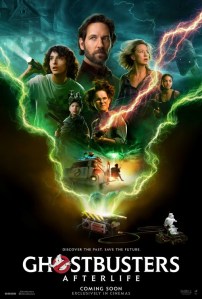
As I stated in my review for the 2016 Ghostbusters, allow me to wax nostalgic and explain my own private history with the franchise: “Growing up in the 80s, other kids had Transformers, or G.I. Joe, or He-Man, but I was a Ghostbusters kid. I fell in love with the 1984 original movie, slept below the poster for most of my childhood, and obsessively collected all of the action figures and toys, watched with glee the animated TV series, and hold the world and its characters in a special personal place.” This franchise means something to me. I think about the hours I spent playing in this world and my imagination and my own stories illustrated with marker and crayon, and it makes me extremely happy as well as reminds me how I fell in love with weird storytelling and macabre, ironic humor. I’ve been waiting for more Ghostbusters movies for my adult life. The 2016 movie was fine, I wasn’t enraged by it in the slightest, but it didn’t scratch that itch. While replicating some of the same plot beats, the 2016 movie was not reverent to its source material. Now the 2021 Ghostbusters, delayed over a year and a half from COVID, goes completely in the other direction. Ghostbusters: Afterlife is reverent to a fault, and while it has been met with mixed reviews and complaints of overdosing on slavish fan nostalgia, I found it to be a charming and fun family adventure that left me laughing, cheering, and even crying.
Egon Spangler (Harold Ramis, R.I.P.), original Ghostbuster, is dead, killed by a malevolent spirit. His estranged adult daughter, Callie (Carrie Coon), and her two teen children, Trevor (Finn Wolfhard) and Phoebe (Mackenna Grace), are shocked to learn of his death and their unexpected inheritance: a dirt farm in small-town nowheresville Oklahoma. They don’t know much about their grandfather and the kids are not exactly excited about relocating to a secluded mining town. Phoebe starts discovering weird pieces of technology hidden in the old house of her grandfather’s. A presence seems to be reaching out and trying to get the family to understand their real legacy. It appears that Gozer the Gozerian was not fully defeated on top of that New York City skyscraper in 1984, and Phoebe and her family must learn about the past in order to make sure we all have a future.
I can understand the charges of Afterlife being too nostalgic, but I don’t understand the charges of it being so enamored with its past that it poses a disservice to the movie standing on its own. This movie is intended at its very DNA to live within the shadow of the original films. The director and co-writer, Jason Reitman, is the son of the original films’ director, Ivan. It’s going to be reverent but that’s not an automatic bad thing. Whereas the 2016 reboot shrugged at past convention and went completely comedic, this edition takes the opposite approach, hugging onto the lore and past of Ghostbusters with heartfelt affection. If you’re a fan of the franchise, this adoring approach will likely be more favorable, not that the 2016 film is wrong for eschewing the established canon of the franchise and trying something new. If Afterlife had been a completely original story set in a Ghostbusters universe, I would have happily accepted that. However, just because something is outwardly nostalgic, or taps into fan service, does not mean it is destined to be an exclusive retread that only satisfies the hardcore base. I didn’t need the gratuitous Easter eggs of passing shots of a twinkie or Crunch bar, but they’re blink-and-you’ll-miss-them moments that don’t really relate to anything of consequence, so I can excuse them. Afterlife is similar to The Force Awakens in that it uses familiar plot beats to mirror events of its predecessors to ease back fans and new members to the fanclub, most especially in Act Three where Gozer’s demonic pooches are unleashed. I can understand many chaffing at this, but I feel that Afterlife does enough to justify its own creative existence even in facsimile rather than as some insular, facile, fan-stroking cash-grab.
This is, by far, the most dramatic of the Ghostbusters movies, a series that has existed in the realm of comedy. The prior movies were never spooky on adult terms, but they reached back into a primal, childlike curiosity and anxiousness over the unknown that made them creepy when they wanted to be. I don’t understand the umbrage some have expressed over Afterlife being more of a drama. First, the comedy is present throughout the movie with the characters making specific and wry observations that feel fitting for their situation. The humor is not as forced as the loping line-a-rama improv jazz riffs of Paul Feig’s 2016 film. I think this universe can sustain different kinds of stories being told, and I think that drama is perfectly acceptable as long as it’s earned, just like the comedy or horror elements. The central premise involves an estranged family coming to know the secret life of an absentee relative who abandoned them, so the more they learn about his Ghostbusting past and responsibilities, the closer they come to uncovering a clearer picture of who this man really was as well as their connections to him. Reitman and co-screenwriter Gil Kenan (Monster House) have smartly connected the investigation of the past into the development of personal relationships. We in the audience know the significance of the Ecto One and the ghost traps, but the new characters do not. We await them to understand the knowledge we already attain, but the movie doesn’t play this as characters dawdling. Each discovery unlocks new potential for the characters to shape who they choose to be, and each one gets them closer to their grandfather and reshaping their conception of the man who they wrongfully believed abandoned them for folly.
This all leads to a climax that had me genuinely in tears. I won’t exactly spoil it but Afterlife’s conclusion is less concerned with beating the Big Bad Gozer yet again and saving the universe. Reitman and company have smartly placed the real climax as an emotional catharsis; it’s more in keeping with Field of Dreams than some huge Marvel apocalyptic showdown. The ending is personal, emotional, and reaches into our universal desire for closure, for having that one last moment with a beloved who we no longer have any moments left to share, Reitman is clearly missing Ramis, a close family friend and inspiration who died in 2014, and this is his own way of processing his personal grief, offering an emotional output for the fans to share in, and allowing a grieving character/surrogate to find that needed release. It serves as a fitting conclusion and a special end note for any Ghostbusters fan who has held this franchise close to their heart for several decades, especially if shared with a paternal figure who may be gone.
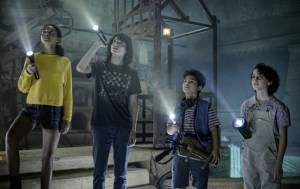
The film also successfully channels a childhood perspective of awkward and awesome. It’s hard to create a story where a group of precocious adolescents discover strange things cooking in their sleepy small town without suggesting Stephen King and Stranger Things, but this isn’t necessarily a total negative. The earlier movies were always from a more cynical adult perspective. Yes, there were characters like Ray (Dan Ackroyd) and Egon who were true believers, but they were often set up for easy laughs. The tone of the series was mostly tied to the irony of the character of Peter Venkman (Bill Murray) that looked at the supernatural with droll detachment. This is the first Ghostbusters entry where the primary perspective is from children, and there’s something hopeful and heartfelt about a younger point of view with the supernatural material. These kids are excited and eager to learn more about the somethings strange in their neighborhood. It becomes endearing to ride along with them as they get to jump into the action. I loved the concept of a sidecar gunner seat for the Ecto One and how it felt like a childhood dream coming true. But it’s more than fan service because it serves as a point of progression for Phoebe’s sense of self, of embracing her scientific interests and roots, and taking charge in the face of unknown danger. It’s a coming out of sorts. When the kids are driving through (the always empty?) town and chasing a runaway ghost, wrecking storefronts from the boom of the proton pack, it’s a blast for them and us.

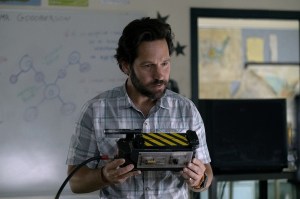
This is Reitman’s most commercial and mainstream film of his Oscar-nominated career. It’s interesting to me that this indie darling, who was on such a hot streak in the late 2000s, hit some speed bumps with the critical misfires of 2013’s Labor Day, 2014’s Men, Women, and Children, and 2018’s The Front Runner, so the next movie is a retreat to a big-budget franchise film. Reitman doesn’t necessarily have the best feel for large-scale spectacle, but he knows intimate character dramas and guides his actors well. Grace (Gifted, Haunting of Hill House) is wonderful as our plucky lead. Unfortunately for Wolfhard (It, Stranger Things), his dull character has nothing to do but pine for a local girl, scoff at his family, and then fix up the old ghostbustin’ mobile. Paul Rudd (Ant-Man) is as charming as ever as the school science teacher, especially as he nerds out over interacting with the Ghostbusters paraphernalia like an excitable fanboy living out his childhood dream. I wish Coon (The Leftovers) had more to do, but that’s my primary complaint in any movie where Carrie Coon is a supporting actress. Her chemistry with Rudd is strong and they could have done so much more together as adults trying to make sense of madness. They could have eliminated Wolfhard’s mopey older brother character entirely and given us more time with the goofy adults too. One feels like there is some secret contract where anything relating to 80s nostalgia requires the hiring of Wolfhard on hand.
Ghostbusters: Afterlife will not be the best movie of 2021. There are areas that could have been improved and streamlined and better developed. However, Ghostbusters: Afterlife will most assuredly be my favorite film experience of 2021. It’s a heart-warming continuation for fans with enough wit and whimsy to charm while owning its obvious and intended connections to the original. I may not be the most objective source on this particular matter, but I know what I like, and this movie had moments of pure happiness that just shot right through to my dopamine center. We’ll see if this movie can restart the dormant franchise, and strike more on its own, but even if this lone 2021 entry is all that we eventually get, I’m happy I got to experience this magic once again. I can’t wait to see it again with my dad.
Nate’s Grade: B+
Share this:

Double Walker (2021)
 After watching so many nominal Ohio-made indies, it’s a welcomed surprise to come across one that falls into the category of an “almost” movie, and by that I mean one with clear ambition and talent that almost fully works as a legit movie without any lingering qualifiers. Double Walker, filmed partially in Columbus and now given a national digital release, comes so tantalizingly close to being a full recommendation without hesitation. I can see what it’s going for, and with a little more careful development and clarity I think it would have achieved all of its genre-busting goals.
Sylvie Mix plays Ghost, a young woman who appears in a white nightgown in the woods. Who is she? What does she want? She is escorted by a young man into his home, disrobes, and then murders him. We come to learn that this adult woman is the ghost of a deceased child, and she’s chosen to walk the Earth as a spirit to seek vengeance. She’s only able to be seen by believers and sinners, though technically every person is a sinner unless there is an unspecified threshold to pass. The Ghost makes a friend, visits with her grieving parents, and reevaluates what it means to be human.
 The first thing to know about this movie is that it is only 65 minutes long, short of the 80 minutes typically seen as the minimum expectation for a theatrical release. It’s not that far from meeting that goal, though the airy nature of the movie also makes it feel already stretched out. The other thing you should know about the movie is that you could describe it as Promising Young Woman meets The Crow, an avenging angel targeting the bad men responsible for her death, except tonally it’s not really a hard-hitting revenge thriller. It has those elements where our Ghost is stalking her very bad men, luring them into positions of vulnerability, and striking back for justice, but the movie seems more aligned in tone with something more ponderous and poetic like 2017’s A Ghost Story (though absent ten minutes of Rooney Mara eating a pie – thus fulfilling my obligation to mention this dumbfounding cinematic moment whenever I have the opportunity, you’re welcome).
For those people looking for sundry exploitation thrills, seized by the striking central image of its poster, you may be left checking your watch, but I found this middle ground between thriller and art film to be an interesting space for Double Walker to inhabit. The screenplay drops you into its bizarre scenario and unfolds slowly, which I think worked to the film’s potent atmosphere. You don’t really know what’s going on or what the character relationships are like. At first you see a grieving family, and next we cut to a man discovering a pale woman who seems lost in the woods. She comes across ethereal and mysterious. Then there is a murder, and from there we’re trying to identify the character connections and back-story, which comes across at a gentle yet assured pace that trusts the audience to put the different pieces together to form a whole. This works well except for an ending that comes across as too confusing, muddling an already convoluted system of supernatural rules that the movie seems to be undercutting, unless the whole thing is presented as a hopeful but passing dream, and if that’s the ending then I’m going to be quite disappointed. Still, this is a movie at its core more interested with the question over being human, being remembered, and personal identity than as a blood-soaked revenge thriller.
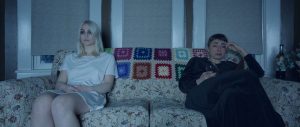 Again, it has its moments of blood, but there’s a somber tone poem quality to the movie that elevates its ambitions and also ties down its ultimate execution. Director and co-screenwriter Colin West is using the structure of an exploitation film to do more than deliver sleazy thrills. He devotes much more time to watching our Ghost character adjust to life as a spirit. The Ghost is the same spirit as the little girl we saw being eulogized in the opening. This presents some awkwardness for the character and the viewer. For the character, she’s gone from the mind of a child to being in the body of an adult, and it’s not determined whether this adult body is what she would have eventually grown into being or whether it’s just a default model. This allows for an even more curious performance as a character that feels alien in their own skin but also fascinated by that change in perspective, like Scarlet Johansson in Under the Skin. I understand the Ghost studying her adult body with curiosity. However, for the viewer, the numerous nude scenes can make you uncomfortable with the understanding that this is a little girl transported into the body of an adult and she is using her sexuality to lure men to their perverted doom. Maybe I’m just more sensitive to this connotation, and “using her sexuality” seems like an overstatement as she’s simply a woman being present with predatory men. I will say the nude scenes are tastefully portrayed where the camera doesn’t feel like it’s going to painful lengths to feature flesh. I was about to accuse the movie of possibly being skeevy with its plurality of nude scenes (does the Ghost need to run out into the woods in the buff?) when I noticed that Mix is also the producer and co-screenwriter. I assume she approved of her depiction.
Because of her newfound identity, and separation from most living beings, Double Walker presents a main character who is trying to form connections but cannot. The Ghost tries to console her grieving mother but is unable to be seen or felt by her. She does meet a kind man (Jacob Rice) at a movie theater who helps her out and who is not looking to take advantage of her. He shares his family’s home movies, which is a slightly strange thing to do so soon with a nearly mute stranger, and compares the images captured on film like ghosts, crystalized memories of people no longer with us. I have thought of this comparison myself and will morbidly watch background extras in old movies and think, “Here they are, alive once more, but likely gone for some time.” The direct connection of ghosts and memory allows the movie another layer to provide additional meaning. However, Double Walker feels more like a stretched out short film than a fleshed-out feature. With a few extra wrinkles and plot development, this could have readily afforded a larger story. Later on, the Ghost makes a rash decision and an innocent is harmed in her path to vengeance. I think that’s an interesting direction and questions the righteousness of her cause, while at the same time the script finds a personal way to make that mistake even more grueling. Again, the script really could have gone into this consequence and pushed the character into more inner turmoil, to question the cost of her mission, and to question her perception of human life. There are areas where the movie could have gone into further deliberation, but they feel short-changed. Double Walker is settled being the extra long version of the movie it presents in its first act.
 This is a very professional looking and sounding movie and probably has the best photography of any Ohio-made indie I’ve watched yet. West also served as his director of photography, and his eye for visuals is crisp and pleasing. The use of light, shadow, foreground and background, composition, movement, it was very deliberate as well as being artistic in a way that didn’t feel like it was overly self-indulgent. West achieves an artistry without making it flashy, and that’s even harder to accomplish. The score and sound design are also polished as well. When the Ghost is luring a victim, the eerie sound is reminiscent of metallic scraping to elicit unease. The costuming keeps our Ghost in white outfits, noting her innocence but also visually connecting you to the associated color of traditional spirits (an also, maybe, A Ghost Story). It makes her standout on the screen. Speaking of that, Mix (Poser) is a natural actor. She has a presence to her and ably communicates the curiosity and otherworldly nature of her character’s dilemma. She doesn’t talk much, nobody really does in this movie, but there’s a melancholy to her that feels more pained than forced. The other actors do well with their minor roles, including other Ohio actors I’ve covered before like Justin Rose (False Flag) and Ralph Scott (Constraint) playing bad men who become ghostly prey.
By the end of Double Walker, I was left feeling almost satisfied, one of those film experiences where you can see the better movie just on the peripheral, the one that was so close. As it stands, it’s an arty and contemplative movie that uses the exploitation formula as a vehicle to explore more existential questions. I wish the movie had developed the story more from the potential on display, and what potential is on display. The filmmakers here feel like they are headed for great things. West has already filmed another movie he wrote, Linoleum, starring Jim Gaffigan and Tony Shalhoub about a science teacher who always wanted to be an astronaut and builds his own rocket ship in his garage. That sounds amazing and it has big names to fill out the cast. I’m rooting for West. This guy has the talent and ability to be a rising indie director and can do Ohio proud. Double Walker could end up being the flawed but promising start to a burgeoning film career. It’s worth watching but be warned that it might not be the movie you anticipate at first glance.
Nate’s Grade: B
Share this:

The Others (2001) [Review Re-View]
 Originally released August 10, 2001:
Nicole Kidman has saved the summer of 2001 – it is now official. In what would have been deemed a pit of mediocrity and nightmares consisting of Angelina Jolie as some raider of tombs or Marky Mark making dough-eyes at attractive apes, has now been bookended by two terrific Kidman films. First Moulin Rouge ushered us in and now The Others is leading us the way out.
The Others is the tale of Grace (Kidman) trying to take care of her two ailing young children shortly after the end of World War II. Kidman is waiting for the return of her husband from the war and is all alone in a giant Gothic mansion. Her two children suffer from a rare allergy to sunlight that is so severe that if exposed long enough their bodies will develop markings and they will asphyxiate to death. To accommodate this illness the entire Kidman household is in the dark and grounded in stern rules. No door is to be unlocked without locking the last, like trapping water in compartments of a sinking ship.
 Grace discovers that she does need help and accepts three mysterious strangers that have said they were caretakers to this house once before. Before long the children start reporting odd events occurring that resemble ghosts; a door is opened when it shouldn’t be, someone is making noise where there is no one, and the children report having interaction with otherworldly spirits. Grace scoffs at any notion of the paranormal and goes back to instructing her children with the Bible and its accounts of penance and hell. The incidences begin to build further and further until The Others becomes a full-fledged ghost spectacle.
Spanish writer/director Alejandro Amenábar’s first English feature film is one of carefully textured craft and effective mood. The Others follows the points of ghost stories closely from dark hallways to the creepy and slightly dilapidated house closely. Every move, though, is so well in tune that they are highly effective in creating actual suspense and spookiness. One may have seen the same items numerous times before, however The Others utilizes them so gracefully that it achieves the full desired impact each can bring. Amenábar has created a ghost story that is genuinely creepy and at times scary.
Kidman shines as the dutiful and determined mother. Her performance is one of great dedication and she just consumes whole-heartedly the distress, confusion, and fear of this lonely mother. She is a true anchor for a film. Watching every moment of her on screen is amazing as well as invigorating. This role may lead to possible Oscar buzz come the end of the year but that is just speculation for now.
 The rest of the acting is very thorough and well handled by the few other cast members. James Bentley and Alakina Mann portray Kidman’s afflicted children and have much of the movie hinging on their performances. Not to worry, these two excel and give credence to being two of the more gifted child actors in a while. Their efforts greatly induce sympathy as well as great scares at key moments.
The story of The Others by Amenábar may seem simplistic, or even predictable, but the more I thought of the structure and the order of events the more well oiled and calculated it became. This is a delicate story told with great precision with a fantastic knockout ending that had me reworking everything. The Others is an example of why screenwriting is not yet dead in Hollywood.
The Others is a wonderfully brooding film with real scares and great performances, as well as terrific turns in writing and directing by Amenábar. Nicole Kidman has thankfully done it again, and if anyone dares doubt the power and newfound importance of her then see the rest of the summer of 2001’s offerings.
Nate’s Grade: A
——————————————————
WRITER REFLECTIONS 20 YEARS LATER

They don’t really make movies like The Others any more. It’s a patient movie with lots of old-fashioned craft and has more in common with horror movies from a different era. While I would claim that the popular Conjuring franchise, at least the James Wan entries, is a successful Old School horror throwback, its execution can also become quite extreme and ridiculous. Something like The Others dutifully takes its time and nips at your nerves, knowing precisely what key piece of information to tantalize and when to provide more, just enough to grab you deeper into its central mystery and worry over the looming danger for the characters. Twenty years later, the movie plays just as splendidly as it did initially in 2001 but now I have more reverence and appreciation for how it goes about telling its ghost story in a very methodical manner. Not every horror movie ages well. I’m sure that modern audiences could watch The Exorcist and laugh at what, in 1973, scared people to the point of vomiting in theater aisles. If you’re not executing at a high level, it could make for a tragically boring movie. It’s a good thing then that The Others is a PG-13 horror movie that plays all of its limitations to its many artistic advantages.
 Coming at the end of a mediocre summer slate of movies in 2001, The Others was a surprise hit, earning over $200 million dollars on a modest budget of $17 million. It helps when your entire movie takes place in one Gothic house and one of the biggest fears is being caught in the light. The premise involves a World War II-era estate where Grace (Nicole Kidman) is seeking help for her two children, Anne and Nicholas, who have a rare photo sensitivity allergy. Direct sunlight will cause them to break out in lesions and potentially asphyxiate (this is a real and rare condition afflicting around 1000 people on the planet). This is a brilliant turn because it means that most of the movie must take place in darkness and even the hint of light could be enough to start causing trembles. A late scare in the movie is simply the realization by Grace that all of the curtains have been removed from the house. Taken without context, that can seem laughable or ludicrous for a horror movie. With the proper context, it becomes a devastating turn. Much like A Quiet Place so brilliantly made sound the enemy, The Others makes the prospect of light the enemy. We start to associate darkness with safety, and then writer/director Alejandro Amenabar uses that environment to drive minimalist horror to great effect. The sound design of whispers, of footsteps, of something that shouldn’t be there is elevated, and the intrusion into the safe space of the vulnerable children makes us all feel a little more vulnerable. It takes the familiar setting of old Gothic horror tales about dark corridors and creaky attics and elevates it anew.
The story is simple but so excellently structured and performed. A mother and her two children are terrorized by ghosts in an old house. Three caretakers arrive to help who know more than what they let on. These characters allow Grace to have someone to question and share her emotional state of mind but they also provide dramatic irony and dread for the audience. They know what’s going on with the house and they’re hiding something, initially tombstones they will later reveal but who do they belong to? They know the house intimately but what is their actual connection to its history? Early on we already have our concerns, as the notice Grace sent out seeking help was never mailed. Halfway through, the caretakers discuss among themselves a secret they are hiding relating to the history of the house. By this point, we have already had a few ghostly encounters so our assumption is that it will relate with the otherworldly intruders. These characters are conflict stirring and keepers of secrets to be revealed in time. Amenabar has a divine instinct of when to drop a new clue, when to pick up the escalation, and when to finally lay out his plot particulars. The big twist has been hiding in plain sight from the start, from the very opening image of Grace gasping awake in her bed and coming down from her frantic distress.
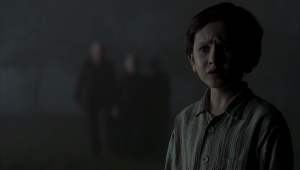 The ultimate revelation that Grace and her children are not being haunted by malevolent spirits but are in fact the real malevolent spirits is a terrific rug-puller. Much like the best twist endings, many of which occurred in contemporaries like The Sixth Sense and Fight Club, you can re-watch the movie and see all the clues you missed or how the added perspective reinterprets sequences for added depth. It’s not just a great twist but a culmination of an emotional catharsis; much like The Sixth Sense, it’s a ghost coming to terms with accepting their ghostly identity. Unlike The Sixth Sense, our ghostly protagonist refuses to go gently into the light. Grace has her children repeat to her, “This is our house,” and they refuse to budge. One of the final images, of Anne dancing in the sunlight, is both a victory and condemnation. She can at long last not worry about the rays of sunlight harming her and can live life like an average child. However, she has no life to live and can never leave the house, never grow old, and refuses to part under the rigid determination of her mother, the same woman who killed her and doomed her to purgatory. In some regard it’s a happy ending because hooray the kids can relax, and in many other more disturbing implications, it’s a guilt-ridden murderous mother refusing to let go of her children even after killing them. The movie serves as an empathy experiment to provide back-story for the kind of specters that would haunt an old Hammer horror movie. It might make you rethink other ghost stories or at least try and see things from the ghostly perspective.
I will say that this movie was also maddeningly hard to hear at times. I had to crank up my TV to unheard of volume levels to clearly make out what people were saying. Kidman is quite good but she has a habit of falling back on very breathy acting, relying on whispered intonation. I’m glad I already saw the movie but the sound levels forced me to actively pay attention. Maybe your TV will be different.
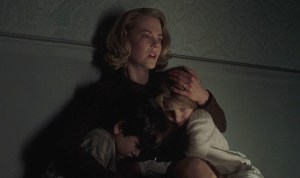 Amenabar is a Spanish filmmaker that rose to international acclaim with 1997’s Open Your Eyes, starring Penelope Cruz and later remade into Vanilla Sky, also starring Penelope Cruz (coming to a Re-Veiw in December!). The Others was a significant breakthrough, and in 2004 Amenabar won the Academy Award for Best Foreign Film for The Sea Inside, a true-life drama where Javier Bardem portrays a man fighting for the right to end his own life. He seemed like an international director on an accelerated ascent, and it all came to a crash with 2009’s costly historical intolerance drama, Agora, starring Rachel Weisz and Oscar Isaac that examined the contentious relationship between Christians and Pagans in fourth century Egypt. It cost $70 million dollars, was over two hours, and made a pittance at the U.S. box-office. From there, Amenabar has primarily worked within the Spanish cinema (2019’s While at War), Spanish TV (2021’s La Fortuna), and one schlocky horror movie about a Satanic cult (2015’s Regression, a title that is too on-the-nose perfect). Admittedly, I haven’t watched any of these follow-ups and the Spanish productions could genuinely be great. I think Amenabar’s early success helped pave the way for another Spanish filmmaker, J.A. Bayona, whose 2007’s haunted manor movie The Orphanage was an excellent Old School horror that could be sincerely scary while still patiently building its unsettling atmosphere.
Looking back at my review from 2001, I think my love of Moulin Rouge carried over into my overly enthusiastic evaluation of Kidman’s increasingly unraveled performance. She’s good but she’s not quite at Oscar levels of accomplishment here, and yet Kidman was nominated for a BAFTA for this role instead of the singing courtesan. The child actors are both good, though neither acted again in credited roles after the mid-2000s, but for me to cite them as “two of the most gifted child actors in a while” reads like hyperbole. My original analysis didn’t get too deep into the mechanics of why everything worked so well, for fear of spoiling its big surprises, and instead kept to admiring its craft, care, and execution, aspects that are still easily apparent and admirable in 2021 as well. The Others is a splendid ghost story no matter the year and will likely still prove to be many years from now.
Re-View Grade: A
Share this:

Final Fantasy: The Spirits Within (2001) [Review Re-View]
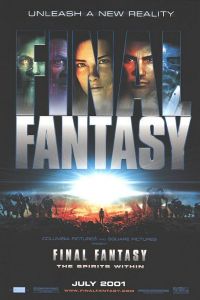 Originally released July 11, 2001:
Final Fantasy is an exciting venture in the history of animation. It’s the second video game to be turned into a feature film this summer, though exponentially better than Tomb Raider. It took the makers of Final Fantasy four years and the creation of new technology to capture what will be a benchmark in animation for years to come.
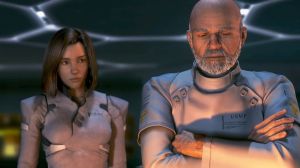
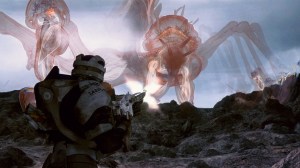
The story concerns a future Earth where aliens have crashed and invaded long ago. These “phantoms” are slightly invisible energy creatures of different size and roam around various areas with the ability to suck the life force or soul from a human being. General Hein (James Woods) is trying to convince the Earth council to allow him to fire a satellite called the Zeus Cannon to obliterate the alien menace. In opposition to Hein is Dr. Sid (Donald Sutherland) who believes with his adventurous pupil Aki Ross (Ming-Na) that the Zeus Cannon will obliterate the “spirit” of Earth. Their solution it to collect eight spirits in whatever forms they might be including plants and small animals to gather together and… do something that will send the alien life force repelling.
 Now I know Hein is supposed to be the bad guy as he’s a military man complete with the evil looking black leather cloak, but I couldn’t help but find myself agreeing with his logic. He wants to use something that has already been proven to kill the aliens whereas these two new age scientists want to collect a bunch of plants and animals and have their collective spirits ward off the interplanetary menace. I’d stand in my chair and say thank you to Hein when he dismisses the doctor’s plot. I know that Aki and Sid are the heroes and of course whatever theories they have will be proven true, but hell, I found myself agreeing more with General Hein than these two.
Complicating matters Aki is infected with a piece of the alien phantom that is slowly taking control over her body. Along in her quest to discover the final spirits is aided by a military commander Grey (Alec Baldwin) and his company of men. Turns out Grey and Aki are former sweethearts, so of course expect them to reconcile before the end credits.
The plot consists of something that could be an average episode on Star Trek: Voyager but does meander along at times. The dialogue is typical sci-fi buzzwords like “Fire in the hole” “The perimeter’s been breached” and the sort. Final Fantasy does have great excitement to it and some terrific action sequences better than most anything this summer. The ending is a disappointment as all the action hinges on two globs of energy propelled against one another. Globs or energy are not exciting. I thought we would have learned this by now.
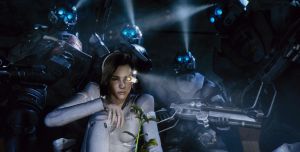 Final Fantasy is a landmark in animation. Never has so much detail been put into a movie and pulled off so amazingly well. To the nit-pickers out there the animation isn’t exactly the Holy Grail of photo-realism, but it’s closer than anything ever before. At times the characters come off as too plasticy (like Jude Law in A.I.) and tend to move too much, notwithstanding that their mouths don’t always follow the words coming out of them. Put aside these small grievances and what you have is stunning animation that makes one constantly forget it is animation. There are numerous moments of eerie precision like when a character’s nostril flares and their nose scrunches up in response, and the movement of every one of Aki’s 60,000 strands of gorgeous hair, to even a kiss between two characters. Even inanimate objects like a crumbled wall, a glass of alcohol, or a gun and its rounds are given startling accuracy. Backgrounds and scenic vistas are beautifully rendered with great care. There has been nothing ever like Final Fantasy before and it is the first movements toward an exciting area in animation.
The discussion must be raised can actors be phased out by computers now and will they ever? No, never. Actors can portray nuances that computers will never be able to master. Despite some actors best attempts to prove otherwise, we will always need actors. Now that you have the near photo realism one might be led to question what is the greatness of creating a fully realistic looking CGI tree when one can just be shot on film for millions of dollars cheaper. The all CGI world will not replace the real world of film making.
The mediocre story can be excused by the awe-inspiring animation. Despite the clunker of a plot Final Fantasy is entirely enjoyable because it always gives the viewer something to sit in wonder and take in. There’s always something to mesmerize the eyes on screen.
Nate’s Grade: B
——————————————————
WRITER REFLECTIONS 20 YEARS LATER
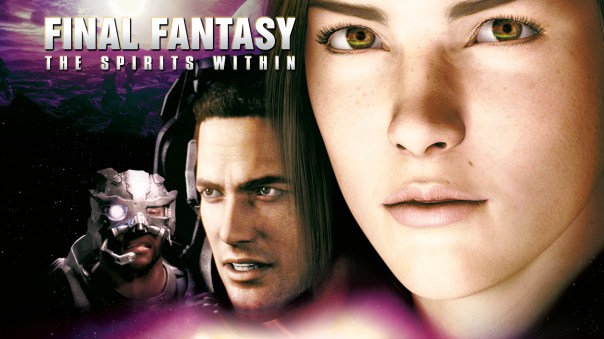
There was a time where the world wondered whether 2001’s Final Fantasy: The Spirits Within was going to put actors out of business. The Columbia/Sony animated feature, the first the studio released theatrically since the second Care Bears Movie, was a big technological leap. Square Studios, the makers behind the extremely popular video game RPG series, opened a new studio stationed in Hawaii to enter the realm of Hollywood, and they devoted four years and countless hours of processing to create photo-realistic visuals. This was still at the dawn of CGI animated features taking over the landscape and the leap was impressive. None other than Roger Ebert wrote in his review that he considered the movie a milestone along the lines of the first talkies. Before its release, there was scuttlebutt whether or not this was the wave of the future and actors would be replaced with computer versions, never mind that vocal actors were still being employed. The lead “actor,” Aki, was depicted in a swimsuit on a Maxim cover as an icky promotion. The 2002 movie S1mone satirizes this concept further, with Al Pacino fed up with temperamental industry actors so he secretly uses a photo-realistic computer program instead.
 I don’t really know why people got so worried. There are nuances that humans can convey that machines cannot, but even beyond that distinction, it’s simply a lot cheaper to hire an actor, put a costume on them, and record them than to build a model from scratch in a computer and toil for hours just to get the right look of the character raising an eyebrow. The listed budget for Spirits Within is $137 million, though has been rumored to be as high as $170 million (even more than Waterworld). For reference, the budgets of other 2001 movies include $125 million for the first Harry Potter, $93 million for Jurassic Park 3, $100 million for the Tim Burton Planet of the Apes, and $93 million for The Fellowship of the Ring. Even if you view Spirits Within as paving the way for motion-capture animated movies, the kind Robert Zemeckis spent a decade of his career slaving over, even those were eventually deemed too expensive for their returns. I think we can, at least for the time being, put this question to rest. Beyond the complexity that real actors can bring to performances, there’s the ease and cost that cannot be beat by a computer. Maybe in time this will change but for now rest easy Tom Hanks. You’re not going anywhere.
Twenty years later, the animation that once inspired awe now feels dated and surpassed. That’s the nature of the speed of technological advancement; even the company had to redesign scenes from the movie as they finished because the tech improved dramatically over the four-year development process. The visuals of the movie have become the norm for modern-day video games. There are aspects of the animation that are missing or just unable to be fully formed at the time. The faces look too slick and plastic, absent grooves and pores and imperfections that provide texture to people’s faces. The human appendages move like rubber. The hair seems to flow like it’s captured from a bouncy shampoo ad (apparently a fifth of the processing power went to animate the lead heroine’s 60,000 follicles). The character’s mouths look to be wired shut and unable to articulate their words. From a 2021 standpoint, the animation looks more like an extended video game cut scene from late 2000s. Its innovation has become commonplace.
 It should be no surprise that the script went through numerous rewrites. All the attention for Sony and Square was on the technical achievements and much less so on the story, which I guess they assumed would come together at some point. The project began with the Final Fantasy writers coming up with the initial plot, which would make sense until you realize the RPG fantasy series isn’t known for its sense of realism or cohesion. The plot of Spirits Within is not very in keeping with the more fantastical Final Fantasy series world. Screenwriter Jeff Vintar (I, Robot) was asked to read the script because the studio reportedly did not understand the project at all. His analysis was that they should completely start from scratch. The studio asked if he wanted to rewrite the script and gave him three weeks. His words were translated from English to Japanese and then back into English, which left something lost in translation a couple times over.
It’s surprising that the movie is even slightly coherent with everything it’s been through. It’s still a mess of a plot, with aliens having crashed onto Earth and made parts of the planet uninhabitable by their presence. They’re also revealed to be ghosts. So… alien ghosts. And there are eight horcruxes, I mean, um, spirits that need to be found to… something. The screenplay, under all of its laborious mutations, is really about a military team and a pair of scientists collecting MacGuffins and trying to use dreams to thwart a fascist from using a doomsday laser. It is simultaneously overly simplistic and overly complicated and quite silly. The villain, voiced by James Woods, even gets the full Nazi wardrobe but his viewpoint seems logical considering he’s pitted against scientists saying they need to break through to the “spirit of the Earth.” It’s hard to take their claims and wild speculation seriously in this more realistic world. Apparently, there was a plot development where Aki was revealed to be pregnant and her unborn child was the eighth and final spirit needed. You can still see its place in the plot. Reportedly, this storyline was cut because it was deemed “too Japanese” and I have no idea what that means.
 The real reason to ever watch The Spirits Within has come and gone. It’s now a footnote in animation history and a mild curiosity at best. I suppose you can still try and think how cool everything must have been to experience in 2001, and then your mind will wander because the nonsensical story will do little to hold your attention. It was such a financial disaster that Square Studios closed down and the company went back to focusing on video games full time with the occasional CGI direct-to-DVD movie (2004’s Advent Children and 2016’s Kingsglaive). Square Studio did make one of the CGI animated segments for 2003’s Animatrix, a concept paving the way for other ambitious animated anthologies like Netflix’s Love, Death, and Robots. The entire emphasis of this expensive production was slated onto its visual decadence, but the story was muddled, confusing, trite, and alien to the source material and the fanbase it was appealing to. I want to give my 2001 self a high-five because I’m happy that even at 19 years old in my original review I could see the evident faults of the mediocre storytelling as well as the arguments for replacing real actors with virtual facsimiles. Back in 2001, I said Final Fantasy: The Spirits Within had the benefit of always giving the viewer “something to sit in wonder and take in.” Twenty years later, that lone benefit has all but disappeared. Conversely, video games have become so much more ambitious, artistic, and emotionally engaging since 2001. So skip the movie and just play a game instead.
Re-View Grade: C
Share this:

The Curse of Lilith Ratchet (2018)
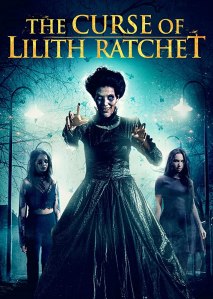 At its core, The Curse of Lilith Ratchet is a low-budget horror movie stuck between two paths of entertainment and sadly reaching neither. It could have been a genuinely good horror movie, one where its concept begets creative ingenuity, like a Lights Out or Final Destination, where the set pieces are well developed, the characters are interesting and meaningful, and there are pertinent themes linked to character to make the horror more immediate and impactful. Or it could have gone a completely different route and declared itself a schlocky horror movie, owning a trashy flair of fun while doling out exploitation elements of sex and violence to provide the prurient thrills of genre satisfaction. Unfortunately, Lilith Ratchet isn’t good enough to be legitimately good and it’s not knowingly bad enough to be particularly entertaining. It’s just another disappointing low-budget horror movie with too little thought given to its story and characters and horror sequences.
A group of friends steal a shrunken head belonging to the notorious Lilith Ratchet, a Civil War-era woman who murdered her cheating husband with an axe and was then killed herself. She would curse anyone who would say her name and attached nursery rhyme. Alice (KateLynn Newberry) and her pals offer the famous head to popular paranormal radio host, Hunter Perry (Rob Jaeger). He broadcasts from a dance club for a special Halloween show and brings in volunteers for a game of hot potato with the shrunken head (again, this is designed for an auditory medium, which doesn’t seem wise). The evil spirit roams the Earth, striking down in order those who held her shrunken head, and Alice scrambles for a potential way out.
 Here’s an example that hits both areas I cited above as it concerns that middle ground between well-developed horror and schlocky camp (mild spoilers I guess). Our first Lilith Ratchet victim, after the prologue, is abruptly run over by a car. This news does not reach his girlfriend, Lauren (Brianna Burke), until Alice delivers it in person, which seems beyond bizarre to me. Side note: cell phones do not seem to really exist in this universe. They do appear every so often, but when it comes to reaching others during times of crisis, or distributing key information, nobody picks up their phone to dial or text. They instead wait to hear face-to-face, and that consistent delay of communication breaks the tenuous reality of the movie. Writer/director Eddie Lengyel (Scarred, Mother Krampus 2) might as well have set the film during the 1980s or beforehand if modern technology matters so minimally. These characters are still talking about a popular radio show; not a viral podcast but, an alternative radio show. It doesn’t quite feel of today.
Back to my example, Lauren is informed her boyfriend has died. She retreats indoors to take a long bubble bath. She doesn’t exactly seem too broken up after her immediate response but hey we all grieve in different ways. Now, considering we’re dealing with a supernatural presence, why not take the form of the dead boyfriend? This would make the encounter more personal; the spirit could dig into Lauren’s suffering and perhaps any feelings of guilt, it would be an opportunity to open her more up as a character before her inevitable death, and it would simply be more interesting. Sadly, the film doesn’t go this route. Instead, she lounges in her bathwater and oblivious to the Big Scary Lady walking around the room. Then she’s violently pulled into the water and released, and this happens maybe four times. I don’t know about you but if I’m being yanked by a malevolent spirit in my bathtub, I’m getting out of that tub quick. Lauren leisurely tries to catch her breath. So, if we weren’t going with the more character-focused and developed death, then we should go for something memorable or truly horrifying. Instead, we get a woman being pulled under her bathwater and it happens three to four times. It’s not interesting and it becomes repetitious to the point of unintentional comedy. It’s also a bathing kill that veers away from T&A or anything too tawdry, which means it fails to register either as effective, engaging traditional horror and as schlocky, fun, campy horror. It just made me think of the obvious homage to Nightmare on Elm Street and then it didn’t offer anything more.
 Even with its low budget, that didn’t consign The Curse of Lilith Ratchet to certain doom. The problems begin early when it comes to establishing its universe and its rules in a way that feels consistent and credible. The script requires plenty of sloppy exposition and a questionable structure of this information. We should know the rules of Lilith Ratchet early to play along. It isn’t until over an hour into the movie where the characters even piece things together. There are also scenes that have no need to exist or their placement is questionable. Do we need a scene where the characters chat with a local shop owner who warns them about his open “not for sale” display? If we cut that scene, then it presents the characters as more devious when they explain how they obtained the shrunken head. When we do get the Lilith Ratchet back-story, we get it twice, first when Hunter is presented with the shrunken head and then second on his paranormal radio broadcast. Why not condense this into one experience? Why not even open with the back-story, then pull back and reveal him on his radio broadcast, and then from there have the characters on his doorstep with the shrunken head, knowing from the broadcast he was a fan? That’s a cleaner structure. There is a weird plurality of scenes of people consoling Dylan (Roger Conners), but it’s always someone informing you after-the-fact about relationships. I didn’t know he was best friends with a murder victim, and now everyone on the street wants to console him like he’s an unofficial mayor of the city. It’s storytelling that’s trying to fill you in on significance after it matters. If you’re going to be late giving us information to understand the characters’ emotional states, don’t bother.
As a horror movie, there are too many moments that are expected. It feels like we’re running through the motions to include certain moments because they’re expected. The opening prologue introduces a threat and some mild gore, but the massacre of this sorority doesn’t have any larger ramifications for the entire story. We see some of the dead girls, which means that Lilith Ratchet can indeed take the form of the dead, but they don’t act too suspiciously. It’s simply a quick visual cue for the audience not to trust these onscreen women. If she can take this form, I wish she had done it more often, especially as people started getting dispatched. The opening also has what might be the funniest moment in the entire film. One of our sorority girls sees the evil spirit, runs upstairs, hides in her bathroom without locking the door, climbs into the shower as a meager form of protection, and this is even funnier because the shower is a clear glass door. I don’t know what she was expecting hiding behind a completely transparent cover in an accessible room. Are we supposed to ridicule this person? I don’t get the sense anything is done for laughs. Likewise, there’s a preponderance of jump scares in place of cleverly designed set pieces of terror. There’s nothing tailored toward Lilith Racthet’s personal history to make it her feel more than a generic haunt.
 The real star of the movie is Lilith Ratchet and the actress behind the spirit, Crissy Kolarik (Mother Krampus 2). It’s rare for a horror movie to not just create a spooky creature but to even create an affecting silhouette, something easily identified and quickly felt. Lilith Ratchet is a great looking creation. She’s in a flowing Gothic gown, her clawed fingernails stretched at her sides, her Victorian era hairstyle and pale face. It’s a creepy image and Kolarik has a really strong sense of poise and presence as she patiently stalks the sets, enough that I was reminded of The Nun, another immediately creepy specter with a clearly identifiable silhouette. The backlit moments that highlight Lilith’s shape also have an unsettling impact. I wish that this evil spirit had a more interesting story to utilize this actress and setup. While the movie never calls for her to do anything terrible different, Kolarik excels at being the big bad boo and glaring menacingly.
Under its DVD release title, American Poltergeist: The Curse of Lilith Ratchet is a bit misleading considering she’s not a poltergeist. Or a demon. Or much of a ghost really. She’s kind of a walking idea, a version of the Bloody Mary urban legend. This lack of clarity and personal alignment is symptomatic of the movie as a whole. It’s certainly not a bad looking movie for its reported $15,000 budget. It has professional lighting that establishes a mood and solid makeup and gore effects, and even the score can have its draw. The acting is acceptable even with characters absent goals, dimension, or general points of interest. I have seen far worse movies with far bigger budgets. What I’m getting at is that The Curse of Lilith Ratchet had effective and appealing technical merits and a capable cast that could convey dismay and confusion. It had a starting foundation that could have delivered had they been given a good and interesting story. Alas, the screenplay feels too unfocused, sloppy, overcrowded, and lacking in direction and escalation and personal stakes beyond the obvious. We’re talking about stuff like an extended sequence of hot potato with a shrunken head for a radio show. If you’re not going to make smartly designed scary sequences, then perhaps try your hand at making a campy, gory, silly, knowing movie. The tongue-in-cheek version of this movie could have been a blast. The Curse of Lilith Ratchet is a middling horror movie that just comes and goes, leaving little impression other than a lingering sense that somehow it should have been better.
Nate’s Grade: C-
Share this:

Doctor Sleep (2019)
 Mike Flanagan has taken the mantle from Frank Darabont and become the best film adapter of Stephen King’s stories. Doctor Sleep is a sequel to The Shining but it’s a sequel to Kubrick’s movie version, which King notoriously hated for its alterations. We follow an adult Danny Torrance (Ewan McGregor) as he struggles with addiction in the wake of his family’s tragedy linked to the Overlook Hotel. He starts a new life for himself as a hospice worker, aiding the elderly into a peaceful demise (where he earns the titular nickname), and he takes it upon himself to mentor a young girl, Abra (Kyliegh Curran), who has the same “shining” powers that he has. Trouble is others are looking for these same gifted few, namely Rose the Hat (Rebecca Ferguson) and her gang of traveling undead mutant vampire people feeding off the “steam” or life force of the super-powered they kill. They’re after Abra and her abilities so Danny must rescue her and eventually head back to the source of all his nightmares. This is a relatively solid sequel that has enough intrigue and suspense to cover over the dull parts. It takes too long to get going and then finishes things up too quickly, especially with a climax at the reawakened Overlook that is beginning to hit a groove with nasty ghostly suspense. It felt like I was watching Stephen King’s X-Men with his assortment of super powered people banding together and tracking each other down. The gypsy-like caravan of villains are pretty disposable and lacking strong personality or menace. Ferguson (Mission: Impossible – Fallout) is fun to watch even if she doesn’t feel that threatening. The rules and limitations feel vaguely defined and refined. The nods to the original Shining are selective and bring their own degree of power, as does seeing different actors portray these famous characters in flashback. Flanagan has reverence for both King’s source material and the beloved 1980 film, and bridging the two is a source of enjoyment. The characterization overall is pretty slack and there aren’t much in the way of genuine scares. It’s creepy, it’s occasionally atmospheric, and it’s also really long and drawn out, clocking in at 151 minutes, which is even longer than Kubrick’s movie. It’s an epilogue that gets by on the emotional investment and resolution it provides for Danny while setting up a larger universe of super “shining” psychics. If you don’t care about one, there’s at least some degree of the other to prove entertaining albeit also being underdeveloped. Doctor Sleep (a wasted title) is a workable balance between two masters of horror.
Nate’s Grade: B


 nathanzoebl
You must be logged in to post a comment.