Blog Archives
Thunderbolts (2025)
 I will tell you right now, dear reader, that I’m never going to include the asterisk when I type the title of the Marvel Cinematic Universe’s (MCU) newest epic entry, Thunderbolts. The reveal one week into its theatrical release that the team was rebranded “The New Avengers” seemed at best like a peculiar marketing gimmick to try and boost ticket sales after its opening weekend. “Oh, there’s an ‘Avengers’ in this movie title? Well I’ll go see that now,” said likely nobody ever. It just felt like a marketing ploy and the presence of the asterisk in the title, meant to symbolize and facilitate that identity transition, is just a symbol of trying to be too cute by half. Just be the Thunderbolts. Accept yourself as the Thunderbolts. Isn’t that part of the lesson of the movie, finding acceptance despite your misgivings and doubts? Refreshingly, while there are the occasional action sequence and general fisticuffs, Thunderbolts proves to be a much more probing and psychological MCU entry and entertaining beyond just the escapism.
Yelena (Florence Pugh) feels adrift as a secret black ops agent doing the government’s dirty work. Her handler, Valentina Allegra de Fontaine (Julia Louis-Dreyfus), has promised to let her retire after one last job. It just so happens that job is a scheme to have all of Valentina’s black ops killers to take each other out to spare her any embarrassing details coming out while she’s under Congressional investigation. That includes John Walker (Wyatt Russell), a disgraced Captain America place-holder, and Ghost (Hannah John-Kamen), the villain of Ant-Man and the Wasp who could phase through matter, and some mysterious man named Bob (Phillip Pullman) who suffers from amnesia and seems out of place. Along the way they’ll pick up other characters, like Bucky Barnes (Sebastian Stan), who is serving as a freshman Congressman, and Alexei a.k.a the Red Guardian (David Harbour), Yelena’s adopted father who is eager to support his daughter and bridge a divide that has grown between them recently. The constantly bickering group of malcontents, antiheroes, and misanthropes band together to survive as well as figure out Bob’s importance for a person as dangerous and manipulative as Valentina.
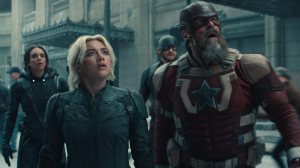 Thunderbolts is about a group of screw-ups who know they’re screw-ups, who know the world sees them as screw-ups, trying to be something more, and it doesn’t take much to see larger themes surrounding depression, loneliness, and community. There’s long been a pleasure in watching oddballs, let alone an unorthodox team of them, find solace and camaraderie they have been missing. It’s satisfying under most circumstances. It also helps when we are given the understanding of why these characters feel so alone and so useless. I’ll freely admit, in the first months of 2025 with the current government doing everything in its power to make people feel scared and alone and useless, I connected with the themes and eventual uplift of Thunderbolts perhaps at a level I might not have had the movie been released in 2023 or, say, under a President Harris. Regardless, I found this movie engaging because it focused less on the literal and metaphorical strengths of its characters and more on their weaknesses and fragility and needs. There is no giant sky beam, nor any faceless easily disposable swarm of CGI robots or aliens, nor any real world-ending apocalypse they have to thwart in that final climax. It really all comes down to combating an epidemic of loneliness, and the only way to do so is to willingly open one’s self to the possibility of pain, of disappointment, of embarrassment, or rejection, and to do so anyway because the alternative is just too grim and self-defeating an option. It forces characters with very real pain and regrets to confront that pain and to still keep trying. The scary enemy is not resolved through a punch but through a genuine hug. You can’t punch out depression. For me, that’s far more engaging and emotionally resonant for the thirty-sixth movie in the MCU than just more punching and explosions amidst a CGI-laden morass.
This is proof that Florence Pugh (Dune: Part Two, Oppenheimer) can power anything with her acting chops and charisma. Her character was a breakout scene-stealer in 2021’s Black Widow, and I’ve been glad every time since she’s popped onscreen. I find Pugh to be such a compelling actor, but she’s driven by movies that tend to put her through an emotional wringer so much I’m worried her face will permanently lock into a sob. She’s great, but it’s also just nice to watch her cut loose and have fun playing a character too. Even though Yelena has a darkness to her, and I would argue qualifies as depressed, this is still a role that allows Pugh to play with lighter elements, giving her a sardonic bounce that makes her even more appealing. This is a character worthy of headlining the team, and Pugh shines once again given an even bigger Marvel spotlight. I also want to sing the praises of Dreyfus (HBO’s Veep) and Harbour (Stranger Things) as near-perfect encapsulations of their respective characters. She’s all blistering cynicism and he’s a blustery teddy bear.
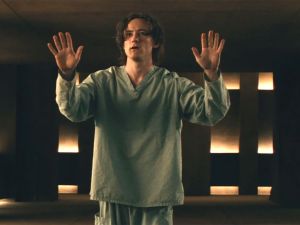 Another refreshing aspect for Thunderbolts is how it feels like a real movie. Obviously the other 35 MCU entries are movies by definition, but here is a movie that feels more authentic. It looks and sounds better in presentation. You can tell there are real locations. The cinematography is by Andrew Doz Polermo, the same man who photographed The Green Knight. The musical score is by Son Lux, the same composer responsible for the eclectic and sensational music for Everything Everywhere All at Once. The co-writers are from Netflix’s acclaimed miniseries Beef, as is the director, Jake Schreier, whose first film was the 2012 amiable indie dramedy Robot & Frank. There is a genuine effort to do something a little different from the factory setting of modern Marvel movies. It was just nice to actually take in real surroundings, real terrain, natural light, and composed by such a skillful director of photography. The technical elements are blockbuster level but also infused with a little indie sensibilities, bringing a different visual flavor to this studio tentpole. It might sound like a backhanded compliment (“Oh, a movie that is, gasp, made outside a giant green screen warehouse or LED screen”) but I am genuinely grateful. This is a Marvel movie whose Act Three chase takes more notes from Being John Malkovich and its jaunt through repressed memories than any standard superhero action climax. After so many MCU entries, you celebrate the ones that not only try something different but succeed, especially after the impulse to be more of the same is so strong.
That’s not to say that there still isn’t more that could have been done to better shape and develop Thunderbolts. Ultimately it feels like a more solid idea with some good characters and themes than a fully realized screenplay making the best use of its two hours. The movie isn’t quite the ensemble it may appear from the outside. One of the characters is removed so unceremoniously early that I question why this character was even brought back, especially since nobody would qualify this specific character as a favorite. I suppose it’s to present the appearance of elevated stakes, but it just reminds me of the 2016 Suicide Squad that introduced Adam Beach (Windtalkers) as Slipknot, the man “who could climb anything,” who just gets his head blown off so casually before their first mission even begins. However, with Thunderbolts, the movie really has a top tier of characters, primarily Yelena and John Walker and Bob. There’s another lower tier of characters that kind of come and go and provide moments, either levity or convenience, like Ghost and Red Guardian. Then there’s another lower tier of characters with even less time who pop in to scramble things or remind everyone of the exposition or stakes, like Bucky and Valentina. It doesn’t feel as fully integrated as an ensemble as the best Marvel team movies, like James Gunn’s Guardians films, so it can be a little frustrating when we’re celebrating the value of a community but not everyone is pulling their own narrative weight. I’m sure I could fall in love with Ghost as a character, but when she just poofs in and out and her whole arc is, “Hey, she came back,” that’s not going to do it. I also find the whole superhero science experiment a little late in the MCU to be introduced. We have characters talking about being in grade school when the Battle for New York, the centerpiece fight of 2012’s Avengers, took place, like Millennials today speak about where they were on 9/11, so it seems very late for the government to be trying to produce their own superheroes they can control. Weren’t they already making superheroes in the 1940s anyway with the likes of Captain America? This is old hat.
 The MCU has been in a bit of a slump since the conclusion of Endgame, though I would also maintain the “death of the MCU/superhero fatigue” storyline has been over-dramatized and beaten to death. Thunderbolts has some very appealing and refreshing elements, focusing more on its characters and their faults so that their eventual triumphs will feel even more emotionally resonant. It’s nice for the action to support the characters and their drama rather than the other way around, and especially refreshing for the climax to be one about acceptance and vulnerability rather than over-powering some physical menace. I liked the Thunderbolts characters and their combustible energy and banter and would have liked them even more if more of them felt more fully integrated into the movie and given richer arcs. Still, it’s hard to reinvent any franchise thirty-six movies deep, and Thunderbolts, or The New Avengers depending upon what Disney decides to do with its titling from here out ( a real Live, Die, Repeat situation), takes what works with quirky oddball team-ups and makes it work with refreshing artistic sensibility. It won’t be for everyone but it’s got enough going for it that, damn, these crazy kids might just make something of it.
Nate’s Grade: B+
Share this:

Dune: Part Two (2024)
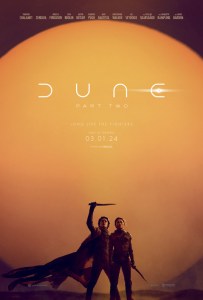 I wasn’t fully taken with the first Dune movie when it arrived in 2021. It was visually sweeping, with dense world building and careful development of characters and themes, but then it just hit the pause button without any certainty there would be a conclusion. Thankfully, director Denis Villanueuve was able to complete his vision, and what a spectacular science fiction landscape this man has fashioned, visually resplendent but also with a story that deepens and improves on all the promise and setup from 2021. The triumphant of Paul (Timothee Chalamet) becoming a hero and avenging his father from their betrayers is tempered by the tragedy of Paul, becoming the false messiah that will bring about mass genocide. The movie doesn’t hold back in its criticisms of its hero while also providing complexity that makes us root for him but uneasily dread what might become. The narrative structure is easy to follow with Paul ingratiating himself with the native culture, rising to power and influence, and organizing a resistance against the well-funded imperial overlords of Arakis. This is the kind of sumptuous, big screen spectacle with intelligence that is so rare in the Hollywood system, and Villaneuve once again shows his ability to perform artful blockbusters that put him in a rarefied class with hew others. After the first Dune, I was hopeful but a little wary. After the second Dune, I feel like all of my concerns were wiped away.
Nate’s Grade: A-
Share this:

Oppenheimer (2023)
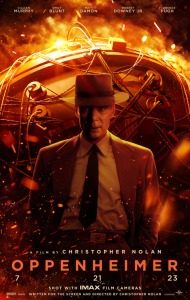 I finally did it. I watched all three hours of Christopher Nolan’s Oppenheimer, one half of the biggest movie-going event of 2023, and arguably the most smarty-pants movie to ever gross a billion dollars. It was a critical darling all year long, sailed through its awards season, and racked up seven Academy Awards including Best Picture and Best Director for Nolan, a coronation for one of Hollywood’s biggest artists whose name alone is each new project’s biggest selling point. I’ve had friends falling over themselves with rapturous praise, and I’m sure you have too, dear reader, so the danger becomes raising your expectations to a level that no movie could ever meet. As I watched all 180 lugubrious minutes of this somber contemplation of man’s hubris, I kept thinking, “All right, this is good, but is it all-time-amazing good?” I can’t fully board the Oppenheimer hype train, and while I respect the movie and its exceptional artistry, I also question some of the key creative decision-making that made this movie exactly what it is, bladder-busting length and all.
As per Nolan’s non-linear preferences, we’re bouncing back and forth between different timelines. The main story follows Robert Oppenheimer (Cillian Murphy) as an upstart theoretical physicist creating his own academic foothold and then being courted to join the Manhattan Project to beat the Nazis in the formation of a nuclear bomb. The other timeline concerns the Senate approval hearing for Lewis Strauss (Robert Downey Jr.), the former head of the Atomic Energy Commission (AEC) with a checkered history with Oppenheimer after the war. A third timeline, serving as a connecting point, involves Oppenheimer undergoing a closed-door questioning over the approval of his security clearance, which brings to light his life of choices and conundrums.
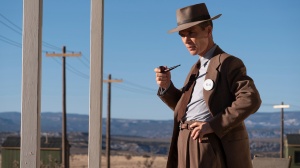 If I was going to be my most glib, I would characterize Oppenheimer in summary as, “Man creates bomb. Man is then sad.” There’s much more to it, obviously, and Nolan is at his most giddy when he’s diving into the heavy minutia of how the project came about, the many brilliant minds working in tandem, and sometimes in conflict, to usher in a new era of science and energy. Of course it also has radical implications for the world outside of academic theory. The world will never be the same because of Oppenheimer dramatically upgrading man’s self-destructive power. The accessible cautionary tale reminds me of a Patton Oswalt stand-up line: “We’re science: all about ‘coulda,’ no about ‘shoulda.’” Oh the folly of man and how it endures.
For the first two hours, the focus is the secretive Manhattan Project out in the New Mexico desert and its myriad logistical challenges, all with the urgency of being in a race with the Nazis who already have a head start (their break is Hitler’s antisemitism pushing out brilliant Jewish minds). That urgency to beat Hitler is a key motivator that allows many of the more hand-wringing members to absolve those pesky worries; Oppenheimer says their mission is to create the bomb and not to determine who or when it is used. That’s true, but it’s also convenient moral relativism, essentially saying America needs to do bad things so that the Germans don’t do worse things, a line of adversarial thinking that hasn’t gone away, only the name of the next competitor adjusts. This portion of the movie works because it adopts a similarly streamlined focus of smart people working together against a tight deadline. Looking at it as a problem needing to surmount allows for an engaging ensemble drama complete with satisfying steps toward solutions and breakthroughs. It makes you root for the all-star team and excitedly follow different elements relating to nuclear fusion and fission that you would have had no real bearing before Nolan’s intellectual epic. For those two galloping hours, the movie plays almost like a brainy heist team trying to pull together the ultimate job.
 It’s the time afterwards where Oppenheimer expands upon the lasting consequences where the movie finds its real meaning as well as loses me as a viewer. The legacy of the bomb is one that modern audiences are going to be readily familiar with 80 years after the events that precipitated their arrival, and they haven’t exactly been shelved or become the world war deterrent hoped for. As one of Oppenheimer’s physicists says, a big bomb only works until someone creates a bigger bomb, and then the arms race starts all over again fighting for incremental supremacy when it comes to whether one’s military might could destroy the world ten times or twelve times over. When Oppenheimer begins having reservations of what he has brought into this world is when his character starts becoming more dynamic, but it’s also too late. He can’t undo what he’s done, the world isn’t going back to a safer existence before nuclear arms, so his tears and fears come as short shrift. There’s a scene where Oppenheimer’s wife, Kitty (Emily Blunt), castigates him and says, “You don’t get to commit the sin and then make all of us to feel sorry for you when there are consequences.” Now this is in reference to a different personal failing of our protagonist, but the message resonates; however, I don’t know if this is Nolan’s grand takeaway. The movie in scope and ambition wants to set up this man as a tragic figure that gave birth to our modern world, but like President Truman says, it’s not about who created the bomb but who uses it. Oppenheimer is treated like a harbinger of regret, but I don’t think the story has enough to merit this examination, which is why Oppenheimer peters out after the bomb’s immediate aftermath.
It reminded me of an Oscar favorite from 2015, Adam McKay’s The Big Short, a true-ish account of real people profiting off the worldwide financial meltdown from 2008. It fools you into taking on the perspective of its main characters who present themselves as underdogs, keepers of a secret knowledge that they are trying to benefit from before an impending deadline. Likewise, the conclusion also makes you question whether you should have been rooting for this scheme all along since it was predicated on the economy crashing; these guys got their money but how many lives were irrevocably ruined to make their big score? With The Big Short, the movie-ness of its telling is part of McKay’s trickery, to ingratiate you in this clandestine financial world and to treat it like a heist or a con, and then to reckon whether you should have ever been rooting for such an adventure. Oppenheimer has a similar effect, lulling you with its admitted entertainment factor and beat-the-deadline structure. Once the mission is over, once the heroes have “won,” now the game doesn’t seem as fun or as justifiable. Except Oppenheimer could have achieved this effect with a judicious resolution rather than an entire third hour of movie shuffled throughout the other two like a mismatched deck of cards.
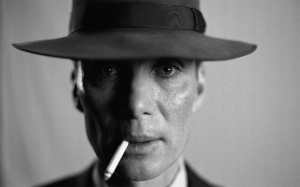 The last hour of the movie features a security clearance interrogation and a Senate confirmation hearing, neither of which have appealing stakes for an audience. After we watch the creation of a bomb, do we really care whether or not this one testy guy gets approved for a cabinet-level position or whether Oppenheimer might get his security clearance back? I understand that these stakes are meaningful for the characters, both essentially on trial for their lives and connections, but Nolan hasn’t made them as necessary for the audience. They’re really systems for exposition and re-examination, to play around with time like it was having a conversation with itself. It’s a neat effect when juggled smoothly, like when Past Oppenheimer is being interviewed by a steely and suspicious military intelligence office (Casey Affleck) while Future Oppenheimer laments to his project superior (Matt Damon) and then Even More Future Oppenheimer regrets his lack of candor to the review board. The shifty wheels-within-wheels nature of it all can be astounding when it’s all firing in alignment, but it can also feel like Nolan having a one-sided conversation with himself too often. It’s another reminder of the layers of narrative trickery and obfuscation that have become staples of a Christopher Nolan movie (I don’t think he could tell a knock-knock joke without making it at least nonlinear). The opposition to Oppenheimer is summarized by Strauss but I would argue the man didn’t need a public witch hunt to rectify what he’s done.
Lest I sound too harsh on Nolan’s latest, there are some virtuoso sequences that are spellbinding with technical artists working to their highest degree of artistry. The speech Oppenheimer gives to his Los Alamos colleagues is a horrifying lurch into a jingoistic pep rally, like he’s the big game coach trying to rally the team. The way the thundering stomps on the bleachers echo the rhythms of a locomotive in motion, driving forward at an alarming rate of acceleration, and then how Nolan drops the background sound so all we hear is Oppenheimer’s disoriented speech while the boisterous applause is muted, it’s all masterful to play with our sense of dread and remorse. This is who this man has become, and his good intentions of scientific discovery will be rendered into easily transmutable us-versus-them fear mongering politics. The ending imagery of Oppenheimer envisioning the world on fire is the exact right ending and hits with the full disquieting force of those three hours. The meeting with Harry Truman (Gary Oldman) is splendid for how undercutting it plays. Kitty’s interview at the hearing is the kind of counter-punching we’ve been waiting for and is an appreciated payoff for an otherwise underwritten character stuck in the Concerned Wife Back at Home role. The best parts are when Oppenheimer and Leslie Groves (Damon) are working in tandem to put together their team and location, as that’s when the movie feels like a well orchestrated buddy movie I didn’t know I wanted. The sterling cinematography, musical score, editing, all of the technical achievements, many of which won Oscars, are sumptuously glorious and immeasurably add to Nolan’s big screen vision.
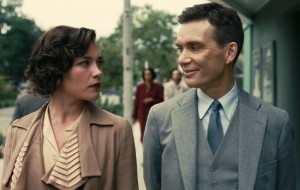 I think I may understand why the subject of sex is something Nolan has conspicuously avoided before. Much has been made about the sex scenes and nudity in Oppenheimer, which seem to be the crux of Florence Pugh’s performance as Jean Tatlock, Oppenheimer’s communist mistress through the years. The moment of Oppenheimer sitting during his hearing about his sexual tryst with an avowed communist leads to him imagining himself in the nude, exposed and vulnerable to these prying eyes and their judgment. Then Kitty imagines seeing Pugh atop her husband in his hearing seat, staring directly at her, and this sequence communicated both of their internal states well and felt justified. It’s the origin of the famous “I am become death” quote where the movie enters an unexpected level of cringe for a movie this serious. I was not prepared for this, so mild spoilers ahead if you care about such things, curious reader. We’re dropped into a sex scene between Oppenheimer and Jean where she takes a break to peruse his library shelves. She’s impressed that he has a Hindu text and pins it against her naked chest and slides atop Oppenheimer once again, requesting he read it to her rather than summarize it. “I am become death,” he utters, as he reads the Hindu Book of the Dead off Pugh’s breasts while they continue to have sex. Yikes. A big ball of yikes. If this is what’s in store, please go back to a sexless universe of men haunted by their lost women.
It’s easy to be swept away by all the ambition of Nolan’s Oppenheimer, a Great Man of History biopic that I think could have been better by being more judiciously critical of its subject. It’s a thoroughly well-acted movie where part of the fun is seeing known and lesser known name actors populate what would have been, like, Crew Member #8 roles for the sake of being part of this movie (Rami Malek as glorified clipboard-holder). Oppenheimer takes some wild swings, many of them paying off tremendously and also a few that made me scratch my head or reel back. It’s a demonstrably good movie with top-level craft, but I can’t quite shake my misgivings that enough of the movie could have been lost to history as well.
Nate’s Grade: B
Share this:

Puss in Boots: The Last Wish (2022)
 Puss in Boots: The Last Wish is, surprisingly, genuinely great. No kidding. It’s very very good. It’s been eleven years since the first Puss in Boots spinoff, and that itself was seven years after the character was introduced in 2004’s Shrek 2, and there hasn’t been a Shrek movie since the franchise-killing Forever After in 2010. I would have assumed that Dreamworks had just moved on from this character in the ensuing years, especially as How to Train Your Dragon became their big new commercial franchise, until they too ran that into the ground with 2019’s disappointing third film. I had little expectations of greatness once I heard there was a new Puss in Boots feature, even after I started hearing the growing critical consensus. Early in, only mere minutes, I realized that a Puss in Boots sequel was one of the best movies of 2022 and an exciting and heartfelt sequel that proves that with the right artists and storytellers, any old character can still have vibrant relevance. It’s a children’s movie that can appeal to everyone.
Puss (voiced by Antonio Banderas) is a famous adventurer, sword fighter, and lover of women, but he’s also nearing the end of a long journey. He’s used up his eight lives and is now on his ninth and last, and to escape Death, he sets out on a quest to retrieve a fallen star that will grant one person a wish. It just so happens there are a lot of other characters in this fairy tale kingdom that want to get there too.

It is amazing how hard this movie goes. In its opening sequence, it establishes its bold artistic style that enlivens every second onscreen, it establishes its caliber of exciting action that feels akin to wild comic books and anime, and an emphasis on mortality that provides a sense of danger and emotional foundation for what could have been just another shoddy animated sequel drafting off brand recognition. Let’s just focus on the animation style to begin with. I was expecting the same old CGI that has dominated the world of animation for twenty years, but The Last Wish has been clearly inspired by the greatness of 2018’s Into the Spider-Verse. There is a distinct 2D edge given to the designs, accenting the imagery, and during bouts of action they will lower the frame frate, making the movements much more stark and pronounced. Add to this a lovely, painterly watercolor visual style, more emphasis on the overall impression than finite definition, and the movie is a consistent feast for the eyes. There are stylized sequences that communicate fear and desperation, as well as sequences that exemplify the kinetic movement of superhuman action, smartly altering its visual appearance to better serve whatever emotion it wants you to feel. I hope more and more animation companies continue this magical hybrid of CGI and traditional animation techniques, as also seen in 2021’s The Mitchells vs. the Machines. It’s a great step forward combining the old and the new into a stylized look that allows the creators to make the best of both animation worlds.
The action is also satisfying and surprisingly well developed. The opening sequence involves Puss awakening a giant behemoth and it made me think of the exaggerated and intense action of anime series with giant kaiju monsters like in Attack on Titan. The camera will freely circle and zoom around the theater of action, heightened with exaggerated motion lines and split screens and POV swaps. I also love that the filmmakers understand the inherent qualities of what makes for good action, incorporating the personality of the characters into the situations, providing organic consequences, tailoring to the geography, and providing clear mini-goals. After introducing the secondary antagonist of greedy Jack Horner (John Mulaney), as well as Goldilocks (Florence Pugh) and the three bears (Ray Winstone, Olivia Coleman, Samson Kayo) “crimin’” gang, the movie transforms into a delightful and unexpected fantasy version of Midnight Run. There are multiple groups racing against one another to a destination, all the while jostling for supremacy and bumbling into one another’s way. It makes for a fun series of events as every group has their own reasons for gaining the wishing star. Because of this, their behavior feels in-character and the cross-purpose motivation allows for fun combinations of characters getting in the way of one another and utilizing the specifics of their fantasy character details. There was a midpoint sequence combining all sides in a colorful brawl, including unicorn horns exploding into confetti upon contact, and I just felt a surge of pure incandescent joy.

In yet another of the movie’s pleasant surprises, it has one of the best villains of the year as it deals with the concept of mortality with actual nuance. The main antagonist is literally Death itself, personified as a red-eyed, grinning bounty hunter wolf and voiced by Narcos’ Pablo Escobar, Wagner Moura with a menacing purr. This Wolf is after Puss because he’s now on his last life and the Wolf is personally offended at the idea of having multiple lives. Their first encounter makes Puss feel fear for perhaps the first time in his nine lives. In a morbidly amusing montage, we zip through Puss’ previous eight lives and specifically the moments leading to their comical end. He’s flippant with an unchecked ego, and Death seriously humbles him, being the first to ever land a blade on Puss in Boots, a detail he’d been bragging about even in song. From here, Puss is deathly afraid and the hairs of his body will stick up whenever he suspects the return of the Wolf, who certainly enjoys terrorizing his targets with an ominous whistle to announce his presence. So at a moment’s notice, the crazy and colorful hijinks can stop from hearing that familiar yet eerie whistle. In some ways, it’s a family-friendly depiction of working through trauma. The larger theme is Puss acknowledging his moral shortcomings with his many lives, the time wasted on frivolity and ego, and making the most of the time he has left. The need to re-up his lives is a fine starting motivation based upon fear, personified as trying to literally escape the scary wolf, but it’s also what makes Puss confront his own behavior and want to change as well as hold himself accountable.
The heartfelt portion of the movie is its emphasis on found families, and it was done so well that I actually teared up at points. Yes, dear reader, Puss in Boots 2 had me on the verge of tears more than once. Goldilocks is the leader of her gang of squabbling thieves, but she still views herself as an orphan first, whereas the bears view her as an equal and valued member of the family and crime gang. Even her character arc comes to a poignant conclusion where she realizes that her real family isn’t the one she comes from but the one who makes her feel that she belongs. This theme is also demonstrated with little Perrito (Harvey Guillen, What We Do in the Shadows TV series) as the adorable and undying optimist puppy sidekick. His selfless vantage point contrasts with Puss, and greatly annoys him, but Perrito also has his own goal. He wants to be a comfort dog, and one of the sweetest moments of the movie involves him helping Puss come back from a traumatic response through a shared moment. Even typing these words makes me tear up. The screenplay knows how to develop characters that can grow as friends and family and the drama is directly connected to well-honed characters and thoughtful story without being overly sentimental and maudlin, a slippery slope to doom many child-friendly animated efforts with messages.

Puss in Boots: The Last Wish does everything well. It’s funny and colorful and exciting and meaningful and heartfelt and everything you would want in any movie, let alone one featuring a talking cat swashbuckler in tiny boots. No matter your mixed feelings on Dreamworks animated movies, or their iffy sequels, or even children’s movies as a whole, I whole-heartedly recommend that everyone give this magical movie a fighting chance. The animation is gorgeous and vibrant and colorful, the vocal performances are terrific, the action is fun and well-developed, and the themes and character arcs have substance to provide meaningful layers and emotional heft. This is superior entertainment and all in about 90-some minutes. While I’d slot it below Guillermo del Toro’s masterful stop-motion Pinocchio, this is a wonderful movie and one of the best to ever bear the Dreamworks mantle. It’s the 2022 sequel you never knew that you needed but will be oh so happy that it rightly does.
Nate’s Grade: A-
Share this:

Don’t Worry Darling (2022)
 By now, you’ve likely heard all about the gossip-churning headlines from behind the scenes of Don’t Worry Darling, which eclipsed everything else about the movie and is, sadly, the most interesting thing about an otherwise flawed Stepford Wives retread. There were scandalous rumors of affairs, rumors of actors uncomfortable with affairs, rumors of actors refusing to take part in publicity for the movie, which motivated legions of online super sleuths to analyze every social media missive to the finest point to discover hidden messages and meaning. There was even a point where the Internet debated for a week whether or not Harry Styles actually and actively spit upon Chris Pine at the Venice Film Festival (both actors deny this happening). Looking back, it was a wild time, a bit silly, and far out of proportion for the actual movie we eventually get with Don’t Worry Darling.
Alice (Florence Pugh) is living the perfect 1950s life – OR SO SHE THINKS. Her husband, Jack (Harry Styles), leaves with the other men for work in the desert facility owned by Frank (Chris Pine). The wives of the community diligently tend to the household chores, gossip poolside, and have a full-cooked meal and drink in hand for their returning breadwinners. Alice begins seeing disturbing visions she cannot explain, and another wife (Kiki Layne) starts acting up, trying to warn her, and men in red suits seem to pounce whenever someone steps out of line. It’s a lush suburban community designed by Frank, meant to be the sparkling, hopeful epitome of the American Dream, but it might be a nightmare instead as Alice investigates.
 Don’t Worry Darling is a fleetingly entertaining movie with big ideas but it doesn’t know how to handle them and what to say beyond its obvious points. Immediately in the movie, you’ll know something is wrong with this idyllic community. The Stepford Wives is an obvious comparison point, so I kept waiting for the movie to pivot from this predicted influence, to go a separate route or go deeper, making its commentary meaningful for today’s world. Unfortunately, the movie never does move beyond this influence, nor does the movie go deeper than to easily castigate its men for wanting to control their women and remodel them as dutiful, cheerful, robotic housewife throwbacks to the halcyon age of 1950s Boomer nostalgia. It’s all too surface-level for a movie about superficial men wanting to unburden themselves of having to live up to the expectations of women. There’s plenty that could have been said about the pernicious forms of toxic masculinity festering around the darker corners of society and the Internet, the rise of fragile men in the alt-right and incels and trolls, and their angry, entitled, self-loathing feelings toward women projected into harassment. This movie only merely glances at its touchy subject. The commentary is too basic, leveling men want to dominate women and erase their agency and identity for their own satisfaction, the same points from The Stepford Wives in the 1970s, which was a direct response to the feminist movement challenging traditional gender roles in the home. I won’t spoil the exact means of what this false reality is for Alice and the others, but suffice to say, it leaves a lot more questions for me than answers (Has nobody reported any of these women missing? Their friends and family? Why have such potentially deadly stakes? Why would modern men fantasize about six-decade-old Boomer nostalgia?).
In short, this reality is false, and the screenplay by Katie Silberman (Booksmart) and Carey and Shane Van Dyke (The Silence) makes it known immediately, so the story is structured with our foreknowledge in place. It becomes a game of how long before Alice puts together her conclusion and which strings she chooses to pull and what blowback from the established order that demands ignorance and obedience. There just isn’t enough intrigue here. In The Truman Show, the protagonist gradually began to doubt his reality but each suspicious peculiarity added to a better sense of the larger picture, and since it wasn’t until halfway through that we saw “the other side” of Truman’s manufactured world, the audience too was learning about this facade and all the effort to keep it hidden. Don’t Worry Darling has a repeated motif of Alice seeing confusing images of her and the other wives in a stark Bubsy Burkeley-esque musical number, but why? What does this reveal about the inner workings of the reality behind the reality? It’s not even made clear what it relates to literally, so it must be a metaphor, but it’s again too obvious and heavy-handed. I understand all the women are learning and practicing dance, but to what end does this serve? I needed further rules established about this secret society so I had more of an understanding of what was at stake as Alice begins to test her boundaries and put others in danger. The conclusion is also ludicrously short-sighted, just a matter of crossing a magical line, like a kid touching base in tag, and that’s before a segment of self-awakening that made me wonder if Alice had miraculously become Neo. It’s the kind of conclusion that feels way too easy and unfulfilling, attempting a note of “what happens next?” ambiguity but really feeling more unsatisfyingly incomplete and empty.
 Even though Don’t Worry Darling is flawed, Wilde’s directing is still an asset. She’s clearly having fun playing in a much different genre than 2019’s Booksmart, and the thriller elements are achieved by the eerie contrasts that Wilde finds to highlight of this hidden prison. The sunny cinematography and retro production design are sharp, and the musical score by John Powell (How to Train Your Dragon) has an off-kilter but electric charge to it, often working in hums and stutters to better accentuate the horror atmosphere creeping into this would-be paradise. Wilde even captures the speeding cars in the desert with a certain thrilling aplomb. Much publicity was made about the portrayal of the sex scenes within Don’t Worry Darling, namely, with a woman behind the camera, that they focus on feminine pleasure, a feature often lacking in a male-dominated field built upon the sizzle of the male gaze. I’ll agree that both scenes put more focus on Alice, also our main character so perhaps there’s that, but knowing the full context of the story, it seems more than a little misguided to purposely emphasize feminine pleasure. Also, it’s hard for me to actually believe these kinds of self-involved, parochial men would prioritize giving pleasure to their partner. This detail seems in conflict with the larger thesis.
Thank goodness for Florence Pugh, a refrain every viewer repeats with every movie co-starring the Oscar-nominated actress. Pugh (Black Widow) ably carries this movie on her back. Her performance has more nuance than the character writing provides, and it’s enjoyable to see her challenge the imposition of authority and push back. It’s yet another emotionally heavy role with several scenes of sobbing and screaming, and Pugh is one of the best actors when it comes to expressing the heights of emotional distress without overdoing it into histrionics. As my wife said by the end of the movie, Pugh deserves to star in a feel-good, chippy rom-com after all the grueling emotional work she’s endured in many of her more prominent roles.
 Harry Styles (Dunkirk) doesn’t fare as well, dwarfed by his scene partner. There is one moment where he has an emotional breakdown in his car that is nicely portrayed, a mixture of pity and guilt and pure cowardice, and Styles really nails it. However, his smooth hunky husband persona works well enough, enough so that it’s hard for me to see someone like Shia LeBeouf, who Wilde originally had cast in the role, working as intended considering his more intense presence would make you doubt the man’s intentions almost immediately. I wish somebody gave Chris Pine more to do in this other than smugly smirk in the background (admittedly his “being in the background” of one scene was an uncomfortable oddity that demanded further exploration).
There are things that genuinely work with Don’t Worry Darling, moments that dazzle and excite, technical elements that elevate the material, and performances that stick, but it all comes down to a disappointing and underdeveloped script that cannot figure out what to do with its messy themes. It’s too obvious where the movie is headed given its heavy thematic similarities to The Stepford Wives, but it could have taken that familiarity and reapplied it to today’s Internet-age misogyny preying upon female autonomy, but it doesn’t. It could have also fleshed out the particulars of its fraying world-within-a-world to better feel complete and intriguing and meaningful, but it doesn’t. It could have presented a compelling hero’s journey of Alice pushing back against formidable opponents, but it doesn’t do that. It could dress down these bad men and make them account for their misdeeds, but it doesn’t really. It’s a mystery with an all-too obvious answer, with the exception of the exact circumstances behind the pretty facade, and not enough substance and commentary that pushes beyond simple social moralizing. I guess ultimately the movie is much like its own gilded reality: pretty to look at but lacking much below the surface.
Nate’s Grade: C
Share this:

Black Widow (2021)
 If you ask anyone who their least favorite Avenger is, every one of those participants will have the same exact answer: Hawkeye. If you ask that same group who is their second least favorite Avenger, chances are that a clear majority are going to next say Black Widow. The character has been part of the Marvel Cinematic Universe (MCU) since 2010 in Iron Man 2, a full decade of idling to gain her solo movie to the point it became a long-running question in the fanbase. Then they killed the character in 2019’s Avengers: Endgame and then also announced she would be getting her solo movie, and the fanbase said, “Wait, now?” Delayed a full year thanks to COVID-19, Black Widow is Marvel’s first theatrical release in almost two years and will likely benefit from some low expectations and eagerness to get back to the big screen spectacle of summer movies.
It’s not Black Widow’s fault that she’s paired with a super soldier, essentially Batman in a flying suit, a nigh indestructible god, and a giant raging id monster. There’s a significant gap between that upper tier of the super powered Avengers and the two non-powered members, Lady with Guns and Guy with Bow and Arrow. It’s hard to compete with all of that, and the glimpses we’ve been given with previous MCU movies haven’t exactly been the most nuanced or dimensional for Black Widow (remember her dubbing herself a “monster” because the state took away her ability to bear children?). We’ve had hints about past troubles and regrets, but it’s never been explored with any significance… until now.
 Taking place shortly after the events of 2016’s Civil War, Natasha Romanoff (Scarlett Johansson) is on the run from American authorities. She reunites abroad with her estranged sister, Yelena (Florence Pugh), who has recently broken free of the chemical mind control of the sinister Widows program. Yelena and Natasha were living as sisters for three years as a cover family of Russian agents, with Alexei (David Harbour) and Melina (Rachel Weisz) as their parents. They were whisked back to Russia, separated, and thrown back into the Widow program where they were trained to be elite assassins by Dreykov (Ray Winstone, barely flirting with a Russian accent). The combative sisters are being chased by S.H.I.E.L.D. agents, other killer Widows still under the chemical-induced mind control, and Dreykov’s best hunter, the ruthless Taskmaster, a masked warrior who can learn and mimic the moves from other fighters. Natasha and Yelena decide the only way to stop Dreykov is to reunite their old family once again.
I’m a little confused by the general indifference Black Widow seems to have generated from critics and fans because I thought, while with some flaws, that this is still a good movie that I would say is on the cusp of being above average for the MCU’s already high bar. Perhaps, again, this movie is benefiting from lowered expectations. I wasn’t going in with too many demands considering my personal investment with the Black Widow character was minimal prior to her sacrificial death. I wanted a fun movie that provided further insight into her character, considering this would likely be the last time we see Natasha in the MCU. I was surprised how emotionally engaged I became with her movie. While the action is fine, it was the dramatic parts that really grabbed me. This is the first MCU movie where I was looking forward to the breaks in action more than the actual action. The pre-credits flashback (to mid-90s Ohio no less) sets up this fractured family dynamic that serves as the core of the movie, the question over whether these relationships ever really mattered on a deeper level or whether each person was simply playing their assignment. It makes for intriguing drama about vulnerable characters sifting through the small measures of happiness they’ve had and the difficulty of reaching out to people that are important to you. Natasha is in a delicate yet reflective place considering her isolation. The movie is structured like a Jason Bourne-style spy caper, jumping from one locale to the next, but it’s more of a family drama about hurt people reconciling and reconnecting. On its own terms, it’s a real family movie.
 There are some major themes and some serious subjects with Black Widow and they are well handled and tied to the character journeys. The opening titles, set to a melancholy cover of Nirvana’s “Smells Like Teen Spirit,” covers human trafficking. This is a story about the systems of abuse, primarily abusive men demanding control from throngs of women, and it’s about overcoming abuse and establishing support systems. For Natasha, she made some hard choices to defect to S.H.I.E.L.D., and many others have suffered because of her decision to escape. Many women could not escape their tormentors, and the level of control only became more methodical. Yelena talks about being conscious of everything but unsure what parts of you are really your own doing, and this seems eminently relatable about victimhood. The movie is about breaking free of unhealthy relationships, coming into your own control, and finding healthy families even if they are troubled and a work in progress. That’s why the family moments resonated as much for me. Real attention was given to the supporting characters in Natasha’s orbit.
To that end, the villains exemplify the themes by design, especially Taskmaster serving as a literalization of Natasha facing off against the sins of her past, much like in 2017’s Logan where Old Logan fought young Logan. Fans of Taskmaster from the comics may well be disappointed by the adaptation because the character was very sardonic and, in here, never utters a word (there is a certain Deadpool-in-X-Men Origins: Wolverine reminiscence). More could have been done but the villain represents the consequences of abandonment. I appreciated that even until the final moment, the villain could be redeemed and meant something more than simply another masked heavy to be blown apart. Dreykov, on the other hand, is just a typically awful abuser and his lack of definition fits. He’s a general stand-in for the toxic control of men accustomed to power and the dismissal of female agency. He’s dull but more a designated symbol.
The traveling Black Widow family van is the real draw of this movie. I have been a Florence Pugh fan since her star making turn in 2017’s emotionally disquieting Lady Macbeth, and I welcome her and Yelena into the MCU with open arms. Pugh (Midsommar) is terrific and full of sarcastic wit, at one point criticizing Natasha’s familiar three-point “superhero landing.” She’s also convincing in all the action and gunplay. Even better, there are several dramatic scenes that allow the talented actress to tap into her prowess. She could make me cackle, then the next minute impress me with the finesse of her leg-swinging attack movements, and then the next make me feel something as she tearfully reflects that her cover family was the best years of her life (as the youngest, Yelena had no idea until they ran off that they were all Russian agents). Her combustible yet affectionate relationship with Johansson imbued so much more emotional investment into the Black Widow character for me. Harbour (Hellboy, Stranger Things) is inhaling any available scenery as a past-his-prime Russian super soldier still holding onto his glory days as a communist answer to Captain America (he eagerly asks Natasha if Cap ever mentions him, so hopeful it’s adorable). He’s a regular source of comedy but also has a credible paternal warmth to him as he tries to don the mantle of fatherhood like a costume that no longer fits quite as well. Unfortunately, Weisz (The Favourite) isn’t on screen as much as the other members of the family unit but I still greatly enjoyed watching her finely attuned deadpan delivery.
 From an action standpoint, Black Widow will mostly suffice but there is little to really get the blood pumping. The chases and fights are entertaining without delivering anything new. The third act involves an extended set piece with characters plummeting from the sky amid fiery debris. It’s at least visually interesting and the action high-point of the movie. Under director Cate Shortland (Lore, Berlin Syndrome), the action is easy to follow even as it escalates into big video game carnage and explosions. The lack of development in the action would be more of an issue for me if the non-action elements, the story and acting, weren’t as involving. I feel like Shortland was hired for the dramatics and performances and character moments, less so the explosions.
It took eleven years, one more thanks to COVID, but Black Widow finally has her starring vehicle and the MCU is finally back on the big screen (or your home screen via Disney Plus and thirty additional dollars). I watched the movie with my girlfriend and cheerfully noted it would be the first theatrical Marvel movie we watched during our year-plus courtship, thus a real milestone in modern geek dating (we’ll have many opportunities ahead as there are six more Marvel movies scheduled between now and summer 2022). I was surprised how much I enjoyed Black Widow once it had reassembled its family dynamic and I hope to see the extended Romanoff family members in future MCU editions. It’s a late but welcomed swan song for Natasha Romanoff and her checkered past. For the first time, I felt for her character, and part of that was the result of enjoying her family nucleus and the pathos they brought. Black Widow is a serviceable action movie with fun characters and potent dramatic interactions with heavy, well-realized themes. I’m baffled by the general critical indifference (I have a lot fewer qualms than I did with 2019’s Captain Marvel). It’s the rare big movie where the quiet moments are the high-points, and twenty-plus movies in, that’s at least something new from the juggernaut that is the MCU.
Nate’s Grade: B+
Share this:

Little Women (2019)
 By my count, this is approximately the 182nd version of Louisa May Alcott’s Civil War sisterhood. There must be something universal about the trials of the March sisters and their struggles for independence, agency, love, and happy endings on their own turns. Greta Gerwig, fresh off her Oscar nominations for Lady Bird, has given Little Women a decidedly modern spin. The story flashes back and forth between past and present, sometimes in consecutive shots, and feels full of authentic youthful energy. It’s also the first adaptation I’ve watched that has fixed the problem of Amy (Florence Pugh, affecting), widely regarded as the least liked sister. Through Gerwig’s telling, she becomes a self-determined woman, just like Jo (Saoirse Ronan), who recognizes the social trappings holding her back but chooses to do her best within this unfair system rather than rage against it. It’s like an empathetic reclamation for this often reviled character. The enjoyment of Little Women is how vibrant and different each of the March sisters is and how an audience can see degrees of one’s self in each little woman. Jo is by all accounts our lead and her struggle to be a successful writer pushes her against conventions of the era. There is an invented and very amusing bookend where Jo bickers with a blowhard male publisher (Tracy Letts) about “women’s melodrama.” It’s a meta commentary on Alcott’s book herself, especially with the helping of marriages and happy endings by story’s end. Ronan is a force of nature in the film and sweeps up everyone around her with charm. Meryl Streep is supremely amusing as an older rich aunt bemoaning the girls won’t get anywhere without marrying a wealthy man. The limited options for a working-class family are given great consideration, but it’s really a movie that seems to pulsate with the exciting feelings of being young, having the world stretch out before you, and chasing your dream, rain or shine. It’s also gorgeously shot and feels so assured from Gerwig as a solo director. There are a few detractions for this new 2019 Little Women, the biggest being how confusing it can get with its melded chronologies. If this is your first exposure to Alcott’s story, I fear you’ll get lost more than a few times trying to keep everything in order. The love story with lovesick pretty boy Laurie (Timothee Chalamet) feels tacked on even though it’s a feature of the novel. This newly structured, reinvigorated, charming remake of a literary classic feels definitely of the period and of today. It’s the first Little Women adaptation that made me realize how timeless this story really can feel in the right hands. It may be the 182nd version but it might be the best one yet.
Nate’s Grade: B+
Share this:

Midsommar (2019)
 I was not a fan of Hereditary. It had some admirable craft and a potent sense of dread, but it felt like it was being made up as it went and little came to much without exposition that was literally highlighted. I worried the same was about to transpire with writer/director Ari Aster’s newest indie horror darling with the critics, Midsommar. It has many of the same faults I found with the earlier Hereditary yet I walked away mostly pleased from his campy, weird, and disturbing follow-up. I’m still processing why I hold one over the other, so come along with me, dear reader, as I work through this conundrum.
Dani (Florence Pugh) and her boyfriend Christian (Jack Reynor) are hanging on in a relationship past its prime. Each is wondering whether to end it, and then tragedy strikes and Dani’s family is killed in one large suicide. She’s lost to her grief and Christian feels compelled to comfort her and guilty to leave. He invites her to a retreat he had been intending with his friends (Will Poulter, William Jackson Harper) to the idyllic home of a Swedish-born pal, Pelle (Vilhelm Blomgren). The group travels to the northern reaches of Sweden to attend the pagan mid-summer festival, an event that happens once every ninety years, but things are not what they appear and soon it may be too late to leave.
 From a technical perspective, Aster has some serious skills even if they don’t fully amount to much. His decision to film the majority of the film in bright sunlight provides a disarming contrast to most horror films that use darkness and our primal fear of it as the backdrop for their scary shenanigans. It produces a different landscape for the movie and the illusion of tranquility that will be shaken. The photography by Pawel Pogorzelski is often gorgeous in its framing and deliberate shot compositions. Aster’s command of technical craft and his ability with actors gives him such a great starting point with his projects. I just wish they amounted to more than the sum of their parts, and I’m not sure Midsommar is different.
It’s hard not to notice that Midsommar is decidedly less ambitious and more streamlined than Hereditary, and I think this has positives and negatives. First, it makes the film more condensed and accessible. It’s also a smart move to personalize the story through the experiences of Dani and her recovery from trauma. The plot presented is pretty predictable; you’ve seen enough other cult movies to know what should be ominous and what decisions will be regretted. I strongly suspect that Aster recognizes that his audience knows these things and that’s why the narrative isn’t built around what will happen next but more so how will Dani respond to what will happen next. There’s a deadly ritual at about the hour mark that just about everyone and their invalid grandmother will be able to see coming, though that doesn’t take away from the sick brutality of the moment and some stomach-churning prosthetics. However, even though I knew it was coming, the dread was more palpable for me because I knew it would trigger Dani, so I was lying in wait to observe her response and how it reopened her fresh emotional trauma. Midsommar is filled with these moments, where the audience may know what’s coming but not exactly how Dani will respond, and that personalization and emphasis on her perspective made the simplification work.
On the other end, Midsommar is very obvious with its very obvious influences. I’m hesitant to cite by name these influences because it gives away the game as far as where the plot is headed, but if you’ve seen the trailer then you likely already have a healthy guess. Again, it feels like Aster knows what his audience is anticipating because the homages are apparent. There’s literally a bear suit at one point and a homemade lottery system to determine participation. It’s all right there, in your face, and yet the movie doesn’t move beyond these unsubtle reference points. Midsommar ends exactly where you would expect it to end and without a more satisfying sense of resolution to tie things up. While it hinges on the choices made by Dani and her response to them, it doesn’t go into the consequences or implications of those choices, and leaves the audience hanging for more meaning never to materialize.
 Lord knows they could have carved some of that needed resolution from the overindulgent 140-minute running time. Much of Midsommar is methodically paced to build its unnerving and inquisitive atmosphere, to better immerse the audience in the peculiar rites and customs of this secluded cult. But a little goes a long way and after so many rituals it can become repetitious. There’s at least twenty minutes that could have been trimmed to makes this movie less meandering. The woman sitting behind me at my screening openly complained, during yet another ritual, “When is this going to be over?”
I was genuinely surprised to be laughing as often as I did, and that’s because Midsommar has a very intentional camp element at its disposal. The cult rituals and behaviors are meant to be creepy but also goofy as we view them from the perspective of the outsider. It’s the same perspective that informs the whole movie. We’re learning alongside the characters about what this hidden world is like, layer by layer, and there’s a sense of discovery that helps drive the film and kept my interest attained. These are pretty stupid characters because they should be turning around and running for home time and time again, and yet they stay behind. It becomes an unexpected dark comedy watching them ignore the many warning signs that are obvious to the audience. It’s dumbfounding that after everything these characters would still drink what they are served. Horror is rife with stupid characters being ignorant to obvious dangers, but this movie turns it into consistent humor. There are moments of pure weirdness that just forced me to laugh heartily, and it definitely feels like that is the intended response. How else should one respond when a nude woman interrupts sexual coitus to start singing in your face?
The characters aren’t exactly the Ugly American depictions we’ve come to expect in movies where we root for their demise in a foreign setting. Nobody matters except for Dani and Christian, and even he is more a foil for her. He’s not a bad person but he’s also not helping her. The movie is dominated by Dani and her emotional journey. There are many scenes of her breaking down and Pugh (the breakout from the underseen Lady Macbeth) is our emotional anchor. Her performance is more grounded than Toni Colette’s in Hereditary and a respite for the audience to come back to. The empathetic community of the pagan cult provides a comfort she is searching for. Pugh feels like a normal person struggling under trauma and relatable relationship woes.
 With two horror movies under his belt, Aster’s style and signatures as a filmmaker are coming more into focus. He emphasizes atmosphere and mystery at the expense of plot. His movies have creepy images and moments, and Midsommar definitely has its spooky share, but these moments can also feel rather arbitrary. Why does someone wear a bear suit and not a moose suit? It doesn’t matter because it’s just atmospheric ephemera that doesn’t tie into the plot. Why is there a “seer” with elephantitus who happens to be the byproduct of inbreeding? Because it looks weird, and never mind that that much inbreeding would take generations. The world building feels at the behest of the imagery and not the other way around. Also, you’ll know you’re watching an Ari Aster film if there’s older full-frontal nudity, an emphasis on mental illness, suicide, religious cults, and wailing women. I mean like loud, painfully prolonged caterwauling. There are even moments where the cult acts like a chorus to the cries, climaxes, and wailing of others, and it goes from being weird to being obnoxious rather quickly.
I predict Midsommar is going to be another hit with critics and self-styled horror elites and leave most general audiences bewildered and frustrated (Hereditary received a D+ rating from opening day audiences via CinemaScore). It’s hard for me to see a broad audience willingly hopping aboard Ari Aster’s wavelength, which seems engineered to be insular. It prizes creepy atmosphere at the behest of plot and structure, the pacing can be stubbornly slow and repetitious, and you’re left wondering if anything amounted to anything. At least with Midsommar I feel like stripping down the narrative and streamlining made me more empathetic with the main heroine and her reactions, but it does make for a less ambitious and more predictable film that, despite being in bright sunlight, is content to stay hidden in the shadows of its influences.
Nate’s Grade: B-
Share this:

The Commuter (2018)
 Liam Neeson has been bedeviled on an airplane. He’s been bedeviled on a train. At this point, Neeson is going to find trouble on every form of public transportation. The Commuter is the fourth collaboration between America’s favorite geriatric action star and director Jaume Collet-Serra (Unknown, Non-Stop, Run All Night). None of those movies had the success of Taken but several had some pleasures or an intriguing mystery or hook. The Commuter makes Non-Stop look like Agatha Christie in comparison.
Michael MacCauley (Neeson) is an ex-cop-turned life insurance salesman who commutes into New York City every weekday. He recognizes many familiar faces on the train, except for Joanna (Vera Farmiga), an expert on human behavior. She makes a strange offer: find a passenger by the code name of “Prynn” before the last stop and he’ll receive $100,000. The passenger, a high-value witness, will be less well off. Michael taps into his old cop instincts to deduce who might be the desired target. As each stop passes, he has less time to figure out the identity and decide whether he’ll go through with it all.
It’s impossible to ignore the fact that the plot is so bizarrely similar to 2014’s Non-Stop, with Neeson as a former cop trapped on a mode of travel, being harassed by a mysterious figure, and tasked with discovering the identity of someone on-board before it’s too late while he’s possibly being set up to take the fall. It’s almost as if the producers said, “Hey, let’s get the director of Non-Stop, the star of Non-Stop, and why don’t we just make Non-Stop but, like, on a train?” And then that man bought a new house in celebration of his genius. I look forward to the next entry in the Neeson-Stuck-on-Transportation Trilogy where he’s stalking a ferry approaching Niagara Falls and being blackmailed into finding hidden diamonds. The major problem, besides being so recycled that it could have been retiled Phoning It In: The Movie, is how nothing makes sense at all. With lower-rent genre thrillers, things don’t always have to make the best of sense. Even the best thrillers suffer from leaps of logic but are excused because of how engaged we are in the movie. With The Commuter, I was so detached from the movie that I was impatiently waiting to get off on the next stop, no matter what was waiting on the other side.
 The villainous scheme is predicated on so many people doing so many stupid decisions that are far more complicated than they have any right to be. First, this villainous organization essentially looking for a witness on the train has been tipped off from an inside source in the FBI. Except this source cannot say what that witness looks like. Also, why is the FBI allowing such an important witness travel by his or herself minus protection and among the public? I know for a fact that there’s an FBI office in New York City. The FBI members picking the witness up also don’t know what this person looks like, which again begets stupidly bad communication. The bad guys are also pretty bad if they have to resort to such efforts to suss out a witness. Can’t they find somebody to hack a phone? The bad guys steal Neeson’s phone to limit his communication. Yet, as he does in the movie, he simply asks another passenger to use their phone. What was the point of all of that? The villains also immediately inform Neeson that his family has been kidnapped, allowing little room for raising he stakes. Why don’t they wait to see who gets off and leaves with the FBI and use a sniper to take them out? Maybe it’s not about killing the person but destroying the evidence, so in that case you do random bag checks from a train worker. That’s it. Then there’s the nickname given to the target (“Prynn”). Who gave birth to this nickname and why would the witness carry the one item in public that would confirm their identity? If that’s the case, why did any of the bad guys need Neeson? He seems best served as a patsy considering he acts like a maniac, at one point pointing a gun at people and making demands, before settling back and assuring the passengers he’s trustworthy. That’s what stable people do, naturally. Why should anyone believe anything this guy says?
Here’s an example of how dumb this movie is. There are a few characters introduced in the opening act that you know will come back again because of the economy of characters and because name actors don’t take do-nothing parts in genre fare (unless you’re Chloe Sevigny in The Snowman, apparently). I’m waiting for confirmation that one of these characters is revealed to be working with our nefarious villains. A character has a very specific phrase they share with Neeson. Then, upon figuring out who the sought-after witness is on the train, he or she relates their story about bad cops and how one of them used the exact phrase. Fine, as expected, but then Neeson doesn’t respond. It triggers nothing from him even though he had only been with these people hours ago. It’s only later when this same phrase is said for the THIRD time does Neeson finally connect the dots. If a magic phrase is going to be the trigger then why have this extra step? It just makes Neeson look dumb and it doesn’t speak well to the film’s opinion of its audience.
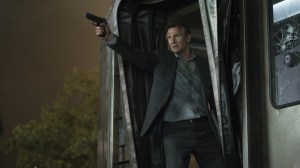 Regardless of how nonsensical a thriller comes across, as long as it delivers the suspenseful genre goods, much can be forgiven. This is another area where The Commuter doesn’t perform well. There’s one decent hand-to-hand fight filmed in a long take that has a solid visceral appeal, but other than that this movie takes turns either looking ugly or like its budget wasn’t simply enough. The location calls for very cramped and limited environment that will require some combat ingenuity that the movie just isn’t up to the task for. Watching Neeson stalk from car to car, playing his Columbo detective games with resolutely stock characters (Lady Macbeth’s breakout star Florence Pugh deserves better), is not as fun as it sounds, and it doesn’t sound that fun. Maybe if the rote characters were better drawn, if the evil scheme was a bit cleaner, if the hero was more morally compromised, then maybe the downtime wouldn’t be as boring. There’s a ridiculous derailing sequence and then there’s another twenty minutes after. Collet-Serra can only bring so much to the movie, and the script doesn’t have enough clever inventions or reversals to spur much in the director’s imagination. As a result, everything feels like a deflated by-the-numbers thriller that would be better appearing on late night TV.
Neeson (Mark Felt: The Man Who Brought Down the White House) is on action autopilot as he settles into the shed skin of one of his past Collet-Serra performances. He’s gruff, he’s cunning, he’ll take your best and keep swinging, and as he reminds the audience at three separate points, he’s sixty years old. He can still offer simple pleasures, and if your only requirement for entertainment is watching Neeson punch people and things, then The Commuter will fulfill your needs. His character is supposed to be placed in a moral question of self-interest but there’s never any doubt. If Neeson was a corrupt cop, I think that would be a better character arc and starting point for a guy questioning selling out a stranger. I’m surprised at how generally wasted every actor is, notably Farmiga (The Conjuring 2), who is literally only in two scenes on screen (her role is mostly nagging phone calls). She’s the only person given a little personality. Perhaps that’s because we already know where her allegiances lie so the sloppy screenplay doesn’t have to keep her an inscrutable suspect to interrogate.
The Commuter is a dumb ride to the generic and expected, and then it just keeps going. If you’re really hard up for entertainment and have a love affair with Neeson’s fists, I suppose assorted thrills could be found, but for everyone else this is one to miss.
Nate’s Grade: C-
Share this:

Lady Macbeth (2017)
 Cool, calculating, impassioned, and razor-sharp in its shrewd storytelling, the period film Lady Macbeth is worthy of the title of Shakespeare’s manipulative anti-heroine. Katherine (newcomer Florence Pugh) is recently married and expected to fulfill her wifely duties. Except her husband demands she stay inside and he also wants nothing to do with her physically. While away, she strikes up an affair with Sebastian (Cosmo Jarvis), one of the servants hired to tend the estate. She finally feels desired but also free, able to do what she wants and without the stifling control of patriarchal forces. There are three impediments to Katherine continuing to enjoy her status and relationship, and each one requires another step into moral turpitude. Lady Macbeth does a very effective job of developing taut tension born out of its premise. Every plot point naturally leads to another, creating more frisson and conflict. It pushes an audience into an uncomfortable position of deciding how far their sympathies will align with our put-upon protagonist. The ending is fitting but will likely produce a lot of heavy sighs and foot shuffling out of the theater. Pugh delivers a star-making performance in a role we’ve seen often in nineteenth century literature, the oppressed woman yearning for autonomy of body and mind. However, this isn’t an unrequited romance of furtive glances and pearl clutching, this is a meaty psychological thriller seeped in murder. Pugh expertly portrays a fascinating figure, a woman capable of cruelty to stake her claim in a cruel world. She commands the screen. A great reoccurring image is Katherine sitting on a settee and going through breathing exercises, as if to get into character for what she must do. Lady Macbeth (based upon the Russian novel Lady Macbeth of Mtsensk) is a tightly wound psychological thriller that brings a darker, absorbing carnality to the bonnet drama.
Nate’s Grade: B+


 nathanzoebl
You must be logged in to post a comment.