Blog Archives
Elysium (2013)
 With the subtlety of a sledgehammer to the face, Elysium is a sci-fi action movie with more on its mind than pyrotechnics. It’s writer/director Neill Blomkamp’s follow-up to 2009’s out-of-nowhere hit, District 9, a film so good that the Academy even nominated it for Best Picture that year, a rarity for a sci-fi flick. The apartheid allegory of District 9 was pretty straightforward, but Blomkamp and company found inspiring and fresh ways to tell a rousing story that worked in tandem with its social commentary. Elysium takes the haves and have nots to an admitted extreme.
IIn 2153, the rich have left Earth for a floating space station known as Elysium. It’s a luxurious paradise where technology can miraculously zap people to complete health. Secretary Delacourt (Jodie Foster) is in charge of Homeland Security and protecting Elysium from the less desirables that want to break in. Those “less desirables” would be the inhabitants of Earth. The planet has become an overcrowded, dirty, impoverished slum; Earth as third world. Max (Matt Damon) is an excon working a factory line for a sneering corporate bigwig (William Fichtner) struggling to leave behind a life of crime. His childhood friend, Frey (Alice Braga), works as a nurse at a hospital, but she’s got her own worries, namely a terminally ill daughter. After an accident at work blasts Max with radiation, he has five days to live. If he can just make it to Elysium, he can be cured. The problem is that Delacourt is shooting down spaceships trying to land on Elysium, including ones filled with women and children. To get off planet, Max needs to help in a heist, but it’s prized codes that could lower the defenses of Elysium and make anyone (ANYONE!) a citizen, thus available for medical treatment. To make sure this doesn’t happen, Delacourt relies on a rogue mercenary, Kruger (Sharlto Copley), a crazed madman who leaps at the chance to do dirty work. The hunt is on for Max.
 The socio-political commentary isn’t terribly veiled here, and maybe that’s because now Blomkamp has bigger targets than South Africa’s governmental policy. I didn’t have a problem with the fact that the inhabitants of luxury are portrayed as all white and that the denizens of the impoverished Earth are mostly non-white minorities (if minorities dominate a future Earth, when do they become majorities?). It’s clear that Blomkamp intends for Elysium to represent the United States. The poor who break through into the Promised Land, many to give their children a better life, or a life at all, only to be deported back to a slum, are clear stand-ins for contemporary immigration, notably Latin America. This is all fine by my book, though I can already hear the persecuted cries of some conservative commentators. It’s not as refined a commentary and that’s fine, not every message needs to be subtle, but I want more with my message than a simple rich vs. poor allusion. We never get to see what the people of Elysium are like, nor what most of that world is like beyond wide idyllic imagery. Fichtner’s character does a good job of symbolizing the callousness of an elite, but then he’s just one guy. The difficulty of maintaining a working wage is given the most care in the film, but much of the higher thinking takes a backseat for the third act movie heroics. The shift is acceptable but it makes a thin development of socio-economic commentary that much thinner.
When it comes to action, Blomkamp certainly knows how to stage a scene to get your pulse racing. The only problem is that there isn’t terribly much action to Elysium, or at least methodically sustained action to satisfy. You always feel like you’re getting a taste of something cooler down the road but it never fully materializes, much like the exoskeleton suit. It looks cool, it provides some progression, but it doesn’t lead to much. What does it accomplish? It allows him a port into downloading the Elyisum codes, but so could anything else. If anything, the metal exoskeleton seems like more of a hindrance, dragging Max down with extra weight and bulk. It pains me to say that the cool exoskeleton, such a prominent marketing feature, could have easily been eliminated as well. The best action in the movie is a heist in the middle that manages to juggle a team of good guys, a team of bad guys, a mark, and a deep sense of urgency for the score. It’s terrific and makes fun use of Blomkamp’s inventive future weapons. The rest of the film is mostly a series of chases, many of which are well orchestrated but only flirt with long-lasting action satisfaction.
The third act on Elysium is an entertaining and noisy conclusion, except Blomkamp sets himself up for limitation. Some spoilers to follow so tread carefully, reader. Elysium gets taken over by Kruger and his team as a defacto coup… except, well there are only three of them. We don’t even get to see them train the robot sentries on enemies or the populace of Elysium. I really don’t know how far-reaching their hastily staged coup is going. We want Kruger to be the big baddie that Max has to fight right before the cusp of the climax, but when there are only two other dudes who aren’t making great use of their fancy resources, it feels too boxed in and restrained. The action is fun while it lasts.
 Another niggling concern is the glut of side characters and their side stories that don’t feel organically integrated into the hero’s story. The flashbacks to Max as a kid could have been completely wiped out. They don’t add more information to the story and feel a tad too hokey for the movie. Sister Saintly Nun espouses wisdom and promises Max will be destined for one great thing in the future (could I settle for two “kinda good” things?). The bigger distraction is Frey and her sick kid, a.k.a. the Angelic Sick Child, you know, the type that feels so at peace with things and with no worry. This is a staple of the movies. Her only purpose in the narrative is to goad Max into making a bigger sacrifice, to think of others, not that beforehand the guy was displayed as being particularly selfish. Then there’s Max’s friend Julio (Diego Luna) who serves little purpose other than to carry him out of the occasional scene and to, of course, be sacrificed to drive the hero forward to achieve his goal. There’s a middleman who arranges for people to get identities that will be read on Elysium, if they get on there safely first. The villains are also pretty one-dimensional in their stock villainy: Kruger a sociopathic killing machine and Delacourt a tyrant. None of these characters leave much of an impression to make you want to take time away from the main story arc. Worse, many of them feel vaguely characterized and are clear plot beat generators rather than people. Maybe Max would be better off as a loner.
The acting is also all over the place. The worst offender is Foster (Carnage), who weirdly over enunciates every syllable in an affected future accent. She also seems to bob and swivel her head a lot as she talks, as if the Oscar-winning actress really had to go to the bathroom but was holding it at bay to complete her takes. Damon (Promised Land) is a reliable action hero but realistically, it’s a little curious that the main character would be, by all accounts, white. It makes much more sense for the savior of planet Earth to be like those left behind, but then I don’t really want to wade into deeper racial subtext than necessary. The real treat of the movie is Copley (The A-Team) who is having a ball playing a sword-wielding psycho killer. He provides a notable spark whenever onscreen, bringing a menace that makes you tale notice. Again, I just wish there was more to the character than his vague back-story and bunt motivations.
Despite what has seemed like a fairly negative review from the start, Elysium still a good movie but beware higher expectations forged from District 9’s unique alchemy. There are a lot of familiar plot beats here and everything from the characters, to the action, to the world building feels like it could have been pushed further. It feels like they took the freshness of District 9 and applied it to a more tired-and-true blockbuster formula. Blomkamp drops us into an intriguing world but I wanted more of just about everything. More with the characters, more with the plot, more with the socio-political commentary, more with the ins and outs of this future world and its inhabitants. The ending is also a bit jubilantly naïve given the powers of the Powers That Be. Really, a keystroke sets everything back to scratch. Again, I’m being more critical than I intend to be. Elysium is quite an entertaining movie with great visuals and Blompkamp is certainly a visionary auteur to praise, but it’s hard not to feel a smidge of disappointment with the man when you know what he’s capable of, even with a perfectly fine movie.
Nate’s Grade: B-
Share this:

Oblivion (2013)
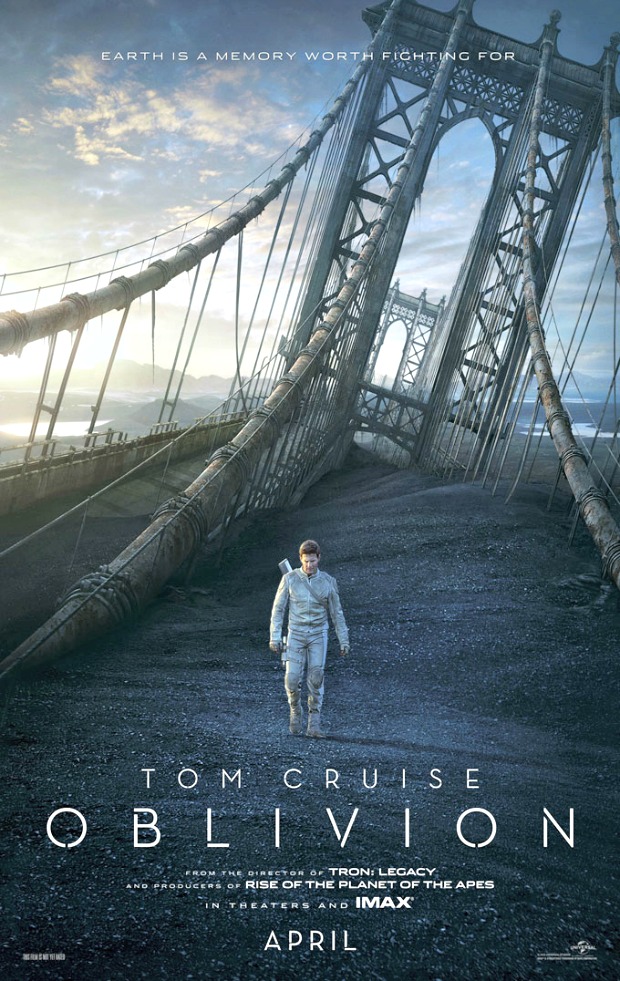 It’s late in the twenty-first century, decades after humanity battled an alien species in a war for the planet, and while humanity won the war Earth is desolate. The moon destroyed. The remaining members of humanity live on a starship around Saturn’s moon, Titan, and the oceans of Earth provide the energy resource. Jack (Tom Cruise) and Victoria (Andrea Riseborough) are the team stationed with repairing drones, the flying machines that protect the energy plants. There are still pockets of alien scavengers that need to be dealt with. Jack and Victoria make a great team, and dip into romantic companionship, until Jack meets a mysterious woman (Olga Kurylenko) professing to be his wife. Jack begins to doubt the purpose of his mission and wonder if the alien scavengers are the enemy.
If you’ve been keeping up with sci-fi cinema in the last couple decades, you’ll likely recognize more than a few elements with Oblivion. From its themes to its plot points to its revelations, there’s little here to designate as original. So the real question remains how derivative can we take? I think when the execution is nimble then it’s one of the easiest sins to remember. Especially in the realm of sci-fi cinema, it’s hard to put together a new story, let alone one set up as a Hollywood star vehicle, without borrowing from other established movies. This in itself is not an issue. Tarantino is a master borrower but he always recontextualizes his artistic influences into something new and different, and while we critics lament his less original career path of late, the man’s box-office profits have never been better in his career. I think when we feel like we’re getting a good story we don’t care when that story has been told before in other manners. Star Wars, after all, has many cultural fathers, but it was a rollicking good time with characters we cared about, so nobody seemed to mind. Likewise, Oblivion has many forbearers from Independence Day to I Am Legend to 2001 to an indie film from a few years ago I shall refrain from mentioning because even the very mention will spoil key plot points. Some will decry the film as a rip-off of superior, headier fare, but I never minded. I was having too good of a time and found the movie too satisfying to quibble.
 I won’t say the movie is smart per se but it’s far more measured than I would have expected. The advertising makes it look like Cruise fights a bunch of aliens and robots, and while there is that aspect, it’s almost an afterthought to a slow-burning mystery that patiently parcels out its revelations, even to the very end of the film. I’m trying to be cagey about certain plot points to avoid spoilers. It’s a film that has more on its mind than explosions, but when it goes into explosion mode, director Joseph Kosinski (TRON: Legacy) makes it count. The larger action elements are well staged and polished with some above average special effects. The sight of the moon dashed across the sky is definitely an evocative image. I love the overall look of the film, Kosinki’s clean, spare, bubbly Apple-esque aesthetics. The drones themselves manage to have personality even with a limited, streamlined design and some choice sound design. The man knows how to hold onto an image and when to keep pushing. The action is suitably thrilling and the drama suitably suspenseful. Actually, better than suitably. I enjoyed the details of this world. It’s probably the spiffiest post-apocalyptic landscape you’ll ever see. This is an entertaining movie that finds nice ways to satisfy, and given the particulars of its sci-fi plot, finds a way to have its cake and eat it too. As a result, Oblivion is a sci-fi flick that offers enough to engage the mind and audience demands for big effects and big thrills.
 I’ve never been a Cruise hater. I even thought the man tried his damndest to make a movie like Rock of Ages worth watching (a valiant effort but not enough). His character is pretty affable at first and we get to watch as everything he knows comes undone. It’s a role that would lead to overacting, but Cruise underplays the part, more alarmed naïf than flinty action hero. I’m not expecting Oscar-caliber performances in every role but Cruise does a fine job of anchoring the audience and selling his character’s journey. He also has good chemistry with not one but two ladies. Kurylenko (Seven Psychopaths, To the Wonder) is an actress of great beauty and questionable talent, but perhaps being paired up with a genuine star like Cruise brings out the best in her. They’re good together, though my preference was for Riseborough (W.E., Never Let Me Go), an actress who brings a tremulous vulnerability to an otherwise underwritten and confused character that’s more a plot device. Riseborough makes the character so much more than she is on the page. She’s still a relatively new actress so I look forward to her future performances. There are other familiar faces, like Morgan Freeman and an especially unsettling Melissa Leo, but it’s really a three-person acting exercise.
Oblivion is a visually alluring sci-fi thriller that also manages to have enough heart and smarts to leave a satisfying impression. The pacing is more deliberate but offers plenty rewards, doling out revelations up until the end, unpacking its mystery with finesse. The first twenty minutes or so, establishing the particulars of this world and the routine of our protagonists, is downright exceptional. The rest of the film doesn’t quite live up to that start but it continues to be an engaging and entertaining movie with some top-notch visuals. The musical score by electronic band M83 also provides a stirring counterpoint to the glossy, clean visuals (the band’s song “Outro” was also very effectively used in that lovely five-minute trailer for Cloud Atlas). You may figure things out as you watch, but you won’t mind, at least I didn’t. The more I step away the more I think back with renewed enthusiasm for the film. It’s smarter, slicker, and just a more satisfying film than we’re accustomed to with this kind of budget and from Hollywood.
Nate’s Grade: B
Share this:

Warm Bodies (2013)
 Given the explosion in zombie culture and the avalanche of zombie movies, it was only a matter of time before a studio pitched the romantic possibilities. They may be dead but they still have needs. Based on Issac Marion’s young adult novel, Warm Bodies attempts to tell a love story from a zombie’s perspective. Writer/director Jonathan Levine, so skillful with tone in the comedy/drama 50/50, tackles an even trickier balancing act, making a zombie romantic. With some visual flair, an eclectic soundtrack, and a winning onscreen pair, Warm Bodies is a sweet love story that does enough right to leave you smiling.
In the aftermath of a zombie apocalypse, R (Nicholas Hoult) is a zombie who spends most of his days shuffling through an airport. Occasionally he has a series of conversations with his pal, M (Rob Corddry), which mostly amount to grunts. R can’t remember who he was before he became a zombie, or even what life was like before it all went to pot, but there is one thing that will make him feel alive again – human brains. You see, this tasty delicacy allows zombies to relive the memories of their victims. It’s a nice release from, you know, decomposing. The zombies that have completely given up all sense of self peel off all their skin, becoming the Bonies, a wraith-like band of creatures that will feed off anything, even the dead.
 This is R’s life until his chance encounter with Julie (Teresa Palmer). He’s smitten instantly and feels something weird in his chest. His heart has started beating again. He doesn’t want to eat her, just protect her. Of course he did also happen to eat her now-ex-boyfriend (David Franco). R whisks her to safety to his home in an airplane cabin. They listen to records and he instructs her on ways to pose as a zombie. She’s cautious but grows fond of her zombie protector (zombie Stockholm syndrome?). But R is proof that the zombies can change and that humanity can be saved. There’s just the matter of convincing Julie’s father, General Grigio (John Malkovich), who had to shoot his own wife after she turned. He wants them all dead and will do whatever it takes to protect the last bastion of the living.
Levine has found what may be one of the only optimistic zombie films out there. Usually these movies end one of two ways: 1) everybody dies (the preferred option), or, 2) the heroes manage a final escape but are most likely doomed beyond all hope (just pushes the inevitable off screen and into our imaginations). Tethered to a genial but winning romance, Warm Bodies is a zombie movie with a genuine sense of hope, revival, and even finds way to carve out a happy ending that, while predictable, feels right tonally.
The twee romance has a lot more in common with indie stylings than it does, say, Twilight, which will likely be invoked by many a critic and ticket-buyer alike. It’s not so much the brooding, sullen, exasperating kind of “romance” Twilight has primed people to expect when monsters date young girls. Thanks to the helpful voiceover, we see R as a thoughtful (being generous here considering his peers) guy who, like most teens, is trying to battle his inner urges and sense of awkwardness. He may be a zombie but Levine and Hoult have found a way to make R relatable and a likeable dead chap to root for. It also helps that he and Palmer (I Am Number Four) have above average chemistry together. Sure it’s a little weird that she takes the whole guy-crushing-on-me-kinda-ate-my-old-boyfriend, but like any relationship, there are just obstacles you’re going to have to overcome together. And as my pal Eric would attest, any Franco had it coming (his big bro did lead to the end of mankind in 2011, so maybe he’s responsible for the zombie apocalypse).
I appreciated that even with a PG-13 rating the movie still has a bite to it. Premise-alone, there is plenty room for some intriguing mismatched comedy. I enjoyed the aspect that consuming human brains unlocks that person’s memories. I like that R saves brains for later snacks. I liked that he used this absurd plot device to help him get closer with Julie and makes him feel guilty. Warm Bodies finds a way around the whole bodies decomposing issue, which is important since we don’t want our Romeo to be too disgusting for the teen girls. It refrains from overt gore, relying on implied carnage and preferring a chaste smearing of blood on lips, like he just got carried away eating a cherry pie. Honestly, I didn’t miss the gore. While the concept of a completely putrid corpse, with its flesh rotting and falling from its face, finding romance would be darkly comical, I think Levine chose the savvier path, forming a romance that doesn’t overdose on irony, which it would if the dead-boy-meets-girl romance were more grotesque. That’s the reason the Bonies exist, to provide a more grotesque and more evil foe that can provide perspective on the nobility of the not-all-the-way-dead people.
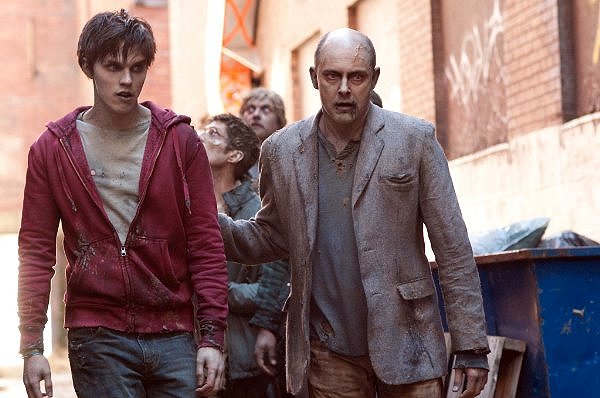 Levine works enough comic angles that the comic possibilities feel explored, although much like the horror and romance could have been pushed even further. As is, I found R’s musings wryly enjoyable, and his undead bromance with M provides some of the funniest moments in the film. Corddry (TV’s Children’s Hospital) is terrific in the movie and even finds what little room he can to add a touch of poignancy with his character. Often the humor, like the horror elements, is pretty relaxed but effective, refraining from oversized wackiness. You seriously would think that the movie would go bigger with its comedy considering everything at play.
Hoult (X-Men: First Class, TV’s Skins) does a credible job as a zombie, let alone an American zombie; it’s not all shuffling and caveman monosyllabic grunts. The actor is adept with communicating the awkwardness of his character in physicality. It’s funny how much you end of empathizing with a character that is dead. Hoult is also a pretty hunky guy, Vulcan eyebrows and all, but his amiable demeanor and young love clumsiness will win over as many guys in the audience as ladies. Palmer, also sporting an American accent, gets the blood pumping. Julie is underwritten but rises above just being a typical damsel-in-distress. It’s nice that later in the movie, when R breaks into the human camp, the roles are reversed, and Julie gets to protect him with her wits and will. Malkovich (R.E.D.) gets the worst of it just because his character is so rote.
I suppose I could lambaste the movie’s love-conquers-all logic with a dash of critical cynicism, but I feel like its low-key yet unfailingly romantic side is another of the movie’s charms. Sure, the idea that teenage love changing the world one beating heart at a time sounds like someone took the lyrics from an 80s power ballad and had it come to life (I’m reminded of the Patton Oswalt bit about the music video of an 80s hair band against the police: “He’d deflecting the bullets with the power of his rocking!”). There’s no real explanation why the zombies are getting better, though the concept of reclaiming their humanity appears to be contagious. I guess you could make some mild commentary on the healing power of human connection, but I don’t think Levine goes too far with any sort of subtext/social allegory, though there are enough slipshod Romeo and Juliet parallels. To the audience members who rankle at the unexplainable zombie cure, I would like to draw attention to the fact they are ignoring the fantastical logical puzzle of corpses coming back to life in the first place. If nobody minds why the zombie virus/crisis starts, then I don’t see why I should be sweating over what solves it.
Warm Bodies is a return to horror for Levine. Before his Sundance breakthrough The Wackness, the man got his start directing 2006’s All the Boys Love Mandy Lane. He’s made what may be the only zombie movie that I can say is “cute,” and that’s perhaps the best word for Warm Bodies. It’s a cute movie, perfectly pleasant, charming in its low-key sweetness while still managing to be clever. It’s dark but not too mordant, and sweet but not sappy. The last act doesn’t feel like it has the proper balance that the rest of the movie coasts with, but it wasn’t enough to ruin the film. At its core, it’s a cute love story, a zom-rom-com that’s much better than being relegated as “Twilight with zombies.” Yes it could have been darker, more macabre with its humor, and there are plenty of gloomy opportunities afforded by the premise of an undead boyfriend, but Levine and his actors have conceived a film that manages to be many things, chief among them enjoyable. It’s a zombie movie that might make you feel squishy but under completely different circumstances.
Nate’s Grade: B
Share this:

Dredd (2012)
 In 1995, Sylvester Stallone starred in Judge Dredd as the titular law enforcer. This big budget sci-fi action flick was goofy and violent and had the added punishment of Rob Schneider as pained comic relief. No wonder it failed at the box-office. I was never a fan of the comics so I can’t say how close the movie was to the source material, but given the presence of Rob Schneider, I’d say it’s doubtful. Because the 1995 film was such a flop, nobody wanted the rights to the character when they went back up for sale. That’s what allowed screenwriter Alex Garland (28 Days Later) to swoop in and write a new version. Dredd is an attempt to resuscitate a franchise that never got started. I don’t know if it’s particularly a good Judge Dredd movie, but as an action film it’s viciously entertaining and it has 100 percent less Rob Schneider.
Dredd (Karl Urban) works for the police of Mega City 1, one of the last metropolises of the irradiated waste land that is the United States. Crime has taken over and crime lords rule neighborhoods. Ma-Ma (Lena Headey) is the leader of a gang pushing Slo-Mo, wa drug that alters people’s perception of time. She controls the 20-story high rise that serves as her base of operations. Dredd is partnered with a young cadet, Anderson (Olivia Thirlby), who also has psychic abilities. She could be an asset to the force, but first she needs to be field tested. They get called to arrest Ma-Ma, but this prostitute-turned-ruthless drug kingpin isn’t going quietly. She locks Dredd and Anderson inside her high rise and orders her inhabitants to take care of the pesky officers.
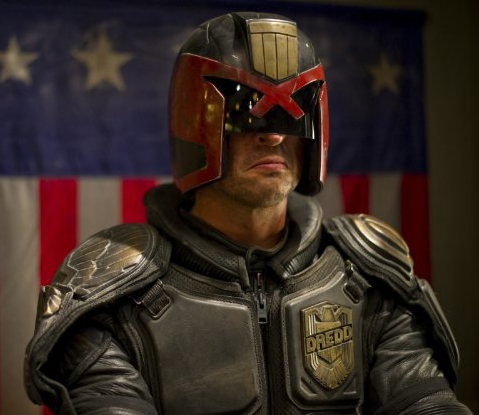 I had my doubts, but when it comes to action Dredd delivers. As soon as I saw the trailer, I screamed that this film was little more than a Hollywood remake of the awesome action film from Indonesia, The Raid: Redemption. The plots are identical but I’ll give Garland the benefit of the doubt that he came to his story independently. Whereas The Raid was heavy on martial arts and different fighting styles, and creative weapons, Dredd is really all about the firepower, the gunplay, the blowing up of material, the riddling of bodies with bullets. Each floor presents a new challenge and gives another opportunity for Dredd to outgun or outsmart the competition. This plot model feels like a video game come to life, clearing stage after stage, awaiting boss battles, collecting power ups. Readers will know I am not a strong believer that video games will ever give birth to a solid movie, but I’m ready to concede that this specific plot structure can allow for kickass action. The plot is simple but when given enough attention to geography and organic consequences, then great action can be unleashed, and Dredd is great action unleashed. It looks great, it’s constantly offering something new, raising the stakes, bringing in new elements to contend with, and it’s more than just things going boom. There are some genuinely suspenseful sequences to go along with all the stylish shoot-em-ups.
And the gunplay is vicious and bloody, reveling in the gory display of bodies being blown apart. There are slow-mo bullets traveling through people’s faces, all the better to see the care CGI artists put in to the gore. The ruthless violence is practically casual, and we’ll just see character walk by and fire into the backs of downed characters, giving us another explosion of blood to marvel upon. It would be really easy to call this movie sick, except it works so effectively as an action thriller that the bloody violence feels like a constant jolt. Our introduction to Ma-Ma is her hurling three men off the roof of her 2000-foot high penthouse, watching them splatter below. These are some nasty people and Dredd is dispelling some nasty justice, but because we recognize the antagonists are ruthless, and a real threat, then the violent dispatching of them doesn’t feel exploitative. It feels like keeping pace with some bad folk. Maybe that’s just a contrived way for me to justify that I found the brutish violence entertaining. Simple pleasures.
As far as a Judge Dredd adaptation, the Dredd elements almost feel grafted on, inconsequential. The screenplay could have been completely wiped of the Dredd elements and the plot would essentially be the same. It’s a dystopian world where crime has run amok and the police have resorted to become ruthless enforcers of justice. Dredd as a character, his worldview, his rookie partner who needs to prove herself on the mean streets, all of this is boilerplate cop movie stuff. It has some sci-fi stylizing but the content is still the same. I enjoyed the advanced gun that follows voice commands but nothing in the plot hinged on this element. Dredd just as easily could have been Cop #1 running from room to room, floor to floor, taking out the bad guys. So in this regard, Dredd works really well as a confined action movie but it’s questionable whether this is an effective adaptation of the comics.
 I’m surprised that with a drug called Slo-Mo that the movie didn’t make more use of this plot device. We get sequences of people blissfully on the Slo-Mo; the world looking like it was filmed through a glistening soap bubble. It’s neat but it can really become something cool for the sake of cool, ultimately superfluous except for a snazzy visual that plays into the 3D. It doesn’t appear like the drug lasts long either. But if time slows down for the people on this drug then wouldn’t you think somebody would want to make use of this when fighting Dredd? Perhaps it would sharpen their reaction time by making the world seem to slow to a crawl. However, if this is just an altered state of the drug, I think there could have been a fun moment where a Slo-Mo user tried to take on Dredd and we get differing points of view. For the user, time seems slow and they seem at an advantage. For Dredd, the user would just be acting slow and stupid. It’d punctuate the illusion of the reality-altering drug and explain why none of these gang members spark up before battle.
The acting in Dredd is competent and hardly dreadful (forgive me, it had to be done). Urban (Star Trek) goes the entire movie with his helmet screwed on. You never see the top half of the man’s face, presenting an interesting acting challenge (just ask Tom Hardy how tricky it is to act with your face obscured). The man has a permanent grimace carved into his face, grumbling his line throughout. Dredd is supposed to be a grim, no-nonsense enforcer. He’s not exactly got a lot of dimension to him. Urban inhabits the role well but you get the impression anybody could have been in that suit and the film would roughly be the same. Dredd also answers the question of what Olivia Thirlby (Juno) has been up to since 2008. She acquits herself well in all the bloody business and she’s not a bad blonde either. Headey has got the sneering villain act down cold thanks to TV’s Game of Thrones.
Dredd is your best bet when it comes to action movies right now. You’ll get the biggest bang for your buck. The action is brutish and routinely entertaining. It pulls no punches and the bloody melee is full of beautiful carnage. It’s a simple story with pretty simple characters and relatively shallow depth, but where Dredd succeeds is in execution. The emphasis is spent on constructing thrilling actions sequences that build, that change, that impress. It’s not for the faint of heart but for those hungry for a hard-R, bloody, sci-fi thriller, the likes of Paul Verhouven, then I suggest checking out Dredd. And you better hurry, because this version of Judge Dredd is also failing at the box office. Maybe Rob Schneider has been vindicated after all.
Nate’s Grade: B
Share this:

Total Recall (2012)
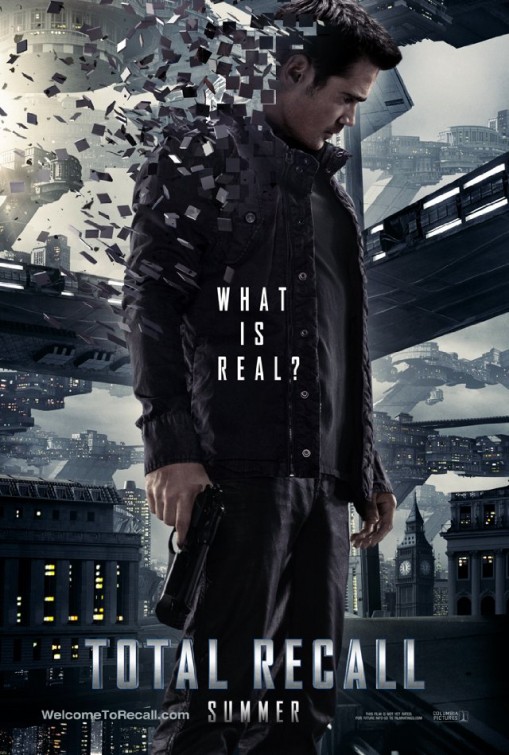 The latest needless remake takes the basic elements of 1990’s Total Recall and streamlines them into one very long chase sequence. And for those concerned males, the three-boobed lady makes a triumphant reappearance, because surely the movie wouldn’t be the same without her. Though in the age of the Internet, the sight of a three-boobed woman seems less indelible to impressionable male minds. But I digress. I was ready to dismiss this as another soulless Hollywood remake. Then I found myself enjoying Total Recall, and even the stuff that was dumb I had to also admit was cool. Take for instance a commute that goes through the center of the Earth. How exactly could such a thing be built? What does one do for maintenance? How does this not affect the Earth’s rotation? But then I forgot all about it because, in pure movie terms, it was cool. The zero gravity change-up as the transport changes directions at the core – cool. The fact that we get a zero gravity action sequence in this environment – cool. The fact that this transport system becomes a conduit for an invasion – cool. The plot mechanics are all familiar, notably the memory wipes and the super spy histories, but I didn’t care because the movie rarely lets its foot off the gas. When this thing starts, it doesn’t let up. The chase sequences are well executed amidst an imaginative array of locations, from a flying highway to a series of hanging housing developments. It’s not terribly smart but Total Recall is an entertaining escapist thriller that delivers some robust action and enough imagination in its future settings. Plus, there’s a woman with three boobs in it.
Nate’s Grade: B
Share this:

The Hunger Games (2012)
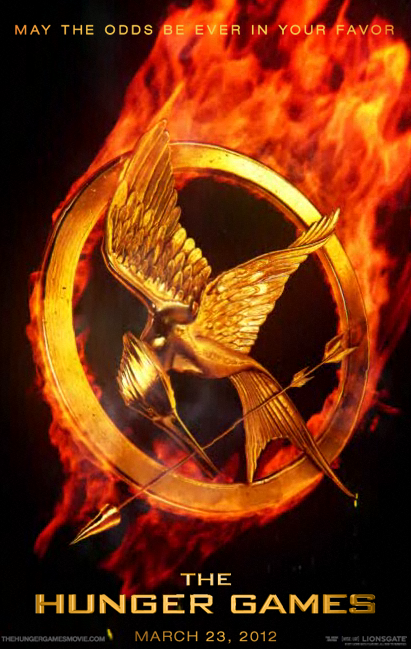 Suzanne Collins’ smash novel The Hunger Games isn’t your normal young adult reading material. Dystopian future, corrupt government, oppressive forces, twisted media culture, and then there’s the whole inhumane concept of children murdering each other for sport. The book trilogy has been consumed by millions of readers, young and old, and inspired rabid devotion reminiscent of other successful publishing franchises like Twilight and Harry Potter. Yes, Battle Royale fans, the premise is not original, but Collins’ book could just as well cite inspiration from The Most Dangerous Game, Lord of the Flies, The Running Man, or even an Outer Limits episode known as “Fun and Games.” Producers are hoping those legions of fans will turn up in droves and start a new lucrative film franchise. Reliably squishy filmmaker Gary Ross (Seabiscuit) was tapped to shepherd the book to the big screen. The Hunger Games movie doesn’t commit any major blunders to screw up a good story, which is good enough for many.
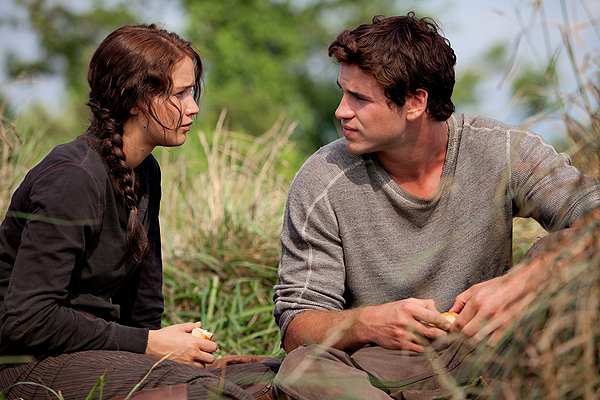
Set in a distant future, the ashes of North America have given way to the country of Panem. It is lead by a Capitol government and ringed by 12 mostly poor districts. Every year the Capitol commemorates the failed revolution of the districts by holding the nation’s favorite televised sport, the Hunger Games. Each district holds a reaping, which randomly draws one boy and one girl aged 12-18 years. These lucky chosen children, known as tributes, are then whisked to the Capitol where they will be placed into an arena and fight to the death. 24 tributes go in and there can be only one winner. In the outlying District 12, day-to-day life is a struggle, and Katniss Everdeen (Jennifer Lawrence) is burdened with providing for her family. She hunts illegally to provide food for her family and to trade for goods that they need. She’s excellent with a bow and arrow. Her hunting partner, Gale (Liam Hemsworth), suggests that they could run away. “We’d never make it more than five miles,” Katniss reasons. The two of them have too many responsibilities to ignore. Then Reaping Day comes, and Katniss’ 12-year-old younger sister Prim (Willow Shields) is chosen as the female tribute. Katniss volunteers to take her place, saving her sister, but throwing herself into a sport where the odds will not be in her favor. Joining Katniss as the male tribute is Peeta Melark (Josh Hutcherson), the baker’s son who has some history with Katniss.
 The tributes are paired with mentors, the oblivious Effie Trinket (Elizabeth Banks) and former District 12 Hunger Games winner Haymitch Abernathy (Woody Harrelson) whose helpfulness is tempered by the fact that he’s drunk often. He advises his newest tributes that they must make the audience like them to earn sponsors, people willing to pay big money to supply the tributes necessary supplies in the middle of the game. The Capitol is full of lush excess, the people donned in cartoonish and colorful garb. Katniss is dolled up and paraded around. She showcases her skills to the Game makers, who will give each tribute a rating that bettors will use. She’s interviewed by TV host Caesar Flickerman (Stanley Tucci) to make an impression. While with Caesar, Peeta reveals that there is a girl he’s had a crush on back home for the longest time – Katniss. The star-crossed lover angle hooks the audience and immediately transforms the dynamic of the games. Katniss is upset, but Haymitch rationalizes that Peeta’s confession has made them more marketable.
Then the dreaded day arrives and the 24 tributes are gathered up, injected with tracking devices, and launched into the outdoor arena to fight to the death. Katniss’ biggest threats will be the tributes from District 1, Glimmer (Leven Rambin) and Marvel (Jack Quaid), and District 2, Clove (Isabelle Fuhman) and Cato (Alexander Lutig). These tributes have trained their whole lives in the deadly arts so that they could volunteer to enter the games, hence why they are dubbed the Career tributes. And they usually win. Once the games begin, Katniss must survive the Careers, whatever surprises the Game makers have, the elements, and win over the affections of the TV audience. Let the games begin.
Firstly, fans can breathe a sigh of relief because The Hunger Games movie is a mostly successful venture brought to visual life. The legions of Collins’ fans celebrating the movie of their beloved book will mostly be satisfied. Collins’ story is still a good story no matter the medium. It establishes its alternative world and the stakes quickly and then it’s off to the killing fields. This is dark and disturbing stuff, far darker than even the darkest days of Harry Potter, and fans will be relived that the movie does not go soft. It’s not the exploitation-vehicle that Battle Royale was. This is trying to tell a story and not revel in the geysers of teenage bloodshed. This is a movie that satirizes reality TV and media culture as much class warfare. Katniss is primed and prepped to manufacture an impressionable image to TV audiences. It’s all about calculation, image control, and the manipulations of the media and audience to produce a star. Here’s a world where the 1% literally celebrate and toast the deaths of the 99%. Here’s a world that takes it cues from the Romans concerning spectator sports. I do wish the movie had channeled more of the book’s accusatory tone against the Capitol citizens, the silent majority complicit in villainy. And of course it was Collins’ point that we, too, the audience could be accountable in our own YA bloodlust.
 This is a story that grabs you and rarely lets go, centered on a heroine that is refreshingly a strong female role model for girls. Bella Swan has nothing on Katniss Everdeen. Here is a heroine that is proactive, resourceful, resolute, compassionate, and she doesn’t need a man to complete her. Sorry Ms. Swan, but Katniss has a lot more important things on her mind than getting a boyfriend. She’s got to provide for her impoverished family and shoulder plenty of responsibility, and that’s before she’s plucked into a death sport. In short, Bella Swan sucks. Katniss Everdeen rules 4-ever.
Since the book was written in first person, we were inside Katniss’ head the whole time. There are disadvantages of leaving that POV, namely that Katniss’ survival skills and cunning can be brushed over. She’s not just fighting the other tributes, she’s trying to think how best to play certain moments, how to appeal to the viewers at home. During the games, the movie jumps back and forth between the action and what I’d like to call Mission Control from Hell, the game makers HQ. This is a smart move that provides a greater antagonistic sense with the book’s unseen game makers. The exposition, mostly handled by Tucci as color commentary throughout the games, is presented in a way that doesn’t feel clunky. I also enjoyed the two sit-downs we get with President Snow (Donald Sutherland), the autocratic ruler of the Capitol, who sees early on the danger of Katniss. He explains that the games are meant to give hope to the poor citizens. “Hope is the only thing more powerful than fear. A little hope is good. A lot of hope is not,” he explains while pruning flowers. It’s nice to have a villain who understands the calculations needed for a proper oppression. It’s also nice to see Sutherland sink his teeth into a role that will only get more enjoyably evil as the films progress. I felt that the tracker jacker sequence, the interviews with Caesar, and the time in the caves were the best-adapted sequences.
Lawrence (X-Men: First Class) is a star, pure and simple. She was the perfect choice to play Katniss Everdeen. The Oscar-nominated young actress brings great steely determination and grit to the Girl on Fire. Katniss isn’t supposed to be a teenage warrior (that would be the Careers), even though she is thrust into that role. She doesn’t celebrate killing. This is not fun for her. Lawrence can play an array of emotions silently, deftly, like her hoarse, wild panic at Prim being chosen, her shell-shocked disorientation at going into the games, her quiet fury at her irresponsible mother and others like the game makers, her budding warmth for Peeta while he rubs a salve over her facial cut. Pages of description can be consolidated in just one pensive, conflicted expression on Lawrence’s lovely face. Lawrence is the heart of the movie and a tremendous presence to ground our sympathy and emotions.
Katniss is a dangerous competitor but she’s also vulnerable. She’s emotionally guarded and thrust into a situation where she has to “pretend” to be in love. Now the romance angle, and the self-awareness on Katniss’ part to give a good show, was a far bigger storyline in the book. In the book, she begins by playing a part and by the end doesn’t know if her feelings are false or genuine. It’s strange that in the movie their this-is-love kiss, meant to make the audience swoon on Katniss’ part, is followed up with nothing but hugs. Maybe the filmmakers thought a romantic angle was in poor taste given the kill-or-be-killed scenario, except that the romance angle is what keeps Katniss and Peeta alive. Want to know the best way to irk a Hunger Games fan? Start comparing the complicated romantic triangle of Peeta and Gale to dismissive terms like Team Jacob and Team Edward.
 The supporting cast performs ably, some better than others. Hutcherson (The Kids Are All Right) is given the most material to work with. He’s a nice kid, strong, but worried about his humanity, and the filmmakers never portray him as anything close to a badass or a helpless baby. Hutcherson shines in the moments where he comes clean with his emotions, like admitting that he has no chance of winning (his mom thinks so too). Peeta’s much easier at charm than bravado, and Hutcherson is a charming guy. I think Banks (Zack and Miri Make a Porno) actually gives the best performance, short of our lead heroine, as the maniacally bent Effie Trinket. Half the performance is the garish outfits, wigs, and makeup, but Banks nails the affluent insensitivity and ignorance of her character. Her forced enthusiasm is good for a few laughs. Harrelson (Zombieland) gives hints about the demons behind his character, a man who has to watch a pair of children under his tutelage die every year as his “prize” for winning. He’s a colorful character in a movie filled with colorful characters, but his sauced sarcasm can sting. Tucci (Easy A) hams it up with great pleasure as the smarmy, inauthentic, over-the-top TV host, Caesar Flickerman. They dolled up actor Toby Jones (Tinker, Tailor, Soldier, Spy) in a bouffant wig and sit him beside Caesar for commentary, but, and I literally counted, he has three lines where he speaks onscreen. Still, I love his oily voice as the games’ announcer.
The movie distills just about everything from the book, plot-wise, so the fans will be sure to see just about every plot event that they’ve developed a mental checklist for. However, this narrative approach, an attempt to satiate the fans that bristle when the movies of their favorite books deviate too much from the source material, blunts the impact of the material. I was astounded at how overwhelmingly rushed and hurried the movie is, spending little time on those variety of plot events, rarely allowing the movie enough room to breathe. With this brisk and brusque pacing, it stops the movie’s vitality. The context and history of important items and people feel clipped, becoming just set decoration. Ross has not done an adequate job of making his movie universe feel richly realized. The significance of the mockingjay, a symbol of perseverance under the oppression of the Capitol, is left unexplained. It just becomes a dinky pin that makes Katniss think about home. The ghoulish mutts have been turned into just a bunch of vicious dogs that eerily resemble the dog demons from Ghostbusters (actually, I’m relieved the mutts were toned down). The contrasts between the impoverished outer districts and the lavish Capitol denizens are nicely showcased thanks to luxurious and weird art direction and costume design; these people took fashion advice from Marie Antoinette and maybe their political outlooks as well (“Let them eat cake… or death”). There are also some passing moments of dark satire as far as the Capitol’s overall stance with the games, and their blasé attitude about the value of human life, though the movie could have and should have pushed harder with its class warfare.
The Hunger Games reminded me of the first two Harry Potter films where the producers crammed in all the plot points they felt fans wanted to see rather than just, you know, adapting it into a good movie. If they wanted to keep everything from the book, plot wise, then they should have followed their convictions and produced a three-hour movie. Imagine The Godfather being cut down to two hours and twenty minutes. Imagine rushing through all that drama. Now I’m not in any way comparing The Hunger Games to The Godfather in terms of quality, but movies need sufficient time to establish their worlds and develop characters. They need time to breathe. The fact that a 142-minute long movie doesn’t have time to breathe is plain inexcusable.
 The characterization, beyond Katniss and Peeta, is extremely limited, and so when he deaths do occur the impact is minimal; only one tribute’s death is given time for mourning, and even this character’s death is limited due to superficial characterization and about two minutes of screen time. I’m not saying that every one of these 24 tributes needs a detailed back-story, but they’ve got to have some personality to them and the movie has to devote some time to develop that; good writing can tell a lot with little. Otherwise they just become somewhat recognizable faces and not characters. Cinna (Lenny Kravitz), Katniss’ stylist for the pre-game publicity in the Capitol, is reduced to being a bland companion. Let me single out the villains, our group of Career tributes. The movies have a long tradition of villains who aren’t given much characterization but are given personality. I need my bad guys to be given an opportunity to make an impression, and no, weapon distinction is not enough. With The Hunger Games, the bad guys just become a series of sneering faces, and these kids (Ludig, Rambin, Quaid, Fuhman) have got some good sneer faces. True, the movie’s entire twisted premise lays enough overwrought tragedy to the entire setup, turning children into killers, and President Snow is the ultimate villain, but the movie should be agonizing, terrifying, devastating, upsetting, and not merely inferential and rushed. I want to feel the deaths. Instead, the movie can’t even be bothered to briefly show the faces of the dead kids during the game’s daily death montage. There are all sorts of kids who were hired to be tributes from districts and I question if they ever got a second onscreen.
I also feel that Ross is, at times, completely wrong for this material. The man behind Pleasantville and Seabiscuit is not the first name you’d think of to tackle a dystopian sci-fi survival thriller built upon the premise of dead children. I almost wish they had hired Paul Verhoeven (Robocop, Starship Troopers), an artist well versed in sci-fi spectacle and subversion. Ross’ misguided visual approach, borrowing a page from the Bourne franchise, can make it hard to enjoy the film. During the opening segment in District 12, as well as the games themselves, Ross will attempt to up the visceral ante with his bobbing handheld camera. Now I’m not one of the people who loudly decry the use of “shaky cam” during action sequences, but before the second minute was over, I turned to my friend and said, “I already hate the shaky cam.” There’s a difference between handheld camerawork, which has some jostle to it, and a deliberately inauthentic docu-drama approach that makes exaggerated and distracting camera bobbling. There are long segments of this movie that is nothing but shaky close-ups cut together. There’s a climactic battle atop a metal structure that is completely incomprehensible to follow. It’s all just a blur of flashes save for two wide shots to thankfully attempt to orient the viewer. When an audience can’t follow the action, it not only kills tension but it also kills investment. The docu-drama visual approach is completely wrong for this movie. When was the last time you saw a dystopian sci-fi movie that had a docu-drama aesthetic? Try never.
 Likewise, to achieve the all-important PG-13 rating, Ross sanitizes the blood sport, utilizing lots of implied violence. The jangly aesthetic works for the duration of the race to the Cornucopia to start the games, as tributes turn a fight over supplies into a bloodbath, communicating the chaotic frenzy. I’m not clamoring for explicit carnage to get its message across, but just seeing children as far-off lifeless heaps is a disservice to the power of the story. Also, I don’t feel like Ross properly takes full advantage of the visual medium. Instead of being told, twice, about mines that will explode if any tribute steps off their platform before the conclusion of the countdown, let’s see it. Since half of these kids are about to become faceless corpses anyway, why can’t one of them lose their balance, fall out of the ring, and blow up? And then we cut to a nearby tribute dusted with pieces of dirt and blood, trying to keep their cool and failing. It would have kicked up the tension and shown the immediate danger that awaits. I don’t want the one-minute countdown to cut around the globe, seeing the different districts watching TV. I want that entire minute spent in the arena, hearing every second counted down, seeing every face of the tributes sick with anxiety and unease, gritting themselves for combat. I want to feel the same sense of doom that they do, not cut around the globe and then have the audio drop out. That’s a sorry way to start the games, even with a PG-13 mandate.
There are heavy expectations for The Hunger Games on all fronts, from studio execs to the millions of eager fans. I consider myself one of their legion. I voraciously read through the trilogy, getting hooked early, and have even helped teach the book as part of an American Literature curriculum. It’s a thrill to watch reluctant readers get excited about the book. The Hunger Games succeeds mostly as the pilot to an exciting film franchise. But having seen the Hunger Games movie twice in 14 hours, and being a huge fan of the book, here are my chief criticisms: the movie is far too rushed, speeding over so many plot points and characters, never getting time to breathe; nascent characterization for supporting characters; the context of so many things is missing; shaky cam overuse to the point of incomprehensible action sequences; dodgy CGI; not taking full advantage of visual medium; intensity a bit muted; and finally, a forgettable score. But, hey, good movie. It just frustrates me because it could have been a great movie, a searing, powerful, provocative, thrilling movie. Good movie will be good enough, especially when it makes more money opening weekend than the citizens of District 12 will ever see in their lifetimes. When you got a fan base as large as this series, the odds will usually be in your favor.
Nate’s Grade: B
Share this:

In Time (2011)
 Andrew Niccol is a filmmaker that has earned my respect and my hard-earned money. After The Truman Show, Gattaca, and Lord of War, this guy has me hooked. I forgive him 2002’s S1mone, which had some good ideas in need of a better plot. Lo and behold, his latest film, the sci-fi thriller In Time, falls victim to the same issue. Niccol’s premise is more intriguing than the people onscreen.
In the near future, science has solved the age-old question or mortality, for a price. Every human has an internal clock somehow embedded in his or her arm. It kicks in at age 25 and then people have one year remaining. Time is the only currency that matters. People work jobs to add minutes to their time. When it comes to a cup of coffee or a bus fare, you pay in minutes off your time (a hooker says, “I’ll give you ten minutes for an hour”). The rich are well stocked in time but the poor must fight every day just to keep alive. Sam (Justine Timberlake) works in a factory just to make ends meet. His mother (Olivia Wilde, we should al be so lucky) gives her son an extra 30 minutes for his lunch; humans can “pass” time from one to another through touch. This will come back to bite her. One day Sam meets a tall dark stranger who’s lived for over 100 years and is tired of it all. He donates all his time to Sam. This is a no-no in the future. The timekeepers are a police force, lead by Raymond Leon (Cillian Murphy), that polices time allowances. They’re paid to basically make sure that time remains the property of the upper class. Sam hobnobs with the elites, including Philippe Weiss (Vincent Kartheiser), a man who owns thousands of years. When the (Van Damme-less) time cops come looking for Sam, he makes a run for it, taking Sylvia (Amanda Seyfried) as his hostage. The two eventually fall for one another as they dash across the country stealing time.
 In Time has all sorts of ideas running through its system. What it doesn’t have it much of a plot to go with its heady sci-fi setup. Will is a fugitive but he never really formulates any sort of tangible plan. There’s no higher plot or goal here other than “sticking it to the man” but what exactly does that mean in this context? I understand he’s upset about losing a loved one, but his plan for vengeance or justice or whatever you want to call it lacks needed clarity. It feels like he and his cohort are just making it up as they go along. The film is at its worst when it descends into a populist, sci-fi Bonnie and Clyde, where Sam and Sylvia storm these time banks and redistribute the minutes, becoming heroes to the day-to-day drudgers. The ease that these two people have at knocking over bank after bank, armed only with a handgun, seems hard to swallow. The banks aren’t going to have tougher security especially after word gets out? Niccol adds plenty of chase scenes to fill out his plot but it doesn’t do much more than pad a half-baked story. The end confrontation goes in a direction I shall shamefully describe as “action movie idiocy.” You’re going to tell me that a timekeeping pro doesn’t pay attention when his clock is minutes away from death? Furthermore, I’m stunned that the people onscreen don’t act with more urgency when their time runs out. When death is on the line, I imagine a human being would resort to any kind of irrational desperation just to get a few minutes more, yet In Time shows a demoralized populace that just seems to give up. That makes the heroes-as-revolutionaries storyline even more implausible. Here’s a tip to Niccol: if it’s Sylvia’s last day on Earth, maybe you don’t have her racing for her life in heels. I’d think the gal would have purchased some decent running shoes by this time.
The ideas presented are compelling, though I wish Niccol had continued to push further. The social satire is pretty on-the-nose about the class system. I would have liked Niccol to be more biting in his social critique, perhaps carving up the rich as more venal than pampered. It’s true that they can live forever… unless something violent happens. This may be the future but there’s still no cure for a bullet to the head. The rich may live but they must live in sheltered, insular communities; a life encased in bubble-wrap. There is much potential there that goes unexplored. I also wanted a global sense of what was happening. Is time traded on the stock market? Are there different values placed on human time based upon geography? Is a Japanese life more valuable than a Ukrainian? The glimpses we do get about how the world operates are enticing and clever. The time roadblocks, tolls asking increasing amounts of time to pass into more affluent communities, feel authentic to the world and a cruel way to limit class mobility. When Sam pays for his expensive dinner he tells the waitress, “And take a week for yourself.” The timekeepers are only allotted a day at a time, so they can’t get carried away (I think it’s the futuristic equivalent of having the pizza delivery guy only have twenty bucks on him so he’s less likely to be the victim of theft). For the most part, In Time feels like it has some of the neat sociological quirks down but misses the psychological ramifications of its premise. People stop aging at 25. What does that do to a person’s sense of self? What about the peculiarities of dating? There’s definitely a sexual farce waiting to be written here. But let’s focus on the main dilemma – scrapping every day for just enough to stay ahead of the countdown. It’s an apt allusion to the working poor, but we never really see the tremulous stress that such a situation demands. This is life and death stuff, folks. The panic of inflation should also have been something Niccol paid more attention to. Just upsetting their time budgets could rock people’s world. There’s a lot more human drama inherent in this story that Niccol ignores, or flat out dismisses, for some standard Hollywood frills, namely chases and contrived romances.
 Timberlake has shown that he has some chops when it comes to acting in shrewd supporting roles (The Social Network, Black Snake Moan). His skills aren’t really well utilized by In Time. The role of Sam is pretty bland, lacking edge or depth. This part could have been played by anyone not befitting Timberlake’s genetic credentials. Timberlake can make a credible action hero, though his charm covers up for his lack of intimidating presence. There is one regrettable moment where he wails at the death of a loved one, and it hits the wrong notes and feels laughably awkward. Seyfried (Red Riding Hood) also turns on a dime from being a scared hostage to a romantic partner. Her role gets reduced to being dragged by the hand by Timberlake; she’s human luggage. Murphy (Inception) does a fine job of being a dogged, Tommy Lee Jones-style pursuer. Kartheiser works that reptilian sleaze he’s perfected on Mad Men. The guy is like a younger version of Sam Neill (Jurassic Park, Daybreakers), possibly the most reptilian of all living actors. The strangest part about casting is that it’s an Alpha Dog reunion (Timberlake, Seyfried, and Kartheiser all had supporting roles).
In Time is a better idea than a movie, and it’s an idea that deserves more examination. Niccol’s film has some interesting ideas and concepts, but it seems too slavish to a typical Hollywood blockbuster boilerplate. The characters are pretty bland and the thrills are too. I wanted to spend more time in this brave new time-obsessed world; I just wanted to spend it with other characters. The populist Bonnie and Clyde plotline doesn’t seem to gel. If the rich can control the arbitration of time, why don’t they just ungodly raise the price of things? In a a generation or two, the rich will weed out all lower classes thanks to near literal social Darwinism. The social commentary is a bit heavy-handed and simplistic. I wish Niccol had ditched his young heroes/lovers and explored the particulars of his world more, especially the portent psychological implications. In Time doesn’t feel like a complete movie, just a finished one. Ultimately, the film’s greatest sin may be that it wastes too much of your own time.
Nate’s Grade: C+
Share this:

The Book of Eli (2010)
 Where did the Hughes brothers go? Albert and Allen Hughes have four movies to their names, one of them a documentary about pimps, and their last flick was 2001’s From Hell. I know that Jack the Ripper thriller underperformed at the box office, starring a pre-Pirates Johnny Depp, but was it enough to throw these guys in movie jail for nine years? The Hughes brothers are talented filmmakers, first evidenced by their debut feature Menace II Society, which they wrote and directed when they were only twenty years old. I actually really liked From Hell. I get that it isn’t anywhere as complex as the source material from famous comics scribe Alan Moore, but the movie was slick, stylish, twisty and twisted and satisfying (although, Heather Graham has the worst accent in the history of movies). Where have these brothers been all this time? Nine years later, the Hughes brothers take a whack at the popular genre of the moment –Apocalyptic Cinema. The Book of Eli kind of comes across like a Hollywood version of The Road. It’s all about duplicating the look, without getting too bleak, and failing to replicate the sense of humanity in desperation. Why worry about that when you can have explosions?
It’s been 30 years since the sun scorched the Earth. Food is scarce. Gangs roam the highways. The law is a forgotten concept. Eli (Denzel Washington) is a loner heading westerly and trying to make out a meager existence. He takes the boots off a dead man, hunts emaciated cats for food, and looks for a safe shelter from the blistering sun. He struts into a dusty town looking for clean water. The town is under the rule of Carnegie (Gary Oldman), a man in search of a very specific book for his own purposes. It just so happens that Eli is in possession of this book. Eli refuses to hand over his property, speaking about his mission to transport the book to where it belongs. Carnegie sends his thugs out to kill Eli and retrieve the book. Helping Eli is Solara (Mila Kunis), a teenage prostitute who feels Eli has answers that nobody else has.
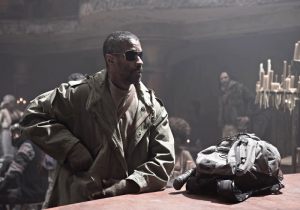 What we have here is a post-apocalyptic Western. Denzel is the lone drifter that comes into a town besieged by lawlessness or a corrupt agency of power. He even has a fight in a saloon that doubles as a whorehouse. He takes on an unlikely younger apprentice and enforces his own moral code through a series of shootouts. It just so happens that in Eli, he also has a giant machete and knows kung-fu. This is pretty strict genre stuff, mixing in apocalyptic elements for some extra flavor. The Hughes brothers give everything an ashy grimy gloss, making the most of desolate locations they shot in New Mexico (“When you need some place that looks like the end of the world, film New Mexico!”). The sparse locations and desaturated cinematography do well in establishing an unforgiving reality of the landscape.
The Hughes brothers certainly have a sense of style when it comes to the camera lens, yet they don’t approach being too self-conscious with their visuals. There’s an extended fight sequence that plays entirely in silhouette. There isn’t an overabundance of special effects in the film to clutter up the bangs and booms. There is one shootout outside a home (with Michael Gambon no less) that mimics some of the unblinking camerawork of Children of Men, swinging from side to side throughout the escalating firefight. It’s a fun visual motif that thrusts the viewer in the middle of the action. Otherwise, the action is all fairly standard stuff. It?s entertaining to watch Denzel take out a bushel of bad guys time and again, but what does that add up to with such a worn out story and half-hearted characterization? The script by Gary Whitta is heavy on apocalyptic mood and light on details. Cue more ass kicking.
Washington is stoic, almost Eastwood-like in his grit. He’s an easy antihero to root for, the reluctant avenger that manages to slice and dice his way through trouble. I won?t say this movie forces Washington to stretch his reserve of acting muscles, but it is undeniably pleasing to watch him perform his own fighting stunts. Oldman hasn’t gotten an opportunity to play a scenery-chewing villain in quite a while. Let’s face it; Evil Oldman will always overrule Good Oldman. This man was created to play sociopaths that have no ability to control the volume of their voice. This man needs a chance to bellow once every movie. Kunis proved she was a capable actress in Forgetting Sarah Marshall, but her role is fairly limited here to sidekick. She stares with her dark eyes and gets to hold a gun. That’s about it. The Hughes brothers have populated their post-apocalyptic world with familiar faces. Tom Waits is a merchant, Ray Stevenson (HBO’s Rome) as the Number One Henchman, Jennifer Beals as the blind mother to Solaris, and Gambon as a well-armed homeowner with an appetite for human flesh. That?s a good stable of actors to fill out a bunch of stock roles. It certainly makes The Book of Eli more entertaining.
The religious element doesn’t dominate the film but it does serve as food for thought. You see the book of Eli’s in high demand is actually he King James Bible. But you see, this isn’t any bible wrapped in leather with a metallic locked binding (all this for a Bible?); this is the LAST BIBLE ON EARTH. That is why Carnegie craves it. In the 30 years since the vague apocalyptic event, apparently mankind rounded up all the Bibles and burnt them, perhaps to express their displeasure with God. Eli operates on the premise that Denzel has the only Bible in the known world, which just seems downright silly. Did people search through every habitable dwelling, every library, and every hotel drawer? There have to be hidden Bibles out there. Even in this extreme setting, it seems to strain credibility to think that mankind is left with one copy of the most widely published book in the history of the world.
 Ignoring this fact, the religious element remains nebulous even though the film chronicles the journey of the Christian text. God is referred briefly but mostly the talk steers around the ideas of “faith” and “fate” and “the right path.” Eli feels he has been chosen for a special mission, and so he trudges west with his eyes on the prize. Carnegie wants to use the Bible as a “weapon” to pervert people’s faith into giving him more power. He wants to abuse religion as a motivational force to expand the reach of his control. Here’s the thing though, Carnegie has control over a town already and rules by fear. This seems to be working fine for him. So he wants to rule by love instead, using the Bible to spread the Gospel of discipleship? It’s somewhat unclear what exactly Carnegie plans to use the text for especially considering that most of the remaining population is illiterate anyway. He could just as easily hold up any book (The Da Vinci Code is shown, why not that one? It even has “code” in the title) and proclaim it the Word of God. It’s not like these people, struggling just to eat and find water, are going to question the power structure.
Not content with being a competent genre film, The Book of Eli ends on one of those ghastly twist endings that forces you to rethink everything that came before it. It doesn’t ruin the movie, but this twist certainly leads a charge toward building a counterargument toward disproving it. I won?t get into particulars but it seems unlikely that Denzel would be as good a shot as he was if the twist holds up.
The Book of Eli has its share of thrills and some interesting visual style, but there isn’t anything here you haven?t seen in hundreds of other post-apocalyptic movies. The dusty landscapes, the biker gangs, the aviator goggles, the cryptic threats, the necessity for leather as a fashion statement. This isn’t a bad movie by any means; it’s just another entry in a cluttered genre that, with our renewed fascination of the end times, is only getting more cluttered. Washington and the assortment of actors put in fine work but it’s ultimately the story that lets them down. This is a by-the-books genre flick with a touch more style courtesy of the Hughes brothers and a touch more gravitas courtesy of Mr. Washington. My advice to the human race: stock up on Bibles. Apparently, in the post-apocalyptic future, they will be more valuable than gold. Invest now while you still can. I got 15 of them and will entertain all offers.
Nate’s Grade: C+
Share this:

Terminator Salvation (2009)
 The fourth Terminator movie ultimately comes across as a lifeless enterprise. It’s set during the war between man and machine, which means John Conner (Christian Bale) is leading the human resistance, as was prophesied. He must stop those crafty machines from finding and killing Kyle Reese (Anton Yelchin), who is destined to be sent back in time and become Conner’s father. The storyline focuses a lot more attention on the mysterious man Marcus (Sam Worthington), who isn’t so mysterious because they give away in minutes that he’s a machine. But he’s a thinking machine that reclaims his humanity, or whatever. The point of this movie is to make some cool action sequences and not step on the toes of the previous movies. Director McG (Charlie’s Angels) has a few nifty visual tricks up his sleeve, but this is one soulless machine just going through the Action Blockbuster subroutine. The character development is nil, the story is muddled, the machines are dumb, and Bale forgoes any normal kind of speaking voice in favor of growls and hissing. The throwbacks to the other movies can be fun (a 1984-aged Arnold!) or agonizingly lame (shoehorning in famous quotes like, “I’ll be back”). The movie is competent and has one or two exciting chase sequences, but that is simply not good enough coming from this storied action franchise. Terminator Salvation plays out more like Transformers, where the robots are big and bad and loud and sort of dumb. I guess that sums up the movie pretty well.
Nate’s Grade: C+
Share this:

Children of Men (2006)
 Alfonso Cuaron is a master filmmaker and a gifted storyteller. He excels at telling entertaining stories whether they be about kids or adults. His Harry Potter film is still the most watchable and imaginative, and his earlier children’s movie, 1995’s A Little Princess, has enough power to still get me misty. Even when Cuaron sets his sights on a sex comedy (Y Tu Mama Tambien) he can’t help but turn it into an affecting art movie. This man just knows how to tell a good story. Children of Men, a bleak science fiction thriller, is just the latest example of how effortless Cuaron makes it all blissfully appear.
In the year 2027, and the world is on the brink of annihilation. It’s not plague or rampant warfare that are the obvious culprits. The reason for mankind’s end is something more natural and depressing — women have stopped being able to make babies. England seems to be the lone country with some fraction of stability. Illegal immigrants are rounded up and housed in refugee camps for deportation. Cages full of crying and pleading foreigners are on many street corners. In a world of danger and hopelessness, always count on the kindness of xenophobia.
Theo (Clive Owen) is a bureaucrat that combats the future with cynicism. He can barely escape getting blown up for his morning coffee. Theo used to be an activist and married to Julian (Julianne Moore), the current leader of the Fishies, deemed a terrorist group by those in power. She finds him and asks for one last favor. Her people need transit papers to get Kee (Claire-Hope Ashitey), a refugee, and Miriam (Pam Ferris), a former mid-wife, to safety. Then Theo discovers the importance of his assistance. Kee is eight months pregnant. The government would never admit that that the first baby in 18 years belongs to a refugee, and political groups would like to use Kee and her baby as a rallying point for an uprising. But first Theo must get her out of harm’s way.
 The idea of a world of infertile women is fascinating and full of big questions. This dystopian future must confront its own mortality in a very real way. Theo asks a friend hoarding classic art why he bothers. There will be no one alive in 100 years to even see them. Miriam says strange and heartbreaking things happen to a world that forgets the sound of children’s voices. Plenty of heady discussion is generated from a premise that affects every person on the planet. Why can’t women have babies? No explanation is given and none would seem credible. A religious faction believes this is the punishment of a vengeful God. People forget what babies even look like and what is commonly done for their care. The film also has a stark and timely portrait about the treatment of illegal immigrants. Children of Men is an intellectually stimulating movie that never rubs your nose in it. It trusts the intellect of the audience enough to leave many unanswered questions left to chew over and debate long after the movie ends.
The answers Children of Men finds seem reasonable and appropriate. Home suicide products exist for people that want to take back some control over their life, or at the least, are sick of waiting for the even more inevitable. It also seems entirely likely that this future world would turn the youngest living person (“Baby Diego” at 18-years-old) into a celebrity worthy of incredible mourning upon his untimely demise. These coping elements feel dead-on and only enhance the realistic tone of the film.
The film is a beguiling think piece but it also succeeds magnificently as a straightforward thriller. The majority of the second half is built around chase scenes and navigating to perilous outposts of safety that eventual crumble. Cuaron has a dizzying sense of believability as he puts together his world, and his roving camera feels like an embedded reporter on the front lines of chaos. The gorgeous cinematography and realistic set design contribute to the visceral sensation Cuaron sets alive with his visuals. There are long stretches where the camera continues rolling for nine minutes uninterrupted. I was left spellbound and felt trapped in this world just like the people onscreen. I was also wondering how much planning it took to coordinate and choreograph these long takes.
There are two very memorable scenes to quicken the pulse and both of them involve Cuaron’s mobile unblinking camera. The first involves a car chase perhaps unlike any I’ve ever seen before. Theo is leading an escape at dawn and robs the other cars of their keys. However, his own escape car refuses to start and the bad guys take notice. The sequence seems to last forever as Theo is forced to literally roll the car down a hill to outrun his pursuers who continually catch up with him. The second sequence follows Theo making his way through a refuge camp in the midst of a violent uprising being put down by heavily armored government troops. We watch every excruciating second of his survival as he navigates past gunfire, tanks outside a hotel, and then climbs through the different levels of the hotel being bombarded until we see, at a distance, where Theo’s trek all began. Exhilarating might just be the best word to describe Children of Men.
 But nothing feels cheap or too sentimental in this world. This is a harsh and dark world where anything can happen, so the audience is left in constant peril worrying about the fates of every person onscreen. Like Casablanca, it strips away idealized notions of bravery and duty and just shows humanity for what it is and what it can be. That is gutsy but then that’s Cuaron as a filmmaker.
Speaking of Casablanca, Owen seems like a modern-day Bogart in this role. He’s ruggedly good looking but also a sly charmer. I’ve stated before my undying man-crush on Owen and Children of Men has only added to it. Owen has a remarkable way of playing detached but still noble and conflicted. He has the best slow burn in movies. The moments of wonder for him become our moments of wonder and worry. The rest of the actors appear in limited functions but provide good work. Michael Caine practically steals the movie as a crude yet philosophical hippie.
This is science fiction at its best. Children of Men is stark and realistic and truly immersive; you really feel like a member of this tumultuous future. It works simultaneously as a thought-provoking what-if scenario and as an exciting thriller. Simply put, this is a highly engrossing movie that separates itself from the pack. Cuaron has created a disquieting and entertaining sci-fi think piece that succeeds on its numerous merits. I knew half way into the movie that the newly minted wife, Mrs. Me, was only going to want a baby more from what we were watching. At least she now has a new argument: “It’s for the good of humanity.”
Nate’s Grade: A


 nathanzoebl
You must be logged in to post a comment.